One billion people still hungry

12 11 2010


overpopulationA few days ago, that printed mouthpiece of Murdoch’s News Corporation in Australia – The Australiani, attacked Paul Ehrlich with a spectacular piece of uninformed gibberish (‘Population bomb still a fizzer 40 years on‘) that we both feel compelled to contest.

The Australian, well-known for its ‘War on Science’, refused to give us the opportunity to respond officially in an Opinion Editorial, so we are compelled to fight back using the blogosphere and our collective networks (which, we might add, probably exceed the distribution of said newspaper). Frankly, it was no surprise that The Australian chose to ignore us.

The article in question was written by Oliver Marc Hartwich of the so-called ‘Centre for Independent Studies’, the hyper-conservative Australian propaganda machine reminiscent of the ultra-right wing American Enterprise Institute, made up of some of Australia’s most powerful business magnates and with no academic affiliation whatsoever. Anything vaguely left-of-centre and even remotely promoting environmental responsibility is considered a viable target.

Recently, we blew the whistle on an equally dangerous man and the institutes he represents – climate-denier Alan Oxley; he and the business interests he represents are responsible for more deforestation, biodiversity loss and financial inequity in South East Asia over the last few decades than almost any single group.

Now we turn our attention to expose the true colours of the Centre for Independent Studies and Mr. Hartwich. Read the rest of this entry »


The bomb is still ticking…

11 11 2010

Apologies for the silence over the last week – it’s been a whirlwind here with Paul Ehrlich visiting The University of Adelaide (amazing for a 78-year old man). In the meantime, Sharon Ede over at Post Growth wrote a great response to the LOLstralian‘s high-school effort to attack Paul a few days ago. Our response is coming shortly, but Sharon’s article is a great precursor.

More than forty years after its publication, the predictions made in Paul Ehrlich’s landmark book ‘The Population Bomb’ are still the subject of debate. Australian think-tank the Centre for Independent Studies (‘Population bomb still a fizzer 40 years on’, The Australian, 8 November, 2010), says Ehrlich’s warnings of dire consequences, including of mass starvation as a result of overpopulation, have not materialised:

“More than 40 years ago, American biologist Paul Ehrlich sketched a doomsday scenario for planet Earth in his book The Population Bomb…Since the publication of the book, the global population has nearly doubled but most of its gloomy predictions have not come true…”

By all means, let’s have a robust debate on population, both at the national and global level. Both are long overdue.

But let’s make it a sophisticated debate, grounded in the science we have available and a thorough understanding of all the issues in play.

According to the United Nations’ Population Division, the global population has increased from one billion in 1804 to over six billion in 2010.

It has taken most of human history to reach one billion people. It took just over a century to add the second billion.

The rate of population growth since then is such that it has taken only twelve years to add the most recent billion people.

The moderate UN scenario is for a population of 9 billion by 2050 – that’s within the lifetime of many of us. Read the rest of this entry »


Appalling behaviour of even the most influential journalists

4 11 2010


© J. Dunn


I’ve said it a few times in public and in private – one of the main reasons I, as a busy scientist with probably insufficient time to devote to a lay blog (no different to any busy scientist, mind), got into this whole gig in the first place was to fight back against dodgy reporters and shonky ‘journalists’.

For the most part I have to say that I’ve been represented reasonably well in the media – even if most of it is owned by a few highly questionable moguls who espouse wildly partisan views. There have been a few occasions though where I’ve been the victim of simply crap reporting, terribly investigation and downright dirty tactics done by so-called journalists. I’ve talked about this on a few occasions on ConservationBytes.com (see ‘Crap environmental reporting‘, ‘Science turned bad by the media‘ and ‘Poor media coverage promotes environmental apathy and untruths‘).

In a bit of a coincidental turn of events, Bill Laurance sent me an interesting piece published in Nature on this very subject just while Paul Ehrlich and I (most of you know that Paul is in Adelaide at the moment) were talking about ways in which scientists could turn around public opinion from one of suspicion of science, logic and intellectualism, to one applauding the application of objective techniques to solve the world’s worst problems. Paul half-jokingly said “what if there is no solution?” – but I suspect that one such as he has found that constant writing, outreach and excellent research are the only ways to tear down the walls of ignorance, despite all the stupidity of certain elected officials. Two steps forward, one step back.

Bill suggested ConservationBytes would be a good place to reproduce this excellent article by Simon Lewis of the University of Leeds, and I agree. So here it is: Read the rest of this entry »


Invaders beware

1 11 2010

Recently, the Global Ecology Group at the University of Adelaide has had the immense privilege and pleasure of welcoming a new senior member to the fold – Dr. Phill Cassey. The slightly Pommefied-Kiwi-Now-Coming-To-Terms-With-Being-Australian ;-)  represents a wonderful new addition to our lab’s expertise and vision.

Phill is a distinguished Australian Research Council Future Fellow. He conducts research on the subject of human contributions to changes in biodiversity through the dual processes of species extinction and introduction. Phill’s research encompasses a broad range of analytical and applied skills and has led to significant advances in the discipline of global change biology.

Phill has also hit the ground running here in Adelaide, and now offers two PhD projects for people interested to work at the forefront of invasive species research in Australia. Students will be members of the School for Earth and Environmental Sciences, which includes world-class researchers in the disciplines of Ecology and Evolutionary Biology and Global Ecology as well as ongoing research links with the South Australian Museum, Adelaide Zoo, and State Herbarium of South Australia. Successful candidates will be part of a strong research group with a highly successful and innovative culture of scientific communication and study. Read the rest of this entry »


Wolves masquerading as sheep: the fallout

29 10 2010


© New Zealand Films


Well, we’ve managed to stimulate quite a lively conversation after dropping the Open Letter about Scientific Credibility and the Conservation of Tropical Forests regarding the questionable tactics employed by Alan Oxley and his industrial lobbyist organisations.

Mr. Oxley has responded with vitriol, hand-waving, red herrings and straw men, and failed to address even a single one of our accusations. I am particularly amused by his insinuation that we, the proven scientists, don’t know what science is – but that he does.

Below I reproduce Mr. Oxley’s reaction to our original letter, followed by our response.

I’ll let you, the reader, decide who is most reasonable.

REACTION FROM ALAN OXLEY

There is too much pseudo-scientific hype today about environmentalism and forestry and not enough fact.

I put this double-barrelled question to the Group of 12 scientists who have rather laboriously wandered over the work of World Growth: What biodiversity is expressly protected by a global cessation of conversion of forest land to other purposes and how is that biodiversity scientifically measured? And let’s have some technical response, not political blather. Read the rest of this entry »


Wolves in sheep’s clothing: industrial lobbyists and the destruction of tropical forests

25 10 2010


As of this morning, a group of distinguished scientists (which I have had the honour of being invited to join) has released an Open Letter to be published in various media outlets worldwide. The letter addresses some of our major concerns over the misinterpretation of facts, and openly misleading statements, by proponents of deforestation in the Asian tropical region. Professor Bill Laurance, an old favourite on ConservationBytes.com, has led the charge and organised a most impressive and shocking list of assertions. I produce the letter below – I encourage all my readers to distribute it as far and wide as possible in the social media-verse.

An Open Letter about Scientific Credibility and the Conservation of Tropical Forests

To whom it may concern:

As professional scientists employed by leading academic and research institutions, we are writing to alert the general public about some of the claims and practices being used by the World Growth Institute (WGI) and International Trade Strategies Global (ITS), and their affiliated leadership.

WGI and ITS operate in close association. ITS is owned by Alan Oxley, an Australian industrial lobbyist, former trade representative, and former Ambassador who also heads WGI. According to its website1, ITS also has “close associations” with several politically conservative US think tanks, including the American Enterprise Institute, the Competitive Enterprise Institute, and the Heritage Foundation.

In our personal view, WGI and ITS — which are frequently involved in promoting industrial logging and oil palm and wood pulp plantations internationally — have at times treaded a thin line between reality and a significant distortion of facts. Specifically, we assert that: Read the rest of this entry »


September 2010 Issue of Conservation Letters out

13 10 2010

Conservation Lettersfifth issue (September) of Volume 3 is now out. Some good ones here.

CJA Bradshaw


Cartoon guide to biodiversity loss IX

19 09 2010

The latest batch of six cartoons…

See also full stock of previous ‘Cartoon guide to biodiversity loss’ compendia here.

Read the rest of this entry »


Global erosion of ecosystem services

14 09 2010

A few months ago I was asked to give a lecture about erosion of ecosystem services to students in the University of Adelaide‘s Issues in Sustainable Environments unit. I gave that lecture last week and just uploaded a slidecast of the presentation (with audio) today.

I’ve reproduced the lecture here for your viewing pleasure. I hope you find the 45-minute presentation useful. Note that the first few minutes cover me referring to the Biodiversity film short that I posted not too long ago.

CJA Bradshaw


The lost world – freshwater biodiversity conservation

6 09 2010

Even the most obtuse, right-wing, head-in-the-sand, consumption-driven, anti-environment yob would at least admit that they’ve heard of forest conservation, the plight of whales (more on that little waste of conservation resources later) and climate change. Whether or not they believe these issues are important (or even occurring) is beside the point – the fact that this particular auto-sodomist I’ve described is aware of the issues is at least testament to growing concern among the general populace.

But so many issues in conservation science go unnoticed even by the most environmentally aware. Today’s post covers just one topic (I’ve covered others, such as mangroves and kelp forests) – freshwater biodiversity.

The issue is brought to light by a paper recently published online in Conservation Letters by Thieme and colleagues entitled Exposure of Africa’s freshwater biodiversity to a changing climate.

Sure, many people are starting to get very worried about freshwater availability for human consumption (and this couldn’t be more of an issue in Australia at the moment) – and I fully agree that we should be worried. However, let’s not forget that so many species other than humans depend on healthy freshwater ecosystems to persist, which feed back in turn to human benefits through freshwater filtering, fisheries production and arable soil accumulation.

Just like for the provision of human uses (irrigation, direct water consumption, etc.), a freshwater system’s flow regime is paramount for maintaining its biodiversity. If you stuff up the flow regime too much, then regardless of the amount of total water available, biodiversity will suffer accordingly.

Glen Canyon Dam

Image by James Marvin Phelps (mandj98) via Flickr

Thieme and colleagues focus specifically on African freshwater systems, but the same problems are being seen worldwide (e.g., Australia’s Murray-Darling system, North America’s Colorado River system). And this is only going to get worse as climate change robs certain areas of historical rainfall. To address the gap in knowledge, the authors used modelled changes in mean annual runoff and discharge to determine fish species affected by 2050.

The discharge/runoff results were: Read the rest of this entry »


Long, deep and broad

24 08 2010

© T. Holub Flickr

Thought that would get your attention ;-)

More scientists need to be trained in quantitative synthesis, visualization and other software tools.” D. Peters (2010)

In fact, that is part of the title of today’s focus paper in Trends in Ecology and Evolution by D. Peters – Accessible ecology: synthesis of the long, deep,and broad.

As a ‘quantitative’ ecologist (modeller, numerate, etc.) whose career has been based to a large degree on the analysis of large ecological datasets, I am certainly singing Peters’ tune. However, it’s much deeper and more important than my career – good (long, deep, broad – see definitions below) ecological data are ESSENTIAL to avoid some of the worst ravages of biodiversity loss over the coming decades and centuries. Unfortunately, investment in long-term ecological studies is poor in most countries (Australia is no exception), and it’s not improving.

But why are long-term ecological data essential? Let’s take a notable example. Climate change (mainly temperature increases) measured over the last century or so (depending on the area) has been determined mainly through the analysis of long-term records. This, one of the world’s most important (yet sadly, not yet even remotely acted upon) issues today, derives from relatively simple long-term datasets. Another good example is the waning of the world’s forests (see posts herehere and here for examples) and our increasing political attention on what this means for human society. These trends can only be determined from long-term datasets.

For a long time the dirty word ‘monitoring’ was considered the bastion of the uncreative and amateur – ‘real’ scientists performed complicated experiments, whereas ‘monitoring’ was viewed mainly as a form of low-intellect showcasing to please someone somewhere that at least something was being done. I’ll admit, there are many monitoring programmes producing data that aren’t worth the paper their printed on (see a good discussion of this issue in ‘Monitoring does not always count‘), but I think the value of good monitoring data has been mostly vindicated. You see, many ecological systems are far too complex to manipulate easily, or are too broad and interactive to determine much with only a few years of data; only by examining over the ‘long’ term do patterns (and the effect of extremes) sometimes become clear.

But as you’ll see, it’s not just the ‘long’ that is required to determine which land- and sea-use decisions will be the best to minimise biodiversity loss – we also need the ‘deep’ and the ‘broad’. But first, the ‘long’. Read the rest of this entry »


100 actions to slow biodiversity loss

19 08 2010

I received an email a few days ago from Guillaume Chapron of the Swedish University of Agricultural Sciences (Sveriges lantbruksuniversitet) asking me to promote his ‘Biodiversity 100‘ campaign on ConservationBytes.com. I think it’s an interesting initiative, and so I’ll gladly spread the word.

Teaming up with George Monbiot of The Guardian, the Biodiversity 100 campaign seeks to encourage scientists and others to compile a list of 100 tasks that G20 governments should undertake to prove their commitment to tackling the biodiversity crisis.

Dr. Chapron writes: Read the rest of this entry »


Mega-meta-model manager

24 07 2010

As Barry Brook just mentioned over at BraveNewClimate.com, I’ll be travelling with him and several of our lab to Chicago tomorrow to work on some new aspects of linked climate, disease, meta-population, demographic and vegetation modelling. Barry has this to say, so I won’t bother re-inventing the wheel:

… working for a week with Dr Robert LacyProf Resit Akcakaya and collaborators, on integrating spatial-demographic ecological models with climate change forecasts, and implementing multi-species projections (with the aim of improving estimates of extinction risk and provide better ranking of management and adaptation options). This work builds on a major research theme at the global ecology lab, and consequently, a whole bunch of my team are going with me — Prof Corey Bradshaw (lab co-director), my postdocs Dr Damien FordhamDr Mike Watts and Dr Thomas Prowse and Corey’s and my ex-postdoc, Dr Clive McMahon. This builds on earlier work that Corey and I had been pursuing, which he described on ConservationBytes last year.

The ‘mega-meta-model manager’ part is a clever piece of control-centre software that integrates these disparate ecological, climate and disease dynamic inputs. Should be some good papers coming out of the work soon.

Of course, I’ll continue to blog over the coming week. I’m not looking forward to the 30-hour travel tomorrow to Chicago, but it should be fun and productive once I get there.

CJA Bradshaw

Add to FacebookAdd to DiggAdd to Del.icio.usAdd to StumbleuponAdd to RedditAdd to BlinklistAdd to TwitterAdd to TechnoratiAdd to Yahoo BuzzAdd to Newsvine


Cartoon guide to biodiversity loss VIII

1 07 2010

The latest batch of six cartoons…

See also full stock of previous ‘Cartoon guide to biodiversity loss’ compendia here.

Read the rest of this entry »


Why and how did Pleistocene megafauna go extinct?

27 05 2010

Just a quick post to say that I’m currently at Duke University in the USA attending a special National Evolutionary Synthesis Centre ‘Catalysis Meeting’ entitled: Integrating datasets to investigate megafaunal extinction in the Late Quaternary.

The meeting is basically about nailing down some of the remaining mysteries and controversies surrounding the extinction of many species during periods of rapid climate change 11-60 thousand years ago.

It’s been fun so far, and a lot of exciting analysis will ensue, but for the meantime I’ll just summarise what we’re trying to do. Read the rest of this entry »


Ecosystem functions breaking down from climate change

17 05 2010

I’m particularly proud to present to ConservationBytes.com readers a new paper we’ve just had published online in Journal of Animal Ecology: Mechanisms driving change: altered species interactions and ecosystem function through global warming (Lochran Traill, Matt Lim, Navjot Sodhi and me).

It wasn’t easy to write a review discussing climate change effects on biodiversity, mainly because so many have been written already and we needed to examine the issue from a fresh perspective. The evidence for single species’ responses to rapidly shifting climates around the world is overwhelming (see for a few thousand examples, see the following: Stenseth et al. 2002; Parmesan et al. 2003, 2006; Roessig et al. 2004; Thomas et al. 2004; Poloczanska et al. 2007; Skelly et al. 2004; Dunn et al. 2009). It’s rather remarkable how many things are moving in response, with reduction in range size being more common than expansion.

However, predicting extinction risk from climate change is far more problematic because traditionally there have been too few data on species interactions to make heads or tails of a particular species’ eventual response (e.g., see comment on Chris Thomas’ famous paper regarding this matter). As systems heat up, some species will change in abundance, thereby affecting the abundance of others (think predators and prey, pollinators and their host plants, etc.) – this whole complicated process combined with single-species’ responses makes predicting what a future ecosystem might look like nearly impossible. Add in all the other ecosystem damage we’ve done from forest clearance, invasive species and over-harvesting, it’s a right mess.

It is for this reason we focussed on reviewing the links between species rather than on the species’ responses per se. We looked specifically at ecosystem function, that is, “the processes that facilitate energy transfer along food webs, and the major processes that allow the cycling of carbon, oxygen and nitrogen. ‘Function’ also includes ecosystem services.” Read the rest of this entry »


New April Issue of Conservation Letters out now

22 04 2010

Low intensity fire in a longleaf pine-wiregrass system

Another great line up of papers has just come out in the April Issue of Conservation Letters:

CJA Bradshaw

Add to FacebookAdd to DiggAdd to Del.icio.usAdd to StumbleuponAdd to RedditAdd to BlinklistAdd to TwitterAdd to TechnoratiAdd to Yahoo BuzzAdd to Newsvine


Classics: Extinction from Climate Change

22 03 2010

© A. Wong

Amidst the mildly annoying, yet functionally irrelevant sensationalism of climate change politics, conservation biologists are taking the problem seriously and attempting to predict (and prevent) extinctions arising from a rapidly heating planet (see BraveNewClimate.com‘s excellent summary here, as well as his general category of ‘ecological impacts of climate change‘).

This week’s Conservation Classic describes the first high-impact paper to signal just how bad it biodiversity could fare from climate change alone (ignoring, for the moment, synergies with other drivers of extinction).

From about the 1990s onward, conservation biologists had been accumulating a large number of case studies quantifying the extent to which species had shifted in their geographic ranges, phenology and behaviour in response to a rapidly warming planet (Parmesan & Yohe 2003). Read the rest of this entry »


Global pollinator declines

11 03 2010

Mention anything about ecosystem services – those ecological functions arising from the interactions between species that provide some benefit (source of food/clean water, health, etc.) to humanity1 – and one of the most cited examples is pollination.

It’s really a no-brainer, hence its popularity as an example. Pollinators (mainly insects, but birds, bats and other assorted species too) don’t exist to pollinate plants; rather, their principal source of food acquisition happens to spread around the gametes of the plants they regularly visit. Evolution has favoured the dependence of species in such ways because the mutualism benefits all involved, and in some cases, this dependence has become obligate. So when the habitats that pollinators need to survive are reduced or destroyed, inevitably their population sizes decline and the plants on which they feed lose their main sources of gene-spreading.

So what? Well, about 80 % of all wild plant species require insect pollinators for fruit and seed set, and about 75 % of all human crops require pollination by insects (mostly bees). So it’s pretty frightening to consider that although our global population is at 6.8 billion and growing rapidly, our main food pollinators (bees) are declining globally (see also previous post on bee declines). Indeed, domestic honey bee stocks have declined in the USA by 59 % since 1947 and in Europe by 25 % since 1985. Scared yet?

Another thing people don’t tend to get is that a bee cannot live on rapeseed alone. Most pollinators require intact forests to complete many of their other life history requirements (breeding, shelter, etc.) and merely forage occasionally in crop lands. Cut down all the adjacent bush, and your crops will suffer accordingly.

These, and other titbits to keep you awake at night and worry about what your grandchildren might eat are highlighted in a recent review in Trends in Ecology and Evolution by Potts and colleagues entitled Global pollinator declines: trends, impacts and drivers.

What’s driving all this loss? Several things, but it’s mainly due to ‘land-use change’ (a bullshit word people use generally to mean habitat loss, fragmentation and degradation). However, invasive species competition, pathogens and parasites, and climate change (and the synergies amongst all of these) are all contributing.

It always amazes me when people ask me why biodiversity is important. Despite the overwhelming knowledge we’ve accumulated about how functioning ecosystems make the planet liveable, despite it just being plainly stupid to think that humans are somehow removed from normal biological processes, and even with such in-your-face examples of global pollinator declines and the real, extremely worrying implication for food supplies, many people just don’t seem to get it. Every tree you cut down, every molecule of carbon dioxide you release, every drop of water you waste will punish you and your family directly for generations to come. How much more self-evident can you get?

Humanity seems to have a very poorly developed sense of self-preservation.

CJA Bradshaw

1It’s amazingly arrogant and anthropocentric to think of anything in ecosystems as ‘providing benefits to humanity’. After all, we’re just another species in a complex array of species within ecosystems – we just happen to be one of the numerically dominant ones, excel at ecosystem ‘engineering’ and as far as we know, are the only (semi-) sentient of the biologicals. Although the concept of ecosystem services is, I think, an essential abstraction to place emphasis on the importance of biodiversity conservation to the biodiversity ignorant, it does rub me a little the wrong way. It’s almost ascribing some sort of illogical religious perspective that the Earth was placed in its current form for our eventual benefit. We might be a fairly new species in geological time scales, but don’t think of ecosystems as mere provisions for our well-being.

ResearchBlogging.orgPotts, S., Biesmeijer, J., Kremen, C., Neumann, P., Schweiger, O., & Kunin, W. (2010). Global pollinator declines: trends, impacts and drivers Trends in Ecology & Evolution DOI: 10.1016/j.tree.2010.01.007

Add to FacebookAdd to DiggAdd to Del.icio.usAdd to StumbleuponAdd to RedditAdd to BlinklistAdd to TwitterAdd to TechnoratiAdd to Yahoo BuzzAdd to Newsvine


Inbreeding bad for invasives too

18 02 2010

I just came across this little gem of a paper in Molecular Ecology (not, by any stretch, a common forum for biodiversity conservation-related papers). It’s another one of those wonderful little experimental manipulation studies I love so much (see previous examples here and here).

I’ve written a lot before about the loss of genetic diversity as a contributing factor to extinction risk, via things like Allee effects and inbreeding depression. I’ve also posted blurbs about our work and that of others on what makes particular species prone to become extinct or invasive (i.e., the two sides of the same evolutionary coin). Now Crawford and Whitney bring these two themes together in their paper entitled Population genetic diversity influences colonization success.

Yes, the evolved traits of a particular species will set it up either to do well or very badly under rapid environmental change, and invasive species tend to be those with rapid generation times, defence mechanisms, heightened dispersal capacity and rapid growth. However, such traits generally only predict a small amount in the variation in invasion success – the other being of course propagule pressure (a composite measure of the number of individuals of a non-native species [propagule size] introduced to a novel environment and the number of introduction events [propagule number] into the new host environment).

But, that’s not all. It turns out that just as reduced genetic diversity enhances a threatened species’ risk of extinction, so too does it reduce the ‘invasiveness’ of a weed. Using experimentally manipulated populations of the weedy herb Arabidopsis thaliana (mouse-ear cress; see if you get the joke), Crawford & Whitney measured greater population-level seedling emergence rates, biomass production, flowering duration and reproduction in high-diversity populations compared to lower-diversity ones. Maintain a high genetic diversity and your invasive species has a much higher potential to colonise a novel environment and spread throughout it.
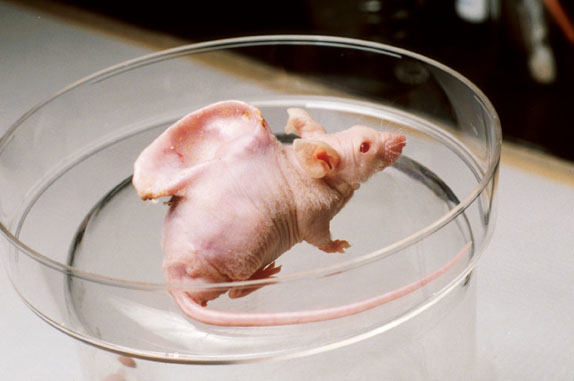
Of course, this is related to propagule pressure because the more individuals that invade/are introduced the more times, the higher the likelihood that different genomes will be introduced as well. This is extremely important from a management perspective because it means that well-mixed (outbred) samples of invasive species probably can do a lot more damage to native biodiversity than a few, genetically similar individuals alone. Indeed, most introductions probably don’t result in a successful invasion mainly because they don’t have the genetic diversity to get over the hump of inbreeding depression in the first place.

The higher genetic (and therefore, phenotypic) variation in your pool of introduced individuals, the great the chance that at least a few will survive and proliferate. This is also a good bit of extra proof for our proposal that invasion and extinction are two sides of the same evolutionary coin.

CJA Bradshaw

ResearchBlogging.orgCrawford, K., & Whitney, K. (2010). Population genetic diversity influences colonization success Molecular Ecology DOI: 10.1111/j.1365-294X.2010.04550.x

Bradshaw, C., Giam, X., Tan, H., Brook, B., & Sodhi, N. (2008). Threat or invasive status in legumes is related to opposite extremes of the same ecological and life-history attributes Journal of Ecology, 96, 869-883 DOI: 10.1111/j.1365-2745.2008.01408.x

Add to FacebookAdd to DiggAdd to Del.icio.usAdd to StumbleuponAdd to RedditAdd to BlinklistAdd to TwitterAdd to TechnoratiAdd to Yahoo BuzzAdd to Newsvine