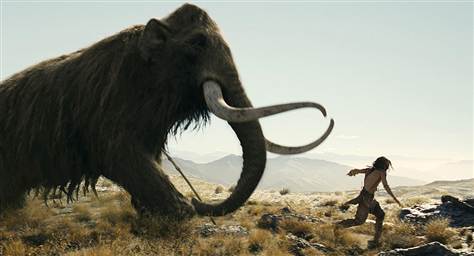
Ice Age? No. Abrupt warmings and hunting together polished off Holarctic megafauna

24 07 2015
Oh shit oh shit oh shit ...

Oh shit oh shit oh shit …

Did ice ages cause the Pleistocene megafauna to go extinct? Contrary to popular opinion, no, they didn’t. But climate change did have something to do with them, only it was global warming events instead.

Just out today in Science, our long-time-coming (9 years in total if you count the time from the original idea to today) paper ‘Abrupt warmings drove Late Pleistocene Holarctic megafaunal turnover‘ demonstrates for the first time that abrupt warming periods over the last 60,000 years were at least partially responsible for the collapse of the megafauna in Eurasia and North America.

You might recall that I’ve been a bit sceptical of claims that climate changes had much to do with megafauna extinctions during the Late Pleistocene and early Holocene, mainly because of the overwhelming evidence that humans had a big part to play in their demise (surprise, surprise). What I’ve rejected though isn’t so much that climate had nothing to do with the extinctions; rather, I took issue with claims that climate change was the dominant driver. I’ve also had problems with blanket claims that it was ‘always this’ or ‘always that’, when the complexity of biogeography and community dynamics means that it was most assuredly more complicated than most people think.

I’m happy to say that our latest paper indeed demonstrates the complexity of megafauna extinctions, and that it took a heap of fairly complex datasets and analyses to demonstrate. Not only were the data varied – the combination of scientists involved was just as eclectic, with ancient DNA specialists, palaeo-climatologists and ecological modellers (including yours truly) assembled to make sense of the complicated story that the data ultimately revealed. Read the rest of this entry »


Avoiding genetic rescue not justified on genetic grounds

12 03 2015
Genetics to the rescue!

Genetics to the rescue!

I had the pleasure today of reading a new paper by one of the greatest living conservation geneticists, Dick Frankham. As some of CB readers might remember, I’ve also published some papers with Dick over the last few years, with the most recent challenging the very basis for the IUCN Red List category thresholds (i.e., in general, they’re too small).

Dick’s latest paper in Molecular Ecology is a meta-analysis designed to test whether there are any genetic grounds for NOT attempting genetic rescue for inbreeding-depressed populations. I suppose a few definitions are in order here. Genetic rescue is the process, either natural or facilitated, where inbred populations (i.e., in a conservation sense, those comprising too many individuals bonking their close relatives because the population in question is small) receive genes from another population such that their overall genetic diversity increases. In the context of conservation genetics, ‘inbreeding depression‘ simply means reduced biological fitness (fertility, survival, longevity, etc.) resulting from parents being too closely related.

Seems like an important thing to avoid, so why not attempt to facilitate gene flow among populations such that those with inbreeding depression can be ‘rescued’? In applied conservation, there are many reasons given for not attempting genetic rescue: Read the rest of this entry »


We treat our wildlife like vermin

24 09 2014
Just a little of the dog fence's carnage and cruelty at work.

Just a little of the dog fence’s carnage and cruelty at work.

I’ve pointed out in several posts on ConservationBytes.com just how badly Australia is doing in the environmental stakes, with massive deforestation continuing since colonial times, feral predators and herbivores blanketing the continent, inadequate protected areas, piss-weak policies and a government at war with its own environment. Despite a few recent wins in marine conservation, Australia has a dreadful track record.

Now in another monumental demonstration of stupidity, corruption and colonial-era attitudes toward native wildlife, Western Australia has outdone itself by sneaking through legislation to extend its so-called ‘Barrier Fence’ in an effort to isolate its marginal farmland from dingoes, emus and other ‘nuisance’ species.

As I and several others have pointed out before, the mere existence of the record-breaking dingo fence is not only counter-productive, it is expensive and utterly archaic. It should be torn down entirely.

Instead, the Western Australian government wants to extend the national fence, and they’ve approved the plan it without going through any of the appropriate checks in the system. Its environmental impacts have not been adequately assessed, nor has the public been given the opportunity to oppose the plans. In my view, the people responsible for this act should go to gaol.

In a recent paper led by Keith Bradby entitled Ecological connectivity or Barrier Fence? Critical choices on the agricultural margins of Western Australia, we show how the Western Australia state government has not followed any of its own environmental legislation and rushed through these idiotic proposals. If you do not subscribe to Ecological Management and Restoration, you can obtain a copy of the paper by e-mailing Keith or me. Read the rest of this entry »


World Heritage Species

17 08 2014

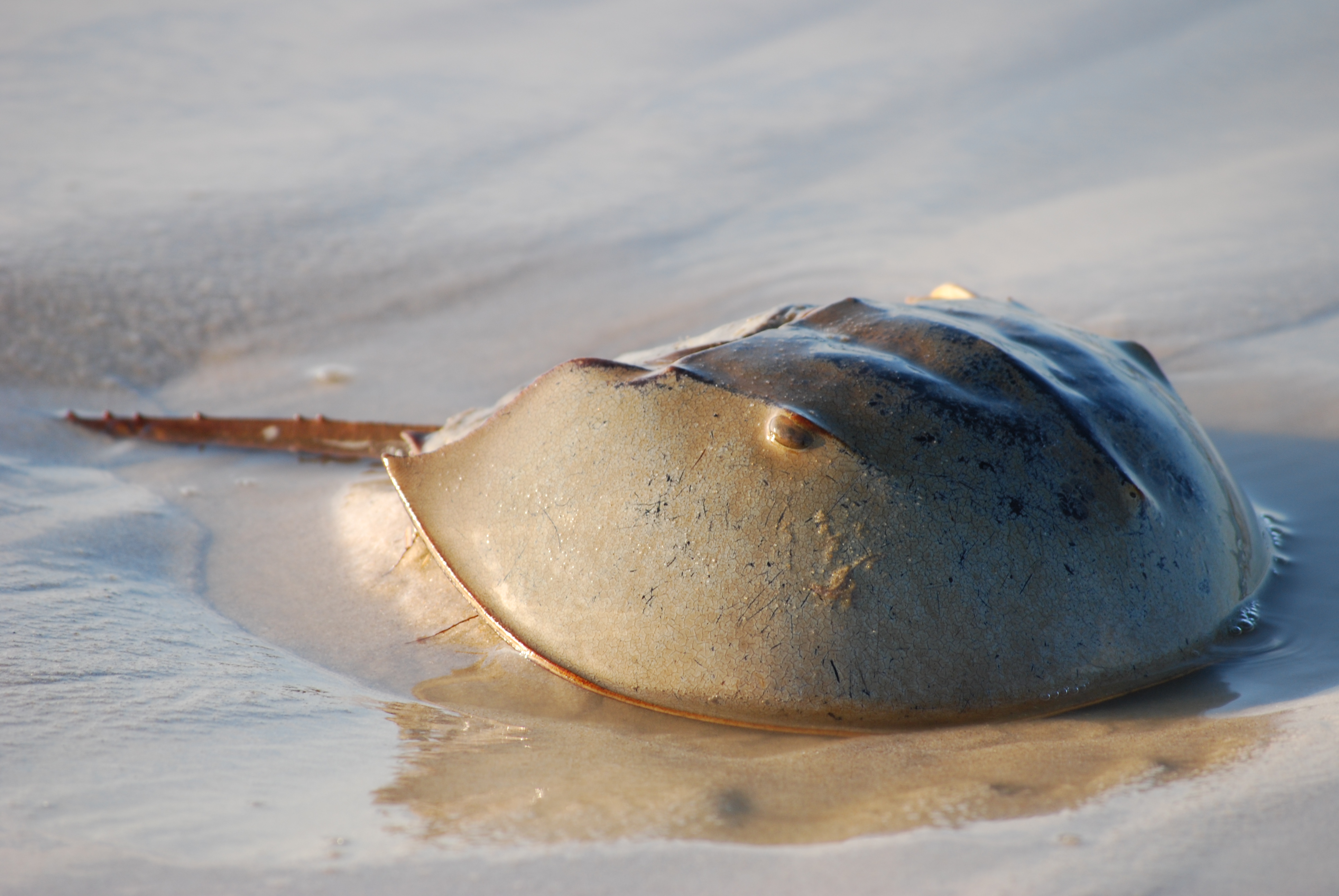
horseshoe crabHaving just attended the Baker & Stebbins Legacy Symposium on Invasion Genetics in Pacific Grove, California, I have had a rare bit of leisure time between my book-writing commitments and operating in conference mode. It’s summer here in California, so I’ve taken the opportunity to read a bit of The New Yorker in my accommodation. It is indeed a pleasure to have these micro-moments of ‘leisure’ reading. As it turns out though, work subjects are never far from my mind as I do this.

So it interested me greatly when I read another fantastic article in the ‘Yorker about horseshoe crabs, and their precarious state despite having survived half a billion years on this planet. While I was generally interested in the science, biomedical applications, conservation and systematics of the species, what really caught my eye was the proposal to list them as a ‘World Heritage Species’.

A what? Never heard of that classification, you say? Neither had I. Not to worry though – it doesn’t exist yet. Read the rest of this entry »


50/500 or 100/1000 debate not about time frame

26 06 2014

Not enough individualsAs you might recall, Dick Frankham, Barry Brook and I recently wrote a review in Biological Conservation challenging the status quo regarding the famous 50/500 ‘rule’ in conservation management (effective population size [Ne] = 50 to avoid inbreeding depression in the short-term, and Ne = 500 to retain the ability to evolve in perpetuity). Well, it inevitably led to some comments arising in the same journal, but we were only permitted by Biological Conservation to respond to one of them. In our opinion, the other comment was just as problematic, and only further muddied the waters, so it too required a response. In a first for me, we have therefore decided to publish our response on the arXiv pre-print server as well as here on ConservationBytes.com.

50/500 or 100/1000 debate is not about the time frame – Reply to Rosenfeld

cite as: Frankham, R, Bradshaw CJA, Brook BW. 2014. 50/500 or 100/1000 debate is not about the time frame – Reply to Rosenfeld. arXiv: 1406.6424 [q-bio.PE] 25 June 2014.

The Letter from Rosenfeld (2014) in response to Jamieson and Allendorf (2012) and Frankham et al. (2014) and related papers is misleading in places and requires clarification and correction, as follows: Read the rest of this entry »


We’re sorry, but 50/500 is still too few

28 01 2014

too fewSome of you who are familiar with my colleagues’ and my work will know that we have been investigating the minimum viable population size concept for years (see references at the end of this post). Little did I know when I started this line of scientific inquiry that it would end up creating more than a few adversaries.

It might be a philosophical perspective that people adopt when refusing to believe that there is any such thing as a ‘minimum’ number of individuals in a population required to guarantee a high (i.e., almost assured) probability of persistence. I’m not sure. For whatever reason though, there have been some fierce opponents to the concept, or any application of it.

Yet a sizeable chunk of quantitative conservation ecology develops – in various forms – population viability analyses to estimate the probability that a population (or entire species) will go extinct. When the probability is unacceptably high, then various management approaches can be employed (and modelled) to improve the population’s fate. The flip side of such an analysis is, of course, seeing at what population size the probability of extinction becomes negligible.

‘Negligible’ is a subjective term in itself, just like the word ‘very‘ can mean different things to different people. This is why we looked into standardising the criteria for ‘negligible’ for minimum viable population sizes, almost exactly what the near universally accepted IUCN Red List attempts to do with its various (categorical) extinction risk categories.

But most reasonable people are likely to agree that < 1 % chance of going extinct over many generations (40, in the case of our suggestion) is an acceptable target. I’d feel pretty safe personally if my own family’s probability of surviving was > 99 % over the next 40 generations.

Some people, however, baulk at the notion of making generalisations in ecology (funny – I was always under the impression that was exactly what we were supposed to be doing as scientists – finding how things worked in most situations, such that the mechanisms become clearer and clearer – call me a dreamer).

So when we were attacked in several high-profile journals, it came as something of a surprise. The latest lashing came in the form of a Trends in Ecology and Evolution article. We wrote a (necessarily short) response to that article, identifying its inaccuracies and contradictions, but we were unable to expand completely on the inadequacies of that article. However, I’m happy to say that now we have, and we have expanded our commentary on that paper into a broader review. Read the rest of this entry »


Cleaning up the rubbish: Australian megafauna extinctions

15 11 2013

diprotodonA few weeks ago I wrote a post about how to run the perfect scientific workshop, which most of you thought was a good set of tips (bizarrely, one person was quite upset with the message; I saved him the embarrassment of looking stupid online and refrained from publishing his comment).

As I mentioned at the end of post, the stimulus for the topic was a particularly wonderful workshop 12 of us attended at beautiful Linnaeus Estate on the northern coast of New South Wales (see Point 5 in the ‘workshop tips’ post).

But why did a group of ecological modellers (me, Barry Brook, Salvador Herrando-Pérez, Fréd Saltré, Chris Johnson, Nick Beeton), geneticists, palaeontologists (Gav Prideaux), fossil dating specialists (Dizzy Gillespie, Bert Roberts, Zenobia Jacobs) and palaeo-climatologists (Michael Bird, Chris Turney [in absentia]) get together in the first place? Hint: it wasn’t just the for the beautiful beach and good wine.

I hate to say it – mainly because it deserves as little attention as possible – but the main reason is that we needed to clean up a bit of rubbish. The rubbish in question being the latest bit of excrescence growing on that accumulating heap produced by a certain team of palaeontologists promulgating their ‘it’s all about the climate or nothing’ broken record.

Read the rest of this entry »


DNA barcoding plants with citizen science

28 08 2013

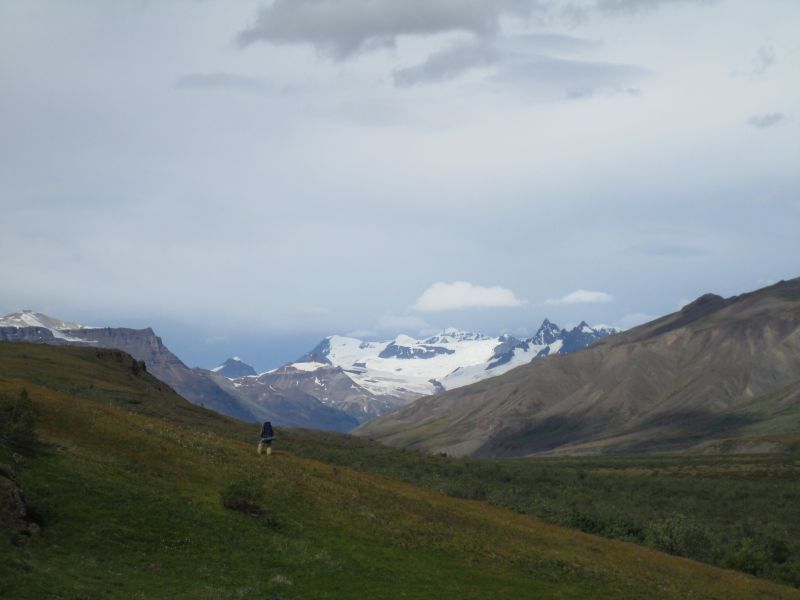
hikingI was contacted recently by Oscar Jaslowski of Microryza (a web platform that allows scientists to post research  ideas and collect contributions from web visitors) about a project getting underway in Alaska by Ellen Jorgensen of Genspace. He suggested it might make a good post for ConservationBytes.com, and I agreed. Thanks for the contribution, Ellen & Oscar.

There’s nothing so final as watching the bush pilot take off in his tiny plane, leaving you stranded in the Alaskan backcountry. We had plenty of food for a three-day expedition, but no satellite phone or any other way to contact anyone. In Alaska, the phrase ‘primordial indifference’ pretty much sums up your relationship with the vast, glacier-carved landscape. Mother Nature does not care if an ant like you lives or dies.

Our destination, the Skolai Valley, is located about 480 km (300 miles) east of Anchorage, in the heart of Wrangell-St. Elias National Park. At a whopping 5.3 million hectares (13 million acres), it is the largest national park in the United States, and probably one of the least-visited. Much of its forbidding territory is snow-covered and similar to the Himalayas. In fact, the size of the massive ice fall that towers over the town of McCarthy, the origin of our flight, is exceeded only by one near Mt. Everest. But winding through the glaciers and snowfields are alpine valleys that are a backpacker’s dream. And Genspace, the nonprofit science-based organisation that I direct, was lucky enough to have received funding in 2012 to launch this expedition to Skolai.

Our  mission: to barcode wild Alaskan plant life. Two of us headed down into the river valley and the other two climbed up to the level of the mountain pass to survey more alpine vegetation. We were carrying portable plant presses – normally something too bulky for backpacking, but necessary for this trip. Read the rest of this entry »


Software tools for conservation biologists

8 04 2013

computer-programmingGiven the popularity of certain prescriptive posts on ConservationBytes.com, I thought it prudent to compile a list of software that my lab and I have found particularly useful over the years. This list is not meant to be comprehensive, but it will give you a taste for what’s out there. I don’t list the plethora of conservation genetics software that is available (generally given my lack of experience with it), but if this is your chosen area, I’d suggest starting with Dick Frankham‘s excellent book, An Introduction to Conservation Genetics.

1. R: If you haven’t yet loaded the open-source R programming language on your machine, do it now. It is the single-most-useful bit of statistical and programming software available to anyone anywhere in the sciences. Don’t worry if you’re not a fully fledged programmer – there are now enough people using and developing sophisticated ‘libraries’ (packages of functions) that there’s pretty much an application for everything these days. We tend to use R to the exclusion of almost any other statistical software because it makes you learn the technique rather than just blindly pressing the ‘go’ button. You could also stop right here – with R, you can do pretty much everything else that the software listed below does; however, you have to be an exceedingly clever programmer and have a lot of spare time. R can also sometimes get bogged down with too much filled RAM, in which case other, compiled languages such as PYTHON and C# are useful.

2. VORTEX/OUTBREAK/META-MODEL MANAGER, etc.: This suite of individual-based projection software was designed by Bob Lacy & Phil Miller initially to determine the viability of small (usually captive) populations. The original VORTEX has grown into a multi-purpose, powerful and sophisticated population viability analysis package that now links to its cousin applications like OUTBREAK (the only off-the-shelf epidemiological software in existence) via the ‘command centre’ META-MODEL MANAGER (see an examples here and here from our lab). There are other add-ons that make almost any population projection and hindcasting application possible. And it’s all free! (warning: currently unavailable for Mac, although I’ve been pestering Bob to do a Mac version).

3. RAMAS: RAMAS is the go-to application for spatial population modelling. Developed by the extremely clever Resit Akçakaya, this is one of the only tools that incorporates spatial meta-population aspects with formal, cohort-based demographic models. It’s also very useful in a climate-change context when you have projections of changing habitat suitability as the base layer onto which meta-population dynamics can be modelled. It’s not free, but it’s worth purchasing. Read the rest of this entry »


De-extinction is about as sensible as de-death

15 03 2013

Published simultaneously in The Conversation.


On Friday, March 15 in Washington DC, National Geographic and TEDx are hosting a day-long conference on species-revival science and ethics. In other words, they will be debating whether we can, and should, attempt to bring extinct animals back to life – a concept some call “de-extinction”.

The debate has an interesting line-up of ecologists, geneticists, palaeontologists (including Australia’s own Mike Archer), developmental biologists, journalists, lawyers, ethicists and even artists. I have no doubt it will be very entertaining.

But let’s not mistake entertainment for reality. It disappoints me, a conservation scientist, that this tired fantasy still manages to generate serious interest. I have little doubt what the ecologists at the debate will conclude.

Once again, it’s important to discuss the principal flaws in such proposals.

Put aside for the moment the astounding inefficiency, the lack of success to date and the welfare issues of bringing something into existence only to suffer a short and likely painful life. The principal reason we should not even consider the technology from a conservation perspective is that it does not address the real problem – mainly, the reason for extinction in the first place.

Even if we could solve all the other problems, if there is no place to put these new individuals, the effort and money expended is a complete waste. Habitat loss is the principal driver of species extinction and endangerment. If we don’t stop and reverse this now, all other avenues are effectively closed. Cloning will not create new forests or coral reefs, for example. Read the rest of this entry »


Whither goest the biggest fish?

7 02 2013
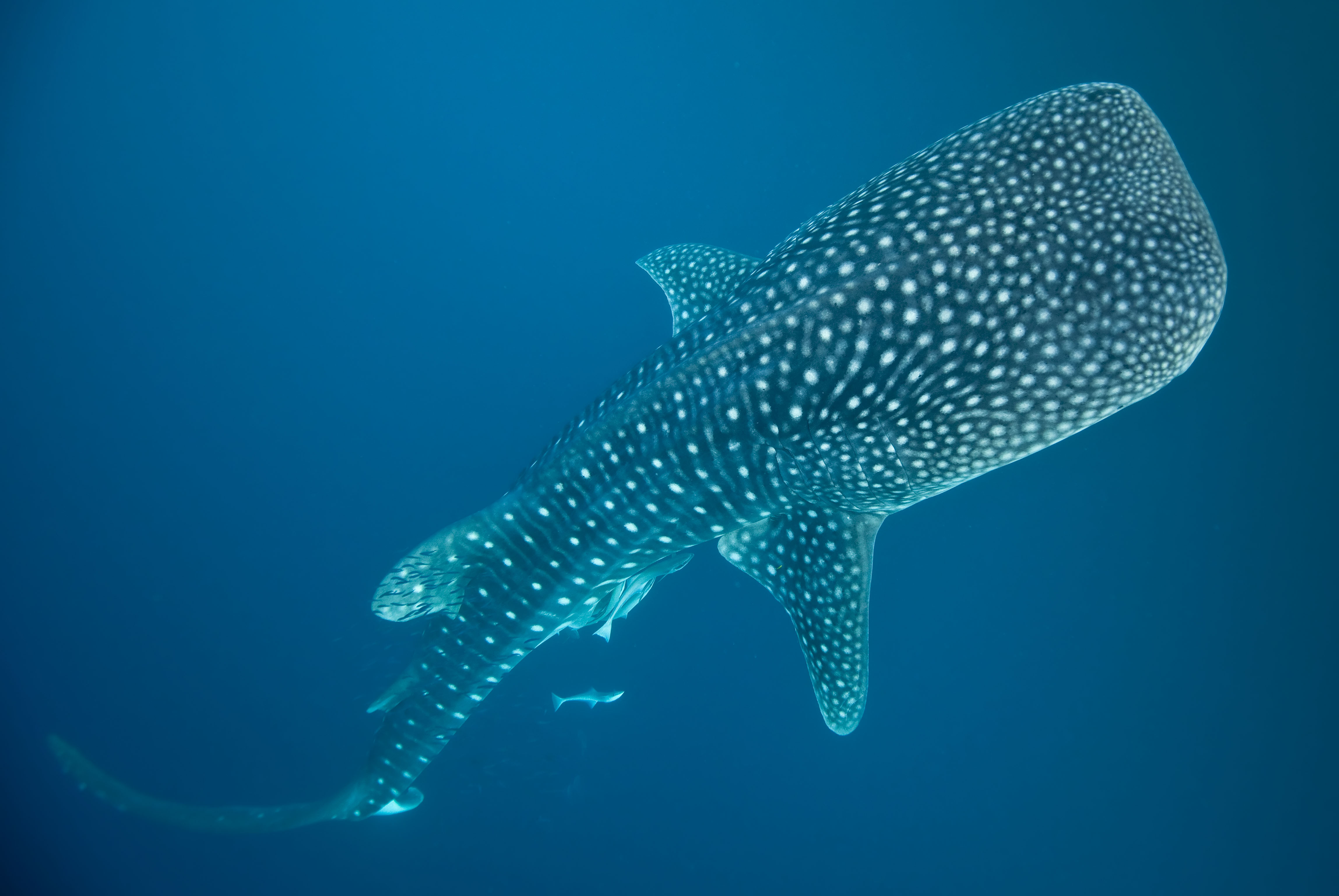
© W Osborn (AIMS)

© W Osborn (AIMS)

Well, since my own institute beat me to the punch on announcing our latest whale shark paper (really, far too keen, ladies & gents), I thought I’d better follow up with a post of my own.

We’ve mentioned our previous whale shark research before (see here and here for previous posts, and see the end of this post for a full list of our whale shark publications), but this is a lovely extension of that work by my recently completed PhD student, Ana Sequeira.

Her latest contribution, Inferred global connectivity of whale shark Rhincodon typus populations just published online in Journal of Fish Biology, describes what a lot of whale shark punters & researchers alike have suspected for a long time – global connectivity of all the oceans’ whale shark populations. The problem hasn’t been a lack of ‘evidence’ for this per se; there is now sufficient evidence from genetic studies that at least on the generational scale (a single generation could be up to 37 years long), populations among the major ocean basins are connected via migration (Castro et al. 2007Schmidt et al. 2009). The problem instead is that no one has ever observed a shark voyage between ocean basins, nor has anyone really suggested how and over what time scales this (must) happen.

Until now, that is. Read the rest of this entry »


Translocations: the genetic rescue paradox

14 01 2013

helphindranceHarvesting and habitat alteration reduce many populations to just a few individuals, and then often extinction. A widely recommended conservation action is to supplement those populations with new individuals translocated from other regions. However, crossing local and foreign genes can worsen the prospects of recovery.

We are all hybrids or combinations of other people, experiences and things. Let’s think of teams (e.g., engineers, athletes, mushroom collectors). In team work, isolation from other team members might limit the appearance of innovative ideas, but the arrival of new (conflictive) individuals might in fact destroy group dynamics altogether. Chromosomes work much like this – too little or too much genetic variability among parents can break down the fitness of their descendants. These pernicious effects are known as ‘inbreeding depression‘ when they result from reproduction among related individuals, and ‘outbreeding depression‘ when parents are too genetically distant.

CB_OutbreedingDepression Photo
Location of the two USA sites providing spawners of largemouth bass for the experiments by Goldberg et al. (3): the Kaskaskia River (Mississipi Basin, Illinois) and the Big Cedar Lake (Great Lakes Basin, Wisconsin). Next to the map is shown an array of three of the 72-litre aquaria in an indoor environment under constant ambient temperature (25 ◦C), humidity (60%), and photoperiod (alternate 12 hours of light and darkness). Photo courtesy of T. Goldberg.

Recent studies have revised outbreeding depression in a variety of plants, invertebrates and vertebrates (1, 2). An example is Tony Goldberg’s experiments on largemouth bass (Micropterus salmoides), a freshwater fish native to North America. Since the 1990s, the USA populations have been hit by disease from a Ranavirus. Goldberg et al. (3) sampled healthy individuals from two freshwater bodies: the Mississipi River and the Great Lakes, and created two genetic lineages by having both populations isolated and reproducing in experimental ponds. Then, they inoculated the Ranavirus in a group of parents from each freshwater basin (generation P), and in the first (G1) and second (G2) generations of hybrids crossed from both basins. After 3 weeks in experimental aquaria, the proportion of survivors declined to nearly 30% in G2, and exceeded 80% in G1 and P. Clearly, crossing of different genetic lineages increased the susceptibility of this species to a pathogen, and the impact was most deleterious in G2. This investigation indicates that translocation of foreign individuals into a self-reproducing population can not only import diseases, but also weaken its descendants’ resistance to future epidemics.

A mechanism causing outbreeding depression occurs when hybridisation alters a gene that is only functional in combination with other genes. Immune systems are often regulated by these complexes of co-adapted genes (‘supergenes’) and their disruption is a potential candidate for the outbreeding depression reported by Goldberg et al. (3). Along with accentuating susceptibility to disease, outbreeding depression in animals and plants can cause a variety of deleterious effects such as dwarfism, low fertility, or shortened life span. Dick Frankham (one of our collaborators) has quantified that the probability of outbreeding depression increases when mixing takes place between (i) different species, (ii) conspecifics adapted to different habitats, (iii) conspecifics with fixed chromosomal differences, and (iv) populations free of genetic flow with other populations for more than 500 years (2).

A striking example supporting (some of) those criteria is the pink salmon (Oncorhynchus gorbuscha) from Auke Creek near Juneau (Alaska). The adults migrate from the Pacific to their native river where they spawn two years after birth, with the particularity that there are two strict broodlines that spawn in either even or odd year – that is, the same species in the same river, but with a lack of genetic flow between populations. In vitro mixture of the two broodlines and later release of hybrids in the wild have shown that the second generation of hybrids had nearly 50% higher mortality rates (i.e., failure to return to spawn following release) when born from crossings of parents from different broodlines than when broodlines were not mixed (4).

Read the rest of this entry »


The biggest go first

11 12 2012
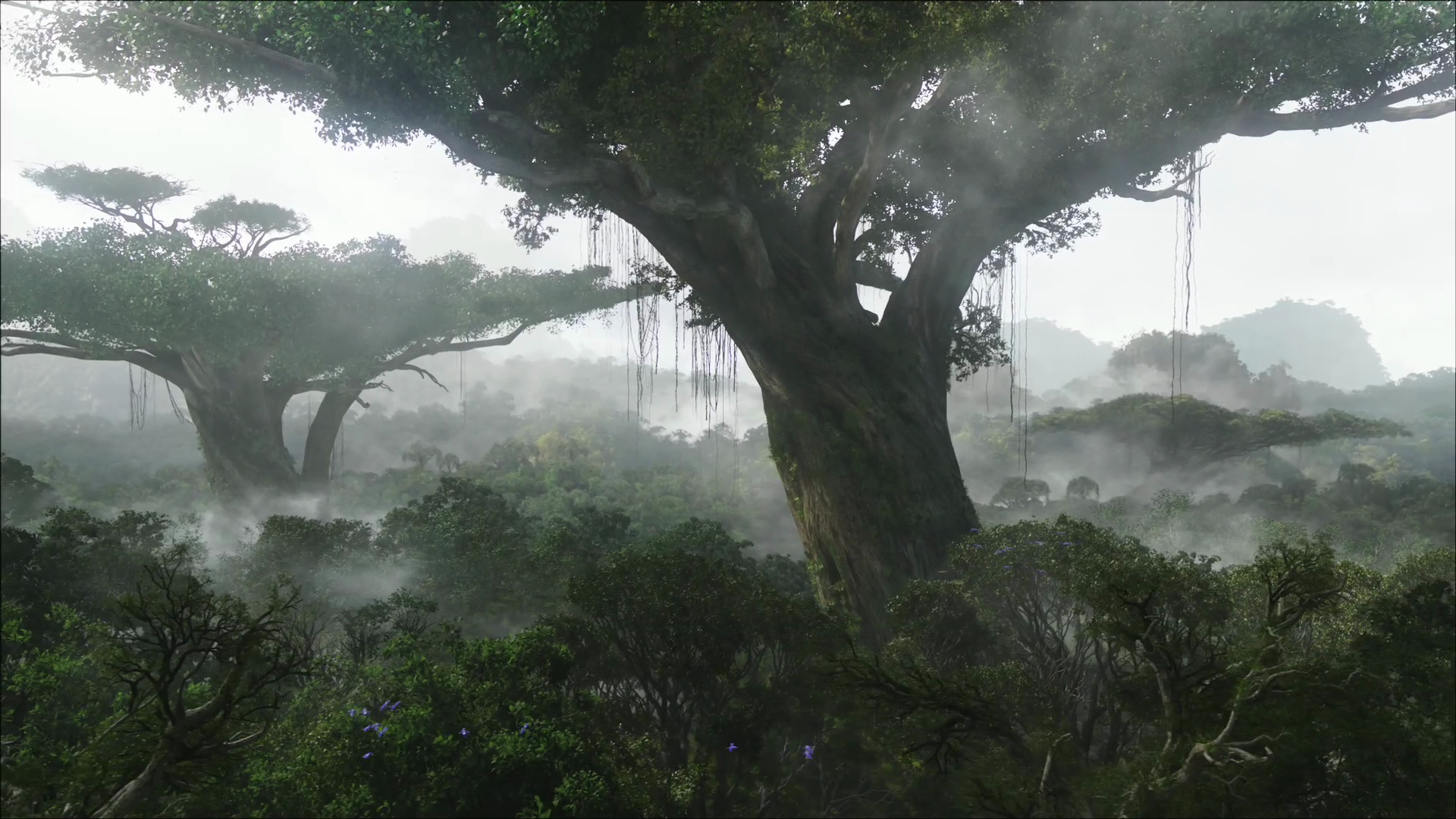
© James Cameron

© James Cameron

The saying “it isn’t rocket science” is a common cliché in English to state, rather sarcastically, that something isn’t that difficult (with the implication that the person complaining about it, well, shouldn’t). But I really think we should change the saying to “it isn’t ecology”, for ecology is perhaps one of the most complex disciplines in science (whereas rocket science is just ‘complicated’). One of our main goals is to predict how ecosystems will respond to change, yet what we’re trying to simplify when predicting is the interactions of millions of species and individuals, all responding to each other and to their outside environment. It becomes quickly evident that we’re dealing with a system of chaos. Rocket science is following recipes in comparison.

Because of this complexity, ecology is a discipline plagued by a lack of generalities. Few, if any, ecological laws exist. However, we do have an abundance of rules of thumb that mostly apply in most systems. I’ve written about a few of them here on ConservationBytes.com, such as the effect of habitat patch size on species diversity, the importance of predators for maintaining ecosystem stability, and that low genetic diversity doesn’t exactly help your chances of persisting. Another big one is, of course, that in an era of rapid change, big things tend to (but not always – there’s that lovely complexity again) drop off the perch before smaller things do.

The prevailing wisdom is that big species have slower life history rates (reproduction, age at first breeding, growth, etc.), and so cannot replace themselves fast enough when the pace of their environment’s change is too high. Small, rapidly reproducing species, on the other hand, can compensate for higher mortality rates and hold on (better) through the disturbance. Read the rest of this entry »


Restoring doomed fish

24 08 2012

I get called a doomsday merchant a lot, mainly because there’s not a lot of good news out there when it comes to biodiversity these days. However, now and again there is a success story worth shouting from the rooftops. This latest post comes from my PhD student, Jarod Lyon (also of the Arthur Rylah Institute in Victoria), who is working on restoring native freshwater fish in Australia’s largest river system – the Murray-Darling. The M-D also happens to be in a lot of trouble because of poor water management and years of neglect. However, some clever research and restoration proves that we can bring biodiversity back from the brink if done right. Jarod has posted here on Conservation Bytes before describing his work, and this latest post provides some detail on one species in particular.

Trout cod Maccullochella macquariensis were once considered to be widespread in the southern tributaries of the Murray-Darling Basin. However over the past fifty years, their distribution and abundance have declined dramatically, due to a number of disturbances including habitat loss, altered flow and temperature patterns, in-stream sedimentation, population fragmentation due to in-stream barriers and over fishing. Trout cod are listed nationally as endangered under the Environment Protection and Biodiversity Conservation Act (EPBC Act 1999) and listed under the Victorian Flora and Fauna Guarantee Act (FFG Act 1988). Trout cod are often accidentally caught when fishing for Murray cod. However, it is illegal to take a trout cod while angling.

Trout cod were historically abundant in the lower Ovens River system in South-Eastern Australia, however were locally extinct by the 1980s. In an attempt to re-introduce a viable population in the Ovens River, hatchery-reared juvenile trout cod were stocked in the Ovens River system for ten years starting in 1997. Our recent manuscript published in Marine and Freshwater Research assesses the success of this stocking regime (particularly in relation to recovery plan objectives) through a variety of techniques, including fish surveys and analysis of gonads, otoliths and genetic structure of the population.

We found that the Ovens River now holds a naturally self-sustaining population of trout cod – that is, the progeny of stocked fishes are now breeding.  Given that most threatened species re-introduction programs worldwide fail, this is somewhat of a good-news story for management of rare animals. In particular, we found that the length of the stocking program was a major factor in its success, as the long time period overcame the years where the survival of the stocked fingerlings was low. Interestingly, most fish to recruit to an adult size were stocked in 2003 or 2004 – meaning if this had been a five-year program, it would most likely have failed. Read the rest of this entry »


Ghosts of bottlenecks past

25 05 2012

© D. Bathory

I’ve just spent the last week at beautiful Linnaeus Estate on the northern NSW coast for my third Australian Centre for Ecological Analysis and Synthesis (ACEAS) (see previous post about my last ACEAS workshop).

This workshop is a little different to my last one, and I’m merely a participant (not the organiser) this time. Our task was to examine the mounting evidence that many Australian species appear to show a rather shallow genetic pool from a (or several) major past bottlenecks.

What’s a ‘bottleneck’? In reference to the form after which it was named, a genetic bottleneck is the genetic diversity aftermath after a population declines to a small size and then later expands. The history of this reduction and subsequent expansion is written in the DNA, because inevitably gene ‘types’ are lost as most individuals shuffle off this mortal coil. In a way, it’s like losing a large population of people who all speak different languages – inevitably, you’d lose entire languages and the recovering population would grow out of a reduced ‘pool’ of languages, resulting in fewer overall surviving languages.

Our workshop focus started, as many scientific endeavours do, rather serendipitously. Several years ago, Jeremy Austin noticed that devils who had died out on the mainland several thousand years ago had a very low genetic diversity, as do modern-day devils surviving in Tasmania. He thought it was odd because they should have had more on the mainland given that was their principal distribution prior to Europeans arriving. He mentioned this in passing to Steve Donnellan one day and Steve announced that he had seem the same pattern in echidnas. Now, echidnas cover most of Australia’s surface, so that was equally odd. Then they decided to look at another widespread species – tiger snakes, emus, etc. – and found in many of them, the same patterns were there. Read the rest of this entry »


Conservation catastrophes

22 02 2012

David Reed

The title of this post serves two functions: (1) to introduce the concept of ecological catastrophes in population viability modelling, and (2) to acknowledge the passing of the bloke who came up with a clever way of dealing with that uncertainty.

I’ll start with latter first. It came to my attention late last year that a fellow conservation biologist colleague, Dr. David Reed, died unexpectedly from congestive heart failure. I did not really mourn his passing, for I had never met him in person (I believe it is disingenuous, discourteous, and slightly egocentric to mourn someone who you do not really know personally – but that’s just my opinion), but I did think at the time that the conservation community had lost another clever progenitor of good conservation science. As many CB readers already know, we lost a great conservation thinker and doer last year, Professor Navjot Sodhi (and that, I did take personally). Coincidentally, both Navjot and David died at about the same age (49 and 48, respectively). I hope that the being in one’s late 40s isn’t particularly presaged for people in my line of business!

My friend, colleague and lab co-director, Professor Barry Brook, did, however, work a little with David, and together they published some pretty cool stuff (see References below). David was particularly good at looking for cross-taxa generalities in conservation phenomena, such as minimum viable population sizes, effects of inbreeding depression, applications of population viability analysis and extinction risk. But more on some of that below. Read the rest of this entry »


Does conservation biology need DNA barcoding?

5 01 2012

In November last year I was invited to participate in a panel discussion onthe role of DNA barcoding in conservation science. The discussion took place during the 4th International Barcode of Life Conference (which I didn’t actually attend) in Adelaide, and was hosted by that media-tart-and-now-director-of-the-Royal-Institution, Dr. Paul Willis.

Paul has recently blogged about the ‘species’ concept as it relates to DNA barcoding, which I highly recommend. It also prompted me to write this post because now the video of the discussion is available online (see below).

Now, the panel was a bit of a funny set-up in a way – I was really one of the only ‘conservation biologists’ represented (Patrick O’Connor and Andy Lowe perhaps excepted), with the rest mainly made up of molecular people (Pete Hollingsworth, Bob Hanner, Karen James) – and I was told prior to the ‘debate’ that I was meant to be the contrarian (i.e., that there is no role for DNA barcoding in conservation).

Fundamentally, I don’t actually embrace the contrarian view on this one given that I see no reason why DNA barcoding can’t enhance or refine our conservation knowledge and skills. But the ‘debate’ did raise some important issues about technological advancements in the application of conservation science to real conservation.

I suppose that prior to getting stuck into the polemic I should define DNA barcoding for the uninitiated; it’s a basic technique that analyses short sequences of DNA with the sole purposes of identifying from which species they come. Imagine walking through the bush with a barcode scanner and pointing at random species you see and getting an instant identification read-out without actually knowing the species beforehand. You can see why it’s called ‘barcoding’ because it is like running products through the check-out to get instant price details. Read the rest of this entry »


Taxonomy in the clouds

4 07 2011

Another post (see previous here, here and here) by my aspiring science-communicator PhD student, Salvador Herrando-Pérez.

Taxonomy uses rigorous rules of nomenclature to classify living beings, so every known species has a given ‘name’ and ‘surname’. The revision of certain taxonomic groups (particularly through genetic analyses) is favouring the proliferation of nominally new species, often propelled by virtue of their charisma and conservation status.

In secondary school, most of my classmates associated the subject ‘Biology’ with unpronounceable Latin taxonomic names, with which all known living beings are branded — ‘Canis lupus’ reads the identity card of humanity’s best friend. When the Swedish monk Carl Linnaeus proposed such binomial nomenclature, he could hardly imagine that, two hundred years later, his terminology would underpin national and transnational budgets for species conservation. Taxonomic nomenclature allows the classification of species into clusters of the same kind (e.g., diatoms, amanitas, polychaetes, skinks), and the calculation of an indispensable figure for conservation purposes: how many species are there at a given location, range, country, continent, or the entire planet?

Traditionally, taxonomists described species by examining their (external and internal) morphological features, the widest consensus being that two individuals of different species could not hybridise. However, a practical objection to that thinking was that if, for instance, an ocean separated two leopard populations, ethics should prevent us from bringing them in contact only to check if they produce fertile offspring, hence justifying a common-species status. Genetics currently provides a sort of ‘remote check’.

New species, new names

Over the last three decades, the boom of genetics and the global modernisation of environmental policies have fostered alternative criteria to differentiate species, populations, and even individuals. As a result, experts have created a colourful lexicon to label management or conservation units or new taxonomical categories such as that of a subspecies1, e.g., Canis lupus dingo for the wild Australian dog (dingo). These changes have shaken the foundations of taxonomy because several definitions of species (biological, phylogenetic, evolutionary) are forced to live under the umbrella of a common nomenclature. Read the rest of this entry »


Classics: Effective population size ratio

27 04 2011

Here’s another concise Conservation Classic highlighted in our upcoming book chapter (see previous entries on this book). Today’s entry comes from a colleague of mine, Dick Frankham, who has literally written the book on conservation genetics. I’ve published with Dick a few times – absolutely lovely chap who really knows his field more than almost any other. It is a great pleasure to include one of his seminal works as a Conservation Classic.

This entry is highly related to our work on minimum viable population size, and the controversial SAFE index (more on that later).

Although it had long been recognized that inbreeding and loss of genetic diversity were accentuated in small, isolated populations (Charlesworth & Charlesworth, 1987), genetic hazards were generally considered to be of less consequence to extinction risk than demographic and environmental stochasticity. Frankham (1995) helped overturn this viewpoint, using a meta-analysis to draw together comprehensive evidence on the ratio of genetically effective to actual population size (Ne:N). Read the rest of this entry »


Classics: demography versus genetics

16 03 2011

Here’s another short, but sweet Conservation Classic highlighted in our upcoming book chapter (see previous entries on this book). Today’s entry comes from long-time quantitative ecology guru, Russ Lande, who is now based at the Silwood Park Campus (Imperial College London).

© IBL

In an influential review, Lande (1988) argued that

“…demography may usually be of more immediate importance than population genetics in determining the minimum viable size of wild populations”.

It was a well-reasoned case, and was widely interpreted to mean that demographic and ecological threats would provide the ‘killer blow’ to threatened species before genetic factors such as inbreeding and fitness effects of loss of genetic diversity had time to exert a major influence on small population dynamics.

Read the rest of this entry »