Celebrities actually doing something positive for conservation?

7 05 2009

When I first saw this on the BBC I thought to myself, “Well, just another toothless celebrity ego-stroke to make rich people feel better about the environmental mess we’re in” (well, I am a cynic by nature). I have blogged before on the general irrelevancy of celebrity conservation. But then I looked closer and saw that this was more than just an ‘awareness’ campaign (which alone is unlikely to change anything of substance). The good Prince of Wales and his mates/offspring have put forward The Prince’s Rainforest Project, which (thankfully) not only endeavours to raise awareness about the true value of rain forests, it actually proposes a mechanism to do so. It took a bit to find, but the 52-page report on the PRP website outlines from very sensible approaches. In essence, it all comes down to money (doesn’t everything?).

Their proposed plan to the United Nations Framework Convention on Climate Change (UNFCCC) details some of the following required changes:

  1. Payments to rain forest nations for not deforesting (establish transaction costs and setting short-term ‘conservation aid’ programmes)

  2. Multi-year service agreements (countries sign up for multi-year targets based on easily monitored performance indicators)

  3. Fund alternative, low-carbon economic development plans (fundamental shifts in development targets that explicitly avoid deforestation)

  4. Multi-stakeholder disbursement mechanisms (using funds equitably and minimising corruption)

  5. Tropical Forests Facility (a World Bank equivalent with the express purpose of organising, disbursing and monitoring anti-deforestation money flow)

  6. Country financing from public and private sources (funding initially derived from developed nations in form of ‘aid’)

  7. Rain forest bonds in private capital markets (value country-level ‘income’ as interest payments and incentives within a trade framework)

  8. Nations participate when ready (giving countries the option to advance at the pace dictated by internal politics and existing development rates)

  9. Accelerating long-term UNFCCC agreement on forests (transition to independence post-package)

  10. Global action to address drivers of deforestation (e.g., taxing/banning products grown on deforested land; ‘sustainability’ certification; consumer pressure; national procurement policies)

Now, I’m no economist, nor do I understand all the market nuances of the proposal, but it seems they are certainly on the right track. The value of tropical (well, ALL) forests to humanity are undeniable, and we’re currently in a state of crisis. Let’s hope the Prince and his mob can get the ball rolling.

For what it’s worth, here’s the video promoting the PRP. I could really care less what Harrison Ford and Pele have to say about this issue because I just don’t believe celebrities have any net effect on public behaviour (perceptions, yes, but not behaviour). But look beyond the superficiality and the cute computer-generated frog to the seriousness underneath. Despite my characteristically cynical tone, I give the PRP full support.

Vodpod videos no longer available.

more about “Rainforest film brings out stars“, posted with vodpod


CJA Bradshaw

Add to FacebookAdd to NewsvineAdd to DiggAdd to Del.icio.usAdd to StumbleuponAdd to RedditAdd to BlinklistAdd to Ma.gnoliaAdd to TechnoratiAdd to Furl


Eastern Seaboard Climate Change Initiative

30 04 2009
© A. Perkins
© A. Perkins

I’ve just spent the last few days in Sydney attending a workshop on the Eastern Seaboard Climate Change Initiative which is trying to come to grips with assessing the rising impact of climate change in the marine environment (both from biodiversity and coastal geomorphology perspectives).

Often these sorts of get-togethers end up doing little more than identifying what we don’t know, but in this case, the ESCCI (love that acronym) participants identified some very good and necessary ways forward in terms of marine research. Being a biologist, and given this is a conservation blog, I’ll focus here on the biological aspects I found interesting.

The first part of the workshop was devoted to kelp. Kelp? Why is this important?

As it turns out, kelp forests (e.g., species such as Ecklonia, Macrocystis, Durvillaea and Phyllospora) are possibly THE most important habitat-forming group of species in temperate Australia (corals and calcareous macroalgae being more important in the tropics). Without kelp, there are a whole host of species (invertebrates and fish) that cannot persist. The Australian marine environment is worth something in the vicinity of $26.8 billion to our economy each year, so it’s pretty important we maintain our major habitats. Unfortunately, kelp is starting to disappear around the country, with southern contractions of Durvillaea, Ecklonia and Hormosira on the east coast linked to the increasing southward penetration of the East Australia Current (i.e., the big current that brings warm tropical water south from Queensland to NSW, Victoria and now, Tasmania). Pollution around the country at major urban centres is also causing the loss or degradation of Phyllospora and Ecklonia (e.g., see recent paper by Connell et al. in Marine Ecology Progress Series). There is even some evidence that disease causing bleaching in some species is exacerbated by rising temperatures.

Some of the key kelp research recommendations coming out of the workshop were:

  1. Estimating the value of kelp to Australians (direct harvesting; fishing; diving)
  2. Physical drivers of change: understanding how variation in the East Australian Current (temperature, nutrients) affects kelp distribution; understanding how urban and agricultural run-off (nutrients, pollutants, sedimentation) affects distribution and health; understanding how major storm events (e.g., East Coast Lows and El Niño-Southern Oscillation) affects long-term persistence
  3. Monitoring: what is the distribution and physical limits of kelp species?; how do we detect declines in ‘health’?; what is the associated biodiversity in kelp forests?
  4. Experimental: manipulations of temperature/nutrients/pathogens in the lab and in situ to determine sensitivities; sensitivity of different life stages; latitudinal transplants to determine localised adaption
  5. Adaptation (management): reseeding; managing run-off; managing fisheries to maintain a good balance of grazers and predators; inform marine protected area zoning; understanding trophic cascades

The second part of the discussion centred on ocean acidification and increasing CO2 content in the marine environment. As you might know, increasing atmospheric CO2 is taken up partially by ocean water, which lowers the availability of carbonate and increases the concentration of hydrogen ions (thus lowering pH or ‘acidifying’). It’s a pretty worrying trend – we’ve seen a drop in pH already, with conservative predictions of another 0.3 pH drop by the end of this century (equating to a doubling of hydrogen ions in the water). What does all this mean for marine biodiversity? Well, many species will simply not be able to maintain carbonate shells (e.g., coccolithophore phytoplankton, corals, echinoderms, etc.), many will suffer reproductive failure through physiological stress and embryological malfunction, and still many more will be physiologically stressed via hypercapnia (overdose of CO2, the waste product of animal respiration).

Many good studies have come out in the last few years demonstrating the sensitivity of certain species to reductions in pH (some simultaneous with increases in temperature), but some big gaps remain in our understanding of what higher CO2 content in the marine environment will mean for biota. Some of the key research questions in this area identified were therefore:

  1. What is the adaptation (evolutionary) potential of sensitive species? Will many (any) be able to evolve higher resistance quickly enough?
  2. In situ experiments outside the lab that mimic pH and pCO2 variation in space and time are needed to expose species to more realistic conditions.
  3. What are the population consequences (e.g., change in extinction risk) of higher individual susceptibility?
  4. Which species are most at risk, and what does this mean for ecosystem function (e.g., trophic cascades)?

As you can imagine, the conversation was complex, varied and stimulating. I thank the people at the Sydney Institute of Marine Science for hosting the fascinating discussion and I sincerely hope that even a fraction of the research identified gets realised. We need to know how our marine systems will respond – the possibilities are indeed frightening. Ignorance will leave us ill-prepared.

CJA Bradshaw

Add to FacebookAdd to NewsvineAdd to DiggAdd to Del.icio.usAdd to StumbleuponAdd to RedditAdd to BlinklistAdd to Ma.gnoliaAdd to TechnoratiAdd to Furl


Plight of frogs

27 04 2009

I’m off to a conference shortly, so this will be brief.

© D. Bickford
© D. Bickford

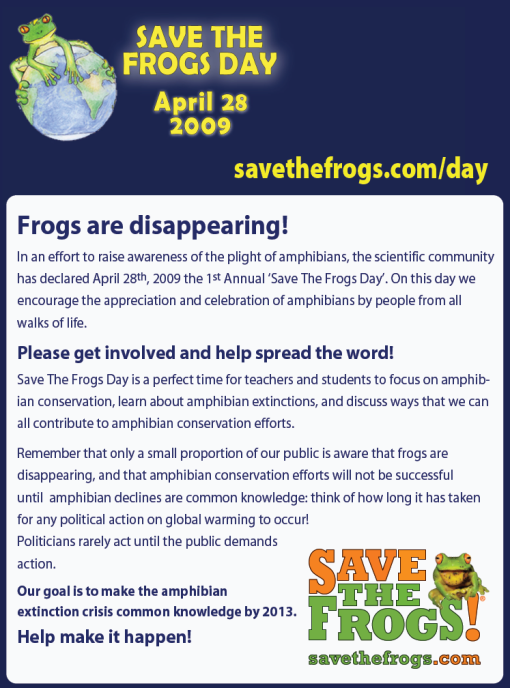
In an effort to raise awareness about the plight of amphibians (see previous posts on ConservationBytes.com regarding drivers of amphibian extinction risk and over-harvesting frogs for human consumption), the mob at SaveTheFrogs.com have initiated ‘Save The Frogs Day’ for tomorrow (28 April 2009).

I encourage people to get involved – there are some particularly good ideas for teachers and students found at the dedicated ‘Save The Frogs Day’ website.

CJA Bradshaw


Perceptions on poverty: the rising Middle Class

16 03 2009

I’m being somewhat ‘lazy’ this week in that I have unfortunately less time to spend on pertinent blog posts than I’d like (lecturing, looming deadlines, that sort of thing). So, I start out this week’s posts with one of my favourite TED talks – Hans Rosling debunks myths about the developing world.

What’s the relevance to biodiversity conservation? I’ll admit, it may appear somewhat tangential, but there are a few important messages (both potentially good and bad):

1. POSSIBLE BENEFIT #1: The rising wealth in the developing world and associated reduction in family size may inevitably curb our human population growth rates;

2. POSSIBLE DISADVANTAGE #1: Rising wealth will necessarily mean more and more consumption, and as we know at least for tropical developing nations, resource consumption is killing biodiversity faster than anywhere else on the planet;

3. POSSIBLE DISADVANTAGE #2: As family wealth rises, so too do opportunities do opportunities for the Anthropogenic Allee effect (consuming rare species just because you can afford to do so);

4. POSSIBLE BENEFIT #2: Better health care associated with rising wealth and lower infant mortality might make education a higher priority, teaching more people about the necessity of safeguarding ecosystem services.

I’m not convinced the advantages will necessarily outweigh the disadvantages; regardless, Prof. Rosling’s amazing 20-minute presentation will both entertain and enlighten. I recommend it for a lunchtime sitting or that late-afternoon attention wain.

CJA Bradshaw

Vodpod videos no longer available.

more about “Hans Rosling shows the best stats you…“, posted with vodpod


Woodland Recovery Initiative

12 03 2009

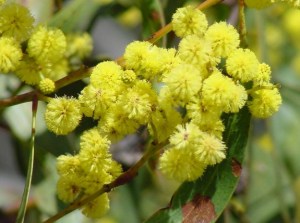
golden wattle (Acacia pycnantha)I’m recommending you view a video presentation (can be accessed by clicking the link below) by A/Prof. David Paton which demonstrates the urgency of reforesting the region around Adelaide. Glenthorne is a 208-ha property 17 km south of the Adelaide’s central business district owned and operated by the University of Adelaide. A major revegetation project called the Woodland Recovery Initative is being organised to achieve the following:

  • reclaim approximately 100 ha of farmland and reconstruct a suitable habitat that encourages the return of native species
  • establish a world-class research centre
  • employ scientists, technicians, teachers and managers to deliver research, educational, community engagement, monitoring and on-ground works
  • develop educational programs that involve local schools in the environmental works, so that young South Australians are engaged in the project and see it as important to the future of their community

In my view, this is a really exciting opportunity to test experimentally the best ways to restore woodlands to maximise biodiversity retention. Once revegetated, the Glenthorne property will link existing reserves to maximise forested area (and as we know, increasing habitat area is one of most effective ways to prevent extinction). The next step is to apply the knowledge gained from the long-term experimentation at Glenthorne to revegetate the regions surrounding Adelaide that have suffered 200 years of heavy deforestation.

I strongly encourage local support of this initiative – it’s not only biodiversity that will benefit – ecosystem services on which the human residents of the greater Adelaide region depend (including extremely important things such as water retention and carbon sequestration) will also be efficiently enhanced by evidence-based ecological restoration of the region. We could certainly use better natural water retention and more carbon sequestration in addition to the re-establishment of many extirpated native species!

VIEW VIDEO BY CLICKING HERE

CJA Bradshaw


Tropical Turmoil II

8 03 2009

In August last year I covered a paper my colleagues (Navjot Sodhi and Barry Brook) and I had in press in Frontiers in Ecology and the Environment entitled Tropical turmoil – a biodiversity tragedy in progress. The paper is now available in the March 2009 issue of the journal (click here to access). We were also fortunate enough to grab the front cover (shown here) and have a dedicated podcast that you can listen to by clicking here about the paper and its findings. I encourage ConservationBytes.com readers to have a listen if they’re interested in learning more about the woeful state of tropical biotas worldwide, and maybe some ways to rectify the problems. The intro to the podcast can be viewed by clicking here.

CJA Bradshaw


One more (excellent) reason to conserve tropical forests

26 02 2009

© K. Sloan Brown

© K. Sloan Brown

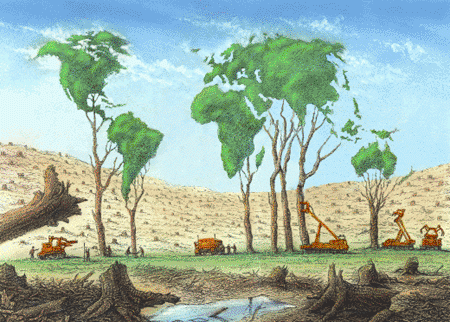
Another nail in the deforesters’ justification coffin – tropical forests are worth more intact than cut down. This one from Mongabay.com and one for the Potential section:

Undisturbed tropical forests are absorbing nearly a fifth of carbon dioxide released annually by the burning of fossil fuels, according to an analysis of 40 years of data from rainforests in the Central African country of Gabon.

Writing in the journal Nature, Simon Lewis and colleagues report that natural forests are an immense carbon sink, helping slow the rise in atmospheric CO2 levels.

“We are receiving a free subsidy from nature,” said Simon Lewis, a Royal Society research fellow at the University of Leeds. “Tropical forest trees are absorbing about 18% of the CO2 added to the atmosphere each year from burning fossil fuels, substantially buffering the rate of climate change.”

But the good news may not last for long. Other research suggests that as tropical forests fall to loggers, dry out due to rising temperatures, and burn, their capacity to absorb carbon is reduced.

The research, which combined the new data from African rainforests with previously published data from the Americas and Asia, lends support to the idea that old-growth forests are critical to addressing climate change. Recent climate negotiations have included debates on compensating tropical countries for reducing emissions from deforestation and forest degradation (“REDD” or “avoided deforestation”).

“To get an idea of the value of the sink, the removal of nearly 5 billion tonnes of carbon dioxide from the atmosphere by intact tropical forests, based on realistic prices for a tonne of carbon, should be valued at around £13 billion per year,” said study co-author Lee White, Gabon’s Chief Climate Change Scientist. “This is a compelling argument for conserving tropical forests.”

“Predominantly rich polluting countries should be transferring substantial resources to countries with tropical forests to reduce deforestation rates and promote alternative development pathways,” added Lewis.

The new findings show that tropical forests account for roughly half of the 8.5 billion tons of carbon that is sequestered in terrestrial sources each year, the balance is absorbed by soils and other types of vegetation. Another 8.5 billion tons dissolved in oceans, leaving 15 billion of the 32 billion tons emitted by humans each year in the atmosphere. Deforestation accounts for roughly 6 billion tons of greenhouse gas emissions – greater than the emissions from all the world’s planes, ships, trucks, and cars.

Note – the contention by Muller-Landau that the Lewis and colleagues’ findings are not realistic due to ‘regeneration’ demonstrates her ignorance of recent work demonstrating the sequestration aspect of mature forests. But more importantly, this cherry-picked gripe, even if it were plausible, is almost of no consequence. With much of the world’s tropical forests already badly degraded or destroyed, there will inevitably be large areas of regenerating forests for centuries to come (i.e., time periods relevant to climate change projections). We haven’t even managed to reduce the RATE of tropical deforestation, so the opportunities for regeneration will persist, making the Lewis result all the more important. Muller-Landau is known for her unrealistic and anti-conservationist views, so her comments are hardly surprising. My advice – take her opinions with a very large shaker of salt (or better yet, ignore entirely).

CJA Bradshaw


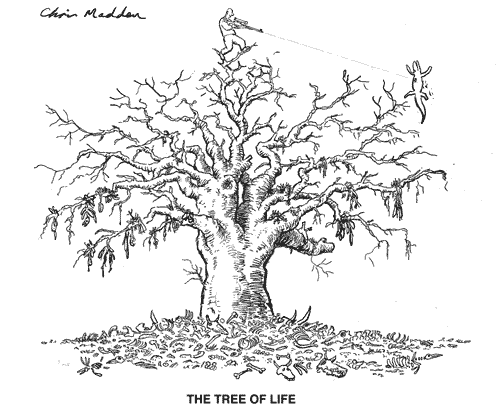
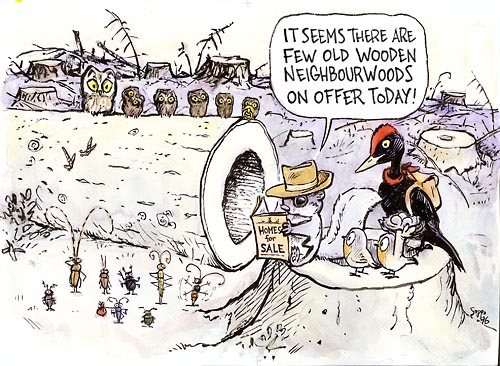
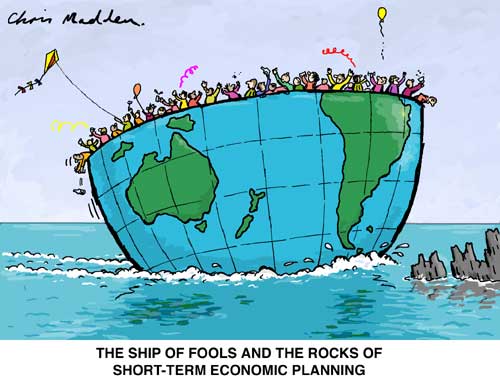
Cartoon guide to biodiversity loss III

24 02 2009

Some more (see previous ‘Cartoon Guide’ instalments I and II) comedic reminders of humanity’s environmental short-sightedness.

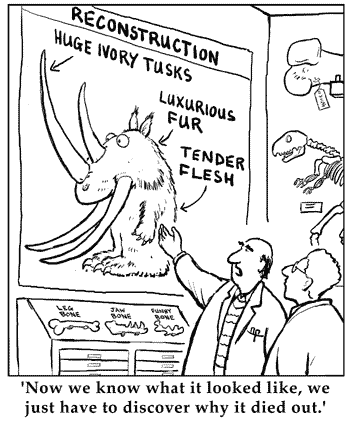
The Call of The Wild

CJA Bradshaw

Add to FacebookAdd to NewsvineAdd to DiggAdd to Del.icio.usAdd to StumbleuponAdd to RedditAdd to BlinklistAdd to Ma.gnoliaAdd to TechnoratiAdd to Furl


Adelaide’s shame – the ‘River’ (toilet) Torrens

12 02 2009

I’ve put this post off for too long as it is, but after today’s ridiculous dereliction of dutymalfunction‘, I can no longer hold my tongue (as it were).

I’ve been living in Adelaide for about a year now, and it’s been slowly dawning on me just how badly managed, for decades, the Torrens River has been. I cycle or run to work along the Torrens cycle path and see and smell the amazing neglect that has accumulated over the years.

The river literally stinks of rot and filth. What am I saying? The Torrens is about as much a river as a trickle in public urinal. Actually, most urinals are a hell of a lot cleaner.

It’s not just the rubbish, the unregulated and ubiquitous pipes of untreated run-off entering every 100 m or so, the almost complete lack of flows during the summer, the terribly regulated flows during the infrequent winter rains, the toxic build-up of blue-green algae, or the choking invasive alien plants lining its entire course, it’s the unbelievable neglect, cover-up and blind ignorance that has lead to one of the most polluted, unnatural and degraded streams in Australia.

And it’s in the middle of Adelaide.

This is how some would rather you think of the Torrens:

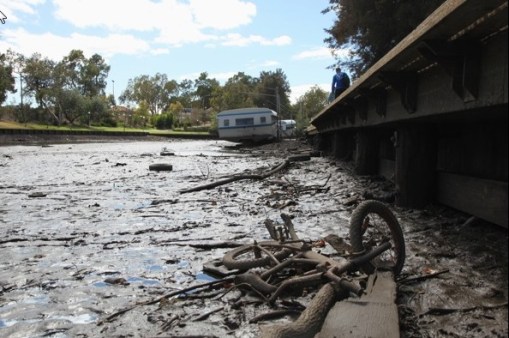
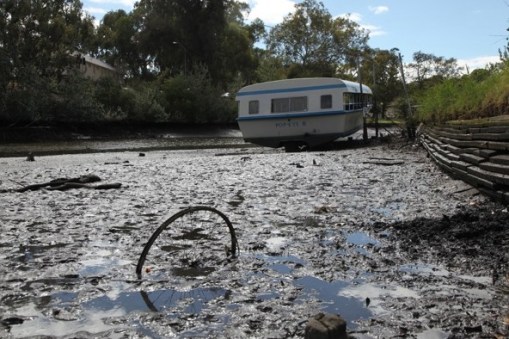
But scratch just a little under the surface and you find this:

and this:

Yes, today’s mishap exposed decades of bad management to the press and the public in general; the authorities can’t wait for a little rain to cover up the ’embarrassment’, but they’ll have to wait a long time. This isn’t “embarrasing“, it’s shameful, disgusting, neglectful, irresponsible and naïve.

Of course, a few people have some partially right approaches to address the problem – indeed, Tourism Minister Jane Lomax-Smith suggests we take advantage of the low water levels and clean up the mess. I couldn’t agree more. However, apart from a few derelict cars pulled out, I’ve not seen a single attempt to get out there and do the job properly. We need to remove every last scrap of rubbish from the Adelaide Hills to Henley beach – this means the trolleys, oil drums, bicycles, wheelie bins and other assorted crap (I think I even saw a fridge today). I’m willing to help.

We need a major overhaul, clean-up and rethink about this so-called ‘river’.

The ‘drought’ that Australia seems convinced will some day end will not go away – climate change will ensure that, along with the persistence of some very bad urban water policies. We need to get used to the idea that we’ll have less and less water, not suddenly more when the ‘drought’ ends. Sorry, the drought won’t end.

So, what can we do? There are some very obvious improvements that can be made:

1. Undeniably, a massive, catchment-wide, get-your-hands-dirty clean-up is required to remove the astounding array of rubbish.

2. Yes, we have reduced flows and will continue to have in this state for a long time to come. So, we need to minimise waste. A paper I recently covered in ConservationBytes.com detailed how a water neutrality programme would benefit water supply AND biodiversity. The idea is relatively simple – the water allocated to industry, residents, etc. is taxed according to total use. The monies received are then invested in removing all those invasive reeds, rushes, palms, bamboo, etc. that line the water course (all of these are water-hungry pests that have no business being there in the first place). In one fell swoop you have an employment program, an incentive to use less water, a ‘water-neutrality’ scheme that makes water-intensive products (e.g., fruits and vegetables) more attractive to environmentally conscious consumers, removal of alien species that consume too much water and prevent native species from proliferating, and importantly, a functioning ecosystem that provides water more regularly.

3. Get rid or divert all those untreated storm pipes from all and sundry lining the Torrens along its path. I’ve seen campground drainages with all sorts of filth flow into the river, car park drainages and inappropriate garden waste ooze into the river right along its course.

4. Let’s get rid of the horses grazing on the denuded banks of the river near Henley Beach. What the hell is livestock doing grazing in the middle of a city?

5. Remove golf courses lining the river.

6. Debunk the myth that bore water used to keep artificially lush gardens in the wealthier neighbourhoods lining the Torrens is somehow not subject to the same problems as rainfall-sourced water. 72 % of the Torrens’ water use is residential. We waste far too much of the underground water on these ridiculous gardens in our desert city – I’m sorry, the prominent display of ‘Bore Water in Use’ in so many gardens around Adelaide is contemptuous and ignorant.

Can we mend the Torrens? Yes, yes we can. A lot of rivers is much worse shape have been brought back to life over the years (see examples here, here and here), so we can do it too. It just takes a little political will, some intelligent policy, a bit of money and public commitment.

CJA Bradshaw

P.S. I recommend you avoid swimming anywhere near Henley Beach for the next few weeks.

Add to FacebookAdd to NewsvineAdd to DiggAdd to Del.icio.usAdd to StumbleuponAdd to RedditAdd to BlinklistAdd to Ma.gnoliaAdd to TechnoratiAdd to Furl


Cloning for conservation – stupid and wasteful

5 02 2009
© J. F. Jaramillo

© J. F. Jaramillo

I couldn’t have invented a better example of a Toothless conservation concept.

I just saw an article in the Independent (UK) about cloning for conservation that has rehashed the old idea yet again – while there was some interesting thoughts discussed, let’s just be clear just how stupidly inappropriate and wasteful the mere concept of cloning for biodiversity conservation really is.

1. Never mind the incredible inefficiency, the lack of success to date and the welfare issues of bringing something into existence only to suffer a short and likely painful life, the principal reason we should not even consider the technology from a conservation perspective (I have no problem considering it for other uses if developed responsibly) is that you are not addressing the real problem – mainly, the reason for extinction/endangerment in the first place. Even if you could address all the other problems (see below), if you’ve got no place to put these new individuals, the effort and money expended is an utter waste of time and money. Habitat loss is THE principal driver of extinction and endangerment. If we don’t stop and reverse this now, all other avenues are effectively closed. Cloning won’t create new forests or coral reefs, for example.

I may as well stop here, because all other arguments are minor in comparison to (1), but let’s continue just to show how many different layers of stupidity envelop this issue.

2. The loss of genetic diversity leading to inbreeding depression is a major issue that cloning cannot even begin to address. Without sufficient genetic variability, a population is almost certainly more susceptible to disease, reductions in fitness, weather extremes and over-exploitation. A paper published a few years ago by Spielman and colleagues (Most species are not driven to extinction before genetic factors impact them) showed convincingly that genetic diversity is lower in threatened than in comparable non-threatened species, and there is growing evidence on how serious Allee effects are in determining extinction risk. Populations need to number in the 1000s of genetically distinct individuals to have any chance of persisting. To postulate, even for a moment, that cloning can artificially recreate genetic diversity essential for population persistence is stupidly arrogant and irresponsible.

3. The cost. Cloning is an incredibly costly business – upwards of several millions of dollars for a single animal (see example here). Like the costs associated with most captive breeding programmes, this is a ridiculous waste of finite funds (all in the name of fabricated ‘conservation’). Think of what we could do with that money for real conservation and restoration efforts (buying conservation easements, securing rain forest property, habitat restoration, etc.). Even if we get the costs down over time, cloning will ALWAYS be more expensive than the equivalent investment in habitat restoration and protection. It’s wasteful and irresponsible to consider it otherwise.

So, if you ever read another painfully naïve article about the pros and cons of cloning endangered species, remember the above three points. I’m appalled that this continues to be taken seriously!

CJA Bradshaw

Add to FacebookAdd to NewsvineAdd to DiggAdd to Del.icio.usAdd to StumbleuponAdd to RedditAdd to BlinklistAdd to Ma.gnoliaAdd to TechnoratiAdd to Furl


Cartoon guide to biodiversity loss

30 01 2009

I’m taking Barry Brook‘s great idea on the Cartoon Guide to Global Warming Denial and applying it to biodiversity and habitat loss.

There are a lot of these sorts of things out there (amazing how we laugh at tragedy), so I will probably do subsequent posts as I find good candidates (suggestions welcome).

ucs-cartoonearthbin

CJA Bradshaw

Add to FacebookAdd to NewsvineAdd to DiggAdd to Del.icio.usAdd to StumbleuponAdd to RedditAdd to BlinklistAdd to Ma.gnoliaAdd to TechnoratiAdd to Furl


Marine conservation in South Australia

26 01 2009

© U.R. Zimmer

© U.R. Zimmer

Just before the holidays last year I participated in the Conservation Council of South Australia‘s (CCSA) Coast & Marine in a Changing Climate Summit 2008. It was an interesting, mature and intelligent summit with some good recommendation surfacing. Although I certainly didn’t agree with all the recommendations (view the entire report here), I must say up front that I have been very impressed with the CCSA’s approach in their ‘Blueprint’ summit series to address South Australia’s environmental problems.

Many environmental groups, especially regional ones, are seen by many as raving environists1 with little notion for balance or intelligent debate. CCSA is definitely not one of those. They are very careful to engage with scientists, public servants, industry leaders and politicians to hone their recommendations into something realistic and useful. Indeed, I am now certain the only way to convince people of the necessity of dealing with the world’s environmental mess is to make intelligent, scientifically defensible arguments about how environmental degradation worsens our quality of life (yes, this is the principal aim of ConservationBytes.com). So, good on the CCSA for a rationale approach.

Enough about the CCSA for now – let’s move onto some of their marine-related recommendations. I won’t reprint the entire summary document here, but a few things are worthy of repetition:

Significantly increase the amount of resources available for marine species research and taxonomy, especially for non-commercial species.

Despite my obvious conflict of interest, I couldn’t agree more. One of the principal problems with our ability to plan for inevitable environmental change to lessen the negative outcomes for biodiversity, industry and people in general is that we have for too long neglected marine research in Australia. Given that most Australians live near the coast and almost all of us rely on the oceans in some way, it is insane that marine research in this country is funded almost as an afterthought. How can we possibly know what we’re doing to our life-support system if we don’t even know how it works?

Take climate change for example. The majority of climate change predictions are merely single-species predictions based on physiological tolerances. Most almost completely ignore species interactions. Any given species must compete with, eat and be eaten by others, so it’s insane not to combine community relationships into predictive models.

A strict monitoring regime should be implemented in all ports and harbours to continuously monitor [sic] for introduced marine pests in order to inform better management, in conjunction with the species outlined in the Monitoring section of the National System for the Prevention and Management of Marine Pest Incursions.

Many people, and scientists in particular, have traditionally turned their noses up at so-called ‘monitoring’. However, as a few Australian colleagues of mine recently observed, the marine realm has a huge, gaping hole in monitoring data necessary to determine the future of Australia’s marine environment. Take it from me, a scientist who regularly uses time-series data to infer long-term patterns (see Publications), it’s essential that we have more long-term data on species distributions, reproductive output, survival, etc. to make inference about the future.

Recreational fishing should be licensed, with the license fees being directed towards increased research of non-commercial species and education of recreational fishers.

I really like this one. It seems South Australia is the only state in the country that doesn’t have mandatory recreational fishing licences. Absolute madness. Given the capacity of recreational fishing to outstrip commercial harvests for some species (e.g., King George whiting Sillaginodes punctatus), we need vastly better monitoring via licences to determine local impacts. Not to mention the necessary generation of money to support monitoring and research, which to the average recreational fisher, would not be such a hefty price to pay. The political drive to keep the status quo is woefully outdated and counter-productive. See one of my previous posts on the potential impacts of recreational fishing.

There is a need for a co-ordinated, state/Adelaide-wide stormwater strategy. Currently the Stormwater Management Authority examines individual projects but does not manage a bigger picture with a co-ordinated approach.

A colleague of mine recently published an article showing how South Australian waters, being more oligotrophic on average than other areas of the country, are particularly susceptible to nutrient overloading. The main losers are seagrasses and macroalgae (kelp) forests – the Adelaide metropolitan coast has lost up to 70 % of its kelp forests since major urbanisation began last century.

There are many more recommendations that you can peruse at your leisure, and many of them will be updated this year once the CCSA incorporates all the received comments. I thank them for the opportunity to take part in their worthy aims.

CJA Bradshaw

1My colleague, Barry Brook, invented this excellent term to describe those people who blindly support anything ‘green’ without really thinking of the consequences. It’s also a great way to differentiate serious ‘environmentalists’ and conservation biologists from raving ‘greenies’.

Add to FacebookAdd to NewsvineAdd to DiggAdd to Del.icio.usAdd to StumbleuponAdd to RedditAdd to BlinklistAdd to Ma.gnoliaAdd to TechnoratiAdd to Furl


Some biodiversity with your coffee, Sir?

7 12 2008

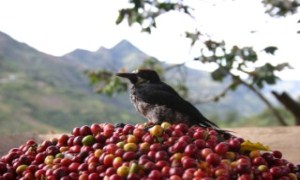
Bird on coffee cherriesI really like my coffee. I’m sure there are a few billion humans who claim likewise, but I think I could safely categorise myself as a coffee snob. I cannot even contemplate placing powdery crystals into a cup of hot water and calling it ‘coffee’, let alone imbibing the toxic concoction. I spend way too much money on very slow-roasted, dark, oily beans that have to be ground to the exact espresso consistency to use in my Bialetti cafettiera, and I’ll search high and low for the best coffee produced in any city in which I live or to where I travel (N.B. Still haven’t found what I call a ‘great’ coffee in the CBD of Adelaide – suggestions welcome). I really, really like good coffee.

What the hell does all this meandering preamble have to do with biodiversity conservation? I’m happy you asked. With environmentally conscious consumers now demanding some sort of ‘green’ certification for many products (e.g., no palm oil, carbon-neutral, fair trade, etc.), coffee has also been targeted as a good product to certify for harvest and production of lower environmental impact than has been done traditionally. Well, how do you measure ‘green-ness’ in a product? For coffee, there are some good ways.

A recent paper (and candidate for the Potential list) by Aaron Gove and colleagues published in Conservation Letters entitled Ethiopian coffee cultivation – implications for bird conservation and environmental certification demonstrates how the cultivation of this NATIVE Ethiopian plant (Coffea arabica) can enhance or restore the biological value of lowland agricultural areas. This species of ‘highland coffee’ is harvested from forests (where it evolved and now grows naturally) and from more intensive farmland. Interestingly, this species needs some shade to grow, so trees must generally be planted in the agricultural areas to allow this. Result? Gove and colleagues found that birds who otherwise wouldn’t be seen dead in the agricultural areas were attracted there by the maintenance and proliferation of the shade trees, thus reducing regional extinction risk for fragmented populations dependent on forest remnants. The flip side was that coffee cultivation in forest remnants reduced bird diversity because of the obvious trade-off between some native trees and intensive agricultural crops.

So, the next time you’re thinking of buying certified coffee, think of this – the cultivation of INDIGENOUS (did I say that loudly enough?) coffee species requiring shade promotes the proliferation of native forest trees to reduce the extinction risk of threatened birds. The number of boxes to tick on my coffee-snobbery list has just grown by two.

CJA Bradshaw

Add to FacebookAdd to NewsvineAdd to DiggAdd to Del.icio.usAdd to StumbleuponAdd to RedditAdd to BlinklistAdd to Ma.gnoliaAdd to TechnoratiAdd to Furl


Addressing biodiversity decline at home

30 11 2008

© CJA Bradshaw

© CJA Bradshaw

I was recently invited to sit on a panel organised by the Conservation Council of South Australia (CCSA) to discuss issues of marine and coastal conservation under a rapidly changing climate. The results of that will be released soon (I’ll blog about that later), but in the interim, I want to highlight to readers of ConservationBytes.com how the CCSA is setting up the challenge to local governments to implement positive steps forward for the conservation of biodiversity in South Australia. I’m reproducing the executive summary of their Summit Report on Biodiversity in a Changing Climate (download full report here). It’s a good example of how we can all (industry, government, academia) work together to promote our own well-being.

…South Australia’s biodiversity is declining at an alarming rate. It has been suggested by scientists that it will take many millions of years for biodiversity to recover from the impacts of humans over the last 200 years. In South Australia the key threat to biodiversity is land clearance; clearance of remnant native vegetation and subsequent fragmentation of habitat for native fauna species. Other key threats to biodiversity in South Australia include:

  • Habitat fragmentation from development
  • Competition from introduced flora
  • Predation by introduced animals
  • Direct competition for food, shelter and resources from introduced fauna
  • Introduced diseases
  • Collection of firewood from remnant vegetation
  • Altered fire regimes
  • Inappropriate grazing/overgrazing
  • Inappropriate management activities
  • Water extraction/pollution
  • Climate change – including increasing oceanic temperatures and acidification

Much of South Australia’s economy is based on the use of biological resources and the need to maintain ecosystem services. This includes activities such as tourism and recreation, nature conservation, pastoralism, agriculture, horticulture, and forestry which all benefit from healthy ecosystems.

Our primary production systems require biodiversity for pest control/management, soil conservation, enhanced productivity and stabilisation, pollination, salinity amelioration, and water purification.

To address and reverse current biodiversity trends our society must recognise, understand and value biodiversity. Land managers, indigenous communities, local industries, government and the broader community may value biodiversity in different ways, however conservation and effective management of biodiversity is essential to ensure the continuation of these values for future generations. Biodiversity values may include:

  • Production value for the provision of food, medicines, clothing and building materials consumed by society
  • Ecosystem services for the maintenance of ecosystem services (natural storing and cycling of nutrients, stabilising soil formation, protection of water resources and breakdown of pollution), and maintenance of biodiversity
  • Socio-economic value for recreation, research, education and monitoring, and cultural values
  • Future value to maintain the capacity to identify future direct or indirect utilitarian value

The South Australian government has recognised the significance of biodiversity through integrated approaches such as the National Strategy for the Conservation of Australia’s Biological Diversity, a joint initiative of the Commonwealth and State and Territory governments. This strategy supports other intergovernmental agreements, such as the National Strategy for Ecologically Sustainable Development, the National Greenhouse Strategy, the National Forest Policy Statement, the Decade of Landcare Plan, the Wetlands Policy of the Commonwealth Government of Australia, the Inter-Governmental Agreement on the Environment, the Natural Heritage Trust Partnership Agreements and the National Framework for the Management and Monitoring of Australia’s Native Vegetation.

The South Australian government has also implemented its own biodiversity focused strategies including No Species Loss, NatureLinks, Tackling Climate Change, and the State Strategic Plan. Regional biodiversity plans are being facilitated to assist in the management and rehabilitation of natural habitats throughout regions of the state.

However, despite the government’s recognition of biodiversity as a serious issue, South Australia’s biodiversity continues to decline at an alarming rate. Actions for conservation, management and awareness raising must be backed by political will and be targeted and supported financially.

Investing in biodiversity is essential to maintaining ecosystems services and in turn to provide dividends to human health and wellbeing. Policies and regulations must ensure all stakeholders are accountable for their environmental footprint and role in implementing change for the future protection of our state’s biodiversity. The aim of this report is to provide policy recommendations to increase the effectiveness of biodiversity conservation in South Australia’s changing climate…

to view the Report’s recommendations, read on… Read the rest of this entry »


More greenwashing from the Malaysian oil palm industry

17 11 2008

© ?

© ?

A recent article from Mongabay.com. What the good doctor Basiron appears to gloss over rather well is that his own country’s very economic future, well-being of its citizenry and long-term sustainability absolutely depends on maintaining large tracts of intact primary forest. The value of its forests far outweighs the short-term ‘development’ gains from palm oil. The backflips, greenwashing and overt profiteering will only be a blip in Malaysia’s economic development, so keep on with the propaganda while you can, Basiron. Why don’t you call a spade a spade – it’s greed, not so-called ‘development’ that’s raping your own country.

Dr. Yusof Basiron, the controversial CEO of the Malaysian Palm Oil Council (MPOC), blogs about the sustainability of palm oil.

Scientists should compare the biodiversity oil palm plantations to other industrial monocultures, not the rainforests they replace, said Dr. Yusof Basiron, CEO of the Malaysian Palm Oil Council (MPOC), in a post on his blog.

“I would also like to encourage environmental scientists not to compare the biodiversity of an agricultural crop such as the oil palm with that of rain forests,” he wrote. “The findings would not win you a Nobel price [sic].”

“If a comparison is to be made, the biodiversity of the oil palm, an agricultural crop, should be compared with that for soyabean or rapeseed, corn or sugarcane or other agricultural crops,” he continued. “Biodiversity that exists in the oil palm plantations is a bonus for all to benefit, while we enjoy the supply of oil for our food need, in addition to palm oil – an agricultural commodity – helping to promote economic growth not only in the developing countries but also in all other countries involved in using the product.”

Oil palm plantations and logged over forest in Malaysian Borneo. While much of the forest land converted for oil palm plantations in Malaysia has been logged or otherwise been zoned for logging, expansion at the expense of natural and protected forest does occur in the country. Reserve borders are sometimes redrawn to facilitate logging and conversion to plantations.
Basiron’s comments are noteworthy because until now he has maintained that oil palm plantations are “planted forests” rather than an industrial crop. Oil palm plantations are indeed biologically impoverished relative to even heavily logged forests – a study published earlier this year showed that oil palm plantations retain less than one-sixth the biodiversity of old growth forests and less than a quarter of that in secondary forests. However when compared with soy or rapeseed farms, which support almost no wildlife, oil palm plantations look a little less like biological deserts. Small measures – like maintaining and restoring forest cover along waterways, conserving peatlands and high value conservation areas, and reducing the use of fertilizers and pesticides – can help augment the biodiversity of existing plantations.

Basiron also noted that oil palm is the highest yielding conventional oilseed on the market – far outstripping the production per unit of area for rapeseed and soy. While its high yield makes oil palm exceedingly profitable – especially during the recent boom in palm oil prices, which recently ended, coinciding with falling oil prices – it also theoretically means that less land needs to be converted to produce the same amount of oil had the land been cultivated with other crops. The problem, say environmentalists, stems from the practice of clearing natural forest for oil palm plantations, which reduces biodiversity, hurts ecosystem functioning, and results in greenhouse gas emissions. While Basiron and the MPOC have flatly denied that natural forest has been cleared for the establishment of oil palm plantations, ground and satellite evidence proves the claims quite false. Nevertheless there are opportunities to covert degraded and abandoned agricultural lands for oil palm, mostly in Indonesia, rather than Malaysia where most land is already under cultivation or forested. While returns would be lower without the “logging subsidy” generated by selling the timber harvested from forest land prior to planting with oil palm, such plantations would face less criticism from the environmental community.

A third point made by Basiron is that Malaysia is a sovereign nation that has same rights to develop its economy as industrialized nations have had. The same concept has been put forth by Brazil over deforestation of the Amazon and China with regards to its rising greenhouse gas emissions.

Basiron writes,

“It is also unethical, immoral and somewhat patronizing for NGOs of the developed countries in Europe to ask developing countries such as Malaysia to stop developing its land. Asking Malaysia to stop developing its land will lead to conflicts and misunderstanding because some states in Malaysia have not yet had the opportunity to develop their agricultural land as they were until a few decades ago under oppressive colonial rule.”

“Sarawak [a state on the island of Borneo] which achieved independence from the British later than Peninsular Malaysia had only developed 8% of its land for agriculture compared to the UK which has over 70% of its land under agriculture. But there are still opportunities in Sarawak and other parts of Malaysia to develop degraded logged over land for planting rubber and oil palm to increase the country’s sources of foreign exchange while not involving the deforestation of the pristine permanent forests.”

While Basiron’s comments will likely be dismissed or ignored by many environmental groups, his points are not the sort that typically provoke outcry from the green lobby. MPOC lands in the most trouble with the environmental community when it attempts to deliberately mislead the marketplace on the environmental performance of palm oil, an approach the group has used repeatedly in recent years with advertising campaigns, “greenwashing” and “astroturfing” techniques, and other propaganda. Of course MPOC is not alone in using these tactics – it follows the model employed widely by industries ranging from U.S. ethanol producers to big oil. The problem for MPOC – and other industries – is that misleading campaigns are only providing more fodder for its enemies. But MPOC is hedging itself. The palm oil marketing group is also employing a second strategy that may pay better dividends in the long run – an effort to improve the environmental performance of palm oil. While the initiative – known as the Roundtable on Sustainable Palm Oil (RSPO) – has stumbled a bit coming out of the blocks, it appears there may be a market for certified palm oil, which would offer producers a premium for mitigating the environmental and social impacts of producing the vegetable oil. The first RSPO-certified palm oil is expected the reach Europe today. Unilever, one of the world’s largest consumers of palm oil, has already pledged to buy only certified palm oil by 2015.

See also previous posts on oil palm at ConservationBytes.com:

Unexpected benefits of falling palm oil prices

Oil palm plantatations destroying tropical biodiversity

Another nail in Borneo’s biodiversity coffin


Save the biggest (and closest) ones

12 11 2008

© somapsychedelica

© somapsychedelica

A paper we recently wrote and published in Biological Conservation entitled Using biogeographical patterns of endemic land snails to improve conservation planning for limestone karsts lead by my colleague Reuben Clements of WWF has recently been highlighted at Mongabay.com. Our main result was that following the basic tenets of the theory of island biogeography, the largest, least-isolated limestone karsts in South East Asia (biologically rich limestone outcrops formed millions of years ago by the deposition of calcareous marine organisms) have the greatest proportion of endemic land snails (a surrogate taxon for uniqueness among other species). I’ll let Rhett at Mongabay.com do the rest (see original post):

Researchers have devised a scientific methodology for prioritizing conservation of limestone karsts, biologically-rich outcroppings found in Southeast Asia and other parts of the world. The findings are significant because karsts – formed millions of years ago by sea life – are increasingly threatened by mining and other development.

Using data from 43 karsts across Peninsular Malaysia and Sabah, authors led by Reuben Clements of WWF-Malaysia reported that larger karsts support greater numbers of endemic snails – a proxy for biological uniqueness among other species – making them a priority for protection.

“Larger areas tend to have greater habitat diversity, which enables them so support a higher number of unique species.” said Clements, species conservation manager for WWF-Malaysia.

With a variety of habitats including sinkholes, caves, cliffs, and underground rivers, and separated from other outcroppings by lowland areas, karsts support high levels of endemism among insects, snails, fish, plants, bats and other small mammals. Animals that inhabit karsts provide humans with important services including pest control, pollination, and a sustainable source of income (swiftlet nests used for bird nest soup, a Chinese delicacy, are found in karst caves). But karsts are increasingly under threat, especially from mining for cement and marble. An earlier study by Clements showed that limestone quarrying is increasing in Southeast Asia by 5.7 percent a year – the highest rate in the world – to fuel the region’s construction boom. The biodiversity of karsts – especially among animals that move to surrounding areas to feed – is also at risk from destruction of adjacent ecosystems, often by loggers or for agriculture.

Clements says the new study, which is published in the November issue of the journal Biological Conservation, will help set conservation priorities for karsts.

“The protection of karsts has been mainly ad hoc and they are usually spared from quarrying by virtue of being situated within state and national parks, or if they possess some form of aesthetic or cultural value,” he said. “Taking Peninsular Malaysia for example, our results suggest that we should set aside larger karsts on both sides of the Titiwangsa mountain range for protection if we want to maximize the conservation of endemic species. Protecting karsts on one side of the mountain chain is not enough.”

“With our findings, we hope that governments would reconsider issuing mining concessions for larger karsts as they tend to be more biologically important,” Clements said.


Potsdam Initiative: Economics of Ecosystems and Biodiversity

1 10 2008

moneygamiA recent report from the European Union with which I was marginally involved has been published online.

The meeting of the environment ministers of the G8 countries and upcoming industrialising countries took part in what has been dubbed the ‘Potsdam Initiative‘ have commissioned a series of reports on the ‘Economic significance of the global loss of biological diversity’.

I quote:

‘In a global study we will initiate the process of analysing the global economic benefit of biological diversity, the costs of the loss of biodiversity and the failure to take protective measures versus the costs of effective conservation.’

The first stage was the report was entitled ‘The Economics of Ecosystems & Biodiversity (TEEB)’. Mr Pavan Sukhdev, Managing Director and Head of Deutsche Bank’s Global Markets business in India, and a Founder-Director of the ‘Green Accounting for Indian States Project’, an initiative of the Green Indian States Trust (GIST) to set up an economic valuation and national accounting framework to measure sustainability for India, was recently appointed as the independent Study Leader.

The overall aims of the study are to evaluate the costs of the loss of biodiversity and the associated decline in ecosystem services, and to compare them with the costs of effective conservation and ‘sustainable’ use. The overall aim is to increase awareness of the value of biodiversity and ecosystem services to facilitate the development of cost-effective policy responses to the problem.

The interim report is available here, and the final report will be published shortly on the dedicated website here. The title of the final report of the first phase is THE ECONOMICS OF ECOSYSTEMS AND BIODIVERSITY: SCOPING THE SCIENCE.

I was involved specifically in Section 4.13 ‘Regulation of Natural Hazards’ which are defined ‘as infrequent natural phenomena that – during a relatively short period of time – pose a high level of threat to [human] life, health or property. These include seismic events (volcanic eruptions, earthquakes, tsunamis), extreme weather events (hurricanes, floods), avalanches and land slides. My contribution was mainly with respect to the role of deforestation on flood risk.

The report was jointly prepared by Ana Rodrigues and Andrew Balmford.

CJA Bradshaw

Add to FacebookAdd to NewsvineAdd to DiggAdd to Del.icio.usAdd to StumbleuponAdd to RedditAdd to BlinklistAdd to Ma.gnoliaAdd to TechnoratiAdd to Furl


Oil palm plantations destroying tropical biodiversity

18 09 2008

This one from MongaBay.com

Conversion of primary rainforest to an oil palm plantation results in a loss of more than 80 percent of species, reports a new comprehensive review of the impacts of growing palm oil production. The research is published in the journal Trends in Ecology and Evolution.

“By compiling scientific studies of birds, bats, ants and other species, we were able to show that on average, fewer than one-sixth of the species recorded in primary forest were found in oil palm,” said led author Emily Fitzherbert from the Zoological Society of London and University of East Anglia. “Degraded forest, and even alternative crops such as rubber and cocoa, supported higher numbers of species than oil palm plantations.”

The results confirm that oil palm plantations are a poor substitute for natural forests when it comes to conservation of biological diversity.

The study warns that burgeoning demand for palm oil for use in foods, household products, and biodiesel will continue to fuel expansion in the tropics. Because planters can subsidize operations by the initial logging for forest plots, it seems likely that forests will continue to fall for new plantations despite the availability of large tracts of degraded and abandoned land.

“There is enough non-forested land suitable for plantation development to allow large increases in production without large impacts on tropical forests, but as a result of political inertia, competing priorities and lack of capacity and understanding, not to mention high levels of demand for timber and palm oil from wealthy consumers, it is still often cheaper and easier to clear forests. Unless these conditions change quickly, the impacts of oil palm expansion on biodiversity will be substantial,” the authors conclude.

See also Koh & Wilcove. 2008. Is oil palm agriculture really destroying tropical biodiversity? Conservation Letters 1: 60-64

CJA Bradshaw


Primary forests as global carbon sinks

13 09 2008

Certainly one for the Potential list…

p00zbhgzA new paper by Sebastien Luyssaert  and colleagues in Nature entitled Old-growth forests as global carbon sinks deserves a mention here.

Many have argued under the climate change mitigation banner that so-called ‘old-growth’ (let’s call them primary forests henceforth to distinguish them from [usually] younger secondary forests) do not provide net carbon uptake because most of their growth has occurred in the past. In other words, they provide a carbon store, but do not take much more out of the atmosphere once they’ve attained a certain ecological equilibrium. This was a major impediment for the argument that protecting such forests could be achieved economically by valuing them in national or global carbon-trading schemes. It was a shame considering that it seems the economic incentives to protect such forests were falling on deaf ears because (a) governments and industry tend to regard the quick turn-around option of timber extraction as more economically sensible and (b) of the difficulty of valuing ecosystem services provided by primary forests.

But not so, say Luyssaert and colleagues! After scouring an array of studies and databases they conclude that forests between 15 and 800 years of age do in fact continue to uptake carbon and so are not carbon ‘neutral’. Brilliant! With this latest evidence in hand, I hope the economic incentives to preserve the little remaining primary forests around the world and the ecosystem services they provide will encourage governments and industry to invest more in their preservation than their destruction. It’s worth noting here too that once such forests are destroyed (e.g., timber extraction), the majority of their stored carbon (both actual and potential via future carbon uptake) are released back to the atmosphere, thus exacerbating climate change. As such, valuing the preservation of pristine forests on the carbon-trading market should receive a far higher weighting that secondary plantations or other sequestration schemes.

CJA Bradshaw

Add to FacebookAdd to NewsvineAdd to DiggAdd to Del.icio.usAdd to StumbleuponAdd to RedditAdd to BlinklistAdd to Ma.gnoliaAdd to TechnoratiAdd to Furl


Another nail in Borneo’s biodiversity coffin

11 09 2008

I always try to tell myself never “to underestimate the stupidity of the human race”; yet, I am too often surprised. Borneo is one of the places in the tropics with the worst track record in destroying ecosystems and the services they provide. The Malaysian government couldn’t be more self-destructive with this sort of policy.

This item from Mongaybay.com:

© CIFOR

© CIFOR

The Malaysian government is attempting to quell indigenous opposition to logging in the rainforests of Borneo by deposing community leaders and replacing them with timber company stakeholders, reports an environmental group.

The Bruno Manser Fund, a Swiss NGO that works on behalf of the forest people of Sarawak, Malaysia, says that the headmen of at least three Penan communities that have opposed logging have lost official recognition from Malaysian authorities over the past year. The government is working to install representatives who support logging.

“The non-recognition of the elected community headmen by the Sarawak State Government is a clear violation of the UN Declaration of the Rights of Indigenous Peoples,” stated the Bruno Manser Fund in an emailed release. “The Declaration, which has been adopted by Malaysia, upholds in its article 18 the right of indigenous communities ‘to participate in decision-making in matters which would affect their rights, through representatives chosen by themselves in accordance with their own procedures’.”
The Penan communities of Sarawak have waged a long battle against the logging of their ancestral homeland in the rainforests of Sarawak, on the island of Borneo. The opposition reached a crescendo in the 1980s when the Penan blocked logging roads and sabotaged equipment. The Malaysian government responded by closing down media access to the area and sending in armed forces to violently supress the unrest. While the attacks on the Penan brought international attention to the rapacious logging of Borneo’s forests, they had relatively little long-term impact.

Today the Penan face not only loggers but increased pressure from oil palm developers as well as an ambitious government plan to dam several rainforest rivers in an effort to generate electricity to attract aluminum smelters and mineral refiners.

Add to FacebookAdd to NewsvineAdd to DiggAdd to Del.icio.usAdd to StumbleuponAdd to RedditAdd to BlinklistAdd to Ma.gnoliaAdd to TechnoratiAdd to Furl