Global pollinator declines

11 03 2010

Mention anything about ecosystem services – those ecological functions arising from the interactions between species that provide some benefit (source of food/clean water, health, etc.) to humanity1 – and one of the most cited examples is pollination.

It’s really a no-brainer, hence its popularity as an example. Pollinators (mainly insects, but birds, bats and other assorted species too) don’t exist to pollinate plants; rather, their principal source of food acquisition happens to spread around the gametes of the plants they regularly visit. Evolution has favoured the dependence of species in such ways because the mutualism benefits all involved, and in some cases, this dependence has become obligate. So when the habitats that pollinators need to survive are reduced or destroyed, inevitably their population sizes decline and the plants on which they feed lose their main sources of gene-spreading.

So what? Well, about 80 % of all wild plant species require insect pollinators for fruit and seed set, and about 75 % of all human crops require pollination by insects (mostly bees). So it’s pretty frightening to consider that although our global population is at 6.8 billion and growing rapidly, our main food pollinators (bees) are declining globally (see also previous post on bee declines). Indeed, domestic honey bee stocks have declined in the USA by 59 % since 1947 and in Europe by 25 % since 1985. Scared yet?

Another thing people don’t tend to get is that a bee cannot live on rapeseed alone. Most pollinators require intact forests to complete many of their other life history requirements (breeding, shelter, etc.) and merely forage occasionally in crop lands. Cut down all the adjacent bush, and your crops will suffer accordingly.

These, and other titbits to keep you awake at night and worry about what your grandchildren might eat are highlighted in a recent review in Trends in Ecology and Evolution by Potts and colleagues entitled Global pollinator declines: trends, impacts and drivers.

What’s driving all this loss? Several things, but it’s mainly due to ‘land-use change’ (a bullshit word people use generally to mean habitat loss, fragmentation and degradation). However, invasive species competition, pathogens and parasites, and climate change (and the synergies amongst all of these) are all contributing.

It always amazes me when people ask me why biodiversity is important. Despite the overwhelming knowledge we’ve accumulated about how functioning ecosystems make the planet liveable, despite it just being plainly stupid to think that humans are somehow removed from normal biological processes, and even with such in-your-face examples of global pollinator declines and the real, extremely worrying implication for food supplies, many people just don’t seem to get it. Every tree you cut down, every molecule of carbon dioxide you release, every drop of water you waste will punish you and your family directly for generations to come. How much more self-evident can you get?

Humanity seems to have a very poorly developed sense of self-preservation.

CJA Bradshaw

1It’s amazingly arrogant and anthropocentric to think of anything in ecosystems as ‘providing benefits to humanity’. After all, we’re just another species in a complex array of species within ecosystems – we just happen to be one of the numerically dominant ones, excel at ecosystem ‘engineering’ and as far as we know, are the only (semi-) sentient of the biologicals. Although the concept of ecosystem services is, I think, an essential abstraction to place emphasis on the importance of biodiversity conservation to the biodiversity ignorant, it does rub me a little the wrong way. It’s almost ascribing some sort of illogical religious perspective that the Earth was placed in its current form for our eventual benefit. We might be a fairly new species in geological time scales, but don’t think of ecosystems as mere provisions for our well-being.

ResearchBlogging.orgPotts, S., Biesmeijer, J., Kremen, C., Neumann, P., Schweiger, O., & Kunin, W. (2010). Global pollinator declines: trends, impacts and drivers Trends in Ecology & Evolution DOI: 10.1016/j.tree.2010.01.007

Add to FacebookAdd to DiggAdd to Del.icio.usAdd to StumbleuponAdd to RedditAdd to BlinklistAdd to TwitterAdd to TechnoratiAdd to Yahoo BuzzAdd to Newsvine


Begging for votes

5 03 2010

Research Blogging Awards 2010

Just a quick one to ask ConservationBytes.com readers to vote for the blog in ResearchBlogging.org‘s 2010 Research Blogging Awards.

ConservationBytes.com has been placed as a finalist in the ‘Best Blog – Conservation or Geosciences’ category.

Note – only registered bloggers themselves can vote.

CJA Bradshaw


Covet thy neighbour’s paddock

2 03 2010

Apologies to Matt Lucas

An interesting, frightening and and at the same time, potentially hopeful, paper has just appeared in the latest issue of Proceedings of the Royal Society B.

Co-authored by a previously highlighted Conservation Scholar Georgina Mace, the paper by Boakes and colleagues entitled Extreme contagion in global habitat clearance is probably one of the strongest bits of evidence to save intact habitat complexes.

Yes, yes – save things so you don’t destroy biodiversity. What’s new about that? Well, Boakes and colleagues’ paper shows at a global scale that over the last 300+ years, the chance of a patch of forest or grassland being converted to agriculture depends strongly on whether its neighbouring patch has already been cleared. In other words, once you start to hack away at natural habitats, people have a tendency to assume that it’s perfectly acceptable to do the same on their own patch.

The authors reprojected the History Database of the Global Environment to ~ a 50 x 50 grid and examined habitat conversion from 1700 to the present (in 50-year increments). Using some rather simple contagion statistics, they came up with the startling result that conversion probability is strongly dependent on whether an adjacent cell has already been converted.

What I found particularly frightening was the result that:

“A quarter of the world’s forest and half its grassland has been converted to agriculture since 1700.”

and from a personal perspective, the highest grassland conversion rates have happened in Australasia (the highest forest conversion rates have been in the Indo-Malay and Nearctic realms).

What are the implications for conservation? In my opinion, this relatively simple analysis and result confirms even more strongly that saving intact, large tracts of forest and grassland is essential for long-term biodiversity conservation. Cutting up the forest into smaller bits not only compromises biodiversity via fragmentation, it ends up speeding the entire process of full-scale ecosystem degradation.

‘Get ’em protected while they’re still unaffected’.

CJA Bradshaw

ResearchBlogging.orgBoakes, E., Mace, G., McGowan, P., & Fuller, R. (2009). Extreme contagion in global habitat clearance Proceedings of the Royal Society B: Biological Sciences, 277 (1684), 1081-1085 DOI: 10.1098/rspb.2009.1771

Add to FacebookAdd to DiggAdd to Del.icio.usAdd to StumbleuponAdd to RedditAdd to BlinklistAdd to TwitterAdd to TechnoratiAdd to Yahoo BuzzAdd to Newsvine


Vodcast on killing for conservation

24 02 2010

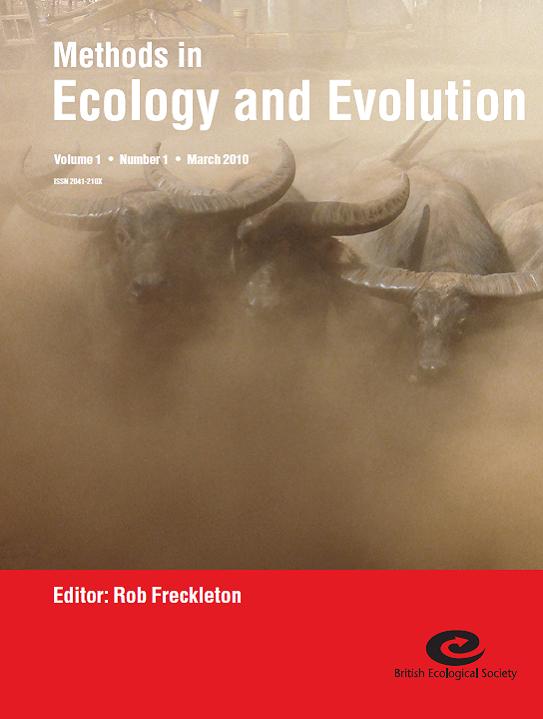
The inaugural issue of Methods in Ecology and Evolution came out today (see first issue editorial) and I am very pleased not only that our paper (Spatially explicit spreadsheet modelling for optimizing the efficiency of reducing invasive animal density) made it into the the paper line-up (see previous ConservationBytes.com post on the paper here), we also managed to score the journal’s cover image (buffalo image shown right: Asian swamp buffalo Bubalus bubalis introduced to Australia in the early 19th Century now populate much of the tropical north and cause severe environmental disturbances to savanna and wetland ecosystems. Despite a broad-scale cull of hundreds of thousands of free-ranging buffalo occurring in the 1980s and 1990s to eradicate brucellosis and tuberculosis, the population is recovering and continuing to threaten protected areas such as Kakadu National Park. A small wild harvest of several thousand buffalo occurs each year in Arnhem Land where mustering is aided by helicopters and on-ground vehicles. The buffalo pictured are housed in temporary holding pens and then shipped for live export. Photo credit: Jesse Northfield).

I also had the opportunity to chat with Journal Coordinator, Graziella Iossa, via Skype about the paper, and they have put up a YouTube vodcast of the interview itself. You can also check it out here.

Summary: Corey Bradshaw answers what is the main idea behind his work with co-authors, “Spatially explicit spreadsheet modelling for optimising the efficiency of reducing invasive animal density”. Further, he explains how their model advances methodology in ecology and evolution and finally shows how it could be applied by wildlife manager and practitioners with basic knowledge of computer models. Their Excel-spreadsheet ‘Spatio-Temporal Animal Reduction’ (S.T.A.R.) model is designed specifically to optimise the culling strategies for feral pigs, buffalo and horses in Kakadu National Park (northern Australia), but Corey explains how their aim was to make it easy enough for anyone to use and modify it so that it could be applied to any invasive species anywhere.

Congratulations to Editor-in-Chief Rob Freckleton, Graziella and the Associate Editors for a great first issue. Other titles include:

Keep them coming!

CJA Bradshaw

Add to FacebookAdd to DiggAdd to Del.icio.usAdd to StumbleuponAdd to RedditAdd to BlinklistAdd to TwitterAdd to TechnoratiAdd to Yahoo BuzzAdd to Newsvine


Cartoon guide to biodiversity loss VII

23 02 2010

And the silliness continues…

See also full stock of previous ‘Cartoon guide to biodiversity loss’ compendia here.

Enjoy!

CJA Bradshaw

Add to FacebookAdd to DiggAdd to Del.icio.usAdd to StumbleuponAdd to RedditAdd to BlinklistAdd to TwitterAdd to TechnoratiAdd to Yahoo BuzzAdd to Newsvine


Inbreeding bad for invasives too

18 02 2010

I just came across this little gem of a paper in Molecular Ecology (not, by any stretch, a common forum for biodiversity conservation-related papers). It’s another one of those wonderful little experimental manipulation studies I love so much (see previous examples here and here).

I’ve written a lot before about the loss of genetic diversity as a contributing factor to extinction risk, via things like Allee effects and inbreeding depression. I’ve also posted blurbs about our work and that of others on what makes particular species prone to become extinct or invasive (i.e., the two sides of the same evolutionary coin). Now Crawford and Whitney bring these two themes together in their paper entitled Population genetic diversity influences colonization success.

Yes, the evolved traits of a particular species will set it up either to do well or very badly under rapid environmental change, and invasive species tend to be those with rapid generation times, defence mechanisms, heightened dispersal capacity and rapid growth. However, such traits generally only predict a small amount in the variation in invasion success – the other being of course propagule pressure (a composite measure of the number of individuals of a non-native species [propagule size] introduced to a novel environment and the number of introduction events [propagule number] into the new host environment).

But, that’s not all. It turns out that just as reduced genetic diversity enhances a threatened species’ risk of extinction, so too does it reduce the ‘invasiveness’ of a weed. Using experimentally manipulated populations of the weedy herb Arabidopsis thaliana (mouse-ear cress; see if you get the joke), Crawford & Whitney measured greater population-level seedling emergence rates, biomass production, flowering duration and reproduction in high-diversity populations compared to lower-diversity ones. Maintain a high genetic diversity and your invasive species has a much higher potential to colonise a novel environment and spread throughout it.

Of course, this is related to propagule pressure because the more individuals that invade/are introduced the more times, the higher the likelihood that different genomes will be introduced as well. This is extremely important from a management perspective because it means that well-mixed (outbred) samples of invasive species probably can do a lot more damage to native biodiversity than a few, genetically similar individuals alone. Indeed, most introductions probably don’t result in a successful invasion mainly because they don’t have the genetic diversity to get over the hump of inbreeding depression in the first place.

The higher genetic (and therefore, phenotypic) variation in your pool of introduced individuals, the great the chance that at least a few will survive and proliferate. This is also a good bit of extra proof for our proposal that invasion and extinction are two sides of the same evolutionary coin.

CJA Bradshaw

ResearchBlogging.orgCrawford, K., & Whitney, K. (2010). Population genetic diversity influences colonization success Molecular Ecology DOI: 10.1111/j.1365-294X.2010.04550.x

Bradshaw, C., Giam, X., Tan, H., Brook, B., & Sodhi, N. (2008). Threat or invasive status in legumes is related to opposite extremes of the same ecological and life-history attributes Journal of Ecology, 96, 869-883 DOI: 10.1111/j.1365-2745.2008.01408.x

Add to FacebookAdd to DiggAdd to Del.icio.usAdd to StumbleuponAdd to RedditAdd to BlinklistAdd to TwitterAdd to TechnoratiAdd to Yahoo BuzzAdd to Newsvine


February Issue of Conservation Letters

13 02 2010

Diver at Great Barrier Reef, Australia

Hard to believe we’re already at Volume 3 – introducing the latest issue of Conservation Letters (Volume 3, Issue 1, February 2010). For full access, click here.

Note too we’ve jumped from 5 to 6 papers per issue. Congratulations to all our authors. Keep those submissions coming!

CJA Bradshaw

Add to FacebookAdd to DiggAdd to Del.icio.usAdd to StumbleuponAdd to RedditAdd to BlinklistAdd to TwitterAdd to TechnoratiAdd to Yahoo BuzzAdd to Newsvine


Every extra human means fewer animals

8 02 2010

© The Sun

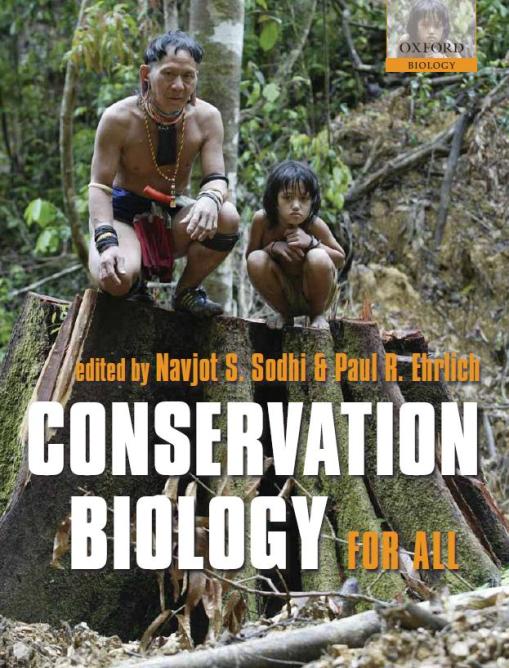
As promised some time ago when I blogged about the imminent release of the book Conservation Biology for All (edited by Navjot Sodhi and Paul Ehrlich), I am now posting a few titbits from the book.

Today’s post is a blurb from Paul Ehrlich on the human population problem for conservation of biodiversity.

The size of the human population is approaching 7 billion people, and its most fundamental connection with conservation is simple: people compete with other animals., which unlike green plants cannot make their own food. At present Homo sapiens uses, coopts, or destroys close to half of all the food available to the rest of the animal kingdom. That means that, in essence, every human being added to the population means fewer individuals can be supported in the remaining fauna.

But human population growth does much more than simply cause a proportional decline in animal biodiversity – since as you know, we degrade nature in many ways besides competing with animals for food. Each additional person will have a disproportionate negative impact on biodiversity in general. The first farmers started farming the richest soils they could find and utilised the richest and most accessible resources first (Ehrlich & Ehrlich 2005). Now much of the soil that people first farmed has been eroded away or paved over, and agriculturalists increasingly are forced to turn to marginal land to grow more food.

Equally, deeper and poorer ore deposits must be mined and smelted today, water and petroleum must come from lower quality resources, deeper wells, or (for oil) from deep beneath the ocean and must be transported over longer distances, all at ever-greater environmental cost [my addition – this is exactly why we need to embrace the cheap, safe and carbon-free energy provided by nuclear energy].

The tasks of conservation biologists are made more difficult by human population growth, as is readily seen in the I=PAT equation (Holdren & Ehrlich 1974; Ehrlich & Ehrlich 1981). Impact (I) on biodiversity is not only a result of population size (P), but of that size multiplied by affluence (A) measured as per capita consumption, and that product multiplied by another factor (T), which summarises the technologies  and socio-political-economic arrangements to service that consumption. More people surrounding a rainforest reserve in a poor nation often means more individuals invading the reserve to gather firewood or bush meat. More poeple in a rich country may mean more off-road vehicles (ORVs) assulting the biota – especially if the ORV manufacturers are politically powerful and can succesfully fight bans on their use. As poor countries’ populations grow and segments of them become more affluent, demand rises for meat and automobiles, with domesticated animals competing with or devouring native biota, cars causing all sorts of assults on biodiversity, and both adding to climate disruption. Globally, as a growing population demands greater quantities of plastics, industrial chemicals, pesticides, fertilisers, cosmetics, and medicines, the toxification of the planet escalates, bringing frightening problems for organisms ranging from polar bears to frogs (to say nothing of people!).

In sum, population growth (along with escalating consumption and the use of environmentally malign technologies) is a major driver of the ongoing destruction of populations, species, and communities that is a salient feature of the Anthropocene. Humanity , as the dominant animal (Ehrlich & Ehrlich 2008), simply out competes other animals for the planet’s productivity, and often both plants and animals for its freshwater. While dealing with more limited problems, it therefore behoves every conservation biologist to put part of her time into restraining those drivers, including working to humanely lower [sic] birth rates until population growth stops and begins a slow decline twoard a sustainable size (Daily et al. 1994).

Incidentally, Paul Ehrlich is travelling to Adelaide this year (November 2010) for some high-profile talks and meetings. Stay tuned for coverage of the events.

CJA Bradshaw

Add to FacebookAdd to DiggAdd to Del.icio.usAdd to StumbleuponAdd to RedditAdd to BlinklistAdd to TwitterAdd to TechnoratiAdd to Yahoo BuzzAdd to Newsvine


Salamander Longshanks – breed them out

3 02 2010

© M. Dawson

Patrick McGoohan in his role as the less-than-sentimental King Edward ‘Longshanks’ in the 1995 production of ‘Braveheart’ said it best in his references to the invocation of ius primæ noctis:

If we can’t get them out, we’ll breed them out

What a charmer.

Dabbling in molecular ecology myself over the past few years with some gel-jockey types (e.g., Dick Frankham [author of Introduction to Conservation Genetics], Melanie Lancaster, Paul Sunnucks, Yuji Isagi inter alios), I’m quite fascinated by the application of good molecular techniques in conservation biology. So when I came across the paper by Fitzpatrick and colleagues entitled Rapid spread of invasive genes into a threatened native species in PNAS, I was quite pleased.

When people usually think about invasive species, they tend to think ‘predator eating naïve native prey’ or ‘weed outcompeting native plant’. These are all big problems (e.g., think feral cats in Australia or knapweed in the USA), but what people probably don’t think about is the insidious concept of ‘genomic extinction’. This is essentially a congener invasive species breeding with a native one, thus ‘diluting’ the native’s genome until it no longer resembles its former self. A veritable case of ‘breeding them out’.

Who cares if at least some of the original genome remains? Some would argue that ‘biodiversity’ should be measured in terms of genetic diversity, not just species richness (I tend to agree), so any loss of genes is a loss of biodiversity. Perhaps more practically, hybridisation can lead to reduced fitness, like we observed in hybridised fur seals on Macquarie Island.

Fitzpatrick and colleagues measured the introgression of alleles from the deliberately introduced barred tiger salamander (Ambystoma tigrinum mavortium) into threatened California tiger salamanders (A. californiense) out from the initial introduction site. While most invasive alleles neatly stopped appearing in sampled salamanders not far from the introduction site, three invasive alleles persisted up to 100 km from the introduction site. Not only was the distance remarkable for such a small, non-dispersing beastie, the rate of introgression was much faster than would be expected by chance (60 years), suggesting selection rather than passive genetic drift. Almost none of the native alleles persisted in the face of the three super-aggressive invasive alleles.

The authors claim that the effects on native salamander fitness are complex and it would probably be premature to claim that the introgression is contributing to their threatened status, but they do raise an important management conundrum. If species identification rests on the characterisation of a specific genome, then none of the native salamanders would qualify for protection under the USA’s Endangered Species Act. They believe then that so-called ‘genetic purity’ is an impractical conservation goal, but it can be used to shield remaining ‘mostly native’ populations from further introgression.

Nice study.

CJA Bradshaw

ResearchBlogging.orgFitzpatrick, B., Johnson, J., Kump, D., Smith, J., Voss, S., & Shaffer, H. (2010). Rapid spread of invasive genes into a threatened native species Proceedings of the National Academy of Sciences DOI: 10.1073/pnas.0911802107

Lancaster, M., Bradshaw, C.J.A., Goldsworthy, S.D., & Sunnucks, P. (2007). Lower reproductive success in hybrid fur seal males indicates fitness costs to hybridization Molecular Ecology, 16 (15), 3187-3197 DOI: 10.1111/j.1365-294X.2007.03339.x

Add to FacebookAdd to DiggAdd to Del.icio.usAdd to StumbleuponAdd to RedditAdd to BlinklistAdd to TwitterAdd to TechnoratiAdd to Yahoo BuzzAdd to Newsvine


Parochial conservation

30 01 2010
© cagiecartoons.com

A little bit of conservation wisdom for you this weekend.

In last week’s issue of Nature, well-known conservation planner and all-round smart bloke, Reed Noss (who just happens to be an editor for Conservation Letters and Conservation Biology), provided some words of extreme wisdom. Not pulling any punches in his Correspondence piece entitled Local priorities can be too parochial for biodiversity, Noss essentially says ‘don’t leave the important biodiversity decisions to the locals’.

He argues rather strongly in his response to Smith and colleagues’ opinion piece (Let the locals lead) that local administrators just can’t be trusted to make good conservation decisions given their focus on local economic development and other political imperatives. He basically says that the big planning decisions should be made at grander scales that over-ride local concerns because, well, the big fish in their little ponds can’t be trusted (nor do they have the training) to do what’s best for regional biodiversity conservation.

I couldn’t agree more – he states:

“Academic researchers, conservation non-governmental organizations and other ‘foreign’ interests tend to be better informed, less subject to local political influence and more experienced in conservation planning than local agencies.”

Of course, being part of the first group, I’m probably a little biased, but I dare say that we’ve got a lot better handle on the science beyond saving biodiversity, as well as a better understanding of why that’s important, than your average regional representative, village council, chief, Lord Mayor or state member. Sure, ‘engage your stakeholders’ (I have images of shooting missiles at people holding star pickets with this gem of business jargon wankery, but there you go), but please base the decision on science first. I think Smith and colleagues have some good points, but I am more in favour of a broad-scale benevolent dictatorship in conservation planning than fine-scale democracy. Granted, the best formula is likely to be very context-specific, and of course, you need some people with local implementation power to make it happen.

Dear Honourable Minister, you may sign on the dotted line to make policy real, but please, please listen to us before you do. Your very life and those of your children depend on it.

CJA Bradshaw

ResearchBlogging.orgNoss, R. (2010). Local priorities can be too parochial for biodiversity Nature, 463 (7280), 424-424 DOI: 10.1038/463424a

Smith, R., Veríssimo, D., Leader-Williams, N., Cowling, R., & Knight, A. (2009). Let the locals lead Nature, 462 (7271), 280-281 DOI: 10.1038/462280a

Add to FacebookAdd to DiggAdd to Del.icio.usAdd to StumbleuponAdd to RedditAdd to BlinklistAdd to TwitterAdd to TechnoratiAdd to Yahoo BuzzAdd to Newsvine


Avoiding the REDD monster

22 01 2010

© Floog

A short post about a small letter that recently appeared in the latest issue of Conservation Biology – the dangers of REDD.

REDD. What is it? The acronym for ‘Reduced Emissions from Deforestation and Degradation’, it is the idea of providing financial incentives to developing countries to reduce forest clearance by paying them to keep them standing. It should work because of the avoided carbon emissions that can be gained from keeping forests intact. Hell, we certainly need it given the biodiversity crisis arising mainly from deforestation occurring in much of the (largely tropical) developing world. The idea is that someone pollutes, buys carbon credits that are then paid to some developing nation to prevent more forest clearance, and then biodiversity gets a helping hand in the process. It’s essentially carbon trading with an added bonus. Nice idea, but difficult to implement for a host of reasons that I won’t go into here (but see Miles & Kapos Science 2008 & Busch et al. 2009 Environ Res Lett).

Venter and colleagues in their letter entitled Avoiding Unintended Outcomes from REDD now warn us about another potential hazard of REDD that needs some pretty quick thinking and clever political manoeuvring to avoid.

While REDD is a good idea and I support it fully with carefully designed implementation, Venter and colleagues say that without good monitoring data and some well-planned immediate policy implementation, there could be a rush to clear even more forest area in the short term.

Essentially they argue that when the Kyoto Protocol expires in 2012, there could be a 2-year gap when forest loss would not be counted against carbon payments, and its in this window that countries might fell forests and expand agriculture before REDD takes effect (i.e., clear now and avoid later penalties).

How do we avoid this? The authors suggest that the implementation of policies to reward early efforts to reduce forest clearance and to penalise those who rush to do early clearing need to be put in place NOW. Rewards could take the form of credits, and penalties could be something like the annulment of future REDD discounts. Of course, to achieve any of this you have to know who’s doing well and who’s playing silly buggers, which means good forest monitoring. Satellite imagery analysis is probably key here.

CJA Bradshaw
ResearchBlogging.orgOscar Venter, James E.M. Watson, Erik Meijaard, William F. Laurance, & Hugh P. Possingham (2010). Avoiding Unintended Outcomes from REDD Conservation Biology, 24 (1), 5-6 DOI: 10.1111/j.1523-1739.2009.01391.x

Add to FacebookAdd to DiggAdd to Del.icio.usAdd to StumbleuponAdd to RedditAdd to BlinklistAdd to TwitterAdd to TechnoratiAdd to Yahoo BuzzAdd to Newsvine


No chance Europe will recover fish stocks

19 01 2010

Alternate title: When pigs fly and fish say ‘hi’.

I’m covering a quick little review of a paper just published online in Fish and Fisheries about the two chances Europe has of meeting its legal obligations of rebuilding its North East Atlantic fish stocks by 2015 (i.e., Buckley’s and none).

The paper entitled Rebuilding fish stocks no later than 2015: will Europe meet the deadline? by Froese & Proelß describes briefly the likelihood Europe will meet the obligations set out under the United Nations’ Law of the Sea (UNCLOS) of “maintaining or restoring fish stocks at levels that are capable of producing maximum sustainable yield” by 2015 as set out in the Johannesburg Plan of Implementation of 2002.

Using fish stock assessment data and several criteria (3 methods for estimating maximum sustainable yield [MSY], 3 methods for estimating fishing mortality [Fmsy] & 2 methods for estimating spawning biomass [Bmsy]), they conclude that 49 (91 %) of the examined European stocks will fail to meet the goal under a ‘business as usual’ scenario.

The upshot is that European fisheries authorities have been and continue to set their total allowable catches (TACs) too high. We’ve seen this before with Atlantic bluefin tuna and the International Conspiracy to Catch All Tunas. Seems like most populations of exploited fishes are in fact in the same boat (quite literally!).

It’s amazing, really, the lack of ‘political will’ in fisheries – driving your source of income into oblivion doesn’t seem to register in the short-sighted vision of those earning their associated living or those supposedly looking out for their long-term interests.

CJA Bradshaw

ResearchBlogging.orgFroese, R., & Proelß, A. (2010). Rebuilding fish stocks no later than 2015: will Europe meet the deadline? Fish and Fisheries DOI: 10.1111/j.1467-2979.2009.00349.x

Pitcher, T., Kalikoski, D., Pramod, G., & Short, K. (2009). Not honouring the code Nature, 457 (7230), 658-659 DOI: 10.1038/457658a

Add to FacebookAdd to DiggAdd to Del.icio.usAdd to StumbleuponAdd to RedditAdd to BlinklistAdd to TwitterAdd to TechnoratiAdd to Yahoo BuzzAdd to Newsvine


Society for Conservation Biology’s 24th International Congress

15 01 2010

I’m off for a long weekend at the beach, so I decided to keep this short. My post concerns the upcoming (well, July 2010) 24th International Congress for Conservation Biology (Society for Conservation Biology – SCB) to be held in Edmonton, Canada from 3-7 July 2010. I hadn’t originally planned on attending, but I’ve changed my mind and will most certainly be giving a few talks there.

There’s not much to report yet, apart from the abstract submission deadline looming next week (20 January). If you plan on submitting an abstract, get it in now (I’m rushing too). Actual registration opens online on 15 February.

The conference’s theme is “Conservation for a Changing Planet” – well, you can’t get much more topical (and general) than that! The conference website states:

Humans are causing large changes to the ecology of the earth. Industrial development and agriculture are changing landscapes. Carbon emissions to the atmosphere are changing climates. Nowhere on earth are changes to climate having more drastic effects on ecosystems and human cultures than in the north. Circumpolar caribou and reindeer populations are declining with huge consequences for indigenous peoples of the north, motivating our use of caribou in the conference logo. Developing conservation strategies to cope with our changing planet is arguably the greatest challenge facing today’s world and its biodiversity.

Sort of hits home in a personal way for me – I did my MSc on caribou populations in northern Canada a long time before getting into conservation biology proper (see example papers: Woodland caribou relative to landscape patterns in northeastern Alberta, Effects of petroleum exploration on woodland caribou in Northeastern Alberta & Winter peatland habitat selection by woodland caribou in northeastern Alberta), and we’ve recently published a major review on the boreal ecosystem.

Only 3 plenary speakers listed so far: David Schindler, Shane Mahoney and Georgina Mace (the latter being a featured Conservation Scholar here on ConservationBytes.com). I’m particularly looking forward to Georgina’s presentation. I’ll hopefully be able to blog some of the presentations while there. If you plan on attending, please come up and say hello!

CJA Bradshaw


Computer-assisted killing for conservation

12 01 2010

Many non-Australians might not know it, but Australia is overrun with feral vertebrates (not to mention weeds and invertebrates). We have millions of pigs, dogs, camels, goats, buffalo, deer, rabbits, cats, foxes and toads (to name a few). In a continent that separated from Gondwana about 80 million years ago, this allowed a fairly unique biota to evolve, such that when Aboriginals and later, Europeans, started introducing all these non-native species, it quickly became an ecological disaster. One of my first posts here on ConservationBytes.com was in fact about feral animals. Since then, I’ve written quite a bit on invasive species, especially with respect to mammal declines (see Few people, many threats – Australia’s biodiversity shame, Shocking continued loss of Australian mammals, Can we solve Australia’s mammal extinction crisis?).

So you can imagine that we do try to find the best ways to reduce the damage these species cause; unfortunately, we tend to waste a lot of money because density reduction culling programmes aren’t usually done with much forethought, organisation or associated research. A case in point – swamp buffalo were killed in vast numbers in northern Australia in the 1980s and 1990s, but now they’re back with a vengeance.

Enter S.T.A.R. – the clumsily named ‘Spatio-Temporal Animal Reduction’ [model] that we’ve just published in Methods in Ecology and Evolution (title: Spatially explicit spreadsheet modelling for optimising the efficiency of reducing invasive animal density by CR McMahon and colleagues).

This little Excel-based spreadsheet model is designed specifically to optimise the culling strategies for feral pigs, buffalo and horses in Kakadu National Park (northern Australia), but our aim was to make it easy enough to use and modify so that it could be applied to any invasive species anywhere (ok, admittedly it would work best for macro-vertebrates).

The application works on a grid of habitat types, each with their own carrying capacities for each species. We then assume some fairly basic density-feedback population models and allow animals to move among cells. We then hit them virtually with a proportional culling rate (which includes a hunting-efficiency feedback), and estimate the costs associated with each level of kill. The final outputs give density maps and graphs of the population trajectory.

We’ve added a lot of little features to maximise flexibility, including adjusting carrying capacities, movement rates, operating costs and overheads, and proportional harvest rates. The user can also get some basic sensitivity analyses done, or do district-specific culls. Finally, we’ve included three optimisation routines that estimate the best allocation of killing effort, for both maximising density reduction or working to a specific budget, and within a spatial or non-spatial context.

Our hope is that wildlife managers responsible for safeguarding the biodiversity of places like Kakadu National Park actually use this tool to maximise their efficiency. Kakadu has a particularly nasty set of invasive species, so it’s important those in charge get it right. So far, they haven’t been doing too well.

You can download the Excel program itself here (click here for the raw VBA code), and the User Manual is available here. Happy virtual killing!

CJA Bradshaw

P.S. If you’re concerned about animal welfare issues associated with all this, I invite you to read one of our recent papers on the subject: Convergence of culture, ecology and ethics: management of feral swamp buffalo in northern Australia.

Add to FacebookAdd to NewsvineAdd to DiggAdd to Del.icio.usAdd to StumbleuponAdd to RedditAdd to BlinklistAdd to Ma.gnoliaAdd to TechnoratiAdd to Furl

ResearchBlogging.orgC.R. McMahon, B.W. Brook,, N. Collier, & C.J.A. Bradshaw (2010). Spatially explicit spreadsheet modelling for optimising the efficiency of reducing invasive animal density Methods in Ecology and Evolution : 10.1111/j.2041-210X.2009.00002.x

Albrecht, G., McMahon, C., Bowman, D., & Bradshaw, C. (2009). Convergence of Culture, Ecology, and Ethics: Management of Feral Swamp Buffalo in Northern Australia Journal of Agricultural and Environmental Ethics, 22 (4), 361-378 DOI: 10.1007/s10806-009-9158-5

Bradshaw, C., Field, I., Bowman, D., Haynes, C., & Brook, B. (2007). Current and future threats from non-indigenous animal species in northern Australia: a spotlight on World Heritage Area Kakadu National Park Wildlife Research, 34 (6) DOI: 10.1071/WR06056


The elusive Allee effect

8 01 2010

© D. Bishop, Getty Images

In keeping with the theme of extinctions from my last post, I want to highlight a paper we’ve recently had published online early in Ecology entitled Limited evidence for the demographic Allee effect from numerous species across taxa by Stephen Gregory and colleagues. This one is all about Allee effects – well, it’s all about how difficult it is to find them!

If you recall, an Allee effect is a “…positive relationship between any component of individual fitness and either numbers or density of conspecifics” (Stephens et al. 1999, Oikos 87:185-190) and the name itself is attributed to Warder Clyde Allee. There are many different kinds of Allee effects (see previous Allee effects post for Berec and colleagues’ full list of types and definitions), but the two I want to focus on here are component and demographic Allee effects.

Now, the evidence for component Allee effects abounds, but finding real instances of reduced population growth rate at low population sizes is difficult. And this is really what we should be focussing on in conservation biology – a lower-than-expected growth rate at low population sizes means that recovery efforts for rare and endangered species must be stepped up considerably because their rebound potential is lower than it should be.

We therefore queried over 1000 time series of abundance from many different species and lo and behold, the evidence for that little dip in population growth rate at low densities was indeed rare – about 1 % of all time series examined!

I suppose this isn’t that surprising, but what was interesting was that this didn’t depend on sample size (time series where Allee models had highest support were in fact shorter) or variability (they were also less variable). All this seems a little counter-intuitive, but it gels with what’s been assumed or hypothesised before. Measurement error, climate variability and the sheer paucity of low-abundance time series makes their detection difficult. Nonetheless, for those series showing demographic Allee effects, their relative model support was around 12%, suggesting that such density feedback might influence the population growth rate of just over 1 in 10 natural populations. In fact, the many problems with density feedback detections in time series that load toward negative feedback (sometimes spuriously) suggest that even our small sample of Allee time series are probably vastly underestimated. We have pretty firm evidence that inbreeding is prevalent in threatened species, and demographic Allee effects are the mechanism by which such depression can lead a population down the extinction vortex.

CJA Bradshaw

Add to FacebookAdd to NewsvineAdd to DiggAdd to Del.icio.usAdd to StumbleuponAdd to RedditAdd to BlinklistAdd to Ma.gnoliaAdd to TechnoratiAdd to Furl

ResearchBlogging.orgGregory, S., Bradshaw, C.J.A., Brook, B.W., & Courchamp, F. (2009). Limited evidence for the demographic Allee effect from numerous species across taxa Ecology DOI: 10.1890/09-1128


The biodiversity extinction numbers game

4 01 2010

© Ferahgo the Assassin

Not an easy task, measuring extinction. For the most part, we must use techniques to estimate extinction rates because, well, it’s just bloody difficult to observe when (and where) the last few individuals in a population finally kark it. Even Fagan & Holmes’ exhaustive search of extinction time series only came up with 12 populations – not really a lot to go on. It’s also nearly impossible to observe species going extinct if they haven’t even been identified yet (and yes, probably still the majority of the world’s species – mainly small, microscopic or subsurface species – have yet to be identified).

So conservation biologists do other things to get a handle on the rates, relying mainly on the species-area relationship (SAR), projecting from threatened species lists, modelling co-extinctions (if a ‘host’ species goes extinct, then its obligate symbiont must also) or projecting declining species distributions from climate envelope models.

But of course, these are all estimates and difficult to validate. Enter a nice little review article recently published online in Biodiversity and Conservation by Nigel Stork entitled Re-assessing current extinction rates which looks at the state of the art and how the predictions mesh with the empirical data. Suffice it to say, there is a mismatch.

Stork writes that the ‘average’ estimate of losing about 100 species per day has hardly any empirical support (not surprising); only about 1200 extinctions have been recorded in the last 400 years. So why is this the case?

As mentioned above, it’s difficult to observe true extinction because of the sampling issue (the rarer the individuals, the more difficult it is to find them). He does cite some other problems too – the ‘living dead‘ concept where species linger on for decades, perhaps longer, even though their essential habitat has been destroyed, forest regrowth buffering some species that would have otherwise been predicted to go extinct under SAR models, and differing extinction proneness among species (I’ve blogged on this before).

Of course, we could just all be just a pack of doomsday wankers vainly predicting the end of the world ;-)

Well, I think not – if anything, Stork concludes that it’s all probably worse than we currently predict because of extinction synergies (see previous post about this concept) and the mounting impact of rapid global climate change. If anything, the “100 species/day” estimate could look like a utopian ideal in a few hundred years. I do disagree with Stork on one issue though – he claims that deforestation isn’t probably as bad as we make it out. I’d say the opposite (see here, here & here) – we know so little of how tropical forests in particular function that I dare say we’ve only just started measuring the tip of the iceberg.

CJA Bradshaw

Add to FacebookAdd to NewsvineAdd to DiggAdd to Del.icio.usAdd to StumbleuponAdd to RedditAdd to BlinklistAdd to Ma.gnoliaAdd to TechnoratiAdd to Furl

This post was chosen as an Editor's Selection for ResearchBlogging.org

ResearchBlogging.orgStork, N. (2009). Re-assessing current extinction rates Biodiversity and Conservation DOI: 10.1007/s10531-009-9761-9


Conservation Biology for All

26 12 2009

A new book that I’m proud to have had a hand in writing is just about to come out with Oxford University Press called Conservation Biology for All. Edited by the venerable Conservation Scholars, Professors Navjot Sodhi (National University of Singapore) and Paul Ehrlich (Stanford University), it’s a powerhouse of some of the world’s leaders in conservation science and application.

The book strives to “…provide cutting-edge but basic conservation science to a global readership”. In short, it’s written to bring the forefront of conservation science to the general public, with OUP promising to make it freely available online within about a year from its release in early 2010 (or so the rumour goes). The main idea here is that those in most need of such a book – the conservationists in developing nations – can access the wealth of information therein without having to sacrifice the village cow to buy it.

I won’t go into any great detail about the book’s contents (mainly because I have yet to receive my own copy and read most of the chapters!), but I have perused early versions of Kevin Gaston‘s excellent chapter on biodiversity, and Tom Brook‘s overview of conservation planning and prioritisation. Our chapter (Chapter 16 by Barry Brook and me), is an overview of statistical and modelling philosophy and application with emphasis on conservation mathematics. It’s by no means a complete treatment, but it’s something we want to develop further down the track. I do hope many people find it useful.

I’ve reproduced the chapter title line-up below, with links to each of the authors websites.

  1. Conservation Biology: Past and Present (C. Meine)
  2. Biodiversity (K. Gaston)
  3. Ecosystem Functions and Services (C. Sekercioglu)
  4. Habitat Destruction: Death of a Thousand Cuts (W. Laurance)
  5. Habitat Fragmentation and Landscape Change (A. Bennett & D. Saunders)
  6. Overharvesting (C. Peres)
  7. Invasive Species (D. Simberloff)
  8. Climate Change (T. Lovejoy)
  9. Fire and Biodiversity (D. Bowman & B. Murphy)
  10. Extinctions and the Practice of Preventing Them (S. Pimm & C. Jenkins)
  11. Conservation Planning and Priorities (T. Brooks)
  12. Endangered Species Management: The US Experience (D. Wilcove)
  13. Conservation in Human-Modified Landscapes (L.P. Koh & T. Gardner)
  14. The Roles of People in Conservation (A. Claus, K. Chan & T. Satterfield)
  15. From Conservation Theory to Practice: Crossing the Divide (M. Rao & J. Ginsberg)
  16. The Conservation Biologist’s Toolbox – Principles for the Design and Analysis of Conservation Studies (C. Bradshaw & B. Brook)

As you can see, it’s a pretty impressive collection of conservation stars and hard-hitting topics. Can’t wait to get my own copy! I will probably blog individual chapters down the track, so stay tuned.

CJA Bradshaw

Add to FacebookAdd to NewsvineAdd to DiggAdd to Del.icio.usAdd to StumbleuponAdd to RedditAdd to BlinklistAdd to Ma.gnoliaAdd to TechnoratiAdd to Furl


Carbon = biodiversity

21 12 2009

I’ve decided to blog this a little earlier than I would usually simply because the COP15 is still fresh in everyone’s minds and the paper is now online as an ‘Accepted Article’, so it is fully citable.

The paper published in Conservation Letters by Strassburg and colleagues is entitled Global congruence of carbon storage and biodiversity in terrestrial ecosystems is noteworthy because it provides a very useful answer to a very basic question. If one were to protect natural habitats based on their carbon storage potential, would one also be protecting the most biodiversity (and of course, vice versa)?

Turns out, one would.

Using a global dataset of ~ 20,000 species of mammal, bird and amphibian, they compared three indices of biodiversity distribution (species richness, species threat & range-size rarity) to a new global above- and below-ground carbon biomass dataset. It turns out that at least for species richness, the correlations were fairly strong (0.8-ish, with some due to spatial autocorrelation); for threat and rarity indices, the correlations were rather weaker (~0.3-ish).

So what does this all mean for policy? Biodiversity hotspots – those areas around the globe with the highest biodiversity and greatest threats – have some of the greatest potential to store carbon as well as guard against massive extinctions if we prioritise them for conservation. Places such as the Amazon, Borneo Sumatra and New Guinea definitely fall within this category.

However, not all biodiversity hotspots are created equal; areas such as Brazil’s Cerrado or the savannas of the Rift Valley in East Africa have relatively lower carbon storage, and so carbon-trading schemes wouldn’t necessarily do much for biodiversity in these areas.

The overall upshot is that we should continue to pursue carbon-trading schemes such as REDD (Reduced Emissions from Deforestation and forest Degradation) because they will benefit biodiversity (contrary to what certain ‘green’ organisations say about it), but we can’t sit back and hope that REDD will solve all of biodiversity’s problems world wide.

CJAB

Add to FacebookAdd to NewsvineAdd to DiggAdd to Del.icio.usAdd to StumbleuponAdd to RedditAdd to BlinklistAdd to Ma.gnoliaAdd to TechnoratiAdd to Furl

ResearchBlogging.orgStrassburg, B., Kelly, A., Balmford, A., Davies, R., Gibbs, H., Lovett, A., Miles, L., Orme, C., Price, J., Turner, R., & Rodrigues, A. (2009). Global congruence of carbon storage and biodiversity in terrestrial ecosystems Conservation Letters DOI: 10.1111/j.1755-263X.2009.00092.x


A magic conservation number

15 12 2009

Although I’ve already blogged about our recent paper in Biological Conservation on minimum viable population sizes, American Scientist just did a great little article on the paper and concept that I’ll share with you here:

Imagine how useful it would be if someone calculated the minimum population needed to preserve each threatened organism on Earth, especially in this age of accelerated extinctions.

A group of Australian researchers say they have nailed the best figure achievable with the available data: 5,000 adults. That’s right, that many, for mammals, amphibians, insects, plants and the rest.

Their goal wasn’t a target for temporary survival. Instead they set the bar much higher, aiming for a census that would allow a species to pursue a standard evolutionary lifespan, which can vary from one to 10 million years.

That sort of longevity requires abundance sufficient for a species to thrive despite significant obstacles, including random variation in sex ratios or birth and death rates, natural catastrophes and habitat decline. It also requires enough genetic variation to allow adequate amounts of beneficial mutations to emerge and spread within a populace.

“We have suggested that a major rethink is required on how we assign relative risk to a species,” says conservation biologist Lochran Traill of the University of Adelaide, lead author of a Biological Conservation paper describing the projection.

Conservation biologists already have plenty on their minds these days. Many have concluded that if current rates of species loss continue worldwide, Earth will face a mass extinction comparable to the five big extinction events documented in the past. This one would differ, however, because it would be driven by the destructive growth of one species: us.

More than 17,000 of the 47,677 species assessed for vulnerability of extinction are threatened, according to the latest Red List of Threatened Species prepared by the International Union for Conservation of Nature. That includes 21 percent of known mammals, 30 percent of known amphibians, 12 percent of known birds and 70 percent of known plants. The populations of some critically endangered species number in the hundreds, not thousands.

In an effort to help guide rescue efforts, Traill and colleagues, who include conservation biologists and a geneticist, have been exploring minimum viable population size over the past few years. Previously they completed a meta-analysis of hundreds of studies considering such estimates and concluded that a minimum head count of more than a few thousand individuals would be needed to achieve a viable population.

“We don’t have the time and resources to attend to finding thresholds for all threatened species, thus the need for a generalization that can be implemented across taxa to prevent extinction,” Traill says.

In their most recent research they used computer models to simulate what population numbers would be required to achieve long-term persistence for 1,198 different species. A minimum population of 500 could guard against inbreeding, they conclude. But for a shot at truly long-term, evolutionary success, 5,000 is the most parsimonious number, with some species likely to hit the sweet spot with slightly less or slightly more.

“The practical implications are simply that we’re not doing enough, and that many existing targets will not suffice,” Traill says, noting that many conservation programs may inadvertently be managing protected populations for extinction by settling for lower population goals.

The prospect that one number, give or take a few, would equal the minimum viable population across taxa doesn’t seem likely to Steven Beissinger, a conservation biologist at the University of California at Berkeley.

“I can’t imagine 5,000 being a meaningful number for both Alabama beach mice and the California condors. They are such different organisms,” Beissinger says.

Many variables must be considered when assessing the population needs of a given threatened species, he says. “This issue really has to do with threats more than stochastic demography. Take the same rates of reproduction and survival and put them in a healthy environment and your minimum population would be different than in an environment of excess predation, loss of habitat or effects from invasive species.”

But, Beissinger says, Traill’s group is correct for thinking that conservation biologists don’t always have enough empirically based standards to guide conservation efforts or to obtain support for those efforts from policy makers.

“One of the positive things here is that we do need some clear standards. It might not be establishing a required number of individuals. But it could be clearer policy guidelines for acceptable risks and for how many years into the future can we accept a level of risk,” Beissinger says. “Policy people do want that kind of guidance.”

Traill sees policy implications in his group’s conclusions. Having a numerical threshold could add more precision to specific conservation efforts, he says, including stabs at reversing the habitat decline or human harvesting that threaten a given species.

“We need to restore once-abundant populations to the minimum threshold,” Traill says. “In many cases it will make more economic and conservation sense to abandon hopeless-case species in favor of greater returns elsewhere.


December Issue of Conservation Letters

11 12 2009

Gemsbok (Oryx gazella) in Namibia

Another great line-up in Conservation Letters‘ last issue for 2009. For full access, click here.