Twenty landmark papers in biodiversity conservation

13 10 2011

While I can’t claim that this is the first time one of my peer-reviewed papers has been inspired by ConservationBytes.com, I can claim that this is the first time a peer-reviewed paper is derived from the blog.

After a bit of a sordid history of review (isn’t it more and more like that these days?), I have the pleasure of announcing that our paper ‘Twenty landmark papers in biodiversity conservation‘ has now been published as an open-access chapter in the new book ‘Research in Biodiversity – Models and Applications‘ (InTech).

Perhaps not the most conventional of venues (at least, not for me), but it is at the very least ‘out there’ now and freely available.

The paper itself was taken, modified, elaborated and over-hauled from text written in this very blog – the ‘Classics‘ section of ConservationBytes.com. Now, if you’re an avid follower of CB, then the chapter won’t probably represent anything terribly new; however, I encourage you to read it anyway given that it is a vetted overview of possibly some of the most important papers written in conservation biology.

If you are new to the field, an active student or merely need a ‘refresher’ regarding the big leaps forward in this discipline, then this chapter is for you.

The paper’s outline is as follows: Read the rest of this entry »


Little left to lose: deforestation history of Australia

6 10 2011

© donkeycart http://ow.ly/6OSeX

I don’t usually do this, but I’m going to blog about a paper I’ve just had accepted in the Journal of Plant Ecology that isn’t yet out online. The reason for the early post is that the paper itself won’t appear until 2012 in a special issue of the journal, and I think the information needs to get out there.

First, a little history – In May this year I blogged about a workshop that I attended at Sun Yat-Sen University in Guangzhou, China at the behest of Fangliang He. The workshop (International Symposium for Biodiversity and Theoretical Ecology) was attended by big-wig overseas ecologists and local talent, and was not only informative, but a lot of fun (apart from the slight headache on the way home from a little too much báijiǔ the night before). More importantly, we  lǎo wài (老外) were paired with various students to assist with publications in progress, and I’m happy to say that for me, two of those have already produced fruit (one paper in review, another about to be submitted).

But the real reason for this post was the special issue of papers written by the invitees – I haven’t published in the journal before, and understand that it is a Chinese journal that has gone mainstream internationally now. I’m only happy to contribute to lifting its profile.

Given that I’m not a plant ecologist per se (although I’ve dabbled), I decided to write a review-like paper that I’ve been meaning to put together for some time now examining the state of Australia’s forests and the history of her deforestation and forest degradation. The reason I thought this was needed is that there is no single peer-reviewed resource one can turn to for a concise synopsis of the history of our country’s forest destruction. The stats are out there, but they’re buried in books, government reports and local-scale scientific papers. My hope is that my paper will be used as a general reference point for people wishing to get up to speed with Australia’s deforestation history.

The paper is entitled Little left to lose: deforestation and forest degradation in Australia since European colonisation, and it describes the general trends in forest loss and degradation Australia-wide, followed by state- and territory-level assessments. I’ve also included sections on plantations, biodiversity loss from deforestation and fragmentation, the feedback loop between climate change and deforestation, the history of forest protection legislation, and finally, a discussion of the necessary general policy directions needed for the country’s forests.

I’ve given a few titbits of the stats in a previous post, but let me just summarise some of the salient features here: Read the rest of this entry »


1 million hectares annually – the forest destruction of Indonesia

30 09 2011

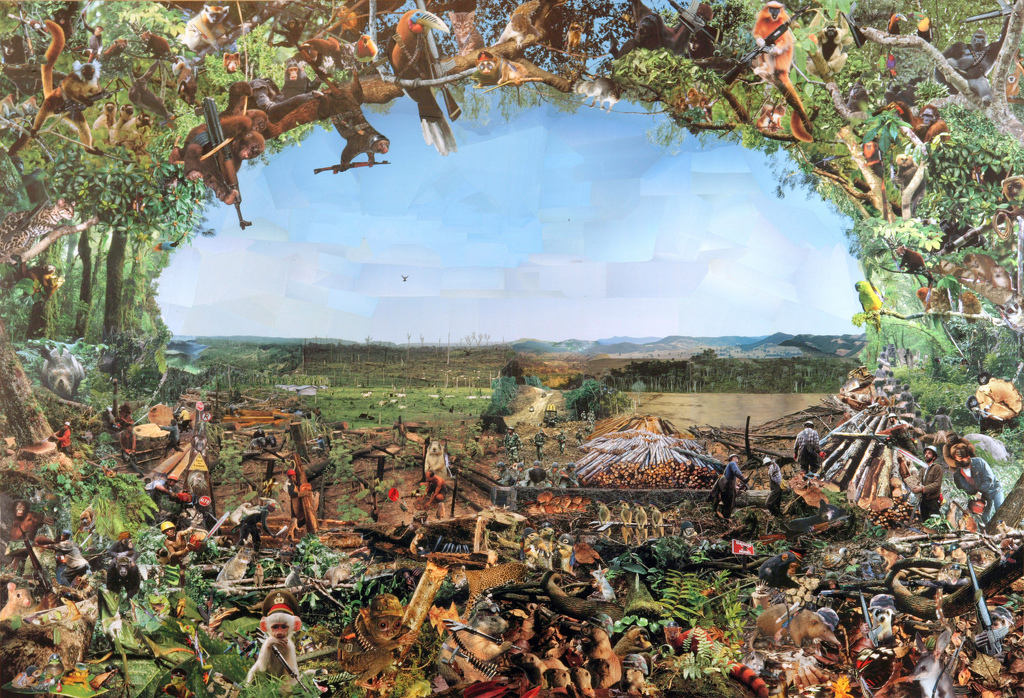
© A. Kenyon http://goo.gl/UpG3m

Bill Laurance wrote a compelling and very dour piece in The Conversation this week. He asked for some ‘link love’, so I decided to reproduce the article here for ConservationBytes.com readers. Full credit to Bill and The Conversation, of course.

What comes to mind when you think of Indonesia?

For biologists like myself, Australia’s northern neighbour provokes visions of ancient rainforests being razed by slash-and-burn farmers, and endangered tigers and orangutans fleeing from growling bulldozers.

This reality is true, but there is also hope on the horizon.

Indonesia is a vast, sprawling nation, spanning some 17,000 islands. Among these are Java, Sumatra, half of New Guinea and much of Borneo.

Some of the planet’s most biologically rich and most endangered real estate is found on this archipelago.

Today, Indonesia is losing around 1.1 million hectares of forest annually. That’s an area a third the size of Belgium, bigger than Australia’s Wet Tropics World Heritage Area.

With forest loss now slowing in Brazil, Indonesia has the dubious distinction of being the world’s deforestation “leader”. No nation is destroying its forests faster.

In Sumatra, where I visited recently, the world’s biggest paper-pulp corporations are chopping down hundreds of thousands of hectares of native rainforest to make paper and cardboard.

Some of these corporations also fund aggressive lobbyists, such as World Growth in Washington DC [CJA Bradshaw’s note: see our piece on one particular patron of WG – Alan Oxley], to combat their critics and dissuade major retail chains from dropping their products. Read the rest of this entry »



All that glitters is not gold – ecological traps

27 09 2011

Another corker from Salvador Herrando-Pérez:

Cinema fans know that choosing a movie by the newspaper’s commentary or the promotional poster might be a lottery. In the movie of nature, to confuse ‘the attractive’ with ‘the appropriate’ can compromise the life of an individual and its offspring, even to the extent of anticipating the extinction of an entire population or species.

Animals make daily choices about when, where or with whom to engage in basic activities like eating, hibernating, mating, migrating or resting. Those choices are often strongly tied to highly specific cues – e.g., air temperature, tree density, location of water, or smell of other individuals. And it happens to hair lice jumping from head to head among school kids, or to caribou forming their winter herds prior to the seasonal migration. All species, without exception, persist in nature because those ‘choices’ translate into survival or successful reproduction more often than do not. They are a kind of evolutionary memory imprinted in an organism’s genes and behaviour. However, sometimes the right choice (‘right’ meaning perceiving a cue for the role it actually has in the life cycle) places an individual in the worst of all possible situations. The environment cheats, ‘the attractive’ merely mimics ‘the appropriate’, and the individual fails to reproduce, starves, sickens, or even dies.

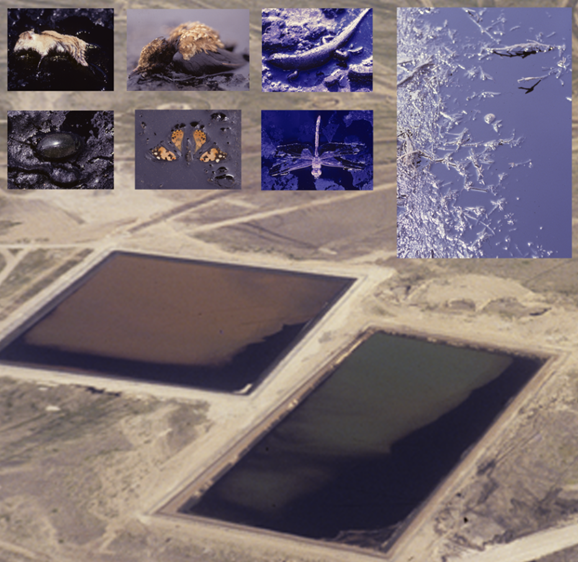
Figure 1. Water reservoirs tainted with fuel (see dark contours) in Kuwait following the Gulf War in the early 1990s. Overlaid pictures show the silhouettes of trapped odonates (right), vertebrates (top left) and invertebrates (bottom left) (Photos courtesy of Jochen Zeil).

At the mercy of mirages

During the Gulf War, the destruction of infrastructure for crude exploitation spilled large amounts of fuel in many water reservoirs over the desert landscape of Kuwait. A little later, Horváth and Zeil1 found agglomerations of dead insects (and a range of vertebrates) along the shores of these polluted reservoirs, and observed dragonflies drowning in their kamikaze attempt to spawn on the oily surface (Figure 1). This work stimulated further research whereby Horváth and his team in Budapest showed that odonates are attracted by light polarization at the surface of oiled water2 – hence ‘polarized light pollution’3. Not only that, they recorded insects struggling to spawn on or mate with riveting surfaces such as solar panels, asphalted roads, plastic bags or (creepy enough!) cemetery crypts4. It goes without saying: these insects are victims of a mirage.

Those habitats or features of the habitat that mislead an animal’s choice, often hampering the completion of its life cycle, are known as ‘ecological traps’ – in other words, the environmental cue is decoupled from the quality of the habitat it is meant to signal. Ecological traps were first described in the 1970s by Dwernychuk and Boag5. They found that ducks on the islands of Miquelon lake located their nests among those of seagulls despite the latter happily devoured their ducklings and eggs. When these islands emerged in the middle of last century, they were first colonized by common terns (Sterna hirundo). By defending their own nests ferociously from predators (mainly crows and magpies), the terns inadvertently shielded the nests of their ducky comrades. The Canadians hypothesized that when seagulls subsequently replace terns, the ducks continued to sense their new neighbours as a (now misleading) sign of protection. Read the rest of this entry »


Rise of the phycologists

22 09 2011

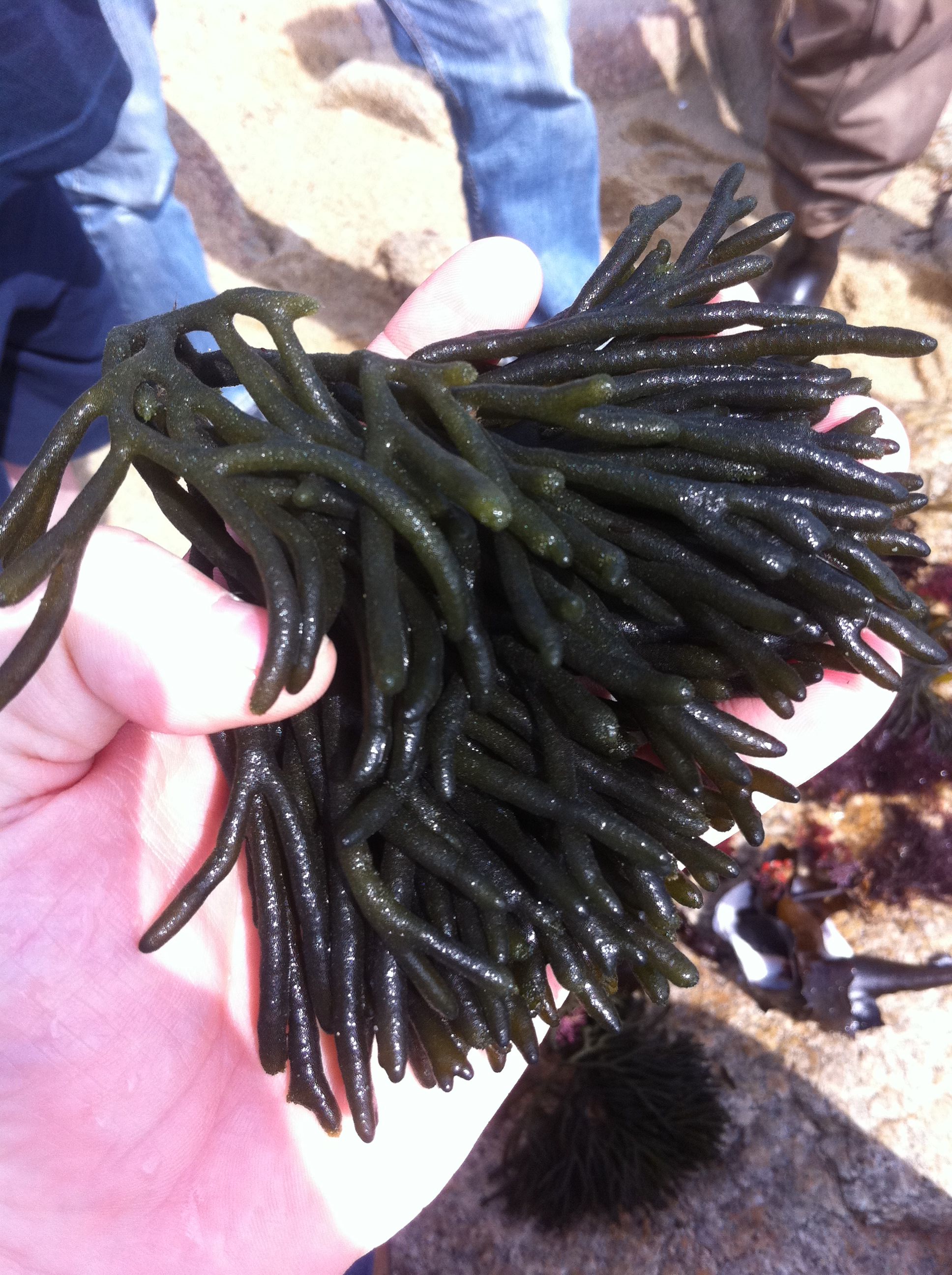
Dead man's fingers (Codium fragile) - © CJA Bradshaw

I’ve had an interesting week. First, it’s been about 6 years since I was last in Japan, and I love coming here; the food is exquisite, the people are fantastic (polite, happy, accommodating), everything works (trains, buses, etc.) and most importantly, it has an almost incredible proportion of its native forests intact.

But it wasn’t for forests that I travelled to Japan (nor the sumo currently showing on the guest-room telly where I’m staying – love the sumo): I was here for a calcareous macroalgae workshop.

What?

First, what are ‘macroalgae’, and why are some ‘calcareous’? And why should anyone in their right mind care?

Good questions. Answers: 1. Seaweeds; 2. Many incorporate calcium carbonate into their structures as added structural support; 3. Read on.

Now, I’m no phycologist (seaweed scientist), but I’m fascinated by this particular taxon. I’ve written a few posts about their vital ecological roles (see here and here), but let me regale you with some other important facts about these amazing species.

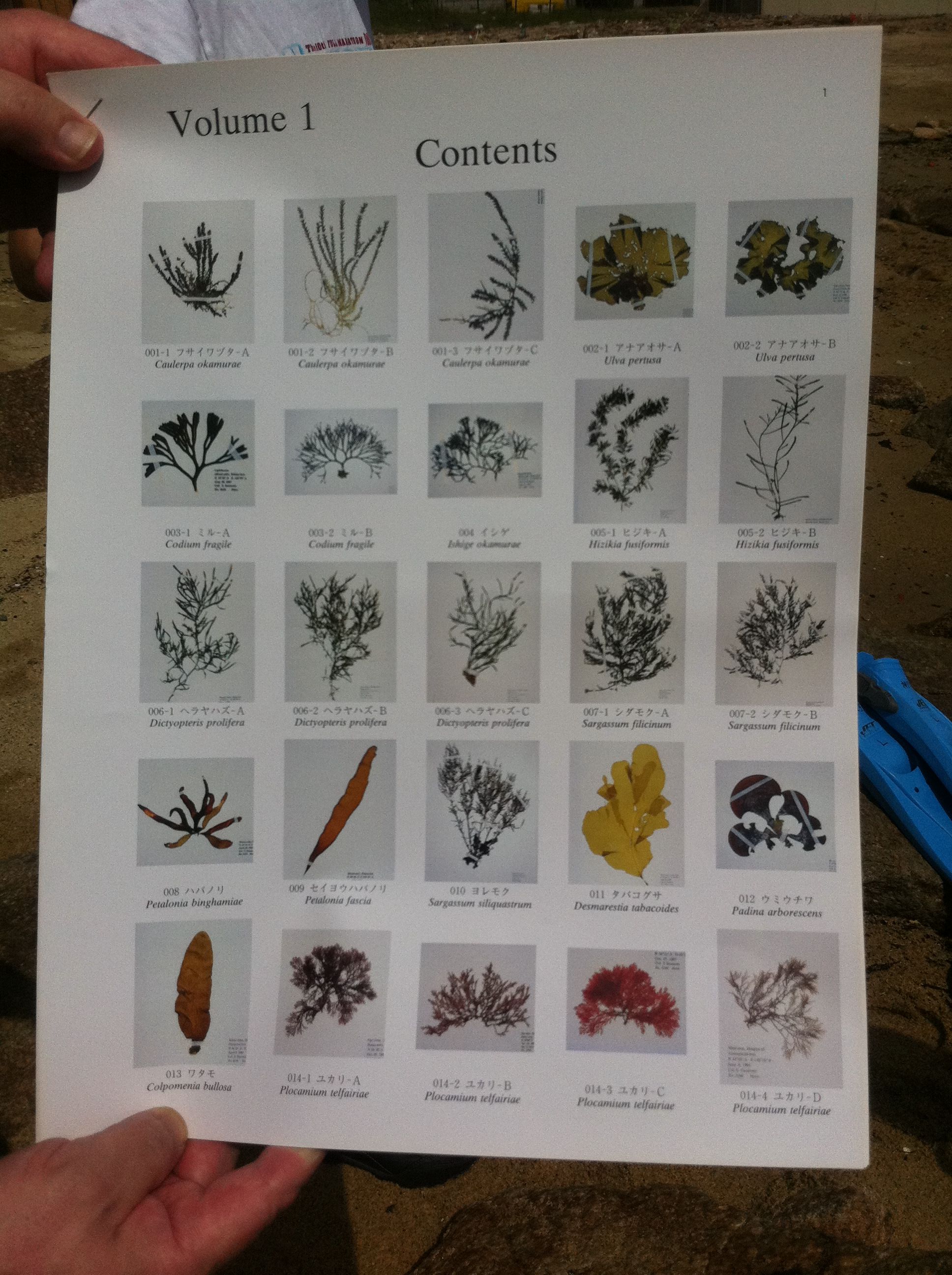
Some Japanese macroalgae - © CJA Bradshaw

There are about 12,000 known species of macroalgae described by phycologists, but as I’ve learnt this week, this is obviously a vast underestimate. For most taxa that people are investigating now using molecular techniques, the genetic diversity is so high and so geographically structured that there are obviously a huge number of ‘cryptic’ species within our current taxonomic divisions. This could mean that we’re out by up to a factor of 2 in the number of species in the world.

Another amazing fact – about 50 % of all known seaweed species are found in just two countries – Japan and Australia (hence the workshop between Japanese and Australian phycologists). Southern Australia in particular is an endemism hotspot.

Ok. Cool. So far so good. But so what? Read the rest of this entry »



No substitute for primary forest

15 09 2011

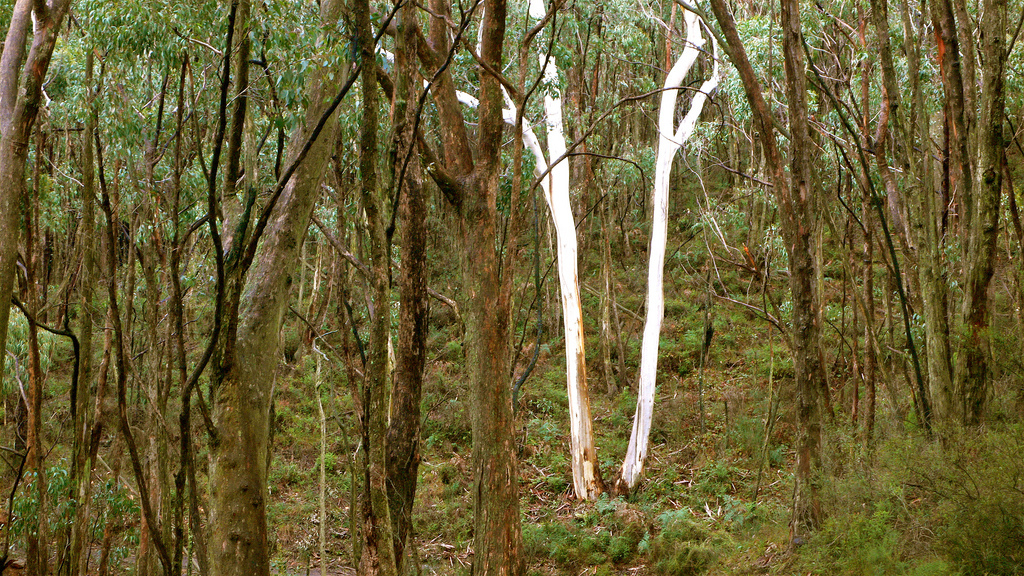
© Romulo Fotos http://goo.gl/CrAsE

A little over five years ago, a controversial and spectacularly erroneous paper appeared in the tropical ecology journal Biotropica, the flagship journal of the Association for Tropical Biology and Conservation. Now, I’m normally a fan of Biotropica (I have both published there several times and acted as a Subject Editor for several years), but we couldn’t let that paper’s conclusions go unchallenged.

That paper was ‘The future of tropical forest species‘ by Joseph Wright and Helene Muller-Landau, which essentially concluded that the severe deforestation and degradation of tropical forests was not as big a deal as nearly all the rest of the conservation biology community had concluded (remind you of climate change at all?), and that regenerating, degraded and secondary forests would suffice to preserve the enormity and majority of dependent tropical biodiversity.

What rubbish.

Our response, and those of many others (including from Toby Gardner and colleagues and William Laurance), were fast and furious, essentially destroying the argument so utterly that I think most people merely moved on. We know for a fact that tropical biodiversity is waning rapidly, and in many parts of the world, it is absolutely [insert expletive here]. However, the argument has reared its ugly head again and again over the intervening years, so it’s high time we bury this particular nonsense once and for all.

In fact, a few anecdotes are worthy of mention here. Navjot once told me one story about the time when both he and Wright were invited to the same symposium around the time of the initial dust-up in Biotropica. Being Navjot, he tore off strips from Wright in public for his outrageous and unsubstantiated claims – something to which Wright didn’t take too kindly.  On the way home, the two shared the same flight, and apparently Wright refused to acknowledge Navjot’s existence and only glared looks that could kill (hang on – maybe that had something to do with Navjot’s recent and untimely death? Who knows?). Similar public stoushes have been chronicled between Wright and Bill Laurance.

Back to the story. I recall a particular coffee discussion at the National University of Singapore between Navjot Sodhi (may his legacy endure), Barry Brook and me some time later where we planned the idea of a large meta-analysis to compare degraded and ‘primary’ (not overly disturbed) forests. The ideas were fairly fuzzy back then, but Navjot didn’t drop the ball for a moment. He immediately went out and got Tien Ming Lee and his new PhD student, Luke Gibson, to start compiling the necessary studies. It was a thankless job that took several years.

However, the fruits of that labour have now just been published in Nature: ‘Primary forests are irreplaceable for sustaining tropical biodiversity‘, led by Luke and Tien Ming, along with Lian Pin Koh, Barry Brook, Toby Gardner, Jos Barlow, Carlos Peres, me, Bill Laurance, Tom Lovejoy and of course, Navjot Sodhi [side note: Navjot died during the review and didn’t survive to hear the good news that the paper was finally accepted].

Using data from 138 studies from Asia, South America and Africa comprising 2220 pair-wise comparisons of biodiversity ‘values’ between forests that had undergone some sort of disturbance (everything from selective logging through to regenerating pasture) and adjacent primary forests, we can now hammer the final nails into the coffin containing the putrid remains of Wright and Muller-Landau’s assertion – there is no substitute for primary forest. Read the rest of this entry »


When you have no idea, you should shut up

12 09 2011

© Taren McCallan-Moore

Last week, The Conversation published a particularly wonderful example of uninformed drivel that requires a little bit of a reality injection.

Like our good friend, the Destroyer of Forests (a.k.a. Alan Oxley), a new pro-deforestation, pro-development cheerleader on the scene, a certain Phillip Lawrence apparently undertaking a PhD entitled ‘Ecological Modernization of the Indonesian Economy: A Political, Cultural and Historical Economic Study‘ at Macquarie University in Sydney (The Conversation mistakenly attributes him to the University of Sydney, unless of course, he’s moved recently), has royally stuck his foot in it with respect to the dangers of oil palm in South-East Asia.

Mr. Lawrence runs an interestingly titled blog ‘Eco Logical Strategies‘, especially considering there is nothing whatsoever regarding ‘ecology’ on the site, and this ignorance comes forth in a wonderful array of verbal spew in his latest Conversation piece. He’s also a consultant for one of the most destructive forces in Indonesia – Asia Pulp and Paper – a company with a more depressive environmental track record than the likes of Monsanto, General Electric and BP combined. That preface of conflict of interest now explained, I will now expose Mr. Lawrence for the wolf in sheep’s clothing he really is.

Banging the development and anti-poverty drum like Oxley, albeit with much less panache and linguistic flourish, Mr. Lawrence boldly claims, without a shred of evidence, that “There is ample peer-reviewed research that is supportive of the palm oil industry in Indonesia.”

Excuse me? Supportive of just what component of the palm oil industry, Mr. Lawrence? Would that be that it makes a shit-load of cash for a preciously small component of Indonesian (and foreign) society? Let’s just look at the peer-reviewed literature, shall we? Read the rest of this entry »



A supervisor’s lament

5 09 2011

© hradcanska http://ow.ly/6lCAO

Time for a little supervisory whinge. I’ve lamented these very issues over many a beer at many a conference, so I thought I’d solidify those hazy arguments into a blog post.

I’m by no means the most burdened academic when it comes to student load. We tend to be very picky in our lab when engaging post-graduate student prospects, and even pickier when hiring post-doctoral fellows (because the latter require little things like salaries that unfortunately, do not grow on trees). We also endeavour to share the load – most of our post-docs have at least one primary PhD student responsibility which reduces some of my burden and gives the post-doc in question the requisite experience in supervising. In my opinion, it’s a good way to run a lab, and allows for a high number of productive students, yet is not overly onerous for any one person.

That said, I make sure I read EVERYTHING my students produce, and I take a certain amount of pride in providing as much of my intellectual input as possible: from study design right through to proof correction. If my name is going to be on a paper, I had better bloody well earn my co-authorship. Read the rest of this entry »


Gone with the birds

1 09 2011

ebaumsworld.com

Another great post by Salvador Herrando-Pérez.

Through each new species, evolution assembles a unique combination of genes. Ever since living forms have populated our planet (> 3 billion years), the number of combinations is incalculable. That is why evolution resembles a cocktail shaker. Contemporaneous biogeographers look for order in that shaker to explain the history of life, as much as historians look for monarchs and revolutions in a library to explain the history of humanity.

The ethnic diversity of our suburb, village or city obeys factors of different temporal extent. Recent factors such as wealth, politics (war, segregation), culture (tradition, religion), and technology (airplanes, bridges, tunnels) determine racial migration, mixing and extinction. On the other hand, pre-historical factors express the expansion of the earliest hominids from Africa to the other continents – what makes a bantu ‘bantu’, or an inuit ‘inuit’.

Present ecological conditions and the macro-evolutionary past stock the elements by which biogeography attempts to understand the mechanisms shaping the spatial distribution of species, e.g., why kangaroos are restricted to Oceania, or why you could believe you were in Spain while strolling through a Greek forest. Read the rest of this entry »



How buggered are our hairy red cousins?

23 08 2011

Here’s a post from one of our lab’s post-doctoral fellows, Dr. Stephen Gregory. Stephen just got back from Borneo (jammy bastard), and will now regale you with his exploits.

© Danau Girang Field Centre

When asked to name a Bornean animal, I’ll bet the Bornean orangutan (Pongo pygmaeus) would top a public survey. This charismatic animal shares over 95 % of its genome with Homo sapiens, and so it’s little wonder that we find their infants so adorable and their popularity in the pet trade so deplorable.

Yet, I wonder how many people know that the biggest threat to our hairy red cousin is actually human eating and hygiene habits? Palm oil (oil extracted from the kernel of Elaeis spp.) is used in many foods – particularly snack foods – and hygiene products. It is our addiction to these convenient products that is destroying the orangutan’s habitat.

I’ve just returned from a trip to Sabah, the northernmost Malaysian state on Borneo, where I witnessed this distressing truth firsthand. I was meeting with the Sabah Wildlife Department, French NGO Hutan and staff at the Danau Girang Field Centre  to discuss early results from my Sabah orangutan project and seek their expert opinions. Read the rest of this entry »


Recognising differing viewpoints in a rapidly changing world

18 08 2011

Is oil palm bad? Is protecting tropical forests more important than converting them for economic development? Should we spike trees to make sure no one cuts them down?

Answers to these questions depend on which side of the argument you’re on. But often people on either side of debates hardly know what their opponents are thinking.

A recent paper by us in the journal Biotropica, of which parts were published on this blog, points out that the inability to recognise differing viewpoints undermines progress in environmental policy and practice.

The paper in Biotropica takes an unusual approach to get its message across, one rarely applied in science, but nevertheless dating back to 1729. In that year, Jonathan Swift, the first satirist, wrote an essay suggesting the English should eat Irish children, “whether stewed, roasted, baked, or boiled”, to reduce the growing population of Irish poor.

We similarly use satire to highlight the viewpoint problem. Our paper uses a spoof press release by the Coalition of Financially Challenged Countries with Lots of Trees, aka “CoFCCLoT”. CoFCCLoT proposes that in return for nor cutting down their tropical rainforests, wealthy countries should reforest at least half their land. This would provide the world with a level playing field, restore the ecological health of wealthy countries, provide job opportunities for their citizens, and even allow lions to thrive in Greece and gorillas in Spain. Read the rest of this entry »



Cartoon guide to biodiversity loss XIII

17 08 2011

The latest six cartoons… (see full stock of previous ‘Cartoon guide to biodiversity loss’ compendia here).

Read the rest of this entry »



Gagging scientists about marine parks

14 08 2011

© Louisa Gouliamaki AFP

Apologies to my readers for the lack of a post this past week – I’ve been attending the Ecological Society of America‘s 96th Annual Meeting in an extremely hot (42 °C) Austin, Texas. As usual, I’ll provide a synopsis of the conference in a little bit, but I have some rather worrisome reports about the marine park process in Australia with which to regale you first.

My last post was the reproduction of a letter cosigned by over 150 marine scientists (mostly from Australia, including me) who are concerned that the a proposed network of marine reserves in the Commonwealth waters of the South West bioregional marine planning region is not based on sound scientific principles, and is instead a mash-up of what amounts to leftovers that industry hasn’t yet found a way to exploit. Not the best way to plan for marine biodiversity conservation in the long run.

After the post went live, I had a few interesting (and frightening) e-mail exchanges with a few colleagues who work for various Australian marine science institutions who complained that they were forbidden to cosign the letter. What? What? What? What? What? Read the rest of this entry »



More than leftovers: getting marine parks right in Australia

7 08 2011
Taken by user Hossen27

Image via Wikipedia

A few weeks back I cosigned a ‘statement of concern’ about the proposal for Australia’s South West Marine Region organised by Hugh Possingham. The support has been overwhelming by Australia’s marine science community (see list of supporting scientists below). I’ve reproduced the letter addressed to the Australian government – distribute far and wide if you give more than a shit about the state of our marine environment (and the economies it supports). Basically, the proposed parks are merely a settlement between government and industry where nothing of importance is really being protected. The parks are just the leftovers industry doesn’t want. No way to ensure the long-term viability of our seas.

On 5 May 2011 the Australian Government released a draft proposal for a network of marine reserves in the Commonwealth waters of the South West bioregional marine planning region.

Australia’s South West is of global significance for marine life because it is a temperate region with an exceptionally high proportion of endemic species – species found nowhere else in the world.

Important industries, such as tourism and fisheries, depend on healthy marine ecosystems and the services they provide. Networks of protected areas, with large fully protected core zones, are essential to maintain healthy ecosystems over the long-term – complemented by responsible fisheries management1.

The selection and establishment of marine reserves should rest on a strong scientific foundation. We are greatly concerned that what is currently proposed in the Draft South West Plan is not based on the three core science principles of reserve network design: comprehensiveness, adequacy and representation. These principles have been adopted by Australia for establishing our National Reserve System and are recognized internationally2.

Specifically, the draft plan fails on the most basic test of protecting a representative selection of habitats within the bioregions of the south-west. There are no highly protected areas proposed at all in three of the seven marine bioregions lying on the continental shelf3. Overall less than 3.5% of the shelf, where resource use and biodiversity values are most intense, is highly protected. Further, six of the seven highly protected areas that are proposed on the shelf are small (< 20 km in width)4 and all are separated by large distances (> 200 km)5. The ability of such small isolated areas to maintain connectivity and fulfil the goal of protecting Australia’s marine biodiversity is limited. Read the rest of this entry »



Pickled niches

2 08 2011

Another fine contribution from Salvador Herrando-Pérez (see previous posts here, here, here and here).

Sometimes evolution fails to shape new species that are able to expand the habitat of their ancestors. This failure does not rein in speciation, but forces it to take place in a habitat that changes little over geological time. Such evolutionary outcomes are important to predict the distribution of groups of phylogenetically related species.

Those who have ever written a novel, a biography, or even a court application, will know that a termite-eaten photo or an old hand-written letter can help rebuild moments of our lives with surgical precision. Likewise, museums of natural sciences store historical biodiversity data of great value for modern research and conservation1.

A notable example is the study of chameleons from Madagascar by Chris Raxworthy and colleagues2. By collating 621 records of 11 species of the tongue-throwing reptiles, these authors subsequently concentrated survey efforts on particular regions where they discovered the impressive figure of seven new species to science, which has continued to expand3 (see figure below). The trick was to characterise the habitat at historical and modern chameleon records on the basis of satellite data describing climate, hydrology, topography, soil and vegetation, then extrapolate over the entire island to predict what land features were most likely to harbour other populations and species. This application of species distribution models4 supports the idea that the phenotypic, morphological and ecological shifts brought about by speciation can take place at slower rates than changes in the habitats where species evolve – the so-called ‘niche conservatism’ (a young concept with already contrasting definitions, e.g.,5-7).

Read the rest of this entry »


How to predict marine biodiversity

26 07 2011

One of the most important components of conservation ecology is arguably the focus on robust methods to predict ‘biodiversity’. This covers everything from detection issues (whether or not a species is in a particular area), species distribution models (to predict where a species should be given habitat and/or physical attributes), climate change predictions, to reserve design algorithms (to assess whether we are protecting what we think we are protecting).

It might seem a bit strange to the uninitiated that we have to spend so much time trying to figure out what’s there. Surely, one just goes to the area of interest and does a few quick surveys? Wouldn’t that be lovely; the truth is that most species are, in fact, rare, and the massive areas we must usually survey tend to preclude complete coverage. This is why experimental design and statistical techniques are so advanced in our discipline – to account for the probability of missing what’s actually there, and to estimate what should be in areas we haven’t even looked in.

Read the rest of this entry »


Australian ecologists support carbon tax

18 07 2011

© Herald Sun

Last week I came across a report that 60 % of economists support the newly proposed Australian carbon tax initiative, and that most believed the Coalition’s plan was inferior and would likely be more costly.

I thought that it would be good to survey ecologists on this very same issue because we are the people dealing with the fall-out of climate change to natural systems, and we are the group communicating it and its consequences to the greater public. Climate change effects on the Australian biota are already being witnessed, and if we don’t take the lead in this over-populated world of myopic, self-interested growth addicts, it’s our children who will suffer most.

Usually, ecologists and economists tend to disagree on major policies because of the general view that development is incompatible with functioning ecosystems; however in this case, it’s telling that the two seem to agree. If economists and ecologists together support something, it’s probably a good idea to give it a go. Read the rest of this entry »


Do ecologists support Australia’s new carbon tax?

13 07 2011

Today on The Conversation, it was reported that 60 % of 145 economists surveyed support Australia’s new Carbon Tax scheme.

I am wondering what kind of support there is for it out there amongst ecologists. If you are one, please complete the following short survey by clicking here.

I’ll post the results in a few days.

CJA Bradshaw


Deforesting and reforesting Australia

13 07 2011

A couple of weeks ago we (Andy Lowe and I) did a small interview on ABC television about the current status of Australia forests, followed by a discussion regarding our recently funded Australian Research Council Linkage Project Developing best-practice approaches for restoring forest ecosystems that are resilient to climate change. Just in case you didn’t see it, I’ve managed to upload a copy of the piece to Youtube.com and reproduce it here:

I’m actually in the process of writing a paper on all this for a special issue of Journal of Plant Ecology (that is nearly already overdue!), but here are a few facts for you in the interim:

  • Australian eucalypt forests are globally unique, with one of the longest evolutionary histories among the world’s forests
  • Australia has about 147 million ha of native forest remaining, and about 2 million ha of plantations Read the rest of this entry »


Life, death and Linneaus

9 07 2011

Barry Brook (left) and Lian Pin Koh (right) attacking Fangliang He (centre). © CJA Bradshaw

I’m sitting in the Brisbane airport contemplating how best to describe the last week. If you’ve been following my tweets, you’ll know that I’ve been sequestered in a room with 8 other academics trying to figure out the best ways to estimate the severity of the Anthropocene extinction crisis. Seems like a pretty straight forward task. We know biodiversity in general isn’t doing so well thanks to the 7 billion Homo sapiens on the planet (hence, the Anthropo prefix) – the question though is: how bad?

I blogged back in March that a group of us were awarded a fully funded series of workshops to address that question by the Australian Centre for Ecological Synthesis and Analysis (a Terrestrial Ecosystem Research Network facility based at the University of Queensland), and so I am essentially updating you on the progress of the first workshop.

Before I summarise our achievements (and achieve, we did), I just want to describe the venue. Instead of our standard, boring, windowless room in some non-descript building on campus, ACEAS Director, Associate Professor Alison Specht, had the brilliant idea of putting us out away from it all on a beautiful nature-conservation estate on the north coast of New South Wales.

What a beautiful place – Linneaus Estate is a 111-ha property just a few kilometres north of Lennox Head (about 30 minutes by car south of Byron Bay) whose mission is to provide a sustainable living area (for a very lucky few) while protecting and restoring some pretty amazing coastal habitat along an otherwise well-developed bit of Australian coastline. And yes, it’s named after Carl Linnaeus. Read the rest of this entry »