Conservation is all about prioritisation

4 12 2010

Another great guest post from a previous contributor, Piero Visconti.

Biodiversity conservation is about prioritisation – making difficult choices.
With limited money and so many habitats and species in need of protection, deciding where not to expend resources is as important as deciding where to act. Saying ‘no’ will be crucial for ensuring the persistence of biodiversity and ecosystem services, simply because as individuals who value conservation, we will always be tempted to try and save everything.

In the words of Frederick the Great: “He who defends everything, defends nothing.”

As a result, much recent conservation planning research has focused on offering managers general and flexible tools for deciding which conservation features should be the highest priority. Intuitively, we should direct our resources towards areas that have high biodiversity values, and that are likely to be lost if the forces of conservation do not intervene (the most ‘vulnerable’ land parcels). This approach is known as the ‘minimize loss’ approach. Imagine we are worried about the loss of rare native vegetation in the face of ongoing urban expansion (e.g., Melbourne’s western grasslands). To minimize loss, managers would pre-emptively protect sites that are most likely to be developed. But is this decision to race the bulldozers always the best idea? How much does this choice depend on our assumptions about how land is protected, how land developers behave, and the accuracy of our future predictions? Read the rest of this entry »


They always whinge about the maths

18 11 2010

If you don’t know what a differential equation is, you are not a scientist” – Hugh Possingham 2009

At the end of 2009 I highlighted a new book edited by good mates Navjot Sodhi and Paul Ehrlich, Conservation Biology for All, in which Barry Brook and I had written a chapter. Now, despite my vested interest, I thought (and still think) that it was one of the best books on conservation biology yet published, and the subsequent reviews appear to be validating my subjective opinion.

I’ve given snippets of the book’s contents, from Paul Ehrlich‘s editorial on the human population’s rising negative influences on biodiversity, to a more detailed synopsis of our chapter, The Conservation Biologist’s Toolbox, and I’ve reproduced a review printed in Trends in Ecology and Evolution.

The latest review by Nicole Gross-Camp of the University of East Anglia published in Ecology is no less flattering – in fact, it is the most flattering to date. So this is by no means a whinge about a whinge; rather, consider it an academic lament followed by a query. First, the review:

Reaching higher in conservation

If a book could receive a standing ovation—this one is a candidate. Sodhi and Ehrlich have created a comprehensive introduction to conservation biology that is accessible intellectually, and financially, to a broad audience—indeed it is Conservation biology for all. The book is divided into 16 chapters that can stand alone and are complementary when read in sequence. The authors make excellent use of cross citations of chapters, a useful and often overlooked feature in texts of this nature. In the introductory chapter, Sodhi and Ehrlich eloquently summarize the gravity of the conservation crisis and still retain an optimistic outlook that encourages the reader to continue. I particularly found their recognition of population growth, consumption, and ethics in the conservation arena refreshing and a step toward what will likely become the next major issues of discussion and research in the conservation field. Read the rest of this entry »


Blog Action Day 2010 – Water neutrality and its biodiversity benefits

16 10 2010

In my little bid to participate in Change.org’s Blog Action Day 2010 – Water, I’ve re-hashed a post from 2008 on ‘water neutrality’. This will also benefit my recently joined readers, and re-invigorate a concept I don’t think has received nearly enough attention globally (or even in parched Australia where I live). So here we go:

The world’s freshwater ecosystems are in trouble. We’ve extracted, poisoned, polluted, damned and diverted a large proportion of the finite (and rather small!) amount of freshwater on the planet. Now, most people might immediately see the problem here from a selfish perspective – no clean, abundant water source = human disease, suffering and death. Definitely something to avoid, and a problem that all Australians are facing (i.e., it’s not just restricted to developing nations). Just look at the Murray-Darling problem.

In addition to affecting our own personal well-being, freshwater ecosystems are thought to support over 10000 fish species worldwide (see also a recent post on Africa’s freshwater biodiversity’s susceptibility to climate change), and the majority of amphibians and aquatic reptiles. Current estimates suggest that about 1/3 of all vertebrate biodiversity (in this case, number of species) is confined to freshwater. As an example, the Mekong River system alone is thought to support up to 1700 different species of fish.

So, what are some of the ways forward? The concept of ‘water neutrality’ is essentially the wet version of carbon neutrality. It basically means that water usage can be offset by interventions to improve freshwater habitats and supply. Read the rest of this entry »


September 2010 Issue of Conservation Letters out

13 10 2010

Conservation Lettersfifth issue (September) of Volume 3 is now out. Some good ones here.

CJA Bradshaw


More rain forest regeneration opportunities

5 10 2010

Last November I wrote about an exciting conservation research endeavour (see ‘How to restore a tropical rain forest‘)  in which I am involved called the Thiaki Rain Forest Regeneration Project taking place as we speak in the hinterland of north Queensland’s Atherton Tableland. I personally have done next to nothing on the project yet (UQ’s Margie Mayfield is leading the charge), so I can’t really update you on all the nitty-gritty of our progress. Regardless, I can say that some of the planting tests have been done, the species have been chosen and are growing happily in the nursery reading for planting in January 2011, and the baseline biodiversity assessments are well under way.

Well, prior to our Supercharge Your Science extravaganza in Cairns and Townsville a few weeks ago, I visited Penny & Noel at Thiaki for a catch up, a discussion of what’s been happening and what’s about to happen. It was a great weekend (the family came along too) with good food, wine, ticks and leeches (biodiversity in action), and I’m getting more and more excited about what this project will deliver over the coming years.

In the meantime, a couple of ‘opportunities’ have arisen; in other words – we need some good PhD students to tackle some outstanding issues with the project. Read the rest of this entry »


The balancing act of conservation

1 10 2010

Image via Wikipedia

Navjot Sodhi & Paul Ehrlich‘s book, Conservation Biology for All, has just been reviewed in Trends in Ecology and Evolution. I’ve blogged about the book before and our contributing chapter (The conservation biologist’s toolbox), so I’ll just copy the very supportive review here by Rosie Trevelyan.

Conservation Biology for All is a textbook that aims to be a one-stop shop for conservation education. The book is packed with information, is wide ranging, and includes most emerging issues that come under the umbrella of conservation biology today. Sodhi and Ehrlich have brought together a total of 75 experts from many disciplines to provide a smorgasbord of up-to-date conservation concepts and case studies. Leading conservation biologists contribute to every chapter either as authors of the main text or of the boxes that give real life examples of the conservation issue being covered. The boxes add hugely to the information included in each chapter, and many are well worth returning to on their own. Read the rest of this entry »


Humans 1, Environment 0

27 09 2010

© flickr.com/photos/singapore2010

While travelling to our Supercharge Your Science workshop in Cairns and Townsville last week (which, by the way, went off really well and the punters gave us the thumbs up – stay tuned for more Supercharge activities at a university near you…), I stumbled across an article in the Sydney Morning Herald about the state of Australia.

That Commonwealth purveyor of numbers, the Australian Bureau of Statistics (ABS), put together a nice little summary of various measures of wealth, health, politics and environment and their trends over the last decade. The resulting Measures of Australia’s Progress is an interesting read indeed. I felt the simple newspaper article didn’t do the environmental components justice, so I summarise the salient points below and give you my tuppence as well. Read the rest of this entry »


Global erosion of ecosystem services

14 09 2010

A few months ago I was asked to give a lecture about erosion of ecosystem services to students in the University of Adelaide‘s Issues in Sustainable Environments unit. I gave that lecture last week and just uploaded a slidecast of the presentation (with audio) today.

I’ve reproduced the lecture here for your viewing pleasure. I hope you find the 45-minute presentation useful. Note that the first few minutes cover me referring to the Biodiversity film short that I posted not too long ago.

CJA Bradshaw


Biodiversity: from conservation science to action

11 09 2010

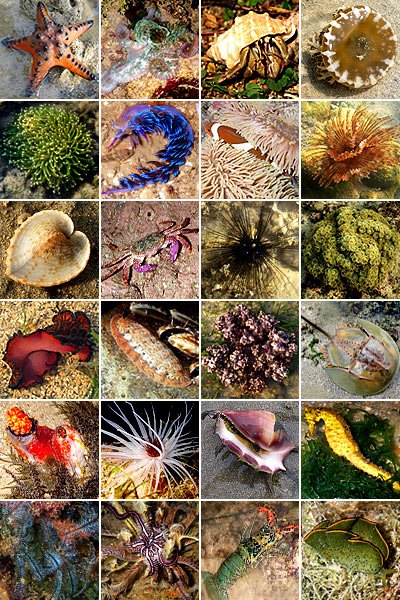
© tidechaser.blogspot.com

About 3 weeks ago I blogged about Guillaume Chapron‘s vision to notch up conservation implementation around the globe. After that little piece Guillaume invited me and a few others (including one of Australia’s own conservation gurus, Hugh Possingham) to co-author a piece on the new Nature Network‘s ‘Soapbox Science‘ blog. The Soapbox Science blog is:

“… a new group blog, covering the whole of science. Over the coming months, we’ll be inviting researchers from all over the world to write one-off posts. The subjects may be controversial, opinionated, speculative, or just plain interesting, and may be written by any scientist with something to say.”

We managed to grab the first post in this endeavour, so I reproduce it here for ConservationBytes.com readers. Enjoy!

Ecosystem degradation and species extinction rates are steadily accelerating, mainly as a result of unbounded human population growth, extravagant consumption patterns and associated land and sea degradation. Researchers are pushing science forward in an attempt to reverse the biodiversity ‘crisis’. In their papers they systematically stress how their results can serve to enhance conservation management or implement new corrective actions to reduce biodiversity loss. Still, they are becoming increasingly frustrated that their published research is having little, if any impact in halting the ongoing sixth mass extinction. Everything remains purely theoretical and is not leading to direct action. Read the rest of this entry »


Student opportunities with Australian Wildlife Conservancy

8 09 2010

A colleague of mine, Dr. Matt Hayward of the Australian Wildlife Conservancy (AWC), asked me to circulate some Honours, MSc and PhD student project opportunities. I thought this would be best done by publishing the call as a blog post.

The AWC is a non-government, non-profit organisation dedicated to the conservation of Australia’s wildlife and their habitats. AWC’s south-east region has a team of 7 ecologists who work closely with the land managers to carry out AWC’s Conservation and Science Program. The Science Program includes strategic research designed to help us manage threatened species more effectively. Several of these research projects are suitable for Honours, Masters or PhD projects.

This prospectus provides an outline of the student projects that are currently on offer in the south-east region. The majority of the projects are based on one sanctuary, although some aspects of the research may be done on other AWC sanctuaries and/or government conservation areas.

AWC will partially support these projects with equipment, staff time and expertise, and accommodation. In some cases, AWC may also provide some vehicle use and office facilities onsite at The Scotia Field Research Centre. We anticipate these projects will be collaborative efforts with input from students, academics and AWC staff, with appropriate acknowledgement for all involved. These projects are offered on a first in, first approved basis and have been offered to multiple universities.

More details on the sanctuaries and AWC are available here. If you are keen do one of these projects, please contact Matt Hayward and we will then formulate a research proposal and research agreement. Eight project descriptions follow. Read the rest of this entry »


The lost world – freshwater biodiversity conservation

6 09 2010

Even the most obtuse, right-wing, head-in-the-sand, consumption-driven, anti-environment yob would at least admit that they’ve heard of forest conservation, the plight of whales (more on that little waste of conservation resources later) and climate change. Whether or not they believe these issues are important (or even occurring) is beside the point – the fact that this particular auto-sodomist I’ve described is aware of the issues is at least testament to growing concern among the general populace.

But so many issues in conservation science go unnoticed even by the most environmentally aware. Today’s post covers just one topic (I’ve covered others, such as mangroves and kelp forests) – freshwater biodiversity.

The issue is brought to light by a paper recently published online in Conservation Letters by Thieme and colleagues entitled Exposure of Africa’s freshwater biodiversity to a changing climate.

Sure, many people are starting to get very worried about freshwater availability for human consumption (and this couldn’t be more of an issue in Australia at the moment) – and I fully agree that we should be worried. However, let’s not forget that so many species other than humans depend on healthy freshwater ecosystems to persist, which feed back in turn to human benefits through freshwater filtering, fisheries production and arable soil accumulation.

Just like for the provision of human uses (irrigation, direct water consumption, etc.), a freshwater system’s flow regime is paramount for maintaining its biodiversity. If you stuff up the flow regime too much, then regardless of the amount of total water available, biodiversity will suffer accordingly.

Glen Canyon Dam

Image by James Marvin Phelps (mandj98) via Flickr

Thieme and colleagues focus specifically on African freshwater systems, but the same problems are being seen worldwide (e.g., Australia’s Murray-Darling system, North America’s Colorado River system). And this is only going to get worse as climate change robs certain areas of historical rainfall. To address the gap in knowledge, the authors used modelled changes in mean annual runoff and discharge to determine fish species affected by 2050.

The discharge/runoff results were: Read the rest of this entry »


The conservation biologist’s toolbox

31 08 2010

Quite some time ago I blogged about a ‘new’ book published by Oxford University Press and edited by Navjot Sodhi and Paul Ehrlich called Conservation Biology for All in which Barry Brook and I wrote a chapter entitled The conservation biologist’s toolbox – principles for the design and analysis of conservation studies.

More recently, I attended the 2010 International Meeting of the Association for Tropical Biology and Conservation (ATBC) in Bali where I gave a 30-minute talk about the chapter, and I was overwhelmed with positive responses from the audience. The only problem was that 30 minutes wasn’t even remotely long enough to talk about all the topics we covered in the chapter, and I had to skip over a lot of material.

So…, I’ve blogged about the book, and now I thought I’d blog about the chapter.

The topics we cover are varied, but we really only deal with the ‘biological’ part of conservation biology, even though the field incorporates many other disciplines. Indeed, we write:

“Conservation biology” is an integrative branch of biological science in its own right; yet, it borrows from most disciplines in ecology and Earth systems science; it also embraces genetics, dabbles in physiology and links to veterinary science and human medicine. It is also a mathematical science because nearly all measures are quantified and must be analyzed mathematically to tease out pattern from chaos; probability theory is one of the dominant mathematical disciplines conservation biologists regularly use. As rapid human-induced global climate change becomes one of the principal concerns for all biologists charged with securing and restoring biodiversity, climatology is now playing a greater role. Conservation biology is also a social science, touching on everything from anthropology, psychology, sociology, environmental policy, geography, political science, and resource management. Because conservation biology deals primarily with conserving life in the face of anthropogenically induced changes to the biosphere, it also contains an element of economic decision making.”

And we didn’t really cover any issues in the discipline of conservation planning (that is a big topic indeed and a good starting point for this can be found by perusing The Ecology Centre‘s website). So what did we cover? The following main headings give the general flavour: Read the rest of this entry »


Simple educational tool to explain biodiversity

26 08 2010

I just came across this little educational video explaining what biodiversity is, what it does, and what we’re doing to it. If you’re looking to explain biodiversity and its importance to someone, this is a good place to start. Not a bad tool for school children either.


CJA Bradshaw


100 actions to slow biodiversity loss

19 08 2010

I received an email a few days ago from Guillaume Chapron of the Swedish University of Agricultural Sciences (Sveriges lantbruksuniversitet) asking me to promote his ‘Biodiversity 100‘ campaign on ConservationBytes.com. I think it’s an interesting initiative, and so I’ll gladly spread the word.

Teaming up with George Monbiot of The Guardian, the Biodiversity 100 campaign seeks to encourage scientists and others to compile a list of 100 tasks that G20 governments should undertake to prove their commitment to tackling the biodiversity crisis.

Dr. Chapron writes: Read the rest of this entry »


A world of hurt

21 04 2010

Given it’s only a little under 3 weeks away, I thought I’d advertise an upcoming free public lecture I’m giving for the University of Adelaide‘s highly popular Research Tuesdays programme.

The Research Tuesdays team have done a fantastic job of putting together the associated promotional material, so I’m more or less going to reproduce it here.

The topic is about the global-scale evidence for declining human health from environmental degradation – it’s new research that I haven’t yet published, and so it’ll be exciting to start disseminating the amazing results my colleagues and I have found in a public forum.

So join us on 11 May at the University of Adelaide for what I promise will be an interesting (if not frightening) public lecture. Details below. Read the rest of this entry »


Crap environmental reporting

13 11 2009

EvilWe do a lot in our lab to get our research results out to a wider community than just scientists – this blog is just one example of how we do that. But of course, we rely on the regular media (television, newspaper, radio) heavily to pick up our media releases (see a list here). I firmly believe it goes well beyond shameless self promotion – it’s a duty of every scientist I think to tell the world (i.e., more than just our colleagues) about what we’re being paid to do. And the masses are hungry for it.

However, the demise of the true ‘journalist’ (one who investigates a story – i.e., does ‘research’) in favour of the automaton ‘reporter’ (one who merely regurgitates, and then sensationalises, what he/she is told or reads) worldwide (and oh, how we are plagued with reporters and deeply in need of journalists in Australia!) means that there is some horrendous stories out there, especially on scientific issues. This is mainly because most reporters have neither the training nor capacity to understand what they’re writing about.

This issue is also particular poignant for the state of the environment, climate change and biodiversity loss – I’ve blogged about this before (see Poor media coverage promotes environmental apathy and untruths).

But after a 30-minute telephone interview with a very friendly American food journalist yesterday, I expected a reasonable report on the issue of frog consumption because, well, I explained many things to her as best I could. What was eventually published was appalling.

Now, in all fairness, I think she was trying to do well, but it’s as though she didn’t even listen to me. The warning bells should have rung loudly when she admitted she hadn’t read my blog “in detail” (i.e., not at all?). You can read the full article here, but let me just point out some of the inconsistencies:

  • She wrote: “That’s a problem, Bradshaw adds, because nearly one half of frog species are facing extinction.”

Ah, no. I told her that between 30 and 50 % of frogs could be threatened with extinction (~30 % officially from the IUCN Red List). It could be as much as half given the paucity of information on so many species. A great example of reporter cherry-picking to add sensationalism.

  • She wrote: “Bradshaw attributes the drop-off to global warming and over-harvesting.”

Again, no, I didn’t. I clearly told her that the number one, way-out-in-front cause of frog declines worldwide is habitat loss. I mentioned chytrid fungus as another major contributor, and that climate change exacerbates the lot. Harvesting pressure is a big unknown in terms of relative impact, but I suspect it’s large.

  • She continued: “Bradshaw has embarked on a one-man campaign to educate eaters about the frog leg industry”

Hmmm. One man? I had a great team of colleagues co-write the original paper in Conservation Biology. I wasn’t even the lead author! Funny how suddenly I’m a lone wolf on a ‘campaign’. Bloody hell.

“Aghast”, was I? I don’t recall being particularly emotional when I told her that I found a photo of Barack Obama eating frog legs during his election campaign. I merely pointed this out to show that the product is readily available in the USA. I also mentioned absolutely nothing about whales or their loins.

So, enough of my little humorous whinge. My point is really that there are plenty of bad journalists out there with little interest in reporting the truth on environmental issues (tell us something we don’t know, Bradshaw). If you want to read a good story about the frog consumption issue, check out a real journalist’s perspective here.

CJA Bradshaw