Ghost extinctions

5 07 2012

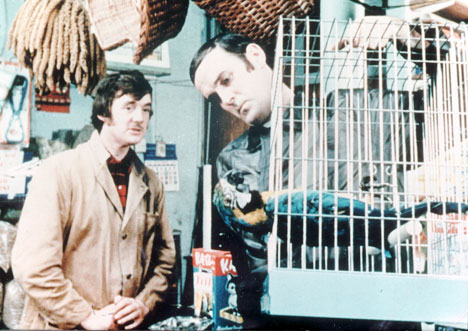
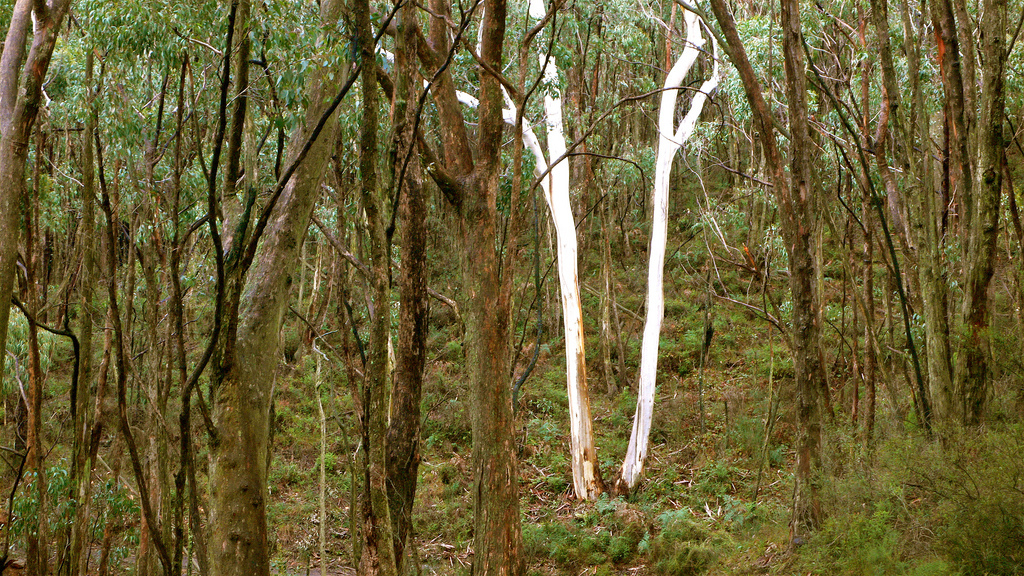
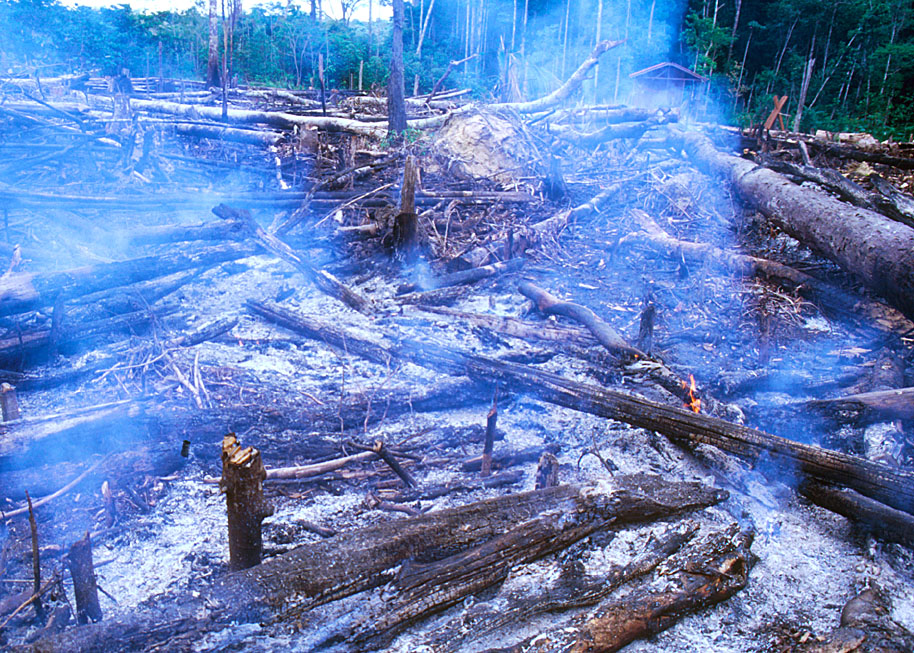
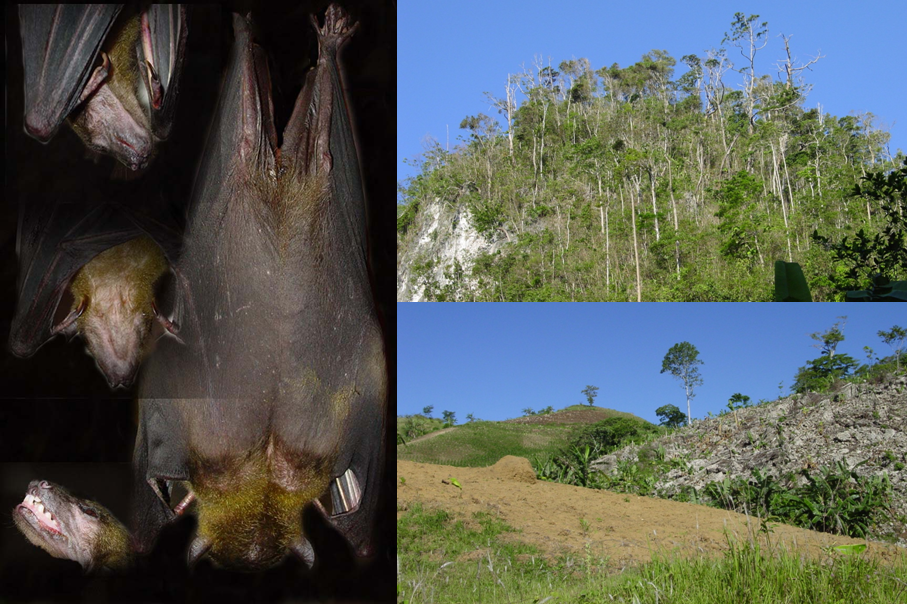
The Philippine bare-backed fruit bat (Dobsonia chapmani; body size = < 220 mm, < 150 g; IUCN status: ‘Critically Endangered A2cd’) is endemic to lowland rain forests [top habitat image] from Negros and Cebu islands. This species of flying fox had been missing from the 1970s and was declared extinct in 2002 (34). In May 2003, five specimens [one shown in the picture above] were trapped in night nets in the Calatong forest (Negros Island), a ~ 1,000-ha fragment of secondary rain forest and agricultural lands [bottom habitat image] (35). The species is reliant on fruit-bearing vegetation and caves for feeding and roosting, respectively. As with many other Philippine bats, it suffers from habitat degradation and hunting. The family Pteropodidae comprises > 150 species. Despite their Draculian look, they all feed on fruits and nectar, and act as important plant pollinators (36), as well as disease vectors such as Ebola virus (37). Flying foxes are distributed in the tropics and subtropics from the Eastern Mediterranean, through the Arabian Peninsula, Asia, Australia, and many islands of the Indian Ocean. Photos courtesy of Ely L. Alcala.

Jared Diamond (1) coined the expression ‘evil quartet’ for the four main human causes of species extinctions: habitat loss/fragmentation, overkill, introduced species and extinction chains [with climate change and extinction synergies (2), the updated expression would be ‘evil sextet”]. However, one third of ‘extinct’ mammal species has been ‘found’ again. Recent studies reveal that the probability of rediscovery depends on the cause of extinction.

Arriving in a city to search for an old friend, I would first look in the suburb where he lived, the pub where we enjoyed a drink and some music, or the park where we used to play football. But if my friend was an outlaw, or had recently gone through a traumatic experience, my chances of finding him at his favourite spots would shrink.

If, instead of a friend, we are searching for the last survivors of an extinct-declared species, surveys also tend to take place in the habitat in which the species was previously found. Such a strategy rests on the classical hypothesis that, given the spatial distribution of a species, its gradual decline must occur from the periphery to the core of its distribution (‘range collapse’) where, in theory, the habitat should be of better quality and the number of individuals higher (3). In contrast, recent work supports that the trajectory of demise of threatened vertebrates progresses from the core to the periphery (‘range eclipse’) (4), because many perturbations make their way as a progressive wave, e.g, fire, logging or urbanisation.

Diana Fisher (5) supports the ‘range eclipse’ hypothesis for ‘extinct’ mammals which have been rediscovered. She quantifies that 60% of the new records are made from peripheral habitats, mainly when the principal cause of extirpation is habitat loss. Not only that, on average species are rediscovered at altitudes 35 % higher than historical records, and only in 5 % of the cases at the locality where it had been last seen.

Read the rest of this entry »


It couldn’t have been us!

29 05 2012

A few months ago I asked Chris Johnson of the University of Tasmania to put together a post on his recent Science paper regarding Australian megafaunal extinctions. It seems that it stirred, yet again, some controversy among those who refuse to accept (mainly archaeologists) that humans could have had anything to do with pre-European extinctions. Indeed, how could humans possibly have anything to do with extinctions?!

Like Corey, I am mainly interested in current environmental problems. But now and then I wade into the debate over the extinction of Australia’s Pleistocene megafauna [editor’s note: Chris literally wrote the book on Australian mammal extinctions over the last 50,000 years], those huge animals that wandered over the Australian landscape until about 40,000 years ago.

This is an endlessly fascinating topic. The creatures were wonderful and bizarre – it’s great fun doing work that lets you think about marsupial lions, giant kangaroos, geese bigger than emus, echidnas the size of wombats, and the rest. The cause of their extinction is perhaps the biggest mystery, and the most vexed controversy, in the environmental history of Australia. And for reasons that I will explain in a minute, solving this mystery is profoundly important for our understanding of contemporary Australian ecology.

The latest bit of work on this is a paper that a group of us (including Corey’s close colleague, Barry Brook) published in Science. You can see it here (if you don’t have access to Science, email me for a copy). So far, research on this problem has concentrated on dating fossils to find out when megafauna species went extinct. Several recent studies have found evidence for extinction between 40,000 and 50,000 years ago, which is about when people first came to Australia. But the conclusion that people caused a mass extinction of megafauna has been strenuously criticised, because so far it is based on only a few species with good collections of dates. The critics argue that other species disappeared before humans arrived, maybe in an extended series of extinctions caused by something else, like a deteriorating climate.

This argument over fossils will be with us for a long time. Because finding and dating fossils is such hard, slow work, the fossil record will inevitably give a seriously incomplete picture of what happened. One way around this problem would be to analyse the fossil record using mathematical approaches that take into account the problem of incomplete sampling. Corey is lead author of a recent paper that introduced a great new set of tools for this, and we are part of a group that is currently assembling a complete database of all recent dates on Australian fossils so that we can analyse them using these tools. Stay tuned for the result. Read the rest of this entry »


To corridor, or not to corridor: size is the question

24 04 2012

I’ve just read a really interesting post by David Pannell from the University of Western Australia discussing the benefits (or lack thereof) of wildlife ‘corridors’. I’d like to elaborate on a few key issues, and introduce the most important aspect that really hasn’t been mentioned.

Some of you might be aware that the Australian Commonwealth Government has just released its Draft National Wildlife Corridors Plan for public comment, but many of you might not really know what a ‘corridor’ constitutes.

Wildlife or biodiversity ‘corridors’ have been around for a long time, at least in terms of proposals. The idea is fairly simple to conceive, but very difficult to implement in practice.

At least for as long as I’ve been in the conservation biology biz, ‘corridors’ have been proffered as one really good way to make broad-scale landscape restoration plausible and effective for (mainly) forest-dwelling species which have copped the worst of deforestation trends around Australia and the world. The idea is that because of intense habitat fragmentation, isolated patches of primary (or at least, reasonably intact secondary) forest can be linked by planting some sort of long corridor of similar habitat between them. Then, all the little creatures can merrily make their way back and forth between the patches, thus rescuing each other from extinction via migration. Read the rest of this entry »


Conservation catastrophes

22 02 2012

David Reed

The title of this post serves two functions: (1) to introduce the concept of ecological catastrophes in population viability modelling, and (2) to acknowledge the passing of the bloke who came up with a clever way of dealing with that uncertainty.

I’ll start with latter first. It came to my attention late last year that a fellow conservation biologist colleague, Dr. David Reed, died unexpectedly from congestive heart failure. I did not really mourn his passing, for I had never met him in person (I believe it is disingenuous, discourteous, and slightly egocentric to mourn someone who you do not really know personally – but that’s just my opinion), but I did think at the time that the conservation community had lost another clever progenitor of good conservation science. As many CB readers already know, we lost a great conservation thinker and doer last year, Professor Navjot Sodhi (and that, I did take personally). Coincidentally, both Navjot and David died at about the same age (49 and 48, respectively). I hope that the being in one’s late 40s isn’t particularly presaged for people in my line of business!

My friend, colleague and lab co-director, Professor Barry Brook, did, however, work a little with David, and together they published some pretty cool stuff (see References below). David was particularly good at looking for cross-taxa generalities in conservation phenomena, such as minimum viable population sizes, effects of inbreeding depression, applications of population viability analysis and extinction risk. But more on some of that below. Read the rest of this entry »


Cartoon guide to biodiversity loss XV

13 02 2012

I’m in the field at the moment, so here are the latest six cartoons to pass the time (see full stock of previous ‘Cartoon guide to biodiversity loss’ compendia here). Enjoy.

Read the rest of this entry »


When the cure becomes the disease

6 02 2012

I’ve always barracked for Peter Kareiva‘s views and work; I particularly enjoy his no-bullshit, take-no-prisoners approach to conservation. Sure, he’s said some fairly radical things over the years, and has pissed off more than one conservationist in the process. But I think this is a good thing.

His main point (as is mine, and that of a growing number of conservation scientists) is that we’ve already failed biodiversity, so it’s time to move into the next phase of disaster mitigation. By ‘failing’ I mean that, love it or loathe it, extinction rates are higher now than they have been for millennia, and we have very little to blame but ourselves. Apart from killing 9 out of 10 people on the planet (something no war or disease will ever be able to do), we’re stuck with the rude realism that it’s going to get a lot worse before it gets better.

This post acts mostly an introduction to Peter Kareiva & collaborators’ latest essay on the future of conservation science published in the Breakthrough Institute‘s new journal. While I cannot say I agree with all components (especially the cherry-picked resilience examples), I fundamentally support the central tenet that we have to move on with a new state of play.

In other words, humans aren’t going to go away, ‘pristine’ is as unattainable as ‘infinity’, and reserves alone just aren’t going to cut it. Read the rest of this entry »


When did it go extinct?

11 01 2012

It was bound to happen. After years of successful avoidance I have finally succumbed to the dark side: palaeo-ecology.

I suppose the delve from historical/modern ecology into prehistory was inevitable given (a) my long-term association with brain-the-size-of-a-planet Barry Brook (who, incidentally, has reinvented his research career many times) and (b) there is no logic to contend that palaeo extinction patterns differ in any meaningful way from modern biodiversity extinctions (except, of course, that the latter are caused mainly by human endeavour).

So while the last, fleeting days of my holiday break accelerate worringly toward office-incarceration next week, I take this moment to present a brand-new paper of ours that has just come out online in (wait for it) Quaternary Science Reviews entitled Robust estimates of extinction time in the geological record.

Let me explain my reasons for this strange departure.

It all started after a few drinks (doesn’t it always) discussing the uncertainties associated with the timing of megafauna extinctions – you might be aware that traditionally there have been two schools of thought on late-Pleistocene extinction pulses: (1) those who think there were mainly caused by massive climate shifts not to dissimilar to what we are experiencing now and (2) those who believe that the arrival of humans into naïve regions lead to a ‘blitzkrieg‘ of hunting and overkill. Rarely do adherents of each stance agree (and sometimes, the ‘debate’ can get ugly given the political incorrectness of inferring that prehistoric peoples were as destructive as we are today – cf. the concept of the ‘noble savage‘). Read the rest of this entry »


Better SAFE than sorry

30 11 2011

Last day of November already – I am now convinced that my suspicions are correct: time is not constant and in fact accelerates as you age (in mathematical terms, a unit of time becomes a progressively smaller proportion of the time elapsed since your birth, so this makes sense). But, I digress…

This short post will act mostly as a spruik for my upcoming talk at the International Congress for Conservation Biology next week in Auckland (10.30 in New Zealand Room 2 on Friday, 9 December) entitled: Species Ability to Forestall Extinction (SAFE) index for IUCN Red Listed species. The post also sets a bit of the backdrop to this paper and why I think people might be interested in attending.

As regular readers of CB will know, we published a paper this year in Frontiers in Ecology and the Environment describing a relatively simple metric we called SAFE (Species Ability to Forestall Extinction) that could enhance the information provided by the IUCN Red List of Threatened Species for assessing relative extinction threat. I won’t go into all the detail here (you can read more about it in this previous post), but I do want to point out that it ended up being rather controversial.

The journal ended up delaying final publication because there were 3 groups who opposed the metric rather vehemently, including people who are very much in the conservation decision-making space and/or involved directly with the IUCN Red List. The journal ended up publishing our original paper, the 3 critiques, and our collective response in the same issue (you can read these here if you’re subscribed, or email me for a PDF reprint). Again, I won’t go into an detail here because our arguments are clearly outlined in the response.

What I do want to highlight is that even beyond the normal in-print tête-à-tête the original paper elicited, we were emailed by several people behind the critiques who were apparently unsatisfied with our response. We found this slightly odd, because many of the objections just kept getting re-raised. Of particular note were the accusations that: Read the rest of this entry »


Little left to lose: deforestation history of Australia

6 10 2011

© donkeycart http://ow.ly/6OSeX

I don’t usually do this, but I’m going to blog about a paper I’ve just had accepted in the Journal of Plant Ecology that isn’t yet out online. The reason for the early post is that the paper itself won’t appear until 2012 in a special issue of the journal, and I think the information needs to get out there.

First, a little history – In May this year I blogged about a workshop that I attended at Sun Yat-Sen University in Guangzhou, China at the behest of Fangliang He. The workshop (International Symposium for Biodiversity and Theoretical Ecology) was attended by big-wig overseas ecologists and local talent, and was not only informative, but a lot of fun (apart from the slight headache on the way home from a little too much báijiǔ the night before). More importantly, we  lǎo wài (老外) were paired with various students to assist with publications in progress, and I’m happy to say that for me, two of those have already produced fruit (one paper in review, another about to be submitted).

But the real reason for this post was the special issue of papers written by the invitees – I haven’t published in the journal before, and understand that it is a Chinese journal that has gone mainstream internationally now. I’m only happy to contribute to lifting its profile.

Given that I’m not a plant ecologist per se (although I’ve dabbled), I decided to write a review-like paper that I’ve been meaning to put together for some time now examining the state of Australia’s forests and the history of her deforestation and forest degradation. The reason I thought this was needed is that there is no single peer-reviewed resource one can turn to for a concise synopsis of the history of our country’s forest destruction. The stats are out there, but they’re buried in books, government reports and local-scale scientific papers. My hope is that my paper will be used as a general reference point for people wishing to get up to speed with Australia’s deforestation history.

The paper is entitled Little left to lose: deforestation and forest degradation in Australia since European colonisation, and it describes the general trends in forest loss and degradation Australia-wide, followed by state- and territory-level assessments. I’ve also included sections on plantations, biodiversity loss from deforestation and fragmentation, the feedback loop between climate change and deforestation, the history of forest protection legislation, and finally, a discussion of the necessary general policy directions needed for the country’s forests.

I’ve given a few titbits of the stats in a previous post, but let me just summarise some of the salient features here: Read the rest of this entry »


Rise of the phycologists

22 09 2011

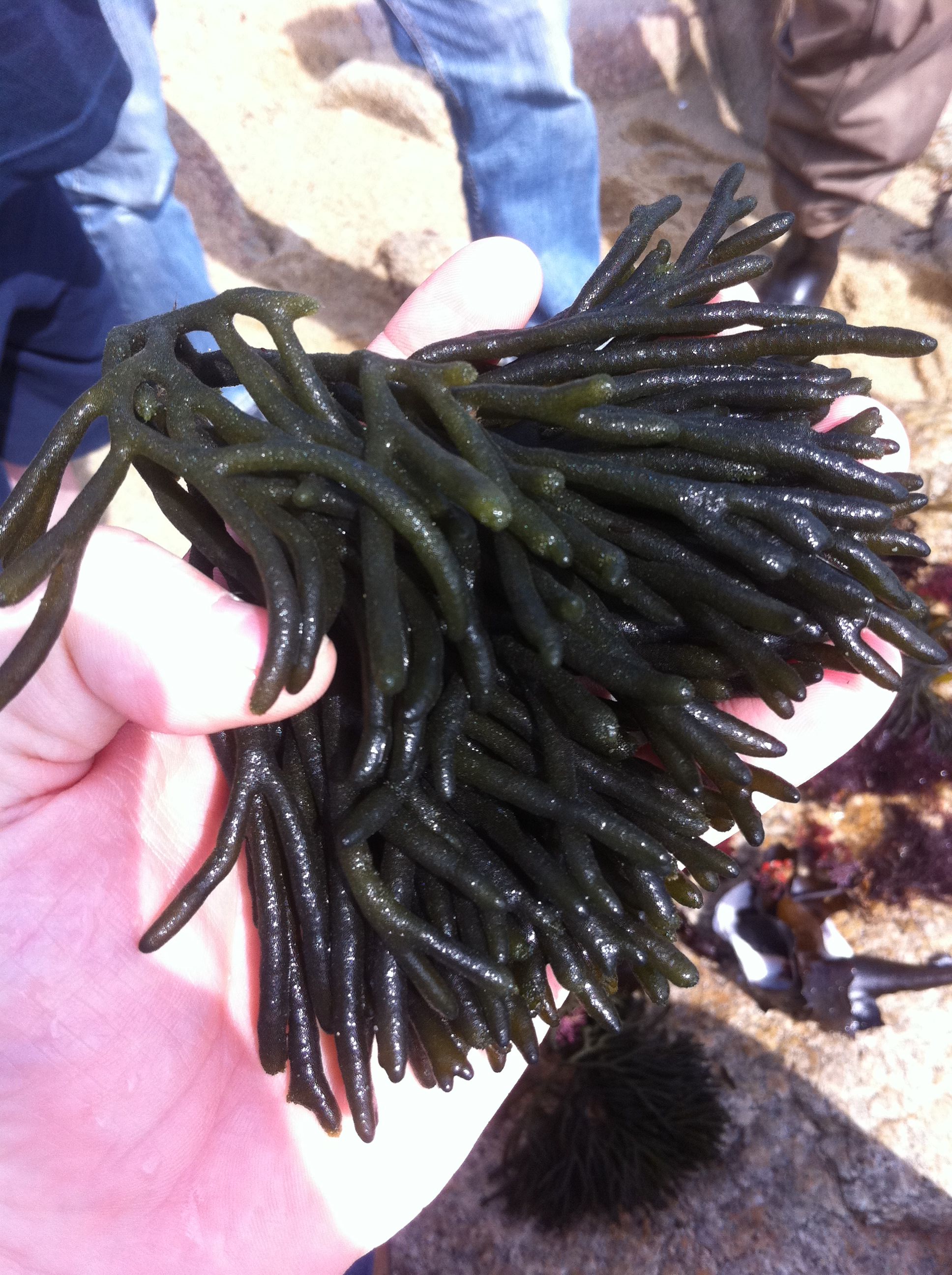
Dead man's fingers (Codium fragile) - © CJA Bradshaw

I’ve had an interesting week. First, it’s been about 6 years since I was last in Japan, and I love coming here; the food is exquisite, the people are fantastic (polite, happy, accommodating), everything works (trains, buses, etc.) and most importantly, it has an almost incredible proportion of its native forests intact.

But it wasn’t for forests that I travelled to Japan (nor the sumo currently showing on the guest-room telly where I’m staying – love the sumo): I was here for a calcareous macroalgae workshop.

What?

First, what are ‘macroalgae’, and why are some ‘calcareous’? And why should anyone in their right mind care?

Good questions. Answers: 1. Seaweeds; 2. Many incorporate calcium carbonate into their structures as added structural support; 3. Read on.

Now, I’m no phycologist (seaweed scientist), but I’m fascinated by this particular taxon. I’ve written a few posts about their vital ecological roles (see here and here), but let me regale you with some other important facts about these amazing species.

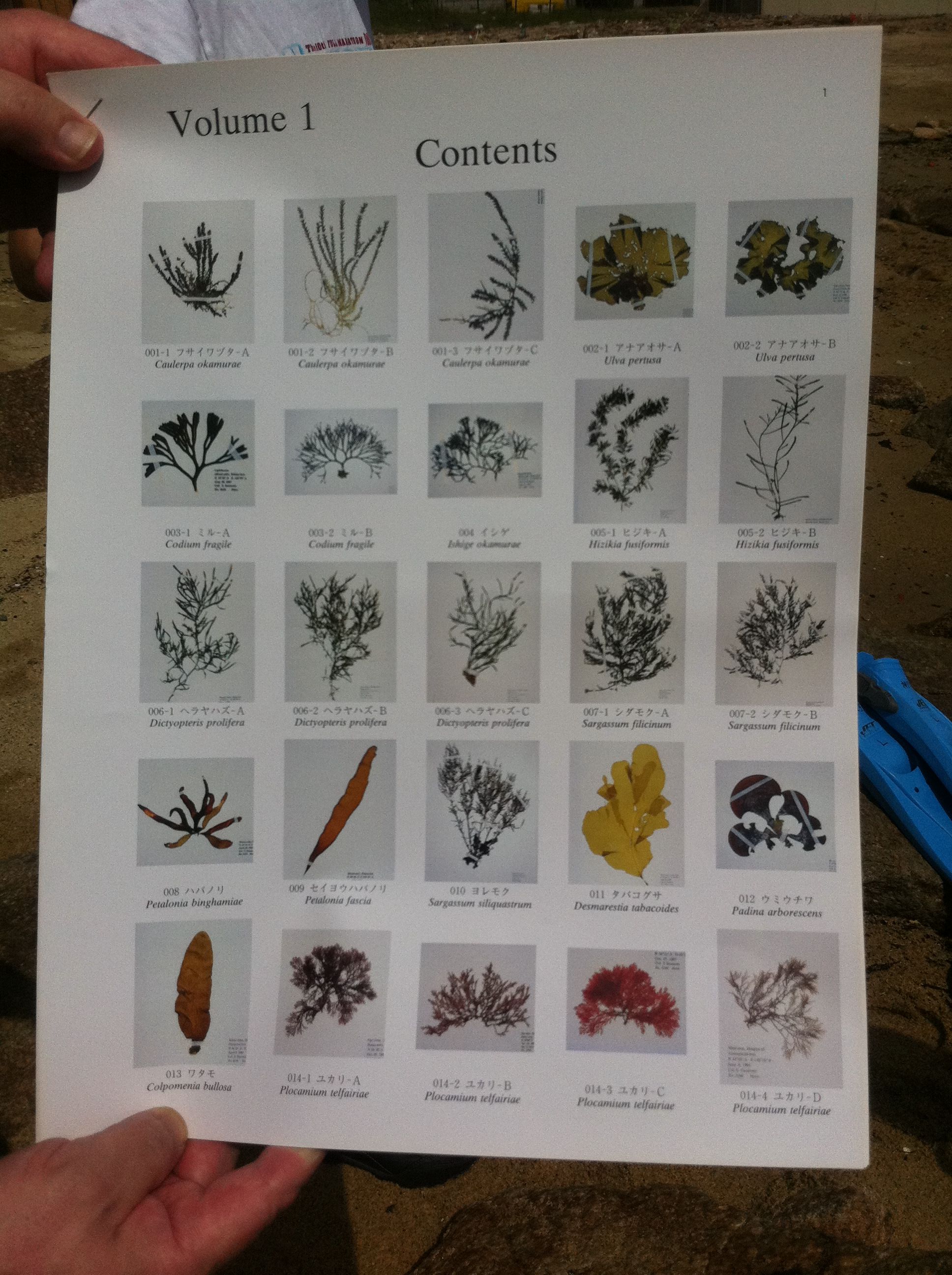
Some Japanese macroalgae - © CJA Bradshaw

There are about 12,000 known species of macroalgae described by phycologists, but as I’ve learnt this week, this is obviously a vast underestimate. For most taxa that people are investigating now using molecular techniques, the genetic diversity is so high and so geographically structured that there are obviously a huge number of ‘cryptic’ species within our current taxonomic divisions. This could mean that we’re out by up to a factor of 2 in the number of species in the world.

Another amazing fact – about 50 % of all known seaweed species are found in just two countries – Japan and Australia (hence the workshop between Japanese and Australian phycologists). Southern Australia in particular is an endemism hotspot.

Ok. Cool. So far so good. But so what? Read the rest of this entry »


How to predict marine biodiversity

26 07 2011

One of the most important components of conservation ecology is arguably the focus on robust methods to predict ‘biodiversity’. This covers everything from detection issues (whether or not a species is in a particular area), species distribution models (to predict where a species should be given habitat and/or physical attributes), climate change predictions, to reserve design algorithms (to assess whether we are protecting what we think we are protecting).

It might seem a bit strange to the uninitiated that we have to spend so much time trying to figure out what’s there. Surely, one just goes to the area of interest and does a few quick surveys? Wouldn’t that be lovely; the truth is that most species are, in fact, rare, and the massive areas we must usually survey tend to preclude complete coverage. This is why experimental design and statistical techniques are so advanced in our discipline – to account for the probability of missing what’s actually there, and to estimate what should be in areas we haven’t even looked in.

Read the rest of this entry »


Over-estimating extinction rates

19 05 2011

I meant to get this out yesterday, but was too hamstrung with other commitments. Now the media circus has beat me to the punch. Despite the lateness (in news-time) of my post, my familiarity with the analysis and the people involved gives me a unique insight, I believe.

So a couple of months ago, Fangliang He and I were talking about some new analysis he was working on where he was testing the assumption that back-casted species-area relationships (SAR) gave reasonable estimates of inferred extinction rates. Well, that paper has just been published in today’s issue of Nature  by Fangliang He and Stephen Hubbell entitled: Species–area relationships always overestimate extinction rates from habitat loss (see also the News & Views piece by Carsten Rahbek and Rob Colwell).

The paper has already stirred up something of a controversy before the ink has barely had time to dry. Predictably, noted conservation biologists like Stuart Pimm and Michael Rosenzweig have already jumped down Fangliang’s throat.

Extinction rates of modern biota in the current biodiversity crisis (Ehrlich & Pringle 2008) are wildly imprecise. Indeed, it has been proposed that extinction rates exceed the deep-time average background rate by 100- to 10000-fold (Lawton & May 2008; May et al. 1995; Pimm & Raven 2000), and no rigorously quantification of these rates globally has ever been accomplished (although there are several taxon- and region-specific estimates of localised extinction rates (Brook et al. 2003; Regan et al. 2001; Hambler et al. 2011; Shaw 2005).

Much of the information used to infer past extinction rate estimates is based on  the species-area relationship (e.g., Brook et al. 2003); this method estimates extinction rates by reversing the species-area accumulation curve, extrapolating backward to smaller areas to calculate expected species loss. The concept is relatively simple, even though the underlying mathematics might not be. Read the rest of this entry »


The evil sextet

18 05 2011

This post doubles as a Conservation Classic and a new take on an old concept. It’s new in the sense that it updates what we believe is an advance on a major milestone in conservation biology, even though some of the add-on concepts themselves have been around for a while.

First, the classic.

The ‘evil quartet’, or ‘four horsemen of the ecological apocalypse’, was probably the first treatment of extinction dynamics as a biological discipline in its own right. Jarod Diamond (1984) took a sweeping historical and contemporary view of extinction, then simplified the problem to four principal mechanisms:

  1. overhunting (or overexploitation),
  2. introduced species,
  3. habitat destruction and
  4. chains of linked extinctions (trophic cascades, or co-extinctions).

Far from a mere review or list of unrelated mechanisms, Diamond’s evil quartet crystallized conservation biologists’ thinking about key mechanisms and, more importantly, directed attention towards those factors likely to drive extinctions in the future. The unique combination of prehistorical through to modern examples gave conservation biologists a holistic view of extinction dynamics and helped spawn many of the papers described hereafter. Read the rest of this entry »


Species’ Ability to Forestall Extinction – AudioBoo

8 04 2011

Here’s a little interview I just did on the SAFE index with ABC AM:

Not a bad job, really.

And here’s another one from Radio New Zealand:

CJA Bradshaw


How fast are we losing species anyway?

28 03 2011

© W. Laurance

I’ve indicated over the last few weeks on Twitter that a group of us were recently awarded funding from the Australian Centre for Ecological Synthesis and Analysis – ACEAS – (much like the US version of the same thing – NCEAS) to run a series of analytical workshops to estimate, with a little more precision and less bias than has been done previously, the extinction rates of today’s biota relative to deep-time extinctions.

So what’s the issue? The Earth’s impressive diversity of life has experienced at least five mass extinction events over geological time. Species’ extinctions have kept pace with evolution, with more than 99 % of all species that have ever existed now gone (Bradshaw & Brook 2009). Despite general consensus that biodiversity has entered the sixth mass extinction event because of human-driven degradation of the planet, estimated extinction rates remain highly imprecise (from 100s to 10000s times background rates). This arises partly because the total number of species is unknown for many groups, and most extinctions go unnoticed.

So how are we going to improve on our highly imprecise estimates? One way is to look at the species-area relationship (SAR), which to estimate extinction requires one to extrapolate back to the origin in taxon- and region-specific SARs (e.g., with a time series of deforestation, one can estimate how many species would have been lost if we know how species diversity changes in relation to habitat area). Read the rest of this entry »


S.A.F.E. = Species Ability to Forestall Extinction

8 01 2011

Note: I’ve just rehashed this post (30/03/2011) because the paper is now available online (see comment stream). Stay tuned for the media release next week. – CJAB

I’ve been more or less underground for the last 3 weeks. It has been a wonderful break (mostly) from the normally hectic pace of academic life. Thanks for all those who remain despite the recent silence.

© Ezprezzo.com

But I’m back now with a post about a paper we’ve just had accepted in Frontiers in Ecology and Environment. In my opinion it’s a leap forward in how we measure relative threat risk among species, despite some criticism.

I’ve written in past posts about the ‘magic’ minimum number of individuals that should be in a population to reduce the chance of extinction from random events. The so-called ‘minimum viable population (MVP) size’ is basically the abundance of a (connected) population below which random events take over from factors causing sustained declines (Caughley’s distinction between the ‘declining’ and ‘small’ population paradigms).

Up until the last few years, the MVP size was considered to be a population- or species-specific value, and it required very detailed demographic, genetic and biogeographical data to estimate – not something that biologists tend to have at their fingertips for most high-risk species. However, several papers published by our group (Minimum viable population size and global extinction risk are unrelated, Minimum viable population size: a meta-analysis of 30 years of published estimates and Pragmatic population viability targets in a rapidly changing world) have shown that there is in fact little variation in this number among the best-studied species; both demographic and genetic data support a number of around 5000 to avoid crossing the deadly threshold.

Now the fourth paper in this series has just been accepted (sorry, no link yet, but I’ll let you all know as soon as it is available), and it was organised and led by Reuben Clements, and co-written by me, Barry Brook and Bill Laurance.

The idea is fairly simple and it somewhat amazes me that it hasn’t been implemented before. The SAFE (Species Ability to Forestall Extinction) index is simply the distance a population is (in terms of abundance) from its MVP. In the absence of a species-specific value, we used the 5000-individual threshold. Thus, Read the rest of this entry »


Humans 1, Environment 0

27 09 2010

© flickr.com/photos/singapore2010

While travelling to our Supercharge Your Science workshop in Cairns and Townsville last week (which, by the way, went off really well and the punters gave us the thumbs up – stay tuned for more Supercharge activities at a university near you…), I stumbled across an article in the Sydney Morning Herald about the state of Australia.

That Commonwealth purveyor of numbers, the Australian Bureau of Statistics (ABS), put together a nice little summary of various measures of wealth, health, politics and environment and their trends over the last decade. The resulting Measures of Australia’s Progress is an interesting read indeed. I felt the simple newspaper article didn’t do the environmental components justice, so I summarise the salient points below and give you my tuppence as well. Read the rest of this entry »


Linking disease, demography and climate

1 08 2010

Last week I mentioned that a group of us from Australia were travelling to Chicago to work with Bob Lacy, Phil Miller, JP Pollak and Resit Akcakaya to make some pretty exciting developments in next-generation conservation ecology and management software. Also attending were Barry Brook, our postdocs: Damien Fordham, Thomas Prowse and Mike Watts, our colleague (and former postdoc) Clive McMahon, and a student of Phil’s, Michelle Verant. At the closing of the week-long workshop, I thought I’d share my thoughts on how it all went.
In a word, it was ‘productive’. It’s not often that you can spend 1 week locked in a tiny room with 10 other geeks and produce so many good and state-of-the-art models, but we certainly achieved more than we had anticipated.

Let me explain in brief why it’s so exciting. First, I must say that even the semi-quantitative among you should be ready for the appearance of ‘Meta-Model Manager (MMM)’ in the coming months. This clever piece of software was devised by JP, Bob and Phil to make disparate models ‘talk’ to each other during a population projection run. We had dabbled with MMM a little last year, but its value really came to light this week.

We used MMM to combine several different models that individually fail to capture the full behaviour of a population. Most of you will be familiar with the individual-based population viability (PVA) software Vortex that allows relatively easy PVA model building and is particular useful for predicting extinction risk of small populations. What you most likely don’t know exists is what Phil, Bob and JP call Outbreak – an epidemiological modelling software based on the classic susceptible-exposed-infectious-recovered framework. Outbreak is also an individual-based model that can talk directly to Vortex, but only through MMM. Read the rest of this entry »


Cartoon guide to biodiversity loss VIII

1 07 2010

The latest batch of six cartoons…

See also full stock of previous ‘Cartoon guide to biodiversity loss’ compendia here.

Read the rest of this entry »


Why and how did Pleistocene megafauna go extinct?

27 05 2010

Just a quick post to say that I’m currently at Duke University in the USA attending a special National Evolutionary Synthesis Centre ‘Catalysis Meeting’ entitled: Integrating datasets to investigate megafaunal extinction in the Late Quaternary.

The meeting is basically about nailing down some of the remaining mysteries and controversies surrounding the extinction of many species during periods of rapid climate change 11-60 thousand years ago.

It’s been fun so far, and a lot of exciting analysis will ensue, but for the meantime I’ll just summarise what we’re trying to do. Read the rest of this entry »