History and future (of Australian ecology and society)

11 12 2010

I’ve just returned from a week-long conference in Canberra where the Ecological Society of Australia (of which I am a relatively new member) has just completed its impressive 50th anniversary conference. It was a long, but good week.

It’s almost a bit embarrassing that I’ve never attended an ESA1 conference before, but I think I waited for the right one. However, the main reason I attended was that I was fortunate to have received the ESA’s 3rd Australian Ecology Research Award (AERA), and the kick-back was a fully funded trip. My only reciprocation was to give a 40-minute plenary lecture – a small price to pay.

I entitled my talk ‘Heads in the desert sand: why Australians should wake up to the biodiversity crisis’, and I received a lot of good feedback. I talked about the global and Australian trends of biodiversity loss and associated ecosystem services, focussing the middle section on some of our work on feral animal ecology (see example). I then gave my views on the seriousness of our current situation and why some of the fastest losses of sensitive ecosystem services are happening right here, right now. I finished off with a section on how I think Australian ecologists could get more relevant and active in terms of research uptake by policy makers. I hope that the talk will be podcastable soon, so stay tuned.

But that was just ‘my’ bit. This post is more about a quick summary of the highlights and my overall impressions.

Read the rest of this entry »


Conservation is all about prioritisation

4 12 2010

Another great guest post from a previous contributor, Piero Visconti.

Biodiversity conservation is about prioritisation – making difficult choices.

With limited money and so many habitats and species in need of protection, deciding where not to expend resources is as important as deciding where to act. Saying ‘no’ will be crucial for ensuring the persistence of biodiversity and ecosystem services, simply because as individuals who value conservation, we will always be tempted to try and save everything.

In the words of Frederick the Great: “He who defends everything, defends nothing.”

As a result, much recent conservation planning research has focused on offering managers general and flexible tools for deciding which conservation features should be the highest priority. Intuitively, we should direct our resources towards areas that have high biodiversity values, and that are likely to be lost if the forces of conservation do not intervene (the most ‘vulnerable’ land parcels). This approach is known as the ‘minimize loss’ approach. Imagine we are worried about the loss of rare native vegetation in the face of ongoing urban expansion (e.g., Melbourne’s western grasslands). To minimize loss, managers would pre-emptively protect sites that are most likely to be developed. But is this decision to race the bulldozers always the best idea? How much does this choice depend on our assumptions about how land is protected, how land developers behave, and the accuracy of our future predictions? Read the rest of this entry »


The Joke’s On Us

30 11 2010


© decostudio.pl

Here’s an idea to garner some appreciation for the dire straits in which humanity finds itself mounting from the global biodiversity crisis. More importantly, I hope that ‘appreciation’ would translate into ‘action’ as a result.

The idea came, as good ideas often tend to, around a table with some mates1,2 and several bottles of wine. The idea got more outlandish as the bottles were emptied, and I have to say I can’t remember many of the finer details (probably a good thing).

But the nugget of that idea is, I think, a very good one. I’d like to hear your opinions about it, and some suggestions about how to make it happen.

(get to the point, Bradshaw)

Right.

The idea would be to create an international (televised) comedy festival called ‘The Joke’s On Us‘ where very high-profile comedians would be individually matched to high-profile scientists of various areas of expertise. Let’s say we had a climate change scientist like James Hansen sit down with, oh, maybe Eddie Izzard, the famous and highly regarded Gaia creator, James Lovelock, locked in a room for a few days with Michael McIntyre, tropical deforestation specialist, Bill Laurance, matched with Chris Rock, and that population bomb, Paul Ehrlich, with Robin Williams or Jerry Seinfeld. The possible combinations are endless. Read the rest of this entry »


They always whinge about the maths

18 11 2010

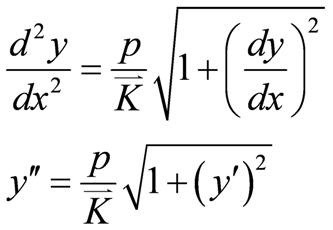
If you don’t know what a differential equation is, you are not a scientist” – Hugh Possingham 2009

At the end of 2009 I highlighted a new book edited by good mates Navjot Sodhi and Paul Ehrlich, Conservation Biology for All, in which Barry Brook and I had written a chapter. Now, despite my vested interest, I thought (and still think) that it was one of the best books on conservation biology yet published, and the subsequent reviews appear to be validating my subjective opinion.

I’ve given snippets of the book’s contents, from Paul Ehrlich‘s editorial on the human population’s rising negative influences on biodiversity, to a more detailed synopsis of our chapter, The Conservation Biologist’s Toolbox, and I’ve reproduced a review printed in Trends in Ecology and Evolution.

The latest review by Nicole Gross-Camp of the University of East Anglia published in Ecology is no less flattering – in fact, it is the most flattering to date. So this is by no means a whinge about a whinge; rather, consider it an academic lament followed by a query. First, the review:

Reaching higher in conservation

If a book could receive a standing ovation—this one is a candidate. Sodhi and Ehrlich have created a comprehensive introduction to conservation biology that is accessible intellectually, and financially, to a broad audience—indeed it is Conservation biology for all. The book is divided into 16 chapters that can stand alone and are complementary when read in sequence. The authors make excellent use of cross citations of chapters, a useful and often overlooked feature in texts of this nature. In the introductory chapter, Sodhi and Ehrlich eloquently summarize the gravity of the conservation crisis and still retain an optimistic outlook that encourages the reader to continue. I particularly found their recognition of population growth, consumption, and ethics in the conservation arena refreshing and a step toward what will likely become the next major issues of discussion and research in the conservation field. Read the rest of this entry »


Invaders beware

1 11 2010

Recently, the Global Ecology Group at the University of Adelaide has had the immense privilege and pleasure of welcoming a new senior member to the fold – Dr. Phill Cassey. The slightly Pommefied-Kiwi-Now-Coming-To-Terms-With-Being-Australian ;-)  represents a wonderful new addition to our lab’s expertise and vision.

Phill is a distinguished Australian Research Council Future Fellow. He conducts research on the subject of human contributions to changes in biodiversity through the dual processes of species extinction and introduction. Phill’s research encompasses a broad range of analytical and applied skills and has led to significant advances in the discipline of global change biology.

Phill has also hit the ground running here in Adelaide, and now offers two PhD projects for people interested to work at the forefront of invasive species research in Australia. Students will be members of the School for Earth and Environmental Sciences, which includes world-class researchers in the disciplines of Ecology and Evolutionary Biology and Global Ecology as well as ongoing research links with the South Australian Museum, Adelaide Zoo, and State Herbarium of South Australia. Successful candidates will be part of a strong research group with a highly successful and innovative culture of scientific communication and study. Read the rest of this entry »


The balancing act of conservation

1 10 2010

Image via Wikipedia

Navjot Sodhi & Paul Ehrlich‘s book, Conservation Biology for All, has just been reviewed in Trends in Ecology and Evolution. I’ve blogged about the book before and our contributing chapter (The conservation biologist’s toolbox), so I’ll just copy the very supportive review here by Rosie Trevelyan.

Conservation Biology for All is a textbook that aims to be a one-stop shop for conservation education. The book is packed with information, is wide ranging, and includes most emerging issues that come under the umbrella of conservation biology today. Sodhi and Ehrlich have brought together a total of 75 experts from many disciplines to provide a smorgasbord of up-to-date conservation concepts and case studies. Leading conservation biologists contribute to every chapter either as authors of the main text or of the boxes that give real life examples of the conservation issue being covered. The boxes add hugely to the information included in each chapter, and many are well worth returning to on their own. Read the rest of this entry »


Biodiversity: from conservation science to action

11 09 2010

© tidechaser.blogspot.com

About 3 weeks ago I blogged about Guillaume Chapron‘s vision to notch up conservation implementation around the globe. After that little piece Guillaume invited me and a few others (including one of Australia’s own conservation gurus, Hugh Possingham) to co-author a piece on the new Nature Network‘s ‘Soapbox Science‘ blog. The Soapbox Science blog is:

“… a new group blog, covering the whole of science. Over the coming months, we’ll be inviting researchers from all over the world to write one-off posts. The subjects may be controversial, opinionated, speculative, or just plain interesting, and may be written by any scientist with something to say.”

We managed to grab the first post in this endeavour, so I reproduce it here for ConservationBytes.com readers. Enjoy!

Ecosystem degradation and species extinction rates are steadily accelerating, mainly as a result of unbounded human population growth, extravagant consumption patterns and associated land and sea degradation. Researchers are pushing science forward in an attempt to reverse the biodiversity ‘crisis’. In their papers they systematically stress how their results can serve to enhance conservation management or implement new corrective actions to reduce biodiversity loss. Still, they are becoming increasingly frustrated that their published research is having little, if any impact in halting the ongoing sixth mass extinction. Everything remains purely theoretical and is not leading to direct action. Read the rest of this entry »


The conservation biologist’s toolbox

31 08 2010

Quite some time ago I blogged about a ‘new’ book published by Oxford University Press and edited by Navjot Sodhi and Paul Ehrlich called Conservation Biology for All in which Barry Brook and I wrote a chapter entitled The conservation biologist’s toolbox – principles for the design and analysis of conservation studies.

More recently, I attended the 2010 International Meeting of the Association for Tropical Biology and Conservation (ATBC) in Bali where I gave a 30-minute talk about the chapter, and I was overwhelmed with positive responses from the audience. The only problem was that 30 minutes wasn’t even remotely long enough to talk about all the topics we covered in the chapter, and I had to skip over a lot of material.

So…, I’ve blogged about the book, and now I thought I’d blog about the chapter.

The topics we cover are varied, but we really only deal with the ‘biological’ part of conservation biology, even though the field incorporates many other disciplines. Indeed, we write:

“Conservation biology” is an integrative branch of biological science in its own right; yet, it borrows from most disciplines in ecology and Earth systems science; it also embraces genetics, dabbles in physiology and links to veterinary science and human medicine. It is also a mathematical science because nearly all measures are quantified and must be analyzed mathematically to tease out pattern from chaos; probability theory is one of the dominant mathematical disciplines conservation biologists regularly use. As rapid human-induced global climate change becomes one of the principal concerns for all biologists charged with securing and restoring biodiversity, climatology is now playing a greater role. Conservation biology is also a social science, touching on everything from anthropology, psychology, sociology, environmental policy, geography, political science, and resource management. Because conservation biology deals primarily with conserving life in the face of anthropogenically induced changes to the biosphere, it also contains an element of economic decision making.”

And we didn’t really cover any issues in the discipline of conservation planning (that is a big topic indeed and a good starting point for this can be found by perusing The Ecology Centre‘s website). So what did we cover? The following main headings give the general flavour: Read the rest of this entry »


Webinar: Modelling water and life

27 08 2010

Another quick one today just to show the webinar of my recent 10-minute ‘Four in 40’ talk sponsored by The Environment Institute and the Department for Water. This seminar series was entitled ‘Modelling as a Tool for Decision Support’ held at the Auditorium, Royal Institution Australia (RiAus).

“Four in 40″ is a collaboration between The University of Adelaide and the Department for Water, where 4 speakers each speak for 10 minutes on their research and its implications for policy. The purpose is to build understanding of how best to work with each other, build new business for both organisations and raise awareness of activity being undertaken in water/natural resource management policy and research.

CJA Bradshaw


General call for ConservationBytes.com contributions

10 08 2010

After just over two years running this blog, I’ve now built up a pretty good audience of conservation-interested people. The blog now has a monthly view rate of over 12,000 and >80 e-mail subscribers, so the material is being viewed far and wide. I want to thank all of you for your interest and comments.

It seems appropriate then to put out a general call for ConservationBytes.com contributions. I’ve had several guest posts now from students (Fishing for conservationMake your conservation PhD relevant), postdocs (Coming to grips with the buffalo problem) and colleagues (Interview with a social [conservation] scientist, Put the bite back into biodiversity conservation), but these have come to me fairly haphazardly. I’d therefore like to invite short articles from the CB readership to expand the topics covered and provide a more interactive conservation discussion. Read the rest of this entry »


Conservation quotes: Attenborough to Irwin

6 08 2010

© smh.com.au

Over the years I’ve collected various conservation biology-related quotes that have caught my attention, for whatever reason. I thought that it would make an interesting blog post (although I agree that quotes are a very weak form of wit). Regardless of their import, I hope you enjoy them and perhaps at least find them interesting, if not wise.

It is that range of biodiversity that we must care for – the whole thing – rather than just one or two stars.

David Attenborough, BBC Interview

It’s a moral question about whether we have the right to exterminate species.

David Attenborough, BBC Interview

The only way to save a rhinoceros is to save the environment in which it lives, because there’s a mutual dependency between it and millions of other species of both animals and plants.

David Attenborough, BBC Interview

The ‘control of nature’ is a phrase conceived in arrogance, born of the Neanderthal age of biology and philosophy, when it was supposed that nature exists for the convenience of man.

Rachel Carson, Silent Spring

The more you know about a species, the more you understand about how better to help protect them.

Alan Clark

As we race toward the future, we must never forget the fundamental reality of our situation: we are flying blind.

Theo Colborn, Dianne Dumanoski & John Peterson Myers, Our Stolen Future

Just imagine the banner headlines if a marine biologist were to discover a species of dolphin that wove large, intricately meshed fishing nets, twenty dolphin-lengths in diameter! Yet we take a spider web for granted, as a nuisance in the house rather than as one of the wonders of the world. And think of the furore if Jane Goodall returned from Gombe stream with photographs of wild chimpanzees building their own houses, well roofed and insulated, of painstakingly selected stones neatly bonded and mortared! Yet caddis larvae, who do precisely that, command only passing interest.

Richard Dawkins, The Selfish Gene

Read the rest of this entry »


August issue of Conservation Letters and more citation statistics

3 08 2010

Trash fish © A. Lobo

The latest issue (Volume 3, Issue 4 – August 2010) of Conservation Letters is now available free-of-charge online. This issue’s papers include 1 Mini-Review, 2 Policy Perspectives, 6 Letters, 1 Correspondence and 1 Response:


Tropical biology and conservation overview

28 07 2010

Last week I attended the 2010 International Meeting of the Association for Tropical Biology and Conservation (ATBC) in Sanur, Bali (Indonesia). I only managed one post on the real-world relevance of conservation research (that attracted quite a lot of comment) while there, but I did promise to give a conference overview as I did for the International Congress for Conservation Biology earlier this month. So here goes.

This was my first ATBC meeting despite having co-written ‘the book’ on tropical conservation biology (well, one of very, very many). I no longer live in the tropics but am still managing to keep my hand in many different aspects of tropical research. After all, tropical regions represent ground zero for conservation biology – they have the highest biodiversity (no matter which way you measure it), some of the greatest threats (e.g., most people, most rapid development, most corruption) and some of the most pressing human problems (disease, hunger, socio-political instability). Ironically, most of the world’s conservation ecologists work in temperate realms – it should really be the other way around. Read the rest of this entry »


Mega-meta-model manager

24 07 2010

As Barry Brook just mentioned over at BraveNewClimate.com, I’ll be travelling with him and several of our lab to Chicago tomorrow to work on some new aspects of linked climate, disease, meta-population, demographic and vegetation modelling. Barry has this to say, so I won’t bother re-inventing the wheel:

… working for a week with Dr Robert LacyProf Resit Akcakaya and collaborators, on integrating spatial-demographic ecological models with climate change forecasts, and implementing multi-species projections (with the aim of improving estimates of extinction risk and provide better ranking of management and adaptation options). This work builds on a major research theme at the global ecology lab, and consequently, a whole bunch of my team are going with me — Prof Corey Bradshaw (lab co-director), my postdocs Dr Damien FordhamDr Mike Watts and Dr Thomas Prowse and Corey’s and my ex-postdoc, Dr Clive McMahon. This builds on earlier work that Corey and I had been pursuing, which he described on ConservationBytes last year.

The ‘mega-meta-model manager’ part is a clever piece of control-centre software that integrates these disparate ecological, climate and disease dynamic inputs. Should be some good papers coming out of the work soon.

Of course, I’ll continue to blog over the coming week. I’m not looking forward to the 30-hour travel tomorrow to Chicago, but it should be fun and productive once I get there.

CJA Bradshaw

Add to FacebookAdd to DiggAdd to Del.icio.usAdd to StumbleuponAdd to RedditAdd to BlinklistAdd to TwitterAdd to TechnoratiAdd to Yahoo BuzzAdd to Newsvine


Conservation research rarely equals conservation

21 07 2010

This post was chosen as an Editor's Selection for ResearchBlogging.org

I am currently attending the 2010 International Meeting of the Association for Tropical Biology and Conservation (ATBC) in Sanur, Bali (Indonesia). As I did a few weeks ago at the ICCB in Canada, I’m tweeting and blogging my way through.

Yesterday I attended a talk by my good friend Trish Shanley (formerly of CIFOR) where she highlighted the disconnect between conservation research and actual conservation. I’ve posted about this before (see Out of touch, impractical and irrelevantMake your conservation PhD relevant), but this was a sobering reminder of how conservation research can be a self-perpetuating phenomenon and often not touch the people who need it most.

Presenting the highlights of her paper published earlier this year in Biotropica entitled Out of the loop: why research rarely reaches policy makers and the public and what can be done, one comment she made during the talk that really caught my attention was the following (I’m paraphrasing, of course).

Most of the world’s poor living off the land are unconcerned about biodiversity per se. As conservationists we should not therefore adopt the typical preamble that biodiversity (e.g., forests) represent the “lungs of our planet” – what people (and especially women) need to know is how biodiversity loss affects “food for my children”.

The paper itself was an interview 268 researchers from 29 countries (of which I was one) about their views on the relevance of their work. Not surprisingly (but amazingly that we were so honest), most respondents stated that their principal target was other scientists, with policy makers and other marginalised groups/local people holding a distant second place. Corporate targets were also pretty rare – I guess we feel as a group that that’s generallly a lost cause.
Neither a surprise was that we generally view peer-reviewed scientific publications as the main vehicle for the dissemination of our results. What was a bit of a surprise though is that we fully admit papers aren’t the best way to trickle down the information (again, more of that brutal honesty); apparently we mainly believe ‘stakeholder meetings’
are more effective (I have my doubts).


International Congress for Conservation Biology 2010 overview

18 07 2010

A few posts ago I promised a brief overview of the 2010 International Congress for Conservation Biology (ICCB) that I attended last week in Edmonton, Canada. Here it is.

While acknowledging that it is impossible for any single individual to attend all talks at a congress of this size given that there were usually around 6-8 concurrent sessions on most days, I can provide only a synopsis of what I saw and what I heard from others.

I’ve been lukewarm about the two SCB conferences I have attended in previous years (Brasilia and Chattanooga), and I expected about this same this time around. However, overall the presentations were generally of a higher quality, the audio-visual was professional and the schedule was humane (I really, really, really like 09.00 starts; I really, really, really hate 08.00 starts).

For me, highlights certainly include Tyrone Hayes‘ plenary on the evils of atrazine, Fangliang He‘s description of the perils of overestimating extinction rates from species-area relationships, Mark Burgman‘s account of the crap performance of ‘experts’ in returning truth, Stuart Pimm‘s advocacy of scientific advocacy, Bastian Bomhard‘s sobering account of our failure to meet the 2010 Convention on Biological Diversity targets, Rob EwersBioFrag software, Tom Brook‘s account of vertebrate threat patterns, Rob Dietz‘ presentation on the Centre for Advancement of the Steady State Economy, Guy Pe’er‘s review of population viability analyses, and of course, the Conservation Leadership Programme salsa party! Read the rest of this entry »


Conservation Letters citation statistics

15 07 2010

As most CB readers will know, the ‘new’ (as of 2008) conservation journal kid on the block that I co-edit, Conservation Letters, was ISI-listed this year. This allows us to examine our citation statistics and make some informed guesses about the journal’s Impact Factor that should be ascribed next year. Here are some stats:

  • We published 31 articles in 5 issues in 2008, 37 articles in 6 issues in 2009, and so far 24 articles in 3 issues in 2010
  • Most authors were from the USA (53), followed by Australia (28), UK (29), Canada (10), France (7) and South Africa (4)
  • The published articles have received a total of 248 citations, with an average citation rate per article of 2.70
  • The journal’s h-index = 8 (8 articles have been cited at least 8 times)
  • The 31 articles published in 2008 have received thus far 180 citations (average of 5.81 citations per article)
  • The top 10 most cited articles are (in descending order): Read the rest of this entry »


Party with future conservation leaders

11 07 2010

I’ve just come back from the 2010 International Congress for Conservation Biology in Edmonton, Canada. I thought it would be good to tweet and blog my way through on topics that catch my attention. This is my third post from the conference, and a full conference ‘assessment’ post will follow in a few days.

I haven’t been a member of the Society for Conservation Biology for a very long time, and I’ve only now attended three annual meetings of the Society. I’ve been somewhat lukewarm about the social events at these conferences in the past, but this time I had much better experience.

After a less-than-inspiring barbecue meal and a general under-abundance of ethanol-based social lubricant, someone in our group whispered that we should ‘crash’ a party being held ‘secretly’ back at the conference venue. I had heard around the traps that the Conservation Leadership Programme (CLP) bashes were good, but I hadn’t attended one before. Well, not only was it a bloody good party, I’ve learned a little more about the programme and the kinds of people it promotes. Read the rest of this entry »


Killing us slowly

6 07 2010

I’m currently attending the 2010 International Congress for Conservation Biology in Edmonton, Canada. I thought it would be good to tweet and blog my way through on topics that catch my attention. This is my second post from the conference.

I silently scoffed inside when the plenary speaker was being introduced. It was boldly claimed that we were about to hear one of the best presentations any of us had ever seen at a scientific conference before.

I cannot say for certain whether it was indeed ‘the best’, but bloody hell, it was excellent.

Our speaker is certainly well-known in the endocrinology world (very well published), is a bane to certain chemical industries and is revered as a scientist who puts his money where is mouth is.

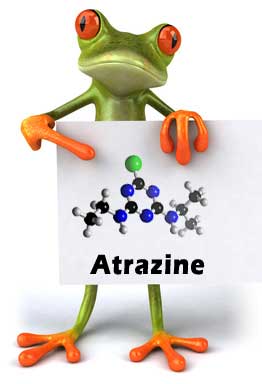
Professor Tyrone Hayes of the University of California Berkeley is an ‘eco-endocrinologist’ who blew the lid on the devastating health effects of the most available and ubiquitous agricultural herbicide in use today – evil atrazine. As my readers know, I am certainly pushing the empirical basis for the link between environmental degradation and deterioration of human health (my talk here at the ICCB on Wednesday will be on this very topic), so this topic interests me greatly.

It’s no secret that atrazine has devastating feminising effects on amphibians (and many other taxa), and has been linked convincingly to increasing the risk of cancer in humans. It’s banned in Europe, but still widely used pretty much everywhere else. Read the rest of this entry »


Failure of the CBD 2010 targets

5 07 2010

I’m currently attending the 2010 International Congress for Conservation Biology in Edmonton, Canada. I thought it would be good to tweet and blog my way through on topics that catch my attention.

Yesterday I attended one memorable presentation by Bastian Bomhard of the United Nations Environment Programme‘s (UNEP) World Conservation Monitoring Centre (WCMC). He provided some sobering statistics.

The opening statement in the background section of the Convention on Biological Diversity‘s (CBD) 2010 Biodiversity Target reads:

“In April 2002, the Parties to the Convention committed themselves to achieve by 2010 a significant [my emphasis] reduction of the current rate of biodiversity loss at the global, regional and national level as a contribution to poverty alleviation and to the benefit of all life on Earth.”

Suffice it to say that we have failed to meet the target.

I won’t dwell too long on the fact that ‘…a significant reduction…’ is utterly meaningless, subjective and a useless policy tool (in my opinion) because it cannot be quantified as stated, Bastian did tell us that we failed even to obtain a ‘reduction’.

More specifically, parties to the CBD 2010 target agreed in 2010 to protect at least 10 % of the world’s ecological regions (ecoregions) by 2010 — almost half of the world’s terrestrial ecoregions do not meet even this modest proportional protection.

Read the rest of this entry »