Classics: Shifting baselines

14 02 2011

The Conservation Classics series will soon be collated and published in a special chapter for the book ‘Biodiversity’ to be published later this year by InTech. The chapter is co-authored by Barry Brook, Navjot Sodhi, Bill Laurance and me. This is a snippet of one ‘classic’ I haven’t yet really covered extensively on ConservationBytes.com.

Daniel Pauly’s (1995) concept describes the way that changes to a system are measured against baselines which themselves are often degraded versions of the original state of the system. Pauly (1995) originally meant it in a fisheries context, where “… fisheries scientists sometimes fail to identify the correct ‘baseline’ population size (e.g., how abundant a fish species population was before human exploitation) and thus work with a shifted baseline”. It is now considered a mantra in fisheries and marine science (Jackson et al., 2001), but it has been extended to many other conservation issues. Yet, quantifying shifting baselines in conservation is difficult, with little empirical evidence (but see Jackson et al., 2001), despite the logic and general acceptance of its ubiquity by conservation scientists. Read the rest of this entry »


Global pollinator declines

11 03 2010

Mention anything about ecosystem services – those ecological functions arising from the interactions between species that provide some benefit (source of food/clean water, health, etc.) to humanity1 – and one of the most cited examples is pollination.

It’s really a no-brainer, hence its popularity as an example. Pollinators (mainly insects, but birds, bats and other assorted species too) don’t exist to pollinate plants; rather, their principal source of food acquisition happens to spread around the gametes of the plants they regularly visit. Evolution has favoured the dependence of species in such ways because the mutualism benefits all involved, and in some cases, this dependence has become obligate. So when the habitats that pollinators need to survive are reduced or destroyed, inevitably their population sizes decline and the plants on which they feed lose their main sources of gene-spreading.

So what? Well, about 80 % of all wild plant species require insect pollinators for fruit and seed set, and about 75 % of all human crops require pollination by insects (mostly bees). So it’s pretty frightening to consider that although our global population is at 6.8 billion and growing rapidly, our main food pollinators (bees) are declining globally (see also previous post on bee declines). Indeed, domestic honey bee stocks have declined in the USA by 59 % since 1947 and in Europe by 25 % since 1985. Scared yet?

Another thing people don’t tend to get is that a bee cannot live on rapeseed alone. Most pollinators require intact forests to complete many of their other life history requirements (breeding, shelter, etc.) and merely forage occasionally in crop lands. Cut down all the adjacent bush, and your crops will suffer accordingly.

These, and other titbits to keep you awake at night and worry about what your grandchildren might eat are highlighted in a recent review in Trends in Ecology and Evolution by Potts and colleagues entitled Global pollinator declines: trends, impacts and drivers.

What’s driving all this loss? Several things, but it’s mainly due to ‘land-use change’ (a bullshit word people use generally to mean habitat loss, fragmentation and degradation). However, invasive species competition, pathogens and parasites, and climate change (and the synergies amongst all of these) are all contributing.

It always amazes me when people ask me why biodiversity is important. Despite the overwhelming knowledge we’ve accumulated about how functioning ecosystems make the planet liveable, despite it just being plainly stupid to think that humans are somehow removed from normal biological processes, and even with such in-your-face examples of global pollinator declines and the real, extremely worrying implication for food supplies, many people just don’t seem to get it. Every tree you cut down, every molecule of carbon dioxide you release, every drop of water you waste will punish you and your family directly for generations to come. How much more self-evident can you get?

Humanity seems to have a very poorly developed sense of self-preservation.

CJA Bradshaw

1It’s amazingly arrogant and anthropocentric to think of anything in ecosystems as ‘providing benefits to humanity’. After all, we’re just another species in a complex array of species within ecosystems – we just happen to be one of the numerically dominant ones, excel at ecosystem ‘engineering’ and as far as we know, are the only (semi-) sentient of the biologicals. Although the concept of ecosystem services is, I think, an essential abstraction to place emphasis on the importance of biodiversity conservation to the biodiversity ignorant, it does rub me a little the wrong way. It’s almost ascribing some sort of illogical religious perspective that the Earth was placed in its current form for our eventual benefit. We might be a fairly new species in geological time scales, but don’t think of ecosystems as mere provisions for our well-being.

ResearchBlogging.orgPotts, S., Biesmeijer, J., Kremen, C., Neumann, P., Schweiger, O., & Kunin, W. (2010). Global pollinator declines: trends, impacts and drivers Trends in Ecology & Evolution DOI: 10.1016/j.tree.2010.01.007

Add to FacebookAdd to DiggAdd to Del.icio.usAdd to StumbleuponAdd to RedditAdd to BlinklistAdd to TwitterAdd to TechnoratiAdd to Yahoo BuzzAdd to Newsvine


A magic conservation number

15 12 2009

Although I’ve already blogged about our recent paper in Biological Conservation on minimum viable population sizes, American Scientist just did a great little article on the paper and concept that I’ll share with you here:

Imagine how useful it would be if someone calculated the minimum population needed to preserve each threatened organism on Earth, especially in this age of accelerated extinctions.

A group of Australian researchers say they have nailed the best figure achievable with the available data: 5,000 adults. That’s right, that many, for mammals, amphibians, insects, plants and the rest.

Their goal wasn’t a target for temporary survival. Instead they set the bar much higher, aiming for a census that would allow a species to pursue a standard evolutionary lifespan, which can vary from one to 10 million years.

That sort of longevity requires abundance sufficient for a species to thrive despite significant obstacles, including random variation in sex ratios or birth and death rates, natural catastrophes and habitat decline. It also requires enough genetic variation to allow adequate amounts of beneficial mutations to emerge and spread within a populace.

“We have suggested that a major rethink is required on how we assign relative risk to a species,” says conservation biologist Lochran Traill of the University of Adelaide, lead author of a Biological Conservation paper describing the projection.

Conservation biologists already have plenty on their minds these days. Many have concluded that if current rates of species loss continue worldwide, Earth will face a mass extinction comparable to the five big extinction events documented in the past. This one would differ, however, because it would be driven by the destructive growth of one species: us.

More than 17,000 of the 47,677 species assessed for vulnerability of extinction are threatened, according to the latest Red List of Threatened Species prepared by the International Union for Conservation of Nature. That includes 21 percent of known mammals, 30 percent of known amphibians, 12 percent of known birds and 70 percent of known plants. The populations of some critically endangered species number in the hundreds, not thousands.

In an effort to help guide rescue efforts, Traill and colleagues, who include conservation biologists and a geneticist, have been exploring minimum viable population size over the past few years. Previously they completed a meta-analysis of hundreds of studies considering such estimates and concluded that a minimum head count of more than a few thousand individuals would be needed to achieve a viable population.

“We don’t have the time and resources to attend to finding thresholds for all threatened species, thus the need for a generalization that can be implemented across taxa to prevent extinction,” Traill says.

In their most recent research they used computer models to simulate what population numbers would be required to achieve long-term persistence for 1,198 different species. A minimum population of 500 could guard against inbreeding, they conclude. But for a shot at truly long-term, evolutionary success, 5,000 is the most parsimonious number, with some species likely to hit the sweet spot with slightly less or slightly more.

“The practical implications are simply that we’re not doing enough, and that many existing targets will not suffice,” Traill says, noting that many conservation programs may inadvertently be managing protected populations for extinction by settling for lower population goals.

The prospect that one number, give or take a few, would equal the minimum viable population across taxa doesn’t seem likely to Steven Beissinger, a conservation biologist at the University of California at Berkeley.

“I can’t imagine 5,000 being a meaningful number for both Alabama beach mice and the California condors. They are such different organisms,” Beissinger says.

Many variables must be considered when assessing the population needs of a given threatened species, he says. “This issue really has to do with threats more than stochastic demography. Take the same rates of reproduction and survival and put them in a healthy environment and your minimum population would be different than in an environment of excess predation, loss of habitat or effects from invasive species.”

But, Beissinger says, Traill’s group is correct for thinking that conservation biologists don’t always have enough empirically based standards to guide conservation efforts or to obtain support for those efforts from policy makers.

“One of the positive things here is that we do need some clear standards. It might not be establishing a required number of individuals. But it could be clearer policy guidelines for acceptable risks and for how many years into the future can we accept a level of risk,” Beissinger says. “Policy people do want that kind of guidance.”

Traill sees policy implications in his group’s conclusions. Having a numerical threshold could add more precision to specific conservation efforts, he says, including stabs at reversing the habitat decline or human harvesting that threaten a given species.

“We need to restore once-abundant populations to the minimum threshold,” Traill says. “In many cases it will make more economic and conservation sense to abandon hopeless-case species in favor of greater returns elsewhere.


Not so ‘looming’ – Anthropocene extinctions

4 11 2009

ABCclip031109

© ABC 2009

Yesterday I was asked to do a quick interview on ABC television (Midday Report) about the release of the 2009 IUCN Red List of Threatened Species. I’ve blogged about the importance of the Red List before, but believe we have a lot more to do with species assessments and getting prioritisation right with respect to minimum viable population size. Have a listen to the interview itself, and read the IUCN’s media release reproduced below.

My basic stance is that we’ve only just started to assess the number of species on the planet (under 50000), yet there are many millions of species still largely under-studied and/or under-described (e.g., extant species richness = > 4 million protists, 16600 protozoa, 75000-300000 helminth parasites, 1.5 million fungi, 320000 plants, 4-6 million arthropods, > 6500 amphibians, 10000 birds and > 5000 mammals – see Bradshaw & Brook 2009 J Cosmol for references). What we’re looking at here is a refinement of knowledge (albeit a small one). We are indeed in the midst of the Anthropocene mass extinction event – there is nothing ‘looming’ about it. We are essentially losing species faster than we can assess them. I believe it’s important to make this clearer to those not working directly in the field of biodiversity conservation.

CJA Bradshaw

Extinction crisis continues apace – IUCN

Gland, Switzerland, 3 November, 2009 (IUCN) – The latest update of the IUCN Red List of Threatened Species™ shows that 17,291 species out of the 47,677 assessed species are threatened with extinction.

The results reveal 21 percent of all known mammals, 30 percent of all known amphibians, 12 percent of all known birds, and 28 percent of reptiles, 37 percent of freshwater fishes, 70 percent of plants, 35 percent of invertebrates assessed so far are under threat.

“The scientific evidence of a serious extinction crisis is mounting,” says Jane Smart, Director of IUCN’s Biodiversity Conservation Group. “January sees the launch of the International Year of Biodiversity. The latest analysis of the IUCN Red List shows the 2010 target to reduce biodiversity loss will not be met. It’s time for governments to start getting serious about saving species and make sure it’s high on their agendas for next year, as we’re rapidly running out of time.”

Of the world’s 5,490 mammals, 79 are Extinct or Extinct in the Wild, with 188 Critically Endangered, 449 Endangered and 505 Vulnerable. The Eastern Voalavo (Voalavo antsahabensis) appears on the IUCN Red List for the first time in the Endangered category. This rodent, endemic to Madagascar, is confined to montane tropical forest and is under threat from slash-and-burn farming.

There are now 1,677 reptiles on the IUCN Red List, with 293 added this year. In total, 469 are threatened with extinction and 22 are already Extinct or Extinct in the Wild. The 165 endemic Philippine species new to the IUCN Red List include the Panay Monitor Lizard (Varanus mabitang), which is Endangered. This highly-specialized monitor lizard is threatened by habitat loss due to agriculture and logging and is hunted by humans for food. The Sail-fin Water Lizard (Hydrosaurus pustulatus) enters in the Vulnerable category and is also threatened by habitat loss. Hatchlings are heavily collected both for the pet trade and for local consumption.

“The world’s reptiles are undoubtedly suffering, but the picture may be much worse than it currently looks,” says Simon Stuart, Chair of IUCN’s Species Survival Commission. “We need an assessment of all reptiles to understand the severity of the situation but we don’t have the $2-3 million to carry it out.”

The IUCN Red List shows that 1,895 of the planet’s 6,285 amphibians are in danger of extinction, making them the most threatened group of species known to date. Of these, 39 are already Extinct or Extinct in the Wild, 484 are Critically Endangered, 754 are Endangered and 657 are Vulnerable.

The Kihansi Spray Toad (Nectophrynoides asperginis) has moved from Critically Endangered to Extinct in the Wild. The species was only known from the Kihansi Falls in Tanzania, where it was formerly abundant with a population of at least 17,000. Its decline is due to the construction of a dam upstream of the Kihansi Falls that removed 90 percent of the original water flow to the gorge. The fungal disease chytridiomycosis was probably responsible for the toad’s final population crash.

The fungus also affected the Rabb’s Fringe-limbed Treefrog (Ecnomiohyla rabborum), which enters the Red List as Critically Endangered. It is known only from central Panama. In 2006, the chytrid fungus (Batrachochytrium dendrobatidis) was reported in its habitat and only a single male has been heard calling since. This species has been collected for captive breeding efforts but all attempts have so far failed.

Of the 12,151 plants on the IUCN Red List, 8,500 are threatened with extinction, with 114 already Extinct or Extinct in the Wild. The Queen of the Andes (Puya raimondii) has been reassessed and remains in the Endangered category. Found in the Andes of Peru and Bolivia, it only produces seeds once in 80 years before dying. Climate change may already be impairing its ability to flower and cattle roam freely among many colonies, trampling or eating young plants.

There are now 7,615 invertebrates on the IUCN Red List this year, 2,639 of which are threatened with extinction. Scientists added 1,360 dragonflies and damselflies, bringing the total to 1,989, of which 261 are threatened. The Giant Jewel (Chlorocypha centripunctata), classed as Vulnerable, is found in southeast Nigeria and southwest Cameroon and is threatened by forest destruction.

Scientists also added 94 molluscs, bringing the total number assessed to 2,306, of which 1,036 are threatened. Seven freshwater snails from Lake Dianchi in Yunnan Province, China, are new to the IUCN Red List and all are threatened. These join 13 freshwater fishes from the same area, 12 of which are threatened. The main threats are pollution, introduced fish species and overharvesting.

There are now 3,120 freshwater fishes on the IUCN Red List, up 510 species from last year. Although there is still a long way to go before the status all the world’s freshwater fishes is known, 1,147 of those assessed so far are threatened with extinction. The Brown Mudfish (Neochanna apoda), found only in New Zealand, has been moved from Near Threatened to Vulnerable as it has disappeared from many areas in its range. Approximately 85-90 percent of New Zealand’s wetlands have been lost or degraded through drainage schemes, irrigation and land development.

“Creatures living in freshwater have long been neglected. This year we have again added a large number of them to the IUCN Red List and are confirming the high levels of threat to many freshwater animals and plants. This reflects the state of our precious water resources. There is now an urgency to pursue our effort but most importantly to start using this information to move towards a wise use of water resources,” says Jean-Christophe Vié, Deputy Head of the IUCN Species Programme.

“This year’s IUCN Red List makes for sobering reading,” says Craig Hilton-Taylor, Manager of the IUCN Red List Unit. “These results are just the tip of the iceberg. We have only managed to assess 47,663 species so far; there are many more millions out there which could be under serious threat. We do, however, know from experience that conservation action works so let’s not wait until it’s too late and start saving our species now.”

The status of the Australian Grayling (Prototroctes maraena), a freshwater fish, has improved as a result of conservation efforts. Now classed as Near Threatened as opposed to Vulnerable, the population has recovered thanks to fish ladders which have been constructed over dams to allow migration, enhanced riverside vegetation and the education of fishermen, who now face heavy penalties if found with this species.


Managing for extinction

9 10 2009

ladderAh, it doesn’t go away, does it? Or at least, we won’t let it.

That concept of ‘how many is enough?’ in conservation biology, the so-called ‘minimum viable population size‘, is enough to drive some conservation practitioners batty.

How many times have we heard the (para-) phrase: “It’s simply impractical to bring populations of critically endangered species up into the thousands”?

Well, my friends, if you’re not talking thousands, you’re wasting everyone’s time and money. You are essentially managing for extinction.

Our new paper out online in Biological Conservation entitled Pragmatic population viability targets in a rapidly changing world (Traill et al.) shows that populations of endangered species are unlikely to persist in the face of global climate change and habitat loss unless they number around 5000 mature individuals or more.

After several meta-analytic, time series-based and genetic estimates of the magic minimum number all agreeing, we can be fairly certain now that if a population is much less than several thousands (median = 5000), its likelihood of persisting in the long run in the face of normal random variation is pretty small.

We conclude essentially that many conservation biologists routinely underestimate or ignore the number of animals or plants required to prevent extinction. In fact, aims to maintain tens or hundreds of individuals, when thousands are actually needed, are simply wasting precious and finite conservation resources. Thus, if it is deemed unrealistic to attain such numbers, we essentially advise that in most cases conservation triage should be invoked and the species in question be abandoned for better prospects

A long-standing idea in species restoration programs is the so-called ‘50/500’ rule; this states that at least 50 adults are required to avoid the damaging effects of inbreeding, and 500 to avoid extinctions due to the inability to evolve to cope with environmental change. Our research suggests that the 50/500 rule is at least an order of magnitude too small to stave off extinction.

This does not necessarily imply that populations smaller than 5000 are doomed. But it does highlight the challenge that small populations face in adapting to a rapidly changing world.

We are battling to prevent a mass extinction event in the face of a growing human population and its associated impact on the planet, but the bar needs to be a lot higher. However, we shouldn’t necessarily give up on critically endangered species numbering a few hundred of individuals in the wild. Acceptance that more needs to be done if we are to stop ‘managing for extinction’ should force decision makers to be more explicit about what they are aiming for, and what they are willing to trade off, when allocating conservation funds.

CJA Bradshaw

(with thanks to Lochran Traill, Barry Brook and Dick Frankham)

Add to FacebookAdd to NewsvineAdd to DiggAdd to Del.icio.usAdd to StumbleuponAdd to RedditAdd to BlinklistAdd to Ma.gnoliaAdd to TechnoratiAdd to Furl

This post was chosen as an Editor's Selection for ResearchBlogging.orgResearchBlogging.org

Traill, L.W., Brook, B.W., Frankham, R.R., & Bradshaw, C.J.A. (2009). Pragmatic population viability targets in a rapidly changing world Biological Conservation DOI: 10.1016/j.biocon.2009.09.001


Wobbling to extinction

31 08 2009

crashI’ve been meaning to highlight for a while a paper that I’m finding more and more pertinent as a citation in my own work. The general theme is concerned with estimating extinction risk of a particular population, species (or even ecosystem), and more and more we’re finding that different drivers of population decline and eventual extinction often act synergistically to drive populations to that point of no return.

In other words, the whole is greater than the sum of its parts.

In other, other words, extinction risk is usually much higher than we generally appreciate.

This might seem at odds with my previous post about the tendency of the stochastic exponential growth model to over-estimate extinction risk using abundance time series, but it’s really more of a reflection of our under-appreciation of the complexity of the extinction process.

In the early days of ConservationBytes.com I highlighted a paper by Fagan & Holmes that described some of the few time series of population abundances right up until the point of extinction – the reason these datasets are so rare is because it gets bloody hard to find the last few individuals before extinction can be confirmed. Most recently, Melbourne & Hastings described in a paper entitled Extinction risk depends strongly on factors contributing to stochasticity published in Nature last year how an under-appreciated component of variation in abundance leads to under-estimation of extinction risk.

‘Demographic stochasticity’ is a fancy term for variation in the probability of births deaths at the individual level. Basically this means that there will be all sorts of complicating factors that move any individual in a population away from its expected (mean) probability of dying or reproducing. When taken as a mean over a lot of individuals, it has generally been assumed that demographic stochasticity is washed out by other forms of variation in mean (population-level) birth and death probability resulting from vagaries of the environmental context (e.g., droughts, fires, floods, etc.).

‘No, no, no’, say Melbourne & Hastings. Using some relatively simple laboratory experiments where environmental stochasticity was tightly controlled, they showed that demographic stochasticity dominated the overall variance and that environmental variation took a back seat. The upshot of all these experiments and mathematical models is that for most species of conservation concern (i.e., populations already reduced below to their minimum viable populations size), not factoring in the appropriate measures of demographic wobble means that most people are under-estimating extinction risk.

Bloody hell – we’ve been saying this for years; a few hundred individuals in any population is a ridiculous conservation target. People must instead focus on getting their favourite endangered species to number at least in the several thousands if the species is to have any hope of persisting (this is foreshadowing a paper we have coming out shortly in Biological Conservationstay tuned for a post thereupon).

Melbourne & Hastings have done a grand job in reminding us how truly susceptible small populations are to wobbling over the line and disappearing forever.

CJA Bradshaw

Add to FacebookAdd to NewsvineAdd to DiggAdd to Del.icio.usAdd to StumbleuponAdd to RedditAdd to BlinklistAdd to Ma.gnoliaAdd to TechnoratiAdd to Furl


Shocking continued loss of Australian mammals

21 08 2009

thylacineAs CB readers know, I’m in Brisbane this week for the 10th International Congress of Ecology (INTECOL). My last post was on a great plenary talk by biodiversity guru, Kevin Gaston of the University of Sheffield, and I’ve got one more before heading back to Adelaide tomorrow.

Today, the last day of INTECOL talks, brought together some great conservation minds in a session in which I was honoured to participate. I spoke on extinction synergies, but I think John Woinarski of the Northern Territory Government stole the show.

I used to live in the NT and have seen John speak many times; however, this was one of the best and most sobering of his talks I’ve seen yet.

In a nutshell, we are STILL experiencing a colossal decline in our mammals. I think many might know that Australia is the WORST country in the world for mammal extinctions already – even more gut-wrenching when you consider that our closest competitors are small islands that have a completely different set of threats. However, many don’t know (and this is John’s point), that we are still losing populations at an outrageous rate.

John’s been working on everything from Conilurus to quolls in the central and northern parts of Australia for over 20 years, and he’s got some of the best data around. Without fail, almost every remaining native small mammal population is in decline, even to the point of local extirpation in over 50 % of all his monitoring sites (and there are a lot of monitoring sites).

If that isn’t worrying enough, much of his data are collected in some of our biggest national parks (e.g., Kakadu National Park) – this basically means that despite restricting habitat loss (our greatest driver of extinction), mammal populations are still in ever-increasing states of buggery.

So, what are the causes? Anyone who’s been to Kakadu National Park, or (even luckier) has been to Arnhem Land, know that we’re literally burning the shit out of these places. Sure, fire is an integral part of northern Australian ecology, but the pervasive paradigm – unless-it’s-burnt-every-year-it’s-bad credence – means that nothing ever has a chance to come back after a population crash caused by a one-off fire.

Sure, things like cane toads and other feral animals might play a role, but it’s the ridiculous burning regime we’ve adopted that’s destroying our already depleted and unique mammalian species assemblage. Unless we reverse this trend NOW, we’ll have more or less condemned our one-of-a-kind mammals to extinction. As an Australian, can you live with that?

A stark reminder of how ridiculous the situation has become, esteemed Professor William Bond of South Africa stated in the question period after John’s talk (I paraphrase):

“When you arrive in Australia, you are bombarded with slogans of sporting victories, great food and fantastic wine [all true], but no one tells you of the biodiversity tragedy that has, and is continuing, to happen in Australia. In Africa, we have managed to convince people to conserve elephants that destroy their crops and kill their families – why can’t Australians realise their are destroying their very heritage? What are you doing to stop the carnage?”

I have no answer. Sorry, William. Sorry, John. Sorry, Australia.

CJA Bradshaw

Add to FacebookAdd to NewsvineAdd to DiggAdd to Del.icio.usAdd to StumbleuponAdd to RedditAdd to BlinklistAdd to Ma.gnoliaAdd to TechnoratiAdd to Furl


The rarity of commonness

18 08 2009

I’m attending the 10th International Congress of Ecology (INTECOL) in Brisbane this week and I have just managed to find (a) an internet connection and (b) a small window to write this post.

I have to say I haven’t been to a good plenary talk for some time – maybe it’s just bad luck, but often plenary talks can be less-than-inspiring.

Not so for INTECOL this year. I was very pleased to have the opportunity to listen to biodiversity guru Professor Kevin Gaston of the University of Sheffield give a fantastic talk on… common species (?!).

clones

If you have followed any of Kevin’s work, you’ll know he literally wrote the book on rarity – what species rarity is, how to measure it and what it means for preserving biodiversity as a whole.

Now he’s championing (in a very loose sense) the importance of common species because it is these taxa, he argues, that provide the backbone to the persistence of all biodiversity.

Yes, we conservation biologists have tended to focus on the rare and endemic species to make certain we have as much diversity in species (and genetic material) as possible when conserving habitats.

There are a lot more rare species than common ones, and the most common species (i.e., the ones you most often see) tend to have the broadest distributions. We know from much previous work that having a broad distribution reduces extinction risk, so why should we be concerned about common species?

Kevin made a very good point – if you turn the relationship on its head somewhat, you can state that the state of ‘commonness’ is itself ‘rare’. In fact, only about 25 % of the most common species account for about 90-95 % of ALL individuals. He used an interesting (and scary) example to show what this can mean from an extinction perspective. Although very back-of-the-envelope, there are about 2000 individual birds in a km2 of tropical forest; we are losing between 50000 and 120000 km2 of tropical forest per year, so this translates into the loss of about 100 to 240 million individual birds per year; this is the sum total of all birds in Great Britain (a bird-mad country). Yet where do we have the best information about birds? The UK.

Commonness is also geologically transient, meaning that just because you are a common species at some point in your evolutionary history doesn’t mean you have always been or always will be. In fact, most species never do become common.

But it is just these ‘rare’ common that drive the principal patterns we see globally in community structure. The true ‘rare’ species are, in fact, pretty crap predictors of biodiversity patterns. Kevin made a good point – when you look at a satellite image of a forest, it’s not all the little rare species you see, it’s the 2 or 3 most common tree species that make up the forest. Lose those, and you lose everything else.

Indeed, common species also form most trophic structure (the flow of energy through biological communities). Take away these, and ecosystem function degrades. They also tend to have the highest biomass and provide the structure that supports all those millions of rare species. Being common is quite an important job.

Kevin stated that the world is now in a state where many of the so-called common species are in fact, “artificially” common because of how much we’ve changed the planet. It is these benefactors of our world-destroying machinations that are now in decline themselves, and it is for this reason we should be worried.

When you start to see these bastions of ecosystems start to drop off (and the drop is usually precipitous because we don’t tend to notice their loss until they suddenly disappear), then you know we’re in trouble. And yet, even though once common, few, if any, once-common species have come back after a big decline.

So what does this mean for the way we do biodiversity research? Kevin proposes that we need a lot more good monitoring of these essential common species so that we can understand their structuring roles in the community and more importantly, be able to track their change before ecosystem collapse occurs. The monitoring is crucial – it wasn’t the demise of small companies that signalled the 2007 stock market crash responsible for the Global Financial Crisis in which we now find ourselves, the signal was derived from stock data obtained from just a few large (i.e., ‘common’) companies. All the small companies (‘rare’) ones then followed suit.

A very inspiring, worrying and somewhat controversial talk. Watch out for more things ‘Gaston’ on ConservationBytes.com in the near future.

CJA Bradshaw

Add to FacebookAdd to NewsvineAdd to DiggAdd to Del.icio.usAdd to StumbleuponAdd to RedditAdd to BlinklistAdd to Ma.gnoliaAdd to TechnoratiAdd to Furl


Continuing saga of the frogs’ legs trade

10 08 2009
© D. Bickford

© M. Auliya

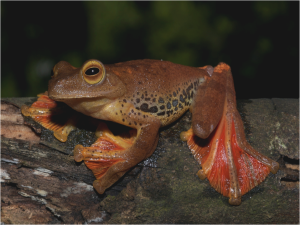
In January we had a flurry of media coverage (see here for examples) about one of our papers that had just come out online in Conservation BiologyEating frogs to extinction (Warkentin et al.). I blogged about the paper then (one of ConservationBytes’ most viewed posts) that described the magnitude of the global trade in amphibian parts for human food. Suffice it to say, it’s colossal.

A couple of months ago, John Henley of the Guardian (UK) rang me to discuss the issue some more for a piece he was doing in that newspaper. The article has just come out (along with a companion blog post), and I can honestly say that it’s the most insightful coverage of the issue by the media I’ve seen yet. Thanks, John, for covering it so well. The article is excellently written, poignant and really gets to the heart of the matter – people just don’t know how bad the frog trade really is for amphibian biodiversity.

Short story – don’t eat any more frogs’ legs (you probably won’t be missing much).

I’ve reproduced John’s article below, but please visit the original here.

Why we shouldn’t eat frogs’ legs

In the cavernous community hall of the Vosges spa town of Vittel, a large and lugubrious man, his small, surprisingly chirpy wife, and 450 other people are sitting down to their evening meal. It’s rather noisy. “Dunno why we do it, really,” shouts the man, whose name is Jacky. “Don’t taste of anything, do they? White. Insipid. If it wasn’t for the sauce it’d be like eating some soft sort of rubber. Just the kind of food an Englishman should like, in fact. Hah.”

Outside, the streets are filled with revellers. A funfair is going full swing. The restaurants along the high street are full, and queues have formed before the stands run by the local football, tennis, basketball, rugby and youth clubs.

All offer the same thing: cuisses de grenouilles à la provencale (with garlic and parsley), cuisses de grenouille à la poulette (egg and cream). Seven euros, or thereabouts, for a paper plateful, with fries. Nine with a beer or a glass of not-very-chilled riesling. The more daring are offering cuisses de grenouilles à la vosgienne, à l’andalouse, à l’ailloli. There’s pizza grenouille, quiche grenouille, tourte grenouille. Omelette de grenouilles aux fines herbes. Souffle, cassolette and gratin de grenouilles.

Everywhere you look, people are nibbling greasily on a grenouille, licking their fingers, spitting out little bones. “Isn’t it just great?” yells Jacky’s diminutive wife, Frederique. “Every year we do this. It’s our tradition. Our tribute to the noble frog.”

This is Vittel’s 37th annual Foire aux Grenouilles. According to Roland Boeuf, the 70-year-old president of the Confrererie de Taste-Cuisses de Grenouilles de Vittel, or (roughly) the Vittel Brotherhood of Frog Thigh Tasters, which has organised the event since its inception, the fair regularly draws upwards of 20,000 gourmet frog aficionados to the town for two days of amphibian-inspired jollities. Between them, they consume anything up to seven tonnes of frogs’ legs.

But there’s a problem. When the fair began, its founder René Clément, resistance hero, restaurateur and last of the great Lorraine frog ranchers, could supply all the necessary amphibians from his lakes 20 miles or so away. Nowadays, none of the frogs are even French.

According to Boeuf, Clément, whose real name was Hofstetter, moved to the area in the early 1950s looking to raise langoustines in the Saone river; the water proved too brackish and he turned to frogs instead. A true Frenchman, his catchphrase, oft-quoted around these parts, was that frogs “are like women. The legs are the best bits”.

Hofstetter/Clément would, says Gisèle Robinet, “provide 150 kg, 200 kg for every fair, all from his lakes and all caught by him”. With her husband Patrick, Robinet runs the Au Pêché Mignon patisserie (tourte aux grenouilles for six, €18; chocolate frogs €13 the dozen) on the Place de Gaulle, across the square from the restaurant Clément used to run, Le Grand Cerf. Now known as Le Galoubet, there’s a plaque commemorating the great frogman outside. “As a child I remember clearly him dismembering and preparing and cleaning his frogs in front of the restaurant,” says Robinet, who sells frog tartlets to gourmet Vitellois throughout the year, but makes a special effort with quiches and croustillants at fair-time. “It’s a big job, you know. Very fiddly. But we were all frog-catchers when I was a kid. Now, of course, that’s not possible any more.”

Boeuf recalls many a profitable frog-hunting expedition in the streams and ponds around Vittel. “One sort, la savatte, you could catch with your bare hands,” he says. “Best time was in spring, when they lay their eggs. They’d gather in their thousands, great wriggling green balls of them. I’ve seen whole streams completely blocked by a mountain of frogs.”

Others, rainettes, would be everywhere at harvest time. Or you could get a square of red fabric and lay it carefully on the water next to a lily pad that happened to have a frog on it, “and she’d just hop straight off and on to the cloth”, Boeuf says. “They love red.”

Pierette Gillet, the longest-standing member of the Brotherhood and, at 81, still a sprightly and committed frog-fancier, remembers heading out at night with a torch in search of so-called mute frogs, harder to catch because they have no larynx and hence emit no croak. “They’d be blinded by the light, and you could whack them over the head,” she says.

But those days are long gone. As elsewhere in the world, the amphibians’ habitat in France – where frogs’ legs have been a recognised and much remarked-upon part of the national diet for the best part of 1,000 years – is increasingly at risk, from pollution, pesticides and other man-made ills. Ponds have been drained and replaced with crops and cattle-troughs. Diseases have taken their toll, and the insects that frogs feed on are disappearing too. Alarmed by a rapid and dramatic fall in frog numbers, the French ministry of agriculture and fisheries began taking measures to protect the country’s species in 1976; by 1980, commercial frog harvesting was banned.

These days, a few regional authorities in France still allow the capture of limited numbers of frogs, strictly for personal consumption and provided they are broiled, fried or barbecued and consumed on the spot (a heresy not even Boeuf is prepared to contemplate). There are poachers who defy the ban; two years ago a court in Vesoul in the Haute-Saone convicted four men of harvesting vast numbers of frogs from the Mille-Etangs or Thousand Lakes area of the Vosges. The ringleader admitted to personally catching at least 10,000, which he sold to restaurants for 32 cents apiece.

By and large, though, France’s tough protection laws, enforceable by fines of up to €10,000 (£8,500) and instant confiscation of vehicles and equipment, seem to be working. As a result, all seven tonnes (officially, at least) of frogs’ legs consumed at this year’s Vittel fair have been imported, pre-prepared, deep-frozen and packed in cardboard boxes, from Indonesia.

Needless to say, this does not much please patriotic Gallic frog-fanciers. “We’d far prefer our frogs to be French, of course we would,” laments Gillet. “Especially here in the Vosges. This really is the heart of frog country.”

A Vittel restaurateur, who for obvious reasons demands anonymity, suggests there are still “ways and means” of securing at least a semi-reliable supply of French frogs for those who demand a true produit du terroir, “but it’s really not very easy, and no one here will tell you anything about it. We’d like to source locally, but the law is the law.”

But the fact that the Foire aux Grenouilles – not to mention the rest of France, and other big frog-consuming nations such as Belgium and the United States – now imports almost all its frogs’ legs has consequences that run deeper than a mere denting of national gastronomic pride. For scientists now believe that, just as with many fish species, we could be well on the way to eating the world’s frogs to extinction. Based on an analysis of UN trade data, researchers think we may now be consuming as many as 1bn wild frogs every year. For already weakened frog populations, that is very bad news indeed.

Scientists have long been aware that while human activity is causing a steady loss of the world’s biodiversity, amphibians seem to be suffering far more severely than any other animal group. It is thought their two-stage life cycle, aquatic and terrestrial, makes them twice as vulnerable to environmental and climate change, and their permeable skins may be more susceptible to toxins than other animals. In recent years, a devastating fungal condition, chytridiomycosis, has caused catastrophic population declines in Australia and the Americas.

“Amphibians are the most threatened animal group; about one third of all amphibian species are now listed as threatened, against 23% of mammals and 12% of birds,” says Corey Bradshaw, an associate professor at the Environment Institute of the University of Adelaide and a member of the team that carried out the research into human frog consumption that was published earlier this year in the journal Conservation Biology. “The principle drivers of extinction, we always assumed, were habitat loss and disease. Human harvesting, we thought, was minor. Then we started digging, and we realised there’s this massive global trade that no one really knows much about. It’s staggering. So as well as destroying where they live, we’re now eating them to death.”

France is the main culprit: according to government figures, while the French still consume 70 tonnes a year of domestically gathered legs each year, they have been shipping in as many as 4,000 tonnes annually since 1995. Besides popular, essentially local events such as the Foire aux Grenouilles, frogs’ legs are mostly a delicacy reserved for restaurants with gastronomic pretensions; one three-star chef, Georges Blanc, has at one time or another developed 19 different recipes for them at his celebrated restaurant in the Ain village of Vonnas, baking and skewering and skilleting them in everything from cream to apples.

Belgium and Luxembourg are also noted connoisseurs, but perhaps surprisingly, the country that runs France closest in the frog import stakes is the US. Frogs’ legs are particularly popular in the former French colony of Louisiana, where the city of Rayne likes to call itself Frog Capital of the World, but are also consumed with relish in Arkansas and Texas, where they are mostly served breaded and deep-fried. Bradshaw has a picture on his blog of President Barack Obama tucking with apparent gusto into a plate of frogs’ legs.

The world’s most avid frog eaters, though, are almost certainly in Asia, in countries such as Indonesia, China, Thailand and Vietnam. South America, too, is a big market. “People may think frogs’ legs are some kind of epicurean delicacy consumed by a handful of French gourmets, but in many developing countries they are a staple,” Bradshaw says.

Indonesia is today the world’s largest exporter of frogs by far, shipping more than 5,000 tonnes each year. Some of these may be farmed, but not many. Commercial frog-farming has been tried in both the US and Europe, but with little success: for a raft of reasons, including the ease with which frogs can fall prey to disease, feeding issues and basic frog biology, it is a notoriously risky and uneconomic business. Frogs are farmed in Asia, but rarely on an industrial scale; most are small, artisan affairs with which rural families try to supplement their income.

The vast majority of frogs that end up on a plate are harvested from the wild. Bradshaw and his colleagues estimate that Indonesia, to take just one exporting country, is probably consuming between two and seven times as many frogs as it sends abroad. “We have the legally recorded, international trade figures, but none of the local business is recorded,” Bradshaw says. “It’s back-of-an-envelope work. That’s what’s so alarming.”

The scientists’ biggest concern, he says, is that because of the almost complete lack of data, no one knows in what proportion different frog species are being taken. If, as they suspect, some 15 or 20 frog species are at any given moment supplying most of world demand, the consequences could be catastrophic. For while overharvesting for human consumption may not in itself be quite enough to drive a frog species to extinction, combined with all the other threats frogs face it certainly could be.

“The thing is, it isn’t a gradual process,” Bradshaw warns. “There’s a threshold, you cross it, and the whole thing crashes because you’ve just completely changed the composition of the whole community. There’s a tipping point. It’s exactly what happened with the overexploitation of cod in the North Atlantic. And with frogs, there’s no data, no tracking, no stock management. We really should have learned our lesson with fish, but it seems we haven’t. This is a wake-up call.”

Back in Vittel, Boeuf says he had no idea frogs were in such trouble. “They’re an endangered species here, I know,” he says. “That’s why we have to be careful, and we are. But if we can buy them in such quantities from Indonesia, surely it must be all right. They’re being careful there too, aren’t they?” Sadly, it would seem they are not. And all for a few greasy scraps of limp, bland flesh.

People say frogs taste like a cross between fish and chicken. In fact, they taste of frog: in other words, precious little bar the sauce they are served in.



Underwater deforestation

26 05 2009
© C. Connell

© S. Connell

I’ve been meaning to blog on this for a while, but am only now getting around to it.

Now, it’s not bulldozers razing our underwater forests – it’s our own filth. Yes, we do indeed have underwater forests, and they are possibly the most important set of species from a biodiversity perspective in temperate coastal waters around the world. I’m talking about kelp. I’ve posted previously about the importance of kelp and how climate change poses a threat to these habitat-forming species that support a wealth of invertebrates and fish. In fact, kelp forests are analogous to coral reefs in the tropics for their role in supporting other biodiversity.

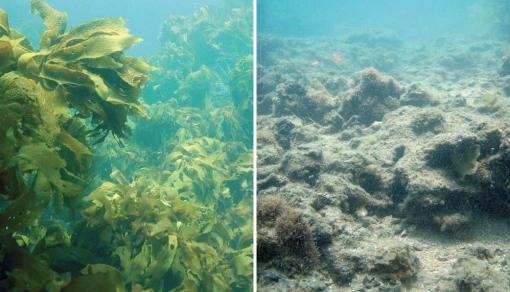
The paper I’m highlighting for the ConservationBytes.com Potential list is by a colleague of mine at the University of Adelaide, Associate Professor Sean Connell, and his collaborators entitled “Recovering a lost baseline: missing kelp forests from a metropolitan coast“. This paper is interesting, novel and applied for several reasons.

First, it sets out some convincing evidence that the Adelaide coastline has experienced a fairly hefty loss of canopy-forming kelp (mainly species like Ecklonia radiata and Cystophora spp.) since urbanisation (up to 70 % !). Now, this might not seem too surprising – we humans have a horrible track record for damaging, exploiting or maltreating biodiversity – but it’s actually a little unexpected given that Adelaide is one of Australia’s smaller major cities, and certainly a tiny city from a global perspective. There hasn’t been any real kelp harvesting around Adelaide, or coastal overfishing that could lead to trophic cascades causing loss through herbivory. Connell and colleagues pretty much are able to isolate the main culprits: sedimentation and nutrient loading (eutrophication) from urban run-off.

Second, one might expect this to be strange because other places around the world don’t have the same kind of response. The paper points out that in the coastal waters of South Australia, the normal situation is characterised by low nutrient concentrations in the water (what we term ‘oligotrophic’) compared to other places like New South Wales. Thus, when you add even a little bit extra to a system not used to it, these losses of canopy-forming kelp ensue. So understanding the underlying context of an ecosystem will tell you how much it can be stressed before all hell breaks loose.

Finally, the paper makes some very strong arguments for why good marine data are required to make long-term plans for conservation – there simply isn’t enough investment in basic marine research to ensure that we can plan responsibly for the future (see also previous post on this topic).

A great paper that uses a combination of biogeography, time series and chemistry to inform about a major marine conservation problem.

CJA Bradshaw

Add to FacebookAdd to NewsvineAdd to DiggAdd to Del.icio.usAdd to StumbleuponAdd to RedditAdd to BlinklistAdd to Ma.gnoliaAdd to TechnoratiAdd to Furl


Climate change’s ugly cousin – biodiversity loss

17 05 2009

uglybaby…nobody puts a value on pollination; national accounts do not reflect the value of ecosystem services that stop soil erosion or provide watershed protection.

Barry Gardiner, Labour MP for Brent North (UK), Co-chairman, Global Legislators Organisation‘s International Commission on Land Use Change and Ecosystems

Last week I read with great interest the BBC’s Green Room opinion article by Barry Gardiner, Labour MP in the UK, about how the biodiversity crisis takes very much the back seat to climate change in world media, politics and international agreements.

He couldn’t be more spot-on.

I must stipulate right up front that this post is neither a whinge, rant nor lament; my goal is to highlight what I’ve noticed about the world’s general perception of climate change and biodiversity crisis issues over the last few years, and over the last year in particular since ConservationBytes.com was born.

Case in point: my good friend and colleague, Professor Barry Brook, started his blog BraveNewClimate.com a little over a month (August 2008) after I managed to get ConservationBytes.com up and running (July 2008). His blog tackles issues regarding the science of climate change, and Barry has been very successful at empirically, methodically and patiently tearing down the paper walls of the climate change denialists. A quick glance at the number views of BraveNewClimate.com since inception reveals about an order of magnitude more than for ConservationBytes.com (i.e., ~195000 versus 20000, respectively), and Barry has accumulated a total of around 4500 comments compared to just 231 for ConservationBytes.com. The difference is striking.

Now, I don’t begrudge for one moment this disparity – quite the contrary – I am thrilled that Barry has managed to influence so many people and topple so effectively the faecal spires erected by the myriad self-proclaimed ‘experts’ on climate change (an infamous line to whom I have no idea to attribute states that “opinions are like arseholes – everyone’s got one”). Barry is, via BraveNewClimate.com, doing the world an immense service. What I do find intriguing is that in many ways, the biodiversity crisis is a much, much worse problem that is and will continue to degrade human life for millennia to come. Yet as Barry Gardiner observed, the UK papers mentioned biodiversity only 115 times over the last 3 months compared to 1382 times for climate change – again, that order-of-magnitude disparity.

There is no biodiversity equivalent of the Intergovernmental Panel on Climate Change (although there are a few international organisations tackling the extinction crisis such as the United Nation’s Environment Program, the Millennium Ecosystem Assessment and the International Union for Conservation of Nature), we still have little capacity or idea how to incorporate the trillions of dollars worth of ecosystem services supplied every year to us free of charge, and we have nothing at all equivalent to the Kyoto Protocol for biodiversity preservation. Yet, conservation biologists have for decades demonstrated how human disease prevalence, reduction in pollination, increasing floods, reduced freshwater availability, carbon emissions, loss of fish supplies, weed establishment and spread, etc. are all exacerbated by biodiversity loss. Climate change, as serious and potentially apocalyptic as it is, can be viewed as just another stressor in a system stressed to its limits.

Of course, the lack of ‘interest’ may not be as bleak as indicated by web traffic; I believe the science underpinning our assessment of biodiversity loss is fairly well-accepted by people who care to look into these things, and the evidence spans the gambit of biological diversity and ecosystems. In short, it’s much less controversial a topic than climate change, so it attracts a lot less vitriol and spawns fewer polemics. That said, it is a self-destructive ambivalence that will eventually come to bite humanity on the bum in the most serious of ways, and I truly believe that we’re not far off from major world conflicts over the dwindling pool of resources (food, water, raw materials) we are so effectively destroying. We would be wise to take heed of the warnings.

CJA Bradshaw

Add to FacebookAdd to NewsvineAdd to DiggAdd to Del.icio.usAdd to StumbleuponAdd to RedditAdd to BlinklistAdd to Ma.gnoliaAdd to TechnoratiAdd to Furl


Eastern Seaboard Climate Change Initiative

30 04 2009
© A. Perkins
© A. Perkins

I’ve just spent the last few days in Sydney attending a workshop on the Eastern Seaboard Climate Change Initiative which is trying to come to grips with assessing the rising impact of climate change in the marine environment (both from biodiversity and coastal geomorphology perspectives).

Often these sorts of get-togethers end up doing little more than identifying what we don’t know, but in this case, the ESCCI (love that acronym) participants identified some very good and necessary ways forward in terms of marine research. Being a biologist, and given this is a conservation blog, I’ll focus here on the biological aspects I found interesting.

The first part of the workshop was devoted to kelp. Kelp? Why is this important?

As it turns out, kelp forests (e.g., species such as Ecklonia, Macrocystis, Durvillaea and Phyllospora) are possibly THE most important habitat-forming group of species in temperate Australia (corals and calcareous macroalgae being more important in the tropics). Without kelp, there are a whole host of species (invertebrates and fish) that cannot persist. The Australian marine environment is worth something in the vicinity of $26.8 billion to our economy each year, so it’s pretty important we maintain our major habitats. Unfortunately, kelp is starting to disappear around the country, with southern contractions of Durvillaea, Ecklonia and Hormosira on the east coast linked to the increasing southward penetration of the East Australia Current (i.e., the big current that brings warm tropical water south from Queensland to NSW, Victoria and now, Tasmania). Pollution around the country at major urban centres is also causing the loss or degradation of Phyllospora and Ecklonia (e.g., see recent paper by Connell et al. in Marine Ecology Progress Series). There is even some evidence that disease causing bleaching in some species is exacerbated by rising temperatures.

Some of the key kelp research recommendations coming out of the workshop were:

  1. Estimating the value of kelp to Australians (direct harvesting; fishing; diving)
  2. Physical drivers of change: understanding how variation in the East Australian Current (temperature, nutrients) affects kelp distribution; understanding how urban and agricultural run-off (nutrients, pollutants, sedimentation) affects distribution and health; understanding how major storm events (e.g., East Coast Lows and El Niño-Southern Oscillation) affects long-term persistence
  3. Monitoring: what is the distribution and physical limits of kelp species?; how do we detect declines in ‘health’?; what is the associated biodiversity in kelp forests?
  4. Experimental: manipulations of temperature/nutrients/pathogens in the lab and in situ to determine sensitivities; sensitivity of different life stages; latitudinal transplants to determine localised adaption
  5. Adaptation (management): reseeding; managing run-off; managing fisheries to maintain a good balance of grazers and predators; inform marine protected area zoning; understanding trophic cascades

The second part of the discussion centred on ocean acidification and increasing CO2 content in the marine environment. As you might know, increasing atmospheric CO2 is taken up partially by ocean water, which lowers the availability of carbonate and increases the concentration of hydrogen ions (thus lowering pH or ‘acidifying’). It’s a pretty worrying trend – we’ve seen a drop in pH already, with conservative predictions of another 0.3 pH drop by the end of this century (equating to a doubling of hydrogen ions in the water). What does all this mean for marine biodiversity? Well, many species will simply not be able to maintain carbonate shells (e.g., coccolithophore phytoplankton, corals, echinoderms, etc.), many will suffer reproductive failure through physiological stress and embryological malfunction, and still many more will be physiologically stressed via hypercapnia (overdose of CO2, the waste product of animal respiration).

Many good studies have come out in the last few years demonstrating the sensitivity of certain species to reductions in pH (some simultaneous with increases in temperature), but some big gaps remain in our understanding of what higher CO2 content in the marine environment will mean for biota. Some of the key research questions in this area identified were therefore:

  1. What is the adaptation (evolutionary) potential of sensitive species? Will many (any) be able to evolve higher resistance quickly enough?
  2. In situ experiments outside the lab that mimic pH and pCO2 variation in space and time are needed to expose species to more realistic conditions.
  3. What are the population consequences (e.g., change in extinction risk) of higher individual susceptibility?
  4. Which species are most at risk, and what does this mean for ecosystem function (e.g., trophic cascades)?

As you can imagine, the conversation was complex, varied and stimulating. I thank the people at the Sydney Institute of Marine Science for hosting the fascinating discussion and I sincerely hope that even a fraction of the research identified gets realised. We need to know how our marine systems will respond – the possibilities are indeed frightening. Ignorance will leave us ill-prepared.

CJA Bradshaw

Add to FacebookAdd to NewsvineAdd to DiggAdd to Del.icio.usAdd to StumbleuponAdd to RedditAdd to BlinklistAdd to Ma.gnoliaAdd to TechnoratiAdd to Furl


Plight of frogs

27 04 2009

I’m off to a conference shortly, so this will be brief.

© D. Bickford
© D. Bickford

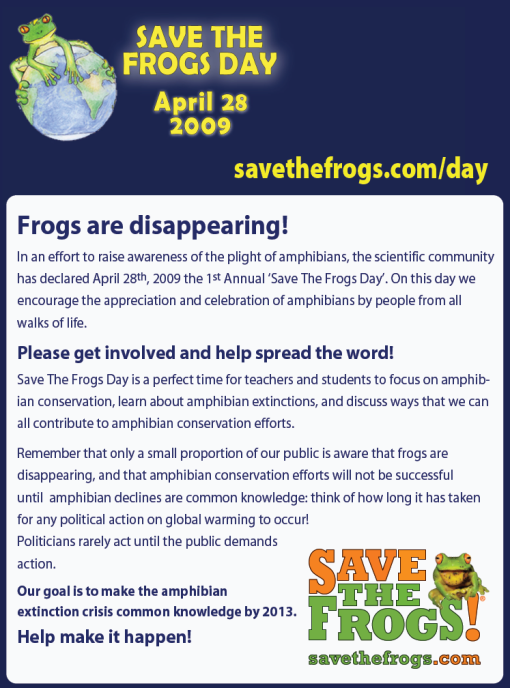
In an effort to raise awareness about the plight of amphibians (see previous posts on ConservationBytes.com regarding drivers of amphibian extinction risk and over-harvesting frogs for human consumption), the mob at SaveTheFrogs.com have initiated ‘Save The Frogs Day’ for tomorrow (28 April 2009).

I encourage people to get involved – there are some particularly good ideas for teachers and students found at the dedicated ‘Save The Frogs Day’ website.

CJA Bradshaw


More than just baby sharks

23 04 2009

Sharks worldwide are in trouble (well, so are many taxa, for that matter), with ignorance, fear, and direct and indirect exploitation (both legal and illegal) accounting for most of the observed population declines.
Despite this worrisome state (sharks have extremely important ‘regulatory’ roles in marine ecosystems), many people have been slowly taking notice of the problem, largely due to the efforts of shark biologists. An almost religious-like pillar of shark conservation that has emerged in the last decade or so is that if we save nursery habitats, all shark conservation concerns will be addressed.

Why? Many shark species appear to have fairly discrete coastal areas where they either give birth or lay eggs, and in which the young sharks develop presumably in relative safety from predators (including their parents). Meanwhile, breeding parents will often skip off as soon as possible and spend a good proportion of their non-breeding lives well away from coasts. Sexual segregation appears to be another common feature of many sharks species (the boys and girls don’t really play together that well).

The upshot is that if you conserve these more vulnerable ‘nursery’ areas in coastal regions, then you’ve protected the next generation of sharks and all will be fine. The underlying reason for this assumption is that it’s next-to-impossible to conserve entire ocean basins where the larger adults may be frolicking, but you can focus your efforts on restricted coastal zones that may be undergoing a lot of human-generated modification (e.g., pollutant run-off, development, etc.).

However, a new paper published recently in Conservation Letters entitled Reassessing the value of nursery areas to shark conservation and management disputes this assumption. Michael Kinney and Colin Simpfendorfer explain that even if coastal nurseries can be properly identified and adequately conserved, there is mounting evidence that failing to safeguard the adult stages could ultimately sustain declines or arrest recovery efforts. The authors support continuing efforts to identify and conserve nurseries, but they say this isn’t enough by itself to solve any real problems. If we want sharks around (and believe me, even though the odd swimmer may get a nip or two, it’s better than the alternative of no sharks), then we’re going to have to restrict fishing effort on the high seas as well.

I think this one qualifies for the ‘Potential‘ list.

CJA Bradshaw

Add to FacebookAdd to NewsvineAdd to DiggAdd to Del.icio.usAdd to StumbleuponAdd to RedditAdd to BlinklistAdd to Ma.gnoliaAdd to TechnoratiAdd to Furl


Protein mining the world’s oceans

31 03 2009

Last month David Agnew and colleagues published a paper in PLoS One examining the global extent of illegal, unreported and unregulated (IUU) fishing (Estimating the worldwide extent of illegal fishing), estimating its value from US$10-23.5 billion and representing between 11 and 26 million tonnes of fish annually. The value is roughly the same as that lost from illegal logging each year. Wow.
Of perhaps most interest is that Agnew and colleagues found evidence for a negative relationship between IUU fishing as a proportion of total catch and an international (World Bank) governance quality index. This suggests that improving governance and eradicating corruption may be the best way to curtail the extent of the illegal harvest.

We have just published a paper online in Fish and Fisheries about the extent and impact of IUU fishing in northern Australia. Entitled Protein mining the world’s oceans: Australasia as an example of illegal expansion-and-displacement fishing, the paper by Iain Field and colleagues advocates a multi-lateral response to a problem that has grown out of control in recent decades.

IUU fishing is devastating delicate ecosystems and fish breeding grounds in waters to Australia’s north, and can no longer be managed effectively by individual nations. The problem now requires an urgent regional solution if food security into the future is to be maintained.

The paper is the first big-picture account of the problem from Australia’s perspective. Although there had been a decline in IUU fishing in Australian waters over the past two years, possibly linked to large Australian government expenditure on enforcement and rising fuel prices, the forces driving illegal fishing have not gone away and are likely to resurface in our waters.

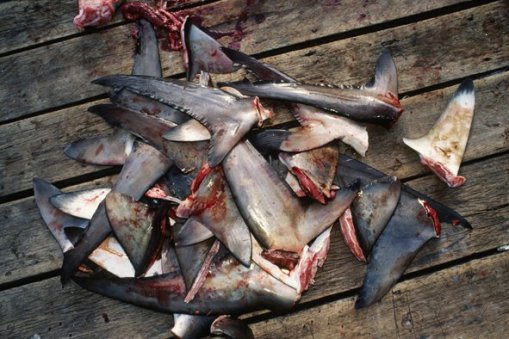
We expect that the small-scale illegal fishers will be back to prey on other species such as snapper, trochus and trepang as soon as it is economically viable for them to do so. To date, these IUU fishers have focused mostly on high-value sharks mainly for the fin trade, to the extent that the abundance of some shark species has dropped precipitously. IUU fishing, which has devastated fish resources and their associated ecosystems throughout Southeast Asian waters, is driven by deep economic and societal forces. For example, the Asian economic crisis in the late 1990s drove a large number of people out of cities and into illegal fishing.

It is not enough to maintain just a national response as the problem crosses national maritime zones, and it poses one of the biggest threats known to marine ecosystems throughout the region. These IUU fishers are mining protein, and there is no suggestion of sustainability or factoring in fish breeding or ecosystem protection into the equation. They just come into a fishing area and strip-mine it, leaving it bare.

Illegal fishing in Australian waters started increasing steeply about 10 years ago, largely because of over-exploitation of waters farther north, peaking in 2005-06 then falling away just as steeply. There are three factors behind the recent downturn: Australian government enforcement measures estimated to have cost at least AU$240 million since 2006; the high price of fuel for the fishing boats; and, most importantly, the fact that the high-value species may have been fished out and are now economically and ecologically extinct.

The $240 million has funded surveillance, apprehension, transportation, processing and accommodation of the several thousand illegal foreign fishermen detained each year since 2006. These activities have been successful, but it is doubtful whether they can hold back the IUU tide indefinitely – the benefits to the illegal fishers of their activities far outweigh the penalties if caught.

With increasing human populations in the region, the pressure to fish illegally is likely to increase. Regional responses are required to deter and monitor the illegal over-exploitation of fisheries resources, which is critical to secure ecosystem stability as climate change and other destructive human activities threaten food security.

CJA Bradshaw (with IC Field, MG Meekan and RC Buckworth)

Add to FacebookAdd to NewsvineAdd to DiggAdd to Del.icio.usAdd to StumbleuponAdd to RedditAdd to BlinklistAdd to Ma.gnoliaAdd to TechnoratiAdd to Furl


Destroyed or Destroyer?

23 03 2009

Last year our group published a paper in Journal of Ecology that examined, for the first time, the life history correlates of a species’ likelihood to become invasive or threatened.

The paper is entitled Threat or invasive status in legumes is related to opposite extremes of the same ecological and life-history attributes and was highlighted by the Editor of the journal.

The urgency and scale of the global biodiversity crisis requires being able to predict a species’ likelihood of going extinct or becoming invasive. Why? Well, without good predictive tools about a species’ fate, we can’t really prepare for conservation actions (in the case of species more likely to go extinct) or eradication (in the case of vigorous invasive species).

We considered the problem of threat and invasiveness in unison based on analysis of one of the largest-ever databases (8906 species) compiled for a single plant family (Fabaceae = Leguminosae). We chose this family because it is one of the most speciose (i.e., third highest number of species) in the Plant kingdom, its found throughout all continents and terrestrial biomes except Antarctica, its species range in size from dwarf herbs to large tropical trees, and its life history, form and functional diversity makes it one of the most important plant groups for humans in terms of food production, fodder, medicines, timber and other commercial products. Choosing only one family within which to examine cross-species trends also makes the problem of shared evolutionary histories less problematic from the perspective of confounded correlations.

We found that tall, annual, range-restricted species with tree-like growth forms, inhabiting closed-forest and lowland sites are more likely to be threatened. Conversely, climbing and herbaceous species that naturally span multiple floristic kingdoms and habitat types are more likely to become invasive.

Our results support the idea that species’ life history and ecological traits correlate with a fate response to anthropogenic global change. In other words, species do demonstrate particular susceptibility to either fate based on their evolved traits, and that traits generally correlated with invasiveness are also those that correlate with a reduced probability of becoming threatened.

Conservation managers can therefore benefit from these insights by being able to rank certain plant species according to their risk of becoming threatened. When land-use changes are imminent, poorly documented species can essentially be ranked according to those traits that predispose them to respond negatively to habitat modification. Here, species inventories combined with known or expected life history information (e.g., from related species) can identify which species may require particular conservation attention. The same approach can be used to rank introduced plant species for their probability of spreading beyond the point of introduction and threatening native ecosystems, and to prioritise management interventions.

I hope more taxa are examined with such scrutiny so that we can have ready-to-go formulae for predicting a wider array of potential fates.

CJA Bradshaw

Add to FacebookAdd to NewsvineAdd to DiggAdd to Del.icio.usAdd to StumbleuponAdd to RedditAdd to BlinklistAdd to Ma.gnoliaAdd to TechnoratiAdd to Furl


Too many mouths to feed

19 03 2009

The venerable Professor John Beddington has some stern warnings about over-population in the next few decades. In essence, we cannot ignore the human over-population problem any longer. There are simply too many people for the finite resources available and the consumption rates that do not appear to be declining (not surprising given our voracious appetite for economic growth – more like long-term economic suicide, really). Australia is certainly no exception – with most of our country essentially uninhabitable, we’ve already exceeded our carrying capacity (but try telling this to the pollies).

In my opinion, human over-population is THE principal driver of biodiversity loss in the modern context. Without some serious global efforts for population planning, expect a lot more conflict in your lifetime, and a lot worse effects of climate change. See also Global Population Speak Out.

This one from the BBC:

Growing world population will cause a “perfect storm” of food, energy and water shortages by 2030, the UK government chief scientist has warned. By 2030 the demand for resources will create a crisis with dire consequences, Prof John Beddington said. Demand for food and energy will jump 50% by 2030 and for fresh water by 30%, as the population tops 8.3 billion, he told a conference in London.

Climate change will exacerbate matters in unpredictable ways, he added. “It’s a perfect storm,” Prof Beddington told the Sustainable Development UK 09 conference.’Perfect storm’ poses global threat, says Professor Beddington. “There’s not going to be a complete collapse, but things will start getting really worrying if we don’t tackle these problems.”

Prof Beddington said the looming crisis would match the current one in the banking sector. “My main concern is what will happen internationally, there will be food and water shortages,” he said.

“We’re relatively fortunate in the UK; there may not be shortages here, but we can expect prices of food and energy to rise.” The United Nations Environment Programme predicts widespread water shortages across Africa, Europe and Asia by 2025. The amount of fresh water available per head of the population is expected to decline sharply in that time. The issue of food and energy security rose high on the political agenda last year during a spike in oil and commodity prices.

Prof Beddington said the concern now – when prices have dropped once again – was that the issues would slip back down the domestic and international agenda. “We can’t afford to be complacent. Just because the high prices have dropped doesn’t mean we can relax,” he said. Improving agricultural productivity globally was one way to tackle the problem, he added. At present, 30-40% of all crops are lost due to pest and disease before they are harvested. Professor Beddington said: “We have to address that. We need more disease-resistant and pest-resistant plants and better practices, better harvesting procedures. “Genetically-modified food could also be part of the solution. We need plants that are resistant to drought and salinity – a mixture of genetic modification and conventional plant breeding. Better water storage and cleaner energy supplies are also essential, he added.

Prof Beddington is chairing a subgroup of a new Cabinet Office task force set up to tackle food security. But he said the problem could not be tackled in isolation. He wants policy-makers in the European Commission to receive the same high level of scientific advice as the new US president, Barack Obama. One solution would be to create a new post of chief science adviser to the European Commission, he suggested.

CJA Bradshaw


Tropical Turmoil II

8 03 2009

In August last year I covered a paper my colleagues (Navjot Sodhi and Barry Brook) and I had in press in Frontiers in Ecology and the Environment entitled Tropical turmoil – a biodiversity tragedy in progress. The paper is now available in the March 2009 issue of the journal (click here to access). We were also fortunate enough to grab the front cover (shown here) and have a dedicated podcast that you can listen to by clicking here about the paper and its findings. I encourage ConservationBytes.com readers to have a listen if they’re interested in learning more about the woeful state of tropical biotas worldwide, and maybe some ways to rectify the problems. The intro to the podcast can be viewed by clicking here.

CJA Bradshaw


Shifting baselines

19 02 2009

jellyburger

A term first coined by Daniel Pauly (who we’ve previously covered as a Conservation Scholar), and one I could easily classify as a conservation Classic, it essentially describes the way changes to a system are measured against previous baselines, which themselves may represent changes from the original state of the system (definition modified from Wikipedia). Pauly originally meant it in a fisheries context, where “… fisheries scientists sometimes fail to identify the correct “baseline” population size (e.g., how abundant a fish species population was before human exploitation) and thus work with a shifted baseline“.

It’s easily considered a mantra in fisheries (there’s even a dedicated Scienceblog on the topic, and several other fisheries-related websites [e.g., here & here]), but it has been extended to all sorts of other conservation issues.

As it turns out, however, quantifying ‘shifting baselines’ in conservation is rather difficult, and there’s little good evidence in most systems (despite the logic and general acceptance of its ubiquity by conservation scientists). Now Papworth and colleagues have addressed this empirical hole in their new paper entitled Evidence for shifting baseline syndrome in conservation published online recently in Conservation Letters.

Papworth et al. discuss two kinds of shifting baselines: (1) general amnesia (“… individuals setting their perceptions from their own experience, and failing to pass their experience on to future generations”) and (2) personal amnesia (“… individuals updating their own perception of normality; so that even those who experienced different previous conditions believe that current conditions are the same as past conditions”), and they provide three well-quantified examples: (a) perceptions of bushmeat hunters in Gabon, (b) perceptions of bushmeat hunters in Equatorial Guinea and (c) perceptions of bird population trends in the UK.

Although the data have issues, all three cases demonstrate convincing evidence of the shifting baselines syndrome (with the UK example providing an example of both general and personal amnesia). Now, this may all seem rather logical, but I don’t want the reader to underestimate the importance of the Papworth paper – this is really one of the first demonstrations that it is a real problem in vastly different systems (i.e., not just fisheries). I think it’s hard evidence that the issue is a big one and cannot be ignored when presenting historical data for conservation purposes.

Humans inevitably have short memories when it comes to environmental degradation – this essentially means that in most demonstrations of biodiversity decline, it’s probably a lot worse even than the data might suggest. Policy makers take note.

CJA Bradshaw

Add to FacebookAdd to NewsvineAdd to DiggAdd to Del.icio.usAdd to StumbleuponAdd to RedditAdd to BlinklistAdd to Ma.gnoliaAdd to TechnoratiAdd to Furl


Cloning for conservation – stupid and wasteful

5 02 2009
© J. F. Jaramillo

© J. F. Jaramillo

I couldn’t have invented a better example of a Toothless conservation concept.

I just saw an article in the Independent (UK) about cloning for conservation that has rehashed the old idea yet again – while there was some interesting thoughts discussed, let’s just be clear just how stupidly inappropriate and wasteful the mere concept of cloning for biodiversity conservation really is.

1. Never mind the incredible inefficiency, the lack of success to date and the welfare issues of bringing something into existence only to suffer a short and likely painful life, the principal reason we should not even consider the technology from a conservation perspective (I have no problem considering it for other uses if developed responsibly) is that you are not addressing the real problem – mainly, the reason for extinction/endangerment in the first place. Even if you could address all the other problems (see below), if you’ve got no place to put these new individuals, the effort and money expended is an utter waste of time and money. Habitat loss is THE principal driver of extinction and endangerment. If we don’t stop and reverse this now, all other avenues are effectively closed. Cloning won’t create new forests or coral reefs, for example.

I may as well stop here, because all other arguments are minor in comparison to (1), but let’s continue just to show how many different layers of stupidity envelop this issue.

2. The loss of genetic diversity leading to inbreeding depression is a major issue that cloning cannot even begin to address. Without sufficient genetic variability, a population is almost certainly more susceptible to disease, reductions in fitness, weather extremes and over-exploitation. A paper published a few years ago by Spielman and colleagues (Most species are not driven to extinction before genetic factors impact them) showed convincingly that genetic diversity is lower in threatened than in comparable non-threatened species, and there is growing evidence on how serious Allee effects are in determining extinction risk. Populations need to number in the 1000s of genetically distinct individuals to have any chance of persisting. To postulate, even for a moment, that cloning can artificially recreate genetic diversity essential for population persistence is stupidly arrogant and irresponsible.

3. The cost. Cloning is an incredibly costly business – upwards of several millions of dollars for a single animal (see example here). Like the costs associated with most captive breeding programmes, this is a ridiculous waste of finite funds (all in the name of fabricated ‘conservation’). Think of what we could do with that money for real conservation and restoration efforts (buying conservation easements, securing rain forest property, habitat restoration, etc.). Even if we get the costs down over time, cloning will ALWAYS be more expensive than the equivalent investment in habitat restoration and protection. It’s wasteful and irresponsible to consider it otherwise.

So, if you ever read another painfully naïve article about the pros and cons of cloning endangered species, remember the above three points. I’m appalled that this continues to be taken seriously!

CJA Bradshaw

Add to FacebookAdd to NewsvineAdd to DiggAdd to Del.icio.usAdd to StumbleuponAdd to RedditAdd to BlinklistAdd to Ma.gnoliaAdd to TechnoratiAdd to Furl