Buzzing to the plate

4 04 2011

Here’s another contribution from my PhD student, Salvador Herrando-Pérez (see his previous ConservationBytes.com post on micro-evolution here).

Once upon a time at the produce section of a supermarket, a little girl confided to me that she had no idea that little plants could grow on carrots. This sympathetic scene portrays the split between the food we consume and the environments that produce it.

© Cordell

Mediterraneans love their cuisine. In fact, we are fairly proud of all our food. Yet how many of us associate a juicy tomato in our multicoloured salads, the smoothness of a escalibada (grilled veggies) bathed in virgin olive oil, the afternoon’s delicious expresso among friends and colleagues, or the last Christmas’ crunchy nougat shared with our beloved, with an insect that one given day pollinates a flower whose fertilized ovary will reach our dining room in the form of a sweet, infusion, fruit, sauce, soup or veggie.

Biodiversity fuels this relationship between insects and food. A study led by Alexandra Klein on highland coffee (Coffea arabica) from Sulawesi (Indonesia) demonstrates this concept well1. The German team showed that the amount of coffee beans produced in 24 agro-forestry sites increased with the number of bee species visiting the flowers (Fig. 1). Read the rest of this entry »




How fast are we losing species anyway?

28 03 2011

© W. Laurance

I’ve indicated over the last few weeks on Twitter that a group of us were recently awarded funding from the Australian Centre for Ecological Synthesis and Analysis – ACEAS – (much like the US version of the same thing – NCEAS) to run a series of analytical workshops to estimate, with a little more precision and less bias than has been done previously, the extinction rates of today’s biota relative to deep-time extinctions.

So what’s the issue? The Earth’s impressive diversity of life has experienced at least five mass extinction events over geological time. Species’ extinctions have kept pace with evolution, with more than 99 % of all species that have ever existed now gone (Bradshaw & Brook 2009). Despite general consensus that biodiversity has entered the sixth mass extinction event because of human-driven degradation of the planet, estimated extinction rates remain highly imprecise (from 100s to 10000s times background rates). This arises partly because the total number of species is unknown for many groups, and most extinctions go unnoticed.

So how are we going to improve on our highly imprecise estimates? One way is to look at the species-area relationship (SAR), which to estimate extinction requires one to extrapolate back to the origin in taxon- and region-specific SARs (e.g., with a time series of deforestation, one can estimate how many species would have been lost if we know how species diversity changes in relation to habitat area). Read the rest of this entry »



Biodiversity begins at home

20 01 2011

A few months ago I was involved in a panel discussion entitled ‘Biodiversity begins at home’ held at the Royal Institution of Australia in Adelaide and sponsored by the Don Dunstan Foundation.

The main thrust of the evening was to have both academic (me & Andy Lowe) and on-the-ground, local conservationists (Sarah Lance, Craig Gillespie and Matt Turner) talk about what people can do to stem the tide of biodiversity loss. The video is now available, so I thought I’d reproduce it here. We talked about a lot of issues (from global to local scale), so if you have a spare hour, you might get something out of this. I did, but it certainly wasn’t long enough to discuss such big issues.

Warning – this was supposed to be more of a discussion and less of a talkfest; unfortunately, many of the panel members seemed to forget this and instead dominated the session. We really needed 4 hours to do this properly (but then, who would have watched the video?).

Read the rest of this entry »


Deforestation partly to blame for Queensland floods

17 01 2011

© recoverling

Last week I sent a fairly random Tweet about deforestation in south-eastern Queensland being partially responsible for the record floods there. It went more or less unnoticed, but I thought the comment deserved a proper explanation.

As many of you might know, my colleagues and I wrote an article a few years ago about the global-scale evidence for deforestation leading to a higher incidence and severity of floods in the developing world. This was fairly controversial, but it was nonetheless the first broad-scale evidence for the fabled deforestation-flood link yet published (in my not-so-humble opinion). Subsequent comment reiterated the point with new data.

Now, I will begin by saying I have no data yet to back up my Queensland-specific hypothesis, but I am contemplating a time-series paper on floods in Australia, especially after the events of the last month. This post is therefore merely a reasoned hypothesis.

The hypothesis itself is rather simple. Testing is not. I submit that the recent flooding in Australia has been exacerbated (not caused) by the rapid loss of forest cover over the last 40 years. We know that this is a particularly intense La Niña in Australia and our unusually high rainfall arises from this meteorological phenomenon, but I hypothesise that it wouldn’t have been as bad if this part of Australia hadn’t been so careless with its forest cover since the 1970s. Read the rest of this entry »



The other, other global crisis

22 11 2010

Another quick and informative introduction to the problems of over-population and agricultural intensification. Like the nice little video introduction to the importance of biodiversity, if you want to teach someone quickly about why we need to think about over-population, show them this quick video about the other, other global crisis – agriculture.

Highlights:

  • 40 % of the world’s land surface has been cleared for agriculture
  • globally, croplands cover 16 million km2 (area the size of South America
  • humans use 2800 km3 of water to irrigate crops each year
  • fertilizers have more than doubled the P and N in the environment
  • agriculture contributes 30 % of greenhouse gases


Wolves masquerading as sheep: the fallout

29 10 2010


© New Zealand Films


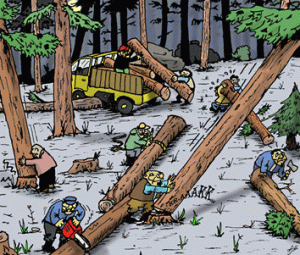
Well, we’ve managed to stimulate quite a lively conversation after dropping the Open Letter about Scientific Credibility and the Conservation of Tropical Forests regarding the questionable tactics employed by Alan Oxley and his industrial lobbyist organisations.

Mr. Oxley has responded with vitriol, hand-waving, red herrings and straw men, and failed to address even a single one of our accusations. I am particularly amused by his insinuation that we, the proven scientists, don’t know what science is – but that he does.

Below I reproduce Mr. Oxley’s reaction to our original letter, followed by our response.

I’ll let you, the reader, decide who is most reasonable.

REACTION FROM ALAN OXLEY

There is too much pseudo-scientific hype today about environmentalism and forestry and not enough fact.

I put this double-barrelled question to the Group of 12 scientists who have rather laboriously wandered over the work of World Growth: What biodiversity is expressly protected by a global cessation of conversion of forest land to other purposes and how is that biodiversity scientifically measured? And let’s have some technical response, not political blather. Read the rest of this entry »


Wolves in sheep’s clothing: industrial lobbyists and the destruction of tropical forests

25 10 2010


As of this morning, a group of distinguished scientists (which I have had the honour of being invited to join) has released an Open Letter to be published in various media outlets worldwide. The letter addresses some of our major concerns over the misinterpretation of facts, and openly misleading statements, by proponents of deforestation in the Asian tropical region. Professor Bill Laurance, an old favourite on ConservationBytes.com, has led the charge and organised a most impressive and shocking list of assertions. I produce the letter below – I encourage all my readers to distribute it as far and wide as possible in the social media-verse.

An Open Letter about Scientific Credibility and the Conservation of Tropical Forests

To whom it may concern:

As professional scientists employed by leading academic and research institutions, we are writing to alert the general public about some of the claims and practices being used by the World Growth Institute (WGI) and International Trade Strategies Global (ITS), and their affiliated leadership.

WGI and ITS operate in close association. ITS is owned by Alan Oxley, an Australian industrial lobbyist, former trade representative, and former Ambassador who also heads WGI. According to its website1, ITS also has “close associations” with several politically conservative US think tanks, including the American Enterprise Institute, the Competitive Enterprise Institute, and the Heritage Foundation.

In our personal view, WGI and ITS — which are frequently involved in promoting industrial logging and oil palm and wood pulp plantations internationally — have at times treaded a thin line between reality and a significant distortion of facts. Specifically, we assert that: Read the rest of this entry »


Yangtze River, colossal dams and famous scientists

23 10 2010


© CJA Bradshaw


Apologies for the silence over the last week – I’ve been a little preoccupied with some business in China. I’ll devote an entire post to my recent trip there (actually, I’m still there – Beijing to be precise), but I thought I’d just explain my absence and provide a little post to sate you until next week.

It’s worth mentioning that I had the enlightening experience of travelling down the Yangtze River between Chongqing and Sandouping last week – this is the area that was flooded by the world’s largest hydro-electric project, the Three Gorges Dam. This is my fourth trip to China and I’ve usually come away with the adjective ‘big’ describing pretty much everything I see here (big agriculture, big population, big pollution, big hotels, big cities…); however, in this case, ‘big’ doesn’t even come close. It’s bloody massive, and the ecological devastation (not to mention the 1.3 million people it displaced) is hard to describe in words. Sure, there are beautiful bits left (see the accompanying photo), but most of the damage is under water and along the banks of the mighty (and now, a lot mightier) Yangtze River. Read the rest of this entry »


Humans 1, Environment 0

27 09 2010

© flickr.com/photos/singapore2010

While travelling to our Supercharge Your Science workshop in Cairns and Townsville last week (which, by the way, went off really well and the punters gave us the thumbs up – stay tuned for more Supercharge activities at a university near you…), I stumbled across an article in the Sydney Morning Herald about the state of Australia.

That Commonwealth purveyor of numbers, the Australian Bureau of Statistics (ABS), put together a nice little summary of various measures of wealth, health, politics and environment and their trends over the last decade. The resulting Measures of Australia’s Progress is an interesting read indeed. I felt the simple newspaper article didn’t do the environmental components justice, so I summarise the salient points below and give you my tuppence as well. Read the rest of this entry »


Global erosion of ecosystem services

14 09 2010

A few months ago I was asked to give a lecture about erosion of ecosystem services to students in the University of Adelaide‘s Issues in Sustainable Environments unit. I gave that lecture last week and just uploaded a slidecast of the presentation (with audio) today.

I’ve reproduced the lecture here for your viewing pleasure. I hope you find the 45-minute presentation useful. Note that the first few minutes cover me referring to the Biodiversity film short that I posted not too long ago.

CJA Bradshaw


Webinar: Modelling water and life

27 08 2010

Another quick one today just to show the webinar of my recent 10-minute ‘Four in 40’ talk sponsored by The Environment Institute and the Department for Water. This seminar series was entitled ‘Modelling as a Tool for Decision Support’ held at the Auditorium, Royal Institution Australia (RiAus).

“Four in 40″ is a collaboration between The University of Adelaide and the Department for Water, where 4 speakers each speak for 10 minutes on their research and its implications for policy. The purpose is to build understanding of how best to work with each other, build new business for both organisations and raise awareness of activity being undertaken in water/natural resource management policy and research.

CJA Bradshaw


100 actions to slow biodiversity loss

19 08 2010

I received an email a few days ago from Guillaume Chapron of the Swedish University of Agricultural Sciences (Sveriges lantbruksuniversitet) asking me to promote his ‘Biodiversity 100‘ campaign on ConservationBytes.com. I think it’s an interesting initiative, and so I’ll gladly spread the word.

Teaming up with George Monbiot of The Guardian, the Biodiversity 100 campaign seeks to encourage scientists and others to compile a list of 100 tasks that G20 governments should undertake to prove their commitment to tackling the biodiversity crisis.

Dr. Chapron writes: Read the rest of this entry »


Tropical biology and conservation overview

28 07 2010

Last week I attended the 2010 International Meeting of the Association for Tropical Biology and Conservation (ATBC) in Sanur, Bali (Indonesia). I only managed one post on the real-world relevance of conservation research (that attracted quite a lot of comment) while there, but I did promise to give a conference overview as I did for the International Congress for Conservation Biology earlier this month. So here goes.

This was my first ATBC meeting despite having co-written ‘the book’ on tropical conservation biology (well, one of very, very many). I no longer live in the tropics but am still managing to keep my hand in many different aspects of tropical research. After all, tropical regions represent ground zero for conservation biology – they have the highest biodiversity (no matter which way you measure it), some of the greatest threats (e.g., most people, most rapid development, most corruption) and some of the most pressing human problems (disease, hunger, socio-political instability). Ironically, most of the world’s conservation ecologists work in temperate realms – it should really be the other way around. Read the rest of this entry »


Where in the world to invest in plant conservation

31 05 2010

© CBD

It’s been a good few weeks with many of our papers coming out online early – for example, I highlighted one last week on ecosystem function breakdown from global warming.

Although this has been out for a few weeks, our new paper lead by PhD candidate Xingli Giam (formerly of National University of Singapore, recently completed Australian Endeavour Scholar, now at Princeton University and all-round up-and-coming research star), and with contributions from Hugh “Vascular” Tan and Navjot Sodhi of National University of Singapore and me, is entitled Future habitat loss and the conservation of plant biodiversity (just published online in Biological Conservation).

This one is a bit of a complicated one, so let me walk you through it.

Plants not only represent a huge component of global biodiversity (~320 000 species), they represent the ‘habitats’ in which animals live and provide the major source of nutrients to food webs. They also provide most of our food and other materials essential for human existence. Basically we’d be screwed without them.

Because so many of the world’s biomes are severely threatened now because of massive habitat loss, degradation, over-exploitation, invasive species, extinction synergies and climate change, we need to maximise our efficiency in protecting what’s left. While global prioritisation schemes have a fruitful scientific history since Myers & colleagues’ classic paper (see Biodiversity Hotspots), there are a number of problems that plague the concept and its implementation. Read the rest of this entry »


Who are the world’s biggest environmental reprobates?

5 05 2010

Everyone is a at least a little competitive, and when it comes to international relations, there could be no higher incentive for trying to do better than your neighbours than a bit of nationalism (just think of the Olympics).

We rank the world’s countries for pretty much everything, relative wealth, health, governance quality and even happiness. There are also many, many different types of ‘environmental’ indices ranking countries. Some attempt to get at that nebulous concept of ‘sustainability’, some incorporate human health indices, and other are just plain black box (see Böhringer et al. 2007 for a review).

With that in mind, we have just published a robust (i.e., to missing data, choices for thresholds, etc.), readily quantifiable (data available for most countries) and objective (no arbitrary weighting systems) index of a country’s relative environmental impact that focuses ONLY on environment (i.e., not human health or economic indicators) – something no other metric does. We also looked at indices relative to opportunity – that is, looking at how much each country has degraded relative to what it had to start with.

We used the following metrics to create a combined environmental impact rank: natural forest loss, habitat conversion, fisheries and other marine captures, fertiliser use, water pollution, carbon emissions from land-use change and threatened species.

The paper, entitled Evaluating the relative environmental impact of countries was just published in the open-access journal PLoS One with my colleagues Navjot Sodhi of the National University of Singapore (NUS) and Xingli Giam, formerly of NUS but now at Princeton University in the USA.

So who were the worst? Relative to resource availability (i.e,. how much forest area, coastline, water, arable land, species, etc. each country has), the proportional environmental impact ranked (from worst) the following ten countries:

  1. Singapore
  2. Korea
  3. Qatar
  4. Kuwait
  5. Japan
  6. Thailand
  7. Bahrain
  8. Malaysia
  9. Philippines
  10. Netherlands

When considering just the absolute impact (i.e., not controlling for resource availability), the worst ten were:

  1. Brazil
  2. USA
  3. China
  4. Indonesia
  5. Japan
  6. Mexico
  7. India
  8. Russia
  9. Australia
  10. Peru

Interestingly (and quite unexpectedly), the authors’ home countries (Singapore, Australia, USA) were in either the worst ten proportional or absolute ranks. Embarrassing, really (for a full list of all countries, see supporting information). Read the rest of this entry »


Global rates of forest loss – everyone’s a bastard

29 04 2010

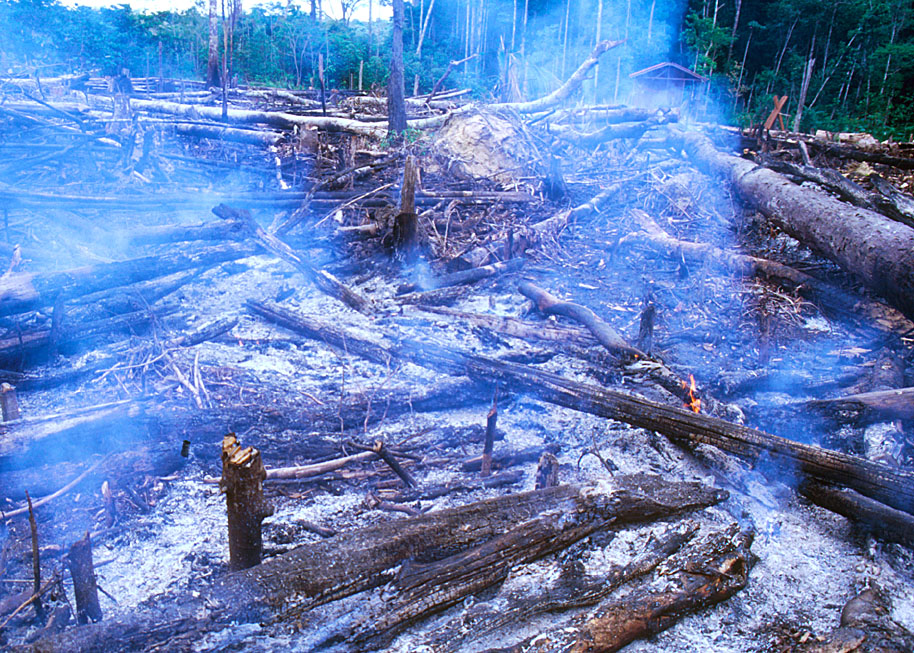
© A. Hesse

I’ve written rather a lot about rates of forest loss around the world, including accumulated estimates of tropical forest loss and increasing fragmentation/loss in the boreal forest (see Bradshaw et al. 2009 Front Ecol Evol & Bradshaw et al. 2009 Trends Ecol Evol). For the tropics in particular, we used the index that an area of rain forest about the size of Bangladesh (> 15 million hectares) was disappearing each year, and in Russia alone, annual decline in forest area averaged 1.1 million hectares between 1988 and 1993. Mind boggling, really.

But some of these estimates were a bit old, relied on some imprecise satellite data, and didn’t differentiate forest types well. In addition, many have questioned whether the rates are continuing and which countries are being naughty or nice with respect to forest conservation.

It was great therefore when I came across a new paper in PNAS by Hansen & colleagues entitled Quantification of global gross forest cover loss because it answered many of the latter questions.

Part of the problem in assessing worldwide forest cover loss in the past was the expense of satellite imagery, access problems, data storage and processing issues. Happily, new satellite streams and easing of access has rectified many of these limitations. Hansen & colleagues took advantage of data from the MODIS sensor to create a stratification for forest cover loss. They then used the Landsat ETM+ sensor as the primary data for quantifying gross forest cover loss for the entire planet from 2000 to 2005. They defined ‘forest cover’ as “… 25% or greater canopy closure at the Landsat pixel scale (30-m × 30-m spatial resolution) for trees > 5 m in height”.

For your reading pleasure (and conservation horror), the salient features were: Read the rest of this entry »


A world of hurt

21 04 2010

Given it’s only a little under 3 weeks away, I thought I’d advertise an upcoming free public lecture I’m giving for the University of Adelaide‘s highly popular Research Tuesdays programme.

The Research Tuesdays team have done a fantastic job of putting together the associated promotional material, so I’m more or less going to reproduce it here.

The topic is about the global-scale evidence for declining human health from environmental degradation – it’s new research that I haven’t yet published, and so it’ll be exciting to start disseminating the amazing results my colleagues and I have found in a public forum.

So join us on 11 May at the University of Adelaide for what I promise will be an interesting (if not frightening) public lecture. Details below. Read the rest of this entry »


The maggot of the plant world – mangroves

12 04 2010

I don’t know how many of my readers have waded through a mangrove swamp before – if you have, you’ll know it’s no ‘walk in the park’. They are generally mosquito-infested with waist-deep mud, have more creepy-crawlies than you can poke a stick at, and in some places (such as my former stomping ground, the Northern Territory of Australia) are down-right dangerous due to lovelies such as saltwater crocodiles.

But, most people probably don’t know just how important mangroves are. Just like the maggot who can sicken the hardiest of individual, under-appreciated mangroves provide major ecosystem services.

For example, did you know that mangroves:

  1. Protect inland human communities from damage caused by coastal erosion and storms?
  2. Provide critical habitat for a variety of terrestrial, estuarine and marine species? Indeed, it has been estimated that ~80 % of fish catches globally depend directly or indirectly  on mangroves.
  3. Are a source and sink for nutrients and sediments for other inshore marine habitats including seagrass beds and coral reefs?
  4. Protect coasts from floods?
  5. Process nutrient and organic matter?
  6. Control sediment?
  7. Provide at least US$1.6 billion per year in ecosystem services worldwide?
  8. Sequester up to 25.5 million tonnes of carbon per year?
  9. Provide more than 10% of essential organic carbon to the global oceans?
  10. Occupy only 0.12% of the world’s total land area?

Pretty staggering, no?

So, even if you don’t like them, it’s difficult to deny that they’re important.

But, like almost every other habitats worldwide, mangroves are on the big downward slide. In a new paper in PLoS One by Polidoro & colleagues entitled The loss of species: mangrove extinction risk and geographic areas of global concern, the authors not only highlight the above benefits, they quantify just how badly the 70 mangrove species around the world are faring. Read the rest of this entry »


China’s insatiable lust for tropical timber

4 04 2010

If you’ve been following ConservationBytes.com for the past few weeks, you’ll know that William Laurance was in town and gave a fantastic set of talks (download podcasts here). As a parting gift, he put together a brief post on one huge aspect of the tropical deforestation crisis we know face. Thanks, Bill.

© AAAS

I greatly enjoyed my recent visit to the University of Adelaide, and especially want to thank my host, Corey Bradshaw, for showing me a wonderful time there.

Corey asked me to contribute a brief blog for ConservationBytes.com and so I thought I’d highlight a paper in Science last week by my old friend Jianguo “Jack” Liu at Michigan State University. In his paper China’s road to sustainability, Jack describes the battle to improve environmental sustainability in China–a battle that is not progressing very well, all factors considered.

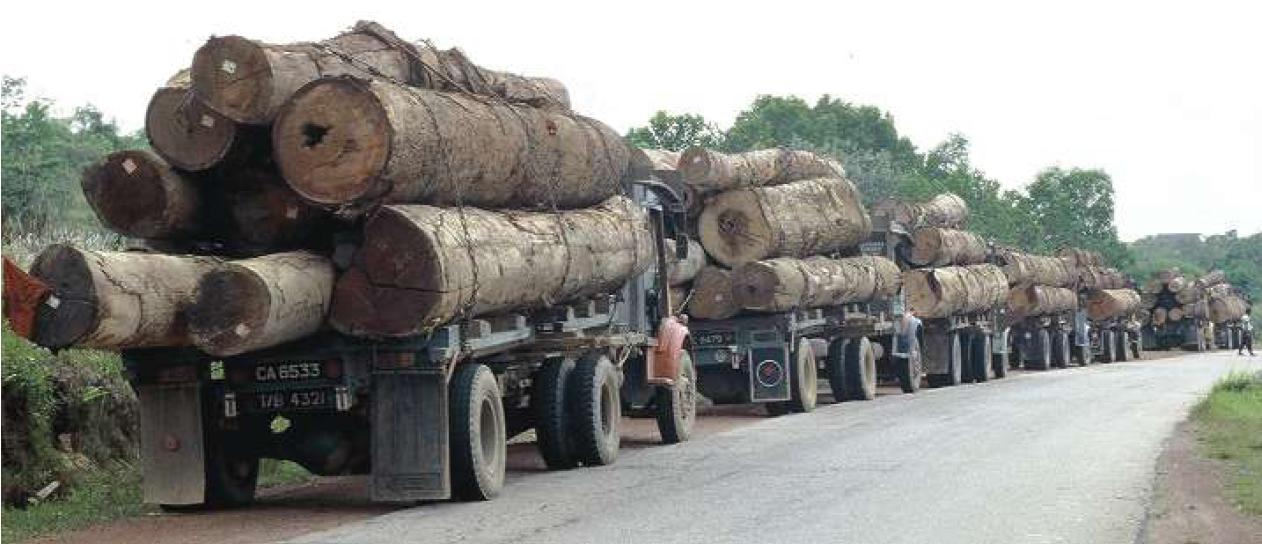
China’s explosive economic growth and environmental deterioration is also affecting other countries, especially those with timber, minerals or other resources that China wants. Today, more than half of the timber shipped anywhere in the world is destined for China–some 45 million m3 per year, an incredible total. Read the rest of this entry »


Don’t miss Bill

25 03 2010

Yes, yes, I know I’ve posted only a little under two weeks ago that the venerable William (Bill) Laurance is coming to Adelaide, and anyone even remotely interested in biodiversity conservation would be a fool to miss his talks, and ra, ra, ra…

Well, you would be.

However, I don’t want anyone to miss this opportunity simply because of non-recognition. So I thought it prudent to remind people just how special this visit is, and what a researcher extraordinaire Bill really is. For those not necessarily following the trends in tropical conservation biology (probably not many in Adelaide, at least), you might not necessarily recognise his name.

So, I thought I’d give a little broadsheet of his achievements, Read the rest of this entry »


