Global conservation priorities based on human need

13 07 2009
nf2

© Wiley-Blackwell

A paper recently posted online in Conservation Letters caught my eye as a Potential on ConservationBytes.com.

Gary Luck and colleagues’ paper Protecting ecosystem services and biodiversity in the world’s watersheds is a novel approach to an admittedly problematic aspect of conservation biology – global prioritisation schemes. While certainly coming in as a Conservation Classic, the first real global conservation prioritisation scheme (Myers and colleagues’ global biodiversity hotspots) was rather subjective in its approach, and many subsequent schemes have failed to reproduce the same kinds of priorities (the congruency problem). I’m certainly not knocking biodiversity hotspots because I believe it was one of the true paradigm shifts in conservation biology, but I am cognisant of its limitations.

Another big problem with conservation prioritisation schemes is that they are a hard sell to governments – how do you convince nations (especially poor ones) to forgo the immediate gains of resource exploitation to protect what many (incorrectly and short-sightedly) deem as irrelevant centres of biotic endemism?

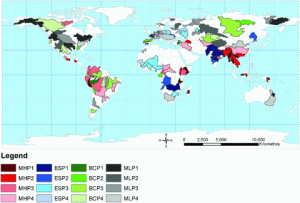
Well, Luck and colleagues have taken us one step closer to global acceptance of conservation prioritisation schemes by basing this latest addition on ecosystem services. In their paper they divided the world by catchments (watersheds) and then estimated the services of water provision, flood prevention and carbon storage that each provides to humanity. Water provision was a estimated as a complex combination of variables that together can be interpreted as the capacity of ecosystems to regulate water flows and quality that benefit humans (e.g., influencing seasonal water availability or nutrient levels). Flood mitigation was estimated as the system’s capacity to reduce the impact of floods on communities, and carbon storage was estimated as the system’s capacity to uptake carbon in soils and vegetation.

In general, the catchments in need of the highest priority protection were found in the poorest areas (namely, South East Asia and Africa) because their protection would be the least costly and benefit the most people. Luck and colleagues are therefore the first to incorporate cost–benefit trade-offs explicitly in developing global priorities for protecting ecosystem services and biodiversity. I take my hat off to them for a modern and highly relevant twist on an old idea. Great paper and I hope people take notice.

CJA Bradshaw

Add to FacebookAdd to NewsvineAdd to DiggAdd to Del.icio.usAdd to StumbleuponAdd to RedditAdd to BlinklistAdd to Ma.gnoliaAdd to TechnoratiAdd to Furl


June Issue of Conservation Letters

6 06 2009

Quick off the mark this month is the new issue of Conservation Letters. There are some exciting new papers (listed below). I encourage readers to have a look:

Policy Perspectives

Letters

CJA Bradshaw


The non-human view of the (real) world

21 05 2009

cokebottleglassesWe all have a distorted view of the planet. Our particular experiences, drives, beliefs and predilections all taint our ability to perceive and interpret our world objectively and rationally.

Enter science.

Science, in all its manifestations, aims, outcomes and applications, is united by one basic principle: to reduce human subjectivity. Contrary to popular belief, science isn’t a ‘thing’; and it’s certainly not a belief system. It isn’t even a philosophy (although there are several different major branches of the philosophy of science). It is, put way too simplistically, a method that attempts to isolate pattern from noise and objectivity from desire. It’s by no means a perfect system because human subjectivity can still creep in even when we make our best attempts to avoid it, but it’s the best system we have. Chances are too that if you’ve made a mistake and haven’t been as objective as you could have been, some other scientist will come along and rip down your house of cards. Two steps forward and one step back. That’s science.

So, where am I going? You might have seen this before, but I thought it worthwhile reproducing some of the images from Daniel Dorling, Mark Newman and Anna Barford’s The Atlas of the Real World: Mapping the Way We Live (Thames & Hudson 2008). There are some fascinating images of the world map that alter the ‘volume’ of a country relative to a particular resource use or conservation measure. The example shows the use of coal power, ecological footprint, forest depletion, water depletion, waste recycled, extinct species, species at risk, plants at risk, mammals at risk (check out the IUCN Red List for the last 4 categories), greenhouse gas emissions, energy depletion, and biocapacity. Check out your country and see how well or poorly you’re doing relative to the rest of the world.

CJA Bradshaw

Add to FacebookAdd to NewsvineAdd to DiggAdd to Del.icio.usAdd to StumbleuponAdd to RedditAdd to BlinklistAdd to Ma.gnoliaAdd to TechnoratiAdd to Furl


Climate change’s ugly cousin – biodiversity loss

17 05 2009

uglybaby…nobody puts a value on pollination; national accounts do not reflect the value of ecosystem services that stop soil erosion or provide watershed protection.

Barry Gardiner, Labour MP for Brent North (UK), Co-chairman, Global Legislators Organisation‘s International Commission on Land Use Change and Ecosystems

Last week I read with great interest the BBC’s Green Room opinion article by Barry Gardiner, Labour MP in the UK, about how the biodiversity crisis takes very much the back seat to climate change in world media, politics and international agreements.

He couldn’t be more spot-on.

I must stipulate right up front that this post is neither a whinge, rant nor lament; my goal is to highlight what I’ve noticed about the world’s general perception of climate change and biodiversity crisis issues over the last few years, and over the last year in particular since ConservationBytes.com was born.

Case in point: my good friend and colleague, Professor Barry Brook, started his blog BraveNewClimate.com a little over a month (August 2008) after I managed to get ConservationBytes.com up and running (July 2008). His blog tackles issues regarding the science of climate change, and Barry has been very successful at empirically, methodically and patiently tearing down the paper walls of the climate change denialists. A quick glance at the number views of BraveNewClimate.com since inception reveals about an order of magnitude more than for ConservationBytes.com (i.e., ~195000 versus 20000, respectively), and Barry has accumulated a total of around 4500 comments compared to just 231 for ConservationBytes.com. The difference is striking.

Now, I don’t begrudge for one moment this disparity – quite the contrary – I am thrilled that Barry has managed to influence so many people and topple so effectively the faecal spires erected by the myriad self-proclaimed ‘experts’ on climate change (an infamous line to whom I have no idea to attribute states that “opinions are like arseholes – everyone’s got one”). Barry is, via BraveNewClimate.com, doing the world an immense service. What I do find intriguing is that in many ways, the biodiversity crisis is a much, much worse problem that is and will continue to degrade human life for millennia to come. Yet as Barry Gardiner observed, the UK papers mentioned biodiversity only 115 times over the last 3 months compared to 1382 times for climate change – again, that order-of-magnitude disparity.

There is no biodiversity equivalent of the Intergovernmental Panel on Climate Change (although there are a few international organisations tackling the extinction crisis such as the United Nation’s Environment Program, the Millennium Ecosystem Assessment and the International Union for Conservation of Nature), we still have little capacity or idea how to incorporate the trillions of dollars worth of ecosystem services supplied every year to us free of charge, and we have nothing at all equivalent to the Kyoto Protocol for biodiversity preservation. Yet, conservation biologists have for decades demonstrated how human disease prevalence, reduction in pollination, increasing floods, reduced freshwater availability, carbon emissions, loss of fish supplies, weed establishment and spread, etc. are all exacerbated by biodiversity loss. Climate change, as serious and potentially apocalyptic as it is, can be viewed as just another stressor in a system stressed to its limits.

Of course, the lack of ‘interest’ may not be as bleak as indicated by web traffic; I believe the science underpinning our assessment of biodiversity loss is fairly well-accepted by people who care to look into these things, and the evidence spans the gambit of biological diversity and ecosystems. In short, it’s much less controversial a topic than climate change, so it attracts a lot less vitriol and spawns fewer polemics. That said, it is a self-destructive ambivalence that will eventually come to bite humanity on the bum in the most serious of ways, and I truly believe that we’re not far off from major world conflicts over the dwindling pool of resources (food, water, raw materials) we are so effectively destroying. We would be wise to take heed of the warnings.

CJA Bradshaw

Add to FacebookAdd to NewsvineAdd to DiggAdd to Del.icio.usAdd to StumbleuponAdd to RedditAdd to BlinklistAdd to Ma.gnoliaAdd to TechnoratiAdd to Furl


Realising you’re a drunk is only the first step

11 05 2009

© A. Savchenko

© A. Savchenko

I recently did an interview for the Reef Tank blog about my research, ConservationBytes.com and various opinions about marine conservation in general. I’ve been on about ‘awareness’ raising in biodiversity conservation over the last few weeks (e.g., see last post), saying that it’s really only the first step. To use an analogy, alcoholics must first recognise and accept that they are indeed drunks with a problem before than can take the (infamous AA) steps to resolve it. It’s not unlike biodiversity conservation – I think much of the world is aware that our forests are disappearing, species are going extinct, our oceans are becoming polluted and devoid of fish, our air and soils are degraded to the point where they threaten our very lives, and climate change has and will continue to exacerbate all of these problems for the next few centuries at least (and probably for much longer).

We’ve admitted we have a disease, now let’s do something about it.

Read the full interview here.

CJA Bradshaw

Add to FacebookAdd to NewsvineAdd to DiggAdd to Del.icio.usAdd to StumbleuponAdd to RedditAdd to BlinklistAdd to Ma.gnoliaAdd to TechnoratiAdd to Furl


Destroyed or Destroyer?

23 03 2009

Last year our group published a paper in Journal of Ecology that examined, for the first time, the life history correlates of a species’ likelihood to become invasive or threatened.

The paper is entitled Threat or invasive status in legumes is related to opposite extremes of the same ecological and life-history attributes and was highlighted by the Editor of the journal.

The urgency and scale of the global biodiversity crisis requires being able to predict a species’ likelihood of going extinct or becoming invasive. Why? Well, without good predictive tools about a species’ fate, we can’t really prepare for conservation actions (in the case of species more likely to go extinct) or eradication (in the case of vigorous invasive species).

We considered the problem of threat and invasiveness in unison based on analysis of one of the largest-ever databases (8906 species) compiled for a single plant family (Fabaceae = Leguminosae). We chose this family because it is one of the most speciose (i.e., third highest number of species) in the Plant kingdom, its found throughout all continents and terrestrial biomes except Antarctica, its species range in size from dwarf herbs to large tropical trees, and its life history, form and functional diversity makes it one of the most important plant groups for humans in terms of food production, fodder, medicines, timber and other commercial products. Choosing only one family within which to examine cross-species trends also makes the problem of shared evolutionary histories less problematic from the perspective of confounded correlations.

We found that tall, annual, range-restricted species with tree-like growth forms, inhabiting closed-forest and lowland sites are more likely to be threatened. Conversely, climbing and herbaceous species that naturally span multiple floristic kingdoms and habitat types are more likely to become invasive.

Our results support the idea that species’ life history and ecological traits correlate with a fate response to anthropogenic global change. In other words, species do demonstrate particular susceptibility to either fate based on their evolved traits, and that traits generally correlated with invasiveness are also those that correlate with a reduced probability of becoming threatened.

Conservation managers can therefore benefit from these insights by being able to rank certain plant species according to their risk of becoming threatened. When land-use changes are imminent, poorly documented species can essentially be ranked according to those traits that predispose them to respond negatively to habitat modification. Here, species inventories combined with known or expected life history information (e.g., from related species) can identify which species may require particular conservation attention. The same approach can be used to rank introduced plant species for their probability of spreading beyond the point of introduction and threatening native ecosystems, and to prioritise management interventions.

I hope more taxa are examined with such scrutiny so that we can have ready-to-go formulae for predicting a wider array of potential fates.

CJA Bradshaw

Add to FacebookAdd to NewsvineAdd to DiggAdd to Del.icio.usAdd to StumbleuponAdd to RedditAdd to BlinklistAdd to Ma.gnoliaAdd to TechnoratiAdd to Furl


Tropical Turmoil II

8 03 2009

In August last year I covered a paper my colleagues (Navjot Sodhi and Barry Brook) and I had in press in Frontiers in Ecology and the Environment entitled Tropical turmoil – a biodiversity tragedy in progress. The paper is now available in the March 2009 issue of the journal (click here to access). We were also fortunate enough to grab the front cover (shown here) and have a dedicated podcast that you can listen to by clicking here about the paper and its findings. I encourage ConservationBytes.com readers to have a listen if they’re interested in learning more about the woeful state of tropical biotas worldwide, and maybe some ways to rectify the problems. The intro to the podcast can be viewed by clicking here.

CJA Bradshaw


Cartoon guide to biodiversity loss III

24 02 2009

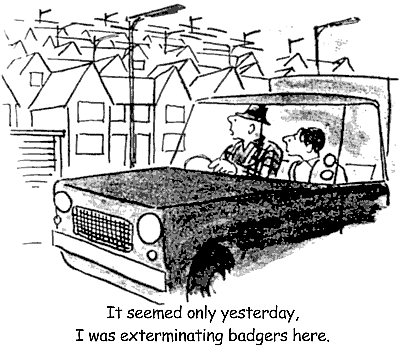
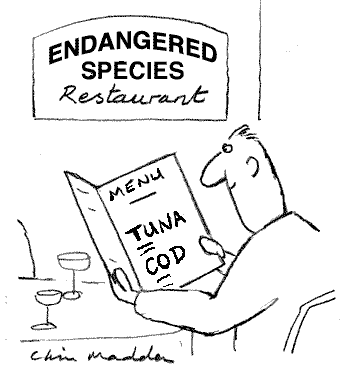
Some more (see previous ‘Cartoon Guide’ instalments I and II) comedic reminders of humanity’s environmental short-sightedness.

The Call of The Wild

CJA Bradshaw

Add to FacebookAdd to NewsvineAdd to DiggAdd to Del.icio.usAdd to StumbleuponAdd to RedditAdd to BlinklistAdd to Ma.gnoliaAdd to TechnoratiAdd to Furl


Rare just tastes better

11 02 2009

I had written this a while ago for publication, but my timing was out and no one had room to publish it. So, I’m reproducing it here as an extension to a previous post (That looks rare – I’ll kill that one).

As the international market for luxury goods expands in value, extent and diversity of items (Nueno & Quelch 1998), the world’s burgeoning pool of already threatened species stands to worsen. Economic theory predicts that harvested species should eventually find refuge from over-exploitation because it simply becomes too costly to find the last remaining wild individuals (Koford & Tschoegl 1998). However, the self-reinforcing cycle of human greed (Brook & Sodhi 2006) can make rare species increasingly valuable to a few select consumers such that mounting financial incentives drive species to extinction (Courchamp et al. 2006). The economic and ecological arguments are compelling, but to date there has been little emphasis on how the phenomenon arises in the human thought process, nor how apparently irrational behaviour can persist. Gault and colleagues (2008) have addressed this gap in a paper published recently in Conservation Letters by examining consumer preferences for arguably one of the most stereotypical luxury food items, caviar from the 200-million-year-old sturgeon (Acipenser spp.).

Sturgeon (6 genera) populations worldwide are in trouble, with all but two of the 27 known species threatened with extinction (either Near Threatened, Vulnerable, Endangered or Critically Endangered) according to the International Union for Conservation of Nature and Natural Resources’ (IUCN) Red List of Threatened Species. Despite all 27 species also having strict international trade restrictions imposed by the Convention on International Trade in Endangered Species (CITES) (Gault et al. 2008), intense commercial pressure persists for 15 of these at an estimated global value exceeding US$200 million annually (Pikitch et al. 2005). The very existence of the industry itself and the luxury good it produces are therefore, at least for some regions, unlikely to endure over the next decade (Pala 2007). What drives such irrational behaviour and why can we not seem to prevent such coveted species from spiralling down the extinction vortex?

Gault and colleagues addressed this question specifically in an elegantly simple set of preference experiments targeting the very end-consumers of the caviar production line – French connoisseurs. Some particularly remarkable results were derived from presentations of identical caviar; 86 % of attendees of luxury receptions not only preferred falsely labelled ‘rarer’ Siberian caviar (A. baeri) after blind tasting experiments, they also scored what they believed was caviar from the rarer species as having a higher ‘gustative quality’. These high-brow results were compared to more modest consumers in French supermarkets, with similar conclusions. Not only were unsuspecting gourmands fooled into believing the experimental propaganda, subjects in both cases stated a preference for seemingly rarer caviar even prior to tasting.

The psycho-sociological implications of perceived rarity are disturbing themselves; but Gault and colleagues extended their results with a mathematical game theory model demonstrating how irrational choices drive just such a harvested species to extinction. The economic implications of attempting to curb exploitation as species become rarer when the irrationality of perceived rarity was taken into consideration were telling – there is no payoff in delaying exploitation as more and more consumers are capable of entering the market. In other words, the assumption that consumers apply a positive temporal discount rate to their payoff (Olson & Bailey 1981) is wrong, with the demographic corollary that total depletion of the resource ensues. The authors contend that such artificial value may drive the entire luxury goods market based mainly on the self-consciousness and social status of consumers able to afford these symbols of affluence.

The poor record of species over-exploitation by humans arising from the Tragedy of the Commons (Hardin 1968) is compounded by this new information. This anthropogenic Allee effect (Courchamp et al. 2006) provides a novel example mechanism for how small populations are driven ever-downward because low densities ensure declining fitness. Many species may follow the same general rules, from bluefin tuna, Napoleon wrasse lips and shark fins, to reptile skins and Tibetan antelope woollen shawls. Gault and colleagues warn that as the human population continues to expand and more people enter the luxury-goods market, more wildlife species will succumb to this Allee effect-driven extinction vortex.

The authors suggest that a combination of consumer education and the encouragement of farmed substitute caviar will be more effective than potentially counter-productive trading bans that ultimately encourage illegal trade. However, the preference results suggest that education might not promote positive action given that reluctance of affluent consumers to self-limit. I believe that the way forward instead requires a combination of international trade bans, certification schemes for ‘sustainable’ goods that flood markets to increase supply and reduce price, better controls on point-of-origin labelling, and even state-controlled ‘warning’ systems to alert prospective consumers that they are enhancing the extinction risk of the very products they enjoy. A better architecture for trading schemes and market systems that embrace long-term persistence can surely counteract the irrationality of the human-induced destruction of global ecosystem services. We just need to put our minds and pocketbooks to the task.

CJA Bradshaw

Add to FacebookAdd to NewsvineAdd to DiggAdd to Del.icio.usAdd to StumbleuponAdd to RedditAdd to BlinklistAdd to Ma.gnoliaAdd to TechnoratiAdd to Furl


Cloning for conservation – stupid and wasteful

5 02 2009
© J. F. Jaramillo

© J. F. Jaramillo

I couldn’t have invented a better example of a Toothless conservation concept.

I just saw an article in the Independent (UK) about cloning for conservation that has rehashed the old idea yet again – while there was some interesting thoughts discussed, let’s just be clear just how stupidly inappropriate and wasteful the mere concept of cloning for biodiversity conservation really is.

1. Never mind the incredible inefficiency, the lack of success to date and the welfare issues of bringing something into existence only to suffer a short and likely painful life, the principal reason we should not even consider the technology from a conservation perspective (I have no problem considering it for other uses if developed responsibly) is that you are not addressing the real problem – mainly, the reason for extinction/endangerment in the first place. Even if you could address all the other problems (see below), if you’ve got no place to put these new individuals, the effort and money expended is an utter waste of time and money. Habitat loss is THE principal driver of extinction and endangerment. If we don’t stop and reverse this now, all other avenues are effectively closed. Cloning won’t create new forests or coral reefs, for example.

I may as well stop here, because all other arguments are minor in comparison to (1), but let’s continue just to show how many different layers of stupidity envelop this issue.

2. The loss of genetic diversity leading to inbreeding depression is a major issue that cloning cannot even begin to address. Without sufficient genetic variability, a population is almost certainly more susceptible to disease, reductions in fitness, weather extremes and over-exploitation. A paper published a few years ago by Spielman and colleagues (Most species are not driven to extinction before genetic factors impact them) showed convincingly that genetic diversity is lower in threatened than in comparable non-threatened species, and there is growing evidence on how serious Allee effects are in determining extinction risk. Populations need to number in the 1000s of genetically distinct individuals to have any chance of persisting. To postulate, even for a moment, that cloning can artificially recreate genetic diversity essential for population persistence is stupidly arrogant and irresponsible.

3. The cost. Cloning is an incredibly costly business – upwards of several millions of dollars for a single animal (see example here). Like the costs associated with most captive breeding programmes, this is a ridiculous waste of finite funds (all in the name of fabricated ‘conservation’). Think of what we could do with that money for real conservation and restoration efforts (buying conservation easements, securing rain forest property, habitat restoration, etc.). Even if we get the costs down over time, cloning will ALWAYS be more expensive than the equivalent investment in habitat restoration and protection. It’s wasteful and irresponsible to consider it otherwise.

So, if you ever read another painfully naïve article about the pros and cons of cloning endangered species, remember the above three points. I’m appalled that this continues to be taken seriously!

CJA Bradshaw

Add to FacebookAdd to NewsvineAdd to DiggAdd to Del.icio.usAdd to StumbleuponAdd to RedditAdd to BlinklistAdd to Ma.gnoliaAdd to TechnoratiAdd to Furl


Measuring the amphibian meltdown

9 01 2009

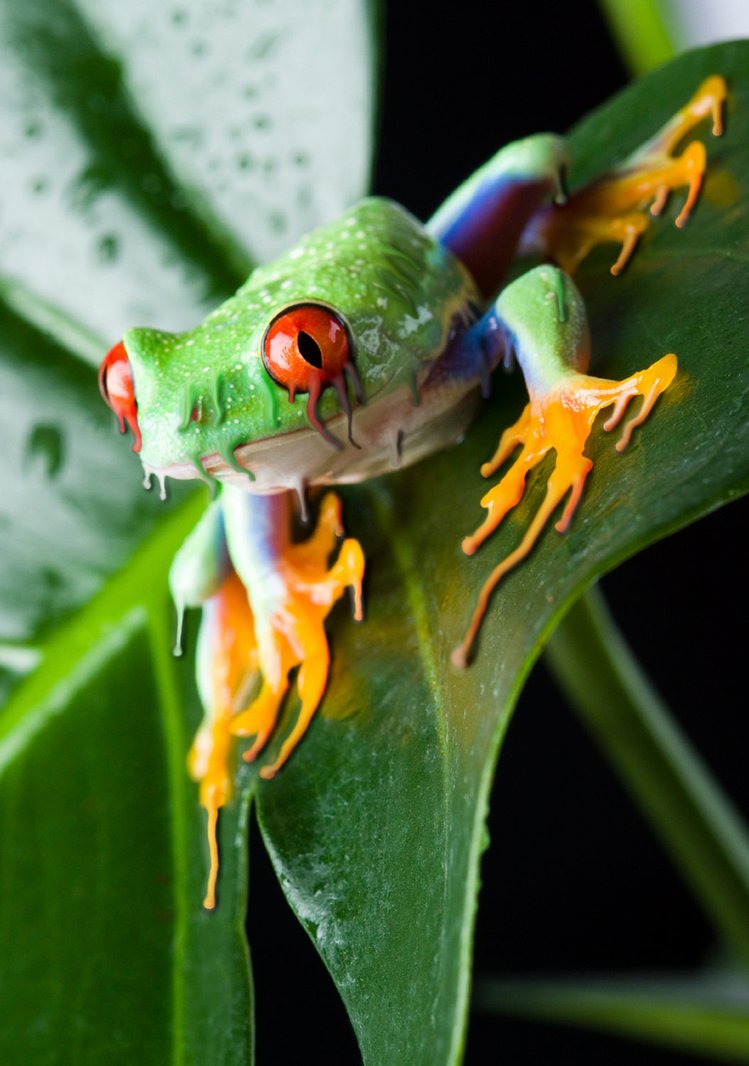
melting_frog_by_zarinstar.pngA paper my colleagues and I published earlier last year in the open-access journal PLoS One describes one of the largest databases of amphibian threat risk ever compiled. Our main aims were to determine which factors drive amphibians toward extinction – this being especially topical considering that amphibians epitomise the modern biodiversity crisis: major population declines, disease outbreaks, deformities and recent confirmed extinctions dominate the biodiversity news. 32 % of all amphibians worldwide are threatened with extinction, 43 % of described species are declining, and about 160 species have already gone extinct in the last few decades.

In our paper (Sodhi and colleagues) entitled Measuring the meltdown: drivers of global amphibian extinction and decline, we found that the range size occupied by a species was overwhelmingly the principal driver of threat risk. This means that although other factors are involved, the number one (by far and away) thing threatening amphibians is habitat loss – everything else is minor by comparison.

Of course, we shouldn’t ignore other issues – increasing climate seasonality (temperature and precipitation) also contributed to higher threat risk. This is exactly the sort of thing that is predicted to increase with climate change (more variable weather patterns). In many cases, it’s the variability that’s worse than the mean trend when it comes to biodiversity.

So what should we do? Our results suggest that areas containing high numbers of restricted-range amphibians should have conservation priority. Although captive breeding might help to buffer some declining populations in the short term, such interventions cannot substitute for habitat protection and restoration. The synergies between ecological/life history traits and environmental conditions demonstrate how management must address each of the major drivers of decline together for any success – there is no magic bullet to prevent extinctions. We also recommend that substantial increases in international research on the long-term monitoring of amphibian populations is required to mitigate effectively the current meltdown of amphibian biodiversity.

CJA Bradshaw

Add to FacebookAdd to NewsvineAdd to DiggAdd to Del.icio.usAdd to StumbleuponAdd to RedditAdd to BlinklistAdd to Ma.gnoliaAdd to TechnoratiAdd to Furl


Man bites shark

7 01 2009

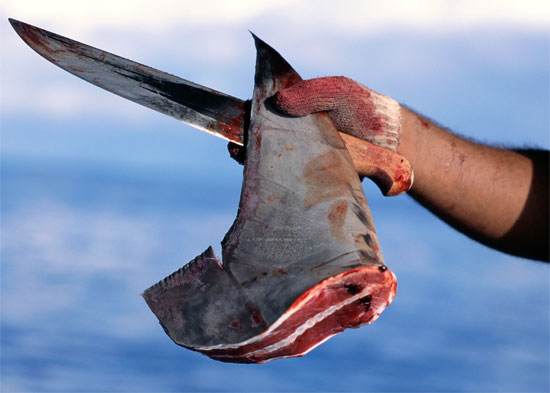
cut-shark-finYesterday I had a comment piece of the same title posted on the ABC‘s Unleashed site. I have permission to reproduce it here on ConservationBytes.com.

The silly season is upon us again, and I don’t mean the commercial frenzy, the bizarre fascination with a white-bearded man or a Middle-Eastern baby, the over-indulgence at the barbie or hangovers persisting several days into the New Year. I mean it’s the time of year when beach-goers, surfers, and municipal and state policy makers go a bit ga-ga over sharks.

There are few more polite pleasures than heading down to the beach during the holidays for a surf, quick dip or just a laze under the brolly. Some would argue it’s an inalienable Australian right and that anything getting in our way should be condemned to no less than severe retribution. Well, in the case of sharks, that’s exactly what’s happened.

Apart from a good number of adrenalin-addicted surfers and mad marine scientists, most people are scared shitless by the prospect of even seeing a shark near the beach, let alone being bitten or eaten by one. I won’t bore you with some ill-advised, pseudo-psycho-analytical rant about how it’s all the fault of some dodgy 1970s film featuring a hypertrophied American shark; the simple fact is that putative prey don’t relish the thought of becoming a predator’s dinner.

So, Australia is famous for its nearly 100-year-old pioneering attempt to protect marine bathers from shark attack by setting an elaborate array of shark nets around the country’s more frequented beaches. Great, you say? Well, it’s actually not that nice.

Between December 1990 and April 2005, nearly 3500 sharks and rays were caught in NSW beach nets alone, of which 72 per cent were found dead. Shark spearing was a favourite past-time in the 1960s and 1970s, with at least one high-profile species, the grey nurse shark, gaining the dubious classification of Critically Endangered as a result. Over-fishing of reef sharks has absolutely hammered two formerly common species in the Great Barrier Reef, the whitetip and grey reef sharks (See the Ongoing Collapse of Coral-Reef Shark Populations report). And illegal Indonesian fishing in northern Australia is slowly depleting many shark species in a wave of protein mining that has now penetrated the Australian Exclusive Economic Zone.

Despite the gloomy outlook for sharks, I’m happy to say today that we are a little more aware of their plight and are making baby steps toward addressing the problems. Australia has generally fared better in shark conservation than most other parts of the world, even though we still have a lot of educating to do at home. Over 50 per cent of all chondrichthyans (i.e., sharks, rays and chimaeras) are threatened worldwide, with some of the largest and most wide-ranging species being hardest hit, including white sharks. The most common threat is over-fishing, but this is largely seen by the lay person as of little import simply because of the persistent attitude that “the only good shark is a dead shark”.

The attitude is, however, based on a complete furphy. I’m sure many readers would have seen some statistics like the following before, but let’s go through the motions just to be clear. Dying from or even being injured by a shark is utterly negligible. Based on the International Shark Attack File data for Australia, there were 110 confirmed (unprovoked) shark attacks in Australian waters between 1990 and 2007, of which 19 were fatal. Using Australian Bureau of Statistics human population data over the same period, this equates to an average of 0.032 attacks and 0.006 fatalities per 100,000 people, with no apparent trend over the last two decades.

Now let’s contrast. I won’t patronise you with strange comparative statistics like the probability of being killed by a (provoked) vending machine or by being hit by a bus, they are both substantially greater, but I will relate these figures to water-based activities. Drowning statistics for Australia (1992-1997) show that there were around 1.44 deaths per 100,000 people per year, or approximately 0.95 if just marine-related drownings are considered. These values are 240 (158 for marine-only) times higher than those arising from shark attack.

It’s just plainly, and mathematically, ridiculous to be worried about being eaten by a shark when swimming in Australia, whether or not there’s a beach net in place. The effort made, money spent and anxiety arising from the illogical fear that a shark will consider your sunburnt flesh a tasty alternative to its fishier sustenance is not only regrettable, it’s an outright crime against marine biodiversity. Of course, if you see a big shark lurking around your favourite beach, I wouldn’t recommend swimming over and giving it a friendly pat on the dorsal fin, but I wouldn’t recommend screaming that the marine equivalent of the apocalypse has just arrived either.

You may not be fussed either way, but consider this – the massive reduction in sharks worldwide is having a cascading effect on many of the ocean’s complex marine ecosystems. Being largely carnivorous, sharks are the ecological equivalent of community planners. Without them, herbivorous or coral-eating fish can quickly get out of control and literally destroy the food web. A great example comes from the Gulf of Mexico where the serial depletion of 14 species of large sharks has caused an explosion of the smaller cownose ray that formerly was kept in check by its bigger and hungrier cousins. The result: commercially harvested scallops in the region have now collapsed because of the hordes of shellfish-eating rays.

The day you fail to find sharks cruising your favourite beach is the day you should really start to worry.

CJA Bradshaw

Add to FacebookAdd to NewsvineAdd to DiggAdd to Del.icio.usAdd to StumbleuponAdd to RedditAdd to BlinklistAdd to Ma.gnoliaAdd to TechnoratiAdd to Furl


That looks rare – I’ll kill that one

12 12 2008

Here’s an interesting (and disturbing) one from Conservation Letters by Gault and colleagues entitled Consumers’ taste for rarity drives sturgeons to extinction.

I like caviar, I have to admit. I enjoy the salty fishy-ness and the contrast it makes with the appropriate selection of wine (bubbly or otherwise). I guess a lot of other people like it too, to the extent that worldwide sturgeon population’s have been  hammered (all 27 species are listed in CITES Appendix I or II, and 15 species are still heavily exploited). Indeed, in the Caspian Sea from where 90 % of caviar comes, sturgeon populations have declined by 90 % since the late 1980s. Admittedly, I haven’t had sturgeon caviar very often, and I doubt I’ll ever eat it again.

Using a set of simple ‘preference’ experiments on epicurean (French) human subjects, Gault and colleagues found that when told that a particular type of caviar was rarer than the others (when in reality, they two choices were identical), these refined gourmets generally tended to claim that the rarer one tasted better.

This means that humans have a tendency to place exaggerated value on harvested species when they think they’re rare (in most instances, rarity is itself the result of over-exploitation by humans). This so-called ‘anthropogenic Allee effect‘ (see Courchamp et al. 2006) basically means that at least for the wildlife-based luxury market, there’s little chance that calls for reduced harvest will be heard because people continually adjust their willingness to pay more. This turns into a spiralling extinction vortex for the species concerned.

What to do? Ban all trade of caviar? This might do it, but with the reluctance to reduce highly profitable industries like this (see previous post on tuna over-exploitation here), there’s a strong incentive even for the harvesters to drive themselves out of a job. Consumer education (and a good dose of guilt) might help too, but I have my doubts.

CJA Bradshaw

© S. Crownover courtesy of Caviar Emptor

© S. Crownover courtesy of Caviar Emptor

Add to FacebookAdd to NewsvineAdd to DiggAdd to Del.icio.usAdd to StumbleuponAdd to RedditAdd to BlinklistAdd to Ma.gnoliaAdd to TechnoratiAdd to Furl


Addressing biodiversity decline at home

30 11 2008

© CJA Bradshaw

© CJA Bradshaw

I was recently invited to sit on a panel organised by the Conservation Council of South Australia (CCSA) to discuss issues of marine and coastal conservation under a rapidly changing climate. The results of that will be released soon (I’ll blog about that later), but in the interim, I want to highlight to readers of ConservationBytes.com how the CCSA is setting up the challenge to local governments to implement positive steps forward for the conservation of biodiversity in South Australia. I’m reproducing the executive summary of their Summit Report on Biodiversity in a Changing Climate (download full report here). It’s a good example of how we can all (industry, government, academia) work together to promote our own well-being.

…South Australia’s biodiversity is declining at an alarming rate. It has been suggested by scientists that it will take many millions of years for biodiversity to recover from the impacts of humans over the last 200 years. In South Australia the key threat to biodiversity is land clearance; clearance of remnant native vegetation and subsequent fragmentation of habitat for native fauna species. Other key threats to biodiversity in South Australia include:

  • Habitat fragmentation from development
  • Competition from introduced flora
  • Predation by introduced animals
  • Direct competition for food, shelter and resources from introduced fauna
  • Introduced diseases
  • Collection of firewood from remnant vegetation
  • Altered fire regimes
  • Inappropriate grazing/overgrazing
  • Inappropriate management activities
  • Water extraction/pollution
  • Climate change – including increasing oceanic temperatures and acidification

Much of South Australia’s economy is based on the use of biological resources and the need to maintain ecosystem services. This includes activities such as tourism and recreation, nature conservation, pastoralism, agriculture, horticulture, and forestry which all benefit from healthy ecosystems.

Our primary production systems require biodiversity for pest control/management, soil conservation, enhanced productivity and stabilisation, pollination, salinity amelioration, and water purification.

To address and reverse current biodiversity trends our society must recognise, understand and value biodiversity. Land managers, indigenous communities, local industries, government and the broader community may value biodiversity in different ways, however conservation and effective management of biodiversity is essential to ensure the continuation of these values for future generations. Biodiversity values may include:

  • Production value for the provision of food, medicines, clothing and building materials consumed by society
  • Ecosystem services for the maintenance of ecosystem services (natural storing and cycling of nutrients, stabilising soil formation, protection of water resources and breakdown of pollution), and maintenance of biodiversity
  • Socio-economic value for recreation, research, education and monitoring, and cultural values
  • Future value to maintain the capacity to identify future direct or indirect utilitarian value

The South Australian government has recognised the significance of biodiversity through integrated approaches such as the National Strategy for the Conservation of Australia’s Biological Diversity, a joint initiative of the Commonwealth and State and Territory governments. This strategy supports other intergovernmental agreements, such as the National Strategy for Ecologically Sustainable Development, the National Greenhouse Strategy, the National Forest Policy Statement, the Decade of Landcare Plan, the Wetlands Policy of the Commonwealth Government of Australia, the Inter-Governmental Agreement on the Environment, the Natural Heritage Trust Partnership Agreements and the National Framework for the Management and Monitoring of Australia’s Native Vegetation.

The South Australian government has also implemented its own biodiversity focused strategies including No Species Loss, NatureLinks, Tackling Climate Change, and the State Strategic Plan. Regional biodiversity plans are being facilitated to assist in the management and rehabilitation of natural habitats throughout regions of the state.

However, despite the government’s recognition of biodiversity as a serious issue, South Australia’s biodiversity continues to decline at an alarming rate. Actions for conservation, management and awareness raising must be backed by political will and be targeted and supported financially.

Investing in biodiversity is essential to maintaining ecosystems services and in turn to provide dividends to human health and wellbeing. Policies and regulations must ensure all stakeholders are accountable for their environmental footprint and role in implementing change for the future protection of our state’s biodiversity. The aim of this report is to provide policy recommendations to increase the effectiveness of biodiversity conservation in South Australia’s changing climate…

to view the Report’s recommendations, read on… Read the rest of this entry »


International Conspiracy to Catch All Tunas

2 11 2008

tuna-660x433Otherwise known as the International Commission for the Conservation of Atlantic Tunas (ICCAT) based in Madrid, ICCAT is charged with “the conservation of tunas and tuna-like species in the Atlantic Ocean and its adjacent seas”. However, according to a paper entitled Impending collapse of bluefin tuna in the northeast Atlantic and Mediterranean to forthcoming in Conservation Letters (read post about the journal here) by Brian MacKenzie of the Technical University of Denmark, they don’t seem to be doing their job very well.

In perhaps the best example of the plundering of the seas for overt profit instead of food provision per se, the north-east Atlantic and Mediterranean population of bluefin tuna (Thunnus thynnus) has been overfished and will continue to decline to near extinction if the harvest isn’t stopped immediately and for several years to come.

Chronically obese probability.

The demand (and money) associated with tuna harvest appears to negate all scientific evidence that the population is in serious trouble – because of us. The Economist recently featured the paper’s results and therein quoted the opinion of independent ICCAT reviewers who described the situation as “an international disgrace” (read full article here).

I want to list MacKenzie et al.’s paper forthcoming in Conservation Letters as a ‘Potential‘ here at ConservationBytes.com, but I doubt it will change the tuna’s situation that much, and it may only ruffle a few European (and Japanese) feathers (scales?). Who knows? Perhaps the paper will result in a massive down-scaling of the harvest and some serious commitment to REAL tuna conservation.

CJA Bradshaw

Add to FacebookAdd to NewsvineAdd to DiggAdd to Del.icio.usAdd to StumbleuponAdd to RedditAdd to BlinklistAdd to Ma.gnoliaAdd to TechnoratiAdd to Furl


Classics: Invasion Meltdown

26 10 2008

One for the Classics page…

melting_rat_by_xenatalhaoui-d71xr1yDaniel Simberloff is probably best known for his work on the implications of invasive (non-indigenous) species for biodiversity, although he has contributed to a wide range of conservation disciplines.

A seminal paper that he co-wrote with Betsy Von Holle is one I consider to be a conservation Classic: their 1999 paper in the inaugural issue of Biological Invasions entitled Positive interactions of nonindigenous species: Invasional meltdown?
The establishment of non-indigenous species can have severe negative impacts on ecosystems. Introduced species that become invasive (widespread and locally dominant) transform habitats, degrade ecosystem services, reduce biodiversity and are some of the greatest threats to ecosystems today (perhaps nearly as important as habitat loss and over-exploitation).

The so-called ‘invasion meltdown‘ describes the process by which the negative impacts induced on native ecosystems by one invading non-indigenous species are exacerbated by interactions with another exotic species.

Although there isn’t a lot of information on invasion meltdowns, one good example comes from Christmas Island in tropical Australia. The introduced yellow crazy ant (Anoplolepis gracilipes) exploded in numbers when another exotic species, a scale insect, was introduced about the same time that a native scale insect species also had a local outbreak.  Because ants protect scale insects from predators and parasites in return for scale honeydew, the crazy ant suddenly had a much more abundant food source, leading to the huge increase in the ant population. This large ant population devastated the population of native red crab (Gecarcoidea natalis) and resulted in massive increase in forest undergrowth due to reduced herbivory by crabs (see O’Dowd et al. 2003). The great decline in red crabs may also make the island more vulnerable to other plant invasions.

What did Simberloff & Van Holle’s idea and subsequent examples of invasion meltdowns teach us? I believe their paper really hit home the idea that invasive species were not only a threat to biodiversity, but the self-reinforcing mutualisms of invasive species could rival other forms of human-induced biodiversity decline. Indeed, many of the effects of invasive species will be reinforced by global climate change through increasing temperatures, rising sea levels and changing rainfall patterns that increase the potential range and spread of invading species, so the problem is only going to get worse. This is why the U.N. began the Global Invasive Species Programme (GISP), and world-wide, countries are attempting to restrict the flow of invasive species so that their negative effects are lessened. Identifying the extent of the problem has stimulated a lot of people to act accordingly.

CJA Bradshaw

Add to FacebookAdd to NewsvineAdd to DiggAdd to Del.icio.usAdd to StumbleuponAdd to RedditAdd to BlinklistAdd to Ma.gnoliaAdd to TechnoratiAdd to Furl


Tropical Conservation Biology

8 09 2008

An obvious personal plug – but I’m allowed to do that on my own blog ;-)

1405150734I’d like to introduce a (relatively) new textbook that my colleagues, Navjot Sodhi and Barry Brook, and I wrote and published last year with Blackwell (now Wiley-Blackwell) Scientific Publishing – Tropical Conservation Biology.

We’re rather proud of this book because it was a timely summary and assessment of the scientific evidence for the degree of devastation facing tropical biodiversity today and in the future. I’ve summarised some of the main issues in a previous post covering a paper we have ‘in press’ that was born of the text book, but obviously the book is a far more detailed account of the problems facing the tropics.

This introductory textbook examines diminishing terrestrial and aquatic habitats in the tropics, covering a broad range of topics including the fate of the coral reefs; the impact of agriculture, urbanisation, and logging on habitat depletion; and the effects of fire on plants and animal survival.

One of the highlights of the book is that each chapter (see below) Includes case studies and interviews with prominent conservation scientists to help situate key concepts in a real world context: Norman Myers (Chapter 1), Gretchen Daily (Chapter 2), William Laurance (Chapter 3), Mark Cochrane (Chapter 4), Daniel Simberloff (Chapter 5), Bruce Campbell (Chapter 6), Daniel Pauly (Chapter 7), Stephen Schneider (Chapter 8), Stuart Pimm (Chapter 9) and Peter Raven (Chapter 10). These biographies are followed by a brief set of questions and answers that focus on some of the most pertinent and pressing issues in tropical conservation biology today. It is our intention that readers of Tropical Conservation Biology will benefit from the knowledge and be inspired by the passion of these renowned conservation experts.

TABLE OF CONTENTS

  1. Chapter 1: Diminishing habitats in regions of high biodiversity. We report on the loss of tropical habitats across the tropics (e.g., deforestation rates). We also highlight the drivers of habitat loss such as human population expansion. Finally, we identify the areas in immediate need of conservation action by elucidating the concept of biodiversity hotspots. Read the rest of this entry »


Threatened species depend on protected areas

4 09 2008

One for the Potential list:

3932397_origA great new paper has just come out in Global Change Biology by Sarah Jackson and Kevin Gaston: Land use change and the dependence of national priority species on protected areas. In what is simultaneously frightening and ecouraging is the observation that of nearly 400 Biodiversity Action Plan (BAP) species considered either to be globally threatened or rapidly declining in the UK (i.e., > 50 % decline over 25 years), 55 % were largely restricted to statuatory protected areas in the UK. These areas cover about 11.5 % of Britain’s land surface.

What’s amazing about this is that without these reserves, these (hundreds) of species would already be extinct (or very close to it) – if this isn’t one of the strongest arguments for reserves, I don’t know what is. Not only are reserves essential for maintaining populations of threatened species, their spatial connectivity is also highly influential on persistence probability (future posts on fragmentation coming).

Much of the planet has now been modified to the point where any sort of species preservation will necessarily require large, expansive, contiguous networks of protected areas. Jackson & Gaston conclude:

Britain has undergone particularly extensive land transformation, reducing many originally much more widespread vegetation/habitat types to scattered fragments, few of which can be considered strictly natural (Rackham, 1986). A proportion of these fragments receive statutory protection and intensive management, increasing the likelihood that species of conservation concern are restricted to such areas. This circumstance is not unique to Britain, being found in many heavily developed regions including much of northwestern Europe, although it is not so extreme in many others. Britain may, thus, represent a possible future scenario for such regions. Under such circumstances, it is not unlikely that many species if they are not already restricted to protected areas will become so (e.g. species confined to tropical forest habitats following deforestation).

 Keeping things off limits from the burgeoning human population is therefore one of the major ways we can stem the tide of extinctions.

CJA Bradshaw

Add to FacebookAdd to NewsvineAdd to DiggAdd to Del.icio.usAdd to StumbleuponAdd to RedditAdd to BlinklistAdd to Ma.gnoliaAdd to TechnoratiAdd to Furl


Classics: The Living Dead

30 08 2008

‘Classics’ is a category of posts highlighting research that has made a real difference to biodiversity conservation. All posts in this category will be permanently displayed on the Classics page of ConservationBytes.com

Zombie_ElephantTilman, D., May, R.M., Lehman, C.L., Nowak, M.A. (1994) Habitat destruction and the extinction debt. Nature 371, 65-66

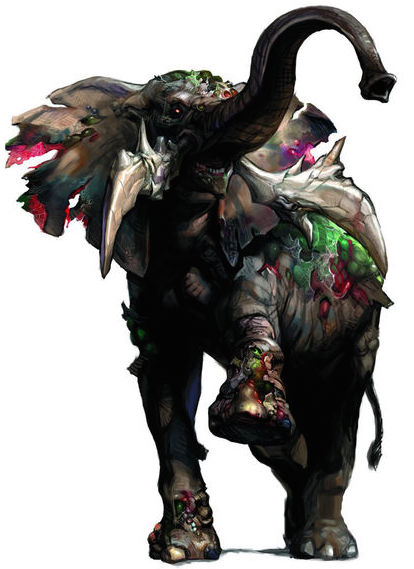
In my opinion, this is truly a conservation classic because it shatters optimistic notions that extinction is something only rarely the consequence of human activities (see relevant post here). The concept of ‘extinction debt‘ is pretty simple – as habitats become increasingly fragmented, long-lived species that are reproductively isolated from conspecifics may take generations to die off (e.g., large trees in forest fragments). This gives rise to a higher number of species than would be otherwise expected for the size of the fragment, and the false impression that many species can persist in habitat patches that are too small to sustain minimum viable populations.

These ‘living dead‘ or ‘zombie‘ species are therefore committed to extinction regardless of whether habitat loss is arrested or reversed. Only by assisted dispersal and/or reproduction can such species survive (an extremely rare event).

Why has this been important? Well, neglecting the extinction debt is one reason why some people have over-estimated the value of fragmented and secondary forests in guarding species against extinction (see relevant example here for the tropics and Brook et al. 2006). It basically means that biological communities are much less resilient to fragmentation than would otherwise be expected given data on species presence collected shortly after the main habitat degradation or destruction event. To appreciate fully the extent of expected extinctions may take generations (e.g., hundreds of years) to come to light, giving us yet another tool in the quest to minimise habitat loss and fragmentation.

CJA Bradshaw

Add to FacebookAdd to NewsvineAdd to DiggAdd to Del.icio.usAdd to StumbleuponAdd to RedditAdd to BlinklistAdd to Ma.gnoliaAdd to TechnoratiAdd to Furl


Show me the (conservation) evidence

29 08 2008

Guest post from Professor William J. Sutherland, Miriam Rothschild Chair in Conservation Biology, Department of Zoology, University of Cambridge, Cambridge CB2 3EJ, United Kingdom:

We carry out research in conservation largely under the belief that this is making a difference to the planet. However, research (e.g., Sutherland et al. 2004) shows that little of this research is used in practice. There are many good reasons why practitioners only use a small fraction of the available science: most do not have access to the scientific search engines, they usually have very limited access to scientific journals and most importantly, they usually do not have the time or training to search the literature. Another important problem is that the most important source of information is the experience of practitioners, but this is rarely quantified or documented.
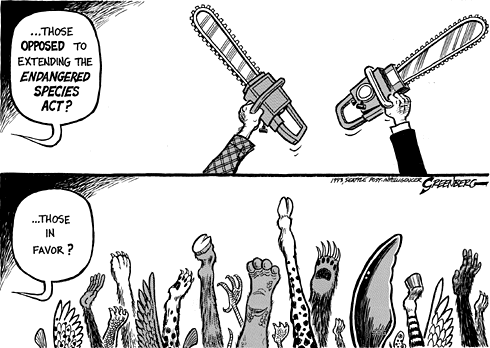
To help overcome these problems the website ConservationEvidence.com has been established. It has two main objectives: (1) providing a means for practitioners to document their experience through the online journal Conservation Evidence and (2) summarising the global literature including unpublished report and papers in languages other than English. Currently (August 2008), this has details of over 1200 interventions but the aim is to increase this to 10,000 interventions. The next stage, which is currently being worked on, is then to provide summaries of the consequences of different interventions.

The ambitious objective is to change the way in which global conservation practice is carried out so that practitioners have ready access to information on the effectiveness of interventions including the experience of other practitioners.

Add to FacebookAdd to NewsvineAdd to DiggAdd to Del.icio.usAdd to StumbleuponAdd to RedditAdd to BlinklistAdd to Ma.gnoliaAdd to TechnoratiAdd to Furl