Conservation and Ecology Impact Factors 2011

29 06 2012

Here we go – another year, another set of citations, and another journal ranking by ISI Web of Knowledge Journal Citation Reports. Love them or loathe them, Impact Factors (IF) are immensely important for dictating publication trends. No, a high Impact Factor doesn’t mean your paper will receive hundreds of citations, but the two are correlated.

I’ve previously listed the 2008, 2009 and 2010 IF for major conservation and ecology journals – now here are the 2011 IF fresh off the press (so to speak). I’ve included the 2010 alongside to see how journals have improved or worsened (but take note – journals increase their IF on average anyway merely by the fact that publication frequency is increasing, so small jumps aren’t necessarily meaningful).

Read the rest of this entry »


The wounded soldiers of biodiversity

10 04 2012

Here’s another great post from Salvador Herrando-Pérez. It is interesting that he’s chosen an example species that was once (a long, long time ago in a galaxy far, far away) of great interest to me (caribou – see ancient papers a, b, c, d). But that is another story. Take it away, Salva.


Figure 1. Caribou (reindeer) are ungulates weighing up to ~ 100 kg. They live in tundra and taiga in Finland, Greenland, Finland, Norway, Mongolia, Russia, Canada and USA (extinct in Sweden). The species is globally stable (‘Least Concern’, IUCN Red List), but the subspecies of woodland caribou (Rangifer tarandus caribou) is threatened in North America. Schneider and colleagues’ 7 study encompasses ~ 3,000 individuals in 12 herds (75 to 450 individuals per herd), occupying ~ 100.000 km2 of conifer forest and peatland (3,000 to 19,000 km2 per herd). Two ecotypes are recognized regionally22, namely migratory mountain herds (mostly from mountains and foothills in west-central Alberta), and non-migratory boreal herds (mostly from peatlands in central and northern Alberta). The photo shows a group of caribous grazing on subalpine vegetation from Tonquin Valley, Jasper National Park (Alberta, Canada). Photo courtesy of Saakje Hazenberg.

As conservation biology keeps incorporating management and economical principles from other disciplines, it stumbles with paradoxes such that investing on the most threatened components of biodiversity might in turn jeopardize the entire assets of biodiversity.

At the end of 2011, newspapers and TVs echoed an IUCN report cataloguing as ‘extinct’ or ‘near extinct’ several subspecies of rhinos in Asia and Africa. To many, such news might have invoked the topic: “how badly governments do to protect the environment”. However if, to avoid those extinctions, politicians had to deviate funds from other activities, what thoughts would come to the mind of workers whose salaries had to be frozen, school directors whose classroom-roof leakages could not be repaired (e.g., last winter at my niece’s school in Spain), colonels whose last acquisition of ultramodern tanks had to be delayed, or our city council’s department who had to cancel Sting’s next performance.

Thus, there are three unquestionable facts regarding species conservation:

  1. the protection of species costs money;
  2. governments and environmental organisations have limited budgets for a range of activities they deem necessary; and
  3. our way of conserving nature is failing because, despite increasing public/private support and awareness, the rate of destruction of biodiversity is not decelerating1,2.

One of the modern debates among conservationists pivots around how to use resources efficiently3-6. Schneider and colleagues7 have dealt with this question for woodland caribou (Rangifer tarandus) in Canada. A total of 18 populations of this ungulate persist in the Canadian province of Alberta, all undergoing demographic declines due to mining extractions (oil, gas and bitumen), logging and wolf predation. The species is listed as ‘threatened’ regionally and nationally. The Alberta Caribou Recovery Plan (2004-2014) is attempting to protect all herds. Under such a framework, Schneider et al.7 predicted that woodland caribou would be regionally extirpated in less than a century.

Furthermore, they estimated the costs of making each herd viable (Fig. 1), with a triple revelation. To save all herds from extinction would need ~ CA$150,000 million (beyond the available budget). The most threatened herds are among the most expensive to protect (within present management approach). Some herds would be secured through modest investment for two decades. Overall, their study suggests that Alberta’s woodland caribou would be eligible for triage, i.e., at the subpopulation level8. Read the rest of this entry »


When the cure becomes the disease

6 02 2012

I’ve always barracked for Peter Kareiva‘s views and work; I particularly enjoy his no-bullshit, take-no-prisoners approach to conservation. Sure, he’s said some fairly radical things over the years, and has pissed off more than one conservationist in the process. But I think this is a good thing.

His main point (as is mine, and that of a growing number of conservation scientists) is that we’ve already failed biodiversity, so it’s time to move into the next phase of disaster mitigation. By ‘failing’ I mean that, love it or loathe it, extinction rates are higher now than they have been for millennia, and we have very little to blame but ourselves. Apart from killing 9 out of 10 people on the planet (something no war or disease will ever be able to do), we’re stuck with the rude realism that it’s going to get a lot worse before it gets better.

This post acts mostly an introduction to Peter Kareiva & collaborators’ latest essay on the future of conservation science published in the Breakthrough Institute‘s new journal. While I cannot say I agree with all components (especially the cherry-picked resilience examples), I fundamentally support the central tenet that we have to move on with a new state of play.

In other words, humans aren’t going to go away, ‘pristine’ is as unattainable as ‘infinity’, and reserves alone just aren’t going to cut it. Read the rest of this entry »


The seeds of tropical forest destruction

22 01 2012

Bill Laurance asked me to reproduce his latest piece originally published at Yale University‘s Environment 360 website.

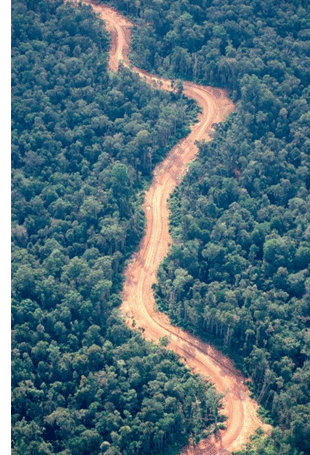
We live in an era of unprecedented road and highway expansion — an era in which many of the world’s last tropical wildernesses, from the Amazon to Borneo to the Congo Basin, have been penetrated by roads. This surge in road building is being driven not only by national plans for infrastructure expansion, but by industrial timber, oil, gas, and mineral projects in the tropics.

Few areas are unaffected. Brazil is currently building 7,500 km of new paved highways that crisscross the Amazon basin. Three major new highways are cutting across the towering Andes mountains, providing a direct link for timber and agricultural exports from the Amazon to resource-hungry Pacific Rim nations, such as China. And in the Congo basin, a recent satellite study found a burgeoning network of more than 50,000 km of new logging roads. These are but a small sample of the vast number of new tropical roads, which inevitably open up previously intact tropical forests to a host of extractive and economic activities.

“Roads,” said the eminent ecologist Thomas Lovejoy, “are the seeds of tropical forest destruction.”

Despite their environmental costs, the economic incentives to drive roads into tropical wilderness are strong. Governments view roads as a cost-effective means to promote economic development and access natural No other region can match the tropics for the sheer scale and pace of road expansion. resources. Local communities in remote areas often demand new roads to improve access to markets and medical services. And geopolitically, new roads can be used to help secure resource-rich frontier regions. India, for instance, is currently constructing and upgrading roads to tighten its hold on Arunachal Pradesh state, over which it and China formerly fought a war.

Read the rest of this entry »


Slicing the second ‘lung of the planet’

12 12 2011

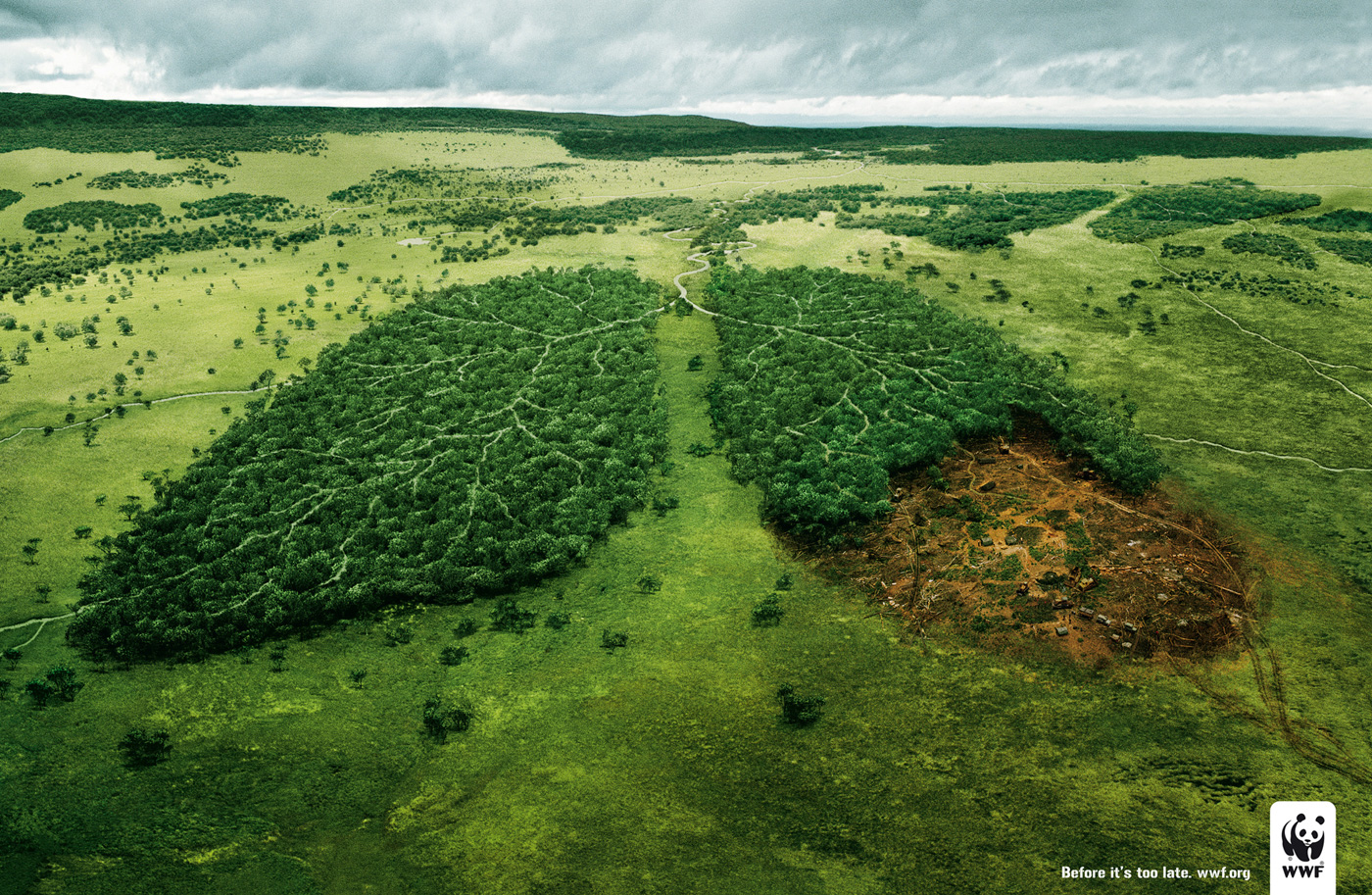
© WWF

Apologies for the slow-down in postings this past week – as many of you know, I was attending the International Congress for Conservation Biology in Auckland. I’ll blog about the conference later (and the stoush that didn’t really occur), but suffice it to say it was very much worthwhile.

This post doesn’t have a lot to do per se with the conference, but it was stimulated by a talk I attended by Conservation Scholar Stuart Pimm. Now, Stuart is known mainly as a tropical conservation biologist, but as it turns out, he also is a champion of temperate forests – he even sits on the science panel of the International Boreal Conservation Campaign.

I too have dabbled in boreal issues over my career, and most recently with a review published in Trends in Ecology and Evolution on the knife-edge plight of boreal biodiversity and carbon stores. That paper was in fact the result of a brain-storming session Navjot Sodhi and I had one day during my visit to Singapore sometime in 2007. We thought, “It doesn’t really seem that people are focussing their conservation attention on the boreal forest; how bad is it really?”.

Well, it turns out that the boreal forest is still a vast expanse and that there aren’t too many species in imminent danger of extinction; however, that’s where the good news ends. The forest itself is becoming more and more fragmented from industrial development (namely, forestry, mining, petroleum surveying and road-building) and the fire regime has changed irrevocably from a combination of climate change and intensified human presence. You can read all these salient features here.

So, back to my original thread – Stuart gave a great talk on the patterns of deforestation worldwide, with particular emphasis on how satellite imagery hides much of the fine-scale damage that we humans do to the world’s great forests. It was when he said (paraphrased) that “50,000 km2 of boreal forest is lost each year, but even that statistic hides a major checkerboard effect” that my interest was peaked. Read the rest of this entry »


Where are they? Finding (and conserving) the biggest fish in the sea

16 11 2011

A post from my PhD student, Ana Sequeira, on her latest paper just out in Diversity and DistributionsOcean-scale prediction of whale shark distribution.

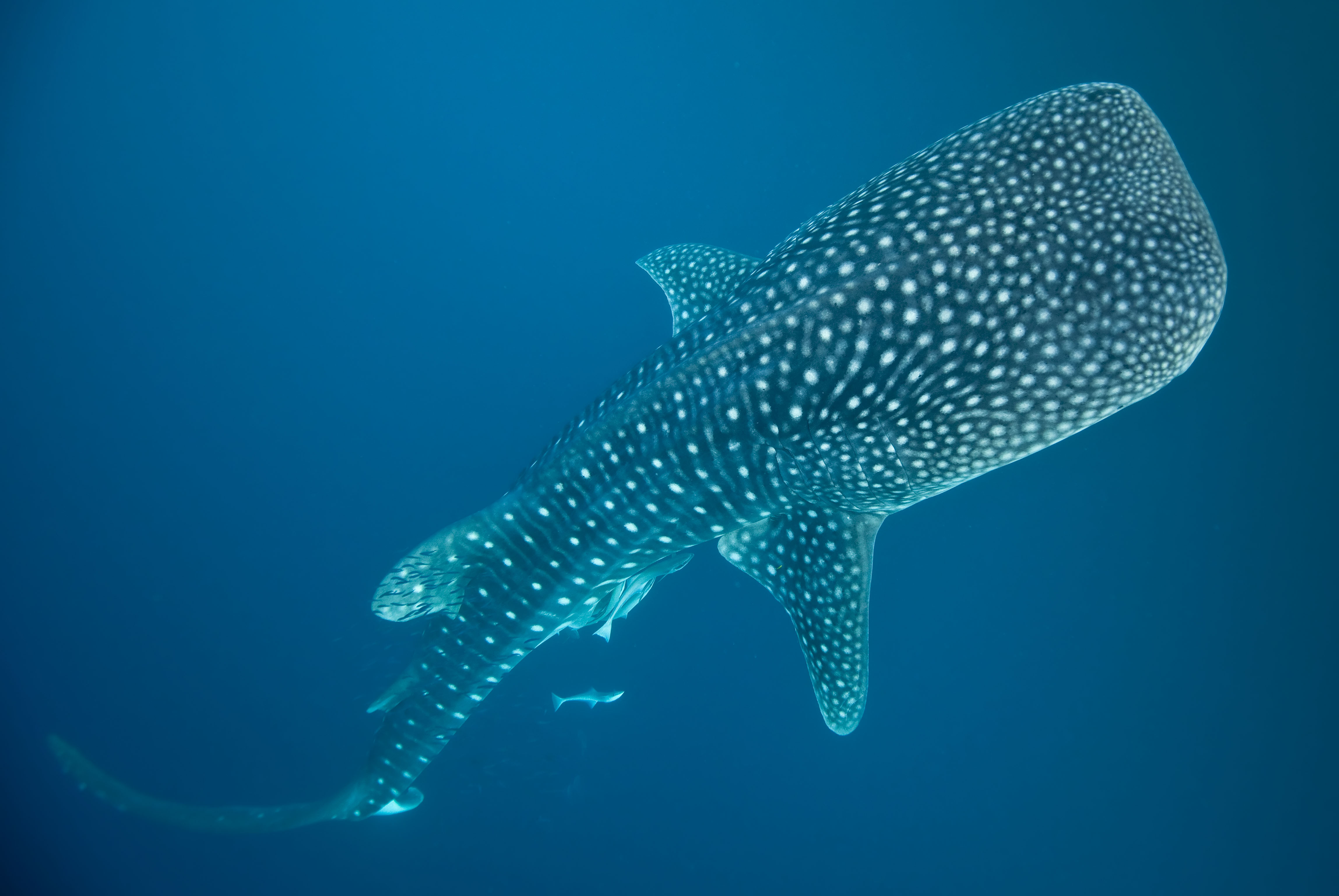
© W Osborn (AIMS)

The ocean is our major source of water, it stabilises our breathable atmosphere and provides many supplies such as medicines (e.g., anti-cancer therapy drugs1) and food. Despite its the importance for human life, many marine species are now at a high risk of extinction owing to human changes to the oceans.

The whale shark (Rhincodon typus, Smith 1828) – an icon of the oceans of a spectacularly huge size and docile character – is just one of those species.

Despite being a fish that many people (mainly in Southeast Asia) are happy to have on their plate, whale sharks are worth millions of dollars every year in the ecotourism industry worldwide. One would then expect that being such a profitable species, their ecology would be well known and thoroughly studied.

The reality is quite different.

Basic information on whale sharks such as the whereabouts of their breeding areas, the average number of offspring per female, or even how many individuals still exist, is not currently known. Moreover, despite the genetic evidence that whale sharks worldwide are connected among different oceans, it is unclear if they move from places where they are protected to places where they are still illegally fished.

Information on distribution and patterns of occurrence in space and time is essential for conservation, and can help to save entire ecosystems if used correctly, for example: to isolate important mating and breeding areas.

To identify the whale shark’s seasonal distribution patterns in the Indian Ocean, to test if records follow a decreasing trend over time, and if occurrence is related to variation in climatic signals, we used multivariate distribution models of seasonal and inter-annual whale shark sightings opportunistically collected over 17 years by the tuna purse-seine fishery. Read the rest of this entry »


Not magic, but necessary

18 10 2011

In April this year, some American colleagues of ours wrote a rather detailed, 10-page article in Trends in Ecology and Evolution that attacked our concept of generalizing minimum viable population (MVP) size estimates among species. Steve Beissinger of the University of California at Berkeley, one of the paper’s co-authors, has been a particularly vocal adversary of some of the applications of population viability analysis and its child, MVP size, for many years. While there was some interesting points raised in their review, their arguments largely lacked any real punch, and they essentially ended up agreeing with us.

Let me explain. Today, our response to that critique was published online in the same journal: Minimum viable population size: not magic, but necessary. I want to take some time here to summarise the main points of contention and our rebuttal.

But first, let’s recap what we have been arguing all along in several papers over the last few years (i.e., Brook et al. 2006; Traill et al. 2007, 2010; Clements et al. 2011) – a minimum viable population size is the point at which a declining population becomes a small population (sensu Caughley 1994). In other words, it’s the point at which a population becomes susceptible to random (stochastic) events that wouldn’t otherwise matter for a small population.

Consider the great auk (Pinguinus impennis), a formerly widespread and abundant North Atlantic species that was reduced by intensive hunting throughout its range. How did it eventually go extinct? The last remaining population blew up in a volcanic explosion off the coast of Iceland (Halliday 1978). Had the population been large, the small dent in the population due to the loss of those individuals would have been irrelevant.

But what is ‘large’? The empirical evidence, as we’ve pointed out time and time again, is that large = thousands, not hundreds, of individuals.

So this is why we advocate that conservation targets should aim to keep at or recover to the thousands mark. Less than that, and you’re playing Russian roulette with a species’ existence. Read the rest of this entry »


Twenty landmark papers in biodiversity conservation

13 10 2011

While I can’t claim that this is the first time one of my peer-reviewed papers has been inspired by ConservationBytes.com, I can claim that this is the first time a peer-reviewed paper is derived from the blog.

After a bit of a sordid history of review (isn’t it more and more like that these days?), I have the pleasure of announcing that our paper ‘Twenty landmark papers in biodiversity conservation‘ has now been published as an open-access chapter in the new book ‘Research in Biodiversity – Models and Applications‘ (InTech).

Perhaps not the most conventional of venues (at least, not for me), but it is at the very least ‘out there’ now and freely available.

The paper itself was taken, modified, elaborated and over-hauled from text written in this very blog – the ‘Classics‘ section of ConservationBytes.com. Now, if you’re an avid follower of CB, then the chapter won’t probably represent anything terribly new; however, I encourage you to read it anyway given that it is a vetted overview of possibly some of the most important papers written in conservation biology.

If you are new to the field, an active student or merely need a ‘refresher’ regarding the big leaps forward in this discipline, then this chapter is for you.

The paper’s outline is as follows: Read the rest of this entry »


Recognising differing viewpoints in a rapidly changing world

18 08 2011

Is oil palm bad? Is protecting tropical forests more important than converting them for economic development? Should we spike trees to make sure no one cuts them down?

Answers to these questions depend on which side of the argument you’re on. But often people on either side of debates hardly know what their opponents are thinking.

A recent paper by us in the journal Biotropica, of which parts were published on this blog, points out that the inability to recognise differing viewpoints undermines progress in environmental policy and practice.

The paper in Biotropica takes an unusual approach to get its message across, one rarely applied in science, but nevertheless dating back to 1729. In that year, Jonathan Swift, the first satirist, wrote an essay suggesting the English should eat Irish children, “whether stewed, roasted, baked, or boiled”, to reduce the growing population of Irish poor.

We similarly use satire to highlight the viewpoint problem. Our paper uses a spoof press release by the Coalition of Financially Challenged Countries with Lots of Trees, aka “CoFCCLoT”. CoFCCLoT proposes that in return for nor cutting down their tropical rainforests, wealthy countries should reforest at least half their land. This would provide the world with a level playing field, restore the ecological health of wealthy countries, provide job opportunities for their citizens, and even allow lions to thrive in Greece and gorillas in Spain. Read the rest of this entry »


2010 ISI Impact Factors out now (with some surprises)

29 06 2011

It’s been another year of citations and now the latest list of ISI Impact Factors (2010) has come out. Regardless of how much stock you put in these (see here for a damning review), you cannot ignore their influence on publishing trends and author journal choices.

As I’ve done for 2008 and 2009, I’ve taken the liberty of providing the new IFs for some prominent conservation and ecology journals, and a few other journals occasionally publishing conservation-related material.

One particular journal deserves special attention here. Many of you might know that I was Senior Editor with Conservation Letters from 2008-2010, and I (with other editorial staff) made some predictions about where the journal’s first impact factor might be on the scale (see also here). Well, I have to say the result exceeded my expectations (although Hugh Possingham was closer to the truth in the end – bugger!). So the journal’s first 2010 impact factor (for which I take a modicum of credit ;-) is a whopping… 4.694 (3rd among all ‘conservation’ journals). Well done to all and sundry who have edited and published in the journal. My best wishes to the team that has to deal with the inevitable rush of submissions this will likely bring!

So here are the rest of the 2010 Impact Factors with the 2009 values for comparison: Read the rest of this entry »


The few, the loud and the factually challenged

18 06 2011

© The Guardian

Here’s a little paraphrased response I received from a colleague who works for a particular agency concerned about the ridiculous politicking and misinformation associated with marine parks proposed for South Australia.

I’ve posted several times before why marine parks are a win for all involved, from the biodiversity it is meant to protect, to the fishers who benefit from the free, public-good resource that they assist in maintaining (see here, here and here). The evidence is clear world-wide: marine parks benefit pretty much everything and everyone.

However, just like the climate change denalists who use every psychological tactic in the book to try to convince people that climate change is a belief when in fact, it is a soundly evidenced phenomenon, there are those Luddites who think that any change in the marine setting fundamentally threatens their way of life.

Here’s what my colleague had to say about some recent ill-informed comments on this blog:

I wondered when they would find your blog. In my experience, do not engage. A game of intimidation has started. Read the rest of this entry »


Know thy threat

9 06 2011

Here’s another great guest post by Megan Evans of UQ – her previous post on resolving the environmentalist’s paradox was a real hit, so I hope you enjoy this one too.

The reasons for the decline of Australia’s unique biodiversity are many, and most are well known. Clearing of vegetation for urban and agricultural land uses, introduced species and changed fire patterns are regularly cited in State of the Environment reports, recovery plans and published studies as major threats to biodiversity. But, while these threats are widely acknowledged, little has been done to quantify them in terms of the proportion of species affected, or their spatial extent at a national, state or local scale. To understand why such information on threats may be useful, consider for instance how resources are allocated in public health care1.

Threat knowledge

Conditions such as cancer, heart disease and mental health are regarded as National Health Priority Areas in Australia, and have been given special attention when prioritising funds since the late 1980s. The burden of disease in these priority areas are quantified according to the incidence or prevalence of disease or condition, and its social and economic costs. Estimates of burden of disease and their geographic distribution (often according to local government areas) can assist in communicating broad trends in disease burden, but also in prioritising efforts to achieve the best outcomes for public health. An approach similar to that used in healthcare could help to identify priorities for biodiversity conservation – using information on the species which are impacted by key threats, the spatial distributions of species and threats, and the costs of implementing specific management actions to address these threats. Read the rest of this entry »


Classics: Effective population size ratio

27 04 2011

Here’s another concise Conservation Classic highlighted in our upcoming book chapter (see previous entries on this book). Today’s entry comes from a colleague of mine, Dick Frankham, who has literally written the book on conservation genetics. I’ve published with Dick a few times – absolutely lovely chap who really knows his field more than almost any other. It is a great pleasure to include one of his seminal works as a Conservation Classic.

This entry is highly related to our work on minimum viable population size, and the controversial SAFE index (more on that later).

Although it had long been recognized that inbreeding and loss of genetic diversity were accentuated in small, isolated populations (Charlesworth & Charlesworth, 1987), genetic hazards were generally considered to be of less consequence to extinction risk than demographic and environmental stochasticity. Frankham (1995) helped overturn this viewpoint, using a meta-analysis to draw together comprehensive evidence on the ratio of genetically effective to actual population size (Ne:N). Read the rest of this entry »


Getting conservation stakeholders involved

14 04 2011

Here’s another guest post from another switched-on Queensland student, Duan Biggs. Duan, originally from Namibia and South Africa, is doing his PhD at the ARC Centre for Coral Reef Studies at James Cook University in Townsville, Queensland. His PhD is investigating the resilience of nature-based tourism to climate change. I’ve met Duan a few times, and I’m impressed by his piercing views on conservation science and its implementation. Duan has already posted here on ConservationBytes.com (‘Make your conservation PhD relevant‘) and now adds his latest post discussing a paper he’s just had published in Conservation Letters. Thanks, Duan.

Achieving conservation outcomes almost always means working with stakeholders. ConservationBytes readers who have participated in multi-stakeholder conservation processes will know how difficult they are. Even more so when parties come from very different backgrounds and cultures. Farmers feel they just cannot comprehend what scientists are saying… ecologists silently curse [CJAB’s note: well, not always silently] because government officials ‘just don’t get it’ and so forth. So often, conservation projects are impeded, or even brought to a grinding halt because the very different perspectives that stakeholders bring to the table and the inability to see eye to eye.  This has left many a fervent conservationist and scientist feeling like the associated cartoon.

However, our new paper entitled The implementation crisis in conservation planning – could ‘mental models’ help? just out in Conservation Letters suggests ways of dealing with this almighty challenge.

Effective conservation requires conservation scientists to partner successfully with managers, extractive users and other stakeholder groups. Often, key stakeholders come from very different backgrounds and cultures, and hence have a diversity of values that result in a range of perspectives on issues. These differences are frequently a source of failure in conservation projects.

Read the rest of this entry »


Species’ Ability to Forestall Extinction – AudioBoo

8 04 2011

Here’s a little interview I just did on the SAFE index with ABC AM:

Not a bad job, really.

And here’s another one from Radio New Zealand:

CJA Bradshaw


Colour-blind sharks

3 02 2011

A few weeks ago I was interviewed on Channel 10 (Adelaide) about some new research coming out of the University of Western Australia regarding shark colour vision.

I’ve received permission from Channel 1o to reproduce the news snippet here. The first bloke interviewed is Associate Professor Nathan Hart, the study‘s lead author. I’m the bald one appearing in the middle at at the end.

It certainly was an interesting story, although two claims were made that probably needed better contextualisation.

First, the authors claim that because of this taxon’s colour blindness, they probably notice pigment transitions more when using visual cues to identify potential prey. What this means is that bright colours set against duller backgrounds might provide that contrast enough to attract sharks. The upshot from the interview is that brightly coloured and patterned togs (bathers) might make sharks think you are potentially a tasty treat. Read the rest of this entry »


Condoms instead of nature reserves

24 01 2011

Rob Dietz over at the Centre for the Advancement of the Steady State Economy thought ConservationBytes.com readers would be interested in the following post by Tim Murray (the original post was entitled What if we stopped fighting for preservation and fought economic growth instead?). There are some interesting ideas here, and I concur that because we have failed to curtail extinctions, and there’s really no evidence that conservation biology alone will be enough to save what remains (despite 50 + years of development), big ideas like these are needed. I’d be interested to read your comments.

Each time environmentalists rally to defend an endangered habitat, and finally win the battle to designate it as a park “forever,” as Nature Conservancy puts it, the economic growth machine turns to surrounding lands and exploits them ever more intensively, causing more species loss than ever before, putting even more lands under threat. For each acre of land that comes under protection, two acres are developed, and 40% of all species lie outside of parks. Nature Conservancy Canada may indeed have “saved” – at least for now – two million acres [my addendum: that’s 809371 hectares], but many more millions have been ruined. And the ruin continues, until, once more, on a dozen other fronts, development comes knocking at the door of a forest, or a marsh or a valley that many hold sacred. Once again, environmentalists, fresh from an earlier conflict, drop everything to rally its defence, and once again, if they are lucky, yet another section of land is declared off-limits to logging, mining and exploration. They are like a fire brigade that never rests, running about, exhausted, trying to extinguish one brush fire after another, year after year, decade after decade, winning battles but losing the war.

Despite occasional setbacks, the growth machine continues more furiously, and finally, even lands which had been set aside “forever” come under pressure. As development gets closer, the protected land becomes more valuable, and more costly to protect. Then government, under the duress of energy and resource shortages and the dire need for royalties and revenue, caves in to allow industry a foothold, then a chunk, then another. Yosemite Park, Hamber Provincial Park, Steve Irwin Park [my addendum – even the mention of this man is an insult to biodiversity conservation]… the list goes on. There is no durable sanctuary from economic growth. Any park that is made by legislation can be unmade by legislation. Governments change and so do circumstances. But growth continues and natural capital [my addendum: see my post on this term and others] shrinks. And things are not even desperate yet. Read the rest of this entry »


Want a cool conservation job in beautiful southern Australia?

14 12 2010

I was asked to post this cool-sounding job on ConservationBytes.com – relevant punters welcome to respond.

Australian Wildlife Conservancy (AWC) is a non‐profit organisation dedicated to the conservation of Australia’s threatened wildlife and their habitats. AWC now owns and manages more land than any other private conservation organisation in Australia ‐  21 properties, covering more than 2.6 million hectares ‐ protecting more than 1,200 fauna species through active land management informed by strategic scientific research.

AWC is seeking an experienced and committed ecologist who will be pivotal in the development and implementation of the conservation and science program throughout south‐eastern Australia. The position will be based at Scotia Wildlife Sanctuary (where on‐site accommodation will be provided), but will include work at other AWC sanctuaries, especially Kalamurina (Lake Eyre), Buckaringa (Flinders Ranges), Yookamurra (Riverlands), Dakalanta (Eyre Peninsula), Bowra (Mulga Lands) and North Head (Sydney) sanctuaries.

Scotia is a large property (65,000 ha) that lies on the NSW‐SA border between Wentworth and Broken Hill, and includes Australia’s largest area free of foxes, cats and rabbits (8,000 ha) and where seven regionally extinct species have been reintroduced (bilby, boodie, woylie, bridled nailtail wallaby, numbat, greater stick‐nest rat, mala and black‐eared miner). In addition, the property has outstanding conservation values because it protects habitats, in good condition, that have been extensively cleared in western NSW.

Read the rest of this entry »


Conservation is all about prioritisation

4 12 2010

Another great guest post from a previous contributor, Piero Visconti.

Biodiversity conservation is about prioritisation – making difficult choices.

With limited money and so many habitats and species in need of protection, deciding where not to expend resources is as important as deciding where to act. Saying ‘no’ will be crucial for ensuring the persistence of biodiversity and ecosystem services, simply because as individuals who value conservation, we will always be tempted to try and save everything.

In the words of Frederick the Great: “He who defends everything, defends nothing.”

As a result, much recent conservation planning research has focused on offering managers general and flexible tools for deciding which conservation features should be the highest priority. Intuitively, we should direct our resources towards areas that have high biodiversity values, and that are likely to be lost if the forces of conservation do not intervene (the most ‘vulnerable’ land parcels). This approach is known as the ‘minimize loss’ approach. Imagine we are worried about the loss of rare native vegetation in the face of ongoing urban expansion (e.g., Melbourne’s western grasslands). To minimize loss, managers would pre-emptively protect sites that are most likely to be developed. But is this decision to race the bulldozers always the best idea? How much does this choice depend on our assumptions about how land is protected, how land developers behave, and the accuracy of our future predictions? Read the rest of this entry »


The balancing act of conservation

1 10 2010

Image via Wikipedia

Navjot Sodhi & Paul Ehrlich‘s book, Conservation Biology for All, has just been reviewed in Trends in Ecology and Evolution. I’ve blogged about the book before and our contributing chapter (The conservation biologist’s toolbox), so I’ll just copy the very supportive review here by Rosie Trevelyan.

Conservation Biology for All is a textbook that aims to be a one-stop shop for conservation education. The book is packed with information, is wide ranging, and includes most emerging issues that come under the umbrella of conservation biology today. Sodhi and Ehrlich have brought together a total of 75 experts from many disciplines to provide a smorgasbord of up-to-date conservation concepts and case studies. Leading conservation biologists contribute to every chapter either as authors of the main text or of the boxes that give real life examples of the conservation issue being covered. The boxes add hugely to the information included in each chapter, and many are well worth returning to on their own. Read the rest of this entry »