The fourth set of six biodiversity cartoons for 2018. See full stock of previous ‘Cartoon guide to biodiversity loss’ compendia here.
—
The fourth set of six biodiversity cartoons for 2018. See full stock of previous ‘Cartoon guide to biodiversity loss’ compendia here.
—
The third set of six biodiversity cartoons for 2018. See full stock of previous ‘Cartoon guide to biodiversity loss’ compendia here.
—
The next set of six five biodiversity cartoons for 2018. See full stock of previous ‘Cartoon guide to biodiversity loss’ compendia here.
—
The first set of biodiversity cartoons for 2018. See full stock of previous ‘Cartoon guide to biodiversity loss’ compendia here.
—

The last set of biodiversity cartoons for 2017. See full stock of previous ‘Cartoon guide to biodiversity loss’ compendia here.
—
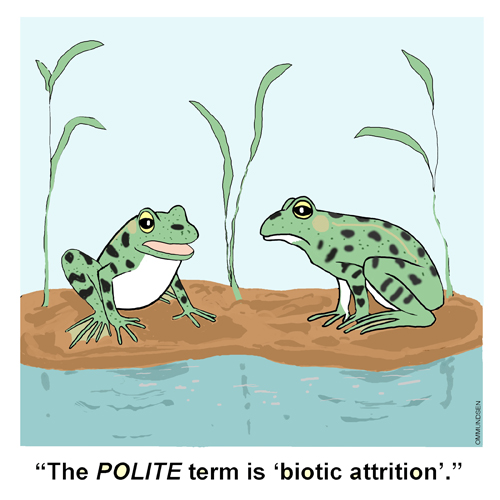
Here’s another set of biodiversity cartoons to make you giggle, groan, and contemplate the Anthropocene extinction crisis. See full stock of previous ‘Cartoon guide to biodiversity loss’ compendia here.
—

 One potentially useful metric to measure how different nations value their biodiversity is just how much of a country’s land its government sets aside to protect its natural heritage and resources. While this might not necessarily cover all the aspects of ‘environment’ we need to explore, we know from previous research that the more emphasis a country places on protecting its biodiversity, the more it actually achieves this goal. This might sound intuitive, but there is no shortage of what have become known as ‘paper parks’ around the world, which are essentially only protected in principle, but not in practice.
For example, if a national park or some other type of protected area is not respected by the locals (who might rightly or wrongly perceive them as a limitation of their ‘rights’ of exploitation), or is pilfered by corrupt government officials in cahoots with extractive industries like logging or mining, then the park does not do well in protecting the species it was designed to safeguard. So, even though the proportion of area protected within a country is not a perfect reflection of its environmental performance, it tends to indicate to what extent its government, and therefore, its people, are committed to saving its natural heritage.
 The global human population is now over 7.5 billion, and increasing by about 90 million each year. This means that we are predicted to exceed 9 billion people by 2050, with no peak in site this century and a world population of up to 12 billion by 2100. These staggering numbers are the result of being within the exponential phase of population growth since last century, such that some 14% of all human beings that have ever lived on the planet are still alive today. That is taking into account about the past 200,000 years, or 10,000 generations.
Of course just like the Earth’s resources, human beings are not distributed equally around the globe, nor are the population trends consistent among regions or nations. In fact, developing nations are contributing to the bulk of the global annual increase (around 89 million per year), whereas developed nations are contributing a growth of only about 1 million each year. Another demonstration of the disparity in human population distributon is that about half of all human beings live in just seven countries (China, India, USA, Indonesia, Brazil, Pakistan, Nigeria, and Bangladesh), representing just one quarter of the world’s total land area. Read the rest of this entry »
 Apologies for the little gap in my regular posts — I am in the fortunate position of having spent the last three weeks in the beautiful Villa Serbelloni in the village of Bellagio on the shores of Lake Como (northern Italy) engaged in writing a new book with my good friend and colleague, Professor Paul Ehrlich. Both of us received an invitation to become ‘Bellagio Centre Residents‘ by the Rockefeller Foundation to write the book in, shall we say, rather lush circumstances.
While I can’t yet give away all the juicy details of the book itself (we’ve only written about a third of it so far), I wanted to give you a little taste of some of the interesting results we’ve so far put together.
Today’s topic is on human health, which as I’ve written many times before, is in many ways linked to the quality of the environment in which people live. We are currently looking at which countries have the best human health statistics, as well as the best environmental conditions in which to live. Read the rest of this entry »
 In March 2016 I requested nominations for the Environmental Arsehat of the Year, and you happily complied by providing many excellent suggestions.
I now request that you vote on these nominations using the polling widget that follows a brief description of each nominee and why they’ve been suggested by the CB.com community. Once the votes are tallied, I’ll post the ‘winner’ (loser) in a new post in early 2017. Happy voting!
The nominations (in no particular order)

After dipping my foot into the murky waters of human population demography a few years ago, I’m a little surprised that I find myself here again. But this time I’m not examining what the future of the global human population might be and what it could mean for our environment; instead, I’m focussing on Australia’s population future and its implications for our greenhouse-gas emissions trajectories.
Just published in Asia and the Pacific Policy Forum1, my paper with long-time co-author Barry Brook is entitled Implications of Australia’s population policy for future greenhouse gas emissions targets. It deals with the sticky question of just how many people Australia can ‘afford’ to house. By ‘afford’ I mean several things, but most specifically in the context of this paper is by how much we need to reduce our per capita emissions to achieve future reduction targets under various immigration-rate scenarios.
In many ways Australia’s population is typical of other developed nations in that its intrinsic fertility (1.78 children/woman) is below replacement (which is itself ~ 2.1 children/female). Yet Australia’s population grew nearly twice (1.88×) as large from 1971 to 2014. It doesn’t take a genius to figure out that most of our population growth is due to net immigration.
In fact, between 2006 and 2014, Australia welcomed a net of 215,000 new people per year (this means that of all the permanent immigrants and emigrants, a ‘net’ of approximately 215,000 stayed each year), which represents about 1% of our total population size (that latter most likely just ticked over 24 million). Read the rest of this entry »
 I’ve been thinking about this post for a while, but it wasn’t until having some long, deep chats today with staff and students at Simon Fraser University‘s Department of Biological Sciences (with a particular hat-tip to the lovely Nick Dulvy, Isabelle Côté & John Reynolds) that the full idea began to take shape in my brain. It seems my presentation was a two-way street: I think I taught a few people some things, and they taught me something back. Nice.
There’s no question at all that science communication has never before been so widespread and of such high quality. More and more scientists and science students are now blogging, tweeting and generally engaging the world about their science findings. There is also an increasing number of professional science communication associations out there, and a growing population of professional science communicators. It is possibly the best time in history to be involved in the generation and/or communication of scientific results.
Why then is the public appreciation, acceptance and understanding of science declining? It really doesn’t make much sense if you merely consider that there has never been more good science ‘out there’ in the media — both social and traditional. For the source literature itself, there has never before been as many scientific journals, articles and even scientists writing. Read the rest of this entry »
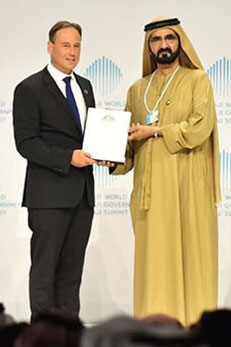
Our Most-Bestest Minister Ever (i.e., the bloke on the left; interestingly, the bloke on the right leads one of the few countries in the world with a higher per capita emissions rate than Australia)
Australia has an appalling environmental record — hell, I have even written an entire book on our sorry state of environmental affairs. Of course, environmental damage is a slow accumulation of bad political decisions, neglect, corruption, greed and society’s general I-couldn’t-give-a-shit attitude, but the record of our recent government demonstrates not just classic political buffoonery and neglect, but an outright attack on the environment.
So it was impossible to restrain a disgusted guffaw when, in February this year, our ‘Environment’ Minister won the coveted ‘Best Minister’ in the World award at the World Government Summit in Dubai by Sheikh Mohammed Bin Rashid Al Maktoum, Vice President and Prime Minister of the United Arab Emirates and Ruler of Dubai.
Deserved ridicule aside, I was asked recently by The Conversation to contribute to a special report examining the profile performance of cabinet and shadow cabinet ministers, which is not only a responsibility I take seriously, but an honour to be able to provide a serious and objective appraisal of our Most-Bestest Minister Ever. My contribution dealt specifically with the environmental portfolio, so I appraised both the sitting Minister and the Shadow Minister. Judge for yourself based on their performances. Read the rest of this entry »
 I’m starting a new series on ConservationBytes.com — one that exposes the worst environmental offenders on the planet.
I’ve taken the idea from an independent media organisation based in Australia — Crikey — who has been running the Golden Arsehat of the Year awards since 2008. It’s a hilarious, but simultaneously maddening, way of shaming the worst kinds of people.
So in the spirit of a little good fun and environmental naming-and-shaming, I’d like to put together a good list of candidates for the inaugural Environmental Arsehat of the Year awards.
So I’m keen to receive your nominations, either privately via e-mail, the ConservationBytes.com message service, or even in the comments stream of this post. Once I receive a good list of candidates, I’ll do separate posts on particularly deserving individuals, followed by an online poll where you can vote for your (least) favourite Arsehat.
There are a few nomination rules, however. Read the rest of this entry »

Stop wasting time
“Man and the environment are meant for each other” — Tony Abbott, former Prime Minister of Australia (2014)
“I know the human being and the fish can co-exist peacefully” — George W. Bush, former President of the USA (2000)
—
It. Has. Finally. Been. Published.
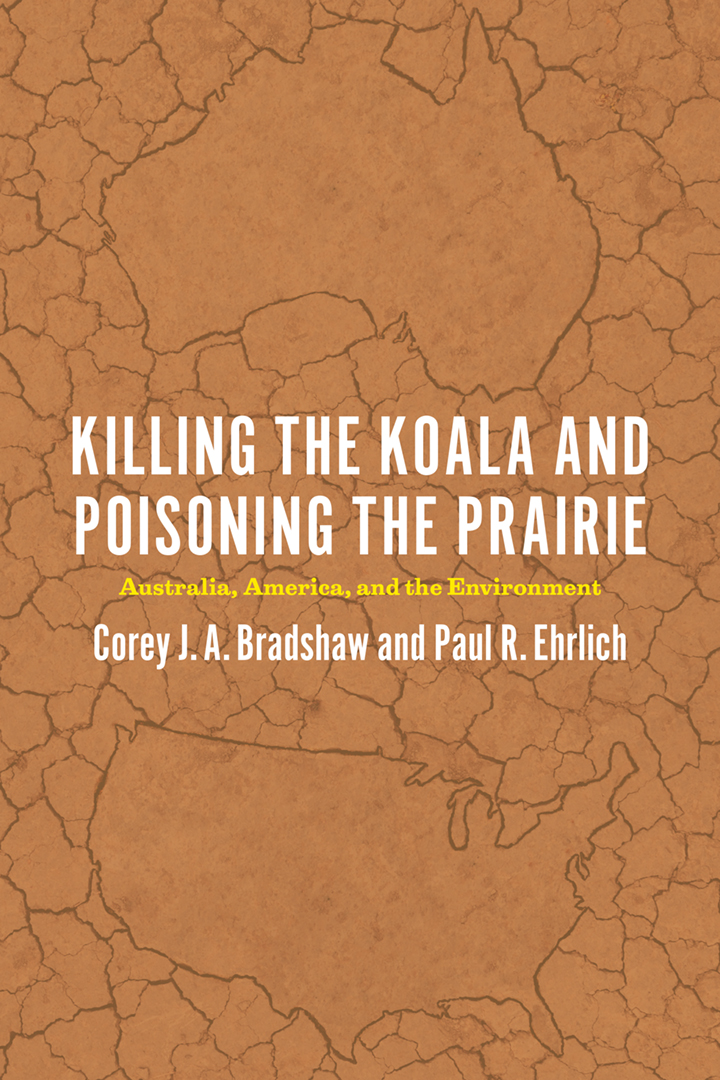
Yes, my new book with Paul Ehrlich, published by University of Chicago Press, is now available to purchase in book shops and online distributors around the world. The blog post today is a little explanatory synopsis of why we wrote the book and what it contains, but of course the real ‘meat’ is in the book. I hope you enjoy it.
In Australia, you can purchase the hard copy through Footprint Books, and the Kindle version at Amazon Australia. I also suggest that Australians might find the best deals through Booko. Electronic versions are also available through Kobo and Google Play. In the US you can order directly from University of Chicago Press, Amazon, Barnes & Noble, and many other book sellers. In the UK and Europe, the book is available from your country’s Amazon distributor. I imagine many chain and independent book sellers will be carrying the book by now, or will be soon.
My deepest thanks to all those who made it possible.
—
Our chance meeting in 2009 at Stanford University turned out to be auspicious, not least of which because of the publication this week of our co-authored book, Killing the Koala and Poisoning the Prairie. Australia, America and the Environment by University of Chicago Press. As a mid-career ecologist (Bradshaw) based at the University of Adelaide, it was indeed an honour to meet one of the most famous scientists (Ehrlich) in my field. With a list of books and hundreds of scientific papers under his belt, Ehrlich has been tackling major environmental issues since the 1960s. Ehrlich also has a long-time interest in Australia, having visited nearly every year during the last four decades and experienced more of the country than most Australians. Together we have observed firsthand the similarities and differences of Australia and the US, and the eyes we see through are trained as those of environmental scientists and evolutionary biologists.
So why write a book about the environmental tragedies currently unfolding in two completely different countries at opposite ends of the Earth? As it turns out, Australia and the US have much more in common environmentally than one might think, and not necessarily in a good way. Despite our vastly different floras and faunas, population densities, histories of human colonisation and soil productivities, there is an almost spooky similarity in the environmental and political problems both our countries are now experiencing. As such, we have a lot to learn about avoiding each other’s mistakes.
Ausmerica
Australia and the contiguous US are roughly equivalent in land area, both cultures are derived originally and principally from what is now the United Kingdom, and both are examples of super-consuming, super-wasting, wealthy, literate countries. Both countries also have environmental footprints that exceed most other countries on Earth, with some of the world’s highest per capita rates of greenhouse-gas emissions, water consumption, species extinctions and deforestation. Read the rest of this entry »
 It probably won’t come as too much of a surprise that most of the people I know reasonably well (mates included) are also scientists of some description. I therefore think that I fall into the extremely normal and mundane category of associating the most with people at work. Sure, I’ve also got very good mates who are et alia plumbers, chefs, winemakers (I do live in South Australia, after all), mechanics, coffee roasters and farmers (I also live on a small farm), so at least a get out of the office a bit. In summary, I tend to befriend and hang around people who are for the most part making ends meet, but who are by no means in a position to spend oodles of cash on anything remotely related to the conservation of biodiversity.
From time to time, however, I do meet extremely wealthy people, but we generally do not operate in the same social circles (I know, another big surprise). Nonetheless, I keep finding myself in conversations with such people that start along the lines of the following question:
“What’s the most effective way to invest money to save species from going extinct?”
As the Australian saying goes: “How long is a piece of string” – in other words, it’s a difficult, multi-dimensional answer at best, or a confused non sequitur one at worst.
Those reading this might be thinking right now, “Oh, I know exactly what I’d spend it on if I had that kind of money”, but after a few moments of contemplation, you might not be so sure. This is the dilemma in which I’ve found myself now on more than a few occasions.
So, with the benefit of a little contemplation, here are a few of my thoughts on the subject. Read the rest of this entry »
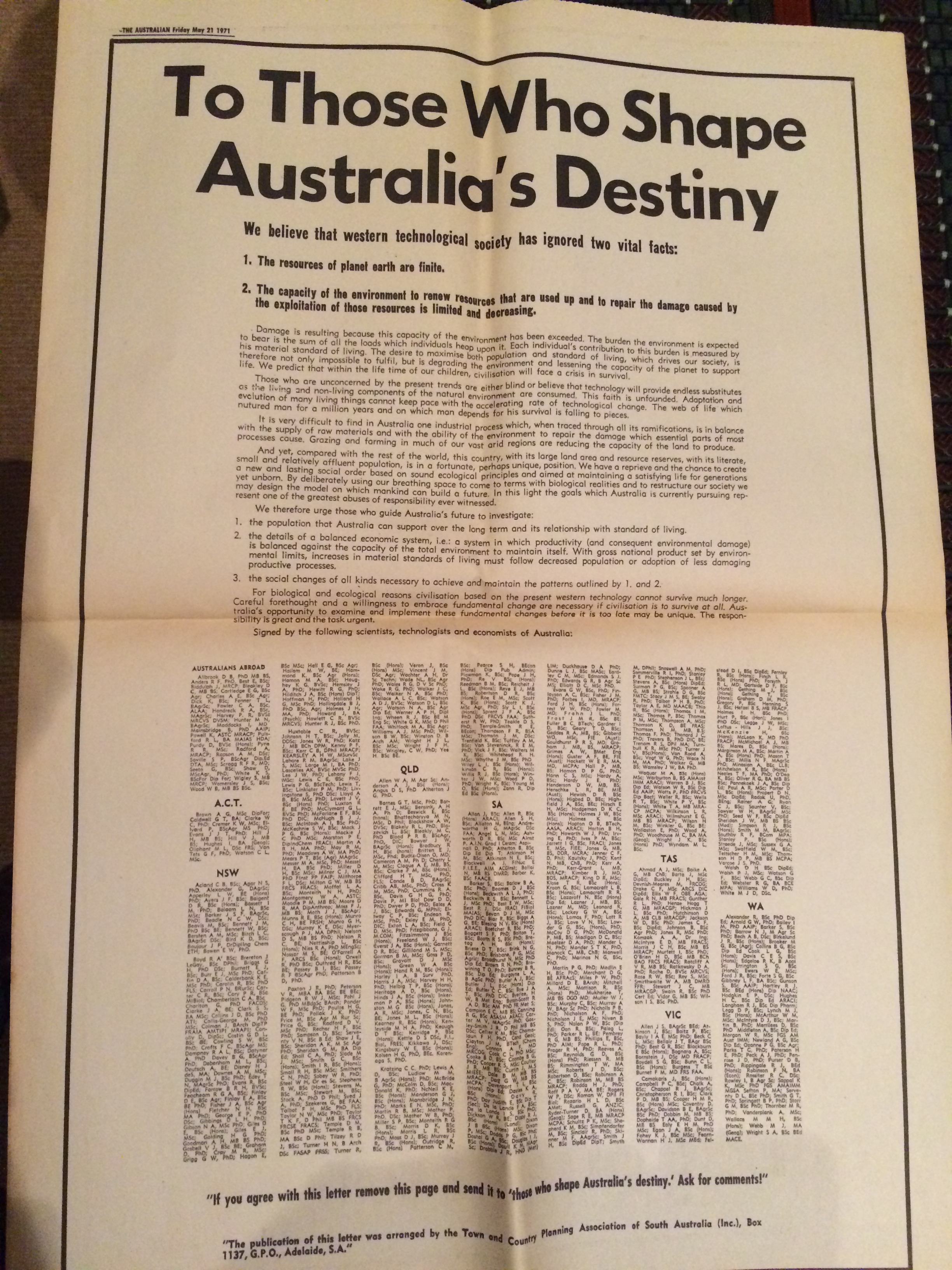 The other night I had the pleasure of dining with the former Australian Democrats leader and senator, Dr John Coulter, at the home of Dr Paul Willis (Director of the Royal Institution of Australia). It was an enlightening evening.
While we discussed many things, the 84 year-old Dr Coulter showed me a rather amazing advert that he and several hundred other scientists, technologists and economists constructed to alert the leaders of Australia that it was heading down the wrong path. It was amazing for three reasons: (i) it was written in 1971, (ii) it was published in The Australian, and (iii) it could have, with a few modifications, been written for today’s Australia.
If you’re an Australian and have even a modicum of environmental understanding, you’ll know that The Australian is a Murdochian rag infamous for its war on science and reason. Even I have had a run-in with its outdated, consumerist and blinkered editorial board. You certainly wouldn’t find an article like Dr Coulter’s in today’s Australian.
More importantly, this 44 year-old article has a lot today that is still relevant. While the language is a little outdated (and sexist), the grammar could use a few updates, and there are some predictions that clearly never came true, it’s telling that scientists and others have been worrying about the same things for quite some time.
In reading the article (reproduced below), one could challenge the authors for being naïve about how society can survive and even prosper despite a declining ecological life-support system. As I once queried Paul Ehrlich about some of his particularly doomerist predictions from over 50 years ago, he politely pointed out that much of what he predicted did, in fact, come true. There are over 1 billion people today that are starving, and another billion or so that are malnourished; combined, this is greater than the entire world population when Paul was born.
So while we might have delayed the crises, we certainly haven’t averted them. Technology does potentially play a positive role, but it can also increase our short-term carrying capacity and buffer the system against shocks. We then tend to ignore the indirect causes of failures like wars, famines and political instability because we do not recognise the real drivers: resource scarcity and ecosystem malfunction.
Australia has yet to learn its lesson.
—
To Those Who Shape Australia’s Destiny
We believe that western technological society has ignored two vital facts: Read the rest of this entry »
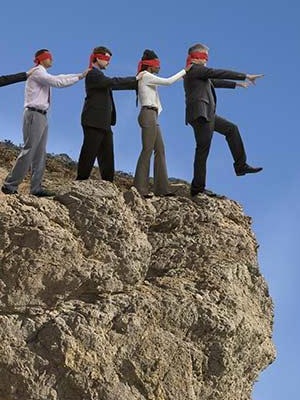 If, for the purposes of some sick and twisted thought experiment, you were to design policies that would ensure the long-term failure of a wealthy, developed nation, you wouldn’t have to look farther than Australia’s current recipe for future disaster. I’m not trying to be provocative, but the warning signs are too bold and flashy to ignore. Let’s just run through some of the main ones:
1. As the lambasted and thoroughly flawed 2015 Intergenerational Report clearly demonstrates, our current government has no idea about the future threats of climate change. Dragged kicking and screaming into only a symbolic recognition of some ‘distant and currently irrelevant problem’, the Abbott-oir and his intergenerational criminals are well known for killing the carbon-pricing scheme, dismantling the Department of Climate Change, pulling out of major international talks on climate-change mitigation and installing a half-arsed, ineffective policy that will do nothing to stem our emissions. Combine that with comments like “coal is good for humanity“, and it’s easy to see how our current leaders have little idea about the future mess they’re creating.
2. Not content just to kick the shit out of any meaningful climate action, our government has also turned its back on any renewable energy target, and facilitated the fossil-fuel barons to dig more coal out of the ground. While South Australia’s Royal Commission on the nuclear fuel cycle is a welcome candle in the climate change-mitigation darkness here, it is far from becoming a national priority any time soon.
3. As has been well documented, the Abbott-oir ship of fools has also done whatever it can to turn back decades of environmental protections in less than six months of taking office. Everything from opening up national parks for exploitation, failing to protect marine sanctuaries, limiting environmental checks to promoting logging in World Heritage Areas, there is little room for hope that our crumbling environmental system will improve at all in the near to long term. Read the rest of this entry »
 Tone Abbott-oir, easily the most environmentally destructive Prime Minister this country has seen in the modern era, has survived the party room spill for a leadership change. Although 39% of his own Fiberal Party MPs voted to dump him, he remains standing (limping) – for now.
I’ve seen rather a lot lately in the Australian media about the impending spill vote, and the potential political repercussions of a change (or not), but there’s been nearly no mention of what it all means for the continually degrading Australian environment.
As is typical in Australian politics, the environment takes a very distant back seat to the those oh-so-important societal issues like knighthoods, paid parental leave and where to put the next road in Melbourne, so I certainly wasn’t hopeful that a leadership change (or not) would have any positive environmental outcomes. This particular latte-snorting, quinoa-flavoured-pinot-grigio-in-the-artisanal-underpants-pouring, erect-nipple-paper-rubbing environmental scientist has nothing at all to celebrate, even if the no-confidence in The Great Red Underpants is potentially a positive sign. Read the rest of this entry »


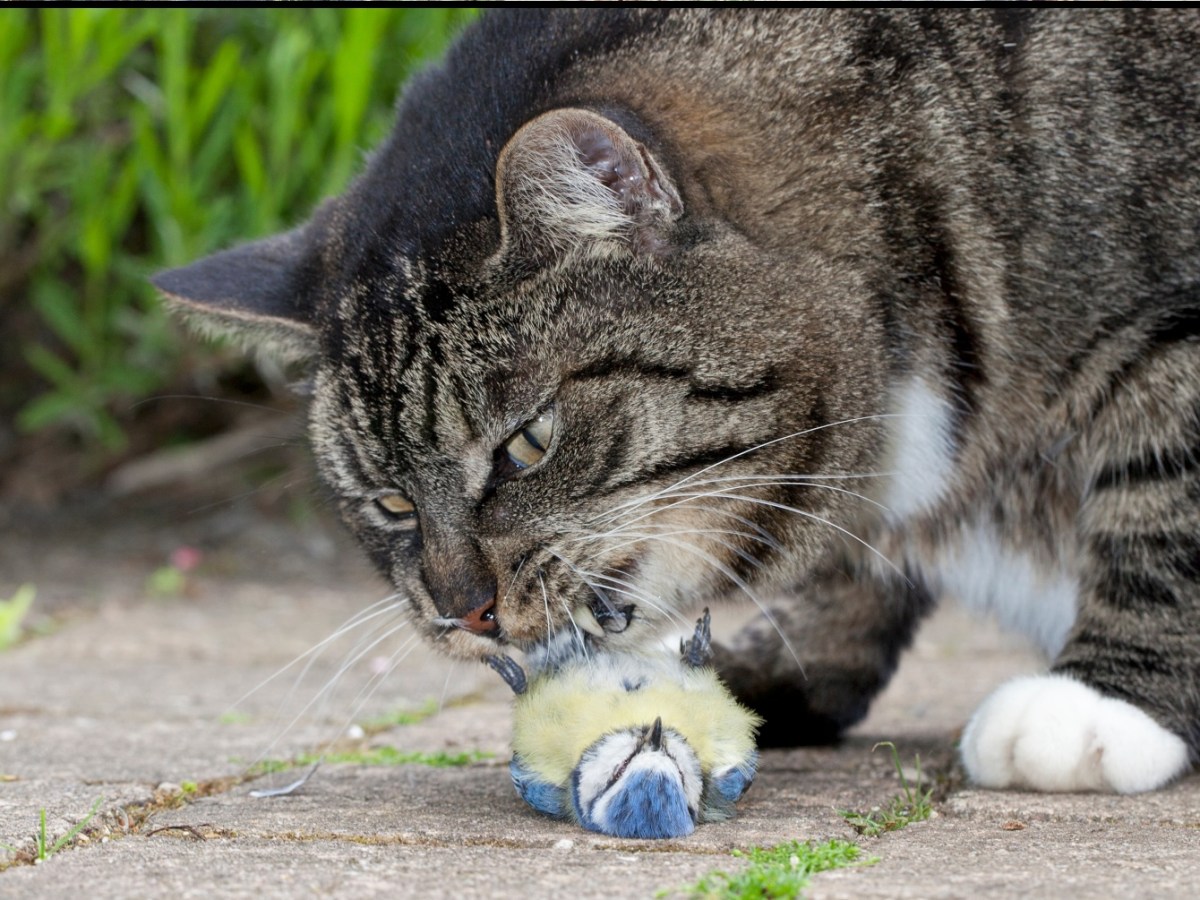
Those of us living with cats share our homes with an ancestral predator, one adapted for hunting and the frequent, exclusive consumption of meat. These instincts become fully activated outside the domestic environment, where cats pose a global threat to wildlife. Pets are family. We celebrate their arrival with the same joy as a grand…

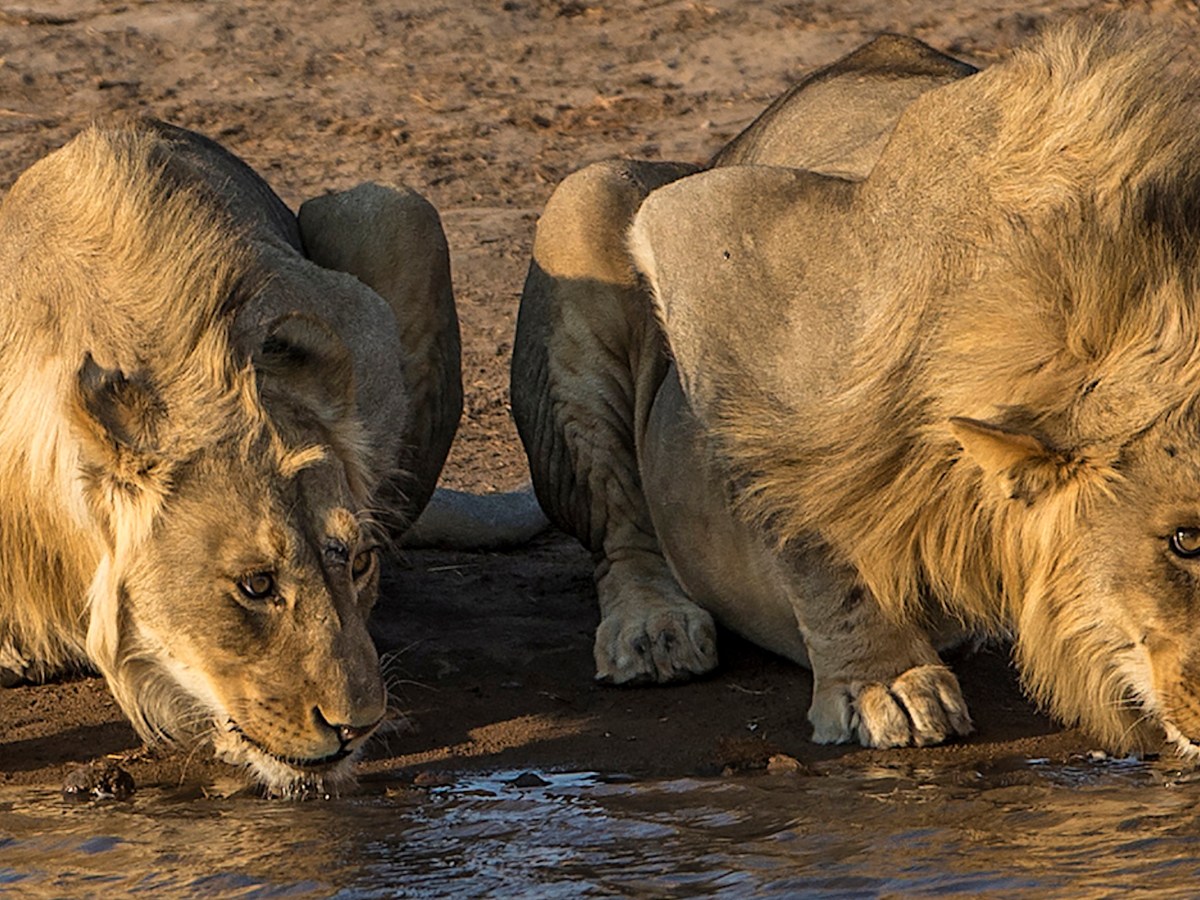
Many animals avoid contact with people. In protected areas of the African savanna, mammals flee more intensely upon hearing human conversations than when they hear lions or sounds associated with hunting. This fear of humans affects how species use and move in their habitat. Throughout our lives, we interact with hundreds of wildlife species without…
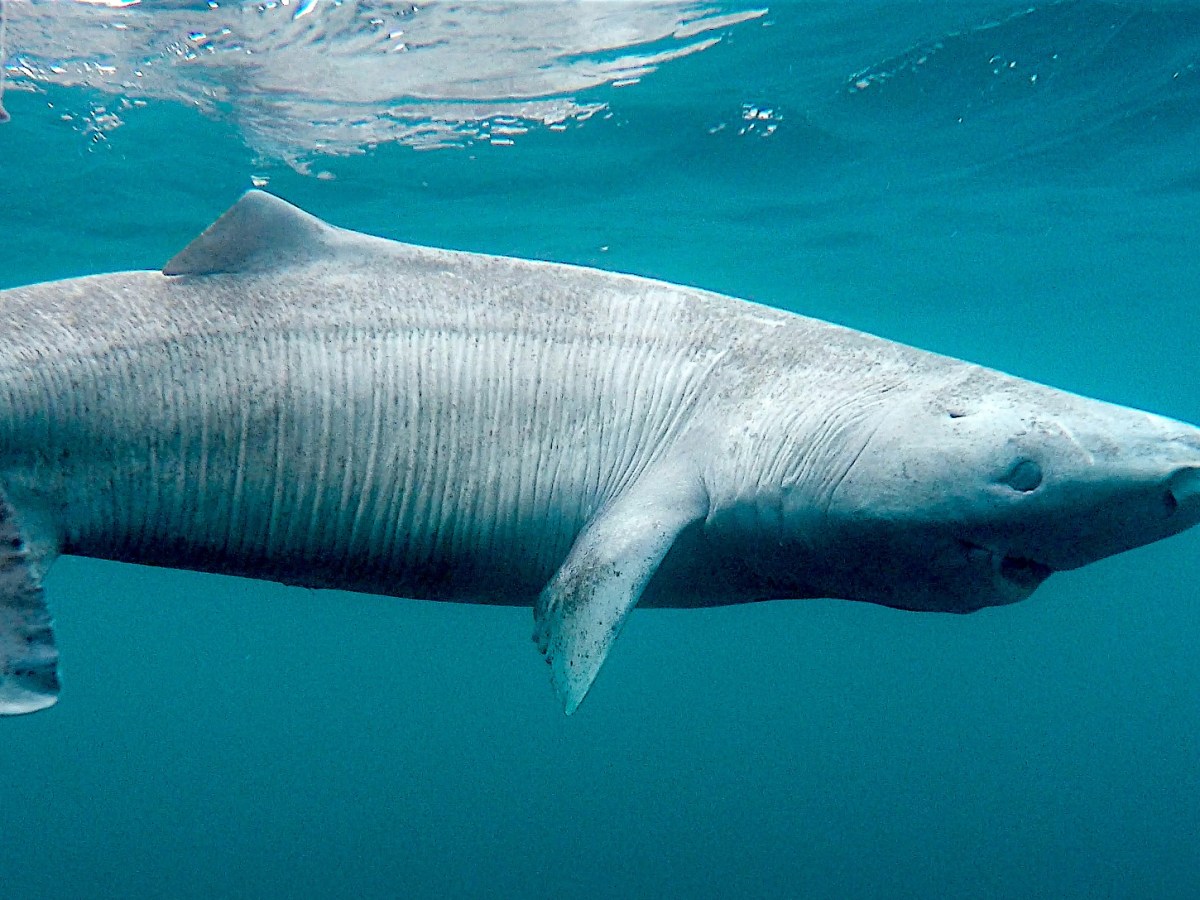
Deep-sea sharks include some of the longest-lived vertebrates known. The record holder is the Greenland shark, with a recently estimated maximum age of nearly 400 years. Their slow life cycle makes them vulnerable to fisheries. Humans rarely live longer than 100 years. But many other animals and plants can live for several centuries or even millennia, particularly…

 ConservationBytes.com