Australia’s perfect storm of negligence

17 03 2015

If, for the purposes of some sick and twisted thought experiment, you were to design policies that would ensure the long-term failure of a wealthy, developed nation, you wouldn’t have to look farther than Australia’s current recipe for future disaster. I’m not trying to be provocative, but the warning signs are too bold and flashy to ignore. Let’s just run through some of the main ones:

1. As the lambasted and thoroughly flawed 2015 Intergenerational Report clearly demonstrates, our current government has no idea about the future threats of climate change. Dragged kicking and screaming into only a symbolic recognition of some ‘distant and currently irrelevant problem’, the Abbott-oir and his intergenerational criminals are well known for killing the carbon-pricing scheme, dismantling the Department of Climate Change, pulling out of major international talks on climate-change mitigation and installing a half-arsed, ineffective policy that will do nothing to stem our emissions. Combine that with comments like “coal is good for humanity“, and it’s easy to see how our current leaders have little idea about the future mess they’re creating.

2. Not content just to kick the shit out of any meaningful climate action, our government has also turned its back on any renewable energy target, and facilitated the fossil-fuel barons to dig more coal out of the ground. While South Australia’s Royal Commission on the nuclear fuel cycle is a welcome candle in the climate change-mitigation darkness here, it is far from becoming a national priority any time soon.

3. As has been well documented, the Abbott-oir ship of fools has also done whatever it can to turn back decades of environmental protections in less than six months of taking office. Everything from opening up national parks for exploitation, failing to protect marine sanctuaries, limiting environmental checks to promoting logging in World Heritage Areas, there is little room for hope that our crumbling environmental system will improve at all in the near to long term. Read the rest of this entry »



Avoiding genetic rescue not justified on genetic grounds

12 03 2015
Genetics to the rescue!

Genetics to the rescue!

I had the pleasure today of reading a new paper by one of the greatest living conservation geneticists, Dick Frankham. As some of CB readers might remember, I’ve also published some papers with Dick over the last few years, with the most recent challenging the very basis for the IUCN Red List category thresholds (i.e., in general, they’re too small).

Dick’s latest paper in Molecular Ecology is a meta-analysis designed to test whether there are any genetic grounds for NOT attempting genetic rescue for inbreeding-depressed populations. I suppose a few definitions are in order here. Genetic rescue is the process, either natural or facilitated, where inbred populations (i.e., in a conservation sense, those comprising too many individuals bonking their close relatives because the population in question is small) receive genes from another population such that their overall genetic diversity increases. In the context of conservation genetics, ‘inbreeding depression‘ simply means reduced biological fitness (fertility, survival, longevity, etc.) resulting from parents being too closely related.

Seems like an important thing to avoid, so why not attempt to facilitate gene flow among populations such that those with inbreeding depression can be ‘rescued’? In applied conservation, there are many reasons given for not attempting genetic rescue: Read the rest of this entry »


Social and economic value of protected areas

2 03 2015
© P. Crowley/"mokolabs" via Flickr

© P. Crowley/”mokolabs” via Flickr

I’ve just come across an exceptionally important paper published recently in PLoS Biology by a team of venerable conservation biologists led by the eminent Andy Balmford of the University of Cambridge. My first response was ‘Holy shit’, and now that I contemplate the results further, I can now update that sentiment to ‘Holy shit!’.

Most people reading this blog wouldn’t bother questioning the importance of protected areas for the preservation of biodiversity – for them, it’s a given. While the effectiveness of protected areas globally is highly variable in that regard, there’s little contention among conservationists that we do not yet have enough of them to conserve biodiversity effectively, especially in the oceans that cover some 70% of the planet’s surface.

But that justification isn’t good enough for some people – perhaps even the majority. Even our own myopic, anti-environment political bungler Prime Minister has stated publicly that national parks just ‘lock up‘ areas to the exclusion of much more important things like jobs and income generation. He’s even stated that Australia has ‘too many‘ national parks already, and that timber workers are “the ultimate conservationists“. As I type those words, I can feel the bile accumulating in my throat. Read the rest of this entry »


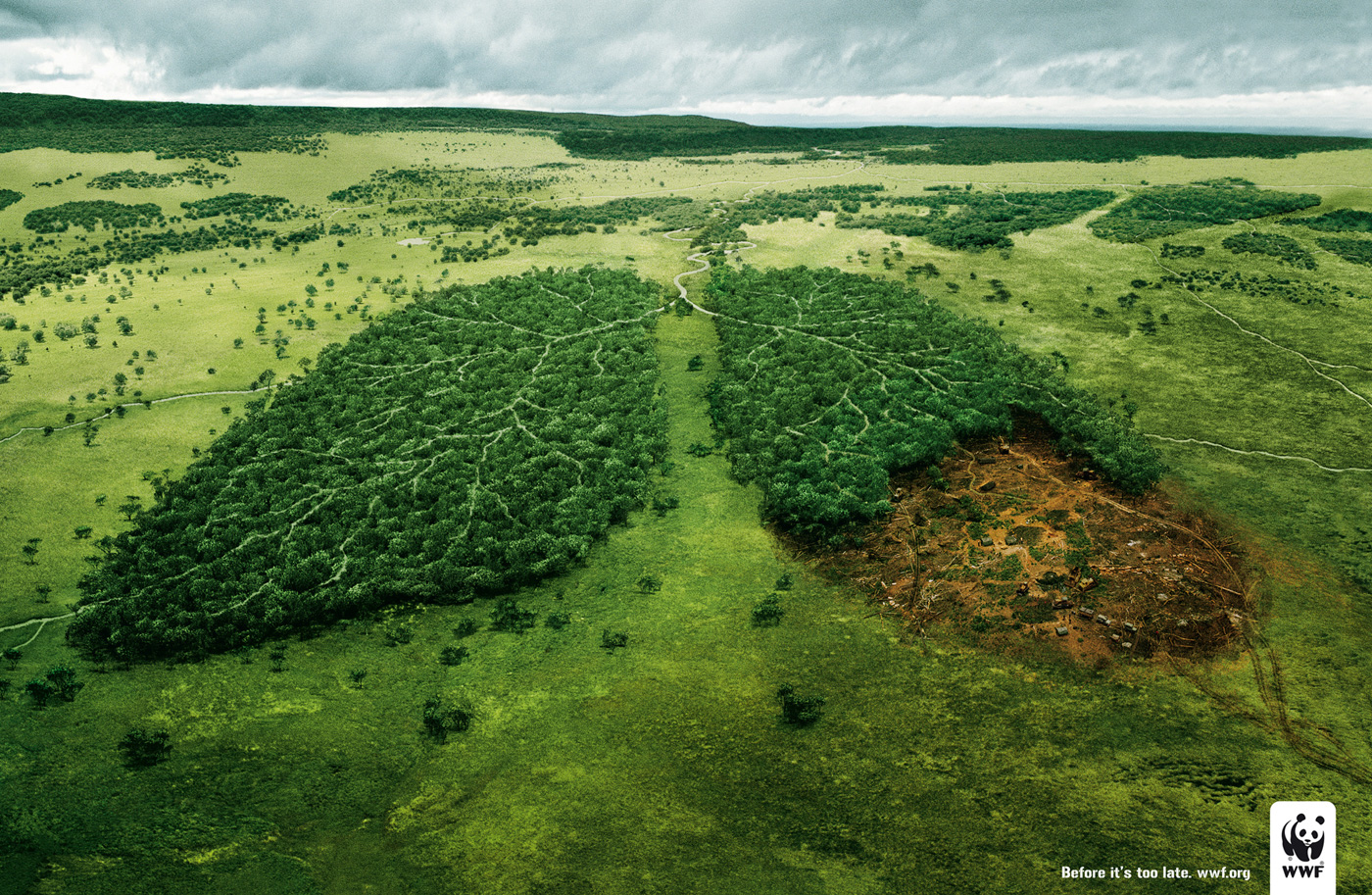
Earth’s second lung has emphysema

19 02 2015
© WWF

© WWF

Many consider forests as the ‘lungs’ of the planet – the idea that trees and other plants take up carbon and produce oxygen (the carbon and oxygen cycles). If we are to be fair though, the oceans store about 93% of the Earth’s carbon pool (excluding the lithosphere and fossil fuels) and oceanic phytoplankton produces between 50 and 80% of the oxygen in the atmosphere. For comparison, the terrestrial biosphere – including forests – stores only about 5% of the Earth’s carbon, and produces most of the remainder of atmospheric oxygen.

So there’s no denying that the biggest player in these cycles is the ocean, but that’s not the topic of today’s post. Instead, I’m going to focus on the terrestrial biosphere, and in particular, the carbon storage and flux of forests.

Now it’s pretty well established that tropical forests are major players in the terrestrial carbon cycle, with the most accepted estimates of about 55% the terrestrial carbon stock stored therein. The extensive boreal forest, covering most of the northern half of North America, most of Scandinavia and a huge chunk of Russia, comes in globally at about 33%, and temperate forests store most of the remainder.

That is, until now. Read the rest of this entry »


Bill Laurance wins ‘Outstanding Contributions to Conservation’ prize

16 02 2015

ZSL-standard-blackWilliam Laurance, a distinguished research professor at James Cook University in Cairns, has received the most esteemed prize awarded by the renowned Zoological Society of London.

The Society voted unanimously to honour Laurance with its 2015 “Award for Outstanding Contributions to Conservation”, for his longstanding work to save wildlife species and habitats, especially in the world’s imperilled tropical forests.

Laurance was cited as “a leading scientist, a science communicator and an advocate for conservation policy.”

The recognition was immediately applauded by several of Laurance’s colleagues.

“Bill’s passion for conservation is matched only by his hard work, his vision and communication skills,” said professor Thomas Lovejoy, a leading U.S. scientist and former environmental advisor to three US presidents.

“His scientific contributions have been both prescient and catalytic. He is one of the great conservation figures of his time,” said Lovejoy.

Professor Corey Bradshaw of the University of Adelaide added, “Bill is undoubtedly one of the most influential biodiversity scientists of our era.” Read the rest of this entry »


The Abbott-oir survives another day to wreak more environmental havoc

9 02 2015

The Great Red UnderpantsTone Abbott-oir, easily the most environmentally destructive Prime Minister this country has seen in the modern era, has survived the party room spill for a leadership change. Although 39% of his own Fiberal Party MPs voted to dump him, he remains standing (limping) – for now.

I’ve seen rather a lot lately in the Australian media about the impending spill vote, and the potential political repercussions of a change (or not), but there’s been nearly no mention of what it all means for the continually degrading Australian environment.

As is typical in Australian politics, the environment takes a very distant back seat to the those oh-so-important societal issues like knighthoods, paid parental leave and where to put the next road in Melbourne, so I certainly wasn’t hopeful that a leadership change (or not) would have any positive environmental outcomes. This particular latte-snorting, quinoa-flavoured-pinot-grigio-in-the-artisanal-underpants-pouring, erect-nipple-paper-rubbing environmental scientist has nothing at all to celebrate, even if the no-confidence in The Great Red Underpants is potentially a positive sign. Read the rest of this entry »


Cartoon guide to biodiversity loss XXVIII

4 02 2015

First batch of six biodiversity cartoons for 2015 (see full stock of previous ‘Cartoon guide to biodiversity loss’ compendia here).

Read the rest of this entry »


What’s in a name? The dingo’s sorry saga

30 01 2015

bad dingoThe more I delve into the science of predator management, the more I realise that the science itself takes a distant back seat to the politics. It would be naïve to think that the management of dingoes in Australia is any more politically charged than elsewhere, but once you start scratching beneath the surface, you quickly realise that there’s something rotten in Dubbo.

My latest contribution to this saga is a co-authored paper led by Dale Nimmo of Deakin University (along with Simon Watson of La Trobe and Dave Forsyth of Arthur Rylah) that came out just the other day. It was a response to a rather dismissive paper by Matt Hayward and Nicky Marlow claiming that all the accumulated evidence demonstrating that dingoes benefit native biodiversity was somehow incorrect.

Their two arguments were that: (1) dingoes don’t eradicate the main culprits of biodiversity decline in Australia (cats & foxes), so they cannot benefit native species; (2) proxy indices of relative dingo abundance are flawed and not related to actual abundance, so all the previous experiments and surveys are wrong.

Some strong accusations, for sure. Unfortunately, they hold no water at all. Read the rest of this entry »


Write English well? Help get published someone who doesn’t

27 01 2015

imagesI’ve written before about how sometimes I can feel a little exasperated by what seems to be a constant barrage of bad English from some of my co-authors. No, I’m not focussing solely on students, or even native English speakers for that matter. In fact, one of the best (English) science writers with whom I’ve had the pleasure of working is a Spaniard (he also happens to write particularly well in Castellano). He was also fairly high up on the command-of-English ladder when he started out as my PhD student. So. There.

In other words, just because you grew up speaking the Queen’s doesn’t automatically guarantee that you’ll bust a phrase as easily as Shakespeare, Tolkien, Gould or Flannery; in fact, it might put you at a decided disadvantage compared to your English-as-a-second- (-third-, -fourth-, -fifth- …) language peers because they avoided learning all those terrible habits you picked up as you grunted your way through adolescence. Being forced to learn the grammar of another language often tends to make you grasp that of your mother tongue a little better.

So regardless of your background, if you’ve managed to beat the odds and know in your heart that you are in fact a good writer of science in English (you know who you are), I think you have a moral duty to help out those who still struggle with it. I’m not referring necessarily to the inevitable corrections you’ll make to your co-authors’ prose when drafting manuscripts1. I am instead talking about going out of your way to help someone who really, really needs it. Read the rest of this entry »


When human society breaks down, wildlife suffers

22 01 2015

bearGlobal human society is a massive, consumptive beast that on average degrades its life-support system. As we’ve recently reported, this will only continue to get worse in the decades to centuries to come. Some have argued that as long as we can develop our societies enough, the impact of this massive demographic force can be lessened – a concept described by the environmental Kuznets curve. However, there is little evidence that negative societal impact on the environment is lessened as per capita wealth exceeds some threshold; unfortunately environmental damage tends to, on average, increase as a nation’s net wealth increases. That’s not to say that short-term improvements cannot be achieved through technological innovation – in fact, they will be essential to offset the inexorable growth of the global human population.

So poor nations as well as the wealthy ones are responsible for environmental damage. Poorer nations often have ineffective governance systems so they fail to enforce compliance in environmental regulations, but wealthier nations often exploit a high proportion of their natural resources, with the inevitable environmental damage this entails. In some cases however, biodiversity can temporarily escape some of the ravages of society because humans either perceive the area to be too dangerous, or otherwise have no incentive to go there. There are some good examples of the latter, such as the vicinity around the Chernobyl nuclear reactor that melted down in 1986, or the Korean demilitarised zone.

In this vein, I just stumbled across an extremely interesting paper today published online early in Conservation Biology that describes trends in charismatic wildlife (i.e., big mammals) as the former Soviet Union collapsed in 1991 and societal breakdown ensued. The authors had access to an amazing dataset that spanned the decade prior to the collapse, the decade immediately following, and a subsequent decade of societal renewal. What they found was fascinating. Read the rest of this entry »


It’s all about the variation, stupid

12 01 2015

val-1-3It is one of my long-suffering ecological quests to demonstrate to the buffoons in government and industry that you can’t simply offset deforestation by planting another forest elsewhere. While it sounds attractive, like carbon offsetting or even water neutrality, you can’t recreate a perfectly functioning, resilient native forest no matter how hard you try.

I’m not for a moment suggesting that we shouldn’t reforest much of what we’ve already cut down over the last few centuries; reforestation is an essential element of any semblance of meaningful terrestrial ecological restoration. Indeed, without a major commitment to reforestation worldwide, the extinction crisis will continue to spiral out of control.

What I am concerned about, however, is that administrators continue to push for so-called ‘biodiversity offsets’ – clearing a forest patch here for some such development, while reforesting or even afforesting another degraded patch there. However, I’ve blogged before about studies, including some of my own, showing that one simply cannot replace primary forests in terms of biodiversity and long-term carbon storage. Now we can add resilience to that list.

While I came across this paper a while ago, I’ve only found the time to blog about it now. Published in PLoS One in early December, the paper Does forest continuity enhance the resilience of trees to environmental change?1 by von Oheimb and colleagues shows clearly that German oak forests that had been untouched for over 100 years were more resilient to climate variation than forests planted since that time. I’ll let that little fact sink in for a moment … Read the rest of this entry »


Help Hawaii’s hyper-threatened birds

6 01 2015
Puaiohi or small Kaua'i thrush. Photo by Lucas Behnke

Puaiohi or small Kaua’i thrush. Photo by Lucas Behnke

You wouldn’t want to be a bird in Hawaii. There are more avian species threatened with extinction there than anywhere else in the USA. After humans arrived, some 70+ species have become extinct, and 31 are listed as threatened with extinction. In addition, 43% of 157 species are not native; among land birds, 69% are introduced species.

My friend, Cali Crampton asked me to promote their new crowdfunding project to reduce the threat of feral rats on Hawaiian birds. Please help if you can.

The Kaua‘i Forest Bird Recovery Project, a collaborative project of the Hawaii Department of Land and Natural Resources, Division of Forestry and Wildlife, the University of Hawaii Pacific Cooperative Studies Unit, and Garden Island Research and Development, has announced the launch of a crowdfunding and outreach campaign to generate support for protecting the native birds of Kaua’i by controlling rats with humane, self-resetting rat traps.

The campaign, named “Birds, not Rats!” runs through to 31 January 2015, with goals of increasing awareness of the threats that rats pose to birds and native ecosystems, and raising at least $10,000 for rat control through many small, individual donations.

Hawai’i is at the epicentre of the current global extinction crisis. Of the original 130+ native Hawaiian bird species, many have been lost forever, and only 11 are not yet endangered. Today, Kaua’i is home to eight native forest bird species, three of which are federally listed as endangered: the puaiohi or small Kaua’i thrush, the akeke’e or Kaua’i akepa, and the akikiki or Kaua’i creeper. Populations of these birds have plummeted as much as 90% in the last five years; the akikiki and the puaiohi now number fewer than 500 individuals, and the akeke’e numbers fewer than 1000 individuals. The Kaua’i Forest Bird Recovery Project’s goal is to reverse these declines. Read the rest of this entry »