Climate change’s ugly cousin – biodiversity loss

17 05 2009

uglybaby…nobody puts a value on pollination; national accounts do not reflect the value of ecosystem services that stop soil erosion or provide watershed protection.

Barry Gardiner, Labour MP for Brent North (UK), Co-chairman, Global Legislators Organisation‘s International Commission on Land Use Change and Ecosystems

Last week I read with great interest the BBC’s Green Room opinion article by Barry Gardiner, Labour MP in the UK, about how the biodiversity crisis takes very much the back seat to climate change in world media, politics and international agreements.

He couldn’t be more spot-on.

I must stipulate right up front that this post is neither a whinge, rant nor lament; my goal is to highlight what I’ve noticed about the world’s general perception of climate change and biodiversity crisis issues over the last few years, and over the last year in particular since ConservationBytes.com was born.

Case in point: my good friend and colleague, Professor Barry Brook, started his blog BraveNewClimate.com a little over a month (August 2008) after I managed to get ConservationBytes.com up and running (July 2008). His blog tackles issues regarding the science of climate change, and Barry has been very successful at empirically, methodically and patiently tearing down the paper walls of the climate change denialists. A quick glance at the number views of BraveNewClimate.com since inception reveals about an order of magnitude more than for ConservationBytes.com (i.e., ~195000 versus 20000, respectively), and Barry has accumulated a total of around 4500 comments compared to just 231 for ConservationBytes.com. The difference is striking.

Now, I don’t begrudge for one moment this disparity – quite the contrary – I am thrilled that Barry has managed to influence so many people and topple so effectively the faecal spires erected by the myriad self-proclaimed ‘experts’ on climate change (an infamous line to whom I have no idea to attribute states that “opinions are like arseholes – everyone’s got one”). Barry is, via BraveNewClimate.com, doing the world an immense service. What I do find intriguing is that in many ways, the biodiversity crisis is a much, much worse problem that is and will continue to degrade human life for millennia to come. Yet as Barry Gardiner observed, the UK papers mentioned biodiversity only 115 times over the last 3 months compared to 1382 times for climate change – again, that order-of-magnitude disparity.

There is no biodiversity equivalent of the Intergovernmental Panel on Climate Change (although there are a few international organisations tackling the extinction crisis such as the United Nation’s Environment Program, the Millennium Ecosystem Assessment and the International Union for Conservation of Nature), we still have little capacity or idea how to incorporate the trillions of dollars worth of ecosystem services supplied every year to us free of charge, and we have nothing at all equivalent to the Kyoto Protocol for biodiversity preservation. Yet, conservation biologists have for decades demonstrated how human disease prevalence, reduction in pollination, increasing floods, reduced freshwater availability, carbon emissions, loss of fish supplies, weed establishment and spread, etc. are all exacerbated by biodiversity loss. Climate change, as serious and potentially apocalyptic as it is, can be viewed as just another stressor in a system stressed to its limits.

Of course, the lack of ‘interest’ may not be as bleak as indicated by web traffic; I believe the science underpinning our assessment of biodiversity loss is fairly well-accepted by people who care to look into these things, and the evidence spans the gambit of biological diversity and ecosystems. In short, it’s much less controversial a topic than climate change, so it attracts a lot less vitriol and spawns fewer polemics. That said, it is a self-destructive ambivalence that will eventually come to bite humanity on the bum in the most serious of ways, and I truly believe that we’re not far off from major world conflicts over the dwindling pool of resources (food, water, raw materials) we are so effectively destroying. We would be wise to take heed of the warnings.

CJA Bradshaw

Add to FacebookAdd to NewsvineAdd to DiggAdd to Del.icio.usAdd to StumbleuponAdd to RedditAdd to BlinklistAdd to Ma.gnoliaAdd to TechnoratiAdd to Furl


Latest issue of Conservation Letters now out

13 05 2009

Conservation Letters

The April issue of Conservation Letters is now out (a little late, but worth the wait). There are some good titles in this one, and I’ve blogged about a few of them already:

Happy reading!

CJA Bradshaw


Eastern Seaboard Climate Change Initiative

30 04 2009
© A. Perkins
© A. Perkins

I’ve just spent the last few days in Sydney attending a workshop on the Eastern Seaboard Climate Change Initiative which is trying to come to grips with assessing the rising impact of climate change in the marine environment (both from biodiversity and coastal geomorphology perspectives).

Often these sorts of get-togethers end up doing little more than identifying what we don’t know, but in this case, the ESCCI (love that acronym) participants identified some very good and necessary ways forward in terms of marine research. Being a biologist, and given this is a conservation blog, I’ll focus here on the biological aspects I found interesting.

The first part of the workshop was devoted to kelp. Kelp? Why is this important?

As it turns out, kelp forests (e.g., species such as Ecklonia, Macrocystis, Durvillaea and Phyllospora) are possibly THE most important habitat-forming group of species in temperate Australia (corals and calcareous macroalgae being more important in the tropics). Without kelp, there are a whole host of species (invertebrates and fish) that cannot persist. The Australian marine environment is worth something in the vicinity of $26.8 billion to our economy each year, so it’s pretty important we maintain our major habitats. Unfortunately, kelp is starting to disappear around the country, with southern contractions of Durvillaea, Ecklonia and Hormosira on the east coast linked to the increasing southward penetration of the East Australia Current (i.e., the big current that brings warm tropical water south from Queensland to NSW, Victoria and now, Tasmania). Pollution around the country at major urban centres is also causing the loss or degradation of Phyllospora and Ecklonia (e.g., see recent paper by Connell et al. in Marine Ecology Progress Series). There is even some evidence that disease causing bleaching in some species is exacerbated by rising temperatures.

Some of the key kelp research recommendations coming out of the workshop were:

  1. Estimating the value of kelp to Australians (direct harvesting; fishing; diving)
  2. Physical drivers of change: understanding how variation in the East Australian Current (temperature, nutrients) affects kelp distribution; understanding how urban and agricultural run-off (nutrients, pollutants, sedimentation) affects distribution and health; understanding how major storm events (e.g., East Coast Lows and El Niño-Southern Oscillation) affects long-term persistence
  3. Monitoring: what is the distribution and physical limits of kelp species?; how do we detect declines in ‘health’?; what is the associated biodiversity in kelp forests?
  4. Experimental: manipulations of temperature/nutrients/pathogens in the lab and in situ to determine sensitivities; sensitivity of different life stages; latitudinal transplants to determine localised adaption
  5. Adaptation (management): reseeding; managing run-off; managing fisheries to maintain a good balance of grazers and predators; inform marine protected area zoning; understanding trophic cascades

The second part of the discussion centred on ocean acidification and increasing CO2 content in the marine environment. As you might know, increasing atmospheric CO2 is taken up partially by ocean water, which lowers the availability of carbonate and increases the concentration of hydrogen ions (thus lowering pH or ‘acidifying’). It’s a pretty worrying trend – we’ve seen a drop in pH already, with conservative predictions of another 0.3 pH drop by the end of this century (equating to a doubling of hydrogen ions in the water). What does all this mean for marine biodiversity? Well, many species will simply not be able to maintain carbonate shells (e.g., coccolithophore phytoplankton, corals, echinoderms, etc.), many will suffer reproductive failure through physiological stress and embryological malfunction, and still many more will be physiologically stressed via hypercapnia (overdose of CO2, the waste product of animal respiration).

Many good studies have come out in the last few years demonstrating the sensitivity of certain species to reductions in pH (some simultaneous with increases in temperature), but some big gaps remain in our understanding of what higher CO2 content in the marine environment will mean for biota. Some of the key research questions in this area identified were therefore:

  1. What is the adaptation (evolutionary) potential of sensitive species? Will many (any) be able to evolve higher resistance quickly enough?
  2. In situ experiments outside the lab that mimic pH and pCO2 variation in space and time are needed to expose species to more realistic conditions.
  3. What are the population consequences (e.g., change in extinction risk) of higher individual susceptibility?
  4. Which species are most at risk, and what does this mean for ecosystem function (e.g., trophic cascades)?

As you can imagine, the conversation was complex, varied and stimulating. I thank the people at the Sydney Institute of Marine Science for hosting the fascinating discussion and I sincerely hope that even a fraction of the research identified gets realised. We need to know how our marine systems will respond – the possibilities are indeed frightening. Ignorance will leave us ill-prepared.

CJA Bradshaw

Add to FacebookAdd to NewsvineAdd to DiggAdd to Del.icio.usAdd to StumbleuponAdd to RedditAdd to BlinklistAdd to Ma.gnoliaAdd to TechnoratiAdd to Furl


More than just baby sharks

23 04 2009

Sharks worldwide are in trouble (well, so are many taxa, for that matter), with ignorance, fear, and direct and indirect exploitation (both legal and illegal) accounting for most of the observed population declines.
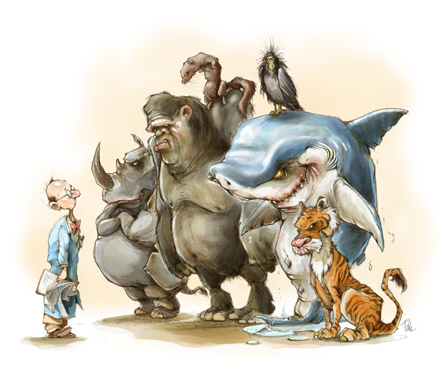
Despite this worrisome state (sharks have extremely important ‘regulatory’ roles in marine ecosystems), many people have been slowly taking notice of the problem, largely due to the efforts of shark biologists. An almost religious-like pillar of shark conservation that has emerged in the last decade or so is that if we save nursery habitats, all shark conservation concerns will be addressed.

Why? Many shark species appear to have fairly discrete coastal areas where they either give birth or lay eggs, and in which the young sharks develop presumably in relative safety from predators (including their parents). Meanwhile, breeding parents will often skip off as soon as possible and spend a good proportion of their non-breeding lives well away from coasts. Sexual segregation appears to be another common feature of many sharks species (the boys and girls don’t really play together that well).

The upshot is that if you conserve these more vulnerable ‘nursery’ areas in coastal regions, then you’ve protected the next generation of sharks and all will be fine. The underlying reason for this assumption is that it’s next-to-impossible to conserve entire ocean basins where the larger adults may be frolicking, but you can focus your efforts on restricted coastal zones that may be undergoing a lot of human-generated modification (e.g., pollutant run-off, development, etc.).

However, a new paper published recently in Conservation Letters entitled Reassessing the value of nursery areas to shark conservation and management disputes this assumption. Michael Kinney and Colin Simpfendorfer explain that even if coastal nurseries can be properly identified and adequately conserved, there is mounting evidence that failing to safeguard the adult stages could ultimately sustain declines or arrest recovery efforts. The authors support continuing efforts to identify and conserve nurseries, but they say this isn’t enough by itself to solve any real problems. If we want sharks around (and believe me, even though the odd swimmer may get a nip or two, it’s better than the alternative of no sharks), then we’re going to have to restrict fishing effort on the high seas as well.

I think this one qualifies for the ‘Potential‘ list.

CJA Bradshaw

Add to FacebookAdd to NewsvineAdd to DiggAdd to Del.icio.usAdd to StumbleuponAdd to RedditAdd to BlinklistAdd to Ma.gnoliaAdd to TechnoratiAdd to Furl


Classics: Ecological Triage

27 03 2009

It is a truism that when times are tough, only the strongest pull through. This isn’t a happy concept, but in our age of burgeoning biodiversity loss (and economic belt-tightening), we have to make some difficult decisions.In this regard, I suggest Brian Walker’s1992 paper Biodiveristy and ecological redundancy makes the Classics list.

Ecological triage is, of course, taken from the medical term triage used in emergency or wartime situations. Ecological triage refers to the the conservation prioritisation of species that provide unique or necessary functions to ecosystems, and the abandonment of those that do not have unique ecosystem roles or that face almost certain extinction given they fall well below their minimum viable population size (Walker 1992). Financial resources such as investment in recovery programmes, purchase of remaining habitats for preservation, habitat restoration, etc. are allocated accordingly; the species that contribute the most to ecosystem function and have the highest probability of persisting are earmarked for conservation and others are left to their own devices (Hobbs & Kristjanson 2003).

This emotionally empty and accounting-type conservation can be controversial because public favourites like pandas, kakapo and some dolphin species just don’t make the list in many circumstances. As I’ve stated before, it makes no long-term conservation or economic sense to waste money on the doomed and ecologically redundant. Many in the conservation business apply ecological triage without being fully aware of it. Finite pools of money (generally the paltry left-overs from some green-guilty corporation or under-funded government initiative) for conservation mean that we have to set priorities – this is an entire discipline in its own right in conservation biology. Reserve design is just one example of this sacrifice-the-doomed-for-the good-of-the-ecosystem approach.

Walker (1992) advocated that we should endeavour to maintain ecosystem function first, and recommended that we abandon programmes to restore functionally ‘redundant’ species (i.e., some species are more ecologically important than others, e.g., pollinators, prey). But how do you make the choice? The wrong selection might mean an extinction cascade (Noss 1990; Walker 1992) whereby tightly linked species (e.g., parasites-hosts, pollinators-plants, predators-prey) will necessarily go extinct if one partner in the mutualism disappears (see Koh et al. 2004 on co-extinctions). Ecological redundancy is a terribly difficult thing to determine, especially given that we still understand relatively little about how complex ecological systems really work (Marris 2007).

The more common (and easier, if not theoretically weaker) approach is to prioritise areas and not species (e.g., biodiversity hotspots), but even the criteria used for area prioritisation can be somewhat arbitrary and may not necessarily guarantee the most important functional groups are maintained (Orme et al. 2005; Brooks et al. 2006). There are many different ways of establishing ‘priority’, and it depends partially on your predilections.

More recent mathematical approaches such as cost-benefit analyses (Possingham et al. 2002; Murdoch et al. 2007) advocate conservation like a CEO would run a profitable business. In this case the ‘currency’ is biodiversity, and so a fixed financial investment must maximise long-term biodiversity gains (Possingham et al. 2002). This essentially estimates the potential biodiversity saved per dollar invested, and allocates funds accordingly (Wilson et al. 2007). Where the costs outweigh the benefits, conservationists move on to more beneficial goals. Perhaps the biggest drawback with this approach is that it’s particularly data-hungry. When ecosystems are poorly measured, then the investment curve is unlikely to be very realistic.

CJA Bradshaw

Add to FacebookAdd to NewsvineAdd to DiggAdd to Del.icio.usAdd to StumbleuponAdd to RedditAdd to BlinklistAdd to Ma.gnoliaAdd to TechnoratiAdd to Furl

(Many thanks to Lochran Traill and Barry Brook for co-developing these ideas with me)


Destroyed or Destroyer?

23 03 2009

Last year our group published a paper in Journal of Ecology that examined, for the first time, the life history correlates of a species’ likelihood to become invasive or threatened.

The paper is entitled Threat or invasive status in legumes is related to opposite extremes of the same ecological and life-history attributes and was highlighted by the Editor of the journal.

The urgency and scale of the global biodiversity crisis requires being able to predict a species’ likelihood of going extinct or becoming invasive. Why? Well, without good predictive tools about a species’ fate, we can’t really prepare for conservation actions (in the case of species more likely to go extinct) or eradication (in the case of vigorous invasive species).

We considered the problem of threat and invasiveness in unison based on analysis of one of the largest-ever databases (8906 species) compiled for a single plant family (Fabaceae = Leguminosae). We chose this family because it is one of the most speciose (i.e., third highest number of species) in the Plant kingdom, its found throughout all continents and terrestrial biomes except Antarctica, its species range in size from dwarf herbs to large tropical trees, and its life history, form and functional diversity makes it one of the most important plant groups for humans in terms of food production, fodder, medicines, timber and other commercial products. Choosing only one family within which to examine cross-species trends also makes the problem of shared evolutionary histories less problematic from the perspective of confounded correlations.

We found that tall, annual, range-restricted species with tree-like growth forms, inhabiting closed-forest and lowland sites are more likely to be threatened. Conversely, climbing and herbaceous species that naturally span multiple floristic kingdoms and habitat types are more likely to become invasive.

Our results support the idea that species’ life history and ecological traits correlate with a fate response to anthropogenic global change. In other words, species do demonstrate particular susceptibility to either fate based on their evolved traits, and that traits generally correlated with invasiveness are also those that correlate with a reduced probability of becoming threatened.

Conservation managers can therefore benefit from these insights by being able to rank certain plant species according to their risk of becoming threatened. When land-use changes are imminent, poorly documented species can essentially be ranked according to those traits that predispose them to respond negatively to habitat modification. Here, species inventories combined with known or expected life history information (e.g., from related species) can identify which species may require particular conservation attention. The same approach can be used to rank introduced plant species for their probability of spreading beyond the point of introduction and threatening native ecosystems, and to prioritise management interventions.

I hope more taxa are examined with such scrutiny so that we can have ready-to-go formulae for predicting a wider array of potential fates.

CJA Bradshaw

Add to FacebookAdd to NewsvineAdd to DiggAdd to Del.icio.usAdd to StumbleuponAdd to RedditAdd to BlinklistAdd to Ma.gnoliaAdd to TechnoratiAdd to Furl


Tropical Turmoil II

8 03 2009

In August last year I covered a paper my colleagues (Navjot Sodhi and Barry Brook) and I had in press in Frontiers in Ecology and the Environment entitled Tropical turmoil – a biodiversity tragedy in progress. The paper is now available in the March 2009 issue of the journal (click here to access). We were also fortunate enough to grab the front cover (shown here) and have a dedicated podcast that you can listen to by clicking here about the paper and its findings. I encourage ConservationBytes.com readers to have a listen if they’re interested in learning more about the woeful state of tropical biotas worldwide, and maybe some ways to rectify the problems. The intro to the podcast can be viewed by clicking here.

CJA Bradshaw


Get serious about understanding biodiversity

3 03 2009

Sometimes I realise I live inside something of a bubble where most of my immediate human contacts have a higher-than-average comprehension of basic life science (after all, I work at a university). I often find myself surprised when I overhear so-called ‘lay’ people discussing whether or not penguins are fish, or that environmental awareness is just a pre-occupation of deluded greenies with nothing better to do.

If only it were so innocuous.

I found a great little article in the Canberra Times that laments the populace’s general ignorance of natural and environmental sciences. In my view, we must be as ecologically literate as we are in economics, maths and literature (and as the rapidly changing climate stresses even our most resilient resources and systems, I argue it will become THE most important thing to teach the young).

I’ve reproduced the Canberra Times article by Rossyln Beeby below:

“You don’t have to look, you don’t have to see, you can feel it in your olfactory,” sang Loudon Wainwright in a chirpy song about skunk roadkill back in the 1970s.

Likewise, it could be argued that if, as claimed, 5000 eastern grey kangaroos have died of starvation “in one season” at a Federal department of defence training site in Canberra, our noses would know about it. Do the maths. Even if 5000 kangaroos had died in one year, that’s roughly 14 animals a day, building to 98 carcasses a week. There would be, as one kangaroo ecologist dryly observed, “a murder of crows” descending on the site. If we interpret “one season” as three months, the carcass count would be over 1600 a month – which would amount to a serious health hazard for any troops using the training site as well as a unique waste disposal problem. Let’s be blunt here, as well as a murder of crows, the decaying corpses would also attract a buzz of blowflies and a heave of maggots.

Can this estimate be accurate? Or does it simply reveal the usual flaw in using walked ground surveys, or line transects, to estimate kangaroo numbers? This accuracy of this method, and the correction factors required, have been debated since the mid-1980s. These issues were the subject of a paper published in the “Australian Zoologist” almost a decade ago, which argues a case for aerial surveys to gain a better estimate of kangaroo numbers.

And are kangaroos starving at the site? If such large numbers are dying over such a short period, then are we in fact looking at a fatal virus – similar to outbreaks recently reported in northern NSW – which attacks the brain and eyes of kangaroos. Or a macropod alphaherpes virus – similar to that now attacking the immune system of koalas – which was identified in nasal swabs taken from eastern grey kangaroos that died in captivity in Queensland. Has someone done the necessary pathology?

Research in universities across Australia is revealing that macropod biology – that’s the biology of more than 50 species of creatures that are usually lumped, by the unobservant, into the generic category of “kangaroo” – is far more complex than previously thought. Recent developments include the revelation that climate change is affecting the breeding patterns of red kangaroos. Heat stress is killing young animals, because they need to work harder – an increased rate of shallow panting and bigger breaths – to cool their bodies. The late Alan Newsome, a senior CSIRO researcher, also did pioneering research that found high temperatures reduced the fertility of male red kangaroos. Has anyone looked at the impact of temperature extremes on mortality rates in eastern greys? Is there a link between drought and increased gut parasite burdens?

Wildlife ecology should not be the domain of popular myth, casual speculation or media manipulation. It is a serious science, requiring mathematically based field work, an understanding of environmental complexities and a formidable intellect. At its best, it’s an enthralling, exhilarating science that’s right up there with the best of astronomy and quantum physics. It’s not about patting critters and taking a stroll through the bush.

As a nation, our politicians are mostly woefully uninformed about our biodiversity, and as a recent Australian Audit office report pointed out, our policy makers often are not fully across the complexities of environmental issues. Does anyone remember that episode of “The West Wing” (it’s in the second series) where the White House deputy chief of staff (Josh Lyman) and the communications director (the usually erudite Toby Ziegler) are describing one of America’s 12 subspecies of lynx as “a kind of possum'” when briefing the president on an emerging environmental issue? There’s also an episode where Josh (a character with a formidable knowledge of political systems) is struggling to establish the difference between a panda and a koala.

Given Australia’s vulnerability to climate change, we can’t afford this kind of muddle-headed confusion among our environmental policy makers.


Shifting baselines

19 02 2009

jellyburger

A term first coined by Daniel Pauly (who we’ve previously covered as a Conservation Scholar), and one I could easily classify as a conservation Classic, it essentially describes the way changes to a system are measured against previous baselines, which themselves may represent changes from the original state of the system (definition modified from Wikipedia). Pauly originally meant it in a fisheries context, where “… fisheries scientists sometimes fail to identify the correct “baseline” population size (e.g., how abundant a fish species population was before human exploitation) and thus work with a shifted baseline“.

It’s easily considered a mantra in fisheries (there’s even a dedicated Scienceblog on the topic, and several other fisheries-related websites [e.g., here & here]), but it has been extended to all sorts of other conservation issues.

As it turns out, however, quantifying ‘shifting baselines’ in conservation is rather difficult, and there’s little good evidence in most systems (despite the logic and general acceptance of its ubiquity by conservation scientists). Now Papworth and colleagues have addressed this empirical hole in their new paper entitled Evidence for shifting baseline syndrome in conservation published online recently in Conservation Letters.

Papworth et al. discuss two kinds of shifting baselines: (1) general amnesia (“… individuals setting their perceptions from their own experience, and failing to pass their experience on to future generations”) and (2) personal amnesia (“… individuals updating their own perception of normality; so that even those who experienced different previous conditions believe that current conditions are the same as past conditions”), and they provide three well-quantified examples: (a) perceptions of bushmeat hunters in Gabon, (b) perceptions of bushmeat hunters in Equatorial Guinea and (c) perceptions of bird population trends in the UK.

Although the data have issues, all three cases demonstrate convincing evidence of the shifting baselines syndrome (with the UK example providing an example of both general and personal amnesia). Now, this may all seem rather logical, but I don’t want the reader to underestimate the importance of the Papworth paper – this is really one of the first demonstrations that it is a real problem in vastly different systems (i.e., not just fisheries). I think it’s hard evidence that the issue is a big one and cannot be ignored when presenting historical data for conservation purposes.

Humans inevitably have short memories when it comes to environmental degradation – this essentially means that in most demonstrations of biodiversity decline, it’s probably a lot worse even than the data might suggest. Policy makers take note.

CJA Bradshaw

Add to FacebookAdd to NewsvineAdd to DiggAdd to Del.icio.usAdd to StumbleuponAdd to RedditAdd to BlinklistAdd to Ma.gnoliaAdd to TechnoratiAdd to Furl


One year later: Conservation Letters

17 02 2009

Conservation Letters

I have been very proud to be a part of Conservation Letters‘ success since its inaugural issue in April 2008. I thought I’d share our Chief Editors’ retrospective editorial after the first year. Thanks to all who have made CL such a success!

In the editorial that launched Conservation Letters, we promised a journal that would publish novel and innovative papers drawing on a diversity of disciplines, and including perspectives and case studies from across the globe. We anticipated first class research that would help deliver effective policy and management solutions. Furthermore, we pledged rapid publication: a review time of six weeks and submission-to-publication time of 20 weeks. So let’s see how we have done in the first volume.

The five issues of the first volume comprise 37 papers drawn from 146 submissions. Of these submissions, 40% were rejected without review. We did better than our target for processing manuscripts: average review time was five weeks and submission-to-publication time was 17.5 weeks.

Coverage of topics has been diverse. Several papers dealt with mainstream conservation science: habitat and population decline, climate change impacts and assessments for conservation planning. Many dealt with “hot” topics, namely natural capital and ecosystem services, conservation economics, and monitoring and evaluation. Few papers had a strictly biological focus – most also considered social dynamics and focused on production land and waterscapes. Most straddled disciplines. Although all papers articulated implications for policy and practice, two documented research that was engaged with the stakeholders responsible for developing policy or implementing practice.

We are disappointed that the geographic spread of the submissions was strongly biased in favor of developed, English-speaking nations: 36% of first authors hailed from the USA, 19% from UK, 16% from Australia and 6% from Canada. Only 11% of submissions originated from mainland Europe, 5% from Asia, 3% from Africa, 2% from Latin America. More encouraging was that almost half the papers published dealt with topics that transcended biome boundaries; the remainder was equally shared between land and water ecosystems.

At this early stage, it is difficult to assess whether any of the papers have had an impact on conservation policy and practice. However, the editorial team is pursuing ways of monitoring the extent to which papers are influential in catalyzing actions that safeguard nature and its services in a secure, just, and sustainable way. What we can report is that research published in Conservation Letters aroused considerable interest from major television networks (BBC, ABC, National Geographic), magazines (Economist, American Scientist), newspapers (New York Times, Christian Science Monitor, Sydney Morning Herald) and conservation organizations (BirdLife International, The Nature Conservancy). Two papers attracted most of the media interest: Wilson and Edwards’ paper on low emission kangaroo meat (issue 3, 119-128) and Reed and Merenlender’s contribution that assessed the impact on carnivore populations of non-consumptive recreation in protected areas (issue 3, 146-154). Along with Kapos et al’s paper on measuring conservation success (issue 4, 155-164) and Koh and Wilcove’s article on the impacts of oil palm agriculture on tropical biodiversity (issue 2, 60-64), as of November these contributions also had the highest impact as measured by downloads. Conservation Letters will apply for ISI listing in early 2009 so it will soon be possible to track impact via citation analysis.

Overall, we are very pleased with the first volume of the journal. The papers are scientifically rigorous, innovative and – importantly – likely to have a real impact on policy and practice. Moreover, we believe that the quality and speed of the review process has been good. However, the journal does face certain challenges in maintaining this high quality of content and process. We need to attract more contributions with social science perspectives, that involve scientists from developing countries, and that are socially engaged in processes leading to implementation of conservation actions. As Conservation Letters grows and becomes even more diverse, we will also need to recruit to our editorial board more rare individuals like the ones we already have: leading scientists who are willing to allocate time to editorial chores that advance conservation science and policy.

Our success is attributed to the conservation science community who has so enthusiastically supported the journal by submitting their top-notch papers to a fledgling journal. Of key importance has been our outstanding editorial board. Its members have ensured a rigorous, fair and speedy review process. We wish to thank in particular those who dealt with four or more submissions for the first volume, namely Bill Adams, James Blignaut, Justin Brashares, Nicholas Dulvy, Richard Krannich, David Lindenmayer, Atte Moilanen, Mathieu Rouget, Javier Simonetti and Kerrie Wilson. At the helm is Corey Bradshaw, our Senior Editor whose dedication and commitment have underpinned our achievement thus far. Corey shouldered the lion’s share of editorial responsibilities for the early issues, personally handling 18 submissions. Thanks too for the sterling work by the team at Wiley-Blackwell: Managing Editor Jen Mahar and Associate Publisher Marjorie Spencer. Finally the entire team is hugely appreciative of the guidance of our Editorial Advisor, Michael Hochberg, whose experience as editor of our sister journal Ecology Letters, provided important direction for the editorial team.

By any measure conservation research is booming – both in terms of its scientific and real world impact. The remarkable early enthusiasm for Conservation Letters is testimony to the excitement that surrounds our discipline. We, the Chief Editors, are very grateful for your support.

Richard M. Cowling
Michael B. Mascia
Hugh Possingham
William J. Sutherland


Rare just tastes better

11 02 2009

I had written this a while ago for publication, but my timing was out and no one had room to publish it. So, I’m reproducing it here as an extension to a previous post (That looks rare – I’ll kill that one).

As the international market for luxury goods expands in value, extent and diversity of items (Nueno & Quelch 1998), the world’s burgeoning pool of already threatened species stands to worsen. Economic theory predicts that harvested species should eventually find refuge from over-exploitation because it simply becomes too costly to find the last remaining wild individuals (Koford & Tschoegl 1998). However, the self-reinforcing cycle of human greed (Brook & Sodhi 2006) can make rare species increasingly valuable to a few select consumers such that mounting financial incentives drive species to extinction (Courchamp et al. 2006). The economic and ecological arguments are compelling, but to date there has been little emphasis on how the phenomenon arises in the human thought process, nor how apparently irrational behaviour can persist. Gault and colleagues (2008) have addressed this gap in a paper published recently in Conservation Letters by examining consumer preferences for arguably one of the most stereotypical luxury food items, caviar from the 200-million-year-old sturgeon (Acipenser spp.).

Sturgeon (6 genera) populations worldwide are in trouble, with all but two of the 27 known species threatened with extinction (either Near Threatened, Vulnerable, Endangered or Critically Endangered) according to the International Union for Conservation of Nature and Natural Resources’ (IUCN) Red List of Threatened Species. Despite all 27 species also having strict international trade restrictions imposed by the Convention on International Trade in Endangered Species (CITES) (Gault et al. 2008), intense commercial pressure persists for 15 of these at an estimated global value exceeding US$200 million annually (Pikitch et al. 2005). The very existence of the industry itself and the luxury good it produces are therefore, at least for some regions, unlikely to endure over the next decade (Pala 2007). What drives such irrational behaviour and why can we not seem to prevent such coveted species from spiralling down the extinction vortex?

Gault and colleagues addressed this question specifically in an elegantly simple set of preference experiments targeting the very end-consumers of the caviar production line – French connoisseurs. Some particularly remarkable results were derived from presentations of identical caviar; 86 % of attendees of luxury receptions not only preferred falsely labelled ‘rarer’ Siberian caviar (A. baeri) after blind tasting experiments, they also scored what they believed was caviar from the rarer species as having a higher ‘gustative quality’. These high-brow results were compared to more modest consumers in French supermarkets, with similar conclusions. Not only were unsuspecting gourmands fooled into believing the experimental propaganda, subjects in both cases stated a preference for seemingly rarer caviar even prior to tasting.

The psycho-sociological implications of perceived rarity are disturbing themselves; but Gault and colleagues extended their results with a mathematical game theory model demonstrating how irrational choices drive just such a harvested species to extinction. The economic implications of attempting to curb exploitation as species become rarer when the irrationality of perceived rarity was taken into consideration were telling – there is no payoff in delaying exploitation as more and more consumers are capable of entering the market. In other words, the assumption that consumers apply a positive temporal discount rate to their payoff (Olson & Bailey 1981) is wrong, with the demographic corollary that total depletion of the resource ensues. The authors contend that such artificial value may drive the entire luxury goods market based mainly on the self-consciousness and social status of consumers able to afford these symbols of affluence.

The poor record of species over-exploitation by humans arising from the Tragedy of the Commons (Hardin 1968) is compounded by this new information. This anthropogenic Allee effect (Courchamp et al. 2006) provides a novel example mechanism for how small populations are driven ever-downward because low densities ensure declining fitness. Many species may follow the same general rules, from bluefin tuna, Napoleon wrasse lips and shark fins, to reptile skins and Tibetan antelope woollen shawls. Gault and colleagues warn that as the human population continues to expand and more people enter the luxury-goods market, more wildlife species will succumb to this Allee effect-driven extinction vortex.

The authors suggest that a combination of consumer education and the encouragement of farmed substitute caviar will be more effective than potentially counter-productive trading bans that ultimately encourage illegal trade. However, the preference results suggest that education might not promote positive action given that reluctance of affluent consumers to self-limit. I believe that the way forward instead requires a combination of international trade bans, certification schemes for ‘sustainable’ goods that flood markets to increase supply and reduce price, better controls on point-of-origin labelling, and even state-controlled ‘warning’ systems to alert prospective consumers that they are enhancing the extinction risk of the very products they enjoy. A better architecture for trading schemes and market systems that embrace long-term persistence can surely counteract the irrationality of the human-induced destruction of global ecosystem services. We just need to put our minds and pocketbooks to the task.

CJA Bradshaw

Add to FacebookAdd to NewsvineAdd to DiggAdd to Del.icio.usAdd to StumbleuponAdd to RedditAdd to BlinklistAdd to Ma.gnoliaAdd to TechnoratiAdd to Furl


Who gives a rodent’s bum about conservation?

14 11 2008

I thought this might be an interesting thing to ponder for a Friday – where in the world do people appear most interested in issues to do with biodiversity conservation science?

Impossible Difficult question to answer, but the map of ConservationBytes.com viewers since August might reveal some interesting trends:

© ClustrMaps
© ClustrMaps

The above map shows our viewers’ locations since 19 August 2008 (to 19 November). The salient features are:

  1. Most viewers are from Europe (especially UK) and the USA. Not really a surprise here given the availability of internet, the number of people and average education level.
  2. Australia comes out next as a centre of activity – again, no surprise here given I’m from Australia and I feature many Australian issues.
  3. Almost nothing from China – the most populous country. I originally thought that the Chinese weren’t interested, but I have since discovered that the Great Firewall of China blocks all WordPress blogs (see blogs and posts on this issue). While there are ways around this, it isn’t easy for this vast body of internet surfers to see what I write. My recent trip there highlighted to me how much this country needs to pay attention to the issues raised in ConservationBytes.com (extensive pollution, huge human population and associated demand, GHG emissions, massive livestock industry, demand for oil palm, etc., etc., etc.).
  4. India was a bit of a surprise. Sure, second-highest human population, so a lot of potentially interested people. It also suggests that increasing internet access and a growing middle class are driving greater awareness and concern in conservation issues.
  5. Very little from Africa and South America. Internet access issues, education, awareness?
  6. Canadians – don’t care? They should.
  7. Russia & the Middle East – not sure why nothing much from these areas.

Of course, my little survey based on web hits from one tiny blog isn’t necessarily the most representative tool to gauge these issues, but it does allow me to pose some interesting hypotheses.

CJA Bradshaw

Add to FacebookAdd to NewsvineAdd to DiggAdd to Del.icio.usAdd to StumbleuponAdd to RedditAdd to BlinklistAdd to Ma.gnoliaAdd to TechnoratiAdd to Furl


Classics: Invasion Meltdown

26 10 2008

One for the Classics page…

melting_rat_by_xenatalhaoui-d71xr1yDaniel Simberloff is probably best known for his work on the implications of invasive (non-indigenous) species for biodiversity, although he has contributed to a wide range of conservation disciplines.

A seminal paper that he co-wrote with Betsy Von Holle is one I consider to be a conservation Classic: their 1999 paper in the inaugural issue of Biological Invasions entitled Positive interactions of nonindigenous species: Invasional meltdown?

The establishment of non-indigenous species can have severe negative impacts on ecosystems. Introduced species that become invasive (widespread and locally dominant) transform habitats, degrade ecosystem services, reduce biodiversity and are some of the greatest threats to ecosystems today (perhaps nearly as important as habitat loss and over-exploitation).

The so-called ‘invasion meltdown‘ describes the process by which the negative impacts induced on native ecosystems by one invading non-indigenous species are exacerbated by interactions with another exotic species.

Although there isn’t a lot of information on invasion meltdowns, one good example comes from Christmas Island in tropical Australia. The introduced yellow crazy ant (Anoplolepis gracilipes) exploded in numbers when another exotic species, a scale insect, was introduced about the same time that a native scale insect species also had a local outbreak.  Because ants protect scale insects from predators and parasites in return for scale honeydew, the crazy ant suddenly had a much more abundant food source, leading to the huge increase in the ant population. This large ant population devastated the population of native red crab (Gecarcoidea natalis) and resulted in massive increase in forest undergrowth due to reduced herbivory by crabs (see O’Dowd et al. 2003). The great decline in red crabs may also make the island more vulnerable to other plant invasions.

What did Simberloff & Van Holle’s idea and subsequent examples of invasion meltdowns teach us? I believe their paper really hit home the idea that invasive species were not only a threat to biodiversity, but the self-reinforcing mutualisms of invasive species could rival other forms of human-induced biodiversity decline. Indeed, many of the effects of invasive species will be reinforced by global climate change through increasing temperatures, rising sea levels and changing rainfall patterns that increase the potential range and spread of invading species, so the problem is only going to get worse. This is why the U.N. began the Global Invasive Species Programme (GISP), and world-wide, countries are attempting to restrict the flow of invasive species so that their negative effects are lessened. Identifying the extent of the problem has stimulated a lot of people to act accordingly.

CJA Bradshaw

Add to FacebookAdd to NewsvineAdd to DiggAdd to Del.icio.usAdd to StumbleuponAdd to RedditAdd to BlinklistAdd to Ma.gnoliaAdd to TechnoratiAdd to Furl


Moving forward with extinction risk predictions from climate change

15 10 2008

A little belated, but I thought this was worth mentioning for the Potential list…

182kydeee9pyxjpgOne from Keith and colleagues in Biology Letters entitled Predicting extinction risks under climate change: coupling stochastic population models with dynamic bioclimatic habitat models is a nice example of a way forward to predict the extremely complex array of ecological processes and patterns that may arise from rapid climate change.

One of the major problems with predicting how biodiversity might respond to climate change is the typical simplicity of single-species ‘envelope’ models – these models basically use tolerance limits (generally, physiological) or optimum conditions to predict how a species’ distribution might change. Unfortunately, this usually negates the complex dynamics of populations, the dispersal capacity of individuals, and interactions with other species that may all dominate possible responses. In other words, climatic envelope models may be way, way off (and probably vastly optimistic).

Keith and colleagues have brought us a step closer to better predictions of (and hopefully, better responses to) climate change effects on species. They linked a time series of habitat suitability models with spatially explicit stochastic population models to explore factors that influence the viability of plant species populations in South African fynbos, a global biodiversity hotspot. They discovered that complex interactions between life history, disturbance regimes and distribution patterns mediate species extinction risks under climate change.

Well done! Our next challenge is to incorporate multiple species’ interactions into such models (just to make them as mind-bogglingly complex as possible) to give us better approaches for managing our depauperate future.

CJA Bradshaw

Add to FacebookAdd to NewsvineAdd to DiggAdd to Del.icio.usAdd to StumbleuponAdd to RedditAdd to BlinklistAdd to Ma.gnoliaAdd to TechnoratiAdd to Furl


Tropical Conservation Biology

8 09 2008

An obvious personal plug – but I’m allowed to do that on my own blog ;-)

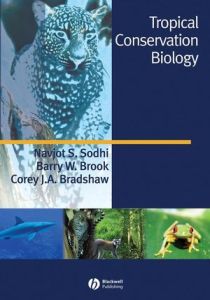
1405150734I’d like to introduce a (relatively) new textbook that my colleagues, Navjot Sodhi and Barry Brook, and I wrote and published last year with Blackwell (now Wiley-Blackwell) Scientific Publishing – Tropical Conservation Biology.

We’re rather proud of this book because it was a timely summary and assessment of the scientific evidence for the degree of devastation facing tropical biodiversity today and in the future. I’ve summarised some of the main issues in a previous post covering a paper we have ‘in press’ that was born of the text book, but obviously the book is a far more detailed account of the problems facing the tropics.

This introductory textbook examines diminishing terrestrial and aquatic habitats in the tropics, covering a broad range of topics including the fate of the coral reefs; the impact of agriculture, urbanisation, and logging on habitat depletion; and the effects of fire on plants and animal survival.

One of the highlights of the book is that each chapter (see below) Includes case studies and interviews with prominent conservation scientists to help situate key concepts in a real world context: Norman Myers (Chapter 1), Gretchen Daily (Chapter 2), William Laurance (Chapter 3), Mark Cochrane (Chapter 4), Daniel Simberloff (Chapter 5), Bruce Campbell (Chapter 6), Daniel Pauly (Chapter 7), Stephen Schneider (Chapter 8), Stuart Pimm (Chapter 9) and Peter Raven (Chapter 10). These biographies are followed by a brief set of questions and answers that focus on some of the most pertinent and pressing issues in tropical conservation biology today. It is our intention that readers of Tropical Conservation Biology will benefit from the knowledge and be inspired by the passion of these renowned conservation experts.

TABLE OF CONTENTS

  1. Chapter 1: Diminishing habitats in regions of high biodiversity. We report on the loss of tropical habitats across the tropics (e.g., deforestation rates). We also highlight the drivers of habitat loss such as human population expansion. Finally, we identify the areas in immediate need of conservation action by elucidating the concept of biodiversity hotspots. Read the rest of this entry »


Assessing Conservation Actions

3 09 2008

A good post from Tim Bean (Berkeley) over at ConsBlog.org – one for the Potential list:

12353889-stock-market-growth-and-success-with-a-growing-green-tree-in-the-shape-of-a-stock-investment-graph-s

This paper in press at Conservation Letters by Haines et al. presents a novel method for assessing conservation actions. There’s been quite a bit of work done in the past decade, particularly by NGOs, to develop methods to assess whether their actions have actually succeeded; this work was spear-headed in particular by Nick Salafsky and his Foundations of Success. This paper suggests that many of conservation biggest problems can be monitored with spatial datasets and proposes using the Human Footprint as a basis for such monitoring. The Human Footprint is, in essence, a collection of spatial datasets that holistically represent the collective anthropogenic impact on the land. In their paper, Haines et al. suggest that by tracking these spatial datasets through time in a paired way – conservation action site randomly paired with a control – we can get a better handle on whether the particular action was successful. The nice thing about the paper is how clear-eyed it is about what is and is not possible using this approach:

The human footprint is a spatially explicit approach to conservation planning that may serve as an effective visual medium to public audiences and stakeholders worldwide by simplifying the presentation of complex information.

(This is always the last, best resort for spatial analysts: even if the model isn’t perfect, it’s a great communication tool. ) But they also warn:

Spatial data rarely produce a complete picture of what negative impacts are occurring because human footprint data are not well-suited to track anthropogenic impacts that lack a spatial signature…[e.g.] the spread of some chemical pollutants, invasive species, diseases, and impacts of poaching…

Although I have to disagree partially with these particulars – presence of roads is often a very good correlative of poaching – their main point is an important one to consider. How well does a spatial model of human influence catch these hidden factors? A few years ago I did an informal (and sadly never completed) analysis of invasive plants and the Human Footprint and found that they were actually fairly well correlated. You could also argue that disease may be higher amongst individuals that are negatively impacted by the presence of humans. There’s plenty of opportunity here for further exploration.

Thanks, Tim.

Add to FacebookAdd to NewsvineAdd to DiggAdd to Del.icio.usAdd to StumbleuponAdd to RedditAdd to BlinklistAdd to Ma.gnoliaAdd to TechnoratiAdd to Furl


Classics: The Living Dead

30 08 2008

‘Classics’ is a category of posts highlighting research that has made a real difference to biodiversity conservation. All posts in this category will be permanently displayed on the Classics page of ConservationBytes.com

Zombie_ElephantTilman, D., May, R.M., Lehman, C.L., Nowak, M.A. (1994) Habitat destruction and the extinction debt. Nature 371, 65-66

In my opinion, this is truly a conservation classic because it shatters optimistic notions that extinction is something only rarely the consequence of human activities (see relevant post here). The concept of ‘extinction debt‘ is pretty simple – as habitats become increasingly fragmented, long-lived species that are reproductively isolated from conspecifics may take generations to die off (e.g., large trees in forest fragments). This gives rise to a higher number of species than would be otherwise expected for the size of the fragment, and the false impression that many species can persist in habitat patches that are too small to sustain minimum viable populations.

These ‘living dead‘ or ‘zombie‘ species are therefore committed to extinction regardless of whether habitat loss is arrested or reversed. Only by assisted dispersal and/or reproduction can such species survive (an extremely rare event).

Why has this been important? Well, neglecting the extinction debt is one reason why some people have over-estimated the value of fragmented and secondary forests in guarding species against extinction (see relevant example here for the tropics and Brook et al. 2006). It basically means that biological communities are much less resilient to fragmentation than would otherwise be expected given data on species presence collected shortly after the main habitat degradation or destruction event. To appreciate fully the extent of expected extinctions may take generations (e.g., hundreds of years) to come to light, giving us yet another tool in the quest to minimise habitat loss and fragmentation.

CJA Bradshaw

Add to FacebookAdd to NewsvineAdd to DiggAdd to Del.icio.usAdd to StumbleuponAdd to RedditAdd to BlinklistAdd to Ma.gnoliaAdd to TechnoratiAdd to Furl


Show me the (conservation) evidence

29 08 2008

Guest post from Professor William J. Sutherland, Miriam Rothschild Chair in Conservation Biology, Department of Zoology, University of Cambridge, Cambridge CB2 3EJ, United Kingdom:

We carry out research in conservation largely under the belief that this is making a difference to the planet. However, research (e.g., Sutherland et al. 2004) shows that little of this research is used in practice. There are many good reasons why practitioners only use a small fraction of the available science: most do not have access to the scientific search engines, they usually have very limited access to scientific journals and most importantly, they usually do not have the time or training to search the literature. Another important problem is that the most important source of information is the experience of practitioners, but this is rarely quantified or documented.

To help overcome these problems the website ConservationEvidence.com has been established. It has two main objectives: (1) providing a means for practitioners to document their experience through the online journal Conservation Evidence and (2) summarising the global literature including unpublished report and papers in languages other than English. Currently (August 2008), this has details of over 1200 interventions but the aim is to increase this to 10,000 interventions. The next stage, which is currently being worked on, is then to provide summaries of the consequences of different interventions.

The ambitious objective is to change the way in which global conservation practice is carried out so that practitioners have ready access to information on the effectiveness of interventions including the experience of other practitioners.

Add to FacebookAdd to NewsvineAdd to DiggAdd to Del.icio.usAdd to StumbleuponAdd to RedditAdd to BlinklistAdd to Ma.gnoliaAdd to TechnoratiAdd to Furl


Cost, not biodiversity, dictates decision to conserve

26 08 2008

One for the Potential list:

originalEuroGreen_LogoI’ve just read a great new paper by Bode et al. (2008) entitled Cost-effective global conservation spending is robust to taxonomic group.

After the hugely influential biodiversity ‘hotspot concept hit the global stage, there was a series of subsequent research papers examining just how we should measure the ‘biodiversity’ component of areas needing to be conserved (and invested in). The problem was that depending on which taxa you looked at, and what measure of ‘biodiversity’ you used (e.g., species richness, endemism, latent threat, evolutionary potential, functional redundancy), the priority list of where, how much and when to invest in conservation differed quite a lot. In other words, the congruency among listed areas was rather low (summarised nicely in Thomas Brooks‘ paper in Science Global biodiversity conservation priorities and examined also by Orme et al. 2005). This causes all sorts of problems for conservation investment planners – what to invest in and where?

Bode and colleagues’ newest paper demonstrates at least for endemism, the taxon on which you base your assessment is much less important for maximising species conservation than factors such as land cost and the degree of threat (e.g., as measured by the IUCN Red List).

Of course, their findings could be considered too simplistic because they don’t (couldn’t) evaluate other potentially more important components of ‘biodiversity’ such as genetic history (evolutionary potential) or ecological functional redundancy (the idea that a species becomes more important to conserve if no other species provide the same ecosystem functions); however, I think this paper is something of a landmark in that it shows that ‘socio-economic’ uncertainty generally outweighs uncertainty due to biodiversity measures. The long and short of this is that planners should start investing if there is evidence of heightened threat and land is cheap.

A few other missing bits means that the paper is more heuristic than prescriptive (something the authors state right up front). There is no attempt to take biodiversity, threat or land cost changes arising from climate change into account (see relevant post here), so some of the priorities are questionable. Related to this is the idea of latent risk (see relevant paper by Cardillo et al. 2006) – what’s not necessarily threatened now but likely will be in the very near future. Also, only a small percentage of species are listed in the IUCN Red List (see relevant post here), so perhaps we’re missing some important trends. Finally, I had to note that almost all the priority areas outlined in the paper happened to be in the tropics, which stands to reason given the current and ongoing extinction crisis occurring in this realm. See a more detailed post on ‘tropical turmoil‘.

Despite the caveats, I think this could provide a way forward to the conservation planning stalemate.

CJA Bradshaw

Add to FacebookAdd to NewsvineAdd to DiggAdd to Del.icio.usAdd to StumbleuponAdd to RedditAdd to BlinklistAdd to Ma.gnoliaAdd to TechnoratiAdd to Furl


The extinction vortex

25 08 2008

One for the Potential list:

vortexFirst coined by Gilpin & Soulé in 1986, the extinction vortex is the term used to describe the process that declining populations undergo when”a mutual reinforcement occurs among biotic and abiotic processes that drives population size downward to extinction” (Brook, Sodhi & Bradshaw 2008).

Although several types of ‘vortices’ were labelled by Gilpin & Soulé, the concept was subsequently simplified by Caughley (1994) in his famous paper on the declining and small population paradigms, but only truly quantified for the first time by Fagan & Holmes (2006) in their Ecology Letters paper entitled Quantifying the extinction vortex.

Fagan and Holmes compiled a small time-series database of ten vertebrate species (two mammals, five birds, two reptiles and a fish) whose final extinction was witnessed via monitoring. They confirmed that the time to extinction scales to the logarithm of population size. In other words, as populations decline, the time elapsing before extinction occurs becomes rapidly (exponentially) smaller and smaller. They also found greater rates of population decline nearer to the time of extinction than earlier in the population’s history, confirming the expectation that genetic deterioration contributes to a general corrosion of individual performance (fitness). Finally, they found that the variability in abundance was also highest as populations approached extinction, irrespective of population size, thus demonstrating indirectly that random environmental fluctuations take over to cause the final extinction regardless of what caused the population to decline in the first place.

What does this mean for conservation efforts? It was fundamentally the first empirical demonstration that the theory of accelerating extinction proneness occurs as populations decline, meaning that all attempts must be made to ensure large population sizes if there is any chance of maintaining long-term persistence. This relates to the minimum viable population size concept that should underscore each and every recovery and target set or desired for any population in trouble or under conservation scrutiny.

CJA Bradshaw

Add to FacebookAdd to NewsvineAdd to DiggAdd to Del.icio.usAdd to StumbleuponAdd to RedditAdd to BlinklistAdd to Ma.gnoliaAdd to TechnoratiAdd to Furl