The Biodiversity Club

11 10 2012

The International Union for Conservation of Nature (IUCN) Red List of Threatened Species uses 5 quantitative criteria to allocate species to 9 categories of extinction risk. The criteria are based on ecological theory (1, 2), and are therefore subject to modification and critique. With pros and cons (3-6), and intrigues (7, 8), the list has established itself as an important tool for assessing the state of biodiversity globally and, more recently, regionally.

We all carry codes of some sort; that is, unique alphanumeric labels identifying our membership in a collectivity. Some of those codes (e.g., a videoclub customer number) make sense only locally, some do internationally (e.g., passport number). Species are also members of the club of biodiversity and, by virtue of our modern concern for their conservation, the status of many taxa has been allocated to alphanumeric categories under different rationales such as extinction risk or trading schemes (5, 9-13). Contradiction emerges when taxa might be threatened locally but not internationally, or vice versa.

In the journal Biological Conservation, a recent paper (14) has echoed the problem for the seagrass Zostera muelleri. This marine phanerogam occurs in Australia, New Zealand and Papua New Guinea, and is listed as “Least Concern” (LC) with “Stable” population trend by the IUCN. Matheson et al. (14) stated that such status neglects the “substantial loss” of seagrass habitats in New Zealand, and that the attribution of “prolific seed production” to the species reflects the IUCN assessment bias towards Australian populations. The IUCN Seagrass Red List Authority, Fred Short, responded (15) that IUCN species ratings indicate global status (i.e., not representative for individual countries) and that, based on available quantitative data and expert opinion, the declines of Z. muelleri are localised and offset by stable or expanding populations throughout its range. Read the rest of this entry »




Tropical protected areas still in trouble

8 10 2012

© P. Harris

There’s nothing like a bit of good, intelligent and respectful debate in science.

After the publication in Nature of our paper on tropical protected areas (Averting biodiversity collapse in tropical forest protected areas), some interesting discussion has ensued regarding some of our assumptions and validations.

As is their wont, Nature declined to publish these comments (and our responses) in the journal itself, but the new commenting feature at Nature.com allowed the exchange to be published online with the paper. Cognisant that probably few people will read this exchange, Bill Laurance and I decided to reproduce them here in full for your intellectual pleasure. Any further comments? We’d be keen to hear them.

COMMENT #1 (by Hari Sridhar of the Centre for Ecological Sciences at the Indian Institute of Science in Bangalore)

In this paper, Laurance and co-authors have tapped the expert opinions of ‘veteran field biologists and environmental scientists’ to understand the health of protected areas in the tropics worldwide. This is a novel and interesting approach and the dataset they have gathered is very impressive. Given that expert opinion can be subject to all kinds of biases and errors, it is crucial to demonstrate that expert opinion matches empirical reality. While the authors have tried to do this by comparing their results with empirical time-series datasets, I argue that their comparison does not serve the purpose of an independent validation.

Using 59 available time-series datasets from 37 sources (journal papers, books, reports etc.), the authors find a fairly good match between expert opinion and empirical data (in 51/59 cases, expert opinion matched empirically-derived trend). For this comparison to serve as an independent validation, it is crucial that the experts were unaware of the empirical trends at the time of the interviews. However, this is unlikely to be true because, in most cases, the experts themselves were involved in the collection of the time-series datasets (at least 43/59 to my knowledge, from a scan of references in Supplementary Table 1). In other words, the same experts whose opinions were being validated were involved in collection of the data used for validation.

OUR RESPONSE (William F. Laurance, Corey J. A. Bradshaw, Susan G. Laurance)

Sridhar raises a relevant point but one that, on careful examination, does not weaken our validation analysis. Read the rest of this entry »


Why do conservation scientists get out of bed?

1 10 2012

1*Zd2mpLgOIbJuLg3CqH8BQwI have, on many occasions, been faced with a difficult question after giving a public lecture. The question is philosophical in nature (and I was never very good at philosophy – just ask my IB philosophy teacher), hence its unusually complicated implications. The question goes something like this:

Given what you know about the state of the world – the decline in biodiversity, ecosystem services and our own health and welfare – how do you manage to get out of bed in the morning and go to work?

Yes, I can be a little, shall we say, ‘gloomy’ when I give a public lecture; I don’t tend to hold back much when it comes to just how much we’ve f%$ked over our only home, or why we continue to shit in our own (or in many cases, someone else’s) kitchen. It’s not that I get some sick-and-twisted pleasure out of seeing people in the front row shake their heads and ‘tsk-tsk’ their way through my presentation, but I do feel that as an ‘expert’ (ascribe whatever meaning to that descriptor you choose), I have a certain duty to inform non-experts about what the data say.

And if you’ve read even a handful of the posts on this site, you’ll understand that picture I paint isn’t full of roses and children’s smiling faces. A quick list of recent posts might remind you:

And so on. I agree – pretty depressing. Read the rest of this entry »


No-extinction targets are destined to fail

21 09 2012

I’ve been meaning to write about this for a while, and now finally I have been given the opportunity to put my ideas ‘down on paper’ (seems like a bit of an old-fashioned expression these days). Now this post might strike some as overly parochial because it concerns the state in which I live, but the concept applies to every jurisdiction that passes laws designed to protect biodiversity. So please look beyond my navel and place the example within your own specific context.

As CB readers will appreciate, I am firmly in support of the application of conservation triage – that is, the intelligent, objective and realistic way of attributing finite resources to minimise extinctions for the greatest number of (‘important’) species. Note that deciding which species are ‘important’ is the only fly in the unguent here, with ‘importance’ being defined inter alia as having a large range (to encompass many other species simultaneously), having an important ecological function or ecosystem service, representing rare genotypes, or being iconic (such that people become interested in investing to offset extinction.

But without getting into the specifics of triage per se, a related issue is how we set environmental policy targets. While it’s a lovely, utopian pipe dream that somehow our consumptive 7-billion-and-growing human population will somehow retract its massive ecological footprint and be able to save all species from extinction, we all know that this is irrevocably  fantastical.

So when legislation is passed that is clearly unattainable, why do we accept it as realistic? My case in point is South Australia’s ‘No Species Loss Strategy‘ (you can download the entire 7.3 Mb document here) that aims to

“…lose no more species in South Australia, whether they be on land, in rivers, creeks, lakes and estuaries or in the sea.”

When I first learned of the Strategy, I instantly thought to myself that while the aims are laudable, and many of the actions proposed are good ones, the entire policy is rendered toothless by the small issue of being impossible. Read the rest of this entry »


Cartoon guide to biodiversity loss XVI

12 09 2012

While in transit between tropical and temperate Australia, here’s the latest batch of 6 biodiversity cartoons (see full stock of previous ‘Cartoon guide to biodiversity loss’ compendia here).

Read the rest of this entry »


You’re not even remotely concerned enough

31 08 2012

I’ve just returned from a 6-week trip to the United States and I am now dealing with the intensity of things left undone for so long [sigh]. But that trip was interesting for many reasons. First, and as I’ve already posted, I finished a book with Paul Ehrlich that will be out sometime early in 2013 (but I won’t deal with that here). I also attended an interesting, if slightly confusing, conference on ecosystem services. And finally, I had the pleasure of meeting Tony Barnosky in person, and we decided that we should definitely collaborate on a few things.

Another thing that struck me – and this happens no matter how often I visit the U.S., is just how completely insane that country’s politics are. The extremist, libertarian, plutotheocratic bullshit spewed by the far right to the detriment of the very people who support them is enough to make you vomit. And this startling and thoroughly backward world-view is now starting to penetrate more and more into Australian society and politics. From an environmental perspective, it’s a continuation of a downhill slide that started with Reagan’s destruction of environmentalism in the U.S., and Joh Bjelke-Petersen‘s war on the environment in Australia, and will only continue to get worse.

Of course, the main victim of reason in all these polemic politics is that we are doing next to nothing to mitigate horrendous climate disruption. Only yesterday, George Monbiot was lamenting (nay, pleading) that our governments are doing practically nil to avoid what can only be described as the greatest threat to our way of life since the World War II – in fact, the War and its associated holocaust is small bikkies compared to what awaits us.

And this is the most stressing part – even people who choose to use their brains and accept that we have an immense, global problem on our hands generally are not even remotely concerned enough. Read the rest of this entry »


Degraded States of Ausmerica

20 08 2012

You might remember that I’ve been in California for several weeks now. The principal reason for my visit was to finish a book that Paul Ehrlich and I started last year. So, without the major distractions of everyday university life, I’ve spent much of my time lately at Stanford University in a little office next to Paul’s trying to finish (I also attended a conference in Portland, Oregon).

Yesterday, we wrote the last few paragraphs. A giant gorilla has now lumbered its way off my back.

So. What is the book about, you might ask? I can’t give away too many details, but I will give a few teasers. The book is called, at least for now, ‘Oz & US’, which is a bit of a play of words. In the book we contrast the environmental histories, current state of affairs, and likely futures of our respective nations. It’s written in a popular style so that non-specialists can learn a little something about how bad the environment has become in our two countries.

At first glance, one might wonder why we chose to contrast the U.S. and Australia – they are quite different beasts, indeed. Their histories are immensely different, from the aboriginal populations, through to European colonisation (timing and drivers), biological (including agricultural) productivities, carrying capacities, population sizes and politics. But these differences belie too many convergences in the environmental states of each nation – we now both have increasingly degraded environments, we have both pushed the boundaries of our carrying capacities, and our environmental politics are in a shambles. In other words, despite having started with completely different conditions, our toll on nature’s life-support systems is now remarkably similar.

And anyone who knows Paul and me will appreciate that the book is completely irreverent. We have taken off the gloves in preparation for a bare-knuckle fight with the plutocrats and theocrats now threatening the lives of our grandchildren. We pull no punches here. Read the rest of this entry »


The invisible hand of ecosystem services

4 08 2012

I’ve just spent nearly an entire week trying to get my head around ecosystem services (ES).

You’d think that would have been a given based on my experience, my research, my writings and the fact that I’ve just spent the last week with 400 ES specialists from around the world at the 5th international Ecosystem Services Partnership (ESP) Conference in Portland, Oregon, USA.

Well, prior to this week I thought I knew what ES were, but now I think I’m just a little more confused.

Of course, I’m not talking about the concept of ES or what they are (hell, I’ve written enough about them on this blog and in my papers); my problem is understanding how we as society end up valuing them in a practical, sensible and feasible way.

So I’m going to describe the ESP Conference as I saw it, and not necessarily in chronological order.

First up is the term ‘ecosystem services’ itself – horrible name, and something rammed home again after attending the conference. Most people on the planet that are not scientists (that would be nearly everyone) just might have the most tenuous and ethereal of grasps of ‘ecosystem’ in the first place, and I’d bet that 99 % of most undergraduate students couldn’t provide a comprehensive description. This is because ecosystems are mind-bogglingly, chaotically and awesomely complex. Just ask any ecosystem ecologist.

The second part of the term – services – is particularly offensive in its presumption and arrogance. It’s not like you ring up an ecosystem and get it to clean your carpets, or fill your water tank or gas cylinder. No, the natural world did not evolve to pamper humanity; we are merely part of it (and bloody efficient at modifying it, I might add).

So try to sell this ‘incredibly complex thingy’ that is ‘there to do some (intangible) shit for us’ to the public, policy makers and politicians, and you mostly get a dog’s regurgitated breakfast and some blank, slack-jawed stares. Read the rest of this entry »


Threats to biodiversity insurance from protected areas

26 07 2012

A red-eyed tree frog (Agalychnis callidryas) from Barro Colorado Island in Panama. This small island, just 1500 ha (3700 acres) in area, is one of the tropical protected areas evaluated in this study (photo © Christian Ziegler <zieglerphoto@yahoo.co>, Smithsonian Tropical Research Institute). Note: It is prohibited for any third party or agency to use or license this image; any use other then described above shall be subject to usage fees as determined solely by the photographer.

Much of conservation science boils down to good decision making: when, where and how we ‘set aside’ terrestrial or marine areas for specific protection against the ravages of human endeavour. This is the basis for the entire sub-discipline of conservation planning and prioritisation, and features prominantly in most aspects of applied conservation and restoration.

In other words, we do all this science to determine where we should emplace protected areas, lobby for getting more land and sea set aside so that we have ‘representative’ amounts (i.e., to prevent extinctions), and argue over the best way to manage these areas once established.

But what if this pinnacle of conservation achievement is itself under threat? What if many of our protected areas are struggling to insure biodiversity against human consumption? Well, it’d be a scary prospect, to say the least.

Think of it this way. We buy insurance policies to buffer our investments against tragedy; this applies to everything from our houses, worldly possessions, cars, livestock, health, to forest carbon stores. We buy the policies to give us peace of mind that in the event of a disaster, we’ll be bailed out of the mess with a much-needed cash injection. But what if following the disaster we learn that the policy is no good? What if there isn’t enough pay-out to fix the mess?

In biodiversity conservation, our ‘insurance’ is largely provided by protected areas. We believe that come what may, at least in these (relatively) rare places, biodiversity will persist despite our relentless consumerism.

Unfortunately, what we believe isn’t necessarily true.

Today I’m both proud and alarmed to present our latest research on the performance of tropical protected areas around the world. Published online in Nature this morning (evening, for you Europeans) is the 216-author (yes, that is correct – 216 of us) paper entitled “Averting biodiversity collapse in tropical forest protected areas” led by Bill Laurance. Read the rest of this entry »


Costs and benefits of a carbon economy for conservation

12 06 2012

I’ve had the good fortune of being involved now in a several endeavours funded by the Australian Centre for Ecological Analysis and Synthesis (ACEAS); two of those were workshops targeting specific questions regarding estimating modern extinction rates and examining the effects of genetic bottlenecks on Australian biota. The third was a bit different, to say the least – it was a little along the lines of ‘build it, and they will come‘. In other words, what happens when you bung 40 loosely associated researchers in a room for two days? Does anything of substance result, or does it degenerate into a mere talk-fest. I’m happy to say the former. The details of the ACEAS ‘Grand Workshop‘ are now being finalised in a paper that should be submitted by the end of the month. The ACEAS report is reproduced below.

The Grand ACEAS Workshop was something of an experiment: what will happen when we bring 30 of Australia’s top scientists working on land management issues into the same room?

The Grand Workshop participants came from academia, research institutions and the government, and had all received ACEAS funding for working groups. David Keith, Ted Lefroy, Jasmyn Lynch, Wayne Meyer and Dick Williams were amongst the attendees of the two-day workshop.

And when this group of people came together wanting to analyse and synthesise ecological data, great things happened.

“We decided to focus on how carbon pricing legislation will affect land use change and how will that spill over into biodiversity persistence”, said Professor Corey Bradshaw, Director of Ecological Modelling at The University of Adelaide, who led the synthesis activity at the Grand ACEAS Workshop.

“Will carbon pricing lead to good outcomes for biodiversity, or negative ones, or will it have no bearing whatsoever?”

The workshop participants broke into five groups to discuss how the carbon tax legislation will change land use when it is introduced in July 2012, and the potential impact on biodiversity.

Some of the questions asked included:

  • Is it enough simply to allow plants to re-grow to be eligible for carbon credits?
  • How will an increase in forestry plantations impact biodiversity, water catchments and fire regimes?
  • Will there be more kangaroo grazing to reduce methane emissions and erosion, replacing hard-hoofed livestock?
  • Can you receive carbon credits for shooting large feral animals like goats, camels, deer and boars?

The groups found many opportunities for positive biodiversity outcomes with the carbon sequestration activities encouraged by carbon pricing, but there are also many potential ‘bio-perversities’. Read the rest of this entry »


Get boreal

7 06 2012

I’ve been a little quiet this last week because I’ve had to travel to the other side of the planet for what turned out to be a very interesting and scientifically lucrative workshop. After travelling 31 hours from Adelaide to Umeå in northern Sweden, I wondered to myself if it was going to be worth it for a 2.5-day workshop on a little island (Norrbyskär) in the Baltic Sea (which, as it turned out, didn’t have internet access).

The answer is a categorical ‘yes’!

Many of you know that I’ve dabbled in boreal forest conservation in the past, but I could never claim any real expertise in the area. Hence it came as something of a shock when Jon Moen of Umeå University asked me to attend a specialist workshop focused loosely on making the plight and importance of the boreal forest more widely acknowledged. I dragged my feet initially, but Jon convinced me that I could add something to the mix.

It was a small workshop, but well-represented by all boreal countries save Norway (i.e., we had Russians, Swedes, Finns, Canadians and Americans – this Australian was indeed the odd one out). We also had a wide array of expertise, from carbon accountants, political scientists, political economists, native cultures experts, ecologists to foresters. Our mandate – justify why we should pay more attention to this globally important region.

Just how important is the boreal forest? We managed to unearth some little-appreciated facts: Read the rest of this entry »


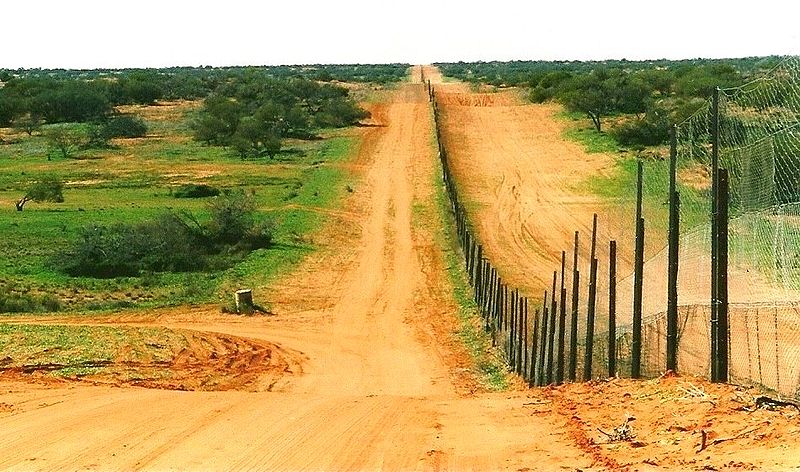
Can Australia afford the dingo fence?

18 05 2012

I wrote this last night with Euan Ritchie of Deakin University in response to some pretty shoddy journalism that misrepresented my comments (and Euan’s work). Our article appeared first in The Conversation this morning (see original article).

We feel we have to set the record straight after some of our (Bradshaw’s) comments were taken grossly out of context, or not considered at all (Ritchie’s). A bubbling kerfuffle in the media over the last week compels us to establish some facts about dingoes in Australia, and more importantly, about how we as a nation choose to manage them.

A small article in the News Ltd. Adelaide Advertiser appeared on 11 May in which one of us (Bradshaw) was quoted as advocating the removal of the dingo fence because it was not “cost effective” (sic). Despite nearly 20 minutes on the telephone explaining to the paper the complexities of feral animal management, the role of dingoes in suppressing feral predators, and the “costs” associated with biodiversity enhancement and feral control, there wasn’t a single mention of any of this background or justification.

Another News Ltd. article denouncing Ritchie’s work on the role of predators in Australian ecosystems appeared in The Weekly Times the day before, to which Ritchie responded in full.

So it’s damage control, and mainly because we want to state categorically that our opinion is ours alone, and not that of our respective universities, schools, institutes or even Biosecurity SA (which some have claimed or insinuated, falsely, that we represent). Biosecurity SA is responsible for, inter alia, the dingo fence in South Australia. Although our opinions differ on its role, we are deeply impressed, grateful and supportive of their work in defending us from biological problems. Read the rest of this entry »


Conservation value of paddy wagon currency: civil disobedience by scientists

12 05 2012

A couple of years ago, James Hansen visited Adelaide and I was fortunate enough to attend dinner with him and his lovely wife Anniek. A truly inspiring scientist in all respects. His academic track record is unbeatable, and he puts his money where his mouth is in terms of climate change activism.

In a similar vein, but something I’m not used to publishing on Conservation Bytes, my colleague Alejandro Frid requested I publish his essay here. I’m a firm advocate for standing up for evidence-based policy, and Alejandro (inspired by James Hansen), shows us how it’s done.

I am addressing this letter to colleagues with research careers because I am compelled to share what I learned recently by crossing a new threshold. For years I have been talking and writing about the climate change crisis. As intellectually rewarding and therapeutic as it has been, these letters to government, meetings with Members of [the Canadian] Parliament, and articles for conservation-minded audiences have accomplished nothing of substance.

Others feel similarly. Prominent academics, fed up with governments that ignore science and heed the priorities of corporations, have turned to civil disobedience. James Hansen, a senior climate scientist with NASA’s Goddard Institute for Space Studies, led by example last year when he got himself arrested in front of the USA’s Whitehouse to protest the proposed Keystone Pipeline that would carry oil from the Alberta Tar Sands to the USA. That was his third arrest in three years; the previous two involved civil disobedience against the mining of coal, a huge contributor to greenhouse gases.

In the wake of Hansen’s arrests, on 05 May 2012, Mark Jaccard—a prominent economist, IPCC member, and professor at the Energy and Materials Research Group of Simon Fraser University—got himself arrested in White Rock, British Columbia, for blocking a coal train carrying US coal for export to China via British Columbia ports. There were 12 others with Jaccard, among them a man in his 80s, several men in their 60s and 70s, and a few youngsters like myself and my good friend Lynne Quarmby. Lynne happens to be chair of the Department of Molecular Biology at Simon Fraser University.

Shortly before the arrest, as we sat on the tracks, I told Jaccard that I had been teetering on the decision to come, but his announcement to participate sealed my decision. Jaccard replied that, given what he knew about the climate crisis and the consequences of inaction, it was impossible for him to not be here. He was echoing sentiments shared by all 13 of us on the tracks. Later, as we were released from jail, Jaccard wondered out loud whether the arrest would affect his ability to travel for work. Then he said something to the effect that, “You can forever come up with excuses, or you can get real and just do it.”

Read the rest of this entry »


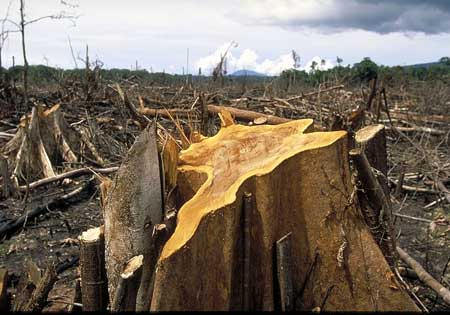
If a tree falls… preventing deforestation with insurance

3 05 2012

As CB readers will know, I’ve reported a few times on our iREDD idea, and it got a little pick-up overseas. Here’s a great article by Rachel Nuwer covering the concept, published in Ecoimagination.com.

Almost everything we own – our houses and cars and our very health – is insured. It works on a simple principal: the higher the risk, the higher the premium. It’s an age-old concept that ecological modelers have decided to apply to a new area: forest preservation.

A new proposal, published in the journal Conservation Letters, would create forest insurance to make the U.N. forest preservation program Reduced Emissions from Deforestation and forest Degradation, or REDD, more effective. REDD is generally supposed to function by paying developing countries to protect their forests in exchange for carbon pollution credits. Currently the program has 42 partner countries across the globe. The program is crucial to the fight against climate change since deforestation and forest degradation accounts for about 20 percent of global greenhouse gas emissions and threatens biodiversity.

“REDD is a fantastic idea,” said Corey Bradshaw, director of ecological modeling at the University of Adelaide and co-author of the study. “You get a carbon advantage and biodiversity doesn’t get wiped out at the same time, it seems perfect.”

But it has a few major flaws that the insurance scheme, called iREDD, seeks to remedy.

REDD only works if the parties are honest and stick to the agreement. Bradshaw doesn’t have much faith that will happen. “If there’s a way to cheat, people will cheat. That’s the nature of all life, not just humans, but we excel at it,” he said. If, for example, a country is paid to conserve one forest but moves its deforestation efforts to an adjacent forest in order to get both money and timber, in terms of carbon offsets, that transaction was a failure. This phenomenon is called “leakage.”

Carbon-capture also only works if it’s maintained indefinitely. If a country accepts money for ten years and then cuts its forest the day after the agreement expires, then all of that conservation was for naught. This issue is called “permanence,” usually translated into an arbitrarily defined period of time set by countries in terms of decades or centuries. Read the rest of this entry »


To corridor, or not to corridor: size is the question

24 04 2012

I’ve just read a really interesting post by David Pannell from the University of Western Australia discussing the benefits (or lack thereof) of wildlife ‘corridors’. I’d like to elaborate on a few key issues, and introduce the most important aspect that really hasn’t been mentioned.

Some of you might be aware that the Australian Commonwealth Government has just released its Draft National Wildlife Corridors Plan for public comment, but many of you might not really know what a ‘corridor’ constitutes.

Wildlife or biodiversity ‘corridors’ have been around for a long time, at least in terms of proposals. The idea is fairly simple to conceive, but very difficult to implement in practice.

At least for as long as I’ve been in the conservation biology biz, ‘corridors’ have been proffered as one really good way to make broad-scale landscape restoration plausible and effective for (mainly) forest-dwelling species which have copped the worst of deforestation trends around Australia and the world. The idea is that because of intense habitat fragmentation, isolated patches of primary (or at least, reasonably intact secondary) forest can be linked by planting some sort of long corridor of similar habitat between them. Then, all the little creatures can merrily make their way back and forth between the patches, thus rescuing each other from extinction via migration. Read the rest of this entry »


Take a leaf from insurance industry’s book

18 04 2012

Just a quick one rehashing today’s media release on the iREDD paper I blogged about a while back. The full, online version is available upon request. Stay tuned for media coverage.

A group of environmental scientists say a problem-ridden economic model designed to slow deforestation can be improved by applying key concepts from the insurance industry.

REDD (Reduced Emissions from Deforestation and forest Degradation) is a UN-promoted scheme that allows countries to trade in carbon credits to keep forests intact. It is mainly targeted at developing nations where deforestation and exploitation are a major threat.

In a paper published online in the journal Conservation Letters, ecology researchers from Australia and South Africa argue that REDD projects can suffer from three major problems. They have proposed strengthening the scheme by using insurance policies and premiums, creating a new scheme known as iREDD.

“The idea of paying a nation to protect its forests in exchange for carbon pollution offsets can potentially reduce overall emissions by keeping the trees alive, and ensure a lot of associated biodiversity gets caught up in the conservation process,” says Professor Corey Bradshaw,, Director of Ecological Modelling at the University of Adelaide’s Environment Institute and a senior author of the paper.

“However, there are three main problems with REDD: these are known as leakage, permanence and additionality.” Read the rest of this entry »


The wounded soldiers of biodiversity

10 04 2012

Here’s another great post from Salvador Herrando-Pérez. It is interesting that he’s chosen an example species that was once (a long, long time ago in a galaxy far, far away) of great interest to me (caribou – see ancient papers a, b, c, d). But that is another story. Take it away, Salva.


Figure 1. Caribou (reindeer) are ungulates weighing up to ~ 100 kg. They live in tundra and taiga in Finland, Greenland, Finland, Norway, Mongolia, Russia, Canada and USA (extinct in Sweden). The species is globally stable (‘Least Concern’, IUCN Red List), but the subspecies of woodland caribou (Rangifer tarandus caribou) is threatened in North America. Schneider and colleagues’ 7 study encompasses ~ 3,000 individuals in 12 herds (75 to 450 individuals per herd), occupying ~ 100.000 km2 of conifer forest and peatland (3,000 to 19,000 km2 per herd). Two ecotypes are recognized regionally22, namely migratory mountain herds (mostly from mountains and foothills in west-central Alberta), and non-migratory boreal herds (mostly from peatlands in central and northern Alberta). The photo shows a group of caribous grazing on subalpine vegetation from Tonquin Valley, Jasper National Park (Alberta, Canada). Photo courtesy of Saakje Hazenberg.

As conservation biology keeps incorporating management and economical principles from other disciplines, it stumbles with paradoxes such that investing on the most threatened components of biodiversity might in turn jeopardize the entire assets of biodiversity.

At the end of 2011, newspapers and TVs echoed an IUCN report cataloguing as ‘extinct’ or ‘near extinct’ several subspecies of rhinos in Asia and Africa. To many, such news might have invoked the topic: “how badly governments do to protect the environment”. However if, to avoid those extinctions, politicians had to deviate funds from other activities, what thoughts would come to the mind of workers whose salaries had to be frozen, school directors whose classroom-roof leakages could not be repaired (e.g., last winter at my niece’s school in Spain), colonels whose last acquisition of ultramodern tanks had to be delayed, or our city council’s department who had to cancel Sting’s next performance.

Thus, there are three unquestionable facts regarding species conservation:

  1. the protection of species costs money;
  2. governments and environmental organisations have limited budgets for a range of activities they deem necessary; and
  3. our way of conserving nature is failing because, despite increasing public/private support and awareness, the rate of destruction of biodiversity is not decelerating1,2.

One of the modern debates among conservationists pivots around how to use resources efficiently3-6. Schneider and colleagues7 have dealt with this question for woodland caribou (Rangifer tarandus) in Canada. A total of 18 populations of this ungulate persist in the Canadian province of Alberta, all undergoing demographic declines due to mining extractions (oil, gas and bitumen), logging and wolf predation. The species is listed as ‘threatened’ regionally and nationally. The Alberta Caribou Recovery Plan (2004-2014) is attempting to protect all herds. Under such a framework, Schneider et al.7 predicted that woodland caribou would be regionally extirpated in less than a century.

Furthermore, they estimated the costs of making each herd viable (Fig. 1), with a triple revelation. To save all herds from extinction would need ~ CA$150,000 million (beyond the available budget). The most threatened herds are among the most expensive to protect (within present management approach). Some herds would be secured through modest investment for two decades. Overall, their study suggests that Alberta’s woodland caribou would be eligible for triage, i.e., at the subpopulation level8. Read the rest of this entry »


Tentacles of destruction

5 04 2012

This last post before Easter is something I’ve thought more and more about over the last few years. I wouldn’t have given it much time in the past, but I’m now convinced roads are one of the humanity’s most destructive devices. Let me explain.

Before I had a good grasp of extinction dynamics, I wouldn’t have attributed much import to the role of roads in conservation. I mean, really, a little road here and there (ok, even a major motorway) couldn’t possibly be a problem? It’s mostly habitat destruction itself, right?

Not exactly. With our work on extinction synergies, I eventually came to realise that roads are some of the first portals to the devastation to come. Read the rest of this entry »


Humans suddenly become intelligent

1 04 2012

Some described it as the “eco-topia”; some believed they had died in the night and awoken in a different universe. Some just stood there gaping stupidly.

Yet the events of 01 April 2012 are real*. Humans suddenly became intelligent.

In an unprecedented emergency UN session this morning, all the world’s countries pledged to an immediate wind-down of the fossil-fuel economy and promised to invest in a rational combination of nuclear and renewable energy sources. Some experts believe the pledge would see a carbon-neutral planet by 2020.

Additionally, the session saw a world-wide pledge to halt all deforestation by 2013, with intensive reforestation programmes implemented immediately.

Family planning would be embraced worldwide, with a concerted effort to see the human population plateau by 2070, and begin declining to a stable 2 billion by 2300. Read the rest of this entry »


Worlds collide: greenwashed development to kill biodiversity

15 03 2012

Another development fiasco that, if it goes ahead, will devastate a Biodiversity Hotspot and ultimately, reduce the livelihood prospects of millions of West Africans.

In yet another move to expose and shame the greedy developers behind another massive (and superlatively greenwashed) oil palm development in the tropics (see our previous Open Letter), Bill Laurance and Josh Linder have organised another Open Letter from some of the world’s top conservation scientists (again, I count myself fortunate to be included in that group) denouncing the project. The press release is below, followed by the letter itself:

Eleven of the world’s top scientists have produced an open letter to the public urging the Cameroon government to stop a giant oil palm plantation that they say will threaten some of Africa’s most important protected areas.

The project, sponsored by a subsidiary of U.S. agribusiness giant Herakles Farms in collaboration with a U.S. nonprofit organization, All for Africa, would span 70,000 hectares (154,000 acres), an area nearly the size of New York City.

“It’s simply frightening in scope,” said Thomas Struhsaker, a leading expert on African primates and rainforest ecology at Duke University in North Carolina, USA, who has worked in the region for nearly a half-century.

The project would destroy a critical forested area that currently links five national parks or protected areas in Cameroon, say the scientists.

“These forests are vital for wildlife, including the African elephant, chimpanzee and drill, all threatened or endangered species,” said anthropologist Joshua Linder of James Madison University in Virginia, USA, who has helped coordinate the protest. “These animals rely on the forests that would be destroyed to survive and move among the parks.”

“This area is a biodiversity hotspot, some of the world’s most biologically important real estate,” said tropical ecologist William Laurance of James Cook University in Australia, who studies threats to wildlife in the Congo Basin.

“There’s no way a project like this would be allowed in most countries, because the price for biodiversity is just too high,” said Laurance.

The project has been promoted in Cameroon as environmentally sustainable, but the scientists heatedly disagree. “Those promoting this project are misleading everyone—especially the people and government of Cameroon,” said Linder. “They claim the forests they want to clear are mostly logged and degraded, but we’ve shown clearly that they include lots of tall, dense forest that’s vital for wildlife and nature conservation.” Read the rest of this entry »