Medieval Canada threatens global biodiversity

25 11 2013

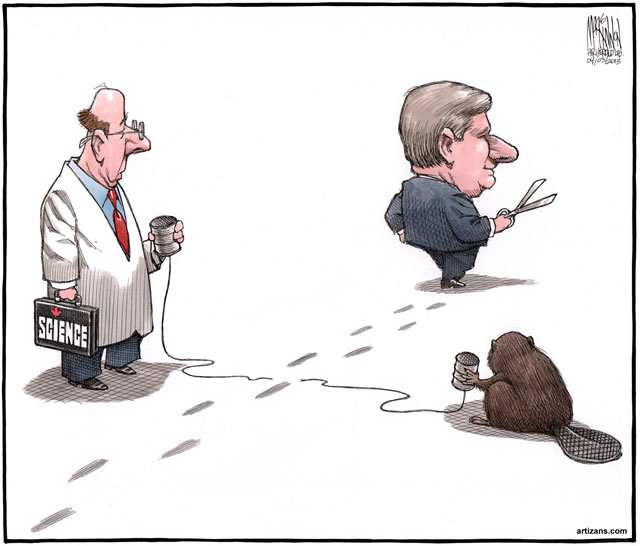
harper_scienceArtists, poets and musicians make us feel, viscerally, how people destroy what they do not understand. Logic and observation led E. O. Wilson to conclude: ‘If people don’t know, they don’t care. If they don’t care, they don’t act.’

Whether you feel it in one of Drew Dillinger’s poems1 or visualise it from the sinuous beauty of mathematical equations, the song remains the same. Scientists are critical to the present and future of the biosphere and humanity, but if — and only if — we are free to communicate our findings to the voting public.

Galileo did not have that right. Scientists in totalitarian regimes of today still lack it. And now, incredibly, some of Canada’s top scientists have lost that right2,3,4.

That is not the Canada I immigrated into. Rewind the tape to 1983. I am a young immigrant, ecstatic that my family has gained entry into the country. We all have mixed feelings; we love our home country of Mexico and are sad to leave it, yet we look forward to being part of Canada’s open-minded and science-loving spirit. The tape runs forward and not all turns out to be as advertised. Still, for the next 23 years Canada remains a damn good place, ruled by governments that, imperfect as they might have been, were not obsessed with burying science.

Fast forward the tape to 2006. Stephen Harper’s newly elected and still ruling Conservative Government hits the ground pounding punches in all directions. Almost immediately, the Conservatives begin to implement one of their many Machiavellian tactics that aim to turn Canada into a petro-state6,7: downgrade science as irrelevant to evidence-based decision making. Ever since, Canadian federal scientists have seen their programs slashed or buried. Those who manage to hang on to their jobs are strictly forbidden to speak about their findings to the media or the public8,9,10,11.

Read the rest of this entry »


Making science matter

14 10 2013
© XKCD

© XKCD

I’ve been home from my last overseas trip now for nearly two weeks, but despite not feeling caught up, it’s high time I report what I was up to.

Some of you who follow my Twitter feed or who saw a CB post about cartoonist Seppo Leinonen know that I was visiting the University of Helsinki to participate in a three-day short course for PhD students entitled ‘Making Science Matter‘. I was so impressed with how well Mar Cabeza and Tomas Roslin put together the course, that I thought I’d share the format with CB readers (just in case any of you out there can be convinced to design a similar course at your university).

I think it’s important first to discuss the philosophy of the course and what it hoped to provide those early-career researchers.

Most science PhD students will tell you once they’ve completed their degree that they feel completely unprepared to launch themselves into the extra-curricular world of communicating their science beyond the ‘traditional’ (peer-reviewed journals) outlets. Swamped with learning how to write concisely and clearly, getting up to speed with the entire body of theory on which their projects are based, mastering advanced modelling and statistical approaches and learning how to apply efficient computer code, it’s no wonder that many students find precious little time for anything else (including families, good food and proper hygiene).

Once they do land that precious post-doctoral fellowship though, they are immediately expected to interact professionally with the media, embrace social media and give fantastic public lectures to engage the uninformed. Right. Read the rest of this entry »


Cartoon guide to biodiversity loss XXI

4 10 2013

Interim post following some mind- and body-stressing international travel. I present another 6 biodiversity cartoons (see full stock of previous ‘Cartoon guide to biodiversity loss’ compendia here).

Read the rest of this entry »


Science immortalised in cartoon Version 2.0

24 09 2013

© Seppo Leinonen

I’m in the middle of participating in a short-course on science communication based at the University of Helsinki‘s Lammi Biological Station (about 1.5 hours north of Helsinki by car). Organised by two fantastic people, Mar Cabeza and Tomas Roslin, it’s an eclectic mix of instruction for (mainly) PhD students on how to promote yourself and your science in print, in media, in illustration, in citizen science and for policy makers.

While we aren’t yet finished, I wanted to report that I had the immense pleasure of finally meeting the immeasurably talented environmental cartoonist, Seppo Leinonen. Not only is he an extremely talented artist and a dedicated environmentalist, he’s just a top bloke.

If you haven’t checked out Seppo.net and his cartoons yet, you should.

This is just a brief post to spruik his fine work, and show off his parting cartoon gift to me: Read the rest of this entry »


Conservation: So easy a child could do it

13 09 2013

child's playI don’t like to talk about my family online. Call me paranoid, but there are a lot of crazy people out there who don’t like what scientists like me are saying (bugger the evidence). Yes, like many climate scientists, I’ve also been threatened. That’s why my personal life remains anonymous except for a select group of people.

But I’ve mentioned my daughter before on this blog, and despite a few people insinuating that I am a bad parent because of what I said, I am happy that I made the point that climate change is a scary concept of which our children must at least be cognisant.

My daughter’s story today is a little less confronting, but equally enlightening. It’s also a little embarrassing as a scientist who has dedicated my entire research career to the discipline of conservation biology.

As a normal six year-old without the ability to refrain from talking – even for a moment – I hear a lot of stories. Many of them are of course fantastical and ridiculous, but those are just part of a healthy, imaginative childhood (I am proud to say though that she is quite clear about the non-existence of fictitious entities like faeries, easter bunnies and gods).

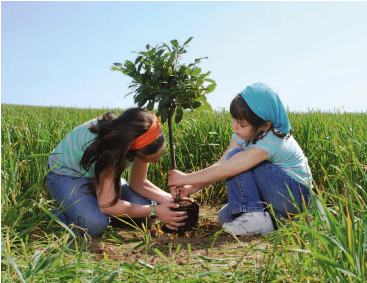
Every once in a while, however, there are snippets of wisdom that ooze out from the cracks in the dross. In the last few months, my daughter has independently and with no prompting from me come up with two pillars of conservation science: (i) protected areas and (ii) biodiversity corridors. Read the rest of this entry »


Cartoon guide to biodiversity loss XX

20 08 2013

I can’t believe I’ve now done twenty of these – another 6 biodiversity cartoons while I’m travelling (see full stock of previous ‘Cartoon guide to biodiversity loss’ compendia here).

Read the rest of this entry »


Guilty until proven innocent

18 07 2013

precautionary principleThe precautionary principle – the idea that one should adopt an approach that minimises risk – is so ingrained in the mind of the conservation scientist that we often forget what it really means, or the reality of its implementation in management and policy. Indeed, it has been written about extensively in the peer-reviewed conservation literature for over 20 years at least (some examples here, here, here and here).

From a purely probabilistic viewpoint, the concept is flawlessly logical in most conservation questions. For example, if a particular by-catch of a threatened species is predicted [from a model] to result in a long-term rate of instantaneous population change (r) of -0.02 to 0.01 [uniform distribution], then even though that interval envelops r = 0, one can see that reducing the harvest rate a little more until the lower bound is greater than zero is a good idea to avoid potentially pushing down the population even more. In this way, our modelling results would recommend a policy that formally incorporates the uncertainty of our predictions without actually trying to make our classically black-and-white laws try to legislate uncertainty directly. Read the rest of this entry »


Relaxed laws imperil Australian wildlife

28 06 2013
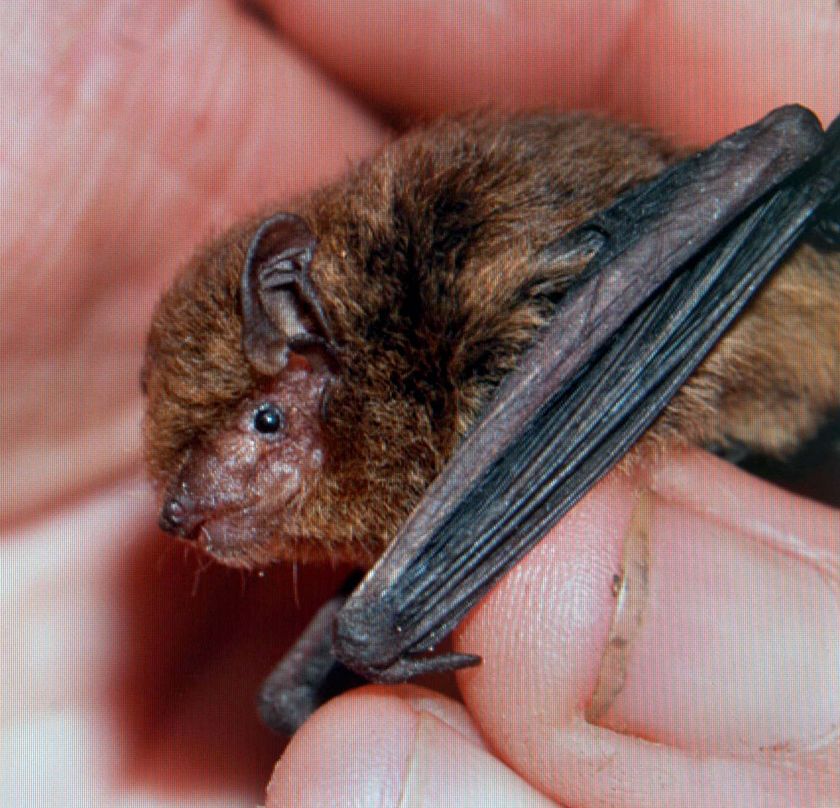
Christmas Island pipistrelle bat (Pipistrellus murrayi). © M. Schultz

Christmas Island pipistrelle bat (Pipistrellus murrayi). © M. Schultz

On the continuing theme of the demise of laws designed to protect Australian biodiversity (see here, here and here), I’m reproducing our latest Nature Correspondence on the issue. I know this might be slightly dodgy to do so, but given that it’s only a Correspondence, I don’t think I’ll get in too much trouble. Besides, it’s too important an issue to hide away behind paywalls.

Policy and legislative changes by Australia’s state governments are eroding the vital protection of the country’s unique biodiversity.

Reserves are being opened up to ecologically disruptive activities, such as grazing by domestic livestock, logging, mining, recreational hunting and fishing, and commercial development. Protected habitats on private and leasehold land are imperilled too. Queensland and Victoria, for example, are relaxing hard-won laws that limit vegetation clearance on private land, further accelerating the loss of regional biodiversity.

Collectively, these actions increase the pressure on biodiversity conservation in protected areas, many of which are already showing biodiversity loss (for example, the Kakadu National Park in northern Australia). Ecological connectivity is being lost, which will hamper the dispersal of species and their ability to respond to climate-change effects. Read the rest of this entry »


Australia’s national parks aren’t ‘national’ at all

14 06 2013

Yarra-Ranges-National-Park-AustraliaFollowing our The Conversation article a few weeks ago about the rapid demise of national parks in Australia, a few of us (me, Euan Ritchie & Emma Johnston) wrote a follow-up piece on the Australia’s national park misnomer (published simultaneously on The Conversation).

Australia boasts over 500 national parks covering 28 million hectares of land, or about 3.6% of Australia. You could be forgiven for thinking we’re doing well in the biodiversity-conservation game.

But did you know that of those more than 500 national parks, only six are managed by the Commonwealth Government? For marine parks, it’s a little more: 61 of the 130-plus are managed primarily by the Commonwealth. This means that the majority of our important biodiversity refuges are managed exclusively by state and territory governments. In other words, our national parks aren’t “national” at all.

In a world of perfect governance, this wouldn’t matter. But we’re seeing the rapid “relaxation” of laws designed to protect our “national” and marine parks by many state governments. Would making all of them truly national do more to conserve biodiversity?

One silly decision resulting in a major ecosystem disturbance in a national park can take decades if not hundreds of years to heal. Ecosystems are complex interactions of millions of species that take a long time to evolve – they cannot be easily repaired once the damage is done.

Almost overnight, Queensland, New South Wales and Victoria have rolled back nearly two centuries of park protection. What’s surprising here is that many of our conservation gains in the last few decades (for example, the Natural Heritage Trust, the National Reserve System, the Environment Protection and Biodiversity Conservation Act and a national marine reserve network) originated from Coalition policies. Read the rest of this entry »


Cartoon guide to biodiversity loss XIX

3 06 2013

Here are 6 more biodiversity cartoons illustrating through humour the sad state of the natural world (see full stock of previous ‘Cartoon guide to biodiversity loss’ compendia here).

Read the rest of this entry »


Our national parks must be more than playgrounds or paddocks

24 05 2013

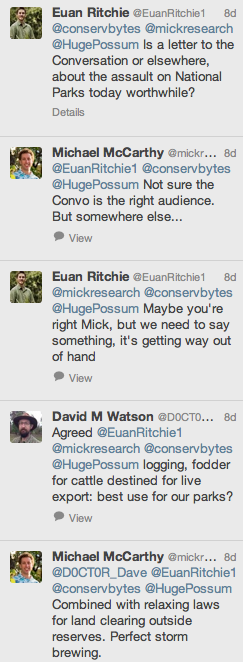
Convo TweetsIt’s interesting when a semi-random tweet by a colleague ends up mobilising a small army of scientists to get pissed off enough to co-write an article. Euan Ritchie of Deakin University started it off, and quickly recruited me, Mick McCarthy, David Watson, Ian Lunt, Hugh Possingham, Bill Laurance and Emma Johnston to put together the article. It’s a hugely important topic, so I hope it generates a lot of discussion and finally, some bloody action to stop the rapid destruction of this country’s national parks system.

Note: Published simultaneously on The Conversation.

It’s make or break time for Australia’s national parks.

National parks on land and in the ocean are dying a death of a thousand cuts, in the form of bullets, hooks, hotels, logging concessions and grazing licences. It’s been an extraordinary last few months, with various governments in eastern states proposing new uses for these critically important areas.

Australia’s first “National Park”, established in 1879, was akin to a glorified country club. Now called the “Royal National Park” on the outskirts of Sydney, it was created as a recreational escape for Sydney-siders, with ornamental plantations, a zoo, race courses, artillery ranges, livestock paddocks, deer farms, logging leases and mines.

Australians since realised that national parks should focus on protecting the species and natural landscapes they contain. However, we are now in danger of regressing to the misguided ideals of the 19th Century.

Parks under attack

In Victoria, new rules will allow developers to build hotels and other ventures in national parks. In New South Wales, legislation has been introduced to allow recreational shooting in national parks, and there is pressure to log these areas too. Read the rest of this entry »


A carbon economy can help save our species too

20 05 2013

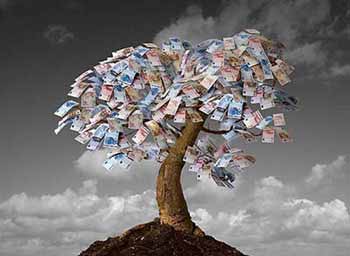
money treeWe sent out this media release the other day, but it had pretty poor pick-up (are people sick of the carbon price wars?). Anyway, I thought it prudent to reprint here on CB.com.

Will Australia’s biodiversity benefit from the new carbon economy designed to reduce greenhouse gas emissions? Or will bio-‘perversities’ win the day?

“Cautious optimism” was the conclusion of Professor Corey Bradshaw, Director of Ecological Modelling at the University of Adelaide’s Environment Institute. He is lead author of a new paper published in the journal of Biological Conservation which reviewed the likely consequences of a carbon economy on conservation of Australian biodiversity.

“In most circumstances these two very important goals for Australia’s future – greenhouse gas emissions reduction and biodiversity conservation – are not mutually exclusive and could even boost each other,” Professor Bradshaw says.

“There are, however, many potential negative biodiversity outcomes if land management is not done with biodiversity in mind from the outset.”

The paper was contributed to by 30 Australian scientists from different backgrounds. They reviewed six areas where Australia’s Carbon Farming Initiative could have the greatest impact on biodiversity: environmental plantings; policies and practices to deal with native regrowth; fire management; agricultural practices; and feral animal control.

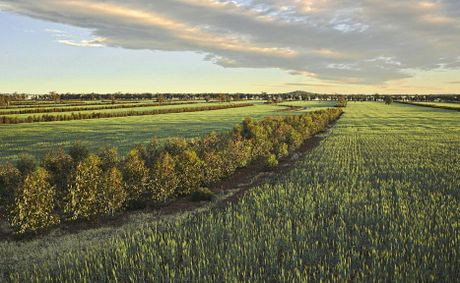
“The largest biodiversity ‘bang for our buck’ is likely to come from tree plantings,” says Professor Bradshaw. “But there are some potential and frightening ‘bioperversities’ as well. For example, we need to be careful not to plant just the fastest-growing, simplest and non-native species only to ‘farm’ carbon.

“Carbon plantings will only have real biodiversity value if they comprise appropriate native tree species and provide suitable habitats and resources for valued fauna. Such plantings could however risk severely altering local hydrology and reducing water availability.”

Professor Bradshaw says carefully managing regrowth of once-cleared areas could also produce a large carbon-sequestration and biodiversity benefit simultaneously. And carbon price-based modifications to agriculture that would benefit biodiversity included reductions in tillage frequency, livestock densities and fertiliser use, and retention and regeneration of native shrubs. Read the rest of this entry »


Brave new green world: biodiversity’s response to Australia’s carbon economy

12 03 2013

carbon farming 2I’ve had a busy weekend entertaining visiting colleagues and participating in WOMADelaide‘s first-ever ‘The Planet Talks‘. If you haven’t heard of WOMADelaide, you’re truly missing out in one of the best music festivals going (and this is from a decidedly non-festival-going sort). Planet Talks this year was a bit of an experiment after the only partially successful Earth Station festival held last year (it was well-attended, but apparently wasn’t as financially successful as they had hoped). So this year they mixed a bit of science with a bit of music – hence ‘Planet Talks’. Paul Ehrlich was one of the star attractions, and I had the honour of going onstage with him yesterday to discuss a little bit about human population growth and sustainability. It was also great to see Robyn Williams again. All the Talks were packed out – indeed, I was surprised they were so popular, especially in the 39-degree heat. Rob Brookman, WOMADelaide’s founder and principal organiser, told me afterward that they’d definitely be doing it again.

But my post really isn’t about WOMADelaide or The Planet Talks (even though I got the bonus of meeting one of my favourite latin bands, Novalima, creators of one of my favourite songs). It’s instead about a paper I heralded last year that’s finally been accepted.

In early 2012 at the Terrestrial Ecosystem Research Network (TERN) symposium in Adelaide, the Australian Centre for Ecological Analysis and Synthesis (ACEAS) put on what they called the ‘Grand Challenges’ workshop. I really didn’t get the joke at the time, but apparently the ‘grand challenge’ was locking 30 scientists with completely different backgrounds in a room for two days to see if they could do anything other than argue and bullshit. Well, we rose to that challenge and produced something that I think is rather useful.

I therefore proudly introduce the paper entitled Brave new green world: consequences of a carbon economy for the conservation of Australian biodiversity just accepted in Biological Conservation. The online version isn’t quite ready yet (should be in the next few weeks), but you are welcome to request a preprint from me now. If you attended (the surprisingly excellent) TERN symposium in Canberra last month, you might have seen me give a brief synopsis of our results.

The paper is a rather  in-depth review of how we, 30 fire, animal, plant, soil, landscape, agricultural and freshwater biologists, believe Australia’s new carbon-influenced economy (i.e., carbon price) will impact the country’s biodiversity. Read the rest of this entry »


Hot topics in ecology

5 03 2013

HotTopic copyJust a short one today to highlight a new1 endeavour by the Ecological Society of Australia.

Ecological societies around the world (e.g., Ecological Society of Australia, British Ecological Society, Ecological Society of AmericaCzech Society for Ecology, Société française d’Écologie, etc. – see a fairly comprehensive list of ecological societies around the world here) are certainly worthwhile from an academic standpoint. I’m a member of at least three of them, and over the years I’ve found them to be a great way to meet colleagues to discuss various aspects of our work. The conferences are usually a lot of fun (although I’ve generally found the Ecological Society of America conferences are too huge and unwieldy to be terribly beneficial), the talks are usually pretty good, and the social programmes tend to demonstrate just how human we scientists can be (I’ll let you read into that what you want).

An outsider could easily argue, however, that most ecological societies are archaic bastions of a former time when ecology was more a theoretical endeavour for academic circles, with little of practical use in today’s society. I’d agree that many components of these societies still hold onto elements of this sentiment, but it’s fast becoming clear that ecological societies can play an immensely important role in shaping their countries’ environmental policy. Read the rest of this entry »


Cartoon guide to biodiversity loss XVIII

13 02 2013

Here’s the latest 6 biodiversity cartoons for your simultaneous viewing pleasure and pain (see full stock of previous ‘Cartoon guide to biodiversity loss’ compendia here).

Read the rest of this entry »


Energy policy – substance wins over style

4 02 2013

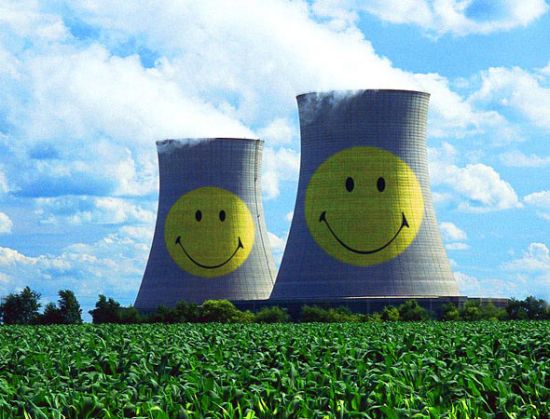
happy nuclearThere’s a gradual, but rising tide of rational, enviro-progressive scientists out there who are committed to solving some of the world’s biggest problems. Many of these problems involve touchy subjects, including ways to reduce poverty while improving or maintaining high standards of living elsewhere, the means for ‘sustainable’ electricity generation, and how to limit the human population’s over-consumption and over-production.

Inevitably, however, many well-intentioned, but grossly misinformed environmentalists (‘enviro-conservatives’?) object to technical solutions based on emotional or ideological grounds alone. As self-professed enviro-progressives (but also scientists who base decisions on evidence, logic and balancing trade-offs as part of our everyday work), we hope to reduce this backlash by providing the data and analyses needed to make the best and most coherent decisions about our future.

On 14 September 2012, Japan’s government announced a nuclear-free policy to phase out its nuclear power generation by 2040. Of course, electricity demand would have to be supplied by both renewable energy and fossil fuels to respond the public unwillingness for nuclear power.

But is this most environmentally sound, safest and economically rational aim? In a new paper we’ve just had published in the peer-reviewed journal Energy Policy, we set out to test Japan’s intentions the best way we know – using empirical data and robust scenario modelling.

Before the March 2011 earthquake and tsunami, Japan produced 25% of its total electricity consumption from nuclear power, 63% from fossil fuels (mostly coal and liquefied natural gas), and 10% from renewables (including hydro). Originally, the Japanese government had planned to increase nuclear power up to 45% of supply, and include new renewables builds, to combine to make major cuts in greenhouse gas emissions by 2030 and meet or exceed their Kyoto targets. However, the original plan could reduce emissions by the energy sector from 1122 Mt CO2e in 2010 to < 720 Mt CO2e by 2030 (< 70% of 1990 emission levels). Read the rest of this entry »


Scaring our children with the future

21 01 2013

frightened childI’ve written before about how we should all be substantially more concerned about the future than what we as a society appear to be. Climate disruption is society’s enemy number one, especially considering that:

  1. all this unprecedented warming is happening on a template of highly degraded land- and seascapes. Extinction synergies (more extinctions than would otherwise be predicted by the simple sum of the different pressures) mean that climate change exacerbates the extinctions to which we are already committed;
  2. we show no sign of slowing emissions rates, partly because of the world’s ridiculous refusal to embrace the only known energy technology that can safely meet emissions-reduction requirements: nuclear power;
  3. there are 7 billion hungry, greedy humans on planet Earth, and that number is growing;
  4. scientific evidence denial, plutocracy and theocracy are all on the rise, meaning that logical, evidence-based decision making is being progressively tossed out the window.

That’s probably the most succinct way that I know of describing the mess we are in, which is why I tend to be more of a pragmatic pessimist when it comes to the future. I’ve discussed before how this outlook makes getting on with my job even more important – if I can’t reduce the rate of destruction and give my family a slightly better future in spite of this reality, at least I will damn well die trying. Read the rest of this entry »


Cartoon guide to biodiversity loss XVII

19 12 2012

I’m winding down here for the year (although there might be a few more posts before the New Year), so here’s the latest batch of 6 biodiversity cartoons (see full stock of previous ‘Cartoon guide to biodiversity loss’ compendia here).

Read the rest of this entry »


Advice for getting your dream job in conservation science

4 12 2012

people management

A few weeks ago I heard from an early-career researcher in the U.S. who had some intelligent things to say about getting jobs in conservation science based on a recent Conservation Biology paper she co-wrote. Of course, for all the PhDs universities are pumping out into the workforce, there will never be enough positions in academia for them all. Thus, many find their way into non-academic positions. But – does a PhD in science prepare you well enough for the non-academic world? Apparently not.

Many post-graduate students don’t start looking at job advertisements until we are actually ready to apply for a job. How often do we gleam the list of required skills and say, “If only I had done something to acquire project management skills or fundraising skills, then I could apply for this position…”? Many of us start post-graduate degrees assuming that our disciplinary training for that higher degree will prepare us appropriately for the job market. In conservation science, however, many non-disciplinary skills (i.e., beyond those needed to be a good scientist) are required to compete successfully for non-academic positions. What are these skills?

Our recent paper in Conservation Biology (Graduate student’s guide to necessary skills for nonacademic conservation careers) sifted through U.S. job advertisements and quantified how often different skills are required across three job sectors: nonprofit, government and private. Our analysis revealed that several non-disciplinary skills are particularly critical for job applicants in conservation science. The top five non-disciplinary skills were project management, interpersonal, written communication, program leadership and networking. Approximately 75% of the average job advertisement focused on disciplinary training and these five skills. In addition, the importance of certain skills differed across the different job sectors.

Below, we outline the paper’s major findings with regard to the top five skills, differences among sectors, and advice for how to achieve appropriate training while still in university. Read the rest of this entry »


Protected areas work, but only when you put in the effort

15 11 2012

Apologies for the delay in getting this latest post out. If you read my last one, you’ll know that I’ve been in the United Kingdom for the last week. I’m writing this entry in the train down from York to Heathrow, from which I’ll shortly begin the gruelling 30-hour trip home to Adelaide.

Eight days on the other side of the planet is a bit of a cyclonic trip, but I can honestly say that it was entirely worth it. My first port of call was London where I attended the Zoological Society of London’s Protected Areas Symposium, which is the main topic on which I’ll elaborate shortly.

But I also visited my friend and colleague, Dr. Kate Parr at the University of Liverpool, where I also had the pleasure of talking with Rob Marrs and Mike Begon. Liverpool was also where I first observed the habits of a peculiar, yet extremely common species – the greater flabby, orange-skinned, mini-skirted, black-eyed scouser. Fascinating.

I then had the privilege and serendipitous indulgence of visiting the beautiful and quaint city of York where I gave another talk to the Environment Department at the University of York. My host, Dr. Kate Arnold was simply lovely, and I got to speak with a host of other very clever people including Callum Roberts, Phil Platts, Andy Marshall and Murray Rudd. Between the chats and real ales, mushy peas, pork pies and visits to the Minster, I was in north English heaven.

Enough of the cultural compliments – the title of this post was the take-home message of the ZSL symposium. There I gave a 25-minute talk summarising our recent paper on the performance of tropical protected areas around the globe, and added a few extra analyses in the process. One interesting result that was missing from the original paper was the country-level characteristics that explain variation in protected area ‘health’ (as we defined it in the Nature paper). After looking at a number of potential drives, including per-capita wealth, governance quality, environmental performance, human population density and the proportion of high conservation-value protected areas (IUCN Ia, Ib, II and IV categories), it came out that at least at that coarse country scale that only the proportion of high conservation-value protected areas explained any additional variation in health. In other words, the more category Ia, Ib, II and IV protected areas a country has (relative to the total), the better their protected areas do on average (and remember, we’re talking largely about developing and tropical nations here). Read the rest of this entry »