The saying “it isn’t rocket science” is a common cliché in English to state, rather sarcastically, that something isn’t that difficult (with the implication that the person complaining about it, well, shouldn’t). But I really think we should change the saying to “it isn’t ecology”, for ecology is perhaps one of the most complex disciplines in science (whereas rocket science is just ‘complicated’). One of our main goals is to predict how ecosystems will respond to change, yet what we’re trying to simplify when predicting is the interactions of millions of species and individuals, all responding to each other and to their outside environment. It becomes quickly evident that we’re dealing with a system of chaos. Rocket science is following recipes in comparison.
The prevailing wisdom is that big species have slower life history rates (reproduction, age at first breeding, growth, etc.), and so cannot replace themselves fast enough when the pace of their environment’s change is too high. Small, rapidly reproducing species, on the other hand, can compensate for higher mortality rates and hold on (better) through the disturbance. Read the rest of this entry »
Unique in its genus, the saiga antelope inhabits the steppes and semi-desert environments in two sub-species split between Kazakhstan (Saiga tatarica tatarica, ~ 80% of the individuals) and Mongolia (Saiga tatarica mongolica). Locals hunt them for their meat and the (attributed) medicinal properties of male horns. Like many ungulates, the population is sensitive to winter severity and summer drought (which signal seasonal migrations of herds up to 1000 individuals). But illegal poaching has reduced the species from > 1 million in the 1970s to ~ 50000 currently (see RT video). The species has gone extinct in China and Ukraine, and has been IUCN “Critically Endangered” from 2002. The photo shows a male in The Centre for Wild Animals, Kalmykia, Russia (courtesy of Pavel Sorokin).
In a planet approaching 7 billion people, individual identity for most of us goes largely unnoticed by the rest. However, individuals are important because each can promote changes at different scales of social organisation, from families through to associations, suburbs and countries. This is not only true for the human species, but for any species (1).
It is less than two decades since many ecologists started pondering the ways of applying the understanding of how individuals behave to the conservation of species (2-9), which some now refer to as ‘conservation behaviour’ (10, 11). The nexus seems straightforward. The decisions a bear or a shrimp make daily to feed, mate, move or shelter (i.e., their behaviour) affect their fitness (survival + fertility). Therefore, the sum of those decisions across all individuals in a population or species matters to the core themes handled by conservation biology for ensuring long-term population viability (12), i.e., counteracting anthropogenic impacts, and (with the distinction introduced by Cawley, 13) reversing population decline and avoiding population extinction.
To use behaviour in conservation implies that we can modify the behaviour of individuals to their own benefit (and mostly, to the species’ benefit) or define behavioural metrics that can be used as indicators of population threats. A main research area dealing with behavioural modification is that of anti-predator training of captive individuals prior to re-introduction. Laden with nuances, those training programs have yielded contrasting results across species, and have only tested a few instances of ‘success’ after release into the wild (14). For example, captive black-tailed prairie dogs (Cynomys ludovicianus) exposed to stuffed hawks, caged ferrets and rattlesnakes had higher post-release survival than untrained individuals in the grasslands of the North American Great Plains (15). A clear example of a threat metric is aberrant behaviour triggered by hunting. Eleanor Milner-Gulland et al. (16) have reported a 46 % reduction in fertility rates in the saiga antelope (Saiga tatarica) in Russia from 1993-2002. This species forms harems consisting of one alpha male and 12 to 30 females. Local communities have long hunted this species, but illegal poaching for horned males from the early 1990s (17) ultimately led to harems with a female surplus (with an average sex ratio up to 100 females per male!). In them, only a few dominant females seem to reproduce because they engage in aggressive displays that dissuade other females from accessing the males. Read the rest of this entry »
Illegal logging is booming, as criminal organisations tighten their grip on this profitable global industry. Hence, it comes just in the nick of time that Australia, after years of debate, is on the verge of passing an anti-logging bill.
Illegal logging is an international scourge, and increasingly an organised criminal activity. It robs developing nations of vital revenues while promoting corruption and murder. It takes a terrible toll on the environment, promoting deforestation, loss of biodiversity and harmful carbon emissions at alarming rates.
Moreover, the flood of illegal timber makes it much harder for legitimate timber producers. The vast majority of those in Australia and New Zealand have difficulty competing in domestic and international markets. That’s one reason that many major Aussie retail chains and brands, such as Bunnings, Ikea-Australia, Timber Queensland, and Kimberly-Clark, are supporting the anti-illegal logging bill.
Illegal logging denies governments of developing nations revenue worldwide. Bill Laurance.
Illegal logging thrives because it’s lucrative. A new report by Interpol and the United Nations Environment Programme, “Green Carbon, Black Trade”, estimates the economic value of illegal logging and wood processing to range from $30 billion to $100 billion annually. That’s a whopping figure — constituting some 10-30% of the global trade in wood products.
Illegal logging plagues some of the world’s poorest peoples, many of whom live in tropical timber-producing countries. According to a 2011 study by the World Bank, two-thirds of the world’s top tropical timber-producing nations are losing at least half of their timber to illegal loggers. In some developing countries the figure approaches 90%.
Many nations export large quantities of timber or wood products into Australia. These include Indonesia, Papua New Guinea and the Solomon Islands, all of which are suffering heavily from illegal logging. Many Chinese-made wood and paper imports also come from illegal timber. Indonesian President Susilo Bambang Yudhoyono has been pleading with timber-importing nations like Australia to help it combat illegal logging, which costs the nation billions of dollars annually in lost revenues.
The new Interpol report shows just how devious illegal loggers are becoming. It details more than 30 different ways in which organised criminal gangs stiff governments of revenues and launder their ill-gotten gains.
The variety of tactics used is dizzying. These tactics include falsifying logging permits and using bribery to obtain illegal logging permits, logging outside of timber concessions, hacking government websites to forge transportation permits, and laundering illegal timber by mixing it in with legal timber supplies.
The good news however, is that improving enforcement is slowly making things tougher for illegal loggers.
Accustomed to dealing with criminal enterprises that transcend international borders, Interpol is bringing a new level of sophistication to the war on illegal logging. This is timely because most current efforts to fight illegal logging – such as the European Union’s Forest Law and various timber eco-certification schemes – just aren’t designed to combat organised crime, corruption and money laundering.
The Interpol report urges a multi-pronged approach to fight illegal loggers. A key element of this is anti-logging legislation that makes it harder for timber-consuming nations and their companies to import ill-gotten timber and wood products. Read the rest of this entry »
As is their wont, Nature declined to publish these comments (and our responses) in the journal itself, but the new commenting feature at Nature.com allowed the exchange to be published online with the paper. Cognisant that probably few people will read this exchange, Bill Laurance and I decided to reproduce them here in full for your intellectual pleasure. Any further comments? We’d be keen to hear them.
In this paper, Laurance and co-authors have tapped the expert opinions of ‘veteran field biologists and environmental scientists’ to understand the health of protected areas in the tropics worldwide. This is a novel and interesting approach and the dataset they have gathered is very impressive. Given that expert opinion can be subject to all kinds of biases and errors, it is crucial to demonstrate that expert opinion matches empirical reality. While the authors have tried to do this by comparing their results with empirical time-series datasets, I argue that their comparison does not serve the purpose of an independent validation.
Using 59 available time-series datasets from 37 sources (journal papers, books, reports etc.), the authors find a fairly good match between expert opinion and empirical data (in 51/59 cases, expert opinion matched empirically-derived trend). For this comparison to serve as an independent validation, it is crucial that the experts were unaware of the empirical trends at the time of the interviews. However, this is unlikely to be true because, in most cases, the experts themselves were involved in the collection of the time-series datasets (at least 43/59 to my knowledge, from a scan of references in Supplementary Table 1). In other words, the same experts whose opinions were being validated were involved in collection of the data used for validation.
You might remember that I’ve been in California for several weeks now. The principal reason for my visit was to finish a book that Paul Ehrlich and I started last year. So, without the major distractions of everyday university life, I’ve spent much of my time lately at Stanford University in a little office next to Paul’s trying to finish (I also attended a conference in Portland, Oregon).
Yesterday, we wrote the last few paragraphs. A giant gorilla has now lumbered its way off my back.
So. What is the book about, you might ask? I can’t give away too many details, but I will give a few teasers. The book is called, at least for now, ‘Oz & US’, which is a bit of a play of words. In the book we contrast the environmental histories, current state of affairs, and likely futures of our respective nations. It’s written in a popular style so that non-specialists can learn a little something about how bad the environment has become in our two countries.
At first glance, one might wonder why we chose to contrast the U.S. and Australia – they are quite different beasts, indeed. Their histories are immensely different, from the aboriginal populations, through to European colonisation (timing and drivers), biological (including agricultural) productivities, carrying capacities, population sizes and politics. But these differences belie too many convergences in the environmental states of each nation – we now both have increasingly degraded environments, we have both pushed the boundaries of our carrying capacities, and our environmental politics are in a shambles. In other words, despite having started with completely different conditions, our toll on nature’s life-support systems is now remarkably similar.
And anyone who knows Paul and me will appreciate that the book is completely irreverent. We have taken off the gloves in preparation for a bare-knuckle fight with the plutocrats and theocrats now threatening the lives of our grandchildren. We pull no punches here. Read the rest of this entry »
Last week I had the pleasure of entertaining some old friends and colleagues for a writing workshop in Adelaide (don’t worry – they all came from southern Australia locations, so no massive carbon footprints for overseas travel). I’m happy to report it was a productive (and epicurean) week, but that’s not really the point of today’s post.
One of those participants was long-time colleague, Dr. Rik Buckworth. Rik and I first met in Darwin back in the early 2000s when he was lead fisheries scientist for Northern Territory Fisheries; this collaboration and friendship blossomed into an ARCLinkage Project (with Dr. Mark Meekan of AIMS) on shark fisheries (see some of the scientific outputs from that here, here, here and here). Rik has since moved to CSIRO in Brisbane, but keeps a hand in NT fisheries’ affairs. Incidentally, Rik trained under one of the most well-known fisheries modellers in the world – Carl Walters – when he did his PhD at the University of British Columbia back in the early 1990s.
A few months ago I asked Chris Johnson of the University of Tasmania to put together a post on his recent Science paper regarding Australian megafaunal extinctions. It seems that it stirred, yet again, some controversy among those who refuse to accept (mainly archaeologists) that humans could have had anything to do with pre-European extinctions. Indeed, how could humans possibly have anything to do with extinctions?!
—
Like Corey, I am mainly interested in current environmental problems. But now and then I wade into the debate over the extinction of Australia’s Pleistocene megafauna [editor’s note: Chris literally wrote the book on Australian mammal extinctions over the last 50,000 years], those huge animals that wandered over the Australian landscape until about 40,000 years ago.
This is an endlessly fascinating topic. The creatures were wonderful and bizarre – it’s great fun doing work that lets you think about marsupial lions, giant kangaroos, geese bigger than emus, echidnas the size of wombats, and the rest. The cause of their extinction is perhaps the biggest mystery, and the most vexed controversy, in the environmental history of Australia. And for reasons that I will explain in a minute, solving this mystery is profoundly important for our understanding of contemporary Australian ecology.
The latest bit of work on this is a paper that a group of us (including Corey’s close colleague, Barry Brook) published in Science. You can see it here (if you don’t have access to Science, email me for a copy). So far, research on this problem has concentrated on dating fossils to find out when megafauna species went extinct. Several recent studies have found evidence for extinction between 40,000 and 50,000 years ago, which is about when people first came to Australia. But the conclusion that people caused a mass extinction of megafauna has been strenuously criticised, because so far it is based on only a few species with good collections of dates. The critics argue that other species disappeared before humans arrived, maybe in an extended series of extinctions caused by something else, like a deteriorating climate.
This argument over fossils will be with us for a long time. Because finding and dating fossils is such hard, slow work, the fossil record will inevitably give a seriously incomplete picture of what happened. One way around this problem would be to analyse the fossil record using mathematical approaches that take into account the problem of incomplete sampling. Corey is lead author of a recent paper that introduced a great new set of tools for this, and we are part of a group that is currently assembling a complete database of all recent dates on Australian fossils so that we can analyse them using these tools. Stay tuned for the result. Read the rest of this entry »
Today’s post comes from Salvador Herrando-Pérez (who, incidentally, recently submitted his excellent PhD thesis).
—
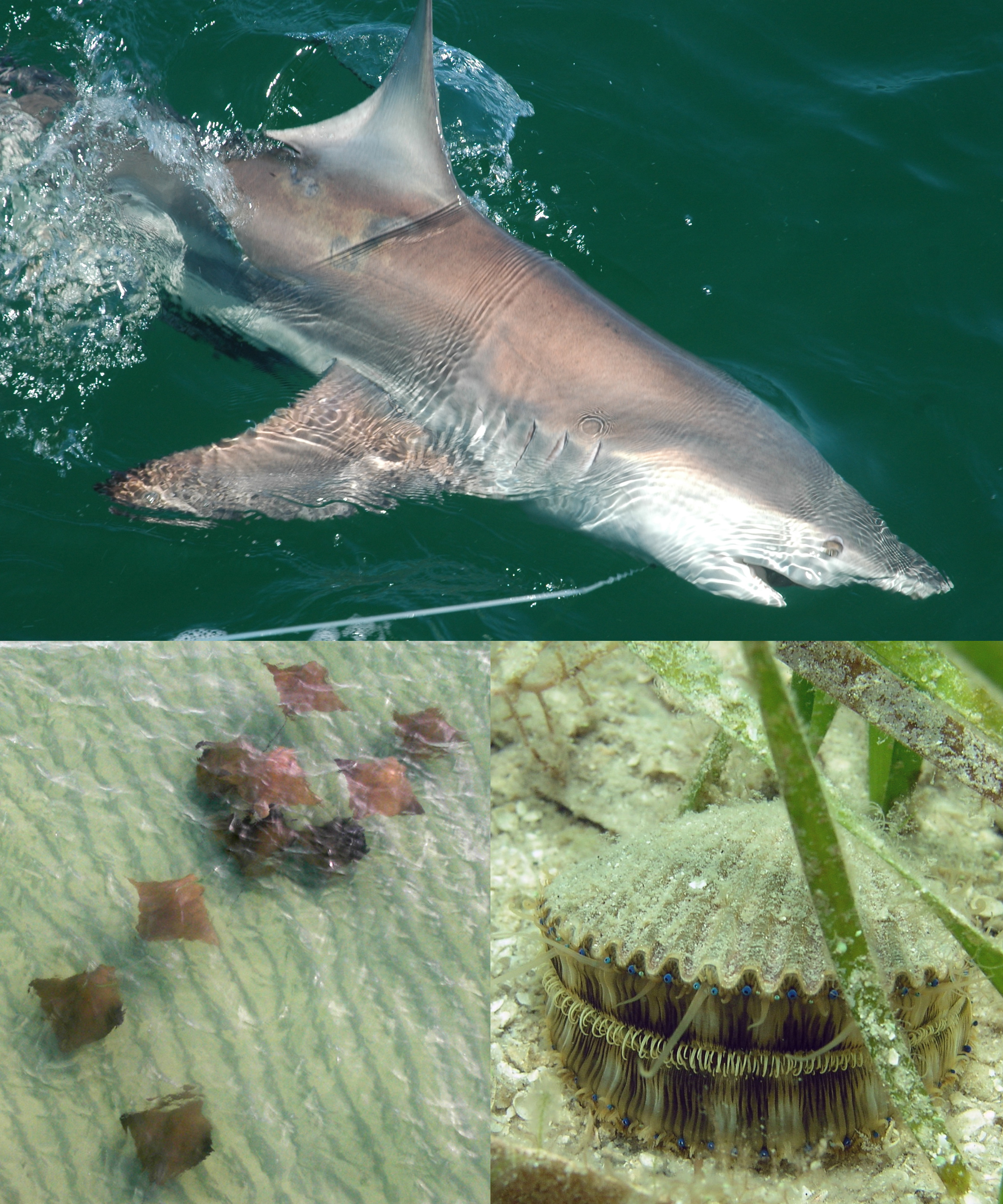
Three species co-occurring in the Gulf of Mexico and involved in the trophic cascade examined by Myers et al. (8). [1] Black-tips (Carcharhinus limbatus) are pelagic sharks in warm and tropical waters worldwide; they reach < 3 m in length, 125 kg in weight, with a maximum longevity in the wild of ~ 12 years; a viviparous species, with females delivering up to 10 offspring per parturition. [2] The cownose ray (Rhinoptera bonasus) is a tropical species from the western Atlantic (USA to Brazil); up to 2 m wide, 50 kg in weight, and 18 years of age; gregarious, migratory and viviparous, with one single offspring per litter. [3] The bay scallop (Agropecten irradians) is a protandric (hermaphrodite) mollusc, with sperm being released a few days before the (> 1 million) eggs; commonly associated with seagrasses in the north-western Atlantic; shells can reach up to 10 cm and individuals live for < 2 years. In the photos, a black-tip angled in a bottom long-line off Alabama (USA), a school of cownose rays swimming along Fort Walton Beach (Florida, USA), and a bay scallop among fronds of turtle grass (Thalassia testudinum) off Hernando County (Florida, USA). Photos by Marcus Drymon, Dorothy Birch and Janessa Cobb, respectively.
The hips of John Travolta, the sword of Luke Skywalker, and the teeth of Jaws marked an era. I still get goose pimples with the movie soundtrack (bass, tuba, orchestra… silence) solemnizing each of the big shark’s attacks. The media and cinema have created the myth of man’s worst friend. This partly explains why shark fishing does not trigger the same societal rejection as the hunting of other colossuses such as whales or elephants. Some authors contend that we currently live in the sixth massive extinction event of planet Earth (1) 75 % of which is strongly driven by one species, humans, and characterized by the systematic disappearance of mega-animals in general (e.g., mammoths, Steller’s seacow), and predators in particular, e.g., sharks (2, 3).
The selective extirpation of apex predators, recently coined as ‘trophic downgrading’, is transforming habitat structure and species composition of many ecosystems worldwide (4). In the marine realm, over the last half a century, the main target of the world’s fisheries has turned from (oft-large body-sized) piscivorous to planctivorous fish and invertebrates, indicating that fishery fleets are exploiting a trophic level down to collapse, then harvesting the next lower trophic level (5-7).
Myers et al. (8) illustrate the problem with the fisheries of apex-predator sharks in the northeastern coast of the USA. Those Atlantic waters are rife with many species of shark (> 2 m), whose main prey are smaller chondrichthyans (skates, rays, catsharks, sharks), which in turn prey on bottom fishes and bivalves. Myers et al. (8) found that, over the last three decades, the abundance of seven species of large sharks declined by ~ 90 %, coinciding with the crash of a centenary fishery of bay scallops (Agropecten irradians). Conversely, the abundance of 12 smaller chondrichthyes increased dramatically over the same period of time. In particular, the cownose ray (Rhinoptera bonasus), the principal predator of bay scallops, might today exceed > 40 million individuals in some bays, and consume up to ~ 840,000 tonnes of scallops annually. The obvious hypothesis is that the reduction of apex sharks triggers the boom of small chondrichthyans, hence leading to the break-down of scallop stocks. Read the rest of this entry »
It was bound to happen. After years of successful avoidance I have finally succumbed to the dark side: palaeo-ecology.
I suppose the delve from historical/modern ecology into prehistory was inevitable given (a) my long-term association with brain-the-size-of-a-planet Barry Brook (who, incidentally, has reinvented his research career many times) and (b) there is no logic to contend that palaeo extinction patterns differ in any meaningful way from modern biodiversity extinctions (except, of course, that the latter are caused mainly by human endeavour).
So while the last, fleeting days of my holiday break accelerate worringly toward office-incarceration next week, I take this moment to present a brand-new paper of ours that has just come out online in (wait for it) Quaternary Science Reviews entitled Robust estimates of extinction time in the geological record.
Let me explain my reasons for this strange departure.
It all started after a few drinks (doesn’t it always) discussing the uncertainties associated with the timing of megafauna extinctions – you might be aware that traditionally there have been two schools of thought on late-Pleistocene extinction pulses: (1) those who think there were mainly caused by massive climate shifts not to dissimilar to what we are experiencing now and (2) those who believe that the arrival of humans into naïve regions lead to a ‘blitzkrieg‘ of hunting and overkill. Rarely do adherents of each stance agree (and sometimes, the ‘debate’ can get ugly given the political incorrectness of inferring that prehistoric peoples were as destructive as we are today – cf. the concept of the ‘noble savage‘). Read the rest of this entry »
Commercial and sport fishing establish minimum body sizes for catches of many species to preserve fish stocks. Recent work reveals that sustainable fisheries also depend on the regulation of the harvest of the biggest fish, at least in long-lived species.
Growing up in Spain in the 1980s, I was taken by a Spanish television spot featuring a shoal of little fish sucking colourful dummies, and at the same time (how they managed, I never questioned) singing the motto Little fish? No, thanks. The then Ministry of Agriculture, Fishery and Food created this media campaign to create awareness among consumers not to buy immature fish at local markets – “…a 60-gram hake will only weigh 2 kg after two years” the add stated.
Indeed, the regulation of fish harvest by age classes is substantial to any fishery. In particular, the protection of younger fish has been a beacon of fishery policy and management that dates back to the 19th century when, among others, the British ichthyologist Ernst Holt concluded that: “…it is desirable that fish should have a chance of reproducing their species at least once before they are destroyed” 1. Very much in line with such principles, conventional fish stock management has in practice neglected the mature age classes2, other than for the fact that they are the end point of extraction and what we consumers eat on the table. Read the rest of this entry »
A few weeks back I cosigned a ‘statement of concern’ about the proposal for Australia’s South West Marine Region organised by Hugh Possingham. The support has been overwhelming by Australia’s marine science community (see list of supporting scientists below). I’ve reproduced the letter addressed to the Australian government – distribute far and wide if you give more than a shit about the state of our marine environment (and the economies it supports). Basically, the proposed parks are merely a settlement between government and industry where nothing of importance is really being protected. The parks are just the leftovers industry doesn’t want. No way to ensure the long-term viability of our seas.
—
On 5 May 2011 the Australian Government released a draft proposal for a network of marine reserves in the Commonwealth waters of the South West bioregional marine planning region.
Australia’s South West is of global significance for marine life because it is a temperate region with an exceptionally high proportion of endemic species – species found nowhere else in the world.
Important industries, such as tourism and fisheries, depend on healthy marine ecosystems and the services they provide. Networks of protected areas, with large fully protected core zones, are essential to maintain healthy ecosystems over the long-term – complemented by responsible fisheries management1.
The selection and establishment of marine reserves should rest on a strong scientific foundation. We are greatly concerned that what is currently proposed in the Draft South West Plan is not based on the three core science principles of reserve network design: comprehensiveness, adequacy and representation. These principles have been adopted by Australia for establishing our National Reserve System and are recognized internationally2.
Specifically, the draft plan fails on the most basic test of protecting a representative selection of habitats within the bioregions of the south-west. There are no highly protected areas proposed at all in three of the seven marine bioregions lying on the continental shelf3. Overall less than 3.5% of the shelf, where resource use and biodiversity values are most intense, is highly protected. Further, six of the seven highly protected areas that are proposed on the shelf are small (< 20 km in width)4 and all are separated by large distances (> 200 km)5. The ability of such small isolated areas to maintain connectivity and fulfil the goal of protecting Australia’s marine biodiversity is limited. Read the rest of this entry »
And even if you’re not looking for a position, but are interested in the anthropogenic Allee effect, then by all means, please read on as well.
—
This two-year fellowship is part of a grant focused on demonstrating the novel rarity paradox, either in new wildlife trade markets (i.e., exotic pets, traditional medicine, et cetera) or in newly exploited species (e.g., tibetan antilope, seahorses, et cetera). Read the rest of this entry »
This post doubles as a Conservation Classic and a new take on an old concept. It’s new in the sense that it updates what we believe is an advance on a major milestone in conservation biology, even though some of the add-on concepts themselves have been around for a while.
First, the classic.
The ‘evil quartet’, or ‘four horsemen of the ecological apocalypse’, was probably the first treatment of extinction dynamics as a biological discipline in its own right. Jarod Diamond (1984)took a sweeping historical and contemporary view of extinction, then simplified the problem to four principal mechanisms:
overhunting (or overexploitation),
introduced species,
habitat destruction and
chains of linked extinctions (trophic cascades, or co-extinctions).
Far from a mere review or list of unrelated mechanisms, Diamond’s evil quartet crystallized conservation biologists’ thinking about key mechanisms and, more importantly, directed attention towards those factors likely to drive extinctions in the future. The unique combination of prehistorical through to modern examples gave conservation biologists a holistic view of extinction dynamics and helped spawn many of the papers described hereafter. Read the rest of this entry »
I just wrote a fun little piece for a new section in the journal Frontiers in Ecology and the Environment that they’re calling Trails and Tribulations. The basic idea is that the author recounts a particularly interesting field-related experience through which an ecological concept is woven.
Editor-in-Chief Sue Silver said that I could reproduce my article here as long as I acknowledged Frontiers and the Ecological Society of America. It was fun to write, and I hope you enjoy it too [the PDF of the article is available free of charge here].
—
“So does each team get a hand gun?”
“No, you get an oar”
“What good is an oar?”
“Listen, mate. When a 3-metre croc jumps out of the swamp at you, there is nothing more natural in the world than to thump him with a big stick. It’s an autonomous response. With a gun, IF you manage to keep it dry, and IF you manage to get it out in time before the croc bites off your head, chances are you’ll just shoot the bloke in front of you anyway. So you get an oar.”
“Fair enough”.
That is an approximate, paraphrased reproduction of the initial conversation I had with renowned Australian crocodile biologist, Grahame Webb, just prior to my first (and as it turns out, only) trip to collect crocodile eggs for his Darwin wildlife park and crocodile farm. I volunteered to take part in the collection because I had recently begun working with Grahame and his team tracking the world’s largest crocodile species – the saltwater or estuarine crocodile Crocodylus porosus – and modelling aspects of its populations (Bradshaw et al. 2006). Having already been out on several occasions to harpoon and satellite-tag animals (some measuring > 4 m) on the Mary River, and cage-trap others in Kakadu National Park, I thought a little egg collection would be a proverbial walk in the park. Little did I know that it would end up being one of my more memorable experiences.
Let me walk you through the process. First, you wait until the height of the wet season and drive out as far as you can toward the breeding swamp of interest (in this case, Melacca Swamp in the Adelaide River flood plain, about one hour’s drive from Darwin). Then you and two other loonies pile into a small helicopter equipped with landing pontoons which ferries you to one of many previously identified crocodile nests. Because there is usually too much vegetation around the nest itself, the helicopter must land about 100-300 m away. Clothed only in long pants, a long-sleeved shirt and cotton gloves to protect your skin from the slicing blade grass, you jump off the helicopter’s pontoons into impenetrably murky, chest-deep water. One of the team drags an esky (chiller box into which eggs will be placed) and another carries an oar. As the noise of the departing helicopter becomes a faint buzz, you suddenly realise via the rapid expansion of your terminal sphincter that you are in the middle of a crocodile-filled swamp – and you are holding an oar. Read the rest of this entry »
It seems he and his commercial interests (and my, do those fellas lay it on thick) have turned their attention to destroying the last tracts of intact South-East Asian forests (and associated biodiversity) in Papua New Guinea. Kiss some of the most endemic, biodiverse and biowealthy areas on the planet good-bye.
So it was interesting to receive this email that had been sent to Oxley’s front-company, International Trade Strategies (ITS) Global, by one very pissed off Papua New Guinean. I have no idea who ‘Bush Kanaka Mangi’ is, but he sounds the real deal and I wouldn’t want to be Oxley if he ever came across him. I cite verbatim1:
—
Mr Alan Oxley,
HONESTLY : I am sick of getting this bloody rubbish, bullshit from you and your company ITS Global about palm oil is good for PNG, logging is good for PNG. Who the hell do you think you are ????, you seem in all your articles and consultancy reports as the expert about our country and more knowledgeable about the Melanesian society very well. My assessment of all your electronic newsletter which you circulate widely, your reflections and recommendations all are in no way closer or nearer to the way we Papua New Guineans think and want to do things and develop our nation, all of what you say are totally and purely and absolutely RUBBISH and yet you claim to know everything and know the problems of PNG and our people and on ways to solve our problems and continue your bullshit campaign in support of R&H and all its doing here destroying our forests, our society, manipulating our systems and creating confusion and hell is loose here. Read the rest of this entry »
I’ve received permission from Channel 1o to reproduce the news snippet here. The first bloke interviewed is Associate Professor Nathan Hart, the study‘s lead author. I’m the bald one appearing in the middle at at the end.
It certainly was an interesting story, although two claims were made that probably needed better contextualisation.
First, the authors claim that because of this taxon’s colour blindness, they probably notice pigment transitions more when using visual cues to identify potential prey. What this means is that bright colours set against duller backgrounds might provide that contrast enough to attract sharks. The upshot from the interview is that brightly coloured and patterned togs (bathers) might make sharks think you are potentially a tasty treat. Read the rest of this entry »
“One measure that often meets great resistance from fishermen, but is beloved by conservationists, is the establishment of marine protected or ‘no take’ areas.” Stephen J. Hall (1998)
I’m going to qualify this particular post with a few disclaimers; first, I am not involved in the planning of any marine protected areas (henceforth referred to as ‘marine parks’) in Australia or elsewhere; and second, despite blogging on the issue, I have never published in the discipline of protected area design (i.e, ‘conservation planning’ is not my area of expertise).
That said, it seems to becoming more imperative that I enter the fray and assess not only how marine parks should be designed, but how effective they really are (or can be). I’ve been asked by several conservation NGOs to provide some insight into this, so I thought I should ‘think aloud’ and blog a little mini-review about marine park effectiveness.
Clearly there is a trend to establish more marine parks around the world, and this is mainly because marine conservation lags so far behind terrestrial conservation. Indeed, Spalding et al. (2008) showed that only 4.1 % of continental shelf areas are incorporated within marine parks, and ~ 50 % of all marine ecoregions have less than 1 % marine park coverage across the shelf. Furthermore, marine protection is greatest in the tropical realms, while temperate realms are still poorly represented.
The question of whether marine parks ‘work’ is, however, more complicated than it might first appear. When one asks this question, it is essential to define how the criteria for success are to be measured. Whether it’s biodiversity protection, fisheries production, recreational revenue, community acceptance/involvement or some combination of the above, your conclusion is likely to vary from place to place.
Other complications are, of course, that if you cannot ensure a marine park is adequately enforced (i.e., people don’t respect the rules) or if you don’t actually place the park anywhere near things that need protecting, there will be no real net benefit (for any of the above-mentioned interest groups). Furthermore, most marine parks these days have many different types of uses allowed in different zones (e.g., no fishing, some fishing, recreational diving only, no boat transport, some shipping, etc., etc., etc.), so it gets difficult to test for specific effects (it’s a bit like a cap-and-trade legislation for carbon – too many rules and often no real net reduction in carbon emissions – but that’s another story).
All these conditions aside, I think it’s a good idea to present what the real experts have been telling us about marine park effectiveness from a biodiversity and fishing perspective over the last decade or so. I’ll summarise some of the major papers here and give an overall assessment at the end. I do not contend that this list is even remotely comprehensive, but it does give a good cross-section of the available evidence. Read the rest of this entry »
I was contacted recently by Josh Cinner, a self-titled ‘social’ scientist (now working at the Centre of Excellence for Coral Reef Studies) who has published rather a lot in the conservation literature. He was recently highlighted in the journal Sciencefor his work, and he thought CB readers would enjoy the coverage. He stated to me:
“…as a social scientist, I have spent the past decade or so working with ecologists and managers trying to integrate social science better in conservation. There are often calls for the importance of integrating social science in conservation and I thought your blog readers might appreciate some high-level recognition of the importance of this. Additionally, as far as I can tell, this is the first of these profiles that has focused on someone working in conservation.”
In the late 1980s, things were not going well for the coral reefs at Jamaica’s Montego Bay Marine Park. Overfishing had taken out a lot of the fish that eat algae, and algae were taking over the reef. “It was a classic case of ecosystem decline,” human geographer Joshua Cinner says. He arrived in Jamaica in 1996 as a Peace Corps volunteer after graduating from the University of Colorado, Boulder, with a double major in environmental conservation and geography. He was particularly interested in parks and preserves.
He’d landed in the middle of a war. Lobbying by tour operators and others got spearfishing, one of the main culprits in overfishing, banned in the park. The ban did not go over well with local people. “All the park equipment got vandalized. We had park rangers get threatened; their families got threatened at spear point,” Cinner says. Spearfishing equipment is cheap and you don’t need a boat; men who do it are generally poor and are fishing as a last resort. “The cultural lens through which the fishermen viewed this issue was of struggle in a post-slavery society, of the rich, predominantly white expatriates making a law that oppressed the poorest of the poor locals to benefit the wealthy.”
The conflict got Cinner thinking about how conservation really works. “It wasn’t really about the ecology,” he says. “Making conservation work in Jamaica had a lot to do with understanding the local culture and people.” It also opened his eyes to the role oceans play. “The ocean is often viewed as an open-access resource. That extra layer of complexity interested me,” he says. “Land can often be private property,” but “the ocean is typically viewed as free for anyone to fish in, for anyone to swim in and use.” Read the rest of this entry »
Everyone is a at least a little competitive, and when it comes to international relations, there could be no higher incentive for trying to do better than your neighbours than a bit of nationalism (just think of the Olympics).
We rank the world’s countries for pretty much everything, relative wealth, health, governance quality and even happiness. There are also many, many different types of ‘environmental’ indices ranking countries. Some attempt to get at that nebulous concept of ‘sustainability’, some incorporate human health indices, and other are just plain black box (see Böhringer et al. 2007 for a review).
With that in mind, we have just published a robust (i.e., to missing data, choices for thresholds, etc.), readily quantifiable (data available for most countries) and objective (no arbitrary weighting systems) index of a country’s relative environmental impact that focuses ONLY on environment (i.e., not human health or economic indicators) – something no other metric does. We also looked at indices relative to opportunity – that is, looking at how much each country has degraded relative to what it had to start with.
We used the following metrics to create a combined environmental impact rank: natural forest loss, habitat conversion, fisheries and other marine captures, fertiliser use, water pollution, carbon emissions from land-use change and threatened species.
So who were the worst? Relative to resource availability (i.e,. how much forest area, coastline, water, arable land, species, etc. each country has), the proportional environmental impact ranked (from worst) the following ten countries:
Singapore
Korea
Qatar
Kuwait
Japan
Thailand
Bahrain
Malaysia
Philippines
Netherlands
When considering just the absolute impact (i.e., not controlling for resource availability), the worst ten were:
Brazil
USA
China
Indonesia
Japan
Mexico
India
Russia
Australia
Peru
Interestingly (and quite unexpectedly), the authors’ home countries (Singapore, Australia, USA) were in either the worst ten proportional or absolute ranks. Embarrassing, really (for a full list of all countries, see supporting information). Read the rest of this entry »
Bear with me here, dear reader – this one’s a bit of a stretch for conservation relevance at first glance, but it is important. Also, it’s one of my own papers so I have the prerogative :-)
As some of you probably know, I dabble quite a bit in population dynamics theory, which basically means examining the mathematics people use to decipher ecological patterns. Why is this important? Well, most models predicting extinction risk, estimating optimal harvest rates, determining minimum viable population size and metapopulation dynamics for species’ persistence rely on good mathematical abstraction to be realistic. Get the maths wrong, and you could end up overharvesting a species (e.g., 99.99 % of fisheries management), underestimating extinction risk from habitat degradation, and getting your predictions wrong about the effects of invasive species. Expressed as an equation itself, (conservation) ecology = mathematics.
A long-standing family of models known as ‘phenomenological’ models (i.e., because they deal with the phenomenon of population size which is an emergent property of the mechanisms of birth, death and immigration) has been used to estimate everything from maximum sustainable yield targets, temporal abundance patterns, wildlife management interventions, extinction risk to epidemiological patterns. The basic form of the model describes the growth response, or the relationship between the population’s rate of change (growth) and its size. The simplest form (known as the Ricker), assumes a linear decline in population growth rate (r) as the number of individuals increases, which basically means that populations can’t grow indefinitely (i.e., they fluctuate around some carrying capacity if unperturbed). Read the rest of this entry »
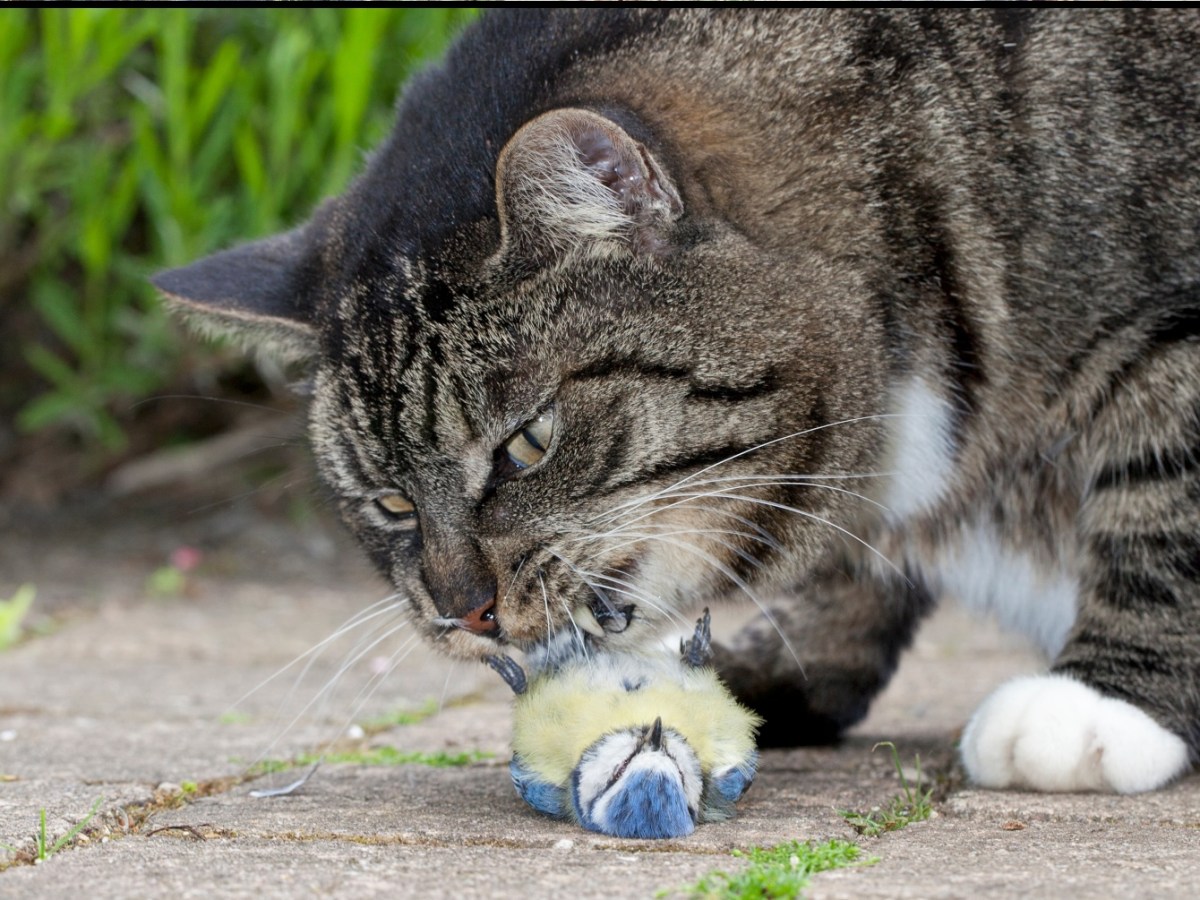
Those of us living with cats share our homes with an ancestral predator, one adapted for hunting and the frequent, exclusive consumption of meat. These instincts become fully activated outside the domestic environment, where cats pose a global threat to wildlife. Pets are family. We celebrate their arrival with the same joy as a grand…
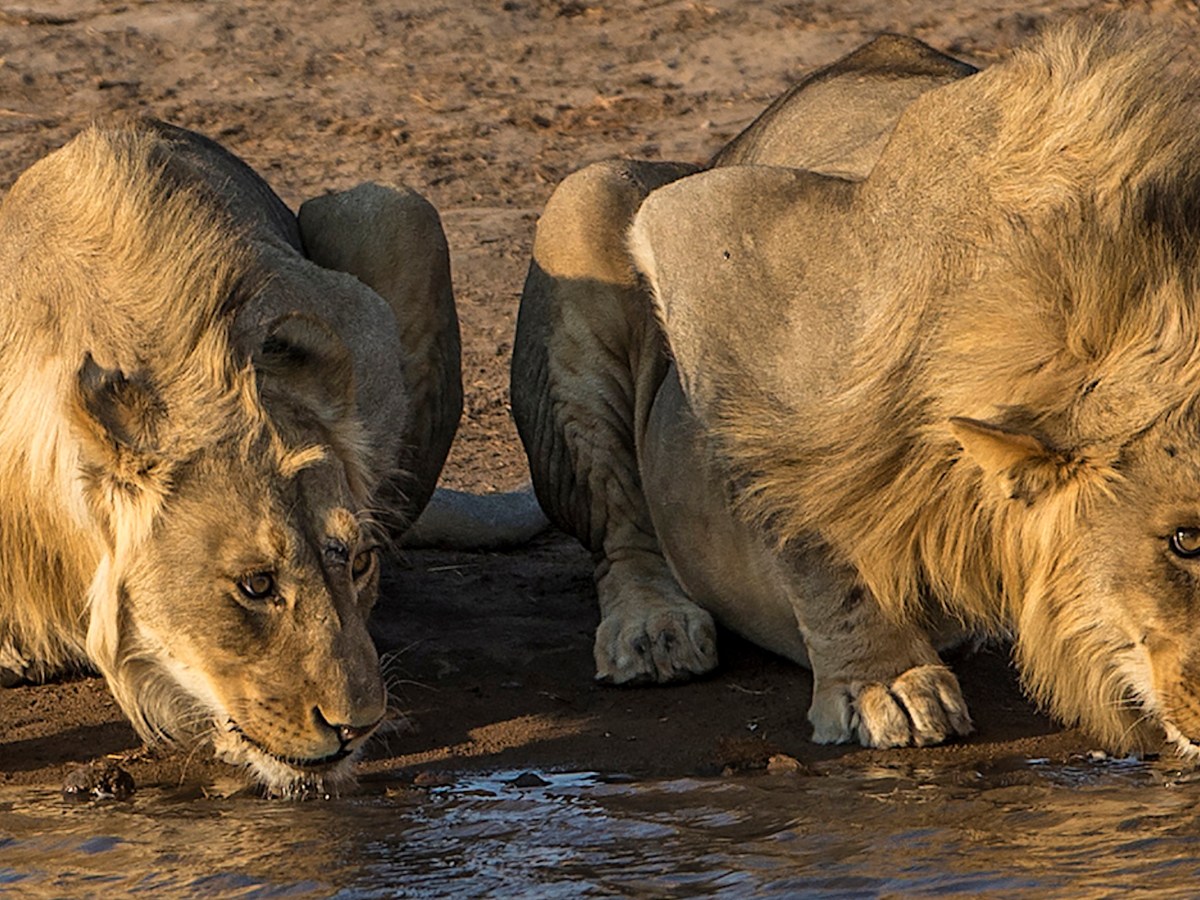
Many animals avoid contact with people. In protected areas of the African savanna, mammals flee more intensely upon hearing human conversations than when they hear lions or sounds associated with hunting. This fear of humans affects how species use and move in their habitat. Throughout our lives, we interact with hundreds of wildlife species without…
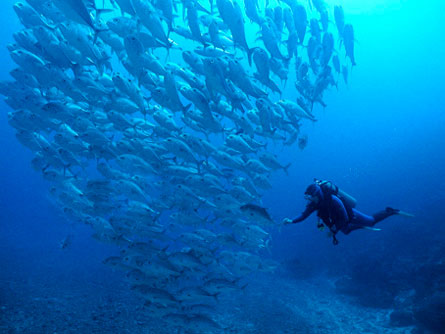
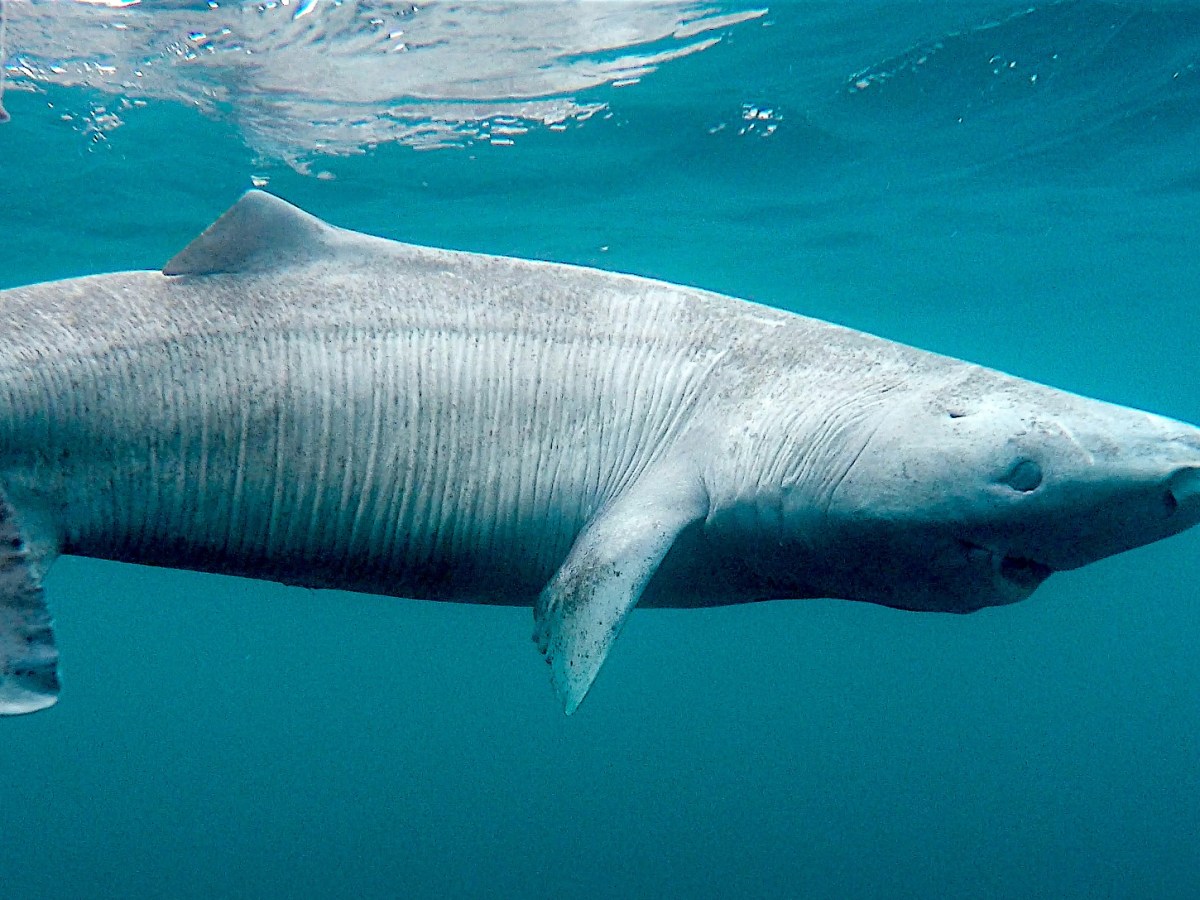
Deep-sea sharks include some of the longest-lived vertebrates known. The record holder is the Greenland shark, with a recently estimated maximum age of nearly 400 years. Their slow life cycle makes them vulnerable to fisheries. Humans rarely live longer than 100 years. But many other animals and plants can live for several centuries or even millennia, particularly…













 ConservationBytes.com