Where the sick buffalo roam

28 10 2011

It’s been some time coming, but today I’m proud to announce a new paper of ours that has just come out in Journal of Applied Ecology. While not strictly a conservation paper, it does provide some novel tools for modelling populations of threatened species in ways not available before.

The Genesis

A few years ago, a few of us (Bob LacyPhil Miller and JP Pollak of Vortex fame, Barry Brook, and a few others) got together in a little room at the Brookfield Zoo in the suburban sprawl of Chicago to have a crack at some new modelling approaches the Vortex crew had recently designed. The original results were pleasing, so we had a follow-up meeting last year (thanks to a few generous Zoo benefactors) and added a few post-docs and students to the mix (Damien FordhamClive McMahon, Tom Prowse, Mike Watts, Michelle Verant). The great population modeller Resit Akçakaya also came along to assist and talk about linkages with RAMAS.

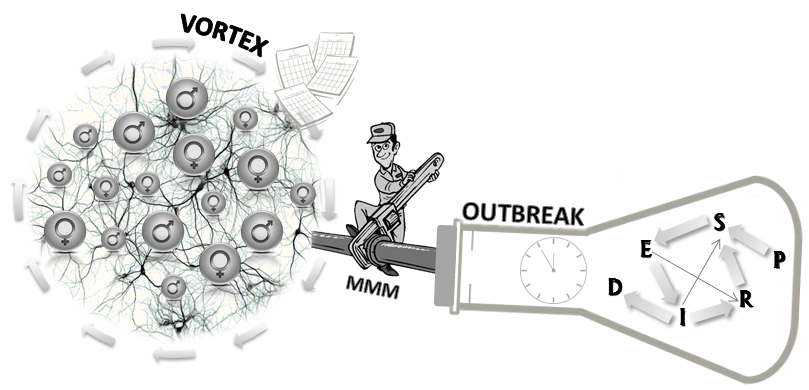
Out of that particular meeting a series of projects was spawned, and one of those has now been published online: Novel coupling of individual-based epidemiological and demographic models predicts realistic dynamics of tuberculosis in alien buffalo.

The Coupling

So what’s so novel about modelling disease in buffalo, and why would one care? Well, here’s the interesting part. The buffalo-tuberculosis example was a great way to examine just how well a new suite of models – and their command-centre module – predicted disease dynamics in a wild population. The individual-based population modelling software Vortex has been around for some time, and is now particularly powerful for predicting the extinction risk of small populations; the newest addition to the Vortex family, called Outbreak, is also an individual-based epidemiological model that allows a population of individuals exposed to a pathogen to progress over time (e.g., from susceptible, exposed, infectious, recovered/dead). Read the rest of this entry »


Know thy threat

9 06 2011

Here’s another great guest post by Megan Evans of UQ – her previous post on resolving the environmentalist’s paradox was a real hit, so I hope you enjoy this one too.

The reasons for the decline of Australia’s unique biodiversity are many, and most are well known. Clearing of vegetation for urban and agricultural land uses, introduced species and changed fire patterns are regularly cited in State of the Environment reports, recovery plans and published studies as major threats to biodiversity. But, while these threats are widely acknowledged, little has been done to quantify them in terms of the proportion of species affected, or their spatial extent at a national, state or local scale. To understand why such information on threats may be useful, consider for instance how resources are allocated in public health care1.

Threat knowledge

Conditions such as cancer, heart disease and mental health are regarded as National Health Priority Areas in Australia, and have been given special attention when prioritising funds since the late 1980s. The burden of disease in these priority areas are quantified according to the incidence or prevalence of disease or condition, and its social and economic costs. Estimates of burden of disease and their geographic distribution (often according to local government areas) can assist in communicating broad trends in disease burden, but also in prioritising efforts to achieve the best outcomes for public health. An approach similar to that used in healthcare could help to identify priorities for biodiversity conservation – using information on the species which are impacted by key threats, the spatial distributions of species and threats, and the costs of implementing specific management actions to address these threats. Read the rest of this entry »


The evil sextet

18 05 2011

This post doubles as a Conservation Classic and a new take on an old concept. It’s new in the sense that it updates what we believe is an advance on a major milestone in conservation biology, even though some of the add-on concepts themselves have been around for a while.

First, the classic.

The ‘evil quartet’, or ‘four horsemen of the ecological apocalypse’, was probably the first treatment of extinction dynamics as a biological discipline in its own right. Jarod Diamond (1984) took a sweeping historical and contemporary view of extinction, then simplified the problem to four principal mechanisms:

  1. overhunting (or overexploitation),
  2. introduced species,
  3. habitat destruction and
  4. chains of linked extinctions (trophic cascades, or co-extinctions).

Far from a mere review or list of unrelated mechanisms, Diamond’s evil quartet crystallized conservation biologists’ thinking about key mechanisms and, more importantly, directed attention towards those factors likely to drive extinctions in the future. The unique combination of prehistorical through to modern examples gave conservation biologists a holistic view of extinction dynamics and helped spawn many of the papers described hereafter. Read the rest of this entry »


生态学 = ‘Ecology’ in China

13 05 2011

I’m just heading home after a very inspiring workshop organised by Fangliang He at Sun Yat-sen University in Guangzhou, China (I’m writing this from the Qantas Club in the Hong Kong airport).

Before I proceed to regale you with the salient details of the ‘International Symposium for Biodiversity and Theoretical Ecology‘, I am compelled to state publicly that I offer my sincerest condolences to Fangliang and his family; unfortunately Fangliang’s brother passed away while we were at the workshop and so Fangliang wasn’t able to spend much time reaping the fruits of his organisational labour. If you know Fangliang, please send him a supporting email.

That sad note aside, I am delighted to say that the workshop was compelling, challenging and also rather fortuitous. I was one of many overseas invitees, and I must say that I was at times overwhelmed by the size of the brains they managed to pack into the auditorium. Many colleagues I didn’t know attended, and I hope that many will become collaborators. The international invitees were: Read the rest of this entry »


Government pulls plug on Asian honeybee eradication

3 03 2011

Here’s another one from the bee man, Tobias Smith (PhD candidate at the University of Queensland). Tobias recently blogged about bee basics here on ConservationBytes.com (something I highly recommend for anyone interested on brushing up on bee facts and dispelling a few myths), so I asked him to follow up with this very important piece on the future of pollination in Australia. It concerns a nasty little invader recently dubbed the “flying cane toad” (not my analogy).

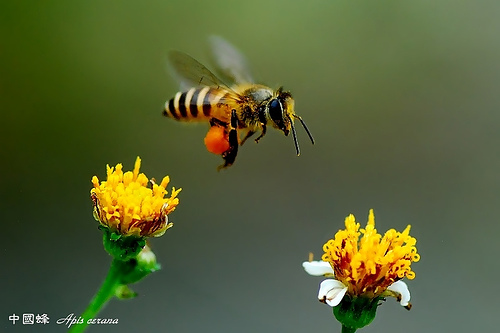
http://www.flickr.com/photos/angela-and-andrew/1196369580/in/faves-lornet/

© 中國蜂

Over the last few weeks there has been much media attention given to the Asian honeybee (Apis cerana) incursion in far north Queensland. The Asian honeybee was first detected near Cairns in May 2007. Since then an effort to eradicate the bee has been made. This peaked during 2010, when over 40 bee eradication personnel were employed to hunt and destroy in areas around Cairns, the Atherton Tablelands, and other nearby locations.

In late January this year, the committee established to manage the eradication program (governments and industry), decided to pull the plug on eradication efforts (on money to pay for efforts that is). They decided it was no longer possible to achieve eradication (a majority decision, not a unanimous decision). The position to stop resources for eradication is not supported by industry, or ecological commentators. Arguments have been made that this is the only window of opportunity for eradication (for ever!), and that more resources need to be put towards it now, while there is still a chance of success.

A few points to be made about the Asian honeybee in Australia: Read the rest of this entry »


What the hell is a banteng?

21 02 2011

A few years ago (ok, 6 years), ABC‘s Catalyst did a piece on our banteng research programme in Garig Gunak Barlu National Park in the Northern Territory. The show basically talks about the conservation and management conundrum of having a successful feral species in Australia that is also highly endangered in its native range (South East Asia). Do we shoot them all, or legislate them as an endangered species? It’s for Australians to decide.

I finally got around to uploading it on Youtube. I hope I haven’t contravened some copyright law, but I figure after such a lag, no one will care. I await the imminent contradiction from the ABC’s lawyers…

I hope you enjoy.

For the scientific papers arising from the work, see: Read the rest of this entry »


Invaders beware

1 11 2010

Recently, the Global Ecology Group at the University of Adelaide has had the immense privilege and pleasure of welcoming a new senior member to the fold – Dr. Phill Cassey. The slightly Pommefied-Kiwi-Now-Coming-To-Terms-With-Being-Australian ;-)  represents a wonderful new addition to our lab’s expertise and vision.

Phill is a distinguished Australian Research Council Future Fellow. He conducts research on the subject of human contributions to changes in biodiversity through the dual processes of species extinction and introduction. Phill’s research encompasses a broad range of analytical and applied skills and has led to significant advances in the discipline of global change biology.

Phill has also hit the ground running here in Adelaide, and now offers two PhD projects for people interested to work at the forefront of invasive species research in Australia. Students will be members of the School for Earth and Environmental Sciences, which includes world-class researchers in the disciplines of Ecology and Evolutionary Biology and Global Ecology as well as ongoing research links with the South Australian Museum, Adelaide Zoo, and State Herbarium of South Australia. Successful candidates will be part of a strong research group with a highly successful and innovative culture of scientific communication and study. Read the rest of this entry »


Student opportunities with Australian Wildlife Conservancy

8 09 2010

A colleague of mine, Dr. Matt Hayward of the Australian Wildlife Conservancy (AWC), asked me to circulate some Honours, MSc and PhD student project opportunities. I thought this would be best done by publishing the call as a blog post.

The AWC is a non-government, non-profit organisation dedicated to the conservation of Australia’s wildlife and their habitats. AWC’s south-east region has a team of 7 ecologists who work closely with the land managers to carry out AWC’s Conservation and Science Program. The Science Program includes strategic research designed to help us manage threatened species more effectively. Several of these research projects are suitable for Honours, Masters or PhD projects.

This prospectus provides an outline of the student projects that are currently on offer in the south-east region. The majority of the projects are based on one sanctuary, although some aspects of the research may be done on other AWC sanctuaries and/or government conservation areas.

AWC will partially support these projects with equipment, staff time and expertise, and accommodation. In some cases, AWC may also provide some vehicle use and office facilities onsite at The Scotia Field Research Centre. We anticipate these projects will be collaborative efforts with input from students, academics and AWC staff, with appropriate acknowledgement for all involved. These projects are offered on a first in, first approved basis and have been offered to multiple universities.

More details on the sanctuaries and AWC are available here. If you are keen do one of these projects, please contact Matt Hayward and we will then formulate a research proposal and research agreement. Eight project descriptions follow. Read the rest of this entry »


Put the bite back into biodiversity conservation

2 07 2010

Today’s guest post is by Dr. Euan Ritchie, formerly of James Cook University, but who is now firmly entrenched at Deakin University in Victoria as a new Lecturer in ecology. Euan’s exciting research over the course of his memorable PhD (under the tutelage of renowned ecologist-guru, Professor Chris Johnson) has produced some whoppingly high-impact research. This latest instalment highlights a series of related papers he and his colleagues have just produced. We’re fortunate he agreed to give us his thoughts. Interestingly, the topic was just highlighted in the last issue of NatureDon’t damage dingos.

Corey has invited me to report on a recent paper published in Ecology Letters and another related study in PloS One, which together show how a better understanding of dingoes and their social structure and associated behaviour can help us to maintain or improve the health of our terrestrial ecosystems. This work, led by PhD student Arian Wallach (University of Adelaide), and involving collaborations with John Read (University of Adelaide), Adam O’Neill (C&A Environmental Services) and Christopher Johnson and me (James Cook University), offers some of the strongest evidence yet of the key roles top predators play in maintaining the balance.

Invasive species, along with habitat loss and the impacts of climate change, are among the greatest threats to the continued survival of many species. Because of this, millions of dollars and time is spent each year to control their populations. The impacts of invasive species in Australia are sadly all too obvious, with nearly half of the world’s mammal extinctions in the last 200 years occurring in Australia, with the prime suspects being the introduced domestic cat and red fox. However, despite massive, costly and ongoing attempts to control fox and cat populations successfully, we continue to witness the decline of many of our native species. Why? We would argue that the problem is that for too long much of our conservation and management efforts have been focused on treating symptoms and not the cause, which is the loss of ecosystem resilience (the natural ability of ecosystems to withstand change).

Read the rest of this entry »


Biodiversity SNAFU in Australia’s Jewel

16 06 2010

I’ve covered this sad state of affairs and one of Australia’s more notable biodiversity embarrassments over the last year (see Shocking continued loss of Australian mammals and Can we solve Australia’s mammal extinction crisis?), and now the most empirical demonstration of this is now published.

The biodiversity guru of Australia’s tropical north, John Woinarksi, has just published the definitive demonstration of the magnitude of mammal declines in Kakadu National Park (Australia’s largest national park, World Heritage Area, emblem of ‘co-management’ and supposed biodiversity and cultural jewel in Australia’s conservation crown). According to Woinarski and colleagues, most of those qualifiers are rubbish.

The paper published in Wildlife Research is entitled Monitoring indicates rapid and severe decline of native small mammals in Kakadu National Park, northern Australia and it concludes:

The native mammal fauna of Kakadu National Park is in rapid and severe decline. The cause(s) of this decline are not entirely clear, and may vary among species. The most plausible causes are too frequent fire, predation by feral cats and invasion by cane toads (affecting particularly one native mammal species).

I’ve done quite a bit of work in Kakadu myself, and the one thing that hits you every time you travel through it is the lack of visible wildlife. Sure, you’ll see horses, pigs and buffalo, as well as cane toads and cats, but getting a glimpse of anything native, from Conilurus to Varanus, and you’d consider yourself extremely lucky.

We’ve written a lot about the feral animal problem in Kakadu and even developed software tools to assist in density-reduction programmes. It doesn’t appear that anyone is listening.

Another gob-smacking vista you’ll get when travelling through Kakadu any time from April to December is that it’s either been burnt, actively burning or targeted for burning. They burn the shit out of the place every year. No wonder the native mammals are having such a hard time.

Combine all this with the dysfunctional management arrangement, and you cease to have a National Park. Kakadu is now a lifeless shell that does precious little for conservation of biodiversity (and 3 of the 5 criteria it had to satisfy to become a World Heritage Area are specifically related to natural resource ‘values’). I say, delist Kakadu now and let’s stop fooling ourselves.

Ok, back from the rant. Woinarski and others superimposed a mammal monitoring programme over top a fire-regime experiment for vegetation. Although they couldn’t sample every plot every season, they staggered the sampling to cover the area as best they could over the 13 years of monitoring (1996-2009). What they observed was staggering. Read the rest of this entry »


Australian Ecology Research Award

7 06 2010

I had the immense pleasure of receiving a telephone call a few weeks back from the Ecological Society of Australia telling me that I had been awarded the 2010 Australian Ecology Research Award (AERA). They’ve just announced it, so I’m now allowed to boast a bit on Conservation Bytes.

If you’re going to the 50th Anniversary ESA annual conference in Canberra this year ‘Sustaining Biodiversity – the next 50 years‘ (6-10 December), I’ll be giving the AERA Plenary Lecture then. Thanks to the ESA for my selection, the University of Adelaide (The Environment Institute & School of Earth and Environmental Sciences), the South Australian Research and Development Institute, and all my students, post-docs and collaborators for your support. Many thanks also to Prof. Bill Laurance for the nomination!

The AERA blurb from the ESA site follows: Read the rest of this entry »


PhD scholarships in marine plant ecology and conservation

12 05 2010

Two new APAI (Australian Postgraduate Award – Industry) PhD scholarships are available at the University of Adelaide, both in marine ecology and conservation.

Molecular Systematics and Ecology of Marine Macroalgae

Dr. Frederico Gurgel at the University of Adelaide is seeking 2 PhD students interested in working on several aspects of the marine green macroalgal genus Caulerpa. Honour students are also welcome to apply. APAI PhD scholarships are the best-paid scholarships from the Australian Research Council (fees + AU$26,000 p.a. for 3 yrs). Possible co-advisors: Prof. Corey Bradshaw (University of Adelaide/South Australian Research and Development Institute – SARDI), Dr. Jason Tanner (SARDI), and Dr. Marty Deveney (SARDI). External collaborators: Dr. Peter Grewe (CSIRO Marine), Dr. John Runcie (University of Sydney). Starting date: any time.

Integrative approach to the study of Caulerpa taxifolia in Australia: Ecological, Physiology, Phylogeography and DNA barcoding

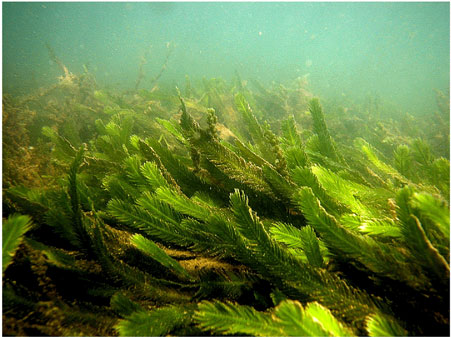
The students will perform comparative ecological and physiological assays among Australian native and invasive strains of C. taxifolia (and related species) to study their response (e.g., growth, reproduction, photosynthesis, gene expression) to distinct abiotic factors and global climate change scenarios (e.g., pCO2, pH, temperature, light, salinity, nutrients). Students will perform a multi-marker comparative phylogeographic study among 14 invasive (NSW and SA) and 4 native (QLD, NT, WA) populations to determine the origin of introduced populations in temperate Australia. Students will build a dual-marker DNA barcode database of all species of Caulerpa in Australia as a tool to identify morphologically compromised specimens. Additionally, they will perform a molecular-assisted evolutionary (phylogenetic) study of the genus and develop demographic models to predict the fate of Caulerpa populations under different abiotic scenarios. The students will have the option to choose the components of the project they desire.

Desirable skills: 4WD and manual driving, snorkelling, SCUBA diving certification (open water minimum), molecular biology experience.

For more information please contact Dr. Fred Gurgel (e-mail or telephone: +61 8 8222 9291).

Add to FacebookAdd to DiggAdd to Del.icio.usAdd to StumbleuponAdd to RedditAdd to BlinklistAdd to TwitterAdd to TechnoratiAdd to Yahoo BuzzAdd to Newsvine


Fanciful mathematics and ecological fantasy

3 05 2010

© flickr/themadlolscientist

Bear with me here, dear reader – this one’s a bit of a stretch for conservation relevance at first glance, but it is important. Also, it’s one of my own papers so I have the prerogative :-)

As some of you probably know, I dabble quite a bit in population dynamics theory, which basically means examining the mathematics people use to decipher ecological patterns. Why is this important? Well, most models predicting extinction risk, estimating optimal harvest rates, determining minimum viable population size and metapopulation dynamics for species’ persistence rely on good mathematical abstraction to be realistic. Get the maths wrong, and you could end up overharvesting a species (e.g., 99.99 % of fisheries management), underestimating extinction risk from habitat degradation, and getting your predictions wrong about the effects of invasive species. Expressed as an equation itself, (conservation) ecology = mathematics.

A long-standing family of models known as ‘phenomenological’ models (i.e., because they deal with the phenomenon of population size which is an emergent property of the mechanisms of birth, death and immigration) has been used to estimate everything from maximum sustainable yield targets, temporal abundance patterns, wildlife management interventions, extinction risk to epidemiological patterns. The basic form of the model describes the growth response, or the relationship between the population’s rate of change (growth) and its size. The simplest form (known as the Ricker), assumes a linear decline in population growth rate (r) as the number of individuals increases, which basically means that populations can’t grow indefinitely (i.e., they fluctuate around some carrying capacity if unperturbed). Read the rest of this entry »


Classics: Mesopredator Release

17 03 2010

© J. Short

Although popularised by Crooks & Soulé (1999), Soulé et al. (1988) first gave us the term that described how entire ecosystems can become unbalanced by a reduction of a higher trophic-level predator exerting so-called ‘top-down’ control on the abundance of species occupying lower trophic levels.

The idea had theoretical support in ecology (Wright et al. 1994; Litvaitis & Villafuerte 1996), but it was not until Soulé and colleagues described how the decline of dominant predators combines with habitat fragmentation to release top-down pressure on smaller predators, thereby increasing predation rates on prey lower down the trophic web.

Crooks & Soulé (1999) described an example where the decline in coyotes (Canis latrans) in combination with urbanisation-driven habitat fragmentation led to an increase in cat (Felis catus) densities and the subsequent decline in scrub-breeding birds. More recent examples attest to the importance of the mesopredator release phenomenon: Myers et al. (2007) described how the decline in large coastal shark species has allowed mesopredator cownose rays (Rhinoptera bonasus) to increase, leading to a reduction in commercially important shellfish densities; and Johnson et al. (2007) showed how dingoes (Canis lupus dingo) in Australia suppress populations of exotic predators such as cats and foxes, leading to more locally abundant populations of native marsupials (see previous post).

Conservation biologists have benefited from this knowledge because we’ve realised that top-order predators affect far more than their immediate prey. These examples really hit home how a fully functional community is required for ecosystem stability, so we should strive to preserve complete complements of communities, not just our favourite species.

CJA Bradshaw

Add to FacebookAdd to DiggAdd to Del.icio.usAdd to StumbleuponAdd to RedditAdd to BlinklistAdd to TwitterAdd to TechnoratiAdd to Yahoo BuzzAdd to Newsvine


Global pollinator declines

11 03 2010

Mention anything about ecosystem services – those ecological functions arising from the interactions between species that provide some benefit (source of food/clean water, health, etc.) to humanity1 – and one of the most cited examples is pollination.

It’s really a no-brainer, hence its popularity as an example. Pollinators (mainly insects, but birds, bats and other assorted species too) don’t exist to pollinate plants; rather, their principal source of food acquisition happens to spread around the gametes of the plants they regularly visit. Evolution has favoured the dependence of species in such ways because the mutualism benefits all involved, and in some cases, this dependence has become obligate. So when the habitats that pollinators need to survive are reduced or destroyed, inevitably their population sizes decline and the plants on which they feed lose their main sources of gene-spreading.

So what? Well, about 80 % of all wild plant species require insect pollinators for fruit and seed set, and about 75 % of all human crops require pollination by insects (mostly bees). So it’s pretty frightening to consider that although our global population is at 6.8 billion and growing rapidly, our main food pollinators (bees) are declining globally (see also previous post on bee declines). Indeed, domestic honey bee stocks have declined in the USA by 59 % since 1947 and in Europe by 25 % since 1985. Scared yet?

Another thing people don’t tend to get is that a bee cannot live on rapeseed alone. Most pollinators require intact forests to complete many of their other life history requirements (breeding, shelter, etc.) and merely forage occasionally in crop lands. Cut down all the adjacent bush, and your crops will suffer accordingly.

These, and other titbits to keep you awake at night and worry about what your grandchildren might eat are highlighted in a recent review in Trends in Ecology and Evolution by Potts and colleagues entitled Global pollinator declines: trends, impacts and drivers.

What’s driving all this loss? Several things, but it’s mainly due to ‘land-use change’ (a bullshit word people use generally to mean habitat loss, fragmentation and degradation). However, invasive species competition, pathogens and parasites, and climate change (and the synergies amongst all of these) are all contributing.

It always amazes me when people ask me why biodiversity is important. Despite the overwhelming knowledge we’ve accumulated about how functioning ecosystems make the planet liveable, despite it just being plainly stupid to think that humans are somehow removed from normal biological processes, and even with such in-your-face examples of global pollinator declines and the real, extremely worrying implication for food supplies, many people just don’t seem to get it. Every tree you cut down, every molecule of carbon dioxide you release, every drop of water you waste will punish you and your family directly for generations to come. How much more self-evident can you get?

Humanity seems to have a very poorly developed sense of self-preservation.

CJA Bradshaw

1It’s amazingly arrogant and anthropocentric to think of anything in ecosystems as ‘providing benefits to humanity’. After all, we’re just another species in a complex array of species within ecosystems – we just happen to be one of the numerically dominant ones, excel at ecosystem ‘engineering’ and as far as we know, are the only (semi-) sentient of the biologicals. Although the concept of ecosystem services is, I think, an essential abstraction to place emphasis on the importance of biodiversity conservation to the biodiversity ignorant, it does rub me a little the wrong way. It’s almost ascribing some sort of illogical religious perspective that the Earth was placed in its current form for our eventual benefit. We might be a fairly new species in geological time scales, but don’t think of ecosystems as mere provisions for our well-being.

ResearchBlogging.orgPotts, S., Biesmeijer, J., Kremen, C., Neumann, P., Schweiger, O., & Kunin, W. (2010). Global pollinator declines: trends, impacts and drivers Trends in Ecology & Evolution DOI: 10.1016/j.tree.2010.01.007

Add to FacebookAdd to DiggAdd to Del.icio.usAdd to StumbleuponAdd to RedditAdd to BlinklistAdd to TwitterAdd to TechnoratiAdd to Yahoo BuzzAdd to Newsvine


Vodcast on killing for conservation

24 02 2010

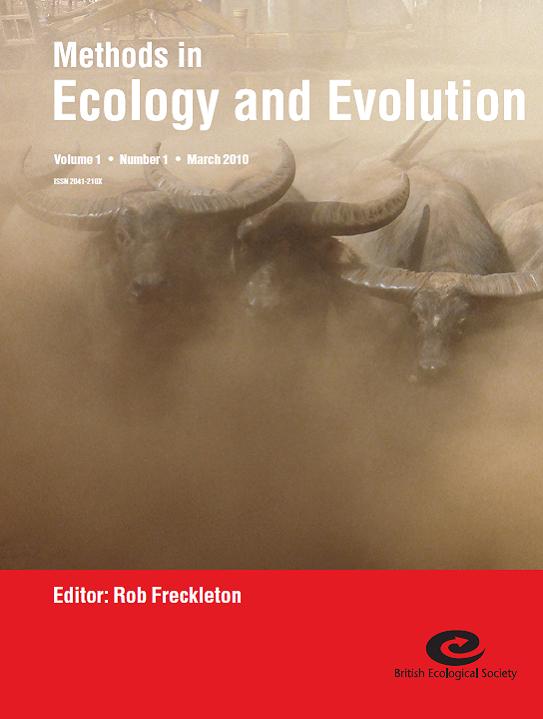
The inaugural issue of Methods in Ecology and Evolution came out today (see first issue editorial) and I am very pleased not only that our paper (Spatially explicit spreadsheet modelling for optimizing the efficiency of reducing invasive animal density) made it into the the paper line-up (see previous ConservationBytes.com post on the paper here), we also managed to score the journal’s cover image (buffalo image shown right: Asian swamp buffalo Bubalus bubalis introduced to Australia in the early 19th Century now populate much of the tropical north and cause severe environmental disturbances to savanna and wetland ecosystems. Despite a broad-scale cull of hundreds of thousands of free-ranging buffalo occurring in the 1980s and 1990s to eradicate brucellosis and tuberculosis, the population is recovering and continuing to threaten protected areas such as Kakadu National Park. A small wild harvest of several thousand buffalo occurs each year in Arnhem Land where mustering is aided by helicopters and on-ground vehicles. The buffalo pictured are housed in temporary holding pens and then shipped for live export. Photo credit: Jesse Northfield).

I also had the opportunity to chat with Journal Coordinator, Graziella Iossa, via Skype about the paper, and they have put up a YouTube vodcast of the interview itself. You can also check it out here.

Summary: Corey Bradshaw answers what is the main idea behind his work with co-authors, “Spatially explicit spreadsheet modelling for optimising the efficiency of reducing invasive animal density”. Further, he explains how their model advances methodology in ecology and evolution and finally shows how it could be applied by wildlife manager and practitioners with basic knowledge of computer models. Their Excel-spreadsheet ‘Spatio-Temporal Animal Reduction’ (S.T.A.R.) model is designed specifically to optimise the culling strategies for feral pigs, buffalo and horses in Kakadu National Park (northern Australia), but Corey explains how their aim was to make it easy enough for anyone to use and modify it so that it could be applied to any invasive species anywhere.

Congratulations to Editor-in-Chief Rob Freckleton, Graziella and the Associate Editors for a great first issue. Other titles include:

Keep them coming!

CJA Bradshaw

Add to FacebookAdd to DiggAdd to Del.icio.usAdd to StumbleuponAdd to RedditAdd to BlinklistAdd to TwitterAdd to TechnoratiAdd to Yahoo BuzzAdd to Newsvine


Inbreeding bad for invasives too

18 02 2010

I just came across this little gem of a paper in Molecular Ecology (not, by any stretch, a common forum for biodiversity conservation-related papers). It’s another one of those wonderful little experimental manipulation studies I love so much (see previous examples here and here).

I’ve written a lot before about the loss of genetic diversity as a contributing factor to extinction risk, via things like Allee effects and inbreeding depression. I’ve also posted blurbs about our work and that of others on what makes particular species prone to become extinct or invasive (i.e., the two sides of the same evolutionary coin). Now Crawford and Whitney bring these two themes together in their paper entitled Population genetic diversity influences colonization success.

Yes, the evolved traits of a particular species will set it up either to do well or very badly under rapid environmental change, and invasive species tend to be those with rapid generation times, defence mechanisms, heightened dispersal capacity and rapid growth. However, such traits generally only predict a small amount in the variation in invasion success – the other being of course propagule pressure (a composite measure of the number of individuals of a non-native species [propagule size] introduced to a novel environment and the number of introduction events [propagule number] into the new host environment).

But, that’s not all. It turns out that just as reduced genetic diversity enhances a threatened species’ risk of extinction, so too does it reduce the ‘invasiveness’ of a weed. Using experimentally manipulated populations of the weedy herb Arabidopsis thaliana (mouse-ear cress; see if you get the joke), Crawford & Whitney measured greater population-level seedling emergence rates, biomass production, flowering duration and reproduction in high-diversity populations compared to lower-diversity ones. Maintain a high genetic diversity and your invasive species has a much higher potential to colonise a novel environment and spread throughout it.

Of course, this is related to propagule pressure because the more individuals that invade/are introduced the more times, the higher the likelihood that different genomes will be introduced as well. This is extremely important from a management perspective because it means that well-mixed (outbred) samples of invasive species probably can do a lot more damage to native biodiversity than a few, genetically similar individuals alone. Indeed, most introductions probably don’t result in a successful invasion mainly because they don’t have the genetic diversity to get over the hump of inbreeding depression in the first place.

The higher genetic (and therefore, phenotypic) variation in your pool of introduced individuals, the great the chance that at least a few will survive and proliferate. This is also a good bit of extra proof for our proposal that invasion and extinction are two sides of the same evolutionary coin.

CJA Bradshaw

ResearchBlogging.orgCrawford, K., & Whitney, K. (2010). Population genetic diversity influences colonization success Molecular Ecology DOI: 10.1111/j.1365-294X.2010.04550.x

Bradshaw, C., Giam, X., Tan, H., Brook, B., & Sodhi, N. (2008). Threat or invasive status in legumes is related to opposite extremes of the same ecological and life-history attributes Journal of Ecology, 96, 869-883 DOI: 10.1111/j.1365-2745.2008.01408.x

Add to FacebookAdd to DiggAdd to Del.icio.usAdd to StumbleuponAdd to RedditAdd to BlinklistAdd to TwitterAdd to TechnoratiAdd to Yahoo BuzzAdd to Newsvine


February Issue of Conservation Letters

13 02 2010

Diver at Great Barrier Reef, Australia

Hard to believe we’re already at Volume 3 – introducing the latest issue of Conservation Letters (Volume 3, Issue 1, February 2010). For full access, click here.

Note too we’ve jumped from 5 to 6 papers per issue. Congratulations to all our authors. Keep those submissions coming!

CJA Bradshaw

Add to FacebookAdd to DiggAdd to Del.icio.usAdd to StumbleuponAdd to RedditAdd to BlinklistAdd to TwitterAdd to TechnoratiAdd to Yahoo BuzzAdd to Newsvine


Salamander Longshanks – breed them out

3 02 2010

© M. Dawson

Patrick McGoohan in his role as the less-than-sentimental King Edward ‘Longshanks’ in the 1995 production of ‘Braveheart’ said it best in his references to the invocation of ius primæ noctis:

If we can’t get them out, we’ll breed them out

What a charmer.

Dabbling in molecular ecology myself over the past few years with some gel-jockey types (e.g., Dick Frankham [author of Introduction to Conservation Genetics], Melanie Lancaster, Paul Sunnucks, Yuji Isagi inter alios), I’m quite fascinated by the application of good molecular techniques in conservation biology. So when I came across the paper by Fitzpatrick and colleagues entitled Rapid spread of invasive genes into a threatened native species in PNAS, I was quite pleased.

When people usually think about invasive species, they tend to think ‘predator eating naïve native prey’ or ‘weed outcompeting native plant’. These are all big problems (e.g., think feral cats in Australia or knapweed in the USA), but what people probably don’t think about is the insidious concept of ‘genomic extinction’. This is essentially a congener invasive species breeding with a native one, thus ‘diluting’ the native’s genome until it no longer resembles its former self. A veritable case of ‘breeding them out’.

Who cares if at least some of the original genome remains? Some would argue that ‘biodiversity’ should be measured in terms of genetic diversity, not just species richness (I tend to agree), so any loss of genes is a loss of biodiversity. Perhaps more practically, hybridisation can lead to reduced fitness, like we observed in hybridised fur seals on Macquarie Island.

Fitzpatrick and colleagues measured the introgression of alleles from the deliberately introduced barred tiger salamander (Ambystoma tigrinum mavortium) into threatened California tiger salamanders (A. californiense) out from the initial introduction site. While most invasive alleles neatly stopped appearing in sampled salamanders not far from the introduction site, three invasive alleles persisted up to 100 km from the introduction site. Not only was the distance remarkable for such a small, non-dispersing beastie, the rate of introgression was much faster than would be expected by chance (60 years), suggesting selection rather than passive genetic drift. Almost none of the native alleles persisted in the face of the three super-aggressive invasive alleles.

The authors claim that the effects on native salamander fitness are complex and it would probably be premature to claim that the introgression is contributing to their threatened status, but they do raise an important management conundrum. If species identification rests on the characterisation of a specific genome, then none of the native salamanders would qualify for protection under the USA’s Endangered Species Act. They believe then that so-called ‘genetic purity’ is an impractical conservation goal, but it can be used to shield remaining ‘mostly native’ populations from further introgression.

Nice study.

CJA Bradshaw

ResearchBlogging.orgFitzpatrick, B., Johnson, J., Kump, D., Smith, J., Voss, S., & Shaffer, H. (2010). Rapid spread of invasive genes into a threatened native species Proceedings of the National Academy of Sciences DOI: 10.1073/pnas.0911802107

Lancaster, M., Bradshaw, C.J.A., Goldsworthy, S.D., & Sunnucks, P. (2007). Lower reproductive success in hybrid fur seal males indicates fitness costs to hybridization Molecular Ecology, 16 (15), 3187-3197 DOI: 10.1111/j.1365-294X.2007.03339.x

Add to FacebookAdd to DiggAdd to Del.icio.usAdd to StumbleuponAdd to RedditAdd to BlinklistAdd to TwitterAdd to TechnoratiAdd to Yahoo BuzzAdd to Newsvine


Computer-assisted killing for conservation

12 01 2010

Many non-Australians might not know it, but Australia is overrun with feral vertebrates (not to mention weeds and invertebrates). We have millions of pigs, dogs, camels, goats, buffalo, deer, rabbits, cats, foxes and toads (to name a few). In a continent that separated from Gondwana about 80 million years ago, this allowed a fairly unique biota to evolve, such that when Aboriginals and later, Europeans, started introducing all these non-native species, it quickly became an ecological disaster. One of my first posts here on ConservationBytes.com was in fact about feral animals. Since then, I’ve written quite a bit on invasive species, especially with respect to mammal declines (see Few people, many threats – Australia’s biodiversity shame, Shocking continued loss of Australian mammals, Can we solve Australia’s mammal extinction crisis?).

So you can imagine that we do try to find the best ways to reduce the damage these species cause; unfortunately, we tend to waste a lot of money because density reduction culling programmes aren’t usually done with much forethought, organisation or associated research. A case in point – swamp buffalo were killed in vast numbers in northern Australia in the 1980s and 1990s, but now they’re back with a vengeance.

Enter S.T.A.R. – the clumsily named ‘Spatio-Temporal Animal Reduction’ [model] that we’ve just published in Methods in Ecology and Evolution (title: Spatially explicit spreadsheet modelling for optimising the efficiency of reducing invasive animal density by CR McMahon and colleagues).

This little Excel-based spreadsheet model is designed specifically to optimise the culling strategies for feral pigs, buffalo and horses in Kakadu National Park (northern Australia), but our aim was to make it easy enough to use and modify so that it could be applied to any invasive species anywhere (ok, admittedly it would work best for macro-vertebrates).

The application works on a grid of habitat types, each with their own carrying capacities for each species. We then assume some fairly basic density-feedback population models and allow animals to move among cells. We then hit them virtually with a proportional culling rate (which includes a hunting-efficiency feedback), and estimate the costs associated with each level of kill. The final outputs give density maps and graphs of the population trajectory.

We’ve added a lot of little features to maximise flexibility, including adjusting carrying capacities, movement rates, operating costs and overheads, and proportional harvest rates. The user can also get some basic sensitivity analyses done, or do district-specific culls. Finally, we’ve included three optimisation routines that estimate the best allocation of killing effort, for both maximising density reduction or working to a specific budget, and within a spatial or non-spatial context.

Our hope is that wildlife managers responsible for safeguarding the biodiversity of places like Kakadu National Park actually use this tool to maximise their efficiency. Kakadu has a particularly nasty set of invasive species, so it’s important those in charge get it right. So far, they haven’t been doing too well.

You can download the Excel program itself here (click here for the raw VBA code), and the User Manual is available here. Happy virtual killing!

CJA Bradshaw

P.S. If you’re concerned about animal welfare issues associated with all this, I invite you to read one of our recent papers on the subject: Convergence of culture, ecology and ethics: management of feral swamp buffalo in northern Australia.

Add to FacebookAdd to NewsvineAdd to DiggAdd to Del.icio.usAdd to StumbleuponAdd to RedditAdd to BlinklistAdd to Ma.gnoliaAdd to TechnoratiAdd to Furl

ResearchBlogging.orgC.R. McMahon, B.W. Brook,, N. Collier, & C.J.A. Bradshaw (2010). Spatially explicit spreadsheet modelling for optimising the efficiency of reducing invasive animal density Methods in Ecology and Evolution : 10.1111/j.2041-210X.2009.00002.x

Albrecht, G., McMahon, C., Bowman, D., & Bradshaw, C. (2009). Convergence of Culture, Ecology, and Ethics: Management of Feral Swamp Buffalo in Northern Australia Journal of Agricultural and Environmental Ethics, 22 (4), 361-378 DOI: 10.1007/s10806-009-9158-5

Bradshaw, C., Field, I., Bowman, D., Haynes, C., & Brook, B. (2007). Current and future threats from non-indigenous animal species in northern Australia: a spotlight on World Heritage Area Kakadu National Park Wildlife Research, 34 (6) DOI: 10.1071/WR06056