Want to work with us?

22 03 2013
© Beboy-Fotolia

© Beboy-Fotolia

Today we announced a HEAP of positions in our Global Ecology Lab for hot-shot, up-and-coming ecologists. If you think you’ve got what it takes, I encourage you to apply. The positions are all financed by the Australian Research Council from grants that Barry Brook, Phill Cassey, Damien Fordham and I have all been awarded in the last few years. We decided to do a bulk advertisement so that we maximise the opportunity for good science talent out there.

We’re looking for bright, mathematically adept people in palaeo-ecology, wildlife population modelling, disease modelling, climate change modelling and species distribution modelling.

The positions are self explanatory, but if you want more information, just follow the links and contacts given below. For my own selfish interests, I provide a little more detail for two of the positions for which I’m directly responsible – but please have a look at the lot.

Good luck!

CJA Bradshaw

Job Reference Number: 17986 & 17987

The world-leading Global Ecology Group within the School of Earth and Environmental Sciences currently has multiple academic opportunities. For these two positions, we are seeking a Postdoctoral Research Associate and a Research Associate to work in palaeo-ecological modelling. Read the rest of this entry »


Food for sex

18 03 2013
Quercus_KakFeed Photo
Kakapo are unique among the ~ 400 parrot species (Psittaciformes) for being flightless, nocturnal and extremely long-lived (up to 100 years!). Additionally, they are herbivorous (seeds, fruits, polen, plants), males can weigh up to 2-4 kg (40% heavier than females), and females lay their eggs on the ground or cavities – i.e., 3 eggs in a single clutch annually, although 2 clutches might occur if the nest fails at the beginning of the reproductive season or if the eggs are taken for artificial incubation.Native to New Zealand, kakapo once inhabited the subalpine fringes of forest and scrub. Polynesians (1000 years ago) and Europeans (mostly in the XIX Century) arrived in the archipelago accompanied by dogs, cats, rats and mustelids that cornered kakapo populations in the Fiordland region (south-west of the South Island) where it was declared extinct in 1989. In 1977, a population of some 200 individuals was found on Stewart Island – this population was already in decline to the claws and jaws of feral cats. By the 1980s, the failure of captive breeding programs prompted the transfer of 60 individuals from Steward to carnivore-free islands. The global (known) population ‘rocketed’ from 50 individuals in 1999 to 126 in the 2012 censuses and, consequently, the kakapo’s IUCN status changed in 2000 from ‘Extinct in the Wild’ to ‘Critically Endangered’. Under the management of the Kakapo Recovery Programme, kakapo are now present on the islands of CodfishAnchor and Little Barrier.

Inbreeding, system shocks caused by fire or cyclones (for example), or demographic stochasticity (by which two or more outcomes are possible) such as how many males and females will be born in a single year, are all factors that threaten the persistence of small and fragmented populations. They can, however, be reverted by conservation actions.

If you have ever taken dancing classes, you will be familiar with the scarcity of male partners and how this can jeopardize group learning. When reproduction, rather than salsa pirouettes, is at stake, a biased sex ratio can compromise the persistence of species. For instance, when females are unable to find males (or vice versa), fertility rates can collapse as a result – a well-known cause of an Allee effect (1). Curiously, natural selection can promote such bias by favouring a species’ investment in litters dominated by one of the two genders. The evolutionary formulation of such scenario is that females can adjust the sex ratio of their offspring depending on the amount of available resources (2) – see contrasting cross-taxa studies on this subject (3-5). Thus, when resources abound (e.g., food), mothers can afford the offspring’s gender requiring more resources to reach adulthood or once adulthood is reached, is less likely to reproduce successfully (6). This predisposition to one gender or another can be key to the conservation of endangered species (7).

The kakapo case

At the end of the 1990s, the New Zealand Department of Conservation placed dispensers of supplementary food in the territories of some kakapo (a rather enormous, flightless parrot Strigops habroptilus) to encourage their reproduction. Back then, only 60 individuals were left of the entire species . Unfortunately, those females with access to the supplemental food conceived 67% of male chicks (so exacerbating the fact that kakapo populations are naturally male-biased), while those females without extra feeding had 71% of female chicks (8). Something wasn’t working. Read the rest of this entry »


Science immortalised in cartoon

1 02 2013

Well, this is a first for me (us).

I’ve never had a paper of ours turned into a cartoon. The illustrious and brilliant ‘First Dog on the Moon‘ (a.k.a. Andrew Marlton) who is chief cartoonist for Australia’s irreverent ‘Crikey‘ online news magazine just parodied our Journal of Animal Ecology paper No need for disease: testing extinction hypotheses for the thylacine using multispecies metamodels that I wrote about a last month here on ConservationBytes.com.

Needless to say, I’m chuffed as a chuffed thing.

Enjoy!

Stripey


No need for disease

7 01 2013

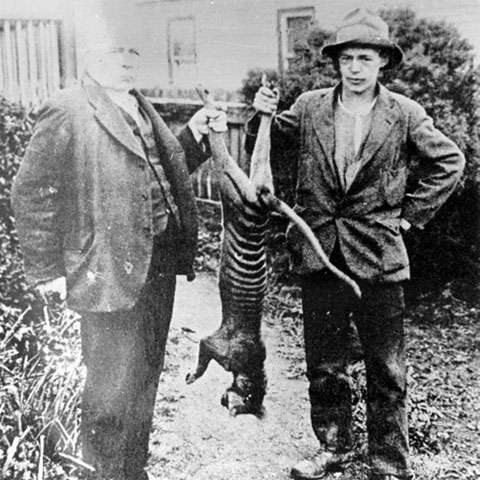
dead or alive thylacineIt’s human nature to abhor admitting an error, and I’d wager that it’s even harder for the average person (psycho- and sociopaths perhaps excepted) to admit being a bastard responsible for the demise of someone, or something else. Examples abound. Think of much of society’s unwillingness to accept responsibility for global climate disruption (how could my trips to work and occasional holiday flight be killing people on the other side of the planet?). Or, how about fishers refusing to believe that they could be responsible for reductions in fish stocks? After all, killing fish couldn’t possibly …er, kill fish? Another one is that bastion of reverse racism maintaining that ancient or traditionally living peoples (‘noble savages’) could never have wiped out other species.

If you’re a rational person driven by evidence rather than hearsay, vested interest or faith, then the above examples probably sound ridiculous. But rest assured, millions of people adhere to these points of view because of the phenomenon mentioned in the first sentence above. With this background then, I introduce a paper that’s almost available online (i.e., we have the DOI, but the online version is yet to appear). Produced by our extremely clever post-doc, Tom Prowse, the paper is entitled: No need for disease: testing extinction hypotheses for the thylacine using multispecies metamodels, and will soon appear in Journal of Animal Ecology.

Of course, I am biased being a co-author, but I think this paper really demonstrates the amazing power of retrospective multi-species systems modelling to provide insight into phenomena that are impossible to test empirically – i.e., questions of prehistoric (and in some cases, even data-poor historic) ecological change. The megafauna die-off controversy is one we’ve covered before here on ConservationBytes.com, and this is a related issue with respect to a charismatic extinction in Australia’s recent history – the loss of the Tasmanian thylacine (‘tiger’, ‘wolf’ or whatever inappropriate eutherian epithet one unfortunately chooses to apply). Read the rest of this entry »


Individuals a population to conserve make

28 11 2012
Unique in its genus, the saiga antelope inhabits the steppes and semi-desert environments in two sub-species split between Kazakhstan (Saiga tatarica tatarica, ~ 80% of the individuals) and Mongolia (Saiga tatarica mongolica). Locals hunt them for their meat and the (attributed) medicinal properties of male horns. Like many ungulates, the population is sensitive to winter severity and summer drought (which signal seasonal migrations of herds up to 1000 individuals). But illegal poaching has reduced the species from > 1 million in the 1970s to ~ 50000 currently (see RT video). The species has gone extinct in China and Ukraine, and has been IUCN “Critically Endangered” from 2002. The photo shows a male in The Centre for Wild Animals, Kalmykia, Russia (courtesy of Pavel Sorokin).

In a planet approaching 7 billion people, individual identity for most of us goes largely unnoticed by the rest. However, individuals are important because each can promote changes at different scales of social organisation, from families through to associations, suburbs and countries. This is not only true for the human species, but for any species (1).

It is less than two decades since many ecologists started pondering the ways of applying the understanding of how individuals behave to the conservation of species (2-9), which some now refer to as ‘conservation behaviour’ (10, 11). The nexus seems straightforward. The decisions a bear or a shrimp make daily to feed, mate, move or shelter (i.e., their behaviour) affect their fitness (survival + fertility). Therefore, the sum of those decisions across all individuals in a population or species matters to the core themes handled by conservation biology for ensuring long-term population viability (12), i.e., counteracting anthropogenic impacts, and (with the distinction introduced by Cawley, 13) reversing population decline and avoiding population extinction.

To use behaviour in conservation implies that we can modify the behaviour of individuals to their own benefit (and mostly, to the species’ benefit) or define behavioural metrics that can be used as indicators of population threats. A main research area dealing with behavioural modification is that of anti-predator training of captive individuals prior to re-introduction. Laden with nuances, those training programs have yielded contrasting results across species, and have only tested a few instances of ‘success’ after release into the wild (14). For example, captive black-tailed prairie dogs (Cynomys ludovicianus) exposed to stuffed hawks, caged ferrets and rattlesnakes had higher post-release survival than untrained individuals in the grasslands of the North American Great Plains (15). A clear example of a threat metric is aberrant behaviour triggered by hunting. Eleanor Milner-Gulland et al. (16) have reported a 46 % reduction in fertility rates in the saiga antelope (Saiga tatarica) in Russia from 1993-2002. This species forms harems consisting of one alpha male and 12 to 30 females. Local communities have long hunted this species, but illegal poaching for horned males from the early 1990s (17) ultimately led to harems with a female surplus (with an average sex ratio up to 100 females per male!). In them, only a few dominant females seem to reproduce because they engage in aggressive displays that dissuade other females from accessing the males. Read the rest of this entry »


Global Ecology postgraduate opportunities

12 08 2012

I should have published these ages ago, but like many things I have should have done earlier, I didn’t.

I also apologise for a bit of silence over the past week. After coming back from the ESP Conference in Portland, I’m now back at Stanford University working with Paul Ehrlich trying to finish our book (no sneak peaks yet, I’m afraid). I have to report that we’ve completed about about 75 % it, and I’m starting to feel like the end is in sight. We hope to have it published early in 2013.

So here they are – the latest 9 PhD offerings from us at the Global Ecology Laboratory. If you want to get more information, contact the first person listed as the first supervisor at the end of each project’s description.

1. Optimal survey and harvest models for South Australian macropods (I’ve advertised this before, but so far, no takers):

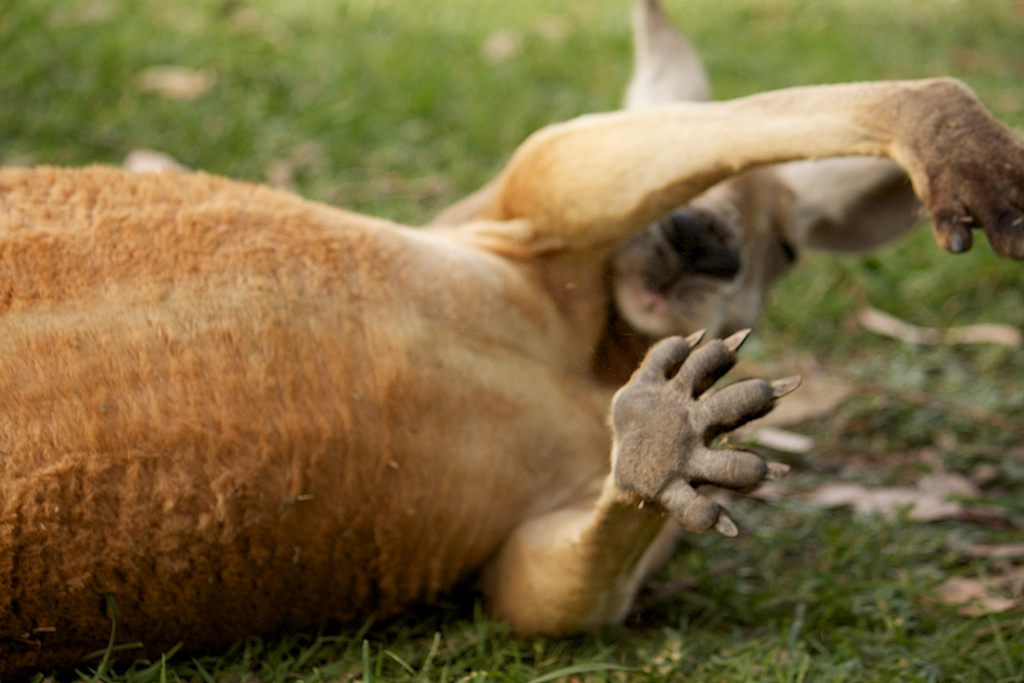
The South Australia Department of Environment, Water and Natural Resources (DEWNR) is custodian of a long-term macropod database derived from the State’s management of the commercial kangaroo harvest industry. The dataset entails aerial survey data for most of the State from 1978 to present, annual population estimates, quotas and harvests for three species: red kangaroo (Macropus rufus), western grey kangaroo (Macropus fuliginosus), and the euro (Macropus robustus erubescens).

DEWNR wishes to improve the efficiency of surveys and increase the precision of population estimates, as well as provide a more quantitative basis for setting harvest quotas.

We envisage that the PhD candidate will design and construct population models:

  • to predict population size/densities with associated uncertainty, linking fluctuations to environmental variability (including future climate change projections)
  • to evaluate the efficiency of spatially explicit aerial surveys
  • to estimate demographic parameters (e.g., survival rate) from life tables and
  • to estimate spatially explicit sustainable harvest quotas

 Supervisors: me, A/Prof. Phill Cassey, Dr Damien Fordham, Dr Brad Page (DEWNR), Professor Michelle Waycott (DEWNR).

2. Correcting for the Signor-Lipps effect

The ‘Signor-Lipps effect’ in palaeontology is the notion that the last organism of a given species will never be recorded as a fossil given the incomplete nature of the fossil record (the mirror problem is the ‘Jaanusson effect’, where the first occurrence is delayed past the true time of origination). This problem makes inference about the timing and speed of mass extinctions (and evolutionary diversification events) elusive. The problem is further complicated by the concept known as the ‘pull of the recent’, which states that the more time since an event occurred, the greater the probability that evidence of that event will have disappeared (e.g., erased by erosion, hidden by deep burial, etc.).

In a deep-time context, these problems confound the patterns of mass extinctions – i.e., the abruptness of extinction and the dynamics of recovery and speciation. This PhD project will apply a simulation approach to marine fossil time series (for genera and families, and some individual species) covering the Phanerozoic Aeon, as well as other taxa straddling the K-T boundary (Cretaceous mass extinction). The project will seek to correct for taphonomic biases and assess the degree to which extinction events for different major taxa were synchronous.

The results will also have implications for the famous Sepkoski curve, which describes the apparent logistic increase in marine species diversity over geological time with an approximate ‘carrying capacity’ reached during the Cenozoic. Despite recent demonstration that this increase is partially a taphonomic artefact, a far greater development and validation/sensitivity analysis of underlying statistical models is needed to resolve the true patterns of extinction and speciation over this period.

The approach will be to develop a series of models describing the interaction of the processes of speciation, local extinction and taphonomic ‘erasure’ (pull of the recent) to simulate how these processes interact to create the appearance of growth in numbers of taxa over time (Sepkoski curve) and the abruptness of mass extinction events. The candidate will estimate key parameters in the model to test whether the taphonomic effect is strong enough to be the sole explanation of the apparent temporal increase in species diversity, or whether true diversification accounts for this.

Supervisors: me, Prof. Barry Brook

3. Genotypic relationships of Australian rabbit populations and consequences for disease dynamics

Historical evidence suggests that there were multiple introduction events of European rabbits into Australia. In non-animal model weed systems it is clear that biocontrol efficacy is strongly influenced by the degree of genetic diversity and number of breed variants in the population.

The PhD candidate will build phylogenetic relationships for Australian rabbit populations and develop landscape genetic models for exploring the influence of myxomatosis and rabbit haemorrhagic disease virus (RHDV) on rabbit vital rates (survival, reproduction and dispersal) at regional and local scales. Multi-model synthesis will be used to quantify the relative roles of environment (including climate) and genotype on disease prevalence and virulence in rabbit populations.

Supervisors: A/Prof Phill Cassey, Dr Damien Fordham, Prof Barry Brook Read the rest of this entry »


Conservation catastrophes

22 02 2012

David Reed

The title of this post serves two functions: (1) to introduce the concept of ecological catastrophes in population viability modelling, and (2) to acknowledge the passing of the bloke who came up with a clever way of dealing with that uncertainty.

I’ll start with latter first. It came to my attention late last year that a fellow conservation biologist colleague, Dr. David Reed, died unexpectedly from congestive heart failure. I did not really mourn his passing, for I had never met him in person (I believe it is disingenuous, discourteous, and slightly egocentric to mourn someone who you do not really know personally – but that’s just my opinion), but I did think at the time that the conservation community had lost another clever progenitor of good conservation science. As many CB readers already know, we lost a great conservation thinker and doer last year, Professor Navjot Sodhi (and that, I did take personally). Coincidentally, both Navjot and David died at about the same age (49 and 48, respectively). I hope that the being in one’s late 40s isn’t particularly presaged for people in my line of business!

My friend, colleague and lab co-director, Professor Barry Brook, did, however, work a little with David, and together they published some pretty cool stuff (see References below). David was particularly good at looking for cross-taxa generalities in conservation phenomena, such as minimum viable population sizes, effects of inbreeding depression, applications of population viability analysis and extinction risk. But more on some of that below. Read the rest of this entry »


Better SAFE than sorry

30 11 2011

Last day of November already – I am now convinced that my suspicions are correct: time is not constant and in fact accelerates as you age (in mathematical terms, a unit of time becomes a progressively smaller proportion of the time elapsed since your birth, so this makes sense). But, I digress…

This short post will act mostly as a spruik for my upcoming talk at the International Congress for Conservation Biology next week in Auckland (10.30 in New Zealand Room 2 on Friday, 9 December) entitled: Species Ability to Forestall Extinction (SAFE) index for IUCN Red Listed species. The post also sets a bit of the backdrop to this paper and why I think people might be interested in attending.

As regular readers of CB will know, we published a paper this year in Frontiers in Ecology and the Environment describing a relatively simple metric we called SAFE (Species Ability to Forestall Extinction) that could enhance the information provided by the IUCN Red List of Threatened Species for assessing relative extinction threat. I won’t go into all the detail here (you can read more about it in this previous post), but I do want to point out that it ended up being rather controversial.

The journal ended up delaying final publication because there were 3 groups who opposed the metric rather vehemently, including people who are very much in the conservation decision-making space and/or involved directly with the IUCN Red List. The journal ended up publishing our original paper, the 3 critiques, and our collective response in the same issue (you can read these here if you’re subscribed, or email me for a PDF reprint). Again, I won’t go into an detail here because our arguments are clearly outlined in the response.

What I do want to highlight is that even beyond the normal in-print tête-à-tête the original paper elicited, we were emailed by several people behind the critiques who were apparently unsatisfied with our response. We found this slightly odd, because many of the objections just kept getting re-raised. Of particular note were the accusations that: Read the rest of this entry »


Sustainable kangaroo harvests

10 11 2011

When I first started this blog back in 2008, I extolled the conservation virtues of eating kangaroos over cattle and sheep. Now I want to put my academic money where my mouth is, and do some kangaroo harvest research.

Thanks to the South Australia Department of Environment and Natural Resources  (DENR) and the commercial kangaroo harvest industry, in conjunction with the University of Adelaide, I’m pleased to announce a new scholarship for a PhD candidate to work on a project entitled Optimal survey and harvest models for South Australian macropods based at the University of Adelaide’s School of Earth and Environmental Sciences.

DENR is custodian of a long-term macropod database derived from the State’s management of the commercial kangaroo harvest industry. The dataset entails aerial survey data for most of the State from 1978 to present, annual population estimates, quotas and harvests for three species: red kangaroo (Macropus rufus), western grey kangaroo (Macropus fuliginosus), and the euro (Macropus robustus erubescens). Read the rest of this entry »


Oceans need their giants

2 11 2011

Another great post from Salvador Herrando Pérez.

from adsown.blogspot.com

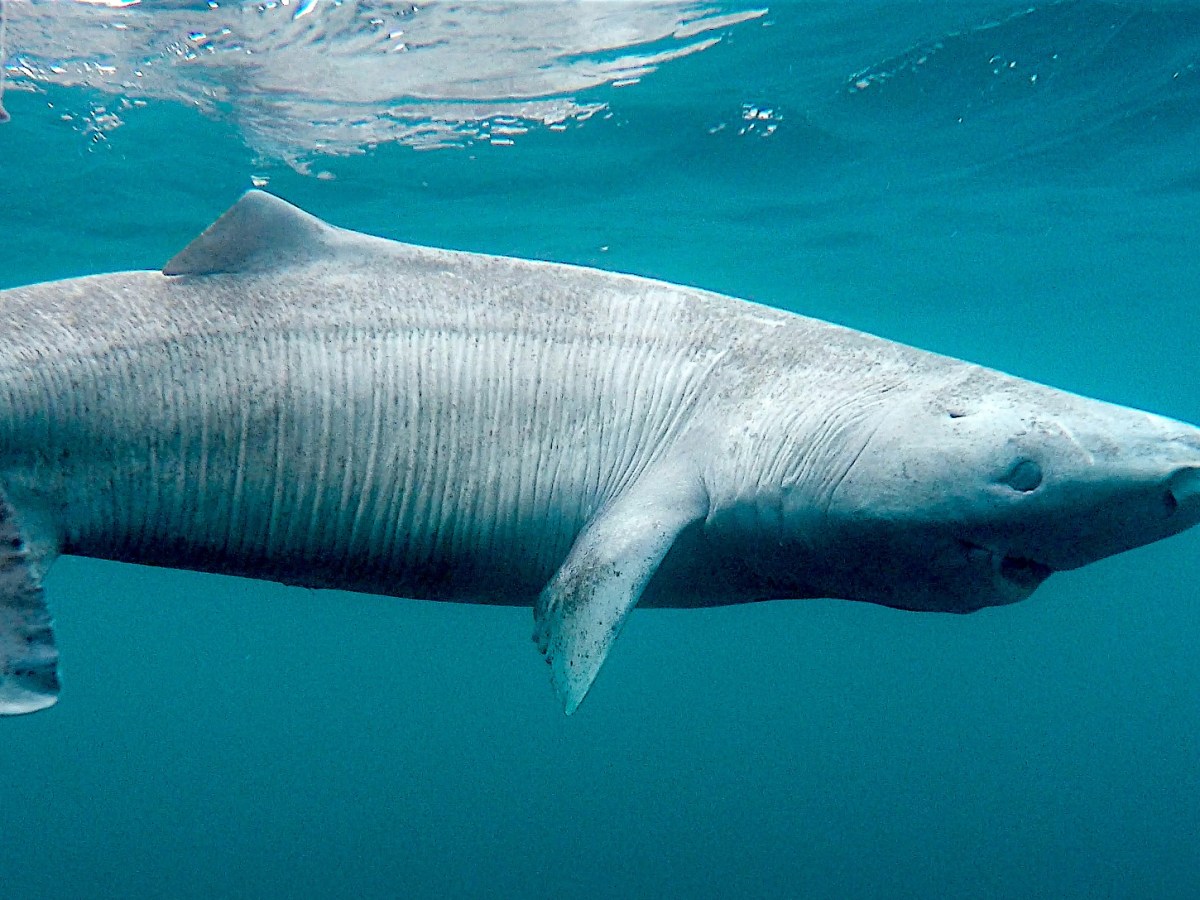
Commercial and sport fishing establish minimum body sizes for catches of many species to preserve fish stocks. Recent work reveals that sustainable fisheries also depend on the regulation of the harvest of the biggest fish, at least in long-lived species.

Growing up in Spain in the 1980s, I was taken by a Spanish television spot featuring a shoal of little fish sucking colourful dummies, and at the same time (how they managed, I never questioned) singing the motto Little fish? No, thanks. The then Ministry of Agriculture, Fishery and Food created this media campaign to create awareness among consumers not to buy immature fish at local markets – “…a 60-gram hake will only weigh 2 kg after two years” the add stated.

Indeed, the regulation of fish harvest by age classes is substantial to any fishery. In particular, the protection of younger fish has been a beacon of fishery policy and management that dates back to the 19th century when, among others, the British ichthyologist Ernst Holt concluded that: “…it is desirable that fish should have a chance of reproducing their species at least once before they are destroyed” 1. Very much in line with such principles, conventional fish stock management has in practice neglected the mature age classes2, other than for the fact that they are the end point of extraction and what we consumers eat on the table. Read the rest of this entry »


Where the sick buffalo roam

28 10 2011

It’s been some time coming, but today I’m proud to announce a new paper of ours that has just come out in Journal of Applied Ecology. While not strictly a conservation paper, it does provide some novel tools for modelling populations of threatened species in ways not available before.

The Genesis

A few years ago, a few of us (Bob LacyPhil Miller and JP Pollak of Vortex fame, Barry Brook, and a few others) got together in a little room at the Brookfield Zoo in the suburban sprawl of Chicago to have a crack at some new modelling approaches the Vortex crew had recently designed. The original results were pleasing, so we had a follow-up meeting last year (thanks to a few generous Zoo benefactors) and added a few post-docs and students to the mix (Damien FordhamClive McMahon, Tom Prowse, Mike Watts, Michelle Verant). The great population modeller Resit Akçakaya also came along to assist and talk about linkages with RAMAS.

Out of that particular meeting a series of projects was spawned, and one of those has now been published online: Novel coupling of individual-based epidemiological and demographic models predicts realistic dynamics of tuberculosis in alien buffalo.

The Coupling

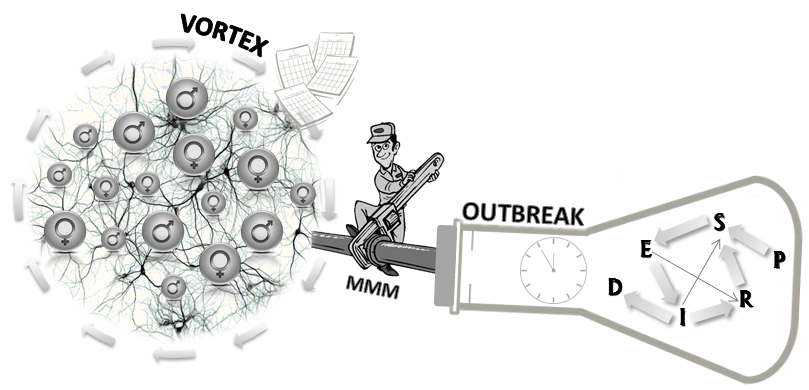
So what’s so novel about modelling disease in buffalo, and why would one care? Well, here’s the interesting part. The buffalo-tuberculosis example was a great way to examine just how well a new suite of models – and their command-centre module – predicted disease dynamics in a wild population. The individual-based population modelling software Vortex has been around for some time, and is now particularly powerful for predicting the extinction risk of small populations; the newest addition to the Vortex family, called Outbreak, is also an individual-based epidemiological model that allows a population of individuals exposed to a pathogen to progress over time (e.g., from susceptible, exposed, infectious, recovered/dead). Read the rest of this entry »


生态学 = ‘Ecology’ in China

13 05 2011

I’m just heading home after a very inspiring workshop organised by Fangliang He at Sun Yat-sen University in Guangzhou, China (I’m writing this from the Qantas Club in the Hong Kong airport).

Before I proceed to regale you with the salient details of the ‘International Symposium for Biodiversity and Theoretical Ecology‘, I am compelled to state publicly that I offer my sincerest condolences to Fangliang and his family; unfortunately Fangliang’s brother passed away while we were at the workshop and so Fangliang wasn’t able to spend much time reaping the fruits of his organisational labour. If you know Fangliang, please send him a supporting email.

That sad note aside, I am delighted to say that the workshop was compelling, challenging and also rather fortuitous. I was one of many overseas invitees, and I must say that I was at times overwhelmed by the size of the brains they managed to pack into the auditorium. Many colleagues I didn’t know attended, and I hope that many will become collaborators. The international invitees were: Read the rest of this entry »


Species’ Ability to Forestall Extinction – AudioBoo

8 04 2011

Here’s a little interview I just did on the SAFE index with ABC AM:

Not a bad job, really.

And here’s another one from Radio New Zealand:

CJA Bradshaw


What the hell is a banteng?

21 02 2011

A few years ago (ok, 6 years), ABC‘s Catalyst did a piece on our banteng research programme in Garig Gunak Barlu National Park in the Northern Territory. The show basically talks about the conservation and management conundrum of having a successful feral species in Australia that is also highly endangered in its native range (South East Asia). Do we shoot them all, or legislate them as an endangered species? It’s for Australians to decide.

I finally got around to uploading it on Youtube. I hope I haven’t contravened some copyright law, but I figure after such a lag, no one will care. I await the imminent contradiction from the ABC’s lawyers…

I hope you enjoy.

For the scientific papers arising from the work, see: Read the rest of this entry »


S.A.F.E. = Species Ability to Forestall Extinction

8 01 2011

Note: I’ve just rehashed this post (30/03/2011) because the paper is now available online (see comment stream). Stay tuned for the media release next week. – CJAB

I’ve been more or less underground for the last 3 weeks. It has been a wonderful break (mostly) from the normally hectic pace of academic life. Thanks for all those who remain despite the recent silence.

© Ezprezzo.com

But I’m back now with a post about a paper we’ve just had accepted in Frontiers in Ecology and Environment. In my opinion it’s a leap forward in how we measure relative threat risk among species, despite some criticism.

I’ve written in past posts about the ‘magic’ minimum number of individuals that should be in a population to reduce the chance of extinction from random events. The so-called ‘minimum viable population (MVP) size’ is basically the abundance of a (connected) population below which random events take over from factors causing sustained declines (Caughley’s distinction between the ‘declining’ and ‘small’ population paradigms).

Up until the last few years, the MVP size was considered to be a population- or species-specific value, and it required very detailed demographic, genetic and biogeographical data to estimate – not something that biologists tend to have at their fingertips for most high-risk species. However, several papers published by our group (Minimum viable population size and global extinction risk are unrelated, Minimum viable population size: a meta-analysis of 30 years of published estimates and Pragmatic population viability targets in a rapidly changing world) have shown that there is in fact little variation in this number among the best-studied species; both demographic and genetic data support a number of around 5000 to avoid crossing the deadly threshold.

Now the fourth paper in this series has just been accepted (sorry, no link yet, but I’ll let you all know as soon as it is available), and it was organised and led by Reuben Clements, and co-written by me, Barry Brook and Bill Laurance.

The idea is fairly simple and it somewhat amazes me that it hasn’t been implemented before. The SAFE (Species Ability to Forestall Extinction) index is simply the distance a population is (in terms of abundance) from its MVP. In the absence of a species-specific value, we used the 5000-individual threshold. Thus, Read the rest of this entry »


Mega-meta-model manager

24 07 2010

As Barry Brook just mentioned over at BraveNewClimate.com, I’ll be travelling with him and several of our lab to Chicago tomorrow to work on some new aspects of linked climate, disease, meta-population, demographic and vegetation modelling. Barry has this to say, so I won’t bother re-inventing the wheel:

… working for a week with Dr Robert LacyProf Resit Akcakaya and collaborators, on integrating spatial-demographic ecological models with climate change forecasts, and implementing multi-species projections (with the aim of improving estimates of extinction risk and provide better ranking of management and adaptation options). This work builds on a major research theme at the global ecology lab, and consequently, a whole bunch of my team are going with me — Prof Corey Bradshaw (lab co-director), my postdocs Dr Damien FordhamDr Mike Watts and Dr Thomas Prowse and Corey’s and my ex-postdoc, Dr Clive McMahon. This builds on earlier work that Corey and I had been pursuing, which he described on ConservationBytes last year.

The ‘mega-meta-model manager’ part is a clever piece of control-centre software that integrates these disparate ecological, climate and disease dynamic inputs. Should be some good papers coming out of the work soon.

Of course, I’ll continue to blog over the coming week. I’m not looking forward to the 30-hour travel tomorrow to Chicago, but it should be fun and productive once I get there.

CJA Bradshaw

Add to FacebookAdd to DiggAdd to Del.icio.usAdd to StumbleuponAdd to RedditAdd to BlinklistAdd to TwitterAdd to TechnoratiAdd to Yahoo BuzzAdd to Newsvine


Fanciful mathematics and ecological fantasy

3 05 2010

© flickr/themadlolscientist

Bear with me here, dear reader – this one’s a bit of a stretch for conservation relevance at first glance, but it is important. Also, it’s one of my own papers so I have the prerogative :-)

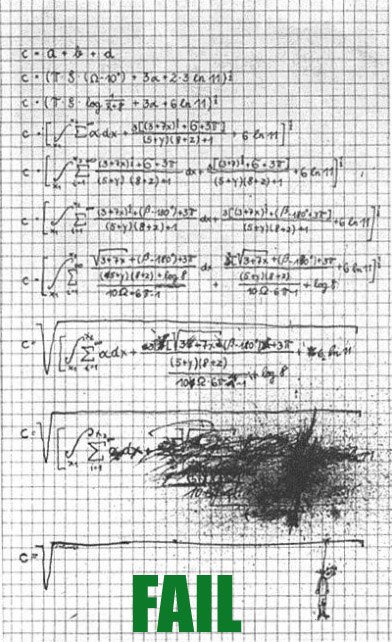
As some of you probably know, I dabble quite a bit in population dynamics theory, which basically means examining the mathematics people use to decipher ecological patterns. Why is this important? Well, most models predicting extinction risk, estimating optimal harvest rates, determining minimum viable population size and metapopulation dynamics for species’ persistence rely on good mathematical abstraction to be realistic. Get the maths wrong, and you could end up overharvesting a species (e.g., 99.99 % of fisheries management), underestimating extinction risk from habitat degradation, and getting your predictions wrong about the effects of invasive species. Expressed as an equation itself, (conservation) ecology = mathematics.

A long-standing family of models known as ‘phenomenological’ models (i.e., because they deal with the phenomenon of population size which is an emergent property of the mechanisms of birth, death and immigration) has been used to estimate everything from maximum sustainable yield targets, temporal abundance patterns, wildlife management interventions, extinction risk to epidemiological patterns. The basic form of the model describes the growth response, or the relationship between the population’s rate of change (growth) and its size. The simplest form (known as the Ricker), assumes a linear decline in population growth rate (r) as the number of individuals increases, which basically means that populations can’t grow indefinitely (i.e., they fluctuate around some carrying capacity if unperturbed). Read the rest of this entry »


Vodcast on killing for conservation

24 02 2010

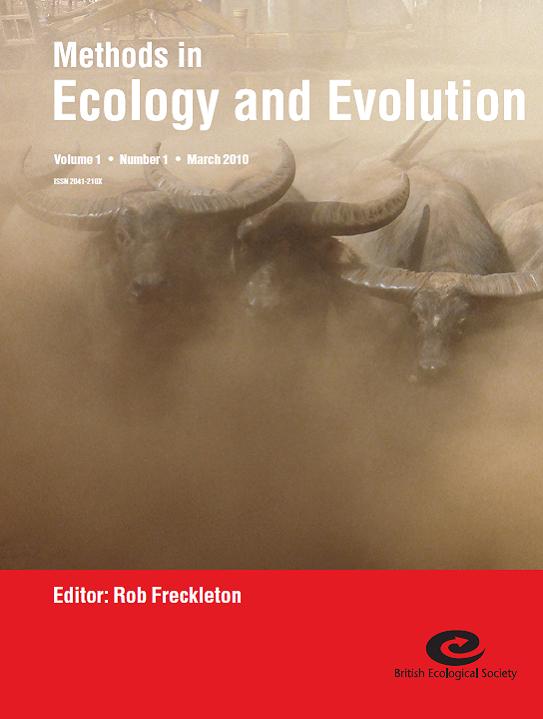
The inaugural issue of Methods in Ecology and Evolution came out today (see first issue editorial) and I am very pleased not only that our paper (Spatially explicit spreadsheet modelling for optimizing the efficiency of reducing invasive animal density) made it into the the paper line-up (see previous ConservationBytes.com post on the paper here), we also managed to score the journal’s cover image (buffalo image shown right: Asian swamp buffalo Bubalus bubalis introduced to Australia in the early 19th Century now populate much of the tropical north and cause severe environmental disturbances to savanna and wetland ecosystems. Despite a broad-scale cull of hundreds of thousands of free-ranging buffalo occurring in the 1980s and 1990s to eradicate brucellosis and tuberculosis, the population is recovering and continuing to threaten protected areas such as Kakadu National Park. A small wild harvest of several thousand buffalo occurs each year in Arnhem Land where mustering is aided by helicopters and on-ground vehicles. The buffalo pictured are housed in temporary holding pens and then shipped for live export. Photo credit: Jesse Northfield).

I also had the opportunity to chat with Journal Coordinator, Graziella Iossa, via Skype about the paper, and they have put up a YouTube vodcast of the interview itself. You can also check it out here.

Summary: Corey Bradshaw answers what is the main idea behind his work with co-authors, “Spatially explicit spreadsheet modelling for optimising the efficiency of reducing invasive animal density”. Further, he explains how their model advances methodology in ecology and evolution and finally shows how it could be applied by wildlife manager and practitioners with basic knowledge of computer models. Their Excel-spreadsheet ‘Spatio-Temporal Animal Reduction’ (S.T.A.R.) model is designed specifically to optimise the culling strategies for feral pigs, buffalo and horses in Kakadu National Park (northern Australia), but Corey explains how their aim was to make it easy enough for anyone to use and modify it so that it could be applied to any invasive species anywhere.

Congratulations to Editor-in-Chief Rob Freckleton, Graziella and the Associate Editors for a great first issue. Other titles include:

Keep them coming!

CJA Bradshaw

Add to FacebookAdd to DiggAdd to Del.icio.usAdd to StumbleuponAdd to RedditAdd to BlinklistAdd to TwitterAdd to TechnoratiAdd to Yahoo BuzzAdd to Newsvine


Computer-assisted killing for conservation

12 01 2010

Many non-Australians might not know it, but Australia is overrun with feral vertebrates (not to mention weeds and invertebrates). We have millions of pigs, dogs, camels, goats, buffalo, deer, rabbits, cats, foxes and toads (to name a few). In a continent that separated from Gondwana about 80 million years ago, this allowed a fairly unique biota to evolve, such that when Aboriginals and later, Europeans, started introducing all these non-native species, it quickly became an ecological disaster. One of my first posts here on ConservationBytes.com was in fact about feral animals. Since then, I’ve written quite a bit on invasive species, especially with respect to mammal declines (see Few people, many threats – Australia’s biodiversity shame, Shocking continued loss of Australian mammals, Can we solve Australia’s mammal extinction crisis?).

So you can imagine that we do try to find the best ways to reduce the damage these species cause; unfortunately, we tend to waste a lot of money because density reduction culling programmes aren’t usually done with much forethought, organisation or associated research. A case in point – swamp buffalo were killed in vast numbers in northern Australia in the 1980s and 1990s, but now they’re back with a vengeance.

Enter S.T.A.R. – the clumsily named ‘Spatio-Temporal Animal Reduction’ [model] that we’ve just published in Methods in Ecology and Evolution (title: Spatially explicit spreadsheet modelling for optimising the efficiency of reducing invasive animal density by CR McMahon and colleagues).

This little Excel-based spreadsheet model is designed specifically to optimise the culling strategies for feral pigs, buffalo and horses in Kakadu National Park (northern Australia), but our aim was to make it easy enough to use and modify so that it could be applied to any invasive species anywhere (ok, admittedly it would work best for macro-vertebrates).

The application works on a grid of habitat types, each with their own carrying capacities for each species. We then assume some fairly basic density-feedback population models and allow animals to move among cells. We then hit them virtually with a proportional culling rate (which includes a hunting-efficiency feedback), and estimate the costs associated with each level of kill. The final outputs give density maps and graphs of the population trajectory.

We’ve added a lot of little features to maximise flexibility, including adjusting carrying capacities, movement rates, operating costs and overheads, and proportional harvest rates. The user can also get some basic sensitivity analyses done, or do district-specific culls. Finally, we’ve included three optimisation routines that estimate the best allocation of killing effort, for both maximising density reduction or working to a specific budget, and within a spatial or non-spatial context.

Our hope is that wildlife managers responsible for safeguarding the biodiversity of places like Kakadu National Park actually use this tool to maximise their efficiency. Kakadu has a particularly nasty set of invasive species, so it’s important those in charge get it right. So far, they haven’t been doing too well.

You can download the Excel program itself here (click here for the raw VBA code), and the User Manual is available here. Happy virtual killing!

CJA Bradshaw

P.S. If you’re concerned about animal welfare issues associated with all this, I invite you to read one of our recent papers on the subject: Convergence of culture, ecology and ethics: management of feral swamp buffalo in northern Australia.

Add to FacebookAdd to NewsvineAdd to DiggAdd to Del.icio.usAdd to StumbleuponAdd to RedditAdd to BlinklistAdd to Ma.gnoliaAdd to TechnoratiAdd to Furl

ResearchBlogging.orgC.R. McMahon, B.W. Brook,, N. Collier, & C.J.A. Bradshaw (2010). Spatially explicit spreadsheet modelling for optimising the efficiency of reducing invasive animal density Methods in Ecology and Evolution : 10.1111/j.2041-210X.2009.00002.x

Albrecht, G., McMahon, C., Bowman, D., & Bradshaw, C. (2009). Convergence of Culture, Ecology, and Ethics: Management of Feral Swamp Buffalo in Northern Australia Journal of Agricultural and Environmental Ethics, 22 (4), 361-378 DOI: 10.1007/s10806-009-9158-5

Bradshaw, C., Field, I., Bowman, D., Haynes, C., & Brook, B. (2007). Current and future threats from non-indigenous animal species in northern Australia: a spotlight on World Heritage Area Kakadu National Park Wildlife Research, 34 (6) DOI: 10.1071/WR06056


The elusive Allee effect

8 01 2010

© D. Bishop, Getty Images

In keeping with the theme of extinctions from my last post, I want to highlight a paper we’ve recently had published online early in Ecology entitled Limited evidence for the demographic Allee effect from numerous species across taxa by Stephen Gregory and colleagues. This one is all about Allee effects – well, it’s all about how difficult it is to find them!

If you recall, an Allee effect is a “…positive relationship between any component of individual fitness and either numbers or density of conspecifics” (Stephens et al. 1999, Oikos 87:185-190) and the name itself is attributed to Warder Clyde Allee. There are many different kinds of Allee effects (see previous Allee effects post for Berec and colleagues’ full list of types and definitions), but the two I want to focus on here are component and demographic Allee effects.

Now, the evidence for component Allee effects abounds, but finding real instances of reduced population growth rate at low population sizes is difficult. And this is really what we should be focussing on in conservation biology – a lower-than-expected growth rate at low population sizes means that recovery efforts for rare and endangered species must be stepped up considerably because their rebound potential is lower than it should be.

We therefore queried over 1000 time series of abundance from many different species and lo and behold, the evidence for that little dip in population growth rate at low densities was indeed rare – about 1 % of all time series examined!

I suppose this isn’t that surprising, but what was interesting was that this didn’t depend on sample size (time series where Allee models had highest support were in fact shorter) or variability (they were also less variable). All this seems a little counter-intuitive, but it gels with what’s been assumed or hypothesised before. Measurement error, climate variability and the sheer paucity of low-abundance time series makes their detection difficult. Nonetheless, for those series showing demographic Allee effects, their relative model support was around 12%, suggesting that such density feedback might influence the population growth rate of just over 1 in 10 natural populations. In fact, the many problems with density feedback detections in time series that load toward negative feedback (sometimes spuriously) suggest that even our small sample of Allee time series are probably vastly underestimated. We have pretty firm evidence that inbreeding is prevalent in threatened species, and demographic Allee effects are the mechanism by which such depression can lead a population down the extinction vortex.

CJA Bradshaw

Add to FacebookAdd to NewsvineAdd to DiggAdd to Del.icio.usAdd to StumbleuponAdd to RedditAdd to BlinklistAdd to Ma.gnoliaAdd to TechnoratiAdd to Furl

ResearchBlogging.orgGregory, S., Bradshaw, C.J.A., Brook, B.W., & Courchamp, F. (2009). Limited evidence for the demographic Allee effect from numerous species across taxa Ecology DOI: 10.1890/09-1128