It’s time for environmentalists to give nuclear a fair go

16 12 2014

This is an article by Barry Brook and mepublished today in The Conversation. I’m republishing it here.

Should nuclear energy be part of Australia’s (and many other countries’) future energy mix? We think so, particularly as part of a solution to reduce greenhouse gas emissions and prevent dangerous climate change.

But there are other reasons for supporting nuclear technology. In a paper recently published in Conservation Biology, we show that an energy mix including nuclear power has lowest impact on wildlife and ecosystems — which is what we need given the dire state of the world’s biodiversity.

In response, we have gathered signatures of 70 leading conservation scientists from 14 countries in an open letter asking that the environmental community:

weigh up the pros and cons of different energy sources using objective evidence and pragmatic trade-offs, rather than simply relying on idealistic perceptions of what is ‘green’.

Energy demand is rising

Modern society is a ceaseless consumer of energy, and growing demand won’t stop any time soon, even under the most optimistic energy-efficiency scenario.

Although it goes without saying that we must continue to improve energy efficiency in the developed world, the momentum of population growth and rising living standards, particularly in the developing world, means we will continue to need more energy for decades to come. No amount of wishful thinking for reduced demand will change that.

But which are the best forms of energy to supply the world, and not add to the biodiversity crisis?

Assessing our energy options

In short, the argument goes like this.

To avoid the worst ravages of climate change, we have to decarbonise fully (eliminate net carbon emissions from) the global electricity sector. Wildlife and ecosystems are threatened by this climate disruption, largely caused by fossil-fuel derived emissions.

But they are also imperilled by land transformation (i.e., habitat loss) caused in part by other energy sources, such as flooded areas (usually forests) for hydro-electricity and all the associated road development this entails, agricultural areas needed for biofuels, and large spaces needed for wind and solar farms.

Energy density of different fuels. This infographic shows the amount of energy embodied in uranium, coal, natural gas and a chemical battery, scaled to provide enough energy for a lifetime of use in the developed world. Shown are the amount of each source needed to provide same amount of energy, equivalent to 220 kWh of energy per day for 80 years.

Read the rest of this entry »


An Open Letter to Environmentalists on Nuclear Energy

15 12 2014

nuclear biodiversityProfessor Barry W. Brook, Chair of Environmental Sustainability, University of Tasmania, Australia. barry.brook@utas.edu.au

Professor Corey J.A. Bradshaw, Sir Hubert Wilkins Chair of Climate Change, The Environment Institute, The University of Adelaide, Australia. corey.bradshaw@adelaide.edu.au

An Open Letter to Environmentalists:

As conservation scientists concerned with global depletion of biodiversity and the degradation of the human life-support system this entails, we, the co-signed, support the broad conclusions drawn in the article Key role for nuclear energy in global biodiversity conservation published in Conservation Biology (Brook & Bradshaw 2014).

Brook and Bradshaw argue that the full gamut of electricity-generation sources—including nuclear power—must be deployed to replace the burning of fossil fuels, if we are to have any chance of mitigating severe climate change. They provide strong evidence for the need to accept a substantial role for advanced nuclear power systems with complete fuel recycling—as part of a range of sustainable energy technologies that also includes appropriate use of renewables, energy storage and energy efficiency. This multi-pronged strategy for sustainable energy could also be more cost-effective and spare more land for biodiversity, as well as reduce non-carbon pollution (aerosols, heavy metals).

Given the historical antagonism towards nuclear energy amongst the environmental community, we accept that this stands as a controversial position. However, much as leading climate scientists have recently advocated the development of safe, next-generation nuclear energy systems to combat global climate change (Caldeira et al. 2013), we entreat the conservation and environmental community to weigh up the pros and cons of different energy sources using objective evidence and pragmatic trade-offs, rather than simply relying on idealistic perceptions of what is ‘green’.

Although renewable energy sources like wind and solar will likely make increasing contributions to future energy production, these technology options face real-world problems of scalability, cost, material and land use, meaning that it is too risky to rely on them as the only alternatives to fossil fuels. Nuclear power—being by far the most compact and energy-dense of sources—could also make a major, and perhaps leading, contribution. As scientists, we declare that an evidence-based approach to future energy production is an essential component of securing biodiversity’s future and cannot be ignored. It is time that conservationists make their voices heard in this policy arena.

Signatories (in alphabetical order)

  1. Professor Andrew Balmford, Professor of Conservation Science, Department of Zoology, University of Cambridge, United Kingdom. apb12@cam.ac.uk
  2. Professor Andrew J. Beattie, Emeritus, Department of Biological Sciences, Macquarie University, Australia. abeattie@bio.mq.edu.au
  3. Assistant Professor David P. Bickford, Department of Biological Sciences, National University of Singapore, Singapore. dbsbdp@nus.edu.sg
  4. Professor Tim M. Blackburn, Professor of Invasion Biology, Department of Genetics, Evolution and Environment, Centre for Biodiversity and Environment Research, University College London, United Kingdom. t.blackburn@ucl.ac.uk
  5. Professor Daniel T. Blumstein, Chair, Department of Ecology and Evolutionary Biology, University of California Los Angeles, USA. marmots@ucla.edu
  6. Professor Luigi Boitani, Dipartimento di Biologia, e Biotecnologie Charles Darwin, Sapienza Università di Roma, Italy. luigi.boitani@uniroma1.it
  7. Professor Mark S. Boyce, Professor and Alberta Conservation Association Chair in Fisheries and Wildlife, Department of Biological Sciences, University of Alberta, Canada. boyce@ualberta.ca
  8. Professor David M.J.S. Bowman, Professor of Environmental Change Biology, School of Biological Sciences, University of Tasmania, Australia. david.bowman@utas.edu.au
  9. Professor Scott P. Carroll, Institute for Contemporary Evolution and Department of Entomology and Nematology, University of California Davis, USA. spcarroll@ucdavis.edu
  10. Associate Professor Phillip Cassey, School of Earth and Environmental Sciences, The University of Adelaide, Australia.
  11. Professor F. Stuart Chapin III, Professor Emeritus of Ecology, Department of Biology and Wildlife, Institute of Arctic Biology, University of Alaska Fairbanks, USA. terry.chapin@alaska.edu
  12. Professor David Choquenot, Director, Institute for Applied Ecology, University of Canberra, Australia. david.choquenot@canberra.edu.au
  13. Dr Ben Collen, Centre for Biodiversity and Environment Research, University College London, United Kingdom. b.collen@ucl.ac.uk
  14. Professor Richard T. Corlett, Director, Centre for Integrative Conservation, Xishuangbanna Tropical Botanical Garden, Chinese Academy of Sciences, China. corlett@xtbg.org.cn
  15. Dr Franck Courchamp, Director of Research, Laboratoire Ecologie, Systématique et Evolution – UMR CNRS, Member of the European Academy of Sciences, Université Paris-Sud, France. franck.courchamp@u-psud.fr
  16. Professor Chris B. Daniels, Director, Barbara Hardy Institute, University of South Australia, Australia. chris.daniels@unisa.edu.au
  17. Professor Chris Dickman, Professor of Ecology, School of Biological Sciences, The University of Sydney, Australia. chris.dickman@sydney.edu.au
  18. Associate Professor Don Driscoll, College of Medicine, Biology and Environment, The Australian National University, Australia. don.driscoll@anu.edu.au
  19. Professor David Dudgeon, Chair Professor of Ecology and Biodiversity, School of Biological Sciences, The University of Hong Kong, Hong Kong SAR, China. ddudgeon@hku.hk
  20. Associate Professor Erle C. Ellis, Geography and Environmental Systems, University of Maryland, USA. ece@umbc.edu
  21. Dr Damien A. Fordham, School of Earth and Environmental Sciences, The University of Adelaide, Australia. damien.fordham@adelaide.edu.au
  22. Dr Eddie Game, Senior Scientist, The Nature Conservancy Worldwide Office, Australia. egame@tnc.org
  23. Professor Kevin J. Gaston, Professor of Biodiversity and Conservation, Director, Environment and Sustainability Institute, University of Exeter, United Kingdom. k.j.gaston@exeter.ac.uk
  24. Professor Dr Jaboury Ghazoul, Professor of Ecosystem Management, ETH Zürich, Institute for Terrestrial Ecosystems, Switzerland. jaboury.ghazoul@env.ethz.ch
  25. Professor Robert G. Harcourt, Department of Biological Sciences, Macquarie University, Australia. robert.harcourt@mq.edu.au
  26. Professor Susan P. Harrison, Department of Environmental Science and Policy, University of California Davis, USA. spharrison@ucdavis.edu
  27. Professor Fangliang He, Canada Research Chair in Biodiversity and Landscape Modelling, Department of Renewable Resources, University of Alberta, Canada and State Key Laboratory of Biocontrol and School of Life Sciences, Sun-yat Sen University, Guangzhou, China. fhe@ualberta.ca
  28. Professor Mark A. Hindell, Institute for Marine and Antarctic Studies, University of Tasmania, Australia. mark.hindell@utas.edu.au
  29. Professor Richard J. Hobbs, School of Plant Biology, The University of Western Australia, Australia. richard.hobbs@uwa.edu.au
  30. Professor Ove Hoegh-Guldberg, Professor and Director, Global Change Institute, The University of Queensland, Australia. oveh@uq.edu.au
  31. Professor Marcel Holyoak, Department of Environmental Science and Policy, University of California, Davis, USA. maholyoak@ucdavis.edu
  32. Professor Lesley Hughes, Distinguished Professor, Department of Biological Sciences, Macquarie University, Australia. lesley.hughes@mq.edu.au
  33. Professor Christopher N. Johnson, Department of Zoology, University of Tasmania, Australia. c.n.johnson@utas.edu.au
  34. Dr Julia P.G. Jones, Senior Lecturer in Conservation Biology, School of Environment, Natural Resources and Geography, Bangor University, United Kingdom. julia.jones@bangor.ac.uk
  35. Professor Kate E. Jones, Biodiversity Modelling Research Group, University College London, United Kingdom. kate.e.jones@ucl.ac.uk
  36. Dr Menna E. Jones, Department of Zoology, University of Tasmania, Australia. menna.jones@utas.edu.au
  37. Dr Lucas Joppa, Conservation Biologist, United Kingdom. lujoppa@microsoft.com
  38. Associate Professor Lian Pin Koh, School of Earth and Environmental Sciences, The University of Adelaide, Australia. lianpin.koh@adelaide.edu.au
  39. Professor Charles J. Krebs, Emeritus, Department of Zoology, University of British Columbia, Canada. krebs@zoology.ubc.ca
  40. Dr Robert C. Lacy, Conservation Biologist, USA. rlacy@ix.netcom.com
  41. Associate Professor Susan Laurance, Centre for Tropical Biodiversity and Climate Change, Centre for Tropical Environmental and Sustainability Studies, James Cook University, Australia. susan.laurance@jcu.edu.au
  42. Professor William F. Laurance, Distinguished Research Professor and Australian Laureate, Prince Bernhard Chair in International Nature Conservation, Centre for Tropical Environmental and Sustainability Science and School of Marine and Tropical Biology, James Cook University, Australia. bill.laurance@jcu.edu.au
  43. Professor Peter Ng Kee Lin, Department of Biological Sciences, National University of Singapore, Singapore. dbsngkl@nus.edu.sg
  44. Professor Thomas E. Lovejoy, Senior Fellow at the United Nations Foundation and University Professor in the Environmental Science and Policy department, George Mason University, USA. tlovejoy@unfoundation.org
  45. Dr Antony J Lynam, Global Conservation Programs, Wildlife Conservation Society, USA. tlynam@wcs.org
  46. Professor Anson W. Mackay, Department of Geography, University College London, United Kingdom. ans.mackay@ucl.ac.uk
  47. Professor Helene D. Marsh, College of Marine and Environmental Sciences, Centre for Tropical Water and Aquatic Ecosystem Research, James Cook University, Australia. helene.marsh@jcu.edu.au
  48. Professor Michelle Marvier, Department of Environmental Studies and Sciences, Santa Clara University, USA. mmarvier@scu.edu
  49. Professor Lord Robert M. May of Oxford OM AC Kt FRS, Department of Zoology, University of Oxford, United Kingdom. robert.may@zoo.ox.ac.uk
  50. Dr Margaret M. Mayfield, Director, The Ecology Centre, School of Biological Sciences, The University of Queensland, Australia. m.mayfield@uq.edu.au
  51. Dr Clive R. McMahon, Sydney Institute of Marine Science and Institute for Marine and Antarctic Studies, University of Tasmania, Australia. clive.mcmahon@utas.edu.au
  52. Dr Mark Meekan, Marine Biologist, Australia. m.meekan@aims.gov.au
  53. Dr Erik Meijaard, Borneo Futures Project, People and Nature Consulting, Denpasar, Bali, Indonesia. emeijaard@gmail.com
  54. Professor L. Scott Mills, Chancellor’s Faculty Excellence Program in Global Environmental Change, North Carolina State University, USA. lsmills@ncsu.edu
  55. Professor Atte Moilanen, Research Director, Conservation Decision Analysis, University of Helsinki, Finland. atte.moilanen@helsinki.fi
  56. Professor Craig Moritz, Research School of Biology, The Australian National University, Australia. craig.moritz@anu.edu.au
  57. Dr Robin Naidoo, Adjunct Professor, Institute for Resources, Environment, and Sustainability University of British Columbia, Canada. robin.naidoo@wwfus.org
  58. Professor Reed F. Noss, Provost’s Distinguished Research Professor, University of Central Florida, USA. reed.noss@ucf.edu
  59. Associate Professor Julian D. Olden, Freshwater Ecology and Conservation Lab, School of Aquatic and Fishery Sciences, University of Washington, USA. olden@uw.edu
  60. Professor Maharaj Pandit, Professor and Head, Department of Environmental Studies, University of Delhi, India. mkpandit@cismhe.org
  61. Professor Kenneth H. Pollock, Professor of Applied Ecology, Biomathematics and Statistics, Department of Applied Ecology, North Carolina State University, USA. pollock@ncsu.edu
  62. Professor Hugh P. Possingham, School of Biological Science and School of Maths and Physics, The University of Queensland, Australia. h.possingham@uq.edu.au
  63. Professor Peter H. Raven, George Engelmann Professor of Botany Emeritus, President Emeritus, Missouri Botanical Garden, Washington University in St. Louis, USA. peter.raven@mobot.org
  64. Professor David M. Richardson, Distinguished Professor and Director of the Centre for Invasion Biology, Department of Botany and Zoology, Stellenbosch University, South Africa. rich@sun.ac.za
  65. Dr Euan G. Ritchie, Senior Lecturer, Centre for Integrative Ecology, School of Life and Environmental Sciences, Deakin University, Australia. e.ritchie@deakin.edu.au
  66. Professor Terry L. Root, Senior Fellow, Stanford Woods Institute for the Environment, Stanford University, USA. troot@stanford.edu
  67. Dr Çağan H. Şekercioğlu, Assistant Professor, Biology, University of Utah, USA and Doçent 2010, Biology/Ecology, Inter-university Council (UAK) of Turkey. c.s@utah.edu
  68. Associate Professor Douglas Sheil, Department of Ecology and Natural Resource Management, Norwegian University of Life Sciences, Norway. douglas.sheil@nmbu.no
  69. Professor Richard Shine AM FAA, Professor in Evolutionary Biology, School of Biological Sciences, The University of Sydney, Australia. rick.shine@sydney.edu.au
  70. Professor William J. Sutherland, Miriam Rothschild Professor of Conservation Biology, Department of Zoology, University of Cambridge, United Kingdom. w.sutherland@zoo.cam.ac.uk
  71. Professor Chris D. Thomas, FRS, Department of Biology, University of York, United Kingdom. chris.thomas@york.ac.uk
  72. Professor Ross M. Thompson, Chair of Water Science, Institute of Applied Ecology, University of Canberra, Australia. ross.thompson@canberra.edu.au
  73. Professor Ian G. Warkentin, Environmental Science, Memorial University of Newfoundland, Canada. ian.warkentin@grenfell.mun.ca
  74. Professor Stephen E. Williams, Centre for Tropical Biodiversity and Climate Change, School of Marine and Tropical Biology, James Cook University, Australia. stephen.williams@jcu.edu.au
  75. Professor Kirk O. Winemiller, Department of Wildlife and Fisheries Sciences and Interdisciplinary Program in Ecology and Evolutionary Biology, Texas A&M University, USA. k-winemiller@tamu.edu

Note: Affiliations of signatories are for identification purposes, and do not imply that their organizations have necessarily endorsed this letter.

References

Brook, B. W., and C. J. A. Bradshaw. 2014. Key role for nuclear energy in global biodiversity conservation. Conservation Biology doi:10.1111/cobi.12433.

Caldeira, K., K., Emmanuel, J. Hansen, and T. Wigley. 2013. An Open Letter to those influencing environmental policy but opposed to nuclear power. CNN. http://edition.cnn.com/2013/11/03/world/nuclear-energy-climate-change-scientists-letter/index.html. (Accessed 14 March 2014).





Psychological toll of being a sustainability scientist

8 12 2014

depressed scientistLike many academics, I’m more or less convinced that I am somewhere on the mild end of the autism spectrum. No, I haven’t been diagnosed and I doubt very much that my slight ‘autistic’ tendencies have altered my social capacity, despite my wife claiming that I have only two emotions – angry or happy. Nor have they engendered any sort of idiot savant mathematical capability.

But I’m reasonably comfortable with mathematics, I can do a single task for hours once it consumes my attention, and I’m excited about discovering how things work. And I love to code. Rather than academics having a higher innate likelihood of being ‘autistic’, I just think the job attracts such personalities.

In the past few years though, my psychological state is probably less dictated by the hard-wiring of my ‘autidemic’ mind and more and more influenced by the constant battery of negative information my brain receives.

Read the rest of this entry »


Why engaging in civil disobedience was my obligation as a scientist, parent and citizen

25 11 2014

prisonerAnother engaging post from Alejandro Frid, Canadian ecologist and modern moral compass. I also recommend that you check out his new book ‘Storms and Stillness: An ecologist’s search for optimism through letters to his young daughter‘. See Alejandro’s previous posts on ConservationBytes.com herehere, hereherehere and here.

Harper’s conservative government is working hard to turn Canada into a Petrostate. Their tactics include blatant inaction on climate change, dismantling environmental legislation, stripping government scientists from their ability to communicate research findings to the tax-paying public, and spying on citizens who, like me, dissent.

Consistent with these tactics, Harper tasked the National Energy Board (NEB) with examining whether building new pipelines that enable increased exploitation of bitumen from the Alberta tar sands is in the best interest of Canadians. Proposed infrastructure under current NEB “scrutiny” include the Trans Mountain pipeline by Houston-based Kinder Morgan, which would increase the capacity to transport tar sands bitumen to an export port in Vancouver, and the Northern Gateway pipeline, which would transport bitumen to the export port of Kitimat. The NEB has approved Northern Gateway and appears to be well on its way to doing the same for Trans Mountain.

The NEB, of course, is a blatant sham, a smokescreen, a club that exists solely to advance the interests of fossil fuel corporations. This assessment is consistent with the conclusion of Marc Eliesen, an industry insider who publically resigned as intervenor in the NEB Trans Mountain hearings, stating in the Globe and Mail that, “To me this is a farce: There is no way you can test the evidence if they won’t answer the basic questions. Unfortunately, this board is not objective. This board is biased.”

While the above quote speaks volumes, for many of us the real clincher is this. The NEB process considers only local impacts—oil spills and the like—while ignoring climate change. This is the equivalent of banning discourse on respiratory disease and asking, “Is it in the best interest of Canadians for the cigarette industry to market their product for toddlers, or would the plastic wrapping of cigarette cartons pose a choking hazard to that age group?” Read the rest of this entry »


Get serious about divestment

21 11 2014

dh-logo1We are a sensitive and conflict-avoiding lot, aren’t we? Most scientists I know absolutely dread reprisals of any form, whether they are from a colleague commenting on their work, a sensationalism-seeking journalist posing nasty questions, or a half-wit troll commenting on a blog feed. For all our swagger and intellectual superiority complexes, most of us would rather lock ourselves in a room and do our work without anyone bothering us.

Fortunately for the taxpayer, we should not and cannot be this way. As I’ve stated before, we have at the very least a moral obligation to divulge our results to as many people as possible because for the most part, they pay us. If you work in any applied form of science (most of us do) – such as conservation, for example – then your moral obligation to make your work public extends to the entirety of humanity and the planet. That’s a staggering responsibility, and one of the reasons I’ve embraced many other forms of communication beyond the bog-standard scientific publication outlets.

There are many great examples of impressive science advocates out there – a few that come to mind are people like inter alia Lesley Hughes, James Hansen, Michael Mann, Paul Ehrlich, Bill Laurance, Barry BrookOve Hoegh-Guldberg, Tony Barnosky, Gretchen Daily, Emma Johnston, Stuart Pimm, and Hugh Possingham. There are even others willing to go to extraordinary lengths to make an evidence-based protest against society’s more inane actions. I’ve said it before, but it bears repeating – evidence-based advocacy can work.

To the topic at hand – I’ve been a little disappointed – to say the least – with the near-total silence emanating from my colleagues about the fossil-fuel divestment wave sweeping the world. While gaining traction worldwide, it wasn’t until The Australian National University took the bold move to divest (at least partially) from many of its fossil-fuel financial interests that it became a reality in Australia. Let’s face it – of all the types of institutions in our world, universities should be at the forefront of good, morally grounded and socially responsible investment strategies. They are, after all, meant to be filled with the most erudite, informed and cutting-edge people in the world, most of whom should have the best information at their fingertips regarding the precarious state of our environment. Read the rest of this entry »


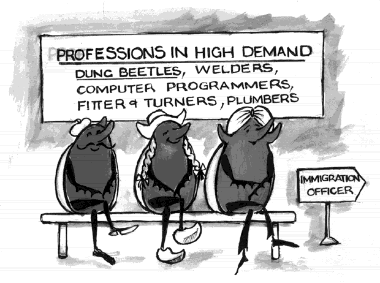
InvaCost – estimating the economic damage of invasive insects

7 11 2014

insectinvasionThis is a blosh (rehash of someone else’s blog post) of Franck Courchamp‘s posts on an exciting new initiative of which I am excited to be a part. Incidentally, Franck’s spending the week here in Adelaide.

Don’t forgot to vote for the project to receive 50 000 € public-communication grant!

Climate change will make winters milder and habitats climatically more suitable year-round for cold-blooded animals like insects, but there are many questions remaining regarding whether such insects will be able to invade other regions as the climate shifts. There are many nasty bugs out there.

For example, the Asian predatory wasp is an invasive hornet in Europe that butchers pollinating insects, especially bees, thereby affecting the production of many wild and cultivated plants. I hope that we all remember what Einstein said about pollinators:

If bees were to disappear, humans will disappear within a few years.

(we all should remember that because it’s one of the few things he said that most of us understood). The highly invasive red fire ant is feared for its impacts on biodiversity, agriculture and cattle breeding, and the thousands of anaphylactic shocks inflicted to people by painful stings every year (with hundreds of deaths). Between the USA and Australia, over US$10 billion is spent yearly on the control of this insect alone. Tiger mosquitoes are vectors of pathogens that cause dengue fever, chikungunya virus and of about 30 other viruses. We could go on.

Most of these nasty creatures are now unable to colonise northern regions of Europe or America, or southern regions of Australia, for example, because they cannot survive cold temperatures. But how will this change? Where, when and which species will invade with rising temperatures? What will be the costs in terms of species loss? In terms of agricultural or forestry loss? In terms of diseases to cattle, domestic animals and humans? What will be the death toll if insects that are vectors of malaria can establish in new, highly populated areas?

We’ve proposed to study these and others from a list of 20 of the worst invasive insect species worldwide, and we got selected (i.e., financed!) by the Fondation BNP Paribas. In addition, the Fondation BNP Paribas has selected five scientific programmes on climate change and will give 50,000 € (that’s US$62,000) to the one selected by the public, for a communication project on their scientific programme. This is why we need you to vote for our project: InvaCost. Read the rest of this entry »


How I feel about climate change

7 10 2014

pissed offAngry. Furious. Livid. And a just little bit sad.

Well, I’m not pissed off with ‘climate change’ per se – that would be ridiculous. I am extremely pissed off with those who are doing their damnedest to prevent society from doing anything meaningful about it.

The reason I’m thinking and writing about this at the moment is because last week I was approached by Joe Duggan of The Australian National University who has put together a rather clever and engaging website. The point of the website is simple – demonstrate to people that those studying climate-change science are human beings with feelings; we are not autistic, empirical automatons that conspire to ruin your day. We measure, we model and we analyse, but we’re also very much affected personally by what we observe every day in our careers.

So I grabbed a pen (not something I do very often, and my finger joints complained bitterly as a result) and hand-wrote the following letter. You might be take aback a little by my sentiment, but I assure you it’s an honest representation of my emotional state at the moment:

Dear Joe,

My overwhelming emotion is anger; anger that is fuelled not so much by ignorance, but by greed and profiteering at the expense of future generations. I am not referring to some vague, existential bonding to the future human race; rather, I am speaking as a father of a seven year-old girl who loves animals and nature in general. As a biologist, I see irrefutable evidence every day that human-driven climate disruption will turn out to be one of the main drivers of the Anthropocene mass extinction event now well under way.

Read the rest of this entry »


Farewell to an environmental hero: Tony McMichael

26 09 2014

120927: ANU Reporter Magazine Portraits. PIcture by Belinda PrattenI had some sad news today – a visionary in human health and environmental integrity, Professor Tony McMichael, passed away last night from advanced influenza complications. Many people in the conservation field might not have heard of Tony, but rest assured he was one of the foremost thinkers and visionaries in the relationship between environment and human health.

I first met Tony on a World Health Organization-sponsored trip to China in 2008, where I was the ‘token’ ecologist on a panel of experts examining the nexus between environment, agriculture and the infectious diseases of poverty. Tony’s intellect and experience were daunting, to say the least, but a man who had served on several IPCC panels and countless international specialist committees was approachable and always listened. I was impressed and humbled from the outset.

A powerhouse in the general and multidisciplinary approach to the drivers of declining human health, Tony researched everything from classic human epidemiology to the sociological aspects of declining human health in the face of climate disruption. A little home-grown pride was present too in the fact that Tony did his medical degree at the University of Adelaide where I am now based.

If you are not familiar with Tony’s work and have even the slightest interest in the human-environment relationship, I encourage you to read his classic and innovative works. Read the rest of this entry »


Another 589 scientists speak out against Abbott’s war on the environment

22 07 2014

ATBC_logo_largeI’m currently in Cairns at the Association for Tropical Biology and Conservation‘s Annual Conference where scientists from all over the world have amassed for get the latest on tropical ecology and conservation. Unfortunately, all of them have arrived in an Australia different to the one they knew or admired from afar. The environmental devastation unleashed by the stupid policies of the Abbottoir government has attracted the attention and ire of some of the world’s top scientists. This is what they have to say about it (with a little help from me):

ASSOCIATION FOR TROPICAL BIOLOGY AND CONSERVATION

RESOLUTION IN SUPPORT OF STRONGER LAWS FOR CLIMATE-CHANGE MITIGATION AND ENVIRONMENTAL PROTECTION IN AUSTRALIA

Australia has many trees, amphibians, and reptiles that are unique, being found nowhere else on Earth. Northern Australia contains a disproportionate amount of this biodiversity which occurs in little developed areas, parks and reserves, indigenous titled lands, and community-managed lands.

Whilst Australia’s achievements in protecting some of its remaining native forests, wildlife and wilderness are applauded, some 6 million hectares of forest have been lost since 2000. Existing forest protection will be undermined by weak climate change legislation, and poorly regulated agricultural and urban development.

The Association for Tropical Biology and Conservation (ATBC), the world’s largest organisation dedicated to the study and conservation of tropical ecosystems, is concerned about recent changes in Australia’s environmental regulations, reduced funding for scientific and environmental research, and support for governmental and civil society organisations concerned with the environment. Read the rest of this entry »


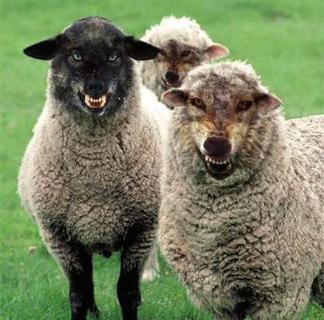
Corporate wolves posing as environmental sheep

10 06 2014

wolf sheepA slicing article by Bill Laurance (incidentally, he will be speaking at The University of Adelaide on 26 June). Originally published in The Ecologist.

What do the Australian Environment Foundation, the Renewable Energy Foundation and the Global Warming Policy Foundation have in common? They are all fiercely anti-environment – and we must beware their ‘eco-doublespeak’.

George Orwell would have appreciated the Australian Environment Foundation. That’s because Orwell was a master of doublespeak – where words take on purposely obscure or opposite meanings.

Despite its name, the Australian Environment Foundation is not pro-environment. In fact, I consider it anti-environment, at least by the prevailing definition of that term.

For instance, the AEF opposes wind farms, many mainstream efforts to combat climate change, and what it labels “green thuggery” – such as initiatives to make cattle ranching more environmentally benign via the Global Roundtable for Sustainable Beef.

World Heritage Sites – who needs them?

In Australia, the AEF likes the Tony Abbott government’s efforts to remove World Heritage listing for 74,000 hectares of native forests in the Tasmania Wilderness World Heritage Area, to promote industrial logging.

In fact, the AEF likes it so much that it’s written to all of the members of the 21-nation World Heritage Committee, urging them to back the government’s bid when they consider it in Doha, Qatar this month.

If the government is successful, it will only be the second time in history that a natural World Heritage site has been de-listed.

A recent director of the AEF is Alan Oxley, an industrial lobbyist and former Australian trade ambassador who’s spearheaded opposition to numerous environmental initiatives around the world. Read the rest of this entry »


A convenient truth: global push for carbon-based conservation

19 05 2014

Eucalyptus viminalis (Manna Gum) - leaf, adultI’ve just written an article for the Australian River Restoration Centre‘s RipRap magazine, and they have given me permission to reproduce it here.

The brave, new green world of the carbon economy hasn’t exactly taken off as desired. Perhaps it’s because it wasn’t really planned from the outset, or maybe it is still too abstract for most people to accept, digest and incorporate into their daily lives. An emergent property of society’s generally slow awakening to the challenge of climate disruption, is that it will be a long time before we accept its full suite of incarnations.

The infant carbon economy is, however, well and truly alive and kicking, so it is important to try and plan for its growing influence on our decision making. Bumps in the road aside, the carbon economy has mostly been a blessing (actual and potential) for biodiversity conservation projects the world over.

In principle, the aim of the carbon economy is rather straight-forward: charge people a certain amount for each unit of carbon dioxide equivalents they release, and then use that money to develop approaches that further increase carbon sequestration or limit emissions. It’s a ‘build-it-and-they-will-come’ framework, where increasing financial impetus to restrict emissions is enhanced by society’s evolution towards better approaches and technology.

The operational side of the carbon economy is unfortunately much more muddled, with vested interests and political gaming weakening its implementation. Nonetheless, we persevere. Read the rest of this entry »


Cartoon guide to biodiversity loss XXIII

4 04 2014

Here are another 6 biodiversity cartoons for your conservation pleasure/pain (see full stock of previous ‘Cartoon guide to biodiversity loss’ compendia here).

Read the rest of this entry »


Eye on the taiga

24 03 2014

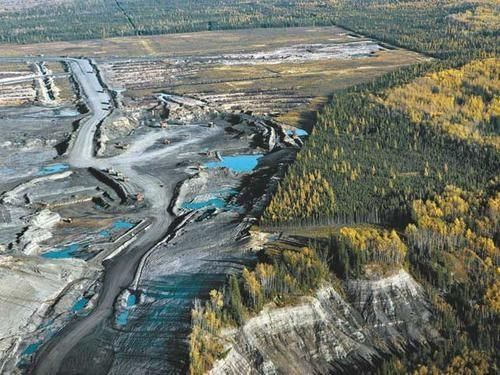
boreal damageDun! Dun, dun, dun! Dun, dun, dun! Dun, dun, daaaaah!

I’ve waited nearly two years to do that, with possibly our best title yet for a peer-reviewed paper: Eye on the taiga: removing global policy impediments to safeguard the boreal forest (recently published online in Conservation Letters).

Of course, the paper has nothing to do with cheesy Eighties music, underdog boxers or even tigers, but it does highlight an important oversight in world carbon politics. The boreal forest (also known as taiga from the Russian) spans much of the land mass of the Northern Hemisphere and represents approximately one quarter of the entire planet’s forests. As a result, this massive forest contains more than 35% of all terrestrially bound carbon (below and above ground). One doesn’t require much more information to come to the conclusion that this massive second lung of the planet (considering the Amazon the first lung) is a vital component of the world’s carbon cycle, and temperate biodiversity.

The boreal forest has been largely expanding since the retreat of the glaciers following the Last Glacial Maximum about 20,000 years ago, which means that its slow progression northward has produced a net carbon sink (i.e., it takes up more atmospheric carbon that it releases from decomposition). However, recent evidence suggests that due to a combination of increased deforestation, fire from both human encroachment and climate change, mass outbreaks of tree-killing insects and permafrost melting, the boreal forest is tipping towards becoming a net carbon source (i.e., emitting more carbon into the atmosphere than it takes up from photosynthesis). This is not a good thing for the world’s carbon cycle, because it means yet another positive feedback that will exacerbate the rapid warming of the planet. Read the rest of this entry »


Cartoon guide to biodiversity loss XXII

3 02 2014

Here are another 6 biodiversity cartoons while I prepare for yet another trip overseas (see full stock of previous ‘Cartoon guide to biodiversity loss’ compendia here).

Read the rest of this entry »


You know it’s hot when it’s too hot to ….

16 01 2014
© T. Brandon

© T. Brandon

My post’s title might be a good candidate title for a punk song in the 2030s (maybe by a re-incarnation of the Dead Kennedys).

I am currently sitting under my solar-powered ceiling fan as Adelaide is declared the world’s hottest city (and not in the funky, cultural, fun way), and I can’t help but contemplate climate change models predicting the fate of biodiversity over the coming decades. Because it’s far, far too hot to work outside, I’m perusing the latest interesting articles on the subject and I came across this recent little gem.

Also recommended on F1000Prime by Ary Hoffman, the paper, Using physiology to predict the responses of ants to climatic warming, by Sarah Diamond and colleagues touches on many aspects of climate predictions that need to be considered. I summarise these briefly here.

While no physiologist, I have dabbled in the past, although up until quite recently I didn’t see that physiology per se had much to do with conservation. It turns out that climate change has spawned an entire sub-discipline called ‘conservation physiology‘, which focuses inter alia on how species can/will/might respond and adapt to a warmer, climatically disrupted world.

What struck me about Diamond & colleagues’ paper was that yet again, it’s not as simple as heat-stressing a species experimentally and making a prediction on its future distribution (ecology is complex). No, the complexity comes in various forms that makes each species a little different from each other. Using North American ant species subjected to various warming scenarios in large (5 m) enclosures, they found the following: Read the rest of this entry »


King for a day – what conservation policies would you make?

29 11 2013

CrownI have been thinking a lot lately about poor governance and bad choices when it comes to biodiversity conservation policy. Perhaps its all that latent anger arising from blinkered, backward policies recently implemented by conservative state and national governments in Australia and elsewhere that leads me to contemplate: What would I do if I had the power to change policy?

While I am certain I have neither the experience or complete knowledge to balance national budgets, ensure prosperity and maintain the health of an entire country, I do have some ideas about what we’re doing wrong conservation-wise, and how we could potentially fix things. This is not meant to be an exhaustive list – it is more a discussion point where people can suggest their own ideas.

So here are 16 things I’d change or implement (mainly in Australia) if I were king for a day:

Read the rest of this entry »


Medieval Canada threatens global biodiversity

25 11 2013

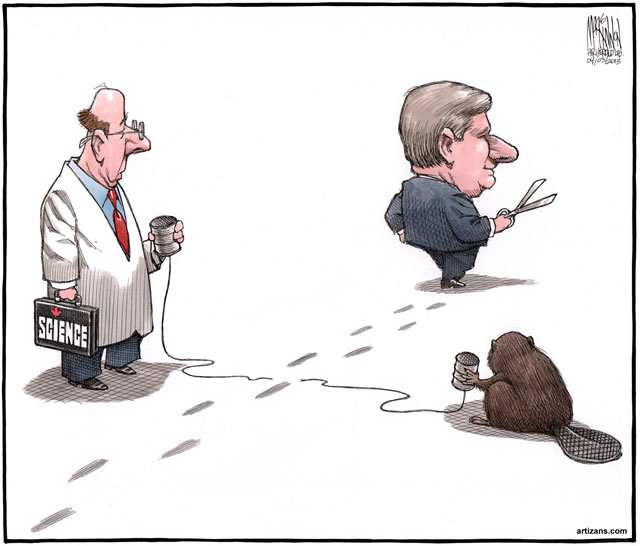
harper_scienceArtists, poets and musicians make us feel, viscerally, how people destroy what they do not understand. Logic and observation led E. O. Wilson to conclude: ‘If people don’t know, they don’t care. If they don’t care, they don’t act.’

Whether you feel it in one of Drew Dillinger’s poems1 or visualise it from the sinuous beauty of mathematical equations, the song remains the same. Scientists are critical to the present and future of the biosphere and humanity, but if — and only if — we are free to communicate our findings to the voting public.

Galileo did not have that right. Scientists in totalitarian regimes of today still lack it. And now, incredibly, some of Canada’s top scientists have lost that right2,3,4.

That is not the Canada I immigrated into. Rewind the tape to 1983. I am a young immigrant, ecstatic that my family has gained entry into the country. We all have mixed feelings; we love our home country of Mexico and are sad to leave it, yet we look forward to being part of Canada’s open-minded and science-loving spirit. The tape runs forward and not all turns out to be as advertised. Still, for the next 23 years Canada remains a damn good place, ruled by governments that, imperfect as they might have been, were not obsessed with burying science.

Fast forward the tape to 2006. Stephen Harper’s newly elected and still ruling Conservative Government hits the ground pounding punches in all directions. Almost immediately, the Conservatives begin to implement one of their many Machiavellian tactics that aim to turn Canada into a petro-state6,7: downgrade science as irrelevant to evidence-based decision making. Ever since, Canadian federal scientists have seen their programs slashed or buried. Those who manage to hang on to their jobs are strictly forbidden to speak about their findings to the media or the public8,9,10,11.

Read the rest of this entry »


Cleaning up the rubbish: Australian megafauna extinctions

15 11 2013

diprotodonA few weeks ago I wrote a post about how to run the perfect scientific workshop, which most of you thought was a good set of tips (bizarrely, one person was quite upset with the message; I saved him the embarrassment of looking stupid online and refrained from publishing his comment).

As I mentioned at the end of post, the stimulus for the topic was a particularly wonderful workshop 12 of us attended at beautiful Linnaeus Estate on the northern coast of New South Wales (see Point 5 in the ‘workshop tips’ post).

But why did a group of ecological modellers (me, Barry Brook, Salvador Herrando-Pérez, Fréd Saltré, Chris Johnson, Nick Beeton), geneticists, palaeontologists (Gav Prideaux), fossil dating specialists (Dizzy Gillespie, Bert Roberts, Zenobia Jacobs) and palaeo-climatologists (Michael Bird, Chris Turney [in absentia]) get together in the first place? Hint: it wasn’t just the for the beautiful beach and good wine.

I hate to say it – mainly because it deserves as little attention as possible – but the main reason is that we needed to clean up a bit of rubbish. The rubbish in question being the latest bit of excrescence growing on that accumulating heap produced by a certain team of palaeontologists promulgating their ‘it’s all about the climate or nothing’ broken record.

Read the rest of this entry »


Cartoon guide to biodiversity loss XXI

4 10 2013

Interim post following some mind- and body-stressing international travel. I present another 6 biodiversity cartoons (see full stock of previous ‘Cartoon guide to biodiversity loss’ compendia here).

Read the rest of this entry »


DNA barcoding plants with citizen science

28 08 2013

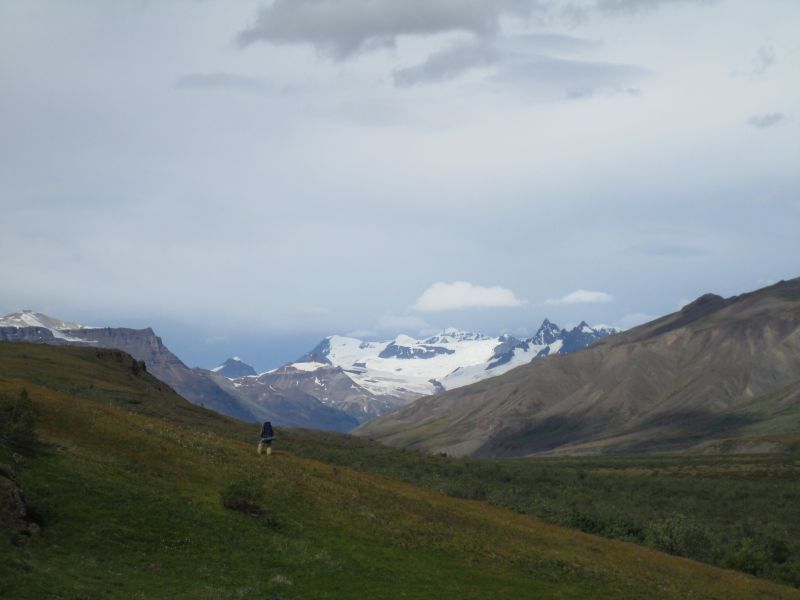
hikingI was contacted recently by Oscar Jaslowski of Microryza (a web platform that allows scientists to post research  ideas and collect contributions from web visitors) about a project getting underway in Alaska by Ellen Jorgensen of Genspace. He suggested it might make a good post for ConservationBytes.com, and I agreed. Thanks for the contribution, Ellen & Oscar.

There’s nothing so final as watching the bush pilot take off in his tiny plane, leaving you stranded in the Alaskan backcountry. We had plenty of food for a three-day expedition, but no satellite phone or any other way to contact anyone. In Alaska, the phrase ‘primordial indifference’ pretty much sums up your relationship with the vast, glacier-carved landscape. Mother Nature does not care if an ant like you lives or dies.

Our destination, the Skolai Valley, is located about 480 km (300 miles) east of Anchorage, in the heart of Wrangell-St. Elias National Park. At a whopping 5.3 million hectares (13 million acres), it is the largest national park in the United States, and probably one of the least-visited. Much of its forbidding territory is snow-covered and similar to the Himalayas. In fact, the size of the massive ice fall that towers over the town of McCarthy, the origin of our flight, is exceeded only by one near Mt. Everest. But winding through the glaciers and snowfields are alpine valleys that are a backpacker’s dream. And Genspace, the nonprofit science-based organisation that I direct, was lucky enough to have received funding in 2012 to launch this expedition to Skolai.

Our  mission: to barcode wild Alaskan plant life. Two of us headed down into the river valley and the other two climbed up to the level of the mountain pass to survey more alpine vegetation. We were carrying portable plant presses – normally something too bulky for backpacking, but necessary for this trip. Read the rest of this entry »