Faraway fettered fish fluctuate frequently

27 06 2010

Hello! I am Little Fish

Swimming in the Sea.

I have lots of fishy friends.

Come along with me.

(apologies to Lucy Cousins and Walker Books)

I have to thank my 3-year old daughter and one of her favourite books for that intro. Now to the serious stuff.

I am very proud to announce a new Report in Ecology we’ve just had published online early about a new way of looking at the stability of coral reef fish populations. Driven by one of the hottest young up-and-coming researchers in coral reef ecology, Dr. Camille Mellin (employed through the CERF Marine Biodiversity Hub and co-supervised by me at the University of Adelaide and Julian Caley and Mark Meekan of the Australian Institute of Marine Science), this paper adds a new tool in the design of marine protected areas.

Entitled Reef size and isolation determine the temporal stability of coral reef fish populations, the paper applies a well-known, but little-used mathematical relationship between the logarithms of population abundance and its variance (spatial or temporal) – Taylor’s power law.

Taylor’s power law is pretty straightforward itself – as you raise the abundance of a population by 1 unit on the logarithmic scale, you can expect its associated variance (think variance over time in a fluctuating population to make it easier) to rise by 2 logarithmic units (thus, the slope = 2). Why does this happen? Because a log-log (power) relationship between a vector and its square (remember: variance = standard deviation2) will give a multiplier of 2 (i.e., if xy2, then log10x ~ 2log10y).

Well, thanks for the maths lesson, but what’s the application? It turns out that deviations from the mathematical expectation of a power-law slope = 2 reveal some very interesting ecological dynamics. Famously, Kilpatrick & Ives published a Letter in Nature in 2003 (Species interactions can explain Taylor’s power law for ecological time series) trying to explain why so many real populations have Taylor’s power law slopes < 2. As it turns out, the amount of competition occurring between species reduces the expected fluctuations for a given population size because of a kind of suppression by predators and competitors. Cool.

But that application was more a community-based examination and still largely theoretical. We decided to turn the power law a little on its ear and apply it to a different question – conservation biogeography. Read the rest of this entry »


Interview with a social (conservation) scientist

22 06 2010

I was contacted recently by Josh Cinner, a self-titled ‘social’ scientist (now working at the Centre of Excellence for Coral Reef Studies) who has published rather a lot in the conservation literature. He was recently highlighted in the journal Science for his work, and he thought CB readers would enjoy the coverage. He stated to me:

“…as a social scientist, I have spent the past decade or so working with ecologists and managers trying to integrate social science better in conservation. There are often calls for the importance of integrating social science in conservation and I thought your blog readers might appreciate some high-level recognition of the importance of this. Additionally, as far as I can tell, this is the first of these profiles that has focused on someone working in conservation.”

So, while fully crediting the source of this article and its author, Helen Fields, here is the entire text reproduced for your reading pleasure.

In the late 1980s, things were not going well for the coral reefs at Jamaica’s Montego Bay Marine Park. Overfishing had taken out a lot of the fish that eat algae, and algae were taking over the reef. “It was a classic case of ecosystem decline,” human geographer Joshua Cinner says. He arrived in Jamaica in 1996 as a Peace Corps volunteer after graduating from the University of Colorado, Boulder, with a double major in environmental conservation and geography. He was particularly interested in parks and preserves.

He’d landed in the middle of a war. Lobbying by tour operators and others got spearfishing, one of the main culprits in overfishing, banned in the park. The ban did not go over well with local people. “All the park equipment got vandalized. We had park rangers get threatened; their families got threatened at spear point,” Cinner says. Spearfishing equipment is cheap and you don’t need a boat; men who do it are generally poor and are fishing as a last resort. “The cultural lens through which the fishermen viewed this issue was of struggle in a post-slavery society, of the rich, predominantly white expatriates making a law that oppressed the poorest of the poor locals to benefit the wealthy.”

The conflict got Cinner thinking about how conservation really works. “It wasn’t really about the ecology,” he says. “Making conservation work in Jamaica had a lot to do with understanding the local culture and people.” It also opened his eyes to the role oceans play. “The ocean is often viewed as an open-access resource. That extra layer of complexity interested me,” he says. “Land can often be private property,” but “the ocean is typically viewed as free for anyone to fish in, for anyone to swim in and use.” Read the rest of this entry »


ISI 2009 Impact Factors now out

18 06 2010

Last year I reported the 2008 ISI Impact Factors for some prominent conservation journals and a few other journals occasionally publishing conservation-related material. ISI just released the 2009 Impact Factors, so I’ll do the same again this year, and add some general ecology journals as well. For all you Australians, I also recently reported the ERA Journal Rankings.

So here are the 2009 Impact Factors for the journals listed on this site’s Journals page and their 2008 values for comparison: Read the rest of this entry »


Biodiversity SNAFU in Australia’s Jewel

16 06 2010

I’ve covered this sad state of affairs and one of Australia’s more notable biodiversity embarrassments over the last year (see Shocking continued loss of Australian mammals and Can we solve Australia’s mammal extinction crisis?), and now the most empirical demonstration of this is now published.

The biodiversity guru of Australia’s tropical north, John Woinarksi, has just published the definitive demonstration of the magnitude of mammal declines in Kakadu National Park (Australia’s largest national park, World Heritage Area, emblem of ‘co-management’ and supposed biodiversity and cultural jewel in Australia’s conservation crown). According to Woinarski and colleagues, most of those qualifiers are rubbish.

The paper published in Wildlife Research is entitled Monitoring indicates rapid and severe decline of native small mammals in Kakadu National Park, northern Australia and it concludes:

The native mammal fauna of Kakadu National Park is in rapid and severe decline. The cause(s) of this decline are not entirely clear, and may vary among species. The most plausible causes are too frequent fire, predation by feral cats and invasion by cane toads (affecting particularly one native mammal species).

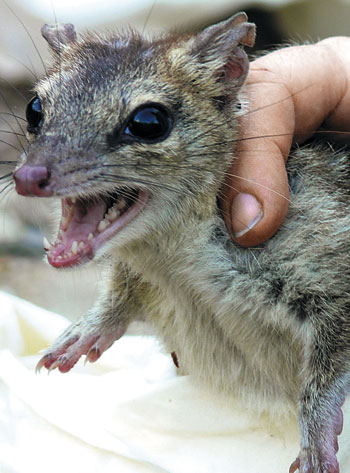
I’ve done quite a bit of work in Kakadu myself, and the one thing that hits you every time you travel through it is the lack of visible wildlife. Sure, you’ll see horses, pigs and buffalo, as well as cane toads and cats, but getting a glimpse of anything native, from Conilurus to Varanus, and you’d consider yourself extremely lucky.

We’ve written a lot about the feral animal problem in Kakadu and even developed software tools to assist in density-reduction programmes. It doesn’t appear that anyone is listening.

Another gob-smacking vista you’ll get when travelling through Kakadu any time from April to December is that it’s either been burnt, actively burning or targeted for burning. They burn the shit out of the place every year. No wonder the native mammals are having such a hard time.

Combine all this with the dysfunctional management arrangement, and you cease to have a National Park. Kakadu is now a lifeless shell that does precious little for conservation of biodiversity (and 3 of the 5 criteria it had to satisfy to become a World Heritage Area are specifically related to natural resource ‘values’). I say, delist Kakadu now and let’s stop fooling ourselves.

Ok, back from the rant. Woinarski and others superimposed a mammal monitoring programme over top a fire-regime experiment for vegetation. Although they couldn’t sample every plot every season, they staggered the sampling to cover the area as best they could over the 13 years of monitoring (1996-2009). What they observed was staggering. Read the rest of this entry »


June 2010 Issue of Conservation Letters

9 06 2010

The third issue of Conservation Letters Volume 3 is now out. A good line-up of papers, indeed. Note that we’ve gone up to 9 papers in this issue, so keep the good submissions coming. Conservation Letters will most likely be listed on ISI Web of Science this year, and receive its first Impact Factor in 2011.

Thanks for the support.

CJA Bradshaw


Australian Ecology Research Award

7 06 2010

I had the immense pleasure of receiving a telephone call a few weeks back from the Ecological Society of Australia telling me that I had been awarded the 2010 Australian Ecology Research Award (AERA). They’ve just announced it, so I’m now allowed to boast a bit on Conservation Bytes.

If you’re going to the 50th Anniversary ESA annual conference in Canberra this year ‘Sustaining Biodiversity – the next 50 years‘ (6-10 December), I’ll be giving the AERA Plenary Lecture then. Thanks to the ESA for my selection, the University of Adelaide (The Environment Institute & School of Earth and Environmental Sciences), the South Australian Research and Development Institute, and all my students, post-docs and collaborators for your support. Many thanks also to Prof. Bill Laurance for the nomination!

The AERA blurb from the ESA site follows: Read the rest of this entry »


Most accessed Conservation Letters articles

3 06 2010

Not a big post, but I thought Conservation Bytes readers would appreciate knowing the most accessed papers in the journal Conservation Letters in 2008 and 2009:

2009

  1. Critical need for new definitions of “forest” and “forest degradation” in global climate change agreements Nophea Sasaki & Francis E. Putz
  2. Global priority areas for incorporating land–sea connections in marine conservation Benjamin S. Halpern, Colin M. Ebert, Carrie V. Kappel, Elizabeth M.P. Madin, Fiorenza Micheli, Matthew Perry, Kimberly A. Selkoe & Shaun Walbridge
  3. Hitting the target and missing the point: target-based conservation planning in context Josie Carwardine, Carissa J. Klein, Kerrie A. Wilson, Robert L. Pressey & Hugh P. Possingham
  4. Mapping cumulative human impacts to California Current marine ecosystems Benjamin S. Halpern, Carrie V. Kappel, Kimberly A. Selkoe, Fiorenza Micheli, Colin M. Ebert, Caitlin Kontgis, Caitlin M. Crain, Rebecca G. Martone, Christine Sheare & Sarah J. Teck
  5. Ecosystem services and conservation strategy: beware the silver bullet Bhaskar Vira & William M. Adams

2008

  1. Is oil palm agriculture really destroying tropical biodiversity? Lian Pin Koh & David S. Wilcove
  2. Native wildlife on rangelands to minimize methane and produce lower-emission meat: kangaroos versus livestock George R. Wilson & Melanie J. Edwards
  3. Conservation action in a changing climate T.R. McClanahan, J.E. Cinner, J. Maina, N.A.J. Graham, T.M. Daw, S.M. Stead, A. Wamukota, K. Brown, M. Ateweberhan, V. Venus & N.V.C. Polunin
  4. Quiet, Nonconsumptive Recreation Reduces Protected Area Effectiveness Sarah E. Reed & Adina M. Merenlender
  5. Calibrating conservation: new tools for measuring success Valerie Kapos, Andrew Balmford, Rosalind Aveling, Philip Bubb, Peter Carey, Abigail Entwistle, John Hopkins, Teresa Mulliken, Roger Safford, Alison Stattersfield, Matt Walpole & Andrea Manica

Add to FacebookAdd to DiggAdd to Del.icio.usAdd to StumbleuponAdd to RedditAdd to BlinklistAdd to TwitterAdd to TechnoratiAdd to Yahoo BuzzAdd to Newsvine


Where in the world to invest in plant conservation

31 05 2010

© CBD

It’s been a good few weeks with many of our papers coming out online early – for example, I highlighted one last week on ecosystem function breakdown from global warming.

Although this has been out for a few weeks, our new paper lead by PhD candidate Xingli Giam (formerly of National University of Singapore, recently completed Australian Endeavour Scholar, now at Princeton University and all-round up-and-coming research star), and with contributions from Hugh “Vascular” Tan and Navjot Sodhi of National University of Singapore and me, is entitled Future habitat loss and the conservation of plant biodiversity (just published online in Biological Conservation).

This one is a bit of a complicated one, so let me walk you through it.

Plants not only represent a huge component of global biodiversity (~320 000 species), they represent the ‘habitats’ in which animals live and provide the major source of nutrients to food webs. They also provide most of our food and other materials essential for human existence. Basically we’d be screwed without them.

Because so many of the world’s biomes are severely threatened now because of massive habitat loss, degradation, over-exploitation, invasive species, extinction synergies and climate change, we need to maximise our efficiency in protecting what’s left. While global prioritisation schemes have a fruitful scientific history since Myers & colleagues’ classic paper (see Biodiversity Hotspots), there are a number of problems that plague the concept and its implementation. Read the rest of this entry »


Why and how did Pleistocene megafauna go extinct?

27 05 2010

Just a quick post to say that I’m currently at Duke University in the USA attending a special National Evolutionary Synthesis Centre ‘Catalysis Meeting’ entitled: Integrating datasets to investigate megafaunal extinction in the Late Quaternary.

The meeting is basically about nailing down some of the remaining mysteries and controversies surrounding the extinction of many species during periods of rapid climate change 11-60 thousand years ago.

It’s been fun so far, and a lot of exciting analysis will ensue, but for the meantime I’ll just summarise what we’re trying to do. Read the rest of this entry »


The planet is our bottle

22 05 2010

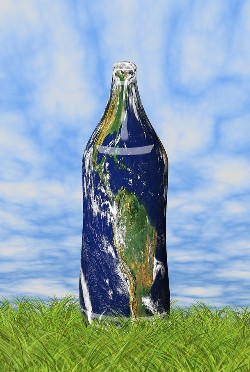
Professor Chris Thomas, conservation ecologist extraordinaire, tells it like it is. This might be a little basic for many ConservationBytes.com readers, but it’s the kind of pitch that might convince even the stupidest of yobs. I reproduce the Guardian article here in full.

Why do we care about nature, and can we actually quantify what the benefits are? This is what the UN’s The Economics of Ecosystems and Biodiversity (Teeb) project is all about, and the answer is remarkable. The natural world – biodiversity – provides us with food, materials and energy. We eat animals and plants; insects pollinate many of the foods we consume; microbes in the soil provide the nutrients the plants to grow; vegetation and soil biodiversity reduce flooding and release clean drinking water; vegetation soaks up a substantial proportion of the climate warming carbon dioxide gasses that we emit. The list goes on and on. Urban and rural citizens alike rely on these natural products and benefits.

The real cost of damaging nature, it turns out, is at least 10 times greater than the cost of maintaining the ecosystem as it is so that we can reap the associated benefits. To take an example close to the University of York where I work, the costs of flood defence construction and flood-related insurance claims in the Vale of York hugely outweigh the agricultural benefits of drainage ditches and overgrazing in the River Ouse catchment. Rather than treating nature as a pleasant luxury, Teeb argues that we should integrate the real costs and benefits within our decision-making. It should not be the preserve solely of environment and conservation ministries, but it should be at the core of the activities of finance departments. Teeb argues that we should get rid of subsidies that are environmentally damaging and reward beneficial activities that maintain natural ecosystems. This might be by including the costs of damage within the purchase price of products to encourage us to buy the least damaging items, and potentially by paying land owners and countries directly to maintain natural ecosystems. Farmers in the Ouse catchment have recently received payments for blocking their drainage ditches; and the perverse subsidies that rewarded farmers by the animal – resulting in over-grazing, trampling and erosion – have been removed. It can be done. Achieving this at a global scale is far more difficult. Read the rest of this entry »


A world of hurt – the webinar

19 05 2010

Ah – finally. The World of Hurt webinar (many thanks to @fang for showing me how to do this).

CJA Bradshaw


A world of hurt – the video

19 05 2010

In case you couldn’t be there in person, here’s the podcast of last week’s talk I gave at the University of Adelaide’s Research Tuesdays seminar series – A world of hurt. The true global death count of environmental degradation.

View video here. See also the ‘Between the Buttons’ preamble AudioBoo here.

CJA Bradshaw

Add to FacebookAdd to DiggAdd to Del.icio.usAdd to StumbleuponAdd to RedditAdd to BlinklistAdd to TwitterAdd to TechnoratiAdd to Yahoo BuzzAdd to Newsvine


Ecosystem functions breaking down from climate change

17 05 2010

I’m particularly proud to present to ConservationBytes.com readers a new paper we’ve just had published online in Journal of Animal Ecology: Mechanisms driving change: altered species interactions and ecosystem function through global warming (Lochran Traill, Matt Lim, Navjot Sodhi and me).

It wasn’t easy to write a review discussing climate change effects on biodiversity, mainly because so many have been written already and we needed to examine the issue from a fresh perspective. The evidence for single species’ responses to rapidly shifting climates around the world is overwhelming (see for a few thousand examples, see the following: Stenseth et al. 2002; Parmesan et al. 2003, 2006; Roessig et al. 2004; Thomas et al. 2004; Poloczanska et al. 2007; Skelly et al. 2004; Dunn et al. 2009). It’s rather remarkable how many things are moving in response, with reduction in range size being more common than expansion.

However, predicting extinction risk from climate change is far more problematic because traditionally there have been too few data on species interactions to make heads or tails of a particular species’ eventual response (e.g., see comment on Chris Thomas’ famous paper regarding this matter). As systems heat up, some species will change in abundance, thereby affecting the abundance of others (think predators and prey, pollinators and their host plants, etc.) – this whole complicated process combined with single-species’ responses makes predicting what a future ecosystem might look like nearly impossible. Add in all the other ecosystem damage we’ve done from forest clearance, invasive species and over-harvesting, it’s a right mess.

It is for this reason we focussed on reviewing the links between species rather than on the species’ responses per se. We looked specifically at ecosystem function, that is, “the processes that facilitate energy transfer along food webs, and the major processes that allow the cycling of carbon, oxygen and nitrogen. ‘Function’ also includes ecosystem services.” Read the rest of this entry »


PhD scholarships in marine plant ecology and conservation

12 05 2010

Two new APAI (Australian Postgraduate Award – Industry) PhD scholarships are available at the University of Adelaide, both in marine ecology and conservation.

Molecular Systematics and Ecology of Marine Macroalgae

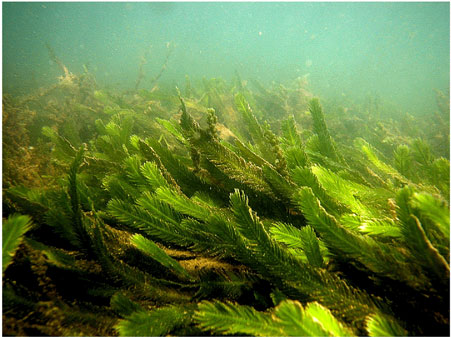
Dr. Frederico Gurgel at the University of Adelaide is seeking 2 PhD students interested in working on several aspects of the marine green macroalgal genus Caulerpa. Honour students are also welcome to apply. APAI PhD scholarships are the best-paid scholarships from the Australian Research Council (fees + AU$26,000 p.a. for 3 yrs). Possible co-advisors: Prof. Corey Bradshaw (University of Adelaide/South Australian Research and Development Institute – SARDI), Dr. Jason Tanner (SARDI), and Dr. Marty Deveney (SARDI). External collaborators: Dr. Peter Grewe (CSIRO Marine), Dr. John Runcie (University of Sydney). Starting date: any time.

Integrative approach to the study of Caulerpa taxifolia in Australia: Ecological, Physiology, Phylogeography and DNA barcoding

The students will perform comparative ecological and physiological assays among Australian native and invasive strains of C. taxifolia (and related species) to study their response (e.g., growth, reproduction, photosynthesis, gene expression) to distinct abiotic factors and global climate change scenarios (e.g., pCO2, pH, temperature, light, salinity, nutrients). Students will perform a multi-marker comparative phylogeographic study among 14 invasive (NSW and SA) and 4 native (QLD, NT, WA) populations to determine the origin of introduced populations in temperate Australia. Students will build a dual-marker DNA barcode database of all species of Caulerpa in Australia as a tool to identify morphologically compromised specimens. Additionally, they will perform a molecular-assisted evolutionary (phylogenetic) study of the genus and develop demographic models to predict the fate of Caulerpa populations under different abiotic scenarios. The students will have the option to choose the components of the project they desire.

Desirable skills: 4WD and manual driving, snorkelling, SCUBA diving certification (open water minimum), molecular biology experience.

For more information please contact Dr. Fred Gurgel (e-mail or telephone: +61 8 8222 9291).

Add to FacebookAdd to DiggAdd to Del.icio.usAdd to StumbleuponAdd to RedditAdd to BlinklistAdd to TwitterAdd to TechnoratiAdd to Yahoo BuzzAdd to Newsvine


A world of hurt

11 05 2010

Just a quick link to an AudioBoo sound bite preamble about my University of Adelaide‘s Research Tuesdays talk tonight on the human health implications of environmental degradation. Follows on nicely from last week’s ‘environmental reprobates‘ post. Full podcast of talk to come shortly.

Many thanks to Allan and Ian of ‘Between the Buttons‘.

CJA Bradshaw


Who are the world’s biggest environmental reprobates?

5 05 2010

Everyone is a at least a little competitive, and when it comes to international relations, there could be no higher incentive for trying to do better than your neighbours than a bit of nationalism (just think of the Olympics).

We rank the world’s countries for pretty much everything, relative wealth, health, governance quality and even happiness. There are also many, many different types of ‘environmental’ indices ranking countries. Some attempt to get at that nebulous concept of ‘sustainability’, some incorporate human health indices, and other are just plain black box (see Böhringer et al. 2007 for a review).

With that in mind, we have just published a robust (i.e., to missing data, choices for thresholds, etc.), readily quantifiable (data available for most countries) and objective (no arbitrary weighting systems) index of a country’s relative environmental impact that focuses ONLY on environment (i.e., not human health or economic indicators) – something no other metric does. We also looked at indices relative to opportunity – that is, looking at how much each country has degraded relative to what it had to start with.

We used the following metrics to create a combined environmental impact rank: natural forest loss, habitat conversion, fisheries and other marine captures, fertiliser use, water pollution, carbon emissions from land-use change and threatened species.

The paper, entitled Evaluating the relative environmental impact of countries was just published in the open-access journal PLoS One with my colleagues Navjot Sodhi of the National University of Singapore (NUS) and Xingli Giam, formerly of NUS but now at Princeton University in the USA.

So who were the worst? Relative to resource availability (i.e,. how much forest area, coastline, water, arable land, species, etc. each country has), the proportional environmental impact ranked (from worst) the following ten countries:

  1. Singapore
  2. Korea
  3. Qatar
  4. Kuwait
  5. Japan
  6. Thailand
  7. Bahrain
  8. Malaysia
  9. Philippines
  10. Netherlands

When considering just the absolute impact (i.e., not controlling for resource availability), the worst ten were:

  1. Brazil
  2. USA
  3. China
  4. Indonesia
  5. Japan
  6. Mexico
  7. India
  8. Russia
  9. Australia
  10. Peru

Interestingly (and quite unexpectedly), the authors’ home countries (Singapore, Australia, USA) were in either the worst ten proportional or absolute ranks. Embarrassing, really (for a full list of all countries, see supporting information). Read the rest of this entry »


Fanciful mathematics and ecological fantasy

3 05 2010

© flickr/themadlolscientist

Bear with me here, dear reader – this one’s a bit of a stretch for conservation relevance at first glance, but it is important. Also, it’s one of my own papers so I have the prerogative :-)

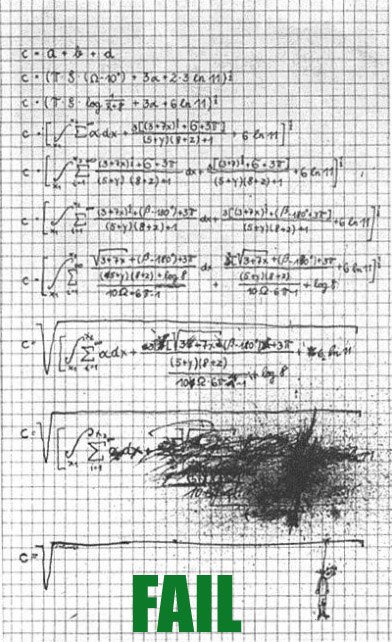
As some of you probably know, I dabble quite a bit in population dynamics theory, which basically means examining the mathematics people use to decipher ecological patterns. Why is this important? Well, most models predicting extinction risk, estimating optimal harvest rates, determining minimum viable population size and metapopulation dynamics for species’ persistence rely on good mathematical abstraction to be realistic. Get the maths wrong, and you could end up overharvesting a species (e.g., 99.99 % of fisheries management), underestimating extinction risk from habitat degradation, and getting your predictions wrong about the effects of invasive species. Expressed as an equation itself, (conservation) ecology = mathematics.

A long-standing family of models known as ‘phenomenological’ models (i.e., because they deal with the phenomenon of population size which is an emergent property of the mechanisms of birth, death and immigration) has been used to estimate everything from maximum sustainable yield targets, temporal abundance patterns, wildlife management interventions, extinction risk to epidemiological patterns. The basic form of the model describes the growth response, or the relationship between the population’s rate of change (growth) and its size. The simplest form (known as the Ricker), assumes a linear decline in population growth rate (r) as the number of individuals increases, which basically means that populations can’t grow indefinitely (i.e., they fluctuate around some carrying capacity if unperturbed). Read the rest of this entry »


Global rates of forest loss – everyone’s a bastard

29 04 2010

© A. Hesse

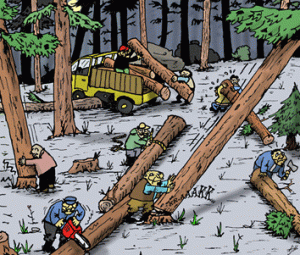
I’ve written rather a lot about rates of forest loss around the world, including accumulated estimates of tropical forest loss and increasing fragmentation/loss in the boreal forest (see Bradshaw et al. 2009 Front Ecol Evol & Bradshaw et al. 2009 Trends Ecol Evol). For the tropics in particular, we used the index that an area of rain forest about the size of Bangladesh (> 15 million hectares) was disappearing each year, and in Russia alone, annual decline in forest area averaged 1.1 million hectares between 1988 and 1993. Mind boggling, really.

But some of these estimates were a bit old, relied on some imprecise satellite data, and didn’t differentiate forest types well. In addition, many have questioned whether the rates are continuing and which countries are being naughty or nice with respect to forest conservation.

It was great therefore when I came across a new paper in PNAS by Hansen & colleagues entitled Quantification of global gross forest cover loss because it answered many of the latter questions.

Part of the problem in assessing worldwide forest cover loss in the past was the expense of satellite imagery, access problems, data storage and processing issues. Happily, new satellite streams and easing of access has rectified many of these limitations. Hansen & colleagues took advantage of data from the MODIS sensor to create a stratification for forest cover loss. They then used the Landsat ETM+ sensor as the primary data for quantifying gross forest cover loss for the entire planet from 2000 to 2005. They defined ‘forest cover’ as “… 25% or greater canopy closure at the Landsat pixel scale (30-m × 30-m spatial resolution) for trees > 5 m in height”.

For your reading pleasure (and conservation horror), the salient features were: Read the rest of this entry »


Make your conservation PhD relevant

23 04 2010

The other day I was approached by two PhD candidates from James Cook University in the ARC Centre of Excellence for Coral Reef Studies who requested I publish a short article they put together on making conservation PhDs relevant while achieving academic excellence. I’m delighted to say that I found the article very well written and topical, so I am pleased to present it in full here.

© J. Cham

Make your conservation PhD relevant – bridging the research-implementation gap

Duan Biggs & Tom Brewer

ARC Centre of Excellence for Coral Reef Studies, James Cook University, Townsville, Queensland, Australia

A recent paper, in Biotropica’s special issue on bridging the research-implementation gap (Duchelle et al. 2009) included examples of postgraduate students in the University of Florida’s Tropical Conservation and Development Program contributing to knowledge exchange with local stakeholders. The authors argue that this experience, during training, enables postgraduate students to develop their skills to confront the elaborate set of management and policy issues that will be present through their careers. We agree with Duchelle and her co-authors’ arguments, but believe that further discussion is required on finding the balance between the requirements of academic training and knowledge sharing with conservation stakeholders at the PhD level specifically.

Earning a PhD requires a novel theoretical contribution to a specific field of knowledge, and the practical value or contribution of that knowledge is of secondary importance, or irrelevant. Therefore, finding synergies between the requirements of academia and knowledge sharing can be particularly challenging at the PhD level. Yet, we believe that in an applied science like conservation, the quality of research and training will be enhanced through being more explicit about how to synergise a scientific contribution worthy of a PhD degree with related practical skills like knowledge sharing. In support of our argument, we propose the following six questions that PhD candidates, together with their academic supervisors, can consider during research design to enhance their contribution to knowledge exchange whilst meeting the requirements of academic training: Read the rest of this entry »


New April Issue of Conservation Letters out now

22 04 2010

Low intensity fire in a longleaf pine-wiregrass system

Another great line up of papers has just come out in the April Issue of Conservation Letters:

CJA Bradshaw

Add to FacebookAdd to DiggAdd to Del.icio.usAdd to StumbleuponAdd to RedditAdd to BlinklistAdd to TwitterAdd to TechnoratiAdd to Yahoo BuzzAdd to Newsvine