More species = more resilience

8 01 2014

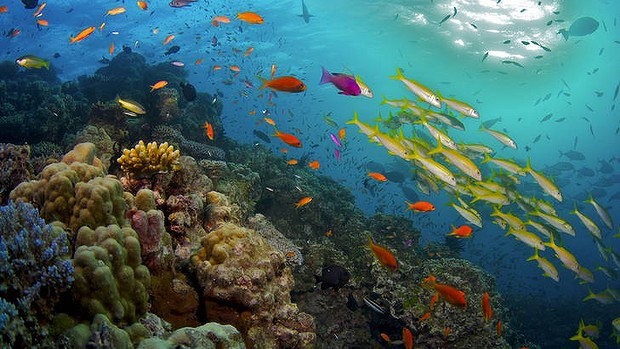
reef fishWhile still ostensibly ‘on leave’ (side note: Does any scientist really ever take a proper holiday? Perhaps a subject for a future blog post), I cannot resist the temptation to blog about our lab’s latest paper that just came online today. In particular, I am particularly proud of Dr Camille Mellin, lead author of the study and all-round kick-arse quantitative ecologist, who has outdone herself on this one.

Today’s subject is one I’ve touched on before, but to my knowledge, the relationship between ‘diversity’ (simply put, ‘more species’) and ecosystem resilience (i.e., resisting extinction) has never been demonstrated so elegantly. Not only is the study elegant (admission: I am a co-author and therefore my opinion is likely to be biased toward the positive), it demonstrates the biodiversity-stability hypothesis in a natural setting (not experimental) over a range of thousands of kilometres. Finally, there’s an interesting little twist at the end demonstrating yet again that ecology is more complex than rocket science.

Despite a legacy of debate, the so-called diversity-stability hypothesis is now a widely used rule of thumb, and its even implicit in most conservation planning tools (i.e., set aside areas with more species because we assume more is better). Why should ‘more’ be ‘better’? Well, when a lot of species are interacting and competing in an ecosystem, the ‘average’ interactions that any one species experiences are likely to be weaker than in a simpler, less diverse system. When there are a lot of different niches occupied by different species, we also expect different responses to environmental fluctuations among the community, meaning that some species inherently do better than others depending on the specific disturbance. Species-rich systems also tend to have more of what we call ‘functional redundancy‘, meaning that if one species providing an essential ecosystem function (e.g., like predation) goes extinct, there’s another, similar species ready to take its place. Read the rest of this entry »


No more ecology

9 05 2012

To all ecology people who read this blog (students, post-docs, academics), this is an intriguing, provocative and slightly worrying title. As ecology has matured into a full-fledged, hard-core, mathematical science on par with physics, chemistry and genetics (and is arguably today one of the most important sciences given how badly we’ve trashed our own home), its sophistication now threatens to render many of the traditional aspects of ecology redundant.

Let me explain.

As a person who cut his teeth in field ecology (with all the associated dirt, dangers, bites, stings, discomfort, thrills, headaches and disasters), I’ve had my fair share of fun and excitement collecting ecological data. There’s something quaintly Victorian (no, I am not referring to the state next door) about the romantic and obsessive naturalist collecting data to the exclusion of nearly all other aspects of civilised life; the intrepid adventurer in some of us takes over (likely influenced by the likes of David Attenborough) and we convince ourselves that our quest for the lonely datum will heal all of the Earth’s ailments.

Bollocks.

As I’ve matured in ecology and embraced its mathematical complexity and beauty, the recurring dilemma is that there are never enough data to answer the really big questions. We have sampled only a fraction of extant species, we know embarrassingly little about how ecosystems respond to disturbance, and we know next to nothing about the complexities of ecosystem services. And let’s not forget our infancy in understanding the synergies of extinctions in the past and projections into the future. Multiply this uncertainty by several orders of magnitude for ocean ecosystems.

Read the rest of this entry »


Marine forests dropping off the edge

21 11 2011

This is probably a little late in terms of breaking news, but it’s good fodder for a blog post nonetheless.

I’ve done several posts now on the value (and threats) of marine macroalgae (seaweeds) – the last one hinted that a major paper was imminent regarding the fate of one of the world’s most important centres of macroalgae diversity in response to our rapidly changing climate: southern Australia.

Well, that paper has now come out in the eminent journal Current Biology headed by that crazy Aussie-Viking phycologist, Dr. Thomas Wernberg (byline here: Thomas was just awarded an Australian Research Council Future Fellowship and deserves many congratulations – not least for which the audacity to wear yellow budgie smugglers in public).

Entitled simply “Seaweed communities in retreat from ocean warming“, the short paper belies a hell of a lot of work examining over 60 years of herbarium records indicating MASSIVE shifts in the macroalgae community southwards on both the east and west coasts of Australia (see some media spots here). What do I mean by ‘massive’? Well, about 300 species on average (52 examined in most detail) shifted about 200 km south on the east coast (where warming has been most pronounced), and about 50 km south on the west coast. Read the rest of this entry »


More than leftovers: getting marine parks right in Australia

7 08 2011
Taken by user Hossen27

Image via Wikipedia

A few weeks back I cosigned a ‘statement of concern’ about the proposal for Australia’s South West Marine Region organised by Hugh Possingham. The support has been overwhelming by Australia’s marine science community (see list of supporting scientists below). I’ve reproduced the letter addressed to the Australian government – distribute far and wide if you give more than a shit about the state of our marine environment (and the economies it supports). Basically, the proposed parks are merely a settlement between government and industry where nothing of importance is really being protected. The parks are just the leftovers industry doesn’t want. No way to ensure the long-term viability of our seas.

On 5 May 2011 the Australian Government released a draft proposal for a network of marine reserves in the Commonwealth waters of the South West bioregional marine planning region.

Australia’s South West is of global significance for marine life because it is a temperate region with an exceptionally high proportion of endemic species – species found nowhere else in the world.

Important industries, such as tourism and fisheries, depend on healthy marine ecosystems and the services they provide. Networks of protected areas, with large fully protected core zones, are essential to maintain healthy ecosystems over the long-term – complemented by responsible fisheries management1.

The selection and establishment of marine reserves should rest on a strong scientific foundation. We are greatly concerned that what is currently proposed in the Draft South West Plan is not based on the three core science principles of reserve network design: comprehensiveness, adequacy and representation. These principles have been adopted by Australia for establishing our National Reserve System and are recognized internationally2.

Specifically, the draft plan fails on the most basic test of protecting a representative selection of habitats within the bioregions of the south-west. There are no highly protected areas proposed at all in three of the seven marine bioregions lying on the continental shelf3. Overall less than 3.5% of the shelf, where resource use and biodiversity values are most intense, is highly protected. Further, six of the seven highly protected areas that are proposed on the shelf are small (< 20 km in width)4 and all are separated by large distances (> 200 km)5. The ability of such small isolated areas to maintain connectivity and fulfil the goal of protecting Australia’s marine biodiversity is limited. Read the rest of this entry »


Life, death and Linneaus

9 07 2011

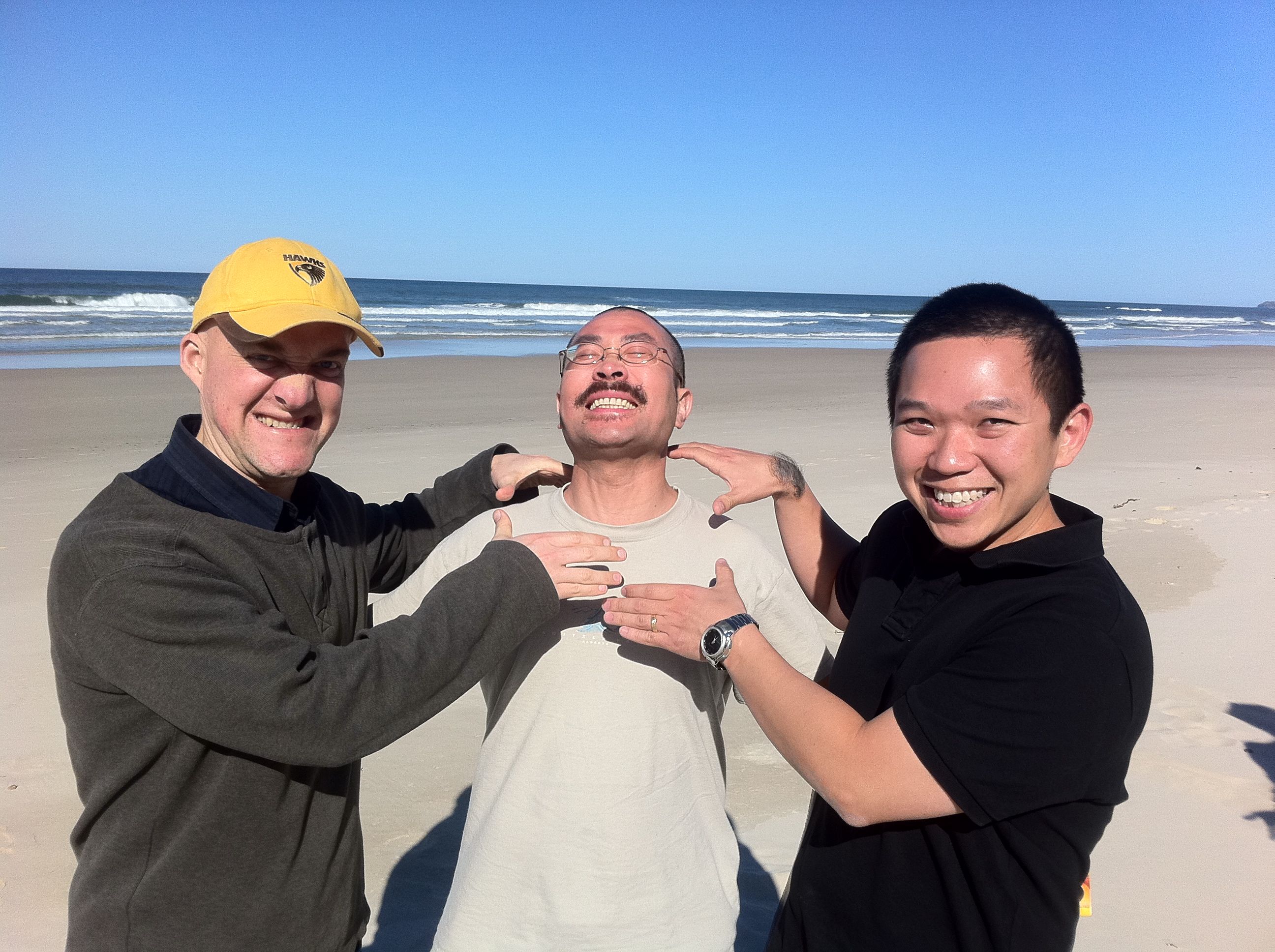
Barry Brook (left) and Lian Pin Koh (right) attacking Fangliang He (centre). © CJA Bradshaw

I’m sitting in the Brisbane airport contemplating how best to describe the last week. If you’ve been following my tweets, you’ll know that I’ve been sequestered in a room with 8 other academics trying to figure out the best ways to estimate the severity of the Anthropocene extinction crisis. Seems like a pretty straight forward task. We know biodiversity in general isn’t doing so well thanks to the 7 billion Homo sapiens on the planet (hence, the Anthropo prefix) – the question though is: how bad?

I blogged back in March that a group of us were awarded a fully funded series of workshops to address that question by the Australian Centre for Ecological Synthesis and Analysis (a Terrestrial Ecosystem Research Network facility based at the University of Queensland), and so I am essentially updating you on the progress of the first workshop.

Before I summarise our achievements (and achieve, we did), I just want to describe the venue. Instead of our standard, boring, windowless room in some non-descript building on campus, ACEAS Director, Associate Professor Alison Specht, had the brilliant idea of putting us out away from it all on a beautiful nature-conservation estate on the north coast of New South Wales.

What a beautiful place – Linneaus Estate is a 111-ha property just a few kilometres north of Lennox Head (about 30 minutes by car south of Byron Bay) whose mission is to provide a sustainable living area (for a very lucky few) while protecting and restoring some pretty amazing coastal habitat along an otherwise well-developed bit of Australian coastline. And yes, it’s named after Carl Linnaeus. Read the rest of this entry »


Global erosion of ecosystem services

14 09 2010

A few months ago I was asked to give a lecture about erosion of ecosystem services to students in the University of Adelaide‘s Issues in Sustainable Environments unit. I gave that lecture last week and just uploaded a slidecast of the presentation (with audio) today.

I’ve reproduced the lecture here for your viewing pleasure. I hope you find the 45-minute presentation useful. Note that the first few minutes cover me referring to the Biodiversity film short that I posted not too long ago.

CJA Bradshaw


Marine protected areas: do they work?

13 08 2010

One measure that often meets great resistance from fishermen, but is beloved by conservationists, is the establishment of marine protected or ‘no take’ areas.” Stephen J. Hall (1998)

I’m going to qualify this particular post with a few disclaimers; first, I am not involved in the planning of any marine protected areas (henceforth referred to as ‘marine parks’) in Australia or elsewhere; and second, despite blogging on the issue, I have never published in the discipline of protected area design (i.e, ‘conservation planning’ is not my area of expertise).

That said, it seems to becoming more imperative that I enter the fray and assess not only how marine parks should be designed, but how effective they really are (or can be). I’ve been asked by several conservation NGOs to provide some insight into this, so I thought I should ‘think aloud’ and blog a little mini-review about marine park effectiveness.

Clearly there is a trend to establish more marine parks around the world, and this is mainly because marine conservation lags so far behind terrestrial conservation. Indeed, Spalding et al. (2008) showed that only 4.1 % of continental shelf areas are incorporated within marine parks, and ~ 50 % of all marine ecoregions have less than 1 % marine park coverage across the shelf. Furthermore, marine protection is greatest in the tropical realms, while temperate realms are still poorly represented.

The question of whether marine parks ‘work’ is, however, more complicated than it might first appear. When one asks this question, it is essential to define how the criteria for success are to be measured. Whether it’s biodiversity protection, fisheries production, recreational revenue, community acceptance/involvement or some combination of the above, your conclusion is likely to vary from place to place.

Other complications are, of course, that if you cannot ensure a marine park is adequately enforced (i.e., people don’t respect the rules) or if you don’t actually place the park anywhere near things that need protecting, there will be no real net benefit (for any of the above-mentioned interest groups). Furthermore, most marine parks these days have many different types of uses allowed in different zones (e.g., no fishing, some fishing, recreational diving only, no boat transport, some shipping, etc., etc., etc.), so it gets difficult to test for specific effects (it’s a bit like a cap-and-trade legislation for carbon – too many rules and often no real net reduction in carbon emissions – but that’s another story).

All these conditions aside, I think it’s a good idea to present what the real experts have been telling us about marine park effectiveness from a biodiversity and fishing perspective over the last decade or so. I’ll summarise some of the major papers here and give an overall assessment at the end. I do not contend that this list is even remotely comprehensive, but it does give a good cross-section of the available evidence. Read the rest of this entry »


Faraway fettered fish fluctuate frequently

27 06 2010

Hello! I am Little Fish

Swimming in the Sea.

I have lots of fishy friends.

Come along with me.

(apologies to Lucy Cousins and Walker Books)

I have to thank my 3-year old daughter and one of her favourite books for that intro. Now to the serious stuff.

I am very proud to announce a new Report in Ecology we’ve just had published online early about a new way of looking at the stability of coral reef fish populations. Driven by one of the hottest young up-and-coming researchers in coral reef ecology, Dr. Camille Mellin (employed through the CERF Marine Biodiversity Hub and co-supervised by me at the University of Adelaide and Julian Caley and Mark Meekan of the Australian Institute of Marine Science), this paper adds a new tool in the design of marine protected areas.

Entitled Reef size and isolation determine the temporal stability of coral reef fish populations, the paper applies a well-known, but little-used mathematical relationship between the logarithms of population abundance and its variance (spatial or temporal) – Taylor’s power law.

Taylor’s power law is pretty straightforward itself – as you raise the abundance of a population by 1 unit on the logarithmic scale, you can expect its associated variance (think variance over time in a fluctuating population to make it easier) to rise by 2 logarithmic units (thus, the slope = 2). Why does this happen? Because a log-log (power) relationship between a vector and its square (remember: variance = standard deviation2) will give a multiplier of 2 (i.e., if xy2, then log10x ~ 2log10y).

Well, thanks for the maths lesson, but what’s the application? It turns out that deviations from the mathematical expectation of a power-law slope = 2 reveal some very interesting ecological dynamics. Famously, Kilpatrick & Ives published a Letter in Nature in 2003 (Species interactions can explain Taylor’s power law for ecological time series) trying to explain why so many real populations have Taylor’s power law slopes < 2. As it turns out, the amount of competition occurring between species reduces the expected fluctuations for a given population size because of a kind of suppression by predators and competitors. Cool.

But that application was more a community-based examination and still largely theoretical. We decided to turn the power law a little on its ear and apply it to a different question – conservation biogeography. Read the rest of this entry »


Interview with a social (conservation) scientist

22 06 2010

I was contacted recently by Josh Cinner, a self-titled ‘social’ scientist (now working at the Centre of Excellence for Coral Reef Studies) who has published rather a lot in the conservation literature. He was recently highlighted in the journal Science for his work, and he thought CB readers would enjoy the coverage. He stated to me:

“…as a social scientist, I have spent the past decade or so working with ecologists and managers trying to integrate social science better in conservation. There are often calls for the importance of integrating social science in conservation and I thought your blog readers might appreciate some high-level recognition of the importance of this. Additionally, as far as I can tell, this is the first of these profiles that has focused on someone working in conservation.”

So, while fully crediting the source of this article and its author, Helen Fields, here is the entire text reproduced for your reading pleasure.

In the late 1980s, things were not going well for the coral reefs at Jamaica’s Montego Bay Marine Park. Overfishing had taken out a lot of the fish that eat algae, and algae were taking over the reef. “It was a classic case of ecosystem decline,” human geographer Joshua Cinner says. He arrived in Jamaica in 1996 as a Peace Corps volunteer after graduating from the University of Colorado, Boulder, with a double major in environmental conservation and geography. He was particularly interested in parks and preserves.

He’d landed in the middle of a war. Lobbying by tour operators and others got spearfishing, one of the main culprits in overfishing, banned in the park. The ban did not go over well with local people. “All the park equipment got vandalized. We had park rangers get threatened; their families got threatened at spear point,” Cinner says. Spearfishing equipment is cheap and you don’t need a boat; men who do it are generally poor and are fishing as a last resort. “The cultural lens through which the fishermen viewed this issue was of struggle in a post-slavery society, of the rich, predominantly white expatriates making a law that oppressed the poorest of the poor locals to benefit the wealthy.”

The conflict got Cinner thinking about how conservation really works. “It wasn’t really about the ecology,” he says. “Making conservation work in Jamaica had a lot to do with understanding the local culture and people.” It also opened his eyes to the role oceans play. “The ocean is often viewed as an open-access resource. That extra layer of complexity interested me,” he says. “Land can often be private property,” but “the ocean is typically viewed as free for anyone to fish in, for anyone to swim in and use.” Read the rest of this entry »


New April Issue of Conservation Letters out now

22 04 2010

Low intensity fire in a longleaf pine-wiregrass system

Another great line up of papers has just come out in the April Issue of Conservation Letters:

CJA Bradshaw

Add to FacebookAdd to DiggAdd to Del.icio.usAdd to StumbleuponAdd to RedditAdd to BlinklistAdd to TwitterAdd to TechnoratiAdd to Yahoo BuzzAdd to Newsvine


February Issue of Conservation Letters

13 02 2010

Diver at Great Barrier Reef, Australia

Hard to believe we’re already at Volume 3 – introducing the latest issue of Conservation Letters (Volume 3, Issue 1, February 2010). For full access, click here.

Note too we’ve jumped from 5 to 6 papers per issue. Congratulations to all our authors. Keep those submissions coming!

CJA Bradshaw

Add to FacebookAdd to DiggAdd to Del.icio.usAdd to StumbleuponAdd to RedditAdd to BlinklistAdd to TwitterAdd to TechnoratiAdd to Yahoo BuzzAdd to Newsvine


How to make an effective marine protected area

22 09 2009

Here’s a nice little review from the increasingly impressive Frontiers in Ecology and the Environment which seems to be showcasing a lot of good conservation research lately.

© USGS

© USGS

As we know, the world’s oceans are under huge threat, with predictions of 70 % loss of coral reefs by 2050, decline in kelp forests, loss of seagrasses, over-fishing, pollution and a rapidly warming and acidifying physical environment. Given all these stressors, it is absolutely imperative we spend a good deal of time thinking about the right way to impose restrictions on damage to marine areas – the simplest way to do this is via marine protected areas (MPA).

The science of MPA network design has matured over the last 10-20 years such that there is a decent body of literature now on what we need to do (now the policy makers just have to listen – some  progress there too, but see also here). McLeod and colleagues in the latest issue of Frontiers in Ecology and the Environment have published a review outlining the best, at least for coral reefs, set of recommendations for MPA network design given available information (paper title: Designing marine protected area networks to address the impacts of climate change). Definitely one for the Potential list.

Here’s what they recommend:

Size

  • bigger is always better
  • minimum diameter of an MPA should be 10-20 km to ensure exchange of propagules among protected benthic populations

Shape

  • simple shapes best (squares, rectangles)
  • avoid convoluted shapes to minimise edge effects

Representation

  • protect at least 20-30 % of each habitat

Replication

  • protect at least 3 examples of each marine habitat

Spread

  • select MPA in a variety of temperature regimes to avoid risk of all protected reefs succumbing to future climate changes

Critical Areas

  • protect nursery areas, spawning aggregations, and areas of high species diversity
  • protect areas demonstrating natural resilience or rapid recovery from previous disturbances

Connectivity

  • measure connectivity between MPA to ensure replenishment
  • space maximum distance of 15-20 km apart
  • include whole ecological units
  • buffer core areas
  • protect adjacent areas such as outlying reefs, seagrass beds, mangroves

Ecosystem Function

  • maintain key functional groups of species (e.g., herbivorous fishes)

Ecosystem Management

  • embed MPA in broader management frameworks addressing other threats
  • address and rectify sources of pollution
  • monitor changes

Of course, this is just a quick-and-dirty list as presented here – I highly recommend reading the review for specifics.

CJA Bradshaw

ResearchBlogging.orgMcLeod, E., Salm, R., Green, A., & Almany, J. (2009). Designing marine protected area networks to address the impacts of climate change Frontiers in Ecology and the Environment, 7 (7), 362-370 DOI: 10.1890/070211


Few people, many threats – Australia’s biodiversity shame

31 07 2009

bridled_nailtail_400I bang on a bit about human over-population and how it drives biodiversity extinctions. Yet, it isn’t always hordes of hungry humans descending on the hapless species of this planet  – Australia is a big place, but has few people (just over 20 million), yet it has one of the higher extinction rates in the world. Yes, most of the country is covered in some fairly hard-core desert and most people live in or near the areas containing the most species, but we have an appalling extinction record all the same.

A paper that came out recently in Conservation Biology and was covered a little in the media last week gives some telling figures for the Oceania region, and more importantly, explains that we have more than enough information now to implement sound, evidence-based policy to right the wrongs of the past and the present. Using IUCN Red List data, Michael Kingsford and colleagues (paper entitled Major conservation policy issues for biodiversity in Oceania), showed that of the 370 assessed species in Australia, 80 % of the threatened ones are listed because of habitat loss, 40 % from invasive species and 30 % from pollution. As we know well, it’s mainly habitat loss we have to control if we want to change things around for the better (see previous relevant posts here, here & here).

Kingsford and colleagues proceed to give a good set of policy recommendations for each of the drivers identified:

Habitat loss and degradation

  • Implement legislation, education, and community outreach to stop or reduce land clearing, mining, and unsustainable logging through education, incentives, and compensation for landowners that will encourage private conservation
  • Establish new protected areas for habitats that are absent or poorly represented
  • In threatened ecosystems (e.g., wetlands), establish large-scale restoration projects with local communities that incorporate conservation and connectivity
  • Establish transparent and evidence-based state of environment reporting on biodiversity and manage threats within and outside protected areas.
  • Protect free-flowing river systems (largely unregulated by dams, levees, and diversions) within the framework of the entire river basin and increase environmental flows on regulated rivers

Invasive species

  • Avoid deliberate introduction of exotic species, unless suitable analyses of benefits outweigh risk-weighted costs
  • Implement control of invasive species by assessing effectiveness of control programs and determining invasion potential
  • Establish regulations and enforcement for exchange or treatment of ocean ballast and regularly implement antifouling procedures

Climate change

  • Reduce global greenhouse gas emissions
  • Identify, assess, and protect important climate refugia
  • Ameliorate the impacts of climate change through strategic management of other threatening processes
  • Develop strategic plans for priority translocations and implement when needed

Overexploitation

  • Implement restrictions on harvest of overexploited species to maintain sustainability
  • Implement an ecosystem-based approach for fisheries, based on scientific data, that includes zoning the ocean; banning destructive fishing; adopting precautionary fishing principles that include size limits, quotas, and regulation with sufficient resources based on scientific assessments of stocks and; reducing bycatch through regulation and education
  • Implement international mechanisms to increase sustainability of fisheries by supporting international treaties for fisheries protection in the high seas; avoiding perverse subsidies and improve labelling of sustainable fisheries; and licensing exports of aquarium fish
  • Control unsustainable illegal logging and wildlife harvesting through local incentives and cessation of international trade

Pollution

  • Decrease pollution through incentives and education; reduce and improve treatment of domestic, industrial, and agriculture waste; and rehabilitate polluted areas
  • Strengthen government regulations to stop generation of toxic material from mining efforts that affects freshwater and marine environments
  • Establish legislation and regulations and financial bonds (international) to reinforce polluter-pays principles
  • Establish regulations, education programs, clean ups, labelling, and use of biodegradable packaging to reduce discarded fishing gear and plastics

Disease

  • Establish early-detection programs for pathological diseases and biosecurity controls to reduce translocation
  • Identify causes, risk-assessment methods, and preventative methods for diseases
  • Establish remote communities of organisms (captive) not exposed to disease in severe outbreaks

Implementation

  • Establish regional population policies based on ecologically sustainable human population levels and consumption
  • Ensure that all developments affecting the environment are adequately analysed for impacts over the long term
  • Promote economic and societal benefits from conservation through education
  • Determine biodiversity status and trends with indicators that diagnose and manage declines
  • Invest in taxonomic understanding and provision of resources (scientific and conservation) to increase capacity for conservation
  • Increase the capacity of government conservation agencies
  • Focus efforts of nongovernmental organisations on small island states on building indigenous capacity for conservation
  • Base conservation on risk assessment and decision support
  • Establish the effectiveness of conservation instruments (national and international) and their implementation

A very good set of recommendations that I hope we can continue to develop within our governments.

CJA Bradshaw

Add to FacebookAdd to NewsvineAdd to DiggAdd to Del.icio.usAdd to StumbleuponAdd to RedditAdd to BlinklistAdd to Ma.gnoliaAdd to TechnoratiAdd to Furl


Interview with… ConservationBytes

16 07 2009

CBlogoA few months ago I was asked to do an online interview about ConservationBytes at The Reef Tank. I previously made mention of the interview (see post), but I think it’s time I reproduce it here.

The effects of pollution, carbon build up in the ocean, extinction, loss of coral reefs, over-fishing, and global warming is increasingly becoming more detrimental to our marine life and marine world.

Fortunately our marine ecosystems have Corey Bradshaw on their side. As a conservation ecologist, Corey studies these ecosystems with a passion, trying to understands the interactions between plants and animals that make up these ecosystems as well as what human activity is doing to them.

He has realised long ago that conservation and awareness is crucial to the survival of these living things and carries on the long tradition of studying and trying to understand these ecosystems at the School of Earth & Environmental Sciences at the University of Adelaide in South Australia.

He also avidly blogs about these pertinent issues at ConservationBytes.com, because he felt a need that these marine conservation issues needed to be heard. And he was more then right.

We were lucky enough to grab some time with Corey Bradshaw and he was kind enough to answer some important marine conservation questions, which are important in our desire: to make the marine world a better place.

What is your background in science and conservation?

I have a rather eclectic background in this area. I originally started my university education in general ecology, with a focus on plant ecology in particular (this was the strength of my undergraduate institution). There was no real emphasis on conservation per se until I started my postgraduate studies, although even then I was more interested in the empirical side of theoretical ecology than on conservation itself. It was more or less a gradual process that as I realised just how much we as a species have changed the planet in our (relatively) short time here, I became more and more dedicated to quantifying the links between species loss and how it affects human well-being.

After completing my MSc, PhD and first postdoctoral fellowship in New Zealand and Australia, I had the good fortune to work alongside a few excellent conservation ecologists specialising in extinction dynamics. This is where my mathematical bent and conservation interests really took off and eventually set the stage for most of my research today.

Your blog is ConservationBytes.com. Why the urge to start a blog on conservation only?

It may seem odd that I resisted blogging for many years because I thought it was a colossal time-waster that would take me away from my main scientific research. However, several things convinced me of its need and utility. First, it’s a wonderful vehicle to engage non-scientists about the research one does – let’s face it, most people don’t read scientific journals. Second, it’s interactive; people can ask questions or comment directly online. Third, it overcomes the strict language and technical rigour of most scientific publications and gets to the heart of the issue (it also allows me to express some opinions and speculations that are otherwise forbidden in scientific writing). Fourth, I realised there was a real lack of understanding about basic conservation science among the populace, so providing a vehicle for conservation science dissemination online appeared to be a good idea – there simply wasn’t anything like it when I started only a year ago. Finally, an effective, policy-changing scientist must advertise his/her research through the popular media to be recognised, so it obviously has career benefits.

Tell me about the conservation topics you cover?

ConservationBytes.com covers pretty much any topic that conforms to at least one of the following criteria:

  • It concerns research (previous, ongoing, planned) that is designed to improve the fate of biodiversity, whether locally, regionally or internationally

  • It concerns policy studies, actions or ideas that will have positive bearing on biodiversity conservation

  • It concerns demonstrations of the role biodiversity plays in providing humans with essential ecosystem services

I even have a section I call ‘Toothless’ that highlights ineffective conservation research or policy. Other areas include: exposés of well-known conservation scientists, a collection of links to conservation science journals, and my personal information (publications, CV, media attention).

What is your take on marine conservation? What does marine conservation include?

Given that I have worked in both marine and terrestrial realms from the tropics to the Antarctic, I really see little distinction in terms of conservation. True, the marine realm probably presents more challenges to conservation in some respects because it’s generally much more difficult and expensive to collect meaningful data, and it’s more difficult to control or mitigate people’s behaviour (especially in international waters), but the ecological patterns are the same (although I admit they may operate over different spatial and temporal scales).

Current ‘hot’ topics in marine conservation include the global degradation and loss of coral reef ecosystems (and what to do about it), terrestrial run-off of pollutants and nutrients affecting marine communities, over-fishing and better fishing management strategies, the design of effective marine protected areas, the socio-economic implications of moving people away from direct exploitation to behaviours and economic activities that promote longer-term biological community stability and resilience, and of course, how climate change (via acidification, hypercapnia, temperature change, storm intensification, seal level rise and modified current structure) might exacerbate the systems that are already stressed by the aforementioned problems.

Have you done any work, research in the area of marine conservation?

Yes, quite a bit. Some salient areas include

  • The grey nurse shark Carcharias taurus was the world’s first shark species to receive legislative protection when the east Australian population was listed under the 1984 New South Wales Fisheries Management Act. It has since been listed as globally Vulnerable by the IUCN in 1996 and the east Australian population was declared Critically Endangered in 2003. Previously, we constructed deterministic, density-independent PVA models for the east Australian population that suggested dire prospects for its long-term persistence without direct and immediate intervention. However, deterministic models might be overly optimistic because they do not incorporate stochastic fluctuations that can drive small populations extinct, whereas failing to account for density feedback can predict overly pessimistic. We recently completed a study demonstrating that the most effective measure to reduce extinction risk was to legislate the mandatory use of offset circle hooks in both recreational and commercial fisheries. The increase in dedicated marine reserves and shift from bather protection nets to drumlines had much lower effectiveness.

  • The global extent of illegal, unreported and unregulated (IUU) fishing is valued from US$10-23.5 billion per year, representing between 11 and 26 million tonnes of fish killed annually beyond legal commercial catches. In northern Australia, IUU fishing has advanced as a ‘protein-mining’ wave starting in the South China Sea in the 1970s and now penetrates consistently into the nation’s Exclusive Economic Zone. We have documented the extent of this wave and the implications for higher-order predators such as sharks, demonstrating that IUU fishing has already depleted large predators in Australian territorial waters. Given the negative relationship between IUU fishing takes and governance quality, we propose that deterring invading fishers will need substantially greater investment in border protection, and international accords to improve governance in neighbouring nations, if the tide of extinction is to be effectively mitigated.

  • Determining the extinction risk of the world’s shark and ray species – some work I’ve done recently with colleagues is to examine the patterns of shark biodiversity globally and determine which groups are most at risk of extinction. Not a surprise, but it turns out that the largest species of shark that reproduce the slowest are the most endangered (including all those bitey ones that frighten people).

  • Finally, I’m doing a lot of work now examining how the structure of coral reefs affects fish biodiversity patterns and long-term resilience. It turns out that basic biogeographic predictors (e.g., reef size and relative isolation from other reefs) really do dictate how temporally stable fish populations remain. And as we know, the more variable a population in time and space, the more likely it will go extinct (on average). The practical implication is that we can identify those coral reefs most likely to maintain their fish communities simply by measuring their size and position.

You’re from Australia, correct? What kind of marine conservation is going on there?

I’m originally from Canada, but I’ve spent most of my adult life in Australia (mostly in Tasmania, the Northern Territory, and now, Adelaide in South Australia). I did my PhD in the deep south of New Zealand (Otago University, Dunedin). In Australia, all the aforementioned ‘hot’ areas of marine conservation are in full swing, with greater and greater emphasis on climate change research. I think this aspect is pre-occupying most serious marine ecologists in Australia these days. For example, the southeast of Australia has already experienced some of the fastest warming in the Southern Hemisphere, with massive regional shifts in many species of fish, invertebrates, macroalgae and plankton.

What’s your take on ocean acidification? Do you think people need to be aware of this issue?

I used to believe ocean acidification was THE principal marine conservation issue facing us today, but now I think it’s just another stressor in a cornucopia of stressors. The main issue here is that we still understand so little of its implications for marine biodiversity. Sure, you lower the pH and up the partial CO2 (pCO2) of seawater, and many organisms don’t do so well (in terms of survival, reproduction and growth). However, it’s considerably more complex than this. pH and pCO2 vary substantially in space and time, and we have yet to quantify these patterns or how they are changing for most of the marine realm. Therefore, it’s difficult to simulate ‘real’ and future conditions in the lab.

Another issue is that temperature is changing must faster and so far exposure experiments indicate that it generally has a much more pronounced effect on marine organisms than acidification per se. However, like many climate change issues, a so-called ‘tipping point’ could be just around the corner that makes many marine communities collapse. It’s a frightening prospect, but one that needs a lot more dedicated research.

Can a person own an aquarium and still be considered a marine conservationist in your opinion?

Of course, provided one is cognisant of several important issues. First, most aquarists rely on the importation of non-native species. Lack of vigilance and carelessness has resulted in a suite of alien species being released into naïve ecosystems, resulting in the extinction or reduction of many native fish and invertebrates. Another issue is the transport cost – think how much carbon you are emitting by flying that tropical clownfish to your local pet shop in Norway. Third, do you know from which populations your displayed fish come? Were they harvested sustainably, or were they the last individuals plucked from a dying reef? A good knowledge of an animal’s origin is essential for the responsible aquarist. In my view one should play it safe. I think having aquaria filled with local species that are easily acquired, don’t cost the Earth to transport and pose no risk to native ecosystems is the most responsible way to go. You can also be a lot more certain of sustainable harvest if you live close by the source.

What is your take on climate change and its effect on marine life? Is being aware and educated on this particular topic and how it affects the marine world make someone a marine conservationist?

Awareness is only the first and most basic step. I’d say most of the world is ‘aware’ to some extent. It’s really the change in human behaviour that’s required before we make any true leaps forward. Some of the issues described above get to the heart of behavioural change. To use an analogy, it’s not enough to recognise that you’re an alcoholic, you have to stop drinking too to prevent the damage.

What can we do to raise awareness of the importance of marine conservation and conservation in general?

My personal take on this, and it applies to ALL biodiversity conservation (i.e., not just marine) is that people won’t take it seriously until they see how its loss affects their lives negatively. For example, let’s say we lose all commercially exploitable fish – not having access to delicious and healthy fish protein will mean people change the way fishing is done; that is, they’ll try to force fishers to fish sustainably and consumers to demand responsibly. The same can be said for more esoteric ecosystem services like carbon sequestration, oxygen production, water purification, pollination, waste detoxification, etc. if, and only if, we understand the economic and health benefits of keeping ecosystems intact. We need more research that makes the biodiversity-human benefit link so that people ultimately get the message. Destroying biodiversity means destroying yourself.

As I said before, awareness is only the first step.


Realising you’re a drunk is only the first step

11 05 2009

© A. Savchenko

© A. Savchenko

I recently did an interview for the Reef Tank blog about my research, ConservationBytes.com and various opinions about marine conservation in general. I’ve been on about ‘awareness’ raising in biodiversity conservation over the last few weeks (e.g., see last post), saying that it’s really only the first step. To use an analogy, alcoholics must first recognise and accept that they are indeed drunks with a problem before than can take the (infamous AA) steps to resolve it. It’s not unlike biodiversity conservation – I think much of the world is aware that our forests are disappearing, species are going extinct, our oceans are becoming polluted and devoid of fish, our air and soils are degraded to the point where they threaten our very lives, and climate change has and will continue to exacerbate all of these problems for the next few centuries at least (and probably for much longer).

We’ve admitted we have a disease, now let’s do something about it.

Read the full interview here.

CJA Bradshaw

Add to FacebookAdd to NewsvineAdd to DiggAdd to Del.icio.usAdd to StumbleuponAdd to RedditAdd to BlinklistAdd to Ma.gnoliaAdd to TechnoratiAdd to Furl


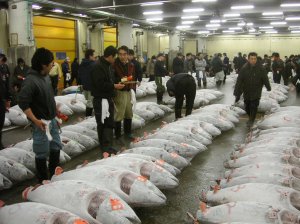
To market, to market, to buy a fat… fish

4 05 2009

An interesting new paper just appeared online (uncorrected proof stage) in Biological Conservation. Brewer and colleagues’ paper entitled Thresholds and multiple scale interaction of environment, resource use, and market proximity on reef fishery resources in the Solomon Islands describes how the proximity of fish markets explains some of the variation in fisheries takes on South Pacific coral reefs. Well, that may seem intuitive, you say – if you can’t access even a local market, chances are your fish will only feed you and your immediate family. Make an economic link to a larger pool of demanding consumers, and you have all the incentive you need to over-exploit your little patch of finned money.

Of course, the advent of better, more efficient transport (including refrigerated transport) and the development of local markets (i.e., tapping into larger ones in more populated areas) has inevitably caused fish depletions across the globe. Brewer and colleagues’ work provides a quantitative link between human demand and biodiversity decline (including ‘fishing down the web‘), and suggests that our best way to manage fisheries is to target the source of this demand – the markets and patterns of consumption. Ultimately, it’s the consumer that will dictate what does and what does not go extinct (see also previous post on consumer preferences for rare species). After all, if there’s a demand, someone will step in to provide the resource (provided it’s still there). Better education, smarter consumption and regulation along the entire chain will be far more effective in the long run than just attempting to control the fishers’ behaviour.

CJA Bradshaw

Add to FacebookAdd to NewsvineAdd to DiggAdd to Del.icio.usAdd to StumbleuponAdd to RedditAdd to BlinklistAdd to Ma.gnoliaAdd to TechnoratiAdd to Furl