History and future (of Australian ecology and society)

11 12 2010

I’ve just returned from a week-long conference in Canberra where the Ecological Society of Australia (of which I am a relatively new member) has just completed its impressive 50th anniversary conference. It was a long, but good week.

It’s almost a bit embarrassing that I’ve never attended an ESA1 conference before, but I think I waited for the right one. However, the main reason I attended was that I was fortunate to have received the ESA’s 3rd Australian Ecology Research Award (AERA), and the kick-back was a fully funded trip. My only reciprocation was to give a 40-minute plenary lecture – a small price to pay.

I entitled my talk ‘Heads in the desert sand: why Australians should wake up to the biodiversity crisis’, and I received a lot of good feedback. I talked about the global and Australian trends of biodiversity loss and associated ecosystem services, focussing the middle section on some of our work on feral animal ecology (see example). I then gave my views on the seriousness of our current situation and why some of the fastest losses of sensitive ecosystem services are happening right here, right now. I finished off with a section on how I think Australian ecologists could get more relevant and active in terms of research uptake by policy makers. I hope that the talk will be podcastable soon, so stay tuned.

But that was just ‘my’ bit. This post is more about a quick summary of the highlights and my overall impressions.

Read the rest of this entry »


Conservation is all about prioritisation

4 12 2010

Another great guest post from a previous contributor, Piero Visconti.

Biodiversity conservation is about prioritisation – making difficult choices.

With limited money and so many habitats and species in need of protection, deciding where not to expend resources is as important as deciding where to act. Saying ‘no’ will be crucial for ensuring the persistence of biodiversity and ecosystem services, simply because as individuals who value conservation, we will always be tempted to try and save everything.

In the words of Frederick the Great: “He who defends everything, defends nothing.”

As a result, much recent conservation planning research has focused on offering managers general and flexible tools for deciding which conservation features should be the highest priority. Intuitively, we should direct our resources towards areas that have high biodiversity values, and that are likely to be lost if the forces of conservation do not intervene (the most ‘vulnerable’ land parcels). This approach is known as the ‘minimize loss’ approach. Imagine we are worried about the loss of rare native vegetation in the face of ongoing urban expansion (e.g., Melbourne’s western grasslands). To minimize loss, managers would pre-emptively protect sites that are most likely to be developed. But is this decision to race the bulldozers always the best idea? How much does this choice depend on our assumptions about how land is protected, how land developers behave, and the accuracy of our future predictions? Read the rest of this entry »


More rain forest regeneration opportunities

5 10 2010

Last November I wrote about an exciting conservation research endeavour (see ‘How to restore a tropical rain forest‘)  in which I am involved called the Thiaki Rain Forest Regeneration Project taking place as we speak in the hinterland of north Queensland’s Atherton Tableland. I personally have done next to nothing on the project yet (UQ’s Margie Mayfield is leading the charge), so I can’t really update you on all the nitty-gritty of our progress. Regardless, I can say that some of the planting tests have been done, the species have been chosen and are growing happily in the nursery reading for planting in January 2011, and the baseline biodiversity assessments are well under way.

Well, prior to our Supercharge Your Science extravaganza in Cairns and Townsville a few weeks ago, I visited Penny & Noel at Thiaki for a catch up, a discussion of what’s been happening and what’s about to happen. It was a great weekend (the family came along too) with good food, wine, ticks and leeches (biodiversity in action), and I’m getting more and more excited about what this project will deliver over the coming years.

In the meantime, a couple of ‘opportunities’ have arisen; in other words – we need some good PhD students to tackle some outstanding issues with the project. Read the rest of this entry »


Long, deep and broad

24 08 2010

© T. Holub Flickr

Thought that would get your attention ;-)

More scientists need to be trained in quantitative synthesis, visualization and other software tools.” D. Peters (2010)

In fact, that is part of the title of today’s focus paper in Trends in Ecology and Evolution by D. Peters – Accessible ecology: synthesis of the long, deep,and broad.

As a ‘quantitative’ ecologist (modeller, numerate, etc.) whose career has been based to a large degree on the analysis of large ecological datasets, I am certainly singing Peters’ tune. However, it’s much deeper and more important than my career – good (long, deep, broad – see definitions below) ecological data are ESSENTIAL to avoid some of the worst ravages of biodiversity loss over the coming decades and centuries. Unfortunately, investment in long-term ecological studies is poor in most countries (Australia is no exception), and it’s not improving.

But why are long-term ecological data essential? Let’s take a notable example. Climate change (mainly temperature increases) measured over the last century or so (depending on the area) has been determined mainly through the analysis of long-term records. This, one of the world’s most important (yet sadly, not yet even remotely acted upon) issues today, derives from relatively simple long-term datasets. Another good example is the waning of the world’s forests (see posts herehere and here for examples) and our increasing political attention on what this means for human society. These trends can only be determined from long-term datasets.

For a long time the dirty word ‘monitoring’ was considered the bastion of the uncreative and amateur – ‘real’ scientists performed complicated experiments, whereas ‘monitoring’ was viewed mainly as a form of low-intellect showcasing to please someone somewhere that at least something was being done. I’ll admit, there are many monitoring programmes producing data that aren’t worth the paper their printed on (see a good discussion of this issue in ‘Monitoring does not always count‘), but I think the value of good monitoring data has been mostly vindicated. You see, many ecological systems are far too complex to manipulate easily, or are too broad and interactive to determine much with only a few years of data; only by examining over the ‘long’ term do patterns (and the effect of extremes) sometimes become clear.

But as you’ll see, it’s not just the ‘long’ that is required to determine which land- and sea-use decisions will be the best to minimise biodiversity loss – we also need the ‘deep’ and the ‘broad’. But first, the ‘long’. Read the rest of this entry »


The planet is our bottle

22 05 2010

Professor Chris Thomas, conservation ecologist extraordinaire, tells it like it is. This might be a little basic for many ConservationBytes.com readers, but it’s the kind of pitch that might convince even the stupidest of yobs. I reproduce the Guardian article here in full.

Why do we care about nature, and can we actually quantify what the benefits are? This is what the UN’s The Economics of Ecosystems and Biodiversity (Teeb) project is all about, and the answer is remarkable. The natural world – biodiversity – provides us with food, materials and energy. We eat animals and plants; insects pollinate many of the foods we consume; microbes in the soil provide the nutrients the plants to grow; vegetation and soil biodiversity reduce flooding and release clean drinking water; vegetation soaks up a substantial proportion of the climate warming carbon dioxide gasses that we emit. The list goes on and on. Urban and rural citizens alike rely on these natural products and benefits.

The real cost of damaging nature, it turns out, is at least 10 times greater than the cost of maintaining the ecosystem as it is so that we can reap the associated benefits. To take an example close to the University of York where I work, the costs of flood defence construction and flood-related insurance claims in the Vale of York hugely outweigh the agricultural benefits of drainage ditches and overgrazing in the River Ouse catchment. Rather than treating nature as a pleasant luxury, Teeb argues that we should integrate the real costs and benefits within our decision-making. It should not be the preserve solely of environment and conservation ministries, but it should be at the core of the activities of finance departments. Teeb argues that we should get rid of subsidies that are environmentally damaging and reward beneficial activities that maintain natural ecosystems. This might be by including the costs of damage within the purchase price of products to encourage us to buy the least damaging items, and potentially by paying land owners and countries directly to maintain natural ecosystems. Farmers in the Ouse catchment have recently received payments for blocking their drainage ditches; and the perverse subsidies that rewarded farmers by the animal – resulting in over-grazing, trampling and erosion – have been removed. It can be done. Achieving this at a global scale is far more difficult. Read the rest of this entry »


Ecosystem functions breaking down from climate change

17 05 2010

I’m particularly proud to present to ConservationBytes.com readers a new paper we’ve just had published online in Journal of Animal Ecology: Mechanisms driving change: altered species interactions and ecosystem function through global warming (Lochran Traill, Matt Lim, Navjot Sodhi and me).

It wasn’t easy to write a review discussing climate change effects on biodiversity, mainly because so many have been written already and we needed to examine the issue from a fresh perspective. The evidence for single species’ responses to rapidly shifting climates around the world is overwhelming (see for a few thousand examples, see the following: Stenseth et al. 2002; Parmesan et al. 2003, 2006; Roessig et al. 2004; Thomas et al. 2004; Poloczanska et al. 2007; Skelly et al. 2004; Dunn et al. 2009). It’s rather remarkable how many things are moving in response, with reduction in range size being more common than expansion.

However, predicting extinction risk from climate change is far more problematic because traditionally there have been too few data on species interactions to make heads or tails of a particular species’ eventual response (e.g., see comment on Chris Thomas’ famous paper regarding this matter). As systems heat up, some species will change in abundance, thereby affecting the abundance of others (think predators and prey, pollinators and their host plants, etc.) – this whole complicated process combined with single-species’ responses makes predicting what a future ecosystem might look like nearly impossible. Add in all the other ecosystem damage we’ve done from forest clearance, invasive species and over-harvesting, it’s a right mess.

It is for this reason we focussed on reviewing the links between species rather than on the species’ responses per se. We looked specifically at ecosystem function, that is, “the processes that facilitate energy transfer along food webs, and the major processes that allow the cycling of carbon, oxygen and nitrogen. ‘Function’ also includes ecosystem services.” Read the rest of this entry »


Global pollinator declines

11 03 2010

Mention anything about ecosystem services – those ecological functions arising from the interactions between species that provide some benefit (source of food/clean water, health, etc.) to humanity1 – and one of the most cited examples is pollination.

It’s really a no-brainer, hence its popularity as an example. Pollinators (mainly insects, but birds, bats and other assorted species too) don’t exist to pollinate plants; rather, their principal source of food acquisition happens to spread around the gametes of the plants they regularly visit. Evolution has favoured the dependence of species in such ways because the mutualism benefits all involved, and in some cases, this dependence has become obligate. So when the habitats that pollinators need to survive are reduced or destroyed, inevitably their population sizes decline and the plants on which they feed lose their main sources of gene-spreading.

So what? Well, about 80 % of all wild plant species require insect pollinators for fruit and seed set, and about 75 % of all human crops require pollination by insects (mostly bees). So it’s pretty frightening to consider that although our global population is at 6.8 billion and growing rapidly, our main food pollinators (bees) are declining globally (see also previous post on bee declines). Indeed, domestic honey bee stocks have declined in the USA by 59 % since 1947 and in Europe by 25 % since 1985. Scared yet?

Another thing people don’t tend to get is that a bee cannot live on rapeseed alone. Most pollinators require intact forests to complete many of their other life history requirements (breeding, shelter, etc.) and merely forage occasionally in crop lands. Cut down all the adjacent bush, and your crops will suffer accordingly.

These, and other titbits to keep you awake at night and worry about what your grandchildren might eat are highlighted in a recent review in Trends in Ecology and Evolution by Potts and colleagues entitled Global pollinator declines: trends, impacts and drivers.

What’s driving all this loss? Several things, but it’s mainly due to ‘land-use change’ (a bullshit word people use generally to mean habitat loss, fragmentation and degradation). However, invasive species competition, pathogens and parasites, and climate change (and the synergies amongst all of these) are all contributing.

It always amazes me when people ask me why biodiversity is important. Despite the overwhelming knowledge we’ve accumulated about how functioning ecosystems make the planet liveable, despite it just being plainly stupid to think that humans are somehow removed from normal biological processes, and even with such in-your-face examples of global pollinator declines and the real, extremely worrying implication for food supplies, many people just don’t seem to get it. Every tree you cut down, every molecule of carbon dioxide you release, every drop of water you waste will punish you and your family directly for generations to come. How much more self-evident can you get?

Humanity seems to have a very poorly developed sense of self-preservation.

CJA Bradshaw

1It’s amazingly arrogant and anthropocentric to think of anything in ecosystems as ‘providing benefits to humanity’. After all, we’re just another species in a complex array of species within ecosystems – we just happen to be one of the numerically dominant ones, excel at ecosystem ‘engineering’ and as far as we know, are the only (semi-) sentient of the biologicals. Although the concept of ecosystem services is, I think, an essential abstraction to place emphasis on the importance of biodiversity conservation to the biodiversity ignorant, it does rub me a little the wrong way. It’s almost ascribing some sort of illogical religious perspective that the Earth was placed in its current form for our eventual benefit. We might be a fairly new species in geological time scales, but don’t think of ecosystems as mere provisions for our well-being.

ResearchBlogging.orgPotts, S., Biesmeijer, J., Kremen, C., Neumann, P., Schweiger, O., & Kunin, W. (2010). Global pollinator declines: trends, impacts and drivers Trends in Ecology & Evolution DOI: 10.1016/j.tree.2010.01.007

Add to FacebookAdd to DiggAdd to Del.icio.usAdd to StumbleuponAdd to RedditAdd to BlinklistAdd to TwitterAdd to TechnoratiAdd to Yahoo BuzzAdd to Newsvine


The biodiversity extinction numbers game

4 01 2010

© Ferahgo the Assassin

Not an easy task, measuring extinction. For the most part, we must use techniques to estimate extinction rates because, well, it’s just bloody difficult to observe when (and where) the last few individuals in a population finally kark it. Even Fagan & Holmes’ exhaustive search of extinction time series only came up with 12 populations – not really a lot to go on. It’s also nearly impossible to observe species going extinct if they haven’t even been identified yet (and yes, probably still the majority of the world’s species – mainly small, microscopic or subsurface species – have yet to be identified).

So conservation biologists do other things to get a handle on the rates, relying mainly on the species-area relationship (SAR), projecting from threatened species lists, modelling co-extinctions (if a ‘host’ species goes extinct, then its obligate symbiont must also) or projecting declining species distributions from climate envelope models.

But of course, these are all estimates and difficult to validate. Enter a nice little review article recently published online in Biodiversity and Conservation by Nigel Stork entitled Re-assessing current extinction rates which looks at the state of the art and how the predictions mesh with the empirical data. Suffice it to say, there is a mismatch.

Stork writes that the ‘average’ estimate of losing about 100 species per day has hardly any empirical support (not surprising); only about 1200 extinctions have been recorded in the last 400 years. So why is this the case?

As mentioned above, it’s difficult to observe true extinction because of the sampling issue (the rarer the individuals, the more difficult it is to find them). He does cite some other problems too – the ‘living dead‘ concept where species linger on for decades, perhaps longer, even though their essential habitat has been destroyed, forest regrowth buffering some species that would have otherwise been predicted to go extinct under SAR models, and differing extinction proneness among species (I’ve blogged on this before).

Of course, we could just all be just a pack of doomsday wankers vainly predicting the end of the world ;-)

Well, I think not – if anything, Stork concludes that it’s all probably worse than we currently predict because of extinction synergies (see previous post about this concept) and the mounting impact of rapid global climate change. If anything, the “100 species/day” estimate could look like a utopian ideal in a few hundred years. I do disagree with Stork on one issue though – he claims that deforestation isn’t probably as bad as we make it out. I’d say the opposite (see here, here & here) – we know so little of how tropical forests in particular function that I dare say we’ve only just started measuring the tip of the iceberg.

CJA Bradshaw

Add to FacebookAdd to NewsvineAdd to DiggAdd to Del.icio.usAdd to StumbleuponAdd to RedditAdd to BlinklistAdd to Ma.gnoliaAdd to TechnoratiAdd to Furl

This post was chosen as an Editor's Selection for ResearchBlogging.org

ResearchBlogging.orgStork, N. (2009). Re-assessing current extinction rates Biodiversity and Conservation DOI: 10.1007/s10531-009-9761-9


Sick environment, sick people

30 10 2009

sickplanetA quick post to talk about a subject I’m more and more interested in – the direct link between environmental degradation (including biodiversity loss) and human health.

To many conservationists, people are the problem, and so they focus naturally on trying to maintain biodiversity in spite of human development and spread. Well, it’s 60+ years since we’ve been doing ‘conservation biology’ and biodiversity hasn’t been this badly off since the Cretaceous mass extinction event 146-64 million years ago. We now sit squarely within the geological era more and more commonly known as the ‘Anthropocene’, so if we don’t consider people as an integral part of any ecosystem, then we are guaranteed to fail biodiversity.

I haven’t posted in a week because I was in Shanghai attending the rather clumsily entitled “Thematic Reference Group (TRG) on Environment, Agriculture and Infectious Disease’, which is a part of the UNICEF/UNDP/World Bank/World Health Organization Special Programme for Research and Training in Tropical Diseases (TDR) (what a mouthful that is). What’s this all about and why is a conservation ecologist (i.e., me) taking part in the group?

It’s taken humanity a while to realise that what we do to the planet, we eventually end up doing to ourselves. The concept of ecosystem services1 demonstrates this rather well – our food, weather, wealth and well-being are all derived from healthy, functioning ecosystems. When we start to bugger up the inter-species relationships that define one element of an ecosystem, then we hurt ourselves. I’ve blogged about this topic a few times before with respect to flooding, pollination, disease emergence and carbon sequestration.

Our specific task though on the TRG is to define the links between environmental degradation, agriculture, poverty and infectious disease in humans. Turns out, there are quite a few examples of how we’re rapidly making ourselves more susceptible to killer infectious diseases simply by our modification of the landscape and seascape.

Some examples are required to illustrate the point. Schistosomiasis is a snail-borne fluke that infects millions worldwide, and it is on the rise again from expanding habitat of its host due to poor agricultural practices, bad hygiene, damming of large river systems and climate warming. Malaria too is on the rise, with greater and greater risk in the endemic areas of its mosquito hosts. Chagas (a triatomine bug-borne trypanosome) is also increasing in extent and risk. Some work I’m currently doing under the auspices of the TRG is also showing some rather frightening correlations between the degree of environmental degradation within a country and the incidence of infectious disease (e.g., HIV, malaria, TB), non-infectious disease (e.g., cancer, cardiovascular disease) and indices of life expectancy and child mortality.

I won’t bore you with more details of the group because we are still drafting a major World Health Organization report on the issues and research priorities. Suffice it to say that if we want to convince policy makers that resilient functioning ecosystems with healthy biodiversity are worth saving, we have to show them the link to infectious disease in humans, and how this perpetuates poverty, rights injustices, gender imbalances and ultimately, major conflicts. An absolute pragmatist would say that the value of keeping ecosystems intact for this reason alone makes good economic sense (treating disease is expensive, to say the least). A humanitarian would argue that saving human lives by keeping our ecosystems intact is a moral obligation. As a conservation biologist, I argue that biodiversity, human well-being and economies will all benefit if we get this right. But of course, we have a lot of work to do.

CJA Bradshaw

Add to FacebookAdd to NewsvineAdd to DiggAdd to Del.icio.usAdd to StumbleuponAdd to RedditAdd to BlinklistAdd to Ma.gnoliaAdd to TechnoratiAdd to Furl

1Although Bruce Wilcox (another of the TRG expert members), who I will be highlighting soon as a Conservation Scholar, challenges the notion of ecosystem services as a tradeable commodity and ‘service’ as defined. More on that topic soon.


Value of a good enemy

25 10 2009

alienpredatorI love these sorts of experiments. Ecology (and considering conservation ecology a special subset of the larger discipline) is a messy business, mainly because ecosystems are complex, non-linear, emergent, interactive, stochastic and meta-stable entities that are just plain difficult to manipulate experimentally. Therefore, making inference of complex ecological processes tends to be enhanced when the simplest components are isolated.

Enter the ‘mini-ecosystem-in-a-box’ approach to ecological research. I’ve blogged before about some clever experiments to examine the role of connectivity among populations in mitigating (or failing to mitigate) extinction risk, and alluded to others indicating how harvest reserves work to maximise population persistence. This latest microcosm experiment is another little gem and has huge implications for conservation.

A fairly long-standing controversy in conservation biology, and in invasive species biology in particular, is whether intact ecosystems are in any way more ‘resilient’ to invasion by alien species (the latter most often being deliberately or inadvertently introduced by humans – think of Australia’s appalling feral species problems; e.g., buffalo, foxes and cats, weeds). Many believe by default that more ‘pristine’ (i.e., less disturbed by humans) communities will naturally provide more ecological checks against invasives because there are more competitors, more specialists and more predators. However, considering the ubiquity of invasives around the world, this assumption has been challenged vehemently.

The paper I’m highlighting today uses the microcosm experimental approach to show how native predators, when abundant, can reduce the severity of an invasion. Using a system of two mosquito species (one ‘native’ – what’s ‘native’ in a microcosm? [another subject] – and one ‘invasive’) and a native midge predator, Juliano and colleagues demonstrate in their paper Your worst enemy could be your best friend: predator contributions to invasion resistance and persistence of natives that predators are something you want to keep around.

In short, they found little evidence of direct competition between the two mosquitoes in terms of abundance when placed together without predators, but when the midges were added, the persistence of the invasive mosquito was reduced substantially. Of course, the midge predators did do their share of damage on the native mosquitoes in terms of reducing the latter’s abundance, but through a type of competitive release from their invasive counterparts, the midges’ reduction of the invasive species left the native mosquito free to develop faster (i.e., more per capita resources).

Such a seemingly academic result has huge conservation implications. In most systems, predators are some of the largest and slowest-reproducing species, so they are characteristically the first to feel the hammer of human damage. From bears to sharks, and tigers to wolves, big, charismatic predators are on the wane worldwide. Juliano and colleagues’ nice experimental work with insects reminds us that keeping functioning native ecosystems intact from all trophic perspectives is imperative.

CJA Bradshaw

Add to FacebookAdd to NewsvineAdd to DiggAdd to Del.icio.usAdd to StumbleuponAdd to RedditAdd to BlinklistAdd to Ma.gnoliaAdd to TechnoratiAdd to Furl

This post was chosen as an Editor's Selection for ResearchBlogging.org

ResearchBlogging.orgJuliano, S., Lounibos, L., Nishimura, N., & Greene, K. (2009). Your worst enemy could be your best friend: predator contributions to invasion resistance and persistence of natives Oecologia DOI: 10.1007/s00442-009-1475-x


How to make an effective marine protected area

22 09 2009

Here’s a nice little review from the increasingly impressive Frontiers in Ecology and the Environment which seems to be showcasing a lot of good conservation research lately.

© USGS

© USGS

As we know, the world’s oceans are under huge threat, with predictions of 70 % loss of coral reefs by 2050, decline in kelp forests, loss of seagrasses, over-fishing, pollution and a rapidly warming and acidifying physical environment. Given all these stressors, it is absolutely imperative we spend a good deal of time thinking about the right way to impose restrictions on damage to marine areas – the simplest way to do this is via marine protected areas (MPA).

The science of MPA network design has matured over the last 10-20 years such that there is a decent body of literature now on what we need to do (now the policy makers just have to listen – some  progress there too, but see also here). McLeod and colleagues in the latest issue of Frontiers in Ecology and the Environment have published a review outlining the best, at least for coral reefs, set of recommendations for MPA network design given available information (paper title: Designing marine protected area networks to address the impacts of climate change). Definitely one for the Potential list.

Here’s what they recommend:

Size

  • bigger is always better
  • minimum diameter of an MPA should be 10-20 km to ensure exchange of propagules among protected benthic populations

Shape

  • simple shapes best (squares, rectangles)
  • avoid convoluted shapes to minimise edge effects

Representation

  • protect at least 20-30 % of each habitat

Replication

  • protect at least 3 examples of each marine habitat

Spread

  • select MPA in a variety of temperature regimes to avoid risk of all protected reefs succumbing to future climate changes

Critical Areas

  • protect nursery areas, spawning aggregations, and areas of high species diversity
  • protect areas demonstrating natural resilience or rapid recovery from previous disturbances

Connectivity

  • measure connectivity between MPA to ensure replenishment
  • space maximum distance of 15-20 km apart
  • include whole ecological units
  • buffer core areas
  • protect adjacent areas such as outlying reefs, seagrass beds, mangroves

Ecosystem Function

  • maintain key functional groups of species (e.g., herbivorous fishes)

Ecosystem Management

  • embed MPA in broader management frameworks addressing other threats
  • address and rectify sources of pollution
  • monitor changes

Of course, this is just a quick-and-dirty list as presented here – I highly recommend reading the review for specifics.

CJA Bradshaw

ResearchBlogging.orgMcLeod, E., Salm, R., Green, A., & Almany, J. (2009). Designing marine protected area networks to address the impacts of climate change Frontiers in Ecology and the Environment, 7 (7), 362-370 DOI: 10.1890/070211


Few people, many threats – Australia’s biodiversity shame

31 07 2009

bridled_nailtail_400I bang on a bit about human over-population and how it drives biodiversity extinctions. Yet, it isn’t always hordes of hungry humans descending on the hapless species of this planet  – Australia is a big place, but has few people (just over 20 million), yet it has one of the higher extinction rates in the world. Yes, most of the country is covered in some fairly hard-core desert and most people live in or near the areas containing the most species, but we have an appalling extinction record all the same.

A paper that came out recently in Conservation Biology and was covered a little in the media last week gives some telling figures for the Oceania region, and more importantly, explains that we have more than enough information now to implement sound, evidence-based policy to right the wrongs of the past and the present. Using IUCN Red List data, Michael Kingsford and colleagues (paper entitled Major conservation policy issues for biodiversity in Oceania), showed that of the 370 assessed species in Australia, 80 % of the threatened ones are listed because of habitat loss, 40 % from invasive species and 30 % from pollution. As we know well, it’s mainly habitat loss we have to control if we want to change things around for the better (see previous relevant posts here, here & here).

Kingsford and colleagues proceed to give a good set of policy recommendations for each of the drivers identified:

Habitat loss and degradation

  • Implement legislation, education, and community outreach to stop or reduce land clearing, mining, and unsustainable logging through education, incentives, and compensation for landowners that will encourage private conservation
  • Establish new protected areas for habitats that are absent or poorly represented
  • In threatened ecosystems (e.g., wetlands), establish large-scale restoration projects with local communities that incorporate conservation and connectivity
  • Establish transparent and evidence-based state of environment reporting on biodiversity and manage threats within and outside protected areas.
  • Protect free-flowing river systems (largely unregulated by dams, levees, and diversions) within the framework of the entire river basin and increase environmental flows on regulated rivers

Invasive species

  • Avoid deliberate introduction of exotic species, unless suitable analyses of benefits outweigh risk-weighted costs
  • Implement control of invasive species by assessing effectiveness of control programs and determining invasion potential
  • Establish regulations and enforcement for exchange or treatment of ocean ballast and regularly implement antifouling procedures

Climate change

  • Reduce global greenhouse gas emissions
  • Identify, assess, and protect important climate refugia
  • Ameliorate the impacts of climate change through strategic management of other threatening processes
  • Develop strategic plans for priority translocations and implement when needed

Overexploitation

  • Implement restrictions on harvest of overexploited species to maintain sustainability
  • Implement an ecosystem-based approach for fisheries, based on scientific data, that includes zoning the ocean; banning destructive fishing; adopting precautionary fishing principles that include size limits, quotas, and regulation with sufficient resources based on scientific assessments of stocks and; reducing bycatch through regulation and education
  • Implement international mechanisms to increase sustainability of fisheries by supporting international treaties for fisheries protection in the high seas; avoiding perverse subsidies and improve labelling of sustainable fisheries; and licensing exports of aquarium fish
  • Control unsustainable illegal logging and wildlife harvesting through local incentives and cessation of international trade

Pollution

  • Decrease pollution through incentives and education; reduce and improve treatment of domestic, industrial, and agriculture waste; and rehabilitate polluted areas
  • Strengthen government regulations to stop generation of toxic material from mining efforts that affects freshwater and marine environments
  • Establish legislation and regulations and financial bonds (international) to reinforce polluter-pays principles
  • Establish regulations, education programs, clean ups, labelling, and use of biodegradable packaging to reduce discarded fishing gear and plastics

Disease

  • Establish early-detection programs for pathological diseases and biosecurity controls to reduce translocation
  • Identify causes, risk-assessment methods, and preventative methods for diseases
  • Establish remote communities of organisms (captive) not exposed to disease in severe outbreaks

Implementation

  • Establish regional population policies based on ecologically sustainable human population levels and consumption
  • Ensure that all developments affecting the environment are adequately analysed for impacts over the long term
  • Promote economic and societal benefits from conservation through education
  • Determine biodiversity status and trends with indicators that diagnose and manage declines
  • Invest in taxonomic understanding and provision of resources (scientific and conservation) to increase capacity for conservation
  • Increase the capacity of government conservation agencies
  • Focus efforts of nongovernmental organisations on small island states on building indigenous capacity for conservation
  • Base conservation on risk assessment and decision support
  • Establish the effectiveness of conservation instruments (national and international) and their implementation

A very good set of recommendations that I hope we can continue to develop within our governments.

CJA Bradshaw

Add to FacebookAdd to NewsvineAdd to DiggAdd to Del.icio.usAdd to StumbleuponAdd to RedditAdd to BlinklistAdd to Ma.gnoliaAdd to TechnoratiAdd to Furl


Ray of conservation light for Borneo

25 07 2009

This was the most interesting 20 minutes I’ve spent in the last wee while.

Up until just now, I had never heard of Willie Smits or what he’s been doing in Indonesia. I’ve been fairly hard on Indonesia in some of my papers and blog posts because of the ecological tragedy taking place there. I’ve focussed on the immense rate and extent of deforestation, the oil palm explosion, peatland destruction and air pollution arising from runaway fires there – I have thus far ignored any real positives because I didn’t really believe there were any.

Then I saw Smits’ TED talk. Two words – very impressed. I usually enjoy and even barrack for TED talks, and this is no exception.

This man and his organisation have really been applying a great deal of the research mentioned on ConservationBytes.com, as well as collecting data proving beyond a shadow of a doubt that if you integrate people’s needs with those of biodiversity, you can restore not only entire ecosystems, you can make humans benefit immensely in the process. A chronic pessimist, I can scarcely believe it.

He talks about a whole-system approach where agriculture, full rain forest restoration, climate control, carbon sequestration, monitoring and local governance all work together to turn once bare, fire-prone, species-poor deforested grasslands into teaming jungles that support happy, healthy, wealthy and well-governed human communities. Please watch this.

Vodpod videos no longer available.

CJA Bradshaw

Add to FacebookAdd to NewsvineAdd to DiggAdd to Del.icio.usAdd to StumbleuponAdd to RedditAdd to BlinklistAdd to Ma.gnoliaAdd to TechnoratiAdd to Furl


Eastern Seaboard Climate Change Initiative

30 04 2009
© A. Perkins
© A. Perkins

I’ve just spent the last few days in Sydney attending a workshop on the Eastern Seaboard Climate Change Initiative which is trying to come to grips with assessing the rising impact of climate change in the marine environment (both from biodiversity and coastal geomorphology perspectives).

Often these sorts of get-togethers end up doing little more than identifying what we don’t know, but in this case, the ESCCI (love that acronym) participants identified some very good and necessary ways forward in terms of marine research. Being a biologist, and given this is a conservation blog, I’ll focus here on the biological aspects I found interesting.

The first part of the workshop was devoted to kelp. Kelp? Why is this important?

As it turns out, kelp forests (e.g., species such as Ecklonia, Macrocystis, Durvillaea and Phyllospora) are possibly THE most important habitat-forming group of species in temperate Australia (corals and calcareous macroalgae being more important in the tropics). Without kelp, there are a whole host of species (invertebrates and fish) that cannot persist. The Australian marine environment is worth something in the vicinity of $26.8 billion to our economy each year, so it’s pretty important we maintain our major habitats. Unfortunately, kelp is starting to disappear around the country, with southern contractions of Durvillaea, Ecklonia and Hormosira on the east coast linked to the increasing southward penetration of the East Australia Current (i.e., the big current that brings warm tropical water south from Queensland to NSW, Victoria and now, Tasmania). Pollution around the country at major urban centres is also causing the loss or degradation of Phyllospora and Ecklonia (e.g., see recent paper by Connell et al. in Marine Ecology Progress Series). There is even some evidence that disease causing bleaching in some species is exacerbated by rising temperatures.

Some of the key kelp research recommendations coming out of the workshop were:

  1. Estimating the value of kelp to Australians (direct harvesting; fishing; diving)
  2. Physical drivers of change: understanding how variation in the East Australian Current (temperature, nutrients) affects kelp distribution; understanding how urban and agricultural run-off (nutrients, pollutants, sedimentation) affects distribution and health; understanding how major storm events (e.g., East Coast Lows and El Niño-Southern Oscillation) affects long-term persistence
  3. Monitoring: what is the distribution and physical limits of kelp species?; how do we detect declines in ‘health’?; what is the associated biodiversity in kelp forests?
  4. Experimental: manipulations of temperature/nutrients/pathogens in the lab and in situ to determine sensitivities; sensitivity of different life stages; latitudinal transplants to determine localised adaption
  5. Adaptation (management): reseeding; managing run-off; managing fisheries to maintain a good balance of grazers and predators; inform marine protected area zoning; understanding trophic cascades

The second part of the discussion centred on ocean acidification and increasing CO2 content in the marine environment. As you might know, increasing atmospheric CO2 is taken up partially by ocean water, which lowers the availability of carbonate and increases the concentration of hydrogen ions (thus lowering pH or ‘acidifying’). It’s a pretty worrying trend – we’ve seen a drop in pH already, with conservative predictions of another 0.3 pH drop by the end of this century (equating to a doubling of hydrogen ions in the water). What does all this mean for marine biodiversity? Well, many species will simply not be able to maintain carbonate shells (e.g., coccolithophore phytoplankton, corals, echinoderms, etc.), many will suffer reproductive failure through physiological stress and embryological malfunction, and still many more will be physiologically stressed via hypercapnia (overdose of CO2, the waste product of animal respiration).

Many good studies have come out in the last few years demonstrating the sensitivity of certain species to reductions in pH (some simultaneous with increases in temperature), but some big gaps remain in our understanding of what higher CO2 content in the marine environment will mean for biota. Some of the key research questions in this area identified were therefore:

  1. What is the adaptation (evolutionary) potential of sensitive species? Will many (any) be able to evolve higher resistance quickly enough?
  2. In situ experiments outside the lab that mimic pH and pCO2 variation in space and time are needed to expose species to more realistic conditions.
  3. What are the population consequences (e.g., change in extinction risk) of higher individual susceptibility?
  4. Which species are most at risk, and what does this mean for ecosystem function (e.g., trophic cascades)?

As you can imagine, the conversation was complex, varied and stimulating. I thank the people at the Sydney Institute of Marine Science for hosting the fascinating discussion and I sincerely hope that even a fraction of the research identified gets realised. We need to know how our marine systems will respond – the possibilities are indeed frightening. Ignorance will leave us ill-prepared.

CJA Bradshaw

Add to FacebookAdd to NewsvineAdd to DiggAdd to Del.icio.usAdd to StumbleuponAdd to RedditAdd to BlinklistAdd to Ma.gnoliaAdd to TechnoratiAdd to Furl


More than just baby sharks

23 04 2009

Sharks worldwide are in trouble (well, so are many taxa, for that matter), with ignorance, fear, and direct and indirect exploitation (both legal and illegal) accounting for most of the observed population declines.
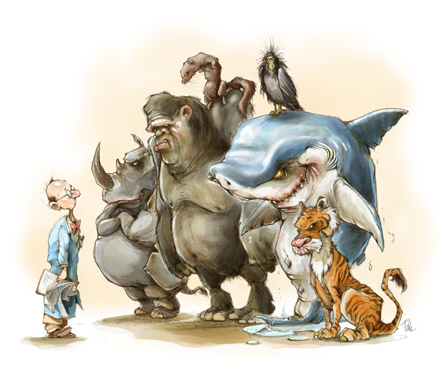
Despite this worrisome state (sharks have extremely important ‘regulatory’ roles in marine ecosystems), many people have been slowly taking notice of the problem, largely due to the efforts of shark biologists. An almost religious-like pillar of shark conservation that has emerged in the last decade or so is that if we save nursery habitats, all shark conservation concerns will be addressed.

Why? Many shark species appear to have fairly discrete coastal areas where they either give birth or lay eggs, and in which the young sharks develop presumably in relative safety from predators (including their parents). Meanwhile, breeding parents will often skip off as soon as possible and spend a good proportion of their non-breeding lives well away from coasts. Sexual segregation appears to be another common feature of many sharks species (the boys and girls don’t really play together that well).

The upshot is that if you conserve these more vulnerable ‘nursery’ areas in coastal regions, then you’ve protected the next generation of sharks and all will be fine. The underlying reason for this assumption is that it’s next-to-impossible to conserve entire ocean basins where the larger adults may be frolicking, but you can focus your efforts on restricted coastal zones that may be undergoing a lot of human-generated modification (e.g., pollutant run-off, development, etc.).

However, a new paper published recently in Conservation Letters entitled Reassessing the value of nursery areas to shark conservation and management disputes this assumption. Michael Kinney and Colin Simpfendorfer explain that even if coastal nurseries can be properly identified and adequately conserved, there is mounting evidence that failing to safeguard the adult stages could ultimately sustain declines or arrest recovery efforts. The authors support continuing efforts to identify and conserve nurseries, but they say this isn’t enough by itself to solve any real problems. If we want sharks around (and believe me, even though the odd swimmer may get a nip or two, it’s better than the alternative of no sharks), then we’re going to have to restrict fishing effort on the high seas as well.

I think this one qualifies for the ‘Potential‘ list.

CJA Bradshaw

Add to FacebookAdd to NewsvineAdd to DiggAdd to Del.icio.usAdd to StumbleuponAdd to RedditAdd to BlinklistAdd to Ma.gnoliaAdd to TechnoratiAdd to Furl


Classics: Ecological Triage

27 03 2009

It is a truism that when times are tough, only the strongest pull through. This isn’t a happy concept, but in our age of burgeoning biodiversity loss (and economic belt-tightening), we have to make some difficult decisions.In this regard, I suggest Brian Walker’s1992 paper Biodiveristy and ecological redundancy makes the Classics list.

Ecological triage is, of course, taken from the medical term triage used in emergency or wartime situations. Ecological triage refers to the the conservation prioritisation of species that provide unique or necessary functions to ecosystems, and the abandonment of those that do not have unique ecosystem roles or that face almost certain extinction given they fall well below their minimum viable population size (Walker 1992). Financial resources such as investment in recovery programmes, purchase of remaining habitats for preservation, habitat restoration, etc. are allocated accordingly; the species that contribute the most to ecosystem function and have the highest probability of persisting are earmarked for conservation and others are left to their own devices (Hobbs & Kristjanson 2003).

This emotionally empty and accounting-type conservation can be controversial because public favourites like pandas, kakapo and some dolphin species just don’t make the list in many circumstances. As I’ve stated before, it makes no long-term conservation or economic sense to waste money on the doomed and ecologically redundant. Many in the conservation business apply ecological triage without being fully aware of it. Finite pools of money (generally the paltry left-overs from some green-guilty corporation or under-funded government initiative) for conservation mean that we have to set priorities – this is an entire discipline in its own right in conservation biology. Reserve design is just one example of this sacrifice-the-doomed-for-the good-of-the-ecosystem approach.

Walker (1992) advocated that we should endeavour to maintain ecosystem function first, and recommended that we abandon programmes to restore functionally ‘redundant’ species (i.e., some species are more ecologically important than others, e.g., pollinators, prey). But how do you make the choice? The wrong selection might mean an extinction cascade (Noss 1990; Walker 1992) whereby tightly linked species (e.g., parasites-hosts, pollinators-plants, predators-prey) will necessarily go extinct if one partner in the mutualism disappears (see Koh et al. 2004 on co-extinctions). Ecological redundancy is a terribly difficult thing to determine, especially given that we still understand relatively little about how complex ecological systems really work (Marris 2007).

The more common (and easier, if not theoretically weaker) approach is to prioritise areas and not species (e.g., biodiversity hotspots), but even the criteria used for area prioritisation can be somewhat arbitrary and may not necessarily guarantee the most important functional groups are maintained (Orme et al. 2005; Brooks et al. 2006). There are many different ways of establishing ‘priority’, and it depends partially on your predilections.

More recent mathematical approaches such as cost-benefit analyses (Possingham et al. 2002; Murdoch et al. 2007) advocate conservation like a CEO would run a profitable business. In this case the ‘currency’ is biodiversity, and so a fixed financial investment must maximise long-term biodiversity gains (Possingham et al. 2002). This essentially estimates the potential biodiversity saved per dollar invested, and allocates funds accordingly (Wilson et al. 2007). Where the costs outweigh the benefits, conservationists move on to more beneficial goals. Perhaps the biggest drawback with this approach is that it’s particularly data-hungry. When ecosystems are poorly measured, then the investment curve is unlikely to be very realistic.

CJA Bradshaw

Add to FacebookAdd to NewsvineAdd to DiggAdd to Del.icio.usAdd to StumbleuponAdd to RedditAdd to BlinklistAdd to Ma.gnoliaAdd to TechnoratiAdd to Furl

(Many thanks to Lochran Traill and Barry Brook for co-developing these ideas with me)