Does the pope wear a funny hat?

5 04 2011

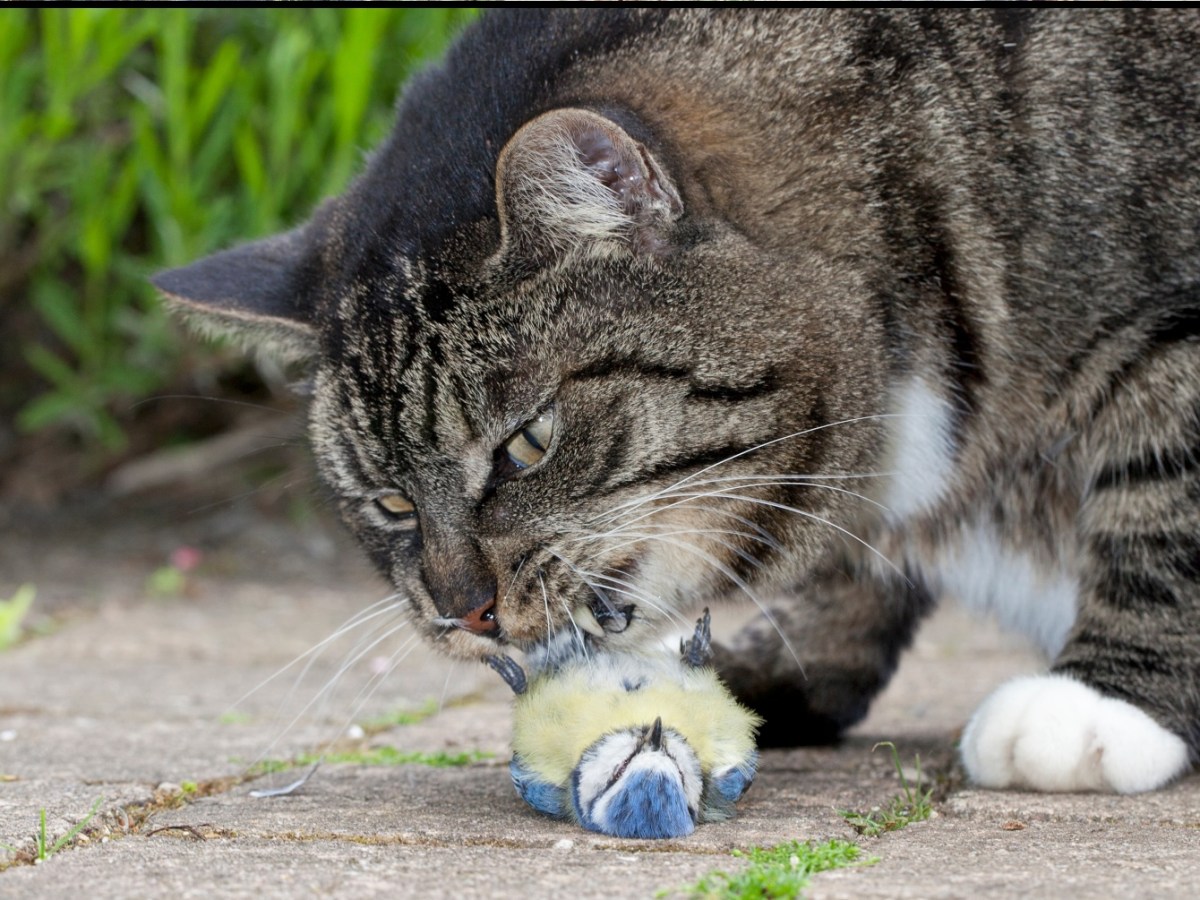
Does a one-legged duck swim in circles? Does an ursid defecate in a collection of rather tall vascular plants? Does fishing kill fish?

Silly questions, I know, but it’s the kind of question posed every time someone doubts the benefits (i.e., for biodiversity, fishing, local economies, etc.) of marine reserves.

I’ve blogged several times on the subject (see Marine protected areas: do they work?The spillover effectInterview with a social (conservation) scientist, and Failing on ocean protection), but considering Hugh Possingham is town today and presenting the case to the South Australian Parliament on why this state NEEDS marine parks, I thought I’d rehash an old post of his published earlier this year in Australasian Science:

Science has long demonstrated that marine reserves protect marine biodiversity. Rather than answer the same question again, isn’t it about time we started funding research that answers some useful scientific questions?

As marine reserves spread inexorably across the planet, the cry from skeptics and some fishermen is: “Do marine reserves work?” The science is pretty clear but acknowledgement of this by the public is another story. Let me begin with a story of my experience answering this question while communicating to stakeholders the subtleties of marine conservation planning during the rezoning of Moreton Bay.

I was asked by the then-Queensland Environmental Protection Agency to explain to stakeholders the process of marine reserve system design as it applied to the Moreton Bay rezoning. I told the gathering that the rezoning was about conserving a fraction of each mappable biodiversity attribute (species and habitats) for the minimum impact on the livelihood of others. Read the rest of this entry »
Buzzing to the plate

4 04 2011

Here’s another contribution from my PhD student, Salvador Herrando-Pérez (see his previous ConservationBytes.com post on micro-evolution here).

Once upon a time at the produce section of a supermarket, a little girl confided to me that she had no idea that little plants could grow on carrots. This sympathetic scene portrays the split between the food we consume and the environments that produce it.

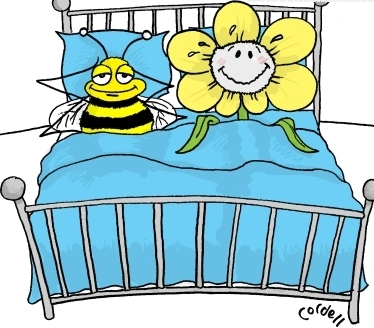
© Cordell

Mediterraneans love their cuisine. In fact, we are fairly proud of all our food. Yet how many of us associate a juicy tomato in our multicoloured salads, the smoothness of a escalibada (grilled veggies) bathed in virgin olive oil, the afternoon’s delicious expresso among friends and colleagues, or the last Christmas’ crunchy nougat shared with our beloved, with an insect that one given day pollinates a flower whose fertilized ovary will reach our dining room in the form of a sweet, infusion, fruit, sauce, soup or veggie.

Biodiversity fuels this relationship between insects and food. A study led by Alexandra Klein on highland coffee (Coffea arabica) from Sulawesi (Indonesia) demonstrates this concept well1. The German team showed that the amount of coffee beans produced in 24 agro-forestry sites increased with the number of bee species visiting the flowers (Fig. 1). Read the rest of this entry »


Government pulls plug on Asian honeybee eradication

3 03 2011

Here’s another one from the bee man, Tobias Smith (PhD candidate at the University of Queensland). Tobias recently blogged about bee basics here on ConservationBytes.com (something I highly recommend for anyone interested on brushing up on bee facts and dispelling a few myths), so I asked him to follow up with this very important piece on the future of pollination in Australia. It concerns a nasty little invader recently dubbed the “flying cane toad” (not my analogy).

http://www.flickr.com/photos/angela-and-andrew/1196369580/in/faves-lornet/

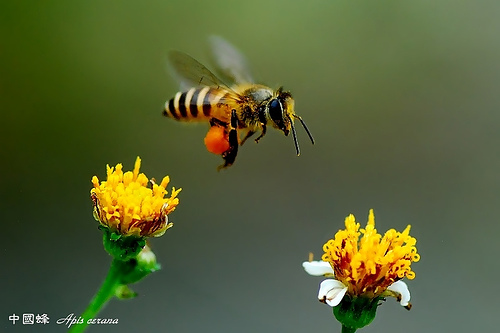
© 中國蜂

Over the last few weeks there has been much media attention given to the Asian honeybee (Apis cerana) incursion in far north Queensland. The Asian honeybee was first detected near Cairns in May 2007. Since then an effort to eradicate the bee has been made. This peaked during 2010, when over 40 bee eradication personnel were employed to hunt and destroy in areas around Cairns, the Atherton Tablelands, and other nearby locations.

In late January this year, the committee established to manage the eradication program (governments and industry), decided to pull the plug on eradication efforts (on money to pay for efforts that is). They decided it was no longer possible to achieve eradication (a majority decision, not a unanimous decision). The position to stop resources for eradication is not supported by industry, or ecological commentators. Arguments have been made that this is the only window of opportunity for eradication (for ever!), and that more resources need to be put towards it now, while there is still a chance of success.

A few points to be made about the Asian honeybee in Australia: Read the rest of this entry »


More to bees than queens and honey

11 02 2011

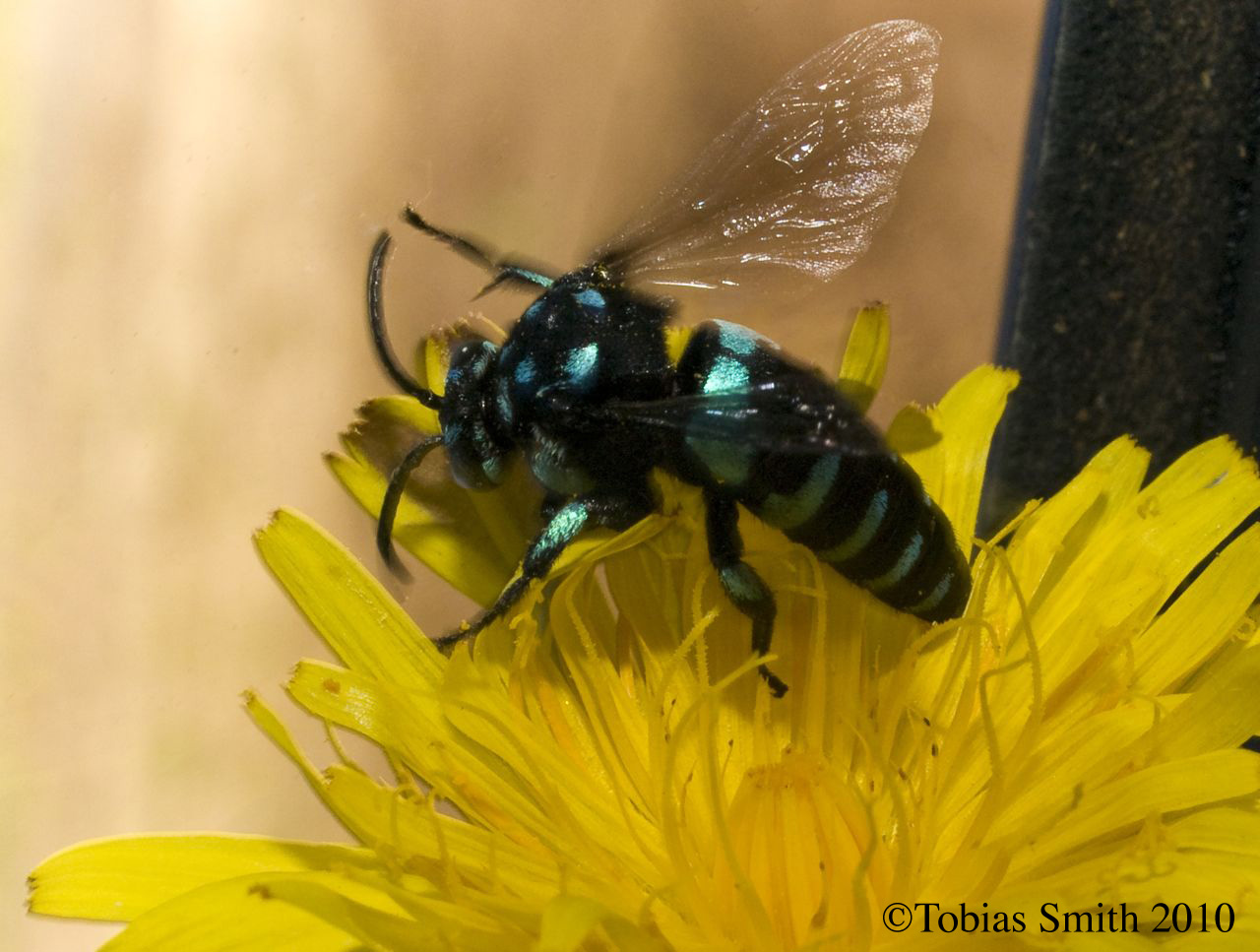
Another great guest post, this time from Tobias Smith, a PhD candidate at the University of Queensland’s School of Biological Sciences. Tobias is investigating bee community shifts across a fragmented tropical landscape in far north Queensland, aiming to identify landscape variation in community composition of two important rainforest pollinator groups, bees and flies. I met Tobias a few years ago as part of the Thiaki rainforest reforestation project for which he is doing baseline surveys of bees and flies.

I asked him a while ago to write a ‘primer’ on bees for ConservationBytes.com since so many people really don’t much about the taxon (I include myself in that group). He’s done a brilliant job – everything you wanted to know about bees but were afraid to ask (in 1000 words).

The frequently reported, gloomy news about bee declines is hard not to notice. Bees are in dire trouble around the world, and this trend has worrying implications for both ecosystems and human food production. As a result, popular media often reports on the plight of bees, regularly reciting the figure of one in three mouthfuls of food being dependent on the work of bees. While bees certainly are in major trouble, it can be easy to misinterpret statements often made in these kind of articles without a little general bee knowledge. So here are a few bee facts that, at the very least, we ecological representatives should be familiar with. This information should help give some perspective when interpreting bee news, and when engaging in exciting bee conversations at the shops.

There are approximately 20,000 bees species globally. Yet when most people think of bees they think of a single species, Apis mellifera, the western honey bee (introduced in most of its range, and also referred to as the European honeybee). This bee is certainly an important bee. It is managed as the usual pollinator of crops requiring biotic pollination, and it makes the honey we usually eat here in the developed world. Some say our domestication of this bee has been an important contributing factor in achieving the level of development that we humans have. There are however, about 19,999 other bee species out there, and most of them are very different to the western honeybee. Read the rest of this entry »


When weeds are wanted

31 01 2011

And in keeping with the topic of bees

© Flowergardengirl

I’ve just read a very, very cool paper in Ecology Letters about something I’ve wanted to do myself for some time. It’s a fairly specific piece of work, so it could easily be reproduced elsewhere with different species. My point though is that a hell of a lot more of these types of studies are required.

The study by Carvalheiro and colleagues entitled Natural and within-farmland biodiversity enhances crop productivity examined the role of weedy (ruderal) vegetation in supporting pollinator communities. Using sunflowers as a model crop, they showed rather convincingly how native vegetation patches interspersed amongst crop species can enhance a host of crop production measures, even when larger areas of natural habitats were far away from the crops themselves.

Based on a series of plot experiments, they tested four main hypotheses:

  1. The distance to natural habitat affects pollination visitor abundance and diversity.
  2. Plots surrounding or interspersed with ruderal vegetation affect pollinator abundance and diversity.
  3. The diversity of pollinators visiting sunflowers affects honeybee (the principal pollinators) behaviour.
  4. The diversity of pollinators affects sunflower production.

Read the rest of this entry »


A wee ditty about the bee

29 01 2011

I liked this. Another quick and entertaining look at why bees are important, why they’re crashing, and what people can do about it (at least, on a very fine scale). And it’s all done in Scottish.


Biodiversity begins at home

20 01 2011

A few months ago I was involved in a panel discussion entitled ‘Biodiversity begins at home’ held at the Royal Institution of Australia in Adelaide and sponsored by the Don Dunstan Foundation.

The main thrust of the evening was to have both academic (me & Andy Lowe) and on-the-ground, local conservationists (Sarah Lance, Craig Gillespie and Matt Turner) talk about what people can do to stem the tide of biodiversity loss. The video is now available, so I thought I’d reproduce it here. We talked about a lot of issues (from global to local scale), so if you have a spare hour, you might get something out of this. I did, but it certainly wasn’t long enough to discuss such big issues.

Warning – this was supposed to be more of a discussion and less of a talkfest; unfortunately, many of the panel members seemed to forget this and instead dominated the session. We really needed 4 hours to do this properly (but then, who would have watched the video?).

Read the rest of this entry »


Deforestation partly to blame for Queensland floods

17 01 2011

© recoverling

Last week I sent a fairly random Tweet about deforestation in south-eastern Queensland being partially responsible for the record floods there. It went more or less unnoticed, but I thought the comment deserved a proper explanation.

As many of you might know, my colleagues and I wrote an article a few years ago about the global-scale evidence for deforestation leading to a higher incidence and severity of floods in the developing world. This was fairly controversial, but it was nonetheless the first broad-scale evidence for the fabled deforestation-flood link yet published (in my not-so-humble opinion). Subsequent comment reiterated the point with new data.

Now, I will begin by saying I have no data yet to back up my Queensland-specific hypothesis, but I am contemplating a time-series paper on floods in Australia, especially after the events of the last month. This post is therefore merely a reasoned hypothesis.

The hypothesis itself is rather simple. Testing is not. I submit that the recent flooding in Australia has been exacerbated (not caused) by the rapid loss of forest cover over the last 40 years. We know that this is a particularly intense La Niña in Australia and our unusually high rainfall arises from this meteorological phenomenon, but I hypothesise that it wouldn’t have been as bad if this part of Australia hadn’t been so careless with its forest cover since the 1970s. Read the rest of this entry »



Biowealth – a lexical leap forward for biodiversity appreciation

17 12 2010

Here’s a little idea I’ve been kicking around in my head that I’d like to invite you to debate. Call it an ‘Open Thread’ in the spirit of BraveNewClimate.com’s successful series.

© The Economist

Let’s face it, ‘biodiversity’ is a slippery and abstract concept for most people. Hell, even most ecologists have a hard time describing what biodiversity means. To the uninitiated, it seems simple enough. It’s just the number of species, isn’t it?

Well, no. It isn’t.

Unfortunately, it’s far, far more complicated. First, the somewhat arbitrary pigeon-holing of organisms into Linnaean taxonomic boxes doesn’t really do justice to the genetic gradients within species, among populations and even between individuals. We use the pigeon-hole taxonomy because it’s convenient, that’s all. Sure, molecular genetics has revolutionised the concept, but to most people, a kangaroo is a kangaroo, a robin is a robin and an earthworm is an earthworm. Hierarchical Linnaean taxonomy prevails.

Then there’s the more prickly issue of α, β and γ diversity. α diversity essentially quantifies species richness within a particular area, whereas β diversity is the difference in α diversity between ecosystems. γ diversity is used to measure overall diversity for the different constituent ecosystems of a region. Scale is very, very important (see our recent book chapter for more on this). Read the rest of this entry »


History and future (of Australian ecology and society)

11 12 2010

I’ve just returned from a week-long conference in Canberra where the Ecological Society of Australia (of which I am a relatively new member) has just completed its impressive 50th anniversary conference. It was a long, but good week.

It’s almost a bit embarrassing that I’ve never attended an ESA1 conference before, but I think I waited for the right one. However, the main reason I attended was that I was fortunate to have received the ESA’s 3rd Australian Ecology Research Award (AERA), and the kick-back was a fully funded trip. My only reciprocation was to give a 40-minute plenary lecture – a small price to pay.

I entitled my talk ‘Heads in the desert sand: why Australians should wake up to the biodiversity crisis’, and I received a lot of good feedback. I talked about the global and Australian trends of biodiversity loss and associated ecosystem services, focussing the middle section on some of our work on feral animal ecology (see example). I then gave my views on the seriousness of our current situation and why some of the fastest losses of sensitive ecosystem services are happening right here, right now. I finished off with a section on how I think Australian ecologists could get more relevant and active in terms of research uptake by policy makers. I hope that the talk will be podcastable soon, so stay tuned.

But that was just ‘my’ bit. This post is more about a quick summary of the highlights and my overall impressions.

Read the rest of this entry »



Conservation is all about prioritisation

4 12 2010

Another great guest post from a previous contributor, Piero Visconti.

Biodiversity conservation is about prioritisation – making difficult choices.

With limited money and so many habitats and species in need of protection, deciding where not to expend resources is as important as deciding where to act. Saying ‘no’ will be crucial for ensuring the persistence of biodiversity and ecosystem services, simply because as individuals who value conservation, we will always be tempted to try and save everything.

In the words of Frederick the Great: “He who defends everything, defends nothing.”

As a result, much recent conservation planning research has focused on offering managers general and flexible tools for deciding which conservation features should be the highest priority. Intuitively, we should direct our resources towards areas that have high biodiversity values, and that are likely to be lost if the forces of conservation do not intervene (the most ‘vulnerable’ land parcels). This approach is known as the ‘minimize loss’ approach. Imagine we are worried about the loss of rare native vegetation in the face of ongoing urban expansion (e.g., Melbourne’s western grasslands). To minimize loss, managers would pre-emptively protect sites that are most likely to be developed. But is this decision to race the bulldozers always the best idea? How much does this choice depend on our assumptions about how land is protected, how land developers behave, and the accuracy of our future predictions? Read the rest of this entry »



The Amazing Paul (Mc)Ehrlich

15 11 2010

© CJA Bradshaw

A few years ago when I first wrote about Paul Ehrlich in our book, Tropical Conservation Biology, I quickly became impressed. His track record is, without any exaggeration, truly awe-inspiring. With over 1000 articles published and almost 50 books, the man has been a scientific writing machine for his entire career. He’s also highly influential in the socio-political sphere, and counts among his close friends some of the most politically and scientifically powerful people on the planet. In a word, he’s easily among the world’s greatest living scientists.

Remember, this was my opinion all before I actually met the man. Travelling through central California last year, I was lucky enough to be invited by Paul’s close colleague, Gretchen Daily, to give a talk at their Stanford University lab. It was fortunate that Paul was about at the time and not off promoting his new book or traipsing through the mountains of Colorado chasing butterflies.

We hit it off immediately and it seemed became mates within the space of a few hours. I learnt then that he and his equally famous wife, Anne, were regular visitors to Australia and that he had a particular love affair going with many Australian wines. I invited him to come to Adelaide the following year, he agreed (and importantly, so did the director of the Environment Institute, Mike Young), and it came to pass. Read the rest of this entry »


One billion people still hungry

12 11 2010


overpopulationA few days ago, that printed mouthpiece of Murdoch’s News Corporation in Australia – The Australiani, attacked Paul Ehrlich with a spectacular piece of uninformed gibberish (‘Population bomb still a fizzer 40 years on‘) that we both feel compelled to contest.

The Australian, well-known for its ‘War on Science’, refused to give us the opportunity to respond officially in an Opinion Editorial, so we are compelled to fight back using the blogosphere and our collective networks (which, we might add, probably exceed the distribution of said newspaper). Frankly, it was no surprise that The Australian chose to ignore us.

The article in question was written by Oliver Marc Hartwich of the so-called ‘Centre for Independent Studies’, the hyper-conservative Australian propaganda machine reminiscent of the ultra-right wing American Enterprise Institute, made up of some of Australia’s most powerful business magnates and with no academic affiliation whatsoever. Anything vaguely left-of-centre and even remotely promoting environmental responsibility is considered a viable target.

Recently, we blew the whistle on an equally dangerous man and the institutes he represents – climate-denier Alan Oxley; he and the business interests he represents are responsible for more deforestation, biodiversity loss and financial inequity in South East Asia over the last few decades than almost any single group.

Now we turn our attention to expose the true colours of the Centre for Independent Studies and Mr. Hartwich. Read the rest of this entry »


The bomb is still ticking…

11 11 2010

Apologies for the silence over the last week – it’s been a whirlwind here with Paul Ehrlich visiting The University of Adelaide (amazing for a 78-year old man). In the meantime, Sharon Ede over at Post Growth wrote a great response to the LOLstralian‘s high-school effort to attack Paul a few days ago. Our response is coming shortly, but Sharon’s article is a great precursor.

More than forty years after its publication, the predictions made in Paul Ehrlich’s landmark book ‘The Population Bomb’ are still the subject of debate. Australian think-tank the Centre for Independent Studies (‘Population bomb still a fizzer 40 years on’, The Australian, 8 November, 2010), says Ehrlich’s warnings of dire consequences, including of mass starvation as a result of overpopulation, have not materialised:

“More than 40 years ago, American biologist Paul Ehrlich sketched a doomsday scenario for planet Earth in his book The Population Bomb…Since the publication of the book, the global population has nearly doubled but most of its gloomy predictions have not come true…”

By all means, let’s have a robust debate on population, both at the national and global level. Both are long overdue.

But let’s make it a sophisticated debate, grounded in the science we have available and a thorough understanding of all the issues in play.

According to the United Nations’ Population Division, the global population has increased from one billion in 1804 to over six billion in 2010.

It has taken most of human history to reach one billion people. It took just over a century to add the second billion.

The rate of population growth since then is such that it has taken only twelve years to add the most recent billion people.

The moderate UN scenario is for a population of 9 billion by 2050 – that’s within the lifetime of many of us. Read the rest of this entry »


Blog Action Day 2010 – Water neutrality and its biodiversity benefits

16 10 2010

In my little bid to participate in Change.org’s Blog Action Day 2010 – Water, I’ve re-hashed a post from 2008 on ‘water neutrality’. This will also benefit my recently joined readers, and re-invigorate a concept I don’t think has received nearly enough attention globally (or even in parched Australia where I live). So here we go:

The world’s freshwater ecosystems are in trouble. We’ve extracted, poisoned, polluted, damned and diverted a large proportion of the finite (and rather small!) amount of freshwater on the planet. Now, most people might immediately see the problem here from a selfish perspective – no clean, abundant water source = human disease, suffering and death. Definitely something to avoid, and a problem that all Australians are facing (i.e., it’s not just restricted to developing nations). Just look at the Murray-Darling problem.

In addition to affecting our own personal well-being, freshwater ecosystems are thought to support over 10000 fish species worldwide (see also a recent post on Africa’s freshwater biodiversity’s susceptibility to climate change), and the majority of amphibians and aquatic reptiles. Current estimates suggest that about 1/3 of all vertebrate biodiversity (in this case, number of species) is confined to freshwater. As an example, the Mekong River system alone is thought to support up to 1700 different species of fish.

So, what are some of the ways forward? The concept of ‘water neutrality’ is essentially the wet version of carbon neutrality. It basically means that water usage can be offset by interventions to improve freshwater habitats and supply. Read the rest of this entry »


Humans 1, Environment 0

27 09 2010

© flickr.com/photos/singapore2010

While travelling to our Supercharge Your Science workshop in Cairns and Townsville last week (which, by the way, went off really well and the punters gave us the thumbs up – stay tuned for more Supercharge activities at a university near you…), I stumbled across an article in the Sydney Morning Herald about the state of Australia.

That Commonwealth purveyor of numbers, the Australian Bureau of Statistics (ABS), put together a nice little summary of various measures of wealth, health, politics and environment and their trends over the last decade. The resulting Measures of Australia’s Progress is an interesting read indeed. I felt the simple newspaper article didn’t do the environmental components justice, so I summarise the salient points below and give you my tuppence as well. Read the rest of this entry »


Global erosion of ecosystem services

14 09 2010

A few months ago I was asked to give a lecture about erosion of ecosystem services to students in the University of Adelaide‘s Issues in Sustainable Environments unit. I gave that lecture last week and just uploaded a slidecast of the presentation (with audio) today.

I’ve reproduced the lecture here for your viewing pleasure. I hope you find the 45-minute presentation useful. Note that the first few minutes cover me referring to the Biodiversity film short that I posted not too long ago.

CJA Bradshaw


Biodiversity: from conservation science to action

11 09 2010

© tidechaser.blogspot.com

About 3 weeks ago I blogged about Guillaume Chapron‘s vision to notch up conservation implementation around the globe. After that little piece Guillaume invited me and a few others (including one of Australia’s own conservation gurus, Hugh Possingham) to co-author a piece on the new Nature Network‘s ‘Soapbox Science‘ blog. The Soapbox Science blog is:

“… a new group blog, covering the whole of science. Over the coming months, we’ll be inviting researchers from all over the world to write one-off posts. The subjects may be controversial, opinionated, speculative, or just plain interesting, and may be written by any scientist with something to say.”

We managed to grab the first post in this endeavour, so I reproduce it here for ConservationBytes.com readers. Enjoy!

Ecosystem degradation and species extinction rates are steadily accelerating, mainly as a result of unbounded human population growth, extravagant consumption patterns and associated land and sea degradation. Researchers are pushing science forward in an attempt to reverse the biodiversity ‘crisis’. In their papers they systematically stress how their results can serve to enhance conservation management or implement new corrective actions to reduce biodiversity loss. Still, they are becoming increasingly frustrated that their published research is having little, if any impact in halting the ongoing sixth mass extinction. Everything remains purely theoretical and is not leading to direct action. Read the rest of this entry »


The lost world – freshwater biodiversity conservation

6 09 2010

Even the most obtuse, right-wing, head-in-the-sand, consumption-driven, anti-environment yob would at least admit that they’ve heard of forest conservation, the plight of whales (more on that little waste of conservation resources later) and climate change. Whether or not they believe these issues are important (or even occurring) is beside the point – the fact that this particular auto-sodomist I’ve described is aware of the issues is at least testament to growing concern among the general populace.

But so many issues in conservation science go unnoticed even by the most environmentally aware. Today’s post covers just one topic (I’ve covered others, such as mangroves and kelp forests) – freshwater biodiversity.

The issue is brought to light by a paper recently published online in Conservation Letters by Thieme and colleagues entitled Exposure of Africa’s freshwater biodiversity to a changing climate.

Sure, many people are starting to get very worried about freshwater availability for human consumption (and this couldn’t be more of an issue in Australia at the moment) – and I fully agree that we should be worried. However, let’s not forget that so many species other than humans depend on healthy freshwater ecosystems to persist, which feed back in turn to human benefits through freshwater filtering, fisheries production and arable soil accumulation.

Just like for the provision of human uses (irrigation, direct water consumption, etc.), a freshwater system’s flow regime is paramount for maintaining its biodiversity. If you stuff up the flow regime too much, then regardless of the amount of total water available, biodiversity will suffer accordingly.

Glen Canyon Dam

Image by James Marvin Phelps (mandj98) via Flickr

Thieme and colleagues focus specifically on African freshwater systems, but the same problems are being seen worldwide (e.g., Australia’s Murray-Darling system, North America’s Colorado River system). And this is only going to get worse as climate change robs certain areas of historical rainfall. To address the gap in knowledge, the authors used modelled changes in mean annual runoff and discharge to determine fish species affected by 2050.

The discharge/runoff results were: Read the rest of this entry »


Webinar: Modelling water and life

27 08 2010

Another quick one today just to show the webinar of my recent 10-minute ‘Four in 40’ talk sponsored by The Environment Institute and the Department for Water. This seminar series was entitled ‘Modelling as a Tool for Decision Support’ held at the Auditorium, Royal Institution Australia (RiAus).

“Four in 40″ is a collaboration between The University of Adelaide and the Department for Water, where 4 speakers each speak for 10 minutes on their research and its implications for policy. The purpose is to build understanding of how best to work with each other, build new business for both organisations and raise awareness of activity being undertaken in water/natural resource management policy and research.

CJA Bradshaw