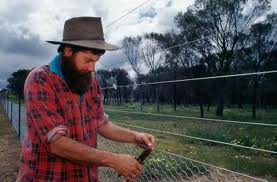
There’s a romantic myth surrounding Australia that is pervasive both overseas and within the national psyche: this sun-scorched continent home to stoic bushmen1 that eek out a frugal, yet satisfying existence in this harsh rural land. Unfortunately that ideal is anathema to almost every Australian alive today.
While some elements of that myth do have a basis in reality – it is indeed a hot, dry, mostly inhospitable place if you count the entire land area (all 7.69 million square kilometres of it), and it does have the dubious honour of being the driest inhabited continent on Earth – most Australians live nowhere near the dry interior or the bush.
Despite our remarkably low average population density (a mere 3.09 people per square kilometre), Australia is in fact one of the most urbanised nations on the planet, with nearly 90% of its citizenry living within a major urban centre. As a result, our largely urban/suburban, latte-sipping, supermarket-shopping population has little, if any, connection to the vast landscape that surrounds its comfortable, built-up environs. There should be little wonder then that Australians are so disconnected from their own ecology, and little surprise that our elected officials (who, after all, represent the values of the majority of the citizens they purport to represent), are doing nothing to slow the rapid flushing of our environment down the toilet. Indeed, the current government is in fact actively encouraging the pace of that destruction. Read the rest of this entry »
Global human society is a massive, consumptive beast that on average degrades its life-support system. As we’ve recently reported, this will only continue to get worse in the decades to centuries to come. Some have argued that as long as we can develop our societies enough, the impact of this massive demographic force can be lessened – a concept described by the environmental Kuznets curve. However, there is little evidence that negative societal impact on the environment is lessened as per capita wealth exceeds some threshold; unfortunately environmental damage tends to, on average, increase as a nation’s net wealth increases. That’s not to say that short-term improvements cannot be achieved through technological innovation – in fact, they will be essential to offset the inexorable growth of the global human population.
In this vein, I just stumbled across an extremely interesting paper today published online early in Conservation Biology that describes trends in charismatic wildlife (i.e., big mammals) as the former Soviet Union collapsed in 1991 and societal breakdown ensued. The authors had access to an amazing dataset that spanned the decade prior to the collapse, the decade immediately following, and a subsequent decade of societal renewal. What they found was fascinating. Read the rest of this entry »
Greg Hunt, the Coalition Government’s Minister for the Environment, today announced what appears to be one of the only environmental promises kept from their election campaign in 2013: to appoint a Threatened Species Commissioner.
The appointment is unprecedented for Australia – we have never had anything remotely like it in the past. However, I am also confident that this novelty will turn out to be one of the position’s only positives.
With this background, it should come as no surprise that considerable cynicism is emerging following the Minister’s announcement. Fears that another powerless pawn of the current government appear to have been realised with the appointment of Gregory Andrews as the Commissioner. Mr Andrews is a public servant (ironically from the now-defunct Department of Department of Climate Change and Energy Efficiency) and former diplomat who has some minor infamy regarding contentious comments he made in 2006 when acting as a senior bureaucrat in Mal Brough’s Department of Indigenous Affairs. Apart from Mr Gregory’s general lack of specific expertise in species recovery, the choice appears to be neutral at best.
More importantly, the major limitation of the Commissioner to realise real benefits for Australian biodiversity is the position’s total lack of political power. Greg Hunt himself confirmed that Mr Andrews will not be able to affect government policy other than ‘encourage’ cooperation between states and environmental groups. The position also comes with a (undisclosed) funding guarantee of only one year, which makes it sound more like an experiment in public relations than effective environmental policy. Read the rest of this entry »
ALEO – the acronym has a nice ring to it. Although I must confess that said organisation doesn’t yet exist, but it bloody well should.
Australia is in dire need of a united front to tackle the massive anti-environment sentiment gripping this country’s band of irresponsible and short-sighted libertarian politicians. Only yesterday I was chatting to a student in the tea room about my ‘State of South Australia’s Environment‘ talk when he asked “So, what can we do about it?”. Isn’t that the 1 per cent1 question?
Apart from the obvious: (1) keep up the pressure on bad government plans (petitions, letters, blogs, reports, e-mails), (2) don’t vote for the Coalition and (3) if you’re a scientist, place some economic or well-being value on environmental processes so that even politicians can understand that maintaining ecosystems makes good economic sense, I almost casually mentioned that we need a united front in Australia against this latest right-wing wave of anti-environmentalism.
I’ve thought about this before, but my latest conversation got me reflecting on the problem a little more – why don’t we have a united league of environmental organisations in Australia? Read the rest of this entry »
Yes, the signs were there, but they weren’t clandestine messages written in the stars or in the chaos of tea-leaf dregs. We saw this one coming, but Australians chose to ignore the warning signs and opt for the American political model of extremism, religiosity, plutocracy and science denial.
Enter the ‘Tea Party’ of Australia – the ‘new’ Coalition where reigning Rex perditor Prime Minister Tony The Monk Abbott1 has, in just a few short months, turned back the clock on Australian environmental protection some 40 years.
Yes, we saw it coming, but it wasn’t a tautological fait accomplijust because it concerned a ‘conservative’ government. It’s difficult to remember, I know, that conservative governments of yesteryear implemented some strikingly powerful and effective environmental legislation. Indeed, it was the former incarnation of the Coalition government that implemented the once-formidable Environmental Protection and Biodiversity Conservation (EPBC) Act under the direction of then Environment Minister, Robert Hill. A colossus of sorts, the EPBC suffers from many ailments. While it’s the only really bitey environmental legislation we’ve got, that colossus is a lumbering, limping giant missing more than a few teeth – it needs a complete overhaul.
As most Australians are unfortunately aware, The Monk repeatedly and defiantly promised to repeal the Labor-government carbon price implemented in July 2012, despite the absolute necessity to tax the heaviest polluters. While somewhat sheepish about his recent climate disruption denialism following his election in 2013, a denialist he remains:
It is understandable that this sort of news doesn’t make the Jane & Joe Bloggs of the world stand up and cheer, but it should make conservation biologists jump for bloody joy.
So why exactly am I so excited about the setting aside of a mere 9000 ha (90 km2, or 10 × 9 km) of semi-arid scrub in western New South Wales? It’s simple – nothing can replace the biodiversity or carbon value of primary forest. In other words, forest restoration – while laudable and needed – can never achieve what existing forest already does. We know now from various parts of the world that biodiversity is nearly always much higher in primary forest, and that the carbon structure of the forest (especially below-ground carbon) can take centuries to recover.
Another problem with restoration – and if you’ve ever been involved in any tree planting yourself, you’ll know what I mean – is that it’s incredibly expensive, time-consuming and slow. Wouldn’t it make more financial sense just to save forests instead of trying to rebuild them?
Of course it is, so the logical conclusion from a conservation perspective is to save primary forest first, then worry about restoration next. The problem is, there are few, if any, financial incentives for keeping forests standing in the private sector. The stumbling rise of the carbon economy is a potential resolution to this problem, although neither the Kyoto Protocol nor most national carbon-trading schemes adequately account for the carbon value of existing forests.
Up until today, even Australia didn’t have any examples.
I have been thinking a lot lately about poor governance and bad choices when it comes to biodiversity conservation policy. Perhaps its all that latent anger arising from blinkered, backward policies recently implemented by conservative state and national governments in Australia and elsewhere that leads me to contemplate: What would I do if I had the power to change policy?
While I am certain I have neither the experience or complete knowledge to balance national budgets, ensure prosperity and maintain the health of an entire country, I do have some ideas about what we’re doing wrong conservation-wise, and how we could potentially fix things. This is not meant to be an exhaustive list – it is more a discussion point where people can suggest their own ideas.
So here are 16 things I’d change or implement (mainly in Australia) if I were king for a day:
Led by Bill Laurance, our latest opinion editorial in the Higher Education supplement. Interestingly, it has already spawned a bilious and spittle-flecked response by Queensland’s Acting National Parks Minister, Tim Mander. Given the evidence, who’s side do you take? I’m happy that at least one of the worst culprit state governments is at least now paying some attention to the issue.
Why is Australia going down this reckless path? It’s all down to the state governments – especially in Victoria, Queensland and NSW.
For the conservative politicians currently holding sway in these States, it seems it’s time to generate some quick cash while cutting park budgets – and never mind the impact on Australia’s imperilled ecosystems and biodiversity.
In Victoria, for instance, land developers are now being allowed to build hotels and other ventures in national parks. In NSW, recreational shooting and possibly logging will be allowed in parks if new legislation is passed. In NSW’s marine parks, bans on shore-based recreational fishing are being lifted [see previous post here].
Other parks in NSW and Queensland are being opened up to livestock grazing. In Morrinya National Park in Queensland, a strip of forest 20 km long was recently cleared for fencing, with new stock-watering tanks being established throughout the park. Read the rest of this entry »
A few weeks ago I heard from an early-career researcher in the U.S. who had some intelligent things to say about getting jobs in conservation science based on a recent Conservation Biology paper she co-wrote. Of course, for all the PhDs universities are pumping out into the workforce, there will never be enough positions in academia for them all. Thus, many find their way into non-academic positions. But – does a PhD in science prepare you well enough for the non-academic world? Apparently not.
—
Many post-graduate students don’t start looking at job advertisements until we are actually ready to apply for a job. How often do we gleam the list of required skills and say, “If only I had done something to acquire project management skills or fundraising skills, then I could apply for this position…”? Many of us start post-graduate degrees assuming that our disciplinary training for that higher degree will prepare us appropriately for the job market. In conservation science, however, many non-disciplinary skills (i.e., beyond those needed to be a good scientist) are required to compete successfully for non-academic positions. What are these skills?
Our recent paper in Conservation Biology (Graduate student’s guide to necessary skills for nonacademic conservation careers) sifted through U.S. job advertisements and quantified how often different skills are required across three job sectors: nonprofit, government and private. Our analysis revealed that several non-disciplinary skills are particularly critical for job applicants in conservation science. The top five non-disciplinary skills were project management, interpersonal, written communication, program leadership and networking. Approximately 75% of the average job advertisement focused on disciplinary training and these five skills. In addition, the importance of certain skills differed across the different job sectors.
Below, we outline the paper’s major findings with regard to the top five skills, differences among sectors, and advice for how to achieve appropriate training while still in university. Read the rest of this entry »
Apologies for the delay in getting this latest post out. If you read my last one, you’ll know that I’ve been in the United Kingdom for the last week. I’m writing this entry in the train down from York to Heathrow, from which I’ll shortly begin the gruelling 30-hour trip home to Adelaide.
Eight days on the other side of the planet is a bit of a cyclonic trip, but I can honestly say that it was entirely worth it. My first port of call was London where I attended the Zoological Society of London’s Protected Areas Symposium, which is the main topic on which I’ll elaborate shortly.
But I also visited my friend and colleague, Dr. Kate Parr at the University of Liverpool, where I also had the pleasure of talking with Rob Marrs and Mike Begon. Liverpool was also where I first observed the habits of a peculiar, yet extremely common species – the greater flabby, orange-skinned, mini-skirted, black-eyed scouser. Fascinating.
I then had the privilege and serendipitous indulgence of visiting the beautiful and quaint city of York where I gave another talk to the Environment Department at the University of York. My host, Dr. Kate Arnold was simply lovely, and I got to speak with a host of other very clever people including Callum Roberts, Phil Platts, Andy Marshall and Murray Rudd. Between the chats and real ales, mushy peas, pork pies and visits to the Minster, I was in north English heaven.
Enough of the cultural compliments – the title of this post was the take-home message of the ZSL symposium. There I gave a 25-minute talk summarising our recent paper on the performance of tropical protected areas around the globe, and added a few extra analyses in the process. One interesting result that was missing from the original paper was the country-level characteristics that explain variation in protected area ‘health’ (as we defined it in the Nature paper). After looking at a number of potential drives, including per-capita wealth, governance quality, environmental performance, human population density and the proportion of high conservation-value protected areas (IUCN Ia, Ib, II and IV categories), it came out that at least at that coarse country scale that only the proportion of high conservation-value protected areas explained any additional variation in health. In other words, the more category Ia, Ib, II and IV protected areas a country has (relative to the total), the better their protected areas do on average (and remember, we’re talking largely about developing and tropical nations here). Read the rest of this entry »
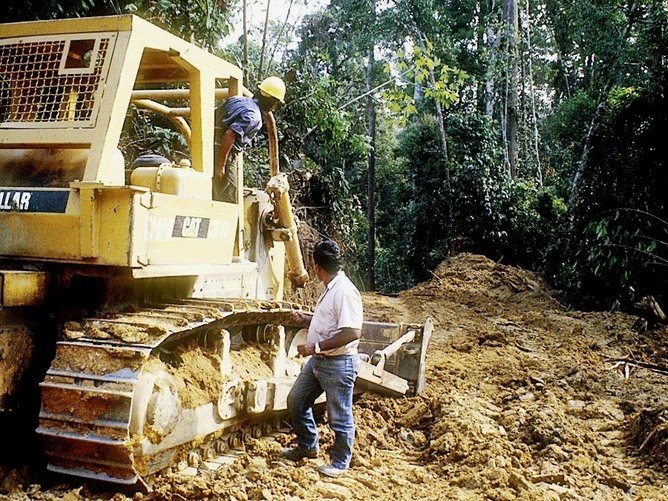
Illegal logging is booming, as criminal organisations tighten their grip on this profitable global industry. Hence, it comes just in the nick of time that Australia, after years of debate, is on the verge of passing an anti-logging bill.
Illegal logging is an international scourge, and increasingly an organised criminal activity. It robs developing nations of vital revenues while promoting corruption and murder. It takes a terrible toll on the environment, promoting deforestation, loss of biodiversity and harmful carbon emissions at alarming rates.
Moreover, the flood of illegal timber makes it much harder for legitimate timber producers. The vast majority of those in Australia and New Zealand have difficulty competing in domestic and international markets. That’s one reason that many major Aussie retail chains and brands, such as Bunnings, Ikea-Australia, Timber Queensland, and Kimberly-Clark, are supporting the anti-illegal logging bill.
Illegal logging denies governments of developing nations revenue worldwide. Bill Laurance.
Illegal logging thrives because it’s lucrative. A new report by Interpol and the United Nations Environment Programme, “Green Carbon, Black Trade”, estimates the economic value of illegal logging and wood processing to range from $30 billion to $100 billion annually. That’s a whopping figure — constituting some 10-30% of the global trade in wood products.
Illegal logging plagues some of the world’s poorest peoples, many of whom live in tropical timber-producing countries. According to a 2011 study by the World Bank, two-thirds of the world’s top tropical timber-producing nations are losing at least half of their timber to illegal loggers. In some developing countries the figure approaches 90%.
Many nations export large quantities of timber or wood products into Australia. These include Indonesia, Papua New Guinea and the Solomon Islands, all of which are suffering heavily from illegal logging. Many Chinese-made wood and paper imports also come from illegal timber. Indonesian President Susilo Bambang Yudhoyono has been pleading with timber-importing nations like Australia to help it combat illegal logging, which costs the nation billions of dollars annually in lost revenues.
The new Interpol report shows just how devious illegal loggers are becoming. It details more than 30 different ways in which organised criminal gangs stiff governments of revenues and launder their ill-gotten gains.
The variety of tactics used is dizzying. These tactics include falsifying logging permits and using bribery to obtain illegal logging permits, logging outside of timber concessions, hacking government websites to forge transportation permits, and laundering illegal timber by mixing it in with legal timber supplies.
The good news however, is that improving enforcement is slowly making things tougher for illegal loggers.
Accustomed to dealing with criminal enterprises that transcend international borders, Interpol is bringing a new level of sophistication to the war on illegal logging. This is timely because most current efforts to fight illegal logging – such as the European Union’s Forest Law and various timber eco-certification schemes – just aren’t designed to combat organised crime, corruption and money laundering.
The Interpol report urges a multi-pronged approach to fight illegal loggers. A key element of this is anti-logging legislation that makes it harder for timber-consuming nations and their companies to import ill-gotten timber and wood products. Read the rest of this entry »
As is their wont, Nature declined to publish these comments (and our responses) in the journal itself, but the new commenting feature at Nature.com allowed the exchange to be published online with the paper. Cognisant that probably few people will read this exchange, Bill Laurance and I decided to reproduce them here in full for your intellectual pleasure. Any further comments? We’d be keen to hear them.
In this paper, Laurance and co-authors have tapped the expert opinions of ‘veteran field biologists and environmental scientists’ to understand the health of protected areas in the tropics worldwide. This is a novel and interesting approach and the dataset they have gathered is very impressive. Given that expert opinion can be subject to all kinds of biases and errors, it is crucial to demonstrate that expert opinion matches empirical reality. While the authors have tried to do this by comparing their results with empirical time-series datasets, I argue that their comparison does not serve the purpose of an independent validation.
Using 59 available time-series datasets from 37 sources (journal papers, books, reports etc.), the authors find a fairly good match between expert opinion and empirical data (in 51/59 cases, expert opinion matched empirically-derived trend). For this comparison to serve as an independent validation, it is crucial that the experts were unaware of the empirical trends at the time of the interviews. However, this is unlikely to be true because, in most cases, the experts themselves were involved in the collection of the time-series datasets (at least 43/59 to my knowledge, from a scan of references in Supplementary Table 1). In other words, the same experts whose opinions were being validated were involved in collection of the data used for validation.
Much of conservation science boils down to good decision making: when, where and how we ‘set aside’ terrestrial or marine areas for specific protection against the ravages of human endeavour. This is the basis for the entire sub-discipline of conservation planning and prioritisation, and features prominantly in most aspects of applied conservation and restoration.
In other words, we do all this science to determine where we should emplace protected areas, lobby for getting more land and sea set aside so that we have ‘representative’ amounts (i.e., to prevent extinctions), and argue over the best way to manage these areas once established.
But what if this pinnacle of conservation achievement is itself under threat? What if many of our protected areas are struggling to insure biodiversity against human consumption? Well, it’d be a scary prospect, to say the least.
Think of it this way. We buy insurance policies to buffer our investments against tragedy; this applies to everything from our houses, worldly possessions, cars, livestock, health, to forest carbon stores. We buy the policies to give us peace of mind that in the event of a disaster, we’ll be bailed out of the mess with a much-needed cash injection. But what if following the disaster we learn that the policy is no good? What if there isn’t enough pay-out to fix the mess?
In biodiversity conservation, our ‘insurance’ is largely provided by protected areas. We believe that come what may, at least in these (relatively) rare places, biodiversity will persist despite our relentless consumerism.
Unfortunately, what we believe isn’t necessarily true.
A group of environmental scientists say a problem-ridden economic model designed to slow deforestation can be improved by applying key concepts from the insurance industry.
REDD (Reduced Emissions from Deforestation and forest Degradation) is a UN-promoted scheme that allows countries to trade in carbon credits to keep forests intact. It is mainly targeted at developing nations where deforestation and exploitation are a major threat.
In a paper published online in the journal Conservation Letters, ecology researchers from Australia and South Africa argue that REDD projects can suffer from three major problems. They have proposed strengthening the scheme by using insurance policies and premiums, creating a new scheme known as iREDD.
“The idea of paying a nation to protect its forests in exchange for carbon pollution offsets can potentially reduce overall emissions by keeping the trees alive, and ensure a lot of associated biodiversity gets caught up in the conservation process,” says Professor Corey Bradshaw,, Director of Ecological Modelling at the University of Adelaide’s Environment Institute and a senior author of the paper.
“However, there are three main problems with REDD: these are known as leakage, permanence and additionality.” Read the rest of this entry »
I begin with the proverbial WTF? The title of this post sounds a little like the legalese accompanying a witchcraft trial, but it’s jargon that’s all the rage in the ‘trading-carbon-for-biodiversity’ circles.
I’m sure that most of my readers will have come across the term ‘REDD‘ (Reduced Emissions from Deforestation and forest Degradation), which is the clever idea of trading carbon credits to keep forests intact. As we know, living forests can suck up a lot of carbon from the atmosphere (remember your high school biology lesson on photosynthesis? Carbon dioxide in. Oxygen out), even though climate change is threatening this invaluable ecosystem service. So the idea of paying a nation (usual a developing country) to protect its forests in exchange for carbon pollution offsets can potentially save two birds with one feeder – reducing overall emissions by keeping the trees alive, and ensuring a lot of associated biodiversity gets caught up in the conservation process.
The problem with REDD though is that it’s a helluva thing to bank on given a few niggly problems essentially revolving around trust. Ah yes, the bugbear of any business transaction. As the carbon credit ‘buyer’ (the company/nation/individual who wishes to offset its carbon output by ‘buying’ the carbon uptake services provided by the intact forest), you’d want to make damn sure that all the money you spend to offset your carbon actually does just that, and that it doesn’t just end up in the hands of some corrupt official, or even worse, used to generate industry that results in even higher emissions! As the buyer, of course you want to entice investors to give you lots of money, and if you bugger up the transaction (by losing the resource you are providing), you’re not likely to have any more investors coming knocking on your door.
Enter the unholy trinity of leakage, permanence and additionality.
This horrible jargon essentially describes the REDD investment problem:
I’ve always barracked for Peter Kareiva‘s views and work; I particularly enjoy his no-bullshit, take-no-prisoners approach to conservation. Sure, he’s said some fairly radical things over the years, and has pissed off more than one conservationist in the process. But I think this is a good thing.
His main point (as is mine, and that of a growing number of conservation scientists) is that we’ve already failed biodiversity, so it’s time to move into the next phase of disaster mitigation. By ‘failing’ I mean that, love it or loathe it, extinction rates are higher now than they have been for millennia, and we have very little to blame but ourselves. Apart from killing 9 out of 10 people on the planet (something no war or disease will ever be able to do), we’re stuck with the rude realism that it’s going to get a lot worse before it gets better.
This post acts mostly an introduction to Peter Kareiva & collaborators’ latest essay on the future of conservation science published in the Breakthrough Institute‘s new journal. While I cannot say I agree with all components (especially the cherry-picked resilience examples), I fundamentally support the central tenet that we have to move on with a new state of play.
In other words, humans aren’t going to go away, ‘pristine’ is as unattainable as ‘infinity’, and reserves alone just aren’t going to cut it. Read the rest of this entry »
Here’s another guest post from another switched-on Queensland student, Duan Biggs. Duan, originally from Namibia and South Africa, is doing his PhD at the ARC Centre for Coral Reef Studies at James Cook University in Townsville, Queensland. His PhD is investigating the resilience of nature-based tourism to climate change. I’ve met Duan a few times, and I’m impressed by his piercing views on conservation science and its implementation. Duan has already posted here on ConservationBytes.com (‘Make your conservation PhD relevant‘) and now adds his latest post discussing a paper he’s just had published in Conservation Letters. Thanks, Duan.
—
Achieving conservation outcomes almost always means working with stakeholders. ConservationBytes readers who have participated in multi-stakeholder conservation processes will know how difficult they are. Even more so when parties come from very different backgrounds and cultures. Farmers feel they just cannot comprehend what scientists are saying… ecologists silently curse [CJAB’s note: well, not always silently] because government officials ‘just don’t get it’ and so forth. So often, conservation projects are impeded, or even brought to a grinding halt because the very different perspectives that stakeholders bring to the table and the inability to see eye to eye. This has left many a fervent conservationist and scientist feeling like the associated cartoon.
Effective conservation requires conservation scientists to partner successfully with managers, extractive users and other stakeholder groups. Often, key stakeholders come from very different backgrounds and cultures, and hence have a diversity of values that result in a range of perspectives on issues. These differences are frequently a source of failure in conservation projects.
I’ve reproduced the lecture here for your viewing pleasure. I hope you find the 45-minute presentation useful. Note that the first few minutes cover me referring to the Biodiversity film short that I posted not too long ago.
I was contacted recently by Josh Cinner, a self-titled ‘social’ scientist (now working at the Centre of Excellence for Coral Reef Studies) who has published rather a lot in the conservation literature. He was recently highlighted in the journal Sciencefor his work, and he thought CB readers would enjoy the coverage. He stated to me:
“…as a social scientist, I have spent the past decade or so working with ecologists and managers trying to integrate social science better in conservation. There are often calls for the importance of integrating social science in conservation and I thought your blog readers might appreciate some high-level recognition of the importance of this. Additionally, as far as I can tell, this is the first of these profiles that has focused on someone working in conservation.”
In the late 1980s, things were not going well for the coral reefs at Jamaica’s Montego Bay Marine Park. Overfishing had taken out a lot of the fish that eat algae, and algae were taking over the reef. “It was a classic case of ecosystem decline,” human geographer Joshua Cinner says. He arrived in Jamaica in 1996 as a Peace Corps volunteer after graduating from the University of Colorado, Boulder, with a double major in environmental conservation and geography. He was particularly interested in parks and preserves.
He’d landed in the middle of a war. Lobbying by tour operators and others got spearfishing, one of the main culprits in overfishing, banned in the park. The ban did not go over well with local people. “All the park equipment got vandalized. We had park rangers get threatened; their families got threatened at spear point,” Cinner says. Spearfishing equipment is cheap and you don’t need a boat; men who do it are generally poor and are fishing as a last resort. “The cultural lens through which the fishermen viewed this issue was of struggle in a post-slavery society, of the rich, predominantly white expatriates making a law that oppressed the poorest of the poor locals to benefit the wealthy.”
The conflict got Cinner thinking about how conservation really works. “It wasn’t really about the ecology,” he says. “Making conservation work in Jamaica had a lot to do with understanding the local culture and people.” It also opened his eyes to the role oceans play. “The ocean is often viewed as an open-access resource. That extra layer of complexity interested me,” he says. “Land can often be private property,” but “the ocean is typically viewed as free for anyone to fish in, for anyone to swim in and use.” Read the rest of this entry »
A quick post to talk about a subject I’m more and more interested in – the direct link between environmental degradation (including biodiversity loss) and human health.
To many conservationists, people are the problem, and so they focus naturally on trying to maintain biodiversity in spite of human development and spread. Well, it’s 60+ years since we’ve been doing ‘conservation biology’ and biodiversity hasn’t been this badly off since the Cretaceous mass extinction event 146-64 million years ago. We now sit squarely within the geological era more and more commonly known as the ‘Anthropocene’, so if we don’t consider people as an integral part of any ecosystem, then we are guaranteed to fail biodiversity.
It’s taken humanity a while to realise that what we do to the planet, we eventually end up doing to ourselves. The concept of ecosystem services1 demonstrates this rather well – our food, weather, wealth and well-being are all derived from healthy, functioning ecosystems. When we start to bugger up the inter-species relationships that define one element of an ecosystem, then we hurt ourselves. I’ve blogged about this topic a few times before with respect to flooding, pollination, disease emergence and carbon sequestration.
Our specific task though on the TRG is to define the links between environmental degradation, agriculture, poverty and infectious disease in humans. Turns out, there are quite a few examples of how we’re rapidly making ourselves more susceptible to killer infectious diseases simply by our modification of the landscape and seascape.
Some examples are required to illustrate the point. Schistosomiasis is a snail-borne fluke that infects millions worldwide, and it is on the rise again from expanding habitat of its host due to poor agricultural practices, bad hygiene, damming of large river systems and climate warming. Malaria too is on the rise, with greater and greater risk in the endemic areas of its mosquito hosts. Chagas (a triatomine bug-borne trypanosome) is also increasing in extent and risk. Some work I’m currently doing under the auspices of the TRG is also showing some rather frightening correlations between the degree of environmental degradation within a country and the incidence of infectious disease (e.g., HIV, malaria, TB), non-infectious disease (e.g., cancer, cardiovascular disease) and indices of life expectancy and child mortality.
I won’t bore you with more details of the group because we are still drafting a major World Health Organization report on the issues and research priorities. Suffice it to say that if we want to convince policy makers that resilient functioning ecosystems with healthy biodiversity are worth saving, we have to show them the link to infectious disease in humans, and how this perpetuates poverty, rights injustices, gender imbalances and ultimately, major conflicts. An absolute pragmatist would say that the value of keeping ecosystems intact for this reason alone makes good economic sense (treating disease is expensive, to say the least). A humanitarian would argue that saving human lives by keeping our ecosystems intact is a moral obligation. As a conservation biologist, I argue that biodiversity, human well-being and economies will all benefit if we get this right. But of course, we have a lot of work to do.
1Although Bruce Wilcox (another of the TRG expert members), who I will be highlighting soon as a Conservation Scholar, challenges the notion of ecosystem services as a tradeable commodity and ‘service’ as defined. More on that topic soon.
Those of us living with cats share our homes with an ancestral predator, one adapted for hunting and the frequent, exclusive consumption of meat. These instincts become fully activated outside the domestic environment, where cats pose a global threat to wildlife. Pets are family. We celebrate their arrival with the same joy as a grand…
Many animals avoid contact with people. In protected areas of the African savanna, mammals flee more intensely upon hearing human conversations than when they hear lions or sounds associated with hunting. This fear of humans affects how species use and move in their habitat. Throughout our lives, we interact with hundreds of wildlife species without…
Deep-sea sharks include some of the longest-lived vertebrates known. The record holder is the Greenland shark, with a recently estimated maximum age of nearly 400 years. Their slow life cycle makes them vulnerable to fisheries. Humans rarely live longer than 100 years. But many other animals and plants can live for several centuries or even millennia, particularly…
 There’s a romantic myth surrounding Australia that is pervasive both overseas and within the national psyche: this sun-scorched continent home to stoic bushmen1 that eek out a frugal, yet satisfying existence in this harsh rural land. Unfortunately that ideal is anathema to almost every Australian alive today.

















 ConservationBytes.com