When weeds are wanted

31 01 2011

And in keeping with the topic of bees

© Flowergardengirl

I’ve just read a very, very cool paper in Ecology Letters about something I’ve wanted to do myself for some time. It’s a fairly specific piece of work, so it could easily be reproduced elsewhere with different species. My point though is that a hell of a lot more of these types of studies are required.

The study by Carvalheiro and colleagues entitled Natural and within-farmland biodiversity enhances crop productivity examined the role of weedy (ruderal) vegetation in supporting pollinator communities. Using sunflowers as a model crop, they showed rather convincingly how native vegetation patches interspersed amongst crop species can enhance a host of crop production measures, even when larger areas of natural habitats were far away from the crops themselves.

Based on a series of plot experiments, they tested four main hypotheses:

  1. The distance to natural habitat affects pollination visitor abundance and diversity.
  2. Plots surrounding or interspersed with ruderal vegetation affect pollinator abundance and diversity.
  3. The diversity of pollinators visiting sunflowers affects honeybee (the principal pollinators) behaviour.
  4. The diversity of pollinators affects sunflower production.

Read the rest of this entry »


A wee ditty about the bee

29 01 2011

I liked this. Another quick and entertaining look at why bees are important, why they’re crashing, and what people can do about it (at least, on a very fine scale). And it’s all done in Scottish.


Condoms instead of nature reserves

24 01 2011

Rob Dietz over at the Centre for the Advancement of the Steady State Economy thought ConservationBytes.com readers would be interested in the following post by Tim Murray (the original post was entitled What if we stopped fighting for preservation and fought economic growth instead?). There are some interesting ideas here, and I concur that because we have failed to curtail extinctions, and there’s really no evidence that conservation biology alone will be enough to save what remains (despite 50 + years of development), big ideas like these are needed. I’d be interested to read your comments.

Each time environmentalists rally to defend an endangered habitat, and finally win the battle to designate it as a park “forever,” as Nature Conservancy puts it, the economic growth machine turns to surrounding lands and exploits them ever more intensively, causing more species loss than ever before, putting even more lands under threat. For each acre of land that comes under protection, two acres are developed, and 40% of all species lie outside of parks. Nature Conservancy Canada may indeed have “saved” – at least for now – two million acres [my addendum: that’s 809371 hectares], but many more millions have been ruined. And the ruin continues, until, once more, on a dozen other fronts, development comes knocking at the door of a forest, or a marsh or a valley that many hold sacred. Once again, environmentalists, fresh from an earlier conflict, drop everything to rally its defence, and once again, if they are lucky, yet another section of land is declared off-limits to logging, mining and exploration. They are like a fire brigade that never rests, running about, exhausted, trying to extinguish one brush fire after another, year after year, decade after decade, winning battles but losing the war.

Despite occasional setbacks, the growth machine continues more furiously, and finally, even lands which had been set aside “forever” come under pressure. As development gets closer, the protected land becomes more valuable, and more costly to protect. Then government, under the duress of energy and resource shortages and the dire need for royalties and revenue, caves in to allow industry a foothold, then a chunk, then another. Yosemite Park, Hamber Provincial Park, Steve Irwin Park [my addendum – even the mention of this man is an insult to biodiversity conservation]… the list goes on. There is no durable sanctuary from economic growth. Any park that is made by legislation can be unmade by legislation. Governments change and so do circumstances. But growth continues and natural capital [my addendum: see my post on this term and others] shrinks. And things are not even desperate yet. Read the rest of this entry »


Biodiversity begins at home

20 01 2011

A few months ago I was involved in a panel discussion entitled ‘Biodiversity begins at home’ held at the Royal Institution of Australia in Adelaide and sponsored by the Don Dunstan Foundation.

The main thrust of the evening was to have both academic (me & Andy Lowe) and on-the-ground, local conservationists (Sarah Lance, Craig Gillespie and Matt Turner) talk about what people can do to stem the tide of biodiversity loss. The video is now available, so I thought I’d reproduce it here. We talked about a lot of issues (from global to local scale), so if you have a spare hour, you might get something out of this. I did, but it certainly wasn’t long enough to discuss such big issues.

Warning – this was supposed to be more of a discussion and less of a talkfest; unfortunately, many of the panel members seemed to forget this and instead dominated the session. We really needed 4 hours to do this properly (but then, who would have watched the video?).

Read the rest of this entry »


Deforestation partly to blame for Queensland floods

17 01 2011

© recoverling

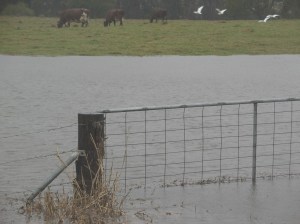
Last week I sent a fairly random Tweet about deforestation in south-eastern Queensland being partially responsible for the record floods there. It went more or less unnoticed, but I thought the comment deserved a proper explanation.

As many of you might know, my colleagues and I wrote an article a few years ago about the global-scale evidence for deforestation leading to a higher incidence and severity of floods in the developing world. This was fairly controversial, but it was nonetheless the first broad-scale evidence for the fabled deforestation-flood link yet published (in my not-so-humble opinion). Subsequent comment reiterated the point with new data.

Now, I will begin by saying I have no data yet to back up my Queensland-specific hypothesis, but I am contemplating a time-series paper on floods in Australia, especially after the events of the last month. This post is therefore merely a reasoned hypothesis.

The hypothesis itself is rather simple. Testing is not. I submit that the recent flooding in Australia has been exacerbated (not caused) by the rapid loss of forest cover over the last 40 years. We know that this is a particularly intense La Niña in Australia and our unusually high rainfall arises from this meteorological phenomenon, but I hypothesise that it wouldn’t have been as bad if this part of Australia hadn’t been so careless with its forest cover since the 1970s. Read the rest of this entry »


Cartoon guide to biodiversity loss X

14 01 2011

The latest batch of six cartoons…

See also full stock of previous ‘Cartoon guide to biodiversity loss’ compendia here.

Read the rest of this entry »


S.A.F.E. = Species Ability to Forestall Extinction

8 01 2011

Note: I’ve just rehashed this post (30/03/2011) because the paper is now available online (see comment stream). Stay tuned for the media release next week. – CJAB

I’ve been more or less underground for the last 3 weeks. It has been a wonderful break (mostly) from the normally hectic pace of academic life. Thanks for all those who remain despite the recent silence.

© Ezprezzo.com

But I’m back now with a post about a paper we’ve just had accepted in Frontiers in Ecology and Environment. In my opinion it’s a leap forward in how we measure relative threat risk among species, despite some criticism.

I’ve written in past posts about the ‘magic’ minimum number of individuals that should be in a population to reduce the chance of extinction from random events. The so-called ‘minimum viable population (MVP) size’ is basically the abundance of a (connected) population below which random events take over from factors causing sustained declines (Caughley’s distinction between the ‘declining’ and ‘small’ population paradigms).

Up until the last few years, the MVP size was considered to be a population- or species-specific value, and it required very detailed demographic, genetic and biogeographical data to estimate – not something that biologists tend to have at their fingertips for most high-risk species. However, several papers published by our group (Minimum viable population size and global extinction risk are unrelated, Minimum viable population size: a meta-analysis of 30 years of published estimates and Pragmatic population viability targets in a rapidly changing world) have shown that there is in fact little variation in this number among the best-studied species; both demographic and genetic data support a number of around 5000 to avoid crossing the deadly threshold.

Now the fourth paper in this series has just been accepted (sorry, no link yet, but I’ll let you all know as soon as it is available), and it was organised and led by Reuben Clements, and co-written by me, Barry Brook and Bill Laurance.

The idea is fairly simple and it somewhat amazes me that it hasn’t been implemented before. The SAFE (Species Ability to Forestall Extinction) index is simply the distance a population is (in terms of abundance) from its MVP. In the absence of a species-specific value, we used the 5000-individual threshold. Thus, Read the rest of this entry »


2010 in review

2 01 2011

Some automated stats from WordPress on ConservationBytes.com.

The stats helper monkeys at WordPress.com mulled over how this blog did in 2010, and here’s a high level summary of its overall blog health:

Healthy blog!

The Blog-Health-o-Meter™ reads Wow.

Crunchy numbers

Featured image

The Louvre Museum has 8.5 million visitors per year. This blog was viewed about 130,000 times in 2010. If it were an exhibit at The Louvre Museum, it would take 6 days for that many people to see it.


In 2010, there were 105 new posts, growing the total archive of this blog to 287 posts. There were 208 pictures uploaded, taking up a total of 29mb. That’s about 4 pictures per week.

The busiest day of the year was November 12th with 816 views. The most popular post that day was One billion people still hungry.

Where did they come from?

The top referring sites in 2010 were stumbleupon.com, twitter.com, adelaide.edu.au, facebook.com, and researchblogging.org.

Some visitors came searching, mostly for sharks, inbreeding, network, impact factor 2009, and extinction vortex.

Attractions in 2010

These are the posts and pages that got the most views in 2010.

1

One billion people still hungry November 2010
12 comments and 1 Like on WordPress.com,

2

ISI 2009 Impact Factors now out June 2010
20 comments

3

More than just baby sharks April 2009
2 comments

4

New Impact Factors for conservation journals June 2009
1 comment

5

Journals July 2008
5 comments


Leaving Conservation Letters

21 12 2010

It is with both sighs of relief and some sentimentality that I announce my departure from the Senior Editor’s position at Conservation Letters.

After 3 volumes and 17 issues, and a very good prospect for an ISI Impact Factor > 3.0 coming out in June 2011, I feel that I’ve contributed sufficiently for the journal to persist in the conservation publication space for the coming decades.

Now I need a beer. ;-)

The road to Senior Editor certainly involved a steep learning curve for me, and I sincerely thank the four Editors-in-Chief (Hugh Possingham, Bill Sutherland, Richard Cowling & Mike Mascia) for their faith in my abilities and the flexibility to allow me to make important decisions. But most importantly, I thank our highly professional and rigorous editorial board who really did all the hard work (voluntarily, I might add). The full list of editors can be found here, but I want to pass on some extra gratitude to a few specific people here:

In a word, you lot were brilliant. Thank you for going well beyond expectations and handling some very difficult manuscripts. Your expertise, professionalism and generosity will not go unnoticed, I can guarantee that.

I also thank Jennifer Mahar for keeping me (mostly) on the ball and for making the whole thing come together. Marjorie Spencer, whose brainchild this journal was, was a breath of fresh air and enthusiasm. Thanks for stepping up for me (oh, and thanks too for the many drinks courtesy of Uncle Wiley).

Read the rest of this entry »


Biowealth – a lexical leap forward for biodiversity appreciation

17 12 2010

Here’s a little idea I’ve been kicking around in my head that I’d like to invite you to debate. Call it an ‘Open Thread’ in the spirit of BraveNewClimate.com’s successful series.

© The Economist

Let’s face it, ‘biodiversity’ is a slippery and abstract concept for most people. Hell, even most ecologists have a hard time describing what biodiversity means. To the uninitiated, it seems simple enough. It’s just the number of species, isn’t it?

Well, no. It isn’t.

Unfortunately, it’s far, far more complicated. First, the somewhat arbitrary pigeon-holing of organisms into Linnaean taxonomic boxes doesn’t really do justice to the genetic gradients within species, among populations and even between individuals. We use the pigeon-hole taxonomy because it’s convenient, that’s all. Sure, molecular genetics has revolutionised the concept, but to most people, a kangaroo is a kangaroo, a robin is a robin and an earthworm is an earthworm. Hierarchical Linnaean taxonomy prevails.

Then there’s the more prickly issue of α, β and γ diversity. α diversity essentially quantifies species richness within a particular area, whereas β diversity is the difference in α diversity between ecosystems. γ diversity is used to measure overall diversity for the different constituent ecosystems of a region. Scale is very, very important (see our recent book chapter for more on this). Read the rest of this entry »


Want a cool conservation job in beautiful southern Australia?

14 12 2010

I was asked to post this cool-sounding job on ConservationBytes.com – relevant punters welcome to respond.

Australian Wildlife Conservancy (AWC) is a non‐profit organisation dedicated to the conservation of Australia’s threatened wildlife and their habitats. AWC now owns and manages more land than any other private conservation organisation in Australia ‐  21 properties, covering more than 2.6 million hectares ‐ protecting more than 1,200 fauna species through active land management informed by strategic scientific research.

AWC is seeking an experienced and committed ecologist who will be pivotal in the development and implementation of the conservation and science program throughout south‐eastern Australia. The position will be based at Scotia Wildlife Sanctuary (where on‐site accommodation will be provided), but will include work at other AWC sanctuaries, especially Kalamurina (Lake Eyre), Buckaringa (Flinders Ranges), Yookamurra (Riverlands), Dakalanta (Eyre Peninsula), Bowra (Mulga Lands) and North Head (Sydney) sanctuaries.

Scotia is a large property (65,000 ha) that lies on the NSW‐SA border between Wentworth and Broken Hill, and includes Australia’s largest area free of foxes, cats and rabbits (8,000 ha) and where seven regionally extinct species have been reintroduced (bilby, boodie, woylie, bridled nailtail wallaby, numbat, greater stick‐nest rat, mala and black‐eared miner). In addition, the property has outstanding conservation values because it protects habitats, in good condition, that have been extensively cleared in western NSW.

Read the rest of this entry »


History and future (of Australian ecology and society)

11 12 2010

I’ve just returned from a week-long conference in Canberra where the Ecological Society of Australia (of which I am a relatively new member) has just completed its impressive 50th anniversary conference. It was a long, but good week.

It’s almost a bit embarrassing that I’ve never attended an ESA1 conference before, but I think I waited for the right one. However, the main reason I attended was that I was fortunate to have received the ESA’s 3rd Australian Ecology Research Award (AERA), and the kick-back was a fully funded trip. My only reciprocation was to give a 40-minute plenary lecture – a small price to pay.

I entitled my talk ‘Heads in the desert sand: why Australians should wake up to the biodiversity crisis’, and I received a lot of good feedback. I talked about the global and Australian trends of biodiversity loss and associated ecosystem services, focussing the middle section on some of our work on feral animal ecology (see example). I then gave my views on the seriousness of our current situation and why some of the fastest losses of sensitive ecosystem services are happening right here, right now. I finished off with a section on how I think Australian ecologists could get more relevant and active in terms of research uptake by policy makers. I hope that the talk will be podcastable soon, so stay tuned.

But that was just ‘my’ bit. This post is more about a quick summary of the highlights and my overall impressions.

Read the rest of this entry »


Conservation is all about prioritisation

4 12 2010

Another great guest post from a previous contributor, Piero Visconti.

Biodiversity conservation is about prioritisation – making difficult choices.

With limited money and so many habitats and species in need of protection, deciding where not to expend resources is as important as deciding where to act. Saying ‘no’ will be crucial for ensuring the persistence of biodiversity and ecosystem services, simply because as individuals who value conservation, we will always be tempted to try and save everything.

In the words of Frederick the Great: “He who defends everything, defends nothing.”

As a result, much recent conservation planning research has focused on offering managers general and flexible tools for deciding which conservation features should be the highest priority. Intuitively, we should direct our resources towards areas that have high biodiversity values, and that are likely to be lost if the forces of conservation do not intervene (the most ‘vulnerable’ land parcels). This approach is known as the ‘minimize loss’ approach. Imagine we are worried about the loss of rare native vegetation in the face of ongoing urban expansion (e.g., Melbourne’s western grasslands). To minimize loss, managers would pre-emptively protect sites that are most likely to be developed. But is this decision to race the bulldozers always the best idea? How much does this choice depend on our assumptions about how land is protected, how land developers behave, and the accuracy of our future predictions? Read the rest of this entry »


The Joke’s On Us

30 11 2010


© decostudio.pl

Here’s an idea to garner some appreciation for the dire straits in which humanity finds itself mounting from the global biodiversity crisis. More importantly, I hope that ‘appreciation’ would translate into ‘action’ as a result.

The idea came, as good ideas often tend to, around a table with some mates1,2 and several bottles of wine. The idea got more outlandish as the bottles were emptied, and I have to say I can’t remember many of the finer details (probably a good thing).

But the nugget of that idea is, I think, a very good one. I’d like to hear your opinions about it, and some suggestions about how to make it happen.

(get to the point, Bradshaw)

Right.

The idea would be to create an international (televised) comedy festival called ‘The Joke’s On Us‘ where very high-profile comedians would be individually matched to high-profile scientists of various areas of expertise. Let’s say we had a climate change scientist like James Hansen sit down with, oh, maybe Eddie Izzard, the famous and highly regarded Gaia creator, James Lovelock, locked in a room for a few days with Michael McIntyre, tropical deforestation specialist, Bill Laurance, matched with Chris Rock, and that population bomb, Paul Ehrlich, with Robin Williams or Jerry Seinfeld. The possible combinations are endless. Read the rest of this entry »


Putting environmental testing to the test

25 11 2010

A few months ago I made a general call for submissions to ConservationBytes.com. I’m happy to say that the first person answering that call has come through with the goods. Please welcome Julie Pollock of Environment Canada and her post on environmental testing. Thanks, Julie.

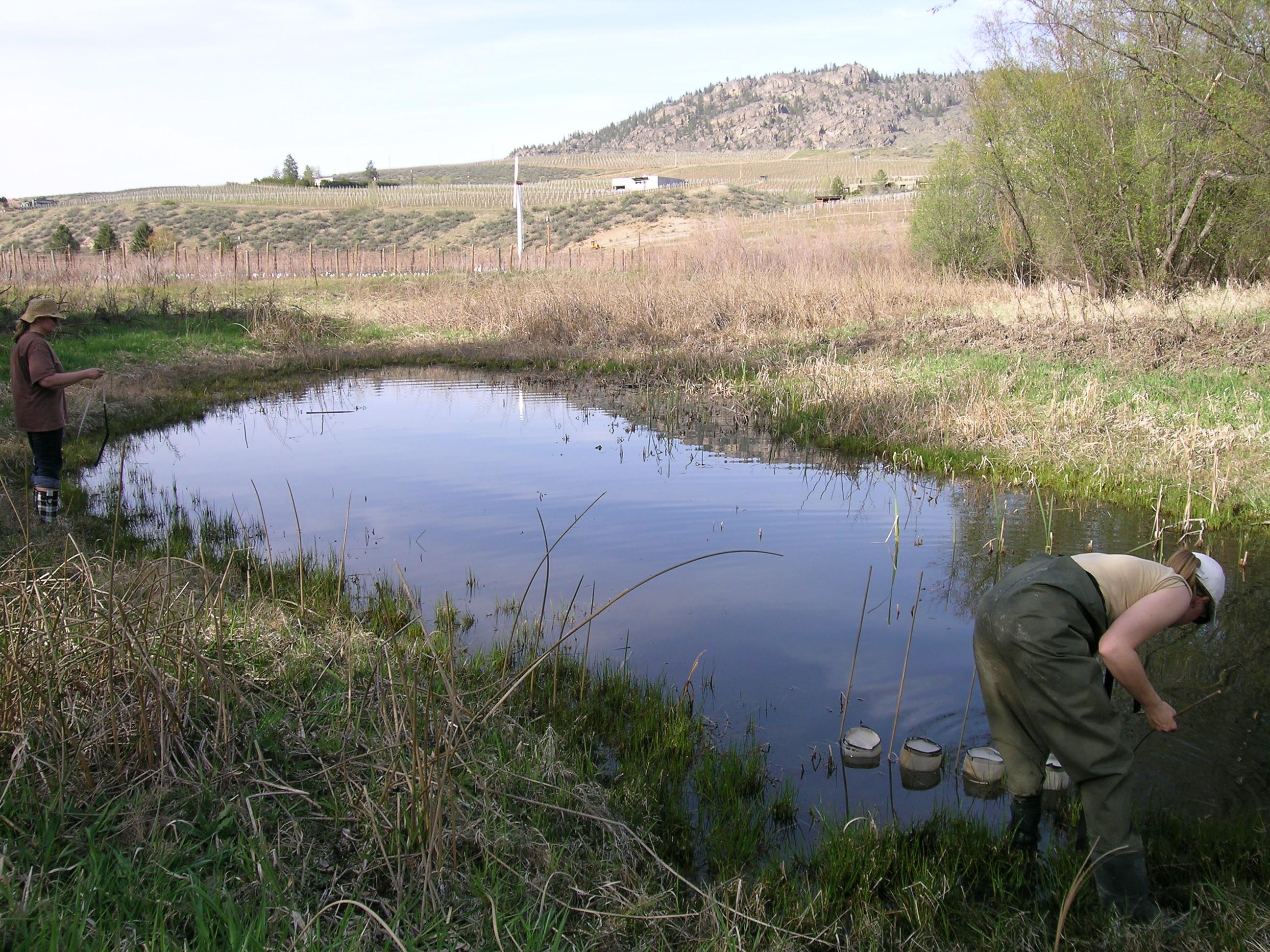
Environment Canada is often called upon to assess damage or the risk of damage to natural systems. Scientific and legal staff depend on the reliability of test methods and, in some cases, may require entirely new methods. Challenges federal government researchers face supporting these assessments include ensuring ecological relevance in subject selection, keeping up with industry to capture new substances, and understanding the cumulative nature of damaging pollutants.

The Biological Assessment and Standardization Section, led by Rick Scroggins, develops, validates and standardizes test methods for assessing contaminants in natural soil systems. Part of the Science & Technology Branch, they are located in the National Capital Region (Ottawa) where they work closely with the Enforcement Branch.

Their test methods support assessments of new and existing chemical substances and programs to clean up contaminated sites under federal jurisdiction. The group provides test method research to Natural Resources Canada’s Program of Energy Research and Development, which funds government R&D for sustainable energy. Another collaborator is Alberta, one of Canada’s largest provinces, which requires expertise in soil sampling and assessments associated with oil and gas extraction in the northern boreal and taiga ecozones. Read the rest of this entry »


The other, other global crisis

22 11 2010

Another quick and informative introduction to the problems of over-population and agricultural intensification. Like the nice little video introduction to the importance of biodiversity, if you want to teach someone quickly about why we need to think about over-population, show them this quick video about the other, other global crisis – agriculture.

Highlights:

  • 40 % of the world’s land surface has been cleared for agriculture
  • globally, croplands cover 16 million km2 (area the size of South America
  • humans use 2800 km3 of water to irrigate crops each year
  • fertilizers have more than doubled the P and N in the environment
  • agriculture contributes 30 % of greenhouse gases


They always whinge about the maths

18 11 2010

If you don’t know what a differential equation is, you are not a scientist” – Hugh Possingham 2009

At the end of 2009 I highlighted a new book edited by good mates Navjot Sodhi and Paul Ehrlich, Conservation Biology for All, in which Barry Brook and I had written a chapter. Now, despite my vested interest, I thought (and still think) that it was one of the best books on conservation biology yet published, and the subsequent reviews appear to be validating my subjective opinion.

I’ve given snippets of the book’s contents, from Paul Ehrlich‘s editorial on the human population’s rising negative influences on biodiversity, to a more detailed synopsis of our chapter, The Conservation Biologist’s Toolbox, and I’ve reproduced a review printed in Trends in Ecology and Evolution.

The latest review by Nicole Gross-Camp of the University of East Anglia published in Ecology is no less flattering – in fact, it is the most flattering to date. So this is by no means a whinge about a whinge; rather, consider it an academic lament followed by a query. First, the review:

Reaching higher in conservation

If a book could receive a standing ovation—this one is a candidate. Sodhi and Ehrlich have created a comprehensive introduction to conservation biology that is accessible intellectually, and financially, to a broad audience—indeed it is Conservation biology for all. The book is divided into 16 chapters that can stand alone and are complementary when read in sequence. The authors make excellent use of cross citations of chapters, a useful and often overlooked feature in texts of this nature. In the introductory chapter, Sodhi and Ehrlich eloquently summarize the gravity of the conservation crisis and still retain an optimistic outlook that encourages the reader to continue. I particularly found their recognition of population growth, consumption, and ethics in the conservation arena refreshing and a step toward what will likely become the next major issues of discussion and research in the conservation field. Read the rest of this entry »


The Amazing Paul (Mc)Ehrlich

15 11 2010

© CJA Bradshaw

A few years ago when I first wrote about Paul Ehrlich in our book, Tropical Conservation Biology, I quickly became impressed. His track record is, without any exaggeration, truly awe-inspiring. With over 1000 articles published and almost 50 books, the man has been a scientific writing machine for his entire career. He’s also highly influential in the socio-political sphere, and counts among his close friends some of the most politically and scientifically powerful people on the planet. In a word, he’s easily among the world’s greatest living scientists.

Remember, this was my opinion all before I actually met the man. Travelling through central California last year, I was lucky enough to be invited by Paul’s close colleague, Gretchen Daily, to give a talk at their Stanford University lab. It was fortunate that Paul was about at the time and not off promoting his new book or traipsing through the mountains of Colorado chasing butterflies.

We hit it off immediately and it seemed became mates within the space of a few hours. I learnt then that he and his equally famous wife, Anne, were regular visitors to Australia and that he had a particular love affair going with many Australian wines. I invited him to come to Adelaide the following year, he agreed (and importantly, so did the director of the Environment Institute, Mike Young), and it came to pass. Read the rest of this entry »


One billion people still hungry

12 11 2010


overpopulationA few days ago, that printed mouthpiece of Murdoch’s News Corporation in Australia – The Australiani, attacked Paul Ehrlich with a spectacular piece of uninformed gibberish (‘Population bomb still a fizzer 40 years on‘) that we both feel compelled to contest.

The Australian, well-known for its ‘War on Science’, refused to give us the opportunity to respond officially in an Opinion Editorial, so we are compelled to fight back using the blogosphere and our collective networks (which, we might add, probably exceed the distribution of said newspaper). Frankly, it was no surprise that The Australian chose to ignore us.

The article in question was written by Oliver Marc Hartwich of the so-called ‘Centre for Independent Studies’, the hyper-conservative Australian propaganda machine reminiscent of the ultra-right wing American Enterprise Institute, made up of some of Australia’s most powerful business magnates and with no academic affiliation whatsoever. Anything vaguely left-of-centre and even remotely promoting environmental responsibility is considered a viable target.

Recently, we blew the whistle on an equally dangerous man and the institutes he represents – climate-denier Alan Oxley; he and the business interests he represents are responsible for more deforestation, biodiversity loss and financial inequity in South East Asia over the last few decades than almost any single group.

Now we turn our attention to expose the true colours of the Centre for Independent Studies and Mr. Hartwich. Read the rest of this entry »


The bomb is still ticking…

11 11 2010

Apologies for the silence over the last week – it’s been a whirlwind here with Paul Ehrlich visiting The University of Adelaide (amazing for a 78-year old man). In the meantime, Sharon Ede over at Post Growth wrote a great response to the LOLstralian‘s high-school effort to attack Paul a few days ago. Our response is coming shortly, but Sharon’s article is a great precursor.

More than forty years after its publication, the predictions made in Paul Ehrlich’s landmark book ‘The Population Bomb’ are still the subject of debate. Australian think-tank the Centre for Independent Studies (‘Population bomb still a fizzer 40 years on’, The Australian, 8 November, 2010), says Ehrlich’s warnings of dire consequences, including of mass starvation as a result of overpopulation, have not materialised:

“More than 40 years ago, American biologist Paul Ehrlich sketched a doomsday scenario for planet Earth in his book The Population Bomb…Since the publication of the book, the global population has nearly doubled but most of its gloomy predictions have not come true…”

By all means, let’s have a robust debate on population, both at the national and global level. Both are long overdue.

But let’s make it a sophisticated debate, grounded in the science we have available and a thorough understanding of all the issues in play.

According to the United Nations’ Population Division, the global population has increased from one billion in 1804 to over six billion in 2010.

It has taken most of human history to reach one billion people. It took just over a century to add the second billion.

The rate of population growth since then is such that it has taken only twelve years to add the most recent billion people.

The moderate UN scenario is for a population of 9 billion by 2050 – that’s within the lifetime of many of us. Read the rest of this entry »