Interview with… ConservationBytes

16 07 2009

CBlogoA few months ago I was asked to do an online interview about ConservationBytes at The Reef Tank. I previously made mention of the interview (see post), but I think it’s time I reproduce it here.

The effects of pollution, carbon build up in the ocean, extinction, loss of coral reefs, over-fishing, and global warming is increasingly becoming more detrimental to our marine life and marine world.

Fortunately our marine ecosystems have Corey Bradshaw on their side. As a conservation ecologist, Corey studies these ecosystems with a passion, trying to understands the interactions between plants and animals that make up these ecosystems as well as what human activity is doing to them.

He has realised long ago that conservation and awareness is crucial to the survival of these living things and carries on the long tradition of studying and trying to understand these ecosystems at the School of Earth & Environmental Sciences at the University of Adelaide in South Australia.

He also avidly blogs about these pertinent issues at ConservationBytes.com, because he felt a need that these marine conservation issues needed to be heard. And he was more then right.

We were lucky enough to grab some time with Corey Bradshaw and he was kind enough to answer some important marine conservation questions, which are important in our desire: to make the marine world a better place.

What is your background in science and conservation?

I have a rather eclectic background in this area. I originally started my university education in general ecology, with a focus on plant ecology in particular (this was the strength of my undergraduate institution). There was no real emphasis on conservation per se until I started my postgraduate studies, although even then I was more interested in the empirical side of theoretical ecology than on conservation itself. It was more or less a gradual process that as I realised just how much we as a species have changed the planet in our (relatively) short time here, I became more and more dedicated to quantifying the links between species loss and how it affects human well-being.

After completing my MSc, PhD and first postdoctoral fellowship in New Zealand and Australia, I had the good fortune to work alongside a few excellent conservation ecologists specialising in extinction dynamics. This is where my mathematical bent and conservation interests really took off and eventually set the stage for most of my research today.

Your blog is ConservationBytes.com. Why the urge to start a blog on conservation only?

It may seem odd that I resisted blogging for many years because I thought it was a colossal time-waster that would take me away from my main scientific research. However, several things convinced me of its need and utility. First, it’s a wonderful vehicle to engage non-scientists about the research one does – let’s face it, most people don’t read scientific journals. Second, it’s interactive; people can ask questions or comment directly online. Third, it overcomes the strict language and technical rigour of most scientific publications and gets to the heart of the issue (it also allows me to express some opinions and speculations that are otherwise forbidden in scientific writing). Fourth, I realised there was a real lack of understanding about basic conservation science among the populace, so providing a vehicle for conservation science dissemination online appeared to be a good idea – there simply wasn’t anything like it when I started only a year ago. Finally, an effective, policy-changing scientist must advertise his/her research through the popular media to be recognised, so it obviously has career benefits.

Tell me about the conservation topics you cover?

ConservationBytes.com covers pretty much any topic that conforms to at least one of the following criteria:

  • It concerns research (previous, ongoing, planned) that is designed to improve the fate of biodiversity, whether locally, regionally or internationally

  • It concerns policy studies, actions or ideas that will have positive bearing on biodiversity conservation

  • It concerns demonstrations of the role biodiversity plays in providing humans with essential ecosystem services

I even have a section I call ‘Toothless’ that highlights ineffective conservation research or policy. Other areas include: exposés of well-known conservation scientists, a collection of links to conservation science journals, and my personal information (publications, CV, media attention).

What is your take on marine conservation? What does marine conservation include?

Given that I have worked in both marine and terrestrial realms from the tropics to the Antarctic, I really see little distinction in terms of conservation. True, the marine realm probably presents more challenges to conservation in some respects because it’s generally much more difficult and expensive to collect meaningful data, and it’s more difficult to control or mitigate people’s behaviour (especially in international waters), but the ecological patterns are the same (although I admit they may operate over different spatial and temporal scales).

Current ‘hot’ topics in marine conservation include the global degradation and loss of coral reef ecosystems (and what to do about it), terrestrial run-off of pollutants and nutrients affecting marine communities, over-fishing and better fishing management strategies, the design of effective marine protected areas, the socio-economic implications of moving people away from direct exploitation to behaviours and economic activities that promote longer-term biological community stability and resilience, and of course, how climate change (via acidification, hypercapnia, temperature change, storm intensification, seal level rise and modified current structure) might exacerbate the systems that are already stressed by the aforementioned problems.

Have you done any work, research in the area of marine conservation?

Yes, quite a bit. Some salient areas include

  • The grey nurse shark Carcharias taurus was the world’s first shark species to receive legislative protection when the east Australian population was listed under the 1984 New South Wales Fisheries Management Act. It has since been listed as globally Vulnerable by the IUCN in 1996 and the east Australian population was declared Critically Endangered in 2003. Previously, we constructed deterministic, density-independent PVA models for the east Australian population that suggested dire prospects for its long-term persistence without direct and immediate intervention. However, deterministic models might be overly optimistic because they do not incorporate stochastic fluctuations that can drive small populations extinct, whereas failing to account for density feedback can predict overly pessimistic. We recently completed a study demonstrating that the most effective measure to reduce extinction risk was to legislate the mandatory use of offset circle hooks in both recreational and commercial fisheries. The increase in dedicated marine reserves and shift from bather protection nets to drumlines had much lower effectiveness.

  • The global extent of illegal, unreported and unregulated (IUU) fishing is valued from US$10-23.5 billion per year, representing between 11 and 26 million tonnes of fish killed annually beyond legal commercial catches. In northern Australia, IUU fishing has advanced as a ‘protein-mining’ wave starting in the South China Sea in the 1970s and now penetrates consistently into the nation’s Exclusive Economic Zone. We have documented the extent of this wave and the implications for higher-order predators such as sharks, demonstrating that IUU fishing has already depleted large predators in Australian territorial waters. Given the negative relationship between IUU fishing takes and governance quality, we propose that deterring invading fishers will need substantially greater investment in border protection, and international accords to improve governance in neighbouring nations, if the tide of extinction is to be effectively mitigated.

  • Determining the extinction risk of the world’s shark and ray species – some work I’ve done recently with colleagues is to examine the patterns of shark biodiversity globally and determine which groups are most at risk of extinction. Not a surprise, but it turns out that the largest species of shark that reproduce the slowest are the most endangered (including all those bitey ones that frighten people).

  • Finally, I’m doing a lot of work now examining how the structure of coral reefs affects fish biodiversity patterns and long-term resilience. It turns out that basic biogeographic predictors (e.g., reef size and relative isolation from other reefs) really do dictate how temporally stable fish populations remain. And as we know, the more variable a population in time and space, the more likely it will go extinct (on average). The practical implication is that we can identify those coral reefs most likely to maintain their fish communities simply by measuring their size and position.

You’re from Australia, correct? What kind of marine conservation is going on there?

I’m originally from Canada, but I’ve spent most of my adult life in Australia (mostly in Tasmania, the Northern Territory, and now, Adelaide in South Australia). I did my PhD in the deep south of New Zealand (Otago University, Dunedin). In Australia, all the aforementioned ‘hot’ areas of marine conservation are in full swing, with greater and greater emphasis on climate change research. I think this aspect is pre-occupying most serious marine ecologists in Australia these days. For example, the southeast of Australia has already experienced some of the fastest warming in the Southern Hemisphere, with massive regional shifts in many species of fish, invertebrates, macroalgae and plankton.

What’s your take on ocean acidification? Do you think people need to be aware of this issue?

I used to believe ocean acidification was THE principal marine conservation issue facing us today, but now I think it’s just another stressor in a cornucopia of stressors. The main issue here is that we still understand so little of its implications for marine biodiversity. Sure, you lower the pH and up the partial CO2 (pCO2) of seawater, and many organisms don’t do so well (in terms of survival, reproduction and growth). However, it’s considerably more complex than this. pH and pCO2 vary substantially in space and time, and we have yet to quantify these patterns or how they are changing for most of the marine realm. Therefore, it’s difficult to simulate ‘real’ and future conditions in the lab.

Another issue is that temperature is changing must faster and so far exposure experiments indicate that it generally has a much more pronounced effect on marine organisms than acidification per se. However, like many climate change issues, a so-called ‘tipping point’ could be just around the corner that makes many marine communities collapse. It’s a frightening prospect, but one that needs a lot more dedicated research.

Can a person own an aquarium and still be considered a marine conservationist in your opinion?

Of course, provided one is cognisant of several important issues. First, most aquarists rely on the importation of non-native species. Lack of vigilance and carelessness has resulted in a suite of alien species being released into naïve ecosystems, resulting in the extinction or reduction of many native fish and invertebrates. Another issue is the transport cost – think how much carbon you are emitting by flying that tropical clownfish to your local pet shop in Norway. Third, do you know from which populations your displayed fish come? Were they harvested sustainably, or were they the last individuals plucked from a dying reef? A good knowledge of an animal’s origin is essential for the responsible aquarist. In my view one should play it safe. I think having aquaria filled with local species that are easily acquired, don’t cost the Earth to transport and pose no risk to native ecosystems is the most responsible way to go. You can also be a lot more certain of sustainable harvest if you live close by the source.

What is your take on climate change and its effect on marine life? Is being aware and educated on this particular topic and how it affects the marine world make someone a marine conservationist?

Awareness is only the first and most basic step. I’d say most of the world is ‘aware’ to some extent. It’s really the change in human behaviour that’s required before we make any true leaps forward. Some of the issues described above get to the heart of behavioural change. To use an analogy, it’s not enough to recognise that you’re an alcoholic, you have to stop drinking too to prevent the damage.

What can we do to raise awareness of the importance of marine conservation and conservation in general?

My personal take on this, and it applies to ALL biodiversity conservation (i.e., not just marine) is that people won’t take it seriously until they see how its loss affects their lives negatively. For example, let’s say we lose all commercially exploitable fish – not having access to delicious and healthy fish protein will mean people change the way fishing is done; that is, they’ll try to force fishers to fish sustainably and consumers to demand responsibly. The same can be said for more esoteric ecosystem services like carbon sequestration, oxygen production, water purification, pollination, waste detoxification, etc. if, and only if, we understand the economic and health benefits of keeping ecosystems intact. We need more research that makes the biodiversity-human benefit link so that people ultimately get the message. Destroying biodiversity means destroying yourself.

As I said before, awareness is only the first step.
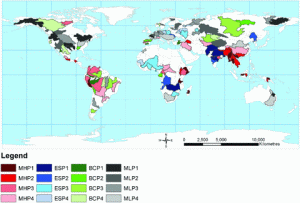


Global conservation priorities based on human need

13 07 2009
nf2

© Wiley-Blackwell

A paper recently posted online in Conservation Letters caught my eye as a Potential on ConservationBytes.com.

Gary Luck and colleagues’ paper Protecting ecosystem services and biodiversity in the world’s watersheds is a novel approach to an admittedly problematic aspect of conservation biology – global prioritisation schemes. While certainly coming in as a Conservation Classic, the first real global conservation prioritisation scheme (Myers and colleagues’ global biodiversity hotspots) was rather subjective in its approach, and many subsequent schemes have failed to reproduce the same kinds of priorities (the congruency problem). I’m certainly not knocking biodiversity hotspots because I believe it was one of the true paradigm shifts in conservation biology, but I am cognisant of its limitations.

Another big problem with conservation prioritisation schemes is that they are a hard sell to governments – how do you convince nations (especially poor ones) to forgo the immediate gains of resource exploitation to protect what many (incorrectly and short-sightedly) deem as irrelevant centres of biotic endemism?

Well, Luck and colleagues have taken us one step closer to global acceptance of conservation prioritisation schemes by basing this latest addition on ecosystem services. In their paper they divided the world by catchments (watersheds) and then estimated the services of water provision, flood prevention and carbon storage that each provides to humanity. Water provision was a estimated as a complex combination of variables that together can be interpreted as the capacity of ecosystems to regulate water flows and quality that benefit humans (e.g., influencing seasonal water availability or nutrient levels). Flood mitigation was estimated as the system’s capacity to reduce the impact of floods on communities, and carbon storage was estimated as the system’s capacity to uptake carbon in soils and vegetation.

In general, the catchments in need of the highest priority protection were found in the poorest areas (namely, South East Asia and Africa) because their protection would be the least costly and benefit the most people. Luck and colleagues are therefore the first to incorporate cost–benefit trade-offs explicitly in developing global priorities for protecting ecosystem services and biodiversity. I take my hat off to them for a modern and highly relevant twist on an old idea. Great paper and I hope people take notice.

CJA Bradshaw

Add to FacebookAdd to NewsvineAdd to DiggAdd to Del.icio.usAdd to StumbleuponAdd to RedditAdd to BlinklistAdd to Ma.gnoliaAdd to TechnoratiAdd to Furl


Out of touch, impractical and irrelevant

8 07 2009

argumentThe opening quote to this interesting little article says it all:

“We have all heard policy-makers in environment organisations accuse researchers as out of touch, impractical and irrelevant. We have all seen environment management agencies criticised by researchers in the media, in this journal, at conferences or in the tea room for ignoring, under-utilising or misrepresenting research findings when formulating or implementing policy.”

From the ‘researcher’ side, I can attest that I have on more than one occasion cursed the inability of policy makers (from high-level politicians down to municipal councillors) to implement sound, evidence-based advice on how to prevent (or at least minimise) environmental disasters (for a local example, see this post). I’m sure many policy makers think that (at least some) researchers are pie-in-the-sky, political naïfs that consistently fail to make their research relevant. I know that both extremes are unfortunate realities.

So when I saw Gibbons and colleagues’ paper Some practical suggestions for improving engagement between researchers and policy-makers in natural resource management, I was quite impressed with their excellent suggestions for bridging the gap.

It’s a short paper, but it recommends the following basic steps for improvement:

  1. Understand what motivates people on each side of the policy fence. For researchers, we are locked into a system that rewards success based on a some typically non-economic metrics, such as the quality and quantity of peer-reviewed articles we write, our academic reputation amongst our peers, the amount of external funding we can attract (generally linked to the publication criterion) and the number of students we supervise to research independence. Policy makers working within a more top-down environment are compelled to advance policies that reflect their government’s philosophy (which is dictated by their constituents), and often the deadlines are fierce.

  2. Build relationships. This goes without saying, but often doesn’t happen. Lack of trust can usually only be broken down if you respect and know your counterpart. Gibbons and company suggest that relationships can be built better through the regular dissemination of information back and forth, effective communication (clarity and brevity), and maintaining relationships after information exchange (keep in touch).

  3. Organise regular forums. These meetings are essential to build new and productive relationships. Ways to increase contact include: maintaining ‘who’s who’ lists, encouraging secondments (people exchanges), and organising annual science-policy colloquia.

  4. Explore alternate communication media. Face-to-face meetings are often difficult, so Gibbons et al. recommend that researchers attempt to disseminate their work regularly in other media, such as newsletters, broad-scope journals, journalistic magazines and blogs (this last suggestion is my own!). Governments can also make calls for research proposals in particular, policy-relevant areas, thus forcing alignment prior to research even getting off the ground.

Thanks for the advice.

CJA Bradshaw

Add to FacebookAdd to NewsvineAdd to DiggAdd to Del.icio.usAdd to StumbleuponAdd to RedditAdd to BlinklistAdd to Ma.gnoliaAdd to TechnoratiAdd to Furl


Monkeys and motorbikes

29 06 2009

flyingmonkeyThis post by a colleague of mine, Erik Meijaard of The Nature Conservancy, really nails down one of the principal bugbears of conservation science – how to make our research truly relevant to reducing or reversing the trends in species extinctions. It also goes straight to the Toothless page.

We as a discipline have been studying ways to improve the plight of biodiversity for over 50 years, but across the board, species are disappearing at faster and faster rates. So obviously we’re doing something dreadfully wrong. Yes, we have made huge scientific leaps in that time, quantified many hypothetical aspects of extinction and restoration (e.g., fragmentation, trophic cascades, protected areas, etc. – check out Conservation Classics for some of the more memorable conservation science advances), and identified some of the major socio-political impediments to achieving real conservation outcomes.

Yes, one can argue that without conservation science we’d already be a lot worse off and many species now just hanging on would have long since disappeared. It’s also arguable that our battle was lost before we begun fighting simply by virtue of the burgeoning human population and its never-ending quest to consume more – one step forward and two steps back.

I’m not at all trying to condemn the discipline, but I think it’s worth our while to hold our research up closely and regularly to the mirror and ask ourselves in the most objective manner whether we think we’re truly changing things for the better. Something to think about the next time you apply for that research grant.

Erik’s post is reproduced below.

Last year, The Nature Conservancy’s Indonesia program was offered an undisclosed amount of money from an anonymous motorbike company. Presumably because the company knew of the Conservancy’s expertise in primate research, they somewhat bizarrely requested us to investigate bike preference among Indonesian apes and monkeys.

As the senior scientist of the Indonesian forest program, I rejected the idea outright. The scientific scope of the study appeared far from our usual focus on proper applied conservation research. Do we really care which brand of motorbike different species of primate prefer? And if we knew, would it really help us to protect them any better? My answer to both questions was “no.”

Still, I couldn’t stop myself wondering. What if we simply took the money? It had been offered with virtually no strings attached. If we could do the study cheaply we might have some funds left for more relevant work.

So, weak as I am, I relented and took the cash and developed a minimalistic study in which we studied photos of primates on bikes. The results indicate that agile gibbons (Hylobates agilis) prefer Yamaha, crested black macaques (Macaca nigra) prefer Honda, and pig-tailed macaques (Macaca nemestrina) favor push bikes. Curiously, none of the species seem to favor the big handlebars on bikes called “ape hangers.”

Admittedly, the sample size of three is somewhat limited, but a tentative conclusion is that the higher evolved a primate is, the more expensive its bike selection. The donor company is extremely pleased with the results of this study, and they are now translating the findings into new marketing strategies for a very expensive bike for people, based on the assumption that humans are at the top rung of the evolutionary ladder.

Whether the story is factual or not, the moral of it is that most conservation research in places like Indonesia, but also elsewhere in the world, is largely irrelevant to conservation.

Douglas Sheil (a colleague of mine) and I published a paper some time ago in which we compiled, categorized and evaluated 284 publications on Bornean wildlife (Biodiversity and Conservation 16:3053–3065). We found that few studies address threats to species and fewer still provide input for or guidance to effective management.

Too often scientists working under the guise of conservation answer questions that are not important to conservation — and judging my CV, I am one of them. In the end, if we cannot come up with the facts and recommendations that can be directly applied by managers, decision makers, local communities and other people that really count in conservation, conservation science will have little to offer to conservation.

CJA Bradshaw

Add to FacebookAdd to NewsvineAdd to DiggAdd to Del.icio.usAdd to StumbleuponAdd to RedditAdd to BlinklistAdd to Ma.gnoliaAdd to TechnoratiAdd to Furl


New Impact Factors for conservation journals

23 06 2009

For those of you who follow the ISI Impact Factors for journals (the ratio of the number of total citations i+3 for the papers published in years i and i+1 divided by the total number of citable papers published in years i and i+1), you might know that the 2008 IFs have just been published. Now, whether you put stock or not in these is somewhat irrelevant – enough people do to make it relevant to who publishes what where, and who cites or does not cite scientific papers. It’s also in our scientific culture – pretty much everyone in a field will have a rough idea of the range of IFs their specific discipline’s journals span, and so it acts as a kind of target for varying qualities of science. Far from perfect, but it’s what we have to deal with.

So, I thought I’d publish the 2008 Impact Factors for the journals listed on this site’s Journals page and compare them to the 2007 values:

and for some more general journals that occasionally publish conservation papers:

Almost across the board, conservation journals have seen an increase in their Impact Factors. There are many other good conservation papers published in other journals, but this list probably represents the main outlets. I hope we continue to focus more on conservation outcomes rather than scientific kudos per se, although I’m certainly cognisant of the hand that feeds. Good luck with your publishing.

CJA Bradshaw

Add to FacebookAdd to NewsvineAdd to DiggAdd to Del.icio.usAdd to StumbleuponAdd to RedditAdd to BlinklistAdd to Ma.gnoliaAdd to TechnoratiAdd to Furl


Conservation Letters starts to Twitter

21 06 2009

Conservation LettersConservation Letters has joined the Twitter-sphere.

Click here to follow.

Click on the Journals page of ConservationBytes.com to access specific issues.

CJA Bradshaw


Burn baby, burn

18 06 2009

© K.W. Sorensen

© K.W. Sorensen

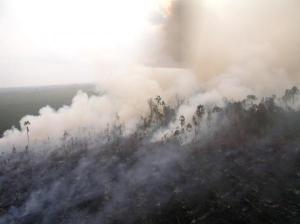
A recent report by Reuters highlighted in Mongabay.com about forest fires in Peninsular Malaysia and Sumatra reminded me of an important paper that appeared in Nature in 2007.

Lohman and colleagues’ paper entiled The burning issue gets my vote for a Potential spot at ConservationBytes.com.

Let’s face it, there is ample evidence now that countries in Southeast Asia can ill-afford any more deforestation, yet unregulated and illegal burning continues there despite international accords to reduce the intensity and frequency of fires. Lohman et al. highlighted how farmers throughout Indonesia and Malaysia in particular are ignoring fire bans and continuing to apply traditional techniques of burning off vegetation from plantations when new crops are to be seeded.

Common practice, been used for centuries – so what? Well the problem is that many of these fires burn out of control for weeks to months and continue into the remaining fragmented forests adjacent to agricultural land. With already altered moisture regimes from logging and agricultural clearing, drier forests are more susceptible, leading to broad scale fires that further threaten these important biodiversity hotspots.

If you are of the blinkered type that couldn’t give a rat’s bollocks about the loss of species (I hope not – otherwise you probably wouldn’t be reading this), then the human cost should convince you that something drastic needs to be done. These rampant and seemingly unending fire cycles cost billions to some of the world’s poorest nations in terms of material damage. Additionally, the haze associated with fires (remember the 1998 El Niñ0 event that saw 3 million km2 of Southeast Asia covered in haze affecting 70 million people?) is a major health hazard that cripples and kills hundreds of thousands of people.

For my Australian readers, don’t think this is restricted to Southeast Asia – burning is a major biodiversity and human health hazard here as well (see Johnston et al. 2002, 2007, Woinarksi 1999 and Pardon et al. 2003)

Clearly the burning has to stop.

CJA Bradshaw

Add to FacebookAdd to NewsvineAdd to DiggAdd to Del.icio.usAdd to StumbleuponAdd to RedditAdd to BlinklistAdd to Ma.gnoliaAdd to TechnoratiAdd to Furl


Official Environment Institute video

11 06 2009

I’ve written about The University of Adelaide‘s new Environment Institute not too long ago (see post here), and now we’ve had the official launch. The people behind scenes have put together a great introductory video that we all witnessed for the first time last week. Happy to share it with ConservationBytes.com readers here.

Vodpod videos no longer available.

A couple of other excellent parts of this evening include the venerable Robyn Williams‘ speech (listen here), and our Director’s, Professor Mike Young, encouraging kick off (listen here).

I’ve very proud to be a part of this exciting initiative.

CJA Bradshaw


Vortex of travel to RAMAStan

9 06 2009


Just a short post to say that the frequency of posts might decline somewhat over the coming weeks. I’m currently travelling in the US on a mixture of leave and work.

From the work side of things, I’ll be heading shortly to Harvard University in Boston to spend some time with colleague Navjot Sodhi of the National University of Singapore who’s finishing up a year-long Hrdy Fellowship there. We’ll be joined by my close friend and colleague, Barry Brook, and Resit Akçakaya of RAMAS fame. We’ll be working on a few ideas regarding extinction dynamics, modelling and climate change projections for species distributions and risk.

We’ll be heading next to visit Bob Lacy of VORTEX fame at the Chicago Zoological Society. We’ll be joined by Phil Miller of the IUCN‘s Species Survival Commission (SSC) Conservation Breeding Specialist Group, JP Pollak of Cornell University, and maybe Jon Ballou of the Smithsonian National Zoological Park. We’re hoping to help take the next generation of species vulnerability software into a more realistic framework that accounts for the complexities of climate change.

I’m looking forward to the trip and meeting new colleagues.

CJA Bradshaw


June Issue of Conservation Letters

6 06 2009

Quick off the mark this month is the new issue of Conservation Letters. There are some exciting new papers (listed below). I encourage readers to have a look:

Policy Perspectives

Letters

CJA Bradshaw


Tropical forests worth more standing

4 06 2009
© R. Butler

© R. Butler

Keeping with the oil palm theme…

A paper just published online in Conservation Letters by Venter and colleagues entitled Carbon payments as a safeguard for threatened tropical mammals gets my vote for the Potential list.

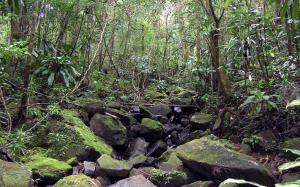
We’ve been saying it again and again and again… tropical forests, the biodiversity they harbour and the ecosystem services they provide are worth more to humanity than the potential timber they represent. Now we find they’re even worth more than cash crops (e.g., oil palm) planned to replace them.

A few years ago some very clever economists and environmental policy makers came up with the concept of ‘REDD’ (reducing carbon emissions from deforestation and forest degradation), which is basically as system “… to provide financial incentives for developing countries that voluntarily reduce national deforestation rates and associated carbon emissions below a reference level”. Compensation can occur either via grant funding or through a carbon-trading scheme in international markets.

Now, many cash-greedy corporations argue that REDD could in no way compete with the classic rip-it-down-and-plant-the-shit-out-of-it-with-a-cash-crop approach, but Venter and colleagues now show this argument to be a bit of a furphy.

The authors asses the financial feasibility of REDD in all planned oil palm plantations in Kalimantan – Indonesia’s part of the island of Borneo in South East Asia. Borneo is also the heart of the environmental devastation typical of the tropics. They conclude that REDD is in fact a rather financially competitive scheme if we can manage to obtain carbon prices of around US$10-33/tonne. In fact, even when carbon prices are as low as US$2/tonne (as they are roughly now on the voluntary market), REDD is still competitive for areas of high forest carbon content and lower agricultural potential.

But the main advantage isn’t just the positive cash argument – many endangered mammals (and there are 46 of them in Kalimantan) such as the South East Asian equivalent of the panda (the orang-utan – ‘equivalent’ in the media-hype and political sensitivity sense, not taxonomic, of course) and the Bornean elephant (yes, they have them) are currently found in areas planned for plantation. So saving the forest obviously saves these and countless other taxa that only exist on this highly endemic island. Finally, Venter and colleagues found that where emission reductions were cheapest, these are also areas with higher-than-average densities of endangered mammals, suggesting that REDD is a fantastic option to keep developing countries in the black without compromising their extensive species richness and endemism.

Brilliant. Now if we can just get the economists and pollies to agree on a REDD model that actually works.

CJA Bradshaw

Add to FacebookAdd to NewsvineAdd to DiggAdd to Del.icio.usAdd to StumbleuponAdd to RedditAdd to BlinklistAdd to Ma.gnoliaAdd to TechnoratiAdd to Furl


Indonesia’s precious peatlands under oil palm fire

31 05 2009
© Cockroach Productions

© Cockroach Productions

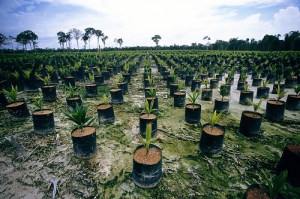
A small opinion piece about to be published in Frontiers in Ecology and the Environment (June 2009 issue) discusses a major concern we (Lian Pin Koh, Rhett Butler and I) have with Indonesia’s decision to allow peatlands less than 3 m deep to be converted to oil palm. Is nothing immune to the spread of this crop (see previous posts here and here on oil palm plantations)?

Why is this such a big deal? Well, we list five main reasons why it’s a bad idea for Indonesia, the world in general and biodiversity:

  1. Peatlands are amazing carbon sinks, so their destruction necessarily equates to a large release of carbon into the atmosphere (Page et al. 2002)
  2. Tropical peatlands take a hell of a long time to generate – 100s to 1000s of years (Chimner and Ewel 2005)
  3. Tropical peatlands harbour a massive biodiversity, but they are still poorly described and their ecosystems only superficially understood
  4. The burning of peatlands to provide the conditions necessary to plant oil palm will contribute to the massive ‘haze’ problem in South East Asia (Lohman et al. 2007)
  5. The decision goes against the principles of ‘reducing carbon emissions from deforestation and forest degradation‘ (REDD), which means it will be more difficult to implement carbon trading schemes that intrinsically value intact forests

More detail can be found in the Write Back piece that will be published shortly in Frontiers in Ecology and the Environment. For more information on oil palm and its conservation implications, see the following:

CJA Bradshaw

Add to FacebookAdd to NewsvineAdd to DiggAdd to Del.icio.usAdd to StumbleuponAdd to RedditAdd to BlinklistAdd to Ma.gnoliaAdd to TechnoratiAdd to Furl


Underwater deforestation

26 05 2009
© C. Connell

© S. Connell

I’ve been meaning to blog on this for a while, but am only now getting around to it.

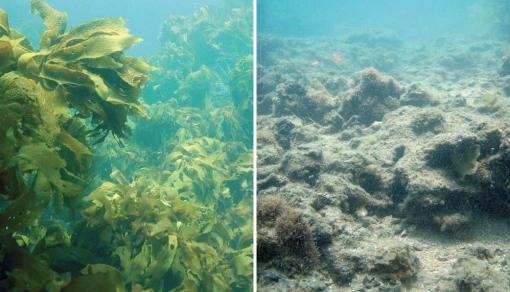
Now, it’s not bulldozers razing our underwater forests – it’s our own filth. Yes, we do indeed have underwater forests, and they are possibly the most important set of species from a biodiversity perspective in temperate coastal waters around the world. I’m talking about kelp. I’ve posted previously about the importance of kelp and how climate change poses a threat to these habitat-forming species that support a wealth of invertebrates and fish. In fact, kelp forests are analogous to coral reefs in the tropics for their role in supporting other biodiversity.

The paper I’m highlighting for the ConservationBytes.com Potential list is by a colleague of mine at the University of Adelaide, Associate Professor Sean Connell, and his collaborators entitled “Recovering a lost baseline: missing kelp forests from a metropolitan coast“. This paper is interesting, novel and applied for several reasons.

First, it sets out some convincing evidence that the Adelaide coastline has experienced a fairly hefty loss of canopy-forming kelp (mainly species like Ecklonia radiata and Cystophora spp.) since urbanisation (up to 70 % !). Now, this might not seem too surprising – we humans have a horrible track record for damaging, exploiting or maltreating biodiversity – but it’s actually a little unexpected given that Adelaide is one of Australia’s smaller major cities, and certainly a tiny city from a global perspective. There hasn’t been any real kelp harvesting around Adelaide, or coastal overfishing that could lead to trophic cascades causing loss through herbivory. Connell and colleagues pretty much are able to isolate the main culprits: sedimentation and nutrient loading (eutrophication) from urban run-off.

Second, one might expect this to be strange because other places around the world don’t have the same kind of response. The paper points out that in the coastal waters of South Australia, the normal situation is characterised by low nutrient concentrations in the water (what we term ‘oligotrophic’) compared to other places like New South Wales. Thus, when you add even a little bit extra to a system not used to it, these losses of canopy-forming kelp ensue. So understanding the underlying context of an ecosystem will tell you how much it can be stressed before all hell breaks loose.

Finally, the paper makes some very strong arguments for why good marine data are required to make long-term plans for conservation – there simply isn’t enough investment in basic marine research to ensure that we can plan responsibly for the future (see also previous post on this topic).

A great paper that uses a combination of biogeography, time series and chemistry to inform about a major marine conservation problem.

CJA Bradshaw

Add to FacebookAdd to NewsvineAdd to DiggAdd to Del.icio.usAdd to StumbleuponAdd to RedditAdd to BlinklistAdd to Ma.gnoliaAdd to TechnoratiAdd to Furl


The non-human view of the (real) world

21 05 2009

cokebottleglassesWe all have a distorted view of the planet. Our particular experiences, drives, beliefs and predilections all taint our ability to perceive and interpret our world objectively and rationally.

Enter science.

Science, in all its manifestations, aims, outcomes and applications, is united by one basic principle: to reduce human subjectivity. Contrary to popular belief, science isn’t a ‘thing’; and it’s certainly not a belief system. It isn’t even a philosophy (although there are several different major branches of the philosophy of science). It is, put way too simplistically, a method that attempts to isolate pattern from noise and objectivity from desire. It’s by no means a perfect system because human subjectivity can still creep in even when we make our best attempts to avoid it, but it’s the best system we have. Chances are too that if you’ve made a mistake and haven’t been as objective as you could have been, some other scientist will come along and rip down your house of cards. Two steps forward and one step back. That’s science.

So, where am I going? You might have seen this before, but I thought it worthwhile reproducing some of the images from Daniel Dorling, Mark Newman and Anna Barford’s The Atlas of the Real World: Mapping the Way We Live (Thames & Hudson 2008). There are some fascinating images of the world map that alter the ‘volume’ of a country relative to a particular resource use or conservation measure. The example shows the use of coal power, ecological footprint, forest depletion, water depletion, waste recycled, extinct species, species at risk, plants at risk, mammals at risk (check out the IUCN Red List for the last 4 categories), greenhouse gas emissions, energy depletion, and biocapacity. Check out your country and see how well or poorly you’re doing relative to the rest of the world.

CJA Bradshaw

Add to FacebookAdd to NewsvineAdd to DiggAdd to Del.icio.usAdd to StumbleuponAdd to RedditAdd to BlinklistAdd to Ma.gnoliaAdd to TechnoratiAdd to Furl


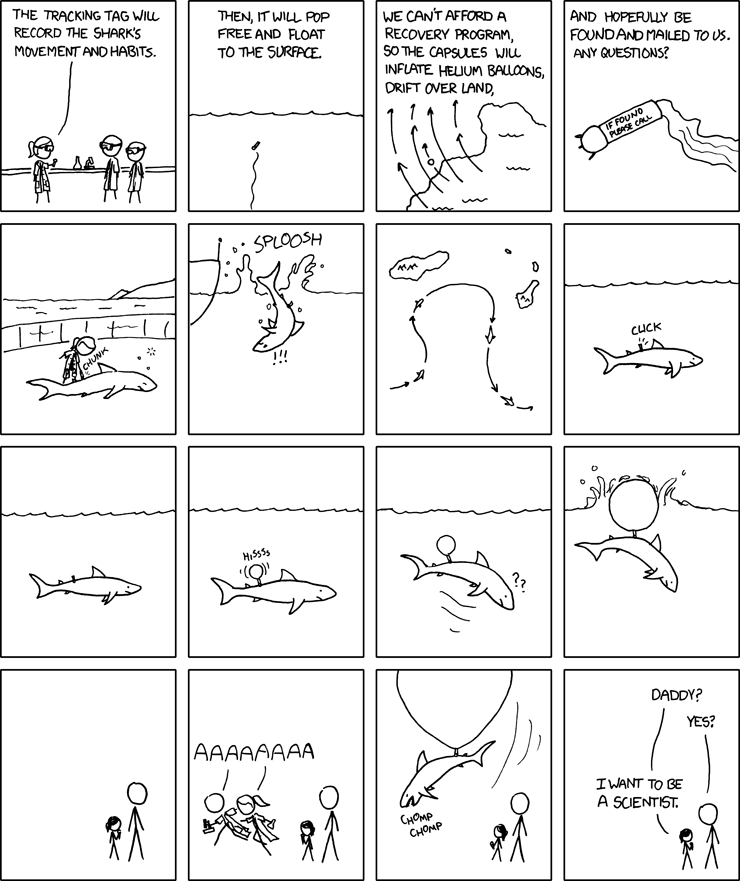
Shark tags

19 05 2009

I have no real reason for posting this, other than I found it amusing. I do not know to whom I should attribute the cartoon, so apologies to the author. Click for a larger version if you find this too small to read.


Climate change’s ugly cousin – biodiversity loss

17 05 2009

uglybaby…nobody puts a value on pollination; national accounts do not reflect the value of ecosystem services that stop soil erosion or provide watershed protection.

Barry Gardiner, Labour MP for Brent North (UK), Co-chairman, Global Legislators Organisation‘s International Commission on Land Use Change and Ecosystems

Last week I read with great interest the BBC’s Green Room opinion article by Barry Gardiner, Labour MP in the UK, about how the biodiversity crisis takes very much the back seat to climate change in world media, politics and international agreements.

He couldn’t be more spot-on.

I must stipulate right up front that this post is neither a whinge, rant nor lament; my goal is to highlight what I’ve noticed about the world’s general perception of climate change and biodiversity crisis issues over the last few years, and over the last year in particular since ConservationBytes.com was born.

Case in point: my good friend and colleague, Professor Barry Brook, started his blog BraveNewClimate.com a little over a month (August 2008) after I managed to get ConservationBytes.com up and running (July 2008). His blog tackles issues regarding the science of climate change, and Barry has been very successful at empirically, methodically and patiently tearing down the paper walls of the climate change denialists. A quick glance at the number views of BraveNewClimate.com since inception reveals about an order of magnitude more than for ConservationBytes.com (i.e., ~195000 versus 20000, respectively), and Barry has accumulated a total of around 4500 comments compared to just 231 for ConservationBytes.com. The difference is striking.

Now, I don’t begrudge for one moment this disparity – quite the contrary – I am thrilled that Barry has managed to influence so many people and topple so effectively the faecal spires erected by the myriad self-proclaimed ‘experts’ on climate change (an infamous line to whom I have no idea to attribute states that “opinions are like arseholes – everyone’s got one”). Barry is, via BraveNewClimate.com, doing the world an immense service. What I do find intriguing is that in many ways, the biodiversity crisis is a much, much worse problem that is and will continue to degrade human life for millennia to come. Yet as Barry Gardiner observed, the UK papers mentioned biodiversity only 115 times over the last 3 months compared to 1382 times for climate change – again, that order-of-magnitude disparity.

There is no biodiversity equivalent of the Intergovernmental Panel on Climate Change (although there are a few international organisations tackling the extinction crisis such as the United Nation’s Environment Program, the Millennium Ecosystem Assessment and the International Union for Conservation of Nature), we still have little capacity or idea how to incorporate the trillions of dollars worth of ecosystem services supplied every year to us free of charge, and we have nothing at all equivalent to the Kyoto Protocol for biodiversity preservation. Yet, conservation biologists have for decades demonstrated how human disease prevalence, reduction in pollination, increasing floods, reduced freshwater availability, carbon emissions, loss of fish supplies, weed establishment and spread, etc. are all exacerbated by biodiversity loss. Climate change, as serious and potentially apocalyptic as it is, can be viewed as just another stressor in a system stressed to its limits.

Of course, the lack of ‘interest’ may not be as bleak as indicated by web traffic; I believe the science underpinning our assessment of biodiversity loss is fairly well-accepted by people who care to look into these things, and the evidence spans the gambit of biological diversity and ecosystems. In short, it’s much less controversial a topic than climate change, so it attracts a lot less vitriol and spawns fewer polemics. That said, it is a self-destructive ambivalence that will eventually come to bite humanity on the bum in the most serious of ways, and I truly believe that we’re not far off from major world conflicts over the dwindling pool of resources (food, water, raw materials) we are so effectively destroying. We would be wise to take heed of the warnings.

CJA Bradshaw

Add to FacebookAdd to NewsvineAdd to DiggAdd to Del.icio.usAdd to StumbleuponAdd to RedditAdd to BlinklistAdd to Ma.gnoliaAdd to TechnoratiAdd to Furl


Latest issue of Conservation Letters now out

13 05 2009

Conservation Letters

The April issue of Conservation Letters is now out (a little late, but worth the wait). There are some good titles in this one, and I’ve blogged about a few of them already:

Happy reading!

CJA Bradshaw


Realising you’re a drunk is only the first step

11 05 2009

© A. Savchenko

© A. Savchenko

I recently did an interview for the Reef Tank blog about my research, ConservationBytes.com and various opinions about marine conservation in general. I’ve been on about ‘awareness’ raising in biodiversity conservation over the last few weeks (e.g., see last post), saying that it’s really only the first step. To use an analogy, alcoholics must first recognise and accept that they are indeed drunks with a problem before than can take the (infamous AA) steps to resolve it. It’s not unlike biodiversity conservation – I think much of the world is aware that our forests are disappearing, species are going extinct, our oceans are becoming polluted and devoid of fish, our air and soils are degraded to the point where they threaten our very lives, and climate change has and will continue to exacerbate all of these problems for the next few centuries at least (and probably for much longer).

We’ve admitted we have a disease, now let’s do something about it.

Read the full interview here.

CJA Bradshaw

Add to FacebookAdd to NewsvineAdd to DiggAdd to Del.icio.usAdd to StumbleuponAdd to RedditAdd to BlinklistAdd to Ma.gnoliaAdd to TechnoratiAdd to Furl


Celebrities actually doing something positive for conservation?

7 05 2009

When I first saw this on the BBC I thought to myself, “Well, just another toothless celebrity ego-stroke to make rich people feel better about the environmental mess we’re in” (well, I am a cynic by nature). I have blogged before on the general irrelevancy of celebrity conservation. But then I looked closer and saw that this was more than just an ‘awareness’ campaign (which alone is unlikely to change anything of substance). The good Prince of Wales and his mates/offspring have put forward The Prince’s Rainforest Project, which (thankfully) not only endeavours to raise awareness about the true value of rain forests, it actually proposes a mechanism to do so. It took a bit to find, but the 52-page report on the PRP website outlines from very sensible approaches. In essence, it all comes down to money (doesn’t everything?).

Their proposed plan to the United Nations Framework Convention on Climate Change (UNFCCC) details some of the following required changes:

  1. Payments to rain forest nations for not deforesting (establish transaction costs and setting short-term ‘conservation aid’ programmes)

  2. Multi-year service agreements (countries sign up for multi-year targets based on easily monitored performance indicators)

  3. Fund alternative, low-carbon economic development plans (fundamental shifts in development targets that explicitly avoid deforestation)

  4. Multi-stakeholder disbursement mechanisms (using funds equitably and minimising corruption)

  5. Tropical Forests Facility (a World Bank equivalent with the express purpose of organising, disbursing and monitoring anti-deforestation money flow)

  6. Country financing from public and private sources (funding initially derived from developed nations in form of ‘aid’)

  7. Rain forest bonds in private capital markets (value country-level ‘income’ as interest payments and incentives within a trade framework)

  8. Nations participate when ready (giving countries the option to advance at the pace dictated by internal politics and existing development rates)

  9. Accelerating long-term UNFCCC agreement on forests (transition to independence post-package)

  10. Global action to address drivers of deforestation (e.g., taxing/banning products grown on deforested land; ‘sustainability’ certification; consumer pressure; national procurement policies)

Now, I’m no economist, nor do I understand all the market nuances of the proposal, but it seems they are certainly on the right track. The value of tropical (well, ALL) forests to humanity are undeniable, and we’re currently in a state of crisis. Let’s hope the Prince and his mob can get the ball rolling.

For what it’s worth, here’s the video promoting the PRP. I could really care less what Harrison Ford and Pele have to say about this issue because I just don’t believe celebrities have any net effect on public behaviour (perceptions, yes, but not behaviour). But look beyond the superficiality and the cute computer-generated frog to the seriousness underneath. Despite my characteristically cynical tone, I give the PRP full support.

Vodpod videos no longer available.

more about “Rainforest film brings out stars“, posted with vodpod


CJA Bradshaw

Add to FacebookAdd to NewsvineAdd to DiggAdd to Del.icio.usAdd to StumbleuponAdd to RedditAdd to BlinklistAdd to Ma.gnoliaAdd to TechnoratiAdd to Furl


To market, to market, to buy a fat… fish

4 05 2009

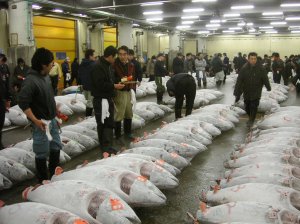
An interesting new paper just appeared online (uncorrected proof stage) in Biological Conservation. Brewer and colleagues’ paper entitled Thresholds and multiple scale interaction of environment, resource use, and market proximity on reef fishery resources in the Solomon Islands describes how the proximity of fish markets explains some of the variation in fisheries takes on South Pacific coral reefs. Well, that may seem intuitive, you say – if you can’t access even a local market, chances are your fish will only feed you and your immediate family. Make an economic link to a larger pool of demanding consumers, and you have all the incentive you need to over-exploit your little patch of finned money.

Of course, the advent of better, more efficient transport (including refrigerated transport) and the development of local markets (i.e., tapping into larger ones in more populated areas) has inevitably caused fish depletions across the globe. Brewer and colleagues’ work provides a quantitative link between human demand and biodiversity decline (including ‘fishing down the web‘), and suggests that our best way to manage fisheries is to target the source of this demand – the markets and patterns of consumption. Ultimately, it’s the consumer that will dictate what does and what does not go extinct (see also previous post on consumer preferences for rare species). After all, if there’s a demand, someone will step in to provide the resource (provided it’s still there). Better education, smarter consumption and regulation along the entire chain will be far more effective in the long run than just attempting to control the fishers’ behaviour.

CJA Bradshaw

Add to FacebookAdd to NewsvineAdd to DiggAdd to Del.icio.usAdd to StumbleuponAdd to RedditAdd to BlinklistAdd to Ma.gnoliaAdd to TechnoratiAdd to Furl