Fourth batch of six biodiversity cartoons for 2015, because I’m travelling and haven’t had a lot of time for a more detailed post (see full stock of previous ‘Cartoon guide to biodiversity loss’ compendia here).
—

Fourth batch of six biodiversity cartoons for 2015, because I’m travelling and haven’t had a lot of time for a more detailed post (see full stock of previous ‘Cartoon guide to biodiversity loss’ compendia here).
—

Looking east toward the northern Flinders Ranges from Ediacara Conservation Park. © CJA Bradshaw
I’ve had one of the most mind-blowing weeks of scientific discovery in my career, and it’s not even about a subject from within my field.
As some of you might know, I’ve been getting more and more interested in palaeo-ecology over the past few years. I’m fascinated by the challenge of reconstructing past communities and understanding how and why they changed. It’s a natural progression for someone interested in modern extinction dynamics.
Most of my recent interests have focussed on palaeo-communities of the Late Quaternary, and mainly in the range of 100 thousand years ago to the present. We’ve started publishing a few things in this area, and I can confirm that they’ll be plenty more to come in the following months and years. Despite plenty more to do in the youngest of palaeo-communities, I’ve now been bitten by the deep-time bug.

The giant Dickinsonia rex – a flat, worm-like discoid animal. © D. García-Bellido
When I write ‘deep time’, I bloody well mean it: back to 580 million years, to be accurate. This is the time before the great Cambrian explosion of life popularised by the late Stephen Jay Gould in his brilliant book, Wonderful Life1,2. I’m talking about the Ediacaran period from 635-541 million years ago.
I’ve lived in South Australia now for over seven years, but it was only in the last few that I realised the Ediacaran was named after the Ediacara Hills in the northern Flinders Ranges some 650 km north of Adelaide where I live, and it wasn’t until last week that I had the extremely gratifying privilege of visiting the region with some of the world’s top Ediacaran specialists. If you have even the remotest interest in geological time and the origin of life on Earth, you should make a pilgrimage to the Flinders Ranges at some point before you die.
 It was just reported in the Guardian that infamous and discredited environmental charlatan, Bjørn Lomborg, who has recently been given the green light to set up shop in Australia after the University of Western Australia‘s Vice-Chancellor, Paul Johnson, extended him an olive branch, and the Abbott-oir government gave him $4 million to do so. Yes, you read that correctly.
It’s telling in today’s political climate that such a man is not only welcomed to a leading (Group of Eight) Australian university by its own Vice-Chancellor, he’s given millions to undermine real science and societal progress by the federal government. It’s an understatement to say that I’m disgusted and ashamed to be Australian today.
I have just received some juicy inside correspondence from the School of Animal Biology at the University of Western Australia sent to the Vice-Chancellor. The School, suffice it to say, is not amused. I copy the letter itself below, as well as an internal e-mail sent to the University’s Heads of School by the Chief Advisor of the University’s Corporate and Government Affairs, Mr David Harrison. Read the rest of this entry »
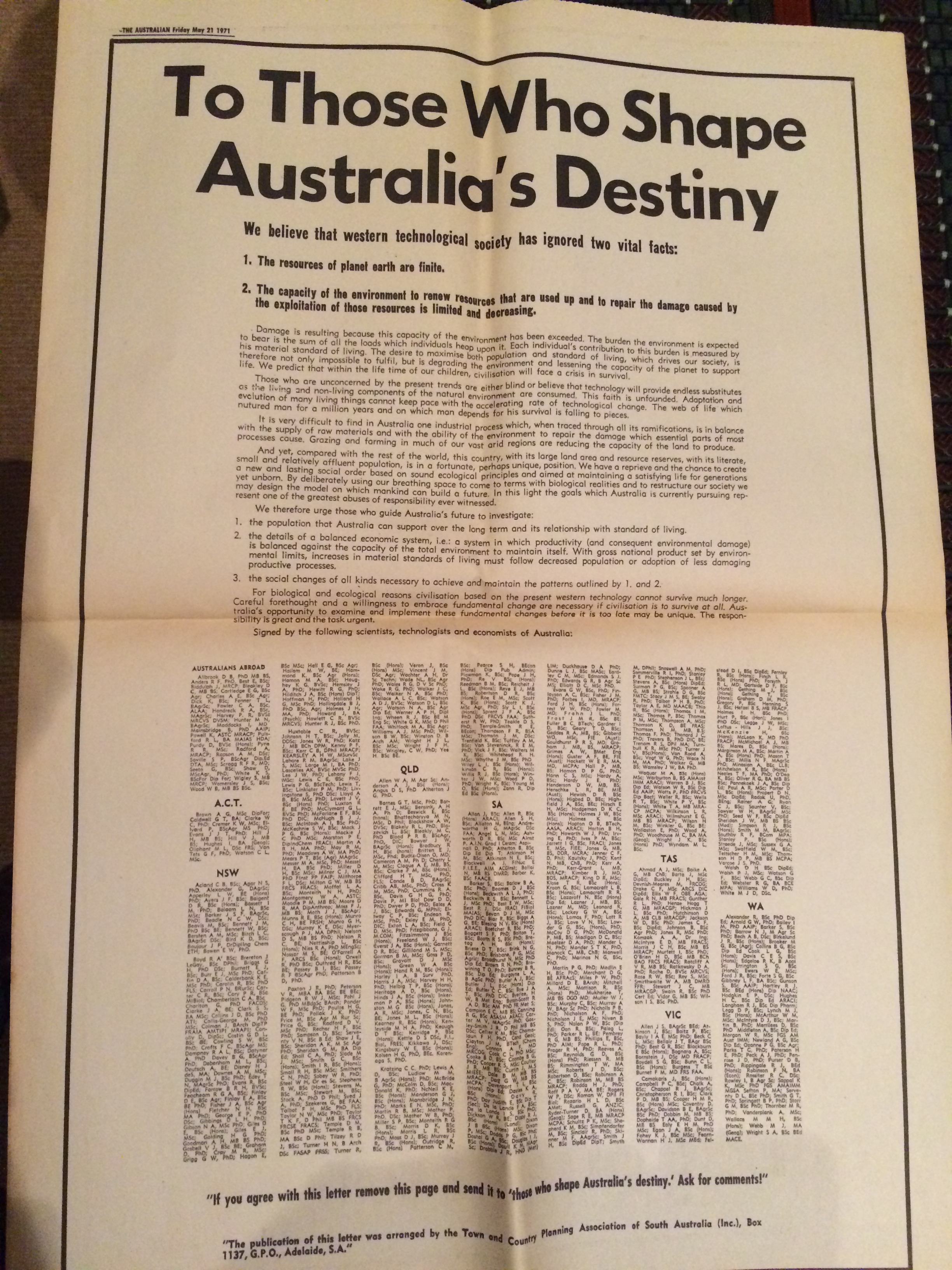 The other night I had the pleasure of dining with the former Australian Democrats leader and senator, Dr John Coulter, at the home of Dr Paul Willis (Director of the Royal Institution of Australia). It was an enlightening evening.
While we discussed many things, the 84 year-old Dr Coulter showed me a rather amazing advert that he and several hundred other scientists, technologists and economists constructed to alert the leaders of Australia that it was heading down the wrong path. It was amazing for three reasons: (i) it was written in 1971, (ii) it was published in The Australian, and (iii) it could have, with a few modifications, been written for today’s Australia.
If you’re an Australian and have even a modicum of environmental understanding, you’ll know that The Australian is a Murdochian rag infamous for its war on science and reason. Even I have had a run-in with its outdated, consumerist and blinkered editorial board. You certainly wouldn’t find an article like Dr Coulter’s in today’s Australian.
More importantly, this 44 year-old article has a lot today that is still relevant. While the language is a little outdated (and sexist), the grammar could use a few updates, and there are some predictions that clearly never came true, it’s telling that scientists and others have been worrying about the same things for quite some time.
In reading the article (reproduced below), one could challenge the authors for being naïve about how society can survive and even prosper despite a declining ecological life-support system. As I once queried Paul Ehrlich about some of his particularly doomerist predictions from over 50 years ago, he politely pointed out that much of what he predicted did, in fact, come true. There are over 1 billion people today that are starving, and another billion or so that are malnourished; combined, this is greater than the entire world population when Paul was born.
So while we might have delayed the crises, we certainly haven’t averted them. Technology does potentially play a positive role, but it can also increase our short-term carrying capacity and buffer the system against shocks. We then tend to ignore the indirect causes of failures like wars, famines and political instability because we do not recognise the real drivers: resource scarcity and ecosystem malfunction.
Australia has yet to learn its lesson.
—
To Those Who Shape Australia’s Destiny
We believe that western technological society has ignored two vital facts: Read the rest of this entry »
It’s probably fair to say that most university-based academics regularly receive requests from people around the world wishing to be considered as prospective postgraduate students (mostly PhD). I probably receive an average of 3-4 such requests per week via e-mail, as do many of my collaborators. Unfortunately for those making the inquiry, I trash most of them almost immediately.
It’s not that I’m a (complete) bastard; rather, it seems that few of these people have given very much thought to their requests, or how they might be perceived. Indeed, I’d say that about 90% of them are one-liners that go something like this:
Dear Professor,
I wish to write you to seek for supervision towards PhD degree. If you not intersted, assist me to get other supervisor.
XX
Yes, with all the bad English, impoliteness and lack of any detail, these types of requests get deleted even before I get to the close. One recent e-mail even addressed me as “Dear Sir Hubert Wilkins …”. Sometimes, you really must wonder how some people have enough common sense even to turn on the computer.
I’m not naïve enough to think that most of these are serious requests for supervision; indeed, many of them seem to be desperate cries for help to assist people to quit their country of origin, for reasons that have nothing to do with academic pursuits.
So for those people who are genuinely seeking academic supervision, and in a vain attempt to stem the number of pointless e-mails I receive (yeah, right), I offer some tips on how to contact a potential PhD supervisor: Read the rest of this entry »
 There’s a romantic myth surrounding Australia that is pervasive both overseas and within the national psyche: this sun-scorched continent home to stoic bushmen1 that eek out a frugal, yet satisfying existence in this harsh rural land. Unfortunately that ideal is anathema to almost every Australian alive today.
While some elements of that myth do have a basis in reality – it is indeed a hot, dry, mostly inhospitable place if you count the entire land area (all 7.69 million square kilometres of it), and it does have the dubious honour of being the driest inhabited continent on Earth – most Australians live nowhere near the dry interior or the bush.
Despite our remarkably low average population density (a mere 3.09 people per square kilometre), Australia is in fact one of the most urbanised nations on the planet, with nearly 90% of its citizenry living within a major urban centre. As a result, our largely urban/suburban, latte-sipping, supermarket-shopping population has little, if any, connection to the vast landscape that surrounds its comfortable, built-up environs. There should be little wonder then that Australians are so disconnected from their own ecology, and little surprise that our elected officials (who, after all, represent the values of the majority of the citizens they purport to represent), are doing nothing to slow the rapid flushing of our environment down the toilet. Indeed, the current government is in fact actively encouraging the pace of that destruction. Read the rest of this entry »
 If, for the purposes of some sick and twisted thought experiment, you were to design policies that would ensure the long-term failure of a wealthy, developed nation, you wouldn’t have to look farther than Australia’s current recipe for future disaster. I’m not trying to be provocative, but the warning signs are too bold and flashy to ignore. Let’s just run through some of the main ones:
1. As the lambasted and thoroughly flawed 2015 Intergenerational Report clearly demonstrates, our current government has no idea about the future threats of climate change. Dragged kicking and screaming into only a symbolic recognition of some ‘distant and currently irrelevant problem’, the Abbott-oir and his intergenerational criminals are well known for killing the carbon-pricing scheme, dismantling the Department of Climate Change, pulling out of major international talks on climate-change mitigation and installing a half-arsed, ineffective policy that will do nothing to stem our emissions. Combine that with comments like “coal is good for humanity“, and it’s easy to see how our current leaders have little idea about the future mess they’re creating.
2. Not content just to kick the shit out of any meaningful climate action, our government has also turned its back on any renewable energy target, and facilitated the fossil-fuel barons to dig more coal out of the ground. While South Australia’s Royal Commission on the nuclear fuel cycle is a welcome candle in the climate change-mitigation darkness here, it is far from becoming a national priority any time soon.
3. As has been well documented, the Abbott-oir ship of fools has also done whatever it can to turn back decades of environmental protections in less than six months of taking office. Everything from opening up national parks for exploitation, failing to protect marine sanctuaries, limiting environmental checks to promoting logging in World Heritage Areas, there is little room for hope that our crumbling environmental system will improve at all in the near to long term. Read the rest of this entry »
 Tone Abbott-oir, easily the most environmentally destructive Prime Minister this country has seen in the modern era, has survived the party room spill for a leadership change. Although 39% of his own Fiberal Party MPs voted to dump him, he remains standing (limping) – for now.
I’ve seen rather a lot lately in the Australian media about the impending spill vote, and the potential political repercussions of a change (or not), but there’s been nearly no mention of what it all means for the continually degrading Australian environment.
As is typical in Australian politics, the environment takes a very distant back seat to the those oh-so-important societal issues like knighthoods, paid parental leave and where to put the next road in Melbourne, so I certainly wasn’t hopeful that a leadership change (or not) would have any positive environmental outcomes. This particular latte-snorting, quinoa-flavoured-pinot-grigio-in-the-artisanal-underpants-pouring, erect-nipple-paper-rubbing environmental scientist has nothing at all to celebrate, even if the no-confidence in The Great Red Underpants is potentially a positive sign. Read the rest of this entry »
 The more I delve into the science of predator management, the more I realise that the science itself takes a distant back seat to the politics. It would be naïve to think that the management of dingoes in Australia is any more politically charged than elsewhere, but once you start scratching beneath the surface, you quickly realise that there’s something rotten in Dubbo.
My latest contribution to this saga is a co-authored paper led by Dale Nimmo of Deakin University (along with Simon Watson of La Trobe and Dave Forsyth of Arthur Rylah) that came out just the other day. It was a response to a rather dismissive paper by Matt Hayward and Nicky Marlow claiming that all the accumulated evidence demonstrating that dingoes benefit native biodiversity was somehow incorrect.
Their two arguments were that: (1) dingoes don’t eradicate the main culprits of biodiversity decline in Australia (cats & foxes), so they cannot benefit native species; (2) proxy indices of relative dingo abundance are flawed and not related to actual abundance, so all the previous experiments and surveys are wrong.
Some strong accusations, for sure. Unfortunately, they hold no water at all. Read the rest of this entry »
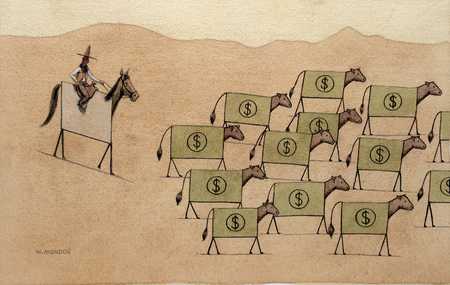 Let’s face it: Australia doesn’t have the best international reputation for good ecological management. We’ve been particularly loathsome in our protection of forests, we have an appalling record of mammal extinctions, we’re degenerate water wasters and carbon emitters, our country is overrun with feral animals and weeds, and we have a long-term love affair with archaic, deadly, cruel, counter-productive and xenophobic predator management. To top it all off, we have a government hell-bent on screwing our already screwed environment even more.
Still, we soldier on and try to fix the damages already done or convince people that archaic policies should be scrapped and redrawn. One such policy that I’ve written about extensively is the idiocy and cruelty of the dingo fence.
The ecological evidence that dingoes are good for Australian wildlife and that they pose less threat to livestock than purported by some evidence-less graziers is becoming too big to ignore any longer. Poisoning and fencing are not only counter-productive, they are cruel, ineffective and costly.
So just when ecologists thought that dingoes couldn’t get any cooler, out comes our latest paper demonstrating that letting dingoes do their thing results in a net profit for cattle graziers.
Come again? Read the rest of this entry »
 We are a sensitive and conflict-avoiding lot, aren’t we? Most scientists I know absolutely dread reprisals of any form, whether they are from a colleague commenting on their work, a sensationalism-seeking journalist posing nasty questions, or a half-wit troll commenting on a blog feed. For all our swagger and intellectual superiority complexes, most of us would rather lock ourselves in a room and do our work without anyone bothering us.
Fortunately for the taxpayer, we should not and cannot be this way. As I’ve stated before, we have at the very least a moral obligation to divulge our results to as many people as possible because for the most part, they pay us. If you work in any applied form of science (most of us do) – such as conservation, for example – then your moral obligation to make your work public extends to the entirety of humanity and the planet. That’s a staggering responsibility, and one of the reasons I’ve embraced many other forms of communication beyond the bog-standard scientific publication outlets.
There are many great examples of impressive science advocates out there – a few that come to mind are people like inter alia Lesley Hughes, James Hansen, Michael Mann, Paul Ehrlich, Bill Laurance, Barry Brook, Ove Hoegh-Guldberg, Tony Barnosky, Gretchen Daily, Emma Johnston, Stuart Pimm, and Hugh Possingham. There are even others willing to go to extraordinary lengths to make an evidence-based protest against society’s more inane actions. I’ve said it before, but it bears repeating – evidence-based advocacy can work.
To the topic at hand – I’ve been a little disappointed – to say the least – with the near-total silence emanating from my colleagues about the fossil-fuel divestment wave sweeping the world. While gaining traction worldwide, it wasn’t until The Australian National University took the bold move to divest (at least partially) from many of its fossil-fuel financial interests that it became a reality in Australia. Let’s face it – of all the types of institutions in our world, universities should be at the forefront of good, morally grounded and socially responsible investment strategies. They are, after all, meant to be filled with the most erudite, informed and cutting-edge people in the world, most of whom should have the best information at their fingertips regarding the precarious state of our environment. Read the rest of this entry »
 —
—
—
If none of that made any sense, then let me help you out. At the last Ecological Society of Australia meeting in Alice Springs, I witnessed a rather unique way to give a scientific presentation – via bush poetry. Dr. Dale Nimmo of Deakin University was particularly engaging, and he agreed to have his presentation poem reproduced here. Who said scientists were boring? Honourable mention too to Simon Watson for another audience-engaging, bush-poetry seminar (but I don’t have that to reproduce here). There also might be a slidecast of Dale’s presentation coming soon. For now, please enjoy the poetic delivery of science in text.
—
The Old Grey Box of Heathcote Town
Down around old Heathcote town, just east of Bendigo, A big old grey box tree casts an eye. The sallee fills the understory bright as sunlights glow, As the silvereyes and thornbills flitter by. This landscape, bruised and battered from 200 years of change, Holds the secrets of a time lost somehow. One of Jaara land, where lowan dug and dingoes howled, The latter two, here, just distant memories now. The gold rush came like bushfire, ring barked trees fell like boughs Of the red gums scattered on the old flood plains, That made way for sheep and cattle, while, fighting a losing battle, rufous bettongs were never seen again. When a man of English gentry, Professor Bennett was his name, Found the woodlands to his aristocratic tastes. Many days he’d venture in, binoculars under his chin, He never let a single bird call go to waste. While at the old St Arnaud Inn, over a couple pints of gin, Bennet and a bloke called Radford got to talking. Stealing horses was his game, but he’d give it all away, To join Bennett in woodlands, bird walking Earlier this year I took my daughter to the South Australian Museum, as I often do on weekends. We usually have lunch at the Art Gallery, and then wander the various levels of the Museum at a pace suitable for a 7-year old. The South Australia biodiversity floor is her favourite.
Of course I’m a little biased in my opinion because I live in Adelaide, but in my attempt to be as objective as possible, I think we’re particularly fortunate to have this excellent museum at our doorstep. Not only are the exhibitions and displays top-notch, it is one of the most research-active museums in the country. In my opinion, it’s one of the best museums in Australia. To top it all off, admission is free.
However, this post isn’t about spruiking the museum – it’s about something deeply disturbing I experienced there during that visit earlier this year. In addition to the normal free displays, the Museum often has a special exhibition that one must pay to view. I often don’t bother with this, but on this particular occasion, the temporary exhibition called Ngintaka was free of charge.
Ngintaka was an eclectic mix of song, story, dance, painting and carving from the Anangu Pitjantjatjara Yankunytjatjara (APY Lands) as told by Anangu Traditional Owners. While most of the displays were great, there was one that stood out in particular. Read the rest of this entry »
 If you follow any of the environment news in Australia, you will most certainly have seen a lot about feral cats in the last few weeks. I’ve come across dozens of articles in the last week alone talking about the horrendous toll feral cats have had on Australian wildlife since European arrival. In principle, this is a good thing because finally Australians are groggily waking to the fact that our house moggies and their descendants have royally buggered our biodiversity. As a result, we have the highest mammal extinction rate of any country.
But I argue that the newfound enthusiasm for killing anything feline is being peddled mainly as a distraction from bigger environmental issues and to camouflage the complete incompetence of the current government and their all-out war on the environment.
Call me cynical, but when I read headlines like “Australia aims to end extinction of native wildlife by 2020” and Environment Minister Hunt’s recent speech that he has “… set a goal of ending the loss of mammal species by 2020“, I get more than just a little sick to the stomach.
What a preposterous load of shite. Moreover, what a blatant wool-pulling-over-the-eyes public stunt. Read the rest of this entry »

Another great social event bringing ecologists together
I’ve always had the gut feeling that Australia punched above its weight when it comes to ecology and conservation. For years I’ve been confidently bragging to whomever might listen (mostly at conference pub sessions) that Australians have a vibrant academic and professional community of ecologists who are internationally renowned and respected. However, my bragging was entirely anecdotal and I always qualified the boast with the caveat that I hadn’t actually looked at the numbers.
Well, I finally did look at the numbers – at least superficially. It seems that for the most part, my assertion was true. I will qualify the following results with another caveat – I’ve only looked at the smallest of samples to generate this rank, so take it with a few grains of salt. Looking at the 200 most-cited ecologists in Google Scholar (with some licence as to who qualifies as an ‘ecologist’ – for example, I ditched a few medicos), I calculated the number of ecologists in that range per 100,000 people for each country. Of course, even the country of designation is somewhat fluid and imprecise – I did not know where most had received the bulk of their training and in which country they had spent most of their time, so the numbers are (again) only indicative. Excluding countries with only one highly cited ecologist in the top 200, the sorted list comes out as: Read the rest of this entry »
 Angry. Furious. Livid. And a just little bit sad.
Well, I’m not pissed off with ‘climate change’ per se – that would be ridiculous. I am extremely pissed off with those who are doing their damnedest to prevent society from doing anything meaningful about it.
The reason I’m thinking and writing about this at the moment is because last week I was approached by Joe Duggan of The Australian National University who has put together a rather clever and engaging website. The point of the website is simple – demonstrate to people that those studying climate-change science are human beings with feelings; we are not autistic, empirical automatons that conspire to ruin your day. We measure, we model and we analyse, but we’re also very much affected personally by what we observe every day in our careers.
So I grabbed a pen (not something I do very often, and my finger joints complained bitterly as a result) and hand-wrote the following letter. You might be take aback a little by my sentiment, but I assure you it’s an honest representation of my emotional state at the moment:
Dear Joe,
My overwhelming emotion is anger; anger that is fuelled not so much by ignorance, but by greed and profiteering at the expense of future generations. I am not referring to some vague, existential bonding to the future human race; rather, I am speaking as a father of a seven year-old girl who loves animals and nature in general. As a biologist, I see irrefutable evidence every day that human-driven climate disruption will turn out to be one of the main drivers of the Anthropocene mass extinction event now well under way.
 I had some sad news today – a visionary in human health and environmental integrity, Professor Tony McMichael, passed away last night from advanced influenza complications. Many people in the conservation field might not have heard of Tony, but rest assured he was one of the foremost thinkers and visionaries in the relationship between environment and human health.
I first met Tony on a World Health Organization-sponsored trip to China in 2008, where I was the ‘token’ ecologist on a panel of experts examining the nexus between environment, agriculture and the infectious diseases of poverty. Tony’s intellect and experience were daunting, to say the least, but a man who had served on several IPCC panels and countless international specialist committees was approachable and always listened. I was impressed and humbled from the outset.
A powerhouse in the general and multidisciplinary approach to the drivers of declining human health, Tony researched everything from classic human epidemiology to the sociological aspects of declining human health in the face of climate disruption. A little home-grown pride was present too in the fact that Tony did his medical degree at the University of Adelaide where I am now based.
If you are not familiar with Tony’s work and have even the slightest interest in the human-environment relationship, I encourage you to read his classic and innovative works. Read the rest of this entry »

Just a little of the dog fence’s carnage and cruelty at work.
I’ve pointed out in several posts on ConservationBytes.com just how badly Australia is doing in the environmental stakes, with massive deforestation continuing since colonial times, feral predators and herbivores blanketing the continent, inadequate protected areas, piss-weak policies and a government at war with its own environment. Despite a few recent wins in marine conservation, Australia has a dreadful track record.
Now in another monumental demonstration of stupidity, corruption and colonial-era attitudes toward native wildlife, Western Australia has outdone itself by sneaking through legislation to extend its so-called ‘Barrier Fence’ in an effort to isolate its marginal farmland from dingoes, emus and other ‘nuisance’ species.
As I and several others have pointed out before, the mere existence of the record-breaking dingo fence is not only counter-productive, it is expensive and utterly archaic. It should be torn down entirely.
Instead, the Western Australian government wants to extend the national fence, and they’ve approved the plan it without going through any of the appropriate checks in the system. Its environmental impacts have not been adequately assessed, nor has the public been given the opportunity to oppose the plans. In my view, the people responsible for this act should go to gaol.
In a recent paper led by Keith Bradby entitled Ecological connectivity or Barrier Fence? Critical choices on the agricultural margins of Western Australia, we show how the Western Australia state government has not followed any of its own environmental legislation and rushed through these idiotic proposals. If you do not subscribe to Ecological Management and Restoration, you can obtain a copy of the paper by e-mailing Keith or me. Read the rest of this entry »

Colin ‘Captain Hook’ Barnett
Just before knock-off time last Friday, I received some inspiring news. It’s not often in conservation science that the news is good, so even small wins are deliciously welcome.
Unless you’ve been out bush for the last few days or completely ignored the news services, you would have heard that Western Australia has decided not to go ahead with its moronic shark-culling programme. It all came down to the Western Australia Environmental Protection Authority‘s recommendation to the state government that it should not proceed with the cull because of ‘uncertainties’ in its effectiveness and impacts. While the government could conceivably ignore this recommendation and go ahead with the cull anyway, the right-wing Premier of Western Australia, Colin ‘Captain Hook’ Barnett, stated that while he was “disappointed”, the government was unlikely to appeal the decision, at least this year.
Putting the obvious commentary on his response aside for the moment, this is a rare example where overwhelming evidence actually persuaded a semi-autonomous government agency from going ahead with clearly stupid environmental policies. I can claim a small part in this endeavour, having co-written the synopsis of the scientific consensus statement and co-signed the submission to the Environmental Protection Authority. However, it was mainly down to the hard work and dedication of Professor Jessica Meeuwig of the University of Western Australia that the Western Australia government had little choice to but to heed our condemnation. Without her, I can pretty much guarantee that the shark slaughter would be continuing this year.
As they say in France, “chapeau” to Jessica. Read the rest of this entry »
 A major media release today coordinated by Jessica Meeuwig in Western Australia makes the (obvious) point that there’s no biological justification to cull sharks.
—
301 Australian and International Scientists experts have today provided their submission to the Western Australia Environmental Protection Authority (EPA), rejecting the scientific grounds for the proposed three-year drum-line programme.
Coordinating scientist, Professor Jessica Meeuwig from the University of Western Australia said:
“To have over 300 researchers, including some of the world’s top shark specialists and marine ecologists, all strongly agreeing that there is no scientific basis for the lethal drum-line programme, tells you how unjustified the government’s proposal is. If the EPA and the Federal Minister for the Environment are using science for decisions, the drum-line proposal should not be approved.”
The experts agree that the proposal presents no evidence that the lethal drum-line programme, as implemented, will improve ocean safety. It ignores evidence from other hook-based programs in Hawaii and Queensland that have been shown to be ineffective in reducing shark attacks on humans.
Dr. Christopher Neff from the University of Sydney stated:
“There is no evidence that drum lines reduce shark bites. The Western Australia EPA now faces a question of science versus politics with global implications because it is considering establishing a new international norm that would allow for the killing of protected white sharks.”
The drum lines are ineffective and indiscriminate, with 78% of the sharks captured not considered ‘threatening’ to humans. Yet, scientifically supported, non-lethal alternatives such as the South African ‘Shark Spotter’ and Brazil’s ‘Tag and Remove’ programmes are not adequately assessed as viable options for Western Australia. Read the rest of this entry »


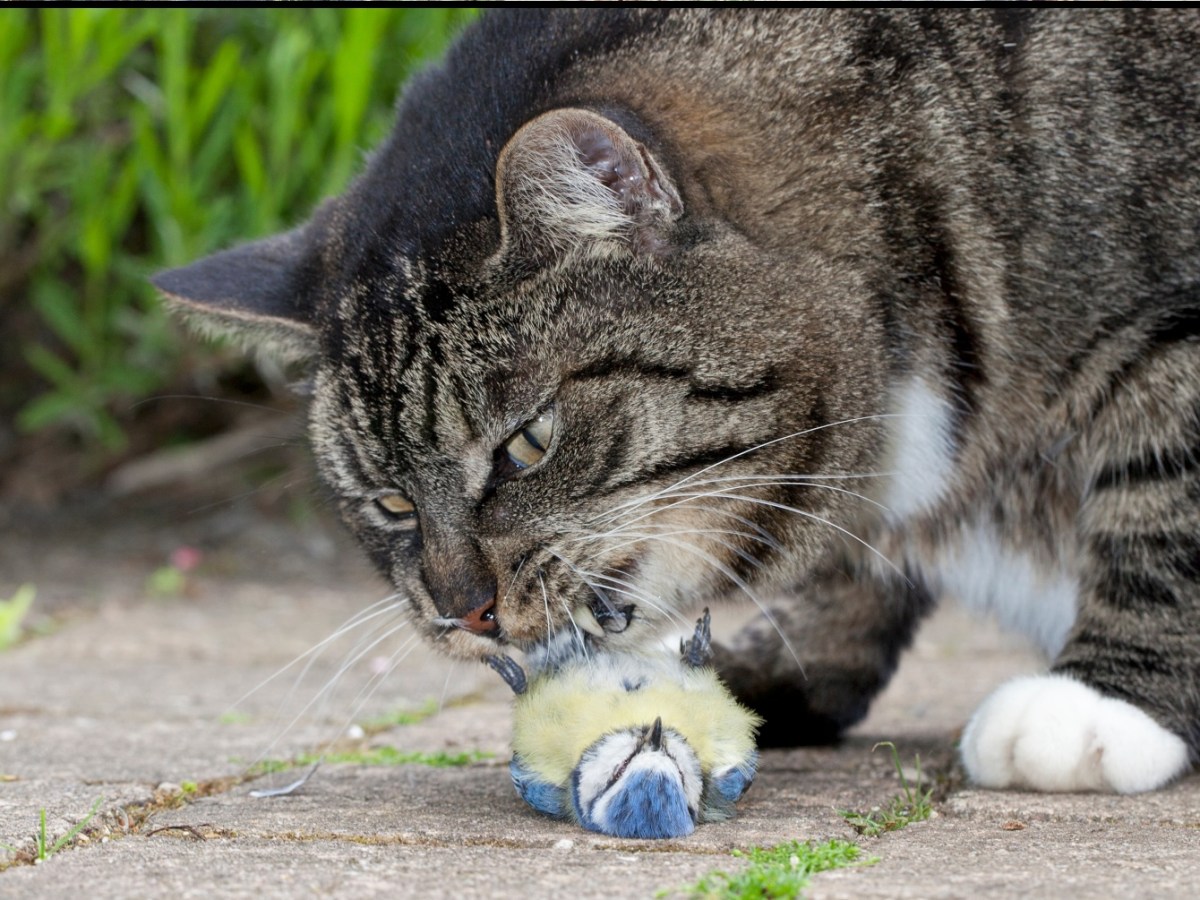
Those of us living with cats share our homes with an ancestral predator, one adapted for hunting and the frequent, exclusive consumption of meat. These instincts become fully activated outside the domestic environment, where cats pose a global threat to wildlife. Pets are family. We celebrate their arrival with the same joy as a grand…

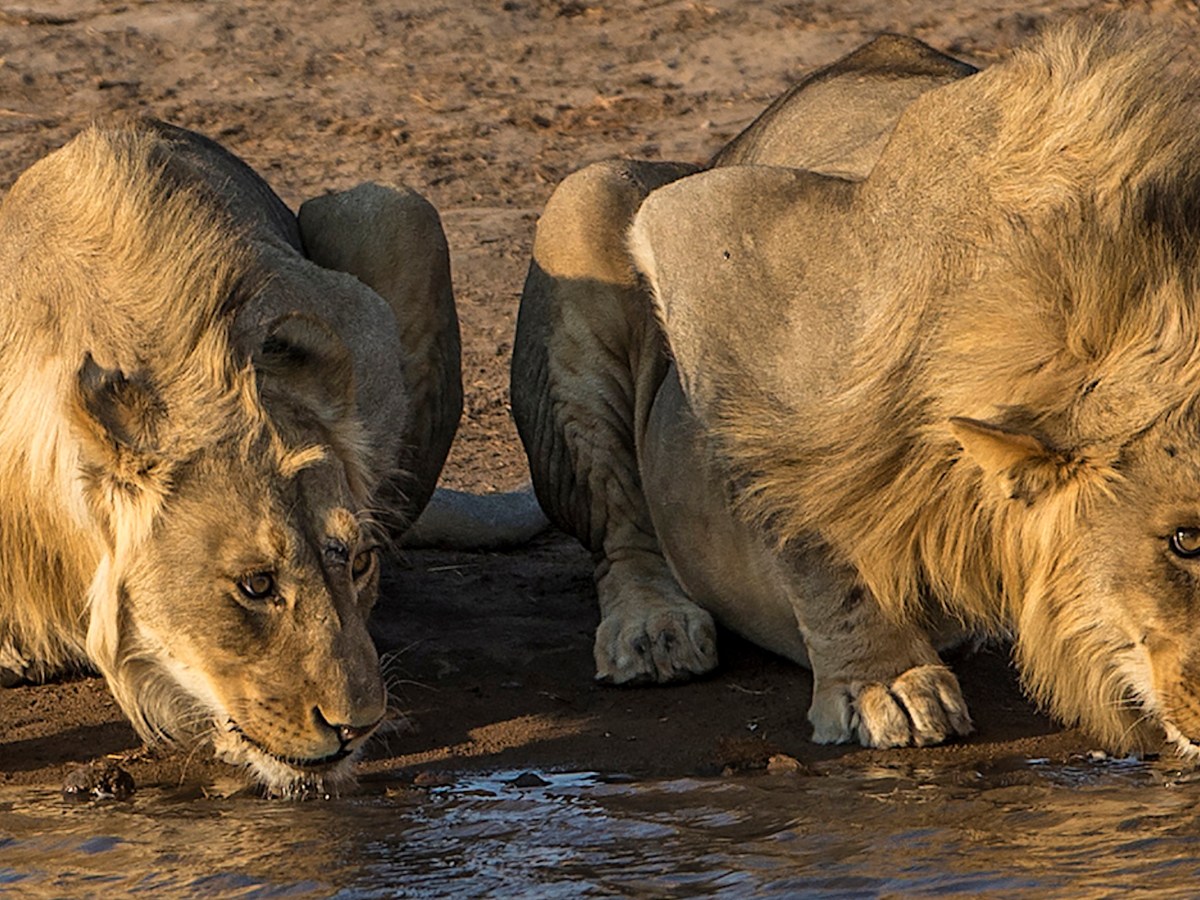
Many animals avoid contact with people. In protected areas of the African savanna, mammals flee more intensely upon hearing human conversations than when they hear lions or sounds associated with hunting. This fear of humans affects how species use and move in their habitat. Throughout our lives, we interact with hundreds of wildlife species without…
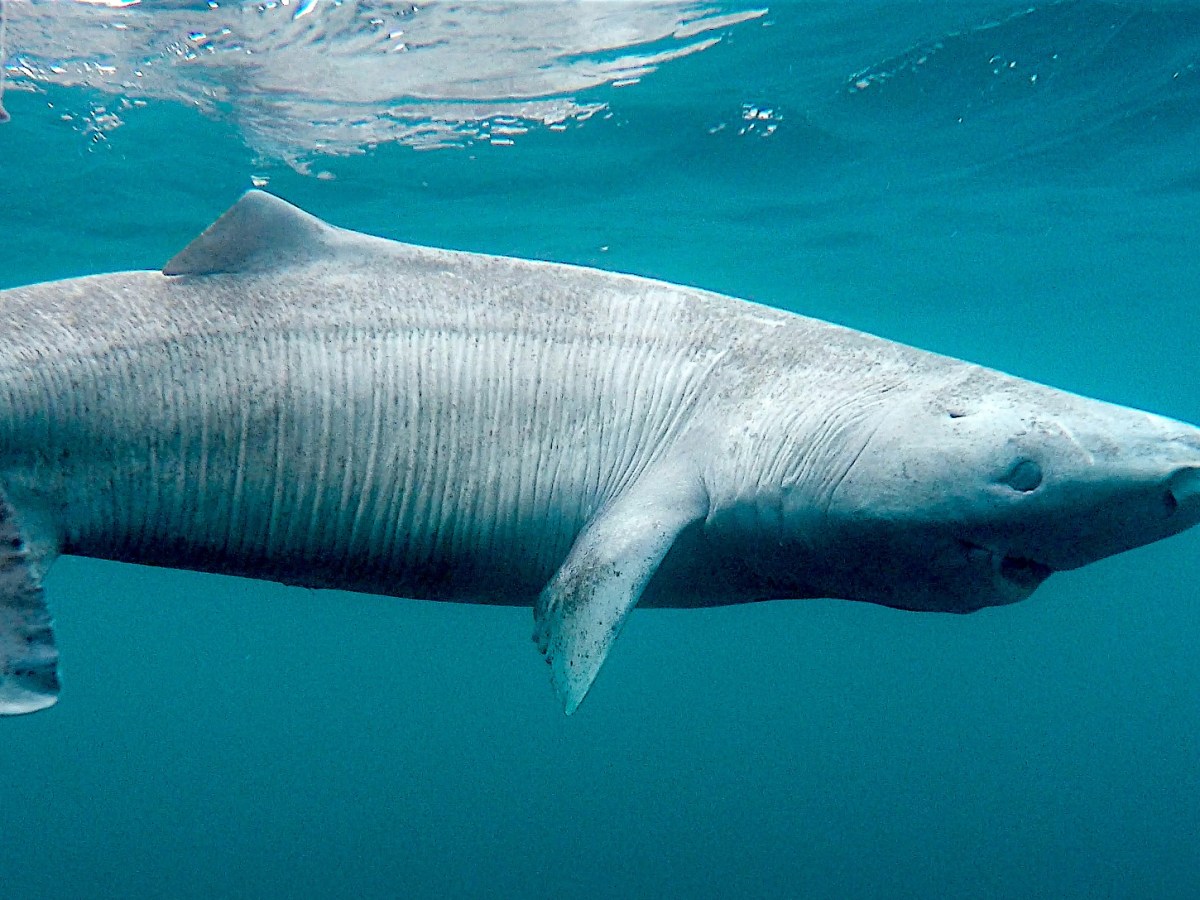
Deep-sea sharks include some of the longest-lived vertebrates known. The record holder is the Greenland shark, with a recently estimated maximum age of nearly 400 years. Their slow life cycle makes them vulnerable to fisheries. Humans rarely live longer than 100 years. But many other animals and plants can live for several centuries or even millennia, particularly…

 ConservationBytes.com