Not magic, but necessary

18 10 2011

In April this year, some American colleagues of ours wrote a rather detailed, 10-page article in Trends in Ecology and Evolution that attacked our concept of generalizing minimum viable population (MVP) size estimates among species. Steve Beissinger of the University of California at Berkeley, one of the paper’s co-authors, has been a particularly vocal adversary of some of the applications of population viability analysis and its child, MVP size, for many years. While there was some interesting points raised in their review, their arguments largely lacked any real punch, and they essentially ended up agreeing with us.

Let me explain. Today, our response to that critique was published online in the same journal: Minimum viable population size: not magic, but necessary. I want to take some time here to summarise the main points of contention and our rebuttal.

But first, let’s recap what we have been arguing all along in several papers over the last few years (i.e., Brook et al. 2006; Traill et al. 2007, 2010; Clements et al. 2011) – a minimum viable population size is the point at which a declining population becomes a small population (sensu Caughley 1994). In other words, it’s the point at which a population becomes susceptible to random (stochastic) events that wouldn’t otherwise matter for a small population.

Consider the great auk (Pinguinus impennis), a formerly widespread and abundant North Atlantic species that was reduced by intensive hunting throughout its range. How did it eventually go extinct? The last remaining population blew up in a volcanic explosion off the coast of Iceland (Halliday 1978). Had the population been large, the small dent in the population due to the loss of those individuals would have been irrelevant.

But what is ‘large’? The empirical evidence, as we’ve pointed out time and time again, is that large = thousands, not hundreds, of individuals.

So this is why we advocate that conservation targets should aim to keep at or recover to the thousands mark. Less than that, and you’re playing Russian roulette with a species’ existence. Read the rest of this entry »

Twenty landmark papers in biodiversity conservation

13 10 2011

While I can’t claim that this is the first time one of my peer-reviewed papers has been inspired by ConservationBytes.com, I can claim that this is the first time a peer-reviewed paper is derived from the blog.

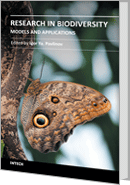
After a bit of a sordid history of review (isn’t it more and more like that these days?), I have the pleasure of announcing that our paper ‘Twenty landmark papers in biodiversity conservation‘ has now been published as an open-access chapter in the new book ‘Research in Biodiversity – Models and Applications‘ (InTech).

Perhaps not the most conventional of venues (at least, not for me), but it is at the very least ‘out there’ now and freely available.

The paper itself was taken, modified, elaborated and over-hauled from text written in this very blog – the ‘Classics‘ section of ConservationBytes.com. Now, if you’re an avid follower of CB, then the chapter won’t probably represent anything terribly new; however, I encourage you to read it anyway given that it is a vetted overview of possibly some of the most important papers written in conservation biology.

If you are new to the field, an active student or merely need a ‘refresher’ regarding the big leaps forward in this discipline, then this chapter is for you.

The paper’s outline is as follows: Read the rest of this entry »


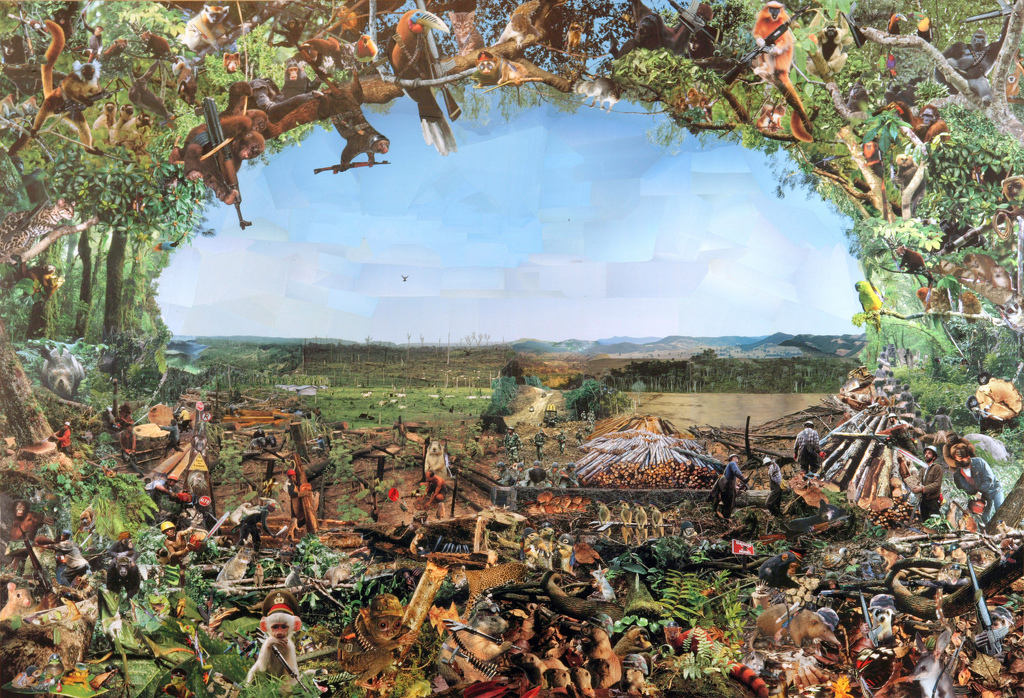
1 million hectares annually – the forest destruction of Indonesia

30 09 2011

© A. Kenyon http://goo.gl/UpG3m

Bill Laurance wrote a compelling and very dour piece in The Conversation this week. He asked for some ‘link love’, so I decided to reproduce the article here for ConservationBytes.com readers. Full credit to Bill and The Conversation, of course.

What comes to mind when you think of Indonesia?

For biologists like myself, Australia’s northern neighbour provokes visions of ancient rainforests being razed by slash-and-burn farmers, and endangered tigers and orangutans fleeing from growling bulldozers.

This reality is true, but there is also hope on the horizon.

Indonesia is a vast, sprawling nation, spanning some 17,000 islands. Among these are Java, Sumatra, half of New Guinea and much of Borneo.

Some of the planet’s most biologically rich and most endangered real estate is found on this archipelago.

Today, Indonesia is losing around 1.1 million hectares of forest annually. That’s an area a third the size of Belgium, bigger than Australia’s Wet Tropics World Heritage Area.

With forest loss now slowing in Brazil, Indonesia has the dubious distinction of being the world’s deforestation “leader”. No nation is destroying its forests faster.

In Sumatra, where I visited recently, the world’s biggest paper-pulp corporations are chopping down hundreds of thousands of hectares of native rainforest to make paper and cardboard.

Some of these corporations also fund aggressive lobbyists, such as World Growth in Washington DC [CJA Bradshaw’s note: see our piece on one particular patron of WG – Alan Oxley], to combat their critics and dissuade major retail chains from dropping their products. Read the rest of this entry »


Rise of the phycologists

22 09 2011

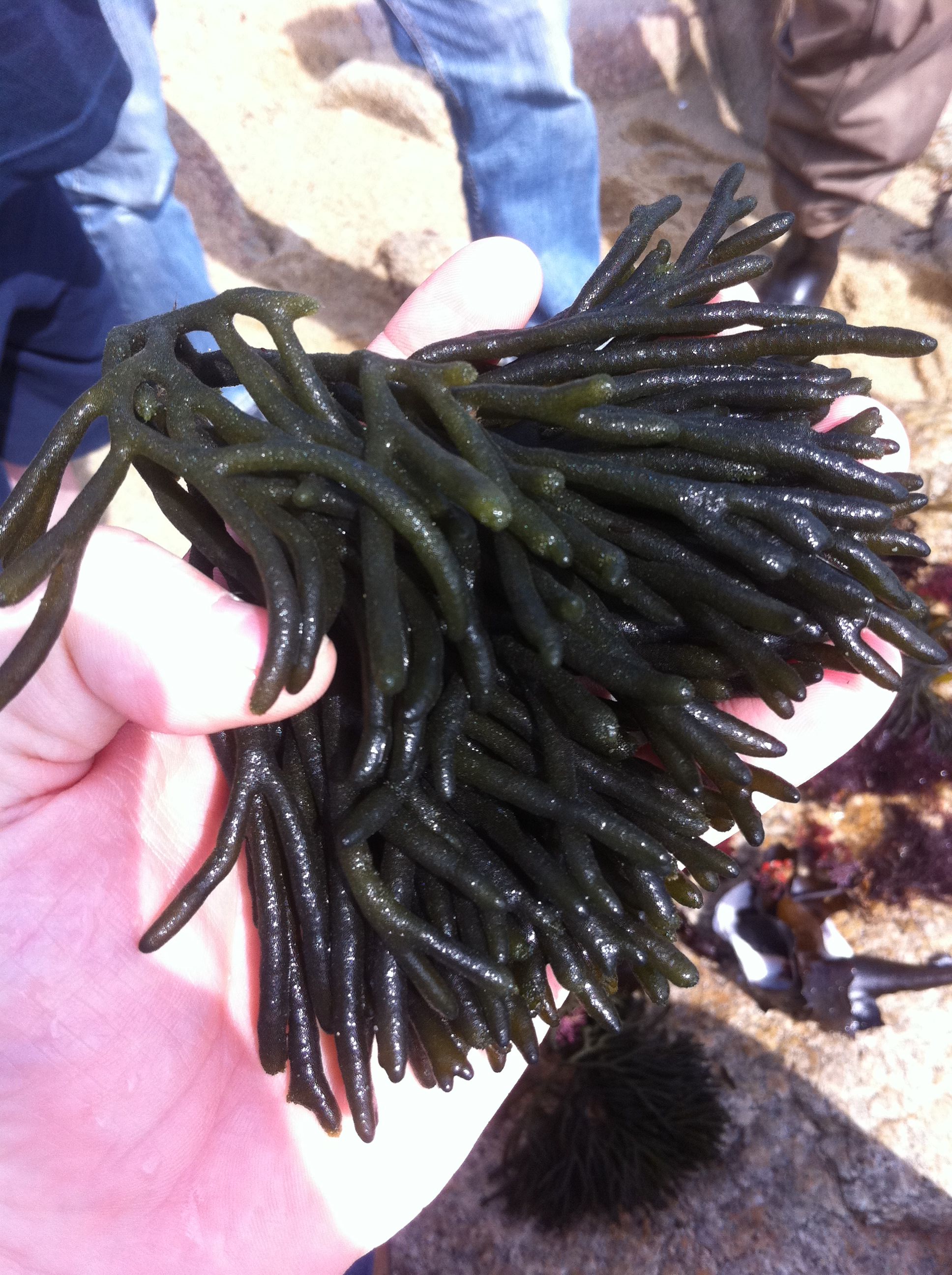
Dead man's fingers (Codium fragile) - © CJA Bradshaw

I’ve had an interesting week. First, it’s been about 6 years since I was last in Japan, and I love coming here; the food is exquisite, the people are fantastic (polite, happy, accommodating), everything works (trains, buses, etc.) and most importantly, it has an almost incredible proportion of its native forests intact.

But it wasn’t for forests that I travelled to Japan (nor the sumo currently showing on the guest-room telly where I’m staying – love the sumo): I was here for a calcareous macroalgae workshop.

What?

First, what are ‘macroalgae’, and why are some ‘calcareous’? And why should anyone in their right mind care?

Good questions. Answers: 1. Seaweeds; 2. Many incorporate calcium carbonate into their structures as added structural support; 3. Read on.

Now, I’m no phycologist (seaweed scientist), but I’m fascinated by this particular taxon. I’ve written a few posts about their vital ecological roles (see here and here), but let me regale you with some other important facts about these amazing species.

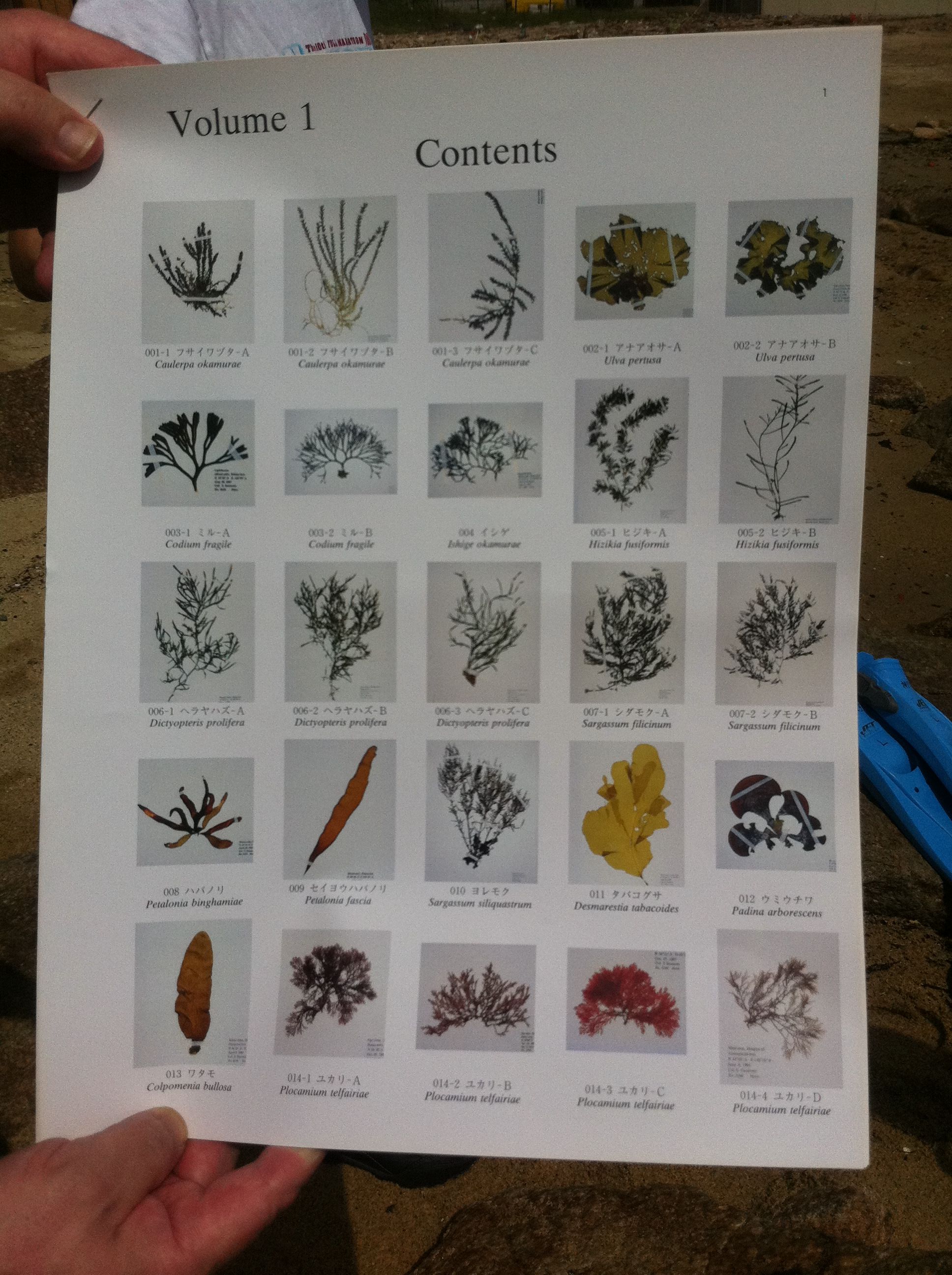
Some Japanese macroalgae - © CJA Bradshaw

There are about 12,000 known species of macroalgae described by phycologists, but as I’ve learnt this week, this is obviously a vast underestimate. For most taxa that people are investigating now using molecular techniques, the genetic diversity is so high and so geographically structured that there are obviously a huge number of ‘cryptic’ species within our current taxonomic divisions. This could mean that we’re out by up to a factor of 2 in the number of species in the world.

Another amazing fact – about 50 % of all known seaweed species are found in just two countries – Japan and Australia (hence the workshop between Japanese and Australian phycologists). Southern Australia in particular is an endemism hotspot.

Ok. Cool. So far so good. But so what? Read the rest of this entry »


No substitute for primary forest

15 09 2011

© Romulo Fotos http://goo.gl/CrAsE

A little over five years ago, a controversial and spectacularly erroneous paper appeared in the tropical ecology journal Biotropica, the flagship journal of the Association for Tropical Biology and Conservation. Now, I’m normally a fan of Biotropica (I have both published there several times and acted as a Subject Editor for several years), but we couldn’t let that paper’s conclusions go unchallenged.

That paper was ‘The future of tropical forest species‘ by Joseph Wright and Helene Muller-Landau, which essentially concluded that the severe deforestation and degradation of tropical forests was not as big a deal as nearly all the rest of the conservation biology community had concluded (remind you of climate change at all?), and that regenerating, degraded and secondary forests would suffice to preserve the enormity and majority of dependent tropical biodiversity.

What rubbish.

Our response, and those of many others (including from Toby Gardner and colleagues and William Laurance), were fast and furious, essentially destroying the argument so utterly that I think most people merely moved on. We know for a fact that tropical biodiversity is waning rapidly, and in many parts of the world, it is absolutely [insert expletive here]. However, the argument has reared its ugly head again and again over the intervening years, so it’s high time we bury this particular nonsense once and for all.

In fact, a few anecdotes are worthy of mention here. Navjot once told me one story about the time when both he and Wright were invited to the same symposium around the time of the initial dust-up in Biotropica. Being Navjot, he tore off strips from Wright in public for his outrageous and unsubstantiated claims – something to which Wright didn’t take too kindly.  On the way home, the two shared the same flight, and apparently Wright refused to acknowledge Navjot’s existence and only glared looks that could kill (hang on – maybe that had something to do with Navjot’s recent and untimely death? Who knows?). Similar public stoushes have been chronicled between Wright and Bill Laurance.

Back to the story. I recall a particular coffee discussion at the National University of Singapore between Navjot Sodhi (may his legacy endure), Barry Brook and me some time later where we planned the idea of a large meta-analysis to compare degraded and ‘primary’ (not overly disturbed) forests. The ideas were fairly fuzzy back then, but Navjot didn’t drop the ball for a moment. He immediately went out and got Tien Ming Lee and his new PhD student, Luke Gibson, to start compiling the necessary studies. It was a thankless job that took several years.

However, the fruits of that labour have now just been published in Nature: ‘Primary forests are irreplaceable for sustaining tropical biodiversity‘, led by Luke and Tien Ming, along with Lian Pin Koh, Barry Brook, Toby Gardner, Jos Barlow, Carlos Peres, me, Bill Laurance, Tom Lovejoy and of course, Navjot Sodhi [side note: Navjot died during the review and didn’t survive to hear the good news that the paper was finally accepted].

Using data from 138 studies from Asia, South America and Africa comprising 2220 pair-wise comparisons of biodiversity ‘values’ between forests that had undergone some sort of disturbance (everything from selective logging through to regenerating pasture) and adjacent primary forests, we can now hammer the final nails into the coffin containing the putrid remains of Wright and Muller-Landau’s assertion – there is no substitute for primary forest. Read the rest of this entry »


Gone with the birds

1 09 2011

ebaumsworld.com

Another great post by Salvador Herrando-Pérez.

Through each new species, evolution assembles a unique combination of genes. Ever since living forms have populated our planet (> 3 billion years), the number of combinations is incalculable. That is why evolution resembles a cocktail shaker. Contemporaneous biogeographers look for order in that shaker to explain the history of life, as much as historians look for monarchs and revolutions in a library to explain the history of humanity.

The ethnic diversity of our suburb, village or city obeys factors of different temporal extent. Recent factors such as wealth, politics (war, segregation), culture (tradition, religion), and technology (airplanes, bridges, tunnels) determine racial migration, mixing and extinction. On the other hand, pre-historical factors express the expansion of the earliest hominids from Africa to the other continents – what makes a bantu ‘bantu’, or an inuit ‘inuit’.

Present ecological conditions and the macro-evolutionary past stock the elements by which biogeography attempts to understand the mechanisms shaping the spatial distribution of species, e.g., why kangaroos are restricted to Oceania, or why you could believe you were in Spain while strolling through a Greek forest. Read the rest of this entry »


Cartoon guide to biodiversity loss XIII

17 08 2011

The latest six cartoons… (see full stock of previous ‘Cartoon guide to biodiversity loss’ compendia here).

Read the rest of this entry »


Life, death and Linneaus

9 07 2011

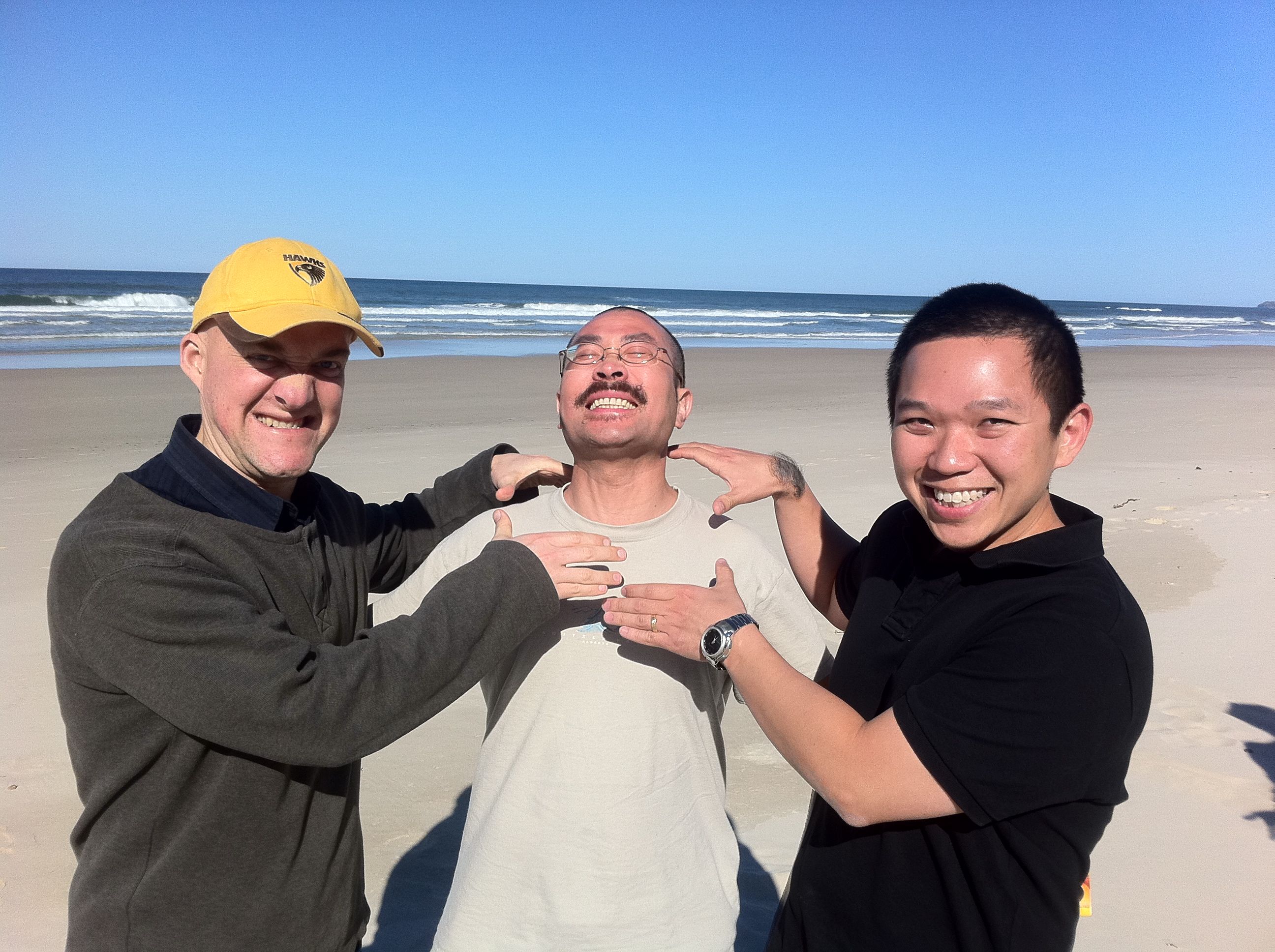
Barry Brook (left) and Lian Pin Koh (right) attacking Fangliang He (centre). © CJA Bradshaw

I’m sitting in the Brisbane airport contemplating how best to describe the last week. If you’ve been following my tweets, you’ll know that I’ve been sequestered in a room with 8 other academics trying to figure out the best ways to estimate the severity of the Anthropocene extinction crisis. Seems like a pretty straight forward task. We know biodiversity in general isn’t doing so well thanks to the 7 billion Homo sapiens on the planet (hence, the Anthropo prefix) – the question though is: how bad?

I blogged back in March that a group of us were awarded a fully funded series of workshops to address that question by the Australian Centre for Ecological Synthesis and Analysis (a Terrestrial Ecosystem Research Network facility based at the University of Queensland), and so I am essentially updating you on the progress of the first workshop.

Before I summarise our achievements (and achieve, we did), I just want to describe the venue. Instead of our standard, boring, windowless room in some non-descript building on campus, ACEAS Director, Associate Professor Alison Specht, had the brilliant idea of putting us out away from it all on a beautiful nature-conservation estate on the north coast of New South Wales.

What a beautiful place – Linneaus Estate is a 111-ha property just a few kilometres north of Lennox Head (about 30 minutes by car south of Byron Bay) whose mission is to provide a sustainable living area (for a very lucky few) while protecting and restoring some pretty amazing coastal habitat along an otherwise well-developed bit of Australian coastline. And yes, it’s named after Carl Linnaeus. Read the rest of this entry »


Taxonomy in the clouds

4 07 2011

Another post (see previous here, here and here) by my aspiring science-communicator PhD student, Salvador Herrando-Pérez.

Taxonomy uses rigorous rules of nomenclature to classify living beings, so every known species has a given ‘name’ and ‘surname’. The revision of certain taxonomic groups (particularly through genetic analyses) is favouring the proliferation of nominally new species, often propelled by virtue of their charisma and conservation status.

In secondary school, most of my classmates associated the subject ‘Biology’ with unpronounceable Latin taxonomic names, with which all known living beings are branded — ‘Canis lupus’ reads the identity card of humanity’s best friend. When the Swedish monk Carl Linnaeus proposed such binomial nomenclature, he could hardly imagine that, two hundred years later, his terminology would underpin national and transnational budgets for species conservation. Taxonomic nomenclature allows the classification of species into clusters of the same kind (e.g., diatoms, amanitas, polychaetes, skinks), and the calculation of an indispensable figure for conservation purposes: how many species are there at a given location, range, country, continent, or the entire planet?

Traditionally, taxonomists described species by examining their (external and internal) morphological features, the widest consensus being that two individuals of different species could not hybridise. However, a practical objection to that thinking was that if, for instance, an ocean separated two leopard populations, ethics should prevent us from bringing them in contact only to check if they produce fertile offspring, hence justifying a common-species status. Genetics currently provides a sort of ‘remote check’.

New species, new names

Over the last three decades, the boom of genetics and the global modernisation of environmental policies have fostered alternative criteria to differentiate species, populations, and even individuals. As a result, experts have created a colourful lexicon to label management or conservation units or new taxonomical categories such as that of a subspecies1, e.g., Canis lupus dingo for the wild Australian dog (dingo). These changes have shaken the foundations of taxonomy because several definitions of species (biological, phylogenetic, evolutionary) are forced to live under the umbrella of a common nomenclature. Read the rest of this entry »


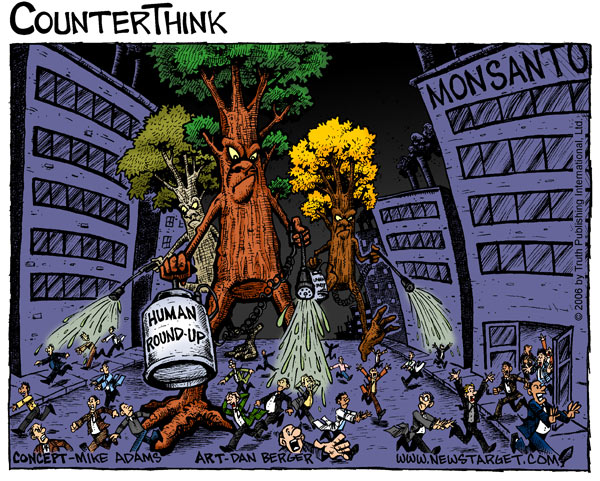
Know thy threat

9 06 2011

Here’s another great guest post by Megan Evans of UQ – her previous post on resolving the environmentalist’s paradox was a real hit, so I hope you enjoy this one too.

The reasons for the decline of Australia’s unique biodiversity are many, and most are well known. Clearing of vegetation for urban and agricultural land uses, introduced species and changed fire patterns are regularly cited in State of the Environment reports, recovery plans and published studies as major threats to biodiversity. But, while these threats are widely acknowledged, little has been done to quantify them in terms of the proportion of species affected, or their spatial extent at a national, state or local scale. To understand why such information on threats may be useful, consider for instance how resources are allocated in public health care1.

Threat knowledge

Conditions such as cancer, heart disease and mental health are regarded as National Health Priority Areas in Australia, and have been given special attention when prioritising funds since the late 1980s. The burden of disease in these priority areas are quantified according to the incidence or prevalence of disease or condition, and its social and economic costs. Estimates of burden of disease and their geographic distribution (often according to local government areas) can assist in communicating broad trends in disease burden, but also in prioritising efforts to achieve the best outcomes for public health. An approach similar to that used in healthcare could help to identify priorities for biodiversity conservation – using information on the species which are impacted by key threats, the spatial distributions of species and threats, and the costs of implementing specific management actions to address these threats. Read the rest of this entry »


Cartoon guide to biodiversity loss XII

30 05 2011

The latest six cartoons… (see full stock of previous ‘Cartoon guide to biodiversity loss’ compendia here).

Read the rest of this entry »



Over-estimating extinction rates

19 05 2011

I meant to get this out yesterday, but was too hamstrung with other commitments. Now the media circus has beat me to the punch. Despite the lateness (in news-time) of my post, my familiarity with the analysis and the people involved gives me a unique insight, I believe.

So a couple of months ago, Fangliang He and I were talking about some new analysis he was working on where he was testing the assumption that back-casted species-area relationships (SAR) gave reasonable estimates of inferred extinction rates. Well, that paper has just been published in today’s issue of Nature  by Fangliang He and Stephen Hubbell entitled: Species–area relationships always overestimate extinction rates from habitat loss (see also the News & Views piece by Carsten Rahbek and Rob Colwell).

The paper has already stirred up something of a controversy before the ink has barely had time to dry. Predictably, noted conservation biologists like Stuart Pimm and Michael Rosenzweig have already jumped down Fangliang’s throat.

Extinction rates of modern biota in the current biodiversity crisis (Ehrlich & Pringle 2008) are wildly imprecise. Indeed, it has been proposed that extinction rates exceed the deep-time average background rate by 100- to 10000-fold (Lawton & May 2008; May et al. 1995; Pimm & Raven 2000), and no rigorously quantification of these rates globally has ever been accomplished (although there are several taxon- and region-specific estimates of localised extinction rates (Brook et al. 2003; Regan et al. 2001; Hambler et al. 2011; Shaw 2005).

Much of the information used to infer past extinction rate estimates is based on  the species-area relationship (e.g., Brook et al. 2003); this method estimates extinction rates by reversing the species-area accumulation curve, extrapolating backward to smaller areas to calculate expected species loss. The concept is relatively simple, even though the underlying mathematics might not be. Read the rest of this entry »


The evil sextet

18 05 2011

This post doubles as a Conservation Classic and a new take on an old concept. It’s new in the sense that it updates what we believe is an advance on a major milestone in conservation biology, even though some of the add-on concepts themselves have been around for a while.

First, the classic.

The ‘evil quartet’, or ‘four horsemen of the ecological apocalypse’, was probably the first treatment of extinction dynamics as a biological discipline in its own right. Jarod Diamond (1984) took a sweeping historical and contemporary view of extinction, then simplified the problem to four principal mechanisms:

  1. overhunting (or overexploitation),
  2. introduced species,
  3. habitat destruction and
  4. chains of linked extinctions (trophic cascades, or co-extinctions).

Far from a mere review or list of unrelated mechanisms, Diamond’s evil quartet crystallized conservation biologists’ thinking about key mechanisms and, more importantly, directed attention towards those factors likely to drive extinctions in the future. The unique combination of prehistorical through to modern examples gave conservation biologists a holistic view of extinction dynamics and helped spawn many of the papers described hereafter. Read the rest of this entry »


生态学 = ‘Ecology’ in China

13 05 2011

I’m just heading home after a very inspiring workshop organised by Fangliang He at Sun Yat-sen University in Guangzhou, China (I’m writing this from the Qantas Club in the Hong Kong airport).

Before I proceed to regale you with the salient details of the ‘International Symposium for Biodiversity and Theoretical Ecology‘, I am compelled to state publicly that I offer my sincerest condolences to Fangliang and his family; unfortunately Fangliang’s brother passed away while we were at the workshop and so Fangliang wasn’t able to spend much time reaping the fruits of his organisational labour. If you know Fangliang, please send him a supporting email.

That sad note aside, I am delighted to say that the workshop was compelling, challenging and also rather fortuitous. I was one of many overseas invitees, and I must say that I was at times overwhelmed by the size of the brains they managed to pack into the auditorium. Many colleagues I didn’t know attended, and I hope that many will become collaborators. The international invitees were: Read the rest of this entry »



Silence of the birds

2 05 2011

Yet another contribution from my PhD student, Salvador Herrando-Pérez (see his previous ConservationBytes.com posts on micro-evolution and pollination).

In the 1960s, Rachel Carson preoccupied (to put it mildly) the political and economic powers of the United States with the publication of her book, Silent Spring, an overwhelming essay highlighting the environmental impacts caused by the pesticide industry. Half a century later, the metaphor of that book – a spring devoid of bird song – stands in force as farmland birds keep declining worldwide at the mercy of agricultural practices insensitive to the ecosystem services biodiversity procures. The problem has been best studied in Europe where non-government organisations, such as the British Trust for Ornithology or the Sociedad Española de Ornitología, have been monitoring bird populations for decades, and the European Union has sumptuously financed research and management actions.

Sparrows are the commonest among common birds. Worldwide we see them wherever humans live, travel and take leisure, from mountains and beaches to stadiums and underground trains. These feathery dwarfs snick even through security checks and sliding doors at airports and shopping malls, and it is no one’s surprise to be overflown by one of them carrying a chip from the leftovers of a nearby food court. However, the deterioration of their populations has sown alarm among European politicians, society, and the scientific community. Read the rest of this entry »



Resolving the Environmentalist’s Paradox

7 04 2011

Here’s an extremely thought-provoking guest post by Megan Evans, Research Assistant at the University of Queensland in Kerrie Wilson‘s lab. Megan did her Honours degree with Hugh Possingham and Kerrie, and has already published heaps from that and other work. I met Megan first in 2009 and have been extremely impressed with her insights, broad range of interests and knowledge, and her finely honed grasp of social media in science. Smarter than your average PhD student, without a doubt (and she has even done one yet). Take it away, Megan.

© T. Toles

Resolving the ‘Environmentalist’s Paradox’, and the role of ecologists in advancing economic thinking

Aldo Leopold famously described the curse of an ecological education as “to be the doctor who sees the marks of death in a community that believes itself well and does not want to be told otherwise”. Ecologists do have a tendency for making dire warnings for the future, but for anyone concerned about the myriad of problems currently facing the Earth – climate change, an ongoing wave of species extinctions and impending peak oil, phosphate, water , (everything?) crises – the continued ignorance or ridicule of such warnings can be a frustrating experience. Environmental degradation and ecological overshoot isn’t just about losing cute plants and animals, given the widespread acceptance that long-term human well-being ultimately rests on the ability for the Earth to supply us with ecosystem services.

In light of this doom and gloom, things were shaken up a bit late last year when an article1 published in Bioscience pointed out that in spite of declines in the majority of ecosystem services considered essential to human well-being by The Millenium Ecosystem Assessment (MA), aggregate human well-being (as measured by the Human Development Index) has risen continuously over the last 50 years. Ciara Raudsepp-Hearne and the co-authors of the study suggested that these conflicting trends presented an ‘environmentalist’s paradox’ of sorts – do we really depend on nature to the extent that ecologists have led everyone to believe? Read the rest of this entry »


Buzzing to the plate

4 04 2011

Here’s another contribution from my PhD student, Salvador Herrando-Pérez (see his previous ConservationBytes.com post on micro-evolution here).

Once upon a time at the produce section of a supermarket, a little girl confided to me that she had no idea that little plants could grow on carrots. This sympathetic scene portrays the split between the food we consume and the environments that produce it.

© Cordell

Mediterraneans love their cuisine. In fact, we are fairly proud of all our food. Yet how many of us associate a juicy tomato in our multicoloured salads, the smoothness of a escalibada (grilled veggies) bathed in virgin olive oil, the afternoon’s delicious expresso among friends and colleagues, or the last Christmas’ crunchy nougat shared with our beloved, with an insect that one given day pollinates a flower whose fertilized ovary will reach our dining room in the form of a sweet, infusion, fruit, sauce, soup or veggie.

Biodiversity fuels this relationship between insects and food. A study led by Alexandra Klein on highland coffee (Coffea arabica) from Sulawesi (Indonesia) demonstrates this concept well1. The German team showed that the amount of coffee beans produced in 24 agro-forestry sites increased with the number of bee species visiting the flowers (Fig. 1). Read the rest of this entry »


A very pissed-off New Guinean versus the Destroyer of Forests

31 03 2011

I really don’t know where this came from (weird e-mail trail), but it was too good not to share.

For those of you who follow ConservationBytes.com, you might remember a fairly recent post where a group of leading conservation biologists exposed one of the most dangerous men in the world – Alan Oxley, the (very embarrassing to admit) Australian destroyer of tropical biodiversity and future welfare of hundreds of millions of people.

It seems he and his commercial interests (and my, do those fellas lay it on thick) have turned their attention to destroying the last tracts of intact South-East Asian forests (and associated biodiversity) in Papua New Guinea. Kiss some of the most endemic, biodiverse and biowealthy areas on the planet good-bye.

So it was interesting to receive this email that had been sent to Oxley’s front-company, International Trade Strategies (ITS) Global, by one very pissed off Papua New Guinean. I have no idea who ‘Bush Kanaka Mangi’ is, but he sounds the real deal and I wouldn’t want to be Oxley if he ever came across him. I cite verbatim1:

Mr Alan Oxley,

HONESTLY : I am sick of getting this bloody rubbish, bullshit from you and your company ITS Global about palm oil is good for PNG, logging is good for PNG. Who the hell do you think you are ????, you seem in all your articles and consultancy reports as the expert about our country and more knowledgeable about the Melanesian society very well. My assessment of all your electronic newsletter which you circulate widely, your reflections and recommendations all are in no way closer or nearer to the way we Papua New Guineans think and want to do things and develop our nation, all of what you say are totally and purely and absolutely RUBBISH and yet you claim to know everything and know the problems of PNG and our people and on ways to solve our problems and continue your bullshit campaign in support of R&H and all its doing here destroying our forests, our society, manipulating our systems and creating confusion and hell is loose here. Read the rest of this entry »



Government pulls plug on Asian honeybee eradication

3 03 2011

Here’s another one from the bee man, Tobias Smith (PhD candidate at the University of Queensland). Tobias recently blogged about bee basics here on ConservationBytes.com (something I highly recommend for anyone interested on brushing up on bee facts and dispelling a few myths), so I asked him to follow up with this very important piece on the future of pollination in Australia. It concerns a nasty little invader recently dubbed the “flying cane toad” (not my analogy).

http://www.flickr.com/photos/angela-and-andrew/1196369580/in/faves-lornet/

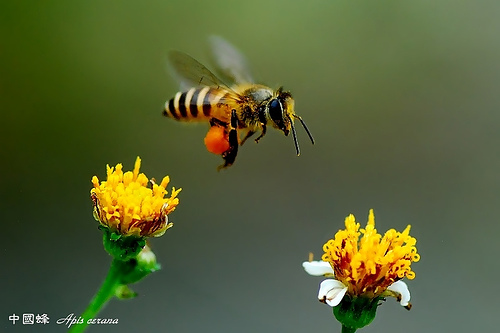
© 中國蜂

Over the last few weeks there has been much media attention given to the Asian honeybee (Apis cerana) incursion in far north Queensland. The Asian honeybee was first detected near Cairns in May 2007. Since then an effort to eradicate the bee has been made. This peaked during 2010, when over 40 bee eradication personnel were employed to hunt and destroy in areas around Cairns, the Atherton Tablelands, and other nearby locations.

In late January this year, the committee established to manage the eradication program (governments and industry), decided to pull the plug on eradication efforts (on money to pay for efforts that is). They decided it was no longer possible to achieve eradication (a majority decision, not a unanimous decision). The position to stop resources for eradication is not supported by industry, or ecological commentators. Arguments have been made that this is the only window of opportunity for eradication (for ever!), and that more resources need to be put towards it now, while there is still a chance of success.

A few points to be made about the Asian honeybee in Australia: Read the rest of this entry »


Classics: Tragedy of the Commons

28 02 2011

Although not a conservation biology paper per se, Hardin’s classic essay (Hardin, 1968) changed the way we think about managing natural resources that lack definitive ownership.

The thesis of the “tragedy of the commons” is that individuals are inherently selfish and usually place their own interests first in using commonly owned resources, thereby resulting in their depletion. Hardin used a hypothetical and simplified situation based on medieval land tenure in Europe (herders sharing a common parcel of land) on which each herder was entitled to graze his cattle. Each herder maximized his gains by putting additional cattle onto the land, even if the carrying capacity of the common was exceeded and overgrazing ensued. The herder, by making an “individually rational decision,” received all the benefits from his cattle, but could in the process deplete the common resource for the entire group. If all herders make such selfish decisions then the common will be depleted, jeopardizing the livelihoods of all.

Read the rest of this entry »