Disaster coming to a coastline near you

24 02 2011

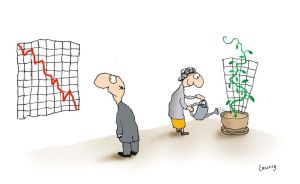
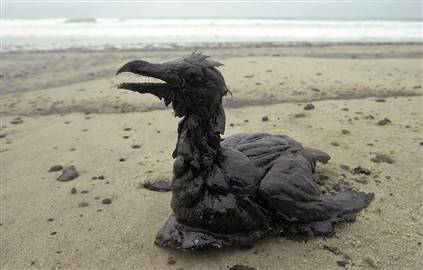
Many of you already know that against all better judgement, the spectacularly audacious Australian Commonwealth government has granted BP offshore drilling rights in our southern waters.

You’d think that with all the evidence that BP is a company that cannot be trusted with this particular form of resource exploitation, we’d be a little bit more discerning when granting exploration permits to them. Apparently not.

In protest and within my rights as an Australian citizen, I wrote to the Minister responsible for the decision, MP Martin Ferguson (Federal Minister for Resources and Energy) to register my protest:

Dear Minister Ferguson,

As an ecologist, academic and citizen, I find it rather astounding that Australia has permitted the deep-sea exploration of oil by BP in our own back garden. The unreasonable environmental risk aside, it simply equates to poor economics – the very real probability of a disaster on the same scale (or larger) than the Gulf of Mexico’s fiasco last year will effectively destroy the commercial fishing and aquaculture industry of our southern coastline overnight. The loss of tourism dollars could arguably exceed even that.

This is most definitely not in Australia’s best interest, and will represent yet another blight on our already poor environmental record (see http://wp.me/phhT4-1cf and http://wp.me/phhT4-Zt). I urge you to reconsider your permission and revoke the licence to drill in our waters. It is a mistake you and your government will regret for decades, and will make the recent flooding disaster in Queensland appear mild in comparison.

Sincerely,
Professor Corey J. A. Bradshaw

I certainly wasn’t expecting the Minister to say suddenly “Oh my. You are right, Prof. Bradshaw. It is a bad decision. I’ll revoke that permission forthwith”, but I was expecting a little bit more than the jumbled form letter I received in reply: Read the rest of this entry »


More to bees than queens and honey

11 02 2011

Another great guest post, this time from Tobias Smith, a PhD candidate at the University of Queensland’s School of Biological Sciences. Tobias is investigating bee community shifts across a fragmented tropical landscape in far north Queensland, aiming to identify landscape variation in community composition of two important rainforest pollinator groups, bees and flies. I met Tobias a few years ago as part of the Thiaki rainforest reforestation project for which he is doing baseline surveys of bees and flies.

I asked him a while ago to write a ‘primer’ on bees for ConservationBytes.com since so many people really don’t much about the taxon (I include myself in that group). He’s done a brilliant job – everything you wanted to know about bees but were afraid to ask (in 1000 words).

The frequently reported, gloomy news about bee declines is hard not to notice. Bees are in dire trouble around the world, and this trend has worrying implications for both ecosystems and human food production. As a result, popular media often reports on the plight of bees, regularly reciting the figure of one in three mouthfuls of food being dependent on the work of bees. While bees certainly are in major trouble, it can be easy to misinterpret statements often made in these kind of articles without a little general bee knowledge. So here are a few bee facts that, at the very least, we ecological representatives should be familiar with. This information should help give some perspective when interpreting bee news, and when engaging in exciting bee conversations at the shops.

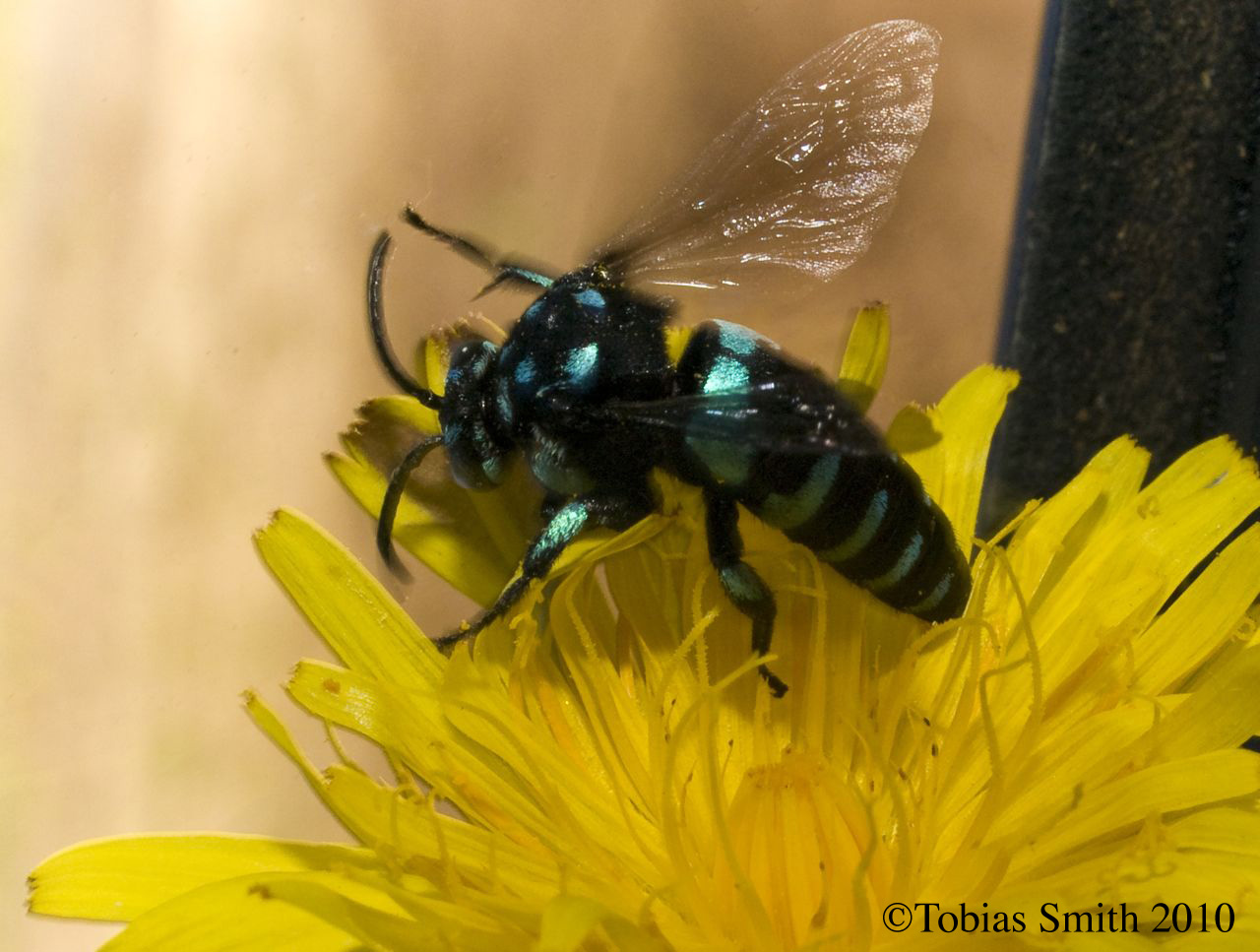
There are approximately 20,000 bees species globally. Yet when most people think of bees they think of a single species, Apis mellifera, the western honey bee (introduced in most of its range, and also referred to as the European honeybee). This bee is certainly an important bee. It is managed as the usual pollinator of crops requiring biotic pollination, and it makes the honey we usually eat here in the developed world. Some say our domestication of this bee has been an important contributing factor in achieving the level of development that we humans have. There are however, about 19,999 other bee species out there, and most of them are very different to the western honeybee. Read the rest of this entry »


Colour-blind sharks

3 02 2011

A few weeks ago I was interviewed on Channel 10 (Adelaide) about some new research coming out of the University of Western Australia regarding shark colour vision.

I’ve received permission from Channel 1o to reproduce the news snippet here. The first bloke interviewed is Associate Professor Nathan Hart, the study‘s lead author. I’m the bald one appearing in the middle at at the end.

It certainly was an interesting story, although two claims were made that probably needed better contextualisation.

First, the authors claim that because of this taxon’s colour blindness, they probably notice pigment transitions more when using visual cues to identify potential prey. What this means is that bright colours set against duller backgrounds might provide that contrast enough to attract sharks. The upshot from the interview is that brightly coloured and patterned togs (bathers) might make sharks think you are potentially a tasty treat. Read the rest of this entry »


Condoms instead of nature reserves

24 01 2011

Rob Dietz over at the Centre for the Advancement of the Steady State Economy thought ConservationBytes.com readers would be interested in the following post by Tim Murray (the original post was entitled What if we stopped fighting for preservation and fought economic growth instead?). There are some interesting ideas here, and I concur that because we have failed to curtail extinctions, and there’s really no evidence that conservation biology alone will be enough to save what remains (despite 50 + years of development), big ideas like these are needed. I’d be interested to read your comments.

Each time environmentalists rally to defend an endangered habitat, and finally win the battle to designate it as a park “forever,” as Nature Conservancy puts it, the economic growth machine turns to surrounding lands and exploits them ever more intensively, causing more species loss than ever before, putting even more lands under threat. For each acre of land that comes under protection, two acres are developed, and 40% of all species lie outside of parks. Nature Conservancy Canada may indeed have “saved” – at least for now – two million acres [my addendum: that’s 809371 hectares], but many more millions have been ruined. And the ruin continues, until, once more, on a dozen other fronts, development comes knocking at the door of a forest, or a marsh or a valley that many hold sacred. Once again, environmentalists, fresh from an earlier conflict, drop everything to rally its defence, and once again, if they are lucky, yet another section of land is declared off-limits to logging, mining and exploration. They are like a fire brigade that never rests, running about, exhausted, trying to extinguish one brush fire after another, year after year, decade after decade, winning battles but losing the war.

Despite occasional setbacks, the growth machine continues more furiously, and finally, even lands which had been set aside “forever” come under pressure. As development gets closer, the protected land becomes more valuable, and more costly to protect. Then government, under the duress of energy and resource shortages and the dire need for royalties and revenue, caves in to allow industry a foothold, then a chunk, then another. Yosemite Park, Hamber Provincial Park, Steve Irwin Park [my addendum – even the mention of this man is an insult to biodiversity conservation]… the list goes on. There is no durable sanctuary from economic growth. Any park that is made by legislation can be unmade by legislation. Governments change and so do circumstances. But growth continues and natural capital [my addendum: see my post on this term and others] shrinks. And things are not even desperate yet. Read the rest of this entry »


Biodiversity begins at home

20 01 2011

A few months ago I was involved in a panel discussion entitled ‘Biodiversity begins at home’ held at the Royal Institution of Australia in Adelaide and sponsored by the Don Dunstan Foundation.

The main thrust of the evening was to have both academic (me & Andy Lowe) and on-the-ground, local conservationists (Sarah Lance, Craig Gillespie and Matt Turner) talk about what people can do to stem the tide of biodiversity loss. The video is now available, so I thought I’d reproduce it here. We talked about a lot of issues (from global to local scale), so if you have a spare hour, you might get something out of this. I did, but it certainly wasn’t long enough to discuss such big issues.

Warning – this was supposed to be more of a discussion and less of a talkfest; unfortunately, many of the panel members seemed to forget this and instead dominated the session. We really needed 4 hours to do this properly (but then, who would have watched the video?).

Read the rest of this entry »


History and future (of Australian ecology and society)

11 12 2010

I’ve just returned from a week-long conference in Canberra where the Ecological Society of Australia (of which I am a relatively new member) has just completed its impressive 50th anniversary conference. It was a long, but good week.

It’s almost a bit embarrassing that I’ve never attended an ESA1 conference before, but I think I waited for the right one. However, the main reason I attended was that I was fortunate to have received the ESA’s 3rd Australian Ecology Research Award (AERA), and the kick-back was a fully funded trip. My only reciprocation was to give a 40-minute plenary lecture – a small price to pay.

I entitled my talk ‘Heads in the desert sand: why Australians should wake up to the biodiversity crisis’, and I received a lot of good feedback. I talked about the global and Australian trends of biodiversity loss and associated ecosystem services, focussing the middle section on some of our work on feral animal ecology (see example). I then gave my views on the seriousness of our current situation and why some of the fastest losses of sensitive ecosystem services are happening right here, right now. I finished off with a section on how I think Australian ecologists could get more relevant and active in terms of research uptake by policy makers. I hope that the talk will be podcastable soon, so stay tuned.

But that was just ‘my’ bit. This post is more about a quick summary of the highlights and my overall impressions.

Read the rest of this entry »


They always whinge about the maths

18 11 2010

If you don’t know what a differential equation is, you are not a scientist” – Hugh Possingham 2009

At the end of 2009 I highlighted a new book edited by good mates Navjot Sodhi and Paul Ehrlich, Conservation Biology for All, in which Barry Brook and I had written a chapter. Now, despite my vested interest, I thought (and still think) that it was one of the best books on conservation biology yet published, and the subsequent reviews appear to be validating my subjective opinion.

I’ve given snippets of the book’s contents, from Paul Ehrlich‘s editorial on the human population’s rising negative influences on biodiversity, to a more detailed synopsis of our chapter, The Conservation Biologist’s Toolbox, and I’ve reproduced a review printed in Trends in Ecology and Evolution.

The latest review by Nicole Gross-Camp of the University of East Anglia published in Ecology is no less flattering – in fact, it is the most flattering to date. So this is by no means a whinge about a whinge; rather, consider it an academic lament followed by a query. First, the review:

Reaching higher in conservation

If a book could receive a standing ovation—this one is a candidate. Sodhi and Ehrlich have created a comprehensive introduction to conservation biology that is accessible intellectually, and financially, to a broad audience—indeed it is Conservation biology for all. The book is divided into 16 chapters that can stand alone and are complementary when read in sequence. The authors make excellent use of cross citations of chapters, a useful and often overlooked feature in texts of this nature. In the introductory chapter, Sodhi and Ehrlich eloquently summarize the gravity of the conservation crisis and still retain an optimistic outlook that encourages the reader to continue. I particularly found their recognition of population growth, consumption, and ethics in the conservation arena refreshing and a step toward what will likely become the next major issues of discussion and research in the conservation field. Read the rest of this entry »


Global erosion of ecosystem services

14 09 2010

A few months ago I was asked to give a lecture about erosion of ecosystem services to students in the University of Adelaide‘s Issues in Sustainable Environments unit. I gave that lecture last week and just uploaded a slidecast of the presentation (with audio) today.

I’ve reproduced the lecture here for your viewing pleasure. I hope you find the 45-minute presentation useful. Note that the first few minutes cover me referring to the Biodiversity film short that I posted not too long ago.

CJA Bradshaw


Biodiversity: from conservation science to action

11 09 2010

© tidechaser.blogspot.com

About 3 weeks ago I blogged about Guillaume Chapron‘s vision to notch up conservation implementation around the globe. After that little piece Guillaume invited me and a few others (including one of Australia’s own conservation gurus, Hugh Possingham) to co-author a piece on the new Nature Network‘s ‘Soapbox Science‘ blog. The Soapbox Science blog is:

“… a new group blog, covering the whole of science. Over the coming months, we’ll be inviting researchers from all over the world to write one-off posts. The subjects may be controversial, opinionated, speculative, or just plain interesting, and may be written by any scientist with something to say.”

We managed to grab the first post in this endeavour, so I reproduce it here for ConservationBytes.com readers. Enjoy!

Ecosystem degradation and species extinction rates are steadily accelerating, mainly as a result of unbounded human population growth, extravagant consumption patterns and associated land and sea degradation. Researchers are pushing science forward in an attempt to reverse the biodiversity ‘crisis’. In their papers they systematically stress how their results can serve to enhance conservation management or implement new corrective actions to reduce biodiversity loss. Still, they are becoming increasingly frustrated that their published research is having little, if any impact in halting the ongoing sixth mass extinction. Everything remains purely theoretical and is not leading to direct action. Read the rest of this entry »


The conservation biologist’s toolbox

31 08 2010

Quite some time ago I blogged about a ‘new’ book published by Oxford University Press and edited by Navjot Sodhi and Paul Ehrlich called Conservation Biology for All in which Barry Brook and I wrote a chapter entitled The conservation biologist’s toolbox – principles for the design and analysis of conservation studies.

More recently, I attended the 2010 International Meeting of the Association for Tropical Biology and Conservation (ATBC) in Bali where I gave a 30-minute talk about the chapter, and I was overwhelmed with positive responses from the audience. The only problem was that 30 minutes wasn’t even remotely long enough to talk about all the topics we covered in the chapter, and I had to skip over a lot of material.

So…, I’ve blogged about the book, and now I thought I’d blog about the chapter.

The topics we cover are varied, but we really only deal with the ‘biological’ part of conservation biology, even though the field incorporates many other disciplines. Indeed, we write:

“Conservation biology” is an integrative branch of biological science in its own right; yet, it borrows from most disciplines in ecology and Earth systems science; it also embraces genetics, dabbles in physiology and links to veterinary science and human medicine. It is also a mathematical science because nearly all measures are quantified and must be analyzed mathematically to tease out pattern from chaos; probability theory is one of the dominant mathematical disciplines conservation biologists regularly use. As rapid human-induced global climate change becomes one of the principal concerns for all biologists charged with securing and restoring biodiversity, climatology is now playing a greater role. Conservation biology is also a social science, touching on everything from anthropology, psychology, sociology, environmental policy, geography, political science, and resource management. Because conservation biology deals primarily with conserving life in the face of anthropogenically induced changes to the biosphere, it also contains an element of economic decision making.”

And we didn’t really cover any issues in the discipline of conservation planning (that is a big topic indeed and a good starting point for this can be found by perusing The Ecology Centre‘s website). So what did we cover? The following main headings give the general flavour: Read the rest of this entry »


Webinar: Modelling water and life

27 08 2010

Another quick one today just to show the webinar of my recent 10-minute ‘Four in 40’ talk sponsored by The Environment Institute and the Department for Water. This seminar series was entitled ‘Modelling as a Tool for Decision Support’ held at the Auditorium, Royal Institution Australia (RiAus).

“Four in 40″ is a collaboration between The University of Adelaide and the Department for Water, where 4 speakers each speak for 10 minutes on their research and its implications for policy. The purpose is to build understanding of how best to work with each other, build new business for both organisations and raise awareness of activity being undertaken in water/natural resource management policy and research.

CJA Bradshaw


Simple educational tool to explain biodiversity

26 08 2010

I just came across this little educational video explaining what biodiversity is, what it does, and what we’re doing to it. If you’re looking to explain biodiversity and its importance to someone, this is a good place to start. Not a bad tool for school children either.


CJA Bradshaw


100 actions to slow biodiversity loss

19 08 2010

I received an email a few days ago from Guillaume Chapron of the Swedish University of Agricultural Sciences (Sveriges lantbruksuniversitet) asking me to promote his ‘Biodiversity 100‘ campaign on ConservationBytes.com. I think it’s an interesting initiative, and so I’ll gladly spread the word.

Teaming up with George Monbiot of The Guardian, the Biodiversity 100 campaign seeks to encourage scientists and others to compile a list of 100 tasks that G20 governments should undertake to prove their commitment to tackling the biodiversity crisis.

Dr. Chapron writes: Read the rest of this entry »


Unbounded economic growth destroying biodiversity

16 08 2010

…we can’t have more of everything instantaneously

…increasing takeover of the ecosystem is the necessary consequence of the physical growth of the macroeconomy

…consider telling the economist to go to hell

Herman Daly

© M. Leunig

Last month I had the privilege of listening to Rob Dietz of the Centre for Advancement of the Steady State Economy (CASSE) when attending the 2010 International Congress for Conservation Biology. He introduced the CASSE and their mandate – to promote stable or mildly fluctuating levels in population and consumption of energy and materials. This is the steady-state economy.

I’ve hinted before that our essentially linear economy (natural resource exploitation -> transport -> manufacturer -> redistribution -> sale -> consumption/use -> disposal (discussed in a very easy-to-understand way in the Story of Stuff) is not sustainable in the long term because of the finite resource base of the planet (think trees, coal, oil, arable land). My colleagues and I have even shown analyses based on hard data demonstrating that total wealth is the ultimate driver of environmental degradation at the country scale.

So, it is my opinion (and a growing number of others‘) that we need a new way of measuring economic prosperity, or the world will enter a state of permanent financial crisis. The mantra of constant economic growth is simply unrealistic as our human populations continue to expand. This is a very simplistic statement and on the surface an apparently impossible goal; however, people who put together the CASSE believe it is achievable.

It is for this reason that I have been communicating with Rob Dietz and others at CASSE about reposting some of their excellent essays on ConservationBytes.com. Please feel free to comment here on the subject matter because the CASSE people will be monitoring. I hope we can expand the readership and support base, and eventually start to convince politicians that growth will eventually kill us and a good slice of the planet’s biodiversity.

So with that, here’s the first repost by Professor Herman Daly entitled “Opportunity Cost of Growth“: Read the rest of this entry »



Marine protected areas: do they work?

13 08 2010

One measure that often meets great resistance from fishermen, but is beloved by conservationists, is the establishment of marine protected or ‘no take’ areas.” Stephen J. Hall (1998)

I’m going to qualify this particular post with a few disclaimers; first, I am not involved in the planning of any marine protected areas (henceforth referred to as ‘marine parks’) in Australia or elsewhere; and second, despite blogging on the issue, I have never published in the discipline of protected area design (i.e, ‘conservation planning’ is not my area of expertise).

That said, it seems to becoming more imperative that I enter the fray and assess not only how marine parks should be designed, but how effective they really are (or can be). I’ve been asked by several conservation NGOs to provide some insight into this, so I thought I should ‘think aloud’ and blog a little mini-review about marine park effectiveness.

Clearly there is a trend to establish more marine parks around the world, and this is mainly because marine conservation lags so far behind terrestrial conservation. Indeed, Spalding et al. (2008) showed that only 4.1 % of continental shelf areas are incorporated within marine parks, and ~ 50 % of all marine ecoregions have less than 1 % marine park coverage across the shelf. Furthermore, marine protection is greatest in the tropical realms, while temperate realms are still poorly represented.

The question of whether marine parks ‘work’ is, however, more complicated than it might first appear. When one asks this question, it is essential to define how the criteria for success are to be measured. Whether it’s biodiversity protection, fisheries production, recreational revenue, community acceptance/involvement or some combination of the above, your conclusion is likely to vary from place to place.

Other complications are, of course, that if you cannot ensure a marine park is adequately enforced (i.e., people don’t respect the rules) or if you don’t actually place the park anywhere near things that need protecting, there will be no real net benefit (for any of the above-mentioned interest groups). Furthermore, most marine parks these days have many different types of uses allowed in different zones (e.g., no fishing, some fishing, recreational diving only, no boat transport, some shipping, etc., etc., etc.), so it gets difficult to test for specific effects (it’s a bit like a cap-and-trade legislation for carbon – too many rules and often no real net reduction in carbon emissions – but that’s another story).

All these conditions aside, I think it’s a good idea to present what the real experts have been telling us about marine park effectiveness from a biodiversity and fishing perspective over the last decade or so. I’ll summarise some of the major papers here and give an overall assessment at the end. I do not contend that this list is even remotely comprehensive, but it does give a good cross-section of the available evidence. Read the rest of this entry »


Conservation quotes: Attenborough to Irwin

6 08 2010

© smh.com.au

Over the years I’ve collected various conservation biology-related quotes that have caught my attention, for whatever reason. I thought that it would make an interesting blog post (although I agree that quotes are a very weak form of wit). Regardless of their import, I hope you enjoy them and perhaps at least find them interesting, if not wise.

It is that range of biodiversity that we must care for – the whole thing – rather than just one or two stars.

David Attenborough, BBC Interview

It’s a moral question about whether we have the right to exterminate species.

David Attenborough, BBC Interview

The only way to save a rhinoceros is to save the environment in which it lives, because there’s a mutual dependency between it and millions of other species of both animals and plants.

David Attenborough, BBC Interview

The ‘control of nature’ is a phrase conceived in arrogance, born of the Neanderthal age of biology and philosophy, when it was supposed that nature exists for the convenience of man.

Rachel Carson, Silent Spring

The more you know about a species, the more you understand about how better to help protect them.

Alan Clark

As we race toward the future, we must never forget the fundamental reality of our situation: we are flying blind.

Theo Colborn, Dianne Dumanoski & John Peterson Myers, Our Stolen Future

Just imagine the banner headlines if a marine biologist were to discover a species of dolphin that wove large, intricately meshed fishing nets, twenty dolphin-lengths in diameter! Yet we take a spider web for granted, as a nuisance in the house rather than as one of the wonders of the world. And think of the furore if Jane Goodall returned from Gombe stream with photographs of wild chimpanzees building their own houses, well roofed and insulated, of painstakingly selected stones neatly bonded and mortared! Yet caddis larvae, who do precisely that, command only passing interest.

Richard Dawkins, The Selfish Gene

Read the rest of this entry »


Tropical biology and conservation overview

28 07 2010

Last week I attended the 2010 International Meeting of the Association for Tropical Biology and Conservation (ATBC) in Sanur, Bali (Indonesia). I only managed one post on the real-world relevance of conservation research (that attracted quite a lot of comment) while there, but I did promise to give a conference overview as I did for the International Congress for Conservation Biology earlier this month. So here goes.

This was my first ATBC meeting despite having co-written ‘the book’ on tropical conservation biology (well, one of very, very many). I no longer live in the tropics but am still managing to keep my hand in many different aspects of tropical research. After all, tropical regions represent ground zero for conservation biology – they have the highest biodiversity (no matter which way you measure it), some of the greatest threats (e.g., most people, most rapid development, most corruption) and some of the most pressing human problems (disease, hunger, socio-political instability). Ironically, most of the world’s conservation ecologists work in temperate realms – it should really be the other way around. Read the rest of this entry »


Failure of the CBD 2010 targets

5 07 2010

I’m currently attending the 2010 International Congress for Conservation Biology in Edmonton, Canada. I thought it would be good to tweet and blog my way through on topics that catch my attention.

Yesterday I attended one memorable presentation by Bastian Bomhard of the United Nations Environment Programme‘s (UNEP) World Conservation Monitoring Centre (WCMC). He provided some sobering statistics.

The opening statement in the background section of the Convention on Biological Diversity‘s (CBD) 2010 Biodiversity Target reads:

“In April 2002, the Parties to the Convention committed themselves to achieve by 2010 a significant [my emphasis] reduction of the current rate of biodiversity loss at the global, regional and national level as a contribution to poverty alleviation and to the benefit of all life on Earth.”

Suffice it to say that we have failed to meet the target.

I won’t dwell too long on the fact that ‘…a significant reduction…’ is utterly meaningless, subjective and a useless policy tool (in my opinion) because it cannot be quantified as stated, Bastian did tell us that we failed even to obtain a ‘reduction’.

More specifically, parties to the CBD 2010 target agreed in 2010 to protect at least 10 % of the world’s ecological regions (ecoregions) by 2010 — almost half of the world’s terrestrial ecoregions do not meet even this modest proportional protection.

Read the rest of this entry »


Cartoon guide to biodiversity loss VIII

1 07 2010

The latest batch of six cartoons…

See also full stock of previous ‘Cartoon guide to biodiversity loss’ compendia here.

Read the rest of this entry »


ISI 2009 Impact Factors now out

18 06 2010

Last year I reported the 2008 ISI Impact Factors for some prominent conservation journals and a few other journals occasionally publishing conservation-related material. ISI just released the 2009 Impact Factors, so I’ll do the same again this year, and add some general ecology journals as well. For all you Australians, I also recently reported the ERA Journal Rankings.

So here are the 2009 Impact Factors for the journals listed on this site’s Journals page and their 2008 values for comparison: Read the rest of this entry »