Humans suddenly become intelligent

1 04 2012

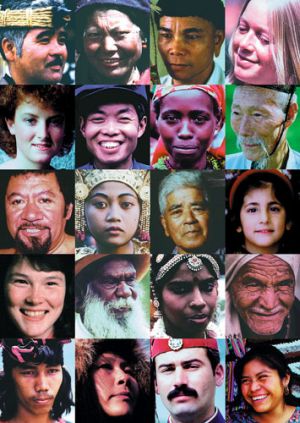
Some described it as the “eco-topia”; some believed they had died in the night and awoken in a different universe. Some just stood there gaping stupidly.

Yet the events of 01 April 2012 are real*. Humans suddenly became intelligent.

In an unprecedented emergency UN session this morning, all the world’s countries pledged to an immediate wind-down of the fossil-fuel economy and promised to invest in a rational combination of nuclear and renewable energy sources. Some experts believe the pledge would see a carbon-neutral planet by 2020.

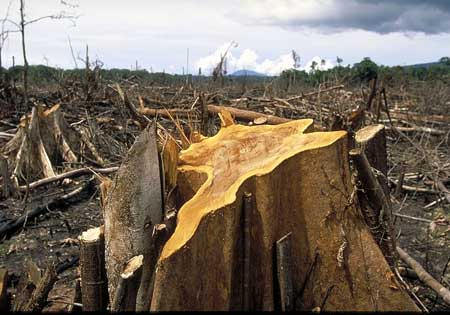
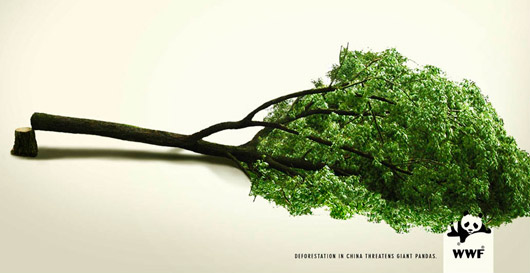
Additionally, the session saw a world-wide pledge to halt all deforestation by 2013, with intensive reforestation programmes implemented immediately.

Family planning would be embraced worldwide, with a concerted effort to see the human population plateau by 2070, and begin declining to a stable 2 billion by 2300. Read the rest of this entry »


Eat a feral a week

22 03 2012

© Y. Sugiura

Just a quick post this week about something I’ve been contemplating for a while.

What if every Australian pledged to eat a feral animal a week?

Yes, I know that it’s a bit out of the pitch, and I’m sure not everyone would do it. Nor would it be physically possible for one person to eat an entire camel, buffalo or deer in a week – but hopefully you get the picture.

Why propose this? Australia is quite over-run with feral animals. Some quick stats:

Now we have, of course, many other ferals (cats, rats, foxes, mice), but I don’t think too many people would want to eat them. I have personally eaten feral pigs, camels, buffalo, goats, and red, fallow and sambar deer, mostly from my own research trips or from friends who hunt. Read the rest of this entry »



Bill Laurance wins Heineken Prize

16 03 2012

I’ve just learnt some fantastic news about my good friend and colleague, Professor Bill Laurance of James Cook University.

Bill has the distinction of being named this year’s recipient of the most-prestigious Heineken Prize for Environmental Sciences. Probably only second in prestige to the Crafoord Prize, the Heineken Prize has sent many recipients in the fields of medicine, biochemistry and biophysics on to win Nobel Prizes.

While there is still no Nobel category in ecology, conservation or the environment (there bloody well should be, in my not-so-humble opinion), this is a huge recognition of Bill’s amazing scientific track record, environmental portfolio, advocacy and expertise.

Read the rest of this entry »


Worlds collide: greenwashed development to kill biodiversity

15 03 2012

Another development fiasco that, if it goes ahead, will devastate a Biodiversity Hotspot and ultimately, reduce the livelihood prospects of millions of West Africans.

In yet another move to expose and shame the greedy developers behind another massive (and superlatively greenwashed) oil palm development in the tropics (see our previous Open Letter), Bill Laurance and Josh Linder have organised another Open Letter from some of the world’s top conservation scientists (again, I count myself fortunate to be included in that group) denouncing the project. The press release is below, followed by the letter itself:

Eleven of the world’s top scientists have produced an open letter to the public urging the Cameroon government to stop a giant oil palm plantation that they say will threaten some of Africa’s most important protected areas.

The project, sponsored by a subsidiary of U.S. agribusiness giant Herakles Farms in collaboration with a U.S. nonprofit organization, All for Africa, would span 70,000 hectares (154,000 acres), an area nearly the size of New York City.

“It’s simply frightening in scope,” said Thomas Struhsaker, a leading expert on African primates and rainforest ecology at Duke University in North Carolina, USA, who has worked in the region for nearly a half-century.

The project would destroy a critical forested area that currently links five national parks or protected areas in Cameroon, say the scientists.

“These forests are vital for wildlife, including the African elephant, chimpanzee and drill, all threatened or endangered species,” said anthropologist Joshua Linder of James Madison University in Virginia, USA, who has helped coordinate the protest. “These animals rely on the forests that would be destroyed to survive and move among the parks.”

“This area is a biodiversity hotspot, some of the world’s most biologically important real estate,” said tropical ecologist William Laurance of James Cook University in Australia, who studies threats to wildlife in the Congo Basin.

“There’s no way a project like this would be allowed in most countries, because the price for biodiversity is just too high,” said Laurance.

The project has been promoted in Cameroon as environmentally sustainable, but the scientists heatedly disagree. “Those promoting this project are misleading everyone—especially the people and government of Cameroon,” said Linder. “They claim the forests they want to clear are mostly logged and degraded, but we’ve shown clearly that they include lots of tall, dense forest that’s vital for wildlife and nature conservation.” Read the rest of this entry »


Unholy trinity of leakage, permanence and additionality

13 03 2012

I begin with the proverbial WTF? The title of this post sounds a little like the legalese accompanying a witchcraft trial, but it’s jargon that’s all the rage in the ‘trading-carbon-for-biodiversity’ circles.

I’m sure that most of my readers will have come across the term ‘REDD‘ (Reduced Emissions from Deforestation and forest Degradation), which is the clever idea of trading carbon credits to keep forests intact. As we know, living forests can suck up a lot of carbon from the atmosphere (remember your high school biology lesson on photosynthesis? Carbon dioxide in. Oxygen out), even though climate change is threatening this invaluable ecosystem service. So the idea of paying a nation (usual a developing country) to protect its forests in exchange for carbon pollution offsets can potentially save two birds with one feeder – reducing overall emissions by keeping the trees alive, and ensuring a lot of associated biodiversity gets caught up in the conservation process.

The problem with REDD though is that it’s a helluva thing to bank on given a few niggly problems essentially revolving around trust. Ah yes, the bugbear of any business transaction. As the carbon credit ‘buyer’ (the company/nation/individual who wishes to offset its carbon output by ‘buying’ the carbon uptake services provided by the intact forest), you’d want to make damn sure that all the money you spend to offset your carbon actually does just that, and that it doesn’t just end up in the hands of some corrupt official, or even worse, used to generate industry that results in even higher emissions! As the buyer, of course you want to entice investors to give you lots of money, and if you bugger up the transaction (by losing the resource you are providing), you’re not likely to have any more investors coming knocking on your door.

Enter the unholy trinity of leakage, permanence and additionality.

This horrible jargon essentially describes the REDD investment problem:

Read the rest of this entry »



Different is better

6 03 2012

I found a nice complement to my More is Better post from January where I reported the results of a new meta-analysis demonstrating how higher species evenness and diversity engendered greater forest productivity – great empirical evidence for the so-called diversity-productivity relationship.

The latest paper adding convincing evidence regarding the important role of species diversity in maintaining ecosystem function comes from Marc Cadotte and colleagues published online early in Ecology. The paper, Phylogenetic diversity promotes ecosystem stability, looks at the problem from a slightly different angle.

If you recall from Zhang and colleagues, forest plots composed of many different species were more productive than single-species stands, and more ‘even’ (i.e., a metric which includes relative abundance of each species in system) stands were more productive, and better at explaining the variance in productivity than species richness alone.

Of course, species richness is considered only a blunt instrument to measure ‘biodiversity’, with evenness providing only a slight improvement. Ideally, we should be talking about genetic diversity considering this is the fundamental unit on which most of evolutionary processes operate (i.e., genes and gene complexes).

So Cadotte and colleagues measured genetic diversity within experimental plots of grassland savanna species established in Minnesota, USA (i.e., consisting of C3 grasses, C4 grasses, legumes, non-legume herbaceous forbs and two woody species) and compared this to ecosystem ‘stability’ (i.e., above-ground biomass divided by inter-annual standard deviation). They measured genetic diversity using four different metrics:

  1. the sum of the phylogenetic branch lengths represented by a set of co-occurring species
  2. the mean nearest taxon distance = the average of the shortest phylogenetic distance for each species to its closest relative
  3. the mean pairwise distance = the average of all phylogenetic distances connecting species in the sample; and
  4. an entropic measure based on the relative distribution of evolutionary distinctiveness, measured as the amount of a species’ evolutionary history that is not shared with other species Read the rest of this entry »


Sink to source – the loss of biodiversity’s greatest ecosystem service

29 02 2012

I’ve mentioned this idea before, but it’s nice when some real data support a prediction (no matter how gloomy that prediction might have been). It’s what drives scientists toward discovery (or at least, it’s what I find particularly appealing about my job).

Several years ago, my colleagues (Navjot Sodhi† and Ian Warkentin) and I wrote a major review in TREE about the fate of the world’s ‘second’ lung of the planet, the great boreal forests of Russia, Canada & Scandinavia. We discussed how fragmentation was increasing at an alarming rate, and that although most species there are still relatively intact, we stand to lose a lot of its biodiversity if we don’t halt the fragmenting processes soon. We wrote more on the subject in a paper to appear imminently in Biological Conservation.

Another component though that we raised in the TREE paper was the boreal forests were very much in danger of turning into a net carbon producer. You see, the ‘lung’ analogy is very pertinent because on average, the growth of the massive expanse of the vegetation in the forest generally takes up much more atmospheric carbon that it exudes through decay and burning (for as we all know, plants take up carbon dioxide to produce sugars during photosynthesis, and produce oxygen as a ‘waste’ product). However, as we fragment, cut down and burn the forest, it can end up producing more than it takes up (i.e., turning from a ‘sink’ to a ‘source’). We highlighted several studies indicating how insect outbreaks and human-exacerbated fire intensities and frequencies could conceivably do this.

Now Zhihai Ma and colleagues have just compiled a paper in PNAS indicating that the danger is well on the way to becoming reality in Canada. The paper entitled Regional drought-induced reduction in the biomass carbon sink of Canada’s boreal forests reports the results from 96 long-term permanent sampling plots spread right across southern Canada – from British Columbia in the far west, to Newfoundland in the far east. Read the rest of this entry »


Conservation catastrophes

22 02 2012

David Reed

The title of this post serves two functions: (1) to introduce the concept of ecological catastrophes in population viability modelling, and (2) to acknowledge the passing of the bloke who came up with a clever way of dealing with that uncertainty.

I’ll start with latter first. It came to my attention late last year that a fellow conservation biologist colleague, Dr. David Reed, died unexpectedly from congestive heart failure. I did not really mourn his passing, for I had never met him in person (I believe it is disingenuous, discourteous, and slightly egocentric to mourn someone who you do not really know personally – but that’s just my opinion), but I did think at the time that the conservation community had lost another clever progenitor of good conservation science. As many CB readers already know, we lost a great conservation thinker and doer last year, Professor Navjot Sodhi (and that, I did take personally). Coincidentally, both Navjot and David died at about the same age (49 and 48, respectively). I hope that the being in one’s late 40s isn’t particularly presaged for people in my line of business!

My friend, colleague and lab co-director, Professor Barry Brook, did, however, work a little with David, and together they published some pretty cool stuff (see References below). David was particularly good at looking for cross-taxa generalities in conservation phenomena, such as minimum viable population sizes, effects of inbreeding depression, applications of population viability analysis and extinction risk. But more on some of that below. Read the rest of this entry »



Parts a whole do not make

17 02 2012

I’m particularly proud of our latest paper for three main reasons:  (1) Salva Herrando-Pérez, lead author and contributor-extraordinaire to CB, has worked extremely hard to get this one out; (2) it is published in a really good journal; and most importantly, (3) it’s the very first empirical demonstration over hundreds of species that just because you have a density effect on some vital rate (e.g., survival, fertility, dispersal), this in no way means you have any evidence at all for density dependence at the population level. Let us explain.

Quantifying variation in population size is an important element for explaining and predicting population dynamics. In models where a vital (demographic) rate responds to change in population size, those ‘density-dependent’ relationships are ecologically understood as being demographic signals of trophic and social interactions, such as parasitism, predation or competition for shelter, because the intensity of those interactions varies with population size.

In fact, density-dependent effects reflect the theoretical capacity of populations to adjust growth and rebound from low or high numbers – and so this concept has become an important metric in population management and conservation  (Eberhardt et al. 2008). Read the rest of this entry »


Cartoon guide to biodiversity loss XV

13 02 2012

I’m in the field at the moment, so here are the latest six cartoons to pass the time (see full stock of previous ‘Cartoon guide to biodiversity loss’ compendia here). Enjoy.

Read the rest of this entry »



When the cure becomes the disease

6 02 2012

I’ve always barracked for Peter Kareiva‘s views and work; I particularly enjoy his no-bullshit, take-no-prisoners approach to conservation. Sure, he’s said some fairly radical things over the years, and has pissed off more than one conservationist in the process. But I think this is a good thing.

His main point (as is mine, and that of a growing number of conservation scientists) is that we’ve already failed biodiversity, so it’s time to move into the next phase of disaster mitigation. By ‘failing’ I mean that, love it or loathe it, extinction rates are higher now than they have been for millennia, and we have very little to blame but ourselves. Apart from killing 9 out of 10 people on the planet (something no war or disease will ever be able to do), we’re stuck with the rude realism that it’s going to get a lot worse before it gets better.

This post acts mostly an introduction to Peter Kareiva & collaborators’ latest essay on the future of conservation science published in the Breakthrough Institute‘s new journal. While I cannot say I agree with all components (especially the cherry-picked resilience examples), I fundamentally support the central tenet that we have to move on with a new state of play.

In other words, humans aren’t going to go away, ‘pristine’ is as unattainable as ‘infinity’, and reserves alone just aren’t going to cut it. Read the rest of this entry »


Knowledge slavery

29 01 2012

manaclesAnother workshop; another productive week.

As many readers will know, I’ve spent the last week in the mountains north of Madrid working on a series of conservation ecology papers with host Miguel Araújo (of the Integrative Biology and Global Change Group at the Spanish National Museum of Natural Sciences), my lab colleagues, Barry Brook, Damien Fordham and Salvador Herrando-Pérez, and Miguel’s post-doc, Regan Early.

Let me tell you, staying in the craggy granite Sierra de Guadarrama mountains at a well-known health spa eating explosively flavourful Spanish food and drinking an immodest selection of the region’s delicious wines, is particularly conducive to scientific productivity (yes, I AM a jammy tart). Although unlikely to be followed by many (even if they have the means), I highly recommend the experience for those suffering from writer’s block.

But this post isn’t about the scenery, food, wine, hydrothermal treatment or even the content of the workshop at all (I just prefaced it as such to gloat); it’s about a particularly sore point for me and hundreds of thousands of other scientists the world over – our slavery to the scientific publishing industry.

And ‘slavery’ is definitely the most appropriate term here, for how else would you describe a business where the product is produced by others for free1 (scientific results), is assessed for quality by others for free (reviewing), is commissioned, overviewed and selected by yet others for free (editing), and then sold back to the very same scientists and the rest of the world’s consumers at exorbitant prices.

This isn’t just a whinge about a specialised and economically irrelevant sector of the economy, we’re talking about an industry worth hundreds of billions of dollars annually. In fact, Elsevier (agreed by many to be the leader in the greed-pack – see how some scientists are staging their protest; also here) made US$1.1 billion in 2010! Read the rest of this entry »


Give way to the invader

25 01 2012

By weird coincidence, Salvador Herrando-Pérez (student blogger extra-ordinaire – see his previous posts on evolution, pollination, bird losses, taxonomic inflation, niche conservatism, historical biogeography, ecological traps and ocean giants) has produced a post this week expanding on the problem of roads. Also weirdly coincidental is that both Salva and I are in his home country of Spain this week.

Australia’s > 800,000-km road network would go 60 times around the equator of our planet. Confined to the boundaries of any one country, roads are a conspicuous component of the landscape, and shape the dispersion, survival and reproduction of many plants and animals in urban and remote areas.

Those who drive (or are driven by) will be familiar with the image of a crushed kangaroo on the roadside (a hedgehog in Europe), or the sticky mosaic of insects smashed against the windscreen after a high-speed run. Mortality by collision is one of the many effects that roads can have on the demography of organisms – including humans. Those effects encompass

  • physical alteration of terrestrial and aquatic habitats,
  • chemical pollution leakage during road construction and maintenance, and from asphalt compounds during storms,
  • alteration of animal behaviour (e.g., change in home range, or in patterns of flight or vocalisation),
  • access to remote areas by hunters, fishermen and gatherers in general, and
  • intense habitat fragmentation1-3.

However, some species get around those negative impacts by using the roads as pathways to new territories, thereby eluding barriers like seas, mountains, rivers, dense vegetation, or competition for vital resources with other species. Read the rest of this entry »


The seeds of tropical forest destruction

22 01 2012

Bill Laurance asked me to reproduce his latest piece originally published at Yale University‘s Environment 360 website.

We live in an era of unprecedented road and highway expansion — an era in which many of the world’s last tropical wildernesses, from the Amazon to Borneo to the Congo Basin, have been penetrated by roads. This surge in road building is being driven not only by national plans for infrastructure expansion, but by industrial timber, oil, gas, and mineral projects in the tropics.

Few areas are unaffected. Brazil is currently building 7,500 km of new paved highways that crisscross the Amazon basin. Three major new highways are cutting across the towering Andes mountains, providing a direct link for timber and agricultural exports from the Amazon to resource-hungry Pacific Rim nations, such as China. And in the Congo basin, a recent satellite study found a burgeoning network of more than 50,000 km of new logging roads. These are but a small sample of the vast number of new tropical roads, which inevitably open up previously intact tropical forests to a host of extractive and economic activities.

“Roads,” said the eminent ecologist Thomas Lovejoy, “are the seeds of tropical forest destruction.”

Despite their environmental costs, the economic incentives to drive roads into tropical wilderness are strong. Governments view roads as a cost-effective means to promote economic development and access natural No other region can match the tropics for the sheer scale and pace of road expansion. resources. Local communities in remote areas often demand new roads to improve access to markets and medical services. And geopolitically, new roads can be used to help secure resource-rich frontier regions. India, for instance, is currently constructing and upgrading roads to tighten its hold on Arunachal Pradesh state, over which it and China formerly fought a war.

Read the rest of this entry »


More is better

18 01 2012

In one of those rare moments of perusing the latest ecological literature, I stumbled across an absolute gem, and one that has huge conservation implications. Now, I’m really no expert in this particular area of ecology, but I dare say the paper I’m about to introduce should have been published in Nature or Science (I suspect it was submitted to at least one of these journals first). It was still published in an extremely high-impact journal in ecology though – the Journal of Ecology produced by the British Ecological Society (and one in which I too have had the honour of publishing an article).

Before I get into specifics, I have to say that one thing we conservation biologists tend to bang on about is that MORE SPECIES = BETTER, regardless of the ecosystem in question. We tend to value species richness as the gold standard of ecosystem ‘health’ and ‘resilience’, whether or not there is strong empirical evidence in support. It’s as if the more-is-better mantra strikes an intuitive chord and must, by all that’s ecologically right in the world, be true.

Of course, measuring what is ‘better’ is a difficult task, especially when we are talking about complex ecosystems comprising thousands, if not millions, of species. Does ‘better’ refer to the most temporally stable, the most genetically diverse, the most resilient to perturbation, or the provider of the greatest number of functions and hence, ecosystem services?

It’s up to you, but all these things tend to be difficult to measure for a large number of species and over time scales of sufficient duration to measure change. So the default for plants (i.e., the structural framework of almost all ecosystems) I guess has come down to a simpler measure of success – ‘productivity’. This essentially means how much biomass is produced per unit area/volume per time step. It’s not a great metric, but it’s probably one of the more readily quantifiable indices.

Enter the so-called ‘diversity-productivity relationship’, or ‘DPR’, which predicts that higher plant species diversity should engender higher net productivity (otherwise known as the ‘net biodiversity effect’). Read the rest of this entry »


When did it go extinct?

11 01 2012

It was bound to happen. After years of successful avoidance I have finally succumbed to the dark side: palaeo-ecology.

I suppose the delve from historical/modern ecology into prehistory was inevitable given (a) my long-term association with brain-the-size-of-a-planet Barry Brook (who, incidentally, has reinvented his research career many times) and (b) there is no logic to contend that palaeo extinction patterns differ in any meaningful way from modern biodiversity extinctions (except, of course, that the latter are caused mainly by human endeavour).

So while the last, fleeting days of my holiday break accelerate worringly toward office-incarceration next week, I take this moment to present a brand-new paper of ours that has just come out online in (wait for it) Quaternary Science Reviews entitled Robust estimates of extinction time in the geological record.

Let me explain my reasons for this strange departure.

It all started after a few drinks (doesn’t it always) discussing the uncertainties associated with the timing of megafauna extinctions – you might be aware that traditionally there have been two schools of thought on late-Pleistocene extinction pulses: (1) those who think there were mainly caused by massive climate shifts not to dissimilar to what we are experiencing now and (2) those who believe that the arrival of humans into naïve regions lead to a ‘blitzkrieg‘ of hunting and overkill. Rarely do adherents of each stance agree (and sometimes, the ‘debate’ can get ugly given the political incorrectness of inferring that prehistoric peoples were as destructive as we are today – cf. the concept of the ‘noble savage‘). Read the rest of this entry »


Does conservation biology need DNA barcoding?

5 01 2012

In November last year I was invited to participate in a panel discussion onthe role of DNA barcoding in conservation science. The discussion took place during the 4th International Barcode of Life Conference (which I didn’t actually attend) in Adelaide, and was hosted by that media-tart-and-now-director-of-the-Royal-Institution, Dr. Paul Willis.

Paul has recently blogged about the ‘species’ concept as it relates to DNA barcoding, which I highly recommend. It also prompted me to write this post because now the video of the discussion is available online (see below).

Now, the panel was a bit of a funny set-up in a way – I was really one of the only ‘conservation biologists’ represented (Patrick O’Connor and Andy Lowe perhaps excepted), with the rest mainly made up of molecular people (Pete Hollingsworth, Bob Hanner, Karen James) – and I was told prior to the ‘debate’ that I was meant to be the contrarian (i.e., that there is no role for DNA barcoding in conservation).

Fundamentally, I don’t actually embrace the contrarian view on this one given that I see no reason why DNA barcoding can’t enhance or refine our conservation knowledge and skills. But the ‘debate’ did raise some important issues about technological advancements in the application of conservation science to real conservation.

I suppose that prior to getting stuck into the polemic I should define DNA barcoding for the uninitiated; it’s a basic technique that analyses short sequences of DNA with the sole purposes of identifying from which species they come. Imagine walking through the bush with a barcode scanner and pointing at random species you see and getting an instant identification read-out without actually knowing the species beforehand. You can see why it’s called ‘barcoding’ because it is like running products through the check-out to get instant price details. Read the rest of this entry »


Cartoon guide to biodiversity loss XIV

30 12 2011

The last post of 2011, I thought I’d focus on the lighter side (that is to say, my brain is muddled by the lovely break from academia, so I don’t really feel like investing too much cerebral energy). Here, therefore, are the latest six cartoons… (see full stock of previous ‘Cartoon guide to biodiversity loss’ compendia here). May fewer species go extinct in 2012 than 2011…

Read the rest of this entry »


Surgical conservation: gain requires some pain

21 12 2011

© 2008-2011 ~Hiuki http://fav.me/d1j3ns9

I apologise to CB readers for the unusually low frequency of posts this month. With the International Congress for Conservation Biology taking up a lot of my time earlier this month, and the standard palaver of xmas preparations (i.e., getting shit done before the end of the year), I’m afraid the blog has taken a back seat. Now officially ‘on leave’ (whatever that means for an academic), I have found a brief window during which I can put a few thoughts together.

For this post I must take you back to October 2011 when, if you were in Australia, you might have heard about the so-called ‘debacle‘ of the Macquarie Island rabbit/rate/mouse-eradication programme in which it was identified that a few thousand seabirds had become the collateral damage.

To recap, an intense poisoning programme was initiated on subantarctic Macquarie Island to eradicate these pests after years of massive environmental degradation had finally forced the government’s (of Tasmania and the Commonwealth) hand to do something. What caught my eye in all this was the sheer stupidity and politicking associated with the programme, in which hyper-conservative Eric Abetz (Liberal Senator for Tasmania) managed to turn this amazing success into a Labor-bashing political sledge-hammer.

Abetz is no stranger to anti-environmentalism and fights vehemently for Tasmania’s forest-raping industry; he considers political parties such as the Greens, environmental groups such as The Wilderness Society and pro-democracy groups such as Get Up! his mortal enemies. He’s even had a go at esteemed author Richard Flanagan for supporting the anti-deforestation movement in Tasmania! Read the rest of this entry »


Slicing the second ‘lung of the planet’

12 12 2011

© WWF

Apologies for the slow-down in postings this past week – as many of you know, I was attending the International Congress for Conservation Biology in Auckland. I’ll blog about the conference later (and the stoush that didn’t really occur), but suffice it to say it was very much worthwhile.

This post doesn’t have a lot to do per se with the conference, but it was stimulated by a talk I attended by Conservation Scholar Stuart Pimm. Now, Stuart is known mainly as a tropical conservation biologist, but as it turns out, he also is a champion of temperate forests – he even sits on the science panel of the International Boreal Conservation Campaign.

I too have dabbled in boreal issues over my career, and most recently with a review published in Trends in Ecology and Evolution on the knife-edge plight of boreal biodiversity and carbon stores. That paper was in fact the result of a brain-storming session Navjot Sodhi and I had one day during my visit to Singapore sometime in 2007. We thought, “It doesn’t really seem that people are focussing their conservation attention on the boreal forest; how bad is it really?”.

Well, it turns out that the boreal forest is still a vast expanse and that there aren’t too many species in imminent danger of extinction; however, that’s where the good news ends. The forest itself is becoming more and more fragmented from industrial development (namely, forestry, mining, petroleum surveying and road-building) and the fire regime has changed irrevocably from a combination of climate change and intensified human presence. You can read all these salient features here.

So, back to my original thread – Stuart gave a great talk on the patterns of deforestation worldwide, with particular emphasis on how satellite imagery hides much of the fine-scale damage that we humans do to the world’s great forests. It was when he said (paraphrased) that “50,000 km2 of boreal forest is lost each year, but even that statistic hides a major checkerboard effect” that my interest was peaked. Read the rest of this entry »