The latest six cartoons… (see full stock of previous ‘Cartoon guide to biodiversity loss’ compendia here).
—
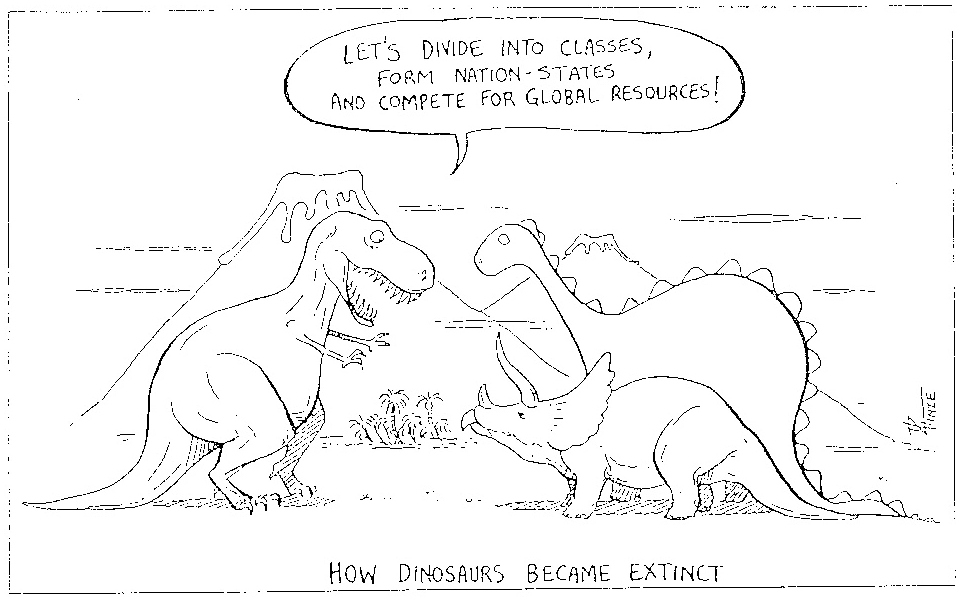
The latest six cartoons… (see full stock of previous ‘Cartoon guide to biodiversity loss’ compendia here).
—
Here’s another short, but sweet Conservation Classic highlighted in our upcoming book chapter (see previous entries on this book). Today’s entry comes from long-time quantitative ecology guru, Russ Lande, who is now based at the Silwood Park Campus (Imperial College London).
—

© IBL
In an influential review, Lande (1988) argued that
“…demography may usually be of more immediate importance than population genetics in determining the minimum viable size of wild populations”.
It was a well-reasoned case, and was widely interpreted to mean that demographic and ecological threats would provide the ‘killer blow’ to threatened species before genetic factors such as inbreeding and fitness effects of loss of genetic diversity had time to exert a major influence on small population dynamics.
Apologies to Monty Python and my poor attempt to make the over-used expression ‘bridging the gap’ humorous.
Today’s guest post comes from across the Pacific Ocean. Dr. Sara Maxwell is a postdoctoral fellow with Marine Conservation Biology Institute and University of California Santa Cruz, Long Marine Laboratory. She was kind enough to contribute to ConservationBytes.com about an issue I’ve covered before in various forms – making conservation research relevant for conservation action.
—

© R. Arlettaz
In a catalyzing article titled “From publications to public actions: when conservation biologists bridge the gap between research and implementation” in the November 2010 issue of BioScience, Raphaël Arlettaz1 and his colleagues Michael Schaub2, Jérôme Fournier3, Thomas Reichlin2, Antoine Sierro4, James Watson5 and Veronika Braunisch2 explore reasons for our hard work as conservation biologists not reaching the implementation phase. This article strongly resonated with my colleague, Kiki Jenkins6 and I, Sara Maxwell. This resulted in a series of letters published in BioScience and now we join together, along with Jeffrey Camm7, Guillaume Chapron8, Liana Joseph9, and Rudi Suchant10 to synthesize our ideas and present them to the larger conservation community via ConservationBytes.
The article that sparked the discussion
In their article, Arlettaz and colleagues highlight some of the main roadblocks to implementing conservation research. The main reasons are that:
Arlettaz and colleagues illustrate how to overcome these roadblocks using a case study of their own work on the endangered hoopoe (Upupa epops) in Switzerland, showing how they followed through the recommendations of their work to implementation and had a direct impact on species recovery. They highlight means by which other conservation biologists can do the same.
My PhD student, Ana Sequeira, has just written a great little guest blog post for the Environment Institute‘s blog. Given I’m en route to Tasmania for a quick consultancy meeting, I thought I’d let myself off the hook and reproduce the post here. Well done, Ana (and hint to my other students – your time on ConservationBytes.com is coming…).
—
 This week is Seaweek and guest blogger Ana Sequeira describes how whale shark distribution might be shifting according to seasonal environmental predictors.
Ana Sequeira is a PhD student at the University of Adelaide (Global Ecology Group). Her main research interests are to develop models applied to the marine environment to describe key environmental processes, species distribution patterns and ecological interactions.
The main objective of her PhD thesis is to investigate behavioural ecology of whale sharks. She is now trying to understand which environmental variables may affect whale shark distribution.
The whale shark (Rhincodon typus, Smith 1828) is the largest fish in the ocean and can reach more than 12 m in total length. Although little is known about their habitat selection or migration patterns, the whale shark appears to be a highly mobile species. They predictably form near shore aggregations in some coastal locations (e.g. off Ningaloo reef in Western Australia) what makes them the subject of highly lucrative marine ecotourism industries. Also, artisanal and small-scale fisheries for the species still exist in many parts of the tropics.
Since the whale sharks is classified a Vulnerable species (IUCN Red List), understanding their migratory behaviour became of chief importance as they can be travelling from regions where they are protected to regions where they are still harvested. Read the rest of this entry »
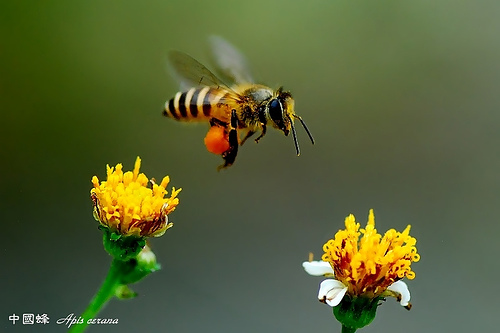
Here’s another one from the bee man, Tobias Smith (PhD candidate at the University of Queensland). Tobias recently blogged about bee basics here on ConservationBytes.com (something I highly recommend for anyone interested on brushing up on bee facts and dispelling a few myths), so I asked him to follow up with this very important piece on the future of pollination in Australia. It concerns a nasty little invader recently dubbed the “flying cane toad” (not my analogy).
—
© 中國蜂
Over the last few weeks there has been much media attention given to the Asian honeybee (Apis cerana) incursion in far north Queensland. The Asian honeybee was first detected near Cairns in May 2007. Since then an effort to eradicate the bee has been made. This peaked during 2010, when over 40 bee eradication personnel were employed to hunt and destroy in areas around Cairns, the Atherton Tablelands, and other nearby locations.
In late January this year, the committee established to manage the eradication program (governments and industry), decided to pull the plug on eradication efforts (on money to pay for efforts that is). They decided it was no longer possible to achieve eradication (a majority decision, not a unanimous decision). The position to stop resources for eradication is not supported by industry, or ecological commentators. Arguments have been made that this is the only window of opportunity for eradication (for ever!), and that more resources need to be put towards it now, while there is still a chance of success.
A few points to be made about the Asian honeybee in Australia: Read the rest of this entry »
 Although not a conservation biology paper per se, Hardin’s classic essay (Hardin, 1968) changed the way we think about managing natural resources that lack definitive ownership.
The thesis of the “tragedy of the commons” is that individuals are inherently selfish and usually place their own interests first in using commonly owned resources, thereby resulting in their depletion. Hardin used a hypothetical and simplified situation based on medieval land tenure in Europe (herders sharing a common parcel of land) on which each herder was entitled to graze his cattle. Each herder maximized his gains by putting additional cattle onto the land, even if the carrying capacity of the common was exceeded and overgrazing ensued. The herder, by making an “individually rational decision,” received all the benefits from his cattle, but could in the process deplete the common resource for the entire group. If all herders make such selfish decisions then the common will be depleted, jeopardizing the livelihoods of all.
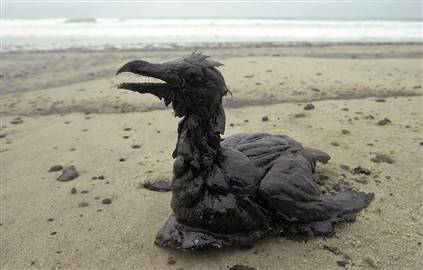 Many of you already know that against all better judgement, the spectacularly audacious Australian Commonwealth government has granted BP offshore drilling rights in our southern waters.
You’d think that with all the evidence that BP is a company that cannot be trusted with this particular form of resource exploitation, we’d be a little bit more discerning when granting exploration permits to them. Apparently not.
In protest and within my rights as an Australian citizen, I wrote to the Minister responsible for the decision, MP Martin Ferguson (Federal Minister for Resources and Energy) to register my protest:
Dear Minister Ferguson,
As an ecologist, academic and citizen, I find it rather astounding that Australia has permitted the deep-sea exploration of oil by BP in our own back garden. The unreasonable environmental risk aside, it simply equates to poor economics – the very real probability of a disaster on the same scale (or larger) than the Gulf of Mexico’s fiasco last year will effectively destroy the commercial fishing and aquaculture industry of our southern coastline overnight. The loss of tourism dollars could arguably exceed even that.
This is most definitely not in Australia’s best interest, and will represent yet another blight on our already poor environmental record (see http://wp.me/phhT4-1cf and http://wp.me/phhT4-Zt). I urge you to reconsider your permission and revoke the licence to drill in our waters. It is a mistake you and your government will regret for decades, and will make the recent flooding disaster in Queensland appear mild in comparison.
Sincerely, Professor Corey J. A. Bradshaw
I certainly wasn’t expecting the Minister to say suddenly “Oh my. You are right, Prof. Bradshaw. It is a bad decision. I’ll revoke that permission forthwith”, but I was expecting a little bit more than the jumbled form letter I received in reply: Read the rest of this entry »
Here’s a guest post from one of my PhD students, Salvador Herrando-Peréz. Salva is working on theoretical aspects of density feedback mechanisms among different species, and is especially eclectic with his interests in biology. Salva regularly contributes to lay natural history magazines, especially in his native tongue Castellano (Spanish), and he is an active member of the Spanish organisation Bioestudios Saganta, a non-profit national organisation fully devoted to scientific research and its popularisation with a focus on biodiversity conservation.
I’ve asked my students to start contributing to ConservationBytes.com, and Salva is leading the charge.
—
 Evolution evokes ideas such as fossils, geological eras and time scales of hundreds of thousands to millions of years. Only recently have we started to appreciate that such ‘macro-evolution’ is the result of accumulated changes in the morphology and genes of species from one generation to the next: days for HIV strands, months for a planktonic rotifer, or years for a poplar.
The Britons Peter and Rose Mary Grant published in 2002 a 30-year study on Darwin’s finches from Daphne Major (Galapagos, Ecuador) – a popular study organism since Charles Darwin’s Origin of species (Grant & Grant 2002). In such a short period of time, covering only six generations of these granivorous birds, several extreme droughts altered the type and abundance of seeds, and potentially triggered the evolution of body size, and beak shape and size, up to three times (Figure 1). The two biologists from Princeton reveal that:
The Conservation Classics series will soon be collated and published in a special chapter for the book ‘Biodiversity’ to be published later this year by InTech. The chapter is co-authored by Barry Brook, Navjot Sodhi, Bill Laurance and me. This is a snippet of one ‘classic’ I haven’t yet really covered extensively on ConservationBytes.com.
—
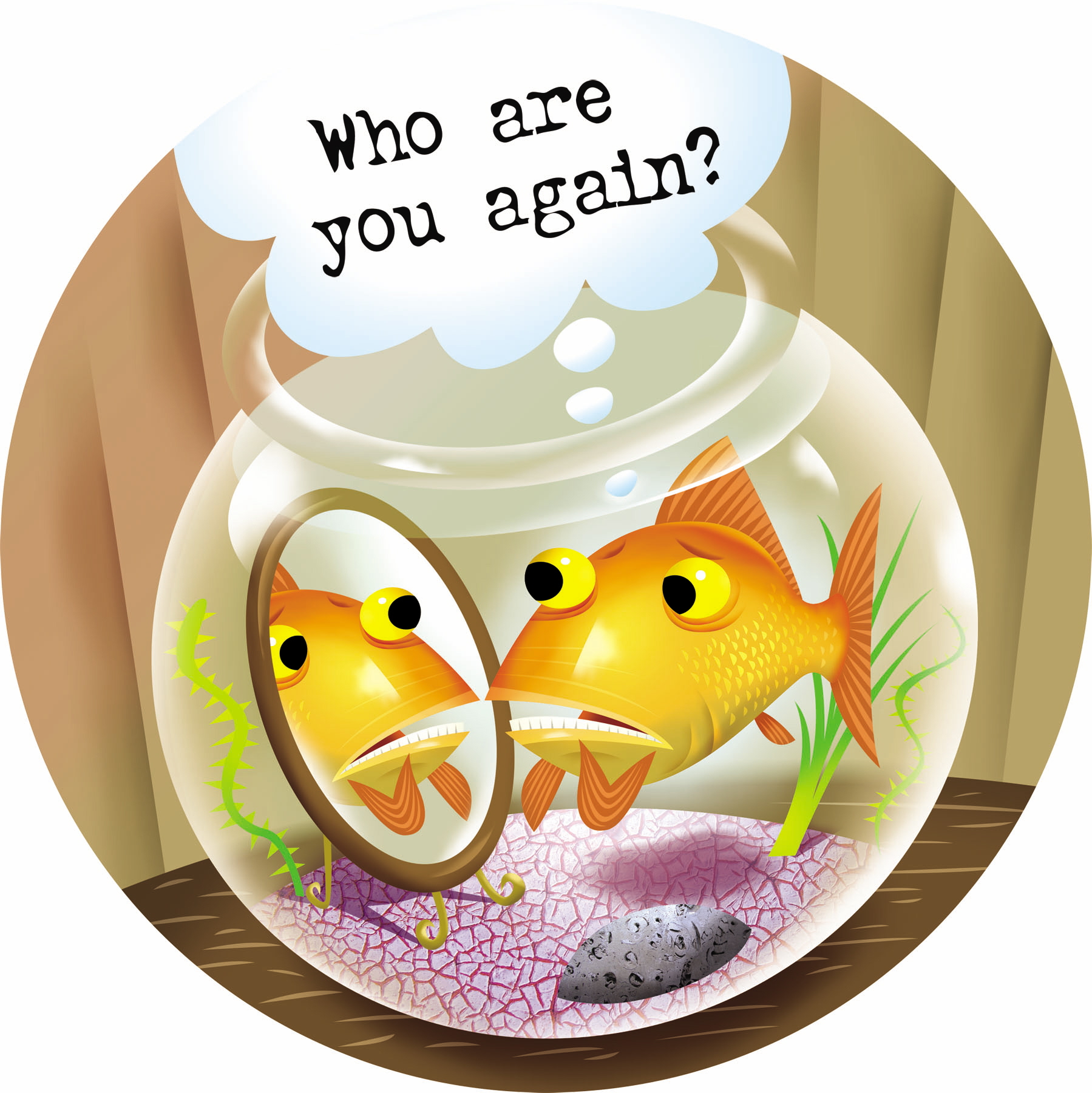 Daniel Pauly’s (1995) concept describes the way that changes to a system are measured against baselines which themselves are often degraded versions of the original state of the system. Pauly (1995) originally meant it in a fisheries context, where “… fisheries scientists sometimes fail to identify the correct ‘baseline’ population size (e.g., how abundant a fish species population was before human exploitation) and thus work with a shifted baseline”. It is now considered a mantra in fisheries and marine science (Jackson et al., 2001), but it has been extended to many other conservation issues. Yet, quantifying shifting baselines in conservation is difficult, with little empirical evidence (but see Jackson et al., 2001), despite the logic and general acceptance of its ubiquity by conservation scientists. Read the rest of this entry »
Another great guest post, this time from Tobias Smith, a PhD candidate at the University of Queensland’s School of Biological Sciences. Tobias is investigating bee community shifts across a fragmented tropical landscape in far north Queensland, aiming to identify landscape variation in community composition of two important rainforest pollinator groups, bees and flies. I met Tobias a few years ago as part of the Thiaki rainforest reforestation project for which he is doing baseline surveys of bees and flies.
I asked him a while ago to write a ‘primer’ on bees for ConservationBytes.com since so many people really don’t much about the taxon (I include myself in that group). He’s done a brilliant job – everything you wanted to know about bees but were afraid to ask (in 1000 words).
—
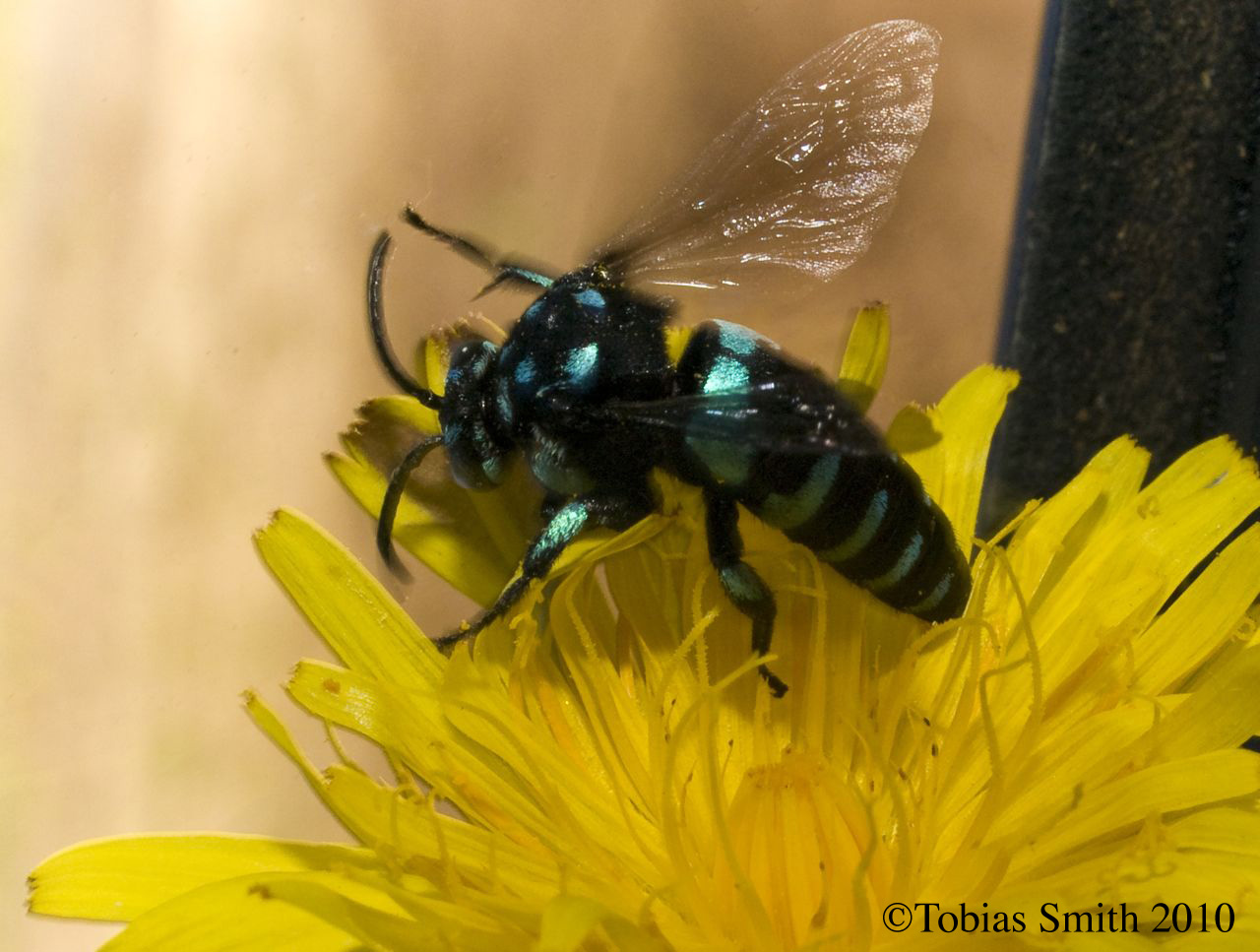 The frequently reported, gloomy news about bee declines is hard not to notice. Bees are in dire trouble around the world, and this trend has worrying implications for both ecosystems and human food production. As a result, popular media often reports on the plight of bees, regularly reciting the figure of one in three mouthfuls of food being dependent on the work of bees. While bees certainly are in major trouble, it can be easy to misinterpret statements often made in these kind of articles without a little general bee knowledge. So here are a few bee facts that, at the very least, we ecological representatives should be familiar with. This information should help give some perspective when interpreting bee news, and when engaging in exciting bee conversations at the shops.
There are approximately 20,000 bees species globally. Yet when most people think of bees they think of a single species, Apis mellifera, the western honey bee (introduced in most of its range, and also referred to as the European honeybee). This bee is certainly an important bee. It is managed as the usual pollinator of crops requiring biotic pollination, and it makes the honey we usually eat here in the developed world. Some say our domestication of this bee has been an important contributing factor in achieving the level of development that we humans have. There are however, about 19,999 other bee species out there, and most of them are very different to the western honeybee. Read the rest of this entry »
A few weeks ago I was interviewed on Channel 10 (Adelaide) about some new research coming out of the University of Western Australia regarding shark colour vision.
I’ve received permission from Channel 1o to reproduce the news snippet here. The first bloke interviewed is Associate Professor Nathan Hart, the study‘s lead author. I’m the bald one appearing in the middle at at the end.
It certainly was an interesting story, although two claims were made that probably needed better contextualisation.
First, the authors claim that because of this taxon’s colour blindness, they probably notice pigment transitions more when using visual cues to identify potential prey. What this means is that bright colours set against duller backgrounds might provide that contrast enough to attract sharks. The upshot from the interview is that brightly coloured and patterned togs (bathers) might make sharks think you are potentially a tasty treat. Read the rest of this entry »
And in keeping with the topic of bees…
—
© Flowergardengirl
I’ve just read a very, very cool paper in Ecology Letters about something I’ve wanted to do myself for some time. It’s a fairly specific piece of work, so it could easily be reproduced elsewhere with different species. My point though is that a hell of a lot more of these types of studies are required.
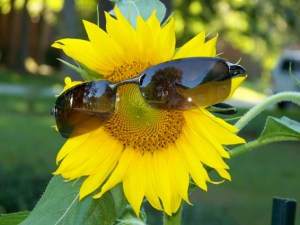
The study by Carvalheiro and colleagues entitled Natural and within-farmland biodiversity enhances crop productivity examined the role of weedy (ruderal) vegetation in supporting pollinator communities. Using sunflowers as a model crop, they showed rather convincingly how native vegetation patches interspersed amongst crop species can enhance a host of crop production measures, even when larger areas of natural habitats were far away from the crops themselves.
Based on a series of plot experiments, they tested four main hypotheses:
I liked this. Another quick and entertaining look at why bees are important, why they’re crashing, and what people can do about it (at least, on a very fine scale). And it’s all done in Scottish.
Rob Dietz over at the Centre for the Advancement of the Steady State Economy thought ConservationBytes.com readers would be interested in the following post by Tim Murray (the original post was entitled What if we stopped fighting for preservation and fought economic growth instead?). There are some interesting ideas here, and I concur that because we have failed to curtail extinctions, and there’s really no evidence that conservation biology alone will be enough to save what remains (despite 50 + years of development), big ideas like these are needed. I’d be interested to read your comments.
—
 Each time environmentalists rally to defend an endangered habitat, and finally win the battle to designate it as a park “forever,” as Nature Conservancy puts it, the economic growth machine turns to surrounding lands and exploits them ever more intensively, causing more species loss than ever before, putting even more lands under threat. For each acre of land that comes under protection, two acres are developed, and 40% of all species lie outside of parks. Nature Conservancy Canada may indeed have “saved” – at least for now – two million acres [my addendum: that’s 809371 hectares], but many more millions have been ruined. And the ruin continues, until, once more, on a dozen other fronts, development comes knocking at the door of a forest, or a marsh or a valley that many hold sacred. Once again, environmentalists, fresh from an earlier conflict, drop everything to rally its defence, and once again, if they are lucky, yet another section of land is declared off-limits to logging, mining and exploration. They are like a fire brigade that never rests, running about, exhausted, trying to extinguish one brush fire after another, year after year, decade after decade, winning battles but losing the war.
Despite occasional setbacks, the growth machine continues more furiously, and finally, even lands which had been set aside “forever” come under pressure. As development gets closer, the protected land becomes more valuable, and more costly to protect. Then government, under the duress of energy and resource shortages and the dire need for royalties and revenue, caves in to allow industry a foothold, then a chunk, then another. Yosemite Park, Hamber Provincial Park, Steve Irwin Park [my addendum – even the mention of this man is an insult to biodiversity conservation]… the list goes on. There is no durable sanctuary from economic growth. Any park that is made by legislation can be unmade by legislation. Governments change and so do circumstances. But growth continues and natural capital [my addendum: see my post on this term and others] shrinks. And things are not even desperate yet. Read the rest of this entry »
A few months ago I was involved in a panel discussion entitled ‘Biodiversity begins at home’ held at the Royal Institution of Australia in Adelaide and sponsored by the Don Dunstan Foundation.
The main thrust of the evening was to have both academic (me & Andy Lowe) and on-the-ground, local conservationists (Sarah Lance, Craig Gillespie and Matt Turner) talk about what people can do to stem the tide of biodiversity loss. The video is now available, so I thought I’d reproduce it here. We talked about a lot of issues (from global to local scale), so if you have a spare hour, you might get something out of this. I did, but it certainly wasn’t long enough to discuss such big issues.
Warning – this was supposed to be more of a discussion and less of a talkfest; unfortunately, many of the panel members seemed to forget this and instead dominated the session. We really needed 4 hours to do this properly (but then, who would have watched the video?).
Read the rest of this entry »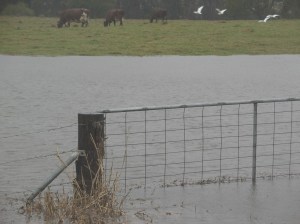
© recoverling
Last week I sent a fairly random Tweet about deforestation in south-eastern Queensland being partially responsible for the record floods there. It went more or less unnoticed, but I thought the comment deserved a proper explanation.
As many of you might know, my colleagues and I wrote an article a few years ago about the global-scale evidence for deforestation leading to a higher incidence and severity of floods in the developing world. This was fairly controversial, but it was nonetheless the first broad-scale evidence for the fabled deforestation-flood link yet published (in my not-so-humble opinion). Subsequent comment reiterated the point with new data.
Now, I will begin by saying I have no data yet to back up my Queensland-specific hypothesis, but I am contemplating a time-series paper on floods in Australia, especially after the events of the last month. This post is therefore merely a reasoned hypothesis.
The hypothesis itself is rather simple. Testing is not. I submit that the recent flooding in Australia has been exacerbated (not caused) by the rapid loss of forest cover over the last 40 years. We know that this is a particularly intense La Niña in Australia and our unusually high rainfall arises from this meteorological phenomenon, but I hypothesise that it wouldn’t have been as bad if this part of Australia hadn’t been so careless with its forest cover since the 1970s. Read the rest of this entry »
Note: I’ve just rehashed this post (30/03/2011) because the paper is now available online (see comment stream). Stay tuned for the media release next week. – CJAB
—
I’ve been more or less underground for the last 3 weeks. It has been a wonderful break (mostly) from the normally hectic pace of academic life. Thanks for all those who remain despite the recent silence.
—

© Ezprezzo.com
But I’m back now with a post about a paper we’ve just had accepted in Frontiers in Ecology and Environment. In my opinion it’s a leap forward in how we measure relative threat risk among species, despite some criticism.
I’ve written in past posts about the ‘magic’ minimum number of individuals that should be in a population to reduce the chance of extinction from random events. The so-called ‘minimum viable population (MVP) size’ is basically the abundance of a (connected) population below which random events take over from factors causing sustained declines (Caughley’s distinction between the ‘declining’ and ‘small’ population paradigms).
Up until the last few years, the MVP size was considered to be a population- or species-specific value, and it required very detailed demographic, genetic and biogeographical data to estimate – not something that biologists tend to have at their fingertips for most high-risk species. However, several papers published by our group (Minimum viable population size and global extinction risk are unrelated, Minimum viable population size: a meta-analysis of 30 years of published estimates and Pragmatic population viability targets in a rapidly changing world) have shown that there is in fact little variation in this number among the best-studied species; both demographic and genetic data support a number of around 5000 to avoid crossing the deadly threshold.
Now the fourth paper in this series has just been accepted (sorry, no link yet, but I’ll let you all know as soon as it is available), and it was organised and led by Reuben Clements, and co-written by me, Barry Brook and Bill Laurance.
The idea is fairly simple and it somewhat amazes me that it hasn’t been implemented before. The SAFE (Species Ability to Forestall Extinction) index is simply the distance a population is (in terms of abundance) from its MVP. In the absence of a species-specific value, we used the 5000-individual threshold. Thus, Read the rest of this entry »
 It is with both sighs of relief and some sentimentality that I announce my departure from the Senior Editor’s position at Conservation Letters.
After 3 volumes and 17 issues, and a very good prospect for an ISI Impact Factor > 3.0 coming out in June 2011, I feel that I’ve contributed sufficiently for the journal to persist in the conservation publication space for the coming decades.
Now I need a beer. ;-)
The road to Senior Editor certainly involved a steep learning curve for me, and I sincerely thank the four Editors-in-Chief (Hugh Possingham, Bill Sutherland, Richard Cowling & Mike Mascia) for their faith in my abilities and the flexibility to allow me to make important decisions. But most importantly, I thank our highly professional and rigorous editorial board who really did all the hard work (voluntarily, I might add). The full list of editors can be found here, but I want to pass on some extra gratitude to a few specific people here:
In a word, you lot were brilliant. Thank you for going well beyond expectations and handling some very difficult manuscripts. Your expertise, professionalism and generosity will not go unnoticed, I can guarantee that.
I also thank Jennifer Mahar for keeping me (mostly) on the ball and for making the whole thing come together. Marjorie Spencer, whose brainchild this journal was, was a breath of fresh air and enthusiasm. Thanks for stepping up for me (oh, and thanks too for the many drinks courtesy of Uncle Wiley).
Here’s a little idea I’ve been kicking around in my head that I’d like to invite you to debate. Call it an ‘Open Thread’ in the spirit of BraveNewClimate.com’s successful series.
—
© The Economist
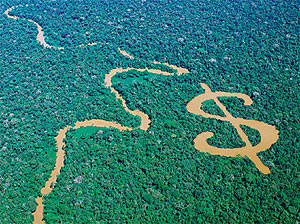
Let’s face it, ‘biodiversity’ is a slippery and abstract concept for most people. Hell, even most ecologists have a hard time describing what biodiversity means. To the uninitiated, it seems simple enough. It’s just the number of species, isn’t it?
Well, no. It isn’t.
Unfortunately, it’s far, far more complicated. First, the somewhat arbitrary pigeon-holing of organisms into Linnaean taxonomic boxes doesn’t really do justice to the genetic gradients within species, among populations and even between individuals. We use the pigeon-hole taxonomy because it’s convenient, that’s all. Sure, molecular genetics has revolutionised the concept, but to most people, a kangaroo is a kangaroo, a robin is a robin and an earthworm is an earthworm. Hierarchical Linnaean taxonomy prevails.
Then there’s the more prickly issue of α, β and γ diversity. α diversity essentially quantifies species richness within a particular area, whereas β diversity is the difference in α diversity between ecosystems. γ diversity is used to measure overall diversity for the different constituent ecosystems of a region. Scale is very, very important (see our recent book chapter for more on this). Read the rest of this entry »


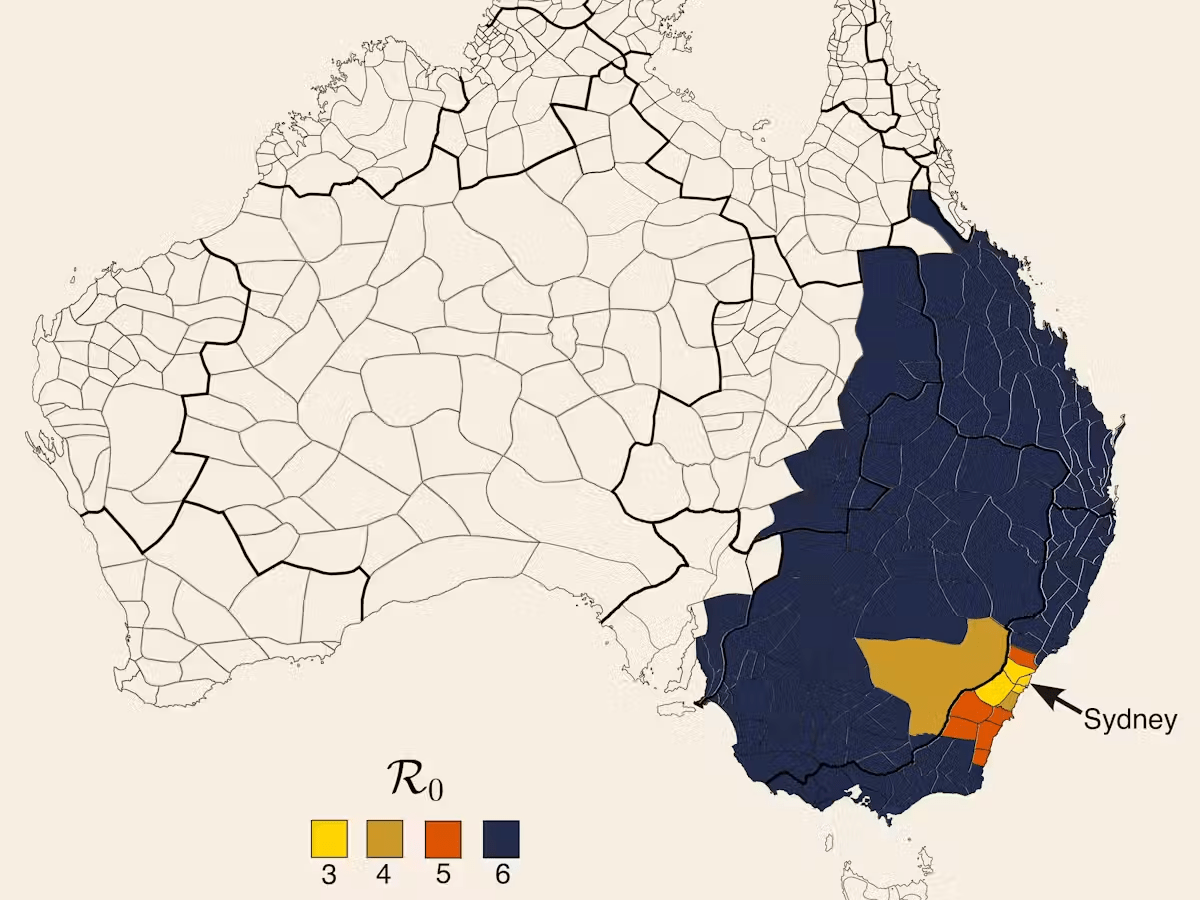
Hulton Archive / Getty Images We warn readers that the content of this study is confronting and may be distressing. In April 1789, the first smallpox epidemic among Aboriginal people in the Sydney region began, just 16 months after Europeans arrived on the First Fleet. Little is known of the true scale of the epidemic,…

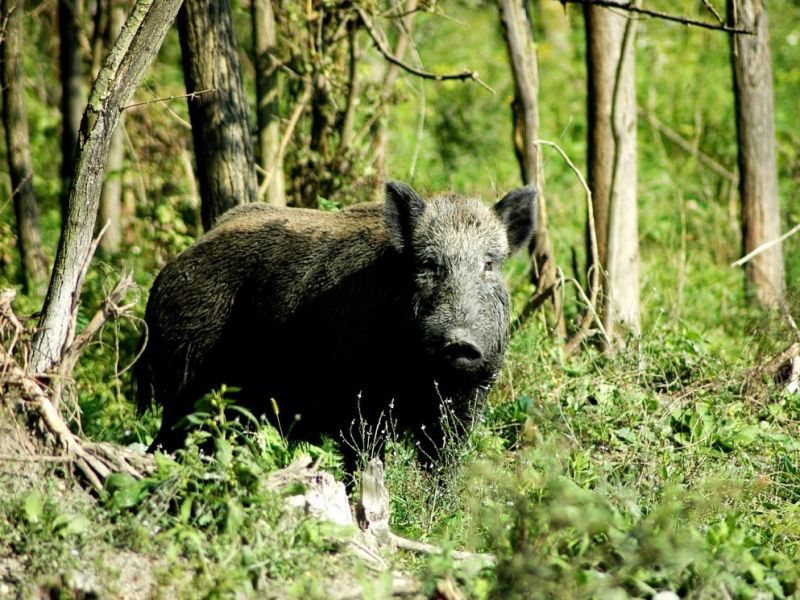
Just over two years ago I reported the ‘likely’ eradication of feral pigs from Australia’s third-largest (4,405 km2) island — Kangaroo Island. I indicated ‘likely’ because the program still required the proof-of-eradication phase to be completed before an official declaration could be made. Yesterday I had the immense honour to take part in the official…
Have you ever done any research that relied to any degree on Indigenous Knowledges? How did you cite those Knowledges, if at all? It’s probably time we rethink how we engage with Indigenous Knowledge systems. In a new article published in BioScience, we — a large group of Indigenous and non-Indigenous scholars in Australia —…