They always whinge about the maths

18 11 2010

If you don’t know what a differential equation is, you are not a scientist” – Hugh Possingham 2009

At the end of 2009 I highlighted a new book edited by good mates Navjot Sodhi and Paul Ehrlich, Conservation Biology for All, in which Barry Brook and I had written a chapter. Now, despite my vested interest, I thought (and still think) that it was one of the best books on conservation biology yet published, and the subsequent reviews appear to be validating my subjective opinion.

I’ve given snippets of the book’s contents, from Paul Ehrlich‘s editorial on the human population’s rising negative influences on biodiversity, to a more detailed synopsis of our chapter, The Conservation Biologist’s Toolbox, and I’ve reproduced a review printed in Trends in Ecology and Evolution.

The latest review by Nicole Gross-Camp of the University of East Anglia published in Ecology is no less flattering – in fact, it is the most flattering to date. So this is by no means a whinge about a whinge; rather, consider it an academic lament followed by a query. First, the review:

Reaching higher in conservation

If a book could receive a standing ovation—this one is a candidate. Sodhi and Ehrlich have created a comprehensive introduction to conservation biology that is accessible intellectually, and financially, to a broad audience—indeed it is Conservation biology for all. The book is divided into 16 chapters that can stand alone and are complementary when read in sequence. The authors make excellent use of cross citations of chapters, a useful and often overlooked feature in texts of this nature. In the introductory chapter, Sodhi and Ehrlich eloquently summarize the gravity of the conservation crisis and still retain an optimistic outlook that encourages the reader to continue. I particularly found their recognition of population growth, consumption, and ethics in the conservation arena refreshing and a step toward what will likely become the next major issues of discussion and research in the conservation field. Read the rest of this entry »


The Amazing Paul (Mc)Ehrlich

15 11 2010

© CJA Bradshaw

A few years ago when I first wrote about Paul Ehrlich in our book, Tropical Conservation Biology, I quickly became impressed. His track record is, without any exaggeration, truly awe-inspiring. With over 1000 articles published and almost 50 books, the man has been a scientific writing machine for his entire career. He’s also highly influential in the socio-political sphere, and counts among his close friends some of the most politically and scientifically powerful people on the planet. In a word, he’s easily among the world’s greatest living scientists.

Remember, this was my opinion all before I actually met the man. Travelling through central California last year, I was lucky enough to be invited by Paul’s close colleague, Gretchen Daily, to give a talk at their Stanford University lab. It was fortunate that Paul was about at the time and not off promoting his new book or traipsing through the mountains of Colorado chasing butterflies.

We hit it off immediately and it seemed became mates within the space of a few hours. I learnt then that he and his equally famous wife, Anne, were regular visitors to Australia and that he had a particular love affair going with many Australian wines. I invited him to come to Adelaide the following year, he agreed (and importantly, so did the director of the Environment Institute, Mike Young), and it came to pass. Read the rest of this entry »


One billion people still hungry

12 11 2010


overpopulationA few days ago, that printed mouthpiece of Murdoch’s News Corporation in Australia – The Australiani, attacked Paul Ehrlich with a spectacular piece of uninformed gibberish (‘Population bomb still a fizzer 40 years on‘) that we both feel compelled to contest.

The Australian, well-known for its ‘War on Science’, refused to give us the opportunity to respond officially in an Opinion Editorial, so we are compelled to fight back using the blogosphere and our collective networks (which, we might add, probably exceed the distribution of said newspaper). Frankly, it was no surprise that The Australian chose to ignore us.

The article in question was written by Oliver Marc Hartwich of the so-called ‘Centre for Independent Studies’, the hyper-conservative Australian propaganda machine reminiscent of the ultra-right wing American Enterprise Institute, made up of some of Australia’s most powerful business magnates and with no academic affiliation whatsoever. Anything vaguely left-of-centre and even remotely promoting environmental responsibility is considered a viable target.

Recently, we blew the whistle on an equally dangerous man and the institutes he represents – climate-denier Alan Oxley; he and the business interests he represents are responsible for more deforestation, biodiversity loss and financial inequity in South East Asia over the last few decades than almost any single group.

Now we turn our attention to expose the true colours of the Centre for Independent Studies and Mr. Hartwich. Read the rest of this entry »


The bomb is still ticking…

11 11 2010

Apologies for the silence over the last week – it’s been a whirlwind here with Paul Ehrlich visiting The University of Adelaide (amazing for a 78-year old man). In the meantime, Sharon Ede over at Post Growth wrote a great response to the LOLstralian‘s high-school effort to attack Paul a few days ago. Our response is coming shortly, but Sharon’s article is a great precursor.

More than forty years after its publication, the predictions made in Paul Ehrlich’s landmark book ‘The Population Bomb’ are still the subject of debate. Australian think-tank the Centre for Independent Studies (‘Population bomb still a fizzer 40 years on’, The Australian, 8 November, 2010), says Ehrlich’s warnings of dire consequences, including of mass starvation as a result of overpopulation, have not materialised:

“More than 40 years ago, American biologist Paul Ehrlich sketched a doomsday scenario for planet Earth in his book The Population Bomb…Since the publication of the book, the global population has nearly doubled but most of its gloomy predictions have not come true…”

By all means, let’s have a robust debate on population, both at the national and global level. Both are long overdue.

But let’s make it a sophisticated debate, grounded in the science we have available and a thorough understanding of all the issues in play.

According to the United Nations’ Population Division, the global population has increased from one billion in 1804 to over six billion in 2010.

It has taken most of human history to reach one billion people. It took just over a century to add the second billion.

The rate of population growth since then is such that it has taken only twelve years to add the most recent billion people.

The moderate UN scenario is for a population of 9 billion by 2050 – that’s within the lifetime of many of us. Read the rest of this entry »


Appalling behaviour of even the most influential journalists

4 11 2010


© J. Dunn


I’ve said it a few times in public and in private – one of the main reasons I, as a busy scientist with probably insufficient time to devote to a lay blog (no different to any busy scientist, mind), got into this whole gig in the first place was to fight back against dodgy reporters and shonky ‘journalists’.

For the most part I have to say that I’ve been represented reasonably well in the media – even if most of it is owned by a few highly questionable moguls who espouse wildly partisan views. There have been a few occasions though where I’ve been the victim of simply crap reporting, terribly investigation and downright dirty tactics done by so-called journalists. I’ve talked about this on a few occasions on ConservationBytes.com (see ‘Crap environmental reporting‘, ‘Science turned bad by the media‘ and ‘Poor media coverage promotes environmental apathy and untruths‘).

In a bit of a coincidental turn of events, Bill Laurance sent me an interesting piece published in Nature on this very subject just while Paul Ehrlich and I (most of you know that Paul is in Adelaide at the moment) were talking about ways in which scientists could turn around public opinion from one of suspicion of science, logic and intellectualism, to one applauding the application of objective techniques to solve the world’s worst problems. Paul half-jokingly said “what if there is no solution?” – but I suspect that one such as he has found that constant writing, outreach and excellent research are the only ways to tear down the walls of ignorance, despite all the stupidity of certain elected officials. Two steps forward, one step back.

Bill suggested ConservationBytes would be a good place to reproduce this excellent article by Simon Lewis of the University of Leeds, and I agree. So here it is: Read the rest of this entry »



Invaders beware

1 11 2010

Recently, the Global Ecology Group at the University of Adelaide has had the immense privilege and pleasure of welcoming a new senior member to the fold – Dr. Phill Cassey. The slightly Pommefied-Kiwi-Now-Coming-To-Terms-With-Being-Australian ;-)  represents a wonderful new addition to our lab’s expertise and vision.

Phill is a distinguished Australian Research Council Future Fellow. He conducts research on the subject of human contributions to changes in biodiversity through the dual processes of species extinction and introduction. Phill’s research encompasses a broad range of analytical and applied skills and has led to significant advances in the discipline of global change biology.

Phill has also hit the ground running here in Adelaide, and now offers two PhD projects for people interested to work at the forefront of invasive species research in Australia. Students will be members of the School for Earth and Environmental Sciences, which includes world-class researchers in the disciplines of Ecology and Evolutionary Biology and Global Ecology as well as ongoing research links with the South Australian Museum, Adelaide Zoo, and State Herbarium of South Australia. Successful candidates will be part of a strong research group with a highly successful and innovative culture of scientific communication and study. Read the rest of this entry »



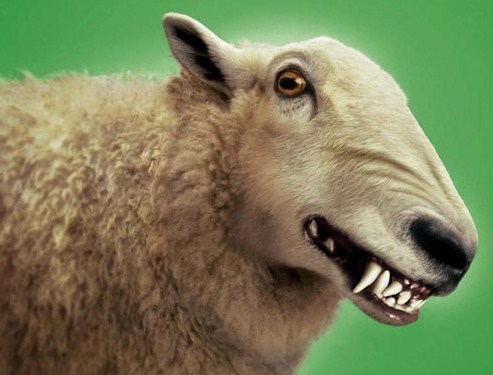
Wolves masquerading as sheep: the fallout

29 10 2010


© New Zealand Films


Well, we’ve managed to stimulate quite a lively conversation after dropping the Open Letter about Scientific Credibility and the Conservation of Tropical Forests regarding the questionable tactics employed by Alan Oxley and his industrial lobbyist organisations.

Mr. Oxley has responded with vitriol, hand-waving, red herrings and straw men, and failed to address even a single one of our accusations. I am particularly amused by his insinuation that we, the proven scientists, don’t know what science is – but that he does.

Below I reproduce Mr. Oxley’s reaction to our original letter, followed by our response.

I’ll let you, the reader, decide who is most reasonable.

REACTION FROM ALAN OXLEY

There is too much pseudo-scientific hype today about environmentalism and forestry and not enough fact.

I put this double-barrelled question to the Group of 12 scientists who have rather laboriously wandered over the work of World Growth: What biodiversity is expressly protected by a global cessation of conversion of forest land to other purposes and how is that biodiversity scientifically measured? And let’s have some technical response, not political blather. Read the rest of this entry »


Wolves in sheep’s clothing: industrial lobbyists and the destruction of tropical forests

25 10 2010


As of this morning, a group of distinguished scientists (which I have had the honour of being invited to join) has released an Open Letter to be published in various media outlets worldwide. The letter addresses some of our major concerns over the misinterpretation of facts, and openly misleading statements, by proponents of deforestation in the Asian tropical region. Professor Bill Laurance, an old favourite on ConservationBytes.com, has led the charge and organised a most impressive and shocking list of assertions. I produce the letter below – I encourage all my readers to distribute it as far and wide as possible in the social media-verse.

An Open Letter about Scientific Credibility and the Conservation of Tropical Forests

To whom it may concern:

As professional scientists employed by leading academic and research institutions, we are writing to alert the general public about some of the claims and practices being used by the World Growth Institute (WGI) and International Trade Strategies Global (ITS), and their affiliated leadership.

WGI and ITS operate in close association. ITS is owned by Alan Oxley, an Australian industrial lobbyist, former trade representative, and former Ambassador who also heads WGI. According to its website1, ITS also has “close associations” with several politically conservative US think tanks, including the American Enterprise Institute, the Competitive Enterprise Institute, and the Heritage Foundation.

In our personal view, WGI and ITS — which are frequently involved in promoting industrial logging and oil palm and wood pulp plantations internationally — have at times treaded a thin line between reality and a significant distortion of facts. Specifically, we assert that: Read the rest of this entry »


Yangtze River, colossal dams and famous scientists

23 10 2010


© CJA Bradshaw


Apologies for the silence over the last week – I’ve been a little preoccupied with some business in China. I’ll devote an entire post to my recent trip there (actually, I’m still there – Beijing to be precise), but I thought I’d just explain my absence and provide a little post to sate you until next week.

It’s worth mentioning that I had the enlightening experience of travelling down the Yangtze River between Chongqing and Sandouping last week – this is the area that was flooded by the world’s largest hydro-electric project, the Three Gorges Dam. This is my fourth trip to China and I’ve usually come away with the adjective ‘big’ describing pretty much everything I see here (big agriculture, big population, big pollution, big hotels, big cities…); however, in this case, ‘big’ doesn’t even come close. It’s bloody massive, and the ecological devastation (not to mention the 1.3 million people it displaced) is hard to describe in words. Sure, there are beautiful bits left (see the accompanying photo), but most of the damage is under water and along the banks of the mighty (and now, a lot mightier) Yangtze River. Read the rest of this entry »


September 2010 Issue of Conservation Letters out

13 10 2010

Conservation Lettersfifth issue (September) of Volume 3 is now out. Some good ones here.

CJA Bradshaw


The importance of being serious in science

11 10 2010

CJA Bradshaw1,2

1The Environment Institute and School of Earth and Environmental Science, University of Adelaide, Adelaide, South Australia, Australia

2South Australian Research and Development Institute, Henley Beach, South Australia, Australia

Introduction

The rising influence of the conservative voice in science politics (Prick et al. 1981; Wanker, Apcin, Jennerjahn & Waibel 1998) compels the modern empiricist to conduct experimentation, publication and general science communication in an entirely open and highly professional manner (Pain 1996). However, scientists having not yet established a solid reputation for objective excellence (Loser, Jennings, Strauss & Sandig 1998), might find this approach challenging. Of course, scientific mentoring (God, Gumm & Stump 2001; Lancelot et al. 2005) has assisted bringing younger scientists to the fore of public science debates (Odour 1996), even though their ability to convince public dissenters (Yob et al. 2001) might appear futile (Russell & Waste 1998) without employing unconventional communication tools.

To measure a scientist’s capacity to address misinformation (Wrong, Norden & Feest 1994) quickly, efficiently and wittily, here I present a novel analysis measuring the degree of humour employed by scientists as a function of years elapsed since obtaining a PhD. I hypothesise that the use of humour will decrease with age.

Methods

I used the ISI® Web of Science search tool to compare 153,496 scientists’ output and impact scores (assessed using the m-index; Crap et al. 1995). I then manually assigned an entirely subjective measure of comedic content for each paper’s title and abstract, summing over each author’s publication list. This, the Subjective Humour Index Tally (S.H.I.T) was then regressed against the number of years elapsed since PhD. Read the rest of this entry »


Conservation Biology Students’ Wonder Wiki

8 10 2010


© H Grebe


After the last full day of Supercharge Your Science in Townsville a few weeks ago, the other presenters and I, plus a few keen punters, headed to the pub for a few well-earned beers. There I had the distinct pleasure of meeting up again with Piero Visconti, a PhD candidate at James Cook University and in the Centre of Excellence for Coral Reef Studies (we had met previously in July at the International Congress for Conservation Biology in Edmonton).

Piero, in his typically Italian exuberance, was excited to tell me about a Society for Conservation Biology initiative especially geared toward conservation biology students. I said I had never heard of the idea, so suggested Piero write a little post for ConservationBytes.com telling the world about it. Piero has come through with the goods, and so I give you the conservation biology students’ wiki:

About a year ago in Prague at the European Congress of Conservation Biology, a group of students met informally to discuss what the Society for Conservation Biology (SCB) could do to help students during their career. The group came up with a bunch of good ideas, but one especially turned out to be a great success: a wiki for conservation biology students.

This wiki would be accessible and open to everyone’s contribution. It would host anything from upcoming events, scholarship offers, grant notices, jobs adverts, advice on writing abstracts, presentations for conferences…etc., etc. The idea there was that a wiki would be a great way to provide students with a continuous and interactive experience with their peers.

Also, there are plenty of useful resources out there for conservation biology students; they just need to be organised into a single, easy-to-access and open website. Finally, with international SCB conferences occurring every two years from 2011, the SCB needed a fast and interactive media platform to stay in touch with its student members and listen to their requests. Read the rest of this entry »


More rain forest regeneration opportunities

5 10 2010

Last November I wrote about an exciting conservation research endeavour (see ‘How to restore a tropical rain forest‘)  in which I am involved called the Thiaki Rain Forest Regeneration Project taking place as we speak in the hinterland of north Queensland’s Atherton Tableland. I personally have done next to nothing on the project yet (UQ’s Margie Mayfield is leading the charge), so I can’t really update you on all the nitty-gritty of our progress. Regardless, I can say that some of the planting tests have been done, the species have been chosen and are growing happily in the nursery reading for planting in January 2011, and the baseline biodiversity assessments are well under way.

Well, prior to our Supercharge Your Science extravaganza in Cairns and Townsville a few weeks ago, I visited Penny & Noel at Thiaki for a catch up, a discussion of what’s been happening and what’s about to happen. It was a great weekend (the family came along too) with good food, wine, ticks and leeches (biodiversity in action), and I’m getting more and more excited about what this project will deliver over the coming years.

In the meantime, a couple of ‘opportunities’ have arisen; in other words – we need some good PhD students to tackle some outstanding issues with the project. Read the rest of this entry »


The balancing act of conservation

1 10 2010

Image via Wikipedia

Navjot Sodhi & Paul Ehrlich‘s book, Conservation Biology for All, has just been reviewed in Trends in Ecology and Evolution. I’ve blogged about the book before and our contributing chapter (The conservation biologist’s toolbox), so I’ll just copy the very supportive review here by Rosie Trevelyan.

Conservation Biology for All is a textbook that aims to be a one-stop shop for conservation education. The book is packed with information, is wide ranging, and includes most emerging issues that come under the umbrella of conservation biology today. Sodhi and Ehrlich have brought together a total of 75 experts from many disciplines to provide a smorgasbord of up-to-date conservation concepts and case studies. Leading conservation biologists contribute to every chapter either as authors of the main text or of the boxes that give real life examples of the conservation issue being covered. The boxes add hugely to the information included in each chapter, and many are well worth returning to on their own. Read the rest of this entry »


Humans 1, Environment 0

27 09 2010

© flickr.com/photos/singapore2010

While travelling to our Supercharge Your Science workshop in Cairns and Townsville last week (which, by the way, went off really well and the punters gave us the thumbs up – stay tuned for more Supercharge activities at a university near you…), I stumbled across an article in the Sydney Morning Herald about the state of Australia.

That Commonwealth purveyor of numbers, the Australian Bureau of Statistics (ABS), put together a nice little summary of various measures of wealth, health, politics and environment and their trends over the last decade. The resulting Measures of Australia’s Progress is an interesting read indeed. I felt the simple newspaper article didn’t do the environmental components justice, so I summarise the salient points below and give you my tuppence as well. Read the rest of this entry »


Supercharge your science: Blogito ergo sum

22 09 2010

Alas, I didn’t make up that wonderful expression (can anyone tell me who did?), but it was a very appropriate title for the presentation I gave today at the Supercharge Your Science workshop held at the JCU Cairns campus. For those of you who have never read any Descartes (I will forgive you – boring as philosophy gets), it comes from his well-known Cogito ergo sum (I think therefore I am/exist) statement. Someone cleverly adapted it to blogging.

So this post really just focuses on my component of the 5-presentation workshop extravaganza. Bill Laurance gave his two popular Interacting with the media and How to write a paper presentations (podcasted here), Mike Seyfang gave a great look at the current and future applications of social media to science, Jennifer Lappin showed how her organisation, the ARC Centre of Excellence for Coral Reef Studies, really blitzed the world with top-notch media engagement, and I gave my advice on science blogging (why, what, how, do, don’t, where). The full webinar is reproduced below via Slideshare.

Where taking the show on the road and will be giving the workshop again in Townsville on Friday. I dare say too that we’ll be giving it at many other venues in Australia and perhaps overseas over the coming months. The interest seems massive.

Don’t forget to follow and engage using the associated Twitter hashtag #4ss.

CJA Bradshaw


Cartoon guide to biodiversity loss IX

19 09 2010

The latest batch of six cartoons…

See also full stock of previous ‘Cartoon guide to biodiversity loss’ compendia here.

Read the rest of this entry »


Biodiversity: from conservation science to action

11 09 2010

© tidechaser.blogspot.com

About 3 weeks ago I blogged about Guillaume Chapron‘s vision to notch up conservation implementation around the globe. After that little piece Guillaume invited me and a few others (including one of Australia’s own conservation gurus, Hugh Possingham) to co-author a piece on the new Nature Network‘s ‘Soapbox Science‘ blog. The Soapbox Science blog is:

“… a new group blog, covering the whole of science. Over the coming months, we’ll be inviting researchers from all over the world to write one-off posts. The subjects may be controversial, opinionated, speculative, or just plain interesting, and may be written by any scientist with something to say.”

We managed to grab the first post in this endeavour, so I reproduce it here for ConservationBytes.com readers. Enjoy!

Ecosystem degradation and species extinction rates are steadily accelerating, mainly as a result of unbounded human population growth, extravagant consumption patterns and associated land and sea degradation. Researchers are pushing science forward in an attempt to reverse the biodiversity ‘crisis’. In their papers they systematically stress how their results can serve to enhance conservation management or implement new corrective actions to reduce biodiversity loss. Still, they are becoming increasingly frustrated that their published research is having little, if any impact in halting the ongoing sixth mass extinction. Everything remains purely theoretical and is not leading to direct action. Read the rest of this entry »


Supercharge Your Science

10 09 2010

In a little under two weeks I’ll be co-running a workshop of the same name at James Cook University at both the Cairns and Townsville campuses.

With me will be super-scientist, media-guru and anti-deforestation advocate, Distinguished Professor Bill Laurance (who you might remember came to Adelaide earlier this year and gave some great talk), ex-Microsoft man and social media guru (and self-entitled ‘geezer’), Mike Seyfang, and the Media Coordinator for the Australian Research Council Centre of Excellence for Coral Reef Studies, Jennifer Lappin.

Should be heaps of fun (and hopefully highly educational). Basically we’ll be preaching to aspiring and well-established researchers in many areas about how they can maximise the impact of their scientific research, in terms of media, education, outreach and policy.

I’ll be talking about science blogging (and blogging science!), other social media uses in science, and some of my personal experiences with ConservationBytes.com. I haven’t yet finalised my presentation, but I think it’ll be insightful.

Here’s the official blurb for the 1-day workshop: Read the rest of this entry »


Student opportunities with Australian Wildlife Conservancy

8 09 2010

A colleague of mine, Dr. Matt Hayward of the Australian Wildlife Conservancy (AWC), asked me to circulate some Honours, MSc and PhD student project opportunities. I thought this would be best done by publishing the call as a blog post.

The AWC is a non-government, non-profit organisation dedicated to the conservation of Australia’s wildlife and their habitats. AWC’s south-east region has a team of 7 ecologists who work closely with the land managers to carry out AWC’s Conservation and Science Program. The Science Program includes strategic research designed to help us manage threatened species more effectively. Several of these research projects are suitable for Honours, Masters or PhD projects.

This prospectus provides an outline of the student projects that are currently on offer in the south-east region. The majority of the projects are based on one sanctuary, although some aspects of the research may be done on other AWC sanctuaries and/or government conservation areas.

AWC will partially support these projects with equipment, staff time and expertise, and accommodation. In some cases, AWC may also provide some vehicle use and office facilities onsite at The Scotia Field Research Centre. We anticipate these projects will be collaborative efforts with input from students, academics and AWC staff, with appropriate acknowledgement for all involved. These projects are offered on a first in, first approved basis and have been offered to multiple universities.

More details on the sanctuaries and AWC are available here. If you are keen do one of these projects, please contact Matt Hayward and we will then formulate a research proposal and research agreement. Eight project descriptions follow. Read the rest of this entry »