One thing that has simultaneously amused, disheartened, angered and outraged me over the past decade or so is how anyone in their right mind could even suggest that scientists band together into some sort of conspiracy to dupe the masses. While this tired accusation is most commonly made about climate scientists, it applies across nearly every facet of the environmental sciences whenever someone doesn’t like what one of us says.
First, it is essential to recognise that we’re just not that organised. While I have yet to forget to wear my trousers to work (I’m inclined to think that it will happen eventually), I’m still far, far away from anything that could be described as ‘efficient’ and ‘organised’. I can barely keep it together as it is. Such is the life of the academic.
More importantly, the idea that a conspiracy could form among scientists ignores one of the most fundamental components of scientific progress – dissension. And hell, can we dissent!
Yes, the scientific approach is one where successive lines of evidence testing hypotheses are eventually amassed into a concept, then perhaps a rule of thumb. If the rule of thumb stands against the scrutiny of countless studies (i.e., ‘challenges’ in the form of poison-tipped, flaming literary arrows), then it might eventually become a ‘theory’. Some theories even make it to become the hallowed ‘law’, but that is very rare indeed. In the environmental sciences (I’m including ecology here), one could argue that there is no such thing as a ‘law’.
Well-informed non-scientists might understand, or at least, appreciate that process. But few people outside the sciences have even the remotest clue about what a real pack of bastards we can be to each other. Use any cliché or descriptor you want – it applies: dog-eat-dog, survival of the fittest, jugular-slicing ninjas, or brain-eating zombies in lab coats.
The saying “it isn’t rocket science” is a common cliché in English to state, rather sarcastically, that something isn’t that difficult (with the implication that the person complaining about it, well, shouldn’t). But I really think we should change the saying to “it isn’t ecology”, for ecology is perhaps one of the most complex disciplines in science (whereas rocket science is just ‘complicated’). One of our main goals is to predict how ecosystems will respond to change, yet what we’re trying to simplify when predicting is the interactions of millions of species and individuals, all responding to each other and to their outside environment. It becomes quickly evident that we’re dealing with a system of chaos. Rocket science is following recipes in comparison.
The prevailing wisdom is that big species have slower life history rates (reproduction, age at first breeding, growth, etc.), and so cannot replace themselves fast enough when the pace of their environment’s change is too high. Small, rapidly reproducing species, on the other hand, can compensate for higher mortality rates and hold on (better) through the disturbance. Read the rest of this entry »
Scientists Statement on the Roundtable on Sustainable Palm Oil’s Draft Revised Principles and Criteria for Public Consultation – November 2012
As leading scientists with prominent academic and research institutions around the world, we write to encourage the Roundtable on Sustainable Palm Oil (RSPO) to use this review of the RSPO Principles and Criteria as an opportunity to ensure that RSPO-certified sustainable palm oil is grown in a manner that protects tropical forests and the health of our planet. We applaud the RSPO for having strong social and environmental standards, but palm oil cannot be considered sustainable without also having greenhouse gas standards. Nor can it be considered sustainable if it drives species to extinction.
Tropical forests are critical ecosystems that must be conserved. They are home to millions of plant and animal species, are essential for local water-cycling, and store vast amounts of carbon. When they are cleared, biodiversity is lost and the carbon is released into the atmosphere as carbon dioxide, a greenhouse gas that drives climate change.
Moreover, tropical areas with peat soils store even larger amounts of carbon and when water is drained and the soils exposed, carbon is released into the atmosphere for several decades, driving climate changei. In addition, peat exposed to water in drainage canals may decay anaerobically, producing methane – a greenhouse more potent than carbon dioxide.
Palm oil production continues to increase in the tropics, and in some cases that production is directly driving tropical deforestation and the destruction of peatlandsii. Given the large carbon footprint and irreparable biodiversity loss such palm oil production cannot be considered sustainable. Read the rest of this entry »
Illegal logging is booming, as criminal organisations tighten their grip on this profitable global industry. Hence, it comes just in the nick of time that Australia, after years of debate, is on the verge of passing an anti-logging bill.
Illegal logging is an international scourge, and increasingly an organised criminal activity. It robs developing nations of vital revenues while promoting corruption and murder. It takes a terrible toll on the environment, promoting deforestation, loss of biodiversity and harmful carbon emissions at alarming rates.
Moreover, the flood of illegal timber makes it much harder for legitimate timber producers. The vast majority of those in Australia and New Zealand have difficulty competing in domestic and international markets. That’s one reason that many major Aussie retail chains and brands, such as Bunnings, Ikea-Australia, Timber Queensland, and Kimberly-Clark, are supporting the anti-illegal logging bill.
Illegal logging denies governments of developing nations revenue worldwide. Bill Laurance.
Illegal logging thrives because it’s lucrative. A new report by Interpol and the United Nations Environment Programme, “Green Carbon, Black Trade”, estimates the economic value of illegal logging and wood processing to range from $30 billion to $100 billion annually. That’s a whopping figure — constituting some 10-30% of the global trade in wood products.
Illegal logging plagues some of the world’s poorest peoples, many of whom live in tropical timber-producing countries. According to a 2011 study by the World Bank, two-thirds of the world’s top tropical timber-producing nations are losing at least half of their timber to illegal loggers. In some developing countries the figure approaches 90%.
Many nations export large quantities of timber or wood products into Australia. These include Indonesia, Papua New Guinea and the Solomon Islands, all of which are suffering heavily from illegal logging. Many Chinese-made wood and paper imports also come from illegal timber. Indonesian President Susilo Bambang Yudhoyono has been pleading with timber-importing nations like Australia to help it combat illegal logging, which costs the nation billions of dollars annually in lost revenues.
The new Interpol report shows just how devious illegal loggers are becoming. It details more than 30 different ways in which organised criminal gangs stiff governments of revenues and launder their ill-gotten gains.
The variety of tactics used is dizzying. These tactics include falsifying logging permits and using bribery to obtain illegal logging permits, logging outside of timber concessions, hacking government websites to forge transportation permits, and laundering illegal timber by mixing it in with legal timber supplies.
The good news however, is that improving enforcement is slowly making things tougher for illegal loggers.
Accustomed to dealing with criminal enterprises that transcend international borders, Interpol is bringing a new level of sophistication to the war on illegal logging. This is timely because most current efforts to fight illegal logging – such as the European Union’s Forest Law and various timber eco-certification schemes – just aren’t designed to combat organised crime, corruption and money laundering.
The Interpol report urges a multi-pronged approach to fight illegal loggers. A key element of this is anti-logging legislation that makes it harder for timber-consuming nations and their companies to import ill-gotten timber and wood products. Read the rest of this entry »
As is their wont, Nature declined to publish these comments (and our responses) in the journal itself, but the new commenting feature at Nature.com allowed the exchange to be published online with the paper. Cognisant that probably few people will read this exchange, Bill Laurance and I decided to reproduce them here in full for your intellectual pleasure. Any further comments? We’d be keen to hear them.
In this paper, Laurance and co-authors have tapped the expert opinions of ‘veteran field biologists and environmental scientists’ to understand the health of protected areas in the tropics worldwide. This is a novel and interesting approach and the dataset they have gathered is very impressive. Given that expert opinion can be subject to all kinds of biases and errors, it is crucial to demonstrate that expert opinion matches empirical reality. While the authors have tried to do this by comparing their results with empirical time-series datasets, I argue that their comparison does not serve the purpose of an independent validation.
Using 59 available time-series datasets from 37 sources (journal papers, books, reports etc.), the authors find a fairly good match between expert opinion and empirical data (in 51/59 cases, expert opinion matched empirically-derived trend). For this comparison to serve as an independent validation, it is crucial that the experts were unaware of the empirical trends at the time of the interviews. However, this is unlikely to be true because, in most cases, the experts themselves were involved in the collection of the time-series datasets (at least 43/59 to my knowledge, from a scan of references in Supplementary Table 1). In other words, the same experts whose opinions were being validated were involved in collection of the data used for validation.
Much of conservation science boils down to good decision making: when, where and how we ‘set aside’ terrestrial or marine areas for specific protection against the ravages of human endeavour. This is the basis for the entire sub-discipline of conservation planning and prioritisation, and features prominantly in most aspects of applied conservation and restoration.
In other words, we do all this science to determine where we should emplace protected areas, lobby for getting more land and sea set aside so that we have ‘representative’ amounts (i.e., to prevent extinctions), and argue over the best way to manage these areas once established.
But what if this pinnacle of conservation achievement is itself under threat? What if many of our protected areas are struggling to insure biodiversity against human consumption? Well, it’d be a scary prospect, to say the least.
Think of it this way. We buy insurance policies to buffer our investments against tragedy; this applies to everything from our houses, worldly possessions, cars, livestock, health, to forest carbon stores. We buy the policies to give us peace of mind that in the event of a disaster, we’ll be bailed out of the mess with a much-needed cash injection. But what if following the disaster we learn that the policy is no good? What if there isn’t enough pay-out to fix the mess?
In biodiversity conservation, our ‘insurance’ is largely provided by protected areas. We believe that come what may, at least in these (relatively) rare places, biodiversity will persist despite our relentless consumerism.
Unfortunately, what we believe isn’t necessarily true.
I’ve had the good fortune of being involved now in a several endeavours funded by the Australian Centre for Ecological Analysis and Synthesis (ACEAS); two of those were workshops targeting specific questions regarding estimating modern extinction rates and examining the effects of genetic bottlenecks on Australian biota. The third was a bit different, to say the least – it was a little along the lines of ‘build it, and they will come‘. In other words, what happens when you bung 40 loosely associated researchers in a room for two days? Does anything of substance result, or does it degenerate into a mere talk-fest. I’m happy to say the former. The details of the ACEAS ‘Grand Workshop‘ are now being finalised in a paper that should be submitted by the end of the month. The ACEAS report is reproduced below.
—
The Grand ACEAS Workshop was something of an experiment: what will happen when we bring 30 of Australia’s top scientists working on land management issues into the same room?
The Grand Workshop participants came from academia, research institutions and the government, and had all received ACEAS funding for working groups. David Keith, Ted Lefroy, Jasmyn Lynch, Wayne Meyer and Dick Williams were amongst the attendees of the two-day workshop.
And when this group of people came together wanting to analyse and synthesise ecological data, great things happened.
“We decided to focus on how carbon pricing legislation will affect land use change and how will that spill over into biodiversity persistence”, said Professor Corey Bradshaw, Director of Ecological Modelling at The University of Adelaide, who led the synthesis activity at the Grand ACEAS Workshop.
“Will carbon pricing lead to good outcomes for biodiversity, or negative ones, or will it have no bearing whatsoever?”
The workshop participants broke into five groups to discuss how the carbon tax legislation will change land use when it is introduced in July 2012, and the potential impact on biodiversity.
Some of the questions asked included:
Is it enough simply to allow plants to re-grow to be eligible for carbon credits?
How will an increase in forestry plantations impact biodiversity, water catchments and fire regimes?
Will there be more kangaroo grazing to reduce methane emissions and erosion, replacing hard-hoofed livestock?
Can you receive carbon credits for shooting large feral animals like goats, camels, deer and boars?
The groups found many opportunities for positive biodiversity outcomes with the carbon sequestration activities encouraged by carbon pricing, but there are also many potential ‘bio-perversities’. Read the rest of this entry »
Some of you might be aware that the Australian Commonwealth Government has just released its Draft National Wildlife Corridors Plan for public comment, but many of you might not really know what a ‘corridor’ constitutes.
Wildlife or biodiversity ‘corridors’ have been around for a long time, at least in terms of proposals. The idea is fairly simple to conceive, but very difficult to implement in practice.
At least for as long as I’ve been in the conservation biology biz, ‘corridors’ have been proffered as one really good way to make broad-scale landscape restoration plausible and effective for (mainly) forest-dwelling species which have copped the worst of deforestation trends around Australia and the world. The idea is that because of intense habitat fragmentation, isolated patches of primary (or at least, reasonably intact secondary) forest can be linked by planting some sort of long corridor of similar habitat between them. Then, all the little creatures can merrily make their way back and forth between the patches, thus rescuing each other from extinction via migration. Read the rest of this entry »
Here’s another great post from Salvador Herrando-Pérez. It is interesting that he’s chosen an example species that was once (a long, long time ago in a galaxy far, far away) of great interest to me (caribou – see ancient papers a, b, c, d). But that is another story. Take it away, Salva.
—
—Figure 1. Caribou (reindeer) are ungulates weighing up to ~ 100 kg. They live in tundra and taiga in Finland, Greenland, Finland, Norway, Mongolia, Russia, Canada and USA (extinct in Sweden). The species is globally stable (‘Least Concern’, IUCN Red List), but the subspecies of woodland caribou (Rangifer tarandus caribou) is threatened in North America. Schneider and colleagues’ 7 study encompasses ~ 3,000 individuals in 12 herds (75 to 450 individuals per herd), occupying ~ 100.000 km2 of conifer forest and peatland (3,000 to 19,000 km2 per herd). Two ecotypes are recognized regionally22, namely migratory mountain herds (mostly from mountains and foothills in west-central Alberta), and non-migratory boreal herds (mostly from peatlands in central and northern Alberta). The photo shows a group of caribous grazing on subalpine vegetation from Tonquin Valley, Jasper National Park (Alberta, Canada). Photo courtesy of Saakje Hazenberg.—
As conservation biology keeps incorporating management and economical principles from other disciplines, it stumbles with paradoxes such that investing on the most threatened components of biodiversity might in turn jeopardize the entire assets of biodiversity.
At the end of 2011, newspapers and TVs echoed an IUCN report cataloguing as ‘extinct’ or ‘near extinct’ several subspecies of rhinos in Asia and Africa. To many, such news might have invoked the topic: “how badly governments do to protect the environment”. However if, to avoid those extinctions, politicians had to deviate funds from other activities, what thoughts would come to the mind of workers whose salaries had to be frozen, school directors whose classroom-roof leakages could not be repaired (e.g., last winter at my niece’s school in Spain), colonels whose last acquisition of ultramodern tanks had to be delayed, or our city council’s department who had to cancel Sting’s next performance.
Thus, there are three unquestionable facts regarding species conservation:
the protection of species costs money;
governments and environmental organisations have limited budgets for a range of activities they deem necessary; and
our way of conserving nature is failing because, despite increasing public/private support and awareness, the rate of destruction of biodiversity is not decelerating1,2.
One of the modern debates among conservationists pivots around how to use resources efficiently3-6. Schneider and colleagues7 have dealt with this question for woodland caribou (Rangifer tarandus) in Canada. A total of 18 populations of this ungulate persist in the Canadian province of Alberta, all undergoing demographic declines due to mining extractions (oil, gas and bitumen), logging and wolf predation. The species is listed as ‘threatened’ regionally and nationally. The Alberta Caribou Recovery Plan (2004-2014) is attempting to protect all herds. Under such a framework, Schneider et al.7 predicted that woodland caribou would be regionally extirpated in less than a century.
Furthermore, they estimated the costs of making each herd viable (Fig. 1), with a triple revelation. To save all herds from extinction would need ~ CA$150,000 million (beyond the available budget). The most threatened herds are among the most expensive to protect (within present management approach). Some herds would be secured through modest investment for two decades. Overall, their study suggests that Alberta’s woodland caribou would be eligible for triage, i.e., at the subpopulation level8. Read the rest of this entry »
This last post before Easter is something I’ve thought more and more about over the last few years. I wouldn’t have given it much time in the past, but I’m now convinced roads are one of the humanity’s most destructive devices. Let me explain.
Before I had a good grasp of extinction dynamics, I wouldn’t have attributed much import to the role of roads in conservation. I mean, really, a little road here and there (ok, even a major motorway) couldn’t possibly be a problem? It’s mostly habitat destruction itself, right?
I’ve mentioned this idea before, but it’s nice when some real data support a prediction (no matter how gloomy that prediction might have been). It’s what drives scientists toward discovery (or at least, it’s what I find particularly appealing about my job).
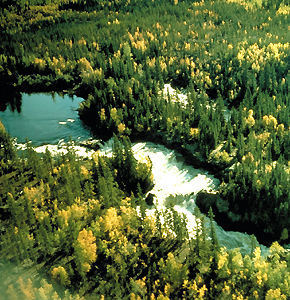
Several years ago, my colleagues (Navjot Sodhi† and Ian Warkentin) and I wrote a major review in TREE about the fate of the world’s ‘second’ lung of the planet, the great boreal forests of Russia, Canada & Scandinavia. We discussed how fragmentation was increasing at an alarming rate, and that although most species there are still relatively intact, we stand to lose a lot of its biodiversity if we don’t halt the fragmenting processes soon. We wrote more on the subject in a paper to appear imminently in Biological Conservation.
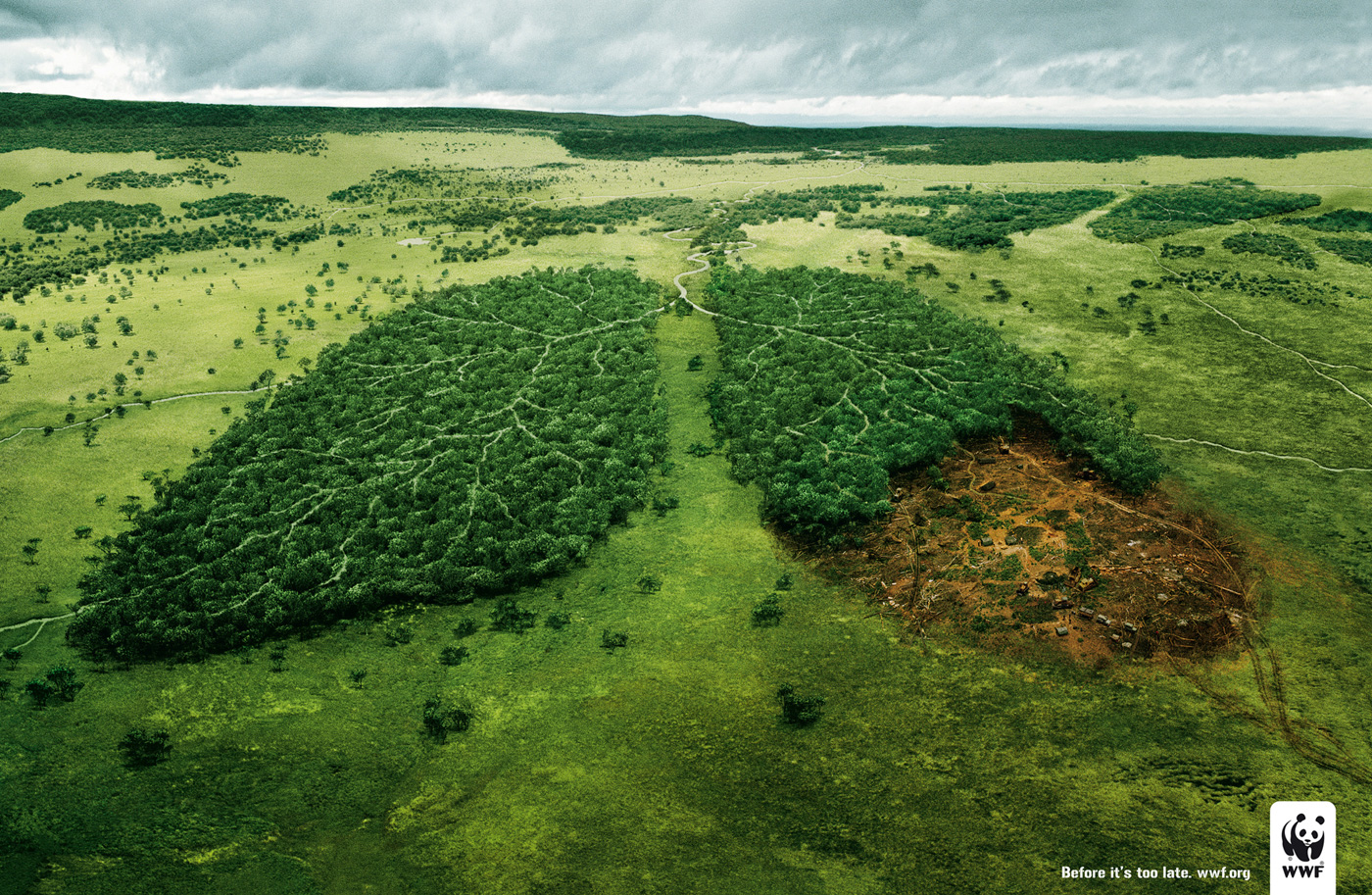
Another component though that we raised in the TREE paper was the boreal forests were very much in danger of turning into a net carbon producer. You see, the ‘lung’ analogy is very pertinent because on average, the growth of the massive expanse of the vegetation in the forest generally takes up much more atmospheric carbon that it exudes through decay and burning (for as we all know, plants take up carbon dioxide to produce sugars during photosynthesis, and produce oxygen as a ‘waste’ product). However, as we fragment, cut down and burn the forest, it can end up producing more than it takes up (i.e., turning from a ‘sink’ to a ‘source’). We highlighted several studies indicating how insect outbreaks and human-exacerbated fire intensities and frequencies could conceivably do this.
Australia’s > 800,000-km road network would go 60 times around the equator of our planet. Confined to the boundaries of any one country, roads are a conspicuous component of the landscape, and shape the dispersion, survival and reproduction of many plants and animals in urban and remote areas.
Those who drive (or are driven by) will be familiar with the image of a crushed kangaroo on the roadside (a hedgehog in Europe), or the sticky mosaic of insects smashed against the windscreen after a high-speed run. Mortality by collision is one of the many effects that roads can have on the demography of organisms – including humans. Those effects encompass
physical alteration of terrestrial and aquatic habitats,
chemical pollution leakage during road construction and maintenance, and from asphalt compounds during storms,
alteration of animal behaviour (e.g., change in home range, or in patterns of flight or vocalisation),
access to remote areas by hunters, fishermen and gatherers in general, and
intense habitat fragmentation1-3.
However, some species get around those negative impacts by using the roads as pathways to new territories, thereby eluding barriers like seas, mountains, rivers, dense vegetation, or competition for vital resources with other species. Read the rest of this entry »
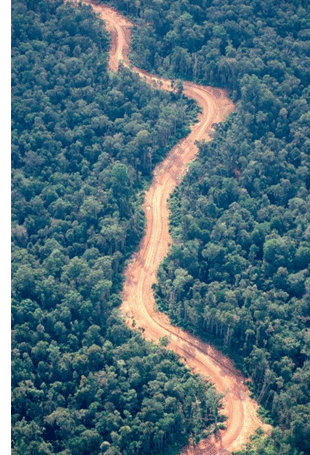
We live in an era of unprecedented road and highway expansion — an era in which many of the world’s last tropical wildernesses, from the Amazon to Borneo to the Congo Basin, have been penetrated by roads. This surge in road building is being driven not only by national plans for infrastructure expansion, but by industrial timber, oil, gas, and mineral projects in the tropics.
Few areas are unaffected. Brazil is currently building 7,500 km of new paved highways that crisscross the Amazon basin. Three major new highways are cutting across the towering Andes mountains, providing a direct link for timber and agricultural exports from the Amazon to resource-hungry Pacific Rim nations, such as China. And in the Congo basin, a recent satellite study found a burgeoning network of more than 50,000 km of new logging roads. These are but a small sample of the vast number of new tropical roads, which inevitably open up previously intact tropical forests to a host of extractive and economic activities.
“Roads,” said the eminent ecologist Thomas Lovejoy, “are the seeds of tropical forest destruction.”
Despite their environmental costs, the economic incentives to drive roads into tropical wilderness are strong. Governments view roads as a cost-effective means to promote economic development and access natural No other region can match the tropics for the sheer scale and pace of road expansion. resources. Local communities in remote areas often demand new roads to improve access to markets and medical services. And geopolitically, new roads can be used to help secure resource-rich frontier regions. India, for instance, is currently constructing and upgrading roads to tighten its hold on Arunachal Pradesh state, over which it and China formerly fought a war.
Apologies for the slow-down in postings this past week – as many of you know, I was attending the International Congress for Conservation Biology in Auckland. I’ll blog about the conference later (and the stoush that didn’t really occur), but suffice it to say it was very much worthwhile.
I too have dabbled in boreal issues over my career, and most recently with a review published in Trends in Ecology and Evolution on the knife-edge plight of boreal biodiversity and carbon stores. That paper was in fact the result of a brain-storming session Navjot Sodhi and I had one day during my visit to Singapore sometime in 2007. We thought, “It doesn’t really seem that people are focussing their conservation attention on the boreal forest; how bad is it really?”.
Well, it turns out that the boreal forest is still a vast expanse and that there aren’t too many species in imminent danger of extinction; however, that’s where the good news ends. The forest itself is becoming more and more fragmented from industrial development (namely, forestry, mining, petroleum surveying and road-building) and the fire regime has changed irrevocably from a combination of climate change and intensified human presence. You can read all these salient features here.
So, back to my original thread – Stuart gave a great talk on the patterns of deforestation worldwide, with particular emphasis on how satellite imagery hides much of the fine-scale damage that we humans do to the world’s great forests. It was when he said (paraphrased) that “50,000 km2 of boreal forest is lost each year, but even that statistic hides a major checkerboard effect” that my interest was peaked. Read the rest of this entry »
I don’t usually do this, but I’m going to blog about a paper I’ve just had accepted in the Journal of Plant Ecology that isn’t yet out online. The reason for the early post is that the paper itself won’t appear until 2012 in a special issue of the journal, and I think the information needs to get out there.
First, a little history – In May this year I blogged about a workshop that I attended at Sun Yat-Sen University in Guangzhou, China at the behest of Fangliang He. The workshop (International Symposium for Biodiversity and Theoretical Ecology) was attended by big-wig overseas ecologists and local talent, and was not only informative, but a lot of fun (apart from the slight headache on the way home from a little too much báijiǔthe night before). More importantly, we lǎo wài (老外) were paired with various students to assist with publications in progress, and I’m happy to say that for me, two of those have already produced fruit (one paper in review, another about to be submitted).
But the real reason for this post was the special issue of papers written by the invitees – I haven’t published in the journal before, and understand that it is a Chinese journal that has gone mainstream internationally now. I’m only happy to contribute to lifting its profile.
Given that I’m not a plant ecologist per se (although I’ve dabbled), I decided to write a review-like paper that I’ve been meaning to put together for some time now examining the state of Australia’s forests and the history of her deforestation and forest degradation. The reason I thought this was needed is that there is no single peer-reviewed resource one can turn to for a concise synopsis of the history of our country’s forest destruction. The stats are out there, but they’re buried in books, government reports and local-scale scientific papers. My hope is that my paper will be used as a general reference point for people wishing to get up to speed with Australia’s deforestation history.
The paper is entitled Little left to lose: deforestation and forest degradation in Australia since European colonisation, and it describes the general trends in forest loss and degradation Australia-wide, followed by state- and territory-level assessments. I’ve also included sections on plantations, biodiversity loss from deforestation and fragmentation, the feedback loop between climate change and deforestation, the history of forest protection legislation, and finally, a discussion of the necessary general policy directions needed for the country’s forests.
Bill Laurance wrote a compelling and very dour piece in The Conversation this week. He asked for some ‘link love’, so I decided to reproduce the article here for ConservationBytes.com readers. Full credit to Bill and The Conversation, of course.
—
What comes to mind when you think of Indonesia?
For biologists like myself, Australia’s northern neighbour provokes visions of ancient rainforests being razed by slash-and-burn farmers, and endangered tigers and orangutans fleeing from growling bulldozers.
This reality is true, but there is also hope on the horizon.
Indonesia is a vast, sprawling nation, spanning some 17,000 islands. Among these are Java, Sumatra, half of New Guinea and much of Borneo.
Some of the planet’s most biologically rich and most endangered real estate is found on this archipelago.
Today, Indonesia is losing around 1.1 million hectares of forest annually. That’s an area a third the size of Belgium, bigger than Australia’s Wet Tropics World Heritage Area.
With forest loss now slowing in Brazil, Indonesia has the dubious distinction of being the world’s deforestation “leader”. No nation is destroying its forests faster.
In Sumatra, where I visited recently, the world’s biggest paper-pulp corporations are chopping down hundreds of thousands of hectares of native rainforest to make paper and cardboard.
Here’s a post from one of our lab’s post-doctoral fellows, Dr. Stephen Gregory. Stephen just got back from Borneo (jammy bastard), and will now regale you with his exploits.
When asked to name a Bornean animal, I’ll bet the Bornean orangutan (Pongo pygmaeus) would top a public survey. This charismatic animal shares over 95 % of its genome with Homo sapiens, and so it’s little wonder that we find their infants so adorable and their popularity in the pet trade so deplorable.
Yet, I wonder how many people know that the biggest threat to our hairy red cousin is actually human eating and hygiene habits? Palm oil (oil extracted from the kernel of Elaeis spp.) is used in many foods – particularly snack foods – and hygiene products. It is our addiction to these convenient products that is destroying the orangutan’s habitat.
I’ve just returned from a trip to Sabah, the northernmost Malaysian state on Borneo, where I witnessed this distressing truth firsthand. I was meeting with the Sabah Wildlife Department, French NGO Hutan and staff at the Danau Girang Field Centre to discuss early results from my Sabah orangutan project and seek their expert opinions. Read the rest of this entry »
I meant to get this out yesterday, but was too hamstrung with other commitments. Now the media circus has beat me to the punch. Despite the lateness (in news-time) of my post, my familiarity with the analysis and the people involved gives me a unique insight, I believe.
Extinction rates of modern biota in the current biodiversity crisis (Ehrlich & Pringle 2008) are wildly imprecise. Indeed, it has been proposed that extinction rates exceed the deep-time average background rate by 100- to 10000-fold (Lawton & May 2008; May et al. 1995; Pimm & Raven 2000), and no rigorously quantification of these rates globally has ever been accomplished (although there are several taxon- and region-specific estimates of localised extinction rates (Brook et al. 2003; Regan et al. 2001; Hambler et al. 2011; Shaw 2005).
Much of the information used to infer past extinction rate estimates is based on the species-area relationship (e.g., Brook et al. 2003); this method estimates extinction rates by reversing the species-area accumulation curve, extrapolating backward to smaller areas to calculate expected species loss. The concept is relatively simple, even though the underlying mathematics might not be. Read the rest of this entry »
Much attention has been paid to how global warming is affecting the world’s polar regions and glaciers. But a leading authority on tropical forests [that would be Bill] warns that rising temperatures could have an equally profound impact on rainforests and are already taking a toll on some tropical species.
On Jan. 12, 2002, in the Australian state of New South Wales, biologist Justin Welbergen was observing a colony of flying foxes for his Ph.D. research. The temperatures that day on Australia’s subtropical, eastern coast reached record highs, soaring to 42.9 ° C (109 ° F) at the weather station closest to Welbergen’s study site — nearly 8 ° C higher than the average summer maximum temperature.
The flying foxes, or giant fruit bats, normally just doze in the treetops through the day, but on this afternoon they were fanning themselves, panting frantically, jostling for shady spots, and licking their wrists in a desperate effort to cool down. Suddenly, when the thermometer hit 42 ° C, the bats began falling from the trees. Most quickly died. Welbergen and his colleagues counted 1,453 flying foxes that died from the heat in one colony alone. The scorching heat that day killed at least 2,200 additional flying foxes in eight other colonies along a 250-kilometre stretch of coastline. All the deaths occurred in colonies where temperatures soared above 41.7 ° C. Read the rest of this entry »
I’ve indicated over the last few weeks on Twitter that a group of us were recently awarded funding from the Australian Centre for Ecological Synthesis and Analysis – ACEAS – (much like the US version of the same thing – NCEAS) to run a series of analytical workshops to estimate, with a little more precision and less bias than has been done previously, the extinction rates of today’s biota relative to deep-time extinctions.
So what’s the issue? The Earth’s impressive diversity of life has experienced at least five mass extinction events over geological time. Species’ extinctions have kept pace with evolution, with more than 99 % of all species that have ever existed now gone (Bradshaw & Brook 2009). Despite general consensus that biodiversity has entered the sixth mass extinction event because of human-driven degradation of the planet, estimated extinction rates remain highly imprecise (from 100s to 10000s times background rates). This arises partly because the total number of species is unknown for many groups, and most extinctions go unnoticed.
So how are we going to improve on our highly imprecise estimates? One way is to look at the species-area relationship (SAR), which to estimate extinction requires one to extrapolate back to the origin in taxon- and region-specific SARs (e.g., with a time series of deforestation, one can estimate how many species would have been lost if we know how species diversity changes in relation to habitat area). Read the rest of this entry »
Those of us living with cats share our homes with an ancestral predator, one adapted for hunting and the frequent, exclusive consumption of meat. These instincts become fully activated outside the domestic environment, where cats pose a global threat to wildlife. Pets are family. We celebrate their arrival with the same joy as a grand…
Many animals avoid contact with people. In protected areas of the African savanna, mammals flee more intensely upon hearing human conversations than when they hear lions or sounds associated with hunting. This fear of humans affects how species use and move in their habitat. Throughout our lives, we interact with hundreds of wildlife species without…
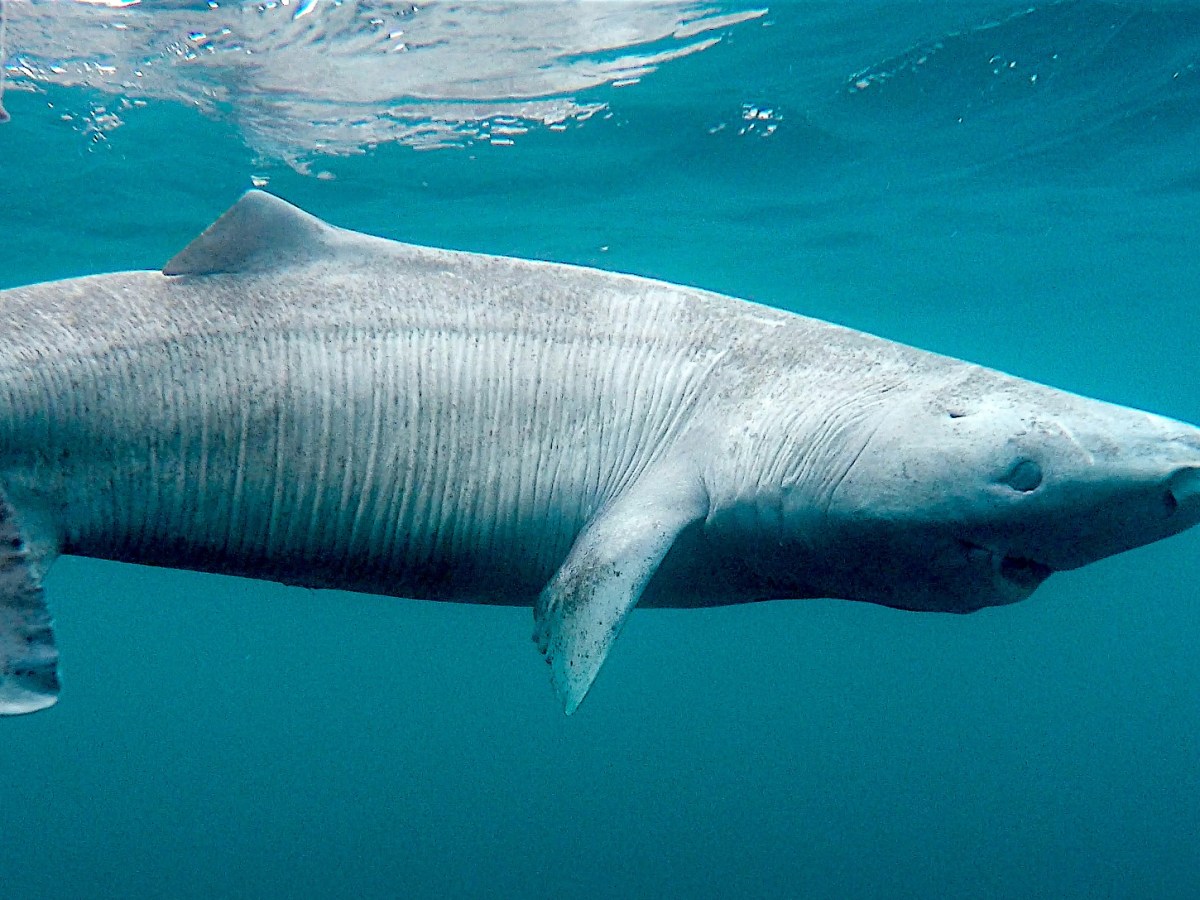
Deep-sea sharks include some of the longest-lived vertebrates known. The record holder is the Greenland shark, with a recently estimated maximum age of nearly 400 years. Their slow life cycle makes them vulnerable to fisheries. Humans rarely live longer than 100 years. But many other animals and plants can live for several centuries or even millennia, particularly…












 ConservationBytes.com
Rocking the scientific boat
14 12 2012© C. Simpson
One thing that has simultaneously amused, disheartened, angered and outraged me over the past decade or so is how anyone in their right mind could even suggest that scientists band together into some sort of conspiracy to dupe the masses. While this tired accusation is most commonly made about climate scientists, it applies across nearly every facet of the environmental sciences whenever someone doesn’t like what one of us says.
First, it is essential to recognise that we’re just not that organised. While I have yet to forget to wear my trousers to work (I’m inclined to think that it will happen eventually), I’m still far, far away from anything that could be described as ‘efficient’ and ‘organised’. I can barely keep it together as it is. Such is the life of the academic.
More importantly, the idea that a conspiracy could form among scientists ignores one of the most fundamental components of scientific progress – dissension. And hell, can we dissent!
Yes, the scientific approach is one where successive lines of evidence testing hypotheses are eventually amassed into a concept, then perhaps a rule of thumb. If the rule of thumb stands against the scrutiny of countless studies (i.e., ‘challenges’ in the form of poison-tipped, flaming literary arrows), then it might eventually become a ‘theory’. Some theories even make it to become the hallowed ‘law’, but that is very rare indeed. In the environmental sciences (I’m including ecology here), one could argue that there is no such thing as a ‘law’.
Well-informed non-scientists might understand, or at least, appreciate that process. But few people outside the sciences have even the remotest clue about what a real pack of bastards we can be to each other. Use any cliché or descriptor you want – it applies: dog-eat-dog, survival of the fittest, jugular-slicing ninjas, or brain-eating zombies in lab coats.
Read the rest of this entry »
Share:
Comments : 10 Comments »
Tags: comments, conspiracy, peer review, publishing, referees, responses, scientific process, Scientist
Categories : climate change, conservation, conservation biology, environmental science, fragmentation, habitat loss, minimum viable population, mvp, research, science, scientific publishing, scientific writing