Here is the second set of biodiversity cartoons for 2021. See full stock of previous ‘Cartoon guide to biodiversity loss’ compendia here.
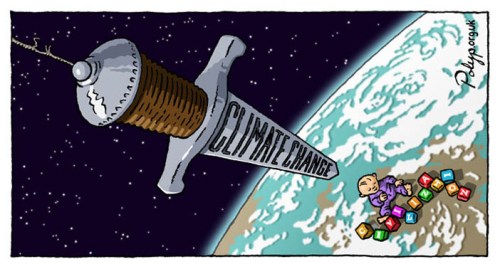
Here is the second set of biodiversity cartoons for 2021. See full stock of previous ‘Cartoon guide to biodiversity loss’ compendia here.

In sub-Saharan Africa, almost 1,400,000 km² of land spread across many countries — from Kenya to South Africa — is dedicated to “trophy” (recreational) hunting. This type of hunting can occur on communal, private, and state lands.
The hunters – mainly foreign “tourists” from North America and Europe – target a wide variety of species, including lions, leopards, antelopes, buffalo, elephants, zebras, hippopotamus and giraffes.
Read more: Big game: banning trophy hunting could do more harm than good
Debates centred on the role of recreational hunting in supporting nature conservation and local people’s livelihoods are among the most polarising in conservation today.
On one hand, people argue that recreational hunting generates funding that can support livelihoods and nature conservation. It’s estimated to generate US$200 million annually in sub-Saharan Africa, although others dispute the magnitude of this contribution.
On the other hand, hunting is heavily criticised on ethical and moral grounds and as a potential threat to some species.
Evidence for taking a particular side in the debate is still unfortunately thin. In our recently published research, we reviewed the large body of scientific literature on recreational hunting from around the world, which meant we read and analysed more than 1000 peer-reviewed papers.
Read the rest of this entry »
Through the leadership of my long-time friend and collaborator, Enrico Di Minin of the Helsinki Lab of Interdisciplinary Conservation Science, as well as the co-leadership of my (now) new colleague, Dr Hayley Clements, I’m pleased to report our new paper in One Earth — ‘Consequences of recreational hunting for biodiversity conservation and livelihoods‘.
My father was a hunter, and by proxy so was I when I was a lad. I wasn’t really a ‘good’ hunter in the sense that I rarely bagged my quarry, but during my childhood not only did I fail to question the morality of recreational hunting, I really thought that in fact it was by and large an important cultural endeavour.
It’s interesting how conditioned we become as children, for I couldn’t possibly conceive of hunting a wild, indigenous species for my own personal satisfaction now. I find the process not only morally and ethically reprehensible, I also think that most species don’t need the extra stress in an already environmentally stressed world.
I admit that I do shoot invasive European rabbits and foxes on my small farm from time to time — to reduce the grazing and browsing pressure on my trees from the former, and the predation pressure on the chooks from the latter. Of course, we eat the rabbits, but I tend just to bury the foxes. My dual perspective on the general issue of hunting in a way mirrors the two sides of the recreational hunting issue we report in our latest paper.

I want to be clear here that our paper focuses exclusively on recreational hunting, and especially the hunting of charismatic species for their trophies. The activity is more than just a little controversial, for it raises many ethical and moral concerns at the very least. Yet, recreational hunting is frequently suggested as a way to conserve nature and support local people’s livelihoods.
Read the rest of this entry »This might be a little outside the realms of ‘conservation’ per se, but put has a lot of ecology-evolution components, with spin-off applications to modern conservation. Please spread the word.
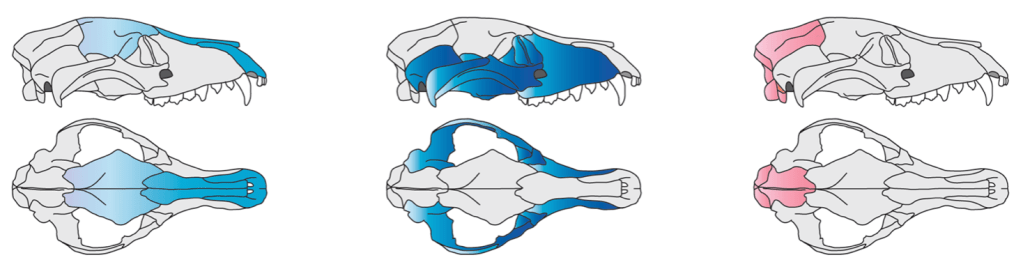
The Research Associate will investigate how the skull of extant mammal populations varies according to their environment, with a focus on the interaction between mega-herbivores and vegetation change.
The project aims to understand the relationship between evolved morphological adaptation and phenotypic plasticity in changing local environments. The Research Associate will extrapolate this knowledge to the iconic extinct Australian megafauna, with the aim of establishing how changing conditions of the past might have contributed to the demise of the Australian megafauna.
The candidate will be expected to work within a large group of collaborators at Flinders University and interstate, and supervise postgraduate students. The collaboration environment includes teams of national and international researchers, and will particularly integrate research in Global Ecology Lab led by Corey Bradshaw, and Chris Johnson‘s lab at the University of Tasmania. The candidate will be expected to liaise with academic, administrative and technical staff according to the University’s policies, practices and standards.
The Research Associate will be responsible for:
Read the rest of this entry »In the second of two consecutive interviews with climate-change experts (see the first one here), readers of the Spanish magazine Quercus have a chat with Katharine Hayhoe. Her words blend hope with the most putrid reality of economics and politics. May this interview inspire some environment-friendly changes in our daily routines and in how we see the beautiful life that surrounds us.

PhD in climate science, professor in political science and co-director of the Climate Centre at Texas Tech University (USA), Katharine Hayhoe works on climate projections and mitigation (1-3). Her prominent profile as communicator (4-6) made her one of the 100th most influential people in the world. To the left, Katharine has “A conversation on climate change” with citizens at the Lyndon Baines Johnson Presidential Library and Museum (Austin). Photo credits: Artie Limmer (portrait) & Jay Godwin (talk).
Interview done 20 October 2020
Below we italicise each question and the name of the person asking the question and cite a range of publications we deem relevant per question. For expanding on Katharyne Hayhoe’s views on climate change, see a sample of her public talks here and here, interviews here and here, and newspaper articles here and here. We love one of the titles of her newspaper articles “A thermometer is not liberal or conservative”. A spanish version of this article and interview has been published in the February 2021 issue of the magazine Quercus.
Question 1 of 4: There are extraordinarily influential people on a global scale who have a utilitarian perspective of nature, and think that climate change (be it of anthropogenic origin or not) entails advantages and opportunities to Western economies, and that we will be able to adapt whether changes are reversible or irreversible. Can we engage or use those influential people in any possible way to abate climate change? (7, 8) / Iñaki García Pascual (Environmental geologist)
Hayhoe:
Read the rest of this entry »Climate change has some localised, short-term, specific benefits (9). One example is increased access to oil and gas resources in a melting Arctic (10). This temporarily profits oil and gas industries, provides some financial benefit to local communities in Greenland and Alaska short-term, and harms both them and everyone else in the long term. A book called Windfall by Mackenzie Funk describes who is “profiteering” from climate change, and how.
Overall, however, climate change already harms the majority of people today. The poor, the vulnerable, and the marginalized are affected first and foremost. Since the 1960s, for example, climate change has increased the gap between the richest and poorest countries in the world by as much as 25 per cent. In 2019, UN Special Rapporteur on extreme poverty and human rights, Philip Alston, warned that climate change “threatens to undo the last 50 years” of development, global health and poverty reduction.” (11)
And while the rich may be able to temporarily “buy their way out of rising heat and hunger”, as Alston put it, the truth is that we all live on this planet, no matter how wealthy and influential we are. The air we breathe, the water we drink, the food we eat and all the resources we use come from our shared home.
Climate change threatens the ability of our planet to support human civilisation as we know it. It is a threat multiplier, attacking our health, our economy, our resources and even our security. As climate change intensifies and economic markets crumble and refugee crises surge, even those who may temporarily benefit from a warmer world will be negatively impacted by these changes long-term.
That’s why it makes so much sense to take practical steps to limit carbon pollution now. Many of these actions also provide us with short-term benefits that can be quantified in economic terms: like energy savings through efficiency, cheaper electricity from renewables, more jobs, better public transportation, and even faster cars (like Tesla). Climate action also provides less tangible but arguably even more important benefits: cleaner air and water, better health, poverty reduction, and a host of other co-benefits that substantively move us towards meeting key UN Sustainable Development Goals.
To care about climate change, we don’t have to be a certain type of person or live in a certain place or vote a certain way: all we have to be is a human living on this planet, and we’re all that.
Radiocarbon (14C) dating was developed by Nobel-Prize winning chemist Willard Libby, and has become the predominant method to build chronologies of ancient populations and species using the Quaternary fossil record. I have just published a research paper about 14C dating of fossil bone reviewing the four standard chemical pretreatments of bone collagen to avoid sample contamination and generate accurate fossil ages: gelatinization, ultrafiltration, XAD purification and hydroxyproline isolation. Hydroxyproline isolation is perceived as the most accurate pretreatment in a questionnaire survey completed by 132 experts from 25 countries, but remains costly, time-consuming and not widely available. I argue that (1) innovation is urgently required to develop affordable analytical chemistry to date low-mass samples of collagen amino acids, (2) those developments should be overseen by a certification agency, and (3) 14C users should be more conceptually involved in how (much) 14C chemistry determines dating accuracy. Across the board, scientific controversies like the timing of Quaternary extinctions need not be fuelled by inaccurate chronological data.

Megafauna bones from the Quaternary fossil record. Top: excavation of a partial skeleton of a short-faced kangaroo Procoptodon browneorum at Tight Entrance Cave (Western Australia) [1]: these bones are close to the limit of radiocarbon (14C) dating in a geological context 43000 to 49000 years old. Middle: metacarpal of the extinct horse Hippidion cf. devillei from Casa del Diablo (Peru) 14C dated at 11980 ± 100 years before present (BP) (CAMS-175039) following XAD purification of collagen gelatin [2]. Bottom: collection of skeletal remains of (mostly) red deer Cervus elaphus from El Cierro Cave (Spain) 14C dated at 15520 ± 75 years BP on ultrafiltered gelatin (OxA-27869 and OxA-27870 average) [3].
Scientists have widely been interested in the present and future state of biodiversity. Ecologists (the main audience of this blog) have also looked into the past with pioneering investigations addressing the composition of ancient forests and the origins of agriculture in layers of fossil pollen accumulated in lake sediments [4]. But it took us decades to see the fossil record as a useful tool (combining biological, geochemical and molecular techniques) to answer basic ecological questions. Some of those questions are critical for conserving today’s biodiversity [5, 6]: for example, when did human impacts on ecosystems become global or what extinct species have best tolerated past environmental change and what that means to modern species? [7].
The study of (pre)historic biological events relies one way or another on our ability to time when a certain animal, human, or plant occurred and what environmental conditions they experienced, and relies on concepts borrowed from archaeology (past human activity), palaeontology (fossils), palaeocology (species responses to past environments), and geochronology (age of fossils and/or their geological context). Among the range of chronological methods available to date biological and cultural samples [8], radiocarbon (14C) dating has become the most important for dating bones aged modern to late Quaternary (last ~ 50,000 years). Hereafter, ‘bone’ comprises antler, bone, ivory and teeth. 14C dating of bones is appealing at least for four reasons:
Daniel Mariuz/AAP
Corey J. A. Bradshaw, Flinders University; Daniel T. Blumstein, University of California, Los Angeles, and Paul Ehrlich, Stanford University
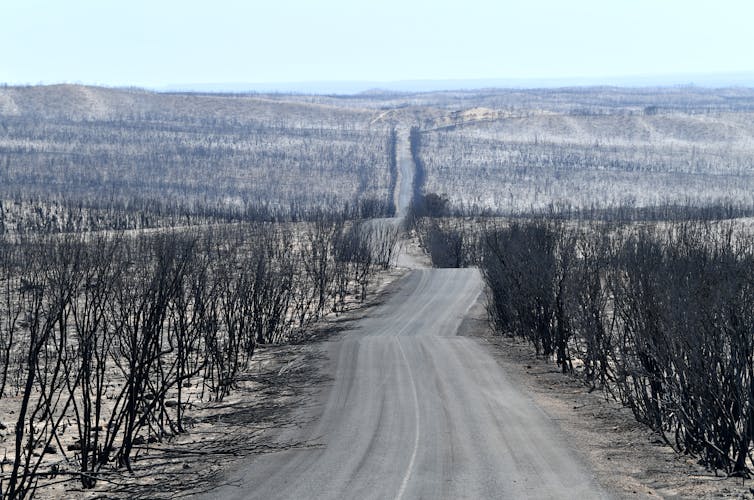
Anyone with even a passing interest in the global environment knows all is not well. But just how bad is the situation? Our new paper shows the outlook for life on Earth is more dire than is generally understood.
The research published today reviews more than 150 studies to produce a stark summary of the state of the natural world. We outline the likely future trends in biodiversity decline, mass extinction, climate disruption and planetary toxification. We clarify the gravity of the human predicament and provide a timely snapshot of the crises that must be addressed now.
The problems, all tied to human consumption and population growth, will almost certainly worsen over coming decades. The damage will be felt for centuries and threatens the survival of all species, including our own.
Our paper was authored by 17 leading scientists, including those from Flinders University, Stanford University and the University of California, Los Angeles. Our message might not be popular, and indeed is frightening. But scientists must be candid and accurate if humanity is to understand the enormity of the challenges we face.

Humanity must come to terms with the future we and future generations face. Shutterstock
First, we reviewed the extent to which experts grasp the scale of the threats to the biosphere and its lifeforms, including humanity. Alarmingly, the research shows future environmental conditions will be far more dangerous than experts currently believe. Read the rest of this entry »
“I wish it need not have happened in my time,” said Frodo. “So do I,’ said Gandalf, “and so do all who live to see such times. But that is not for them to decide. All we have to decide is what to do with the time that is given us.”
Frodo Baggins and Gandalf, The Fellowship of the Ring
Today, 16 high-profile scientists and I published what I describe as a ‘cold shower’ about society’s capacity to avoid a ghastly future of warfare, disease, inequality, persecution, extinction, and suffering.
And it goes way beyond just the plight of biodiversity.

No one who knows me well would mistake me for an optimist, try as I might to use my colleagues’ and my research for good. Instead, I like to describe myself as a ‘realist’. However, this latest paper has made even my gloomier past outputs look downright hopeful.
And before being accused of sensationalism, let me make one thing abundantly clear — I sincerely hope that what we describe in this paper does not come to pass. Not even I am that masochistic.
I am also supportive of every attempt to make the world a better place, to sing about our successes, regroup effectively from our failures, and maintain hope in spite of evidence to the contrary.
But failing to acknowledge the magnitude and the gravity of the problems facing us is not just naïve, it is positively dangerous and potentially fatal.
It is this reason alone that prompted us to write our new paper “Underestimating the challenges of
avoiding a ghastly future” just published in the new journal, Frontiers in Conservation Science.
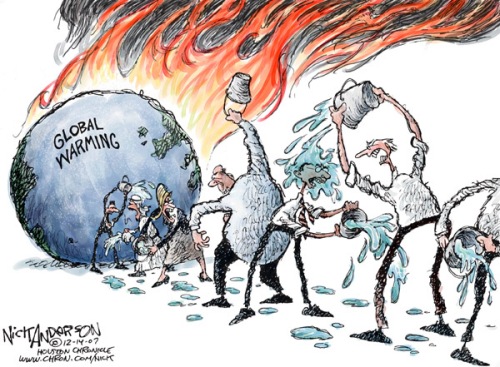
As the pandemic rages globally, and the fragility of the American political system goes on full display, I give you the first set of biodiversity cartoons for 2021. See full stock of previous ‘Cartoon guide to biodiversity loss’ compendia here.


Have you ever done any research that relied to any degree on Indigenous Knowledges? How did you cite those Knowledges, if at all? It’s probably time we rethink how we engage with Indigenous Knowledge systems. In a new article published in BioScience, we — a large group of Indigenous and non-Indigenous scholars in Australia —…

A recent paper, co-authored with the late Paul Ehrlich, reveals that the global human population has surpassed Earth’s sustainable capacity. It highlights the dire implications for food security, climate stability, and wellbeing. The study underscores that immediate changes in consumption and population management are crucial for a sustainable future.
Using animals as sport symbols reflects the integration of biodiversity into cultural identity and the transmission of collective values. This raises the possibility that the economic muscle of the sport industry could translate its symbolic capital into tangible commitments to biodiversity conservation. Those who have had the privilege of travelling in remote areas might have…



 ConservationBytes.com