I’m in the middle of participating in a short-course on science communication based at the University of Helsinki‘s Lammi Biological Station (about 1.5 hours north of Helsinki by car). Organised by two fantastic people, Mar Cabeza and Tomas Roslin, it’s an eclectic mix of instruction for (mainly) PhD students on how to promote yourself and your science in print, in media, in illustration, in citizen science and for policy makers.
While we aren’t yet finished, I wanted to report that I had the immense pleasure of finally meeting the immeasurably talented environmental cartoonist, Seppo Leinonen. Not only is he an extremely talented artist and a dedicated environmentalist, he’s just a top bloke.
If you haven’t checked out Seppo.net and his cartoons yet, you should.
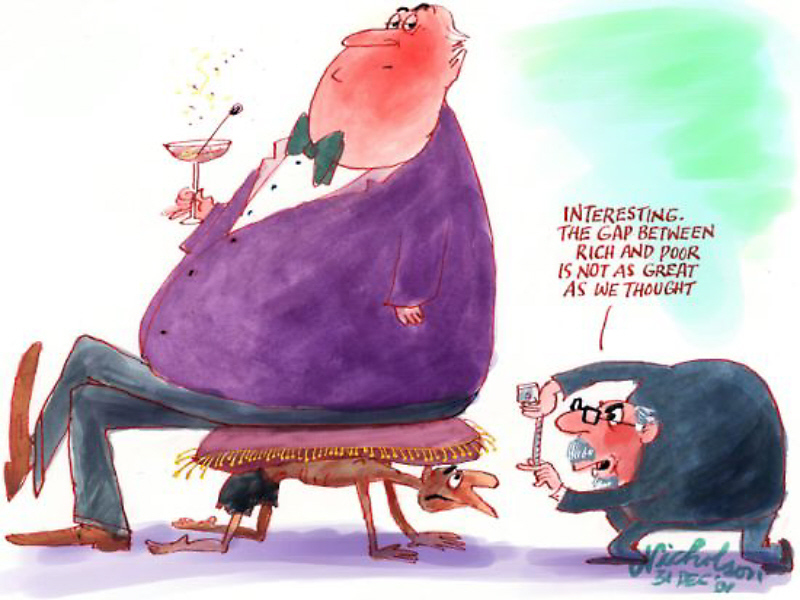
This is just a brief post to spruik his fine work, and show off his parting cartoon gift to me: Read the rest of this entry »
I don’t like to talk about my family online. Call me paranoid, but there are a lot of crazy people out there who don’t like what scientists like me are saying (bugger the evidence). Yes, like many climate scientists, I’ve also been threatened. That’s why my personal life remains anonymous except for a select group of people.
My daughter’s story today is a little less confronting, but equally enlightening. It’s also a little embarrassing as a scientist who has dedicated my entire research career to the discipline of conservation biology.
As a normal six year-old without the ability to refrain from talking – even for a moment – I hear a lot of stories. Many of them are of course fantastical and ridiculous, but those are just part of a healthy, imaginative childhood (I am proud to say though that she is quite clear about the non-existence of fictitious entities like faeries, easter bunnies and gods).
Every once in a while, however, there are snippets of wisdom that ooze out from the cracks in the dross. In the last few months, my daughter has independently and with no prompting from me come up with two pillars of conservation science: (i) protected areas and (ii) biodiversity corridors. Read the rest of this entry »
The precautionary principle – the idea that one should adopt an approach that minimises risk – is so ingrained in the mind of the conservation scientist that we often forget what it really means, or the reality of its implementation in management and policy. Indeed, it has been written about extensively in the peer-reviewed conservation literature for over 20 years at least (some examples here, here, here and here).
From a purely probabilistic viewpoint, the concept is flawlessly logical in most conservation questions. For example, if a particular by-catch of a threatened species is predicted [from a model] to result in a long-term rate of instantaneous population change (r) of -0.02 to 0.01 [uniform distribution], then even though that interval envelops r = 0, one can see that reducing the harvest rate a little more until the lower bound is greater than zero is a good idea to avoid potentially pushing down the population even more. In this way, our modelling results would recommend a policy that formally incorporates the uncertainty of our predictions without actually trying to make our classically black-and-white laws try to legislate uncertainty directly. Read the rest of this entry »
On the continuing theme of the demise of laws designed to protect Australian biodiversity (see here, here and here), I’m reproducing our latest NatureCorrespondence on the issue. I know this might be slightly dodgy to do so, but given that it’s only a Correspondence, I don’t think I’ll get in too much trouble. Besides, it’s too important an issue to hide away behind paywalls.
—
Policy and legislative changes by Australia’s state governments are eroding the vital protection of the country’s unique biodiversity.
Reserves are being opened up to ecologically disruptive activities, such as grazing by domestic livestock, logging, mining, recreational hunting and fishing, and commercial development. Protected habitats on private and leasehold land are imperilled too. Queensland and Victoria, for example, are relaxing hard-won laws that limit vegetation clearance on private land, further accelerating the loss of regional biodiversity.
Collectively, these actions increase the pressure on biodiversity conservation in protected areas, many of which are already showing biodiversity loss (for example, the Kakadu National Park in northern Australia). Ecological connectivity is being lost, which will hamper the dispersal of species and their ability to respond to climate-change effects. Read the rest of this entry »
Australia boasts over 500 national parks covering 28 million hectares of land, or about 3.6% of Australia. You could be forgiven for thinking we’re doing well in the biodiversity-conservation game.
But did you know that of those more than 500 national parks, only six are managed by the Commonwealth Government? For marine parks, it’s a little more: 61 of the 130-plus are managed primarily by the Commonwealth. This means that the majority of our important biodiversity refuges are managed exclusively by state and territory governments. In other words, our national parks aren’t “national” at all.
In a world of perfect governance, this wouldn’t matter. But we’re seeing the rapid “relaxation” of laws designed to protect our “national” and marine parks by many state governments. Would making all of them truly national do more to conserve biodiversity?
One silly decision resulting in a major ecosystem disturbance in a national park can take decades if not hundreds of years to heal. Ecosystems are complex interactions of millions of species that take a long time to evolve – they cannot be easily repaired once the damage is done.
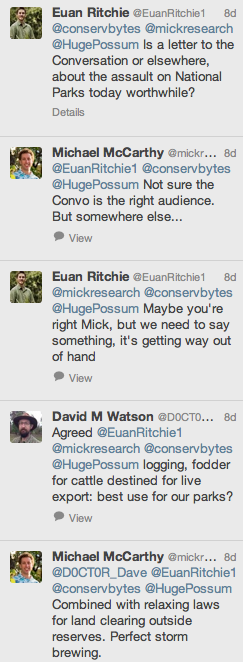
It’s interesting when a semi-random tweet by a colleague ends up mobilising a small army of scientists to get pissed off enough to co-write an article. Euan Ritchie of Deakin University started it off, and quickly recruited me, Mick McCarthy, David Watson, Ian Lunt, Hugh Possingham, Bill Laurance and Emma Johnston to put together the article. It’s a hugely important topic, so I hope it generates a lot of discussion and finally, some bloody action to stop the rapid destruction of this country’s national parks system.
It’s make or break time for Australia’s national parks.
National parks on land and in the ocean are dying a death of a thousand cuts, in the form of bullets, hooks, hotels, logging concessions and grazing licences. It’s been an extraordinary last few months, with various governments in eastern states proposing new uses for these critically important areas.
Australia’s first “National Park”, established in 1879, was akin to a glorified country club. Now called the “Royal National Park” on the outskirts of Sydney, it was created as a recreational escape for Sydney-siders, with ornamental plantations, a zoo, race courses, artillery ranges, livestock paddocks, deer farms, logging leases and mines.
Australians since realised that national parks should focus on protecting the species and natural landscapes they contain. However, we are now in danger of regressing to the misguided ideals of the 19th Century.
Parks under attack
In Victoria, new rules will allow developers to build hotels and other ventures in national parks. In New South Wales, legislation has been introduced to allow recreational shooting in national parks, and there is pressure to log these areas too. Read the rest of this entry »
We sent out this media release the other day, but it had pretty poor pick-up (are people sick of the carbon price wars?). Anyway, I thought it prudent to reprint here on CB.com.
—
Will Australia’s biodiversity benefit from the new carbon economy designed to reduce greenhouse gas emissions? Or will bio-‘perversities’ win the day?
“Cautious optimism” was the conclusion of Professor Corey Bradshaw, Director of Ecological Modelling at the University of Adelaide’s Environment Institute. He is lead author of a new paper published in the journal of Biological Conservation which reviewed the likely consequences of a carbon economy on conservation of Australian biodiversity.
“In most circumstances these two very important goals for Australia’s future – greenhouse gas emissions reduction and biodiversity conservation – are not mutually exclusive and could even boost each other,” Professor Bradshaw says.
“There are, however, many potential negative biodiversity outcomes if land management is not done with biodiversity in mind from the outset.”
The paper was contributed to by 30 Australian scientists from different backgrounds. They reviewed six areas where Australia’s Carbon Farming Initiative could have the greatest impact on biodiversity: environmental plantings; policies and practices to deal with native regrowth; fire management; agricultural practices; and feral animal control.
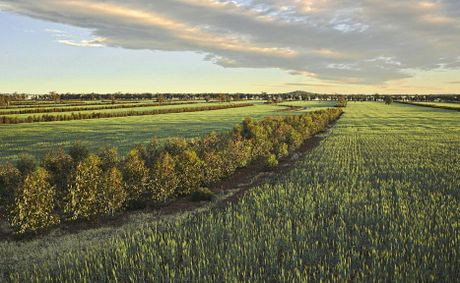
“The largest biodiversity ‘bang for our buck’ is likely to come from tree plantings,” says Professor Bradshaw. “But there are some potential and frightening ‘bioperversities’ as well. For example, we need to be careful not to plant just the fastest-growing, simplest and non-native species only to ‘farm’ carbon.
“Carbon plantings will only have real biodiversity value if they comprise appropriate native tree species and provide suitable habitats and resources for valued fauna. Such plantings could however risk severely altering local hydrology and reducing water availability.”
Professor Bradshaw says carefully managing regrowth of once-cleared areas could also produce a large carbon-sequestration and biodiversity benefit simultaneously. And carbon price-based modifications to agriculture that would benefit biodiversity included reductions in tillage frequency, livestock densities and fertiliser use, and retention and regeneration of native shrubs. Read the rest of this entry »
I’ve had a busy weekend entertaining visiting colleagues and participating in WOMADelaide‘s first-ever ‘The Planet Talks‘. If you haven’t heard of WOMADelaide, you’re truly missing out in one of the best music festivals going (and this is from a decidedly non-festival-going sort). Planet Talks this year was a bit of an experiment after the only partially successful Earth Station festival held last year (it was well-attended, but apparently wasn’t as financially successful as they had hoped). So this year they mixed a bit of science with a bit of music – hence ‘Planet Talks’. Paul Ehrlich was one of the star attractions, and I had the honour of going onstage with him yesterday to discuss a little bit about human population growth and sustainability. It was also great to see Robyn Williams again. All the Talks were packed out – indeed, I was surprised they were so popular, especially in the 39-degree heat. Rob Brookman, WOMADelaide’s founder and principal organiser, told me afterward that they’d definitely be doing it again.
But my post really isn’t about WOMADelaide or The Planet Talks (even though I got the bonus of meeting one of my favourite latin bands, Novalima, creators of one of my favourite songs). It’s instead about a paper I heralded last year that’s finally been accepted.
In early 2012 at the Terrestrial Ecosystem Research Network (TERN) symposium in Adelaide, the Australian Centre for Ecological Analysis and Synthesis (ACEAS) put on what they called the ‘Grand Challenges’ workshop. I really didn’t get the joke at the time, but apparently the ‘grand challenge’ was locking 30 scientists with completely different backgrounds in a room for two days to see if they could do anything other than argue and bullshit. Well, we rose to that challenge and produced something that I think is rather useful.
The paper is a rather in-depth review of how we, 30 fire, animal, plant, soil, landscape, agricultural and freshwater biologists, believe Australia’s new carbon-influenced economy (i.e., carbon price) will impact the country’s biodiversity. Read the rest of this entry »
Ecological societies around the world (e.g., Ecological Society of Australia, British Ecological Society, Ecological Society of America, Czech Society for Ecology, Société française d’Écologie, etc. – see a fairly comprehensive list of ecological societies around the world here) are certainly worthwhile from an academic standpoint. I’m a member of at least three of them, and over the years I’ve found them to be a great way to meet colleagues to discuss various aspects of our work. The conferences are usually a lot of fun (although I’ve generally found the Ecological Society of America conferences are too huge and unwieldy to be terribly beneficial), the talks are usually pretty good, and the social programmes tend to demonstrate just how human we scientists can be (I’ll let you read into that what you want).
An outsider could easily argue, however, that most ecological societies are archaic bastions of a former time when ecology was more a theoretical endeavour for academic circles, with little of practical use in today’s society. I’d agree that many components of these societies still hold onto elements of this sentiment, but it’s fast becoming clear that ecological societies can play an immensely important role in shaping their countries’ environmental policy. Read the rest of this entry »
There’s a gradual, but rising tide of rational, enviro-progressive scientists out there who are committed to solving some of the world’s biggest problems. Many of these problems involve touchy subjects, including ways to reduce poverty while improving or maintaining high standards of living elsewhere, the means for ‘sustainable’ electricity generation, and how to limit the human population’s over-consumption and over-production.
Inevitably, however, many well-intentioned, but grossly misinformed environmentalists (‘enviro-conservatives’?) object to technical solutions based on emotional or ideological grounds alone. As self-professed enviro-progressives (but also scientists who base decisions on evidence, logic and balancing trade-offs as part of our everyday work), we hope to reduce this backlash by providing the data and analyses needed to make the best and most coherent decisions about our future.
—
On 14 September 2012, Japan’s government announced a nuclear-free policy to phase out its nuclear power generation by 2040. Of course, electricity demand would have to be supplied by both renewable energy and fossil fuels to respond the public unwillingness for nuclear power.
But is this most environmentally sound, safest and economically rational aim? In a new paper we’ve just had published in the peer-reviewed journal Energy Policy, we set out to test Japan’s intentions the best way we know – using empirical data and robust scenario modelling.
Before the March 2011 earthquake and tsunami, Japan produced 25% of its total electricity consumption from nuclear power, 63% from fossil fuels (mostly coal and liquefied natural gas), and 10% from renewables (including hydro). Originally, the Japanese government had planned to increase nuclear power up to 45% of supply, and include new renewables builds, to combine to make major cuts in greenhouse gas emissions by 2030 and meet or exceed their Kyoto targets. However, the original plan could reduce emissions by the energy sector from 1122 Mt CO2e in 2010 to < 720 Mt CO2e by 2030 (< 70% of 1990 emission levels). Read the rest of this entry »
I’ve written before about how we should all be substantially more concerned about the future than what we as a society appear to be. Climate disruption is society’s enemy number one, especially considering that:
all this unprecedented warming is happening on a template of highly degraded land- and seascapes. Extinction synergies (more extinctions than would otherwise be predicted by the simple sum of the different pressures) mean that climate change exacerbates the extinctions to which we are already committed;
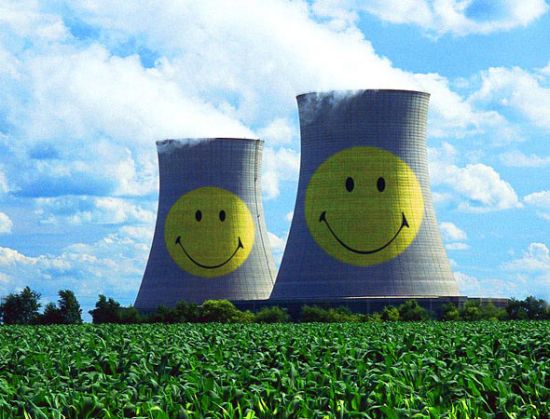
we show no sign of slowing emissions rates, partly because of the world’s ridiculous refusal to embrace the only known energy technology that can safely meet emissions-reduction requirements: nuclear power;
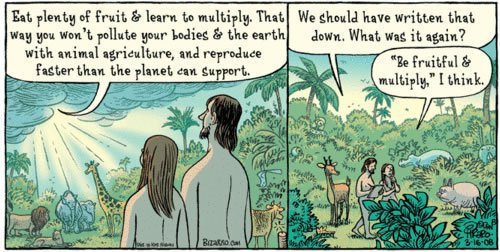
there are 7 billion hungry, greedy humans on planet Earth, and that number is growing;
That’s probably the most succinct way that I know of describing the mess we are in, which is why I tend to be more of a pragmatic pessimist when it comes to the future. I’ve discussed before how this outlook makes getting on with my job even more important – if I can’t reduce the rate of destruction and give my family a slightly better future in spite of this reality, at least I will damn well die trying. Read the rest of this entry »
I’m winding down here for the year (although there might be a few more posts before the New Year), so here’s the latest batch of 6 biodiversity cartoons (see full stock of previous ‘Cartoon guide to biodiversity loss’ compendia here).
A few weeks ago I heard from an early-career researcher in the U.S. who had some intelligent things to say about getting jobs in conservation science based on a recent Conservation Biology paper she co-wrote. Of course, for all the PhDs universities are pumping out into the workforce, there will never be enough positions in academia for them all. Thus, many find their way into non-academic positions. But – does a PhD in science prepare you well enough for the non-academic world? Apparently not.
—
Many post-graduate students don’t start looking at job advertisements until we are actually ready to apply for a job. How often do we gleam the list of required skills and say, “If only I had done something to acquire project management skills or fundraising skills, then I could apply for this position…”? Many of us start post-graduate degrees assuming that our disciplinary training for that higher degree will prepare us appropriately for the job market. In conservation science, however, many non-disciplinary skills (i.e., beyond those needed to be a good scientist) are required to compete successfully for non-academic positions. What are these skills?
Our recent paper in Conservation Biology (Graduate student’s guide to necessary skills for nonacademic conservation careers) sifted through U.S. job advertisements and quantified how often different skills are required across three job sectors: nonprofit, government and private. Our analysis revealed that several non-disciplinary skills are particularly critical for job applicants in conservation science. The top five non-disciplinary skills were project management, interpersonal, written communication, program leadership and networking. Approximately 75% of the average job advertisement focused on disciplinary training and these five skills. In addition, the importance of certain skills differed across the different job sectors.
Below, we outline the paper’s major findings with regard to the top five skills, differences among sectors, and advice for how to achieve appropriate training while still in university. Read the rest of this entry »
Apologies for the delay in getting this latest post out. If you read my last one, you’ll know that I’ve been in the United Kingdom for the last week. I’m writing this entry in the train down from York to Heathrow, from which I’ll shortly begin the gruelling 30-hour trip home to Adelaide.
Eight days on the other side of the planet is a bit of a cyclonic trip, but I can honestly say that it was entirely worth it. My first port of call was London where I attended the Zoological Society of London’s Protected Areas Symposium, which is the main topic on which I’ll elaborate shortly.
But I also visited my friend and colleague, Dr. Kate Parr at the University of Liverpool, where I also had the pleasure of talking with Rob Marrs and Mike Begon. Liverpool was also where I first observed the habits of a peculiar, yet extremely common species – the greater flabby, orange-skinned, mini-skirted, black-eyed scouser. Fascinating.
I then had the privilege and serendipitous indulgence of visiting the beautiful and quaint city of York where I gave another talk to the Environment Department at the University of York. My host, Dr. Kate Arnold was simply lovely, and I got to speak with a host of other very clever people including Callum Roberts, Phil Platts, Andy Marshall and Murray Rudd. Between the chats and real ales, mushy peas, pork pies and visits to the Minster, I was in north English heaven.
Enough of the cultural compliments – the title of this post was the take-home message of the ZSL symposium. There I gave a 25-minute talk summarising our recent paper on the performance of tropical protected areas around the globe, and added a few extra analyses in the process. One interesting result that was missing from the original paper was the country-level characteristics that explain variation in protected area ‘health’ (as we defined it in the Nature paper). After looking at a number of potential drives, including per-capita wealth, governance quality, environmental performance, human population density and the proportion of high conservation-value protected areas (IUCN Ia, Ib, II and IV categories), it came out that at least at that coarse country scale that only the proportion of high conservation-value protected areas explained any additional variation in health. In other words, the more category Ia, Ib, II and IV protected areas a country has (relative to the total), the better their protected areas do on average (and remember, we’re talking largely about developing and tropical nations here). Read the rest of this entry »
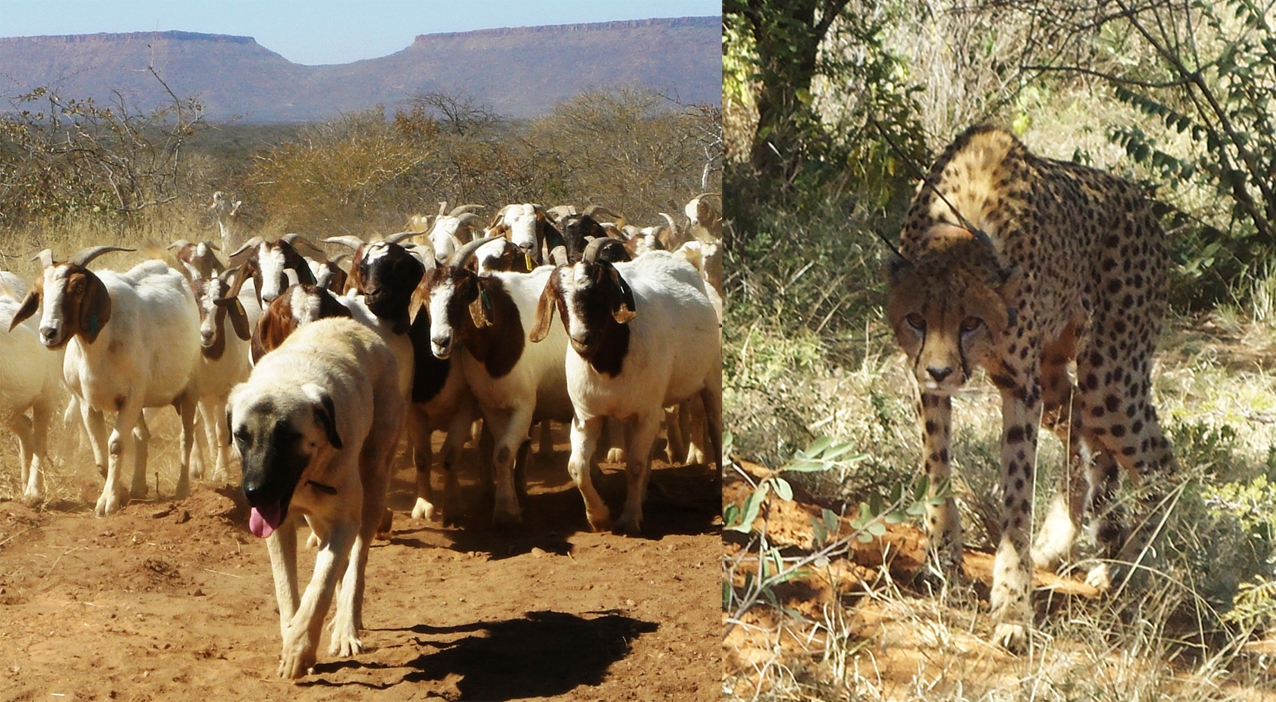
Left: An Anatolian shepherd (a Turkish breed improved in the USA) guiding a herd of boer goats whose flesh is much appreciated by people in Namibia and South Africa. Right: A cheetah carrying a radio-transmitter, within a project assessing range movements of this feline for the Cheetah Conservation Fund. Cheetahs refrain from moving close to the herds when the latter are looked after by the guardian dogs. Photos courtesy of Laurie Marker.
Another corker from Salva. He’s chosen a topic this week that’s near and dear to my brain – the conservation of higher-order predators. As ConBytes readers will know, we’ve talked a lot about human-predator conflict and the inevitable losers in that battle – the (non-human) predators. From dingos to sharks, predator xenophobia is just another way we weaken ecosystems and ultimately harm ourselves.
—
Rural areas devoted to livestock are part of the natural landscape, so it is inevitable (as well as natural) that predators, livestock and humans interact in such a mosaic of bordering habitats. However, their coexistence remains an unresolved conservation problem.
When two species, people, political parties, enterprises… want the same thing, they either share it (if possible) or one side eliminates the competitor. The fact that proteins are part of the diet of humans and other carnivore species has resulted in a trophic drama that goes back millennia. Nowadays, predators like eagles, coyotes, lions, wolves and raccoons are credited for attacks on cattle and poultry (and people!) in all continents. This global problem is not only economic, but interlaces culture, emotion, policy and sanitation (1-4). For instance, some carnivores are reservoirs of cattle diseases and contribute to pathogen dispersal (5, 6).
Management options
Managers of natural resources have implemented three strategies to handle these sorts of issues for livestock breeders in general (7). Those strategies can be complementary or exclusive on a case-by-case basis, and are chosen following cost-benefit assessments and depending on the conservation status of the predator species involved. (i) ‘Eradication’ aims to eliminate the predator, which is regarded as noxious and worthless. (ii) ‘Regulation’ allows controlled takes under quota schemes, normally for pre-defined locations, dates and killing methods. ‘Preservation’ is applied in protected areas and/or for rare or endangered species, and often requires monitoring and measures set to prevent illegal harvest or trade. Additionally, many livestock breeders receive money to compensate losses to predators (8).
Many experts now advocate non-lethal (preventive) measures that modify the behaviour of people, livestock or predators (2, 7). The use of livestock-guarding dogs is one of those preventive measures (9). As an example, Laurie Marker (director of the Cheetah Conservation Fund) et al. (10) studied the use of 117 Anatolian shepherds adopted by Namibian rangers between 1995 and 2002 (Fig. 1). In this African country, cheetahs (Acinonyx jubatus) selectively forage on small-sized cattle and juveniles. Despite this feline being protected nationally, Namibian laws authorise rangers to shoot cheetahs in situations of risk to people and their properties, with more than 6,000 cheetahs having been killed in the 1980s alone (11). Through face-to-face interviews, Marker found that since the arrival of the Anatolian shepherds, > 70 % of the rangers perceived a pronounced reduction in cattle mortality (10). Although, the use of livestock-guarding dogs has worked out fine in many places worldwide, it is no panacea. In many other instances, the dogs dissuade some predator species and not others from harassing the livestock, or are only effective in combination with other measures (7, 9). Read the rest of this entry »
I am a forest officer from India. I want to narrate a story. No, my story is not about elephants or tigers or snakes. Those stories about India are commonplace. I wish to narrate a simple story about people, the least-known part of the marathon Indian fable.
Humans are said to have arrived in India very early in world civilisation. Some were raised here from the seed of their ancestors; others migrated here from all over the world. Over the centuries these people occupied every inch of soil that could support life. The population of India today is 1.2 billion. Each year, India’s population increases by a number nearly equal to the complete population of Australia. Such a prolific growth of numbers is easy to explain; the fertile soil, ample water and tropical warmth of India support the growth of all life forms.
Not all numbers are great, however, and big numbers sometimes exact the price from the wrong persons.
This is my story.
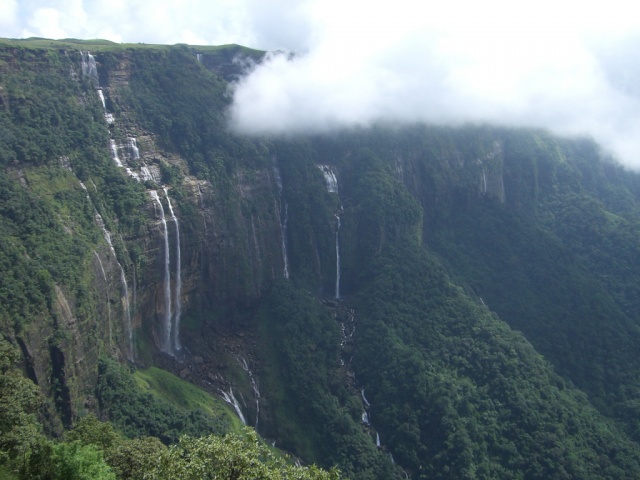
I went to work in the state of Meghalaya in north-eastern India. Pestilence, floods and dense vegetation have made north-eastern India a most inhospitable place. Population is scanty by Indian standards. Life does not extend much beyond the basic chores of finding food and hearth. In the hills, far away from the bustle of modern civilisation, primitive tribal families practice agriculture in its most basic form. Fertilisers are unknown to them, so they cultivate a parcel of land until it loses its fertility, ultimately abandoning it to find other arable land. When the original parcel has finally recovered its fertility after a few years, they move back. It is a ceaseless cycle of migrating back and forth – the so-called practice known as ‘shifting cultivation’. Ginger, peas, pumpkin, brinjal and sweet potato can be seen growing on numerous slopes in the Garo Hills of Meghalaya beside the huts of the farmers built on stilts, with chickens roosting below.
When I reached Meghalaya and looked about at the kind of world I had never seen before, I admit that I found the tribal folk a little strange. They lived in a way that would have appeared bizarre to a modern community. The people did not seem to know how many centuries had passed them by. For me as a forest officer, what looked worst was that that these people appeared to have no comprehension of the value of forests for the planet. They built their huts with wood. They cooked on firewood. Most of their implements were made of wood. A whole tree would be cut and thrown across the banks to make a bridge over a stream. Above all, their crazy practice of shifting cultivation would ultimately remove all the remaining forest.
I decided my main job in this place was to save the forest from its own people, and we enforced Indian laws to preserve the forests.
On one occasion my staff saw a young local man running with an illegally obtained log of wood and started to chase him, waving their guns in the air to scare him. He ran barefoot amid dense bushes a long distance before we managed to apprehend him. I had bruises on my arms and a leech hanging from my armpit drinking my blood by the time the race was over. I admit that in my anger at the time, I wanted to impale the man to the earth at the spot where he had cut down the tree. It was not the leeches and the bruises that angered me. The tree he was carrying was (until quite recently) in perfect condition.
But Meghalaya isn’t populated solely by subsistence-farming villagers – there are also a few successful traders originally from big cities who have settled in this economically depressed region. They dress smartly and speak impeccable English. At the time, I remembered wondering how these more sophisticated types could be maintaining their relatively lavish lifestyles among the poor villagers who walked barefoot in the dense forests. On a couple of occasions I dropped in at the home of a prominent trader. He hosted me graciously in his beautiful home. I admit that I enjoyed these visits because they were my only link to the civilisation I had become used to prior to moving to Meghalaya. But I never visited the home of any tribal villager, for what could I talk to them about anyway?
Illegal logging is booming, as criminal organisations tighten their grip on this profitable global industry. Hence, it comes just in the nick of time that Australia, after years of debate, is on the verge of passing an anti-logging bill.
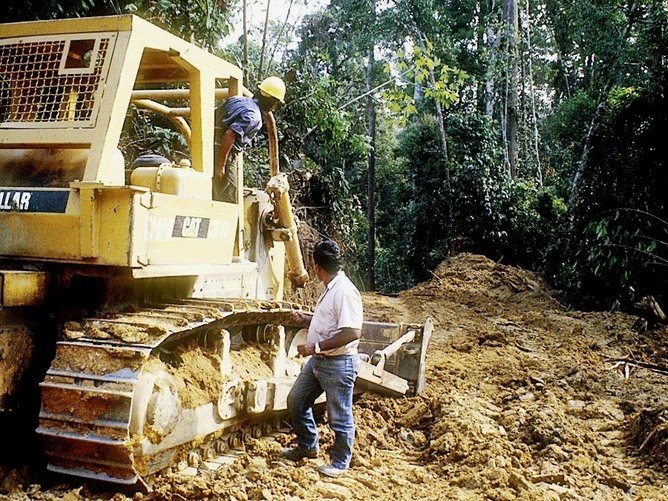
Illegal logging is an international scourge, and increasingly an organised criminal activity. It robs developing nations of vital revenues while promoting corruption and murder. It takes a terrible toll on the environment, promoting deforestation, loss of biodiversity and harmful carbon emissions at alarming rates.
Moreover, the flood of illegal timber makes it much harder for legitimate timber producers. The vast majority of those in Australia and New Zealand have difficulty competing in domestic and international markets. That’s one reason that many major Aussie retail chains and brands, such as Bunnings, Ikea-Australia, Timber Queensland, and Kimberly-Clark, are supporting the anti-illegal logging bill.
Illegal logging denies governments of developing nations revenue worldwide. Bill Laurance.
Illegal logging thrives because it’s lucrative. A new report by Interpol and the United Nations Environment Programme, “Green Carbon, Black Trade”, estimates the economic value of illegal logging and wood processing to range from $30 billion to $100 billion annually. That’s a whopping figure — constituting some 10-30% of the global trade in wood products.
Illegal logging plagues some of the world’s poorest peoples, many of whom live in tropical timber-producing countries. According to a 2011 study by the World Bank, two-thirds of the world’s top tropical timber-producing nations are losing at least half of their timber to illegal loggers. In some developing countries the figure approaches 90%.
Many nations export large quantities of timber or wood products into Australia. These include Indonesia, Papua New Guinea and the Solomon Islands, all of which are suffering heavily from illegal logging. Many Chinese-made wood and paper imports also come from illegal timber. Indonesian President Susilo Bambang Yudhoyono has been pleading with timber-importing nations like Australia to help it combat illegal logging, which costs the nation billions of dollars annually in lost revenues.
The new Interpol report shows just how devious illegal loggers are becoming. It details more than 30 different ways in which organised criminal gangs stiff governments of revenues and launder their ill-gotten gains.
The variety of tactics used is dizzying. These tactics include falsifying logging permits and using bribery to obtain illegal logging permits, logging outside of timber concessions, hacking government websites to forge transportation permits, and laundering illegal timber by mixing it in with legal timber supplies.
The good news however, is that improving enforcement is slowly making things tougher for illegal loggers.
Accustomed to dealing with criminal enterprises that transcend international borders, Interpol is bringing a new level of sophistication to the war on illegal logging. This is timely because most current efforts to fight illegal logging – such as the European Union’s Forest Law and various timber eco-certification schemes – just aren’t designed to combat organised crime, corruption and money laundering.
The Interpol report urges a multi-pronged approach to fight illegal loggers. A key element of this is anti-logging legislation that makes it harder for timber-consuming nations and their companies to import ill-gotten timber and wood products. Read the rest of this entry »
Those of us living with cats share our homes with an ancestral predator, one adapted for hunting and the frequent, exclusive consumption of meat. These instincts become fully activated outside the domestic environment, where cats pose a global threat to wildlife. Pets are family. We celebrate their arrival with the same joy as a grand…
Many animals avoid contact with people. In protected areas of the African savanna, mammals flee more intensely upon hearing human conversations than when they hear lions or sounds associated with hunting. This fear of humans affects how species use and move in their habitat. Throughout our lives, we interact with hundreds of wildlife species without…
Deep-sea sharks include some of the longest-lived vertebrates known. The record holder is the Greenland shark, with a recently estimated maximum age of nearly 400 years. Their slow life cycle makes them vulnerable to fisheries. Humans rarely live longer than 100 years. But many other animals and plants can live for several centuries or even millennia, particularly…
















 ConservationBytes.com