No need for disease

7 01 2013

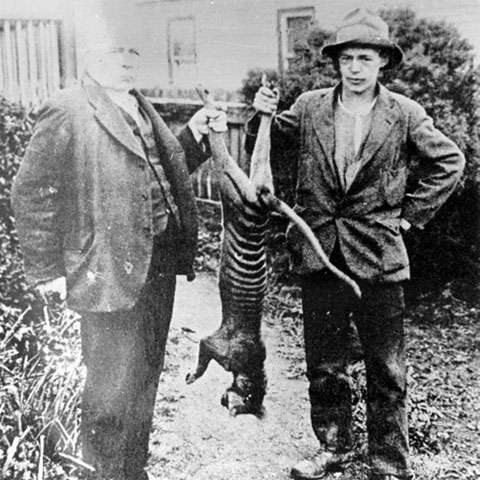
dead or alive thylacineIt’s human nature to abhor admitting an error, and I’d wager that it’s even harder for the average person (psycho- and sociopaths perhaps excepted) to admit being a bastard responsible for the demise of someone, or something else. Examples abound. Think of much of society’s unwillingness to accept responsibility for global climate disruption (how could my trips to work and occasional holiday flight be killing people on the other side of the planet?). Or, how about fishers refusing to believe that they could be responsible for reductions in fish stocks? After all, killing fish couldn’t possibly …er, kill fish? Another one is that bastion of reverse racism maintaining that ancient or traditionally living peoples (‘noble savages’) could never have wiped out other species.

If you’re a rational person driven by evidence rather than hearsay, vested interest or faith, then the above examples probably sound ridiculous. But rest assured, millions of people adhere to these points of view because of the phenomenon mentioned in the first sentence above. With this background then, I introduce a paper that’s almost available online (i.e., we have the DOI, but the online version is yet to appear). Produced by our extremely clever post-doc, Tom Prowse, the paper is entitled: No need for disease: testing extinction hypotheses for the thylacine using multispecies metamodels, and will soon appear in Journal of Animal Ecology.

Of course, I am biased being a co-author, but I think this paper really demonstrates the amazing power of retrospective multi-species systems modelling to provide insight into phenomena that are impossible to test empirically – i.e., questions of prehistoric (and in some cases, even data-poor historic) ecological change. The megafauna die-off controversy is one we’ve covered before here on ConservationBytes.com, and this is a related issue with respect to a charismatic extinction in Australia’s recent history – the loss of the Tasmanian thylacine (‘tiger’, ‘wolf’ or whatever inappropriate eutherian epithet one unfortunately chooses to apply). Read the rest of this entry »


Rocking the scientific boat

14 12 2012
© C. Simpson

© C. Simpson

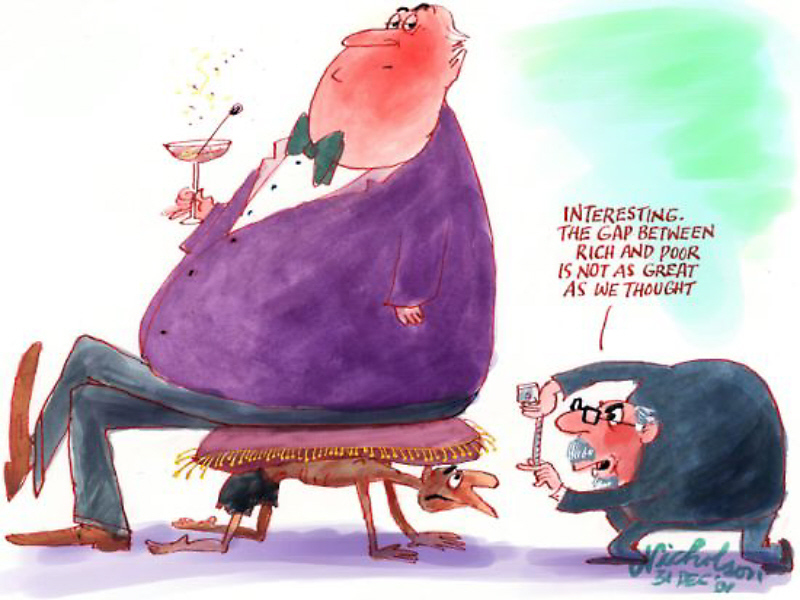
One thing that has simultaneously amused, disheartened, angered and outraged me over the past decade or so is how anyone in their right mind could even suggest that scientists band together into some sort of conspiracy to dupe the masses. While this tired accusation is most commonly made about climate scientists, it applies across nearly every facet of the environmental sciences whenever someone doesn’t like what one of us says.

First, it is essential to recognise that we’re just not that organised. While I have yet to forget to wear my trousers to work (I’m inclined to think that it will happen eventually), I’m still far, far away from anything that could be described as ‘efficient’ and ‘organised’. I can barely keep it together as it is. Such is the life of the academic.

More importantly, the idea that a conspiracy could form among scientists ignores one of the most fundamental components of scientific progress – dissension. And hell, can we dissent!

Yes, the scientific approach is one where successive lines of evidence testing hypotheses are eventually amassed into a concept, then perhaps a rule of thumb. If the rule of thumb stands against the scrutiny of countless studies (i.e., ‘challenges’ in the form of poison-tipped, flaming literary arrows), then it might eventually become a ‘theory’. Some theories even make it to become the hallowed ‘law’, but that is very rare indeed. In the environmental sciences (I’m including ecology here), one could argue that there is no such thing as a ‘law’.

Well-informed non-scientists might understand, or at least, appreciate that process. But few people outside the sciences have even the remotest clue about what a real pack of bastards we can be to each other. Use any cliché or descriptor you want – it applies: dog-eat-dog, survival of the fittest, jugular-slicing ninjas, or brain-eating zombies in lab coats.

Read the rest of this entry »


The biggest go first

11 12 2012
© James Cameron

© James Cameron

The saying “it isn’t rocket science” is a common cliché in English to state, rather sarcastically, that something isn’t that difficult (with the implication that the person complaining about it, well, shouldn’t). But I really think we should change the saying to “it isn’t ecology”, for ecology is perhaps one of the most complex disciplines in science (whereas rocket science is just ‘complicated’). One of our main goals is to predict how ecosystems will respond to change, yet what we’re trying to simplify when predicting is the interactions of millions of species and individuals, all responding to each other and to their outside environment. It becomes quickly evident that we’re dealing with a system of chaos. Rocket science is following recipes in comparison.

Because of this complexity, ecology is a discipline plagued by a lack of generalities. Few, if any, ecological laws exist. However, we do have an abundance of rules of thumb that mostly apply in most systems. I’ve written about a few of them here on ConservationBytes.com, such as the effect of habitat patch size on species diversity, the importance of predators for maintaining ecosystem stability, and that low genetic diversity doesn’t exactly help your chances of persisting. Another big one is, of course, that in an era of rapid change, big things tend to (but not always – there’s that lovely complexity again) drop off the perch before smaller things do.

The prevailing wisdom is that big species have slower life history rates (reproduction, age at first breeding, growth, etc.), and so cannot replace themselves fast enough when the pace of their environment’s change is too high. Small, rapidly reproducing species, on the other hand, can compensate for higher mortality rates and hold on (better) through the disturbance. Read the rest of this entry »


Improving the Roundtable on Sustainable Palm Oil

23 11 2012

RSPO – don’t be guilty of this

Laurance & Pimm organise another excellent tropical conservation open-letter initiative. This follows our 2010 paper (Improving the performance of the Roundtable on Sustainable Oil Palm for nature conservation) in Conservation Biology.

Scientists Statement on the Roundtable on Sustainable Palm Oil’s Draft Revised Principles and Criteria for Public Consultation – November 2012

As leading scientists with prominent academic and research institutions around the world, we write to encourage the Roundtable on Sustainable Palm Oil (RSPO) to use this review of the RSPO Principles and Criteria as an opportunity to ensure that RSPO-certified sustainable palm oil is grown in a manner that protects tropical forests and the health of our planet. We applaud the RSPO for having strong social and environmental standards, but palm oil cannot be considered sustainable without also having greenhouse gas standards. Nor can it be considered sustainable if it drives species to extinction.

Tropical forests are critical ecosystems that must be conserved. They are home to millions of plant and animal species, are essential for local water-cycling, and store vast amounts of carbon. When they are cleared, biodiversity is lost and the carbon is released into the atmosphere as carbon dioxide, a greenhouse gas that drives climate change.

Moreover, tropical areas with peat soils store even larger amounts of carbon and when water is drained and the soils exposed, carbon is released into the atmosphere for several decades, driving climate changei. In addition, peat exposed to water in drainage canals may decay anaerobically, producing methane – a greenhouse more potent than carbon dioxide.

Palm oil production continues to increase in the tropics, and in some cases that production is directly driving tropical deforestation and the destruction of peatlandsii. Given the large carbon footprint and irreparable biodiversity loss such palm oil production cannot be considered sustainable. Read the rest of this entry »


Protected areas work, but only when you put in the effort

15 11 2012

Apologies for the delay in getting this latest post out. If you read my last one, you’ll know that I’ve been in the United Kingdom for the last week. I’m writing this entry in the train down from York to Heathrow, from which I’ll shortly begin the gruelling 30-hour trip home to Adelaide.

Eight days on the other side of the planet is a bit of a cyclonic trip, but I can honestly say that it was entirely worth it. My first port of call was London where I attended the Zoological Society of London’s Protected Areas Symposium, which is the main topic on which I’ll elaborate shortly.

But I also visited my friend and colleague, Dr. Kate Parr at the University of Liverpool, where I also had the pleasure of talking with Rob Marrs and Mike Begon. Liverpool was also where I first observed the habits of a peculiar, yet extremely common species – the greater flabby, orange-skinned, mini-skirted, black-eyed scouser. Fascinating.

I then had the privilege and serendipitous indulgence of visiting the beautiful and quaint city of York where I gave another talk to the Environment Department at the University of York. My host, Dr. Kate Arnold was simply lovely, and I got to speak with a host of other very clever people including Callum Roberts, Phil Platts, Andy Marshall and Murray Rudd. Between the chats and real ales, mushy peas, pork pies and visits to the Minster, I was in north English heaven.

Enough of the cultural compliments – the title of this post was the take-home message of the ZSL symposium. There I gave a 25-minute talk summarising our recent paper on the performance of tropical protected areas around the globe, and added a few extra analyses in the process. One interesting result that was missing from the original paper was the country-level characteristics that explain variation in protected area ‘health’ (as we defined it in the Nature paper). After looking at a number of potential drives, including per-capita wealth, governance quality, environmental performance, human population density and the proportion of high conservation-value protected areas (IUCN Ia, Ib, II and IV categories), it came out that at least at that coarse country scale that only the proportion of high conservation-value protected areas explained any additional variation in health. In other words, the more category Ia, Ib, II and IV protected areas a country has (relative to the total), the better their protected areas do on average (and remember, we’re talking largely about developing and tropical nations here). Read the rest of this entry »


Damned by nature; damned by man

26 10 2012

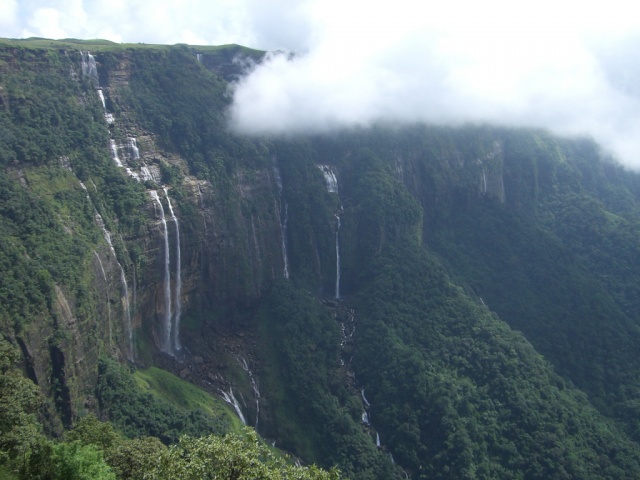
I am a forest officer from India. I want to narrate a story. No, my story is not about elephants or tigers or snakes. Those stories about India are commonplace. I wish to narrate a simple story about people, the least-known part of the marathon Indian fable.

Humans are said to have arrived in India very early in world civilisation. Some were raised here from the seed of their ancestors; others migrated here from all over the world. Over the centuries these people occupied every inch of soil that could support life. The population of India today is 1.2 billion. Each year, India’s population increases by a number nearly equal to the complete population of Australia. Such a prolific growth of numbers is easy to explain; the fertile soil, ample water and tropical warmth of India support the growth of all life forms.

Not all numbers are great, however, and big numbers sometimes exact the price from the wrong persons.

This is my story.

I went to work in the state of Meghalaya in north-eastern India. Pestilence, floods and dense vegetation have made north-eastern India a most inhospitable place. Population is scanty by Indian standards. Life does not extend much beyond the basic chores of finding food and hearth. In the hills, far away from the bustle of modern civilisation, primitive tribal families practice agriculture in its most basic form. Fertilisers are unknown to them, so they cultivate a parcel of land until it loses its fertility, ultimately abandoning it to find other arable land. When the original parcel has finally recovered its fertility after a few years, they move back. It is a ceaseless cycle of migrating back and forth – the so-called practice known as ‘shifting cultivation’.  Ginger, peas, pumpkin, brinjal and sweet potato can be seen growing on numerous slopes in the Garo Hills of Meghalaya beside the huts of the farmers built on stilts, with chickens roosting below.

When I reached Meghalaya and looked about at the kind of world I had never seen before, I admit that I found the tribal folk a little strange. They lived in a way that would have appeared bizarre to a modern community. The people did not seem to know how many centuries had passed them by. For me as a forest officer, what looked worst was that that these people appeared to have no comprehension of the value of forests for the planet. They built their huts with wood. They cooked on firewood. Most of their implements were made of wood. A whole tree would be cut and thrown across the banks to make a bridge over a stream. Above all, their crazy practice of shifting cultivation would ultimately remove all the remaining forest.

I decided my main job in this place was to save the forest from its own people, and we enforced Indian laws to preserve the forests.

On one occasion my staff saw a young local man running with an illegally obtained log of wood and started to chase him, waving their guns in the air to scare him. He ran barefoot amid dense bushes a long distance before we managed to apprehend him. I had bruises on my arms and a leech hanging from my armpit drinking my blood by the time the race was over. I admit that in my anger at the time, I wanted to impale the man to the earth at the spot where he had cut down the tree. It was not the leeches and the bruises that angered me. The tree he was carrying was (until quite recently) in perfect condition.

But Meghalaya isn’t populated solely by subsistence-farming villagers – there are also a few successful traders originally from big cities who have settled in this economically depressed region. They dress smartly and speak impeccable English. At the time, I remembered wondering how these more sophisticated types could be maintaining their relatively lavish lifestyles among the poor villagers who walked barefoot in the dense forests. On a couple of occasions I dropped in at the home of a prominent trader.  He hosted me graciously in his beautiful home. I admit that I enjoyed these visits because they were my only link to the civilisation I had become used to prior to moving to Meghalaya. But I never visited the home of any tribal villager, for what could I talk to them about anyway?

Read the rest of this entry »


Wise guys of deforestation

17 10 2012

Through fraudulent permits and similar tactics, organized crime profits significantly from illegal logging. jcoterhals

By Bill Laurance, James Cook University

Illegal logging is booming, as criminal organisations tighten their grip on this profitable global industry. Hence, it comes just in the nick of time that Australia, after years of debate, is on the verge of passing an anti-logging bill.

Illegal logging is an international scourge, and increasingly an organised criminal activity. It robs developing nations of vital revenues while promoting corruption and murder. It takes a terrible toll on the environment, promoting deforestation, loss of biodiversity and harmful carbon emissions at alarming rates.

Moreover, the flood of illegal timber makes it much harder for legitimate timber producers. The vast majority of those in Australia and New Zealand have difficulty competing in domestic and international markets. That’s one reason that many major Aussie retail chains and brands, such as Bunnings, Ikea-Australia, Timber Queensland, and Kimberly-Clark, are supporting the anti-illegal logging bill.

Illegal logging denies governments of developing nations revenue worldwide. Bill Laurance.

Illegal logging thrives because it’s lucrative. A new report by Interpol and the United Nations Environment Programme, “Green Carbon, Black Trade”, estimates the economic value of illegal logging and wood processing to range from $30 billion to $100 billion annually. That’s a whopping figure — constituting some 10-30% of the global trade in wood products.

Illegal logging plagues some of the world’s poorest peoples, many of whom live in tropical timber-producing countries. According to a 2011 study by the World Bank, two-thirds of the world’s top tropical timber-producing nations are losing at least half of their timber to illegal loggers. In some developing countries the figure approaches 90%.

Many nations export large quantities of timber or wood products into Australia. These include Indonesia, Papua New Guinea and the Solomon Islands, all of which are suffering heavily from illegal logging. Many Chinese-made wood and paper imports also come from illegal timber. Indonesian President Susilo Bambang Yudhoyono has been pleading with timber-importing nations like Australia to help it combat illegal logging, which costs the nation billions of dollars annually in lost revenues.

The new Interpol report shows just how devious illegal loggers are becoming. It details more than 30 different ways in which organised criminal gangs stiff governments of revenues and launder their ill-gotten gains.

The variety of tactics used is dizzying. These tactics include falsifying logging permits and using bribery to obtain illegal logging permits, logging outside of timber concessions, hacking government websites to forge transportation permits, and laundering illegal timber by mixing it in with legal timber supplies.

The good news however, is that improving enforcement is slowly making things tougher for illegal loggers.

Accustomed to dealing with criminal enterprises that transcend international borders, Interpol is bringing a new level of sophistication to the war on illegal logging. This is timely because most current efforts to fight illegal logging – such as the European Union’s Forest Law and various timber eco-certification schemes – just aren’t designed to combat organised crime, corruption and money laundering.

The Interpol report urges a multi-pronged approach to fight illegal loggers. A key element of this is anti-logging legislation that makes it harder for timber-consuming nations and their companies to import ill-gotten timber and wood products. Read the rest of this entry »


The Biodiversity Club

11 10 2012

The International Union for Conservation of Nature (IUCN) Red List of Threatened Species uses 5 quantitative criteria to allocate species to 9 categories of extinction risk. The criteria are based on ecological theory (1, 2), and are therefore subject to modification and critique. With pros and cons (3-6), and intrigues (7, 8), the list has established itself as an important tool for assessing the state of biodiversity globally and, more recently, regionally.

We all carry codes of some sort; that is, unique alphanumeric labels identifying our membership in a collectivity. Some of those codes (e.g., a videoclub customer number) make sense only locally, some do internationally (e.g., passport number). Species are also members of the club of biodiversity and, by virtue of our modern concern for their conservation, the status of many taxa has been allocated to alphanumeric categories under different rationales such as extinction risk or trading schemes (5, 9-13). Contradiction emerges when taxa might be threatened locally but not internationally, or vice versa.

In the journal Biological Conservation, a recent paper (14) has echoed the problem for the seagrass Zostera muelleri. This marine phanerogam occurs in Australia, New Zealand and Papua New Guinea, and is listed as “Least Concern” (LC) with “Stable” population trend by the IUCN. Matheson et al. (14) stated that such status neglects the “substantial loss” of seagrass habitats in New Zealand, and that the attribution of “prolific seed production” to the species reflects the IUCN assessment bias towards Australian populations. The IUCN Seagrass Red List Authority, Fred Short, responded (15) that IUCN species ratings indicate global status (i.e., not representative for individual countries) and that, based on available quantitative data and expert opinion, the declines of Z. muelleri are localised and offset by stable or expanding populations throughout its range. Read the rest of this entry »


Tropical protected areas still in trouble

8 10 2012

© P. Harris

There’s nothing like a bit of good, intelligent and respectful debate in science.

After the publication in Nature of our paper on tropical protected areas (Averting biodiversity collapse in tropical forest protected areas), some interesting discussion has ensued regarding some of our assumptions and validations.

As is their wont, Nature declined to publish these comments (and our responses) in the journal itself, but the new commenting feature at Nature.com allowed the exchange to be published online with the paper. Cognisant that probably few people will read this exchange, Bill Laurance and I decided to reproduce them here in full for your intellectual pleasure. Any further comments? We’d be keen to hear them.

COMMENT #1 (by Hari Sridhar of the Centre for Ecological Sciences at the Indian Institute of Science in Bangalore)

In this paper, Laurance and co-authors have tapped the expert opinions of ‘veteran field biologists and environmental scientists’ to understand the health of protected areas in the tropics worldwide. This is a novel and interesting approach and the dataset they have gathered is very impressive. Given that expert opinion can be subject to all kinds of biases and errors, it is crucial to demonstrate that expert opinion matches empirical reality. While the authors have tried to do this by comparing their results with empirical time-series datasets, I argue that their comparison does not serve the purpose of an independent validation.

Using 59 available time-series datasets from 37 sources (journal papers, books, reports etc.), the authors find a fairly good match between expert opinion and empirical data (in 51/59 cases, expert opinion matched empirically-derived trend). For this comparison to serve as an independent validation, it is crucial that the experts were unaware of the empirical trends at the time of the interviews. However, this is unlikely to be true because, in most cases, the experts themselves were involved in the collection of the time-series datasets (at least 43/59 to my knowledge, from a scan of references in Supplementary Table 1). In other words, the same experts whose opinions were being validated were involved in collection of the data used for validation.

OUR RESPONSE (William F. Laurance, Corey J. A. Bradshaw, Susan G. Laurance)

Sridhar raises a relevant point but one that, on careful examination, does not weaken our validation analysis. Read the rest of this entry »


No-extinction targets are destined to fail

21 09 2012

I’ve been meaning to write about this for a while, and now finally I have been given the opportunity to put my ideas ‘down on paper’ (seems like a bit of an old-fashioned expression these days). Now this post might strike some as overly parochial because it concerns the state in which I live, but the concept applies to every jurisdiction that passes laws designed to protect biodiversity. So please look beyond my navel and place the example within your own specific context.

As CB readers will appreciate, I am firmly in support of the application of conservation triage – that is, the intelligent, objective and realistic way of attributing finite resources to minimise extinctions for the greatest number of (‘important’) species. Note that deciding which species are ‘important’ is the only fly in the unguent here, with ‘importance’ being defined inter alia as having a large range (to encompass many other species simultaneously), having an important ecological function or ecosystem service, representing rare genotypes, or being iconic (such that people become interested in investing to offset extinction.

But without getting into the specifics of triage per se, a related issue is how we set environmental policy targets. While it’s a lovely, utopian pipe dream that somehow our consumptive 7-billion-and-growing human population will somehow retract its massive ecological footprint and be able to save all species from extinction, we all know that this is irrevocably  fantastical.

So when legislation is passed that is clearly unattainable, why do we accept it as realistic? My case in point is South Australia’s ‘No Species Loss Strategy‘ (you can download the entire 7.3 Mb document here) that aims to

“…lose no more species in South Australia, whether they be on land, in rivers, creeks, lakes and estuaries or in the sea.”

When I first learned of the Strategy, I instantly thought to myself that while the aims are laudable, and many of the actions proposed are good ones, the entire policy is rendered toothless by the small issue of being impossible. Read the rest of this entry »


Restoring doomed fish

24 08 2012

I get called a doomsday merchant a lot, mainly because there’s not a lot of good news out there when it comes to biodiversity these days. However, now and again there is a success story worth shouting from the rooftops. This latest post comes from my PhD student, Jarod Lyon (also of the Arthur Rylah Institute in Victoria), who is working on restoring native freshwater fish in Australia’s largest river system – the Murray-Darling. The M-D also happens to be in a lot of trouble because of poor water management and years of neglect. However, some clever research and restoration proves that we can bring biodiversity back from the brink if done right. Jarod has posted here on Conservation Bytes before describing his work, and this latest post provides some detail on one species in particular.

Trout cod Maccullochella macquariensis were once considered to be widespread in the southern tributaries of the Murray-Darling Basin. However over the past fifty years, their distribution and abundance have declined dramatically, due to a number of disturbances including habitat loss, altered flow and temperature patterns, in-stream sedimentation, population fragmentation due to in-stream barriers and over fishing. Trout cod are listed nationally as endangered under the Environment Protection and Biodiversity Conservation Act (EPBC Act 1999) and listed under the Victorian Flora and Fauna Guarantee Act (FFG Act 1988). Trout cod are often accidentally caught when fishing for Murray cod. However, it is illegal to take a trout cod while angling.

Trout cod were historically abundant in the lower Ovens River system in South-Eastern Australia, however were locally extinct by the 1980s. In an attempt to re-introduce a viable population in the Ovens River, hatchery-reared juvenile trout cod were stocked in the Ovens River system for ten years starting in 1997. Our recent manuscript published in Marine and Freshwater Research assesses the success of this stocking regime (particularly in relation to recovery plan objectives) through a variety of techniques, including fish surveys and analysis of gonads, otoliths and genetic structure of the population.

We found that the Ovens River now holds a naturally self-sustaining population of trout cod – that is, the progeny of stocked fishes are now breeding.  Given that most threatened species re-introduction programs worldwide fail, this is somewhat of a good-news story for management of rare animals. In particular, we found that the length of the stocking program was a major factor in its success, as the long time period overcame the years where the survival of the stocked fingerlings was low. Interestingly, most fish to recruit to an adult size were stocked in 2003 or 2004 – meaning if this had been a five-year program, it would most likely have failed. Read the rest of this entry »



Degraded States of Ausmerica

20 08 2012

You might remember that I’ve been in California for several weeks now. The principal reason for my visit was to finish a book that Paul Ehrlich and I started last year. So, without the major distractions of everyday university life, I’ve spent much of my time lately at Stanford University in a little office next to Paul’s trying to finish (I also attended a conference in Portland, Oregon).

Yesterday, we wrote the last few paragraphs. A giant gorilla has now lumbered its way off my back.

So. What is the book about, you might ask? I can’t give away too many details, but I will give a few teasers. The book is called, at least for now, ‘Oz & US’, which is a bit of a play of words. In the book we contrast the environmental histories, current state of affairs, and likely futures of our respective nations. It’s written in a popular style so that non-specialists can learn a little something about how bad the environment has become in our two countries.

At first glance, one might wonder why we chose to contrast the U.S. and Australia – they are quite different beasts, indeed. Their histories are immensely different, from the aboriginal populations, through to European colonisation (timing and drivers), biological (including agricultural) productivities, carrying capacities, population sizes and politics. But these differences belie too many convergences in the environmental states of each nation – we now both have increasingly degraded environments, we have both pushed the boundaries of our carrying capacities, and our environmental politics are in a shambles. In other words, despite having started with completely different conditions, our toll on nature’s life-support systems is now remarkably similar.

And anyone who knows Paul and me will appreciate that the book is completely irreverent. We have taken off the gloves in preparation for a bare-knuckle fight with the plutocrats and theocrats now threatening the lives of our grandchildren. We pull no punches here. Read the rest of this entry »


Threats to biodiversity insurance from protected areas

26 07 2012

A red-eyed tree frog (Agalychnis callidryas) from Barro Colorado Island in Panama. This small island, just 1500 ha (3700 acres) in area, is one of the tropical protected areas evaluated in this study (photo © Christian Ziegler <zieglerphoto@yahoo.co>, Smithsonian Tropical Research Institute). Note: It is prohibited for any third party or agency to use or license this image; any use other then described above shall be subject to usage fees as determined solely by the photographer.

Much of conservation science boils down to good decision making: when, where and how we ‘set aside’ terrestrial or marine areas for specific protection against the ravages of human endeavour. This is the basis for the entire sub-discipline of conservation planning and prioritisation, and features prominantly in most aspects of applied conservation and restoration.

In other words, we do all this science to determine where we should emplace protected areas, lobby for getting more land and sea set aside so that we have ‘representative’ amounts (i.e., to prevent extinctions), and argue over the best way to manage these areas once established.

But what if this pinnacle of conservation achievement is itself under threat? What if many of our protected areas are struggling to insure biodiversity against human consumption? Well, it’d be a scary prospect, to say the least.

Think of it this way. We buy insurance policies to buffer our investments against tragedy; this applies to everything from our houses, worldly possessions, cars, livestock, health, to forest carbon stores. We buy the policies to give us peace of mind that in the event of a disaster, we’ll be bailed out of the mess with a much-needed cash injection. But what if following the disaster we learn that the policy is no good? What if there isn’t enough pay-out to fix the mess?

In biodiversity conservation, our ‘insurance’ is largely provided by protected areas. We believe that come what may, at least in these (relatively) rare places, biodiversity will persist despite our relentless consumerism.

Unfortunately, what we believe isn’t necessarily true.

Today I’m both proud and alarmed to present our latest research on the performance of tropical protected areas around the world. Published online in Nature this morning (evening, for you Europeans) is the 216-author (yes, that is correct – 216 of us) paper entitled “Averting biodiversity collapse in tropical forest protected areas” led by Bill Laurance. Read the rest of this entry »


Experiments in carbon-biodiversity trade-offs

19 07 2012

Last month I covered a topic that is not only becoming the latest fashion-trend in conservation, it is also where much of the research funding is going. Whether or not this is the best use of limited research resources is largely irrelevant – as I always preach to fledgling grant writers: “Write about what the funding agency wants to fund, not what you want to do”. Cynical, I know, but it is oh-so-true.

The topic in question is how we as conservation biologists ensure that the new carbon economy drives positive change for biodiversity, rather than the converse. Hell knows we really can’t afford for land-use change to get any worse for biodiversity; worldwide we are on trajectory for a mass extinction within our lifetime, so anything that potentially makes it worse should be squashed completely.

But it seems that land- and seascape changes that might arise from trading carbon (including carbon pricing) are on a knife-edge as far as biodiversity is concerned. I described this dilemma in my previous post, and I am happy to say that the manuscript arising is almost complete. Briefly, if we as a society decide to try to reduce greenhouse gas emissions and capture as much carbon as possible by altering land-use practices, then it is likely that our forests will become vast monocultures incapable of sustaining much biodiversity at all. In other words, there’s a balance to be struck between what is good for carbon sequestration and what is good for biodiversity. While not always mutually exclusive, neither are they mutually attainable goals. Read the rest of this entry »



Ghost extinctions

5 07 2012

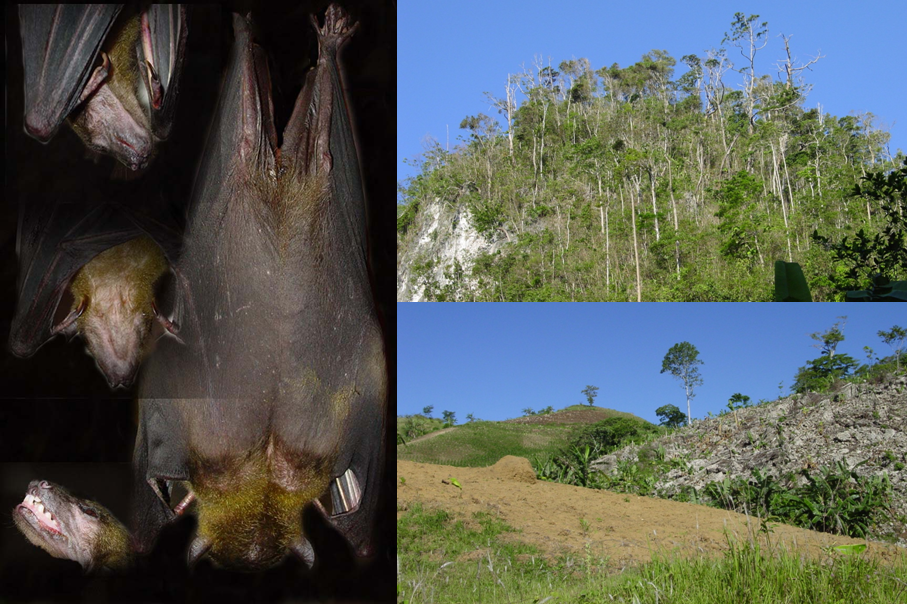
The Philippine bare-backed fruit bat (Dobsonia chapmani; body size = < 220 mm, < 150 g; IUCN status: ‘Critically Endangered A2cd’) is endemic to lowland rain forests [top habitat image] from Negros and Cebu islands. This species of flying fox had been missing from the 1970s and was declared extinct in 2002 (34). In May 2003, five specimens [one shown in the picture above] were trapped in night nets in the Calatong forest (Negros Island), a ~ 1,000-ha fragment of secondary rain forest and agricultural lands [bottom habitat image] (35). The species is reliant on fruit-bearing vegetation and caves for feeding and roosting, respectively. As with many other Philippine bats, it suffers from habitat degradation and hunting. The family Pteropodidae comprises > 150 species. Despite their Draculian look, they all feed on fruits and nectar, and act as important plant pollinators (36), as well as disease vectors such as Ebola virus (37). Flying foxes are distributed in the tropics and subtropics from the Eastern Mediterranean, through the Arabian Peninsula, Asia, Australia, and many islands of the Indian Ocean. Photos courtesy of Ely L. Alcala.

Jared Diamond (1) coined the expression ‘evil quartet’ for the four main human causes of species extinctions: habitat loss/fragmentation, overkill, introduced species and extinction chains [with climate change and extinction synergies (2), the updated expression would be ‘evil sextet”]. However, one third of ‘extinct’ mammal species has been ‘found’ again. Recent studies reveal that the probability of rediscovery depends on the cause of extinction.

Arriving in a city to search for an old friend, I would first look in the suburb where he lived, the pub where we enjoyed a drink and some music, or the park where we used to play football. But if my friend was an outlaw, or had recently gone through a traumatic experience, my chances of finding him at his favourite spots would shrink.

If, instead of a friend, we are searching for the last survivors of an extinct-declared species, surveys also tend to take place in the habitat in which the species was previously found. Such a strategy rests on the classical hypothesis that, given the spatial distribution of a species, its gradual decline must occur from the periphery to the core of its distribution (‘range collapse’) where, in theory, the habitat should be of better quality and the number of individuals higher (3). In contrast, recent work supports that the trajectory of demise of threatened vertebrates progresses from the core to the periphery (‘range eclipse’) (4), because many perturbations make their way as a progressive wave, e.g, fire, logging or urbanisation.

Diana Fisher (5) supports the ‘range eclipse’ hypothesis for ‘extinct’ mammals which have been rediscovered. She quantifies that 60% of the new records are made from peripheral habitats, mainly when the principal cause of extirpation is habitat loss. Not only that, on average species are rediscovered at altitudes 35 % higher than historical records, and only in 5 % of the cases at the locality where it had been last seen.

Read the rest of this entry »


Costs and benefits of a carbon economy for conservation

12 06 2012

I’ve had the good fortune of being involved now in a several endeavours funded by the Australian Centre for Ecological Analysis and Synthesis (ACEAS); two of those were workshops targeting specific questions regarding estimating modern extinction rates and examining the effects of genetic bottlenecks on Australian biota. The third was a bit different, to say the least – it was a little along the lines of ‘build it, and they will come‘. In other words, what happens when you bung 40 loosely associated researchers in a room for two days? Does anything of substance result, or does it degenerate into a mere talk-fest. I’m happy to say the former. The details of the ACEAS ‘Grand Workshop‘ are now being finalised in a paper that should be submitted by the end of the month. The ACEAS report is reproduced below.

The Grand ACEAS Workshop was something of an experiment: what will happen when we bring 30 of Australia’s top scientists working on land management issues into the same room?

The Grand Workshop participants came from academia, research institutions and the government, and had all received ACEAS funding for working groups. David Keith, Ted Lefroy, Jasmyn Lynch, Wayne Meyer and Dick Williams were amongst the attendees of the two-day workshop.

And when this group of people came together wanting to analyse and synthesise ecological data, great things happened.

“We decided to focus on how carbon pricing legislation will affect land use change and how will that spill over into biodiversity persistence”, said Professor Corey Bradshaw, Director of Ecological Modelling at The University of Adelaide, who led the synthesis activity at the Grand ACEAS Workshop.

“Will carbon pricing lead to good outcomes for biodiversity, or negative ones, or will it have no bearing whatsoever?”

The workshop participants broke into five groups to discuss how the carbon tax legislation will change land use when it is introduced in July 2012, and the potential impact on biodiversity.

Some of the questions asked included:

  • Is it enough simply to allow plants to re-grow to be eligible for carbon credits?
  • How will an increase in forestry plantations impact biodiversity, water catchments and fire regimes?
  • Will there be more kangaroo grazing to reduce methane emissions and erosion, replacing hard-hoofed livestock?
  • Can you receive carbon credits for shooting large feral animals like goats, camels, deer and boars?

The groups found many opportunities for positive biodiversity outcomes with the carbon sequestration activities encouraged by carbon pricing, but there are also many potential ‘bio-perversities’. Read the rest of this entry »


Get boreal

7 06 2012

I’ve been a little quiet this last week because I’ve had to travel to the other side of the planet for what turned out to be a very interesting and scientifically lucrative workshop. After travelling 31 hours from Adelaide to Umeå in northern Sweden, I wondered to myself if it was going to be worth it for a 2.5-day workshop on a little island (Norrbyskär) in the Baltic Sea (which, as it turned out, didn’t have internet access).

The answer is a categorical ‘yes’!

Many of you know that I’ve dabbled in boreal forest conservation in the past, but I could never claim any real expertise in the area. Hence it came as something of a shock when Jon Moen of Umeå University asked me to attend a specialist workshop focused loosely on making the plight and importance of the boreal forest more widely acknowledged. I dragged my feet initially, but Jon convinced me that I could add something to the mix.

It was a small workshop, but well-represented by all boreal countries save Norway (i.e., we had Russians, Swedes, Finns, Canadians and Americans – this Australian was indeed the odd one out). We also had a wide array of expertise, from carbon accountants, political scientists, political economists, native cultures experts, ecologists to foresters. Our mandate – justify why we should pay more attention to this globally important region.

Just how important is the boreal forest? We managed to unearth some little-appreciated facts: Read the rest of this entry »


If a tree falls… preventing deforestation with insurance

3 05 2012

As CB readers will know, I’ve reported a few times on our iREDD idea, and it got a little pick-up overseas. Here’s a great article by Rachel Nuwer covering the concept, published in Ecoimagination.com.

Almost everything we own – our houses and cars and our very health – is insured. It works on a simple principal: the higher the risk, the higher the premium. It’s an age-old concept that ecological modelers have decided to apply to a new area: forest preservation.

A new proposal, published in the journal Conservation Letters, would create forest insurance to make the U.N. forest preservation program Reduced Emissions from Deforestation and forest Degradation, or REDD, more effective. REDD is generally supposed to function by paying developing countries to protect their forests in exchange for carbon pollution credits. Currently the program has 42 partner countries across the globe. The program is crucial to the fight against climate change since deforestation and forest degradation accounts for about 20 percent of global greenhouse gas emissions and threatens biodiversity.

“REDD is a fantastic idea,” said Corey Bradshaw, director of ecological modeling at the University of Adelaide and co-author of the study. “You get a carbon advantage and biodiversity doesn’t get wiped out at the same time, it seems perfect.”

But it has a few major flaws that the insurance scheme, called iREDD, seeks to remedy.

REDD only works if the parties are honest and stick to the agreement. Bradshaw doesn’t have much faith that will happen. “If there’s a way to cheat, people will cheat. That’s the nature of all life, not just humans, but we excel at it,” he said. If, for example, a country is paid to conserve one forest but moves its deforestation efforts to an adjacent forest in order to get both money and timber, in terms of carbon offsets, that transaction was a failure. This phenomenon is called “leakage.”

Carbon-capture also only works if it’s maintained indefinitely. If a country accepts money for ten years and then cuts its forest the day after the agreement expires, then all of that conservation was for naught. This issue is called “permanence,” usually translated into an arbitrarily defined period of time set by countries in terms of decades or centuries. Read the rest of this entry »


To corridor, or not to corridor: size is the question

24 04 2012

I’ve just read a really interesting post by David Pannell from the University of Western Australia discussing the benefits (or lack thereof) of wildlife ‘corridors’. I’d like to elaborate on a few key issues, and introduce the most important aspect that really hasn’t been mentioned.

Some of you might be aware that the Australian Commonwealth Government has just released its Draft National Wildlife Corridors Plan for public comment, but many of you might not really know what a ‘corridor’ constitutes.

Wildlife or biodiversity ‘corridors’ have been around for a long time, at least in terms of proposals. The idea is fairly simple to conceive, but very difficult to implement in practice.

At least for as long as I’ve been in the conservation biology biz, ‘corridors’ have been proffered as one really good way to make broad-scale landscape restoration plausible and effective for (mainly) forest-dwelling species which have copped the worst of deforestation trends around Australia and the world. The idea is that because of intense habitat fragmentation, isolated patches of primary (or at least, reasonably intact secondary) forest can be linked by planting some sort of long corridor of similar habitat between them. Then, all the little creatures can merrily make their way back and forth between the patches, thus rescuing each other from extinction via migration. Read the rest of this entry »


The wounded soldiers of biodiversity

10 04 2012

Here’s another great post from Salvador Herrando-Pérez. It is interesting that he’s chosen an example species that was once (a long, long time ago in a galaxy far, far away) of great interest to me (caribou – see ancient papers a, b, c, d). But that is another story. Take it away, Salva.


Figure 1. Caribou (reindeer) are ungulates weighing up to ~ 100 kg. They live in tundra and taiga in Finland, Greenland, Finland, Norway, Mongolia, Russia, Canada and USA (extinct in Sweden). The species is globally stable (‘Least Concern’, IUCN Red List), but the subspecies of woodland caribou (Rangifer tarandus caribou) is threatened in North America. Schneider and colleagues’ 7 study encompasses ~ 3,000 individuals in 12 herds (75 to 450 individuals per herd), occupying ~ 100.000 km2 of conifer forest and peatland (3,000 to 19,000 km2 per herd). Two ecotypes are recognized regionally22, namely migratory mountain herds (mostly from mountains and foothills in west-central Alberta), and non-migratory boreal herds (mostly from peatlands in central and northern Alberta). The photo shows a group of caribous grazing on subalpine vegetation from Tonquin Valley, Jasper National Park (Alberta, Canada). Photo courtesy of Saakje Hazenberg.

As conservation biology keeps incorporating management and economical principles from other disciplines, it stumbles with paradoxes such that investing on the most threatened components of biodiversity might in turn jeopardize the entire assets of biodiversity.

At the end of 2011, newspapers and TVs echoed an IUCN report cataloguing as ‘extinct’ or ‘near extinct’ several subspecies of rhinos in Asia and Africa. To many, such news might have invoked the topic: “how badly governments do to protect the environment”. However if, to avoid those extinctions, politicians had to deviate funds from other activities, what thoughts would come to the mind of workers whose salaries had to be frozen, school directors whose classroom-roof leakages could not be repaired (e.g., last winter at my niece’s school in Spain), colonels whose last acquisition of ultramodern tanks had to be delayed, or our city council’s department who had to cancel Sting’s next performance.

Thus, there are three unquestionable facts regarding species conservation:

  1. the protection of species costs money;
  2. governments and environmental organisations have limited budgets for a range of activities they deem necessary; and
  3. our way of conserving nature is failing because, despite increasing public/private support and awareness, the rate of destruction of biodiversity is not decelerating1,2.

One of the modern debates among conservationists pivots around how to use resources efficiently3-6. Schneider and colleagues7 have dealt with this question for woodland caribou (Rangifer tarandus) in Canada. A total of 18 populations of this ungulate persist in the Canadian province of Alberta, all undergoing demographic declines due to mining extractions (oil, gas and bitumen), logging and wolf predation. The species is listed as ‘threatened’ regionally and nationally. The Alberta Caribou Recovery Plan (2004-2014) is attempting to protect all herds. Under such a framework, Schneider et al.7 predicted that woodland caribou would be regionally extirpated in less than a century.

Furthermore, they estimated the costs of making each herd viable (Fig. 1), with a triple revelation. To save all herds from extinction would need ~ CA$150,000 million (beyond the available budget). The most threatened herds are among the most expensive to protect (within present management approach). Some herds would be secured through modest investment for two decades. Overall, their study suggests that Alberta’s woodland caribou would be eligible for triage, i.e., at the subpopulation level8. Read the rest of this entry »