Getting conservation stakeholders involved

14 04 2011

Here’s another guest post from another switched-on Queensland student, Duan Biggs. Duan, originally from Namibia and South Africa, is doing his PhD at the ARC Centre for Coral Reef Studies at James Cook University in Townsville, Queensland. His PhD is investigating the resilience of nature-based tourism to climate change. I’ve met Duan a few times, and I’m impressed by his piercing views on conservation science and its implementation. Duan has already posted here on ConservationBytes.com (‘Make your conservation PhD relevant‘) and now adds his latest post discussing a paper he’s just had published in Conservation Letters. Thanks, Duan.

Achieving conservation outcomes almost always means working with stakeholders. ConservationBytes readers who have participated in multi-stakeholder conservation processes will know how difficult they are. Even more so when parties come from very different backgrounds and cultures. Farmers feel they just cannot comprehend what scientists are saying… ecologists silently curse [CJAB’s note: well, not always silently] because government officials ‘just don’t get it’ and so forth. So often, conservation projects are impeded, or even brought to a grinding halt because the very different perspectives that stakeholders bring to the table and the inability to see eye to eye.  This has left many a fervent conservationist and scientist feeling like the associated cartoon.

However, our new paper entitled The implementation crisis in conservation planning – could ‘mental models’ help? just out in Conservation Letters suggests ways of dealing with this almighty challenge.

Effective conservation requires conservation scientists to partner successfully with managers, extractive users and other stakeholder groups. Often, key stakeholders come from very different backgrounds and cultures, and hence have a diversity of values that result in a range of perspectives on issues. These differences are frequently a source of failure in conservation projects.

Read the rest of this entry »


Crocodiles, spiders and leeches

11 04 2011

I just wrote a fun little piece for a new section in the journal Frontiers in Ecology and the Environment that they’re calling Trails and Tribulations. The basic idea is that the author recounts a particularly interesting field-related experience through which an ecological concept is woven.

Editor-in-Chief Sue Silver said that I could reproduce my article here as long as I acknowledged Frontiers and the Ecological Society of America. It was fun to write, and I hope you enjoy it too [the PDF of the article is available free of charge here].

“So does each team get a hand gun?”

“No, you get an oar”

“What good is an oar?”

“Listen, mate. When a 3-metre croc jumps out of the swamp at you, there is nothing more natural in the world than to thump him with a big stick. It’s an autonomous response. With a gun, IF you manage to keep it dry, and IF you manage to get it out in time before the croc bites off your head, chances are you’ll just shoot the bloke in front of you anyway. So you get an oar.”

“Fair enough”.

That is an approximate, paraphrased reproduction of the initial conversation I had with renowned Australian crocodile biologist, Grahame Webb, just prior to my first (and as it turns out, only) trip to collect crocodile eggs for his Darwin wildlife park and crocodile farm. I volunteered to take part in the collection because I had recently begun working with Grahame and his team tracking the world’s largest crocodile species – the saltwater or estuarine crocodile Crocodylus porosus – and modelling aspects of its populations (Bradshaw et al. 2006). Having already been out on several occasions to harpoon and satellite-tag animals (some measuring > 4 m) on the Mary River, and cage-trap others in Kakadu National Park, I thought a little egg collection would be a proverbial walk in the park. Little did I know that it would end up being one of my more memorable experiences.

Let me walk you through the process. First, you wait until the height of the wet season and drive out as far as you can toward the breeding swamp of interest (in this case, Melacca Swamp in the Adelaide River flood plain, about one hour’s drive from Darwin). Then you and two other loonies pile into a small helicopter equipped with landing pontoons which ferries you to one of many previously identified crocodile nests. Because there is usually too much vegetation around the nest itself, the helicopter must land about 100-300 m away. Clothed only in long pants, a long-sleeved shirt and cotton gloves to protect your skin from the slicing blade grass, you jump off the helicopter’s pontoons into impenetrably murky, chest-deep water. One of the team drags an esky (chiller box into which eggs will be placed) and another carries an oar. As the noise of the departing helicopter becomes a faint buzz, you suddenly realise via the rapid expansion of your terminal sphincter that you are in the middle of a crocodile-filled swamp – and you are holding an oar. Read the rest of this entry »


How fast are we losing species anyway?

28 03 2011

© W. Laurance

I’ve indicated over the last few weeks on Twitter that a group of us were recently awarded funding from the Australian Centre for Ecological Synthesis and Analysis – ACEAS – (much like the US version of the same thing – NCEAS) to run a series of analytical workshops to estimate, with a little more precision and less bias than has been done previously, the extinction rates of today’s biota relative to deep-time extinctions.

So what’s the issue? The Earth’s impressive diversity of life has experienced at least five mass extinction events over geological time. Species’ extinctions have kept pace with evolution, with more than 99 % of all species that have ever existed now gone (Bradshaw & Brook 2009). Despite general consensus that biodiversity has entered the sixth mass extinction event because of human-driven degradation of the planet, estimated extinction rates remain highly imprecise (from 100s to 10000s times background rates). This arises partly because the total number of species is unknown for many groups, and most extinctions go unnoticed.

So how are we going to improve on our highly imprecise estimates? One way is to look at the species-area relationship (SAR), which to estimate extinction requires one to extrapolate back to the origin in taxon- and region-specific SARs (e.g., with a time series of deforestation, one can estimate how many species would have been lost if we know how species diversity changes in relation to habitat area). Read the rest of this entry »


What the hell is a banteng?

21 02 2011

A few years ago (ok, 6 years), ABC‘s Catalyst did a piece on our banteng research programme in Garig Gunak Barlu National Park in the Northern Territory. The show basically talks about the conservation and management conundrum of having a successful feral species in Australia that is also highly endangered in its native range (South East Asia). Do we shoot them all, or legislate them as an endangered species? It’s for Australians to decide.

I finally got around to uploading it on Youtube. I hope I haven’t contravened some copyright law, but I figure after such a lag, no one will care. I await the imminent contradiction from the ABC’s lawyers…

I hope you enjoy.

For the scientific papers arising from the work, see: Read the rest of this entry »


More rain forest regeneration opportunities

5 10 2010

Last November I wrote about an exciting conservation research endeavour (see ‘How to restore a tropical rain forest‘)  in which I am involved called the Thiaki Rain Forest Regeneration Project taking place as we speak in the hinterland of north Queensland’s Atherton Tableland. I personally have done next to nothing on the project yet (UQ’s Margie Mayfield is leading the charge), so I can’t really update you on all the nitty-gritty of our progress. Regardless, I can say that some of the planting tests have been done, the species have been chosen and are growing happily in the nursery reading for planting in January 2011, and the baseline biodiversity assessments are well under way.

Well, prior to our Supercharge Your Science extravaganza in Cairns and Townsville a few weeks ago, I visited Penny & Noel at Thiaki for a catch up, a discussion of what’s been happening and what’s about to happen. It was a great weekend (the family came along too) with good food, wine, ticks and leeches (biodiversity in action), and I’m getting more and more excited about what this project will deliver over the coming years.

In the meantime, a couple of ‘opportunities’ have arisen; in other words – we need some good PhD students to tackle some outstanding issues with the project. Read the rest of this entry »


Student opportunities with Australian Wildlife Conservancy

8 09 2010

A colleague of mine, Dr. Matt Hayward of the Australian Wildlife Conservancy (AWC), asked me to circulate some Honours, MSc and PhD student project opportunities. I thought this would be best done by publishing the call as a blog post.

The AWC is a non-government, non-profit organisation dedicated to the conservation of Australia’s wildlife and their habitats. AWC’s south-east region has a team of 7 ecologists who work closely with the land managers to carry out AWC’s Conservation and Science Program. The Science Program includes strategic research designed to help us manage threatened species more effectively. Several of these research projects are suitable for Honours, Masters or PhD projects.

This prospectus provides an outline of the student projects that are currently on offer in the south-east region. The majority of the projects are based on one sanctuary, although some aspects of the research may be done on other AWC sanctuaries and/or government conservation areas.

AWC will partially support these projects with equipment, staff time and expertise, and accommodation. In some cases, AWC may also provide some vehicle use and office facilities onsite at The Scotia Field Research Centre. We anticipate these projects will be collaborative efforts with input from students, academics and AWC staff, with appropriate acknowledgement for all involved. These projects are offered on a first in, first approved basis and have been offered to multiple universities.

More details on the sanctuaries and AWC are available here. If you are keen do one of these projects, please contact Matt Hayward and we will then formulate a research proposal and research agreement. Eight project descriptions follow. Read the rest of this entry »


Webinar: Modelling water and life

27 08 2010

Another quick one today just to show the webinar of my recent 10-minute ‘Four in 40’ talk sponsored by The Environment Institute and the Department for Water. This seminar series was entitled ‘Modelling as a Tool for Decision Support’ held at the Auditorium, Royal Institution Australia (RiAus).

“Four in 40″ is a collaboration between The University of Adelaide and the Department for Water, where 4 speakers each speak for 10 minutes on their research and its implications for policy. The purpose is to build understanding of how best to work with each other, build new business for both organisations and raise awareness of activity being undertaken in water/natural resource management policy and research.

CJA Bradshaw


Long, deep and broad

24 08 2010

© T. Holub Flickr

Thought that would get your attention ;-)

More scientists need to be trained in quantitative synthesis, visualization and other software tools.” D. Peters (2010)

In fact, that is part of the title of today’s focus paper in Trends in Ecology and Evolution by D. Peters – Accessible ecology: synthesis of the long, deep,and broad.

As a ‘quantitative’ ecologist (modeller, numerate, etc.) whose career has been based to a large degree on the analysis of large ecological datasets, I am certainly singing Peters’ tune. However, it’s much deeper and more important than my career – good (long, deep, broad – see definitions below) ecological data are ESSENTIAL to avoid some of the worst ravages of biodiversity loss over the coming decades and centuries. Unfortunately, investment in long-term ecological studies is poor in most countries (Australia is no exception), and it’s not improving.

But why are long-term ecological data essential? Let’s take a notable example. Climate change (mainly temperature increases) measured over the last century or so (depending on the area) has been determined mainly through the analysis of long-term records. This, one of the world’s most important (yet sadly, not yet even remotely acted upon) issues today, derives from relatively simple long-term datasets. Another good example is the waning of the world’s forests (see posts herehere and here for examples) and our increasing political attention on what this means for human society. These trends can only be determined from long-term datasets.

For a long time the dirty word ‘monitoring’ was considered the bastion of the uncreative and amateur – ‘real’ scientists performed complicated experiments, whereas ‘monitoring’ was viewed mainly as a form of low-intellect showcasing to please someone somewhere that at least something was being done. I’ll admit, there are many monitoring programmes producing data that aren’t worth the paper their printed on (see a good discussion of this issue in ‘Monitoring does not always count‘), but I think the value of good monitoring data has been mostly vindicated. You see, many ecological systems are far too complex to manipulate easily, or are too broad and interactive to determine much with only a few years of data; only by examining over the ‘long’ term do patterns (and the effect of extremes) sometimes become clear.

But as you’ll see, it’s not just the ‘long’ that is required to determine which land- and sea-use decisions will be the best to minimise biodiversity loss – we also need the ‘deep’ and the ‘broad’. But first, the ‘long’. Read the rest of this entry »


August issue of Conservation Letters and more citation statistics

3 08 2010

Trash fish © A. Lobo

The latest issue (Volume 3, Issue 4 – August 2010) of Conservation Letters is now available free-of-charge online. This issue’s papers include 1 Mini-Review, 2 Policy Perspectives, 6 Letters, 1 Correspondence and 1 Response:


Where in the world to invest in plant conservation

31 05 2010

© CBD

It’s been a good few weeks with many of our papers coming out online early – for example, I highlighted one last week on ecosystem function breakdown from global warming.

Although this has been out for a few weeks, our new paper lead by PhD candidate Xingli Giam (formerly of National University of Singapore, recently completed Australian Endeavour Scholar, now at Princeton University and all-round up-and-coming research star), and with contributions from Hugh “Vascular” Tan and Navjot Sodhi of National University of Singapore and me, is entitled Future habitat loss and the conservation of plant biodiversity (just published online in Biological Conservation).

This one is a bit of a complicated one, so let me walk you through it.

Plants not only represent a huge component of global biodiversity (~320 000 species), they represent the ‘habitats’ in which animals live and provide the major source of nutrients to food webs. They also provide most of our food and other materials essential for human existence. Basically we’d be screwed without them.

Because so many of the world’s biomes are severely threatened now because of massive habitat loss, degradation, over-exploitation, invasive species, extinction synergies and climate change, we need to maximise our efficiency in protecting what’s left. While global prioritisation schemes have a fruitful scientific history since Myers & colleagues’ classic paper (see Biodiversity Hotspots), there are a number of problems that plague the concept and its implementation. Read the rest of this entry »


Bill Laurance coming to Adelaide

13 03 2010

We’ve got a real treat for biodiversity buffs scheduled for the end of March. Eminent (Distinguished, Famous, Respected… the list goes on) Professor William (Bill) Laurance is briefly leaving his tropical world and coming south to the temperate climes of Adelaide to regale us with his fascinating biodiversity research career.

Bill is a leading conservation biologist who has worked internationally on many high-profile threats to tropical forests—in the Amazon, Central America, Africa, and Australasia. A highly prolific scientist, to date he has published five books and over 300 scientific articles. Bill has recently commenced a position as Distinguished Research Professor at James Cook University and is involved with the Smithsonian Tropical Research Institute in Panama. He also happens to be the bloke that blew the lid open on the devastating effects of tropical fragmentation in the Amazon with some of the best long-term experiments ever done in conservation biology.

I’m personally very pleased for several reasons: (1) Although I have never met Bill in person yet, I’ve recently co-authored two papers with him (Wash and spin cycle threats to tropical biodiversity and Improving the performance of the Roundtable on Sustainable Palm Oil for nature conservation) and I’m keen to meet the man behind the pen; (2) we have had many email discussions (some of them rather heated!), so I’m keen to flesh some of these out over a nice glass of South Australian Shiraz; (3) he’s been a keen supporter of my work for years, and has given me many opportunities to get my research noticed; and (4) it’s high time to met one of ConservationBytes.com Conservation Scholars.

Bill has recently shifted shop from Panama (Smithsonian Tropical Research Institute) to Australia’s own James Cook University, and so we at the Environment Institute thought we should take advantage of his geographical disorientation and bring him down south for a while. But he’s going to have to sing for his supper, so he’s kindly agreed to give three talks in 3 days from 29-31 March 2010.

His first talk (on Monday 29 March) will be an in-house Environment Institute seminar, but the second two will be public events that I urge anyone remotely interested in biodiversity conservation research to attend. In fact, his Tuesday 30 March presentation (18.00-20.00 Napier G03, University of Adelaide) is even more generic than that, and word on the street is it is highly entertaining and extremely well attended wherever Bill’s is gracious enough to give it:

Amplify Your Voice: Keys to Having a Prolific Scientific Career (and Bill would know).

This will include (1) How to be more prolific: strategies for writing and publishing scientific papers and (2) Further ways to maximise your scientific impact – interacting with the popular media and how to promote yourself. Each topic will run for 50 minutes and will include 10 minutes for audience questions. A tea and coffee break will be held between sessions. Book here.

His second public talk on Wednesday 31 March (18.00-19.30 Napier 102, University of Adelaide) will be:

Diagnosis Critical | The lungs of our Planet

Here he will be discussing how the forests of our world are in crisis. Our drive for continued economic growth has had devastating consequences for the world’s ecosystems that provide critical human services. Our forests are a haven for countless plant and animal species that form the basis of ecological services, these services are the biological mechanisms that make the world our home. Book here.

So, if you have a couple of free nights at the end of the month and are in Adelaide, I strongly recommend you come out and see Bill do his thing.

CJA Bradshaw

Add to FacebookAdd to DiggAdd to Del.icio.usAdd to StumbleuponAdd to RedditAdd to BlinklistAdd to TwitterAdd to TechnoratiAdd to Yahoo BuzzAdd to Newsvine


February Issue of Conservation Letters

13 02 2010

Diver at Great Barrier Reef, Australia

Hard to believe we’re already at Volume 3 – introducing the latest issue of Conservation Letters (Volume 3, Issue 1, February 2010). For full access, click here.

Note too we’ve jumped from 5 to 6 papers per issue. Congratulations to all our authors. Keep those submissions coming!

CJA Bradshaw

Add to FacebookAdd to DiggAdd to Del.icio.usAdd to StumbleuponAdd to RedditAdd to BlinklistAdd to TwitterAdd to TechnoratiAdd to Yahoo BuzzAdd to Newsvine


Scoping the future threats and solutions to biodiversity conservation

4 12 2009

Way back in 1989, Jared Diamond defined the ‘evil quartet’ of habitat destruction, over-exploitation, introduced species and extinction cascades as the principal drivers of modern extinctions. I think we could easily update this to the ‘evil quintet’ that includes climate change, and I would even go so far as to add extinction synergies as a the sixth member of the ‘evil sextet’.

But the future could hold quite a few more latent threats to biodiversity, and a corresponding number of potential solutions to its degradation. That’s why Bill Sutherland of Cambridge University recently got together with some other well-known scientists and technology leaders to do a ‘horizon scanning’ exercise to define what these threats and solutions might be in the immediate future. It’s an interesting, eclectic and somewhat enigmatic list, so I thought I’d summarise it here. The paper is entitled A horizon scan of global conservation issues for 2010 and was recently published online in Trends in Ecology and Evolution.

In no particular order or relative rank, Sutherland and colleagues list the following 15 ‘issues’ that I’ve broadly divided into ‘Emerging Threats’ and ‘Potential Solutions’:

Emerging Threats

  1. Microplastic pollution – The massive increase in plastics found in the world’s waterways and oceans really doesn’t have much focus right now in conservation research, but it should. We really don’t know how much we’re potentially threatening species with this source of pollution.
  2. Nanosilver in wastewater – The ubiquity of antimicrobial silver oxide or ions in products these days needs careful consideration for what the waste might be doing to our microbial communities that keep ecosystems alive and functioning.
  3. Stratospheric aerosols – A simultaneous solution and threat. Creating what would in effect be an artificial global cooling by injecting particles like sulphate aerosols into the stratosphere might work to cool the planet down somewhat. However, it would not reduce carbon dioxide, ocean acidification or other greenhouse gas-related changes. This strikes me as a potential for serious mucking up of the global climate and only a band-aid solution to the real problem.
  4. Deoxygenation of the oceans – Very scary. Ironically today I was listening to a talk by Martin Kennedy on the deep-time past of ocean hypoxia and he suggests we’re well on our way to a situation where our shelf waters could essentially become too anoxic for marine life to persist. It’s happened before, and rapid climate change makes the prospect plausible within less than a century. And you thought acidification was scary.
  5. Changes in denitrifying bacteria – Just like we’re changing the carbon cycle, we’re buggering up the nitrogen cycle as well. Changing our water bodies to nitrogen sources rather than sinks could fundamentally change marine ecosystems for the worse.
  6. High-latitude volcanism – One of these horrible positive feedback ideas. Reducing high-latitude ice cover exposes all these slumbering volcanoes that once ‘released’, start increasing atmospheric gas concentrations and contributing to faster ice melt and sea level rise.
  7. Trans-Arctic dispersal and colonisation – Warming polar seas and less ice mean fewer barriers to species movements. Expect Arctic ecosystems to be a hotbed of invasion, regime shifts and community reshuffling as a result.
  8. Invasive Indo-Pacific lionfish – Not one I would have focussed on, but interesting. These spiny, venomous fish like to eat a lot of other species, and so represent a potentially important invasive species in the marine realm.
  9. REDD and non-forested ecosystems – Heralded as a great potential coup for forest preservation and climate change mitigation, focussing on maintaining forests for their carbon sequestration value might divert pressure toward non-forested habitats and ironically, threaten a whole new sphere of species.
  10. International land acquisition – Global financial crises and dwindling food supplies mean that governments are acquiring more and more huge tracts of land for agricultural development. While this might solve some immediate issues, it could potentially threaten a lot more undeveloped land in the long run, putting even more pressure on habitats.

Potential Solutions

  1. Synthetic meat – Ever thought about eating a sausage grown in a vat rather than cut from a dead pig? It could become the norm and a way of reducing the huge pressure on terrestrial and aquatic systems for the production of livestock and fish for human protein provision.
  2. Artificial life – Both a risk and a potential solution. While I’ve commented before on the pointlessness of cloning technology for conservation, the ability to create genomes and reinvigorate species on the brink is an exciting prospect. It’s also frightening as hell because we don’t know how all these custom-made genomes might react and transform naturally evolved ones.
  3. Biochar – Burn organic material (e.g., plant matter) in the absence of oxygen, you get biochar. This essentially sequesters a lot of carbon that can then be put underground. The upshot is that agricultural yields can also increase. Would there be a trade-off though between land available for biochar sequestration and natural habitats?
  4. Mobile-sensing technology – Not so much a solution per se, but the rapid acceleration of remote technology will make our ability to measure and predict the subtleties of ecosystem and climate change much more precise. A lot more work and application required here.
  5. Assisted colonisationI’ve blogged about this before. With such rapid shifts in climate, we might be obliged to move species around so that they can keep up with rapidly changing conditions. Many pros and cons here, not least of which is exacerbating the invasive species problems around the globe.

Certainly some interesting ideas here and worth a thought or two. I wonder if the discipline of ‘conservation biology’ might even exist in 50-100 years – we might all end up being climate or agricultural engineers with a focus on biodiversity-friendly technology. Who knows?

CJA Bradshaw

Add to FacebookAdd to NewsvineAdd to DiggAdd to Del.icio.usAdd to StumbleuponAdd to RedditAdd to BlinklistAdd to Ma.gnoliaAdd to TechnoratiAdd to Furl

ResearchBlogging.orgSutherland, W., Clout, M., Côté, I., Daszak, P., Depledge, M., Fellman, L., Fleishman, E., Garthwaite, R., Gibbons, D., & De Lurio, J. (2009). A horizon scan of global conservation issues for 2010 Trends in Ecology & Evolution DOI: 10.1016/j.tree.2009.10.003


Sleuthing the Chinese green slime monster

21 10 2009

greenslimemonsterI just returned from a week-long scientific mission in China sponsored by the Australian Academy of Science, the Australian Academy of Technological Sciences and Engineering and the Chinese Academy of Sciences. I was invited to attend a special symposium on Marine and Deltaic Systems where research synergies between Australian and Chinese scientists were to be explored. The respective academies really rolled out the red carpet for the 30 or so Australian scientists on board, so I feel very honoured to have been invited.

During our marine workshop, one of my Chinese counterparts, Dongyan Liu from the Yantai Institute for Coastal Zone Research, presented a brilliant piece of ecological sleuthing that I must share with readers of ConservationBytes.com.

The first time you go to China the thing that strikes you is that everything is big – big population, big cities, big buildings, big projects, big budgets and big, big, big environmental problems. After many years of overt environmental destruction in the name of development, the Chinese government (aided by some very capable scientists) is now starting to address the sins of the past.

Liu and colleagues published their work earlier this year in Marine Pollution Bulletin in a paper entitled World’s largest macroalgal bloom caused by expansion of seaweed aquaculture in China, which describes a bloody massive outbreak of a particularly nasty ‘green tide’.

What’s a ‘green tide’? In late June 2008 in the coastal city of Qingdao not far from Beijing (and just before the 2008 Olympics), a whopping 1 million tonnes of green muck washed up along approximately 400 km2 of coastline. It took 10,000 volunteers 2 weeks to clean up the mess. At the time, many blamed the rising eutrophication of coastal China as the root cause, and a lot of people got their arse kicked over it. However, the reality was that it wasn’t so simple.

The Yellow Sea abutting this part of the Chinese coast is so named because of its relatively high productivity. Warm waters combined with good mixing mean that there are plenty of essential nutrients for green things to grow. So, adding thousands of tonnes of fertilisers from Chinese agricultural run-off seems like a logical explanation for the bloom.

Qingdoa green tide 2008 © Elsevier

Qingdao green tide 2008 © Elsevier

However, it turns out that the bulk of the green slime was comprised of a species called Enteromorpha prolifera, and it just so happens that this particularly unsavoury seaweed loves to grow on the infrastructure used for the aquaculture of nori (a.k.a. amanori or zicai) seaweed (mainly, Porphyra yezoensis). Problem is, P. yezoensis is grown mainly on the coast hundreds of kilometres to the south.

Liu and colleagues examined both satellite imagery and detailed oceanographic data from the period prior to the green tide and not only spotted green splotches many kilometres long, they also determined that the current flow and wind direction placed the trajectory of any green slime mats straight for Qingdao.

So, how does it happen? Biofouling by E. prolifera on P. yezoensis aquaculture frames is dealt with mainly by manual cleaning and then dumping the unwanted muck on the tidal flats. When the tide comes back in, it washes many thousands of kilos of this stuff back out to sea, which then accumulates in rafts and continues to grow in the warm, rich seas. Subsequent genetic work also confirmed that the muck at sea was the same stock as the stuff growing on the aquaculture frames.

Apart from some lovely sleuthing work, the implications are pretty important from a biodiversity perspective. Massive eutrophication coupled with aquaculture that inadvertently spawns a particularly nasty biofouling species is a good recipe for oxygen depletion in areas where the eventual slime monster starts to decay. This can lead to so-called ‘dead’ zones that can kill off huge numbers of marine species. So, the proper management of aquaculture in the hungry Goliath that is China becomes essential to reduce the incidence of dead zones.

Fortunately, it looks like Liu and colleagues’ work is being taken seriously by the Chinese government who is now contemplating financial support for aquaculturists to clean their infrastructure properly without dumping the sludge to sea. A simple policy shift could save a lot of species, a lot of money, and a lot of embarrassment (not to mention prevent a lot of bad smells).

CJA Bradshaw

Add to FacebookAdd to NewsvineAdd to DiggAdd to Del.icio.usAdd to StumbleuponAdd to RedditAdd to BlinklistAdd to Ma.gnoliaAdd to TechnoratiAdd to Furl

This post was chosen as an Editor's Selection for ResearchBlogging.org

ResearchBlogging.orgLiu, D., Keesing, J., Xing, Q., & Shi, P. (2009). World’s largest macroalgal bloom caused by expansion of seaweed aquaculture in China Marine Pollution Bulletin, 58 (6), 888-895 DOI: 10.1016/j.marpolbul.2009.01.013


Can we solve Australia’s mammal extinction crisis?

3 09 2009

© F. O'Connor

© F. O'Connor

This ‘In DepthScience Opinion piece from the ABC couldn’t have come at a better time. Written by Ian Gordon of the CSIRO, this opinion piece was written off the back of the special session on mammalian extinctions held at the recent International Congress of Ecology in Brisbane. Three previous ConservationBytes.com blogs in August (here, here and here) were devoted to specific talks at the Congress, including one about John Woinarksi’s gloomy tale of dwindling mammal populations in the Top End (which is especially frightening considering its also going on in our so-called ‘protected’ areas such as Kakadu, Litchfield and Garig Gunak Barlu National Parks!).

So, I recommend you have a read of my blog post on the shocking continued loss of Australian mammals, then read Ian’s piece copied below. Bottom lines – stop burning the shit out of our forests and encourage dingo population recovery and expansion.

Australia leads the world in mammal extinctions.

Over the last two hundred years 22 mammal species have become extinct, and over 100 are now on the threatened and endangered species list, compiled as part of the federal government’s Environment Protection and Biodiversity Conservation Act.

Evidence suggests Australia is on the cusp of another wave of mammal extinctions with a reduction in the abundance of some species and alarmingly, their range.

This is undoubtedly one of the major biodiversity conservation issues affecting Australia. It’s crucial we focus on the management solutions required to stop these species falling into extinction.

A South American success story

Working as a zoologist has allowed me to be involved in projects across the globe, looking at species at risk of extinction due to over-exploitation by humans.

Earlier this year I edited a book on the South American vicuña‘s comeback from the brink of extinction. Once abundant in the Andes, this wild relative of the llama suffered a sharp population drop in the 1960s due to international demand for its fleece.

An international moratorium on the sale of vicuña fleece in 1969 saw populations recover enough by 1987 for Andean communities to be able to harvest the fibre in a sustainable way. Population numbers of vicuña have remained healthy ever since, making it one of the few success stories of wildlife conservation worldwide.

Australia’s mammal extinction crisis

However Australia’s medium-sized mammals have had to deal with a different range of issues to the vicuña: the introduction of feral animals, particularly cats and foxes; increased grazing pressure; altered fire regimes; the clearing of habitat for development and production; and now, the effects of climate change.

It isn’t that any of these pressures are particularly important by themselves, but the fact that many of them act in concert has had a significant impact on causing the crashes in population numbers, and increasing the risk of species becoming extinct.

For example, the crescent nailtail wallaby was once an abundant and widespread macropod of central and western Australia. The pressures of feral cats and foxes coupled with clearing for agriculture and grazing, and altered fire regimes pushed this little species over the edge and it is now classified as extinct.

The problem is also more far-reaching than we first assumed. Many people may think that animals are becoming extinct in the south of Australia where habitat destruction is quite evident.

But the populations of iconic species in the north of Australia such as the northern quoll, golden bandicoot and the Carpentarian rock-rat are also collapsing. In our lifetime populations of some species have greatly reduced in number, and others have completely disappeared in landscapes that are considered to be in excellent condition.

The golden bandicoot, listed as a vulnerable species, used to be found across much of the north of Australia. It is now only found in very small populations in the Northern Territory and on the isolated Burrow Island off the coast of Western Australia.

Time to bring back the dingo?

Further research on the impacts of fire, grazing, invasive species and climate change on Australian mammals would be extremely valuable, but ecologists recognise that crucial management decisions need to be made now.

We’ve found ourselves in a position where we have identified the threats to Australian mammal species and documented the loss of these species, the role of science must turn more directly to identifying the opportunities for assisting the survival of these mammals.

In August I chaired a panel with Professor Chris Johnson from James Cook University at the International Congress of Ecology, to discuss what management could be put in place now to help beleaguered populations of small mammals recover.

Johnson’s main focus is to bring back the top-order predator.

He believes there is now good evidence that a stable population of dingoes suppresses the numbers and activity of foxes and cats, and some other feral animal species as well.

He argues that the effect of using a top predator like the dingo to hold down populations of foxes and cats is that the total intensity of predation on smaller native mammals can be reduced.

Bringing back the dingo has many sheep and cattle farmers raising their eyebrows because the wild dogs are known to kill stock. But guardian sheepdogs can protect stock herds by fighting off dingoes if they come too close. This still allows the dingoes to have a beneficial effect in the ecosystem.

Current trials of Maremma dogs, a type of sheepdog, at Dunluce sheep station in northwest Queensland demonstrate that they can be effective dingo deterrents in a pastoral zone.

This is just one potential solution that may work in some areas. Reinstating mosaic fire regimes, where patches of land are burnt at different times to allow the land to recover in stages, and controlling grazing around sensitive habitat of endangered mammals are other potential solutions that are currently under trial in various parts of the country.

Working together

Even though science doesn’t have all the answers I believe that it is more important than ever for land managers and scientists to work together to put new management regimes on the ground.

Our scientific knowledge can provide guidelines for land managers to reduce the pressures on our biodiversity. Through monitoring how species and ecosystems respond to on-ground management we can then learn and adapt our advice to meet future challenges facing Australia’s threatened species.

We need to act now: the international community is watching Australia and we have an opportunity to show how we can apply science through collaborative agreements with land managers to reduce the threats and protect endangered species.

We’ll then be able to add Australian animals to the short list of species, like the vicuña, that have been brought back from the brink of extinction.


CJA Bradshaw

Add to FacebookAdd to NewsvineAdd to DiggAdd to Del.icio.usAdd to StumbleuponAdd to RedditAdd to BlinklistAdd to Ma.gnoliaAdd to TechnoratiAdd to Furl


Few people, many threats – Australia’s biodiversity shame

31 07 2009

bridled_nailtail_400I bang on a bit about human over-population and how it drives biodiversity extinctions. Yet, it isn’t always hordes of hungry humans descending on the hapless species of this planet  – Australia is a big place, but has few people (just over 20 million), yet it has one of the higher extinction rates in the world. Yes, most of the country is covered in some fairly hard-core desert and most people live in or near the areas containing the most species, but we have an appalling extinction record all the same.

A paper that came out recently in Conservation Biology and was covered a little in the media last week gives some telling figures for the Oceania region, and more importantly, explains that we have more than enough information now to implement sound, evidence-based policy to right the wrongs of the past and the present. Using IUCN Red List data, Michael Kingsford and colleagues (paper entitled Major conservation policy issues for biodiversity in Oceania), showed that of the 370 assessed species in Australia, 80 % of the threatened ones are listed because of habitat loss, 40 % from invasive species and 30 % from pollution. As we know well, it’s mainly habitat loss we have to control if we want to change things around for the better (see previous relevant posts here, here & here).

Kingsford and colleagues proceed to give a good set of policy recommendations for each of the drivers identified:

Habitat loss and degradation

  • Implement legislation, education, and community outreach to stop or reduce land clearing, mining, and unsustainable logging through education, incentives, and compensation for landowners that will encourage private conservation
  • Establish new protected areas for habitats that are absent or poorly represented
  • In threatened ecosystems (e.g., wetlands), establish large-scale restoration projects with local communities that incorporate conservation and connectivity
  • Establish transparent and evidence-based state of environment reporting on biodiversity and manage threats within and outside protected areas.
  • Protect free-flowing river systems (largely unregulated by dams, levees, and diversions) within the framework of the entire river basin and increase environmental flows on regulated rivers

Invasive species

  • Avoid deliberate introduction of exotic species, unless suitable analyses of benefits outweigh risk-weighted costs
  • Implement control of invasive species by assessing effectiveness of control programs and determining invasion potential
  • Establish regulations and enforcement for exchange or treatment of ocean ballast and regularly implement antifouling procedures

Climate change

  • Reduce global greenhouse gas emissions
  • Identify, assess, and protect important climate refugia
  • Ameliorate the impacts of climate change through strategic management of other threatening processes
  • Develop strategic plans for priority translocations and implement when needed

Overexploitation

  • Implement restrictions on harvest of overexploited species to maintain sustainability
  • Implement an ecosystem-based approach for fisheries, based on scientific data, that includes zoning the ocean; banning destructive fishing; adopting precautionary fishing principles that include size limits, quotas, and regulation with sufficient resources based on scientific assessments of stocks and; reducing bycatch through regulation and education
  • Implement international mechanisms to increase sustainability of fisheries by supporting international treaties for fisheries protection in the high seas; avoiding perverse subsidies and improve labelling of sustainable fisheries; and licensing exports of aquarium fish
  • Control unsustainable illegal logging and wildlife harvesting through local incentives and cessation of international trade

Pollution

  • Decrease pollution through incentives and education; reduce and improve treatment of domestic, industrial, and agriculture waste; and rehabilitate polluted areas
  • Strengthen government regulations to stop generation of toxic material from mining efforts that affects freshwater and marine environments
  • Establish legislation and regulations and financial bonds (international) to reinforce polluter-pays principles
  • Establish regulations, education programs, clean ups, labelling, and use of biodegradable packaging to reduce discarded fishing gear and plastics

Disease

  • Establish early-detection programs for pathological diseases and biosecurity controls to reduce translocation
  • Identify causes, risk-assessment methods, and preventative methods for diseases
  • Establish remote communities of organisms (captive) not exposed to disease in severe outbreaks

Implementation

  • Establish regional population policies based on ecologically sustainable human population levels and consumption
  • Ensure that all developments affecting the environment are adequately analysed for impacts over the long term
  • Promote economic and societal benefits from conservation through education
  • Determine biodiversity status and trends with indicators that diagnose and manage declines
  • Invest in taxonomic understanding and provision of resources (scientific and conservation) to increase capacity for conservation
  • Increase the capacity of government conservation agencies
  • Focus efforts of nongovernmental organisations on small island states on building indigenous capacity for conservation
  • Base conservation on risk assessment and decision support
  • Establish the effectiveness of conservation instruments (national and international) and their implementation

A very good set of recommendations that I hope we can continue to develop within our governments.

CJA Bradshaw

Add to FacebookAdd to NewsvineAdd to DiggAdd to Del.icio.usAdd to StumbleuponAdd to RedditAdd to BlinklistAdd to Ma.gnoliaAdd to TechnoratiAdd to Furl


Monkeys and motorbikes

29 06 2009

flyingmonkeyThis post by a colleague of mine, Erik Meijaard of The Nature Conservancy, really nails down one of the principal bugbears of conservation science – how to make our research truly relevant to reducing or reversing the trends in species extinctions. It also goes straight to the Toothless page.

We as a discipline have been studying ways to improve the plight of biodiversity for over 50 years, but across the board, species are disappearing at faster and faster rates. So obviously we’re doing something dreadfully wrong. Yes, we have made huge scientific leaps in that time, quantified many hypothetical aspects of extinction and restoration (e.g., fragmentation, trophic cascades, protected areas, etc. – check out Conservation Classics for some of the more memorable conservation science advances), and identified some of the major socio-political impediments to achieving real conservation outcomes.

Yes, one can argue that without conservation science we’d already be a lot worse off and many species now just hanging on would have long since disappeared. It’s also arguable that our battle was lost before we begun fighting simply by virtue of the burgeoning human population and its never-ending quest to consume more – one step forward and two steps back.

I’m not at all trying to condemn the discipline, but I think it’s worth our while to hold our research up closely and regularly to the mirror and ask ourselves in the most objective manner whether we think we’re truly changing things for the better. Something to think about the next time you apply for that research grant.

Erik’s post is reproduced below.

Last year, The Nature Conservancy’s Indonesia program was offered an undisclosed amount of money from an anonymous motorbike company. Presumably because the company knew of the Conservancy’s expertise in primate research, they somewhat bizarrely requested us to investigate bike preference among Indonesian apes and monkeys.

As the senior scientist of the Indonesian forest program, I rejected the idea outright. The scientific scope of the study appeared far from our usual focus on proper applied conservation research. Do we really care which brand of motorbike different species of primate prefer? And if we knew, would it really help us to protect them any better? My answer to both questions was “no.”

Still, I couldn’t stop myself wondering. What if we simply took the money? It had been offered with virtually no strings attached. If we could do the study cheaply we might have some funds left for more relevant work.

So, weak as I am, I relented and took the cash and developed a minimalistic study in which we studied photos of primates on bikes. The results indicate that agile gibbons (Hylobates agilis) prefer Yamaha, crested black macaques (Macaca nigra) prefer Honda, and pig-tailed macaques (Macaca nemestrina) favor push bikes. Curiously, none of the species seem to favor the big handlebars on bikes called “ape hangers.”

Admittedly, the sample size of three is somewhat limited, but a tentative conclusion is that the higher evolved a primate is, the more expensive its bike selection. The donor company is extremely pleased with the results of this study, and they are now translating the findings into new marketing strategies for a very expensive bike for people, based on the assumption that humans are at the top rung of the evolutionary ladder.

Whether the story is factual or not, the moral of it is that most conservation research in places like Indonesia, but also elsewhere in the world, is largely irrelevant to conservation.

Douglas Sheil (a colleague of mine) and I published a paper some time ago in which we compiled, categorized and evaluated 284 publications on Bornean wildlife (Biodiversity and Conservation 16:3053–3065). We found that few studies address threats to species and fewer still provide input for or guidance to effective management.

Too often scientists working under the guise of conservation answer questions that are not important to conservation — and judging my CV, I am one of them. In the end, if we cannot come up with the facts and recommendations that can be directly applied by managers, decision makers, local communities and other people that really count in conservation, conservation science will have little to offer to conservation.

CJA Bradshaw

Add to FacebookAdd to NewsvineAdd to DiggAdd to Del.icio.usAdd to StumbleuponAdd to RedditAdd to BlinklistAdd to Ma.gnoliaAdd to TechnoratiAdd to Furl


New Impact Factors for conservation journals

23 06 2009

For those of you who follow the ISI Impact Factors for journals (the ratio of the number of total citations i+3 for the papers published in years i and i+1 divided by the total number of citable papers published in years i and i+1), you might know that the 2008 IFs have just been published. Now, whether you put stock or not in these is somewhat irrelevant – enough people do to make it relevant to who publishes what where, and who cites or does not cite scientific papers. It’s also in our scientific culture – pretty much everyone in a field will have a rough idea of the range of IFs their specific discipline’s journals span, and so it acts as a kind of target for varying qualities of science. Far from perfect, but it’s what we have to deal with.

So, I thought I’d publish the 2008 Impact Factors for the journals listed on this site’s Journals page and compare them to the 2007 values:

and for some more general journals that occasionally publish conservation papers:

Almost across the board, conservation journals have seen an increase in their Impact Factors. There are many other good conservation papers published in other journals, but this list probably represents the main outlets. I hope we continue to focus more on conservation outcomes rather than scientific kudos per se, although I’m certainly cognisant of the hand that feeds. Good luck with your publishing.

CJA Bradshaw

Add to FacebookAdd to NewsvineAdd to DiggAdd to Del.icio.usAdd to StumbleuponAdd to RedditAdd to BlinklistAdd to Ma.gnoliaAdd to TechnoratiAdd to Furl


June Issue of Conservation Letters

6 06 2009

Quick off the mark this month is the new issue of Conservation Letters. There are some exciting new papers (listed below). I encourage readers to have a look:

Policy Perspectives

Letters

CJA Bradshaw


Underwater deforestation

26 05 2009
© C. Connell

© S. Connell

I’ve been meaning to blog on this for a while, but am only now getting around to it.

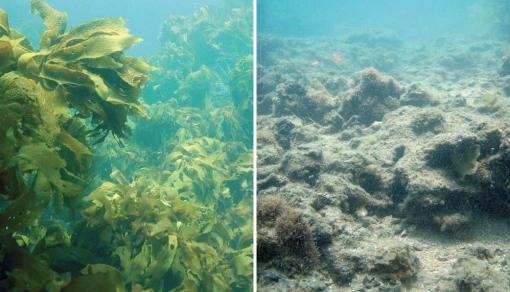
Now, it’s not bulldozers razing our underwater forests – it’s our own filth. Yes, we do indeed have underwater forests, and they are possibly the most important set of species from a biodiversity perspective in temperate coastal waters around the world. I’m talking about kelp. I’ve posted previously about the importance of kelp and how climate change poses a threat to these habitat-forming species that support a wealth of invertebrates and fish. In fact, kelp forests are analogous to coral reefs in the tropics for their role in supporting other biodiversity.

The paper I’m highlighting for the ConservationBytes.com Potential list is by a colleague of mine at the University of Adelaide, Associate Professor Sean Connell, and his collaborators entitled “Recovering a lost baseline: missing kelp forests from a metropolitan coast“. This paper is interesting, novel and applied for several reasons.

First, it sets out some convincing evidence that the Adelaide coastline has experienced a fairly hefty loss of canopy-forming kelp (mainly species like Ecklonia radiata and Cystophora spp.) since urbanisation (up to 70 % !). Now, this might not seem too surprising – we humans have a horrible track record for damaging, exploiting or maltreating biodiversity – but it’s actually a little unexpected given that Adelaide is one of Australia’s smaller major cities, and certainly a tiny city from a global perspective. There hasn’t been any real kelp harvesting around Adelaide, or coastal overfishing that could lead to trophic cascades causing loss through herbivory. Connell and colleagues pretty much are able to isolate the main culprits: sedimentation and nutrient loading (eutrophication) from urban run-off.

Second, one might expect this to be strange because other places around the world don’t have the same kind of response. The paper points out that in the coastal waters of South Australia, the normal situation is characterised by low nutrient concentrations in the water (what we term ‘oligotrophic’) compared to other places like New South Wales. Thus, when you add even a little bit extra to a system not used to it, these losses of canopy-forming kelp ensue. So understanding the underlying context of an ecosystem will tell you how much it can be stressed before all hell breaks loose.

Finally, the paper makes some very strong arguments for why good marine data are required to make long-term plans for conservation – there simply isn’t enough investment in basic marine research to ensure that we can plan responsibly for the future (see also previous post on this topic).

A great paper that uses a combination of biogeography, time series and chemistry to inform about a major marine conservation problem.

CJA Bradshaw

Add to FacebookAdd to NewsvineAdd to DiggAdd to Del.icio.usAdd to StumbleuponAdd to RedditAdd to BlinklistAdd to Ma.gnoliaAdd to TechnoratiAdd to Furl