Unbounded economic growth destroying biodiversity

16 08 2010

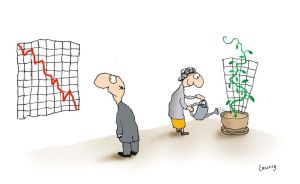
…we can’t have more of everything instantaneously

…increasing takeover of the ecosystem is the necessary consequence of the physical growth of the macroeconomy

…consider telling the economist to go to hell

Herman Daly

© M. Leunig

Last month I had the privilege of listening to Rob Dietz of the Centre for Advancement of the Steady State Economy (CASSE) when attending the 2010 International Congress for Conservation Biology. He introduced the CASSE and their mandate – to promote stable or mildly fluctuating levels in population and consumption of energy and materials. This is the steady-state economy.

I’ve hinted before that our essentially linear economy (natural resource exploitation -> transport -> manufacturer -> redistribution -> sale -> consumption/use -> disposal (discussed in a very easy-to-understand way in the Story of Stuff) is not sustainable in the long term because of the finite resource base of the planet (think trees, coal, oil, arable land). My colleagues and I have even shown analyses based on hard data demonstrating that total wealth is the ultimate driver of environmental degradation at the country scale.

So, it is my opinion (and a growing number of others‘) that we need a new way of measuring economic prosperity, or the world will enter a state of permanent financial crisis. The mantra of constant economic growth is simply unrealistic as our human populations continue to expand. This is a very simplistic statement and on the surface an apparently impossible goal; however, people who put together the CASSE believe it is achievable.

It is for this reason that I have been communicating with Rob Dietz and others at CASSE about reposting some of their excellent essays on ConservationBytes.com. Please feel free to comment here on the subject matter because the CASSE people will be monitoring. I hope we can expand the readership and support base, and eventually start to convince politicians that growth will eventually kill us and a good slice of the planet’s biodiversity.

So with that, here’s the first repost by Professor Herman Daly entitled “Opportunity Cost of Growth“: Read the rest of this entry »



Marine protected areas: do they work?

13 08 2010

One measure that often meets great resistance from fishermen, but is beloved by conservationists, is the establishment of marine protected or ‘no take’ areas.” Stephen J. Hall (1998)

I’m going to qualify this particular post with a few disclaimers; first, I am not involved in the planning of any marine protected areas (henceforth referred to as ‘marine parks’) in Australia or elsewhere; and second, despite blogging on the issue, I have never published in the discipline of protected area design (i.e, ‘conservation planning’ is not my area of expertise).

That said, it seems to becoming more imperative that I enter the fray and assess not only how marine parks should be designed, but how effective they really are (or can be). I’ve been asked by several conservation NGOs to provide some insight into this, so I thought I should ‘think aloud’ and blog a little mini-review about marine park effectiveness.

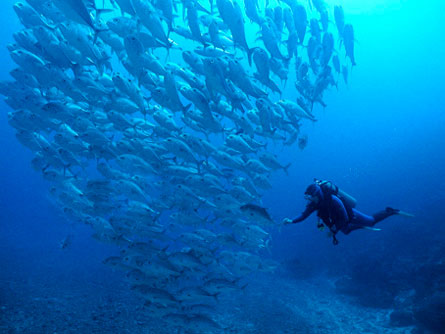
Clearly there is a trend to establish more marine parks around the world, and this is mainly because marine conservation lags so far behind terrestrial conservation. Indeed, Spalding et al. (2008) showed that only 4.1 % of continental shelf areas are incorporated within marine parks, and ~ 50 % of all marine ecoregions have less than 1 % marine park coverage across the shelf. Furthermore, marine protection is greatest in the tropical realms, while temperate realms are still poorly represented.

The question of whether marine parks ‘work’ is, however, more complicated than it might first appear. When one asks this question, it is essential to define how the criteria for success are to be measured. Whether it’s biodiversity protection, fisheries production, recreational revenue, community acceptance/involvement or some combination of the above, your conclusion is likely to vary from place to place.

Other complications are, of course, that if you cannot ensure a marine park is adequately enforced (i.e., people don’t respect the rules) or if you don’t actually place the park anywhere near things that need protecting, there will be no real net benefit (for any of the above-mentioned interest groups). Furthermore, most marine parks these days have many different types of uses allowed in different zones (e.g., no fishing, some fishing, recreational diving only, no boat transport, some shipping, etc., etc., etc.), so it gets difficult to test for specific effects (it’s a bit like a cap-and-trade legislation for carbon – too many rules and often no real net reduction in carbon emissions – but that’s another story).

All these conditions aside, I think it’s a good idea to present what the real experts have been telling us about marine park effectiveness from a biodiversity and fishing perspective over the last decade or so. I’ll summarise some of the major papers here and give an overall assessment at the end. I do not contend that this list is even remotely comprehensive, but it does give a good cross-section of the available evidence. Read the rest of this entry »


General call for ConservationBytes.com contributions

10 08 2010

After just over two years running this blog, I’ve now built up a pretty good audience of conservation-interested people. The blog now has a monthly view rate of over 12,000 and >80 e-mail subscribers, so the material is being viewed far and wide. I want to thank all of you for your interest and comments.

It seems appropriate then to put out a general call for ConservationBytes.com contributions. I’ve had several guest posts now from students (Fishing for conservationMake your conservation PhD relevant), postdocs (Coming to grips with the buffalo problem) and colleagues (Interview with a social [conservation] scientist, Put the bite back into biodiversity conservation), but these have come to me fairly haphazardly. I’d therefore like to invite short articles from the CB readership to expand the topics covered and provide a more interactive conservation discussion. Read the rest of this entry »


August issue of Conservation Letters and more citation statistics

3 08 2010

Trash fish © A. Lobo

The latest issue (Volume 3, Issue 4 – August 2010) of Conservation Letters is now available free-of-charge online. This issue’s papers include 1 Mini-Review, 2 Policy Perspectives, 6 Letters, 1 Correspondence and 1 Response:


Linking disease, demography and climate

1 08 2010

Last week I mentioned that a group of us from Australia were travelling to Chicago to work with Bob Lacy, Phil Miller, JP Pollak and Resit Akcakaya to make some pretty exciting developments in next-generation conservation ecology and management software. Also attending were Barry Brook, our postdocs: Damien Fordham, Thomas Prowse and Mike Watts, our colleague (and former postdoc) Clive McMahon, and a student of Phil’s, Michelle Verant. At the closing of the week-long workshop, I thought I’d share my thoughts on how it all went.

In a word, it was ‘productive’. It’s not often that you can spend 1 week locked in a tiny room with 10 other geeks and produce so many good and state-of-the-art models, but we certainly achieved more than we had anticipated.

Let me explain in brief why it’s so exciting. First, I must say that even the semi-quantitative among you should be ready for the appearance of ‘Meta-Model Manager (MMM)’ in the coming months. This clever piece of software was devised by JP, Bob and Phil to make disparate models ‘talk’ to each other during a population projection run. We had dabbled with MMM a little last year, but its value really came to light this week.

We used MMM to combine several different models that individually fail to capture the full behaviour of a population. Most of you will be familiar with the individual-based population viability (PVA) software Vortex that allows relatively easy PVA model building and is particular useful for predicting extinction risk of small populations. What you most likely don’t know exists is what Phil, Bob and JP call Outbreak – an epidemiological modelling software based on the classic susceptible-exposed-infectious-recovered framework. Outbreak is also an individual-based model that can talk directly to Vortex, but only through MMM. Read the rest of this entry »


Tropical biology and conservation overview

28 07 2010

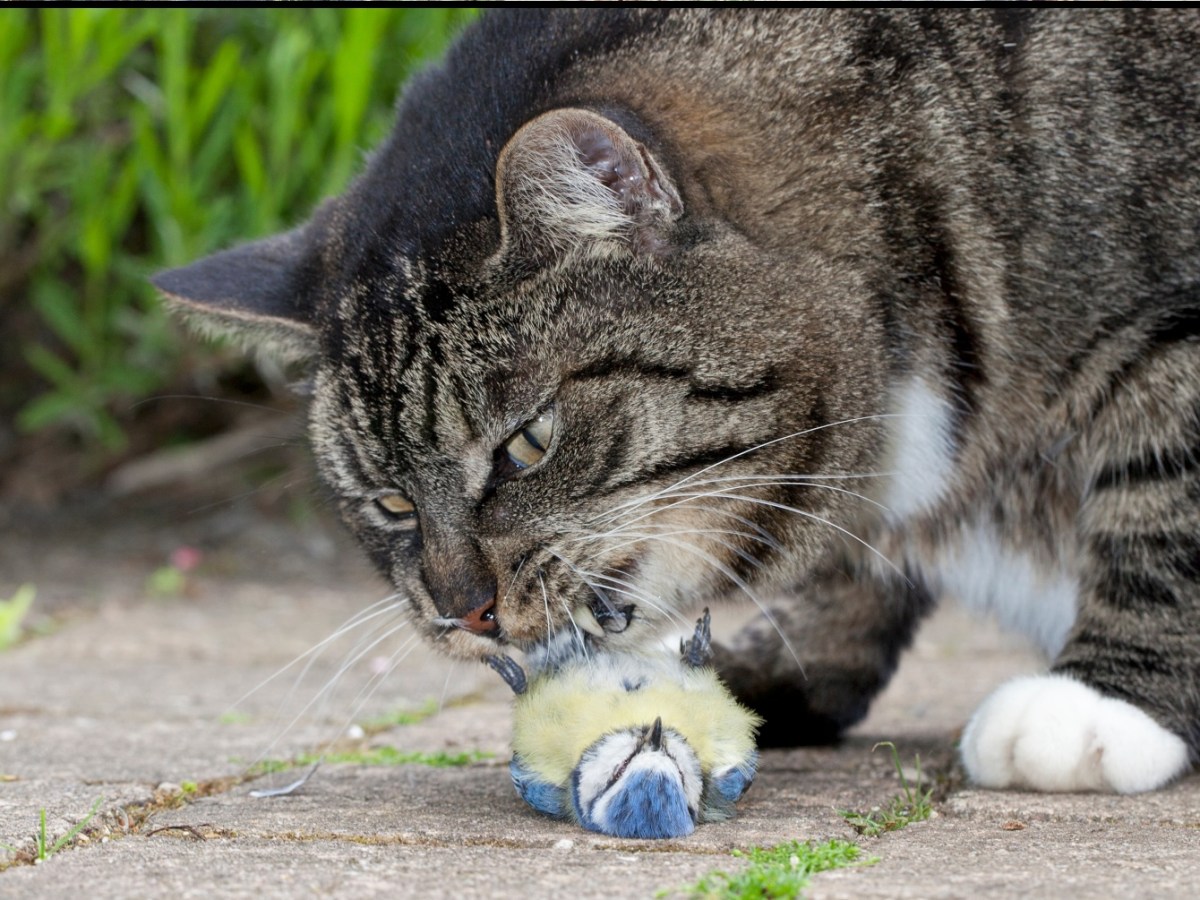
Last week I attended the 2010 International Meeting of the Association for Tropical Biology and Conservation (ATBC) in Sanur, Bali (Indonesia). I only managed one post on the real-world relevance of conservation research (that attracted quite a lot of comment) while there, but I did promise to give a conference overview as I did for the International Congress for Conservation Biology earlier this month. So here goes.

This was my first ATBC meeting despite having co-written ‘the book’ on tropical conservation biology (well, one of very, very many). I no longer live in the tropics but am still managing to keep my hand in many different aspects of tropical research. After all, tropical regions represent ground zero for conservation biology – they have the highest biodiversity (no matter which way you measure it), some of the greatest threats (e.g., most people, most rapid development, most corruption) and some of the most pressing human problems (disease, hunger, socio-political instability). Ironically, most of the world’s conservation ecologists work in temperate realms – it should really be the other way around. Read the rest of this entry »


Conservation research rarely equals conservation

21 07 2010

This post was chosen as an Editor's Selection for ResearchBlogging.org

I am currently attending the 2010 International Meeting of the Association for Tropical Biology and Conservation (ATBC) in Sanur, Bali (Indonesia). As I did a few weeks ago at the ICCB in Canada, I’m tweeting and blogging my way through.

Yesterday I attended a talk by my good friend Trish Shanley (formerly of CIFOR) where she highlighted the disconnect between conservation research and actual conservation. I’ve posted about this before (see Out of touch, impractical and irrelevantMake your conservation PhD relevant), but this was a sobering reminder of how conservation research can be a self-perpetuating phenomenon and often not touch the people who need it most.

Presenting the highlights of her paper published earlier this year in Biotropica entitled Out of the loop: why research rarely reaches policy makers and the public and what can be done, one comment she made during the talk that really caught my attention was the following (I’m paraphrasing, of course).

Most of the world’s poor living off the land are unconcerned about biodiversity per se. As conservationists we should not therefore adopt the typical preamble that biodiversity (e.g., forests) represent the “lungs of our planet” – what people (and especially women) need to know is how biodiversity loss affects “food for my children”.

The paper itself was an interview 268 researchers from 29 countries (of which I was one) about their views on the relevance of their work. Not surprisingly (but amazingly that we were so honest), most respondents stated that their principal target was other scientists, with policy makers and other marginalised groups/local people holding a distant second place. Corporate targets were also pretty rare – I guess we feel as a group that that’s generallly a lost cause.
Neither a surprise was that we generally view peer-reviewed scientific publications as the main vehicle for the dissemination of our results. What was a bit of a surprise though is that we fully admit papers aren’t the best way to trickle down the information (again, more of that brutal honesty); apparently we mainly believe ‘stakeholder meetings’
are more effective (I have my doubts).


Conservation Letters citation statistics

15 07 2010

As most CB readers will know, the ‘new’ (as of 2008) conservation journal kid on the block that I co-edit, Conservation Letters, was ISI-listed this year. This allows us to examine our citation statistics and make some informed guesses about the journal’s Impact Factor that should be ascribed next year. Here are some stats:

  • We published 31 articles in 5 issues in 2008, 37 articles in 6 issues in 2009, and so far 24 articles in 3 issues in 2010
  • Most authors were from the USA (53), followed by Australia (28), UK (29), Canada (10), France (7) and South Africa (4)
  • The published articles have received a total of 248 citations, with an average citation rate per article of 2.70
  • The journal’s h-index = 8 (8 articles have been cited at least 8 times)
  • The 31 articles published in 2008 have received thus far 180 citations (average of 5.81 citations per article)
  • The top 10 most cited articles are (in descending order): Read the rest of this entry »


Party with future conservation leaders

11 07 2010

I’ve just come back from the 2010 International Congress for Conservation Biology in Edmonton, Canada. I thought it would be good to tweet and blog my way through on topics that catch my attention. This is my third post from the conference, and a full conference ‘assessment’ post will follow in a few days.

I haven’t been a member of the Society for Conservation Biology for a very long time, and I’ve only now attended three annual meetings of the Society. I’ve been somewhat lukewarm about the social events at these conferences in the past, but this time I had much better experience.

After a less-than-inspiring barbecue meal and a general under-abundance of ethanol-based social lubricant, someone in our group whispered that we should ‘crash’ a party being held ‘secretly’ back at the conference venue. I had heard around the traps that the Conservation Leadership Programme (CLP) bashes were good, but I hadn’t attended one before. Well, not only was it a bloody good party, I’ve learned a little more about the programme and the kinds of people it promotes. Read the rest of this entry »


Put the bite back into biodiversity conservation

2 07 2010

Today’s guest post is by Dr. Euan Ritchie, formerly of James Cook University, but who is now firmly entrenched at Deakin University in Victoria as a new Lecturer in ecology. Euan’s exciting research over the course of his memorable PhD (under the tutelage of renowned ecologist-guru, Professor Chris Johnson) has produced some whoppingly high-impact research. This latest instalment highlights a series of related papers he and his colleagues have just produced. We’re fortunate he agreed to give us his thoughts. Interestingly, the topic was just highlighted in the last issue of NatureDon’t damage dingos.

Corey has invited me to report on a recent paper published in Ecology Letters and another related study in PloS One, which together show how a better understanding of dingoes and their social structure and associated behaviour can help us to maintain or improve the health of our terrestrial ecosystems. This work, led by PhD student Arian Wallach (University of Adelaide), and involving collaborations with John Read (University of Adelaide), Adam O’Neill (C&A Environmental Services) and Christopher Johnson and me (James Cook University), offers some of the strongest evidence yet of the key roles top predators play in maintaining the balance.

Invasive species, along with habitat loss and the impacts of climate change, are among the greatest threats to the continued survival of many species. Because of this, millions of dollars and time is spent each year to control their populations. The impacts of invasive species in Australia are sadly all too obvious, with nearly half of the world’s mammal extinctions in the last 200 years occurring in Australia, with the prime suspects being the introduced domestic cat and red fox. However, despite massive, costly and ongoing attempts to control fox and cat populations successfully, we continue to witness the decline of many of our native species. Why? We would argue that the problem is that for too long much of our conservation and management efforts have been focused on treating symptoms and not the cause, which is the loss of ecosystem resilience (the natural ability of ecosystems to withstand change).

Read the rest of this entry »


Faraway fettered fish fluctuate frequently

27 06 2010

Hello! I am Little Fish

Swimming in the Sea.

I have lots of fishy friends.

Come along with me.

(apologies to Lucy Cousins and Walker Books)

I have to thank my 3-year old daughter and one of her favourite books for that intro. Now to the serious stuff.

I am very proud to announce a new Report in Ecology we’ve just had published online early about a new way of looking at the stability of coral reef fish populations. Driven by one of the hottest young up-and-coming researchers in coral reef ecology, Dr. Camille Mellin (employed through the CERF Marine Biodiversity Hub and co-supervised by me at the University of Adelaide and Julian Caley and Mark Meekan of the Australian Institute of Marine Science), this paper adds a new tool in the design of marine protected areas.

Entitled Reef size and isolation determine the temporal stability of coral reef fish populations, the paper applies a well-known, but little-used mathematical relationship between the logarithms of population abundance and its variance (spatial or temporal) – Taylor’s power law.

Taylor’s power law is pretty straightforward itself – as you raise the abundance of a population by 1 unit on the logarithmic scale, you can expect its associated variance (think variance over time in a fluctuating population to make it easier) to rise by 2 logarithmic units (thus, the slope = 2). Why does this happen? Because a log-log (power) relationship between a vector and its square (remember: variance = standard deviation2) will give a multiplier of 2 (i.e., if xy2, then log10x ~ 2log10y).

Well, thanks for the maths lesson, but what’s the application? It turns out that deviations from the mathematical expectation of a power-law slope = 2 reveal some very interesting ecological dynamics. Famously, Kilpatrick & Ives published a Letter in Nature in 2003 (Species interactions can explain Taylor’s power law for ecological time series) trying to explain why so many real populations have Taylor’s power law slopes < 2. As it turns out, the amount of competition occurring between species reduces the expected fluctuations for a given population size because of a kind of suppression by predators and competitors. Cool.

But that application was more a community-based examination and still largely theoretical. We decided to turn the power law a little on its ear and apply it to a different question – conservation biogeography. Read the rest of this entry »


Interview with a social (conservation) scientist

22 06 2010

I was contacted recently by Josh Cinner, a self-titled ‘social’ scientist (now working at the Centre of Excellence for Coral Reef Studies) who has published rather a lot in the conservation literature. He was recently highlighted in the journal Science for his work, and he thought CB readers would enjoy the coverage. He stated to me:

“…as a social scientist, I have spent the past decade or so working with ecologists and managers trying to integrate social science better in conservation. There are often calls for the importance of integrating social science in conservation and I thought your blog readers might appreciate some high-level recognition of the importance of this. Additionally, as far as I can tell, this is the first of these profiles that has focused on someone working in conservation.”

So, while fully crediting the source of this article and its author, Helen Fields, here is the entire text reproduced for your reading pleasure.

In the late 1980s, things were not going well for the coral reefs at Jamaica’s Montego Bay Marine Park. Overfishing had taken out a lot of the fish that eat algae, and algae were taking over the reef. “It was a classic case of ecosystem decline,” human geographer Joshua Cinner says. He arrived in Jamaica in 1996 as a Peace Corps volunteer after graduating from the University of Colorado, Boulder, with a double major in environmental conservation and geography. He was particularly interested in parks and preserves.

He’d landed in the middle of a war. Lobbying by tour operators and others got spearfishing, one of the main culprits in overfishing, banned in the park. The ban did not go over well with local people. “All the park equipment got vandalized. We had park rangers get threatened; their families got threatened at spear point,” Cinner says. Spearfishing equipment is cheap and you don’t need a boat; men who do it are generally poor and are fishing as a last resort. “The cultural lens through which the fishermen viewed this issue was of struggle in a post-slavery society, of the rich, predominantly white expatriates making a law that oppressed the poorest of the poor locals to benefit the wealthy.”

The conflict got Cinner thinking about how conservation really works. “It wasn’t really about the ecology,” he says. “Making conservation work in Jamaica had a lot to do with understanding the local culture and people.” It also opened his eyes to the role oceans play. “The ocean is often viewed as an open-access resource. That extra layer of complexity interested me,” he says. “Land can often be private property,” but “the ocean is typically viewed as free for anyone to fish in, for anyone to swim in and use.” Read the rest of this entry »


ISI 2009 Impact Factors now out

18 06 2010

Last year I reported the 2008 ISI Impact Factors for some prominent conservation journals and a few other journals occasionally publishing conservation-related material. ISI just released the 2009 Impact Factors, so I’ll do the same again this year, and add some general ecology journals as well. For all you Australians, I also recently reported the ERA Journal Rankings.

So here are the 2009 Impact Factors for the journals listed on this site’s Journals page and their 2008 values for comparison: Read the rest of this entry »


Biodiversity SNAFU in Australia’s Jewel

16 06 2010

I’ve covered this sad state of affairs and one of Australia’s more notable biodiversity embarrassments over the last year (see Shocking continued loss of Australian mammals and Can we solve Australia’s mammal extinction crisis?), and now the most empirical demonstration of this is now published.

The biodiversity guru of Australia’s tropical north, John Woinarksi, has just published the definitive demonstration of the magnitude of mammal declines in Kakadu National Park (Australia’s largest national park, World Heritage Area, emblem of ‘co-management’ and supposed biodiversity and cultural jewel in Australia’s conservation crown). According to Woinarski and colleagues, most of those qualifiers are rubbish.

The paper published in Wildlife Research is entitled Monitoring indicates rapid and severe decline of native small mammals in Kakadu National Park, northern Australia and it concludes:

The native mammal fauna of Kakadu National Park is in rapid and severe decline. The cause(s) of this decline are not entirely clear, and may vary among species. The most plausible causes are too frequent fire, predation by feral cats and invasion by cane toads (affecting particularly one native mammal species).

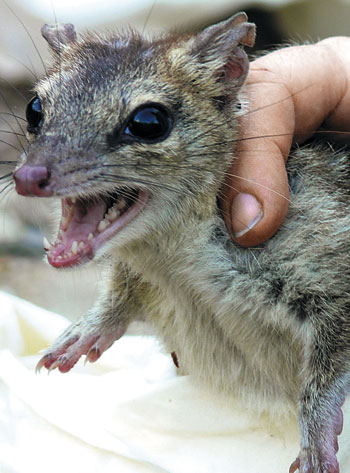
I’ve done quite a bit of work in Kakadu myself, and the one thing that hits you every time you travel through it is the lack of visible wildlife. Sure, you’ll see horses, pigs and buffalo, as well as cane toads and cats, but getting a glimpse of anything native, from Conilurus to Varanus, and you’d consider yourself extremely lucky.

We’ve written a lot about the feral animal problem in Kakadu and even developed software tools to assist in density-reduction programmes. It doesn’t appear that anyone is listening.

Another gob-smacking vista you’ll get when travelling through Kakadu any time from April to December is that it’s either been burnt, actively burning or targeted for burning. They burn the shit out of the place every year. No wonder the native mammals are having such a hard time.

Combine all this with the dysfunctional management arrangement, and you cease to have a National Park. Kakadu is now a lifeless shell that does precious little for conservation of biodiversity (and 3 of the 5 criteria it had to satisfy to become a World Heritage Area are specifically related to natural resource ‘values’). I say, delist Kakadu now and let’s stop fooling ourselves.

Ok, back from the rant. Woinarski and others superimposed a mammal monitoring programme over top a fire-regime experiment for vegetation. Although they couldn’t sample every plot every season, they staggered the sampling to cover the area as best they could over the 13 years of monitoring (1996-2009). What they observed was staggering. Read the rest of this entry »


June 2010 Issue of Conservation Letters

9 06 2010

The third issue of Conservation Letters Volume 3 is now out. A good line-up of papers, indeed. Note that we’ve gone up to 9 papers in this issue, so keep the good submissions coming. Conservation Letters will most likely be listed on ISI Web of Science this year, and receive its first Impact Factor in 2011.

Thanks for the support.

CJA Bradshaw


How many species are there?

4 06 2010

© japanprobe.com

An interesting research note just came out in the American Naturalist by Hamilton and colleagues entitled Quantifying uncertainty in estimation of tropical arthropod species richness. I retweeted a Science Daily twitter feed on this that had a terribly misleading opening line: “New calculations reveal that the number of species on Earth is likely to be in the order of several million rather than tens of millions“. This is, of course, absolute rubbish because the authors only looked at estimating tropical arthropod richness, not all species on Earth. The number of protists alone is probably > 4 million species, and there are an estimated > 1.5 fungi.

That whinge about crap reporting aside, this is what Hamilton and colleagues concluded:

  • using stochastic models, they predict medians of 3.7 million and 2.5 million tropical arthropod species globally
  • estimates of 30 million species or greater are predicted to have < 0.00001 probability
  • uncertainty in the proportion of canopy arthropod species that are beetles is the most influential parameter
  • in spite of 250 years of taxonomy and around 855000 species of arthropods already described, approximately 70 % await description

Interesting, but I didn’t give it much notice until New Scientist contacted me to get an assessment (their article will appear shortly). This is what I had to say: Read the rest of this entry »


Most accessed Conservation Letters articles

3 06 2010

Not a big post, but I thought Conservation Bytes readers would appreciate knowing the most accessed papers in the journal Conservation Letters in 2008 and 2009:

2009

  1. Critical need for new definitions of “forest” and “forest degradation” in global climate change agreements Nophea Sasaki & Francis E. Putz
  2. Global priority areas for incorporating land–sea connections in marine conservation Benjamin S. Halpern, Colin M. Ebert, Carrie V. Kappel, Elizabeth M.P. Madin, Fiorenza Micheli, Matthew Perry, Kimberly A. Selkoe & Shaun Walbridge
  3. Hitting the target and missing the point: target-based conservation planning in context Josie Carwardine, Carissa J. Klein, Kerrie A. Wilson, Robert L. Pressey & Hugh P. Possingham
  4. Mapping cumulative human impacts to California Current marine ecosystems Benjamin S. Halpern, Carrie V. Kappel, Kimberly A. Selkoe, Fiorenza Micheli, Colin M. Ebert, Caitlin Kontgis, Caitlin M. Crain, Rebecca G. Martone, Christine Sheare & Sarah J. Teck
  5. Ecosystem services and conservation strategy: beware the silver bullet Bhaskar Vira & William M. Adams

2008

  1. Is oil palm agriculture really destroying tropical biodiversity? Lian Pin Koh & David S. Wilcove
  2. Native wildlife on rangelands to minimize methane and produce lower-emission meat: kangaroos versus livestock George R. Wilson & Melanie J. Edwards
  3. Conservation action in a changing climate T.R. McClanahan, J.E. Cinner, J. Maina, N.A.J. Graham, T.M. Daw, S.M. Stead, A. Wamukota, K. Brown, M. Ateweberhan, V. Venus & N.V.C. Polunin
  4. Quiet, Nonconsumptive Recreation Reduces Protected Area Effectiveness Sarah E. Reed & Adina M. Merenlender
  5. Calibrating conservation: new tools for measuring success Valerie Kapos, Andrew Balmford, Rosalind Aveling, Philip Bubb, Peter Carey, Abigail Entwistle, John Hopkins, Teresa Mulliken, Roger Safford, Alison Stattersfield, Matt Walpole & Andrea Manica

Add to FacebookAdd to DiggAdd to Del.icio.usAdd to StumbleuponAdd to RedditAdd to BlinklistAdd to TwitterAdd to TechnoratiAdd to Yahoo BuzzAdd to Newsvine


Where in the world to invest in plant conservation

31 05 2010

© CBD

It’s been a good few weeks with many of our papers coming out online early – for example, I highlighted one last week on ecosystem function breakdown from global warming.

Although this has been out for a few weeks, our new paper lead by PhD candidate Xingli Giam (formerly of National University of Singapore, recently completed Australian Endeavour Scholar, now at Princeton University and all-round up-and-coming research star), and with contributions from Hugh “Vascular” Tan and Navjot Sodhi of National University of Singapore and me, is entitled Future habitat loss and the conservation of plant biodiversity (just published online in Biological Conservation).

This one is a bit of a complicated one, so let me walk you through it.

Plants not only represent a huge component of global biodiversity (~320 000 species), they represent the ‘habitats’ in which animals live and provide the major source of nutrients to food webs. They also provide most of our food and other materials essential for human existence. Basically we’d be screwed without them.

Because so many of the world’s biomes are severely threatened now because of massive habitat loss, degradation, over-exploitation, invasive species, extinction synergies and climate change, we need to maximise our efficiency in protecting what’s left. While global prioritisation schemes have a fruitful scientific history since Myers & colleagues’ classic paper (see Biodiversity Hotspots), there are a number of problems that plague the concept and its implementation. Read the rest of this entry »


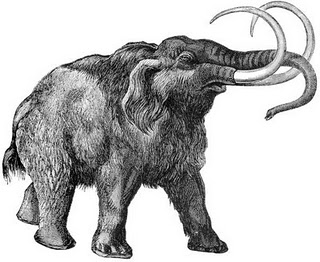
Why and how did Pleistocene megafauna go extinct?

27 05 2010

Just a quick post to say that I’m currently at Duke University in the USA attending a special National Evolutionary Synthesis Centre ‘Catalysis Meeting’ entitled: Integrating datasets to investigate megafaunal extinction in the Late Quaternary.

The meeting is basically about nailing down some of the remaining mysteries and controversies surrounding the extinction of many species during periods of rapid climate change 11-60 thousand years ago.

It’s been fun so far, and a lot of exciting analysis will ensue, but for the meantime I’ll just summarise what we’re trying to do. Read the rest of this entry »


The planet is our bottle

22 05 2010

Professor Chris Thomas, conservation ecologist extraordinaire, tells it like it is. This might be a little basic for many ConservationBytes.com readers, but it’s the kind of pitch that might convince even the stupidest of yobs. I reproduce the Guardian article here in full.

Why do we care about nature, and can we actually quantify what the benefits are? This is what the UN’s The Economics of Ecosystems and Biodiversity (Teeb) project is all about, and the answer is remarkable. The natural world – biodiversity – provides us with food, materials and energy. We eat animals and plants; insects pollinate many of the foods we consume; microbes in the soil provide the nutrients the plants to grow; vegetation and soil biodiversity reduce flooding and release clean drinking water; vegetation soaks up a substantial proportion of the climate warming carbon dioxide gasses that we emit. The list goes on and on. Urban and rural citizens alike rely on these natural products and benefits.

The real cost of damaging nature, it turns out, is at least 10 times greater than the cost of maintaining the ecosystem as it is so that we can reap the associated benefits. To take an example close to the University of York where I work, the costs of flood defence construction and flood-related insurance claims in the Vale of York hugely outweigh the agricultural benefits of drainage ditches and overgrazing in the River Ouse catchment. Rather than treating nature as a pleasant luxury, Teeb argues that we should integrate the real costs and benefits within our decision-making. It should not be the preserve solely of environment and conservation ministries, but it should be at the core of the activities of finance departments. Teeb argues that we should get rid of subsidies that are environmentally damaging and reward beneficial activities that maintain natural ecosystems. This might be by including the costs of damage within the purchase price of products to encourage us to buy the least damaging items, and potentially by paying land owners and countries directly to maintain natural ecosystems. Farmers in the Ouse catchment have recently received payments for blocking their drainage ditches; and the perverse subsidies that rewarded farmers by the animal – resulting in over-grazing, trampling and erosion – have been removed. It can be done. Achieving this at a global scale is far more difficult. Read the rest of this entry »