All that glitters is not gold – ecological traps

27 09 2011

Another corker from Salvador Herrando-Pérez:

Cinema fans know that choosing a movie by the newspaper’s commentary or the promotional poster might be a lottery. In the movie of nature, to confuse ‘the attractive’ with ‘the appropriate’ can compromise the life of an individual and its offspring, even to the extent of anticipating the extinction of an entire population or species.

Animals make daily choices about when, where or with whom to engage in basic activities like eating, hibernating, mating, migrating or resting. Those choices are often strongly tied to highly specific cues – e.g., air temperature, tree density, location of water, or smell of other individuals. And it happens to hair lice jumping from head to head among school kids, or to caribou forming their winter herds prior to the seasonal migration. All species, without exception, persist in nature because those ‘choices’ translate into survival or successful reproduction more often than do not. They are a kind of evolutionary memory imprinted in an organism’s genes and behaviour. However, sometimes the right choice (‘right’ meaning perceiving a cue for the role it actually has in the life cycle) places an individual in the worst of all possible situations. The environment cheats, ‘the attractive’ merely mimics ‘the appropriate’, and the individual fails to reproduce, starves, sickens, or even dies.
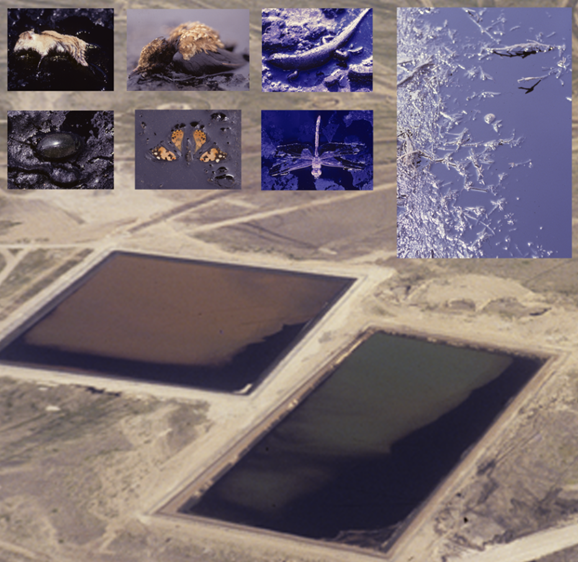
Figure 1. Water reservoirs tainted with fuel (see dark contours) in Kuwait following the Gulf War in the early 1990s. Overlaid pictures show the silhouettes of trapped odonates (right), vertebrates (top left) and invertebrates (bottom left) (Photos courtesy of Jochen Zeil).

At the mercy of mirages

During the Gulf War, the destruction of infrastructure for crude exploitation spilled large amounts of fuel in many water reservoirs over the desert landscape of Kuwait. A little later, Horváth and Zeil1 found agglomerations of dead insects (and a range of vertebrates) along the shores of these polluted reservoirs, and observed dragonflies drowning in their kamikaze attempt to spawn on the oily surface (Figure 1). This work stimulated further research whereby Horváth and his team in Budapest showed that odonates are attracted by light polarization at the surface of oiled water2 – hence ‘polarized light pollution’3. Not only that, they recorded insects struggling to spawn on or mate with riveting surfaces such as solar panels, asphalted roads, plastic bags or (creepy enough!) cemetery crypts4. It goes without saying: these insects are victims of a mirage.

Those habitats or features of the habitat that mislead an animal’s choice, often hampering the completion of its life cycle, are known as ‘ecological traps’ – in other words, the environmental cue is decoupled from the quality of the habitat it is meant to signal. Ecological traps were first described in the 1970s by Dwernychuk and Boag5. They found that ducks on the islands of Miquelon lake located their nests among those of seagulls despite the latter happily devoured their ducklings and eggs. When these islands emerged in the middle of last century, they were first colonized by common terns (Sterna hirundo). By defending their own nests ferociously from predators (mainly crows and magpies), the terns inadvertently shielded the nests of their ducky comrades. The Canadians hypothesized that when seagulls subsequently replace terns, the ducks continued to sense their new neighbours as a (now misleading) sign of protection. Read the rest of this entry »



Life, death and Linneaus

9 07 2011

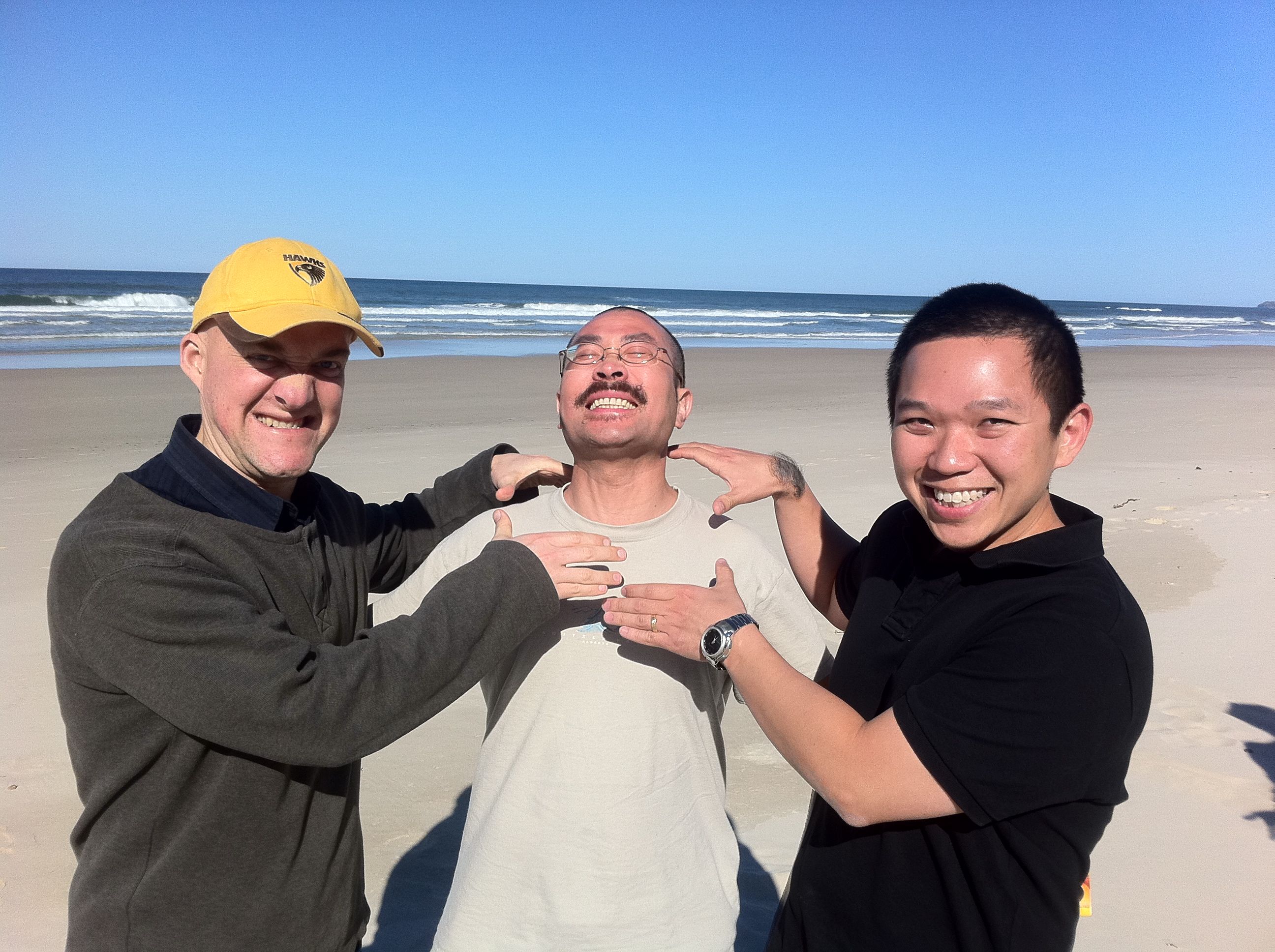
Barry Brook (left) and Lian Pin Koh (right) attacking Fangliang He (centre). © CJA Bradshaw

I’m sitting in the Brisbane airport contemplating how best to describe the last week. If you’ve been following my tweets, you’ll know that I’ve been sequestered in a room with 8 other academics trying to figure out the best ways to estimate the severity of the Anthropocene extinction crisis. Seems like a pretty straight forward task. We know biodiversity in general isn’t doing so well thanks to the 7 billion Homo sapiens on the planet (hence, the Anthropo prefix) – the question though is: how bad?

I blogged back in March that a group of us were awarded a fully funded series of workshops to address that question by the Australian Centre for Ecological Synthesis and Analysis (a Terrestrial Ecosystem Research Network facility based at the University of Queensland), and so I am essentially updating you on the progress of the first workshop.

Before I summarise our achievements (and achieve, we did), I just want to describe the venue. Instead of our standard, boring, windowless room in some non-descript building on campus, ACEAS Director, Associate Professor Alison Specht, had the brilliant idea of putting us out away from it all on a beautiful nature-conservation estate on the north coast of New South Wales.

What a beautiful place – Linneaus Estate is a 111-ha property just a few kilometres north of Lennox Head (about 30 minutes by car south of Byron Bay) whose mission is to provide a sustainable living area (for a very lucky few) while protecting and restoring some pretty amazing coastal habitat along an otherwise well-developed bit of Australian coastline. And yes, it’s named after Carl Linnaeus. Read the rest of this entry »


2010 ISI Impact Factors out now (with some surprises)

29 06 2011

It’s been another year of citations and now the latest list of ISI Impact Factors (2010) has come out. Regardless of how much stock you put in these (see here for a damning review), you cannot ignore their influence on publishing trends and author journal choices.

As I’ve done for 2008 and 2009, I’ve taken the liberty of providing the new IFs for some prominent conservation and ecology journals, and a few other journals occasionally publishing conservation-related material.

One particular journal deserves special attention here. Many of you might know that I was Senior Editor with Conservation Letters from 2008-2010, and I (with other editorial staff) made some predictions about where the journal’s first impact factor might be on the scale (see also here). Well, I have to say the result exceeded my expectations (although Hugh Possingham was closer to the truth in the end – bugger!). So the journal’s first 2010 impact factor (for which I take a modicum of credit ;-) is a whopping… 4.694 (3rd among all ‘conservation’ journals). Well done to all and sundry who have edited and published in the journal. My best wishes to the team that has to deal with the inevitable rush of submissions this will likely bring!

So here are the rest of the 2010 Impact Factors with the 2009 values for comparison: Read the rest of this entry »


The rarity paradox

22 06 2011

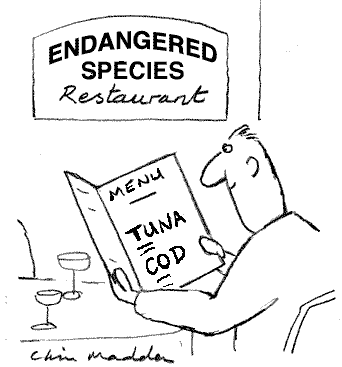
© C. Madden

My friend and colleague at the Centre National de Recherche Scientfique (CNRS), Laboratoire d’Ecologie Systématique & Evolution based at the Université Paris-Sud in France, Dr. Franck ‘Allee EffectCourchamp, has asked me to help him out finding a suitable candidate for what sounds like a very cool job. If you’re in the market for a very interesting and highly relevant conservation post-doctoral fellowship, please read on.

And even if you’re not looking for a position, but are interested in the anthropogenic Allee effect, then by all means, please read on as well.

This two-year fellowship is part of a grant focused on demonstrating the novel rarity paradox, either in new wildlife trade markets (i.e., exotic pets, traditional medicine, et cetera) or in newly exploited species (e.g., tibetan antilope, seahorses, et cetera). Read the rest of this entry »


生态学 = ‘Ecology’ in China

13 05 2011

I’m just heading home after a very inspiring workshop organised by Fangliang He at Sun Yat-sen University in Guangzhou, China (I’m writing this from the Qantas Club in the Hong Kong airport).

Before I proceed to regale you with the salient details of the ‘International Symposium for Biodiversity and Theoretical Ecology‘, I am compelled to state publicly that I offer my sincerest condolences to Fangliang and his family; unfortunately Fangliang’s brother passed away while we were at the workshop and so Fangliang wasn’t able to spend much time reaping the fruits of his organisational labour. If you know Fangliang, please send him a supporting email.

That sad note aside, I am delighted to say that the workshop was compelling, challenging and also rather fortuitous. I was one of many overseas invitees, and I must say that I was at times overwhelmed by the size of the brains they managed to pack into the auditorium. Many colleagues I didn’t know attended, and I hope that many will become collaborators. The international invitees were: Read the rest of this entry »


Resolving the Environmentalist’s Paradox

7 04 2011

Here’s an extremely thought-provoking guest post by Megan Evans, Research Assistant at the University of Queensland in Kerrie Wilson‘s lab. Megan did her Honours degree with Hugh Possingham and Kerrie, and has already published heaps from that and other work. I met Megan first in 2009 and have been extremely impressed with her insights, broad range of interests and knowledge, and her finely honed grasp of social media in science. Smarter than your average PhD student, without a doubt (and she has even done one yet). Take it away, Megan.

© T. Toles

Resolving the ‘Environmentalist’s Paradox’, and the role of ecologists in advancing economic thinking

Aldo Leopold famously described the curse of an ecological education as “to be the doctor who sees the marks of death in a community that believes itself well and does not want to be told otherwise”. Ecologists do have a tendency for making dire warnings for the future, but for anyone concerned about the myriad of problems currently facing the Earth – climate change, an ongoing wave of species extinctions and impending peak oil, phosphate, water , (everything?) crises – the continued ignorance or ridicule of such warnings can be a frustrating experience. Environmental degradation and ecological overshoot isn’t just about losing cute plants and animals, given the widespread acceptance that long-term human well-being ultimately rests on the ability for the Earth to supply us with ecosystem services.

In light of this doom and gloom, things were shaken up a bit late last year when an article1 published in Bioscience pointed out that in spite of declines in the majority of ecosystem services considered essential to human well-being by The Millenium Ecosystem Assessment (MA), aggregate human well-being (as measured by the Human Development Index) has risen continuously over the last 50 years. Ciara Raudsepp-Hearne and the co-authors of the study suggested that these conflicting trends presented an ‘environmentalist’s paradox’ of sorts – do we really depend on nature to the extent that ecologists have led everyone to believe? Read the rest of this entry »


How fast are we losing species anyway?

28 03 2011

© W. Laurance

I’ve indicated over the last few weeks on Twitter that a group of us were recently awarded funding from the Australian Centre for Ecological Synthesis and Analysis – ACEAS – (much like the US version of the same thing – NCEAS) to run a series of analytical workshops to estimate, with a little more precision and less bias than has been done previously, the extinction rates of today’s biota relative to deep-time extinctions.

So what’s the issue? The Earth’s impressive diversity of life has experienced at least five mass extinction events over geological time. Species’ extinctions have kept pace with evolution, with more than 99 % of all species that have ever existed now gone (Bradshaw & Brook 2009). Despite general consensus that biodiversity has entered the sixth mass extinction event because of human-driven degradation of the planet, estimated extinction rates remain highly imprecise (from 100s to 10000s times background rates). This arises partly because the total number of species is unknown for many groups, and most extinctions go unnoticed.

So how are we going to improve on our highly imprecise estimates? One way is to look at the species-area relationship (SAR), which to estimate extinction requires one to extrapolate back to the origin in taxon- and region-specific SARs (e.g., with a time series of deforestation, one can estimate how many species would have been lost if we know how species diversity changes in relation to habitat area). Read the rest of this entry »


S.A.F.E. = Species Ability to Forestall Extinction

8 01 2011

Note: I’ve just rehashed this post (30/03/2011) because the paper is now available online (see comment stream). Stay tuned for the media release next week. – CJAB

I’ve been more or less underground for the last 3 weeks. It has been a wonderful break (mostly) from the normally hectic pace of academic life. Thanks for all those who remain despite the recent silence.

© Ezprezzo.com

But I’m back now with a post about a paper we’ve just had accepted in Frontiers in Ecology and Environment. In my opinion it’s a leap forward in how we measure relative threat risk among species, despite some criticism.

I’ve written in past posts about the ‘magic’ minimum number of individuals that should be in a population to reduce the chance of extinction from random events. The so-called ‘minimum viable population (MVP) size’ is basically the abundance of a (connected) population below which random events take over from factors causing sustained declines (Caughley’s distinction between the ‘declining’ and ‘small’ population paradigms).

Up until the last few years, the MVP size was considered to be a population- or species-specific value, and it required very detailed demographic, genetic and biogeographical data to estimate – not something that biologists tend to have at their fingertips for most high-risk species. However, several papers published by our group (Minimum viable population size and global extinction risk are unrelated, Minimum viable population size: a meta-analysis of 30 years of published estimates and Pragmatic population viability targets in a rapidly changing world) have shown that there is in fact little variation in this number among the best-studied species; both demographic and genetic data support a number of around 5000 to avoid crossing the deadly threshold.

Now the fourth paper in this series has just been accepted (sorry, no link yet, but I’ll let you all know as soon as it is available), and it was organised and led by Reuben Clements, and co-written by me, Barry Brook and Bill Laurance.

The idea is fairly simple and it somewhat amazes me that it hasn’t been implemented before. The SAFE (Species Ability to Forestall Extinction) index is simply the distance a population is (in terms of abundance) from its MVP. In the absence of a species-specific value, we used the 5000-individual threshold. Thus, Read the rest of this entry »


Biowealth – a lexical leap forward for biodiversity appreciation

17 12 2010

Here’s a little idea I’ve been kicking around in my head that I’d like to invite you to debate. Call it an ‘Open Thread’ in the spirit of BraveNewClimate.com’s successful series.

© The Economist

Let’s face it, ‘biodiversity’ is a slippery and abstract concept for most people. Hell, even most ecologists have a hard time describing what biodiversity means. To the uninitiated, it seems simple enough. It’s just the number of species, isn’t it?

Well, no. It isn’t.

Unfortunately, it’s far, far more complicated. First, the somewhat arbitrary pigeon-holing of organisms into Linnaean taxonomic boxes doesn’t really do justice to the genetic gradients within species, among populations and even between individuals. We use the pigeon-hole taxonomy because it’s convenient, that’s all. Sure, molecular genetics has revolutionised the concept, but to most people, a kangaroo is a kangaroo, a robin is a robin and an earthworm is an earthworm. Hierarchical Linnaean taxonomy prevails.

Then there’s the more prickly issue of α, β and γ diversity. α diversity essentially quantifies species richness within a particular area, whereas β diversity is the difference in α diversity between ecosystems. γ diversity is used to measure overall diversity for the different constituent ecosystems of a region. Scale is very, very important (see our recent book chapter for more on this). Read the rest of this entry »


Want a cool conservation job in beautiful southern Australia?

14 12 2010

I was asked to post this cool-sounding job on ConservationBytes.com – relevant punters welcome to respond.

Australian Wildlife Conservancy (AWC) is a non‐profit organisation dedicated to the conservation of Australia’s threatened wildlife and their habitats. AWC now owns and manages more land than any other private conservation organisation in Australia ‐  21 properties, covering more than 2.6 million hectares ‐ protecting more than 1,200 fauna species through active land management informed by strategic scientific research.

AWC is seeking an experienced and committed ecologist who will be pivotal in the development and implementation of the conservation and science program throughout south‐eastern Australia. The position will be based at Scotia Wildlife Sanctuary (where on‐site accommodation will be provided), but will include work at other AWC sanctuaries, especially Kalamurina (Lake Eyre), Buckaringa (Flinders Ranges), Yookamurra (Riverlands), Dakalanta (Eyre Peninsula), Bowra (Mulga Lands) and North Head (Sydney) sanctuaries.

Scotia is a large property (65,000 ha) that lies on the NSW‐SA border between Wentworth and Broken Hill, and includes Australia’s largest area free of foxes, cats and rabbits (8,000 ha) and where seven regionally extinct species have been reintroduced (bilby, boodie, woylie, bridled nailtail wallaby, numbat, greater stick‐nest rat, mala and black‐eared miner). In addition, the property has outstanding conservation values because it protects habitats, in good condition, that have been extensively cleared in western NSW.

Read the rest of this entry »


History and future (of Australian ecology and society)

11 12 2010

I’ve just returned from a week-long conference in Canberra where the Ecological Society of Australia (of which I am a relatively new member) has just completed its impressive 50th anniversary conference. It was a long, but good week.

It’s almost a bit embarrassing that I’ve never attended an ESA1 conference before, but I think I waited for the right one. However, the main reason I attended was that I was fortunate to have received the ESA’s 3rd Australian Ecology Research Award (AERA), and the kick-back was a fully funded trip. My only reciprocation was to give a 40-minute plenary lecture – a small price to pay.

I entitled my talk ‘Heads in the desert sand: why Australians should wake up to the biodiversity crisis’, and I received a lot of good feedback. I talked about the global and Australian trends of biodiversity loss and associated ecosystem services, focussing the middle section on some of our work on feral animal ecology (see example). I then gave my views on the seriousness of our current situation and why some of the fastest losses of sensitive ecosystem services are happening right here, right now. I finished off with a section on how I think Australian ecologists could get more relevant and active in terms of research uptake by policy makers. I hope that the talk will be podcastable soon, so stay tuned.

But that was just ‘my’ bit. This post is more about a quick summary of the highlights and my overall impressions.

Read the rest of this entry »


The balancing act of conservation

1 10 2010

Image via Wikipedia

Navjot Sodhi & Paul Ehrlich‘s book, Conservation Biology for All, has just been reviewed in Trends in Ecology and Evolution. I’ve blogged about the book before and our contributing chapter (The conservation biologist’s toolbox), so I’ll just copy the very supportive review here by Rosie Trevelyan.

Conservation Biology for All is a textbook that aims to be a one-stop shop for conservation education. The book is packed with information, is wide ranging, and includes most emerging issues that come under the umbrella of conservation biology today. Sodhi and Ehrlich have brought together a total of 75 experts from many disciplines to provide a smorgasbord of up-to-date conservation concepts and case studies. Leading conservation biologists contribute to every chapter either as authors of the main text or of the boxes that give real life examples of the conservation issue being covered. The boxes add hugely to the information included in each chapter, and many are well worth returning to on their own. Read the rest of this entry »


Long, deep and broad

24 08 2010

© T. Holub Flickr

Thought that would get your attention ;-)

More scientists need to be trained in quantitative synthesis, visualization and other software tools.” D. Peters (2010)

In fact, that is part of the title of today’s focus paper in Trends in Ecology and Evolution by D. Peters – Accessible ecology: synthesis of the long, deep,and broad.

As a ‘quantitative’ ecologist (modeller, numerate, etc.) whose career has been based to a large degree on the analysis of large ecological datasets, I am certainly singing Peters’ tune. However, it’s much deeper and more important than my career – good (long, deep, broad – see definitions below) ecological data are ESSENTIAL to avoid some of the worst ravages of biodiversity loss over the coming decades and centuries. Unfortunately, investment in long-term ecological studies is poor in most countries (Australia is no exception), and it’s not improving.

But why are long-term ecological data essential? Let’s take a notable example. Climate change (mainly temperature increases) measured over the last century or so (depending on the area) has been determined mainly through the analysis of long-term records. This, one of the world’s most important (yet sadly, not yet even remotely acted upon) issues today, derives from relatively simple long-term datasets. Another good example is the waning of the world’s forests (see posts herehere and here for examples) and our increasing political attention on what this means for human society. These trends can only be determined from long-term datasets.

For a long time the dirty word ‘monitoring’ was considered the bastion of the uncreative and amateur – ‘real’ scientists performed complicated experiments, whereas ‘monitoring’ was viewed mainly as a form of low-intellect showcasing to please someone somewhere that at least something was being done. I’ll admit, there are many monitoring programmes producing data that aren’t worth the paper their printed on (see a good discussion of this issue in ‘Monitoring does not always count‘), but I think the value of good monitoring data has been mostly vindicated. You see, many ecological systems are far too complex to manipulate easily, or are too broad and interactive to determine much with only a few years of data; only by examining over the ‘long’ term do patterns (and the effect of extremes) sometimes become clear.

But as you’ll see, it’s not just the ‘long’ that is required to determine which land- and sea-use decisions will be the best to minimise biodiversity loss – we also need the ‘deep’ and the ‘broad’. But first, the ‘long’. Read the rest of this entry »


Vodcast on killing for conservation

24 02 2010

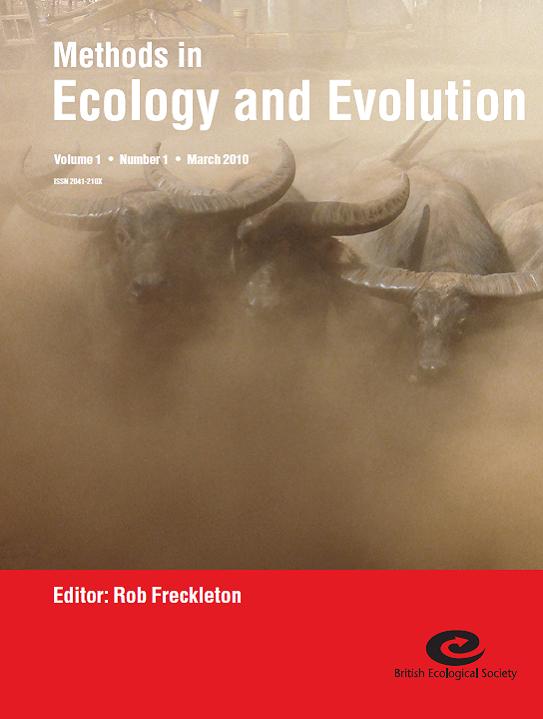
The inaugural issue of Methods in Ecology and Evolution came out today (see first issue editorial) and I am very pleased not only that our paper (Spatially explicit spreadsheet modelling for optimizing the efficiency of reducing invasive animal density) made it into the the paper line-up (see previous ConservationBytes.com post on the paper here), we also managed to score the journal’s cover image (buffalo image shown right: Asian swamp buffalo Bubalus bubalis introduced to Australia in the early 19th Century now populate much of the tropical north and cause severe environmental disturbances to savanna and wetland ecosystems. Despite a broad-scale cull of hundreds of thousands of free-ranging buffalo occurring in the 1980s and 1990s to eradicate brucellosis and tuberculosis, the population is recovering and continuing to threaten protected areas such as Kakadu National Park. A small wild harvest of several thousand buffalo occurs each year in Arnhem Land where mustering is aided by helicopters and on-ground vehicles. The buffalo pictured are housed in temporary holding pens and then shipped for live export. Photo credit: Jesse Northfield).

I also had the opportunity to chat with Journal Coordinator, Graziella Iossa, via Skype about the paper, and they have put up a YouTube vodcast of the interview itself. You can also check it out here.

Summary: Corey Bradshaw answers what is the main idea behind his work with co-authors, “Spatially explicit spreadsheet modelling for optimising the efficiency of reducing invasive animal density”. Further, he explains how their model advances methodology in ecology and evolution and finally shows how it could be applied by wildlife manager and practitioners with basic knowledge of computer models. Their Excel-spreadsheet ‘Spatio-Temporal Animal Reduction’ (S.T.A.R.) model is designed specifically to optimise the culling strategies for feral pigs, buffalo and horses in Kakadu National Park (northern Australia), but Corey explains how their aim was to make it easy enough for anyone to use and modify it so that it could be applied to any invasive species anywhere.

Congratulations to Editor-in-Chief Rob Freckleton, Graziella and the Associate Editors for a great first issue. Other titles include:

Keep them coming!

CJA Bradshaw

Add to FacebookAdd to DiggAdd to Del.icio.usAdd to StumbleuponAdd to RedditAdd to BlinklistAdd to TwitterAdd to TechnoratiAdd to Yahoo BuzzAdd to Newsvine


ERA rankings for Conservation and Ecology journals

11 02 2010

The much-touted Excellence in Research for Australia (ERA) initiative was established in 2008 to “…assesses research quality within Australia’s higher education institutions using a combination of indicators and expert review by committees comprising experienced, internationally-recognised experts”. Following on the heels of the United Kingdom’s Research Assessment Exercise (RAE) and Australia’s previous attempt at such a ranking (the now-defunct Research Quality Framework), we will now have a system that ranks research performance and universities in this country. Overall I think it’s a good thing so that the dead-wood can lift their game or go home, but no ranking system is perfect. Some well-deserving people will be left out in the cold.

Opinions aside, I thought it would be useful to provide the ERA journal ranking categories in conservation and ecology for my readers, particularly for those in Australia. See also my Journals page for conservation journals, their impact factors and links. The ERA has ranked 20,712 unique peer-reviewed journals, with each given a single quality rating (or is not ranked). The ERA is careful to say that “A journal’s quality rating represents the overall quality of the journal. This is defined in terms of how it compares with other journals and should not be confused with its relevance or importance to a particular discipline.”.

They provide four tiers of quality rating:

  • A* =  Typically one of the best in its field or subfield in which to publish and would typically cover the entire field/subfield. Virtually all papers they publish will be of a very high quality. These are journals where most of the work is important (it will really shape the field) and where researchers boast about getting accepted. Acceptance rates would typically be low and the editorial board would be dominated by field leaders, including many from top institutions.
  • A =  The majority of papers in a Tier A journal will be of very high quality. Publishing in an A journal would enhance the author’s standing, showing they have real engagement with the global research community and that they have something to say about problems of some significance. Typical signs of an A journal are lowish acceptance rates and an editorial board which includes a reasonable fraction of well known researchers from top institutions.
  • B = Tier B covers journals with a solid, though not outstanding, reputation. Generally, in a Tier B journal, one would expect only a few papers of very high quality. They are often important outlets for the work of PhD students and early career researchers. Typical examples would be regional journals with high acceptance rates, and editorial boards that have few leading researchers from top international institutions.
  • C =  Tier C includes quality, peer reviewed, journals that do not meet the criteria of the higher tiers.

If you’re an Australian conservation ecologist, then you’d be wise to target the higher-end journals for publication over the next few years (it will affect your rank).

So, here goes:

Conservation Journals

Ecology Journals (in addition to those listed above; only A* and A)

  • A*: Annual Review of Ecology, Evolution and Systematics, Biological Reviews, Ecological Monographs, Ecology, Ecology Letters, Environment International, Fish and Fisheries, Global Ecology and Biogeography, Philosophical Transactions of the Royal Society of London: Biological Sciences, PLoS Biology, Proceedings of the Royal Society of London: Biological Sciences, The American Naturalist, The Quarterly Review of Biology
  • A: Agriculture, Ecosystems and Environment, Animal Behaviour, American Journal of Primatology, Auk, Behavioral Ecology, Behavioral Ecology and Sociobiology, BioEssays, Biology Letters, Bioscience, BMC Biology, Canadian Journal of Fisheries and Aquatic Sciences, Coral Reefs, Diversity and Distributions, Ecography, Ecological Applications, Fisheries, Freshwater Biology, Functional Ecology, International Journal of Primatology, Journal of Applied Ecology, Journal of Animal Ecology, Journal of Avian Biology, Journal of Biogeography, Journal of Ecology, Journal of Experimental Biology, Journal of Fish Biology, Journal of Mammalogy, Journal of the North American Benthological Society, Journal of Zoology, Molecular Ecology, Oecologia, Oikos, Physiological and Biochemical Zoology, Perspectives in Plant Ecology, Evolution and Systematics, Reviews in Fisheries Science, Wildlife Monographs, Zoological Journal of the Linnean Society

I’m sure I’ve missed a few, but that’ll cover most of the relevant journals. For the full, tortuous list of journals in Excel format, click here. Happy publishing!

CJA Bradshaw

Add to FacebookAdd to DiggAdd to Del.icio.usAdd to StumbleuponAdd to RedditAdd to BlinklistAdd to TwitterAdd to TechnoratiAdd to Yahoo BuzzAdd to Newsvine


Value of a good enemy

25 10 2009

alienpredatorI love these sorts of experiments. Ecology (and considering conservation ecology a special subset of the larger discipline) is a messy business, mainly because ecosystems are complex, non-linear, emergent, interactive, stochastic and meta-stable entities that are just plain difficult to manipulate experimentally. Therefore, making inference of complex ecological processes tends to be enhanced when the simplest components are isolated.

Enter the ‘mini-ecosystem-in-a-box’ approach to ecological research. I’ve blogged before about some clever experiments to examine the role of connectivity among populations in mitigating (or failing to mitigate) extinction risk, and alluded to others indicating how harvest reserves work to maximise population persistence. This latest microcosm experiment is another little gem and has huge implications for conservation.

A fairly long-standing controversy in conservation biology, and in invasive species biology in particular, is whether intact ecosystems are in any way more ‘resilient’ to invasion by alien species (the latter most often being deliberately or inadvertently introduced by humans – think of Australia’s appalling feral species problems; e.g., buffalo, foxes and cats, weeds). Many believe by default that more ‘pristine’ (i.e., less disturbed by humans) communities will naturally provide more ecological checks against invasives because there are more competitors, more specialists and more predators. However, considering the ubiquity of invasives around the world, this assumption has been challenged vehemently.

The paper I’m highlighting today uses the microcosm experimental approach to show how native predators, when abundant, can reduce the severity of an invasion. Using a system of two mosquito species (one ‘native’ – what’s ‘native’ in a microcosm? [another subject] – and one ‘invasive’) and a native midge predator, Juliano and colleagues demonstrate in their paper Your worst enemy could be your best friend: predator contributions to invasion resistance and persistence of natives that predators are something you want to keep around.

In short, they found little evidence of direct competition between the two mosquitoes in terms of abundance when placed together without predators, but when the midges were added, the persistence of the invasive mosquito was reduced substantially. Of course, the midge predators did do their share of damage on the native mosquitoes in terms of reducing the latter’s abundance, but through a type of competitive release from their invasive counterparts, the midges’ reduction of the invasive species left the native mosquito free to develop faster (i.e., more per capita resources).

Such a seemingly academic result has huge conservation implications. In most systems, predators are some of the largest and slowest-reproducing species, so they are characteristically the first to feel the hammer of human damage. From bears to sharks, and tigers to wolves, big, charismatic predators are on the wane worldwide. Juliano and colleagues’ nice experimental work with insects reminds us that keeping functioning native ecosystems intact from all trophic perspectives is imperative.

CJA Bradshaw

Add to FacebookAdd to NewsvineAdd to DiggAdd to Del.icio.usAdd to StumbleuponAdd to RedditAdd to BlinklistAdd to Ma.gnoliaAdd to TechnoratiAdd to Furl

This post was chosen as an Editor's Selection for ResearchBlogging.org

ResearchBlogging.orgJuliano, S., Lounibos, L., Nishimura, N., & Greene, K. (2009). Your worst enemy could be your best friend: predator contributions to invasion resistance and persistence of natives Oecologia DOI: 10.1007/s00442-009-1475-x


Sleuthing the Chinese green slime monster

21 10 2009

greenslimemonsterI just returned from a week-long scientific mission in China sponsored by the Australian Academy of Science, the Australian Academy of Technological Sciences and Engineering and the Chinese Academy of Sciences. I was invited to attend a special symposium on Marine and Deltaic Systems where research synergies between Australian and Chinese scientists were to be explored. The respective academies really rolled out the red carpet for the 30 or so Australian scientists on board, so I feel very honoured to have been invited.

During our marine workshop, one of my Chinese counterparts, Dongyan Liu from the Yantai Institute for Coastal Zone Research, presented a brilliant piece of ecological sleuthing that I must share with readers of ConservationBytes.com.

The first time you go to China the thing that strikes you is that everything is big – big population, big cities, big buildings, big projects, big budgets and big, big, big environmental problems. After many years of overt environmental destruction in the name of development, the Chinese government (aided by some very capable scientists) is now starting to address the sins of the past.

Liu and colleagues published their work earlier this year in Marine Pollution Bulletin in a paper entitled World’s largest macroalgal bloom caused by expansion of seaweed aquaculture in China, which describes a bloody massive outbreak of a particularly nasty ‘green tide’.

What’s a ‘green tide’? In late June 2008 in the coastal city of Qingdao not far from Beijing (and just before the 2008 Olympics), a whopping 1 million tonnes of green muck washed up along approximately 400 km2 of coastline. It took 10,000 volunteers 2 weeks to clean up the mess. At the time, many blamed the rising eutrophication of coastal China as the root cause, and a lot of people got their arse kicked over it. However, the reality was that it wasn’t so simple.

The Yellow Sea abutting this part of the Chinese coast is so named because of its relatively high productivity. Warm waters combined with good mixing mean that there are plenty of essential nutrients for green things to grow. So, adding thousands of tonnes of fertilisers from Chinese agricultural run-off seems like a logical explanation for the bloom.

Qingdoa green tide 2008 © Elsevier

Qingdao green tide 2008 © Elsevier

However, it turns out that the bulk of the green slime was comprised of a species called Enteromorpha prolifera, and it just so happens that this particularly unsavoury seaweed loves to grow on the infrastructure used for the aquaculture of nori (a.k.a. amanori or zicai) seaweed (mainly, Porphyra yezoensis). Problem is, P. yezoensis is grown mainly on the coast hundreds of kilometres to the south.

Liu and colleagues examined both satellite imagery and detailed oceanographic data from the period prior to the green tide and not only spotted green splotches many kilometres long, they also determined that the current flow and wind direction placed the trajectory of any green slime mats straight for Qingdao.

So, how does it happen? Biofouling by E. prolifera on P. yezoensis aquaculture frames is dealt with mainly by manual cleaning and then dumping the unwanted muck on the tidal flats. When the tide comes back in, it washes many thousands of kilos of this stuff back out to sea, which then accumulates in rafts and continues to grow in the warm, rich seas. Subsequent genetic work also confirmed that the muck at sea was the same stock as the stuff growing on the aquaculture frames.

Apart from some lovely sleuthing work, the implications are pretty important from a biodiversity perspective. Massive eutrophication coupled with aquaculture that inadvertently spawns a particularly nasty biofouling species is a good recipe for oxygen depletion in areas where the eventual slime monster starts to decay. This can lead to so-called ‘dead’ zones that can kill off huge numbers of marine species. So, the proper management of aquaculture in the hungry Goliath that is China becomes essential to reduce the incidence of dead zones.

Fortunately, it looks like Liu and colleagues’ work is being taken seriously by the Chinese government who is now contemplating financial support for aquaculturists to clean their infrastructure properly without dumping the sludge to sea. A simple policy shift could save a lot of species, a lot of money, and a lot of embarrassment (not to mention prevent a lot of bad smells).

CJA Bradshaw

Add to FacebookAdd to NewsvineAdd to DiggAdd to Del.icio.usAdd to StumbleuponAdd to RedditAdd to BlinklistAdd to Ma.gnoliaAdd to TechnoratiAdd to Furl

This post was chosen as an Editor's Selection for ResearchBlogging.org

ResearchBlogging.orgLiu, D., Keesing, J., Xing, Q., & Shi, P. (2009). World’s largest macroalgal bloom caused by expansion of seaweed aquaculture in China Marine Pollution Bulletin, 58 (6), 888-895 DOI: 10.1016/j.marpolbul.2009.01.013