Buying time

27 06 2016

farmOriginally published in the Otago Daily Times by Tom McKinlay

If we don’t act soon, the world we leave our children will be in a sorry state indeed, leading Australian scientist Prof Corey Bradshaw tells Tom McKinlay.

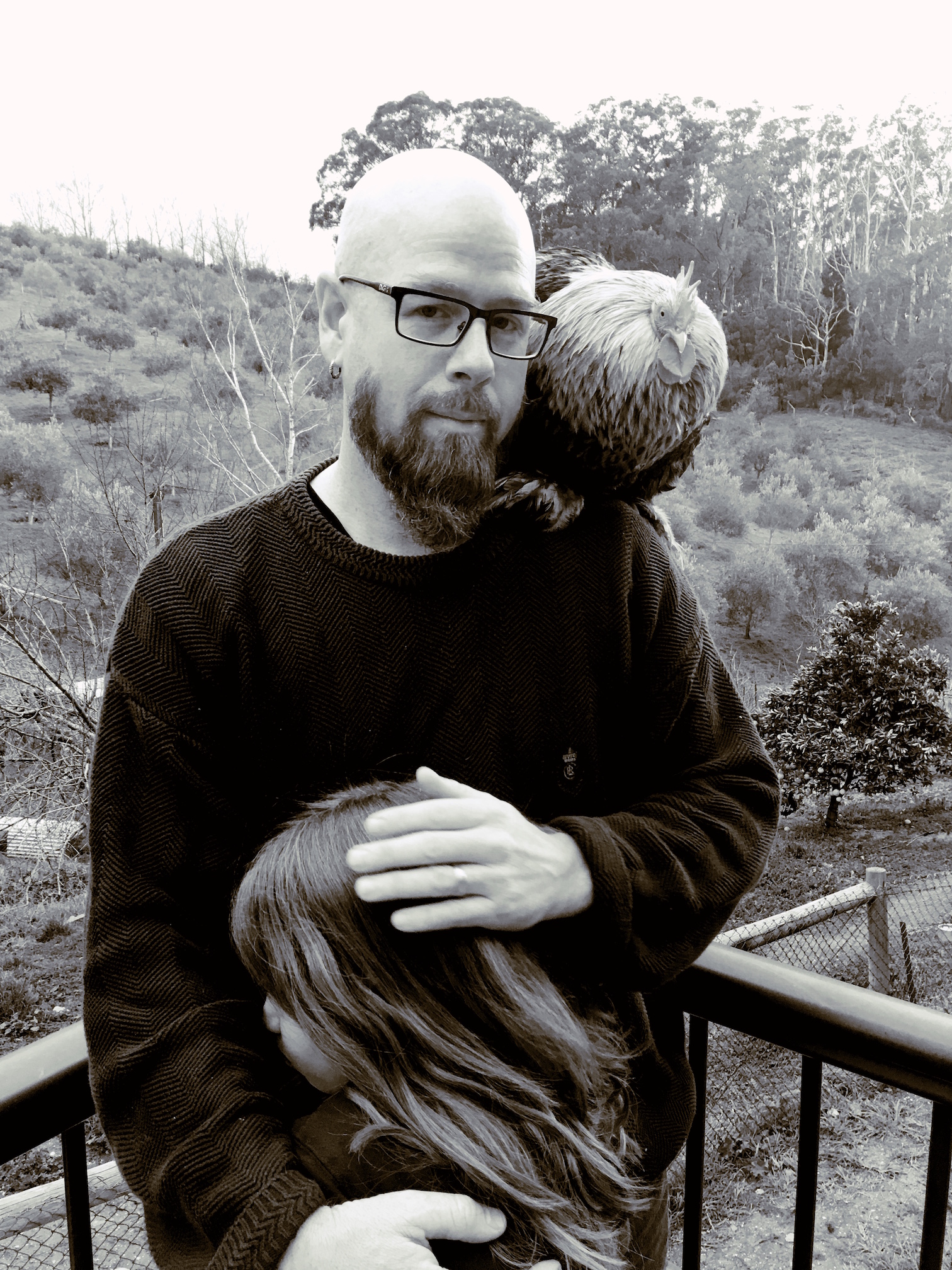
Prof Corey Bradshaw’s 9-year-old daughter lives what sounds an idyllic existence. On their small farm outside Adelaide in South Australia, she has her chickens and her dogs and her cats, her goats and her sheep.

She’s an only child, but is not short of attention from adults and reads voraciously.

She has big plans; there are at least 25 careers she likes the look of, that she’ll undertake simultaneously: farmer, wildlife rescuer, self-sufficient bush dweller – feeding herself by shooting arrows at fish – scientist and more.

She is optimistic about the future. As she should be. A 9-year-old girl living in Australia in 2016 should regard the sky as no limit at all.

All this I learn from her father, ecologist Prof Bradshaw, who talks of his daughter with an enthusiasm unbounded.

It is fair to assume she has picked up some of her interest in the natural world from him.

He holds the Sir Hubert Wilkins Chair of Climate Change in the School of Biological Sciences at the University of Adelaide.

And the ecologist, conservation biologist and systems modeller – with a University of Otago degree – has shared a great deal of his work with his daughter.

“She’s very much a farm kid, but because of who I am she gets to hear a lot about animal and plant systems around the world, and she’s travelled a lot with me and she’s a complete fanatic of David Attenborough,” the professor says.

So far, still so idyllic. But Prof Bradshaw’s work means he is at the forefront of alerting the world to what is not right with it.

Pollution, climate change, habitat loss, extinction.

His daughter has travelled with him to see species that might not be with us by the time she grows up.

“She’s hyper-aware of extinctions, in particular, and how climate change is contributing to that,” Prof Bradshaw says.

“I don’t pull any punches with her.”

In fact, he made her cry when she was 5 explaining climate change. She hasn’t needed to travel to know the pot is on the boil. Fires have forced the family to flee its South Australian property several times, not just at the height of summer.

One of the worst fires in the region struck in May a couple of years back.

“We were on the doorstep of winter and we had one of our worst fires in 20 years.”

So even without a scientist in the family, there are certain unavoidable truths for a child growing up in 21st-century Australia.

Prof Bradshaw is coming to Dunedin next month as part of the New Zealand International Science Festival to talk on climate change, looking at it from his daughter’s perspective. Read the rest of this entry »



Extinction synergy: deadly combination of human hunting & climate change wrote off Patagonian giants

20 06 2016

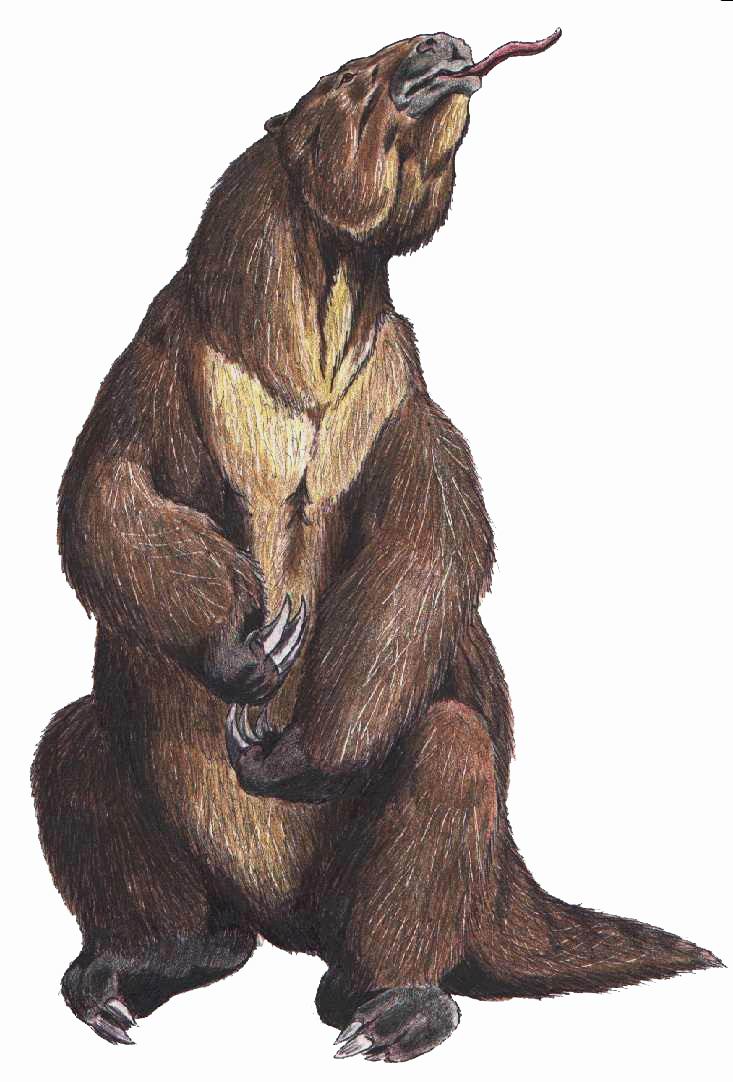
MegatheriumHere’s a paper we’ve just had published in Science Advances (Synergistic roles of climate warming and human occupation in Patagonian megafaunal extinctions during the Last Deglaciation). It’s an excellent demonstration of our concept of extinction synergies that we published back in 2008.

Giant Ice Age species including elephant-sized sloths and powerful sabre-toothed cats that once roamed the windswept plains of Patagonia, southern South America, were finally felled by a perfect storm of a rapidly warming climate and humans, a new study has shown.

Research published on Saturday in Science Advances, has revealed that it was only when the climate warmed, long after humans first arrived in Patagonia, did the megafauna suddenly die off around 12,300 years ago.

The timing and cause of rapid extinctions of the megafauna has remained a mystery for centuries.

“Patagonia turns out to be the Rosetta Stone – it shows that human colonisation didn’t immediately result in extinctions, but only as long as it stayed cold”. “Instead, more than 1000 years of human occupation passed before a rapid warming event occurred, and then the megafauna were extinct within a hundred years.”

The researchers, including from the University of Colorado Boulder, University of New South Wales and University of Magallanes in Patagonia, studied ancient DNA extracted from radiocarbon-dated bones and teeth found in caves across Patagonia, and Tierra del Fuego, to trace the genetic history of the populations. Species such as the South American horse, giant jaguar and sabre-toothed cat, and the enormous one-tonne short-faced bear (the largest land-based mammalian carnivore) were found widely across Patagonia, but seemed to disappear shortly after humans arrived. Read the rest of this entry »


What immigration means for Australia’s climate-change policies

12 06 2016

After dipping my foot into the murky waters of human population demography a few years ago, I’m a little surprised that I find myself here again. But this time I’m not examining what the future of the global human population might be and what it could mean for our environment; instead, I’m focussing on Australia’s population future and its implications for our greenhouse-gas emissions trajectories.

Just published in Asia and the Pacific Policy Forum1, my paper with long-time co-author Barry Brook is entitled Implications of Australia’s population policy for future greenhouse gas emissions targets. It deals with the sticky question of just how many people Australia can ‘afford’ to house. By ‘afford’ I mean several things, but most specifically in the context of this paper is by how much we need to reduce our per capita emissions to achieve future reduction targets under various immigration-rate scenarios.

In many ways Australia’s population is typical of other developed nations in that its intrinsic fertility (1.78 children/woman) is below replacement (which is itself ~ 2.1 children/female). Yet Australia’s population grew nearly twice (1.88×) as large from 1971 to 2014. It doesn’t take a genius to figure out that most of our population growth is due to net immigration.

In fact, between 2006 and 2014, Australia welcomed a net of 215,000 new people per year (this means that of all the permanent immigrants and emigrants, a ‘net’ of approximately 215,000 stayed each year), which represents about 1% of our total population size (that latter most likely just ticked over 24 million). Read the rest of this entry »


One-two carbon punch of defaunation

30 04 2016

1-2 punchI’ve just read a well-planned and lateral-thinking paper in Nature Communications that I think readers of CB.com ought to appreciate. The study is a simulation of a complex ecosystem service that would be nigh impossible to examine experimentally. Being a self-diagnosed fanatic of simulation studies for just such purposes, I took particular delight in the results.

In many ways, the results of the paper by Osuri and colleagues are intuitive, but that should never be a reason to avoid empirical demonstration of a suspected phenomenon because intuition rarely equals fact. The idea itself is straightforward, but takes more than a few logical steps to describe: Read the rest of this entry »



Shadow of ignorance veiling society despite more science communication

19 04 2016

imagesI’ve been thinking about this post for a while, but it wasn’t until having some long, deep chats today with staff and students at Simon Fraser University‘s Department of Biological Sciences (with a particular hat-tip to the lovely Nick Dulvy, Isabelle Côté & John Reynolds) that the full idea began to take shape in my brain. It seems my presentation was a two-way street: I think I taught a few people some things, and they taught me something back. Nice.

There’s no question at all that science communication has never before been so widespread and of such high quality. More and more scientists and science students are now blogging, tweeting and generally engaging the world about their science findings. There is also an increasing number of professional science communication associations out there, and a growing population of professional science communicators. It is possibly the best time in history to be involved in the generation and/or communication of scientific results.

Why then is the public appreciation, acceptance and understanding of science declining? It really doesn’t make much sense if you merely consider that there has never been more good science ‘out there’ in the media — both social and traditional. For the source literature itself, there has never before been as many scientific journals, articles and even scientists writing. Read the rest of this entry »


Most-Bestest Environment Minister in the World, Ever

4 04 2016
Our Most-Bestest Minister Ever

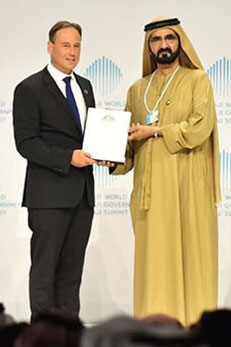
Our Most-Bestest Minister Ever (i.e., the bloke on the left; interestingly, the bloke on the right leads one of the few countries in the world with a higher per capita emissions rate than Australia)

Australia has an appalling environmental record — hell, I have even written an entire book on our sorry state of environmental affairs. Of course, environmental damage is a slow accumulation of bad political decisions, neglect, corruption, greed and society’s general I-couldn’t-give-a-shit attitude, but the record of our recent government demonstrates not just classic political buffoonery and neglect, but an outright attack on the environment.

So it was impossible to restrain a disgusted guffaw when, in February this year, our ‘Environment’ Minister won the coveted ‘Best Minister’ in the World award at the World Government Summit in Dubai by Sheikh Mohammed Bin Rashid Al Maktoum, Vice President and Prime Minister of the United Arab Emirates and Ruler of Dubai.

Deserved ridicule aside, I was asked recently by The Conversation to contribute to a special report examining the profile performance of cabinet and shadow cabinet ministers, which is not only a responsibility I take seriously, but an honour to be able to provide a serious and objective appraisal of our Most-Bestest Minister Ever. My contribution dealt specifically with the environmental portfolio, so I appraised both the sitting Minister and the Shadow Minister. Judge for yourself based on their performances. Read the rest of this entry »


How to find fossils

30 03 2016

Many palaeontologists and archaeologists might be a little put out by the mere suggestion that they can be told by ecologists how to do their job better. That is certainly not our intention.

Like fossil-hunting scientists, ecologists regularly search for things (individuals of species) that are rare and difficult to find, because surveying the big wide world for biodiversity is a challenge that we have faced since the dawn of our discipline. In fact, much of the mathematical development of ecology stems from this probabilistic challenge — for example, species distribution models are an increasingly important component of both observational and predictive ecology.

IMG_1277But the palaeo types generally don’t rely on mathematical models to ‘predict’ where fossils might be hiding just under the surface. Even I’ve done what most do when trying to find a fossil — go to a place where fossils have already been found and start fossicking. I’ve done this now with very experienced sedimentary geologists in the Flinders Rangers looking for 550 million year-old Ediacaran fossils, and most recently searching for Jurassic fossils (mainly ammonites) on the southern coast of England (Devon’s Jurassic Coast). My prized ammonite find is shown in the photo to the left.

If you’ve read anything on this blog before, you’ll probably know that I’m getting increasingly excited about palaeo-ecology, with particular emphasis on Australia’s late-Pleistocene and early Holocene mass-extinction of megafauna. So with a beautiful, brand-new, shiny, and quality-rated megafauna dataset1, we cheekily decided to take fossil hunting to the next level by throwing mathematics at the problem.

Just published2 in PloS One, I’m happy to announce our newest paper entitled Where to dig for fossils: combining climate-envelope, taphonomy and discovery models.

Of course, we couldn’t just treat fossil predictions like ecological ones — there are a few more steps involved because we are dealing with long-dead specimens. Our approach therefore involved three steps: Read the rest of this entry »



Higher biodiversity imparts greater disease resistance

12 03 2016

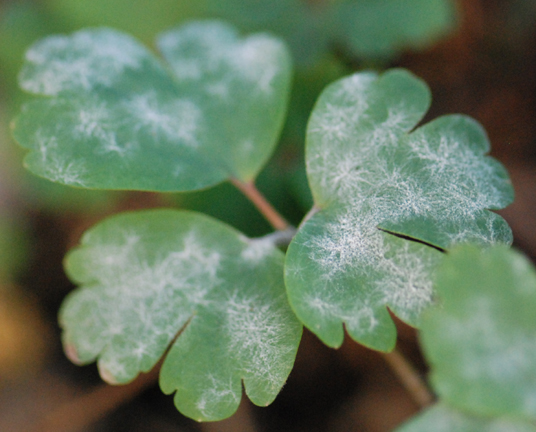
fungal infection

Is biodiversity good for us? In many ways, this is a stupid question because at some point, losing species that we use directly will obviously impact us negatively — think of food crops, pollination and carbon uptake.

But how much can we afford to lose before we notice anything bad is happening? Is the sort of biodiversity erosion we’re seeing today really such a big deal?

One area of research experiencing a surge in popularity is examining how variation in biodiversity (biowealth1) affects the severity of infectious diseases, and it is particularly controversial with respect to the evidence for a direct effect on human pathogens (e.g., see a recent paper here, a critique of it, and a reply).

Controversy surrounding the biodiversity-disease relationship among non-human species is less intense, but there are still arguments about the main mechanisms involved. The amplification hypothesis asserts that a community with more species has a greater pool of potential hosts for pathogens, so pathogens increase as biodiversity increases. On the contrary, the dilution hypothesis asserts that disease prevalence decreases with increasing host species diversity via several possible mechanisms, such as more host species reducing the chance that a given pathogen will ‘encounter’ a suitable host, and that in highly biodiverse communities, an infected individual is less likely to be surrounded by the same species, so the pathogen cannot easily be transmitted to a new host (the so-called transmission interference hypothesis).

So I’ve joined the ecological bandwagon and teamed up yet again with some very clever Chinese collaborators to test these hypotheses in — if I can be so bold to claim — a rather novel and exciting way.

Our new paper was just published online in EcologyWarming and fertilization alter the dilution effect of host diversity on disease severity2. Read the rest of this entry »


Biowealth

24 02 2016

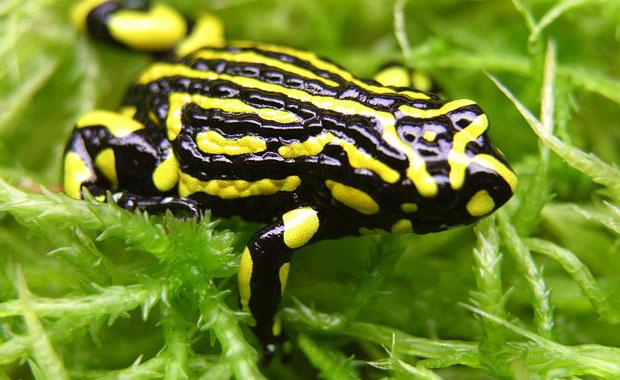
frogWhile I’ve blogged about this before in general terms (here and here), I thought it wise to reproduce the (open-access) chapter of the same name published in late 2013 in the unfortunately rather obscure book The Curious Country produced by the Office of the Chief Scientist of Australia. I think it deserves a little more limelight.

As I stepped off the helicopter’s pontoon and into the swamp’s chest-deep, tepid and opaque water, I experienced for the first time what it must feel like to be some other life form’s dinner. As the helicopter flittered away, the last vestiges of that protective blanket of human technological innovation flew away with it.

Two other similarly susceptible, hairless, clawless and fangless Homo sapiens and I were now in the middle of one of the Northern Territory’s largest swamps at the height of the crocodile-nesting season. We were there to collect crocodile eggs for a local crocodile farm that, ironically, has assisted the amazing recovery of the species since its near-extinction in the 1960s. Removing the commercial incentive to hunt wild crocodiles by flooding the international market with scar-free, farmed skins gave the dwindling population a chance to recover.

redwoodConservation scientists like me rejoice at these rare recoveries, while many of our fellow humans ponder why we want to encourage the proliferation of animals that can easily kill and eat us. The problem is, once people put a value on a species, it is usually consigned to one of two states. It either flourishes as do domestic crops, dogs, cats and livestock, or dwindles towards or to extinction. Consider bison, passenger pigeons, crocodiles and caviar sturgeon.

As a conservation scientist, it’s my job not only to document these declines, but to find ways to prevent them. Through careful measurement and experiments, we provide evidence to support smart policy decisions on land and in the sea. We advise on the best way to protect species in reserves, inform hunters and fishers on how to avoid over-harvesting, and demonstrate the ways in which humans benefit from maintaining healthy ecosystems. Read the rest of this entry »


Bad science

10 02 2016

Head in HandsIn addition to the surpassing coolness of reconstructing long-gone ecosystems, my new-found enthusiasm for palaeo-ecology has another advantage — most of the species under investigation are already extinct.

That might not sound like an ‘advantage’, but let’s face it, modern conservation ecology can be bloody depressing, so much so that one sometimes wonders if it’s worth it. It is, of course, but there’s something marvellously relieving about studying extinct systems for the simple reason that there are no political repercussions. No self-serving, plutotheocratic politician can bugger up these systems any more. That’s a refreshing change from the doom and gloom of modern environmental science!

But it’s not all sweetness and light, of course; there are still people involved, and people sometimes make bad decisions in an attempt to modify the facts to suit their creed. The problem is when these people are the actual scientists involved in the generation of the ‘facts’.

As I alluded to a few weeks ago with the publication of our paper in Nature Communications describing the lack of evidence for a climate effect on the continental-scale extinctions of Australia’s megafauna, we have a follow-up paper that has just been published online in Proceedings of the Royal Society B — What caused extinction of the Pleistocene megafauna of Sahul? led by Chris Johnson of the University of Tasmania.

After our paper published earlier this month, this title might seem a bit rhetorical, so I want to highlight some of the reasons why we wrote the review. Read the rest of this entry »


No evidence climate change is to blame for Australian megafauna extinctions

29 01 2016

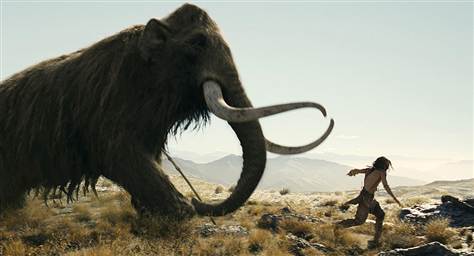
bw spear throwingLast July I wrote about a Science paper of ours demonstrating that there was a climate-change signal in the overall extinction pattern of megafauna across the Northern Hemisphere between about 50,000 and 10,000 years ago. In that case, it didn’t have anything to do with ice ages (sorry, Blue Sky Studios); rather, it was abrupt warming periods that exacerbated the extinction pulse instigated by human hunting.

Contrary to some appallingly researched media reports, we never claimed that these extinctions arose only from warming, because the evidence is more than clear that humans were the dominant drivers across North America, Europe and northern Asia; we simply demonstrated that warming periods had a role to play too.

A cursory glance at the title of this post without appreciating the complexity of how extinctions happen might lead you to think that we’re all over the shop with the role of climate change. Nothing could be farther from the truth.

Instead, we report what the evidence actually says, instead of making up stories to suit our preconceptions.

So it is with great pleasure that I report our new paper just out in Nature Communications, led by my affable French postdoc, Dr Frédérik SaltréClimate change not to blame for late Quaternary megafauna extinctions in Australia.

Of course, it was a huge collaborative effort by a crack team of ecologists, palaeontologists, geochronologists, paleo-climatologists, archaeologists and geneticists. Only by combining the efforts of this diverse and transdisciplinary team could we have hoped to achieve what we did. Read the rest of this entry »


Getting your conservation science to the right people

22 01 2016

argument-cartoon-yellingA perennial lament of nearly every conservation scientist — at least at some point (often later in one’s career) — is that the years of blood, sweat and tears spent to obtain those precious results count for nought in terms of improving real biodiversity conservation.

Conservation scientists often claim, especially in the first and last paragraphs of their papers and research proposals, that by collecting such-and-such data and doing such-and-such analyses they will transform how we manage landscapes and species to the overall betterment of biodiversity. Unfortunately, most of these claims are hollow (or just plain bullshit) because the results are either: (i) never read by people who actually make conservation decisions, (ii) not understood by them even if they read the work, or (iii) never implemented because they are too vague or too unrealistic to translate into a tangible, positive shift in policy.

A depressing state of being, I know.

This isn’t any sort of novel revelation, for we’ve been discussing the divide between policy makers and scientists for donkey’s years. Regardless, the whinges can be summarised succinctly: Read the rest of this entry »


Australia’s motto: “Screw the environment!”

2 09 2015
Mmmmm! I love coal!

Mmmmm! I love coal!

An article originally posted on ALERT by April Reside (with permission to reproduce).

The Conservative Tony Abbott government in Australia is proposing alarming changes to Australia’s Environmental Protection and Biodiversity Conservation (EPBC) Act 1999 — a remarkable move that would prevent environment groups from challenging many damaging development projects.

This has all come to a head over the Carmichael Coal Mine — a plan to build a massive mine in central Queensland in order to export 60 million of tonnes of coal to India each year.

Coal, of course, is the dirtiest of all fossil fuels, and India’s plan to burn it by the shipload for electricity is bad news for the planet.

The Abbott government is in a tizzy after after a community organization, the Mackay Conservation Group, challenged the approval of the Carmichael Mine in Australia’s Federal Court.

The community group says Environment Minister Greg Hunt didn’t properly consider the impact the mine would have on two threatened species, the yakka skink and ornamental snake.

The mine site also sustains the largest population of the southern subspecies of the black-throated Finch, which is endangered.

The implications of the mega-mine go well beyond a few imperilled species. If the mine goes ahead, it will be one of the biggest in the world — and the emissions from burning its mountains of coal would cancel out all gains made from Australia’s current emissions-reduction strategy.

On top of the frightening precedent it would set, the Abbott government appears to be double-dealing. Read the rest of this entry »



Ice Age? No. Abrupt warmings and hunting together polished off Holarctic megafauna

24 07 2015
Oh shit oh shit oh shit ...

Oh shit oh shit oh shit …

Did ice ages cause the Pleistocene megafauna to go extinct? Contrary to popular opinion, no, they didn’t. But climate change did have something to do with them, only it was global warming events instead.

Just out today in Science, our long-time-coming (9 years in total if you count the time from the original idea to today) paper ‘Abrupt warmings drove Late Pleistocene Holarctic megafaunal turnover‘ demonstrates for the first time that abrupt warming periods over the last 60,000 years were at least partially responsible for the collapse of the megafauna in Eurasia and North America.

You might recall that I’ve been a bit sceptical of claims that climate changes had much to do with megafauna extinctions during the Late Pleistocene and early Holocene, mainly because of the overwhelming evidence that humans had a big part to play in their demise (surprise, surprise). What I’ve rejected though isn’t so much that climate had nothing to do with the extinctions; rather, I took issue with claims that climate change was the dominant driver. I’ve also had problems with blanket claims that it was ‘always this’ or ‘always that’, when the complexity of biogeography and community dynamics means that it was most assuredly more complicated than most people think.

I’m happy to say that our latest paper indeed demonstrates the complexity of megafauna extinctions, and that it took a heap of fairly complex datasets and analyses to demonstrate. Not only were the data varied – the combination of scientists involved was just as eclectic, with ancient DNA specialists, palaeo-climatologists and ecological modellers (including yours truly) assembled to make sense of the complicated story that the data ultimately revealed. Read the rest of this entry »


Cartoon guide to biodiversity loss XXX 30

27 05 2015

[10.06.2015 update: Because of all the people looking for cartoon porn, I’ve slightly altered the title of this post. Should have predicted that one]

Third batch of six biodiversity cartoons for 2015 (see full stock of previous ‘Cartoon guide to biodiversity loss’ compendia here).

Read the rest of this entry »


Statistical explainer: average temperature increases can be deceiving

12 05 2015

Beating-the-Heat-Without-PowerOver the years I’ve used a simple graphic from the IPCC 2007 Report to explain to people without a strong background in statistics just why average temperature increases can be deceiving. If you’re not well-versed in probability theory (i.e., most people), it’s perhaps understandable why so few of us appear to be up-in-arms about climate change. I posit that if people had a better appreciation of mathematics, there would be far less inertia in dealing with the problem.

Instead of using the same image, I’ve done up a few basic graphs that explain the concept of why average increases in temperature can be deceiving; in other words, I explain why focussing on the ‘average’ projected increases will not enable you to appreciate the most dangerous aspects of a disrupted climate – the frequency of extreme events. Please forgive me if you find this little explainer too basic – if you have a modicum of probability theory tucked away in your educational past, then this will be of little insight. However, you may wish to use these graphs to explain the problem to others who are less up-to-speed than you.

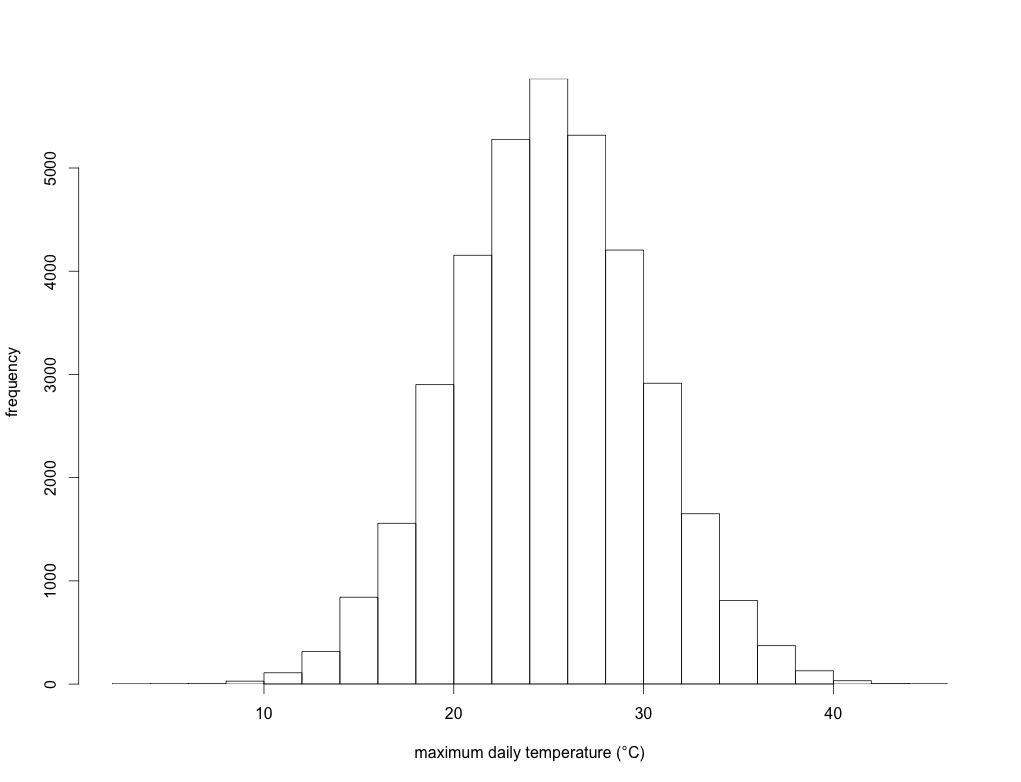
Let’s take, for example, all the maximum daily temperature data from a single location compiled over the last 100 years. We’ll assume for the moment that there has been no upward trend in the data over this time. If you plot the frequency of these temperatures in, say, 2-degree bins over those 100 years, you might get something like this:

ClimateVarFig0.1

This is simply an illustration, but here the long-term annual average temperature is 25 degrees Celsius, and the standard deviation is 5 degrees. In other words, over those 100 years, the average daily maximum temperature is 25 degrees, but there were a few days when the maximum was < 10 degrees, and a few others where it was > 40 degrees. This could represent a lot of different places in the world.

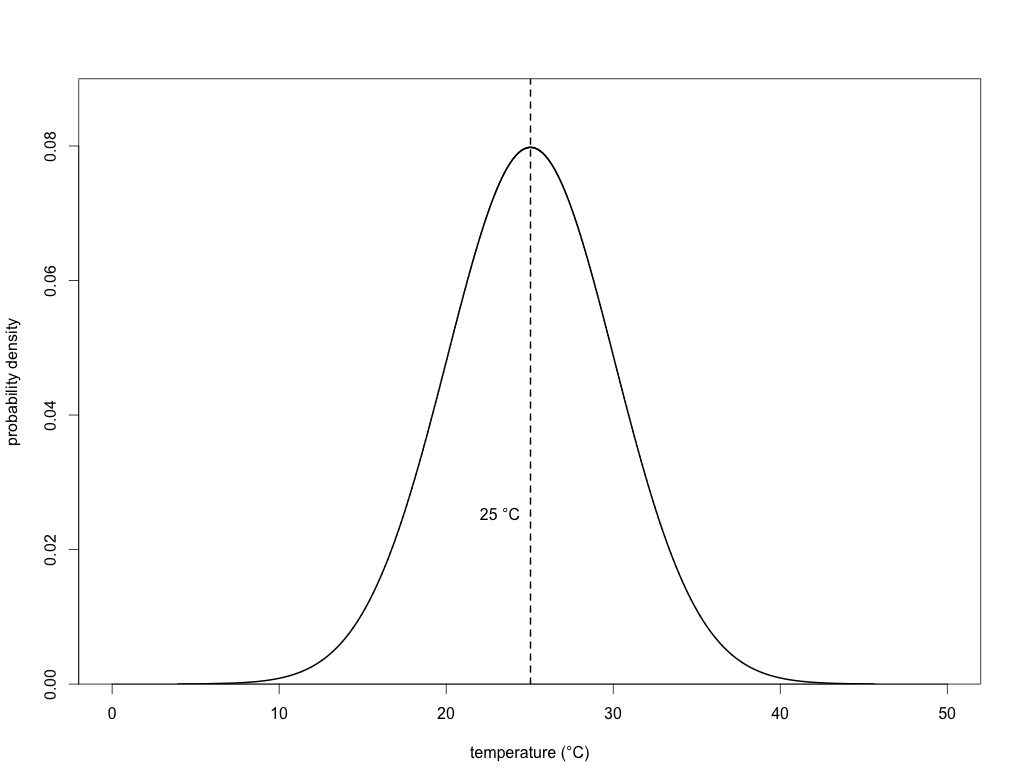
We can now fit what’s known as a ‘probability density function’ to this histogram to obtain a curve of expected probability of any temperature within that range:

ClimateVarFig0.2

If you’ve got some background in statistics, then you’ll know that this is simply a normal (Gaussian) distribution. With this density function, we can now calculate the probability of any particular day’s maximum temperature being above or below any particular threshold we choose. In the case of the mean (25 degrees), we know that exactly half (p = 0.50) of the days will have a maximum temperature below it, and exactly half above it. In other words, this is simply the area under the density function itself (the total area under the entire curve = 1). Read the rest of this entry »


Lomborg: a detailed citation analysis

24 04 2015

There’s been quite a bit of palaver recently about the invasion of Lomborg’s ‘Consensus’ Centre to the University of Western Australia, including inter alia that there was no competitive process for the award of $4 million of taxpayer money from the Commonwealth Government, that Lomborg is a charlatan with a not-terribly-well-hidden anti-climate change agenda, and that he his not an academic and possesses no credibility, so he should have no right to be given an academic appointment at one of Australia’s leading research universities.

On that last point, there’s been much confusion among non-academics about what it means to have no credible academic track record. In my previous post, I reproduced a letter from the Head of UWA’s School of Animal Biology, Professor Sarah Dunlop where she stated that Lomborg had a laughably low h-index of only 3. The Australian, in all their brilliant capacity to report the unvarnished truth, claimed that a certain Professor Ian Hall of Griffith University had instead determined that Lomborg’s h-index was 21 based on Harzing’s Publish or Perish software tool. As I show below, if Professor Hall did indeed conclude this, it shows he knows next to nothing about citation indices.

What is a ‘h-index’ and why does it matter? Below I provide an explainer as well as some rigorous analysis of Lomborg’s track record.

Read the rest of this entry »


Missing the forest despite its trees

21 04 2015

An exchange on Alert-Conservation.org over the intactness of boreal forests has just erupted. Bill Laurance asked me to weigh in as an independent appraiser of the debate, so I copy my thoughts below. You can read the original exchange between Jeff Wells and Nick Haddad (& colleagues) here.

Despite its immense size, there is little doubt that the ugly second cousin of forest conservation is the boreal region covering much of Alaska, Canada, Fennoscandia and Russia. Indeed, extending some 1.4 billion hectares, of which well over 60% is found in Russia alone (1, 2), the entirety of the boreal forest is more than double the area of the Amazon forest. Yet despite this massive expanse, the impressive biota it shelters (2), and its important contribution to the global carbon (1), nitrogen (3) and oxygen (4) cycles, the boreal is an oft-overlooked region in terms of global conservation priorities and possibilities (5).

The exchange between Haddad & Sexton and Wells regarding the former researchers’ recent paper (6) highlights this problem, of which even many expert ecologists are often only vaguely aware. Wells takes particular issue with Haddad and colleagues’ assertion that the boreal forest is highly fragmented, claiming to the contrary that the (North America) boreal forest is “… truly intact … ”. While Haddad et al. respond that they did not differentiate between ‘natural’ and human-caused fragmentation, my view is that the exchange misses some important concerns about the state of the boreal forest.

Wells correctly points out that the boreal zone in North America is “massive”, but can his other claim – that it is “truly intact” – stand up to scrutiny? Citing one of my own papers from 2009 (2) to demonstrate (correctly) that the boreal forest of North America holds a stunning array of species, Wells neglects to highlight that in that same paper we also identified the extensive, artificial fragmentation that has occurred there and in other parts of the boreal zone over the last few decades. For example, we showed clearly that only 44% of the entire biome is considered to be ‘intact’, defining the term precisely as “areas ≥ 500 km2, internally undivided by infrastructure (e.g., roads) and with linear dimensions ≥ 10 km”. Satellite imagery has also confirmed that between 2000 and 2005, the boreal biome experienced the largest area of gross forest cover loss compared to any other (7). Despite recent evidence that so-called edge effects (characteristics of a disturbed matrix that penetrate some distance into habitat fragments) are probably of a smaller spatial magnitude in boreal compared to other biomes (8), it is disingenuous to claim that North America’s boreal forests are “truly intact”. Read the rest of this entry »


How things have (not) changed

13 04 2015

The other night I had the pleasure of dining with the former Australian Democrats leader and senator, Dr John Coulter, at the home of Dr Paul Willis (Director of the Royal Institution of Australia). It was an enlightening evening.

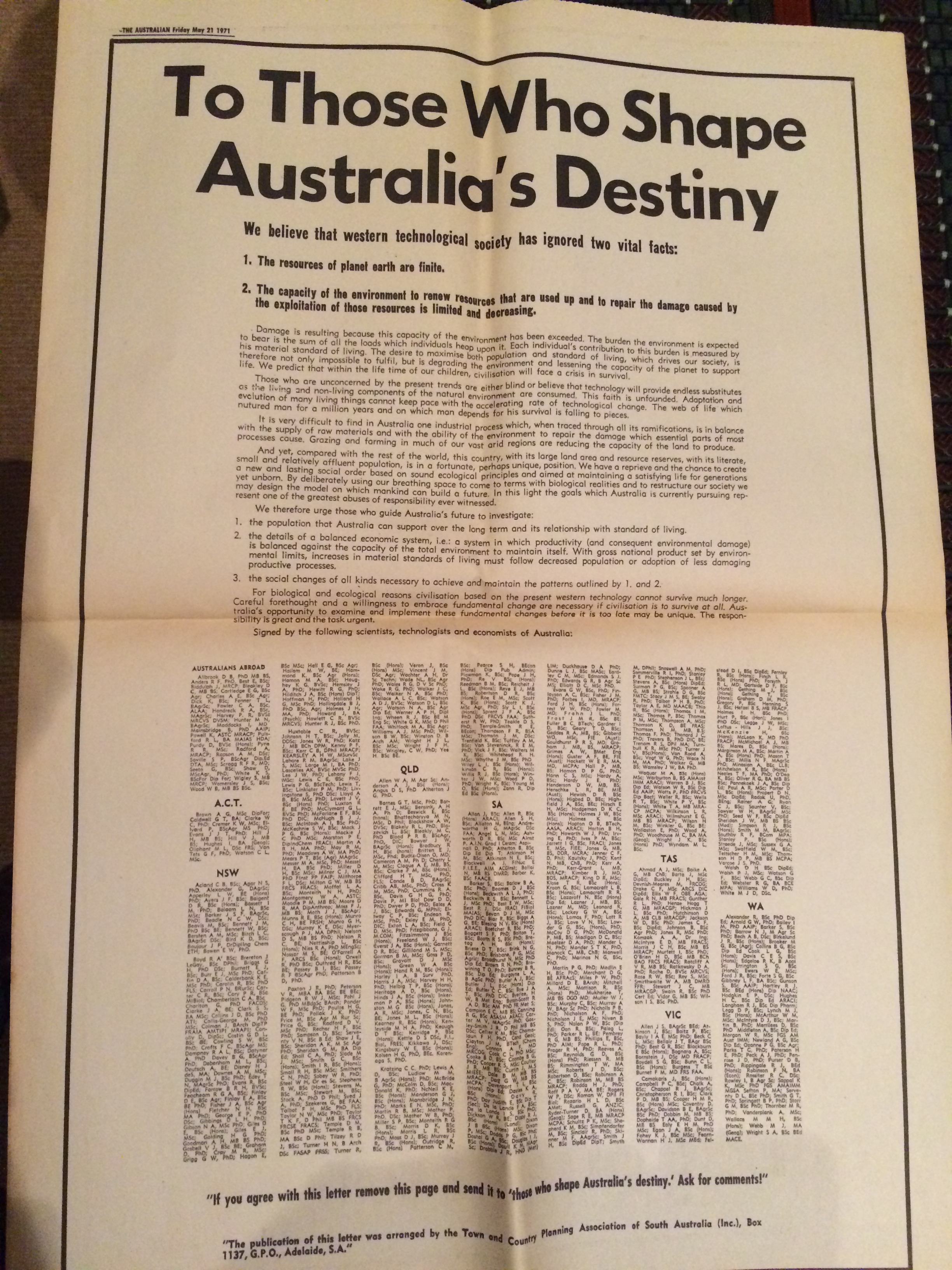
While we discussed many things, the 84 year-old Dr Coulter showed me a rather amazing advert that he and several hundred other scientists, technologists and economists constructed to alert the leaders of Australia that it was heading down the wrong path. It was amazing for three reasons: (i) it was written in 1971, (ii) it was published in The Australian, and (iii) it could have, with a few modifications, been written for today’s Australia.

If you’re an Australian and have even a modicum of environmental understanding, you’ll know that The Australian is a Murdochian rag infamous for its war on science and reason. Even I have had a run-in with its outdated, consumerist and blinkered editorial board. You certainly wouldn’t find an article like Dr Coulter’s in today’s Australian.

More importantly, this 44 year-old article has a lot today that is still relevant. While the language is a little outdated (and sexist), the grammar could use a few updates, and there are some predictions that clearly never came true, it’s telling that scientists and others have been worrying about the same things for quite some time.

In reading the article (reproduced below), one could challenge the authors for being naïve about how society can survive and even prosper despite a declining ecological life-support system. As I once queried Paul Ehrlich about some of his particularly doomerist predictions from over 50 years ago, he politely pointed out that much of what he predicted did, in fact, come true. There are over 1 billion people today that are starving, and another billion or so that are malnourished; combined, this is greater than the entire world population when Paul was born.

So while we might have delayed the crises, we certainly haven’t averted them. Technology does potentially play a positive role, but it can also increase our short-term carrying capacity and buffer the system against shocks. We then tend to ignore the indirect causes of failures like wars, famines and political instability because we do not recognise the real drivers: resource scarcity and ecosystem malfunction.

Australia has yet to learn its lesson.

To Those Who Shape Australia’s Destiny

We believe that western technological society has ignored two vital facts: Read the rest of this entry »


Cartoon guide to biodiversity loss XXIX

9 04 2015

Second batch of six biodiversity cartoons for 2015 (see full stock of previous ‘Cartoon guide to biodiversity loss’ compendia here).

Read the rest of this entry »