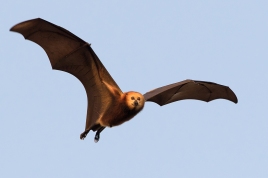
Game bird madness

4 11 2015

Gamecart_largeI just returned to Paris after a brief visit to the University of Aberdeen over the weekend. My hosts, Xavier Lambin and Beth Scott, were not only marvellously welcoming, I also learned a lot about the travesty that is game bird management in the United Kingdom, and especially in Scotland.

As you might already know, the Great Britons are a little cuckoo for birds — I’d even wager that the country produces more twitchers than any other country on Earth. The plus side is that there are few national taxa better censused and studied that British birds, because so many non-scientists get into the spirit of data collection. Hell, I’ve even had a play with some of their datasets.

The other side of this bird madness is not so good — I’m talking about the massive biomass of game birds reared, released and shot every year in the United Kingdom. It’s not the hunting per se with which I take issue, it’s the insane manipulation of an entire ecosystem for the benefit of a few species. Read the rest of this entry »


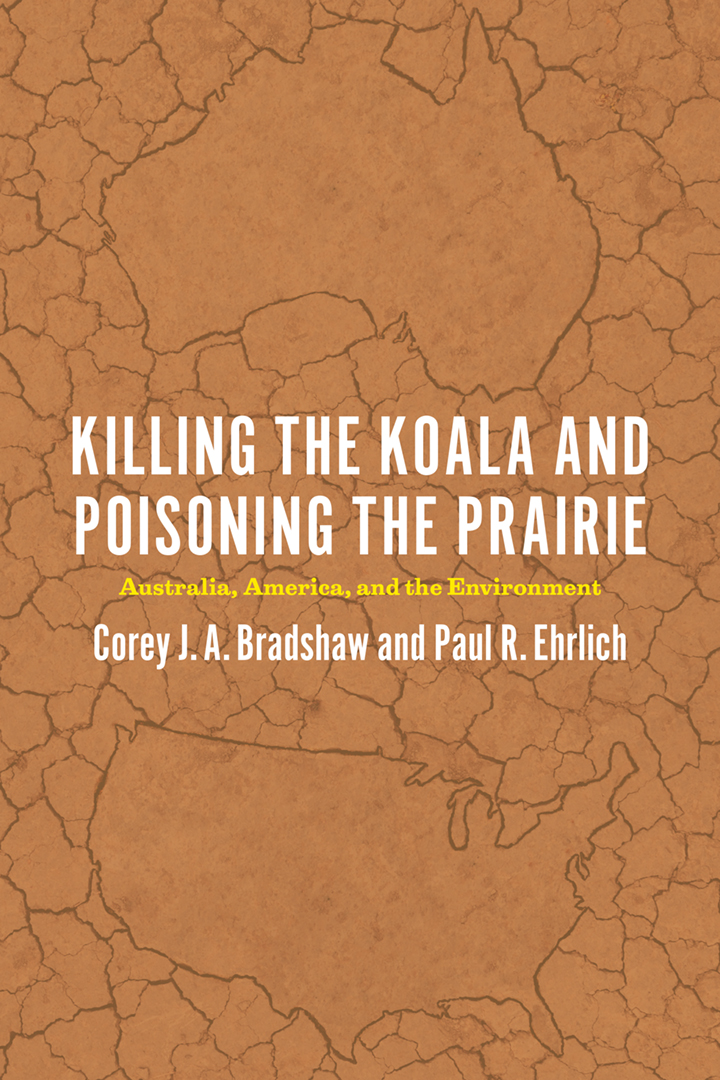
Killing the Koala and Poisoning the Prairie

19 10 2015

Cover-Bradshaw&Ehrlich-final

Man and the environment are meant for each other” — Tony Abbott, former Prime Minister of Australia (2014)

I know the human being and the fish can co-exist peacefully” — George W. Bush, former President of the USA (2000)

It. Has. Finally. Been. Published.

Yes, my new book with Paul Ehrlich, published by University of Chicago Press, is now available to purchase in book shops and online distributors around the world. The blog post today is a little explanatory synopsis of why we wrote the book and what it contains, but of course the real ‘meat’ is in the book. I hope you enjoy it.

In Australia, you can purchase the hard copy through Footprint Books, and the Kindle version at Amazon Australia. I also suggest that Australians might find the best deals through Booko. Electronic versions are also available through Kobo and Google Play. In the US you can order directly from University of Chicago Press, Amazon, Barnes & Noble, and many other book sellers. In the UK and Europe, the book is available from your country’s Amazon distributor. I imagine many chain and independent book sellers will be carrying the book by now, or will be soon.

My deepest thanks to all those who made it possible.

Our chance meeting in 2009 at Stanford University turned out to be auspicious, not least of which because of the publication this week of our co-authored book, Killing the Koala and Poisoning the Prairie. Australia, America and the Environment by University of Chicago Press. As a mid-career ecologist (Bradshaw) based at the University of Adelaide, it was indeed an honour to meet one of the most famous scientists (Ehrlich) in my field. With a list of books and hundreds of scientific papers under his belt, Ehrlich has been tackling major environmental issues since the 1960s. Ehrlich also has a long-time interest in Australia, having visited nearly every year during the last four decades and experienced more of the country than most Australians. Together we have observed firsthand the similarities and differences of Australia and the US, and the eyes we see through are trained as those of environmental scientists and evolutionary biologists.

So why write a book about the environmental tragedies currently unfolding in two completely different countries at opposite ends of the Earth? As it turns out, Australia and the US have much more in common environmentally than one might think, and not necessarily in a good way. Despite our vastly different floras and faunas, population densities, histories of human colonisation and soil productivities, there is an almost spooky similarity in the environmental and political problems both our countries are now experiencing. As such, we have a lot to learn about avoiding each other’s mistakes.

Ausmerica

Australia and the contiguous US are roughly equivalent in land area, both cultures are derived originally and principally from what is now the United Kingdom, and both are examples of super-consuming, super-wasting, wealthy, literate countries. Both countries also have environmental footprints that exceed most other countries on Earth, with some of the world’s highest per capita rates of greenhouse-gas emissions, water consumption, species extinctions and deforestation.  Read the rest of this entry »


Only thing worse than being labelled ‘deadly’, is not being called anything at all

13 10 2015

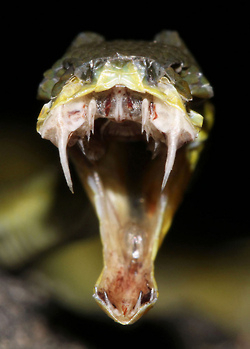
11034-Snake-BiteI had an interesting exchange on Twitter today that deserves some discussion, not because the brief internet argument that ensued offers some insightful wisdom (internet debates rarely do anything more than identify all those involved as fuckwits), but because it raises an interesting issue in conservation.

The abbreviated (and slightly expurgated) main message of the exchange was whether drawing attention to the potential for a species to cause harm to humans is good or bad (for the species in question).

The elasmobranchologists in particular usually become apoplectic whenever anyone calls a shark ‘deadly’, or some such similar adjective. As it turns out, the ophidiologists appear to be equally sensitive. I admit that they do have a point — it’s probably fair to assume that films like Jaws and Anaconda (or, Darwin-forbid, Sharknado) haven’t done much to make most people appreciate the amazing diversity, evolutionary adaptations and wonderful life histories of these subclasses & clades (respectively).

In fact, most marine biologists assume that Jaws in particular was responsible for decades of overt prosecution of sharks that has led to the massive population declines. However, I sincerely wonder whether the bad media was in the real culprit and over-fishing was instead the principal cause of today’s observed shark declines (the questionable nature of the numbers often cited notwithstanding).  Read the rest of this entry »



To spare or to share, that is a muddled question

9 10 2015
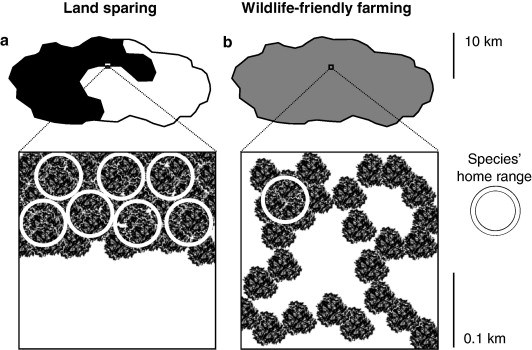
Unfortunately, it ain't this simple (from doi:10.1016/j.foodpol.2010.11.008)

Unfortunately, it ain’t this simple (from doi:10.1016/j.foodpol.2010.11.008)

Certain research trends in any field are inevitable, because once a seductive can of research-question worms is opened, it’s difficult to resist the temptation to start hooking in. Of course, I’m not against popular trends in research per se if they lead to a productive, empirical evaluation of the complexities involved, but it can sometimes result in a lot of wasted time. For example, in conservation ecology we’ve had to suffer 15 years of wasted effort on disproving neutral theory, we’ve bashed heads unnecessarily regarding the infamous SLOSS (‘Single Large Or Several Small’ reserves) debates of the 1970s and 1980s, and we’ve pilfered precious years arguing about whether density feedback actually exists (answer: it does).

The latest populist research trend in conservation seems to be the ‘land sparing versus land sharing’ debate, which, I (and others) argue, is largely an overly simplistic waste of time, money and intellectual advancement to the detriment of both biodiversity and human well-being.

Land sparing is generally used in reference to agricultural practices (although in theory, it could apply to any human endeavour where native vegetation cover is required to be removed or degraded, such as for electricity production) that are purposely made to be high-yielding so that they require the smallest amount of land. At the other extreme (and the ‘two extremes’ of a continuum concept is half the bloody problem here), land sharing requires a larger land footprint because it relies on lower-yielding, biodiversity-friendly (agricultural) practices. Proponents of land sparing argue that only by amalgamating patches of remnant native vegetation can we avoid massive fragmentation and the pursuant loss of biodiversity, whereas those pushing for land sparing argue that the matrix between the big undeveloped bits must be exploited in a more biodiversity-friendly way to allow species to persist.

As it turns out, they’re both right (but their single-minded, extremist positions are not). Read the rest of this entry »


Essential papers you’ve probably never read

14 09 2015
library

Hmmm. What to read next?

“What would you consider to be the most important papers to read in your discipline?”.

That was the question a colleague with whom I’m working closely at the moment (you can probably figure out who that is) asked me last year. “Jesus H. Bloody Christ”, I thought, “What a question!”. How long is a piece of string?

In some ways, there is no way to answer that question well. Every research project requires reading a specific set of papers, and very few traverse the divide between projects. I seem to have to read a new set of papers every time I write one myself, although I admit I tend to stray from a single ‘discipline’ far too often than is probably considered healthy. Let’s also not forget those essential methods papers; you know, the ones that actually show you how to do the thing you’re trying to do? You can’t get much more essential than those.

But if I really sit down and think about it (and I have), it sort of comes down to what I’d expect my postgraduate students to know by the time they finish their degrees. In other words, they should read and retain the information in the papers that transcend research projects and all sub-disciplines of conservation ecology.

So I’ve picked a dozen of my ‘favourite’ papers that I think have something really important to tell us. They tend to be a little generic in terms of the broadness of their implications, but they are also, in my view, brilliant demonstrations of fundamental processes that all conservation ecologists should know.

While many of them are in the ‘big’ journals, not all of them are, nor are they necessarily the most cited papers in this field. I’ve also tended to avoid papers that document the things we know pretty well by now (e.g., effects of fragmentation, extinction patterns, etc.), and I haven’t really included any ‘methods’ papers for the simple reason I explained above that there are so many and they are very project-specific. I’ve even been a little cheeky and included one of my own, so take that for what it’s worth.

I present the list below in broad categories, and I include a little blurb about why I chose each one. There are, of course, 100s if not 1000s of others out there that others would choose, and I suppose that an inventory of such papers across many ecologists would be a good idea to put together. If you know this blog at all, you’ll know that I’ve also published my list of conservation ‘classics’, so I’m not going to repeat those here. Neither am I presenting those older papers that we should all have read, yet despite citing them for decades, few of us have (which has all sorts of implications for bullshit perpetuating over time, but that’s a topic for another blog post). For now, this is my tuppence. Read the rest of this entry »


What conservationists should recommend to philanthropists

24 08 2015

business-people-forest-sqIt probably won’t come as too much of a surprise that most of the people I know reasonably well (mates included) are also scientists of some description. I therefore think that I fall into the extremely normal and mundane category of associating the most with people at work. Sure, I’ve also got very good mates who are et alia plumbers, chefs, winemakers (I do live in South Australia, after all), mechanics, coffee roasters and farmers (I also live on a small farm), so at least a get out of the office a bit. In summary, I tend to befriend and hang around people who are for the most part making ends meet, but who are by no means in a position to spend oodles of cash on anything remotely related to the conservation of biodiversity.

From time to time, however, I do meet extremely wealthy people, but we generally do not operate in the same social circles (I know, another big surprise). Nonetheless, I keep finding myself in conversations with such people that start along the lines of the following question:

“What’s the most effective way to invest money to save species from going extinct?”

As the Australian saying goes: “How long is a piece of string” – in other words, it’s a difficult, multi-dimensional answer at best, or a confused non sequitur one at worst.

Those reading this might be thinking right now, “Oh, I know exactly what I’d spend it on if I had that kind of money”, but after a few moments of contemplation, you might not be so sure. This is the dilemma in which I’ve found myself now on more than a few occasions.

So, with the benefit of a little contemplation, here are a few of my thoughts on the subject. Read the rest of this entry »


Scariest part of climate change isn’t what we know, but what we don’t

7 08 2015
image-20150731-18728-1ntffbr

© Nick Kim

My good friend and tropical conservation rockstar, Bill Laurancejust emailed me and asked if I could repost his recent The Conversation article here on ConservationBytes.com.

He said:

It’s going completely viral (26,000 reads so far) in just three days. It’s been republished in The Ecologist, I Fucking Love Science, and several other big media outlets.

Several non-scientists have said it really helped them to understand what’s known versus unknown in climate-change research—which was helpful because they feel pummelled by all the research and draconian stuff that gets reported and have problems parsing out what’s likely versus speculative.

With an introduction like that, you’ll just have to read it!

“It’s tough to make predictions, especially about the future”: so goes a Danish proverb attributed variously to baseball coach Yogi Berra and physicist Niels Bohr. Yet some things are so important — such as projecting the future impacts of climate change on the environment — that we obviously must try.

An Australian study published last week predicts that some rainforest plants could see their ranges reduced 95% by 2080. How can we make sense of that given the plethora of climate predictions?

In a 2002 press briefing, Donald Rumsfeld, President George W. Bush’s Secretary of Defence, distinguished among different kinds of uncertainty: things we know, things we know we don’t know, and things we don’t know we don’t know. Though derided at the time for playing word games, Rumsfeld was actually making a good point: it’s vital to be clear about what we’re unclear about.

So here’s my attempt to summarise what we think we know, don’t know, and things that could surprise us about climate change and the environment.

Things we think we know

We know that carbon dioxide levels in the atmosphere have risen markedly in the last two centuries, especially in recent decades, and the Earth is getting warmer. Furthermore, 2014 was the hottest year ever recorded. That’s consistent with what we’d expect from the greenhouse effect. Read the rest of this entry »


All (fisheries) models are wrong, but some are useful (to indigenous people)

1 08 2015

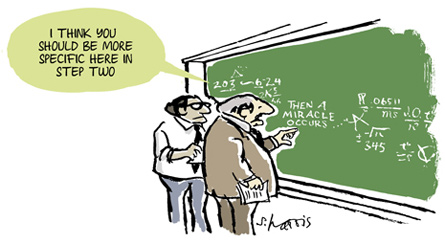
miracle_cartoonAnother post from Alejandro Frid. (Note: title modified from George Box‘s most excellent quote).

As an ecologist working for indigenous people of coastal British Columbia, western Canada, I live at the interface of two worlds. On the one hand, I know that computer models can be important management tools. On the other hand, my job constantly reminds me that whether a model actually improves fishery management depends, fundamentally, on the worldview that shapes the model’s objectives. To explore why, I will first review some general concepts about what models can and cannot do. After that, I will summarize a recent model of herring populations and then pull it all together in a way that matters to indigenous people who rely on marine resources for cultural integrity and food security.

Models do a great job of distilling the essence of how an ecosystem might respond to external forces—such as fisheries—but only under the specific conditions that the modeller assumes to be true in the ‘world’ of the model. Sometimes these assumptions are well-grounded in reality. Sometimes they are blatant but necessary simplifications. Otherwise, it would be difficult to ask questions about how major forces for which we have no historical precedent—such as the combined effects of industrial fisheries, ocean acidification and climate change—might be altering the ocean. For instance, due to our greenhouse gas emissions, the ocean is warming and contains less dissolved oxygen. These stressful conditions hamper the capacity of fish to grow, and appear to be on their way to shrinking the body sizes of entire fish communities1. If you want even to begin to comprehend what the ocean will look like in the long term due to these effects of climate change, it makes sense to assume, in the ‘world’ of your model, that fishing does not exist, even though you know it does. Of course, you would then acknowledge that climate change probably exacerbates the effects of fisheries, which highlights that you still have to examine the combination of these effects. And that is exactly what an excellent team of modellers did1. Read the rest of this entry »


Écologie en France

27 07 2015

DCOUVRI2This is just a quick post to update ConservationBytes.com followers about a few things I’ll be up to over the next 5 months. While I can guarantee that the posts will be more or less as frequent, some of the subject material might shift slightly given my new geographic focus.

I’m most fortunate to have been invited to spend the rest of 2015 in Franck Courchamp‘s Systematic Ecology & Evolution lab at Université Paris-Sud (also check out Franck’s blog here), and I’ll be leaving for France tomorrow. Franck is a long-time mate and colleague, who has not only previously hosted me briefly in his home in France, he and his family also put me up in Los Angeles earlier this year (where both he and his partner Muriel are on sabbatical themselves at UCLA until the end of August 2015). Franck was also kind enough to visit Adelaide last year where he gave some rather kick-arse seminars.

So what will I be doing during my mini-‘sabbatical’ with Franck? Franck is known for many things, not least of which is his reputation for being ‘King Allee Effect‘, but the main focus of my work there will be on the economic impacts of invasive insects in Europe as the climate continues to warm over the coming century. The project is financed by a large French bank (BNP-Paribas) and is known as InvaCost:

InvaCost will look at the impact on invasive insects, when climate change allows them to invade regions that are now too cold for them, but that will warm up in the coming decades. These include the red imported fire ant, the predatory Asian wasp, the disease-carrying tiger mosquito, and many others that are among the worst invaders worldwide.

Of course, that’s just the main topic. Franck is a little like me in that he’s a jack of many ecological trades, so we also plan to work on a few things like the global impacts of feral cats, some more conservation-based things, and perhaps a review or two. Lots planned for five months! Read the rest of this entry »


Ice Age? No. Abrupt warmings and hunting together polished off Holarctic megafauna

24 07 2015
Oh shit oh shit oh shit ...

Oh shit oh shit oh shit …

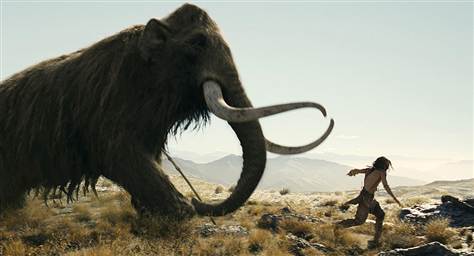
Did ice ages cause the Pleistocene megafauna to go extinct? Contrary to popular opinion, no, they didn’t. But climate change did have something to do with them, only it was global warming events instead.

Just out today in Science, our long-time-coming (9 years in total if you count the time from the original idea to today) paper ‘Abrupt warmings drove Late Pleistocene Holarctic megafaunal turnover‘ demonstrates for the first time that abrupt warming periods over the last 60,000 years were at least partially responsible for the collapse of the megafauna in Eurasia and North America.

You might recall that I’ve been a bit sceptical of claims that climate changes had much to do with megafauna extinctions during the Late Pleistocene and early Holocene, mainly because of the overwhelming evidence that humans had a big part to play in their demise (surprise, surprise). What I’ve rejected though isn’t so much that climate had nothing to do with the extinctions; rather, I took issue with claims that climate change was the dominant driver. I’ve also had problems with blanket claims that it was ‘always this’ or ‘always that’, when the complexity of biogeography and community dynamics means that it was most assuredly more complicated than most people think.

I’m happy to say that our latest paper indeed demonstrates the complexity of megafauna extinctions, and that it took a heap of fairly complex datasets and analyses to demonstrate. Not only were the data varied – the combination of scientists involved was just as eclectic, with ancient DNA specialists, palaeo-climatologists and ecological modellers (including yours truly) assembled to make sense of the complicated story that the data ultimately revealed. Read the rest of this entry »


Can we save biodiversity? Not as long as ‘democracy’ is for sale

16 07 2015
© Bill Day

© Bill Day

Like you, I’m tired of the constant battle with ill-informed politicians who claim all sorts of nonsense reasons for the bad environmental decisions they make in the name of so-called ‘democracy’. The flesh of my right hand is sore from the constant fist-bashing of tables as I let loose yet another diatribe concerning why our politicians are corrupt whores for sale to the highest bidder. My teeth are becoming worn from the nights of grinding as I lay awake contemplating why we as a society are taking more steps backward than forward.

Yes, we have politicians today claiming that “coal is good for humanity” and that climate change is a “hoax” designed by communists to disrupt society. They spew all sorts of nonsense in public about how they are making their decisions to approve yet another coal mine, limit renewable energy investments or allow continued deforestation because “it’s good for the economy”. All these despite the overwhelming evidence to the contrary.

I used to invoke the comforting feeling of intellectual superiority that these (mostly male) politicians were merely stupid, and that as a democracy, we cater to the lowest intelligence denominator of civil society (i.e., we get the politicians we deserve). However, that excuse is about as stupid as the label we give politicians who make decisions that fly in the face of all evidence. Yes, there are stupid people that have been elected to represent us, but I submit that truly stupid politicians are probably quite rare.

No. Ironically, stupidity cannot explain these moronic and generationally bankrupt decisions. Only money can. Read the rest of this entry »


National commitment to conservation brings biodiversity benefits

16 06 2015

united-nations-dayWhat makes some conservation endeavours successful where so many fail to protect biodiversity? Or, how long is a piece of string?

Yes, it’s a difficult question because it’s not just about the biology – such as resilience and area relationships – in fact, it’s probably more about the socio-economic setting that will ultimately dictate how the biodiversity in any particular area fares in response to disturbance.

In the case of protected areas (that I’ll just refer to as ‘reserves’ for the remainder of this post), there’s been a lot of work done about the things that make them ‘work’ (or not) in terms of biodiversity preservation. Yes, we can measure investment, how much the community supports and is involved with the reserve, how much emphasis is put on enforcement, the types of management done within (and outside) of the reserves, et ceteraet cetera. All of these things can (and have to some extent) been correlated with indices of the fate of the biodiversity within reserves, such as rates and patterns of deforestation, the amount of illegal hunting, and the survival probability of particular taxa.

But the problem with these indices is that there are just indices – they probably do not encapsulate the overall ‘health’ of the biodiversity within a reserve (be that trends in the overall abundance of organisms, the resilience of the community as a whole to future disturbances, or the combined phylogenetic diversity of the ecosystem). This is because there are few long-term monitoring programmes of sufficient taxonomic and temporal breadth to summarise these components of complex ecosystems (i.e., ecology is complex). It’s no real surprise, and even though we should put a lot more emphasis on targeted, efficient, long-term biodiversity monitoring inside and outside of all major biodiversity reserves, the cold, hard truth of it is that we’ll never manage to get the required systems in place. Humanity just doesn’t value it enough. Read the rest of this entry »



An appeal to extinction chronologists

2 06 2015

u7Pi3Extinction is forever, right? Yes, it’s true that once the last individual of a species dies (apart from insane notions that de-extinction will do anything to resurrect a species in perpetuity), the species is extinct. However, the answer can also be ‘no’ when you are limited by poor sampling. In other words, when you think something went extinct when in reality you just missed it.

Most of you are familiar with the concept of Lazarus1 species – when we’ve thought of something long extinct that suddenly gets re-discovered by a wandering naturalist or a wayward fisher. In paleontological (and modern conservation biological) terms, the problem is formally described as the ‘Signor-Lipps’ effect, named2 after two American palaeontologists, Phil Signor3 and Jere Lipps. It’s a fairly simple concept, but it’s unfortunately ignored in most palaeontological, and to a lesser extent, conservation studies.

The Signor-Lipps effect arises because the last (or first) evidence (fossil or sighting) of a species presence has a nearly zero chance of heralding its actual timing of extinction (or appearance). In paleontological terms, it’s easy to see why. Fossilisation is in fact a nearly impossible phenomenon – all the right conditions have to be in place for a once-living biological organism to be fossilised: it either has to be buried quickly, in a place where nothing can decompose it (usually, an anoxic environment), and then turned to rock by the process of mineral replacement. It then has to resist transformation by not undergoing metamorphosis (e.g., vulcanism, extensive crushing, etc.). For more recent specimens, preservation can occur without the mineralisation process itself (e.g., bones or flesh in an anoxic bog). Then the bloody things have to be found by a diligent geologist or palaeontologist! In other words, the chances that any one organism is preserved as a fossil after it dies are extremely small. In more modern terms, individuals can go undetected if they are extremely rare or remote, such that sighting records alone are usually insufficient to establish the true timing of extinction. The dodo is a great example of this problem. Remember too that all this works in reverse – the first fossil or observation is very much unlikely to be the first time that the species was there. Read the rest of this entry »


Statistical explainer: average temperature increases can be deceiving

12 05 2015

Beating-the-Heat-Without-PowerOver the years I’ve used a simple graphic from the IPCC 2007 Report to explain to people without a strong background in statistics just why average temperature increases can be deceiving. If you’re not well-versed in probability theory (i.e., most people), it’s perhaps understandable why so few of us appear to be up-in-arms about climate change. I posit that if people had a better appreciation of mathematics, there would be far less inertia in dealing with the problem.

Instead of using the same image, I’ve done up a few basic graphs that explain the concept of why average increases in temperature can be deceiving; in other words, I explain why focussing on the ‘average’ projected increases will not enable you to appreciate the most dangerous aspects of a disrupted climate – the frequency of extreme events. Please forgive me if you find this little explainer too basic – if you have a modicum of probability theory tucked away in your educational past, then this will be of little insight. However, you may wish to use these graphs to explain the problem to others who are less up-to-speed than you.

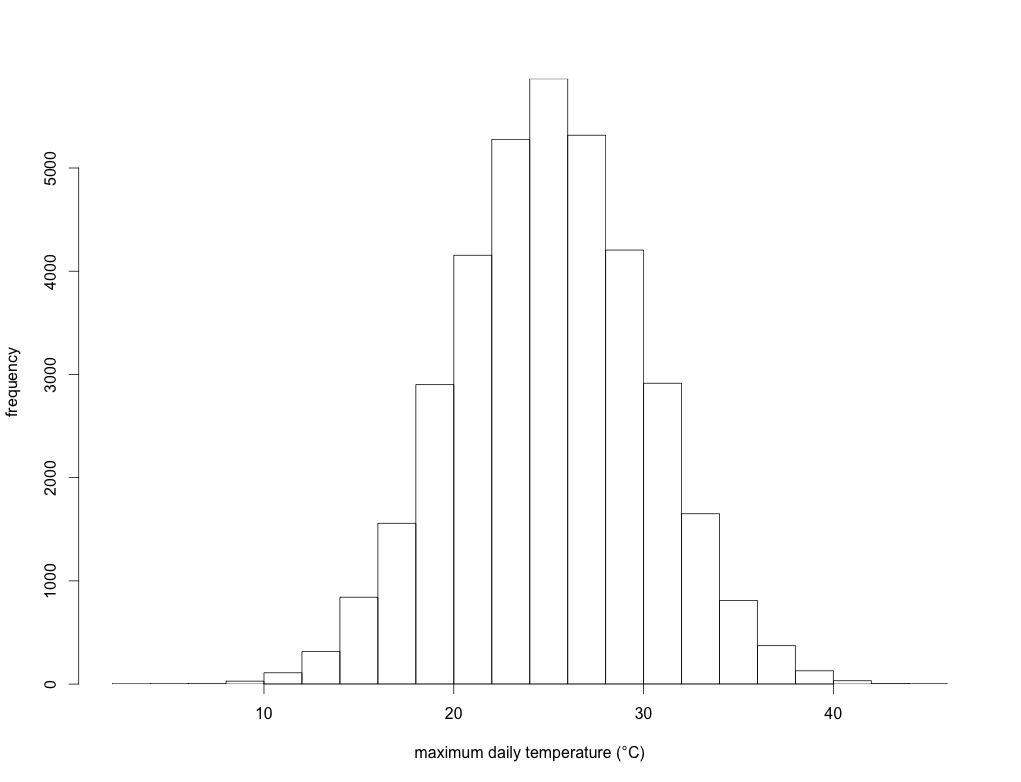
Let’s take, for example, all the maximum daily temperature data from a single location compiled over the last 100 years. We’ll assume for the moment that there has been no upward trend in the data over this time. If you plot the frequency of these temperatures in, say, 2-degree bins over those 100 years, you might get something like this:

ClimateVarFig0.1

This is simply an illustration, but here the long-term annual average temperature is 25 degrees Celsius, and the standard deviation is 5 degrees. In other words, over those 100 years, the average daily maximum temperature is 25 degrees, but there were a few days when the maximum was < 10 degrees, and a few others where it was > 40 degrees. This could represent a lot of different places in the world.

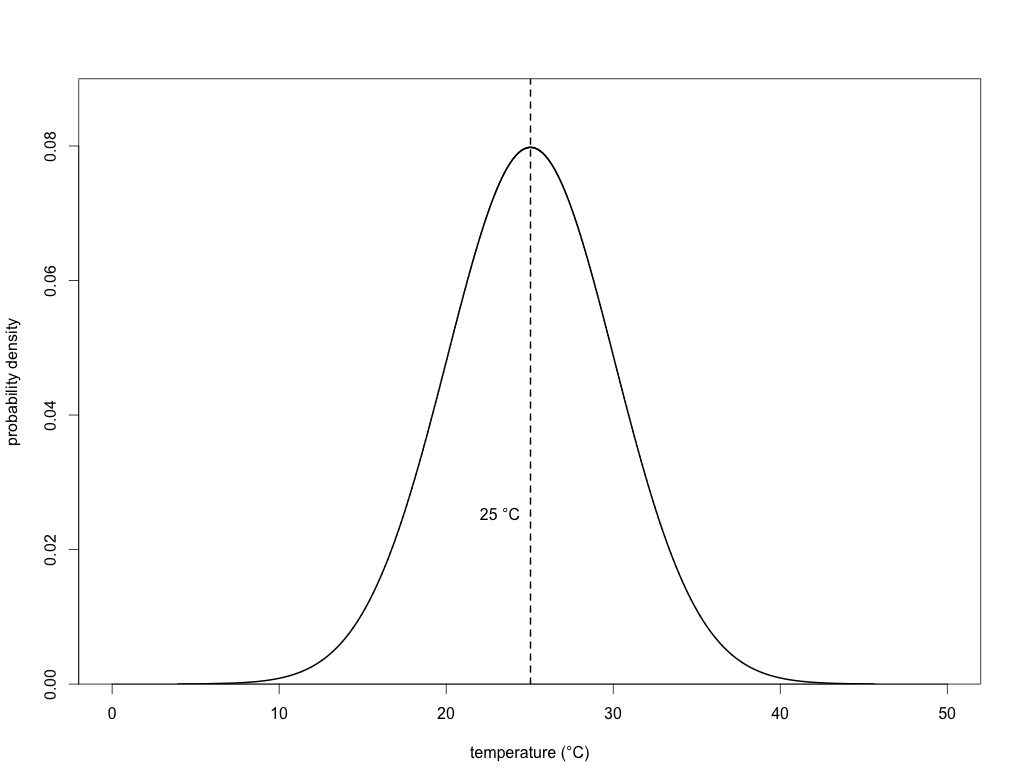
We can now fit what’s known as a ‘probability density function’ to this histogram to obtain a curve of expected probability of any temperature within that range:

ClimateVarFig0.2

If you’ve got some background in statistics, then you’ll know that this is simply a normal (Gaussian) distribution. With this density function, we can now calculate the probability of any particular day’s maximum temperature being above or below any particular threshold we choose. In the case of the mean (25 degrees), we know that exactly half (p = 0.50) of the days will have a maximum temperature below it, and exactly half above it. In other words, this is simply the area under the density function itself (the total area under the entire curve = 1). Read the rest of this entry »


How things have (not) changed

13 04 2015

The other night I had the pleasure of dining with the former Australian Democrats leader and senator, Dr John Coulter, at the home of Dr Paul Willis (Director of the Royal Institution of Australia). It was an enlightening evening.

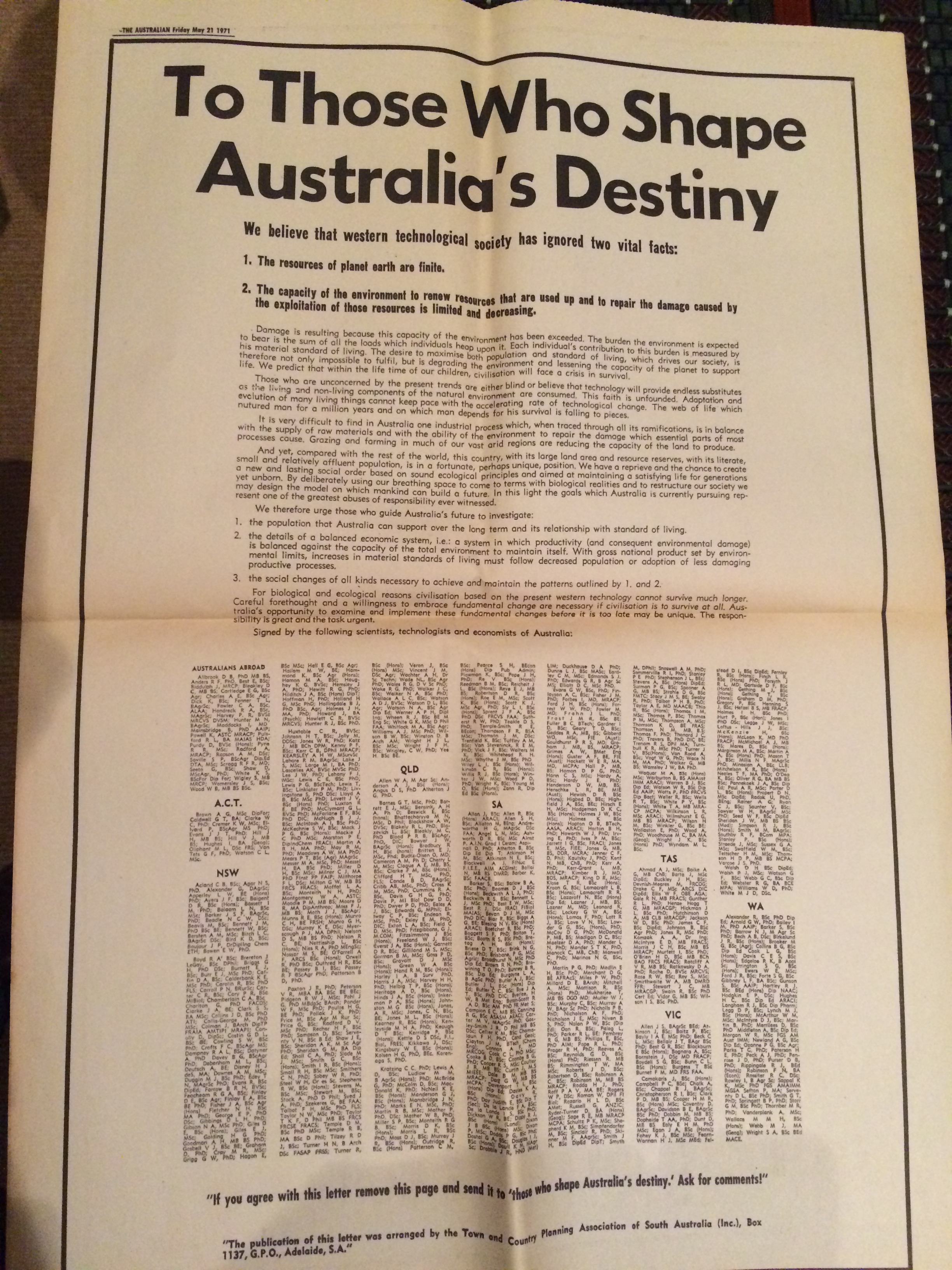
While we discussed many things, the 84 year-old Dr Coulter showed me a rather amazing advert that he and several hundred other scientists, technologists and economists constructed to alert the leaders of Australia that it was heading down the wrong path. It was amazing for three reasons: (i) it was written in 1971, (ii) it was published in The Australian, and (iii) it could have, with a few modifications, been written for today’s Australia.

If you’re an Australian and have even a modicum of environmental understanding, you’ll know that The Australian is a Murdochian rag infamous for its war on science and reason. Even I have had a run-in with its outdated, consumerist and blinkered editorial board. You certainly wouldn’t find an article like Dr Coulter’s in today’s Australian.

More importantly, this 44 year-old article has a lot today that is still relevant. While the language is a little outdated (and sexist), the grammar could use a few updates, and there are some predictions that clearly never came true, it’s telling that scientists and others have been worrying about the same things for quite some time.

In reading the article (reproduced below), one could challenge the authors for being naïve about how society can survive and even prosper despite a declining ecological life-support system. As I once queried Paul Ehrlich about some of his particularly doomerist predictions from over 50 years ago, he politely pointed out that much of what he predicted did, in fact, come true. There are over 1 billion people today that are starving, and another billion or so that are malnourished; combined, this is greater than the entire world population when Paul was born.

So while we might have delayed the crises, we certainly haven’t averted them. Technology does potentially play a positive role, but it can also increase our short-term carrying capacity and buffer the system against shocks. We then tend to ignore the indirect causes of failures like wars, famines and political instability because we do not recognise the real drivers: resource scarcity and ecosystem malfunction.

Australia has yet to learn its lesson.

To Those Who Shape Australia’s Destiny

We believe that western technological society has ignored two vital facts: Read the rest of this entry »


Cartoon guide to biodiversity loss XXIX

9 04 2015

Second batch of six biodiversity cartoons for 2015 (see full stock of previous ‘Cartoon guide to biodiversity loss’ compendia here).

Read the rest of this entry »


How to contact a potential PhD supervisor

1 04 2015

It’s probably fair to say that most university-based academics regularly receive requests from people around the world wishing to be considered as prospective postgraduate students (mostly PhD). I probably receive an average of 3-4 such requests per week via e-mail, as do many of my collaborators. Unfortunately for those making the inquiry, I trash most of them almost immediately.

It’s not that I’m a (complete) bastard; rather, it seems that few of these people have given very much thought to their requests, or how they might be perceived. Indeed, I’d say that about 90% of them are one-liners that go something like this:

Dear Professor,

I wish to write you to seek for supervision towards PhD degree. If you not intersted, assist me to get other supervisor.

XX

Yes, with all the bad English, impoliteness and lack of any detail, these types of requests get deleted even before I get to the close. One recent e-mail even addressed me as “Dear Sir Hubert Wilkins …”. Sometimes, you really must wonder how some people have enough common sense even to turn on the computer.

I’m not naïve enough to think that most of these are serious requests for supervision; indeed, many of them seem to be desperate cries for help to assist people to quit their country of origin, for reasons that have nothing to do with academic pursuits.

So for those people who are genuinely seeking academic supervision, and in a vain attempt to stem the number of pointless e-mails I receive (yeah, right), I offer some tips on how to contact a potential PhD supervisor: Read the rest of this entry »


Australians: out-of-touch, urban squanderers

23 03 2015

There’s a romantic myth surrounding Australia that is pervasive both overseas and within the national psyche: this sun-scorched continent home to stoic bushmen1 that eek out a frugal, yet satisfying existence in this harsh rural land. Unfortunately that ideal is anathema to almost every Australian alive today.

While some elements of that myth do have a basis in reality – it is indeed a hot, dry, mostly inhospitable place if you count the entire land area (all 7.69 million square kilometres of it), and it does have the dubious honour of being the driest inhabited continent on Earth – most Australians live nowhere near the dry interior or the bush.

Despite our remarkably low average population density (a mere 3.09 people per square kilometre), Australia is in fact one of the most urbanised nations on the planet, with nearly 90% of its citizenry living within a major urban centre. As a result, our largely urban/suburban, latte-sipping, supermarket-shopping population has little, if any, connection to the vast landscape that surrounds its comfortable, built-up environs. There should be little wonder then that Australians are so disconnected from their own ecology, and little surprise that our elected officials (who, after all, represent the values of the majority of the citizens they purport to represent), are doing nothing to slow the rapid flushing of our environment down the toilet. Indeed, the current government is in fact actively encouraging the pace of that destruction. Read the rest of this entry »


Australia’s perfect storm of negligence

17 03 2015

If, for the purposes of some sick and twisted thought experiment, you were to design policies that would ensure the long-term failure of a wealthy, developed nation, you wouldn’t have to look farther than Australia’s current recipe for future disaster. I’m not trying to be provocative, but the warning signs are too bold and flashy to ignore. Let’s just run through some of the main ones:

1. As the lambasted and thoroughly flawed 2015 Intergenerational Report clearly demonstrates, our current government has no idea about the future threats of climate change. Dragged kicking and screaming into only a symbolic recognition of some ‘distant and currently irrelevant problem’, the Abbott-oir and his intergenerational criminals are well known for killing the carbon-pricing scheme, dismantling the Department of Climate Change, pulling out of major international talks on climate-change mitigation and installing a half-arsed, ineffective policy that will do nothing to stem our emissions. Combine that with comments like “coal is good for humanity“, and it’s easy to see how our current leaders have little idea about the future mess they’re creating.

2. Not content just to kick the shit out of any meaningful climate action, our government has also turned its back on any renewable energy target, and facilitated the fossil-fuel barons to dig more coal out of the ground. While South Australia’s Royal Commission on the nuclear fuel cycle is a welcome candle in the climate change-mitigation darkness here, it is far from becoming a national priority any time soon.

3. As has been well documented, the Abbott-oir ship of fools has also done whatever it can to turn back decades of environmental protections in less than six months of taking office. Everything from opening up national parks for exploitation, failing to protect marine sanctuaries, limiting environmental checks to promoting logging in World Heritage Areas, there is little room for hope that our crumbling environmental system will improve at all in the near to long term. Read the rest of this entry »


Avoiding genetic rescue not justified on genetic grounds

12 03 2015
Genetics to the rescue!

Genetics to the rescue!

I had the pleasure today of reading a new paper by one of the greatest living conservation geneticists, Dick Frankham. As some of CB readers might remember, I’ve also published some papers with Dick over the last few years, with the most recent challenging the very basis for the IUCN Red List category thresholds (i.e., in general, they’re too small).

Dick’s latest paper in Molecular Ecology is a meta-analysis designed to test whether there are any genetic grounds for NOT attempting genetic rescue for inbreeding-depressed populations. I suppose a few definitions are in order here. Genetic rescue is the process, either natural or facilitated, where inbred populations (i.e., in a conservation sense, those comprising too many individuals bonking their close relatives because the population in question is small) receive genes from another population such that their overall genetic diversity increases. In the context of conservation genetics, ‘inbreeding depression‘ simply means reduced biological fitness (fertility, survival, longevity, etc.) resulting from parents being too closely related.

Seems like an important thing to avoid, so why not attempt to facilitate gene flow among populations such that those with inbreeding depression can be ‘rescued’? In applied conservation, there are many reasons given for not attempting genetic rescue: Read the rest of this entry »