
A carbon economy can help save our species too

20 05 2013

money treeWe sent out this media release the other day, but it had pretty poor pick-up (are people sick of the carbon price wars?). Anyway, I thought it prudent to reprint here on CB.com.

Will Australia’s biodiversity benefit from the new carbon economy designed to reduce greenhouse gas emissions? Or will bio-‘perversities’ win the day?

“Cautious optimism” was the conclusion of Professor Corey Bradshaw, Director of Ecological Modelling at the University of Adelaide’s Environment Institute. He is lead author of a new paper published in the journal of Biological Conservation which reviewed the likely consequences of a carbon economy on conservation of Australian biodiversity.

“In most circumstances these two very important goals for Australia’s future – greenhouse gas emissions reduction and biodiversity conservation – are not mutually exclusive and could even boost each other,” Professor Bradshaw says.

“There are, however, many potential negative biodiversity outcomes if land management is not done with biodiversity in mind from the outset.”

The paper was contributed to by 30 Australian scientists from different backgrounds. They reviewed six areas where Australia’s Carbon Farming Initiative could have the greatest impact on biodiversity: environmental plantings; policies and practices to deal with native regrowth; fire management; agricultural practices; and feral animal control.

“The largest biodiversity ‘bang for our buck’ is likely to come from tree plantings,” says Professor Bradshaw. “But there are some potential and frightening ‘bioperversities’ as well. For example, we need to be careful not to plant just the fastest-growing, simplest and non-native species only to ‘farm’ carbon.

“Carbon plantings will only have real biodiversity value if they comprise appropriate native tree species and provide suitable habitats and resources for valued fauna. Such plantings could however risk severely altering local hydrology and reducing water availability.”

Professor Bradshaw says carefully managing regrowth of once-cleared areas could also produce a large carbon-sequestration and biodiversity benefit simultaneously. And carbon price-based modifications to agriculture that would benefit biodiversity included reductions in tillage frequency, livestock densities and fertiliser use, and retention and regeneration of native shrubs. Read the rest of this entry »
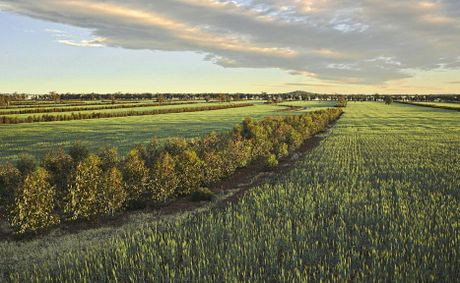

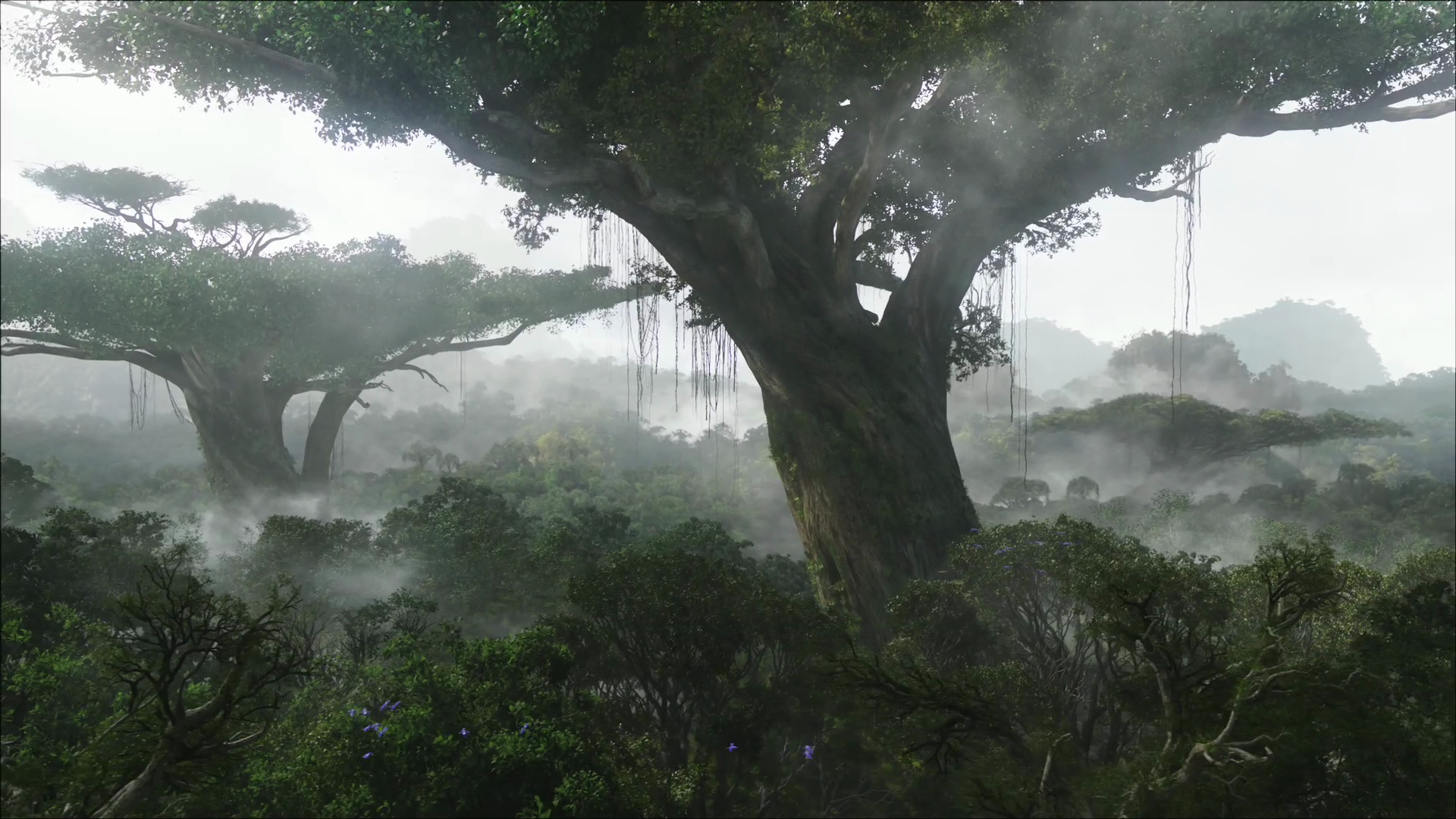

Brave new green world: biodiversity’s response to Australia’s carbon economy

12 03 2013

carbon farming 2I’ve had a busy weekend entertaining visiting colleagues and participating in WOMADelaide‘s first-ever ‘The Planet Talks‘. If you haven’t heard of WOMADelaide, you’re truly missing out in one of the best music festivals going (and this is from a decidedly non-festival-going sort). Planet Talks this year was a bit of an experiment after the only partially successful Earth Station festival held last year (it was well-attended, but apparently wasn’t as financially successful as they had hoped). So this year they mixed a bit of science with a bit of music – hence ‘Planet Talks’. Paul Ehrlich was one of the star attractions, and I had the honour of going onstage with him yesterday to discuss a little bit about human population growth and sustainability. It was also great to see Robyn Williams again. All the Talks were packed out – indeed, I was surprised they were so popular, especially in the 39-degree heat. Rob Brookman, WOMADelaide’s founder and principal organiser, told me afterward that they’d definitely be doing it again.

But my post really isn’t about WOMADelaide or The Planet Talks (even though I got the bonus of meeting one of my favourite latin bands, Novalima, creators of one of my favourite songs). It’s instead about a paper I heralded last year that’s finally been accepted.

In early 2012 at the Terrestrial Ecosystem Research Network (TERN) symposium in Adelaide, the Australian Centre for Ecological Analysis and Synthesis (ACEAS) put on what they called the ‘Grand Challenges’ workshop. I really didn’t get the joke at the time, but apparently the ‘grand challenge’ was locking 30 scientists with completely different backgrounds in a room for two days to see if they could do anything other than argue and bullshit. Well, we rose to that challenge and produced something that I think is rather useful.

I therefore proudly introduce the paper entitled Brave new green world: consequences of a carbon economy for the conservation of Australian biodiversity just accepted in Biological Conservation. The online version isn’t quite ready yet (should be in the next few weeks), but you are welcome to request a preprint from me now. If you attended (the surprisingly excellent) TERN symposium in Canberra last month, you might have seen me give a brief synopsis of our results.

The paper is a rather  in-depth review of how we, 30 fire, animal, plant, soil, landscape, agricultural and freshwater biologists, believe Australia’s new carbon-influenced economy (i.e., carbon price) will impact the country’s biodiversity. Read the rest of this entry »


Crying ‘wolf’ overlooks the foxes: challenging ‘planetary tipping points’

28 02 2013

tipping pointToday, a paper by my colleague, Barry Brook, appeared online in Trends in Ecology and Evolution. It’s bound to turn a few heads.

Let’s not get distracted by the title of the post, or the potential for a false controversy. It’s important to be clear that the planet is indeed ill, and it’s largely due to us. Species are going extinct faster than the would have otherwise. The planet’s climate system is being severely disrupted, so is the carbon cycle. Ecosystem services are on the decline.

But – and it’s a big ‘but’ – we have to be wary of claiming the end of the world as we know it or people will shut down and continue blindly with their growth and consumption obsession. We as scientists also have to be extremely careful not to pull concepts and numbers out of our bums without empirical support.

Specifically, I’m referring to the latest ‘craze’ in environmental science writing – the idea of ‘planetary tipping points‘ and the related ‘planetary boundaries‘. It’s really the stuff of Hollywood disaster blockbusters – the world suddenly shifts into a new ‘state’ where some major aspect of how the world functions does an immediate about-face. Read the rest of this entry »


Having more tree species makes us wealthier

28 01 2013

money treeAs more and more empirical evidence pours in from all corners of the globe, we can only draw one conclusion about the crude measure of species richness (i.e., number of species) – having more species around makes us richer.

And I’m not talking about the esoteric or ‘spiritual’ richness that the hippies dribble about around the campfire after a few dozen cones pulled off the bong (I’ll let the confused among you try to work the meaning of that one out by yourselves), I’m talking about real money (incorporated into my concept of ‘biowealth‘).

The idea that ‘more is better’ in terms of the number of species has traditionally found some (at times, conflicting) empirical support in the plant ecology literature, the latest evidence about which I wrote last year. This, the so-called ‘diversity-productivity’ relationship (DPR), demonstrates that as a forest or grass ecosystem gains more species, its average or total biomass production increases.

Read the rest of this entry »


The biggest go first

11 12 2012
© James Cameron

© James Cameron

The saying “it isn’t rocket science” is a common cliché in English to state, rather sarcastically, that something isn’t that difficult (with the implication that the person complaining about it, well, shouldn’t). But I really think we should change the saying to “it isn’t ecology”, for ecology is perhaps one of the most complex disciplines in science (whereas rocket science is just ‘complicated’). One of our main goals is to predict how ecosystems will respond to change, yet what we’re trying to simplify when predicting is the interactions of millions of species and individuals, all responding to each other and to their outside environment. It becomes quickly evident that we’re dealing with a system of chaos. Rocket science is following recipes in comparison.

Because of this complexity, ecology is a discipline plagued by a lack of generalities. Few, if any, ecological laws exist. However, we do have an abundance of rules of thumb that mostly apply in most systems. I’ve written about a few of them here on ConservationBytes.com, such as the effect of habitat patch size on species diversity, the importance of predators for maintaining ecosystem stability, and that low genetic diversity doesn’t exactly help your chances of persisting. Another big one is, of course, that in an era of rapid change, big things tend to (but not always – there’s that lovely complexity again) drop off the perch before smaller things do.

The prevailing wisdom is that big species have slower life history rates (reproduction, age at first breeding, growth, etc.), and so cannot replace themselves fast enough when the pace of their environment’s change is too high. Small, rapidly reproducing species, on the other hand, can compensate for higher mortality rates and hold on (better) through the disturbance. Read the rest of this entry »


Toothed conflict

1 11 2012

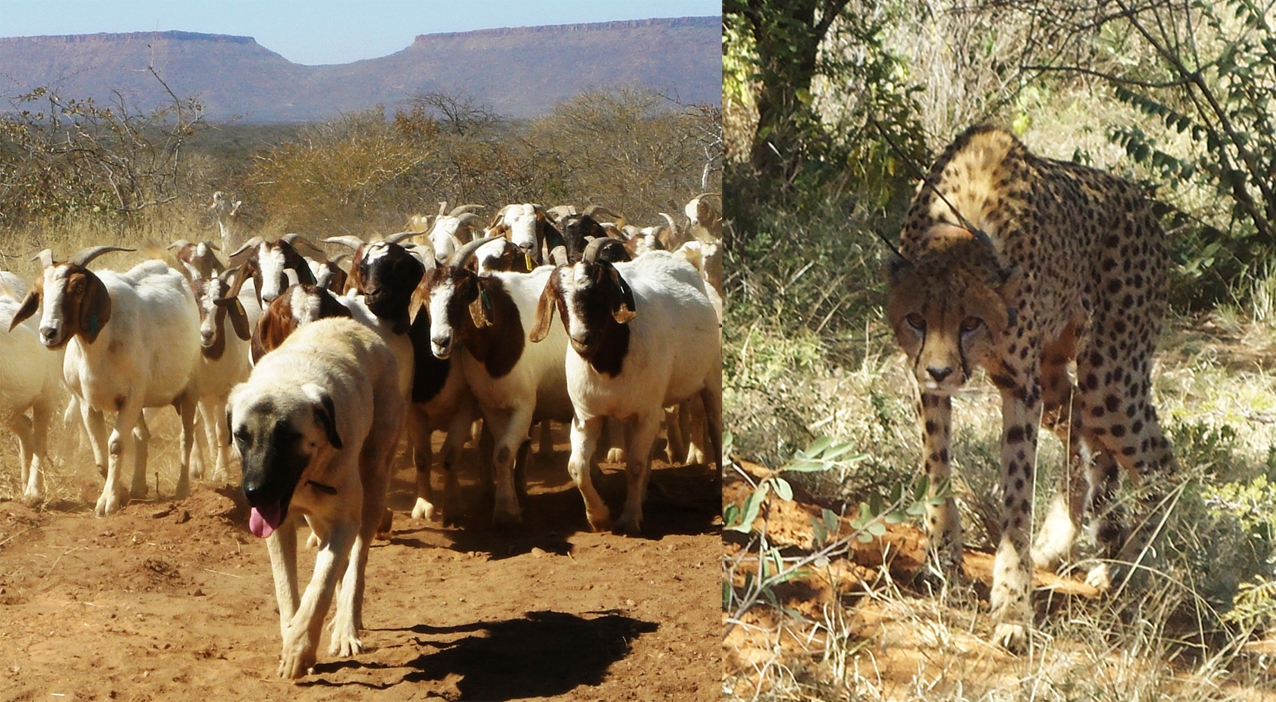
Left: An Anatolian shepherd (a Turkish breed improved in the USA) guiding a herd of boer goats whose flesh is much appreciated by people in Namibia and South Africa. Right: A cheetah carrying a radio-transmitter, within a project assessing range movements of this feline for the Cheetah Conservation Fund. Cheetahs refrain from moving close to the herds when the latter are looked after by the guardian dogs. Photos courtesy of Laurie Marker.

Another corker from Salva. He’s chosen a topic this week that’s near and dear to my brain – the conservation of higher-order predators. As ConBytes readers will know, we’ve talked a lot about human-predator conflict and the inevitable losers in that battle – the (non-human) predators. From dingos to sharks, predator xenophobia is just another way we weaken ecosystems and ultimately harm ourselves.

Rural areas devoted to livestock are part of the natural landscape, so it is inevitable (as well as natural) that predators, livestock and humans interact in such a mosaic of bordering habitats. However, their coexistence remains an unresolved conservation problem. 

When two species, people, political parties, enterprises… want the same thing, they either share it (if possible) or one side eliminates the competitor. The fact that proteins are part of the diet of humans and other carnivore species has resulted in a trophic drama that goes back millennia. Nowadays, predators like eagles, coyotes, lions, wolves and raccoons are credited for attacks on cattle and poultry (and people!) in all continents. This global problem is not only economic, but interlaces culture, emotion, policy and sanitation (1-4). For instance, some carnivores are reservoirs of cattle diseases and contribute to pathogen dispersal (5, 6).

Management options

Managers of natural resources have implemented three strategies to handle these sorts of issues for livestock breeders in general (7). Those strategies can be complementary or exclusive on a case-by-case basis, and are chosen following cost-benefit assessments and depending on the conservation status of the predator species involved. (i) ‘Eradication’ aims to eliminate the predator, which is regarded as noxious and worthless. (ii) ‘Regulation’ allows controlled takes under quota schemes, normally for pre-defined locations, dates and killing methods. ‘Preservation’ is applied in protected areas and/or for rare or endangered species, and often requires monitoring and measures set to prevent illegal harvest or trade. Additionally, many livestock breeders receive money to compensate losses to predators (8).

Many experts now advocate non-lethal (preventive) measures that modify the behaviour of people, livestock or predators (2, 7). The use of livestock-guarding dogs is one of those preventive measures (9). As an example, Laurie Marker (director of the Cheetah Conservation Fund) et al. (10) studied the use of 117 Anatolian shepherds adopted by Namibian rangers between 1995 and 2002 (Fig. 1). In this African country, cheetahs (Acinonyx jubatus) selectively forage on small-sized cattle and juveniles. Despite this feline being protected nationally, Namibian laws authorise rangers to shoot cheetahs in situations of risk to people and their properties, with more than 6,000 cheetahs having been killed in the 1980s alone (11). Through face-to-face interviews, Marker found that since the arrival of the Anatolian shepherds, > 70 % of the rangers perceived a pronounced reduction in cattle mortality (10). Although, the use of livestock-guarding dogs has worked out fine in many places worldwide, it is no panacea. In many other instances, the dogs dissuade some predator species and not others from harassing the livestock, or are only effective in combination with other measures (7, 9). Read the rest of this entry »


No-extinction targets are destined to fail

21 09 2012

I’ve been meaning to write about this for a while, and now finally I have been given the opportunity to put my ideas ‘down on paper’ (seems like a bit of an old-fashioned expression these days). Now this post might strike some as overly parochial because it concerns the state in which I live, but the concept applies to every jurisdiction that passes laws designed to protect biodiversity. So please look beyond my navel and place the example within your own specific context.

As CB readers will appreciate, I am firmly in support of the application of conservation triage – that is, the intelligent, objective and realistic way of attributing finite resources to minimise extinctions for the greatest number of (‘important’) species. Note that deciding which species are ‘important’ is the only fly in the unguent here, with ‘importance’ being defined inter alia as having a large range (to encompass many other species simultaneously), having an important ecological function or ecosystem service, representing rare genotypes, or being iconic (such that people become interested in investing to offset extinction.

But without getting into the specifics of triage per se, a related issue is how we set environmental policy targets. While it’s a lovely, utopian pipe dream that somehow our consumptive 7-billion-and-growing human population will somehow retract its massive ecological footprint and be able to save all species from extinction, we all know that this is irrevocably  fantastical.

So when legislation is passed that is clearly unattainable, why do we accept it as realistic? My case in point is South Australia’s ‘No Species Loss Strategy‘ (you can download the entire 7.3 Mb document here) that aims to

“…lose no more species in South Australia, whether they be on land, in rivers, creeks, lakes and estuaries or in the sea.”

When I first learned of the Strategy, I instantly thought to myself that while the aims are laudable, and many of the actions proposed are good ones, the entire policy is rendered toothless by the small issue of being impossible. Read the rest of this entry »



The invader’s double edge

15 06 2012

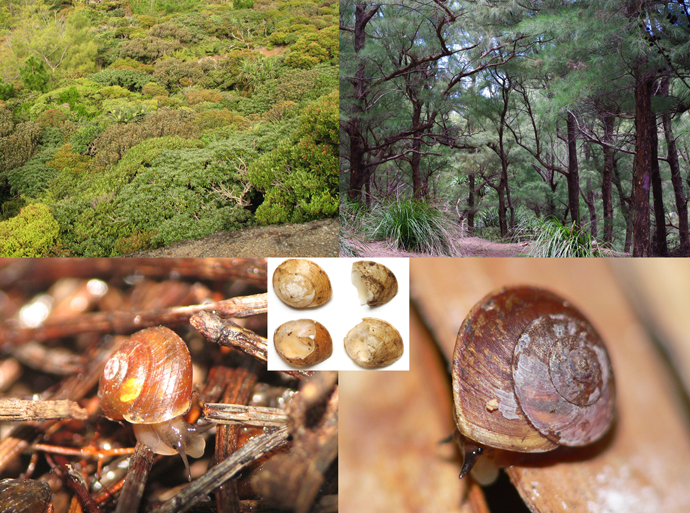
The Ogasawara Archipelago (Bonin Islands,) encompasses several tens of small islands ~ 1000 km from mainland Japan. In 2011, UNESCO declared this archipelago a World Heritage Site. Some regard them as the “Galapagos of the Orient”, owing to their biological singularity, e.g., endemism rates of ~ 50 % of > 500 species of plants, or ~ 90 % of > 100 species of terrestrial snails. Photos show patches of native scrub (left) and introduced sheoak forest (right), close-ups of the two study species Ogasawarana discrepans (left) and O. optima (right), and empty shells with (top right, bottom) and without (top left) rat scars (Courtesy of Satoshi Chiba).

Another great post by Salvador Herrando-Pérez that challenges our views on invasive species (some would do well to heed his words when it comes to species like dingos). I mentioned in his last post that he had just recently submitted his PhD thesis, and now I’m proud to say that it has been examined with no recommended changes required. What a truly rare accolade. Congratulations, Salva.

A blunt instrument of ecological restoration is the elimination of introduced species. However, when introduced species become custodians of native wildlife, a dilemma emerges between re-establishing historical ecosystem conditions or instead, accepting foreign species for the benefits they might also bring.

Right after birth, we all enter a culture where what is ‘good’ or ‘bad’ has already been determined. Later on, if those values remain unchallenged, individuals assume them to be true and act accordingly (which is neither ‘good’ nor ‘bad’ necessarily… it is just so). Science is therefore the only recourse humans have to check such values by  reducing the subjectivity of our judgements about why natural phenomena occur.

But scientists also work in a context of ‘pre-established truths’ (because, believe it or not, most of us are human too). The late Larry Slobodkin referred to our professional biases as ‘reifications’; i.e.,

“…reification consists of accepting a designation as if it has empirical meaning when, in fact, its existence has either never been tested or it has been found empty” (1).

Slobodkin underlined invasive species as an icon of reification. Indeed, people (with and without a scientific background) tend to demonise species that are not native and extremely abundant – experts even debate whether this is another sort of xenophobia (2). Thus, zebra mussels (Dreissena polymorpha), cane toads (Rhinella marinus) or caulerpa algae (Caulerpa taxifolia) are commonly referred to as ‘alien’, ‘invasive’ or ‘noxious’. Technically, we now call them ‘biological pollution’ (3). Such epithets are loaded with moral and pejorative connotations to qualify organisms that affect the range of facets of human well-being (aesthetics, economy, ethics, health). Read the rest of this entry »


It couldn’t have been us!

29 05 2012

A few months ago I asked Chris Johnson of the University of Tasmania to put together a post on his recent Science paper regarding Australian megafaunal extinctions. It seems that it stirred, yet again, some controversy among those who refuse to accept (mainly archaeologists) that humans could have had anything to do with pre-European extinctions. Indeed, how could humans possibly have anything to do with extinctions?!

Like Corey, I am mainly interested in current environmental problems. But now and then I wade into the debate over the extinction of Australia’s Pleistocene megafauna [editor’s note: Chris literally wrote the book on Australian mammal extinctions over the last 50,000 years], those huge animals that wandered over the Australian landscape until about 40,000 years ago.

This is an endlessly fascinating topic. The creatures were wonderful and bizarre – it’s great fun doing work that lets you think about marsupial lions, giant kangaroos, geese bigger than emus, echidnas the size of wombats, and the rest. The cause of their extinction is perhaps the biggest mystery, and the most vexed controversy, in the environmental history of Australia. And for reasons that I will explain in a minute, solving this mystery is profoundly important for our understanding of contemporary Australian ecology.

The latest bit of work on this is a paper that a group of us (including Corey’s close colleague, Barry Brook) published in Science. You can see it here (if you don’t have access to Science, email me for a copy). So far, research on this problem has concentrated on dating fossils to find out when megafauna species went extinct. Several recent studies have found evidence for extinction between 40,000 and 50,000 years ago, which is about when people first came to Australia. But the conclusion that people caused a mass extinction of megafauna has been strenuously criticised, because so far it is based on only a few species with good collections of dates. The critics argue that other species disappeared before humans arrived, maybe in an extended series of extinctions caused by something else, like a deteriorating climate.

This argument over fossils will be with us for a long time. Because finding and dating fossils is such hard, slow work, the fossil record will inevitably give a seriously incomplete picture of what happened. One way around this problem would be to analyse the fossil record using mathematical approaches that take into account the problem of incomplete sampling. Corey is lead author of a recent paper that introduced a great new set of tools for this, and we are part of a group that is currently assembling a complete database of all recent dates on Australian fossils so that we can analyse them using these tools. Stay tuned for the result. Read the rest of this entry »


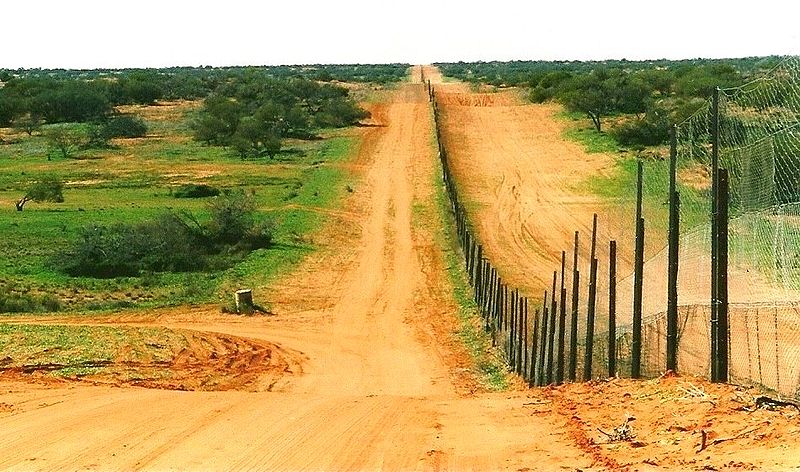
Can Australia afford the dingo fence?

18 05 2012

I wrote this last night with Euan Ritchie of Deakin University in response to some pretty shoddy journalism that misrepresented my comments (and Euan’s work). Our article appeared first in The Conversation this morning (see original article).

We feel we have to set the record straight after some of our (Bradshaw’s) comments were taken grossly out of context, or not considered at all (Ritchie’s). A bubbling kerfuffle in the media over the last week compels us to establish some facts about dingoes in Australia, and more importantly, about how we as a nation choose to manage them.

A small article in the News Ltd. Adelaide Advertiser appeared on 11 May in which one of us (Bradshaw) was quoted as advocating the removal of the dingo fence because it was not “cost effective” (sic). Despite nearly 20 minutes on the telephone explaining to the paper the complexities of feral animal management, the role of dingoes in suppressing feral predators, and the “costs” associated with biodiversity enhancement and feral control, there wasn’t a single mention of any of this background or justification.

Another News Ltd. article denouncing Ritchie’s work on the role of predators in Australian ecosystems appeared in The Weekly Times the day before, to which Ritchie responded in full.

So it’s damage control, and mainly because we want to state categorically that our opinion is ours alone, and not that of our respective universities, schools, institutes or even Biosecurity SA (which some have claimed or insinuated, falsely, that we represent). Biosecurity SA is responsible for, inter alia, the dingo fence in South Australia. Although our opinions differ on its role, we are deeply impressed, grateful and supportive of their work in defending us from biological problems. Read the rest of this entry »


Sharks: the world’s custodians of fisheries

5 05 2012

Today’s post comes from Salvador Herrando-Pérez (who, incidentally, recently submitted his excellent PhD thesis).

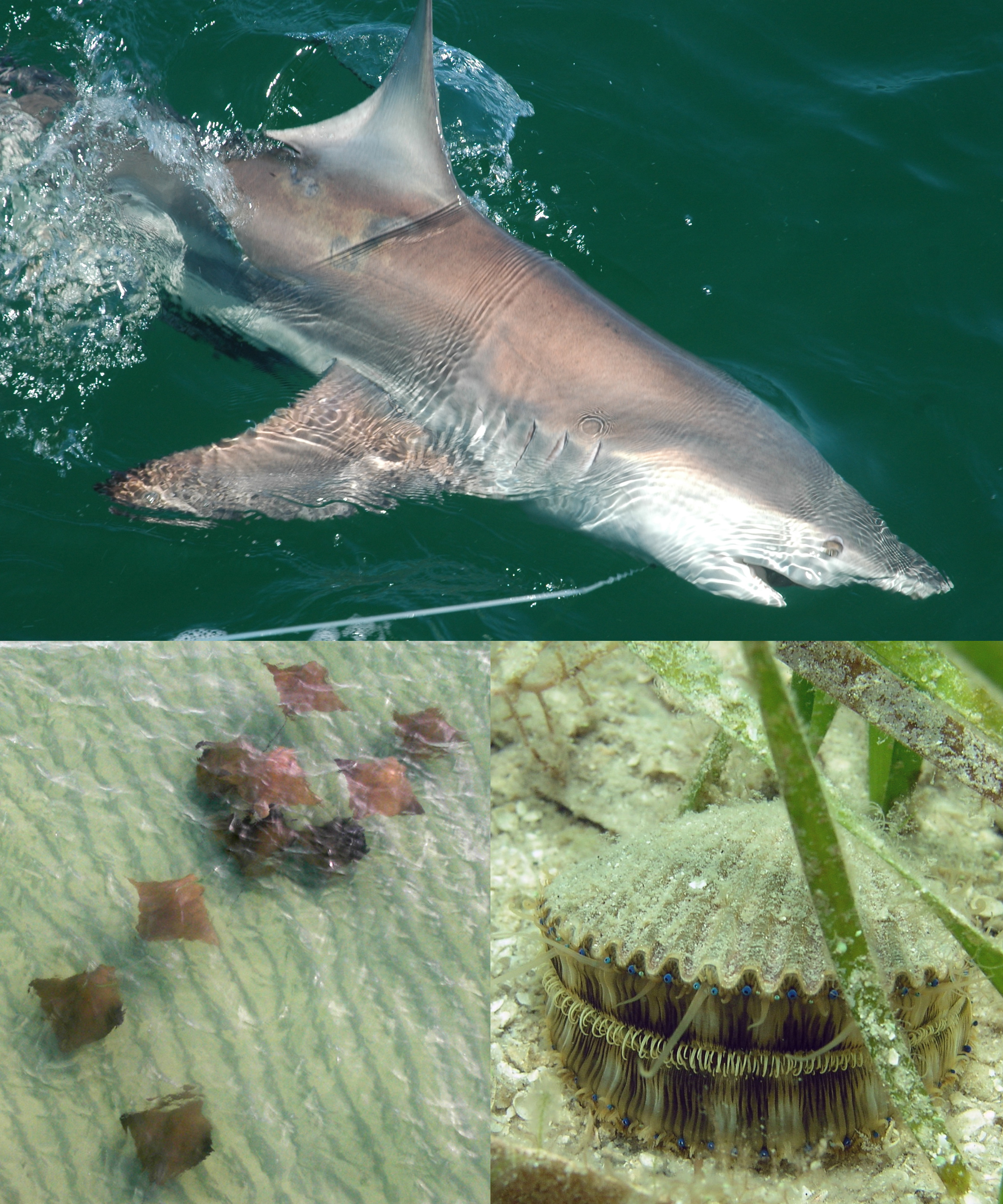
Three species co-occurring in the Gulf of Mexico and involved in the trophic cascade examined by Myers et al. (8). [1] Black-tips (Carcharhinus limbatus) are pelagic sharks in warm and tropical waters worldwide; they reach < 3 m in length, 125 kg in weight, with a maximum longevity in the wild of ~ 12 years; a viviparous species, with females delivering up to 10 offspring per parturition. [2] The cownose ray (Rhinoptera bonasus) is a tropical species from the western Atlantic (USA to Brazil); up to 2 m wide, 50 kg in weight, and 18 years of age; gregarious, migratory and viviparous, with one single offspring per litter. [3] The bay scallop (Agropecten irradians) is a protandric (hermaphrodite) mollusc, with sperm being released a few days before the (> 1 million) eggs; commonly associated with seagrasses in the north-western Atlantic; shells can reach up to 10 cm and individuals live for < 2 years. In the photos, a black-tip angled in a bottom long-line off Alabama (USA), a school of cownose rays swimming along Fort Walton Beach (Florida, USA), and a bay scallop among fronds of turtle grass (Thalassia testudinum) off Hernando County (Florida, USA). Photos by Marcus Drymon, Dorothy Birch and Janessa Cobb, respectively.

The hips of John Travolta, the sword of Luke Skywalker, and the teeth of Jaws marked an era. I still get goose pimples with the movie soundtrack (bass, tuba, orchestra… silence) solemnizing each of the big shark’s attacks. The media and cinema have created the myth of man’s worst friend. This partly explains why shark fishing does not trigger the same societal rejection as the hunting of other colossuses such as whales or elephants. Some authors contend that we currently live in the sixth massive extinction event of planet Earth (1) 75 % of which is strongly driven by one species, humans, and characterized by the systematic disappearance of mega-animals in general (e.g., mammoths, Steller’s seacow), and predators in particular, e.g., sharks (2, 3).

The selective extirpation of apex predators, recently coined as ‘trophic downgrading’, is transforming habitat structure and species composition of many ecosystems worldwide (4). In the marine realm, over the last half a century, the main target of the world’s fisheries has turned from (oft-large body-sized) piscivorous to planctivorous fish and invertebrates, indicating that fishery fleets are exploiting a trophic level down to collapse, then harvesting the next lower trophic level (5-7).

Myers et al. (8) illustrate the problem with the fisheries of apex-predator sharks in the northeastern coast of the USA. Those Atlantic waters are rife with many species of shark (> 2 m), whose main prey are smaller chondrichthyans (skates, rays, catsharks, sharks), which in turn prey on bottom fishes and bivalves. Myers et al. (8) found that, over the last three decades, the abundance of seven species of large sharks declined by ~ 90 %, coinciding with the crash of a centenary fishery of bay scallops (Agropecten irradians). Conversely, the abundance of 12 smaller chondrichthyes increased dramatically over the same period of time. In particular, the cownose ray (Rhinoptera bonasus), the principal predator of bay scallops, might today exceed > 40 million individuals in some bays, and consume up to ~ 840,000 tonnes of scallops annually. The obvious hypothesis is that the reduction of apex sharks triggers the boom of small chondrichthyans, hence leading to the break-down of scallop stocks. Read the rest of this entry »



When the cure becomes the disease

6 02 2012

I’ve always barracked for Peter Kareiva‘s views and work; I particularly enjoy his no-bullshit, take-no-prisoners approach to conservation. Sure, he’s said some fairly radical things over the years, and has pissed off more than one conservationist in the process. But I think this is a good thing.

His main point (as is mine, and that of a growing number of conservation scientists) is that we’ve already failed biodiversity, so it’s time to move into the next phase of disaster mitigation. By ‘failing’ I mean that, love it or loathe it, extinction rates are higher now than they have been for millennia, and we have very little to blame but ourselves. Apart from killing 9 out of 10 people on the planet (something no war or disease will ever be able to do), we’re stuck with the rude realism that it’s going to get a lot worse before it gets better.

This post acts mostly an introduction to Peter Kareiva & collaborators’ latest essay on the future of conservation science published in the Breakthrough Institute‘s new journal. While I cannot say I agree with all components (especially the cherry-picked resilience examples), I fundamentally support the central tenet that we have to move on with a new state of play.

In other words, humans aren’t going to go away, ‘pristine’ is as unattainable as ‘infinity’, and reserves alone just aren’t going to cut it. Read the rest of this entry »


More is better

18 01 2012

In one of those rare moments of perusing the latest ecological literature, I stumbled across an absolute gem, and one that has huge conservation implications. Now, I’m really no expert in this particular area of ecology, but I dare say the paper I’m about to introduce should have been published in Nature or Science (I suspect it was submitted to at least one of these journals first). It was still published in an extremely high-impact journal in ecology though – the Journal of Ecology produced by the British Ecological Society (and one in which I too have had the honour of publishing an article).

Before I get into specifics, I have to say that one thing we conservation biologists tend to bang on about is that MORE SPECIES = BETTER, regardless of the ecosystem in question. We tend to value species richness as the gold standard of ecosystem ‘health’ and ‘resilience’, whether or not there is strong empirical evidence in support. It’s as if the more-is-better mantra strikes an intuitive chord and must, by all that’s ecologically right in the world, be true.

Of course, measuring what is ‘better’ is a difficult task, especially when we are talking about complex ecosystems comprising thousands, if not millions, of species. Does ‘better’ refer to the most temporally stable, the most genetically diverse, the most resilient to perturbation, or the provider of the greatest number of functions and hence, ecosystem services?

It’s up to you, but all these things tend to be difficult to measure for a large number of species and over time scales of sufficient duration to measure change. So the default for plants (i.e., the structural framework of almost all ecosystems) I guess has come down to a simpler measure of success – ‘productivity’. This essentially means how much biomass is produced per unit area/volume per time step. It’s not a great metric, but it’s probably one of the more readily quantifiable indices.

Enter the so-called ‘diversity-productivity relationship’, or ‘DPR’, which predicts that higher plant species diversity should engender higher net productivity (otherwise known as the ‘net biodiversity effect’). Read the rest of this entry »


Does conservation biology need DNA barcoding?

5 01 2012

In November last year I was invited to participate in a panel discussion onthe role of DNA barcoding in conservation science. The discussion took place during the 4th International Barcode of Life Conference (which I didn’t actually attend) in Adelaide, and was hosted by that media-tart-and-now-director-of-the-Royal-Institution, Dr. Paul Willis.

Paul has recently blogged about the ‘species’ concept as it relates to DNA barcoding, which I highly recommend. It also prompted me to write this post because now the video of the discussion is available online (see below).

Now, the panel was a bit of a funny set-up in a way – I was really one of the only ‘conservation biologists’ represented (Patrick O’Connor and Andy Lowe perhaps excepted), with the rest mainly made up of molecular people (Pete Hollingsworth, Bob Hanner, Karen James) – and I was told prior to the ‘debate’ that I was meant to be the contrarian (i.e., that there is no role for DNA barcoding in conservation).

Fundamentally, I don’t actually embrace the contrarian view on this one given that I see no reason why DNA barcoding can’t enhance or refine our conservation knowledge and skills. But the ‘debate’ did raise some important issues about technological advancements in the application of conservation science to real conservation.

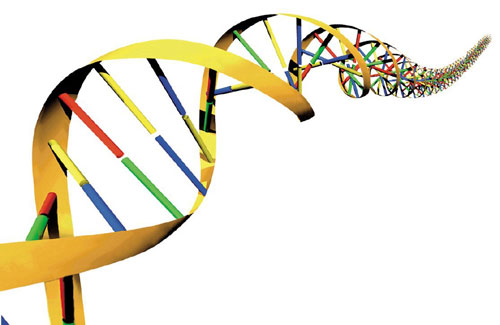
I suppose that prior to getting stuck into the polemic I should define DNA barcoding for the uninitiated; it’s a basic technique that analyses short sequences of DNA with the sole purposes of identifying from which species they come. Imagine walking through the bush with a barcode scanner and pointing at random species you see and getting an instant identification read-out without actually knowing the species beforehand. You can see why it’s called ‘barcoding’ because it is like running products through the check-out to get instant price details. Read the rest of this entry »


More than leftovers: getting marine parks right in Australia

7 08 2011
Taken by user Hossen27

Image via Wikipedia

A few weeks back I cosigned a ‘statement of concern’ about the proposal for Australia’s South West Marine Region organised by Hugh Possingham. The support has been overwhelming by Australia’s marine science community (see list of supporting scientists below). I’ve reproduced the letter addressed to the Australian government – distribute far and wide if you give more than a shit about the state of our marine environment (and the economies it supports). Basically, the proposed parks are merely a settlement between government and industry where nothing of importance is really being protected. The parks are just the leftovers industry doesn’t want. No way to ensure the long-term viability of our seas.

On 5 May 2011 the Australian Government released a draft proposal for a network of marine reserves in the Commonwealth waters of the South West bioregional marine planning region.

Australia’s South West is of global significance for marine life because it is a temperate region with an exceptionally high proportion of endemic species – species found nowhere else in the world.

Important industries, such as tourism and fisheries, depend on healthy marine ecosystems and the services they provide. Networks of protected areas, with large fully protected core zones, are essential to maintain healthy ecosystems over the long-term – complemented by responsible fisheries management1.

The selection and establishment of marine reserves should rest on a strong scientific foundation. We are greatly concerned that what is currently proposed in the Draft South West Plan is not based on the three core science principles of reserve network design: comprehensiveness, adequacy and representation. These principles have been adopted by Australia for establishing our National Reserve System and are recognized internationally2.

Specifically, the draft plan fails on the most basic test of protecting a representative selection of habitats within the bioregions of the south-west. There are no highly protected areas proposed at all in three of the seven marine bioregions lying on the continental shelf3. Overall less than 3.5% of the shelf, where resource use and biodiversity values are most intense, is highly protected. Further, six of the seven highly protected areas that are proposed on the shelf are small (< 20 km in width)4 and all are separated by large distances (> 200 km)5. The ability of such small isolated areas to maintain connectivity and fulfil the goal of protecting Australia’s marine biodiversity is limited. Read the rest of this entry »


Taxonomy in the clouds

4 07 2011

Another post (see previous here, here and here) by my aspiring science-communicator PhD student, Salvador Herrando-Pérez.

Taxonomy uses rigorous rules of nomenclature to classify living beings, so every known species has a given ‘name’ and ‘surname’. The revision of certain taxonomic groups (particularly through genetic analyses) is favouring the proliferation of nominally new species, often propelled by virtue of their charisma and conservation status.

In secondary school, most of my classmates associated the subject ‘Biology’ with unpronounceable Latin taxonomic names, with which all known living beings are branded — ‘Canis lupus’ reads the identity card of humanity’s best friend. When the Swedish monk Carl Linnaeus proposed such binomial nomenclature, he could hardly imagine that, two hundred years later, his terminology would underpin national and transnational budgets for species conservation. Taxonomic nomenclature allows the classification of species into clusters of the same kind (e.g., diatoms, amanitas, polychaetes, skinks), and the calculation of an indispensable figure for conservation purposes: how many species are there at a given location, range, country, continent, or the entire planet?

Traditionally, taxonomists described species by examining their (external and internal) morphological features, the widest consensus being that two individuals of different species could not hybridise. However, a practical objection to that thinking was that if, for instance, an ocean separated two leopard populations, ethics should prevent us from bringing them in contact only to check if they produce fertile offspring, hence justifying a common-species status. Genetics currently provides a sort of ‘remote check’.

New species, new names

Over the last three decades, the boom of genetics and the global modernisation of environmental policies have fostered alternative criteria to differentiate species, populations, and even individuals. As a result, experts have created a colourful lexicon to label management or conservation units or new taxonomical categories such as that of a subspecies1, e.g., Canis lupus dingo for the wild Australian dog (dingo). These changes have shaken the foundations of taxonomy because several definitions of species (biological, phylogenetic, evolutionary) are forced to live under the umbrella of a common nomenclature. Read the rest of this entry »


生态学 = ‘Ecology’ in China

13 05 2011

I’m just heading home after a very inspiring workshop organised by Fangliang He at Sun Yat-sen University in Guangzhou, China (I’m writing this from the Qantas Club in the Hong Kong airport).

Before I proceed to regale you with the salient details of the ‘International Symposium for Biodiversity and Theoretical Ecology‘, I am compelled to state publicly that I offer my sincerest condolences to Fangliang and his family; unfortunately Fangliang’s brother passed away while we were at the workshop and so Fangliang wasn’t able to spend much time reaping the fruits of his organisational labour. If you know Fangliang, please send him a supporting email.

That sad note aside, I am delighted to say that the workshop was compelling, challenging and also rather fortuitous. I was one of many overseas invitees, and I must say that I was at times overwhelmed by the size of the brains they managed to pack into the auditorium. Many colleagues I didn’t know attended, and I hope that many will become collaborators. The international invitees were: Read the rest of this entry »


Tropical forests cooking their biodiversity

5 05 2011

Another ‘hot’ essay by Bill Laurance recently published online by Yale Environment 360 (a publication of the Yale University School of Forestry & Environmental Studies). Bill asked me to relay it on ConservationBytes.com, so here it is in full:

Much attention has been paid to how global warming is affecting the world’s polar regions and glaciers. But a leading authority on tropical forests [that would be Bill] warns that rising temperatures could have an equally profound impact on rainforests and are already taking a toll on some tropical species.

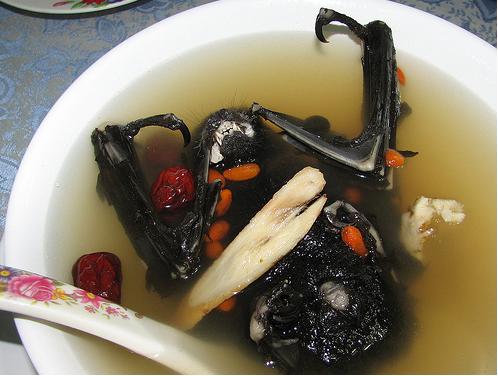
On Jan. 12, 2002, in the Australian state of New South Wales, biologist Justin Welbergen was observing a colony of flying foxes for his Ph.D. research. The temperatures that day on Australia’s subtropical, eastern coast reached record highs, soaring to 42.9 ° C (109 ° F) at the weather station closest to Welbergen’s study site — nearly 8 ° C higher than the average summer maximum temperature.

The flying foxes, or giant fruit bats, normally just doze in the treetops through the day, but on this afternoon they were fanning themselves, panting frantically, jostling for shady spots, and licking their wrists in a desperate effort to cool down. Suddenly, when the thermometer hit 42 ° C, the bats began falling from the trees. Most quickly died. Welbergen and his colleagues counted 1,453 flying foxes that died from the heat in one colony alone. The scorching heat that day killed at least 2,200 additional flying foxes in eight other colonies along a 250-kilometre stretch of coastline. All the deaths occurred in colonies where temperatures soared above 41.7 ° C. Read the rest of this entry »


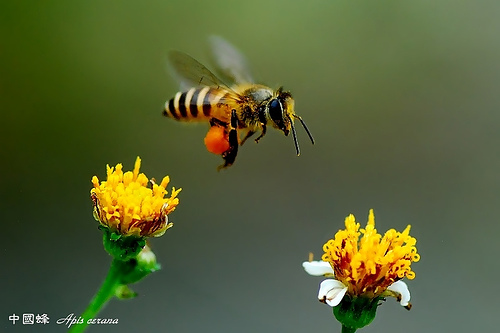
Government pulls plug on Asian honeybee eradication

3 03 2011

Here’s another one from the bee man, Tobias Smith (PhD candidate at the University of Queensland). Tobias recently blogged about bee basics here on ConservationBytes.com (something I highly recommend for anyone interested on brushing up on bee facts and dispelling a few myths), so I asked him to follow up with this very important piece on the future of pollination in Australia. It concerns a nasty little invader recently dubbed the “flying cane toad” (not my analogy).

http://www.flickr.com/photos/angela-and-andrew/1196369580/in/faves-lornet/

© 中國蜂

Over the last few weeks there has been much media attention given to the Asian honeybee (Apis cerana) incursion in far north Queensland. The Asian honeybee was first detected near Cairns in May 2007. Since then an effort to eradicate the bee has been made. This peaked during 2010, when over 40 bee eradication personnel were employed to hunt and destroy in areas around Cairns, the Atherton Tablelands, and other nearby locations.

In late January this year, the committee established to manage the eradication program (governments and industry), decided to pull the plug on eradication efforts (on money to pay for efforts that is). They decided it was no longer possible to achieve eradication (a majority decision, not a unanimous decision). The position to stop resources for eradication is not supported by industry, or ecological commentators. Arguments have been made that this is the only window of opportunity for eradication (for ever!), and that more resources need to be put towards it now, while there is still a chance of success.

A few points to be made about the Asian honeybee in Australia: Read the rest of this entry »


A wee ditty about the bee

29 01 2011

I liked this. Another quick and entertaining look at why bees are important, why they’re crashing, and what people can do about it (at least, on a very fine scale). And it’s all done in Scottish.


