All (fisheries) models are wrong, but some are useful (to indigenous people)

1 08 2015

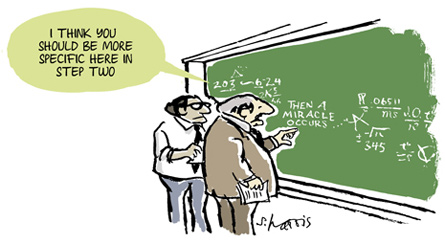
miracle_cartoonAnother post from Alejandro Frid. (Note: title modified from George Box‘s most excellent quote).

As an ecologist working for indigenous people of coastal British Columbia, western Canada, I live at the interface of two worlds. On the one hand, I know that computer models can be important management tools. On the other hand, my job constantly reminds me that whether a model actually improves fishery management depends, fundamentally, on the worldview that shapes the model’s objectives. To explore why, I will first review some general concepts about what models can and cannot do. After that, I will summarize a recent model of herring populations and then pull it all together in a way that matters to indigenous people who rely on marine resources for cultural integrity and food security.

Models do a great job of distilling the essence of how an ecosystem might respond to external forces—such as fisheries—but only under the specific conditions that the modeller assumes to be true in the ‘world’ of the model. Sometimes these assumptions are well-grounded in reality. Sometimes they are blatant but necessary simplifications. Otherwise, it would be difficult to ask questions about how major forces for which we have no historical precedent—such as the combined effects of industrial fisheries, ocean acidification and climate change—might be altering the ocean. For instance, due to our greenhouse gas emissions, the ocean is warming and contains less dissolved oxygen. These stressful conditions hamper the capacity of fish to grow, and appear to be on their way to shrinking the body sizes of entire fish communities1. If you want even to begin to comprehend what the ocean will look like in the long term due to these effects of climate change, it makes sense to assume, in the ‘world’ of your model, that fishing does not exist, even though you know it does. Of course, you would then acknowledge that climate change probably exacerbates the effects of fisheries, which highlights that you still have to examine the combination of these effects. And that is exactly what an excellent team of modellers did1. Read the rest of this entry »




Écologie en France

27 07 2015

DCOUVRI2This is just a quick post to update ConservationBytes.com followers about a few things I’ll be up to over the next 5 months. While I can guarantee that the posts will be more or less as frequent, some of the subject material might shift slightly given my new geographic focus.

I’m most fortunate to have been invited to spend the rest of 2015 in Franck Courchamp‘s Systematic Ecology & Evolution lab at Université Paris-Sud (also check out Franck’s blog here), and I’ll be leaving for France tomorrow. Franck is a long-time mate and colleague, who has not only previously hosted me briefly in his home in France, he and his family also put me up in Los Angeles earlier this year (where both he and his partner Muriel are on sabbatical themselves at UCLA until the end of August 2015). Franck was also kind enough to visit Adelaide last year where he gave some rather kick-arse seminars.

So what will I be doing during my mini-‘sabbatical’ with Franck? Franck is known for many things, not least of which is his reputation for being ‘King Allee Effect‘, but the main focus of my work there will be on the economic impacts of invasive insects in Europe as the climate continues to warm over the coming century. The project is financed by a large French bank (BNP-Paribas) and is known as InvaCost:

InvaCost will look at the impact on invasive insects, when climate change allows them to invade regions that are now too cold for them, but that will warm up in the coming decades. These include the red imported fire ant, the predatory Asian wasp, the disease-carrying tiger mosquito, and many others that are among the worst invaders worldwide.

Of course, that’s just the main topic. Franck is a little like me in that he’s a jack of many ecological trades, so we also plan to work on a few things like the global impacts of feral cats, some more conservation-based things, and perhaps a review or two. Lots planned for five months! Read the rest of this entry »


Ice Age? No. Abrupt warmings and hunting together polished off Holarctic megafauna

24 07 2015
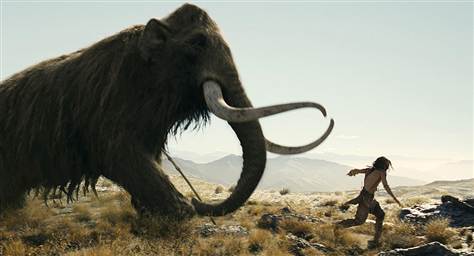
Oh shit oh shit oh shit ...

Oh shit oh shit oh shit …

Did ice ages cause the Pleistocene megafauna to go extinct? Contrary to popular opinion, no, they didn’t. But climate change did have something to do with them, only it was global warming events instead.

Just out today in Science, our long-time-coming (9 years in total if you count the time from the original idea to today) paper ‘Abrupt warmings drove Late Pleistocene Holarctic megafaunal turnover‘ demonstrates for the first time that abrupt warming periods over the last 60,000 years were at least partially responsible for the collapse of the megafauna in Eurasia and North America.

You might recall that I’ve been a bit sceptical of claims that climate changes had much to do with megafauna extinctions during the Late Pleistocene and early Holocene, mainly because of the overwhelming evidence that humans had a big part to play in their demise (surprise, surprise). What I’ve rejected though isn’t so much that climate had nothing to do with the extinctions; rather, I took issue with claims that climate change was the dominant driver. I’ve also had problems with blanket claims that it was ‘always this’ or ‘always that’, when the complexity of biogeography and community dynamics means that it was most assuredly more complicated than most people think.

I’m happy to say that our latest paper indeed demonstrates the complexity of megafauna extinctions, and that it took a heap of fairly complex datasets and analyses to demonstrate. Not only were the data varied – the combination of scientists involved was just as eclectic, with ancient DNA specialists, palaeo-climatologists and ecological modellers (including yours truly) assembled to make sense of the complicated story that the data ultimately revealed. Read the rest of this entry »


Can we save biodiversity? Not as long as ‘democracy’ is for sale

16 07 2015
© Bill Day

© Bill Day

Like you, I’m tired of the constant battle with ill-informed politicians who claim all sorts of nonsense reasons for the bad environmental decisions they make in the name of so-called ‘democracy’. The flesh of my right hand is sore from the constant fist-bashing of tables as I let loose yet another diatribe concerning why our politicians are corrupt whores for sale to the highest bidder. My teeth are becoming worn from the nights of grinding as I lay awake contemplating why we as a society are taking more steps backward than forward.

Yes, we have politicians today claiming that “coal is good for humanity” and that climate change is a “hoax” designed by communists to disrupt society. They spew all sorts of nonsense in public about how they are making their decisions to approve yet another coal mine, limit renewable energy investments or allow continued deforestation because “it’s good for the economy”. All these despite the overwhelming evidence to the contrary.

I used to invoke the comforting feeling of intellectual superiority that these (mostly male) politicians were merely stupid, and that as a democracy, we cater to the lowest intelligence denominator of civil society (i.e., we get the politicians we deserve). However, that excuse is about as stupid as the label we give politicians who make decisions that fly in the face of all evidence. Yes, there are stupid people that have been elected to represent us, but I submit that truly stupid politicians are probably quite rare.

No. Ironically, stupidity cannot explain these moronic and generationally bankrupt decisions. Only money can. Read the rest of this entry »


Cartoon guide to biodiversity loss XXXI

9 07 2015

Fourth batch of six biodiversity cartoons for 2015, because I’m travelling and haven’t had a lot of time for a more detailed post (see full stock of previous ‘Cartoon guide to biodiversity loss’ compendia here).

Read the rest of this entry »


Grim tale of global shark declines

25 06 2015
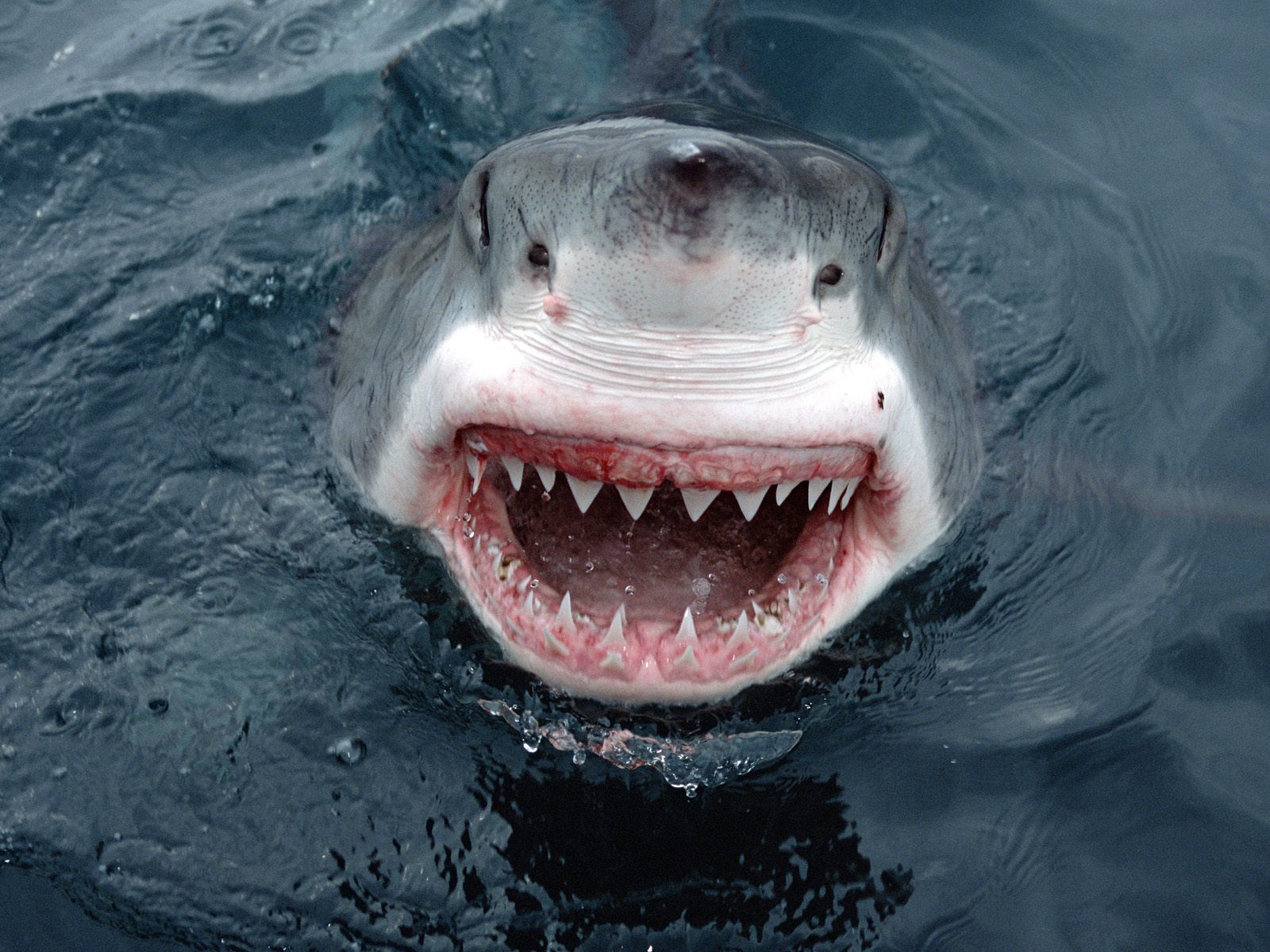
Please don't eat me

Please don’t eat me

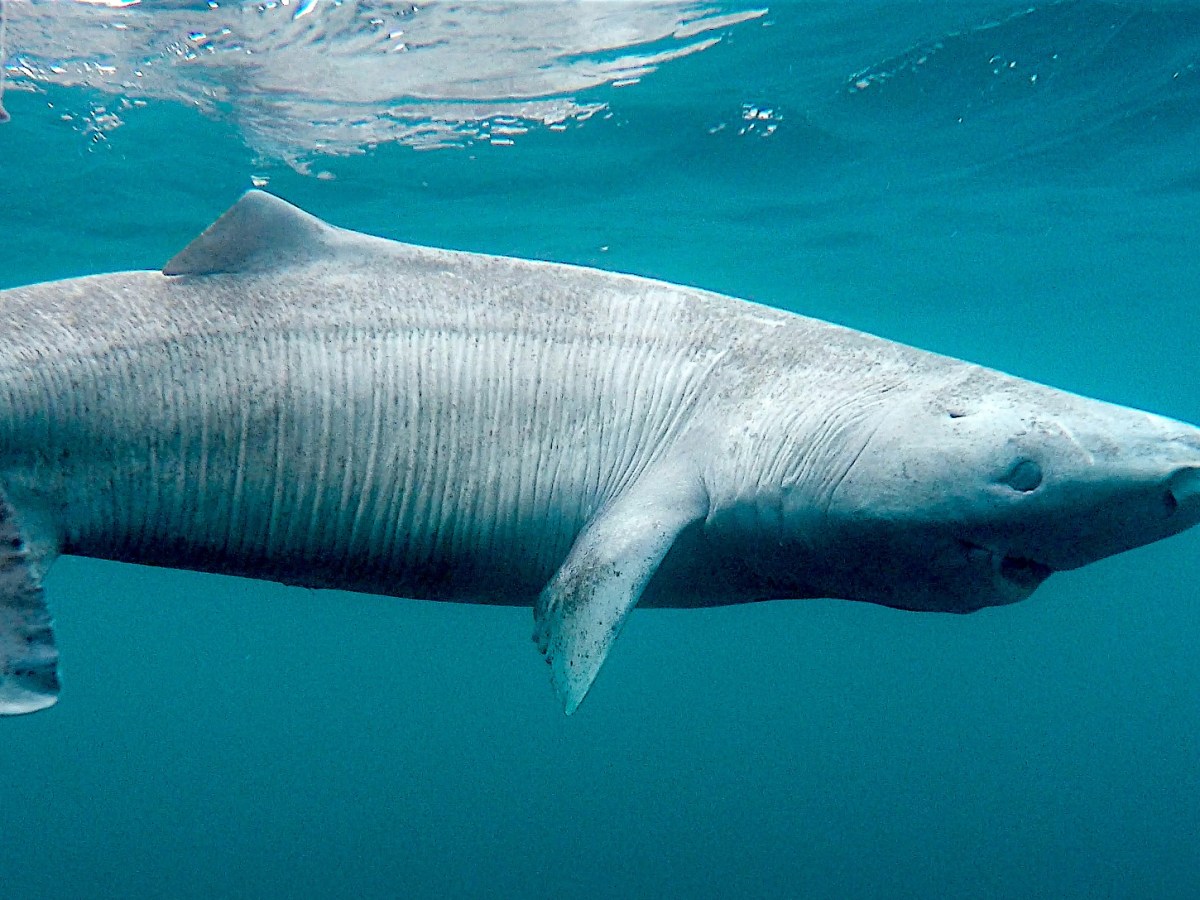
How do you prevent declines of species you cannot even see? This is (and has always been) the dilemma for fisheries because, well, humans don’t live underwater. Even when we strap on a metal tank full of air and a pair of fins, we’re still more or less like wounded astronauts peering through a narrow window of glass at the huge, largely empty, ocean space. It’s little wonder then that we have a fairly crap system of estimating fish abundance, and an even worse track record of managing them sustainably.

But humans love to eat fish – the total world estimate of legal fisheries landings is something in the vicinity of 190 million tonnes in 2013, up from 18 million tonnes in 1950 (according to FAO). We’re probably familiar with some of the losers of that massive harvest, with species like tunas, bill fishes and orange roughy making the news for catastrophic declines in abundance over the last 30-40 years. And we’re not even talking about the estimated tragedy that is illegal, unreported and unregulated (IUU) fishing.

Back in 1999, the FAO started to report that sharks – the new-ish target of many world fisheries resulting from the commercial extinction of many other fin fish fisheries – we’re starting to take the hit. Once generally ignored by fishing industries, sharks soon became popular target species. Then in 2003, Julia Baum and colleagues famously (and somewhat controversially) sounded the alarm for sharks in the Gulf of Mexico by some claims of major and catastrophic declines of large, predatory sharks. While some of the subsequent to-ing and fro-ing in the literature challenged these claims, Baum’s excellent work was ultimately vindicated.

Since then, more and more evidence that sharks are in trouble has surfaced, including the assessment of the reported (again, only legal) catch indicated heavy depletion of coastal sharks even by 1975, and the estimate that 25% of all shark and ray species have an elevated extinction risk, mainly resulting from overfishing. Now even the direct fisheries landings statistics are confirming this grim tale. Read the rest of this entry »


National commitment to conservation brings biodiversity benefits

16 06 2015

united-nations-dayWhat makes some conservation endeavours successful where so many fail to protect biodiversity? Or, how long is a piece of string?

Yes, it’s a difficult question because it’s not just about the biology – such as resilience and area relationships – in fact, it’s probably more about the socio-economic setting that will ultimately dictate how the biodiversity in any particular area fares in response to disturbance.

In the case of protected areas (that I’ll just refer to as ‘reserves’ for the remainder of this post), there’s been a lot of work done about the things that make them ‘work’ (or not) in terms of biodiversity preservation. Yes, we can measure investment, how much the community supports and is involved with the reserve, how much emphasis is put on enforcement, the types of management done within (and outside) of the reserves, et ceteraet cetera. All of these things can (and have to some extent) been correlated with indices of the fate of the biodiversity within reserves, such as rates and patterns of deforestation, the amount of illegal hunting, and the survival probability of particular taxa.

But the problem with these indices is that there are just indices – they probably do not encapsulate the overall ‘health’ of the biodiversity within a reserve (be that trends in the overall abundance of organisms, the resilience of the community as a whole to future disturbances, or the combined phylogenetic diversity of the ecosystem). This is because there are few long-term monitoring programmes of sufficient taxonomic and temporal breadth to summarise these components of complex ecosystems (i.e., ecology is complex). It’s no real surprise, and even though we should put a lot more emphasis on targeted, efficient, long-term biodiversity monitoring inside and outside of all major biodiversity reserves, the cold, hard truth of it is that we’ll never manage to get the required systems in place. Humanity just doesn’t value it enough. Read the rest of this entry »


Scientific conspiracies are impossible

9 06 2015

madscientistWe’ve all heard it somewhere before: “It’s all just a big conspiracy and those bloody scientists are just trying to protect their funding sources.”

Whether it’s about climate change, pharmacology, genetically modified organisms or down-to-earth environmentalism, people who don’t want to agree with a particular scientific finding often invoke the conspiracy argument.

There are three main reasons why conspiracies among scientists are impossible. First, most scientists are just not that organised, nor do they have the time to get together to plan such elaborate practical jokes on the public. We can barely keep our own shit together than try to construct a water-tight conspiracy. I’ve never met a scientist who would be capable of doing this, let alone who would want to.

But this doesn’t necessarily prove my claim that it is ‘impossible’. Most importantly, the idea that a conspiracy could form among scientists ignores one of the most fundamental components of scientific progress — dissension; and bloody hell, can we dissent! The scientific approach is one where successive lines of evidence testing hypotheses are eventually amassed into a concept, then perhaps a rule of thumb. Read the rest of this entry »


An appeal to extinction chronologists

2 06 2015

u7Pi3Extinction is forever, right? Yes, it’s true that once the last individual of a species dies (apart from insane notions that de-extinction will do anything to resurrect a species in perpetuity), the species is extinct. However, the answer can also be ‘no’ when you are limited by poor sampling. In other words, when you think something went extinct when in reality you just missed it.

Most of you are familiar with the concept of Lazarus1 species – when we’ve thought of something long extinct that suddenly gets re-discovered by a wandering naturalist or a wayward fisher. In paleontological (and modern conservation biological) terms, the problem is formally described as the ‘Signor-Lipps’ effect, named2 after two American palaeontologists, Phil Signor3 and Jere Lipps. It’s a fairly simple concept, but it’s unfortunately ignored in most palaeontological, and to a lesser extent, conservation studies.

The Signor-Lipps effect arises because the last (or first) evidence (fossil or sighting) of a species presence has a nearly zero chance of heralding its actual timing of extinction (or appearance). In paleontological terms, it’s easy to see why. Fossilisation is in fact a nearly impossible phenomenon – all the right conditions have to be in place for a once-living biological organism to be fossilised: it either has to be buried quickly, in a place where nothing can decompose it (usually, an anoxic environment), and then turned to rock by the process of mineral replacement. It then has to resist transformation by not undergoing metamorphosis (e.g., vulcanism, extensive crushing, etc.). For more recent specimens, preservation can occur without the mineralisation process itself (e.g., bones or flesh in an anoxic bog). Then the bloody things have to be found by a diligent geologist or palaeontologist! In other words, the chances that any one organism is preserved as a fossil after it dies are extremely small. In more modern terms, individuals can go undetected if they are extremely rare or remote, such that sighting records alone are usually insufficient to establish the true timing of extinction. The dodo is a great example of this problem. Remember too that all this works in reverse – the first fossil or observation is very much unlikely to be the first time that the species was there. Read the rest of this entry »


Cartoon guide to biodiversity loss XXX 30

27 05 2015

[10.06.2015 update: Because of all the people looking for cartoon porn, I’ve slightly altered the title of this post. Should have predicted that one]

Third batch of six biodiversity cartoons for 2015 (see full stock of previous ‘Cartoon guide to biodiversity loss’ compendia here).

Read the rest of this entry »



Dawn of life

18 05 2015
Looking east toward the northern Flinders Ranges from Ediacara Conservation Park. © CJA Bradshaw

Looking east toward the northern Flinders Ranges from Ediacara Conservation Park. © CJA Bradshaw

I’ve had one of the most mind-blowing weeks of scientific discovery in my career, and it’s not even about a subject from within my field.

As some of you might know, I’ve been getting more and more interested in palaeo-ecology over the past few years. I’m fascinated by the challenge of reconstructing past communities and understanding how and why they changed. It’s a natural progression for someone interested in modern extinction dynamics.

Most of my recent interests have focussed on palaeo-communities of the Late Quaternary, and mainly in the range of 100 thousand years ago to the present. We’ve started publishing a few things in this area, and I can confirm that they’ll be plenty more to come in the following months and years. Despite plenty more to do in the youngest of palaeo-communities, I’ve now been bitten by the deep-time bug.

The giant Dickinsonia rex - a flat, worm-like discoid animal. © D. García-Bellido

The giant Dickinsonia rex – a flat, worm-like discoid animal. © D. García-Bellido

When I write ‘deep time’, I bloody well mean it: back to 580 million years, to be accurate. This is the time before the great Cambrian explosion of life popularised by the late Stephen Jay Gould in his brilliant book, Wonderful Life1,2. I’m talking about the Ediacaran period from 635-541 million years ago.

I’ve lived in South Australia now for over seven years, but it was only in the last few that I realised the Ediacaran was named after the Ediacara Hills in the northern Flinders Ranges some 650 km north of Adelaide where I live, and it wasn’t until last week that I had the extremely gratifying privilege of visiting the region with some of the world’s top Ediacaran specialists. If you have even the remotest interest in geological time and the origin of life on Earth, you should make a pilgrimage to the Flinders Ranges at some point before you die.

Read the rest of this entry »



Statistical explainer: average temperature increases can be deceiving

12 05 2015

Beating-the-Heat-Without-PowerOver the years I’ve used a simple graphic from the IPCC 2007 Report to explain to people without a strong background in statistics just why average temperature increases can be deceiving. If you’re not well-versed in probability theory (i.e., most people), it’s perhaps understandable why so few of us appear to be up-in-arms about climate change. I posit that if people had a better appreciation of mathematics, there would be far less inertia in dealing with the problem.

Instead of using the same image, I’ve done up a few basic graphs that explain the concept of why average increases in temperature can be deceiving; in other words, I explain why focussing on the ‘average’ projected increases will not enable you to appreciate the most dangerous aspects of a disrupted climate – the frequency of extreme events. Please forgive me if you find this little explainer too basic – if you have a modicum of probability theory tucked away in your educational past, then this will be of little insight. However, you may wish to use these graphs to explain the problem to others who are less up-to-speed than you.

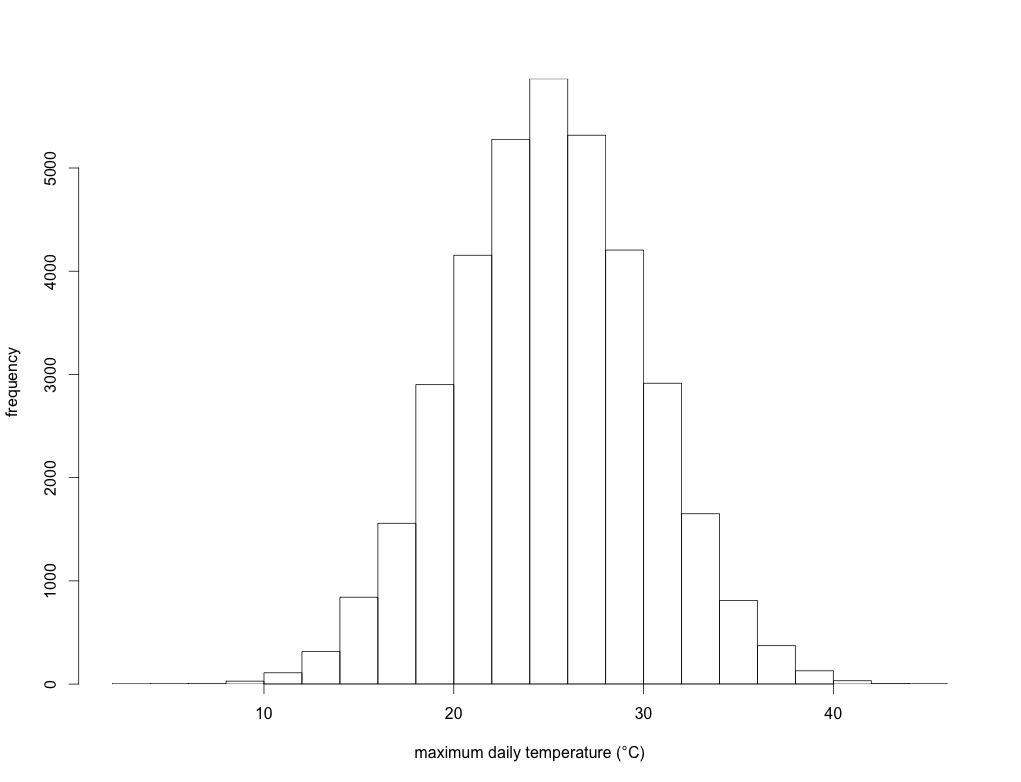
Let’s take, for example, all the maximum daily temperature data from a single location compiled over the last 100 years. We’ll assume for the moment that there has been no upward trend in the data over this time. If you plot the frequency of these temperatures in, say, 2-degree bins over those 100 years, you might get something like this:

ClimateVarFig0.1

This is simply an illustration, but here the long-term annual average temperature is 25 degrees Celsius, and the standard deviation is 5 degrees. In other words, over those 100 years, the average daily maximum temperature is 25 degrees, but there were a few days when the maximum was < 10 degrees, and a few others where it was > 40 degrees. This could represent a lot of different places in the world.

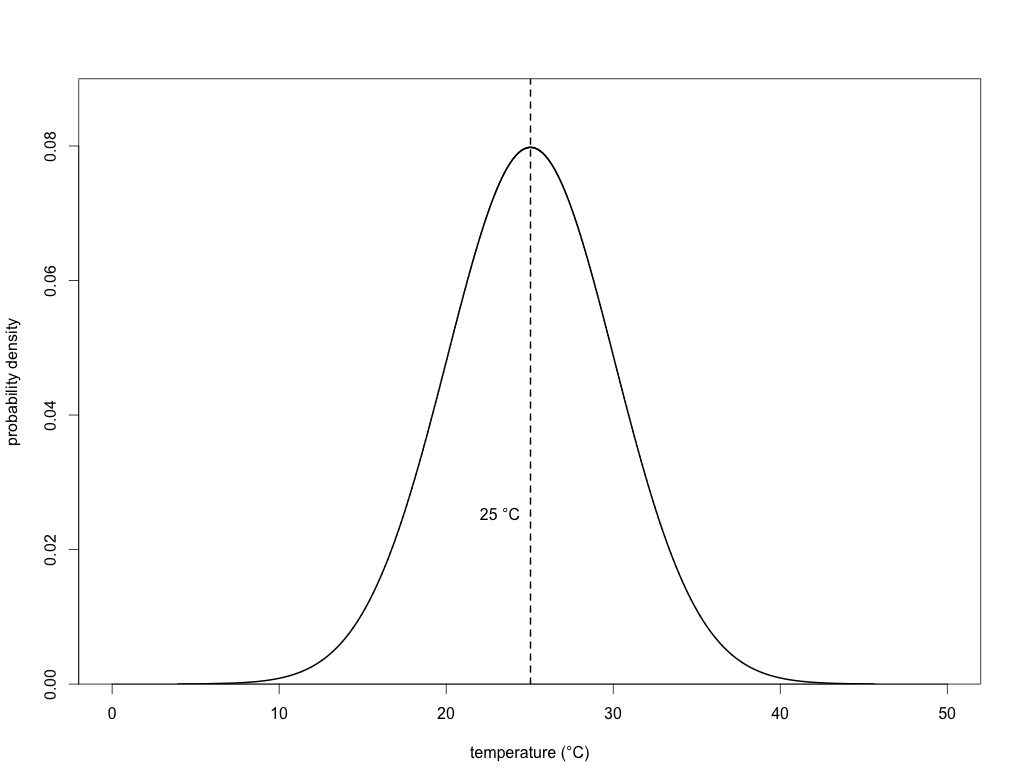
We can now fit what’s known as a ‘probability density function’ to this histogram to obtain a curve of expected probability of any temperature within that range:

ClimateVarFig0.2

If you’ve got some background in statistics, then you’ll know that this is simply a normal (Gaussian) distribution. With this density function, we can now calculate the probability of any particular day’s maximum temperature being above or below any particular threshold we choose. In the case of the mean (25 degrees), we know that exactly half (p = 0.50) of the days will have a maximum temperature below it, and exactly half above it. In other words, this is simply the area under the density function itself (the total area under the entire curve = 1). Read the rest of this entry »


Twenty tips for writing a research proposal

4 05 2015

Proposal FormatThis post’s title might promise a lot, but it would be disingenuous of me to imply that I could cover all of the essential components of this massive topic in one blog post. Many people (my wife included) have made careers out of teaching people how to write successful grant proposals, so I won’t pretend to be comprehensive and insult their expertise. That said, I’ve been reasonably successful on the grants’ side of the science game, and I’ve assessed a fair few grant proposals in my day, so I think I can offer at least a few pointers. As usual, each person probably has her or his own way of doing things, so there’s unlikely to be a single, winning method. Approaches will also vary by funding agency and country of origin. I am therefore targeting the earlier-career people who have yet to get fully indoctrinated into the funding cycle, with generalities that should apply to most grant proposals.

1. A proposal is not an article, so don’t try to write it as one.

In the huge list of things ‘they never taught you as a student, but need to know to be a successful scientist’, this has got to be one of the biggies. Now I’m mainly talking about science here, but grant proposals cannot and should not follow the standard format of peer-reviewed articles. Articles tend to put an elaborate background up front, a complex description of hypotheses followed by an even more complex description of methods and results. Do not do this for a proposal. A proposal should be viewed more as a ‘pitch’ that hooks the assessor’s attention from the get-go. More on this aspect below.

2. Understand what the funder actually fundsRead the rest of this entry »


Lomborg: a detailed citation analysis

24 04 2015

There’s been quite a bit of palaver recently about the invasion of Lomborg’s ‘Consensus’ Centre to the University of Western Australia, including inter alia that there was no competitive process for the award of $4 million of taxpayer money from the Commonwealth Government, that Lomborg is a charlatan with a not-terribly-well-hidden anti-climate change agenda, and that he his not an academic and possesses no credibility, so he should have no right to be given an academic appointment at one of Australia’s leading research universities.

On that last point, there’s been much confusion among non-academics about what it means to have no credible academic track record. In my previous post, I reproduced a letter from the Head of UWA’s School of Animal Biology, Professor Sarah Dunlop where she stated that Lomborg had a laughably low h-index of only 3. The Australian, in all their brilliant capacity to report the unvarnished truth, claimed that a certain Professor Ian Hall of Griffith University had instead determined that Lomborg’s h-index was 21 based on Harzing’s Publish or Perish software tool. As I show below, if Professor Hall did indeed conclude this, it shows he knows next to nothing about citation indices.

What is a ‘h-index’ and why does it matter? Below I provide an explainer as well as some rigorous analysis of Lomborg’s track record.

Read the rest of this entry »


Something rotten from Denmark

22 04 2015

It was just reported in the Guardian that infamous and discredited environmental charlatan, Bjørn Lomborg, who has recently been given the green light to set up shop in Australia after the University of Western Australia‘s Vice-Chancellor, Paul Johnson, extended him an olive branch, and the Abbott-oir government gave him $4 million to do so. Yes, you read that correctly.

It’s telling in today’s political climate that such a man is not only welcomed to a leading (Group of Eight) Australian university by its own Vice-Chancellor, he’s given millions to undermine real science and societal progress by the federal government. It’s an understatement to say that I’m disgusted and ashamed to be Australian today.

I have just received some juicy inside correspondence from the School of Animal Biology at the University of Western Australia sent to the Vice-Chancellor. The School, suffice it to say, is not amused. I copy the letter itself below, as well as an internal e-mail sent to the University’s Heads of School by the Chief Advisor of the University’s Corporate and Government Affairs, Mr David Harrison. Read the rest of this entry »


Missing the forest despite its trees

21 04 2015

An exchange on Alert-Conservation.org over the intactness of boreal forests has just erupted. Bill Laurance asked me to weigh in as an independent appraiser of the debate, so I copy my thoughts below. You can read the original exchange between Jeff Wells and Nick Haddad (& colleagues) here.

Despite its immense size, there is little doubt that the ugly second cousin of forest conservation is the boreal region covering much of Alaska, Canada, Fennoscandia and Russia. Indeed, extending some 1.4 billion hectares, of which well over 60% is found in Russia alone (1, 2), the entirety of the boreal forest is more than double the area of the Amazon forest. Yet despite this massive expanse, the impressive biota it shelters (2), and its important contribution to the global carbon (1), nitrogen (3) and oxygen (4) cycles, the boreal is an oft-overlooked region in terms of global conservation priorities and possibilities (5).

The exchange between Haddad & Sexton and Wells regarding the former researchers’ recent paper (6) highlights this problem, of which even many expert ecologists are often only vaguely aware. Wells takes particular issue with Haddad and colleagues’ assertion that the boreal forest is highly fragmented, claiming to the contrary that the (North America) boreal forest is “… truly intact … ”. While Haddad et al. respond that they did not differentiate between ‘natural’ and human-caused fragmentation, my view is that the exchange misses some important concerns about the state of the boreal forest.

Wells correctly points out that the boreal zone in North America is “massive”, but can his other claim – that it is “truly intact” – stand up to scrutiny? Citing one of my own papers from 2009 (2) to demonstrate (correctly) that the boreal forest of North America holds a stunning array of species, Wells neglects to highlight that in that same paper we also identified the extensive, artificial fragmentation that has occurred there and in other parts of the boreal zone over the last few decades. For example, we showed clearly that only 44% of the entire biome is considered to be ‘intact’, defining the term precisely as “areas ≥ 500 km2, internally undivided by infrastructure (e.g., roads) and with linear dimensions ≥ 10 km”. Satellite imagery has also confirmed that between 2000 and 2005, the boreal biome experienced the largest area of gross forest cover loss compared to any other (7). Despite recent evidence that so-called edge effects (characteristics of a disturbed matrix that penetrate some distance into habitat fragments) are probably of a smaller spatial magnitude in boreal compared to other biomes (8), it is disingenuous to claim that North America’s boreal forests are “truly intact”. Read the rest of this entry »


How things have (not) changed

13 04 2015

The other night I had the pleasure of dining with the former Australian Democrats leader and senator, Dr John Coulter, at the home of Dr Paul Willis (Director of the Royal Institution of Australia). It was an enlightening evening.

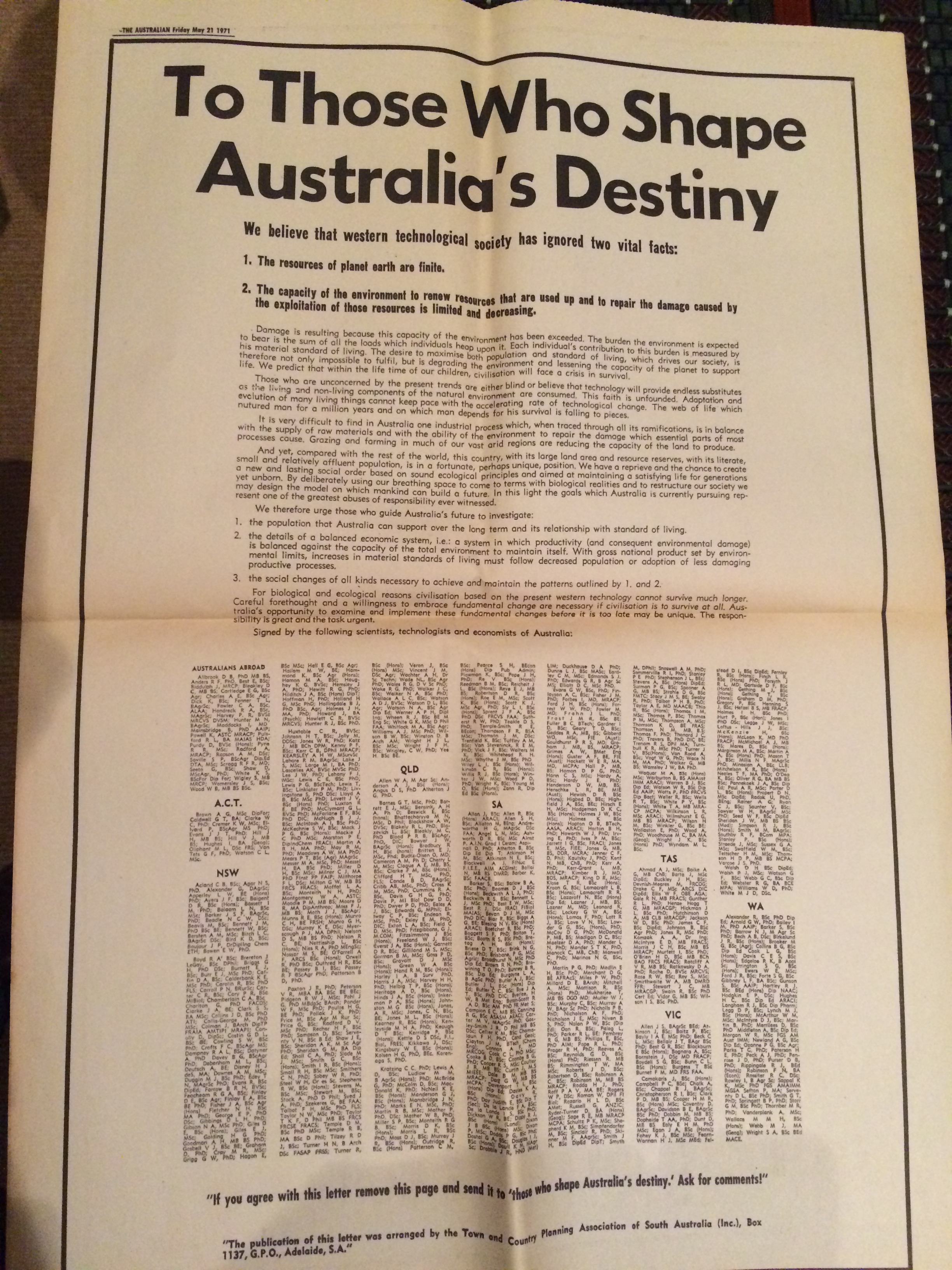
While we discussed many things, the 84 year-old Dr Coulter showed me a rather amazing advert that he and several hundred other scientists, technologists and economists constructed to alert the leaders of Australia that it was heading down the wrong path. It was amazing for three reasons: (i) it was written in 1971, (ii) it was published in The Australian, and (iii) it could have, with a few modifications, been written for today’s Australia.

If you’re an Australian and have even a modicum of environmental understanding, you’ll know that The Australian is a Murdochian rag infamous for its war on science and reason. Even I have had a run-in with its outdated, consumerist and blinkered editorial board. You certainly wouldn’t find an article like Dr Coulter’s in today’s Australian.

More importantly, this 44 year-old article has a lot today that is still relevant. While the language is a little outdated (and sexist), the grammar could use a few updates, and there are some predictions that clearly never came true, it’s telling that scientists and others have been worrying about the same things for quite some time.

In reading the article (reproduced below), one could challenge the authors for being naïve about how society can survive and even prosper despite a declining ecological life-support system. As I once queried Paul Ehrlich about some of his particularly doomerist predictions from over 50 years ago, he politely pointed out that much of what he predicted did, in fact, come true. There are over 1 billion people today that are starving, and another billion or so that are malnourished; combined, this is greater than the entire world population when Paul was born.

So while we might have delayed the crises, we certainly haven’t averted them. Technology does potentially play a positive role, but it can also increase our short-term carrying capacity and buffer the system against shocks. We then tend to ignore the indirect causes of failures like wars, famines and political instability because we do not recognise the real drivers: resource scarcity and ecosystem malfunction.

Australia has yet to learn its lesson.

To Those Who Shape Australia’s Destiny

We believe that western technological society has ignored two vital facts: Read the rest of this entry »


Cartoon guide to biodiversity loss XXIX

9 04 2015

Second batch of six biodiversity cartoons for 2015 (see full stock of previous ‘Cartoon guide to biodiversity loss’ compendia here).

Read the rest of this entry »


How to contact a potential PhD supervisor

1 04 2015

It’s probably fair to say that most university-based academics regularly receive requests from people around the world wishing to be considered as prospective postgraduate students (mostly PhD). I probably receive an average of 3-4 such requests per week via e-mail, as do many of my collaborators. Unfortunately for those making the inquiry, I trash most of them almost immediately.

It’s not that I’m a (complete) bastard; rather, it seems that few of these people have given very much thought to their requests, or how they might be perceived. Indeed, I’d say that about 90% of them are one-liners that go something like this:

Dear Professor,

I wish to write you to seek for supervision towards PhD degree. If you not intersted, assist me to get other supervisor.

XX

Yes, with all the bad English, impoliteness and lack of any detail, these types of requests get deleted even before I get to the close. One recent e-mail even addressed me as “Dear Sir Hubert Wilkins …”. Sometimes, you really must wonder how some people have enough common sense even to turn on the computer.

I’m not naïve enough to think that most of these are serious requests for supervision; indeed, many of them seem to be desperate cries for help to assist people to quit their country of origin, for reasons that have nothing to do with academic pursuits.

So for those people who are genuinely seeking academic supervision, and in a vain attempt to stem the number of pointless e-mails I receive (yeah, right), I offer some tips on how to contact a potential PhD supervisor: Read the rest of this entry »


Australians: out-of-touch, urban squanderers

23 03 2015

There’s a romantic myth surrounding Australia that is pervasive both overseas and within the national psyche: this sun-scorched continent home to stoic bushmen1 that eek out a frugal, yet satisfying existence in this harsh rural land. Unfortunately that ideal is anathema to almost every Australian alive today.

While some elements of that myth do have a basis in reality – it is indeed a hot, dry, mostly inhospitable place if you count the entire land area (all 7.69 million square kilometres of it), and it does have the dubious honour of being the driest inhabited continent on Earth – most Australians live nowhere near the dry interior or the bush.

Despite our remarkably low average population density (a mere 3.09 people per square kilometre), Australia is in fact one of the most urbanised nations on the planet, with nearly 90% of its citizenry living within a major urban centre. As a result, our largely urban/suburban, latte-sipping, supermarket-shopping population has little, if any, connection to the vast landscape that surrounds its comfortable, built-up environs. There should be little wonder then that Australians are so disconnected from their own ecology, and little surprise that our elected officials (who, after all, represent the values of the majority of the citizens they purport to represent), are doing nothing to slow the rapid flushing of our environment down the toilet. Indeed, the current government is in fact actively encouraging the pace of that destruction. Read the rest of this entry »