More than leftovers: getting marine parks right in Australia

7 08 2011
Taken by user Hossen27

Image via Wikipedia

A few weeks back I cosigned a ‘statement of concern’ about the proposal for Australia’s South West Marine Region organised by Hugh Possingham. The support has been overwhelming by Australia’s marine science community (see list of supporting scientists below). I’ve reproduced the letter addressed to the Australian government – distribute far and wide if you give more than a shit about the state of our marine environment (and the economies it supports). Basically, the proposed parks are merely a settlement between government and industry where nothing of importance is really being protected. The parks are just the leftovers industry doesn’t want. No way to ensure the long-term viability of our seas.

On 5 May 2011 the Australian Government released a draft proposal for a network of marine reserves in the Commonwealth waters of the South West bioregional marine planning region.

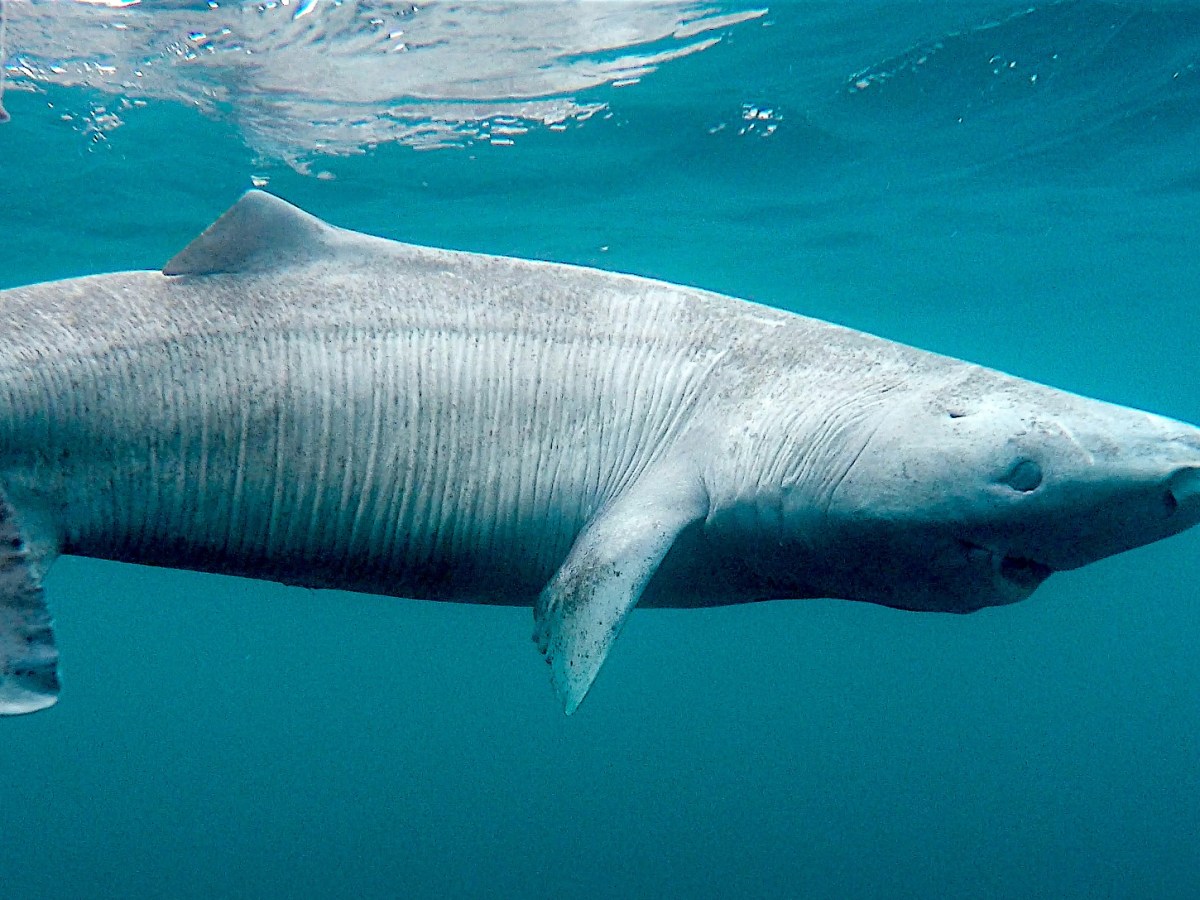
Australia’s South West is of global significance for marine life because it is a temperate region with an exceptionally high proportion of endemic species – species found nowhere else in the world.

Important industries, such as tourism and fisheries, depend on healthy marine ecosystems and the services they provide. Networks of protected areas, with large fully protected core zones, are essential to maintain healthy ecosystems over the long-term – complemented by responsible fisheries management1.

The selection and establishment of marine reserves should rest on a strong scientific foundation. We are greatly concerned that what is currently proposed in the Draft South West Plan is not based on the three core science principles of reserve network design: comprehensiveness, adequacy and representation. These principles have been adopted by Australia for establishing our National Reserve System and are recognized internationally2.

Specifically, the draft plan fails on the most basic test of protecting a representative selection of habitats within the bioregions of the south-west. There are no highly protected areas proposed at all in three of the seven marine bioregions lying on the continental shelf3. Overall less than 3.5% of the shelf, where resource use and biodiversity values are most intense, is highly protected. Further, six of the seven highly protected areas that are proposed on the shelf are small (< 20 km in width)4 and all are separated by large distances (> 200 km)5. The ability of such small isolated areas to maintain connectivity and fulfil the goal of protecting Australia’s marine biodiversity is limited. Read the rest of this entry »


Deforesting and reforesting Australia

13 07 2011

A couple of weeks ago we (Andy Lowe and I) did a small interview on ABC television about the current status of Australia forests, followed by a discussion regarding our recently funded Australian Research Council Linkage Project Developing best-practice approaches for restoring forest ecosystems that are resilient to climate change. Just in case you didn’t see it, I’ve managed to upload a copy of the piece to Youtube.com and reproduce it here:

I’m actually in the process of writing a paper on all this for a special issue of Journal of Plant Ecology (that is nearly already overdue!), but here are a few facts for you in the interim:

  • Australian eucalypt forests are globally unique, with one of the longest evolutionary histories among the world’s forests
  • Australia has about 147 million ha of native forest remaining, and about 2 million ha of plantations Read the rest of this entry »


Life, death and Linneaus

9 07 2011

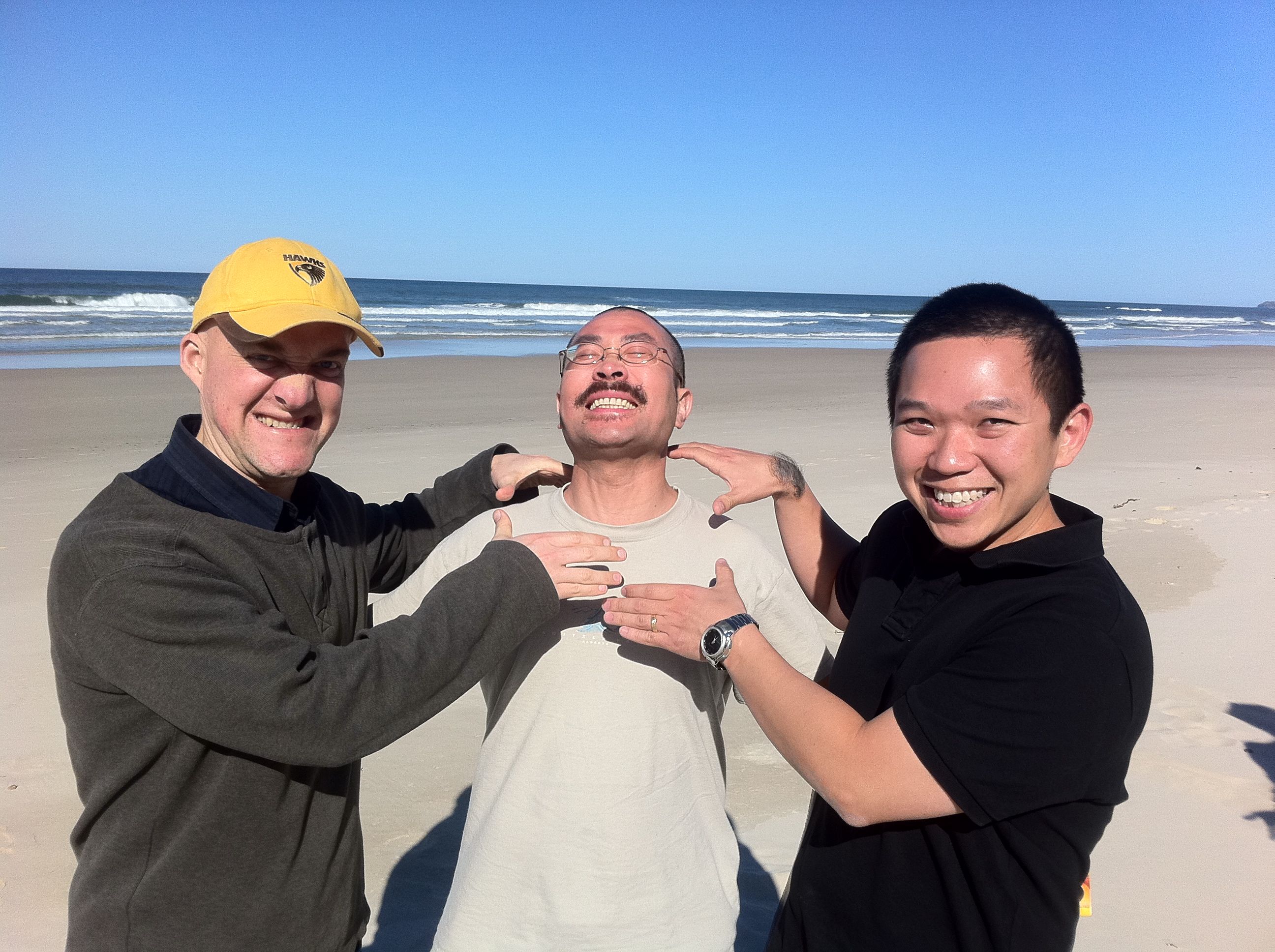
Barry Brook (left) and Lian Pin Koh (right) attacking Fangliang He (centre). © CJA Bradshaw

I’m sitting in the Brisbane airport contemplating how best to describe the last week. If you’ve been following my tweets, you’ll know that I’ve been sequestered in a room with 8 other academics trying to figure out the best ways to estimate the severity of the Anthropocene extinction crisis. Seems like a pretty straight forward task. We know biodiversity in general isn’t doing so well thanks to the 7 billion Homo sapiens on the planet (hence, the Anthropo prefix) – the question though is: how bad?

I blogged back in March that a group of us were awarded a fully funded series of workshops to address that question by the Australian Centre for Ecological Synthesis and Analysis (a Terrestrial Ecosystem Research Network facility based at the University of Queensland), and so I am essentially updating you on the progress of the first workshop.

Before I summarise our achievements (and achieve, we did), I just want to describe the venue. Instead of our standard, boring, windowless room in some non-descript building on campus, ACEAS Director, Associate Professor Alison Specht, had the brilliant idea of putting us out away from it all on a beautiful nature-conservation estate on the north coast of New South Wales.

What a beautiful place – Linneaus Estate is a 111-ha property just a few kilometres north of Lennox Head (about 30 minutes by car south of Byron Bay) whose mission is to provide a sustainable living area (for a very lucky few) while protecting and restoring some pretty amazing coastal habitat along an otherwise well-developed bit of Australian coastline. And yes, it’s named after Carl Linnaeus. Read the rest of this entry »


The few, the loud and the factually challenged

18 06 2011

© The Guardian

Here’s a little paraphrased response I received from a colleague who works for a particular agency concerned about the ridiculous politicking and misinformation associated with marine parks proposed for South Australia.

I’ve posted several times before why marine parks are a win for all involved, from the biodiversity it is meant to protect, to the fishers who benefit from the free, public-good resource that they assist in maintaining (see here, here and here). The evidence is clear world-wide: marine parks benefit pretty much everything and everyone.

However, just like the climate change denalists who use every psychological tactic in the book to try to convince people that climate change is a belief when in fact, it is a soundly evidenced phenomenon, there are those Luddites who think that any change in the marine setting fundamentally threatens their way of life.

Here’s what my colleague had to say about some recent ill-informed comments on this blog:

I wondered when they would find your blog. In my experience, do not engage. A game of intimidation has started. Read the rest of this entry »



Know thy threat

9 06 2011

Here’s another great guest post by Megan Evans of UQ – her previous post on resolving the environmentalist’s paradox was a real hit, so I hope you enjoy this one too.

The reasons for the decline of Australia’s unique biodiversity are many, and most are well known. Clearing of vegetation for urban and agricultural land uses, introduced species and changed fire patterns are regularly cited in State of the Environment reports, recovery plans and published studies as major threats to biodiversity. But, while these threats are widely acknowledged, little has been done to quantify them in terms of the proportion of species affected, or their spatial extent at a national, state or local scale. To understand why such information on threats may be useful, consider for instance how resources are allocated in public health care1.

Threat knowledge

Conditions such as cancer, heart disease and mental health are regarded as National Health Priority Areas in Australia, and have been given special attention when prioritising funds since the late 1980s. The burden of disease in these priority areas are quantified according to the incidence or prevalence of disease or condition, and its social and economic costs. Estimates of burden of disease and their geographic distribution (often according to local government areas) can assist in communicating broad trends in disease burden, but also in prioritising efforts to achieve the best outcomes for public health. An approach similar to that used in healthcare could help to identify priorities for biodiversity conservation – using information on the species which are impacted by key threats, the spatial distributions of species and threats, and the costs of implementing specific management actions to address these threats. Read the rest of this entry »


Demise of the Australian ERA journal rankings

3 06 2011

Earlier this week Australian Senator Kim Carr (Minister for Innovation, Industry, Science and Research) announced the removal of the somewhat controversial ERA rankings for scientific journals.

Early last year I posted about the Excellence in Research for Australia (ERA) journal rankings for ecology and conservation journals. To remind you, the ERA has ranked > 20,000 unique peer-reviewed journals, with each given a single quality rating – and they are careful to say that “A journal’s quality rating represents the overall quality of the journal. This is defined in terms of how it compares with other journals and should not be confused with its relevance or importance to a particular discipline.”.

Now, after much to-ing and fro-ing about what the four rankings actually mean (A*, A, B & C), Senator Carr has announced that he’s dumping them under the advice of the Australian Research Council. Read the rest of this entry »


Tropical forests cooking their biodiversity

5 05 2011

Another ‘hot’ essay by Bill Laurance recently published online by Yale Environment 360 (a publication of the Yale University School of Forestry & Environmental Studies). Bill asked me to relay it on ConservationBytes.com, so here it is in full:

Much attention has been paid to how global warming is affecting the world’s polar regions and glaciers. But a leading authority on tropical forests [that would be Bill] warns that rising temperatures could have an equally profound impact on rainforests and are already taking a toll on some tropical species.

On Jan. 12, 2002, in the Australian state of New South Wales, biologist Justin Welbergen was observing a colony of flying foxes for his Ph.D. research. The temperatures that day on Australia’s subtropical, eastern coast reached record highs, soaring to 42.9 ° C (109 ° F) at the weather station closest to Welbergen’s study site — nearly 8 ° C higher than the average summer maximum temperature.

The flying foxes, or giant fruit bats, normally just doze in the treetops through the day, but on this afternoon they were fanning themselves, panting frantically, jostling for shady spots, and licking their wrists in a desperate effort to cool down. Suddenly, when the thermometer hit 42 ° C, the bats began falling from the trees. Most quickly died. Welbergen and his colleagues counted 1,453 flying foxes that died from the heat in one colony alone. The scorching heat that day killed at least 2,200 additional flying foxes in eight other colonies along a 250-kilometre stretch of coastline. All the deaths occurred in colonies where temperatures soared above 41.7 ° C. Read the rest of this entry »


Crocodiles, spiders and leeches

11 04 2011

I just wrote a fun little piece for a new section in the journal Frontiers in Ecology and the Environment that they’re calling Trails and Tribulations. The basic idea is that the author recounts a particularly interesting field-related experience through which an ecological concept is woven.

Editor-in-Chief Sue Silver said that I could reproduce my article here as long as I acknowledged Frontiers and the Ecological Society of America. It was fun to write, and I hope you enjoy it too [the PDF of the article is available free of charge here].

“So does each team get a hand gun?”

“No, you get an oar”

“What good is an oar?”

“Listen, mate. When a 3-metre croc jumps out of the swamp at you, there is nothing more natural in the world than to thump him with a big stick. It’s an autonomous response. With a gun, IF you manage to keep it dry, and IF you manage to get it out in time before the croc bites off your head, chances are you’ll just shoot the bloke in front of you anyway. So you get an oar.”

“Fair enough”.

That is an approximate, paraphrased reproduction of the initial conversation I had with renowned Australian crocodile biologist, Grahame Webb, just prior to my first (and as it turns out, only) trip to collect crocodile eggs for his Darwin wildlife park and crocodile farm. I volunteered to take part in the collection because I had recently begun working with Grahame and his team tracking the world’s largest crocodile species – the saltwater or estuarine crocodile Crocodylus porosus – and modelling aspects of its populations (Bradshaw et al. 2006). Having already been out on several occasions to harpoon and satellite-tag animals (some measuring > 4 m) on the Mary River, and cage-trap others in Kakadu National Park, I thought a little egg collection would be a proverbial walk in the park. Little did I know that it would end up being one of my more memorable experiences.

Let me walk you through the process. First, you wait until the height of the wet season and drive out as far as you can toward the breeding swamp of interest (in this case, Melacca Swamp in the Adelaide River flood plain, about one hour’s drive from Darwin). Then you and two other loonies pile into a small helicopter equipped with landing pontoons which ferries you to one of many previously identified crocodile nests. Because there is usually too much vegetation around the nest itself, the helicopter must land about 100-300 m away. Clothed only in long pants, a long-sleeved shirt and cotton gloves to protect your skin from the slicing blade grass, you jump off the helicopter’s pontoons into impenetrably murky, chest-deep water. One of the team drags an esky (chiller box into which eggs will be placed) and another carries an oar. As the noise of the departing helicopter becomes a faint buzz, you suddenly realise via the rapid expansion of your terminal sphincter that you are in the middle of a crocodile-filled swamp – and you are holding an oar. Read the rest of this entry »


Does the pope wear a funny hat?

5 04 2011

Does a one-legged duck swim in circles? Does an ursid defecate in a collection of rather tall vascular plants? Does fishing kill fish?

Silly questions, I know, but it’s the kind of question posed every time someone doubts the benefits (i.e., for biodiversity, fishing, local economies, etc.) of marine reserves.

I’ve blogged several times on the subject (see Marine protected areas: do they work?The spillover effectInterview with a social (conservation) scientist, and Failing on ocean protection), but considering Hugh Possingham is town today and presenting the case to the South Australian Parliament on why this state NEEDS marine parks, I thought I’d rehash an old post of his published earlier this year in Australasian Science:

Science has long demonstrated that marine reserves protect marine biodiversity. Rather than answer the same question again, isn’t it about time we started funding research that answers some useful scientific questions?

As marine reserves spread inexorably across the planet, the cry from skeptics and some fishermen is: “Do marine reserves work?” The science is pretty clear but acknowledgement of this by the public is another story. Let me begin with a story of my experience answering this question while communicating to stakeholders the subtleties of marine conservation planning during the rezoning of Moreton Bay.

I was asked by the then-Queensland Environmental Protection Agency to explain to stakeholders the process of marine reserve system design as it applied to the Moreton Bay rezoning. I told the gathering that the rezoning was about conserving a fraction of each mappable biodiversity attribute (species and habitats) for the minimum impact on the livelihood of others. Read the rest of this entry »


What the hell is a banteng?

21 02 2011

A few years ago (ok, 6 years), ABC‘s Catalyst did a piece on our banteng research programme in Garig Gunak Barlu National Park in the Northern Territory. The show basically talks about the conservation and management conundrum of having a successful feral species in Australia that is also highly endangered in its native range (South East Asia). Do we shoot them all, or legislate them as an endangered species? It’s for Australians to decide.

I finally got around to uploading it on Youtube. I hope I haven’t contravened some copyright law, but I figure after such a lag, no one will care. I await the imminent contradiction from the ABC’s lawyers…

I hope you enjoy.

For the scientific papers arising from the work, see: Read the rest of this entry »


More to bees than queens and honey

11 02 2011

Another great guest post, this time from Tobias Smith, a PhD candidate at the University of Queensland’s School of Biological Sciences. Tobias is investigating bee community shifts across a fragmented tropical landscape in far north Queensland, aiming to identify landscape variation in community composition of two important rainforest pollinator groups, bees and flies. I met Tobias a few years ago as part of the Thiaki rainforest reforestation project for which he is doing baseline surveys of bees and flies.

I asked him a while ago to write a ‘primer’ on bees for ConservationBytes.com since so many people really don’t much about the taxon (I include myself in that group). He’s done a brilliant job – everything you wanted to know about bees but were afraid to ask (in 1000 words).

The frequently reported, gloomy news about bee declines is hard not to notice. Bees are in dire trouble around the world, and this trend has worrying implications for both ecosystems and human food production. As a result, popular media often reports on the plight of bees, regularly reciting the figure of one in three mouthfuls of food being dependent on the work of bees. While bees certainly are in major trouble, it can be easy to misinterpret statements often made in these kind of articles without a little general bee knowledge. So here are a few bee facts that, at the very least, we ecological representatives should be familiar with. This information should help give some perspective when interpreting bee news, and when engaging in exciting bee conversations at the shops.

There are approximately 20,000 bees species globally. Yet when most people think of bees they think of a single species, Apis mellifera, the western honey bee (introduced in most of its range, and also referred to as the European honeybee). This bee is certainly an important bee. It is managed as the usual pollinator of crops requiring biotic pollination, and it makes the honey we usually eat here in the developed world. Some say our domestication of this bee has been an important contributing factor in achieving the level of development that we humans have. There are however, about 19,999 other bee species out there, and most of them are very different to the western honeybee. Read the rest of this entry »


Deforestation partly to blame for Queensland floods

17 01 2011

© recoverling

Last week I sent a fairly random Tweet about deforestation in south-eastern Queensland being partially responsible for the record floods there. It went more or less unnoticed, but I thought the comment deserved a proper explanation.

As many of you might know, my colleagues and I wrote an article a few years ago about the global-scale evidence for deforestation leading to a higher incidence and severity of floods in the developing world. This was fairly controversial, but it was nonetheless the first broad-scale evidence for the fabled deforestation-flood link yet published (in my not-so-humble opinion). Subsequent comment reiterated the point with new data.

Now, I will begin by saying I have no data yet to back up my Queensland-specific hypothesis, but I am contemplating a time-series paper on floods in Australia, especially after the events of the last month. This post is therefore merely a reasoned hypothesis.

The hypothesis itself is rather simple. Testing is not. I submit that the recent flooding in Australia has been exacerbated (not caused) by the rapid loss of forest cover over the last 40 years. We know that this is a particularly intense La Niña in Australia and our unusually high rainfall arises from this meteorological phenomenon, but I hypothesise that it wouldn’t have been as bad if this part of Australia hadn’t been so careless with its forest cover since the 1970s. Read the rest of this entry »


Want a cool conservation job in beautiful southern Australia?

14 12 2010

I was asked to post this cool-sounding job on ConservationBytes.com – relevant punters welcome to respond.

Australian Wildlife Conservancy (AWC) is a non‐profit organisation dedicated to the conservation of Australia’s threatened wildlife and their habitats. AWC now owns and manages more land than any other private conservation organisation in Australia ‐  21 properties, covering more than 2.6 million hectares ‐ protecting more than 1,200 fauna species through active land management informed by strategic scientific research.

AWC is seeking an experienced and committed ecologist who will be pivotal in the development and implementation of the conservation and science program throughout south‐eastern Australia. The position will be based at Scotia Wildlife Sanctuary (where on‐site accommodation will be provided), but will include work at other AWC sanctuaries, especially Kalamurina (Lake Eyre), Buckaringa (Flinders Ranges), Yookamurra (Riverlands), Dakalanta (Eyre Peninsula), Bowra (Mulga Lands) and North Head (Sydney) sanctuaries.

Scotia is a large property (65,000 ha) that lies on the NSW‐SA border between Wentworth and Broken Hill, and includes Australia’s largest area free of foxes, cats and rabbits (8,000 ha) and where seven regionally extinct species have been reintroduced (bilby, boodie, woylie, bridled nailtail wallaby, numbat, greater stick‐nest rat, mala and black‐eared miner). In addition, the property has outstanding conservation values because it protects habitats, in good condition, that have been extensively cleared in western NSW.

Read the rest of this entry »


History and future (of Australian ecology and society)

11 12 2010

I’ve just returned from a week-long conference in Canberra where the Ecological Society of Australia (of which I am a relatively new member) has just completed its impressive 50th anniversary conference. It was a long, but good week.

It’s almost a bit embarrassing that I’ve never attended an ESA1 conference before, but I think I waited for the right one. However, the main reason I attended was that I was fortunate to have received the ESA’s 3rd Australian Ecology Research Award (AERA), and the kick-back was a fully funded trip. My only reciprocation was to give a 40-minute plenary lecture – a small price to pay.

I entitled my talk ‘Heads in the desert sand: why Australians should wake up to the biodiversity crisis’, and I received a lot of good feedback. I talked about the global and Australian trends of biodiversity loss and associated ecosystem services, focussing the middle section on some of our work on feral animal ecology (see example). I then gave my views on the seriousness of our current situation and why some of the fastest losses of sensitive ecosystem services are happening right here, right now. I finished off with a section on how I think Australian ecologists could get more relevant and active in terms of research uptake by policy makers. I hope that the talk will be podcastable soon, so stay tuned.

But that was just ‘my’ bit. This post is more about a quick summary of the highlights and my overall impressions.

Read the rest of this entry »


They always whinge about the maths

18 11 2010

If you don’t know what a differential equation is, you are not a scientist” – Hugh Possingham 2009

At the end of 2009 I highlighted a new book edited by good mates Navjot Sodhi and Paul Ehrlich, Conservation Biology for All, in which Barry Brook and I had written a chapter. Now, despite my vested interest, I thought (and still think) that it was one of the best books on conservation biology yet published, and the subsequent reviews appear to be validating my subjective opinion.

I’ve given snippets of the book’s contents, from Paul Ehrlich‘s editorial on the human population’s rising negative influences on biodiversity, to a more detailed synopsis of our chapter, The Conservation Biologist’s Toolbox, and I’ve reproduced a review printed in Trends in Ecology and Evolution.

The latest review by Nicole Gross-Camp of the University of East Anglia published in Ecology is no less flattering – in fact, it is the most flattering to date. So this is by no means a whinge about a whinge; rather, consider it an academic lament followed by a query. First, the review:

Reaching higher in conservation

If a book could receive a standing ovation—this one is a candidate. Sodhi and Ehrlich have created a comprehensive introduction to conservation biology that is accessible intellectually, and financially, to a broad audience—indeed it is Conservation biology for all. The book is divided into 16 chapters that can stand alone and are complementary when read in sequence. The authors make excellent use of cross citations of chapters, a useful and often overlooked feature in texts of this nature. In the introductory chapter, Sodhi and Ehrlich eloquently summarize the gravity of the conservation crisis and still retain an optimistic outlook that encourages the reader to continue. I particularly found their recognition of population growth, consumption, and ethics in the conservation arena refreshing and a step toward what will likely become the next major issues of discussion and research in the conservation field. Read the rest of this entry »


One billion people still hungry

12 11 2010


overpopulationA few days ago, that printed mouthpiece of Murdoch’s News Corporation in Australia – The Australiani, attacked Paul Ehrlich with a spectacular piece of uninformed gibberish (‘Population bomb still a fizzer 40 years on‘) that we both feel compelled to contest.

The Australian, well-known for its ‘War on Science’, refused to give us the opportunity to respond officially in an Opinion Editorial, so we are compelled to fight back using the blogosphere and our collective networks (which, we might add, probably exceed the distribution of said newspaper). Frankly, it was no surprise that The Australian chose to ignore us.

The article in question was written by Oliver Marc Hartwich of the so-called ‘Centre for Independent Studies’, the hyper-conservative Australian propaganda machine reminiscent of the ultra-right wing American Enterprise Institute, made up of some of Australia’s most powerful business magnates and with no academic affiliation whatsoever. Anything vaguely left-of-centre and even remotely promoting environmental responsibility is considered a viable target.

Recently, we blew the whistle on an equally dangerous man and the institutes he represents – climate-denier Alan Oxley; he and the business interests he represents are responsible for more deforestation, biodiversity loss and financial inequity in South East Asia over the last few decades than almost any single group.

Now we turn our attention to expose the true colours of the Centre for Independent Studies and Mr. Hartwich. Read the rest of this entry »


The bomb is still ticking…

11 11 2010

Apologies for the silence over the last week – it’s been a whirlwind here with Paul Ehrlich visiting The University of Adelaide (amazing for a 78-year old man). In the meantime, Sharon Ede over at Post Growth wrote a great response to the LOLstralian‘s high-school effort to attack Paul a few days ago. Our response is coming shortly, but Sharon’s article is a great precursor.

More than forty years after its publication, the predictions made in Paul Ehrlich’s landmark book ‘The Population Bomb’ are still the subject of debate. Australian think-tank the Centre for Independent Studies (‘Population bomb still a fizzer 40 years on’, The Australian, 8 November, 2010), says Ehrlich’s warnings of dire consequences, including of mass starvation as a result of overpopulation, have not materialised:

“More than 40 years ago, American biologist Paul Ehrlich sketched a doomsday scenario for planet Earth in his book The Population Bomb…Since the publication of the book, the global population has nearly doubled but most of its gloomy predictions have not come true…”

By all means, let’s have a robust debate on population, both at the national and global level. Both are long overdue.

But let’s make it a sophisticated debate, grounded in the science we have available and a thorough understanding of all the issues in play.

According to the United Nations’ Population Division, the global population has increased from one billion in 1804 to over six billion in 2010.

It has taken most of human history to reach one billion people. It took just over a century to add the second billion.

The rate of population growth since then is such that it has taken only twelve years to add the most recent billion people.

The moderate UN scenario is for a population of 9 billion by 2050 – that’s within the lifetime of many of us. Read the rest of this entry »


Invaders beware

1 11 2010

Recently, the Global Ecology Group at the University of Adelaide has had the immense privilege and pleasure of welcoming a new senior member to the fold – Dr. Phill Cassey. The slightly Pommefied-Kiwi-Now-Coming-To-Terms-With-Being-Australian ;-)  represents a wonderful new addition to our lab’s expertise and vision.

Phill is a distinguished Australian Research Council Future Fellow. He conducts research on the subject of human contributions to changes in biodiversity through the dual processes of species extinction and introduction. Phill’s research encompasses a broad range of analytical and applied skills and has led to significant advances in the discipline of global change biology.

Phill has also hit the ground running here in Adelaide, and now offers two PhD projects for people interested to work at the forefront of invasive species research in Australia. Students will be members of the School for Earth and Environmental Sciences, which includes world-class researchers in the disciplines of Ecology and Evolutionary Biology and Global Ecology as well as ongoing research links with the South Australian Museum, Adelaide Zoo, and State Herbarium of South Australia. Successful candidates will be part of a strong research group with a highly successful and innovative culture of scientific communication and study. Read the rest of this entry »



Blog Action Day 2010 – Water neutrality and its biodiversity benefits

16 10 2010

In my little bid to participate in Change.org’s Blog Action Day 2010 – Water, I’ve re-hashed a post from 2008 on ‘water neutrality’. This will also benefit my recently joined readers, and re-invigorate a concept I don’t think has received nearly enough attention globally (or even in parched Australia where I live). So here we go:

The world’s freshwater ecosystems are in trouble. We’ve extracted, poisoned, polluted, damned and diverted a large proportion of the finite (and rather small!) amount of freshwater on the planet. Now, most people might immediately see the problem here from a selfish perspective – no clean, abundant water source = human disease, suffering and death. Definitely something to avoid, and a problem that all Australians are facing (i.e., it’s not just restricted to developing nations). Just look at the Murray-Darling problem.

In addition to affecting our own personal well-being, freshwater ecosystems are thought to support over 10000 fish species worldwide (see also a recent post on Africa’s freshwater biodiversity’s susceptibility to climate change), and the majority of amphibians and aquatic reptiles. Current estimates suggest that about 1/3 of all vertebrate biodiversity (in this case, number of species) is confined to freshwater. As an example, the Mekong River system alone is thought to support up to 1700 different species of fish.

So, what are some of the ways forward? The concept of ‘water neutrality’ is essentially the wet version of carbon neutrality. It basically means that water usage can be offset by interventions to improve freshwater habitats and supply. Read the rest of this entry »


More rain forest regeneration opportunities

5 10 2010

Last November I wrote about an exciting conservation research endeavour (see ‘How to restore a tropical rain forest‘)  in which I am involved called the Thiaki Rain Forest Regeneration Project taking place as we speak in the hinterland of north Queensland’s Atherton Tableland. I personally have done next to nothing on the project yet (UQ’s Margie Mayfield is leading the charge), so I can’t really update you on all the nitty-gritty of our progress. Regardless, I can say that some of the planting tests have been done, the species have been chosen and are growing happily in the nursery reading for planting in January 2011, and the baseline biodiversity assessments are well under way.

Well, prior to our Supercharge Your Science extravaganza in Cairns and Townsville a few weeks ago, I visited Penny & Noel at Thiaki for a catch up, a discussion of what’s been happening and what’s about to happen. It was a great weekend (the family came along too) with good food, wine, ticks and leeches (biodiversity in action), and I’m getting more and more excited about what this project will deliver over the coming years.

In the meantime, a couple of ‘opportunities’ have arisen; in other words – we need some good PhD students to tackle some outstanding issues with the project. Read the rest of this entry »