Social and economic value of protected areas

2 03 2015
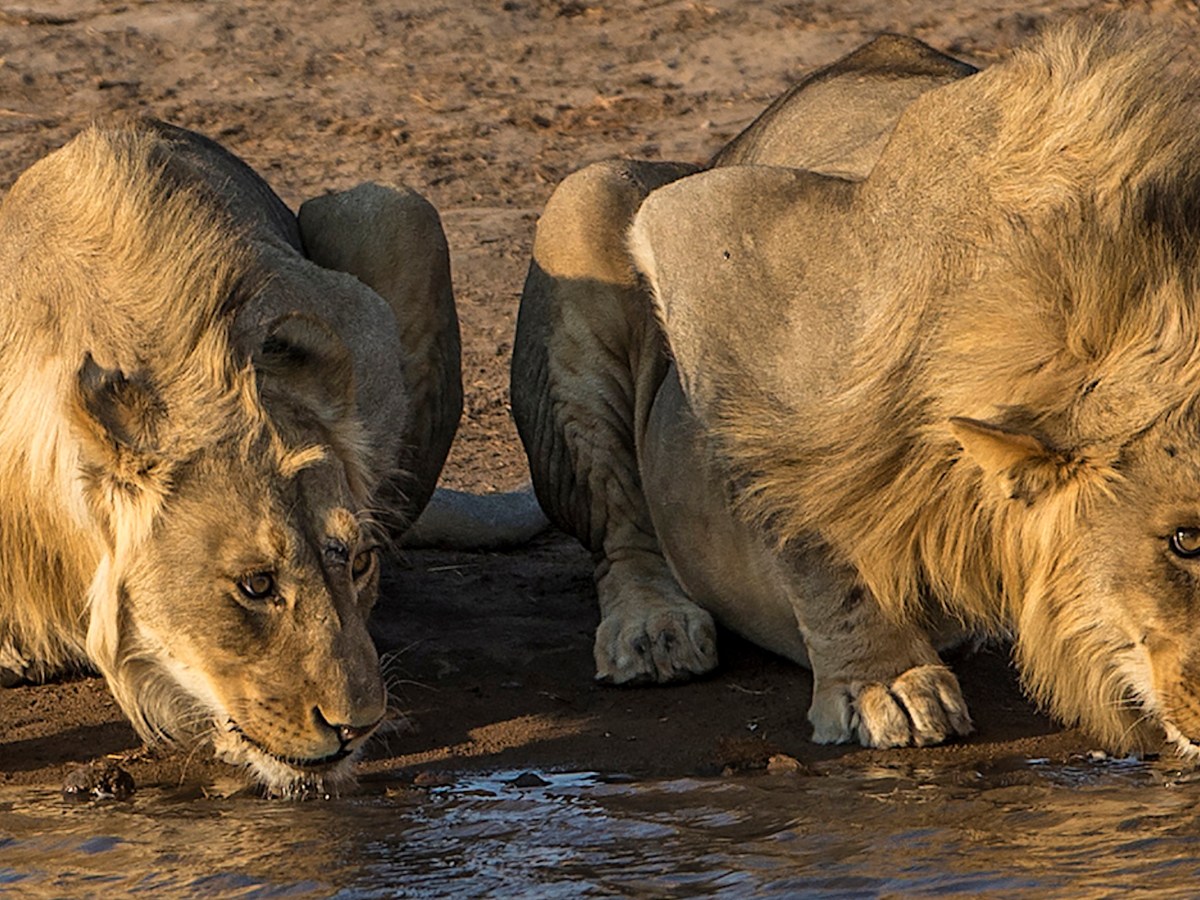
© P. Crowley/"mokolabs" via Flickr

© P. Crowley/”mokolabs” via Flickr

I’ve just come across an exceptionally important paper published recently in PLoS Biology by a team of venerable conservation biologists led by the eminent Andy Balmford of the University of Cambridge. My first response was ‘Holy shit’, and now that I contemplate the results further, I can now update that sentiment to ‘Holy shit!’.

Most people reading this blog wouldn’t bother questioning the importance of protected areas for the preservation of biodiversity – for them, it’s a given. While the effectiveness of protected areas globally is highly variable in that regard, there’s little contention among conservationists that we do not yet have enough of them to conserve biodiversity effectively, especially in the oceans that cover some 70% of the planet’s surface.

But that justification isn’t good enough for some people – perhaps even the majority. Even our own myopic, anti-environment political bungler Prime Minister has stated publicly that national parks just ‘lock up‘ areas to the exclusion of much more important things like jobs and income generation. He’s even stated that Australia has ‘too many‘ national parks already, and that timber workers are “the ultimate conservationists“. As I type those words, I can feel the bile accumulating in my throat. Read the rest of this entry »


Earth’s second lung has emphysema

19 02 2015
© WWF

© WWF

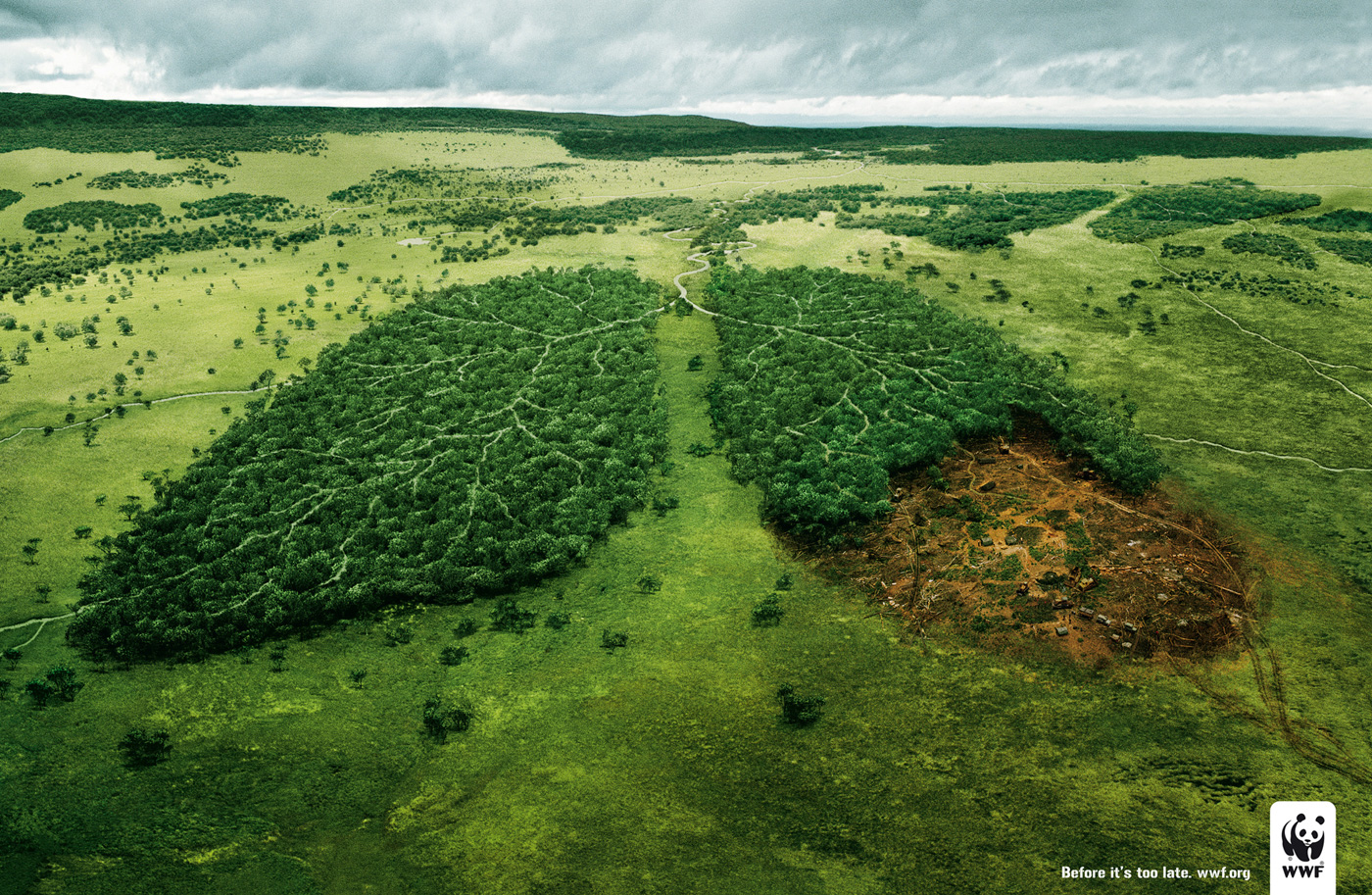
Many consider forests as the ‘lungs’ of the planet – the idea that trees and other plants take up carbon and produce oxygen (the carbon and oxygen cycles). If we are to be fair though, the oceans store about 93% of the Earth’s carbon pool (excluding the lithosphere and fossil fuels) and oceanic phytoplankton produces between 50 and 80% of the oxygen in the atmosphere. For comparison, the terrestrial biosphere – including forests – stores only about 5% of the Earth’s carbon, and produces most of the remainder of atmospheric oxygen.

So there’s no denying that the biggest player in these cycles is the ocean, but that’s not the topic of today’s post. Instead, I’m going to focus on the terrestrial biosphere, and in particular, the carbon storage and flux of forests.

Now it’s pretty well established that tropical forests are major players in the terrestrial carbon cycle, with the most accepted estimates of about 55% the terrestrial carbon stock stored therein. The extensive boreal forest, covering most of the northern half of North America, most of Scandinavia and a huge chunk of Russia, comes in globally at about 33%, and temperate forests store most of the remainder.

That is, until now. Read the rest of this entry »


Bill Laurance wins ‘Outstanding Contributions to Conservation’ prize

16 02 2015

ZSL-standard-blackWilliam Laurance, a distinguished research professor at James Cook University in Cairns, has received the most esteemed prize awarded by the renowned Zoological Society of London.

The Society voted unanimously to honour Laurance with its 2015 “Award for Outstanding Contributions to Conservation”, for his longstanding work to save wildlife species and habitats, especially in the world’s imperilled tropical forests.

Laurance was cited as “a leading scientist, a science communicator and an advocate for conservation policy.”

The recognition was immediately applauded by several of Laurance’s colleagues.

“Bill’s passion for conservation is matched only by his hard work, his vision and communication skills,” said professor Thomas Lovejoy, a leading U.S. scientist and former environmental advisor to three US presidents.

“His scientific contributions have been both prescient and catalytic. He is one of the great conservation figures of his time,” said Lovejoy.

Professor Corey Bradshaw of the University of Adelaide added, “Bill is undoubtedly one of the most influential biodiversity scientists of our era.” Read the rest of this entry »


The Abbott-oir survives another day to wreak more environmental havoc

9 02 2015

The Great Red UnderpantsTone Abbott-oir, easily the most environmentally destructive Prime Minister this country has seen in the modern era, has survived the party room spill for a leadership change. Although 39% of his own Fiberal Party MPs voted to dump him, he remains standing (limping) – for now.

I’ve seen rather a lot lately in the Australian media about the impending spill vote, and the potential political repercussions of a change (or not), but there’s been nearly no mention of what it all means for the continually degrading Australian environment.

As is typical in Australian politics, the environment takes a very distant back seat to the those oh-so-important societal issues like knighthoods, paid parental leave and where to put the next road in Melbourne, so I certainly wasn’t hopeful that a leadership change (or not) would have any positive environmental outcomes. This particular latte-snorting, quinoa-flavoured-pinot-grigio-in-the-artisanal-underpants-pouring, erect-nipple-paper-rubbing environmental scientist has nothing at all to celebrate, even if the no-confidence in The Great Red Underpants is potentially a positive sign. Read the rest of this entry »


Cartoon guide to biodiversity loss XXVIII

4 02 2015

First batch of six biodiversity cartoons for 2015 (see full stock of previous ‘Cartoon guide to biodiversity loss’ compendia here).

Read the rest of this entry »


What’s in a name? The dingo’s sorry saga

30 01 2015

bad dingoThe more I delve into the science of predator management, the more I realise that the science itself takes a distant back seat to the politics. It would be naïve to think that the management of dingoes in Australia is any more politically charged than elsewhere, but once you start scratching beneath the surface, you quickly realise that there’s something rotten in Dubbo.

My latest contribution to this saga is a co-authored paper led by Dale Nimmo of Deakin University (along with Simon Watson of La Trobe and Dave Forsyth of Arthur Rylah) that came out just the other day. It was a response to a rather dismissive paper by Matt Hayward and Nicky Marlow claiming that all the accumulated evidence demonstrating that dingoes benefit native biodiversity was somehow incorrect.

Their two arguments were that: (1) dingoes don’t eradicate the main culprits of biodiversity decline in Australia (cats & foxes), so they cannot benefit native species; (2) proxy indices of relative dingo abundance are flawed and not related to actual abundance, so all the previous experiments and surveys are wrong.

Some strong accusations, for sure. Unfortunately, they hold no water at all. Read the rest of this entry »


Write English well? Help get published someone who doesn’t

27 01 2015

imagesI’ve written before about how sometimes I can feel a little exasperated by what seems to be a constant barrage of bad English from some of my co-authors. No, I’m not focussing solely on students, or even native English speakers for that matter. In fact, one of the best (English) science writers with whom I’ve had the pleasure of working is a Spaniard (he also happens to write particularly well in Castellano). He was also fairly high up on the command-of-English ladder when he started out as my PhD student. So. There.

In other words, just because you grew up speaking the Queen’s doesn’t automatically guarantee that you’ll bust a phrase as easily as Shakespeare, Tolkien, Gould or Flannery; in fact, it might put you at a decided disadvantage compared to your English-as-a-second- (-third-, -fourth-, -fifth- …) language peers because they avoided learning all those terrible habits you picked up as you grunted your way through adolescence. Being forced to learn the grammar of another language often tends to make you grasp that of your mother tongue a little better.

So regardless of your background, if you’ve managed to beat the odds and know in your heart that you are in fact a good writer of science in English (you know who you are), I think you have a moral duty to help out those who still struggle with it. I’m not referring necessarily to the inevitable corrections you’ll make to your co-authors’ prose when drafting manuscripts1. I am instead talking about going out of your way to help someone who really, really needs it. Read the rest of this entry »


When human society breaks down, wildlife suffers

22 01 2015

bearGlobal human society is a massive, consumptive beast that on average degrades its life-support system. As we’ve recently reported, this will only continue to get worse in the decades to centuries to come. Some have argued that as long as we can develop our societies enough, the impact of this massive demographic force can be lessened – a concept described by the environmental Kuznets curve. However, there is little evidence that negative societal impact on the environment is lessened as per capita wealth exceeds some threshold; unfortunately environmental damage tends to, on average, increase as a nation’s net wealth increases. That’s not to say that short-term improvements cannot be achieved through technological innovation – in fact, they will be essential to offset the inexorable growth of the global human population.

So poor nations as well as the wealthy ones are responsible for environmental damage. Poorer nations often have ineffective governance systems so they fail to enforce compliance in environmental regulations, but wealthier nations often exploit a high proportion of their natural resources, with the inevitable environmental damage this entails. In some cases however, biodiversity can temporarily escape some of the ravages of society because humans either perceive the area to be too dangerous, or otherwise have no incentive to go there. There are some good examples of the latter, such as the vicinity around the Chernobyl nuclear reactor that melted down in 1986, or the Korean demilitarised zone.

In this vein, I just stumbled across an extremely interesting paper today published online early in Conservation Biology that describes trends in charismatic wildlife (i.e., big mammals) as the former Soviet Union collapsed in 1991 and societal breakdown ensued. The authors had access to an amazing dataset that spanned the decade prior to the collapse, the decade immediately following, and a subsequent decade of societal renewal. What they found was fascinating. Read the rest of this entry »


It’s all about the variation, stupid

12 01 2015

val-1-3It is one of my long-suffering ecological quests to demonstrate to the buffoons in government and industry that you can’t simply offset deforestation by planting another forest elsewhere. While it sounds attractive, like carbon offsetting or even water neutrality, you can’t recreate a perfectly functioning, resilient native forest no matter how hard you try.

I’m not for a moment suggesting that we shouldn’t reforest much of what we’ve already cut down over the last few centuries; reforestation is an essential element of any semblance of meaningful terrestrial ecological restoration. Indeed, without a major commitment to reforestation worldwide, the extinction crisis will continue to spiral out of control.

What I am concerned about, however, is that administrators continue to push for so-called ‘biodiversity offsets’ – clearing a forest patch here for some such development, while reforesting or even afforesting another degraded patch there. However, I’ve blogged before about studies, including some of my own, showing that one simply cannot replace primary forests in terms of biodiversity and long-term carbon storage. Now we can add resilience to that list.

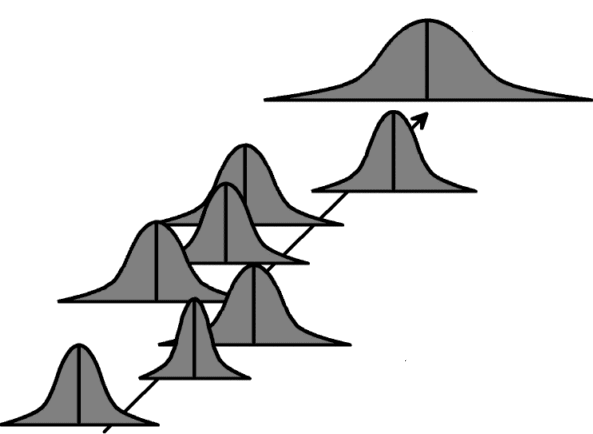
While I came across this paper a while ago, I’ve only found the time to blog about it now. Published in PLoS One in early December, the paper Does forest continuity enhance the resilience of trees to environmental change?1 by von Oheimb and colleagues shows clearly that German oak forests that had been untouched for over 100 years were more resilient to climate variation than forests planted since that time. I’ll let that little fact sink in for a moment … Read the rest of this entry »


Help Hawaii’s hyper-threatened birds

6 01 2015
Puaiohi or small Kaua'i thrush. Photo by Lucas Behnke

Puaiohi or small Kaua’i thrush. Photo by Lucas Behnke

You wouldn’t want to be a bird in Hawaii. There are more avian species threatened with extinction there than anywhere else in the USA. After humans arrived, some 70+ species have become extinct, and 31 are listed as threatened with extinction. In addition, 43% of 157 species are not native; among land birds, 69% are introduced species.

My friend, Cali Crampton asked me to promote their new crowdfunding project to reduce the threat of feral rats on Hawaiian birds. Please help if you can.

The Kaua‘i Forest Bird Recovery Project, a collaborative project of the Hawaii Department of Land and Natural Resources, Division of Forestry and Wildlife, the University of Hawaii Pacific Cooperative Studies Unit, and Garden Island Research and Development, has announced the launch of a crowdfunding and outreach campaign to generate support for protecting the native birds of Kaua’i by controlling rats with humane, self-resetting rat traps.

The campaign, named “Birds, not Rats!” runs through to 31 January 2015, with goals of increasing awareness of the threats that rats pose to birds and native ecosystems, and raising at least $10,000 for rat control through many small, individual donations.

Hawai’i is at the epicentre of the current global extinction crisis. Of the original 130+ native Hawaiian bird species, many have been lost forever, and only 11 are not yet endangered. Today, Kaua’i is home to eight native forest bird species, three of which are federally listed as endangered: the puaiohi or small Kaua’i thrush, the akeke’e or Kaua’i akepa, and the akikiki or Kaua’i creeper. Populations of these birds have plummeted as much as 90% in the last five years; the akikiki and the puaiohi now number fewer than 500 individuals, and the akeke’e numbers fewer than 1000 individuals. The Kaua’i Forest Bird Recovery Project’s goal is to reverse these declines. Read the rest of this entry »


Cartoon guide to biodiversity loss XXVII

31 12 2014

Here are the last 6 biodiversity cartoons for 2014 because, well, why not? (see full stock of previous ‘Cartoon guide to biodiversity loss’ compendia here).

Read the rest of this entry »


Influential conservation papers of 2014

22 12 2014

splash2Another year, another arbitrary retrospective list – but I’m still going to do it. Based on the popularity of last year’s retrospective list of influential conservation papers as assessed through F1000 Prime, here are 20 conservation papers published in 2014 that impressed the Faculty members.

Once again for copyright reasons, I can’t give the whole text but I’ve given the links to the F1000 assessments (if you’re a subscriber) and of course, to the papers themselves. I did not order these based on any particular criterion.

Read the rest of this entry »


It’s time for environmentalists to give nuclear a fair go

16 12 2014

This is an article by Barry Brook and mepublished today in The Conversation. I’m republishing it here.

Should nuclear energy be part of Australia’s (and many other countries’) future energy mix? We think so, particularly as part of a solution to reduce greenhouse gas emissions and prevent dangerous climate change.

But there are other reasons for supporting nuclear technology. In a paper recently published in Conservation Biology, we show that an energy mix including nuclear power has lowest impact on wildlife and ecosystems — which is what we need given the dire state of the world’s biodiversity.

In response, we have gathered signatures of 70 leading conservation scientists from 14 countries in an open letter asking that the environmental community:

weigh up the pros and cons of different energy sources using objective evidence and pragmatic trade-offs, rather than simply relying on idealistic perceptions of what is ‘green’.

Energy demand is rising

Modern society is a ceaseless consumer of energy, and growing demand won’t stop any time soon, even under the most optimistic energy-efficiency scenario.

Although it goes without saying that we must continue to improve energy efficiency in the developed world, the momentum of population growth and rising living standards, particularly in the developing world, means we will continue to need more energy for decades to come. No amount of wishful thinking for reduced demand will change that.

But which are the best forms of energy to supply the world, and not add to the biodiversity crisis?

Assessing our energy options

In short, the argument goes like this.

To avoid the worst ravages of climate change, we have to decarbonise fully (eliminate net carbon emissions from) the global electricity sector. Wildlife and ecosystems are threatened by this climate disruption, largely caused by fossil-fuel derived emissions.

But they are also imperilled by land transformation (i.e., habitat loss) caused in part by other energy sources, such as flooded areas (usually forests) for hydro-electricity and all the associated road development this entails, agricultural areas needed for biofuels, and large spaces needed for wind and solar farms.

Energy density of different fuels. This infographic shows the amount of energy embodied in uranium, coal, natural gas and a chemical battery, scaled to provide enough energy for a lifetime of use in the developed world. Shown are the amount of each source needed to provide same amount of energy, equivalent to 220 kWh of energy per day for 80 years.

Read the rest of this entry »


An Open Letter to Environmentalists on Nuclear Energy

15 12 2014

nuclear biodiversityProfessor Barry W. Brook, Chair of Environmental Sustainability, University of Tasmania, Australia. barry.brook@utas.edu.au

Professor Corey J.A. Bradshaw, Sir Hubert Wilkins Chair of Climate Change, The Environment Institute, The University of Adelaide, Australia. corey.bradshaw@adelaide.edu.au

An Open Letter to Environmentalists:

As conservation scientists concerned with global depletion of biodiversity and the degradation of the human life-support system this entails, we, the co-signed, support the broad conclusions drawn in the article Key role for nuclear energy in global biodiversity conservation published in Conservation Biology (Brook & Bradshaw 2014).

Brook and Bradshaw argue that the full gamut of electricity-generation sources—including nuclear power—must be deployed to replace the burning of fossil fuels, if we are to have any chance of mitigating severe climate change. They provide strong evidence for the need to accept a substantial role for advanced nuclear power systems with complete fuel recycling—as part of a range of sustainable energy technologies that also includes appropriate use of renewables, energy storage and energy efficiency. This multi-pronged strategy for sustainable energy could also be more cost-effective and spare more land for biodiversity, as well as reduce non-carbon pollution (aerosols, heavy metals).

Given the historical antagonism towards nuclear energy amongst the environmental community, we accept that this stands as a controversial position. However, much as leading climate scientists have recently advocated the development of safe, next-generation nuclear energy systems to combat global climate change (Caldeira et al. 2013), we entreat the conservation and environmental community to weigh up the pros and cons of different energy sources using objective evidence and pragmatic trade-offs, rather than simply relying on idealistic perceptions of what is ‘green’.

Although renewable energy sources like wind and solar will likely make increasing contributions to future energy production, these technology options face real-world problems of scalability, cost, material and land use, meaning that it is too risky to rely on them as the only alternatives to fossil fuels. Nuclear power—being by far the most compact and energy-dense of sources—could also make a major, and perhaps leading, contribution. As scientists, we declare that an evidence-based approach to future energy production is an essential component of securing biodiversity’s future and cannot be ignored. It is time that conservationists make their voices heard in this policy arena.

Signatories (in alphabetical order)

  1. Professor Andrew Balmford, Professor of Conservation Science, Department of Zoology, University of Cambridge, United Kingdom. apb12@cam.ac.uk
  2. Professor Andrew J. Beattie, Emeritus, Department of Biological Sciences, Macquarie University, Australia. abeattie@bio.mq.edu.au
  3. Assistant Professor David P. Bickford, Department of Biological Sciences, National University of Singapore, Singapore. dbsbdp@nus.edu.sg
  4. Professor Tim M. Blackburn, Professor of Invasion Biology, Department of Genetics, Evolution and Environment, Centre for Biodiversity and Environment Research, University College London, United Kingdom. t.blackburn@ucl.ac.uk
  5. Professor Daniel T. Blumstein, Chair, Department of Ecology and Evolutionary Biology, University of California Los Angeles, USA. marmots@ucla.edu
  6. Professor Luigi Boitani, Dipartimento di Biologia, e Biotecnologie Charles Darwin, Sapienza Università di Roma, Italy. luigi.boitani@uniroma1.it
  7. Professor Mark S. Boyce, Professor and Alberta Conservation Association Chair in Fisheries and Wildlife, Department of Biological Sciences, University of Alberta, Canada. boyce@ualberta.ca
  8. Professor David M.J.S. Bowman, Professor of Environmental Change Biology, School of Biological Sciences, University of Tasmania, Australia. david.bowman@utas.edu.au
  9. Professor Scott P. Carroll, Institute for Contemporary Evolution and Department of Entomology and Nematology, University of California Davis, USA. spcarroll@ucdavis.edu
  10. Associate Professor Phillip Cassey, School of Earth and Environmental Sciences, The University of Adelaide, Australia.
  11. Professor F. Stuart Chapin III, Professor Emeritus of Ecology, Department of Biology and Wildlife, Institute of Arctic Biology, University of Alaska Fairbanks, USA. terry.chapin@alaska.edu
  12. Professor David Choquenot, Director, Institute for Applied Ecology, University of Canberra, Australia. david.choquenot@canberra.edu.au
  13. Dr Ben Collen, Centre for Biodiversity and Environment Research, University College London, United Kingdom. b.collen@ucl.ac.uk
  14. Professor Richard T. Corlett, Director, Centre for Integrative Conservation, Xishuangbanna Tropical Botanical Garden, Chinese Academy of Sciences, China. corlett@xtbg.org.cn
  15. Dr Franck Courchamp, Director of Research, Laboratoire Ecologie, Systématique et Evolution – UMR CNRS, Member of the European Academy of Sciences, Université Paris-Sud, France. franck.courchamp@u-psud.fr
  16. Professor Chris B. Daniels, Director, Barbara Hardy Institute, University of South Australia, Australia. chris.daniels@unisa.edu.au
  17. Professor Chris Dickman, Professor of Ecology, School of Biological Sciences, The University of Sydney, Australia. chris.dickman@sydney.edu.au
  18. Associate Professor Don Driscoll, College of Medicine, Biology and Environment, The Australian National University, Australia. don.driscoll@anu.edu.au
  19. Professor David Dudgeon, Chair Professor of Ecology and Biodiversity, School of Biological Sciences, The University of Hong Kong, Hong Kong SAR, China. ddudgeon@hku.hk
  20. Associate Professor Erle C. Ellis, Geography and Environmental Systems, University of Maryland, USA. ece@umbc.edu
  21. Dr Damien A. Fordham, School of Earth and Environmental Sciences, The University of Adelaide, Australia. damien.fordham@adelaide.edu.au
  22. Dr Eddie Game, Senior Scientist, The Nature Conservancy Worldwide Office, Australia. egame@tnc.org
  23. Professor Kevin J. Gaston, Professor of Biodiversity and Conservation, Director, Environment and Sustainability Institute, University of Exeter, United Kingdom. k.j.gaston@exeter.ac.uk
  24. Professor Dr Jaboury Ghazoul, Professor of Ecosystem Management, ETH Zürich, Institute for Terrestrial Ecosystems, Switzerland. jaboury.ghazoul@env.ethz.ch
  25. Professor Robert G. Harcourt, Department of Biological Sciences, Macquarie University, Australia. robert.harcourt@mq.edu.au
  26. Professor Susan P. Harrison, Department of Environmental Science and Policy, University of California Davis, USA. spharrison@ucdavis.edu
  27. Professor Fangliang He, Canada Research Chair in Biodiversity and Landscape Modelling, Department of Renewable Resources, University of Alberta, Canada and State Key Laboratory of Biocontrol and School of Life Sciences, Sun-yat Sen University, Guangzhou, China. fhe@ualberta.ca
  28. Professor Mark A. Hindell, Institute for Marine and Antarctic Studies, University of Tasmania, Australia. mark.hindell@utas.edu.au
  29. Professor Richard J. Hobbs, School of Plant Biology, The University of Western Australia, Australia. richard.hobbs@uwa.edu.au
  30. Professor Ove Hoegh-Guldberg, Professor and Director, Global Change Institute, The University of Queensland, Australia. oveh@uq.edu.au
  31. Professor Marcel Holyoak, Department of Environmental Science and Policy, University of California, Davis, USA. maholyoak@ucdavis.edu
  32. Professor Lesley Hughes, Distinguished Professor, Department of Biological Sciences, Macquarie University, Australia. lesley.hughes@mq.edu.au
  33. Professor Christopher N. Johnson, Department of Zoology, University of Tasmania, Australia. c.n.johnson@utas.edu.au
  34. Dr Julia P.G. Jones, Senior Lecturer in Conservation Biology, School of Environment, Natural Resources and Geography, Bangor University, United Kingdom. julia.jones@bangor.ac.uk
  35. Professor Kate E. Jones, Biodiversity Modelling Research Group, University College London, United Kingdom. kate.e.jones@ucl.ac.uk
  36. Dr Menna E. Jones, Department of Zoology, University of Tasmania, Australia. menna.jones@utas.edu.au
  37. Dr Lucas Joppa, Conservation Biologist, United Kingdom. lujoppa@microsoft.com
  38. Associate Professor Lian Pin Koh, School of Earth and Environmental Sciences, The University of Adelaide, Australia. lianpin.koh@adelaide.edu.au
  39. Professor Charles J. Krebs, Emeritus, Department of Zoology, University of British Columbia, Canada. krebs@zoology.ubc.ca
  40. Dr Robert C. Lacy, Conservation Biologist, USA. rlacy@ix.netcom.com
  41. Associate Professor Susan Laurance, Centre for Tropical Biodiversity and Climate Change, Centre for Tropical Environmental and Sustainability Studies, James Cook University, Australia. susan.laurance@jcu.edu.au
  42. Professor William F. Laurance, Distinguished Research Professor and Australian Laureate, Prince Bernhard Chair in International Nature Conservation, Centre for Tropical Environmental and Sustainability Science and School of Marine and Tropical Biology, James Cook University, Australia. bill.laurance@jcu.edu.au
  43. Professor Peter Ng Kee Lin, Department of Biological Sciences, National University of Singapore, Singapore. dbsngkl@nus.edu.sg
  44. Professor Thomas E. Lovejoy, Senior Fellow at the United Nations Foundation and University Professor in the Environmental Science and Policy department, George Mason University, USA. tlovejoy@unfoundation.org
  45. Dr Antony J Lynam, Global Conservation Programs, Wildlife Conservation Society, USA. tlynam@wcs.org
  46. Professor Anson W. Mackay, Department of Geography, University College London, United Kingdom. ans.mackay@ucl.ac.uk
  47. Professor Helene D. Marsh, College of Marine and Environmental Sciences, Centre for Tropical Water and Aquatic Ecosystem Research, James Cook University, Australia. helene.marsh@jcu.edu.au
  48. Professor Michelle Marvier, Department of Environmental Studies and Sciences, Santa Clara University, USA. mmarvier@scu.edu
  49. Professor Lord Robert M. May of Oxford OM AC Kt FRS, Department of Zoology, University of Oxford, United Kingdom. robert.may@zoo.ox.ac.uk
  50. Dr Margaret M. Mayfield, Director, The Ecology Centre, School of Biological Sciences, The University of Queensland, Australia. m.mayfield@uq.edu.au
  51. Dr Clive R. McMahon, Sydney Institute of Marine Science and Institute for Marine and Antarctic Studies, University of Tasmania, Australia. clive.mcmahon@utas.edu.au
  52. Dr Mark Meekan, Marine Biologist, Australia. m.meekan@aims.gov.au
  53. Dr Erik Meijaard, Borneo Futures Project, People and Nature Consulting, Denpasar, Bali, Indonesia. emeijaard@gmail.com
  54. Professor L. Scott Mills, Chancellor’s Faculty Excellence Program in Global Environmental Change, North Carolina State University, USA. lsmills@ncsu.edu
  55. Professor Atte Moilanen, Research Director, Conservation Decision Analysis, University of Helsinki, Finland. atte.moilanen@helsinki.fi
  56. Professor Craig Moritz, Research School of Biology, The Australian National University, Australia. craig.moritz@anu.edu.au
  57. Dr Robin Naidoo, Adjunct Professor, Institute for Resources, Environment, and Sustainability University of British Columbia, Canada. robin.naidoo@wwfus.org
  58. Professor Reed F. Noss, Provost’s Distinguished Research Professor, University of Central Florida, USA. reed.noss@ucf.edu
  59. Associate Professor Julian D. Olden, Freshwater Ecology and Conservation Lab, School of Aquatic and Fishery Sciences, University of Washington, USA. olden@uw.edu
  60. Professor Maharaj Pandit, Professor and Head, Department of Environmental Studies, University of Delhi, India. mkpandit@cismhe.org
  61. Professor Kenneth H. Pollock, Professor of Applied Ecology, Biomathematics and Statistics, Department of Applied Ecology, North Carolina State University, USA. pollock@ncsu.edu
  62. Professor Hugh P. Possingham, School of Biological Science and School of Maths and Physics, The University of Queensland, Australia. h.possingham@uq.edu.au
  63. Professor Peter H. Raven, George Engelmann Professor of Botany Emeritus, President Emeritus, Missouri Botanical Garden, Washington University in St. Louis, USA. peter.raven@mobot.org
  64. Professor David M. Richardson, Distinguished Professor and Director of the Centre for Invasion Biology, Department of Botany and Zoology, Stellenbosch University, South Africa. rich@sun.ac.za
  65. Dr Euan G. Ritchie, Senior Lecturer, Centre for Integrative Ecology, School of Life and Environmental Sciences, Deakin University, Australia. e.ritchie@deakin.edu.au
  66. Professor Terry L. Root, Senior Fellow, Stanford Woods Institute for the Environment, Stanford University, USA. troot@stanford.edu
  67. Dr Çağan H. Şekercioğlu, Assistant Professor, Biology, University of Utah, USA and Doçent 2010, Biology/Ecology, Inter-university Council (UAK) of Turkey. c.s@utah.edu
  68. Associate Professor Douglas Sheil, Department of Ecology and Natural Resource Management, Norwegian University of Life Sciences, Norway. douglas.sheil@nmbu.no
  69. Professor Richard Shine AM FAA, Professor in Evolutionary Biology, School of Biological Sciences, The University of Sydney, Australia. rick.shine@sydney.edu.au
  70. Professor William J. Sutherland, Miriam Rothschild Professor of Conservation Biology, Department of Zoology, University of Cambridge, United Kingdom. w.sutherland@zoo.cam.ac.uk
  71. Professor Chris D. Thomas, FRS, Department of Biology, University of York, United Kingdom. chris.thomas@york.ac.uk
  72. Professor Ross M. Thompson, Chair of Water Science, Institute of Applied Ecology, University of Canberra, Australia. ross.thompson@canberra.edu.au
  73. Professor Ian G. Warkentin, Environmental Science, Memorial University of Newfoundland, Canada. ian.warkentin@grenfell.mun.ca
  74. Professor Stephen E. Williams, Centre for Tropical Biodiversity and Climate Change, School of Marine and Tropical Biology, James Cook University, Australia. stephen.williams@jcu.edu.au
  75. Professor Kirk O. Winemiller, Department of Wildlife and Fisheries Sciences and Interdisciplinary Program in Ecology and Evolutionary Biology, Texas A&M University, USA. k-winemiller@tamu.edu

Note: Affiliations of signatories are for identification purposes, and do not imply that their organizations have necessarily endorsed this letter.

References

Brook, B. W., and C. J. A. Bradshaw. 2014. Key role for nuclear energy in global biodiversity conservation. Conservation Biology doi:10.1111/cobi.12433.

Caldeira, K., K., Emmanuel, J. Hansen, and T. Wigley. 2013. An Open Letter to those influencing environmental policy but opposed to nuclear power. CNN. http://edition.cnn.com/2013/11/03/world/nuclear-energy-climate-change-scientists-letter/index.html. (Accessed 14 March 2014).



Psychological toll of being a sustainability scientist

8 12 2014

depressed scientistLike many academics, I’m more or less convinced that I am somewhere on the mild end of the autism spectrum. No, I haven’t been diagnosed and I doubt very much that my slight ‘autistic’ tendencies have altered my social capacity, despite my wife claiming that I have only two emotions – angry or happy. Nor have they engendered any sort of idiot savant mathematical capability.

But I’m reasonably comfortable with mathematics, I can do a single task for hours once it consumes my attention, and I’m excited about discovering how things work. And I love to code. Rather than academics having a higher innate likelihood of being ‘autistic’, I just think the job attracts such personalities.

In the past few years though, my psychological state is probably less dictated by the hard-wiring of my ‘autidemic’ mind and more and more influenced by the constant battery of negative information my brain receives.

Read the rest of this entry »


Using ecological theory to make more money

1 12 2014

huge.9.46974Let’s face it: Australia doesn’t have the best international reputation for good ecological management. We’ve been particularly loathsome in our protection of forests, we have an appalling record of mammal extinctions, we’re degenerate water wasters and carbon emitters, our country is overrun with feral animals and weeds, and we have a long-term love affair with archaic, deadly, cruel, counter-productive and xenophobic predator management. To top it all off, we have a government hell-bent on screwing our already screwed environment even more.

Still, we soldier on and try to fix the damages already done or convince people that archaic policies should be scrapped and redrawn. One such policy that I’ve written about extensively is the idiocy and cruelty of the dingo fence.

The ecological evidence that dingoes are good for Australian wildlife and that they pose less threat to livestock than purported by some evidence-less graziers is becoming too big to ignore any longer. Poisoning and fencing are not only counter-productive, they are cruel, ineffective and costly.

So just when ecologists thought that dingoes couldn’t get any cooler, out comes our latest paper demonstrating that letting dingoes do their thing results in a net profit for cattle graziers.

Come again? Read the rest of this entry »


Why engaging in civil disobedience was my obligation as a scientist, parent and citizen

25 11 2014

prisonerAnother engaging post from Alejandro Frid, Canadian ecologist and modern moral compass. I also recommend that you check out his new book ‘Storms and Stillness: An ecologist’s search for optimism through letters to his young daughter‘. See Alejandro’s previous posts on ConservationBytes.com herehere, hereherehere and here.

Harper’s conservative government is working hard to turn Canada into a Petrostate. Their tactics include blatant inaction on climate change, dismantling environmental legislation, stripping government scientists from their ability to communicate research findings to the tax-paying public, and spying on citizens who, like me, dissent.

Consistent with these tactics, Harper tasked the National Energy Board (NEB) with examining whether building new pipelines that enable increased exploitation of bitumen from the Alberta tar sands is in the best interest of Canadians. Proposed infrastructure under current NEB “scrutiny” include the Trans Mountain pipeline by Houston-based Kinder Morgan, which would increase the capacity to transport tar sands bitumen to an export port in Vancouver, and the Northern Gateway pipeline, which would transport bitumen to the export port of Kitimat. The NEB has approved Northern Gateway and appears to be well on its way to doing the same for Trans Mountain.

The NEB, of course, is a blatant sham, a smokescreen, a club that exists solely to advance the interests of fossil fuel corporations. This assessment is consistent with the conclusion of Marc Eliesen, an industry insider who publically resigned as intervenor in the NEB Trans Mountain hearings, stating in the Globe and Mail that, “To me this is a farce: There is no way you can test the evidence if they won’t answer the basic questions. Unfortunately, this board is not objective. This board is biased.”

While the above quote speaks volumes, for many of us the real clincher is this. The NEB process considers only local impacts—oil spills and the like—while ignoring climate change. This is the equivalent of banning discourse on respiratory disease and asking, “Is it in the best interest of Canadians for the cigarette industry to market their product for toddlers, or would the plastic wrapping of cigarette cartons pose a choking hazard to that age group?” Read the rest of this entry »


Get serious about divestment

21 11 2014

dh-logo1We are a sensitive and conflict-avoiding lot, aren’t we? Most scientists I know absolutely dread reprisals of any form, whether they are from a colleague commenting on their work, a sensationalism-seeking journalist posing nasty questions, or a half-wit troll commenting on a blog feed. For all our swagger and intellectual superiority complexes, most of us would rather lock ourselves in a room and do our work without anyone bothering us.

Fortunately for the taxpayer, we should not and cannot be this way. As I’ve stated before, we have at the very least a moral obligation to divulge our results to as many people as possible because for the most part, they pay us. If you work in any applied form of science (most of us do) – such as conservation, for example – then your moral obligation to make your work public extends to the entirety of humanity and the planet. That’s a staggering responsibility, and one of the reasons I’ve embraced many other forms of communication beyond the bog-standard scientific publication outlets.

There are many great examples of impressive science advocates out there – a few that come to mind are people like inter alia Lesley Hughes, James Hansen, Michael Mann, Paul Ehrlich, Bill Laurance, Barry BrookOve Hoegh-Guldberg, Tony Barnosky, Gretchen Daily, Emma Johnston, Stuart Pimm, and Hugh Possingham. There are even others willing to go to extraordinary lengths to make an evidence-based protest against society’s more inane actions. I’ve said it before, but it bears repeating – evidence-based advocacy can work.

To the topic at hand – I’ve been a little disappointed – to say the least – with the near-total silence emanating from my colleagues about the fossil-fuel divestment wave sweeping the world. While gaining traction worldwide, it wasn’t until The Australian National University took the bold move to divest (at least partially) from many of its fossil-fuel financial interests that it became a reality in Australia. Let’s face it – of all the types of institutions in our world, universities should be at the forefront of good, morally grounded and socially responsible investment strategies. They are, after all, meant to be filled with the most erudite, informed and cutting-edge people in the world, most of whom should have the best information at their fingertips regarding the precarious state of our environment. Read the rest of this entry »


Give some flair to your scientific presentation

18 11 2014

Smoko3

As the desert spring came to the great Centre Red,
Scores of sandalled folk from tin birds descend-ed.
Alice Town had been invaded,
Bearded alike and unshorn-legged.
 
They sat and stared at words and the odd trend.
Billies boiled to get them through to day’s end
They swapped bush stories that made good sense,
Trying to understand Aussie environments.
 
One bloke‘s tales caught the punters’ attention,
So this bush poet deserves special mention.
To standard rules he would not kowtow,
So his special science verse I present to you now.

If none of that made any sense, then let me help you out. At the last Ecological Society of Australia meeting in Alice Springs, I witnessed a rather unique way to give a scientific presentation – via bush poetry. Dr. Dale Nimmo of Deakin University was particularly engaging, and he agreed to have his presentation poem reproduced here. Who said scientists were boring? Honourable mention too to Simon Watson for another audience-engaging, bush-poetry seminar (but I don’t have that to reproduce here). There also might be a slidecast of Dale’s presentation coming soon. For now, please enjoy the poetic delivery of science in text.

The Old Grey Box of Heathcote Town

Dale Nimmo

Down around old Heathcote town, just east of Bendigo,
A big old grey box tree casts an eye.
The sallee fills the understory bright as sunlights glow,
As the silvereyes and thornbills flitter by.
 
This landscape, bruised and battered from 200 years of change,
Holds the secrets of a time lost somehow.
One of Jaara land, where lowan dug and dingoes howled,
The latter two, here, just distant memories now.
 
The gold rush came like bushfire, ring barked trees fell like boughs
Of the red gums scattered on the old flood plains,
That made way for sheep and cattle, while, fighting a losing battle,
rufous bettongs were never seen again.
 
When a man of English gentry, Professor Bennett was his name,
Found the woodlands to his aristocratic tastes.
Many days he’d venture in, binoculars under his chin,
He never let a single bird call go to waste.
 
While at the old St Arnaud Inn, over a couple pints of gin,
Bennet and a bloke called Radford got to talking.
Stealing horses was his game, but he’d give it all away,
To join Bennett in woodlands, bird walking

Read the rest of this entry »


Innate cruelty and exploitation: does biodiversity stand a chance?

11 11 2014

mean childEarlier this year I took my daughter to the South Australian Museum, as I often do on weekends. We usually have lunch at the Art Gallery, and then wander the various levels of the Museum at a pace suitable for a 7-year old. The South Australia biodiversity floor is her favourite.

Of course I’m a little biased in my opinion because I live in Adelaide, but in my attempt to be as objective as possible, I think we’re particularly fortunate to have this excellent museum at our doorstep. Not only are the exhibitions and displays top-notch, it is one of the most research-active museums in the country. In my opinion, it’s one of the best museums in Australia. To top it all off, admission is free.

However, this post isn’t about spruiking the museum – it’s about something deeply disturbing I experienced there during that visit earlier this year. In addition to the normal free displays, the Museum often has a special exhibition that one must pay to view. I often don’t bother with this, but on this particular occasion, the temporary exhibition called Ngintaka was free of charge.

Ngintaka was an eclectic mix of song, story, dance, painting and carving from the Anangu Pitjantjatjara Yankunytjatjara (APY Lands) as told by Anangu Traditional Owners. While most of the displays were great, there was one that stood out in particular. Read the rest of this entry »