Number 41 of my semi-regular instalment of biodiversity cartoons, and the first for 2017. See full stock of previous ‘Cartoon guide to biodiversity loss’ compendia here.
—
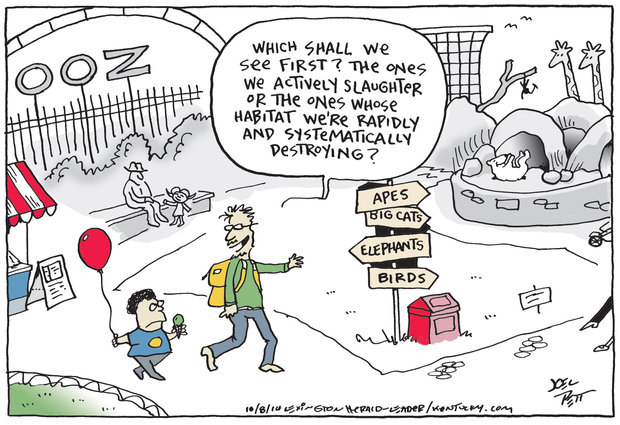
Number 41 of my semi-regular instalment of biodiversity cartoons, and the first for 2017. See full stock of previous ‘Cartoon guide to biodiversity loss’ compendia here.
—
 Last year I posted about a paper that attempted to gauge the opinions of modern-day conservationists about the perceived role of conservation biology today and in the near future.
My main point was that it’s not a dichotomy (or trichotomy, etc.), and that the complexity of the modern discipline means that many different approaches and philosophies must be implemented.
Following that article, Chris Sandbrook of the United Nations World Conservation Monitoring Centre and the University of Cambridge just contacted me to promote a new survey that allows a broader section of the conservation community to contribute views.
The new survey will provide data to establish whether there are any factors (such as nationality, educational background, or experience of different ecosystems) that explain some of the variation in the views held by conservationists. Read the rest of this entry »
 Anyone familiar with this blog and our work on energy issues will not be surprised by my sincere support of nuclear power as the only realistic solution to climate change in the electricity (and possibly transport and industrial heat) arena. I’ve laid my cards on the table in the peer-reviewed literature (e.g., see here, here, here, here, here & here) and the standard media, and I’ve even joined the board of a new environmental NGO that supports nuclear.
And there is hope, despite the ever-increasing human population, rising consumerism, dwindling resources, and the ubiquity of ideologically driven and ethically compromised politicians. I am hopeful for several reasons, including rising safety and reliability standards of modern nuclear technology, the continued momentum of building new fission reactors in many countries, and even the beginnings of real conversations about nuclear power (or at least, the first steps toward this) in countries where nuclear energy is currently banned (e.g., Australia). I’m also heartened by the fact that nearly every conservation scientists with whom I speak is generally supportive, or at least non-resistant, to the idea of nuclear power as part of the climate change solution. An open letter by our colleagues attests to this. In fact, every day that passes brings new evidence that we cannot ignore this solution any longer.
Even despite the evidence in support of implementing a strong nuclear component into climate change-mitigation strategies, one of the most frequent arguments for not doing so is that society can achieve all of its energy needs and simultaneously combat climate change by constructing 100% renewable-energy pathways. While it is an easy mantra to repeat because it feels right intrinsically to nearly everyone with an environmental conscience, as a scientist I also had to ask if such a monumental task is even technically feasible. Read the rest of this entry »
 As have many other scientists, I’ve whinged before about the exploitative nature of scientific publishing. What other industry obtains its primary material for free (submitted articles), has its construction and quality control done for free (reviewing & editing), and then sells its final products for immense profit back to the very people who started the process? It’s a fantastic recipe for making oodles of cash; had I been financially cleverer and more ethically bereft in my youth, I would have bought shares in publicly listed publishing companies.
How much time do we spend reviewing and editing each other’s manuscripts? Some have tried to work out these figures and prescribe ideal writing-to-reviewing/editing ratios, but it suffices to say that we spend a mind-bending amount of our time doing these tasks. While we might never reap the financial rewards of reviewing, we can now at least get some nominal credit for the effort.
While it has been around for nearly five years now, the company Publons1 has only recently come to my attention. At first I wondered about the company’s modus operandi, but after discovering that academics can use their services completely free of charge, and that the company funds itself by “… partnering with publishers” (at least someone is getting something out of them), I believe it’s as about as legitimate and above-board as it gets.
So what does Publons do? They basically list the journals for which you have reviewed and/or edited. Whoah! (I can almost hear you say). How do I protect my anonymity? Read the rest of this entry »
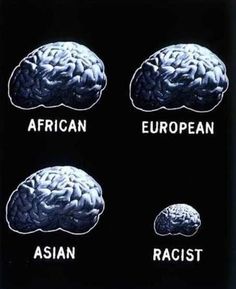 With all the nasty nationalism and xenophobia gurgling nauseatingly to the surface of our political discourse1 these days, it is probably worth some reflection regarding the role of multiculturalism in science. I’m therefore going to take a stab, despite being in most respects a ‘golden child’ in terms of privilege and opportunity (I am, after all, a middle-aged Caucasian male living in a wealthy country). My cards are on the table.
I know few overtly racist scientists, although I suspect that they do exist. In fact, most scientists are of a more liberal persuasion generally and tend to pride themselves on their objectivity in all aspects of being human, including the sociological ones. In other words, we tend to think of ourselves as dispassionate pluralists who only judge the empirical capabilities of our colleagues, with their races, genders, sexual persuasions and other physical attributes irrelevant to our assessment. We generally love to travel and interact with our peers from all nations and walks of life, and we regularly decorate our offices and with cultural paraphernalia different to our own.
But are we as unbiased and dispassionate as we think we are? Do we take that professed pluralism and cultural promiscuity with us to the lab each day? Perhaps we could, and should, do better. Read the rest of this entry »
 We scientists can unfortunately be real bastards to each other, and no other interaction brings out that tendency more than peer review. Of course no one, no matter how experienced, likes to have a manuscript rejected. People hate to be on the receiving end of any criticism, and scientists are certainly no different. Many reviews can be harsh and unfair; many reviewers ‘miss the point’ or are just plain nasty.
It is inevitable that you will be rejected outright many times after the first attempt. Sometimes you can counter this negative decision via an appeal, but more often than not the rejection is final no matter what you could argue or modify. So your only recourse is move on to a lower-ranked journal. If you consistently submit to low-ranked journals, you would obviously receive far fewer rejections during the course of your scientific career, but you would also probably minimise the number of citations arising from your work as a consequence.
So your manuscript has been REJECTED. What now? The first thing to remember is that you and your colleagues have not been rejected, only your manuscript has. This might seem obvious as you read these words, but nearly everyone — save the chronically narcissistic — goes through some feelings of self-doubt and inadequacy following a rejection letter. At this point it is essential to remind yourself that your capacity to do science is not being judged here; rather, the most likely explanation is that given your strategy to maximise your paper’s citation potential, you have probably just overshot the target journal. What this really means is that the editor (and/or reviewers) are of the opinion that your paper is not likely to gain as many citations as they think papers in their journal should. Look closely at the rejection letter — does it say anything about “… lacking novelty …”? Read the rest of this entry »
That’s ’40’, of course. Six more biodiversity cartoons, and the last for 2016. See full stock of previous ‘Cartoon guide to biodiversity loss’ compendia here.
—


I regularly give science communication workshops that include tips for dealing with reporters and journalists in the mass media. Most of these tips come from my own experience, or from stories I’ve heard from close colleagues. Instead of just teaching these important lessons to a select few who get to hear about them in person, I’ve decided to write a little post listing the most important points. Most of the following has little to do with maximising the likelihood of getting an interview, but these tips should help you avoid problems should a reporter notice your important work.
Welcome to the jungle.
1. The best way to get noticed by the media is to write a press release, although this is no guarantee in itself that anyone will pay attention. A good rule of thumb is to write a release for nearly every peer-reviewed article you publish, even if you think no one will be that interested. You’d be surprised how seemingly innocuous and run-of-the-mill papers can go viral if the press release is well-written. On that latter point, engage closely with your institution’s media office, and help them write the release by, for example, sending them a link to the lucid blog post you wrote about your own paper.
2. You can maximise the probability of uptake of your press release if you foster good working relationships with journalists. If you’ve ever had positive interactions with some before, keep the names on record and send a pre-release version of the article and the press release itself before the main event. Every journalist loves a scoop.
3. Register on expert media sites so that journalists can find you (e.g., like Scimex, Expert Guide, Ocean Expert, etc.). Most countries have such things.
4. If a journalist contacts you, make sure you respond immediately. Often even 30 minutes is too long before they seek opinions from some other scientist. If you are travelling, make sure you have an emergency contact auto-responder designed specifically for deadline-enslaved journalists.

Remember, you’re smarter than they are (© Monty Python)
5. Once you do manage to gain an interview, whether it is live radio, recorded television or just as a chat for a newspaper article, avoid jargon like the plague. And make sure you test your language on a non-expert — what’s jargon to a non-specialist might not appear to be jargon at all to you. This often comes with experience, but at the very least try to avoid big, technical-sounding words (they do not make you sound more intelligent; rather, they make you sound boring and up-yourself).
6. Still on the issue of language, use short, punchy answers, analogies and a little humour. Try to relax (again, this comes with experience) by remembering that you know your shit more than 99.99% of the people that will be listening to you.
 Like most local tragedies, it seems to take some time before the news really grabs the overseas audience by the proverbial goolies. That said, I’m gobsmacked that the education tragedy unfolding in South Africa since late 2015 is only now starting to be appreciated by the rest of the academic world.
You might have seen the recent Nature post on the issue, and I do invite you to read that if all this comes as news to you. I suppose I had the ‘advantage’ of getting to know a little bit more about what is happening after talking to many South African academics in the Kruger in September. In a word, the situation is dire.
We’re probably witnessing a second Zimbabwe in action, with the near-complete meltdown of science capacity in South Africa as a now very real possibility. Whatever your take on the causes, justification, politics, racism, or other motivation underlying it all, the world’s conservation biologists should be very, very worried indeed.
Six more biodiversity cartoons coming to you all the way from Sweden (where I’ve been all week). See full stock of previous ‘Cartoon guide to biodiversity loss’ compendia here.
—
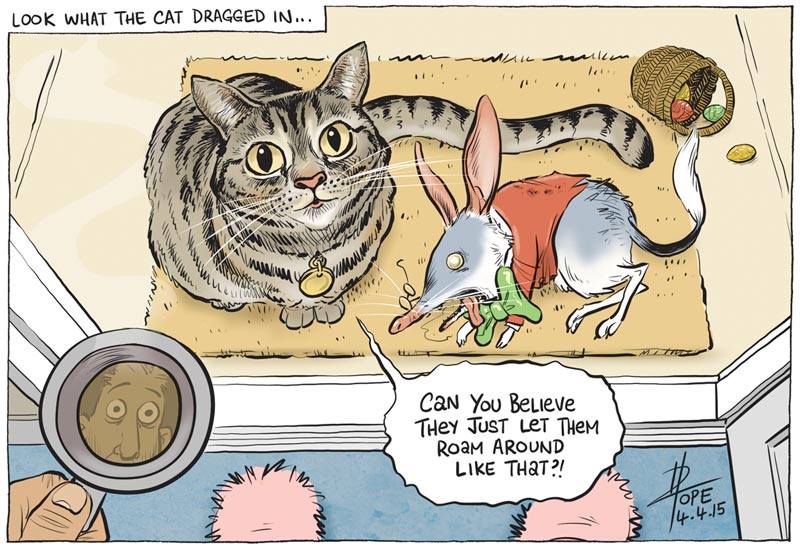
Another six biodiversity cartoons for your midday chuckle & groan. There’s even one in there that takes the mickey out of some of my own research (see if you can figure out which one). See full stock of previous ‘Cartoon guide to biodiversity loss’ compendia here.
—
 Within six months of Abbott and the Coalition seizing power in the 2013 Australian election, decades—if not centuries—of environmental damage and retrograde policies unfolded. But this was no run-of-the-mill incompetence and neglect by government—this was an all-out attack on anything with the merest whiff of environmental protection. The travesty is well-documented, from infamously axing both the carbon-pricing scheme and climate commission, eradicating Labor’s 80% emissions-reduction target by 2050, diluting the Renewable Energy Target, refusing to commit to enforcing the Illegal Logging Prohibition Act (fortunately, this is now law), defunding the only independent legal entity available to limit environmentally destructive development (Environmental Defenders Office), to even attempting to remove the rights of environmental groups to challenge development proposals (thankfully, that failed).
The Coalition’s backward and ineffectual climate change-mitigation policies alone are evidence enough for long-term damage, but their war on the environment in general means that even the future election of a more environmentally responsible government will not undo the damage quickly, if at all. As a result of these and other nearsighted policies, Australia remains one of the highest per-capita greenhouse-gas emitters on the planet, has one of the highest per-capita water uses of any nation, leads the world in mammal extinctions, continues to deforest its already forest-poor landscape, and is a society utterly unprepared to deal with the future challenges of a degraded planet.
Read the rest of this entry »
 Originally published in the Otago Daily Times by Tom McKinlay
—
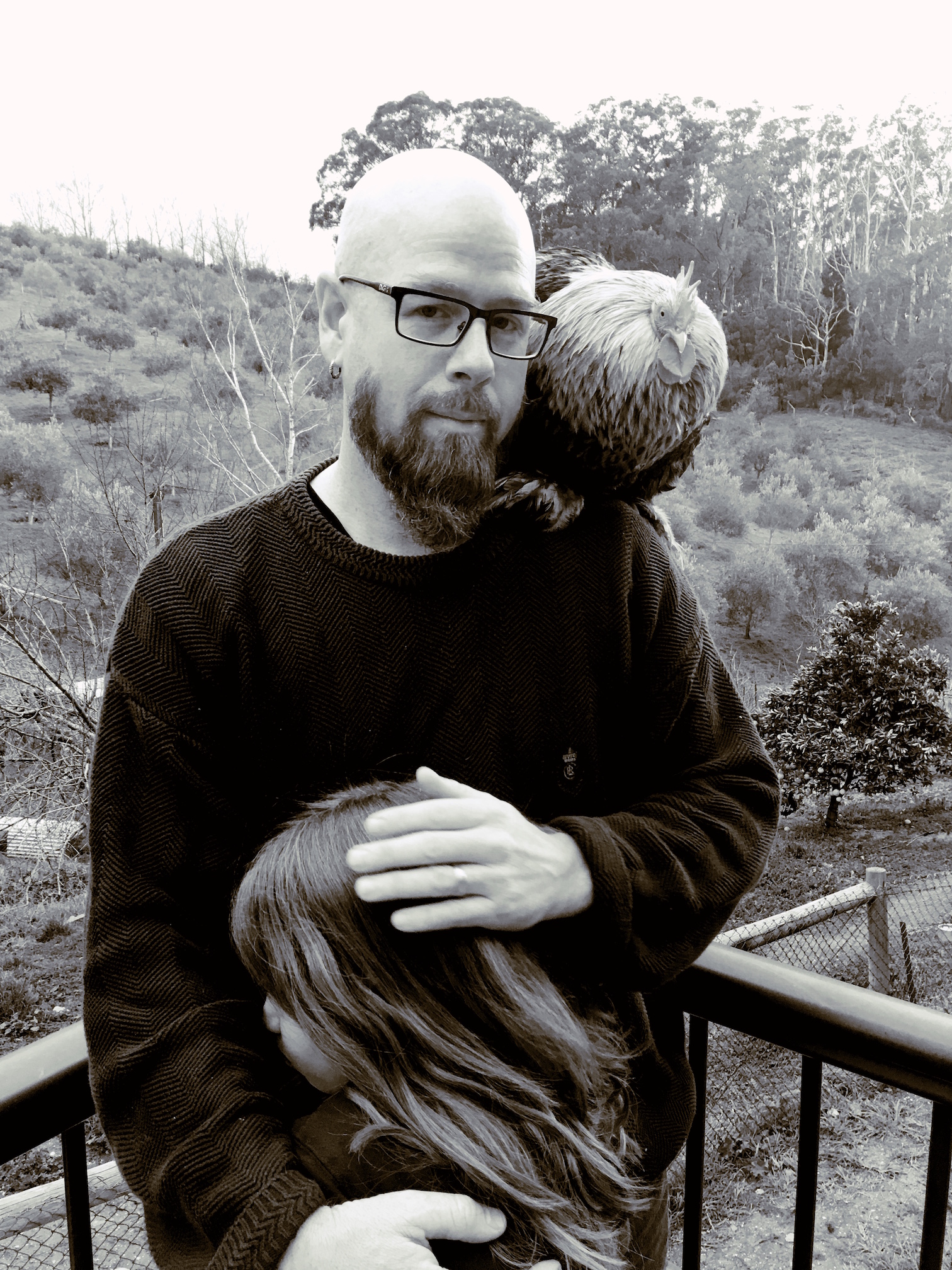
If we don’t act soon, the world we leave our children will be in a sorry state indeed, leading Australian scientist Prof Corey Bradshaw tells Tom McKinlay.
Prof Corey Bradshaw’s 9-year-old daughter lives what sounds an idyllic existence. On their small farm outside Adelaide in South Australia, she has her chickens and her dogs and her cats, her goats and her sheep.
She’s an only child, but is not short of attention from adults and reads voraciously.
She has big plans; there are at least 25 careers she likes the look of, that she’ll undertake simultaneously: farmer, wildlife rescuer, self-sufficient bush dweller – feeding herself by shooting arrows at fish – scientist and more.
She is optimistic about the future. As she should be. A 9-year-old girl living in Australia in 2016 should regard the sky as no limit at all.
All this I learn from her father, ecologist Prof Bradshaw, who talks of his daughter with an enthusiasm unbounded.
It is fair to assume she has picked up some of her interest in the natural world from him.
He holds the Sir Hubert Wilkins Chair of Climate Change in the School of Biological Sciences at the University of Adelaide.
And the ecologist, conservation biologist and systems modeller – with a University of Otago degree – has shared a great deal of his work with his daughter.
“She’s very much a farm kid, but because of who I am she gets to hear a lot about animal and plant systems around the world, and she’s travelled a lot with me and she’s a complete fanatic of David Attenborough,” the professor says.
So far, still so idyllic. But Prof Bradshaw’s work means he is at the forefront of alerting the world to what is not right with it.
Pollution, climate change, habitat loss, extinction.
His daughter has travelled with him to see species that might not be with us by the time she grows up.
“She’s hyper-aware of extinctions, in particular, and how climate change is contributing to that,” Prof Bradshaw says.
“I don’t pull any punches with her.”
In fact, he made her cry when she was 5 explaining climate change. She hasn’t needed to travel to know the pot is on the boil. Fires have forced the family to flee its South Australian property several times, not just at the height of summer.
One of the worst fires in the region struck in May a couple of years back.
“We were on the doorstep of winter and we had one of our worst fires in 20 years.”
So even without a scientist in the family, there are certain unavoidable truths for a child growing up in 21st-century Australia.
Prof Bradshaw is coming to Dunedin next month as part of the New Zealand International Science Festival to talk on climate change, looking at it from his daughter’s perspective. Read the rest of this entry »
 I’ve been thinking about this post for a while, but it wasn’t until having some long, deep chats today with staff and students at Simon Fraser University‘s Department of Biological Sciences (with a particular hat-tip to the lovely Nick Dulvy, Isabelle Côté & John Reynolds) that the full idea began to take shape in my brain. It seems my presentation was a two-way street: I think I taught a few people some things, and they taught me something back. Nice.
There’s no question at all that science communication has never before been so widespread and of such high quality. More and more scientists and science students are now blogging, tweeting and generally engaging the world about their science findings. There is also an increasing number of professional science communication associations out there, and a growing population of professional science communicators. It is possibly the best time in history to be involved in the generation and/or communication of scientific results.
Why then is the public appreciation, acceptance and understanding of science declining? It really doesn’t make much sense if you merely consider that there has never been more good science ‘out there’ in the media — both social and traditional. For the source literature itself, there has never before been as many scientific journals, articles and even scientists writing. Read the rest of this entry »
 In addition to the surpassing coolness of reconstructing long-gone ecosystems, my new-found enthusiasm for palaeo-ecology has another advantage — most of the species under investigation are already extinct.
That might not sound like an ‘advantage’, but let’s face it, modern conservation ecology can be bloody depressing, so much so that one sometimes wonders if it’s worth it. It is, of course, but there’s something marvellously relieving about studying extinct systems for the simple reason that there are no political repercussions. No self-serving, plutotheocratic politician can bugger up these systems any more. That’s a refreshing change from the doom and gloom of modern environmental science!
But it’s not all sweetness and light, of course; there are still people involved, and people sometimes make bad decisions in an attempt to modify the facts to suit their creed. The problem is when these people are the actual scientists involved in the generation of the ‘facts’.
As I alluded to a few weeks ago with the publication of our paper in Nature Communications describing the lack of evidence for a climate effect on the continental-scale extinctions of Australia’s megafauna, we have a follow-up paper that has just been published online in Proceedings of the Royal Society B — What caused extinction of the Pleistocene megafauna of Sahul? led by Chris Johnson of the University of Tasmania.
After our paper published earlier this month, this title might seem a bit rhetorical, so I want to highlight some of the reasons why we wrote the review. Read the rest of this entry »
 Last July I wrote about a Science paper of ours demonstrating that there was a climate-change signal in the overall extinction pattern of megafauna across the Northern Hemisphere between about 50,000 and 10,000 years ago. In that case, it didn’t have anything to do with ice ages (sorry, Blue Sky Studios); rather, it was abrupt warming periods that exacerbated the extinction pulse instigated by human hunting.
Contrary to some appallingly researched media reports, we never claimed that these extinctions arose only from warming, because the evidence is more than clear that humans were the dominant drivers across North America, Europe and northern Asia; we simply demonstrated that warming periods had a role to play too.
A cursory glance at the title of this post without appreciating the complexity of how extinctions happen might lead you to think that we’re all over the shop with the role of climate change. Nothing could be farther from the truth.
Instead, we report what the evidence actually says, instead of making up stories to suit our preconceptions.
So it is with great pleasure that I report our new paper just out in Nature Communications, led by my affable French postdoc, Dr Frédérik Saltré: Climate change not to blame for late Quaternary megafauna extinctions in Australia.
Of course, it was a huge collaborative effort by a crack team of ecologists, palaeontologists, geochronologists, paleo-climatologists, archaeologists and geneticists. Only by combining the efforts of this diverse and transdisciplinary team could we have hoped to achieve what we did. Read the rest of this entry »
 A perennial lament of nearly every conservation scientist — at least at some point (often later in one’s career) — is that the years of blood, sweat and tears spent to obtain those precious results count for nought in terms of improving real biodiversity conservation.
Conservation scientists often claim, especially in the first and last paragraphs of their papers and research proposals, that by collecting such-and-such data and doing such-and-such analyses they will transform how we manage landscapes and species to the overall betterment of biodiversity. Unfortunately, most of these claims are hollow (or just plain bullshit) because the results are either: (i) never read by people who actually make conservation decisions, (ii) not understood by them even if they read the work, or (iii) never implemented because they are too vague or too unrealistic to translate into a tangible, positive shift in policy.
A depressing state of being, I know.
This isn’t any sort of novel revelation, for we’ve been discussing the divide between policy makers and scientists for donkey’s years. Regardless, the whinges can be summarised succinctly: Read the rest of this entry »
 Maybe I’ve had a couple of glasses of champagne; maybe I’ve enjoyed tonight’s meal just a little too much and I am now feeling sated and content; maybe my fleeting, blissful state of mind has precipitated a temporary penchant for the poetic. Just maybe.
It is a rare thing indeed to be content, and so I implore you to indulge me a little tonight because I am in particularly high spirits about my chosen profession. Despite the bullshit of the daily grind (bad reviews, profiteering of academic publishers, shitty university administration, the constant pressure to beg for money, poor pay, feelings of futility, et cetera ad nauseam), there’s nothing quite as comforting as being aware that science is the only human endeavour that regularly attempts to reduce subjectivity. Being human means that even scientists have all of our weaknesses and limitations of perception, but science allows us to get as close to objectivity as is possible; science is not the pursuit of objectivity per se, but it is the pursuit of subjectivity reduction.
In the face of all posturing, manipulation, deceit, ulterior motives and fanatical beliefs that go on every day, science remains the bedrock of society, and so despite most human beings being ignorant of its1 importance, or actively pursuing its demise, all human beings have benefitted from science. Read the rest of this entry »

© Auston Habershaw
Let’s do a little thought experiment, shall we? The late, great Douglas Adams wrote about a planet (Golgafrincham) that decided to ship all its undesirables (it was not made clear to them that they were in fact considered ‘undesirable’) to another planet to cut their population by a third. As it turns out, it wasn’t such a great idea.
This idea — shipping people to another planet — is a common theme in the sci-fi genre when there is an impending disaster, such as the planet becoming unsustainable, too many humans over-consuming, or because some great natural calamity is about to occur. Many think Mars is the most likely possible place to get the first sustainable human colony going, but it’s going to be a logistical nightmare to put together even a small colony.
Could moving to a planet like Mars stem the inexorable increase in the human population and save planet Earth? Not likely, and here’s why.
Let’s throw caution to the wind and make some outlandish assumptions just to make this point even stronger.
 We’ve all heard it somewhere before: “It’s all just a big conspiracy and those bloody scientists are just trying to protect their funding sources.”
Whether it’s about climate change, pharmacology, genetically modified organisms or down-to-earth environmentalism, people who don’t want to agree with a particular scientific finding often invoke the conspiracy argument.
There are three main reasons why conspiracies among scientists are impossible. First, most scientists are just not that organised, nor do they have the time to get together to plan such elaborate practical jokes on the public. We can barely keep our own shit together than try to construct a water-tight conspiracy. I’ve never met a scientist who would be capable of doing this, let alone who would want to.
But this doesn’t necessarily prove my claim that it is ‘impossible’. Most importantly, the idea that a conspiracy could form among scientists ignores one of the most fundamental components of scientific progress — dissension; and bloody hell, can we dissent! The scientific approach is one where successive lines of evidence testing hypotheses are eventually amassed into a concept, then perhaps a rule of thumb. Read the rest of this entry »


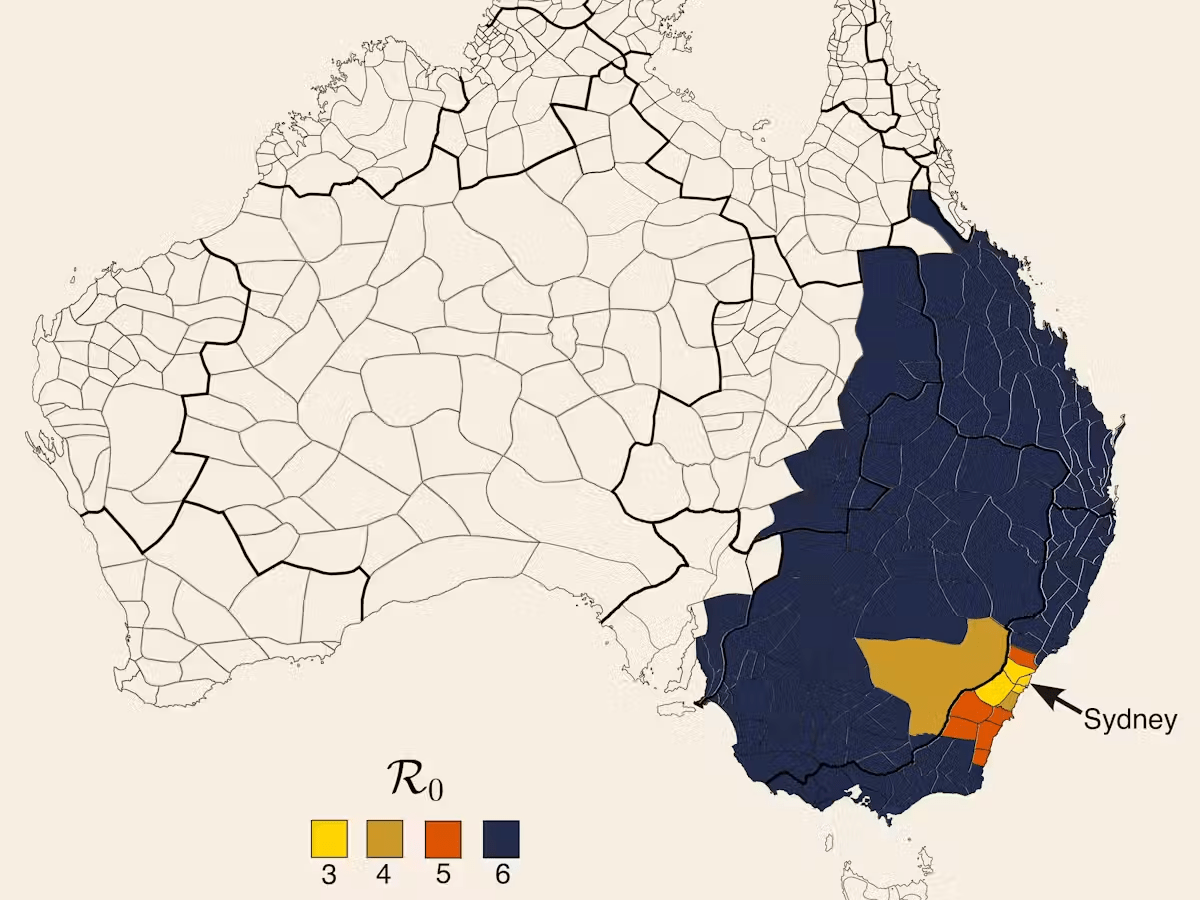
Hulton Archive / Getty Images We warn readers that the content of this study is confronting and may be distressing. In April 1789, the first smallpox epidemic among Aboriginal people in the Sydney region began, just 16 months after Europeans arrived on the First Fleet. Little is known of the true scale of the epidemic,…

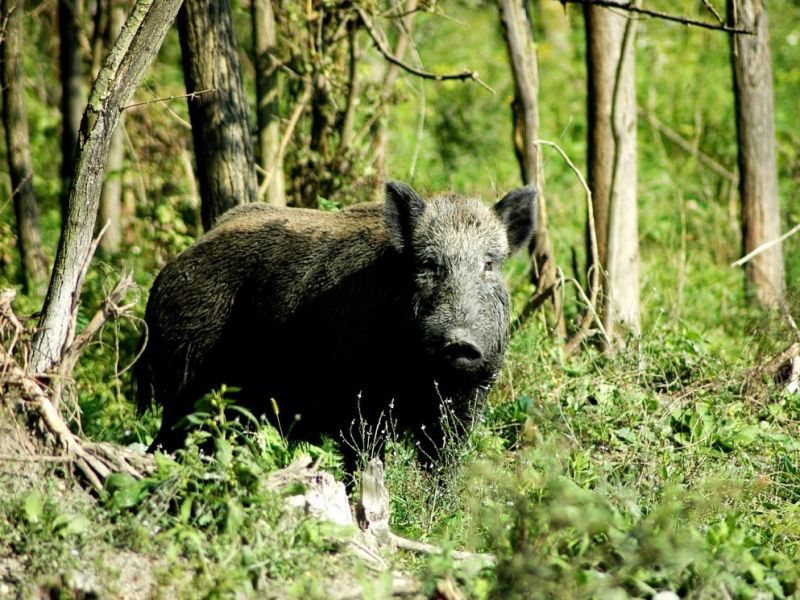
Just over two years ago I reported the ‘likely’ eradication of feral pigs from Australia’s third-largest (4,405 km2) island — Kangaroo Island. I indicated ‘likely’ because the program still required the proof-of-eradication phase to be completed before an official declaration could be made. Yesterday I had the immense honour to take part in the official…
Have you ever done any research that relied to any degree on Indigenous Knowledges? How did you cite those Knowledges, if at all? It’s probably time we rethink how we engage with Indigenous Knowledge systems. In a new article published in BioScience, we — a large group of Indigenous and non-Indigenous scholars in Australia —…