Why do they take so long?

4 05 2018

phd1This is probably more of an act of self-therapy on a Friday afternoon to alleviate some frustration, but it is an important issue all the same.

An Open Letter to academic publishers:

Why, oh why, do some of you take so bloody long to publish our papers online after acceptance?

I have been known to complain about how the general academic-publishing industry makes sickening amount of profit on the backs of our essentially free labour, and I suppose this is just another whinge along those lines. Should it take weeks to months to publish our papers online once they are accepted?

No. it shouldn’t.

I’m fully aware that most publishing companies these days outsource the actual publishing side of things to subcontracting agencies (and I’ve noticed more and more that these tend to be in developing nations, probably because the labour is cheaper), and that it can take someone some time to work through the backlog of Word or Latex documents and produce nice, polished PDFs. Read the rest of this entry »


Prioritising your academic tasks

18 04 2018

The following is an abridged version of one of the chapters in my recent book, The Effective Scientist, regarding how to prioritise your tasks in academia. For a more complete treatise of the issue, access the full book here.

splitting tasks

Splitting tasks. © René Campbell renecampbellart.com

How the hell do you balance all the requirements of an academic life in science? From actually doing the science, analysing the data, writing papers, reviewing, writing grants, to mentoring students — not to mention trying to have a modicum of a life outside of the lab — you can quickly end up feeling a little daunted. While there is no empirical formula that make you run your academic life efficiently all the time, I can offer a few suggestions that might make your life just a little less chaotic.

Priority 1: Revise articles submitted to high-ranked journals

Barring a family emergency, my top priority is always revising an article that has been sent back to me from a high-ranking journal for revisions. Spend the necessary time to complete the necessary revisions.

Priority 2: Revise articles submitted to lower-ranked journals

I could have lumped this priority with the previous, but I think it is necessary to distinguish the two should you find yourself in the fortunate position of having to do more than one revision at a time.

Priority 3: Experimentation and field work

Most of us need data before we can write papers, so this is high on my personal priority list. If field work is required, then obviously this will be your dominant preoccupation for sometimes extended periods. Many experiments can also be highly time-consuming, while others can be done in stages or run in the background while you complete other tasks.

Priority 4: Databasing

This one could be easily forgotten, but it is a task that can take up a disproportionate amount of your time if do not deliberately fit it into your schedule. Well-organised, abundantly meta-tagged, intuitive, and backed-up databases are essential for effective scientific analysis; good data are useless if you cannot find them or understand to what they refer. Read the rest of this entry »


My interview with Conservation Careers

10 04 2018

IMage-2

The online job-search engine and careers magazine for conservation professionals — Conservation Careers — recently published an interview with me written by Mark Thomas. Mark said that he didn’t mind if I republished the article here.

As we walk through life we sometimes don’t know where our current path will take us. Will it be meaningful, and what steps could we take? Seeking out and talking to people who have walked far ahead of us in a line of work that we are interested in could help shape the next steps we take, and help us not make the same mistakes that could have cost us precious time.

A phrase that I love is “standing on the shoulders of giants” and this conversation has really inspired me — I hope it will do for you as well.

Corey Bradshaw is the Matthew Flinders Fellow in Global Ecology at Flinders University, and author to over 260 hundred peer-reviewed articles. His research is mainly in the area of global-change ecology, and his blog ConservationBytes critiques the science of conservation and has over 11,000 followers. He has written books, and his most recent one ‘The Effective Scientist’ will be published in March (more on this later).

What got you interested in ecology and conservation?

As a child I grew up in British Columbia, Canada, my father was a fur trapper, and we hunted everything we ate (we ate a lot of black bear). My father had lots of dead things around the house and he prepared the skins for the fur market. It was a very consumptive and decidedly non-conservation upbringing.

Ironically, I learnt early in life that some of the biggest impediments to deforestation through logging was the trapping industry, because when you cut down trees nothing that is furry likes to live there. In their own consumptive ways, the hunters were vocal and acted to protect more species possibly than what some dedicated NGOs were able to.

So, at the time, I never fully appreciated it, but not having much exposure to all things urban and the great wide world, and by spending a lot of time out in the bush, I ended up appreciating the conservation of wild things even within that consumptive mind-set. Read the rest of this entry »


The Effective Scientist

22 03 2018

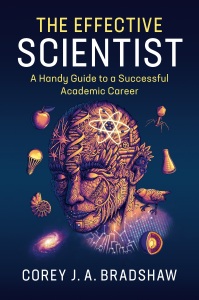
final coverWhat is an effective scientist?

The more I have tried to answer this question, the more it has eluded me. Before I even venture an attempt, it is necessary to distinguish the more esoteric term ‘effective’ from the more pedestrian term ‘success’. Even ‘success’ can be defined and quantified in many different ways. Is the most successful scientist the one who publishes the most papers, gains the most citations, earns the most grant money, gives the most keynote addresses, lectures the most undergraduate students, supervises the most PhD students, appears on the most television shows, or the one whose results improves the most lives? The unfortunate and wholly unsatisfying answer to each of those components is ‘yes’, but neither is the answer restricted to the superlative of any one of those. What I mean here is that you need to do reasonably well (i.e., relative to your peers, at any rate) in most of these things if you want to be considered ‘successful’. The relative contribution of your performance in these components will vary from person to person, and from discipline to discipline, but most undeniably ‘successful’ scientists do well in many or most of these areas.

That’s the opening paragraph for my new book that has finally been release for sale today in the United Kingdom and Europe (the Australasian release is scheduled for 7 April, and 30 April for North America). Published by Cambridge University Press, The Effective ScientistA Handy Guide to a Successful Academic Career is the culmination of many years of work on all the things an academic scientist today needs to know, but was never taught formally.

Several people have asked me why I decided to write this book, so a little history of its genesis is in order. I suppose my over-arching drive was to create something that I sincerely wish had existed when I was a young scientist just starting out on the academic career path. I was focussed on learning my science, and didn’t necessarily have any formal instruction in all the other varied duties I’d eventually be expected to do well, from how to write papers efficiently, to how to review properly, how to manage my grant money, how to organise and store my data, how to run a lab smoothly, how to get the most out of a conference, how to deal with the media, to how to engage in social media effectively (even though the latter didn’t really exist yet at the time) — all of these so-called ‘extra-curricular’ activities associated with an academic career were things I would eventually just have to learn as I went along. I’m sure you’ll agree, there has to be a better way than just muddling through one’s career picking up haphazard experience. Read the rest of this entry »


To share, or not to share, is no longer the question

7 01 2018

sharing dataAn edited version of a snippet from my upcoming book, The Effective Scientist (due out in March 2018).

I tend to assume tacitly that my collaborators are indeed entirely fine with the idea of having their hard-won data spread across the internet, and that anyone can access and use them. In reality, many are probably not comfortable with that concept at all, and that the very notion of ‘sharing’ data with anyone but your closest and most-trusted colleagues is the stuff of nightmares.

I too was once far too concerned about the privacy of the data for which I had literally sweated and bled, for I feared that some nefarious and amoral scientist would steal, analyse, and publish them before I had the chance, thus usurping my unique contributions to the body of human knowledge. Perhaps I was just paranoid, although I still encounter such attitudes today. While data theft can occur, in reality it is unlikely that anyone would bother trying to out-do you in this regard, mainly for the simple reason that in most cases, data availability is not the limiting factor for scientific advancement. Another reason why this should not worry you is that far too few of us have the time to publish all of our own data, let alone someone else’s. Read the rest of this entry »


Ecologists are gender-biased

16 11 2017
sexism-image

© xkcd.com

I normally don’t do this, but this is an extra-ordinary circumstance.

As many of you are already aware, Franck Courchamp and I published a paper in Nature Ecology and Evolution on Monday that ranked high-profile ecology papers. I won’t go into any details about the list here, because you can read the paper and the associated blog posts themselves.

The publication caused a bit of a stir among ecologists, evidenced by the rather high and rising Altmetrics score for the paper (driven mainly by a Boaty McBoatface-load of tweets). I haven’t done any social-media analysis, but it appears that most of the tweets were positive, a few were negative, and a non-trivial proportion of them were highly critical of the obvious male-biased nature of the list (in terms of article authors).

On that last point, we couldn’t agree more.

Which is why we have a follow-up analysis specifically addressing this gender bias, but that’s currently in review in Nature Ecology and Evolution.

In the meantime, however, and at the suggestion of possibly one of the coolest, nicest, and most logical editors in the world, Dr Patrick Goymer (Editor-in-Chief of Nature Ecology and Evolution), I’ve just posted a pre-print of our paper entitled “Gender-biased perceptions of important ecology articles” on bioRxiv.

Read the rest of this entry »


100 papers that every ecologist should read

14 11 2017

o-SLEEP-LIBRARY-facebook

If you’re a regular reader of CB.com, you’ll be used to my year-end summaries of the influential conservation papers of that calendar year (e.g., 2016, 2015, 2014, 2013), as somewhat subjectively assessed by F1000 Prime experts. You might also recall that I wrote a post with the slightly provocative title Essential papers you’ve probably never read back in 2015 where I talked about papers that I believe at least my own students should read and appreciate by the time they’ve finished the thesis.

But this raised a much broader question — of all the thousands of papers out there that I should have read/be reading, is there a way to limit the scope and identify the really important ones with at least a hint of objectivity? And I’m certainly not referring to the essential methods papers that you have to read and understand in order to implement their recommended analysis into your own work — these are often specific to the paper you happen to be writing at the moment.

The reason this is important is that there is absolutely no way I can keep on top of my scientific reading, and not only because there are now over 1.5 million papers published across the sciences each year. If you have even the slightest interest in working across sub-disciplines or other disciplines, the challenge becomes more insurmountable. Finding the most pertinent and relevant papers to read, especially when introducing students or young researchers to the concepts, is turning into an increasingly nightmarish task. So, how do we sift through the mountain of articles out there?

It was this question that drove the genesis of our paper that came out only today in Nature Ecology and Evolution entitled ‘100 articles every ecologist should read‘. ‘Our’ in this case means me and my very good friend and brilliant colleague, Dr Franck Courchamp of Université Paris-Sud and the CNRS, with whom I spent a 6-month sabbatical back in 2015. Read the rest of this entry »


When to appeal a rejection

26 08 2017

BegA modified excerpt from my upcoming book for you to contemplate after your next rejection letter.

This is a delicate subject that requires some reflection. Early in my career, I believed the appeal process to be a waste of time. Having made one or two of them to no avail, and then having been on the receiving end of many appeals as a journal editor myself, I thought that it would be a rare occasion indeed when an appeal actually led to a reversal of the final decision.

It turns out that I was very wrong, but not in terms of simple functional probability that you might be thinking. Ironically, the harder it is to get a paper published in a journal, the higher the likelihood that an appeal following rejection will lead to a favourable outcome for the submitting authors. Let me explain. Read the rest of this entry »


Journal ranks 2016

14 07 2017

Many books

Last year we wrote a bibliometric paper describing a new way to rank journals, which I contend is a fairer representation of relative citation-based rankings by combining existing ones (e.g., ISI, Google Scholar and Scopus) into a composite rank. So, here are the 2016 ranks for (i) 93 ecology, conservation and multidisciplinary journals, and a subset of (ii) 46 ecology journals, (iii) 21 conservation journals, just as I have done in previous years (201520142013, 2012, 20112010, 2009, 2008).

Read the rest of this entry »


How to respond to reviewers

30 06 2017

Just like there are many styles to writing scientific manuscripts, there are also many ways to respond to a set of criticisms and suggestions from reviewers. Likewise, many people and organisations have compiled lists of what to do, and what not to do, in a response to reviews of your manuscript (just type ‘response to reviewer comments’ or similar phrase into your favourite search engine and behold the reams of available advice).

what

It clearly is a personal choice, but from my own experience as an author, reviewer, editor, and the myriad suggestions available online, there are a few golden rules about how to respond:

  • After you have calmed down a little, it is essential that you remain polite throughout the process. Irrespective of how stupid, unfair, mean-spirited, or just plain lazy the reviewers might appear to you, do not stoop to their level and fire back with defensive, snarky comments. Neither must you ever blame the editor for even the worst types of reviews, because you will do yourself no favours at all by offending the main person who will decide your manuscript’s fate.

Read the rest of this entry »


Credit for reviewing & editing — it’s about bloody time

15 03 2017

clapping-hands-300x225As have many other scientists, I’ve whinged before about the exploitative nature of scientific publishing. What other industry obtains its primary material for free (submitted articles), has its construction and quality control done for free (reviewing & editing), and then sells its final products for immense profit back to the very people who started the process? It’s a fantastic recipe for making oodles of cash; had I been financially cleverer and more ethically bereft in my youth, I would have bought shares in publicly listed publishing companies.

How much time do we spend reviewing and editing each other’s manuscripts? Some have tried to work out these figures and prescribe ideal writing-to-reviewing/editing ratios, but it suffices to say that we spend a mind-bending amount of our time doing these tasks. While we might never reap the financial rewards of reviewing, we can now at least get some nominal credit for the effort.

While it has been around for nearly five years now, the company Publons1 has only recently come to my attention. At first I wondered about the company’s modus operandi, but after discovering that academics can use their services completely free of charge, and that the company funds itself by “… partnering with publishers” (at least someone is getting something out of them), I believe it’s as about as legitimate and above-board as it gets.

So what does Publons do? They basically list the journals for which you have reviewed and/or edited. Whoah! (I can almost hear you say). How do I protect my anonymity? Read the rest of this entry »


Multiculturalism in the lab

23 02 2017

8294047fabf352ce46f4fd9a89d4a93dWith all the nasty nationalism and xenophobia gurgling nauseatingly to the surface of our political discoursethese days, it is probably worth some reflection regarding the role of multiculturalism in science. I’m therefore going to take a stab, despite being in most respects a ‘golden child’ in terms of privilege and opportunity (I am, after all, a middle-aged Caucasian male living in a wealthy country). My cards are on the table.

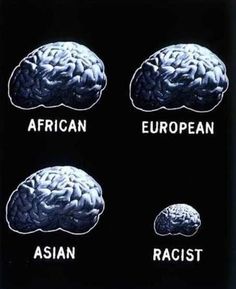
I know few overtly racist scientists, although I suspect that they do exist. In fact, most scientists are of a more liberal persuasion generally and tend to pride themselves on their objectivity in all aspects of being human, including the sociological ones. In other words, we tend to think of ourselves as dispassionate pluralists who only judge the empirical capabilities of our colleagues, with their races, genders, sexual persuasions and other physical attributes irrelevant to our assessment. We generally love to travel and interact with our peers from all nations and walks of life, and we regularly decorate our offices and with cultural paraphernalia different to our own.

But are we as unbiased and dispassionate as we think we are? Do we take that professed pluralism and cultural promiscuity with us to the lab each day? Perhaps we could, and should, do better. Read the rest of this entry »


Dealing with rejection

8 02 2017

6360351663382153201743264721_ls_crying-menWe scientists can unfortunately be real bastards to each other, and no other interaction brings out that tendency more than peer review. Of course no one, no matter how experienced, likes to have a manuscript rejected. People hate to be on the receiving end of any criticism, and scientists are certainly no different. Many reviews can be harsh and unfair; many reviewers ‘miss the point’ or are just plain nasty.

It is inevitable that you will be rejected outright many times after the first attempt. Sometimes you can counter this negative decision via an appeal, but more often than not the rejection is final no matter what you could argue or modify. So your only recourse is move on to a lower-ranked journal. If you consistently submit to low-ranked journals, you would obviously receive far fewer rejections during the course of your scientific career, but you would also probably minimise the number of citations arising from your work as a consequence.

So your manuscript has been REJECTED. What now? The first thing to remember is that you and your colleagues have not been rejected, only your manuscript has. This might seem obvious as you read these words, but nearly everyone — save the chronically narcissistic — goes through some feelings of self-doubt and inadequacy following a rejection letter. At this point it is essential to remind yourself that your capacity to do science is not being judged here; rather, the most likely explanation is that given your strategy to maximise your paper’s citation potential, you have probably just overshot the target journal. What this really means is that the editor (and/or reviewers) are of the opinion that your paper is not likely to gain as many citations as they think papers in their journal should. Look closely at the rejection letter — does it say anything about “… lacking novelty …”? Read the rest of this entry »


Journal ranks 2015

26 07 2016

graduate_barsBack in February I wrote about our new bibliometric paper describing a new way to rank journals, which I still contend is a fairer representation of relative citation-based rankings. Given that the technique requires ISI, Google Scholar and Scopus data to calculate the composite ranks, I had to wait for the last straggler (Google) to publish the 2015 values before I could present this year’s rankings to you. Google has finally done that.

So in what has become a bit of an annual tradition, I’m publishing the ranks of a mixed list of ecology, conservation and multidisciplinary disciplines that probably cover most of the journals you might be interested in comparing. Like for last year, I make no claims that this list is comprehensive or representative. For previous lists based on ISI Impact Factors (except 2014), see the following links (2008, 2009, 2010, 2011, 2012, 2013).

So here are the following rankings of (i) 84 ecology, conservation and multidisciplinary journals, and a subset of (ii) 42 ecology journals, (iii) 21 conservation journals, and (iv) 12 marine and freshwater journals. Read the rest of this entry »


Subconsciously sexist?

29 06 2016

2000px-Igualtat_de_sexes.svgIt was with some consternation that I processed some recent second-hand scuttlebutt about my publishing history with respect to gender balance. I’ve always considered myself non-sexist when it comes to working with my colleagues, but as a white, middle-aged male, I’m willing to admit that perhaps subconsciously I’ve been promoting gender inequalities in science without realising that I’m doing it. As a father of a daughter, I also want to make sure the world in which she grows up isn’t as difficult as it has been for women of previous generations.

It is still an unfortunate fact that the ideal of a 50–50 gender balance in the biological sciences is far from becoming a reality; indeed, women have to be about 2.2-2.5 times more productive than their male counterparts to be as successful in securing financial support to do their work.

In fact, a 1993 study of ecologists attributed the lower (but happily, increasing) productivity and dwindling representation of women with career stage to such institutionalised injustices as: less satisfactory relationships with PhD advisors, difficulty in finding suitable mentors, lack of institutional empowerment, greater family responsibilities, lower salaries, lower job security, and lower evaluation of personal success. A follow-up study in 2012 suggested that the gap was narrowing in many of these components, but it was still far from equal. For a more comprehensive discussion of the complexity of the issues in science (see here), and in ecology in particular, see here.

Others have more recently reported no evidence for a gender effect in paper acceptance rates (Biological Conservation), and no difference in the level of perceived expertise between men and women (in long-term environmental or ecological research at 60 protected areas stratified across forests of the Asia-Pacific, African and American tropics).

Read the rest of this entry »


Shadow of ignorance veiling society despite more science communication

19 04 2016

imagesI’ve been thinking about this post for a while, but it wasn’t until having some long, deep chats today with staff and students at Simon Fraser University‘s Department of Biological Sciences (with a particular hat-tip to the lovely Nick Dulvy, Isabelle Côté & John Reynolds) that the full idea began to take shape in my brain. It seems my presentation was a two-way street: I think I taught a few people some things, and they taught me something back. Nice.

There’s no question at all that science communication has never before been so widespread and of such high quality. More and more scientists and science students are now blogging, tweeting and generally engaging the world about their science findings. There is also an increasing number of professional science communication associations out there, and a growing population of professional science communicators. It is possibly the best time in history to be involved in the generation and/or communication of scientific results.

Why then is the public appreciation, acceptance and understanding of science declining? It really doesn’t make much sense if you merely consider that there has never been more good science ‘out there’ in the media — both social and traditional. For the source literature itself, there has never before been as many scientific journals, articles and even scientists writing. Read the rest of this entry »


How to rank journals

18 02 2016

ranking… properly, or at least ‘better’.

In the past I have provided ranked lists of journals in conservation ecology according to their ISI® Impact Factor (see lists for 2008, 2009, 2010, 2011, 2012 & 2013). These lists have proven to be exceedingly popular.

Why are journal metrics and the rankings they imply so in-demand? Despite many people loathing the entire concept of citation-based journal metrics, we scientists, our administrators, granting agencies, award committees and promotion panellists use them with such merciless frequency that our academic fates are intimately bound to the ‘quality’ of the journals in which we publish.

Human beings love to rank themselves and others, the things they make, and the institutions to which they belong, so it’s a natural expectation that scientific journals are ranked as well.

I’m certainly not the first to suggest that journal quality cannot be fully captured by some formulation of the number of citations its papers receive; ‘quality’ is an elusive characteristic that includes inter alia things like speed of publication, fairness of the review process, prevalence of gate-keeping, reputation of the editors, writing style, within-discipline reputation, longevity, cost, specialisation, open-access options and even its ‘look’.

It would be impossible to include all of these aspects into a single ‘quality’ metric, although one could conceivably rank journals according to one or several of those features. ‘Reputation’ is perhaps the most quantitative characteristic when measured as citations, so we academics have chosen the lowest-hanging fruit and built our quality-ranking universe around them, for better or worse.

I was never really satisfied with metrics like black-box Impact Factors, so when I started discovering other ways to express the citation performance of the journals to which I regularly submit papers, I became a little more interested in the field of bibliometrics.

In 2014 I wrote a post about what I thought was a fairer way to judge peer-reviewed journal ‘quality’ than the default option of relying solely on ISI® Impact Factors. I was particularly interested in why the new kid on the block — Google Scholar Metrics — gave at times rather wildly different ranks of the journals in which I was interested.

So I came up with a simple mean ranking method to get some idea of the relative citation-based ‘quality’ of these journals.

It was a bit of a laugh, really, but my long-time collaborator, Barry Brook, suggested that I formalise the approach and include a wider array of citation-based metrics in the mean ranks.

Because Barry’s ideas are usually rather good, I followed his advice and together we constructed a more comprehensive, although still decidedly simple, approach to estimate the relative ranks of journals from any selection one would care to cobble together. In this case, however, we also included a rank-placement resampler to estimate the uncertainty associated with each rank.

I’m pleased to announce that the final version1 is now published in PLoS One2. Read the rest of this entry »


Bad science

10 02 2016

Head in HandsIn addition to the surpassing coolness of reconstructing long-gone ecosystems, my new-found enthusiasm for palaeo-ecology has another advantage — most of the species under investigation are already extinct.

That might not sound like an ‘advantage’, but let’s face it, modern conservation ecology can be bloody depressing, so much so that one sometimes wonders if it’s worth it. It is, of course, but there’s something marvellously relieving about studying extinct systems for the simple reason that there are no political repercussions. No self-serving, plutotheocratic politician can bugger up these systems any more. That’s a refreshing change from the doom and gloom of modern environmental science!

But it’s not all sweetness and light, of course; there are still people involved, and people sometimes make bad decisions in an attempt to modify the facts to suit their creed. The problem is when these people are the actual scientists involved in the generation of the ‘facts’.

As I alluded to a few weeks ago with the publication of our paper in Nature Communications describing the lack of evidence for a climate effect on the continental-scale extinctions of Australia’s megafauna, we have a follow-up paper that has just been published online in Proceedings of the Royal Society B — What caused extinction of the Pleistocene megafauna of Sahul? led by Chris Johnson of the University of Tasmania.

After our paper published earlier this month, this title might seem a bit rhetorical, so I want to highlight some of the reasons why we wrote the review. Read the rest of this entry »


Getting your conservation science to the right people

22 01 2016

argument-cartoon-yellingA perennial lament of nearly every conservation scientist — at least at some point (often later in one’s career) — is that the years of blood, sweat and tears spent to obtain those precious results count for nought in terms of improving real biodiversity conservation.

Conservation scientists often claim, especially in the first and last paragraphs of their papers and research proposals, that by collecting such-and-such data and doing such-and-such analyses they will transform how we manage landscapes and species to the overall betterment of biodiversity. Unfortunately, most of these claims are hollow (or just plain bullshit) because the results are either: (i) never read by people who actually make conservation decisions, (ii) not understood by them even if they read the work, or (iii) never implemented because they are too vague or too unrealistic to translate into a tangible, positive shift in policy.

A depressing state of being, I know.

This isn’t any sort of novel revelation, for we’ve been discussing the divide between policy makers and scientists for donkey’s years. Regardless, the whinges can be summarised succinctly: Read the rest of this entry »


Scientific conspiracies are impossible

9 06 2015

madscientistWe’ve all heard it somewhere before: “It’s all just a big conspiracy and those bloody scientists are just trying to protect their funding sources.”

Whether it’s about climate change, pharmacology, genetically modified organisms or down-to-earth environmentalism, people who don’t want to agree with a particular scientific finding often invoke the conspiracy argument.

There are three main reasons why conspiracies among scientists are impossible. First, most scientists are just not that organised, nor do they have the time to get together to plan such elaborate practical jokes on the public. We can barely keep our own shit together than try to construct a water-tight conspiracy. I’ve never met a scientist who would be capable of doing this, let alone who would want to.

But this doesn’t necessarily prove my claim that it is ‘impossible’. Most importantly, the idea that a conspiracy could form among scientists ignores one of the most fundamental components of scientific progress — dissension; and bloody hell, can we dissent! The scientific approach is one where successive lines of evidence testing hypotheses are eventually amassed into a concept, then perhaps a rule of thumb. Read the rest of this entry »