Protecting one of the world’s marine wonders

17 06 2017
IMG_6789

© CJA Bradshaw

While I’m in transit (yet a-bloody-gain) to Helsinki, I wanted to take this opportunity to reflect on one of the most inspiring eco-tourism experiences I recently had in South Australia.

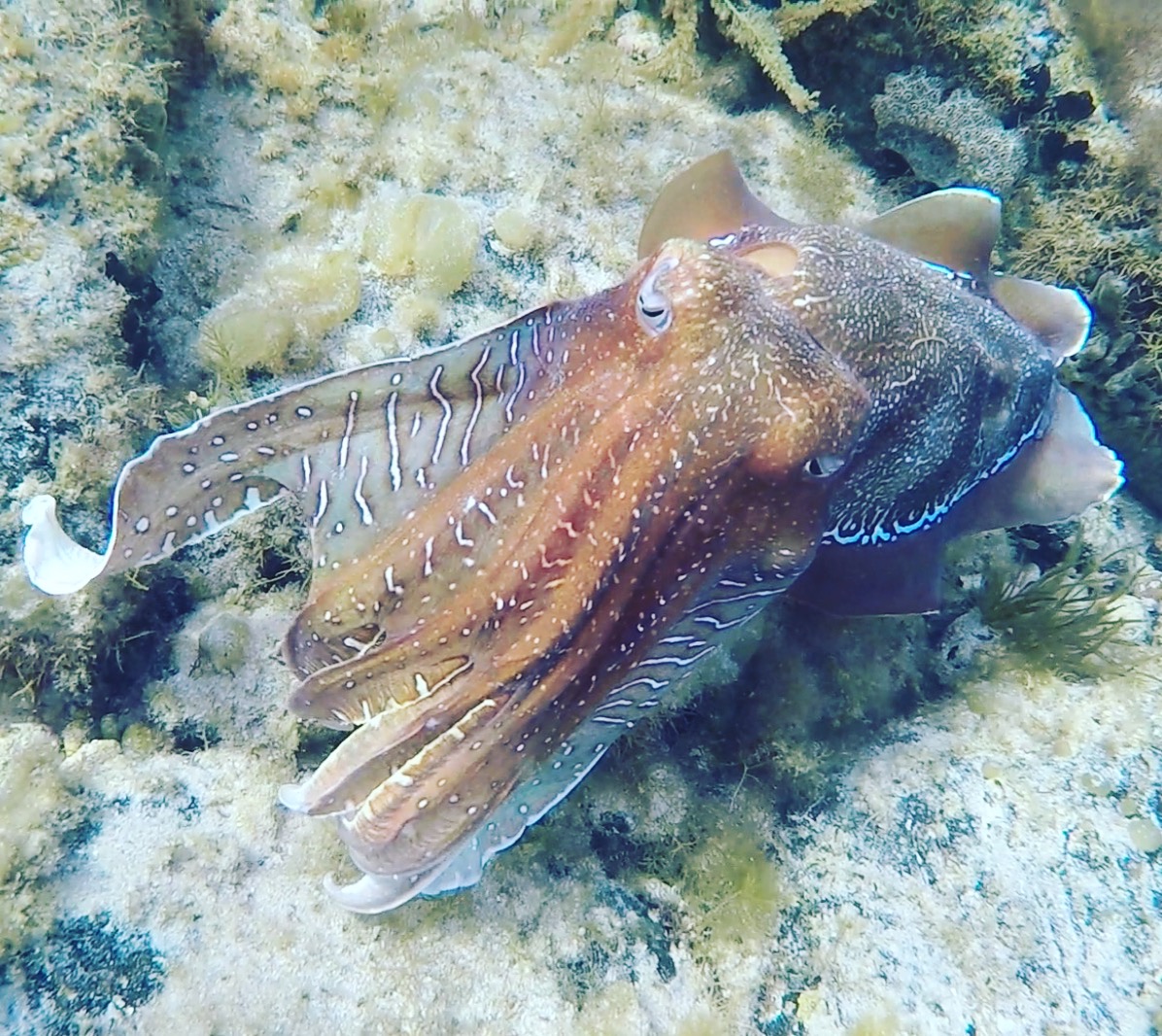
If you are South Australian and have even the slightest interest in wildlife, you will have of course at least heard of the awe-inspiring mass breeding aggregation of giant cuttlefish (Sepia apama) that occur in May-July every year in upper Spencer Gulf near the small town of Whyalla. If you have been lucky enough to go there and see these amazing creatures themselves, then you know exactly what I’m talking about. And if you haven’t yet been there, take it from me that it is so very much worth it to attempt the voyage.

DCIM100GOPROGOPR0121.

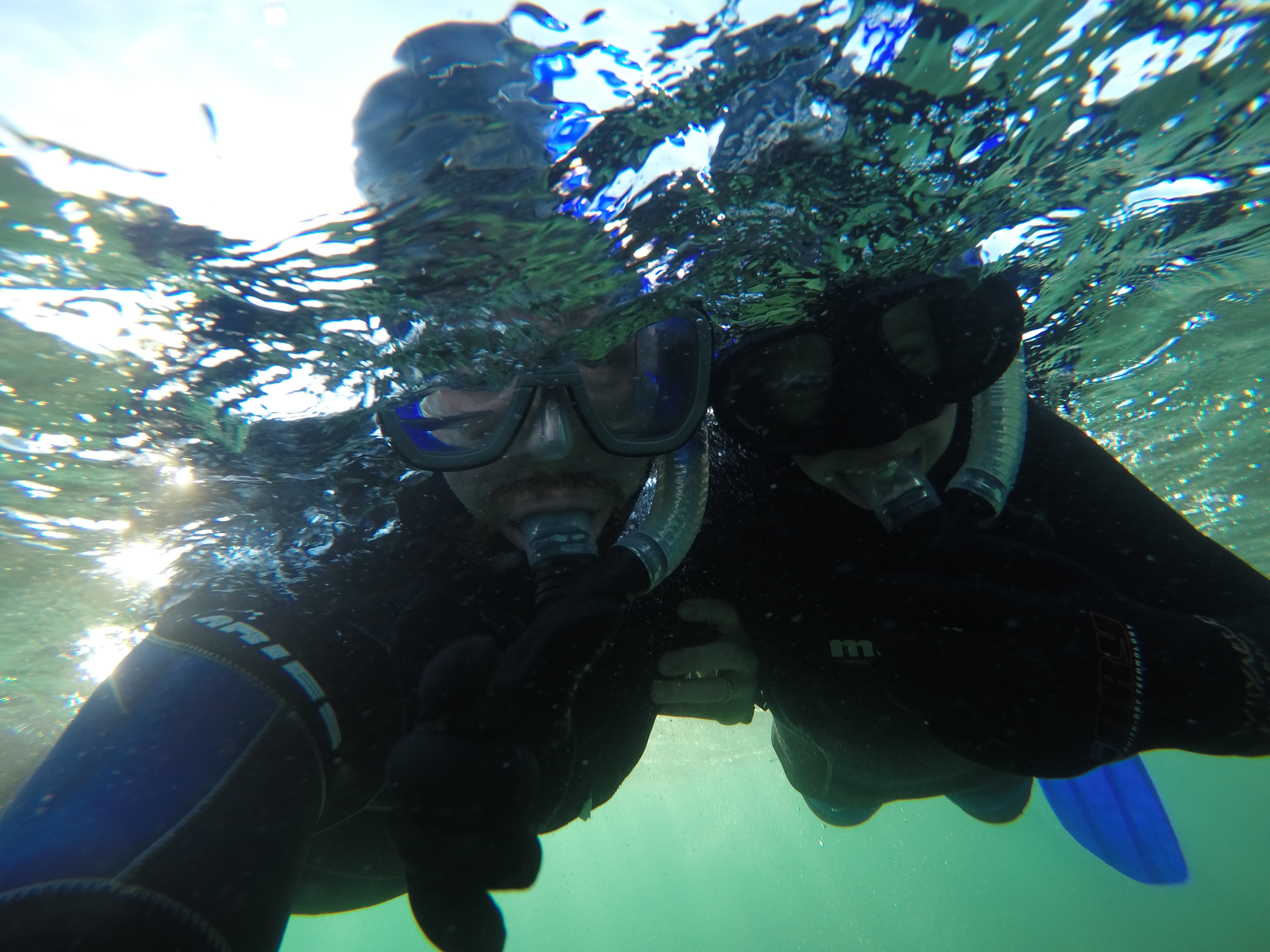
Father-daughter giant-cuttlefish-snorkelling selfie. © CJA Bradshaw

Despite having lived in South Australia for nearly a decade now, I only got my chance to see these wonderful creatures when a father at my daughter’s school organised a school trip. After driving for five hours from Adelaide to Whyalla, we hired our snorkelling gear and got into the water the very next morning. Read the rest of this entry »


Job: Koala Data Research Technician

6 03 2017

koalaIf you live in South Australia, and in Adelaide especially, you would have had to be living under a rock not to have heard of the Great Koala Counts 1 and 2. So I’m not really writing this for those sotto pietra types. If you are a regular reader of CB.com, you’ll also know that I’ve been involved in helping analyse the data from GKC1, as well as improving the design of the GKC2.

8037320-3x2-940x627Well, the data are in for GKC2 and we need help to analyse them. Just as a little reminder, the GKCs are designed to provide better data to estimate the distribution and density of koalas in South Australia (especially in the Mount Lofty Ranges). We’ve already written one scientific article from GKC1, but we now have a more expansive and quality-controlled dataset, so it’s now time to write the second. Read the rest of this entry »



Not all wetlands are created equal

13 02 2017

little-guyLast year I wrote what has become a highly viewed post here at ConservationBytes.com about the plight of the world’s freshwater biodiversity. In a word, it’s ‘buggered’.

But there are steps we can take to avoid losing even more of that precious freshwater biodiversity. The first, of course, is to stop sucking all the water out of our streams and wetlands. With a global population of 7.5 billion people and climbing, the competition for freshwater will usually mean that non-human life forms lose that race. However, the more people (and those making the decisions, in particular) realise that intact wetlands do us more good as wetlands rather than carparks, housing developments, or farmland (via freshwater filtering, species protection, carbon storage, etc.), the more we have a chance to save them.

My former MSc student, the very clever David Deane1, has been working tirelessly to examine different scenarios of wetland plant biodiversity change in South Australia, and is now the proud lead author of a corker of a new paper in Biological Conservation. Having already published one paper about how wetland plant biodiversity patterns are driven by rare terrestrial plants, his latest is a very important contribution about how to manage our precious wetlands. Read the rest of this entry »


Dawn of life

18 05 2015
Looking east toward the northern Flinders Ranges from Ediacara Conservation Park. © CJA Bradshaw

Looking east toward the northern Flinders Ranges from Ediacara Conservation Park. © CJA Bradshaw

I’ve had one of the most mind-blowing weeks of scientific discovery in my career, and it’s not even about a subject from within my field.

As some of you might know, I’ve been getting more and more interested in palaeo-ecology over the past few years. I’m fascinated by the challenge of reconstructing past communities and understanding how and why they changed. It’s a natural progression for someone interested in modern extinction dynamics.

Most of my recent interests have focussed on palaeo-communities of the Late Quaternary, and mainly in the range of 100 thousand years ago to the present. We’ve started publishing a few things in this area, and I can confirm that they’ll be plenty more to come in the following months and years. Despite plenty more to do in the youngest of palaeo-communities, I’ve now been bitten by the deep-time bug.

The giant Dickinsonia rex - a flat, worm-like discoid animal. © D. García-Bellido

The giant Dickinsonia rex – a flat, worm-like discoid animal. © D. García-Bellido

When I write ‘deep time’, I bloody well mean it: back to 580 million years, to be accurate. This is the time before the great Cambrian explosion of life popularised by the late Stephen Jay Gould in his brilliant book, Wonderful Life1,2. I’m talking about the Ediacaran period from 635-541 million years ago.
I’ve lived in South Australia now for over seven years, but it was only in the last few that I realised the Ediacaran was named after the Ediacara Hills in the northern Flinders Ranges some 650 km north of Adelaide where I live, and it wasn’t until last week that I had the extremely gratifying privilege of visiting the region with some of the world’s top Ediacaran specialists. If you have even the remotest interest in geological time and the origin of life on Earth, you should make a pilgrimage to the Flinders Ranges at some point before you die.

Read the rest of this entry »


Australia’s perfect storm of negligence

17 03 2015

If, for the purposes of some sick and twisted thought experiment, you were to design policies that would ensure the long-term failure of a wealthy, developed nation, you wouldn’t have to look farther than Australia’s current recipe for future disaster. I’m not trying to be provocative, but the warning signs are too bold and flashy to ignore. Let’s just run through some of the main ones:

1. As the lambasted and thoroughly flawed 2015 Intergenerational Report clearly demonstrates, our current government has no idea about the future threats of climate change. Dragged kicking and screaming into only a symbolic recognition of some ‘distant and currently irrelevant problem’, the Abbott-oir and his intergenerational criminals are well known for killing the carbon-pricing scheme, dismantling the Department of Climate Change, pulling out of major international talks on climate-change mitigation and installing a half-arsed, ineffective policy that will do nothing to stem our emissions. Combine that with comments like “coal is good for humanity“, and it’s easy to see how our current leaders have little idea about the future mess they’re creating.
2. Not content just to kick the shit out of any meaningful climate action, our government has also turned its back on any renewable energy target, and facilitated the fossil-fuel barons to dig more coal out of the ground. While South Australia’s Royal Commission on the nuclear fuel cycle is a welcome candle in the climate change-mitigation darkness here, it is far from becoming a national priority any time soon.

3. As has been well documented, the Abbott-oir ship of fools has also done whatever it can to turn back decades of environmental protections in less than six months of taking office. Everything from opening up national parks for exploitation, failing to protect marine sanctuaries, limiting environmental checks to promoting logging in World Heritage Areas, there is little room for hope that our crumbling environmental system will improve at all in the near to long term. Read the rest of this entry »


Putting the ‘science’ in citizen science

30 04 2014
How to tell if a koala has been in your garden. © Great Koala Count

How to tell if a koala has been in your garden. © Great Koala Count

When I was in Finland last year, I had the pleasure of meeting Tomas Roslin and hearing him describe his Finland-wide citizen-science project on dung beetles. What impressed me most was that it completely flipped my general opinion about citizen science and showed me that the process can be useful.

I’m not trying to sound arrogant or scientifically elitist here – I’m merely stating that it was my opinion that most citizen-science endeavours fail to provide truly novel, useful and rigorous data for scientific hypothesis testing. Well, I must admit that I still believe that ‘most’ citizen-science data meet that description (although there are exceptions – see here for an example), but Tomas’ success showed me just how good they can be.

So what’s the problem with citizen science? Nothing, in principle; in fact, it’s a great idea. Convince keen amateur naturalists over a wide area to observe (as objectively) as possible some ecological phenomenon or function, record the data, and submit it to a scientist to test some brilliant hypothesis. If it works, chances are the data are of much broader coverage and more intensively sampled than could ever be done (or afforded) by a single scientific team alone. So why don’t we do this all the time?

If you’re a scientist, I don’t need to tell you how difficult it is to design a good experimental sampling regime, how even more difficult it is to ensure objectivity and precision when sampling, and the fastidiousness with which the data must be recorded and organised digitally for final analysis. And that’s just for trained scientists! Imagine an army of well-intentioned, but largely inexperienced samplers, you can quickly visualise how the errors might accumulate exponentially in a dataset so that it eventually becomes too unreliable for any real scientific application.

So for these reasons, I’ve been largely reluctant to engage with large-scale citizen-science endeavours. However, I’m proud to say that I have now published my first paper based entirely on citizen science data! Call me a hypocrite (or a slow learner). Read the rest of this entry »


South Australia’s tattered environmental remains

16 04 2014
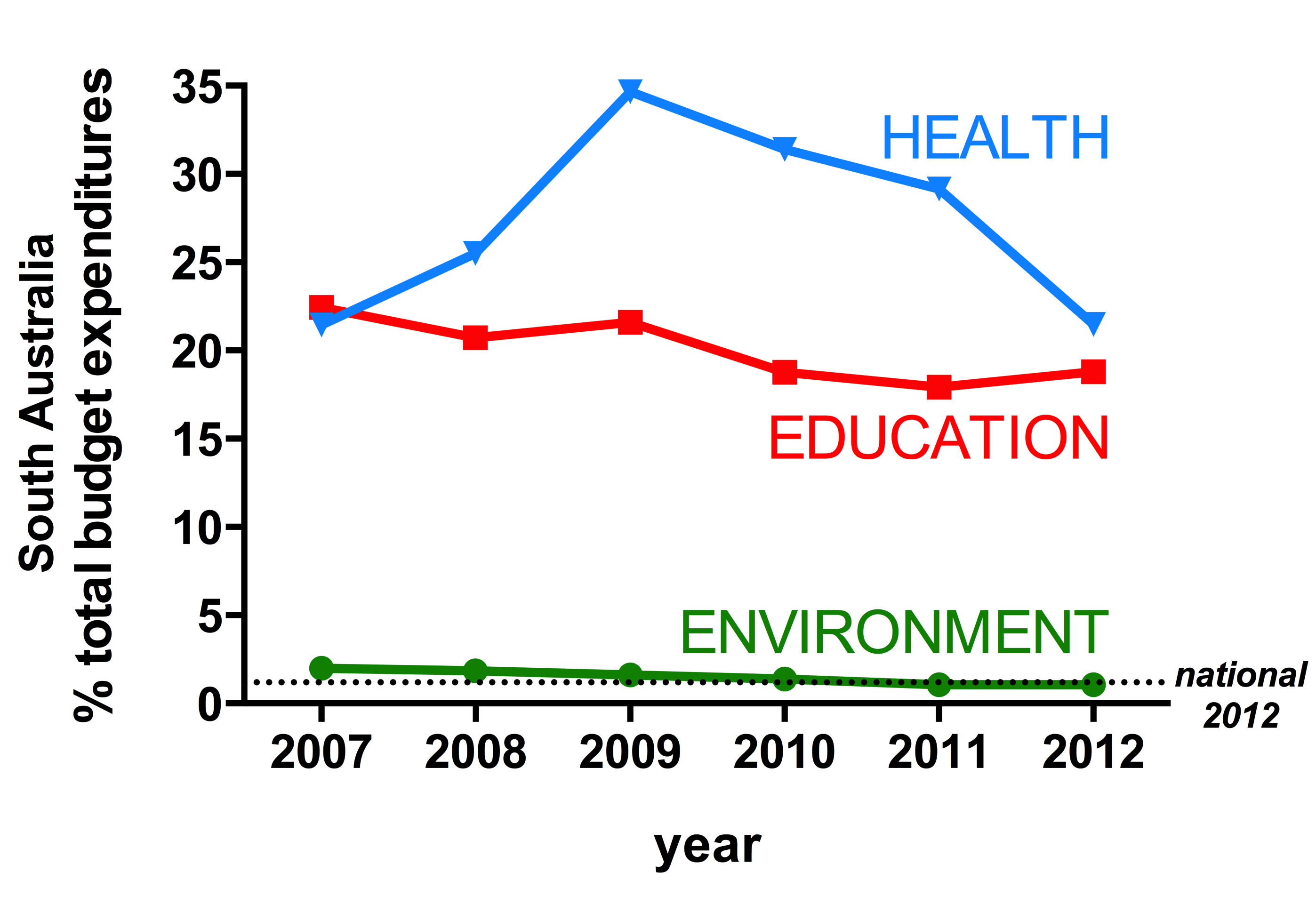
State budget percentage expenditures for health, education and environment

South Australia State budget percentage expenditures for health, education and environment

Yesterday I gave the second keynote address at the South Australia Natural Resource Management (NRM) Science Conference at the University of Adelaide (see also a brief synopsis of Day 1 here). Unfortunately, I’m missing today’s talks because of an acute case of man cold, but at least I can stay at home and work while sipping cups of hot tea.

Many people came up afterwards and congratulated me for “being brave enough to tell the truth”, which both encouraged and distressed me – I am encouraged by the positive feedback, but distressed by the lack of action on the part of our natural resource management leaders.

The simple truth is that South Australia’s biodiversity and ecosystems are in shambles, yet few seem to appreciate this.

So for the benefit of those who couldn’t attend, I’ve uploaded the podcast of my slideshow for general viewing here. I’ve also highlighted some key points from the talk below: Read the rest of this entry »


Help us restore a forest

12 04 2013

plantingI’m not usually one to promote conservation volunteer opportunities, but this is a little different. First, I’m involved in this one, and second, it’s very near to my home. As you might know, the Mount Lofty Ranges area has had about 90 % of its forests destroyed since European settlement, with a corresponding loss of ecosystem services. We need smart restoration on massive scale, and Monarto is one place where we can develop the best practices to achieve this goal. We really do need some help here, so I encourage anyone in the Adelaide area with an interest in evidence-based forest restoration to lend us a hand.

The Monarto Restoration Project will provide an internationally recognised opportunity to experience and engage with wild Australia as it was.

Our aim is restore and expand habitats at Monarto to represent what used to exist in the region before clearing for agriculture and the introduction of pest species. Monarto used to be teeming with wildlife. The remnant vegetation at Monarto is unique as it is located at the cross-over of two vegetation communities (the Mt Lofty Ranges and Murray Mallee). This means it provides important habitat for a range of threatened bird and plant species. However, there are still a number of species in danger of being lost from the area, so we need to focus on restoring habitat to support them too.

We provide an opportunity to see the bush in a way that is no longer possible in most parts of Australia. We hope to help you see what we have lost and encourage you to participate in conservation. It gives us the opportunity to include everyone in on-ground conservation work and pass on skills that can be applied beyond a day or this project. With your help we can reduce the impacts of pest species on the property and re-introduce some of the native species that are now locally extinct. Read the rest of this entry »


Let the planting begin

3 04 2013
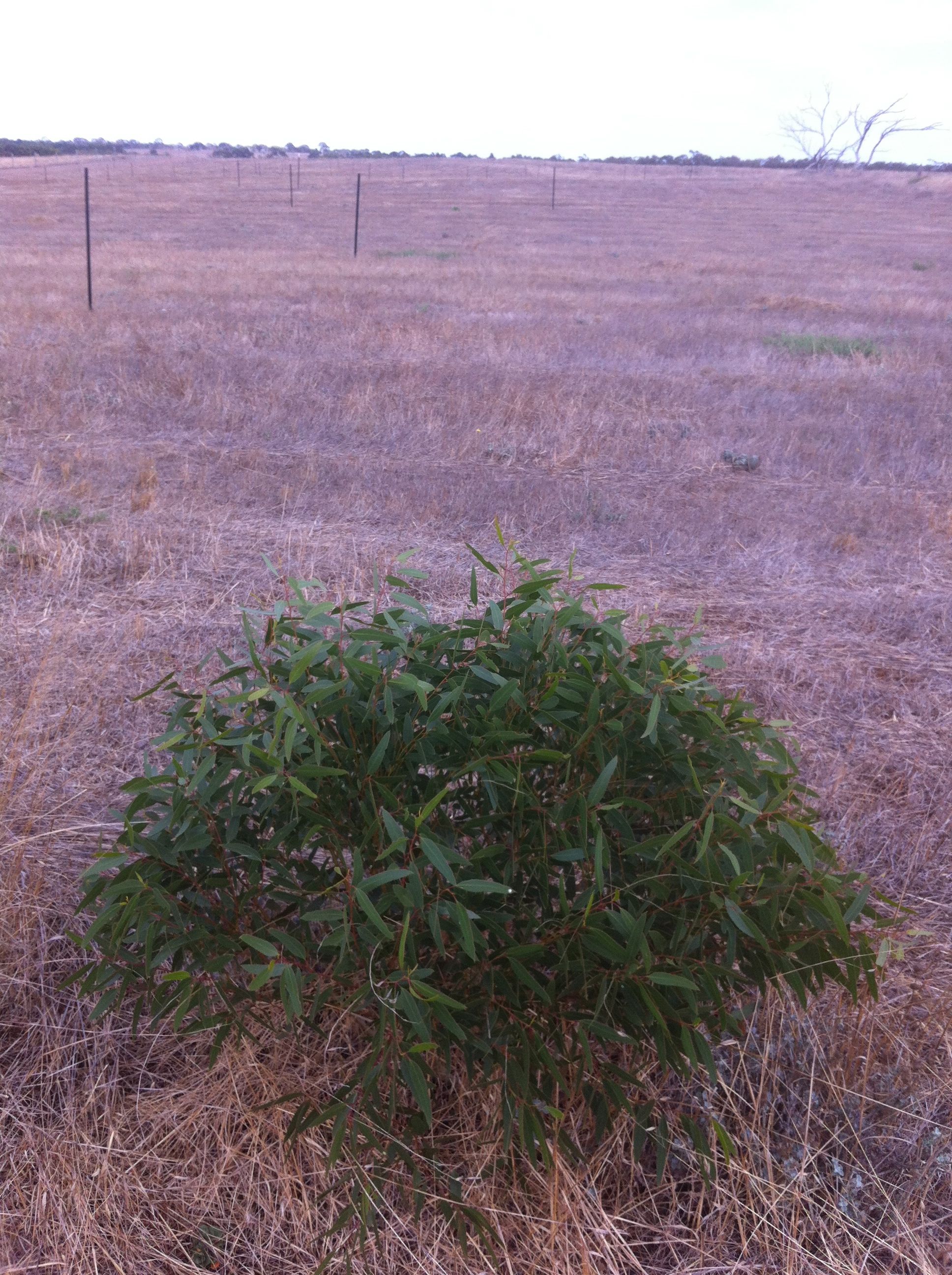
A tough little Eucalyptus porosa - one day soon this entire ex-paddock will be filled with carbon-guzzling natives.

A tough little Eucalyptus porosa – one day soon this entire ex-paddock will be filled with carbon-guzzling natives. Note the plot markers in the background.

I had a great morning today checking out the progress of our carbon-biodiversity planting experiment out at Monarto Zoo. What a fantastic effort! Briony Horner and her team have made some amazing progress.

If you haven’t read about what we’re up to, here’s a brief re-cap:

Late last year we were awarded an Australian Research Council (ARC) Linkage Project grant in which we proposed to examine experimentally the cost-benefit trade-off between biodiversity and carbon using a replicated planting regime. The approach is quite simple, but it will take many years to pay off. What we are asking is: how many different species and in what densities are required to restore a native woodland from an over-grazed paddock that provide the biggest long-term biodiversity and carbon benefits simultaneously for the lowest costs?

Read the rest of this entry »


No-extinction targets are destined to fail

21 09 2012

I’ve been meaning to write about this for a while, and now finally I have been given the opportunity to put my ideas ‘down on paper’ (seems like a bit of an old-fashioned expression these days). Now this post might strike some as overly parochial because it concerns the state in which I live, but the concept applies to every jurisdiction that passes laws designed to protect biodiversity. So please look beyond my navel and place the example within your own specific context.

As CB readers will appreciate, I am firmly in support of the application of conservation triage – that is, the intelligent, objective and realistic way of attributing finite resources to minimise extinctions for the greatest number of (‘important’) species. Note that deciding which species are ‘important’ is the only fly in the unguent here, with ‘importance’ being defined inter alia as having a large range (to encompass many other species simultaneously), having an important ecological function or ecosystem service, representing rare genotypes, or being iconic (such that people become interested in investing to offset extinction.

But without getting into the specifics of triage per se, a related issue is how we set environmental policy targets. While it’s a lovely, utopian pipe dream that somehow our consumptive 7-billion-and-growing human population will somehow retract its massive ecological footprint and be able to save all species from extinction, we all know that this is irrevocably  fantastical.

So when legislation is passed that is clearly unattainable, why do we accept it as realistic? My case in point is South Australia’s ‘No Species Loss Strategy‘ (you can download the entire 7.3 Mb document here) that aims to

“…lose no more species in South Australia, whether they be on land, in rivers, creeks, lakes and estuaries or in the sea.”

When I first learned of the Strategy, I instantly thought to myself that while the aims are laudable, and many of the actions proposed are good ones, the entire policy is rendered toothless by the small issue of being impossible. Read the rest of this entry »


Global Ecology postgraduate opportunities

12 08 2012

I should have published these ages ago, but like many things I have should have done earlier, I didn’t.

I also apologise for a bit of silence over the past week. After coming back from the ESP Conference in Portland, I’m now back at Stanford University working with Paul Ehrlich trying to finish our book (no sneak peaks yet, I’m afraid). I have to report that we’ve completed about about 75 % it, and I’m starting to feel like the end is in sight. We hope to have it published early in 2013.

So here they are – the latest 9 PhD offerings from us at the Global Ecology Laboratory. If you want to get more information, contact the first person listed as the first supervisor at the end of each project’s description.

1. Optimal survey and harvest models for South Australian macropods (I’ve advertised this before, but so far, no takers):

The South Australia Department of Environment, Water and Natural Resources (DEWNR) is custodian of a long-term macropod database derived from the State’s management of the commercial kangaroo harvest industry. The dataset entails aerial survey data for most of the State from 1978 to present, annual population estimates, quotas and harvests for three species: red kangaroo (Macropus rufus), western grey kangaroo (Macropus fuliginosus), and the euro (Macropus robustus erubescens).

DEWNR wishes to improve the efficiency of surveys and increase the precision of population estimates, as well as provide a more quantitative basis for setting harvest quotas.

We envisage that the PhD candidate will design and construct population models:

  • to predict population size/densities with associated uncertainty, linking fluctuations to environmental variability (including future climate change projections)
  • to evaluate the efficiency of spatially explicit aerial surveys
  • to estimate demographic parameters (e.g., survival rate) from life tables and
  • to estimate spatially explicit sustainable harvest quotas

 Supervisors: me, A/Prof. Phill Cassey, Dr Damien Fordham, Dr Brad Page (DEWNR), Professor Michelle Waycott (DEWNR).

2. Correcting for the Signor-Lipps effect

The ‘Signor-Lipps effect’ in palaeontology is the notion that the last organism of a given species will never be recorded as a fossil given the incomplete nature of the fossil record (the mirror problem is the ‘Jaanusson effect’, where the first occurrence is delayed past the true time of origination). This problem makes inference about the timing and speed of mass extinctions (and evolutionary diversification events) elusive. The problem is further complicated by the concept known as the ‘pull of the recent’, which states that the more time since an event occurred, the greater the probability that evidence of that event will have disappeared (e.g., erased by erosion, hidden by deep burial, etc.).

In a deep-time context, these problems confound the patterns of mass extinctions – i.e., the abruptness of extinction and the dynamics of recovery and speciation. This PhD project will apply a simulation approach to marine fossil time series (for genera and families, and some individual species) covering the Phanerozoic Aeon, as well as other taxa straddling the K-T boundary (Cretaceous mass extinction). The project will seek to correct for taphonomic biases and assess the degree to which extinction events for different major taxa were synchronous.

The results will also have implications for the famous Sepkoski curve, which describes the apparent logistic increase in marine species diversity over geological time with an approximate ‘carrying capacity’ reached during the Cenozoic. Despite recent demonstration that this increase is partially a taphonomic artefact, a far greater development and validation/sensitivity analysis of underlying statistical models is needed to resolve the true patterns of extinction and speciation over this period.

The approach will be to develop a series of models describing the interaction of the processes of speciation, local extinction and taphonomic ‘erasure’ (pull of the recent) to simulate how these processes interact to create the appearance of growth in numbers of taxa over time (Sepkoski curve) and the abruptness of mass extinction events. The candidate will estimate key parameters in the model to test whether the taphonomic effect is strong enough to be the sole explanation of the apparent temporal increase in species diversity, or whether true diversification accounts for this.

Supervisors: me, Prof. Barry Brook

3. Genotypic relationships of Australian rabbit populations and consequences for disease dynamics

Historical evidence suggests that there were multiple introduction events of European rabbits into Australia. In non-animal model weed systems it is clear that biocontrol efficacy is strongly influenced by the degree of genetic diversity and number of breed variants in the population.

The PhD candidate will build phylogenetic relationships for Australian rabbit populations and develop landscape genetic models for exploring the influence of myxomatosis and rabbit haemorrhagic disease virus (RHDV) on rabbit vital rates (survival, reproduction and dispersal) at regional and local scales. Multi-model synthesis will be used to quantify the relative roles of environment (including climate) and genotype on disease prevalence and virulence in rabbit populations.

Supervisors: A/Prof Phill Cassey, Dr Damien Fordham, Prof Barry Brook Read the rest of this entry »


Experiments in carbon-biodiversity trade-offs

19 07 2012

Last month I covered a topic that is not only becoming the latest fashion-trend in conservation, it is also where much of the research funding is going. Whether or not this is the best use of limited research resources is largely irrelevant – as I always preach to fledgling grant writers: “Write about what the funding agency wants to fund, not what you want to do”. Cynical, I know, but it is oh-so-true.

The topic in question is how we as conservation biologists ensure that the new carbon economy drives positive change for biodiversity, rather than the converse. Hell knows we really can’t afford for land-use change to get any worse for biodiversity; worldwide we are on trajectory for a mass extinction within our lifetime, so anything that potentially makes it worse should be squashed completely.

But it seems that land- and seascape changes that might arise from trading carbon (including carbon pricing) are on a knife-edge as far as biodiversity is concerned. I described this dilemma in my previous post, and I am happy to say that the manuscript arising is almost complete. Briefly, if we as a society decide to try to reduce greenhouse gas emissions and capture as much carbon as possible by altering land-use practices, then it is likely that our forests will become vast monocultures incapable of sustaining much biodiversity at all. In other words, there’s a balance to be struck between what is good for carbon sequestration and what is good for biodiversity. While not always mutually exclusive, neither are they mutually attainable goals. Read the rest of this entry »


Marine forests dropping off the edge

21 11 2011

This is probably a little late in terms of breaking news, but it’s good fodder for a blog post nonetheless.

I’ve done several posts now on the value (and threats) of marine macroalgae (seaweeds) – the last one hinted that a major paper was imminent regarding the fate of one of the world’s most important centres of macroalgae diversity in response to our rapidly changing climate: southern Australia.

Well, that paper has now come out in the eminent journal Current Biology headed by that crazy Aussie-Viking phycologist, Dr. Thomas Wernberg (byline here: Thomas was just awarded an Australian Research Council Future Fellowship and deserves many congratulations – not least for which the audacity to wear yellow budgie smugglers in public).

Entitled simply “Seaweed communities in retreat from ocean warming“, the short paper belies a hell of a lot of work examining over 60 years of herbarium records indicating MASSIVE shifts in the macroalgae community southwards on both the east and west coasts of Australia (see some media spots here). What do I mean by ‘massive’? Well, about 300 species on average (52 examined in most detail) shifted about 200 km south on the east coast (where warming has been most pronounced), and about 50 km south on the west coast. Read the rest of this entry »


Follow the TREND

24 10 2011

A little clichéd, I know, but that’s what it says on the T-shirt.

It’s been an interesting week. Not only did I return to some much-needed field work (even if it was diving in the muck of Adelaide’s Outer Harbour with 40-cm visability), but it was also the week when the TREND project became ‘official’ with the launching of its website and its public début at the Earth Station festival in Belair National Park over the weekend.

I can see the thought bubbles already – what the hell is ‘TREND‘ (apart from the obvious)?

Admittedly a somewhat contrived acronym, TREND stands for TRends in ENvironmental monitoring and Decision making – a multi-million dollar project financed mainly by the state government of South Australia and the Terrestrial Ecosystem Research Network (TERN – I know, another bloody acronym that is weirdly similar to TREND; oh how we Aussies love our acronyms and initialisms!). Here’s the official summary:

“TREND provides a system of data collection across native ecosystems, primary production regions and marine environments. By assessing the impacts of various potential climatic and environmental shifts, TREND will provide an early warning system for changes in South Australia’s diverse environments and a lasting legacy of long-term monitoring, informed policy and proactive response to environmental change. Read the rest of this entry »


Little left to lose: deforestation history of Australia

6 10 2011

© donkeycart http://ow.ly/6OSeX

I don’t usually do this, but I’m going to blog about a paper I’ve just had accepted in the Journal of Plant Ecology that isn’t yet out online. The reason for the early post is that the paper itself won’t appear until 2012 in a special issue of the journal, and I think the information needs to get out there.

First, a little history – In May this year I blogged about a workshop that I attended at Sun Yat-Sen University in Guangzhou, China at the behest of Fangliang He. The workshop (International Symposium for Biodiversity and Theoretical Ecology) was attended by big-wig overseas ecologists and local talent, and was not only informative, but a lot of fun (apart from the slight headache on the way home from a little too much báijiǔ the night before). More importantly, we  lǎo wài (老外) were paired with various students to assist with publications in progress, and I’m happy to say that for me, two of those have already produced fruit (one paper in review, another about to be submitted).

But the real reason for this post was the special issue of papers written by the invitees – I haven’t published in the journal before, and understand that it is a Chinese journal that has gone mainstream internationally now. I’m only happy to contribute to lifting its profile.

Given that I’m not a plant ecologist per se (although I’ve dabbled), I decided to write a review-like paper that I’ve been meaning to put together for some time now examining the state of Australia’s forests and the history of her deforestation and forest degradation. The reason I thought this was needed is that there is no single peer-reviewed resource one can turn to for a concise synopsis of the history of our country’s forest destruction. The stats are out there, but they’re buried in books, government reports and local-scale scientific papers. My hope is that my paper will be used as a general reference point for people wishing to get up to speed with Australia’s deforestation history.

The paper is entitled Little left to lose: deforestation and forest degradation in Australia since European colonisation, and it describes the general trends in forest loss and degradation Australia-wide, followed by state- and territory-level assessments. I’ve also included sections on plantations, biodiversity loss from deforestation and fragmentation, the feedback loop between climate change and deforestation, the history of forest protection legislation, and finally, a discussion of the necessary general policy directions needed for the country’s forests.

I’ve given a few titbits of the stats in a previous post, but let me just summarise some of the salient features here: Read the rest of this entry »


Deforesting and reforesting Australia

13 07 2011

A couple of weeks ago we (Andy Lowe and I) did a small interview on ABC television about the current status of Australia forests, followed by a discussion regarding our recently funded Australian Research Council Linkage Project Developing best-practice approaches for restoring forest ecosystems that are resilient to climate change. Just in case you didn’t see it, I’ve managed to upload a copy of the piece to Youtube.com and reproduce it here:

I’m actually in the process of writing a paper on all this for a special issue of Journal of Plant Ecology (that is nearly already overdue!), but here are a few facts for you in the interim:

  • Australian eucalypt forests are globally unique, with one of the longest evolutionary histories among the world’s forests
  • Australia has about 147 million ha of native forest remaining, and about 2 million ha of plantations Read the rest of this entry »


The few, the loud and the factually challenged

18 06 2011

© The Guardian

Here’s a little paraphrased response I received from a colleague who works for a particular agency concerned about the ridiculous politicking and misinformation associated with marine parks proposed for South Australia.

I’ve posted several times before why marine parks are a win for all involved, from the biodiversity it is meant to protect, to the fishers who benefit from the free, public-good resource that they assist in maintaining (see here, here and here). The evidence is clear world-wide: marine parks benefit pretty much everything and everyone.

However, just like the climate change denalists who use every psychological tactic in the book to try to convince people that climate change is a belief when in fact, it is a soundly evidenced phenomenon, there are those Luddites who think that any change in the marine setting fundamentally threatens their way of life.

Here’s what my colleague had to say about some recent ill-informed comments on this blog:

I wondered when they would find your blog. In my experience, do not engage. A game of intimidation has started. Read the rest of this entry »


Does the pope wear a funny hat?

5 04 2011

Does a one-legged duck swim in circles? Does an ursid defecate in a collection of rather tall vascular plants? Does fishing kill fish?

Silly questions, I know, but it’s the kind of question posed every time someone doubts the benefits (i.e., for biodiversity, fishing, local economies, etc.) of marine reserves.

I’ve blogged several times on the subject (see Marine protected areas: do they work?The spillover effectInterview with a social (conservation) scientist, and Failing on ocean protection), but considering Hugh Possingham is town today and presenting the case to the South Australian Parliament on why this state NEEDS marine parks, I thought I’d rehash an old post of his published earlier this year in Australasian Science:

Science has long demonstrated that marine reserves protect marine biodiversity. Rather than answer the same question again, isn’t it about time we started funding research that answers some useful scientific questions?

As marine reserves spread inexorably across the planet, the cry from skeptics and some fishermen is: “Do marine reserves work?” The science is pretty clear but acknowledgement of this by the public is another story. Let me begin with a story of my experience answering this question while communicating to stakeholders the subtleties of marine conservation planning during the rezoning of Moreton Bay.

I was asked by the then-Queensland Environmental Protection Agency to explain to stakeholders the process of marine reserve system design as it applied to the Moreton Bay rezoning. I told the gathering that the rezoning was about conserving a fraction of each mappable biodiversity attribute (species and habitats) for the minimum impact on the livelihood of others. Read the rest of this entry »


Biodiversity begins at home

20 01 2011

A few months ago I was involved in a panel discussion entitled ‘Biodiversity begins at home’ held at the Royal Institution of Australia in Adelaide and sponsored by the Don Dunstan Foundation.

The main thrust of the evening was to have both academic (me & Andy Lowe) and on-the-ground, local conservationists (Sarah Lance, Craig Gillespie and Matt Turner) talk about what people can do to stem the tide of biodiversity loss. The video is now available, so I thought I’d reproduce it here. We talked about a lot of issues (from global to local scale), so if you have a spare hour, you might get something out of this. I did, but it certainly wasn’t long enough to discuss such big issues.

Warning – this was supposed to be more of a discussion and less of a talkfest; unfortunately, many of the panel members seemed to forget this and instead dominated the session. We really needed 4 hours to do this properly (but then, who would have watched the video?).

Read the rest of this entry »


Want a cool conservation job in beautiful southern Australia?

14 12 2010

I was asked to post this cool-sounding job on ConservationBytes.com – relevant punters welcome to respond.

Australian Wildlife Conservancy (AWC) is a non‐profit organisation dedicated to the conservation of Australia’s threatened wildlife and their habitats. AWC now owns and manages more land than any other private conservation organisation in Australia ‐  21 properties, covering more than 2.6 million hectares ‐ protecting more than 1,200 fauna species through active land management informed by strategic scientific research.

AWC is seeking an experienced and committed ecologist who will be pivotal in the development and implementation of the conservation and science program throughout south‐eastern Australia. The position will be based at Scotia Wildlife Sanctuary (where on‐site accommodation will be provided), but will include work at other AWC sanctuaries, especially Kalamurina (Lake Eyre), Buckaringa (Flinders Ranges), Yookamurra (Riverlands), Dakalanta (Eyre Peninsula), Bowra (Mulga Lands) and North Head (Sydney) sanctuaries.

Scotia is a large property (65,000 ha) that lies on the NSW‐SA border between Wentworth and Broken Hill, and includes Australia’s largest area free of foxes, cats and rabbits (8,000 ha) and where seven regionally extinct species have been reintroduced (bilby, boodie, woylie, bridled nailtail wallaby, numbat, greater stick‐nest rat, mala and black‐eared miner). In addition, the property has outstanding conservation values because it protects habitats, in good condition, that have been extensively cleared in western NSW.

Read the rest of this entry »